Advertisement
A vegetable-forward green juice of celery, cucumber and spinach, brightened with pineapple, lemon, ginger and a little green apple: what each ingredient does for inflammation, how to make it with a juicer or a blender, and how to keep it low in sugar.
By Dr. Josh Axe ·
Jump to recipe ↓
Why it works: Celery, cucumber and spinach make up most of this juice, so it stays light and lower in sugar than a fruit juice, while pineapple, lemon, ginger and a little green apple bring brightness, bromelain, vitamin C and warming gingerols. It's a quick way to get the leafy greens and anti-inflammatory foods Dr. Axe puts at the top of his list into one glass, and you can make it in a juicer or a blender.
No juicer? Blend everything with ½ cup cold filtered water until smooth. Drink it as is to keep the fiber, or strain it through a fine-mesh strainer or nut-milk bag for a thinner juice.
For a lower-sugar glass, leave out the apple and add a few extra slices of cucumber or another stalk of celery.
Store any extra in a sealed glass jar filled to the top, refrigerate it and drink it within 24 hours.
Keep it green Let the celery, cucumber and spinach make up most of the glass, and use the fruit as a light touch for flavor.
This anti-inflammatory juice is a green juice built mostly from celery, cucumber and spinach, with pineapple, lemon, ginger and a little green apple for flavor, and it brings together several of the foods I rank highest for calming inflammation.1 In a review of 83 studies, eating more fruits and vegetables lowered C-reactive protein and TNF-alpha, two markers of inflammation.2
This anti-inflammatory juice is a refreshing green juice made mostly from celery, cucumber and spinach, with pineapple, lemon, a piece of fresh ginger and half a green apple for sweetness and bite, and it brings several anti-inflammatory foods together in a single glass. Leafy greens top my list of foods for reducing inflammation, and celery juice, pineapple and ginger are all on it too.1
Inflammation itself isn't the enemy, because it's how your body heals a cut or fights off a virus. The problem is chronic inflammation, a low fire that never goes out, and I see it as one of the biggest things driving chronic illness today, from faster aging to autoimmune disease and gut problems.7 The food you eat every day does far more to cool that fire than any supplement can, and a glass of this green juice is one simple way to put that into practice.7
30-day protocol
The complete root-cause framework for cooling chronic inflammation — and easing the aches, stiffness, puffiness, fatigue and brain fog that sit upstream of nearly every chronic disease.
Free with your Dr. Axe account
View the protocol →
What's your biggest goal right now?
Satisfy your sweet tooth and reduce inflammation at the same time with pineapple because of its bromelain content.Dr. Josh Axe, DC, DNM, CNSFrom Top 15 Anti-Inflammatory Foods, Dr. Josh Axe on YouTube (2017)
This 30-day protocol puts food first, with leafy greens, turmeric and ginger every day. Inside:
Free with your Dr. Axe account (email or Google). You'll also get the protocol's short email series and the Dr. Axe newsletter; unsubscribe anytime.
Open the free protocol →Anti-inflammatory juice is a fresh juice built from vegetables, a little fruit and spices or roots, like ginger, that supply compounds and nutrients that help calm inflammation. This one uses celery, cucumber and spinach as its base, with pineapple, lemon, ginger and half a green apple for flavor, bromelain and vitamin C.135
The key word is green. My green juice rule is simple: cucumber and celery as the base, lots of greens like kale and spinach, herbs and roots like ginger and turmeric, lemons and limes, and little or no sugar.8 This recipe follows that rule with one change, a cup of pineapple and half an apple, which make it taste like a treat while vegetables still make up most of the glass.
It's also close to a drink my family knows well. When my mom was sick, one of the things she started doing was juicing vegetables, and for the most part they were cucumbers and celery with a little ginger root.9 The version in my Cancer Support Protocol is the morning green drink she made every day: spinach, celery, cucumber, cilantro, lime and a green apple, blended or juiced.10 This juice is a close cousin, with pineapple and ginger added for their anti-inflammatory compounds.
When you eat more fruits and vegetables, your body's inflammation markers tend to come down. A 2018 review of 83 studies, 71 of them clinical trials, found that most of the trials reported a benefit on at least one marker of inflammation, and when the researchers pooled the results, eating more fruits and vegetables lowered C-reactive protein (CRP) and tumor necrosis factor-alpha, two proteins your body makes when inflammation runs high.2 This juice is one easy way to add several servings of produce to your day.
Each ingredient adds something different. Leafy greens like spinach bring vitamin K, which I count among the minerals and vitamins that help lower inflammation, along with chlorophyll and carotenoids such as lutein.14 Celery juice carries flavones, mostly apigenin and luteolin, which calmed inflammation in lab and animal research.11 Pineapple brings bromelain, a group of protein-digesting enzymes with anti-inflammatory and anti-swelling effects in lab and animal research.3 Ginger brings gingerols, which work much like the compounds in turmeric, and in Chinese medicine, ginger is a warming herb used for inflammation of the digestive system and the joints.1
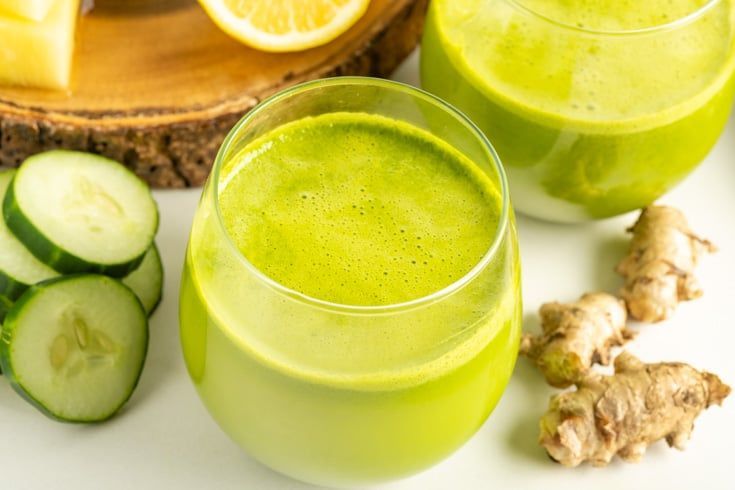
Celery, cucumber and spinach make up most of the juice, with pineapple, lemon, ginger and a little apple for flavor.
Spinach brings vitamin K and lutein, celery brings apigenin and luteolin, pineapple brings bromelain and ginger brings gingerols.41131
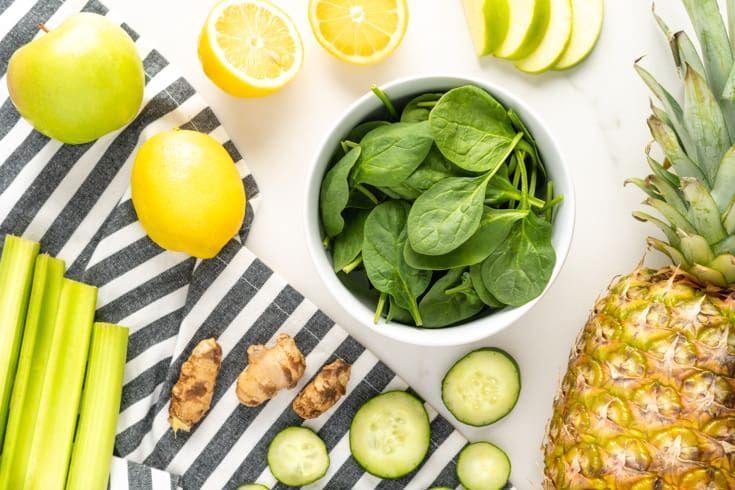
Celery and cucumber form the base of the juice, and both are mostly water, which keeps it light and refreshing.1314 I count celery, and especially celery juice, among the unique anti-inflammatory foods, because it's high in electrolytes like sodium and potassium.1 For a glass that's all celery, see our guide to celery juice.
Leafy greens are number one on my list of foods for reducing inflammation, and spinach and kale are high on that list.1 A cup of raw spinach adds very few calories and a lot of vitamin K, along with lutein and zeaxanthin, the carotenoids that also protect your eyes.4 In my Anti-Inflammatory Reset, I recommend at least 2 cups of leafy greens a day, and a glass of this juice gets you started.15
Pineapple gives the juice its tropical sweetness and its bromelain. Bromelain is the name for that group of enzymes from the pineapple's fruit and stem, with the highest levels in the stem, and bromelain preparations also affect blood clotting in that research.3 Most of the human studies have used bromelain as a supplement, made from the stem, for things like osteoarthritis pain and swelling after surgery, so think of the pineapple in your juice as a food source of the same enzymes.3 A cup of pineapple also brings about 79 milligrams of vitamin C, most of the vitamin C in the recipe.5
Ginger and turmeric are probably the top two foods on my list for their overall power at reducing inflammation,1 and ginger has been tested in people. In a 2016 review of controlled trials, ginger supplements of 1 to 3 grams a day for 8 weeks to 3 months lowered CRP by an average of 0.84 mg/L.12 In two placebo-controlled trials of 34 and 40 adults, 2 grams of raw or heated ginger a day for 11 days eased muscle pain the day after a hard arm workout by 25% and 23%.16 The inch of fresh ginger in this recipe gives each glass a warming bite, and I recommend turmeric and ginger in your food every day.15
Ginger eased next-day muscle pain by about a quarter
A whole peeled lemon adds bright, sour flavor and about 31 milligrams of vitamin C to the batch, and with the pineapple and the greens, each serving carries about 64 milligrams.1754 The sourness also balances the pineapple's sweetness, so the juice tastes fresh rather than sugary.
Half a green apple adds a crisp, tart sweetness and some quercetin, one of the antioxidant compounds apples are known for.18 It's the one ingredient that's easy to leave out: without it, each glass has about 4 grams less sugar.6 If you're watching your blood sugar, skip it and add a few more slices of cucumber.
This recipe works because vegetables make up most of the glass. I don't recommend a lot of high-sugar juices,19 and a glass of orange or apple juice is basically sugar water next to the whole fruit.20 Here, the celery, cucumber and spinach keep the sugar well below a fruit juice's, the pineapple and lemon bring vitamin C and flavor, and the ginger brings heat, and you can make it sharper with less pineapple or thicker by keeping the pulp.
Blended whole, each serving, half the recipe, has about 104 calories and 15.3 grams of natural sugar, and about 8 of those grams come from the pineapple.56 Take out the apple and the glass drops to about 80 calories and 11.3 grams of sugar.6
Leaving out the apple cuts about 4 grams of sugar per glass
One serving, half the recipe with the produce blended whole, provides about the following, from USDA FoodData Central. Straining out the pulp removes most of the fiber and changes the numbers, so think of these as the values for the blended version.13144517216
| Nutrient | Per serving, with apple | Per serving, without apple |
|---|---|---|
| Calories | 104 | 80 |
| Carbohydrates | 25.7 g | 20.0 g |
| Total sugars | 15.3 g | 11.3 g |
| Fiber (blended) | 5.2 g | 4.1 g |
| Vitamin K | 110 mcg (92% DV) | 109 mcg (91% DV) |
| Vitamin C | 64 mg (71% DV) | 64 mg (71% DV) |
| Folate | 83 mcg (21% DV) | 82 mcg (20% DV) |
| Potassium | 603 mg (13% DV) | 553 mg (12% DV) |
| Lutein + zeaxanthin | 2,104 mcg | 2,077 mcg |
Wash the produce, peel the lemon, then run 4 celery stalks, ½ cucumber, 1 cup spinach, 1 cup pineapple, the lemon, a 1-inch piece of ginger and ½ green apple through a juicer, stir and drink it fresh. It makes two servings in about five minutes once your produce is washed and cut.
As long as you have a juicer on hand, this recipe takes just a few minutes from start to finish. Start by washing everything well under running water, even the produce you'll peel, and scrub the cucumber with a clean produce brush, so dirt and bacteria on the surface don't end up in your juice.22 Peel the lemon, core the apple and cut everything to fit your juicer.
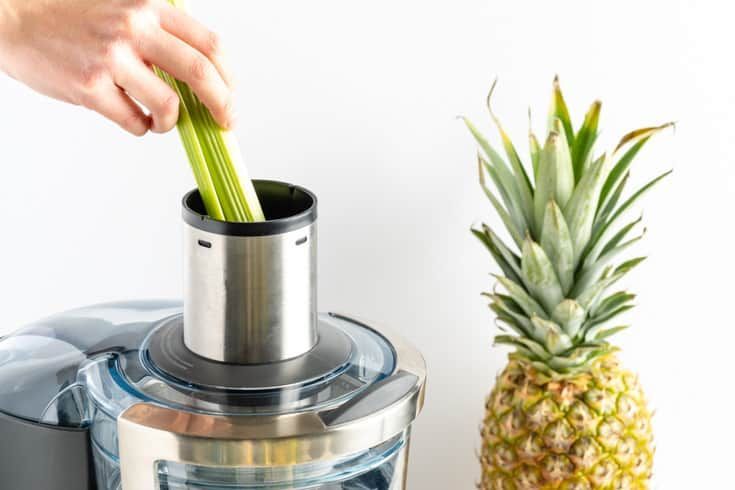
Then feed everything through the juicer. Leafy spinach can get stuck on its own, so alternate it with firmer pieces like celery, cucumber and apple to push it through.
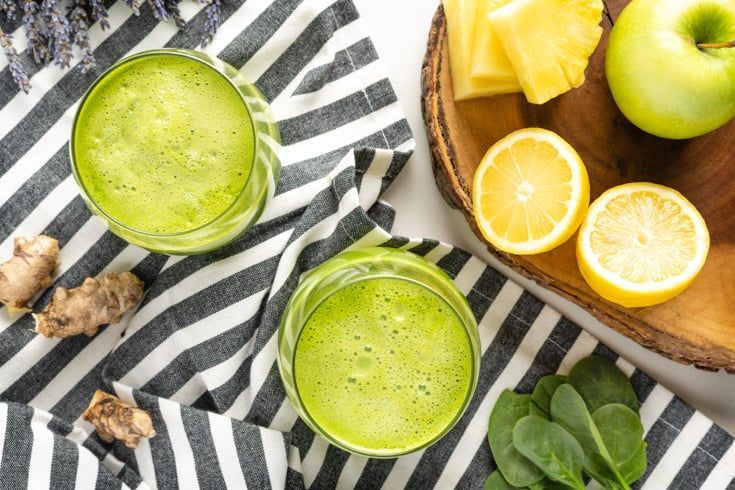
Give the juice a quick stir, pour it into two glasses and drink it right away, when the flavor, color and nutrients are at their best. If you need to store some, pour it into an airtight glass jar filled close to the top, refrigerate it and drink it within 24 hours.
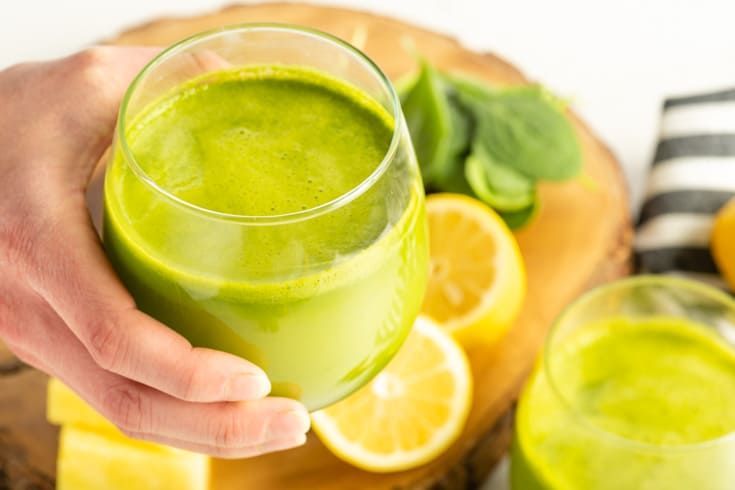
Yes. Blend all the ingredients with about ½ cup of cold filtered water until smooth, then drink it as is to keep the fiber, or strain it through a fine-mesh strainer or nut-milk bag for a thinner juice. Blended whole, each serving keeps about 5.2 grams of fiber.1356
A high-speed blender works well here, and blending has an advantage: it keeps the fiber that a juicer leaves behind in the pulp. That fiber is a big part of why I'd rather you eat whole fruit than drink fruit juice, which is basically sugar water by comparison.20 In three large U.S. studies that followed about 187,000 adults for years, every three servings a week of whole fruit went with a slightly lower risk of type 2 diabetes, while every three servings a week of fruit juice went with a 7% higher risk.23
If you keep the fiber, you'll have something closer to a green smoothie, thick and filling. If you prefer the light texture of juice, strain it and stir the pulp into a soup or a batch of muffins rather than tossing it.
Yes, with two changes: leave out the green apple and blend the juice instead of straining it. Without the apple, each glass has about 11.3 grams of natural sugar instead of 15.3, and blending keeps about 4 grams of fiber in it.6
Leaving out the apple is the simplest change, because the rest of the recipe is mostly vegetables. You can also use a little less pineapple and a little more cucumber or celery, and drink your juice with a meal that has protein and healthy fat rather than on its own. Juice and sweetened drinks are among the first things I remove in my blood sugar protocols, so keep this to one vegetable-forward glass and let the rest of your fruit come whole.24 If you have diabetes, read the fresh-juice note in the safety section first, and if you take medication for it, keep checking your numbers as you add the juice in.
Enjoy one glass in the morning, with breakfast or as a midafternoon boost, alongside real meals. It's a way to add vegetables to your day, not a replacement for meals or a juice-only cleanse.20
One glass, half the recipe, is a good place to start, especially if you're new to juicing. Drink it fresh, with breakfast or as a midafternoon pick-me-up, and keep eating real meals around it. A short, sensible eating plan beats juice-only fasts,20 and real cellular detoxification happens in your liver, not through a juice cleanse.25
The season matters too. Spring and summer are the best time of year to start juicing,19 and in the colder months the ginger in this recipe helps, because it's a warming herb in Chinese medicine.1 On a cold day, drink your juice at room temperature rather than ice-cold.
For more ideas, try these juicing recipes, this alkaline juice, an immune-boosting juice or a liver detox juice, and see our list of anti-inflammatory drinks.
For most people, a fresh glass is simply food. Children, pregnant women, older adults and people with weakened immune systems, including people with diabetes, should choose treated juice over fresh, untreated juice; keep your amount steady if you take warfarin; and go easy on spinach if you've had kidney stones.
Fresh juice safety. Fresh-squeezed juice that hasn't been pasteurized can carry bacteria from the produce, and children, older adults, pregnant women and people with weakened immune systems, a group FDA says includes people with diabetes, risk serious illness from untreated juice.22 Wash and scrub your produce, make the juice fresh and refrigerate any leftovers right away. FDA's advice for those groups is to choose juice that's been pasteurized or otherwise treated, so if that's you, make this recipe for the rest of the family and enjoy the same vegetables whole or cooked.
Warfarin. Spinach is rich in vitamin K, which affects how warfarin works, so if you take it, keep the amount of vitamin K foods you eat consistent from week to week, and let your doctor know before you change your diet.264
Kidney stones. Spinach is high in oxalate, and a 65-year-old woman with a history of gastric bypass developed kidney failure after a juice cleanse built on oxalate-rich greens.27 A cup of spinach split between two glasses is a modest amount, but if you've had oxalate kidney stones, swap the spinach for romaine or extra cucumber.
Yes. This green juice puts several of the foods I rank highest for calming inflammation into one glass: leafy greens, celery, pineapple and ginger, with lemon for vitamin C. Eating more fruits and vegetables has lowered inflammation markers in trials, ginger has lowered CRP, and keeping vegetables as the base keeps the juice low in sugar.
Make it in five minutes with a juicer or a blender, drink one fresh glass with or before a meal, and leave out the apple if you're watching your blood sugar. Food you eat every day does the most to cool inflammation, and this juice is a refreshing way to add more of it.
The top 10 foods that cool inflammation, the foods to cut for 30 days and a 7-day meal plan. Have recent bloodwork with hs-CRP? Analyze it free.
Free with your Dr. Axe account (email or Google). You'll also get the protocol's short email series and the Dr. Axe newsletter; unsubscribe anytime.
Open the free protocol →A vegetable-forward green juice with a little fruit and ginger, like this one, is a great choice, because it combines several of the foods I rank highest for calming inflammation: leafy greens, celery, pineapple and ginger.1 In a review of 83 studies, eating more fruits and vegetables lowered the inflammation markers CRP and TNF-alpha.2
Yes. Add a small piece of fresh turmeric root or ¼ teaspoon of ground turmeric with a pinch of black pepper, which helps your body absorb it. Turmeric and ginger are spices I recommend in your food every day.15
It's best right after you make it. If you need to store it, pour it into an airtight glass jar filled close to the top, refrigerate it and drink it within 24 hours.
There's no quick fix; a daily glass of vegetable-forward juice helps most as part of how you eat. In trials of 8 weeks to 3 months, ginger supplements lowered the inflammation marker CRP by an average of 0.84 mg/L,12 and in a review of 83 studies, more fruits and vegetables lowered CRP and TNF-alpha.2
I don't recommend a juice-only cleanse. A short, sensible eating plan beats juice-only fasts,20 so enjoy one glass of this juice a day alongside real meals built on vegetables, protein and healthy fats.
It can fit in a lower-sugar form: leave out the apple, blend instead of juicing to keep the fiber, and drink it with a meal, counting it toward your carbohydrates. Without the apple, each serving has about 11.3 grams of natural sugar.6 FDA counts people with diabetes among those at higher risk from fresh, untreated juice, so see the safety section before you make it.22
A vegetable-forward green juice with a little fruit and ginger, like this one, is a great choice, because it combines several of the foods I rank highest for calming inflammation: leafy greens, celery, pineapple and ginger.1 In a review of 83 studies, eating more fruits and vegetables lowered the inflammation markers CRP and TNF-alpha.2
Yes. Add a small piece of fresh turmeric root or ¼ teaspoon of ground turmeric with a pinch of black pepper, which helps your body absorb it. Turmeric and ginger are spices I recommend in your food every day.15
It's best right after you make it. If you need to store it, pour it into an airtight glass jar filled close to the top, refrigerate it and drink it within 24 hours.
There's no quick fix; a daily glass of vegetable-forward juice helps most as part of how you eat. In trials of 8 weeks to 3 months, ginger supplements lowered the inflammation marker CRP by an average of 0.84 mg/L,12 and in a review of 83 studies, more fruits and vegetables lowered CRP and TNF-alpha.2
I don't recommend a juice-only cleanse. A short, sensible eating plan beats juice-only fasts,20 so enjoy one glass of this juice a day alongside real meals built on vegetables, protein and healthy fats.
It can fit in a lower-sugar form: leave out the apple, blend instead of juicing to keep the fiber, and drink it with a meal, counting it toward your carbohydrates. Without the apple, each serving has about 11.3 grams of natural sugar.6 FDA counts people with diabetes among those at higher risk from fresh, untreated juice, so see the safety section before you make it.22

This article is for educational purposes. See our medical disclaimer.