
Advertisement
Advertisement
Dr. Axe Wire · Study decoded · fitness
If your knee never fully bounced back after ACL reconstruction, a structured twice-weekly program moved the needle more than a single pep talk and a handout.
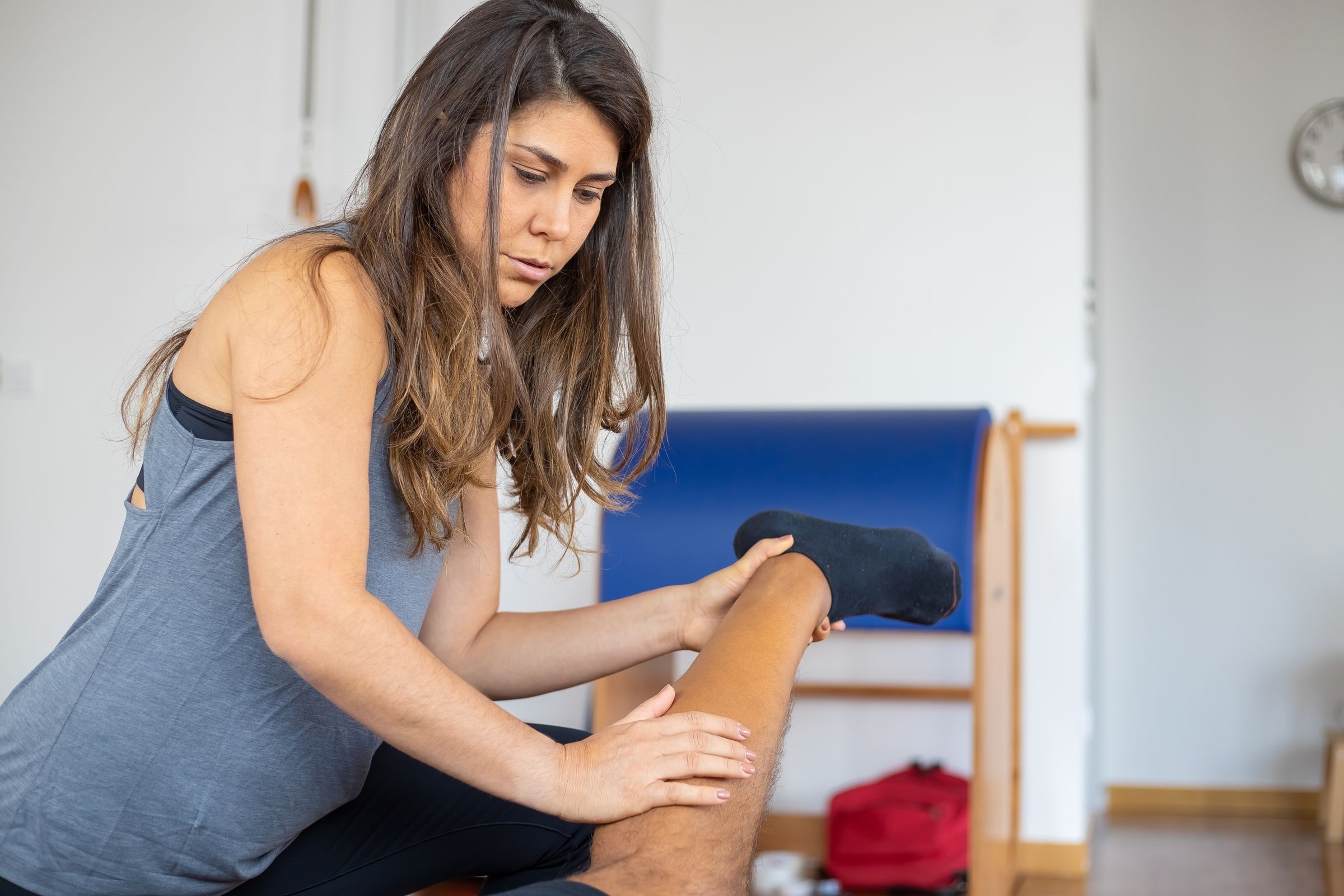
A randomized trial published September 29, 2026 in Annals of Internal Medicine found that a 4-month, twice-weekly supervised exercise and education program improved knee symptoms more than a single education session in young adults with persistent knee problems after ACL reconstruction, with a 4.8-point greater improvement on a 100-point knee symptom scale.
Researchers randomly assigned 184 adults ages 18 to 40 (average age 30, about 2.2 years past ACL reconstruction) to a 4-month twice-weekly physiotherapist-supervised exercise and education program, called SUPER, or a single education session plus a self-directed exercise handout. Each group had 92 people, and 178 (97%) completed 4-month follow-up while 174 (95%) completed 12-month follow-up. The main measure was change in the KOOS4 score, a 0 to 100 composite of knee pain, symptoms, function and quality of life, with 100 best. At 4 months, the supervised group improved by 14.1 points versus 9.4 points in the control group, an adjusted difference of 4.8 points (95% CI, 1.4 to 8.2). The supervised group also showed greater thigh muscle strength gains and higher rates of patient-reported success, for example 73% reporting meaningful pain improvement versus 40% in the control group.
By 12 months, the gap narrowed because the control group kept improving on its own while the supervised group's gains held steady rather than grew further. MRI scans of cartilage thickness and composition showed no difference between groups at either 4 or 12 months.

As background, supervised strength and movement retraining is understood to rebuild thigh muscle support around the knee joint, which can reduce load on the joint and improve day-to-day function even when cartilage itself looks unchanged on imaging.
For someone still dealing with knee pain or stiffness a year or more after ACL surgery, a structured program with regular coaching produced a bigger and faster improvement in daily symptoms and function than being handed an exercise sheet and sent home. The strength gains and higher rate of patient-reported success suggest supervision itself, not just having an exercise list, accounts for part of the difference.
Participants knew which group they were in, since blinding a physical therapy program isn't possible, which can inflate self-reported improvement. The 12-month data show the advantage narrowed as the control group caught up, so the early gains may not hold as a lasting edge over basic self-directed exercise.
This trial shows structure and accountability beat a one-time pep talk and a printout, at least early on. A 4.8-point edge on a 100-point scale sounds modest, but the strength gains and the 73% versus 40% split in people who felt genuinely better are the numbers I'd act on. The control group catching up by 12 months tells me consistency matters as much as which program you start with. If you're still dealing with knee pain a year past ACL surgery, I'd push for several months of supervised sessions to rebuild strength, then transition to sustainable self-directed work you keep doing long after the program ends.
 — Dr. Axe
Take the Cellular Health Quiz →