
Advertisement
Advertisement
Dr. Axe Wire · Study decoded · fitness
A new look at aging muscle shows grip weakness may start in the nerves that control muscle fibers, not just in the muscle itself.
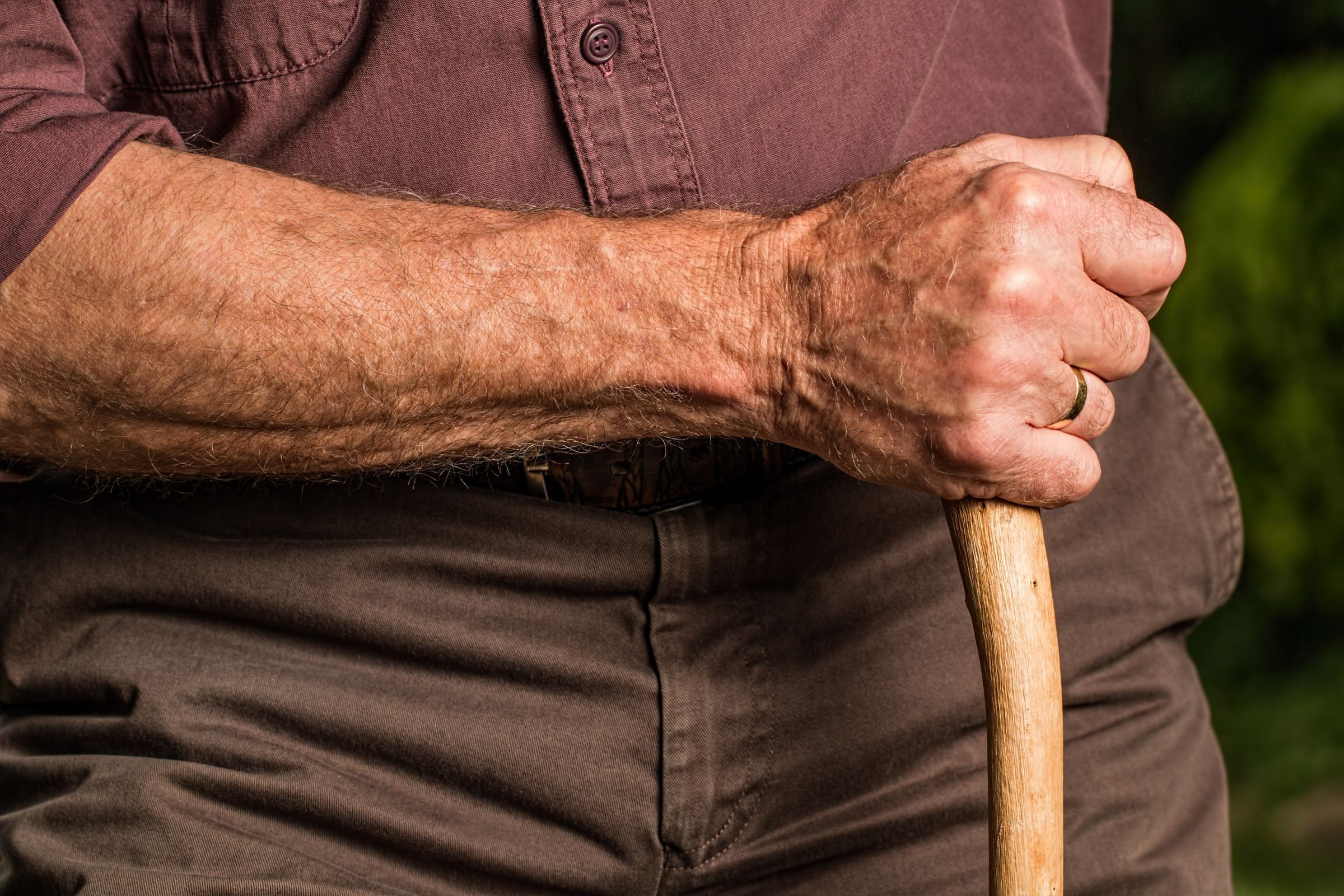
A study published in the Journal of Applied Physiology found that grip strength in older adults is linked to the condition of the nerve cells controlling hand muscles, not just muscle size. The link held only in men.
Researchers studied 49 older adults, 25 men and 24 women, measuring motor units in the muscle that controls thumb pinch strength using a technique called MScanFit2. Motor units are bundles of a single nerve cell and all the muscle fibers it controls. After adjusting for age, sex and body weight, pinch strength correlated with motor unit number estimation at 0.360, with a measure of motor unit size (A50) at negative 0.394, with motor unit potential size (L-sMUP) at negative 0.389, with the number of larger units making up half the muscle response (N50) at 0.416, and with a composite size-composition measure (N50/MUNE) at 0.439. When the authors split results by sex, every one of these associations held only in men and disappeared in women.
As people age, some motor neurons die off. The muscle fibers they used to control do not simply vanish; nearby surviving neurons send out new connections and absorb them, creating fewer but larger motor units. The authors describe this swap as motor unit remodeling, and in this study the men who had undergone more of it, meaning fewer and bigger motor units, tended to have weaker pinch strength. This suggests grip weakness in aging may trace back to how many working nerve-to-muscle connections remain, not only to how much muscle tissue is present.

This is an observational, cross-sectional study of 49 people, so it shows a link, not proof that nerve remodeling causes weaker grip strength. The sex-specific finding, where the association vanished in women, came from a small subgroup of 24 and needs confirmation in a larger sample. Conflicts were not reported in the abstract.
Nerve health drives muscle strength as much as muscle mass does, and this study backs that up for grip strength in older men. I think the practical move is to train the nervous system, not just the muscle. Grip and pinch work, farmer's carries, and resistance training that demands fast, forceful contractions recruit and challenge motor units directly, which may help preserve the connections that remain. I'd also pay attention to B12 and overall nerve-supportive nutrition, since nerve health depends on more than mechanical load. Grip strength is one of the better low-cost markers of healthy aging, so if yours is declining, treat it as a signal worth acting on, not just a side effect of getting older.
 — Dr. Axe
Take the Cellular Health Quiz →