
Advertisement
Advertisement
Dr. Axe Wire · Study decoded · gut
A lab study found that coating a flaxseed-derived antioxidant in chitosan and alginate kept it intact in a simulated digestion model.
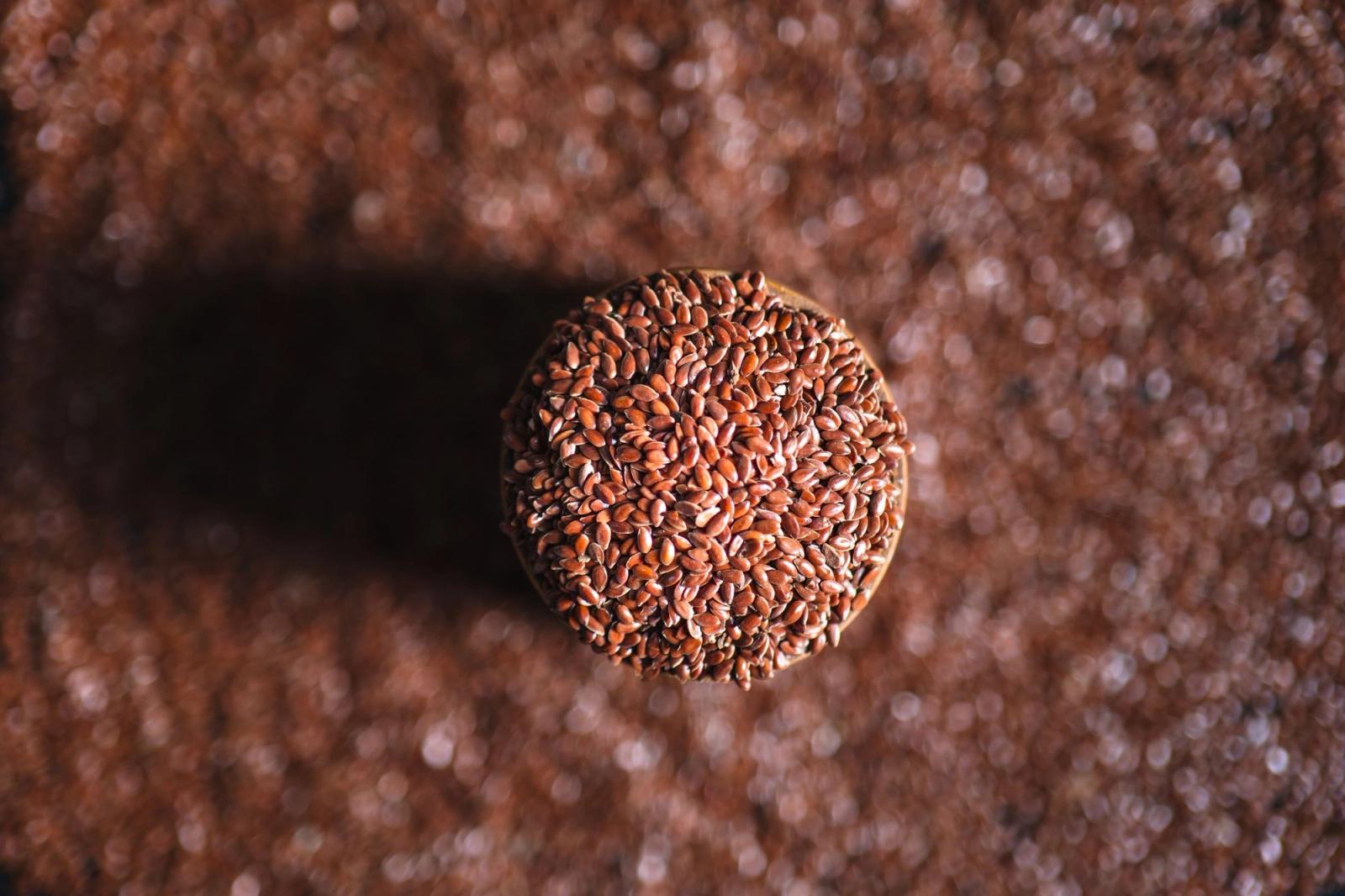
A lab-dish delivery system cut the early breakdown of a flaxseed-derived antioxidant compound nearly in half, according to a study published November 11, 2026 in Food Chemistry.
Researchers built fat-based capsules called liposomes, then wrapped them in chitosan and alginate layers (plant and shellfish-derived fibers used in food science) to protect secoisolariciresinol diglucoside, or SDG, a flaxseed compound with antioxidant and estrogen-like activity. The coating increased particle size to 457.3 nanometers and raised encapsulation efficiency by about 28.9%. Coated capsules held over 70% of their SDG after one month at 30°C, and performed well across pH 2.0 to 10.0, high salt concentrations, UV light and oxidation. In simulated digestion, coated capsules released only 28.72% of SDG during the stomach phase, versus 63.49% from uncoated liposomes, then roughly 68.5% cumulatively over 8 hours in the simulated intestine.
SDG breaks down quickly in the stomach before the body absorbs much of it, limiting its benefits outside the lab. A two-layer coating that resists stomach acid but opens in the intestine, as this capsule did, is a known strategy for getting fragile plant compounds past the stomach intact and releasing them closer to where they can be absorbed or acted on by gut bacteria.
This is chemistry and simulated digestion work, not a test in animals or people, so there is no evidence yet that this coating raises SDG levels in blood or delivers any health effect in a living body. Animal and human studies are the next step before this delivery method can be evaluated for real-world benefit.
Flaxseed's SDG is one of the best plant sources of lignans, which your gut bacteria convert into compounds tied to hormone balance and antioxidant activity. Stomach acid destroys most of it before it does any good, so this coating is a sensible engineering fix for that bottleneck. My advice stays food-first: ground flaxseed, not capsules, is still the most reliable way to get lignans into your diet, since grinding breaks the seed coat so your gut can access the compound. Add a tablespoon to oatmeal rather than waiting on a delivery technology only tested in a lab dish.
 — Dr. Axe