The Best Mineral Sunscreens of 2026, Ranked by Real Protection and a Clean Label
We scored 46 zinc and titanium sunscreens, from $14.99 to $73, on their FDA drug labels, zinc levels, other ingredients, independent SPF, lead and benzene tests, and whether each brand's website matches its label.
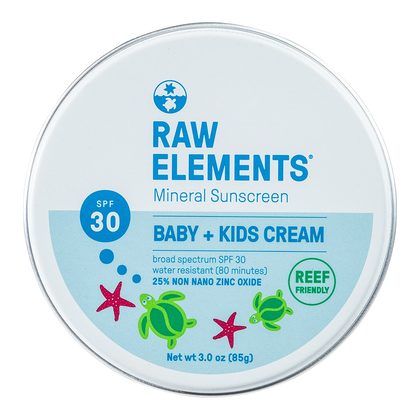
Best overall and for kids:Raw Elements Baby + Kids SPF 30 Tin ($24.99, 8.7/10): 25% zinc oxide, 80-minute water resistance and eight plant-based inactives.
Skip: sprays, “mineral-based” hybrids and brands whose website contradicts their FDA label.
Our #1 pick8.7/10
Raw Elements Baby + Kids SPF 30 Tin
25% zinc oxide, the only active and the most FDA allows, with 80-minute water resistance on its current FDA drug label[5][162].
Eight inactive ingredients, all oils, butters, beeswax, plant extracts and vitamin E, with no essential oils or boosters. The catch: no published lead or SPF test.[5]
How we score:Proven Protection 30%Clean Actives 15%Clean Inactives 25%Contaminant Testing 15%Label Honesty 15%Full methodology ↓
The Clean Sun Score (0–10) is our editorial judgment, not a medical grade. An SPF test a pinch or somewhat low (half the label or more) costs nothing; well below (a third to a half) takes 4% off, and drastically low (under a third) 12%. No top-10 pick has a public SPF number; apply generously.
Know your sunscreen
What mineral sunscreen does, and what the numbers show
Mineral sunscreens use zinc oxide or titanium dioxide, which sit on the skin. Chemical filters absorb into the body[185].
UVB, 280–320 nmShorter waves. SPF measures only these[206].
UVA, 320–400 nmLonger waves. “Broad Spectrum” means it passed FDA's UVA test[163]; zinc covers long UVA better than titanium[197].
Zinc oxide filmStays on the surface; in 5 volunteers it didn't enter living skin[198].
In an FDA trial of 48 adults, oxybenzone peaked at an average 258.1 ng/mL in blood after 4 days of heavy use (four coats a day on 75% of the body), 516 times the level that triggers more safety testing. FDA says absorption “does not mean that the ingredient is unsafe.”
Zinc oxide and titanium dioxide, the only mineral actives, are the only long-standing ones FDA has proposed as safe and effective. It wants more data on 12 chemical filters and finalized a new one, bemotrizinol, in 2026.
of 176 best-selling U.S. sunscreens. Mineral ones averaged fewer allergens: 1.45 vs 3.12.
Contact Dermatitis, 2026
Check your sunscreen's label
Look up your sunscreen's Drug Facts label on DailyMed, the government's drug-label library, to check its zinc oxide, water resistance and fragrance. EWG, an advocacy group, rates sunscreens by its own criteria[156].
Enjoy morning sun; seek shade late morning to mid-afternoon when the UV index is 3 or more[207]. A hat helps, and UPF 50 fabric blocks 98% of UV; a wet white T-shirt is about UPF 3[206]. In a year-long trial, daily SPF 50+ users had slightly lower vitamin D (5.2 nmol/L) than people who used sunscreen as they chose[193].
Use about 1 ounce, a shot glass full, for your body and at least 1 teaspoon for your face, 15 minutes before you go out. Reapply every 2 hours and right after swimming or sweating[203].
Cover ears, neck and tops of feet, and use an SPF 30 lip balm[203]. Keep babies under 6 months in shade and clothing; if that isn't possible, a little sunscreen on small areas is OK, and zinc or titanium suits sensitive spots[205].
Five questions, with the closest option if nothing fits.
1Who is it for?
2Swimming or sweating?
3Tint?
4Fragrance-free a must?
5Budget per tube?
Compare the top 10
What each sunscreen is proven to deliver
Actives and water resistance from each FDA label, plus independent tests.
Score = Dr. Axe Clean Sun Score, 0–10. Methodology ↓
On the FDA label Matches the current FDA label.Independent test SPF, lead or benzene test.Maker's data Brand's own report.Nothing public No public test.Fails or contradicts SPF well below label, fail, detection or mismatch.
SPF test: share of the label and test year; only results under half the label cost points. *Consumer Reports member result, band only; “old formula” tests don't count. †Sister product, half weight. ‡UK formula, no number published. Lead: single samples from Lead Safe Mama, an advocate; FDA's cosmetics guidance is 10 ppm[127][164]. Per application: 1 oz for the body, 1 teaspoon for the face[203]. Shaded rows are popular picks that missed our top 10.
Full reviews
The 10 best mineral sunscreens, ranked
The proof behind each pick, and how it fits your day. One model per product line.
1
$24.99Official Raw Elements store price, Sept. 26, 2026.
Best overall and for kids
Raw Elements Baby + Kids SPF 30 Tin
25% zinc oxide · water resistant 80 min · plastic-free tin
25%[5][162]zinc oxide, the most FDA's sunscreen rules allow
The most zinc you can get in a U.S. sunscreen, with a short, plant-based list. The FDA label shows 25% non-nano zinc oxide, the maximum FDA's sunscreen rules allow, plus eight inactive ingredients: sunflower oil, beeswax, coconut oil, cocoa butter, calendula and chamomile extracts, rosemary extract and vitamin E [5][162]. It's water resistant for 80 minutes and comes in a reusable metal tin [76]. Nobody has published a lead test for it. In 2021, the lab Valisure found 1.35 ppm benzene in one lot of Raw Elements' separate Eco Formula SPF 30 lotion and under 0.1 ppm in a lot of its adult tin; this kids' tin wasn't tested, so we disclose the brand result without a deduction [130]. Like our other picks, it's scored on a class-typical protection base.
Best forKids and babies over 6 months on beach and pool days
Skip ifYou want SPF 50, or a thin lotion for fast coverage of large areas
FinishA cream in a tin; Raw Elements says it goes on without running or stinging eyes
Water & sweatWater resistant 80 minutes (label)
ScentNo fragrance or essential oils listed
Size & cost3 oz for $24.99, about $8.33 per full-body coat
Who it suitsBabies over 6 months, kids and adults; under 6 months, ask a doctor
FDA label: Zinc oxide 25% (non-nano) · SPF 30 · FDA label version 2, Nov. 2023Read it on DailyMed
The pages for this tin, the Face + Body lotion and the Face Stick all contain hidden “Out of stock / Pre-order” template text; Raw Elements' store data listed all three as available on Sept. 26.
See score breakdown & sources
Proven Protection7.5
Clean Actives10.0
Clean Inactives10.0
Contaminant Testing6.0
Label Honesty10.0
Protection: no published, independent SPF number for this product, so a class-typical base of 7 for 25% zinc oxide, +0.5 for 80-minute water resistance: 7.5. Actives: zinc oxide only: 10. Inactives: no deductions: 10. Contaminants: no published heavy-metal test, so the no-data score of 6: 6. Label honesty: the brand page matches the FDA label: 10.
Public record / studyFDA drug label on DailyMed: Raw Elements Baby + Kids Broad Spectrum SPF 30 (version 2, published Nov. 10, 2023). Non-nano zinc oxide 25%; water resistant (80 minutes); 8 inactive ingredients. Open source · [5]
Maker's dataRaw Elements. Baby + Kids 30+ Tin ($24.99, 3 oz; store data lists it as available, Sept. 26, 2026). Open source · [76]
Public record / study21 CFR 352.10 (stayed; its actives and limits carry into FDA's current deemed final order for sunscreens): zinc oxide and titanium dioxide up to 25%; oxybenzone 6%; homosalate 15%. Polysilicone-15, butyloctyl salicylate, ethylhexyl methoxycrylene and diethylhexyl syringylidenemalonate aren't on its list of 16 actives. Open source · [162]
Independent testValisure. Citizen petition on benzene in sunscreen and after-sun care products (May 24, 2021): benzene in 78 of 294 batches; Raw Elements Eco Formula SPF 30 lotion lot 58J19, 1.35 ppm; some after-sun gels over 2 ppm. Valisure is a commercial lab. Open source · [130]
0.17[127]ppm lead in a sister Hello Bello lotion (advocate's test)
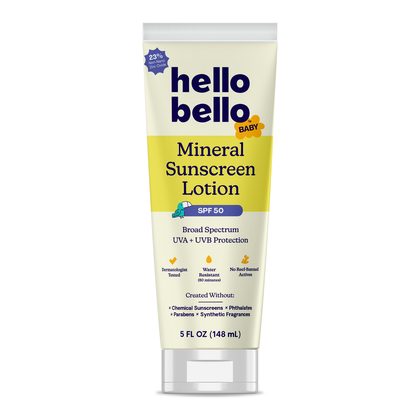
The best value in our top 10: at $17.99 for 5 oz, a full 1-oz body coat costs about $3.60 [78]. Its newest FDA label (August 2026) lists 23.5% zinc oxide and 80-minute water resistance, but Hello Bello's product page says 23.0%, a small mismatch that costs it 1.5 points on label honesty [7][78]. The base is plant oils and emulsifiers with cetyl dimethicone, orange peel oil for scent and butyloctyl salicylate, the SPF-boosting emollient we flag. A sister product, Hello Bello's Baby Mineral Sunscreen + Prebiotics SPF 55, tested at 0.17 ppm lead, 0.17 ppm cadmium and 0.49 ppm arsenic, with no mercury detected, in an advocate's single-sample test; FDA's cosmetics guidance for lead is 10 ppm, and we found no U.S. cosmetics limit for cadmium or arsenic [127][164][165].
Best forFamilies who go through a lot of sunscreen
Skip ifYou need fragrance-free (it contains orange peel oil)
Size & cost5 oz for $17.99 or 3 oz for $14.99: about $3.60 or $5.00 per full-body coat
Who it suitsLabeled for babies; ships only within the contiguous U.S.
FDA label: Zinc oxide 23.5% on the FDA label · SPF 50 · FDA label version 1, Aug. 2026Read it on DailyMed
See score breakdown & sources
Proven Protection7.5
Clean Actives10.0
Clean Inactives10.0
Contaminant Testing7.0
Label Honesty8.5
Protection: no published, independent SPF number for this product, so a class-typical base of 7 for 23.5% zinc oxide, +0.5 for 80-minute water resistance: 7.5. Actives: zinc oxide only: 10. Inactives: no deductions: 10. Contaminants: no test of this product; a sister product's lead result (0.17 ppm) scores 8, counted at half weight with the no-data score of 6: 7. Label honesty: Page says zinc oxide 23.0%; the FDA label (Aug. 2026) says 23.5% (−1.5): 8.5.
Public record / studyFDA drug label on DailyMed: Hello Bello Mineral Sunscreen SPF 50 (labeler Topiderm) (version 1, published Aug. 31, 2026). Zinc oxide 23.5%; water resistant (80 minutes); inactive list includes orange peel oil and butyloctyl salicylate. Open source · [7]
Maker's dataHello Bello. Baby Mineral Sunscreen Lotion SPF 50 ($17.99 for 5 oz, $14.99 for 3 oz; lists “Zinc Oxide 23.0%”), checked Sept. 26, 2026. Open source · [78]
Independent testLead Safe Mama (Tamara Rubin, a lead-safety advocate who earns affiliate and advertising income). Comparative chart of heavy metals in sunscreens, 2025/2026: lead, cadmium, mercury and arsenic in ppb (single samples, ICP-MS at Purity Laboratories; chart updated Apr. 19, 2026; 33 of 35 products had detectable lead; the 2 without were chemical sunscreens). Open source · [127]
Maker's dataHallstar (supplier of butyloctyl salicylate). Q&A: “not a sunscreen active ingredient but rather a unique cosmetic ester”; says it contributes no more than 2 SPF units at the recommended 5%. Open source · [126]
1 formula[9][8]number on both its SPF 30 and SPF 50 FDA labels
Failed[154]Which?'s 2022 test of the UK version (SPF 30)
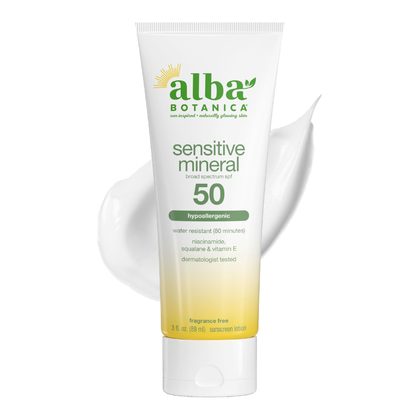
High zinc in a fragrance-free lotion, with two things to know. The FDA label for the SPF 50 lists 24.1% zinc oxide, 80-minute water resistance, butyloctyl salicylate (flagged) and phenoxyethanol [8]. First, Alba's SPF 30 and SPF 50 labels list the same formula number (PF163046-09), the same 24.1% zinc and the same 19 inactive ingredients, so the two SPF numbers appear to describe one formula [9][8]. Second, in 2022 the UK consumer group Which? tested the British Sensitive Mineral Fragrance Free SPF 30, and it failed both the SPF and UVA tests; Which? didn't publish the measured number, and the UK formula may differ, so we disclose it rather than score it [154]. Alba doesn't sell direct, so prices vary.
Best forFragrance-free shoppers who want high zinc in an easy-spreading lotion
Skip ifYou want a brand with a clean independent SPF record
FinishAlba says it's lightweight with no white cast
Water & sweatWater resistant 80 minutes (label)
ScentFragrance-free (label and page)
Size & cost3 fl oz tube; price varies by retailer
Who it suitsSold as hypoallergenic for sensitive skin; under 6 months, ask a doctor
FDA label: Zinc oxide 24.1% · SPF 50 · FDA label version 2, Nov. 2025Read it on DailyMed
See score breakdown & sources
Proven Protection7.5
Clean Actives10.0
Clean Inactives9.7
Contaminant Testing6.0
Label Honesty10.0
Protection: no published, independent SPF number for this product, so a class-typical base of 7 for 24.1% zinc oxide, +0.5 for 80-minute water resistance: 7.5. Which?'s 2022 UK fail published no number and may be a different formula, so it doesn't change the score. Actives: zinc oxide only: 10. Inactives: phenoxyethanol −0.3: 9.7. Contaminants: no published heavy-metal test, so the no-data score of 6: 6. Label honesty: the brand page matches the FDA label: 10.
Public record / studyFDA drug label on DailyMed: Alba Botanica Sensitive Mineral SPF 50 (version 2, published Nov. 28, 2025). Zinc oxide 24.1% (w/w); water resistant (80 minutes); formula PF163046-09; inactive list includes butyloctyl salicylate and phenoxyethanol. Open source · [8]
Public record / studyFDA drug label on DailyMed: Alba Botanica Sensitive Mineral SPF 30 (version 1, published Nov. 28, 2025). Zinc oxide 24.1% (w/w); same formula number (PF163046-09) and inactive list as the SPF 50. Open source · [9]
Maker's dataAlba Botanica. Sensitive Mineral Sunscreen SPF 50 (fragrance-free; no direct sales). Open source · [79]
Independent testWhich? (UK). Sunscreens costing up to £28 fail Which? sun safety tests (2022, free article): all 5 mineral sunscreens failed the SPF or UVA test, 3 failed both, including Alba Botanica Sensitive Mineral Fragrance Free SPF30. Open source · [154]
Maker's dataHallstar (supplier of butyloctyl salicylate). Q&A: “not a sunscreen active ingredient but rather a unique cosmetic ester”; says it contributes no more than 2 SPF units at the recommended 5%. Open source · [126]
80 min[10]water resistance, rare for a face product
11[10]inactive ingredients on the FDA label: waxes, butters, oils, tea and coffee extracts
1.35[130]ppm benzene in a 2021 lot of the brand's Eco Formula lotion
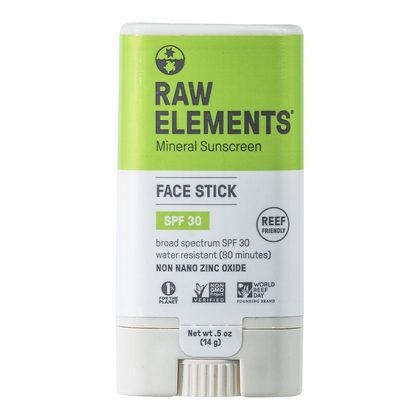
Our face pick: a solid stick with 22.75% zinc oxide and 80-minute water resistance, which few face products have [10]. Its FDA label lists 11 inactive ingredients: beeswax, candelilla wax, mango and cocoa butters, sunflower and hemp seed oils, green and black tea and coffee extracts, rosemary leaf oil and vitamin E; the box pictured on Raw Elements' store matches except that it adds rosemary leaf extract [10][80]. In 2021, the independent lab Valisure found 1.35 ppm benzene in one lot of Raw Elements' Eco Formula SPF 30 lotion, the same product line in a tube. FDA's benzene limit is 20 micrograms a day, which works out to 2 ppm for a product used at 10 grams a day, or about 0.7 ppm at the 1-ounce body dose we recommend [130][166]. The stick itself wasn't tested, so we count that result at half weight. Per ounce it's pricey, at $43.98.
Best forFaces, ears and noses on beach, snow and trail days
Skip ifYou want a daily moisturizer-style face sunscreen under makeup
Who it suitsFaces of adults and kids; under 6 months, ask a doctor
FDA label: Zinc oxide 22.75% (non-nano) · SPF 30 · FDA label version 4, Nov. 2023Read it on DailyMed
See score breakdown & sources
Proven Protection7.5
Clean Actives10.0
Clean Inactives10.0
Contaminant Testing5.5
Label Honesty10.0
Protection: no published, independent SPF number for this product, so a class-typical base of 7 for 22.75% zinc oxide, +0.5 for 80-minute water resistance: 7.5. Actives: zinc oxide only: 10. Inactives: no deductions: 10. Contaminants: no published heavy-metal test, so the no-data score of 6; a benzene detection in the same product line lowers it by half a step: 5.5. Label honesty: the brand page matches the FDA label: 10.
Public record / studyFDA drug label on DailyMed: Raw Elements Eco 30 stick, sold as the Face Stick SPF 30 (version 4, published Nov. 10, 2023). Zinc oxide 22.75%; water resistant (80 minutes); 11 inactive ingredients including rosemary leaf oil. Open source · [10]
Maker's dataRaw Elements. Face Stick SPF 30 ($21.99, 0.5 oz; box photo matches the FDA label except that it adds rosemary leaf extract). Open source · [80]
Independent testValisure. Citizen petition on benzene in sunscreen and after-sun care products (May 24, 2021): benzene in 78 of 294 batches; Raw Elements Eco Formula SPF 30 lotion lot 58J19, 1.35 ppm; some after-sun gels over 2 ppm. Valisure is a commercial lab. Open source · [130]
Public record / studyFDA. Alert on the risk of benzene contamination in certain drugs: limit exposure to 20 mcg a day, which equals 2 ppm for a product used at 10 g a day (about 0.7 ppm at a 1-oz daily dose, our calculation). Open source · [166]
$22.99Official Badger store price, Sept. 26, 2026 (not a sale).
Best tinted
Badger Tinted Face Mineral Sunscreen SPF 40
25% zinc oxide · 1 adaptive shade · waterless base
25%[11][162]zinc oxide, the most FDA's rules allow
1 shade[81]sold as adaptive for light to dark skin
9[11]inactive ingredients, no water, so no preservatives
0.89[127]ppm lead in its sister Badger Face SPF 30 (advocate's test)
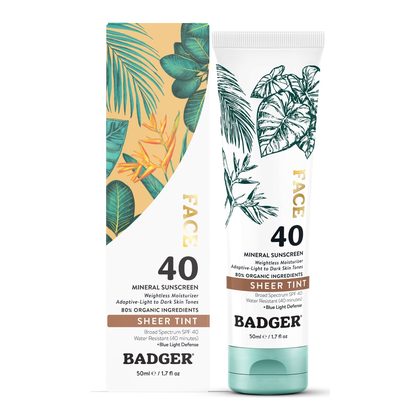
The best tinted pick and the highest-zinc face sunscreen we scored: 25% zinc oxide, the most FDA's rules allow, in a waterless base of coconut-derived oil, sunflower wax and oil, babassu starch, castor wax and iron oxides for the tint [11][162]. With no water there are no preservatives. Badger sells one shade as adaptive for a wide range of skin tones [81]. The box says “Water Resistant (40 Minutes),” but the directions on its FDA label leave out the 40-minute reapply instruction FDA requires with that claim, so treat it as a daily face product [11][163]. Its untinted sister, Badger Face SPF 30, tested at 0.89 ppm lead, 0.23 ppm cadmium and 0.03 ppm arsenic, with no mercury detected, in an advocate's single-sample test; FDA's cosmetics guidance for lead is 10 ppm [127][164].
Best forA sheer, warm tint for everyday face wear
Skip ifYou need several shades, or a face product for swimming
FinishA sheer tint; Badger calls it adaptive for light to dark skin
Water & sweatBox says 40 minutes; the directions don't include the 40-minute reapply line
ScentNo fragrance or essential oils listed
Size & cost1.7 fl oz for $22.99, about $2.25 per 1-teaspoon face application
Who it suitsFaces; Badger also claims blue light defense
FDA label: Zinc oxide 25% (non-nano, uncoated) · SPF 40 · FDA label version 1, Feb. 2026Read it on DailyMed
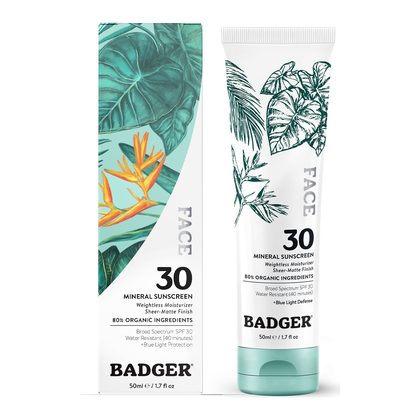
Prefer untinted? Badger Face SPF 30 uses the same base with 18.75% zinc; it tested at 0.89 ppm lead and its label also has a water-resistance mismatch. It scores 8.2 in the face guide below.
Consumer Reports has tested Badger's Kids, Sport and Active creams (member results, 2017–2025), but they have 22.5% or 18.75% zinc in a beeswax-and-sunflower-oil base, not this 25% zinc tinted formula, so those tests don't affect this score [135][137][136].
See score breakdown & sources
Proven Protection7.0
Clean Actives10.0
Clean Inactives10.0
Contaminant Testing6.3
Label Honesty10.0
Protection: no published, independent SPF number for this product, so a class-typical base of 7 for 25% zinc oxide, no change for 40-minute water resistance: 7. Actives: zinc oxide only: 10. Inactives: no deductions: 10. Contaminants: no test of this product; a sister product's lead result (0.89 ppm) scores 6.5, counted at half weight with the no-data score of 6: 6.25. Label honesty: the brand page matches the FDA label: 10.
Public record / studyFDA drug label on DailyMed: Badger SPF 40 Tinted Mineral Face Sunscreen (version 1, published Feb. 2, 2026). Non-nano uncoated zinc oxide 25%; carton says “Water Resistant (40 Minutes)”; the Directions omit the 40-minute reapply line. Open source · [11]
Maker's dataBadger. Tinted Face Mineral Sunscreen SPF 40 ($22.99, 1.7 fl oz; one adaptive shade; not a sale price). Open source · [81]
Independent testLead Safe Mama (Tamara Rubin, a lead-safety advocate who earns affiliate and advertising income). Comparative chart of heavy metals in sunscreens, 2025/2026: lead, cadmium, mercury and arsenic in ppb (single samples, ICP-MS at Purity Laboratories; chart updated Apr. 19, 2026; 33 of 35 products had detectable lead; the 2 without were chemical sunscreens). Open source · [127]
Public record / studyFDA. Lead in cosmetics: recommended maximum of 10 ppm lead for cosmetic lip products and externally applied cosmetics (guidance, Dec. 2016). Sunscreens are regulated as drugs, so this is context, not a legal limit for them. Open source · [164]
Public record / study21 CFR 201.327: sunscreen labeling and testing (SPF tested at 2 mg/cm²; “Water Resistant (40 minutes)” or “(80 minutes)” with matching reapply directions; “sunblock,” “waterproof” and “sweatproof” not allowed; “especially from 10 a.m.-2 p.m.”; children under 6 months: ask a doctor). Open source · [163]
Public record / study21 CFR 352.10 (stayed; its actives and limits carry into FDA's current deemed final order for sunscreens): zinc oxide and titanium dioxide up to 25%; oxybenzone 6%; homosalate 15%. Polysilicone-15, butyloctyl salicylate, ethylhexyl methoxycrylene and diethylhexyl syringylidenemalonate aren't on its list of 16 actives. Open source · [162]
0.32[127][128]ppm average lead in 2 sister Badger creams (advocate's test)
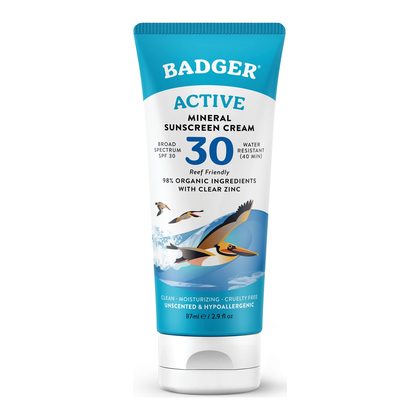
The shortest label in our top 10: 18.75% uncoated zinc oxide and four inactive ingredients, sunflower oil, beeswax, vitamin E and sea buckthorn, with no fragrance, essential oils, silicones, PEGs, preservatives or boosters [14]. Badger says it goes on smooth and rubs in clear, and pitches it for beach days and light outdoor activity [86]. Its water resistance is 40 minutes, half what our 80-minute picks carry, so reapply sooner when you swim [14]. Nobody has published a metals test of this exact cream, but Badger's Baby cream tested at 0.30 ppm lead, 0.34 ppm cadmium, 0.01 ppm arsenic and 0.008 ppm mercury, and its Adventure cream at 0.34 ppm lead, 0.25 ppm cadmium and 0.02 ppm arsenic, with no mercury detected, in an advocate's single-sample tests; FDA's cosmetics guidance for lead is 10 ppm, and it limits mercury to unavoidable traces under 1 ppm [127][128][164][165]. In January 2025, Badger recalled 4,834 tins of a different product, its SPF 50 Adventure Sport tin, because some might lack the Drug Facts label [168].
Best forSensitive skin and anyone who wants the fewest ingredients, for everyday and light activity
Skip ifYou'll swim for long stretches, or you want a sheer lotion
FinishA cream Badger says goes on smooth and rubs in clear
Water & sweatWater resistant 40 minutes; reapply after 40 minutes of swimming
ScentUnscented: no fragrance or essential oils on the label
Size & cost2.9 fl oz for $18.99, about $6.55 per full-body coat
Who it suitsAdults and kids with sensitive skin; under 6 months, ask a doctor
FDA label: Uncoated zinc oxide 18.75% · SPF 30 · FDA label version 2, Jan. 2025Read it on DailyMed
Consumer Reports' SPF testing (member results, tested 2017) found an earlier formula of this cream somewhat low (at 50–69% of its label SPF), but Badger's 2018 label listed jojoba oil where today's lists sea buckthorn, so that test doesn't count here [136][38].
See score breakdown & sources
Proven Protection6.5
Clean Actives10.0
Clean Inactives10.0
Contaminant Testing7.0
Label Honesty10.0
Protection: no published, independent SPF number for this product, so a class-typical base of 6.5 for 18.75% zinc oxide, no change for 40-minute water resistance: 6.5. SPF test: Consumer Reports tested an earlier formula (2017); the formula has changed since, so that test doesn't count. Actives: zinc oxide only: 10. Inactives: no deductions: 10. Contaminants: no test of this product; a sister product's lead result (0.32 ppm) scores 8, counted at half weight with the no-data score of 6: 7. Label honesty: the brand page matches the FDA label: 10.
Public record / studyFDA drug label on DailyMed: Badger Active SPF 30 Mineral Sunscreen (version 2, published Jan. 1, 2025). Uncoated zinc oxide 18.75%; water resistant (40 minutes); 4 inactive ingredients. Open source · [14]
Maker's dataBadger. Active Mineral Sunscreen Cream SPF 30 ($18.99, 2.9 fl oz). Open source · [86]
Independent testLead Safe Mama (Tamara Rubin, a lead-safety advocate who earns affiliate and advertising income). Comparative chart of heavy metals in sunscreens, 2025/2026: lead, cadmium, mercury and arsenic in ppb (single samples, ICP-MS at Purity Laboratories; chart updated Apr. 19, 2026; 33 of 35 products had detectable lead; the 2 without were chemical sunscreens). Open source · [127]
Independent testLead Safe Mama (Tamara Rubin, a lead-safety advocate who earns affiliate and advertising income). Badger Adventure Mineral Sunscreen Cream SPF 50: 343.7 ppb lead, 251.8 ppb cadmium, 19.96 ppb arsenic, mercury not detected (LSM sample 2025-095, tested May 29, 2025). Open source · [128]
Public record / studyFDA. Lead in cosmetics: recommended maximum of 10 ppm lead for cosmetic lip products and externally applied cosmetics (guidance, Dec. 2016). Sunscreens are regulated as drugs, so this is context, not a legal limit for them. Open source · [164]
Public record / study21 CFR 700.13: a cosmetic may contain mercury only as an unavoidable trace under 1 ppm (up to 65 ppm as a preservative in some eye-area cosmetics). The restricted-ingredient rules in 21 CFR 700 set no limit for cadmium or arsenic. Open source · [165]
Public record / studyFDA enforcement report D-0209-2025 (openFDA): Badger SPF 50 Adventure Sport tin, Class III recall, initiated Jan. 17, 2025, because units might be missing the Drug Facts label (terminated). Open source · [168]
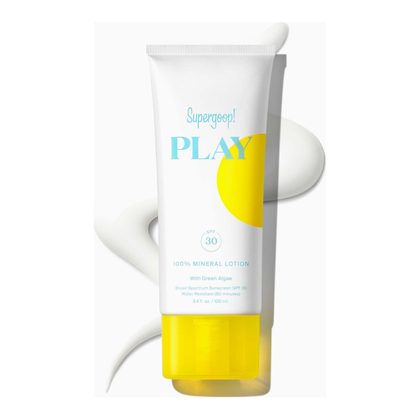
Our sport pick, and the only product in our top 10 whose maker posts an SPF test report. The redacted report, from a lab Supergoop paid, used FDA's method on 10 people and found a mean SPF of 33.6, and 32.7 after 80 minutes in water, for an SPF 30 label [83]. That's maker data, so it earns no bonus, but it's more than most brands show. The FDA label lists 16% zinc oxide, 80-minute water resistance and butyloctyl salicylate, the booster we flag [12]. A 2025 class action, Wayne v. Supergoop, alleges Supergoop's “100% mineral” claims mislead because its mineral products contain synthetic ingredients such as butyloctyl salicylate; those are allegations, and the plaintiff bought a different product [179].
Best forWorkouts, sports and swim days
Skip ifCost per ounce matters, or you avoid SPF boosters
FinishA lightweight lotion with a natural finish (Supergoop)
Water & sweatWater resistant 80 minutes; the maker's lab measured SPF 32.7 after immersion
ScentNo fragrance listed
Size & cost3.4 fl oz for $28 (about $8.24 per full-body coat) or 1 fl oz for $16
Who it suitsSupergoop says all skin types, including sensitive
FDA label: Zinc oxide 16.0% · SPF 30 · FDA label version 2, Jan. 2026Read it on DailyMed
Consumer Reports has tested Supergoop Sunnyscreen Mineral Spray SPF 50 (member results, 2025), but it's a spray with 12% zinc and 10% titanium, a different formula, so that test doesn't affect this score [147].
See score breakdown & sources
Proven Protection7.0
Clean Actives10.0
Clean Inactives10.0
Contaminant Testing6.0
Label Honesty10.0
Protection: no published, independent SPF number for this product, so a class-typical base of 6.5 for 16% zinc oxide, +0.5 for 80-minute water resistance: 7. The maker's own SPF report is shown as maker data, with no bonus. Actives: zinc oxide only: 10. Inactives: no deductions: 10. Contaminants: no published heavy-metal test, so the no-data score of 6: 6. Label honesty: the brand page matches the FDA label: 10.
Public record / studyFDA drug label on DailyMed: Supergoop! PLAY Mineral SPF 30 with Green Algae (version 2, published Jan. 14, 2026). Zinc oxide 16.0%; water resistant (80 minutes); inactive list includes butyloctyl salicylate. Open source · [12]
Maker's dataSupergoop!. PLAY 100% Mineral Lotion SPF 30 ($28 for 3.4 fl oz, $16 for 1 fl oz; not a sale price), checked Sept. 26, 2026. Open source · [82]
Maker's dataSupergoop!. Redacted SPF report for PLAY 100% Mineral Lotion SPF 30, linked from its product page: lab name redacted; FDA method; 10 subjects; mean SPF 33.6 static and 32.7 after 80 minutes in water (Nov. 2020 to Jan. 2021). Open source · [83]
Public record / studyTop Class Actions (Jan. 5, 2026): Wayne v. Supergoop LLC alleges “100% Mineral” claims mislead because the products contain synthetic ingredients such as butyloctyl salicylate; the plaintiff bought Mineral Mattescreen SPF 40. Allegations. Open source · [179]
Maker's dataHallstar (supplier of butyloctyl salicylate). Q&A: “not a sunscreen active ingredient but rather a unique cosmetic ester”; says it contributes no more than 2 SPF units at the recommended 5%. Open source · [126]
1.13[127][13]ppm lead in the same formula sold as “Every Day 4 Kids” (advocate's test)
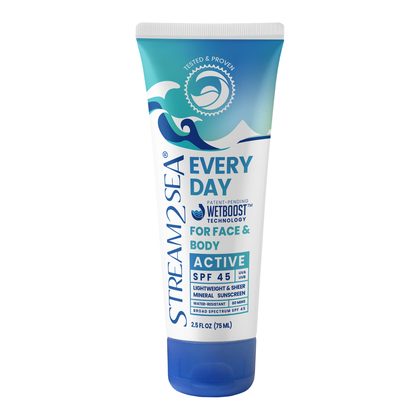
No flagged ingredients at all: no fragrance, silicones, PEGs, phenoxyethanol or SPF boosters on an FDA label that lists 19% zinc oxide, SPF 45 and 80-minute water resistance [13]. Stream2Sea says it's sheer enough for faces and sturdy enough for bodies [84]; its testing page shows a patent figure for its “WetBoost” technology (a “model formulation” up 47.6% after water contact) and an absorbance chart, but no SPF test of this product with methods or sample size [85]. The catches are lead and price. The same formula, sold as Every Day Mineral Sunscreen 4 Kids under the same FDA label, tested at 1.13 ppm lead, 0.24 ppm cadmium and 0.03 ppm arsenic, with no mercury detected, in an advocate's single-sample test, and a Happy Ocean Kids lotion on that label with a nearly identical list tested at 0.90 ppm lead; FDA's cosmetics guidance for lead is 10 ppm [13][127][164]. Stream2Sea says it runs random-lot heavy-metal tests with “minimal trace” results but doesn't publish them [85]. And at $26.95 for 2.5 oz, a full-body coat costs about $10.78, the most in our top 10.
Best forOne tube for face and body on swim and snorkel days
FinishSheer, lightweight and non-greasy (Stream2Sea)
Water & sweatWater resistant 80 minutes (label)
ScentFragrance-free (page; none on the label)
Size & cost2.5 fl oz for $26.95, about $10.78 per full-body coat
Who it suitsFace and body; Stream2Sea says it won't sting eyes
FDA label: Zinc oxide 19% (non-nano) · SPF 45 · FDA label version 7, May 2025Read it on DailyMed
See score breakdown & sources
Proven Protection7.0
Clean Actives10.0
Clean Inactives10.0
Contaminant Testing5.0
Label Honesty10.0
Protection: no published, independent SPF number for this product, so a class-typical base of 6.5 for 19% zinc oxide, +0.5 for 80-minute water resistance: 7. Actives: zinc oxide only: 10. Inactives: no deductions: 10. Contaminants: an independent lead result of 1.13 ppm in the same formula sold under another name on the same FDA label scores 5: 5. Label honesty: the brand page matches the FDA label: 10.
Public record / studyFDA drug label on DailyMed: Stream2Sea Every Day Mineral Sunscreen SPF 45 (version 7, published May 13, 2025). Zinc oxide 19% (non-nano); water resistant (80 minutes). Open source · [13]
Maker's dataStream2Sea. Every Day Active Mineral Sunscreen ($26.95, 2.5 fl oz; “WetBoost” claim). Open source · [84]
Maker's dataStream2Sea. Product test results page: a WetBoost patent figure (a “model formulation” up 47.6% after water contact) and a before-and-after absorbance chart; says it “performs random lot testing for heavy metals” with “non-detectable or minimal trace levels” (no results published). Open source · [85]
Independent testLead Safe Mama (Tamara Rubin, a lead-safety advocate who earns affiliate and advertising income). Comparative chart of heavy metals in sunscreens, 2025/2026: lead, cadmium, mercury and arsenic in ppb (single samples, ICP-MS at Purity Laboratories; chart updated Apr. 19, 2026; 33 of 35 products had detectable lead; the 2 without were chemical sunscreens). Open source · [127]
Public record / studyFDA. Lead in cosmetics: recommended maximum of 10 ppm lead for cosmetic lip products and externally applied cosmetics (guidance, Dec. 2016). Sunscreens are regulated as drugs, so this is context, not a legal limit for them. Open source · [164]
< 0.1[130]ppm benzene, a trace, in a 2021 lot of the Dry-Touch Face version (not counted)
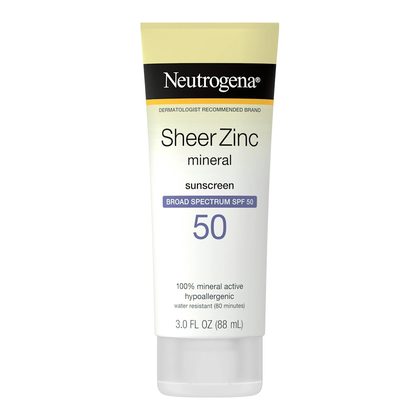
Our highest-scoring pick from a major consumer-health company: Neutrogena is a Kenvue brand. Its FDA label lists 21.6% zinc oxide as the only active and 80-minute water resistance, in a base of silicones and esters with a PEG-silicone emulsifier, phenoxyethanol and chlorphenesin as preservatives, and feverfew extract, with no fragrance or SPF boosters [40]. The PEG and phenoxyethanol cost it 1.3 points on clean inactives. Neutrogena calls it non-greasy, water resistant and gentle for sensitive skin, and the carton carries the National Eczema Association's seal [39][40]. Nobody has published a lead test for it; Valisure found only a trace of benzene, under 0.1 ppm, in a 2021 lot of the Dry-Touch Face version, which we don't count [130]. Neutrogena sells it through retailers, so prices vary.
Best forBeach and pool days with a fragrance-free, high-zinc lotion
Skip ifYou want a short, plant-based ingredient list
Size & cost3 fl oz or a 5 fl oz value size; price varies by retailer
Who it suitsNeutrogena says sensitive skin; under 6 months, ask a doctor
FDA label: Zinc oxide 21.6% · SPF 50 · FDA label version 7, Nov. 2024Read it on DailyMed
Consumer Reports' SPF testing (member results, tested 2018) found Neutrogena's Sheer Zinc Mineral lotion drastically low (under a third of its label SPF), but that was before Neutrogena's Sheer Zinc formula changed in late 2020 (colloidal oatmeal and vitamin E out, phenoxyethanol and chlorphenesin in, per the Dry-Touch label; today the Sheer Zinc Mineral and Dry-Touch labels are identical), so that test doesn't count here [143][35][34]. CHOICE (Australia) tested the Australian Neutrogena Sheer Zinc Dry-Touch SPF 50 at SPF 24 in 2025; the Australian formula has no FDA label to compare, so it doesn't add a penalty [134].
See score breakdown & sources
Proven Protection7.5
Clean Actives10.0
Clean Inactives8.7
Contaminant Testing6.0
Label Honesty10.0
Protection: no published, independent SPF number for this product, so a class-typical base of 7 for 21.6% zinc oxide, +0.5 for 80-minute water resistance: 7.5. SPF test: Consumer Reports tested an earlier formula (2018); the formula has changed since, so that test doesn't count. Actives: zinc oxide only: 10. Inactives: PEGs −1, phenoxyethanol −0.3: 8.7. Contaminants: no published heavy-metal test, so the no-data score of 6; a benzene trace under 0.1 ppm isn't counted: 6. Label honesty: the brand page matches the FDA label: 10.
Public record / studyFDA drug label on DailyMed: Neutrogena Sheer Zinc Dry-Touch SPF 50 (version 7, published Nov. 15, 2024). Zinc oxide 21.6%; water resistant (80 minutes). Open source · [40]
Maker's dataNeutrogena. Sheer Zinc Dry-Touch Sunscreen Broad Spectrum SPF 50, 3 fl oz (“non-greasy, water-resistant & gentle for sensitive skin”; sold through retailers), checked Sept. 26, 2026. Open source · [39]
Independent testValisure. Citizen petition on benzene in sunscreen and after-sun care products (May 24, 2021): benzene in 78 of 294 batches; Raw Elements Eco Formula SPF 30 lotion lot 58J19, 1.35 ppm; some after-sun gels over 2 ppm. Valisure is a commercial lab. Open source · [130]
Independent testConsumer Reports sunscreen ratings: Neutrogena Sheer Zinc Mineral Lotion SPF 50 (first published 2018). Results are for CR members; we describe them by band only and don't reproduce CR's numbers. Open source · [143]
Public record / studyFDA drug label on DailyMed, archived: Neutrogena Sheer Zinc Dry-Touch SPF 50 (version 2, Mar. 2020): inactive list with colloidal oatmeal and tocopheryl acetate and no phenoxyethanol or chlorphenesin; version 3 (Dec. 2020) matches today's list. Open source · [35]
Public record / studyFDA drug label on DailyMed: Neutrogena Sheer Zinc Mineral Sunscreen SPF 50 (version 11, published Feb. 17, 2025). Zinc oxide 21.6%; the same 21 inactive ingredients as the Sheer Zinc Dry-Touch label. Open source · [34]
Independent testCHOICE (Australia). Sunscreen test (June 2025; updated Dec. 4, 2025): 16 of 20 SPF 50/50+ sunscreens failed their SPF claim (10 volunteers each); Neutrogena Sheer Zinc Dry-Touch SPF 24; Banana Boat Baby Zinc SPF 28; Ultra Violette Lean Screen SPF 4. Ultra Violette said new tests of Lean Screen at multiple labs returned SPF 4 to 64. Open source · [134]
0.92[127]ppm lead in a sister Solara face milk (advocate's test)
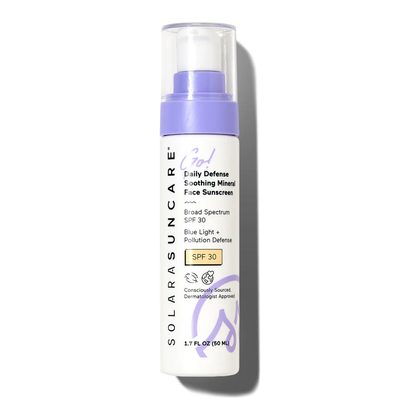
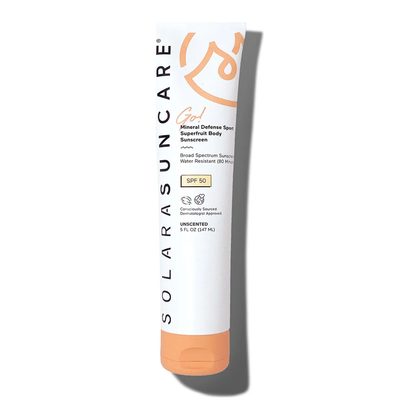
The best untinted daily face lotion we scored. Its FDA label lists 19% zinc oxide as the only active, in a base of coconut-derived oils and plant-based emulsifiers with aloe, green tea, sunflower sprout extract and shea, and no fragrance, silicones, PEGs or SPF boosters [20]. Its preservatives include phenoxyethanol and sodium benzoate, and it contains propylene glycol. Solara calls the finish satin and says it suits sensitive and acne-prone skin [91]. It isn't water resistant, so wear it for everyday, not swimming; face products take no deduction for that. Nobody has tested this lotion for metals, but Solara's Guardian Angel Peptide face milk tested at 0.92 ppm lead, 0.44 ppm cadmium and 0.005 ppm mercury, with no arsenic detected, in an advocate's single-sample test; FDA's cosmetics guidance for lead is 10 ppm [127][164].
Best forEveryday face wear, alone or under makeup, including sensitive skin
Water & sweatNot water resistant; the label says to use a water-resistant sunscreen if swimming or sweating
ScentNo fragrance listed (label)
Size & cost1.7 fl oz for $25, about $2.45 per 1-teaspoon face application
Who it suitsSolara says sensitive and acne-prone skin; under 6 months, ask a doctor
FDA label: Zinc oxide 19% · SPF 30 · FDA label version 5, Dec. 2025Read it on DailyMed
See score breakdown & sources
Proven Protection6.5
Clean Actives10.0
Clean Inactives9.7
Contaminant Testing6.3
Label Honesty10.0
Protection: no published, independent SPF number for this product, so a class-typical base of 6.5 for 19% zinc oxide, no change for a face product that isn't water resistant: 6.5. Actives: zinc oxide only: 10. Inactives: phenoxyethanol −0.3: 9.7. Contaminants: no test of this product; a sister product's lead result (0.92 ppm) scores 6.5, counted at half weight with the no-data score of 6: 6.25. Label honesty: the brand page matches the FDA label: 10.
Public record / studyFDA drug label on DailyMed: Solara Go Daily Defense Soothing Mineral Face Sunscreen (version 5, published Dec. 23, 2025). Zinc oxide 19%; not water resistant. Open source · [20]
Maker's dataSolara Suncare. Go! Daily Defense Soothing Mineral Face Sunscreen SPF 30 ($25, 1.7 oz). Open source · [91]
Independent testLead Safe Mama (Tamara Rubin, a lead-safety advocate who earns affiliate and advertising income). Comparative chart of heavy metals in sunscreens, 2025/2026: lead, cadmium, mercury and arsenic in ppb (single samples, ICP-MS at Purity Laboratories; chart updated Apr. 19, 2026; 33 of 35 products had detectable lead; the 2 without were chemical sunscreens). Open source · [127]
Public record / studyFDA. Lead in cosmetics: recommended maximum of 10 ppm lead for cosmetic lip products and externally applied cosmetics (guidance, Dec. 2016). Sunscreens are regulated as drugs, so this is context, not a legal limit for them. Open source · [164]
A tube's price says little until you use enough. We price one full-body coat at 1 ounce, a shot glass full, and one face application at 1 teaspoon, the amounts the American Academy of Dermatology recommends[203].
Our top 10Other sunscreens scoring 7.8 or moreShorter bar = cheaper per use
Body: per 1-oz coat
Hello Bello Baby SPF 50#2 · $17.99 for 5 oz · score 8.6$3.60per 1-oz coat
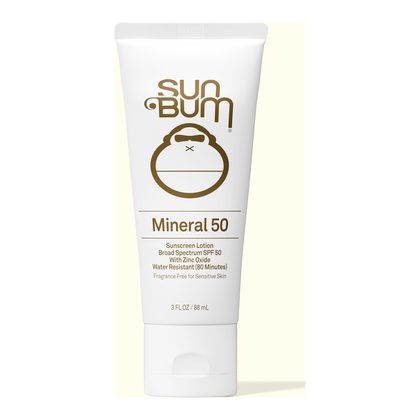
Sun Bum Mineral SPF 50$17.49 for 3 oz · score 8.3$5.83per 1-oz coat
Babo Sheer Zinc SPF 30$18.00 for 3 oz · score 8.3$6.00per 1-oz coat
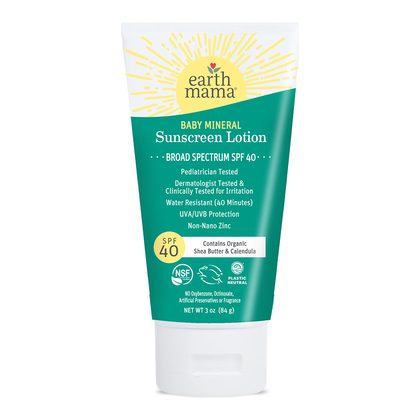
Earth Mama Baby SPF 40$17.99 for 2.96 oz · score 8.1$6.08per 1-oz coat
Badger Active SPF 30#6 · $18.99 for 2.9 oz · score 8.5$6.55per 1-oz coat
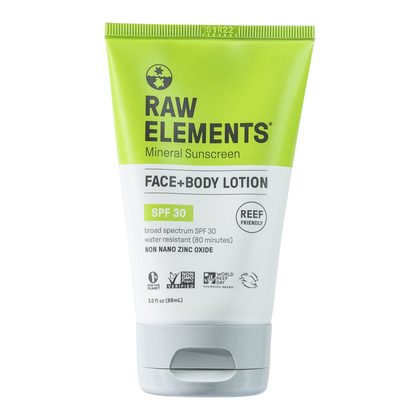
Raw Elements Face + Body$22.49 for 3 oz · score 8.5$7.50per 1-oz coat
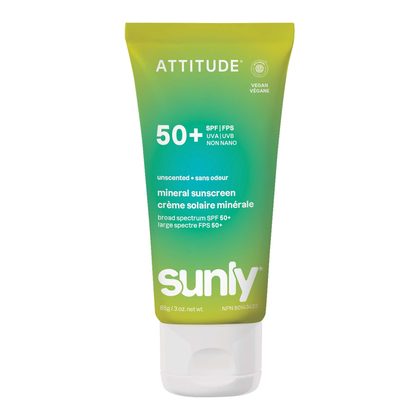
ATTITUDE Sunly SPF 50$22.95 for 3 oz · score 8.2$7.65per 1-oz coat
Supergoop PLAY Mineral SPF 30#7 · $28.00 for 3.4 oz · score 8.5$8.24per 1-oz coat
Raw Elements Baby + Kids Tin#1 · $24.99 for 3 oz · score 8.7$8.33per 1-oz coat
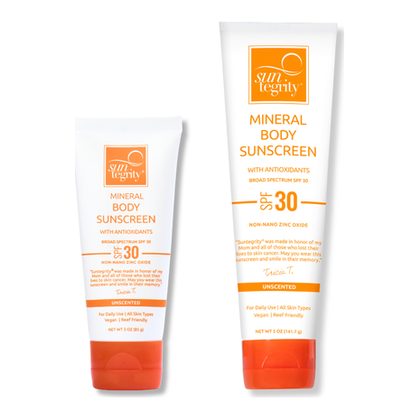
Suntegrity Body SPF 30$26.00 for 3 oz · score 8.2$8.67per 1-oz coat
Stream2Sea Every Day Active#8 · $26.95 for 2.5 oz · score 8.4$10.78per 1-oz coat
Face: per 1-teaspoon application
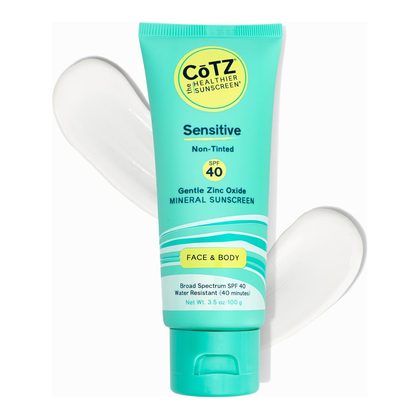
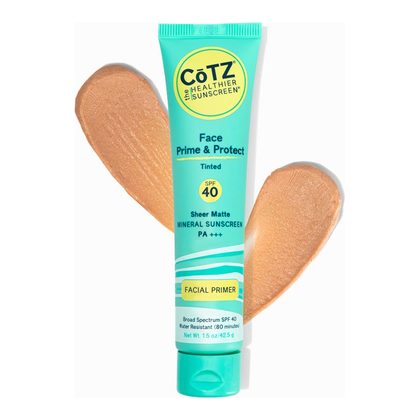
CōTZ Sensitive SPF 40$31.00 for 3.5 oz · score 7.9$1.48per teaspoon
Badger Tinted Face SPF 40#5 · $22.99 for 1.7 oz · score 8.5$2.25per teaspoon
Badger Face SPF 30$22.99 for 1.7 oz · score 8.2$2.25per teaspoon
Solara Go! Daily Defense#10 · $25.00 for 1.7 oz · score 8.3$2.45per teaspoon
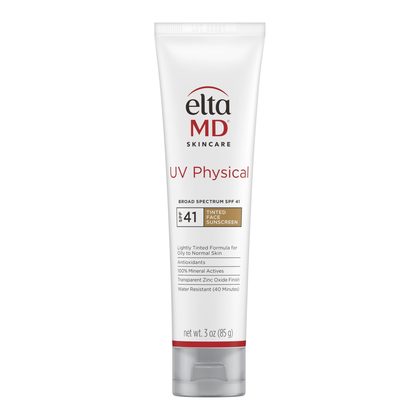
EltaMD UV Physical SPF 41$48.00 for 3 oz · score 7.8$2.67per teaspoon
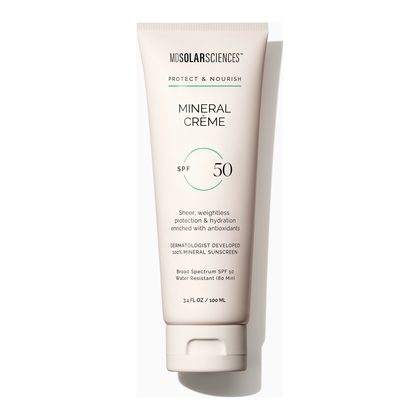
MDSolar Mineral Crème$33.00 for 1.7 oz · score 8.1$3.24per teaspoon
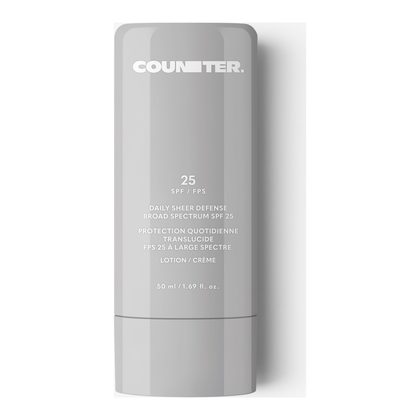
Counter Daily Sheer SPF 25$45.00 for 1.69 oz · score 8.0$4.44per teaspoon
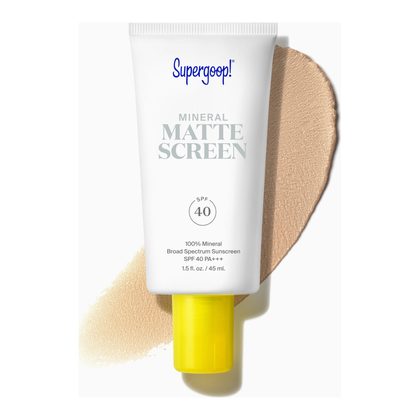
Supergoop Mattescreen$40.00 for 1.5 oz · score 7.9$4.44per teaspoon
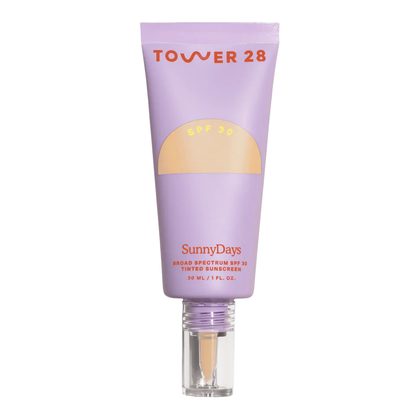
Tower 28 SunnyDays$32.00 for 1 oz · score 7.8$5.33per teaspoon
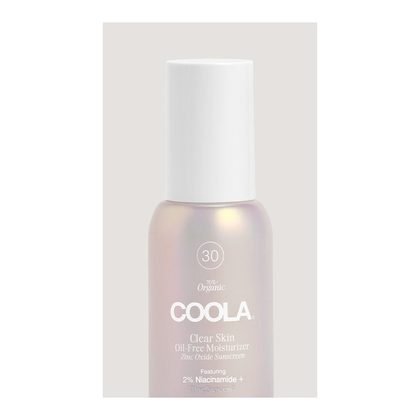
COOLA Clear Skin SPF 30$48.00 for 1.1 oz · score 8.1$7.27per teaspoon
Raw Elements Face Stick#4 · $21.99 for 0.5 oz · score 8.6$7.33per teaspoon
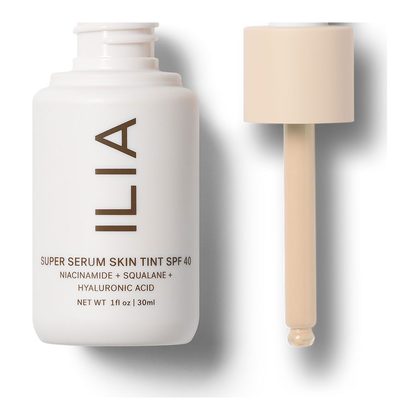
ILIA Skin Tint SPF 40$48.00 for 1 oz · score 8.1$8.00per teaspoon
Cost = price ÷ ounces × 1 oz for a body coat, or × ⅙ oz (1 teaspoon) for the face. Prices are the brand's own, checked Sept. 26, 2026; none was marked as a sale in the store data we checked. Sticks and tins are sold by weight; we treat an ounce by weight as a fluid ounce. Retail-only products aren't shown because we don't estimate prices retailers block us from checking: Alba Sensitive Mineral SPF 50 (8.6), Neutrogena Sheer Zinc (8.3), Aveeno Baby Zinc SPF 50 (8.3), Vanicream Facial SPF 30 (7.9). At these amounts, a 3-oz tube covers an adult three times.
UVA shield
Zinc oxide % vs. label SPF
Zinc oxide is the mineral that covers long UVA rays best[197], so its percentage is the first number to read on a label. It doesn't set the SPF by itself: the whole formula and how much you apply matter too. Where a public test exists, the filled dot shows what it found.
Zinc on the label, SPF on the label, and SPF in public tests
Zinc oxide %Titanium dioxide %Label SPFIndependent testMaker's own test
Zinc (and titanium) on the FDA label0%5%10%15%20%25%SPF015304560
Our top 10 (no published, independent SPF number)
#1Raw Elements Baby + Kids Tin25%SPF 30label
#2Hello Bello Baby SPF 5023.5%SPF 50label
#3Alba Sensitive Mineral SPF 5024.1%SPF 50label
#4Raw Elements Face Stick22.75%SPF 30label
#5Badger Tinted Face SPF 4025%SPF 40label
#6Badger Active SPF 30[136]Consumer Reports, earlier formula, 2017: somewhat low, 50–69% of label (not plotted)18.75%SPF 30label
#7Supergoop PLAY Mineral SPF 3016%SPF 30label
#8Stream2Sea Every Day Active19%SPF 45label
#9Neutrogena Sheer Zinc[143]Consumer Reports, earlier formula, 2018: drastically low, under a third of label (not plotted)21.6%SPF 50label
#10Solara Go! Daily Defense19%SPF 30label
Popular sunscreens that missed the top 10
Babo Sheer Zinc SPF 30[138]Consumer Reports, 2024: well below, a third to a half of label (not plotted)16%SPF 30label
Aveeno Baby Zinc SPF 50[139]Consumer Reports, 2025: well below, a third to a half of label (not plotted)21.6%SPF 50label
Badger Kids Cream SPF 40[135]Consumer Reports, 2021: drastically low, under a third of label (not plotted)22.5%SPF 40label
Sunscreens with a public SPF result
#9Neutrogena Sheer Zinc[134]CHOICE, Australian formula21.6%24tested vs SPF 50
Banana Boat Baby Mineral[134]CHOICE, Australian “Baby Zinc”9.3% + 2.8% Ti28tested vs SPF 50+
Australian Gold Botanical SPF 30[132]Consumer Reports, free list3% + 3% Ti4tested vs SPF 30
#7Supergoop PLAY Mineral SPF 30[83]Supergoop's own lab16%33.6maker test vs SPF 30
Zinc and titanium percentages come from each product's current FDA drug label, linked in each review; FDA allows up to 25% of each[162]. The Neutrogena and Banana Boat results are for Australian versions with no FDA label to compare, so they're shown without a penalty; Neutrogena's maker says it stands by its label[134]. Consumer Reports' member results aren't plotted: we give them by band in the reviews, the guides and the SPF penalty table. In a lab test commissioned by EWG, 11 zinc-only products labeled SPF 40 on average measured 17.6[199], and Ultra Violette said multiple labs' new tests of its zinc Lean Screen returned SPF 4 to 64[134]. Maker reports get no scoring bonus.
Clean label
What else is in the bottle
The active ingredients are only part of a sunscreen. These flags come from each product's inactive-ingredient list on its current FDA drug label.
BOS = butyloctyl salicylate, an emollient that absorbs some UV and is sold to formulators as an SPF booster. It isn't an FDA sunscreen active, so it appears only as an inactive ingredient; its supplier says it adds no more than 2 SPF points at 5%, while some formulators say boosters can add 10 to 30. We flag it without a deduction[126][209][208]. *Orange and tangerine peel oils aren't on our phototoxic list (grapefruit, lime, bergamot, lemon), so they take no deduction. PEG numbers count PEG ingredients. Mineral sunscreens carry fewer common allergens than chemical ones on average[192]. Shaded rows are popular picks that missed our top 10.
Heavy metals
Lead in mineral sunscreens vs. FDA's 10 ppm guidance
Trace metals turn up in most sunscreens: in one advocate's 2025–26 chart, 33 of 35 had detectable lead[127]. Every result below is under FDA's recommended maximum of 10 ppm lead for cosmetics[164]. These are single samples tested by Lead Safe Mama (Tamara Rubin, a lead-safety advocate who earns affiliate and advertising income); no brand we scored publishes batch results.
Lead, parts per million (one sample each, 2025–26); other metals under each name
A top-10 pick or its sister productOther mineral sunscreensFDA guidance for cosmetics, 10 ppm
02468FDA 10 ppm
Aveeno Baby Continuous Protection Zinc SPF 50scored in our guidesAlso cadmium 0.006 ppm; no mercury or arsenic detected0.08ppm lead
Hello Bello Baby Mineral + Prebiotics SPF 55sister of our #2, Hello Bello Baby SPF 50Also cadmium 0.17, arsenic 0.49 ppm; no mercury detected0.17ppm lead
Badger Baby Mineral Cream SPF 40sister of our #6, Badger Active SPF 30, and of Badger Kids Cream SPF 40Also cadmium 0.34, mercury 0.008, arsenic 0.01 ppm0.30ppm lead
Babo Sensitive Baby Mineral SPF 50sister of Babo Sheer Zinc SPF 30Also cadmium 0.22, arsenic 0.14 ppm; no mercury detected0.33ppm lead
Stream2Sea EcoStick Tint SPF 35sister of our #8, Stream2Sea Every Day ActiveAlso cadmium 0.08 ppm; no mercury or arsenic detected0.34ppm lead
Badger Adventure Mineral Cream SPF 50sister of our #6, Badger Active SPF 30, and of Badger Kids Cream SPF 40Also cadmium 0.25, arsenic 0.02 ppm; no mercury detected0.34ppm lead
Babo Super Shield Mineral SPF 50sister of Babo Sheer Zinc SPF 30Also cadmium 0.33, arsenic 0.05 ppm; no mercury detected0.35ppm lead
Baby Bum SPF 50 (Sun Bum)sister of Sun Bum Mineral SPF 50Also cadmium 0.23 ppm; no mercury or arsenic detected0.50ppm lead
Blue Lizard 10% zinc lotion SPF 50sister of Blue Lizard Sensitive SPF 50Also cadmium 0.27 ppm; no mercury or arsenic detected0.67ppm lead
Badger Face Mineral SPF 30scored in our guidesAlso cadmium 0.23, arsenic 0.03 ppm; no mercury detected0.89ppm lead
Stream2Sea Happy Ocean Kids SPF 45sister of our #8, Stream2Sea Every Day ActiveAlso cadmium 0.22, arsenic 0.02 ppm; no mercury detected0.90ppm lead
Solara Guardian Angel Peptide Milk SPF 50sister of our #10, Solara Go! Daily DefenseAlso cadmium 0.44, mercury 0.005 ppm; no arsenic detected0.92ppm lead
ATTITUDE Natural Care Baby SPF 30sister of ATTITUDE Sunly SPF 50Also cadmium 0.22 ppm; no mercury or arsenic detected0.94ppm lead
Coppertone Pure & Simple Baby SPF 50sister of Coppertone Pure & SimpleAlso cadmium 0.36 ppm; no mercury or arsenic detected1.02ppm lead
Stream2Sea Every Day 4 Kids SPF 45our #8 pickAlso cadmium 0.24, arsenic 0.03 ppm; no mercury detected1.13ppm lead
Thinkbaby Clear Zinc SPF 30sister of Thinkbaby SPF 50+Also cadmium 0.65, mercury 0.005 ppm; no arsenic detected1.24ppm lead
Thinkbaby SPF 50scored in our guidesAlso cadmium 0.58 ppm; no mercury or arsenic detected1.25ppm lead
Earth Mama Baby Mineral SPF 40scored in our guidesAlso cadmium 0.12 ppm; no mercury or arsenic detected2.14ppm lead
Sunscreens are regulated as drugs, so FDA's cosmetics figure is context, not a legal limit for them[164]. For mercury, FDA allows cosmetics only an unavoidable trace under 1 ppm; the highest result here is 0.008 ppm. We found no U.S. cosmetics limit for cadmium or arsenic[165]. In the same chart, the only 2 of 35 products with no detectable lead were chemical sunscreens[127], and Thinkbaby's report lists 0.58 ppm cadmium[129]. A 2026 class action alleges Amazon sold children's sunscreens with undisclosed heavy metals; those are allegations[182].
How we score: the Dr. Axe Clean Sun Score™
Most sunscreen lists rank on feel and marketing words like “clean” and “reef safe.” Ours starts with the FDA drug label, the one document a brand must file for every sunscreen, then asks what independent tests show, what else is in the bottle and whether the brand's own website tells the same story. It's an editorial assessment built from public records and independent tests, not our own lab testing and not a medical or safety grade. Price isn't part of the score; we show it in each review and in the cost chart.
Proven Protection30%
A base from zinc oxide on the FDA label: 20% or more 7, 15–19.9% 6.5, under 15% or titanium-led 5.5. Water resistance: +0.5 for 80 minutes; a body product that isn't water resistant loses 1. An independent test of the product at 70% or more of its label SPF adds 1 (maximum 10). Tests well below the label take a percentage off the final score instead (see the SPF penalty).
Clean Actives15%
Zinc oxide only 10; zinc-led zinc plus titanium dioxide 8.5; titanium-led 6. An aerosol spray scores 4 and is capped at 7.0.
Clean Inactives25%
Starts at 10. Minus 3 for a PFAS-type ingredient on any current FDA label, 2 for undisclosed fragrance, 2 for parabens, 1.5 for D5/D6 silicones, 1 each for PEGs, phototoxic citrus oils, retinyl palmitate and talc, 0.5 for denatured alcohol as a main solvent, 0.3 for phenoxyethanol.
Contaminant Testing15%
Published third-party batch testing for heavy metals and benzene scores 10. Independent lead results: 0.5 ppm or less 8, 0.5–1 ppm 6.5, 1–2 ppm 5, over 2 ppm 3.5. No data 6. An independent benzene detection of 0.1 ppm or more lowers it one step.
Label Honesty15%
Starts at 10. Minus 1.5 for each place the brand's page contradicts the FDA drug label (zinc %, water resistance, fragrance), 2 for a recall in the last 5 years, 1 for “mineral” naming on a sibling that contains chemical filters, and 1 when a product sold as mineral lists a non-mineral UV filter approved abroad, such as polysilicone-15, among its inactive ingredients.
Proven protection and the SPF penalty. Protection starts from the zinc oxide percentage on the FDA label, plus 0.5 for 80-minute water resistance; an independent test of the product at 70% or more of its label SPF adds 1. Then we check what independent testers found: Consumer Reports, including its member results, CHOICE and Which?. A result a pinch low (70% or more of the label SPF) or somewhat low (50–69%) costs nothing; well below (a third to a half) takes 4% off the final score, and drastically low (under a third) takes 12%. The logic comes from the SPF math (1 − 1/SPF): a sunscreen labeled SPF 30 that tests at SPF 15 still blocks about 93% of UVB, against about 97% at full strength, so a modest shortfall costs nothing here and a drastic one does[163]. How much you apply matters more: people use about a fifth of the test amount[190]. Some shortfall data comes from Consumer Reports' member results; we describe those by band and test year and don't reproduce CR's numbers. We always give the test year, because formulas can change after a test. Maker-paid reports are shown but earn no bonus.
Which tests count, and no exclusions. An SPF test counts in full when the tested product had the same actives at the same percentages and the same base as today's FDA label, even under another name; differences in minor botanical extracts don't matter. A test of an earlier formula whose base has since changed is mentioned with no penalty, and so is a test of a different product or a foreign version. No product is removed for an SPF result: a “Drastically low SPF” flag marks a test of the product itself under a third of its label, and the ranking follows the penalized score. An aerosol spray is capped at 7.0 because sprays can be inhaled, and discontinued or sold-out products can't make the top 10. Hybrids with any chemical filter aren't eligible at all; they're listed under Mineral in name only.
Clean inactives. Deductions come straight from the inactive list on the current FDA label. Essential oils take no deduction except phototoxic citrus oils (grapefruit, lime, bergamot, lemon) in a product you wear in the sun. Butyloctyl salicylate, an SPF-boosting emollient, is flagged in the ingredient grid without a deduction. Polysilicone-15, a UV filter approved in Europe but not by FDA, is treated as a label-honesty problem instead (below). We don't score “non-nano” claims, which labels don't have to prove.
Contaminants. Lead results come from single samples tested by an advocate who earns affiliate income; we give the exact ppm, the date and FDA's 10 ppm cosmetics guidance every time. When only a sister product from the same brand was tested, it counts at half weight with the no-data score of 6. A benzene detection of 0.1 ppm or more lowers the score one step (half a step for a sibling in the same product line); a trace under 0.1 ppm isn't counted.
Label honesty and ties. We compared each brand's product page and package photos with its FDA label on Sept. 26, 2026. Each contradiction on zinc %, water resistance or fragrance costs 1.5; a recall of the product or its same-line sibling in the last 5 years costs 2; “mineral” naming on a sibling with chemical filters costs 1; so does a non-mineral UV filter approved abroad, such as polysilicone-15, listed among the inactive ingredients of a product sold as mineral. Lawsuits are shown as allegations with no deduction unless a judgment or settlement names the claim (Coppertone's “mineral-based” settlement). A product with no current FDA label matching what's on sale isn't rated. One model per product line makes the top 10, and ties at one decimal are ranked by the unrounded penalized score, then contaminant score, then cost per application.
One caveat applies to every top-10 score: none of these sunscreens has a public, independent SPF number (Consumer Reports' results for earlier formulas of Badger Active and Neutrogena's Sheer Zinc don't count), so protection is scored from zinc percentage and water resistance, a class-typical estimate. Independent testers repeatedly find that mineral sunscreens miss their SPF more often than chemical ones[131][134][154], which is why we explain why they miss and how to apply enough.
Why mineral: what FDA says about chemical filters
Chemical sunscreens prevent sunburn, and the landmark skin-cancer trials used a chemical formula[188]. The case for mineral is about open questions, not proven harm: chemical filters are absorbed, most lack the safety data FDA has asked for, and regulators abroad have cut the amounts allowed. Zinc oxide and titanium dioxide are the only mineral actives, and since 2019 the only long-standing ones FDA has proposed as safe and effective. That's our dividing line.
Chemical filters reach the blood
In an FDA trial, all six chemical filters tested exceeded 0.5 ng/mL in blood after a single application; after 4 days of heavy use, oxybenzone peaked at an average 258.1 ng/mL[185]. That level is a trigger for more safety testing, and FDA says absorption “does not mean that the ingredient is unsafe”[161].
Two older actives cleared, 12 still waiting
Since 2019, FDA has proposed zinc oxide and titanium dioxide, the only mineral actives, as generally recognized as safe and effective, and asked for more data on 12 chemical filters, including oxybenzone, avobenzone, homosalate and octocrylene[158]. It says that's not a finding they're unsafe[157]. In June 2026 it finalized a new chemical filter, bemotrizinol, as safe and effective[159], and in September 2026 it removed PABA and trolamine salicylate[160].
Europe tightened limits
EU scientists found 6% oxybenzone in body products “not safe” and set 2.2% as safe, while calling the hormone evidence “inconclusive, and at best equivocal”[175]. The EU now limits homosalate to 7.34% in face products only[176]. U.S. rules still allow 6% oxybenzone and 15% homosalate[162].
Reef rules
Hawaii bans the sale of sunscreens with oxybenzone or octinoxate without a prescription[171], and Maui County allows only mineral sunscreens[172]. National Academies scientists called for a formal risk assessment of all UV filters, mineral ones included[200].
What to do: choose a sunscreen whose Drug Facts box lists only zinc oxide or titanium dioxide, ideally zinc-led, and then apply it generously. A mineral sunscreen used thinly protects less than a chemical one used well.
Does sunscreen work? What the evidence shows
About 112,000 Americans are expected to be diagnosed with melanoma in 2026[202]. Regular sunscreen use has real trial evidence behind it, but the best trials used a chemical formula, and no trial has compared mineral and chemical sunscreens on skin cancer. Here's how we'd grade what's known:
Daily sunscreen for 4.5 years cut squamous-cell tumors by 39% vs use as people chose (RR 0.61), in a trial of 1,621 adults in Australia, though the number of people who got one wasn't significantly lower. It didn't lower basal-cell cancers. The trial product was a chemical formula.
Ten years after the same trial, invasive melanoma was lower in the daily-use group (HR 0.27). All melanomas together: 11 vs 22, which just missed statistical significance (P = 0.051).
Less skin aging after 4.5 years of daily sunscreen in 903 adults under 55, graded blind from skin casts; the daily group showed no detectable aging over the trial.
People using SPF 50+ daily ended the year 5.2 nmol/L lower than those using sunscreen as they chose (639 adults), and more were deficient (45.7% vs 36.9%). Earlier trials of SPF 16 to 17 found little effect in real-life use.
Zinc oxide protected better than titanium dioxide across the long UVA range on human skin, and looked less white in lab coatings at every concentration.
Zinc oxide nanoparticles applied hourly for 6 hours and daily for 5 days stayed on the surface and in skin folds in 5 volunteers; zinc ions penetrated slightly, without harm. Europe allows nano zinc on skin but not in sprays you could breathe in.
Average count of common skin allergens in mineral vs chemical best-sellers, from the ingredient lists of 176 products; fragrance appeared in 44%.
Contact Dermatitis, 2026
How to read a sunscreen label
Every U.S. sunscreen carries a Drug Facts box in the same order. Here's what each part tells you and where to find it.
Label part
What it tells you
Where to find it
Active ingredients
The drugs doing the protecting, with percentages. For 100% mineral, only zinc oxide and/or titanium dioxide, up to 25% each.[162]
Drug Facts box
Broad Spectrum SPF
SPF measures protection from UVB at 2 mg/cm² of skin. “Broad Spectrum” means it passed FDA's UVA test.[163][206]
Front label
Water Resistant (40 or 80 minutes)
SPF was measured after 40 or 80 minutes in water. “Waterproof,” “sweatproof” and “sunblock” aren't allowed.[163]
Front label and Directions
Directions
Apply 15 minutes before sun; reapply at least every 2 hours; children under 6 months: ask a doctor.[163]
Drug Facts box
Inactive ingredients
Where fragrance, silicones, PEGs, preservatives and SPF boosters such as butyloctyl salicylate appear.[126]
Drug Facts box
SPF math
SPF 30 lets through about 1/30 of UVB (blocks about 96.7%); SPF 50 about 1/50 (98%). That holds only at the test amount.[163]
Our math from the SPF definition
Marketing words
“Reef safe,” “non-nano,” “clean” and “mineral-based” aren't defined in FDA's sunscreen labeling rule. Check the active list instead.[163]
The label itself
More picks by category
Best mineral sunscreens for kids and babies
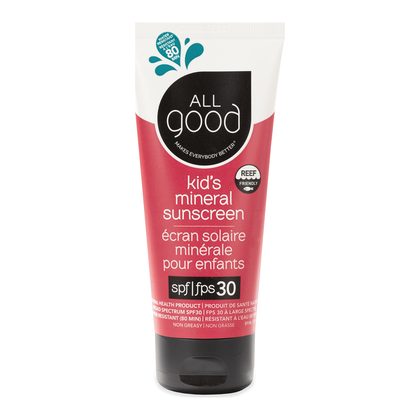
For kids over 6 months, pediatricians suggest zinc oxide or titanium dioxide on sensitive areas and reapplying every 2 hours[205]. These are the kid-labeled or family creams we scored.
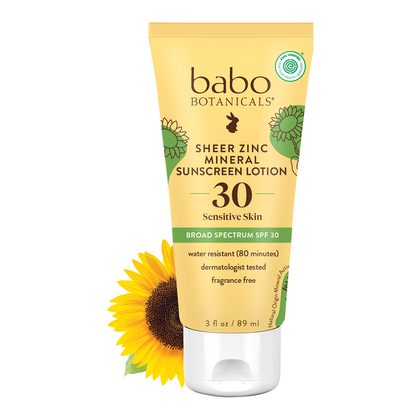
Babo Botanicals Sheer Zinc Mineral Sunscreen Lotion SPF 30$18.00
Fragrance-free, with 16% zinc oxide, 80-minute water resistance and a plant-oil base with butyloctyl salicylate, the booster we flag; $18 for 3 fl oz [4][75]. Two other Babo lotions tested at 0.33 and 0.35 ppm lead [127]. Consumer Reports' SPF testing (member results, tested 2024) found an earlier version of this lotion, sold as Babo Clear Zinc SPF 30 Fragrance Free (same barcode), well below (a third to a half of its label SPF); that label also listed kudzu root extract. It counts as a test of this formula, which takes 4% off its score [138][2].
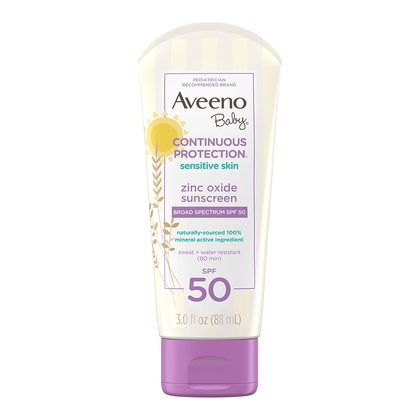
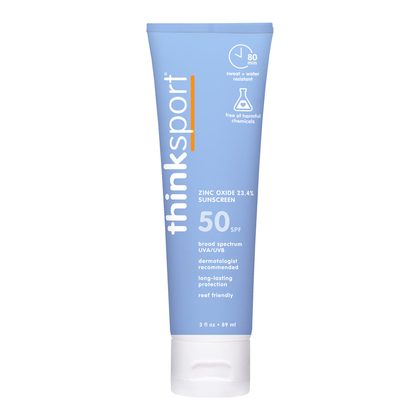
The lowest lead result among the sunscreens we rank: 0.08 ppm, with 0.006 ppm cadmium and no mercury or arsenic detected [127]. 21.6% zinc oxide and 80-minute water resistance, with a PEG-silicone and phenoxyethanol [6]; sold at retailers [77]. A 2023 class action alleged the baby formula matches a cheaper adult Aveeno sunscreen; the court dismissed it with leave to amend [177]. Consumer Reports' SPF testing (member results, tested 2025) found it well below (a third to a half of its label SPF), which takes 4% off its score [139].
8.3/10
5
Earth Mama Baby Mineral Sunscreen Lotion SPF 40$17.99
25% zinc oxide and nine organic plant ingredients plus vitamin E [24][95], but it had the highest lead result among the sunscreens we scored: 2.14 ppm, with 0.12 ppm cadmium, in an advocate's single-sample test, still under FDA's 10 ppm cosmetics guidance [127][164]. A 2022 blogger-commissioned test found no organic fluorine (a PFAS marker); the brand later donated to the group that funds those tests [155].
8.1/10
6
Badger Kids Mineral Sunscreen Cream SPF 40$18.99
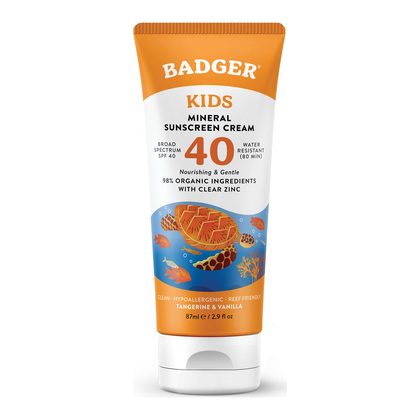
The simplest high-zinc body cream we scored: 22.5% zinc oxide, 80-minute water resistance and eight inactive ingredients, with orange and tangerine peel oils and vanilla for scent and no silicones, PEGs or boosters; $18.99 for 2.9 oz [1][74]. Sister creams: Badger's Baby cream tested at 0.30 ppm lead, 0.34 ppm cadmium, 0.01 ppm arsenic and 0.008 ppm mercury, and its Adventure cream at 0.34 ppm lead, 0.25 ppm cadmium and 0.02 ppm arsenic, with no mercury detected [127][128]. In January 2025, Badger recalled 4,834 tins of a different product, its SPF 50 Adventure Sport tin, because some might lack the Drug Facts label [168]. Badger's 2021 Kids label lists the same eight inactive ingredients as today's [3]. Consumer Reports' SPF testing (member results, tested 2021) found it drastically low (under a third of its label SPF), which takes 12% off its score [135].
7.7/10Drastically low SPF
7
Blue Lizard Baby Mineral SPF 50 Lotion$19.99 (3 oz)
The new Sensitive formula plus glycerin and calendula: 10% zinc oxide, 8% titanium dioxide, PEGs [45][106]. Consumer Reports has tested Blue Lizard's Sensitive lotion (member results, 2022), but that test came before Blue Lizard's 2025 reformulation, and Baby is built on the new Sensitive base, so that test doesn't affect this score [141][36].
9.3% zinc oxide and 2.8% titanium dioxide with two SPF boosters and PEGs [47]. Banana Boat's Baby “Mineral Enriched” spray contains three chemical filters [48]. Consumer Reports has tested Banana Boat's older Baby Mineral Lotion SPF 50+ (member results, 2019), but it had 6.5% zinc and 4.5% titanium, not today's 9.3% and 2.8%, so that test doesn't affect this score [149]. CHOICE (Australia) tested the Australian Banana Boat Baby Zinc SPF 50+ at SPF 28 in 2025; the Australian formula has no FDA label to compare, so it doesn't add a penalty [134].
7.5/10
9
Thinkbaby Safe Sunscreen SPF 50+$15.49 (3 oz)
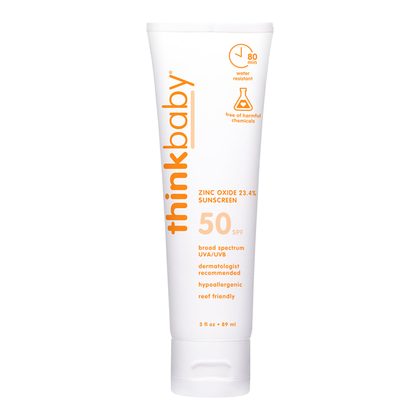
23.4% zinc oxide and 80-minute water resistance, but its label lists “Natural Fragrance Oil” and grapefruit peel oil, and it tested at 1.25 ppm lead and 0.58 ppm cadmium in an advocate's single-sample test [31][129]. $15.49 for 3 oz [108]. Consumer Reports' SPF testing (member results, tested 2024) found it drastically low (under a third of its label SPF), which takes 12% off its score [140].
6.8/10Drastically low SPF
Best mineral sunscreens for your face
Use at least a teaspoon for your face[203]. Face products can skip water resistance without a deduction, but for swimming choose one labeled 40 or 80 minutes.
The best tinted pick and the highest-zinc face sunscreen we scored: 25% zinc oxide, the most FDA's rules allow, in a waterless base of coconut-derived oil, sunflower wax and oil, babassu starch, castor wax and iron oxides for the tint.
The untinted version of our tinted pick: 18.75% zinc oxide in the same waterless base [23]. The page and box claim 40-minute water resistance, but the FDA label's directions say to use a water-resistant sunscreen if swimming [94]. It tested at 0.89 ppm lead, 0.23 ppm cadmium and 0.03 ppm arsenic [127]. Consumer Reports has tested Badger Active Mineral Sunscreen Cream SPF 30 (member results, 2017), but it pairs the same 18.75% zinc with a beeswax-and-sunflower-oil base rather than this coconut-oil-and-starch base, so that test doesn't affect this score [136][23].
8.2/10
5
MDSolarSciences Mineral Crème SPF 50$33 (1.7 oz)
17% zinc oxide plus 2% titanium dioxide, 80-minute water resistance and a waterless silicone base with butyloctyl salicylate [17]. Its carton says “100% Mineral Sunscreen,” but its inactive list includes polysilicone-15, a UVB filter approved in Europe that isn't an FDA sunscreen active, which costs 1 point on label honesty [17][195][162]. $33 for 1.7 oz or $46 for 3.4 oz [89].
14.7% zinc oxide with two SPF-boosting ingredients, butyloctyl salicylate and ethylhexyl methoxycrylene; not water resistant [26][97]. $48 for 1.1 oz. Consumer Reports has tested COOLA Mineral Spray SPF 30 (member results, 2021), but it's a spray with 14.5% zinc, a different product, so that test doesn't affect this score [153].
8.1/10
7
Counter Daily Sheer Defense SPF 25$45
A short, gentle list with 14.96% zinc oxide and phenoxyethanol, but it's SPF 25 [27][98], below the SPF 30 the American Academy of Dermatology recommends [203].
8.0/10
8
CōTZ Sensitive SPF 40$31 (3.5 oz)
20% zinc oxide and 40-minute water resistance at about $1.48 per face application, the lowest among face sunscreens scoring 7.8 or more, but its base includes the silicones D5 and D6 and three PEGs [29][100].
19.5% zinc oxide with ceramides and PEG-100 stearate. Its FAQ says it passed 40-minute water-resistance testing, but its FDA label says to use a water-resistant sunscreen if swimming [30][101].
7.9/10
·
Drunk Elephant Umbra Sheer Mineral Cream SPF 30Not sold on its U.S. site
A zinc-only (20%) daily face cream with no silicones, fragrance or boosters on its January 2026 FDA label [16]. We couldn't buy it: Drunk Elephant's U.S. sun-protection collection lists no SPF products, and its Umbra product pages return “Gone” [88]. It would rank #8 on score.
Not sold
Best tinted mineral sunscreens
Tints use iron oxides, which also help protect against the visible light that can cause dark spots[203]. Many tinted formulas are low in zinc, so check the percentage.
The best tinted pick and the highest-zinc face sunscreen we scored: 25% zinc oxide, the most FDA's rules allow, in a waterless base of coconut-derived oil, sunflower wax and oil, babassu starch, castor wax and iron oxides for the tint.
A 30-shade skin tint with 12% zinc oxide (the brand's figure; its FDA label states zinc per milliliter), squalane, niacinamide and butyloctyl salicylate, and no silicones or phenoxyethanol [25][96]. At 12% zinc it starts from our lowest protection base.
8.1/10
3
Supergoop! Mineral Mattescreen SPF 40$40 (1.5 oz)
Three tints plus untinted, in a dimethicone base with no phenoxyethanol or boosters. Its FDA labels (June 2026) list 17.68% zinc oxide; the product page says 17.42% [28][99].
7.9/10
4
EltaMD UV Physical SPF 41$48 (3 oz)
A dermatologist-office staple with 9% zinc oxide and 7% titanium dioxide, one light tint and 40-minute water resistance; its only flagged inactive is phenoxyethanol [32][102]. Low zinc keeps its protection base at 5.5. Consumer Reports has tested EltaMD UV Stick SPF 50+ (member results, 2023), but it's a stick with 22% zinc, a different formula, so that test doesn't affect this score [152].
7.8/10
5
Tower 28 SunnyDays Tinted SPF 30$32 (1 oz)
17 shades and 12.6% zinc oxide, with two SPF boosters. Its page lists “Water-proof/resistant,” but its FDA label says to use a water-resistant sunscreen if swimming, and FDA doesn't allow “waterproof” on sunscreens [33][103][163].
7.8/10
6
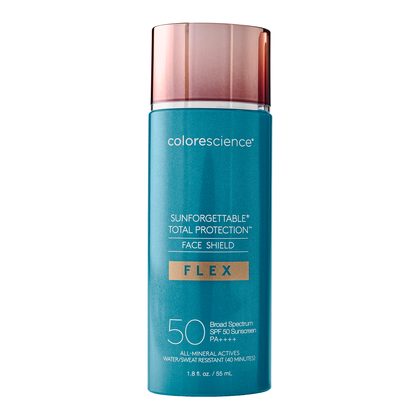
Colorescience Sunforgettable Total Protection Face Shield Flex SPF 50$58
Six shades and 12% zinc oxide (the brand's figure; its FDA label states zinc per milliliter), with two salicylate boosters, PEG-silicones and phenoxyethanol [41][104]. $58 for 1.8 oz. Consumer Reports has tested Colorescience Total Protection No Show Mineral Sunscreen SPF 50 (member results, 2025), but it's a different product with 10% zinc, so that test doesn't affect this score [151].
The shortest label in our top 10: 18.75% uncoated zinc oxide and four inactive ingredients, sunflower oil, beeswax, vitamin E and sea buckthorn, with no fragrance, essential oils, silicones, PEGs, preservatives or boosters.
Raw Elements' Eco Formula lotion: 23% zinc oxide, 80-minute water resistance and a plant-oil base with rosemary leaf oil [15][87]. It carries the same barcode as the 2021 lot in which Valisure found 1.35 ppm benzene, so it drops a step on contaminants [130]. Same line as our face stick.
No flagged ingredients at all: no fragrance, silicones, PEGs, phenoxyethanol or SPF boosters on an FDA label that lists 19% zinc oxide, SPF 45 and 80-minute water resistance.
Its FDA label (August 2025) lists 20% zinc oxide and 80-minute water resistance, but the product page also says “Water Resistant (40 minutes),” and its back-of-tube photo shows a Drug Facts panel with 14.7% zinc, which matches Sun Bum's SPF 30 labels, not this SPF 50 [18][90][19]. A 2025 class action alleges this lotion tests at SPF 17, in testing commissioned by the plaintiffs' lawyers; those are allegations [178]. Baby Bum SPF 50 tested at 0.50 ppm lead and 0.23 ppm cadmium [127]. Consumer Reports has tested Sun Bum Mineral Roll-On SPF 50 (member results, 2023), but it has 16% zinc plus 3.4% titanium, a different formula, so that test doesn't affect this score [148].
8.3/10
Other mineral sunscreens we scored
Good sunscreens and popular names that missed the top 10 on water resistance, zinc level, the inactive list, label honesty or an SPF test.
1
ATTITUDE Sunly Mineral Sunscreen SPF 50+ Unscented$22.95
24% zinc oxide and no flagged inactives, but its FDA label says to use a water-resistant sunscreen if swimming or sweating, which costs a body product a point [21][92]. An older ATTITUDE baby sunscreen tested at 0.94 ppm lead and 0.22 ppm cadmium [127].
8.2/10
2
Suntegrity Unscented Mineral Body Sunscreen SPF 30$26 (3 oz)
20% non-nano, uncoated zinc oxide and dimethicone, but not water resistant [22][93]. In 2024 a Suntegrity foundation SPF (a different product) had a Class I recall for mold [169].
8.2/10
3
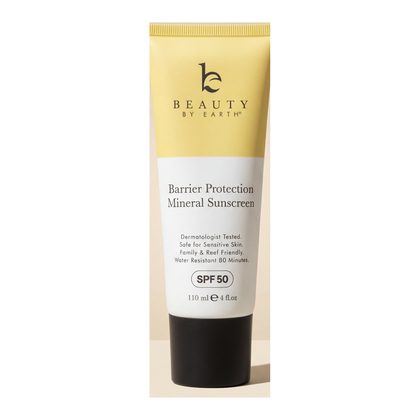
Beauty by Earth Barrier Protection Mineral Body Sunscreen SPF 50$27.99
15% zinc oxide with “Aroma (Naturally Derived),” an undisclosed fragrance. Its FDA label says to reapply after 40 minutes of swimming in one section and 80 in another; the page claims 80 [42][105].
7.6/10
4
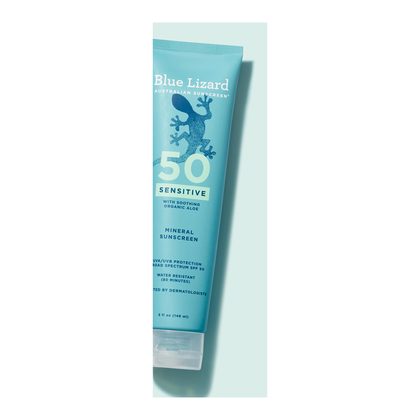
Blue Lizard Sensitive Mineral SPF 50 Lotion$14.99 (3 oz)
10% zinc oxide plus 8% titanium dioxide, PEGs and butyloctyl salicylate; $14.99 for 3 oz [43][107]. Blue Lizard sells Kids and Sport SPF 50 lotions in two versions: mineral-only, and a “mineral-based” hybrid whose carton says it combines “mineral and chemical UV protectors” (octisalate 5%), so check the Drug Facts box [44][46]. A Blue Lizard 10% zinc lotion tested at 0.67 ppm lead and 0.27 ppm cadmium [127]. Consumer Reports' SPF testing (member results, tested 2022) found this lotion drastically low (under a third of its label SPF), but that was before Blue Lizard's 2025 reformulation: the older formula used beeswax, phenoxyethanol and chlorphenesin, and today's uses candelilla wax, butyloctyl salicylate and hydroxyacetophenone, so that test doesn't count here [141][36][43].
7.6/10
5
Coppertone Pure & Simple Mineral Lotion SPF 50Price varies (retail)
24.08% zinc oxide, but a base with the silicone D5, PEG-silicones and two boosters [49]. Its Pure & Simple SPF 50 sprays had a Class I benzene recall on Sept. 30, 2021 [167], and Bayer HealthCare, the defendant, settled a “mineral-based” labeling class action over Coppertone products for $2.25 million, denying wrongdoing [181]. Pure & Simple Baby tested at 1.02 ppm lead and 0.36 ppm cadmium [127]. Consumer Reports' SPF testing (member results, tested 2021) found an earlier formula of this lotion drastically low (under a third of its label SPF), but that formula listed tea leaf, kelp and lotus extracts and no ethylhexyl pelargonate, an emollient on today's label, so that test doesn't count here [142][37][49].
7.5/10
6
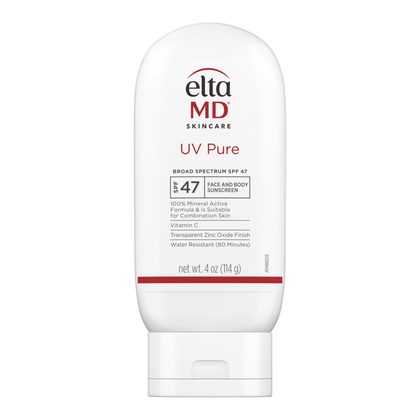
EltaMD UV Pure SPF 47$43 (4 oz)
10% zinc oxide plus 5.5% titanium dioxide with 80-minute water resistance, but cyclopentasiloxane (D5) is its second ingredient [52][110].
7.4/10
7
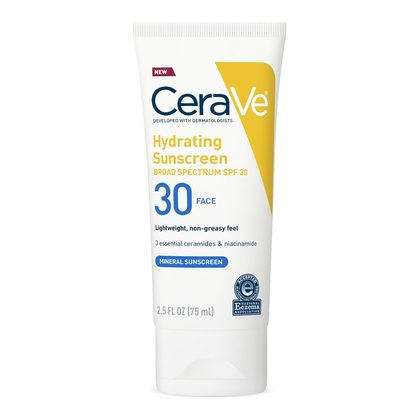
CeraVe Hydrating Mineral Sunscreen Face SPF 30$15.99 (MSRP)
Titanium-led (6% titanium dioxide, 5% zinc oxide) with ceramides, PEGs and phenoxyethanol [54]. At $15.99 MSRP for 2.5 oz, it's the cheapest face product per use here [112]. Consumer Reports has tested CeraVe Hydrating Mineral Sunscreen SPF 30 Medium Sheer Tint (member results, 2026), but the tinted version lists 10% zinc and 5.5% titanium, a different formula, so that test doesn't affect this score [150].
7.1/10
Why do so many mineral sunscreens miss their SPF?
It's the uncomfortable fact behind every mineral ranking, including ours. Here's what independent tests and court records show.
Consumer ReportsAcross four years of tests to 2016, 74% of mineral sunscreens missed their SPF claim vs 42% of chemical ones[131]. In 2026, CR says mineral sunscreens scored 18 to 55 out of 100[132] and none has ever reached the top of its ratings[133]; its free “worst” list includes Australian Gold Botanical Mineral SPF 30, tested at SPF 4[132]. CR buys three samples of each product and tests SPF on three people, fewer than FDA's protocol, with a statistical check[132]. Most of its per-product results are for members. We use them in our scores but describe them only by band and test year, not by CR's numbers; see the table below.
CHOICE (Australia)In 2025, 16 of 20 SPF 50+ sunscreens failed CHOICE's lab test, including Neutrogena Sheer Zinc Dry-Touch at SPF 24 and Banana Boat Baby Zinc at SPF 28 (Australian versions); Ultra Violette's zinc Lean Screen tested at SPF 4, and the brand said multiple labs' new tests of it returned SPF 4 to 64[134]. Australia's regulator said 20 recalled sunscreens shared one base formula that was unlikely to exceed SPF 21, and industry experts questioned the overseas lab that certified at least eight of them[184]. FDA's record for a recalled U.S. Ultra Violette mini kit cites the same 4-to-64 range[170].
Which? (UK)In 2022, all 5 mineral sunscreens Which? tested failed its SPF or UVA test, and 3 failed both; one was Alba Botanica's British Sensitive Mineral SPF 30[154]. That's why we disclose it in Alba's review.
Why minerals missSPF tests use about 10 people, and results can vary widely from lab to lab[134][157]. FDA has proposed capping labels at SPF 60+ while allowing formulas up to SPF 80, partly to account for variability in SPF testing[157]. Many “100% mineral” lotions add boosters such as butyloctyl salicylate, which industry sources say can add SPF points without appearing as an active[209][208]. And people apply about a fifth of the tested amount[190].
How much a miss mattersSPF results vary from lab to lab[134][157], so a small shortfall in one test isn't a clear failure. By our calculation (1 − 1/SPF), SPF 30 blocks about 96.7% of UVB at the test amount[163], a product that tests at SPF 21 still blocks about 95%, and SPF 10 blocks 90%. A sunscreen labeled SPF 30 that tests at SPF 15 still blocks about 93%. So a result a pinch low or somewhat low (50% or more of the label) costs nothing in our score; well below (a third to a half) takes 4% off, and drastically low (under a third), like SPF 4 on an SPF 30 label, which blocks 75%, takes 12%[132]. How much you apply matters more: people use about a fifth of the test amount[190].
Lawsuits (allegations)A 2025 class action alleges Sun Bum's Mineral SPF 50 lotion tests at SPF 17, in testing commissioned by the plaintiffs' lawyers[178]. Another alleges Supergoop's “100% mineral” claims mislead because its products contain synthetic ingredients such as butyloctyl salicylate[179]. A 2021 suit alleged Blue Lizard sold “mineral-based” sunscreens with octisalate or octinoxate[180]. We found no ruling on the merits in any of them. Bayer HealthCare, the defendant, settled a “mineral-based” labeling case over Coppertone products for $2.25 million, denying wrongdoing[181].
Our adviceChoose 20% zinc or more, “Water Resistant (80 minutes)” for swimming, and a brand whose website matches its FDA label. Then use a full ounce and reapply every 2 hours. That does more for your protection than any SPF number.
SPF tests and penalties
Every product we scored with an independent SPF test of its formula. A test counts in full when the tested product had the same actives at the same percentages and the same base as today's FDA label; a test of an earlier formula is shown but doesn't count. Consumer Reports' member results appear by band and test year only. A modest shortfall costs nothing, and nothing is removed from our list for a test result.
These popular sunscreens contain zinc oxide, or are shopped alongside mineral ones, but their FDA labels list at least one chemical filter, so they aren't eligible for our ranking. Watch for “mineral-based,” “hybrid,” “mineral enriched” and “zinc” on the front; only the Drug Facts box tells you what's inside.
A court let a class action over EltaMD's “Transparent Zinc Oxide” front labels on its hybrid products go forward in 2023; the case closed in 2024 and we couldn't find the outcome[183].
A softer case: mineral actives, a UV filter among the inactives
MDSolarSciences Mineral Crème SPF 50 lists only zinc oxide and titanium dioxide as actives, and its carton says “100% Mineral Sunscreen,” but its inactive list includes polysilicone-15, a UVB filter approved in Europe that FDA doesn't list as a sunscreen active[17][196][195][162]. It stays eligible, but the UV filter costs it 1 point on label honesty. We checked the current FDA label of every product we scored for polysilicone-15 and other approved UV filters listed as inactives, such as bemotrizinol, and found no other (titanium dioxide listed as a colorant in some tinted products is a mineral filter and isn't counted). Some list UV-absorbing ingredients that aren't FDA actives and that a chemist notes are structurally similar to chemical filters: ethylhexyl methoxycrylene (Banana Boat Baby, Coppertone Pure & Simple, COOLA Clear Skin, Tower 28), diethylhexyl syringylidenemalonate (both La Roche-Posay Anthelios Mineral products) and tridecyl salicylate (Colorescience)[208]. Like butyloctyl salicylate, they aren't FDA sunscreen actives or on Europe's list of approved UV filters[162][196], so we disclose them without a deduction.
What we'd skip
These tested drastically low against their label SPF, carry ingredients we avoid, lean on titanium rather than zinc, or contradict their own labels.
1
La Roche-Posay Anthelios Mineral Zinc Oxide Sunscreen SPF 50$42.99
Named “Zinc Oxide,” but titanium dioxide (6%) outweighs zinc (5%), with talc, PEGs and butyloctyl salicylate [56][114].
6.9/10
2
CeraVe Hydrating Mineral Sunscreen SPF 30 Body Lotion$19.99 (MSRP)
A titanium-led body lotion (6% titanium dioxide, 5% zinc oxide) that isn't water resistant, with PEGs and phenoxyethanol [58][116].
6.8/10
3
Thinksport Safe Sunscreen SPF 50+$15.49 (3 oz)
The product page lists zinc oxide 20% and no “Natural Fragrance Oil,” but the tube pictured on the same page and the June 2024 FDA label list 23.4% zinc oxide, grapefruit peel oil and “Natural Fragrance Oil” [109][50]. An older 20% label is still listed on DailyMed [51]. Consumer Reports' SPF testing (member results, tested 2024) found Thinkbaby Lotion SPF 50, the same formula under another name (identical actives and inactive list on the two FDA labels), drastically low (under a third of its label SPF). It counts as a test of this formula, which takes 12% off its score [140][31].
6.5/10Drastically low SPF
4
La Roche-Posay Anthelios Mineral Tinted Sunscreen for Face SPF 50$39.99
The Tinted shade uses titanium dioxide only (11%), no zinc. One of its two current FDA labels lists C9-15 fluoroalcohol phosphate, a fluorinated (PFAS-type) ingredient; the other label and the brand page don't [59][60][117]. Consumer Reports' SPF testing (member results, tested 2026) found it somewhat low (at 50–69% of its label SPF), which carries no penalty [145].
6.1/10
5
ISDIN Eryfotona Actinica SPF 50+$73 (3.4 oz)
11% zinc oxide in a base with fragrance, denatured alcohol, D5 and D6 silicones and three PEGs [57]. $73 for 3.4 oz [115]. Consumer Reports' SPF testing (member results, tested 2025) found it drastically low (under a third of its label SPF), which takes 12% off its score [144].
6.0/10Drastically low SPF
6
Australian Gold Botanical Mineral Sunscreen SPF 30Not on the brand's site
Its label lists just 3% zinc and 3% titanium dioxide, plus fragrance and D5 [61], and Consumer Reports rated its UVA protection only fair [132]. It's no longer listed on Australian Gold's sunscreen page [118]. Consumer Reports' free 2026 list says it tested at SPF 4 against its SPF 30 label (tested 2019): drastically low (under a third of its label SPF), which takes 12% off its score [132][146].
5.6/10Drastically low SPF
·
Mineral sprays and powdersVarious
Europe bars nano zinc and titanium from sprays that could reach the lungs[173][174], and Coppertone's zinc Pure & Simple sprays were recalled for benzene in 2021[167]. Use a lotion, cream or stick.
Avoid
Not rated, sold out or gone
We rate only sunscreens whose current FDA drug label matches the product on sale. These didn't qualify on Sept. 26, 2026.
·
ThinkDaily Tinted Face SPF 30$16.99 (2 oz)
Not rated. The tube pictured on Think's store says “Zinc Oxide 24.25%,” while the product page and the only FDA label we found (effective 2020) say 20%, with a different inactive list [119][62]. We couldn't match the product on sale to a current drug label.
Not rated
·
Primally Pure Sun Serum Tinted SPF 30$46
Not rated. We found no FDA drug label for it on DailyMed or openFDA, and the brand's Sun Cream page lists zinc oxide as both 25% and 18.25% [120][121].
Not rated
·
All Good SPF 30 Sport Mineral Sunscreen Lotion$18 (3 oz)
Not rated. All Good's sticks and butters have FDA labels, but we found none for its 16% zinc lotions [122][63].
Not rated
·
All Good SPF 30 Kids Mineral Sunscreen Lotion$18 (3 oz)
Not rated, for the same reason as the Sport lotion: no FDA drug label found [122][63].
Not rated
·
Solara Go! Mineral Defense SPORT Superfruit Body SPF 50$20 (5 oz)
Not rated. The only “Superfruit” label we found is for a spray mist with 14% zinc, not this 20% lotion [123][64].
Not rated
·
Josie Maran Argan Sun Milk SPF 33$46 (sold out)
Sold out on the brand's site on Sept. 26. Its brand page lists fragrance, linalool, limonene and cinnamal, with just 4.08% zinc oxide and 3.15% titanium dioxide [124].
Sold out
Also on our list but no longer sold: Kinfield (closed (its site says “Kinfield has closed”)); Unsun (closed; its domain now hosts an unrelated site); Aveeno Positively Mineral (on Aveeno's discontinued list); Vanicream body sunscreens (no longer on Vanicream's site); Bare Republic (domain lapsed; store unavailable); Goddess Garden (site unreachable; last FDA labels 2016–2018); Beautycounter Countersun (not in the relaunched Counter catalog); Supergoop Zincscreen (product page returns 404); COOLA Mineral Sun Silk Crème and Face Matte Tint (product pages return 404).
When the label promises more than the lab finds
Beyond the zinc and SPF chart above, these are the biggest gaps between label SPF and public test results we found, plus one brand whose own report backs its label.
Australian Gold Botanical SPF 30[132]Consumer Reports (free list)
11 zinc-only lotions (average)[199]EWG-commissioned in vitro test
LabelSPF 40
TestedSPF 17.6
Supergoop PLAY Mineral 30[83]Maker's own report (credit where due)
LabelSPF 30
After 80 min in waterSPF 32.7
When the brand's page and its FDA label disagree
We checked every scored product's page and package photos against its FDA drug label on Sept. 26, 2026. These didn't match. Each contradiction on zinc, water resistance or fragrance costs 1.5 points on label honesty; a UV filter among the inactives of a “100% mineral” product costs 1.
Sunscreen
Brand page says
FDA label says
Score effect
Thinksport SPF 50+
Zinc oxide 20%; no “Natural Fragrance Oil” listed
Zinc oxide 23.4%; “Natural Fragrance Oil” and grapefruit peel oil[109][50]
I'm pro-sun. I want you outdoors, enjoying morning light, with smart sun habits rather than hiding from the sun. Shade at midday, a wide-brimmed hat and UPF clothing come first, because they protect you without anything on your skin.
When you'll be out long enough to burn, that's when I recommend a mineral sunscreen. Zinc oxide is one of only two long-standing sunscreen actives FDA has proposed as safe and effective, and it covers the long UVA rays well. Then use enough: about a shot glass for your body and a teaspoon for your face, and reapply every two hours and after swimming. Most people use a fraction of that, and it matters more than any SPF number.
Before you buy, turn the tube over and read the Drug Facts box. Look at zinc oxide first, ideally 20% or more with nothing but zinc or titanium in the active list, then “Water Resistant (80 minutes)” if you'll swim or sweat. Skip undisclosed “fragrance” or “parfum”; if your skin is sensitive, choose an unscented pick. And be wary of any brand whose website doesn't match its own label.
— Dr. Axe
Frequently asked questions
What is the best mineral sunscreen?
Our pick is the Raw Elements Baby + Kids SPF 30 Tin ($24.99, 8.7/10). Its FDA drug label lists 25% zinc oxide, the most FDA allows, as the only active, 80-minute water resistance and eight inactive ingredients, with no essential oils or boosters [5][162]. Nobody has published a lead or SPF test of it, so it's scored on a class-typical protection base. For value, choose Hello Bello Baby SPF 50 (8.6); for fragrance-free, Alba Sensitive Mineral SPF 50 (8.6); for your face, the Raw Elements Face Stick (8.6); for a tint, Badger's Tinted Face SPF 40 (8.5).
Is mineral sunscreen better than chemical sunscreen?
Both prevent sunburn when used well, and the skin-cancer trials used a chemical formula [188]. Mineral's advantages: zinc oxide and titanium dioxide are the only mineral actives, and the only long-standing ones FDA proposes as safe and effective (it finalized a new chemical filter, bemotrizinol, in 2026) [158][159], they aren't absorbed into the blood the way chemical filters are [185][198], and mineral best-sellers carry fewer common allergens [192]. The trade-off: independent tests find minerals miss their SPF more often [131][134], so apply generously.
Can I make my own sunscreen at home?
You can mix zinc oxide into a balm, but there's no way to know its SPF at home. A sunscreen's SPF is measured on human volunteers under FDA's test method [163], and even commercial zinc formulas made in factories often test below their labels [131][134]. Lead Safe Mama also found 9.47 ppm lead in one sample of a single-ingredient zinc oxide powder sold for making your own sunscreen [127]. If you like simple ingredients, pick a short-list product with a tested, labeled SPF, like the Raw Elements tin in our top 10.
Is nano zinc oxide safe? Should I buy non-nano?
The research we found is reassuring for creams and lotions. Zinc oxide nanoparticles stayed on the skin's surface and didn't enter living skin in 5 volunteers; zinc ions penetrated slightly, without harm [198], and European regulators allow nano zinc oxide up to 25% on skin. They exclude sprays that could reach the lungs [173][174]. That's why we skip mineral sprays and don't score “non-nano” claims, which labels don't have to prove.
Is mineral sunscreen reef safe?
There's no legal definition of “reef safe.” Hawaii bans the sale of sunscreens with oxybenzone or octinoxate [171], and Maui County allows only mineral sunscreens [172]. Lab studies show oxybenzone harms coral larvae at some concentrations [201], but National Academies scientists note that most measured water levels are below 1 µg/L, and they called for a risk assessment of all UV filters, including zinc and titanium [200].
What's the best mineral sunscreen for babies and kids?
For babies under 6 months, pediatricians recommend shade and clothing first; if that isn't possible, a small amount of sunscreen on small areas like the face is OK [205], and every label says to ask a doctor for this age [163]. For older kids, the AAP suggests zinc oxide or titanium dioxide on sensitive areas and reapplying every 2 hours [205]. Our kids pick is the Raw Elements Baby + Kids tin (25% zinc, 80-minute water resistance) [5].
Does sunscreen block vitamin D?
A little, with daily high-SPF use. In the 639-person Sun-D trial, people using SPF 50+ daily ended the year 5.2 nmol/L lower than those using sunscreen as they chose, and more were deficient (45.7% vs 36.9%); the authors said regular users may need vitamin D supplementation [193]. Earlier trials of lower-SPF sunscreens found little effect in real-life use [194]. Short, sensible sun exposure outside the midday peak and a vitamin D check can help.
Why does mineral sunscreen leave a white cast?
Zinc oxide and titanium dioxide reflect and scatter some visible light. Zinc looks less white than titanium at the same strength [197], and tinted mineral sunscreens use iron oxides, which the American Academy of Dermatology says also protect against visible light that can cause dark spots [203]. Our tinted pick is Badger's Tinted Face SPF 40.
What SPF do I need, and how often should I reapply?
The American Academy of Dermatology recommends SPF 30 or higher, water resistant and broad spectrum, reapplied every 2 hours and right after swimming or sweating [203]. At the test amount, SPF 30 blocks about 96.7% of UVB and SPF 50 about 98% [163]. The amount you apply matters more than the number: most people use about a fifth of it [190]. A modest miss matters less than it sounds: an SPF 30 that tests at SPF 15 still blocks about 93% of UVB. So in our score, a test result a pinch or somewhat low (50% or more of the label) costs nothing; well below (a third to a half) takes 4% off, and drastically low (under a third), like SPF 4 on an SPF 30 label, takes 12% [132]. No product is removed from our list for a test result.
Is butyloctyl salicylate a hidden chemical filter?
It's an emollient that absorbs some UV. It isn't an FDA sunscreen active, so it appears only as an inactive ingredient. Its supplier says it adds no more than 2 SPF points at 5% [126], while a chemist notes its UV-absorbing part is the same as the chemical filter octisalate's [208], and some formulators say boosters like it can add 10 to 30 SPF points [209]. We flag it in our ingredient grid without a deduction.
How do you use Consumer Reports' sunscreen results?
Consumer Reports shows most per-product sunscreen results only to members. We use them as a ranking input, alongside CR's free figures, CHOICE and Which?, but we describe them only by band (drastically low, under a third of the label SPF; well below, a third to a half; somewhat low, 50–69%; or a pinch low, 70% or more) and test year, and we don't reproduce CR's numbers. CR's free articles supply the rest, such as its 2026 “worst” list [132]. CR tests SPF on three people per product, fewer than FDA's protocol, with a statistical check, and formulas can change after a test, which is why we give the year [132].
References
Update history
Sept. 26, 2026: First published. Every scored product's current FDA drug label checked on DailyMed; brand pages and package photos compared with those labels; prices from brand sites; independent tests from Consumer Reports (free articles, and member results described by band only), CHOICE, Which?, Valisure and Lead Safe Mama.
Public record / study FDA drug label on DailyMed: Badger Kids Mineral Sunscreen Cream SPF 40 (version 2, published Jan. 1, 2025). Non-nano uncoated zinc oxide 22.5%; water resistant (80 minutes); inactive: sunflower oil, beeswax, orange peel oil, jojoba oil, tangerine peel oil, tocopherol, vanilla, sea buckthorn. Open source
Public record / study FDA drug label on DailyMed: Babo SPF 30 Clear Zinc Fragrance Free Sunscreen Lotion (version 5, published Dec. 16, 2024). Zinc oxide 16%; product code 79265-8077; the same inactive list as Sheer Zinc plus kudzu (Pueraria) root extract. Its carton shows the same UPC (8 99248 00291 0) as the Sheer Zinc carton, and the Sheer Zinc label reuses the carton image 8077.jpg. Open source
Public record / study FDA drug label on DailyMed: Badger Kids Broad Spectrum SPF 40 Natural Mineral Sunscreen Cream (2021 label) (version 2, published Oct. 4, 2021). Zinc oxide 22.5%; the same eight inactive ingredients as the current Kids label. Open source
Public record / study FDA drug label on DailyMed: Babo Botanicals Sheer Zinc Mineral Sunscreen SPF 30 (version 2, published Nov. 17, 2025). Zinc oxide 16.0%; water resistant (80 minutes); inactive list includes butyloctyl salicylate; no fragrance. Open source
Public record / study FDA drug label on DailyMed: Raw Elements Baby + Kids Broad Spectrum SPF 30 (version 2, published Nov. 10, 2023). Non-nano zinc oxide 25%; water resistant (80 minutes); 8 inactive ingredients. Open source
Public record / study FDA drug label on DailyMed: Aveeno Baby Continuous Protection Sensitive Skin Zinc Oxide SPF 50 (version 10, published Mar. 10, 2025). Zinc oxide 21.6%; water resistant (80 minutes); inactive list includes cetyl PEG/PPG-10/1 dimethicone and phenoxyethanol. Open source
Public record / study FDA drug label on DailyMed: Hello Bello Mineral Sunscreen SPF 50 (labeler Topiderm) (version 1, published Aug. 31, 2026). Zinc oxide 23.5%; water resistant (80 minutes); inactive list includes orange peel oil and butyloctyl salicylate. Open source
Public record / study FDA drug label on DailyMed: Alba Botanica Sensitive Mineral SPF 50 (version 2, published Nov. 28, 2025). Zinc oxide 24.1% (w/w); water resistant (80 minutes); formula PF163046-09; inactive list includes butyloctyl salicylate and phenoxyethanol. Open source
Public record / study FDA drug label on DailyMed: Alba Botanica Sensitive Mineral SPF 30 (version 1, published Nov. 28, 2025). Zinc oxide 24.1% (w/w); same formula number (PF163046-09) and inactive list as the SPF 50. Open source
Public record / study FDA drug label on DailyMed: Raw Elements Eco 30 stick, sold as the Face Stick SPF 30 (version 4, published Nov. 10, 2023). Zinc oxide 22.75%; water resistant (80 minutes); 11 inactive ingredients including rosemary leaf oil. Open source
Public record / study FDA drug label on DailyMed: Badger SPF 40 Tinted Mineral Face Sunscreen (version 1, published Feb. 2, 2026). Non-nano uncoated zinc oxide 25%; carton says “Water Resistant (40 Minutes)”; the Directions omit the 40-minute reapply line. Open source
Public record / study FDA drug label on DailyMed: Supergoop! PLAY Mineral SPF 30 with Green Algae (version 2, published Jan. 14, 2026). Zinc oxide 16.0%; water resistant (80 minutes); inactive list includes butyloctyl salicylate. Open source
Public record / study FDA drug label on DailyMed: Stream2Sea Every Day Mineral Sunscreen SPF 45 (version 7, published May 13, 2025). Zinc oxide 19% (non-nano); water resistant (80 minutes). Open source
Public record / study FDA drug label on DailyMed: Badger Active SPF 30 Mineral Sunscreen (version 2, published Jan. 1, 2025). Uncoated zinc oxide 18.75%; water resistant (40 minutes); 4 inactive ingredients. Open source
Public record / study FDA drug label on DailyMed: Raw Elements Eco Formula 30 (version 4, published Nov. 10, 2023). Zinc oxide 23%; water resistant (80 minutes). Open source
Public record / study FDA drug label on DailyMed: Drunk Elephant Umbra Sheer Mineral Cream SPF 30 (version 4, published Jan. 7, 2026). Zinc oxide 20%; not water resistant. Open source
Public record / study FDA drug label on DailyMed: MDSolarSciences Mineral Creme SPF 50 (version 2, published June 9, 2025). Titanium dioxide 2%, zinc oxide 17%; water resistant (80 minutes); inactive list includes butyloctyl salicylate. Open source
Public record / study FDA drug label on DailyMed: Sun Bum 50 Mineral Sunscreen (version 2, published Aug. 18, 2025). Zinc oxide 20%; water resistant (80 minutes). Open source
Public record / study FDA drug label on DailyMed: Sun Bum Mineral 30 Sunscreen (version 3, published Aug. 20, 2025). Zinc oxide 14.7%. Open source
Public record / study FDA drug label on DailyMed: Solara Go Daily Defense Soothing Mineral Face Sunscreen (version 5, published Dec. 23, 2025). Zinc oxide 19%; not water resistant. Open source
Public record / study FDA drug label on DailyMed: ATTITUDE Sunly Mineral Sunscreen SPF 50 Unscented (version 1, published Dec. 15, 2025). Zinc oxide 24%; Directions say to use a water-resistant sunscreen if swimming or sweating. Open source
Public record / study FDA drug label on DailyMed: Suntegrity Mineral Body Sunscreen Unscented (version 3, published Dec. 14, 2023). Zinc oxide 20%; not water resistant. Open source
Public record / study FDA drug label on DailyMed: Badger SPF 30 Face Mineral Sunscreen (version 3, published June 8, 2026). Uncoated zinc oxide 18.75%; Directions say to use a water-resistant sunscreen if swimming or sweating. Open source
Public record / study FDA drug label on DailyMed: Earth Mama Baby Mineral Sunscreen SPF 40 (version 1, published Aug. 15, 2025). Zinc oxide 25%; water resistant (40 minutes). Open source
Public record / study FDA drug label on DailyMed: ILIA Super Serum Skin Tint (version 7, published May 25, 2026). Zinc oxide stated per milliliter; inactive list includes squalane, niacinamide and butyloctyl salicylate. Open source
Public record / study FDA drug label on DailyMed: COOLA Clear Skin Oil-Free Moisturizer SPF 30 (version 1, published Jan. 1, 2024). Zinc oxide 14.7%; inactive list includes butyloctyl salicylate and ethylhexyl methoxycrylene. Open source
Public record / study FDA drug label on DailyMed: Counter Beauty Daily Sheer Defense SPF 25 (version 1, published July 21, 2025). Zinc oxide 14.96%. Open source
Public record / study FDA drug label on DailyMed: Supergoop! Mineral Mattescreen SPF 40 (tinted and untinted labels) (version 9, published June 8, 2026). Titanium dioxide 1.31% (untinted label: 1.33%), zinc oxide 17.68%; not water resistant. Open source
Public record / study FDA drug label on DailyMed: CōTZ Sensitive SPF 40 (version 2, published Apr. 7, 2025). Zinc oxide 20%; water resistant (40 minutes); inactive list includes cyclopentasiloxane and PEGs. Open source
Public record / study FDA drug label on DailyMed: Vanicream Facial Moisturizer Broad Spectrum SPF 30 (version 6, published Oct. 21, 2024). Zinc oxide 19.5%; Directions say to use a water-resistant sunscreen if swimming or sweating; inactive list includes PEG-100 stearate. Open source
Public record / study FDA drug label on DailyMed: Thinkbaby Safe Sunscreen SPF 50+ (version 3, published Feb. 27, 2025). Zinc oxide 23.4%; water resistant (80 minutes); inactive list includes grapefruit peel oil and “Natural Fragrance Oil.” Open source
Public record / study FDA drug label on DailyMed: EltaMD UV Physical SPF 41 (version 1, published Aug. 6, 2024). Zinc oxide 9.0%, titanium dioxide 7.0%; water resistant (40 minutes). Open source
Public record / study FDA drug label on DailyMed: Tower 28 SunnyDays SPF 30 Tinted Sunscreen (version 5, published Mar. 16, 2026). Zinc oxide 12.6%; Directions say to use a water-resistant sunscreen if swimming or sweating. Open source
Public record / study FDA drug label on DailyMed: Neutrogena Sheer Zinc Mineral Sunscreen SPF 50 (version 11, published Feb. 17, 2025). Zinc oxide 21.6%; the same 21 inactive ingredients as the Sheer Zinc Dry-Touch label. Open source
Public record / study FDA drug label on DailyMed, archived: Neutrogena Sheer Zinc Dry-Touch SPF 50 (version 2, Mar. 2020): inactive list with colloidal oatmeal and tocopheryl acetate and no phenoxyethanol or chlorphenesin; version 3 (Dec. 2020) matches today's list. Open source
Public record / study FDA drug label on DailyMed, archived: Blue Lizard Sensitive SPF 50 (version 2, Oct. 2021): inactive list with beeswax, phenoxyethanol, chlorphenesin, stearic acid and sorbitan oleate; no butyloctyl salicylate, candelilla wax, aloe or glycerin. Open source
Public record / study FDA drug label on DailyMed, archived: Coppertone Pure & Simple SPF 50 lotion (version 3, Feb. 2023): inactive list with tea leaf, kelp (Macrocystis) and lotus leaf extracts and no ethylhexyl pelargonate. Open source
Public record / study FDA drug label on DailyMed, archived: Badger Active SPF 30 Clear Zinc (version 1, Feb. 2018): inactive ingredients sunflower oil, beeswax, tocopherol and jojoba oil; sea buckthorn replaced jojoba from version 2 (July 2019). Open source
Maker's data Neutrogena. Sheer Zinc Dry-Touch Sunscreen Broad Spectrum SPF 50, 3 fl oz (“non-greasy, water-resistant & gentle for sensitive skin”; sold through retailers), checked Sept. 26, 2026. Open source
Public record / study FDA drug label on DailyMed: Neutrogena Sheer Zinc Dry-Touch SPF 50 (version 7, published Nov. 15, 2024). Zinc oxide 21.6%; water resistant (80 minutes). Open source
Public record / study FDA drug label on DailyMed: Colorescience Sunforgettable Total Protection Face Shield Flex SPF 50 (version 8, published May 22, 2026). Zinc oxide stated per milliliter; inactive list includes butyloctyl salicylate, tridecyl salicylate, a PEG-silicone and phenoxyethanol. Open source
Public record / study FDA drug label on DailyMed: Beauty by Earth Barrier Protection Mineral Body Sunscreen SPF 50 (version 5, published May 22, 2026). Zinc oxide (non-nano) 15%; Directions say reapply after 40 minutes of swimming; another section says 80; inactive list includes “Aroma (Naturally Derived).” Open source
Public record / study FDA drug label on DailyMed: Blue Lizard Sensitive SPF 50 (version 3, published Feb. 27, 2026). Titanium dioxide 8%, zinc oxide 10%; water resistant (80 minutes). Open source
Public record / study FDA drug label on DailyMed: Blue Lizard Kids SPF 50 (a Sport SPF 50 label lists the same actives) (version 8, published May 4, 2026). Octisalate 5%, titanium dioxide 5.36%, zinc oxide 10%; carton: “mineral-based sunscreen combining mineral and chemical UV protectors.” Open source
Public record / study FDA drug label on DailyMed: Blue Lizard Baby SPF 50 (version 3, published Jan. 14, 2026). Titanium dioxide 8%, zinc oxide 10%; water resistant (80 minutes). Open source
Public record / study FDA drug label on DailyMed: Blue Lizard Kids SPF 50, mineral-only version (a mineral-only Sport SPF 50 label, setid 2f3844d8-0367-aad9-e063-6294a90a1fce, version 2, Jan. 14, 2026, lists the same actives) (version 3, published Jan. 14, 2026). Titanium dioxide 8%, zinc oxide 10%. Open source
Public record / study FDA drug label on DailyMed: Banana Boat Baby 100% Mineral SPF 50+ (version 1, published Mar. 30, 2026). Titanium dioxide 2.8%, zinc oxide 9.3%; water resistant (80 minutes). Open source
Public record / study FDA drug label on DailyMed: Banana Boat Baby Mineral Enriched SPF 50+ (version 4, published Nov. 18, 2025). Homosalate 9%, octisalate 3%, octocrylene 6%, zinc oxide 7.3%. Open source
Public record / study FDA drug label on DailyMed: Coppertone Pure and Simple Sunscreen SPF 50 (version 4, published Jan. 2, 2026). Zinc oxide 24.08%; water resistant (80 minutes); inactive list includes cyclopentasiloxane and PEG-silicones. Open source
Public record / study FDA drug label on DailyMed: Thinksport SPF 50+ (version 1, published July 19, 2024). Zinc oxide 23.4%; inactive list includes grapefruit peel oil and “Natural Fragrance Oil.” Open source
Public record / study FDA drug label on DailyMed: Thinksport (older label, still listed) (version 6, published Dec. 14, 2023). Zinc oxide 20% (non-nano). Open source
Public record / study FDA drug label on DailyMed: EltaMD UV Pure SPF 47 (version 5, published May 13, 2024). Zinc oxide 10.0%, titanium dioxide 5.5%; water resistant (80 minutes). Open source
Public record / study FDA drug label on DailyMed: Paula's Choice Resist Wrinkle Defense SPF 30 (version 6, published Nov. 17, 2025). Zinc oxide 13.0%. Open source
Public record / study FDA drug label on DailyMed: CeraVe Hydrating Mineral Sunscreen SPF 30 Face Lotion (version 3, published Jan. 1, 2024). Titanium dioxide 6%, zinc oxide 5%. Open source
Public record / study FDA drug label on DailyMed: CōTZ Face Prime and Protect SPF 40 (Tinted) (version 2, published Jan. 24, 2025). Titanium dioxide 8%, zinc oxide 3.8%; water resistant (80 minutes). Open source
Public record / study FDA drug label on DailyMed: La Roche-Posay Anthelios Mineral Zinc Oxide SPF 50 (version 17, published Dec. 14, 2023). Titanium dioxide 6%, zinc oxide 5%; water resistant (40 minutes); inactive list includes talc. Open source
Public record / study FDA drug label on DailyMed: ISDIN Eryfotona Actinica Ultralight Emulsion (version 11, published Nov. 21, 2024). Zinc oxide 11%; water resistant (40 minutes); inactive list includes fragrance, cyclopentasiloxane, cyclohexasiloxane, PEGs and alcohol denat. Open source
Public record / study FDA drug label on DailyMed: CeraVe Hydrating Mineral Sunscreen SPF 30 Body Lotion (version 1, published June 24, 2026). Titanium dioxide 6%, zinc oxide 5%; not water resistant. Open source
Public record / study FDA drug label on DailyMed: La Roche-Posay Anthelios Mineral Tinted SPF 50 (version 21, published Jan. 1, 2024). Titanium dioxide 11%; inactive list includes C9-15 fluoroalcohol phosphate and talc. Open source
Public record / study FDA drug label on DailyMed: La Roche-Posay Anthelios 50 Tinted Mineral (second current label) (version 9, published Jan. 16, 2024). Titanium dioxide 11%; no fluorinated ingredient listed. Open source
Public record / study FDA drug label on DailyMed: Australian Gold Botanical Mineral SPF 30 (version 1, published Sept. 9, 2022). Titanium dioxide 3%, zinc oxide 3%; inactive list includes fragrance and cyclopentasiloxane. Open source
Public record / study FDA drug label on DailyMed: Think Every Day Face (ThinkDaily) (version 3, published Dec. 13, 2023 (effective Sept. 22, 2020)). Zinc oxide 20%. Open source
Public record / study DailyMed search for All Good (Elemental Herbs, Inc.) labels, Sept. 26, 2026: sunscreen sticks and butters listed; no label for the SPF 30 Sport or Kids lotions. Open source
Public record / study FDA drug label on DailyMed: Solara Go Mineral Defense Sport Superfruit (spray mist) (version 5, published Dec. 23, 2025). Non-nano, non-coated zinc oxide 14%. Open source
Public record / study FDA drug label on DailyMed: EltaMD UV Clear SPF 46 (version 9, published June 6, 2025). Zinc oxide 9.0%, octinoxate 7.5%. Open source
Public record / study FDA drug label on DailyMed: EltaMD UV Daily (version 2, published June 6, 2025). Octinoxate 7.5%, zinc oxide 9.0%. Open source
Public record / study FDA drug label on DailyMed: EltaMD UV Sheer (version 5, published Dec. 6, 2023). Octocrylene 10%, zinc oxide 15%. Open source
Public record / study FDA drug label on DailyMed: Supergoop! Unseen Sunscreen SPF 50 (version 2, published June 8, 2026). Avobenzone 3%, homosalate 7%, octisalate 5%, octocrylene 9%. Open source
Public record / study FDA drug label on DailyMed: Supergoop! Protec(tint) Daily SPF Tint SPF 50 (version 2, published Nov. 17, 2025). Zinc oxide 13.58%, homosalate 7.0%, octisalate 5.0%. Open source
Public record / study FDA drug label on DailyMed: CeraVe AM Facial Moisturizing SPF 30 (version 7, published Jan. 1, 2024). Homosalate 10%, meradimate 5%, octinoxate 5%, octocrylene 2%, zinc oxide 6.3%. Open source
Public record / study FDA drug label on DailyMed: CeraVe Hydrating Sheer Sunscreen SPF 30 (“Hybrid Formula”) (version 3, published July 10, 2025). Homosalate 6%, octisalate 5%, octocrylene 5%, zinc oxide 7%. Open source
Public record / study FDA drug label on DailyMed: Black Girl Sunscreen Mineral Combo SPF 50 (version 1, published Jan. 17, 2025). Drug Facts text: avobenzone 3%, homosalate 15%, octisalate 5%; the label's ingredient table: homosalate 10%, octisalate 5%, octocrylene 5%, zinc oxide 5%. Open source
Public record / study FDA drug label on DailyMed: Sun Bum Clear Zinc SPF 50 (version 2, published Mar. 23, 2022). Homosalate 10%, octisalate 5%, octocrylene 10%, zinc oxide 7%. Open source
Maker's data Badger. Kids Mineral Sunscreen Cream SPF 40 ($18.99, 2.9 fl oz; not a sale price; tube photo matches the FDA label), checked Sept. 26, 2026. Open source
Maker's data Babo Botanicals. Sheer Zinc Mineral Sunscreen Lotion SPF 30, Fragrance Free ($18.00, 3 fl oz; store data captured Sept. 26, 2026; tube photo matches the FDA label). Open source
Maker's data Raw Elements. Baby + Kids 30+ Tin ($24.99, 3 oz; store data lists it as available, Sept. 26, 2026). Open source
Maker's data Aveeno. Baby Continuous Protection Zinc Oxide Sunscreen SPF 50 (3 fl oz; sold through retailers). Open source
Maker's data Hello Bello. Baby Mineral Sunscreen Lotion SPF 50 ($17.99 for 5 oz, $14.99 for 3 oz; lists “Zinc Oxide 23.0%”), checked Sept. 26, 2026. Open source
Maker's data Alba Botanica. Sensitive Mineral Sunscreen SPF 50 (fragrance-free; no direct sales). Open source
Maker's data Raw Elements. Face Stick SPF 30 ($21.99, 0.5 oz; box photo matches the FDA label except that it adds rosemary leaf extract). Open source
Maker's data Badger. Tinted Face Mineral Sunscreen SPF 40 ($22.99, 1.7 fl oz; one adaptive shade; not a sale price). Open source
Maker's data Supergoop!. PLAY 100% Mineral Lotion SPF 30 ($28 for 3.4 fl oz, $16 for 1 fl oz; not a sale price), checked Sept. 26, 2026. Open source
Maker's data Supergoop!. Redacted SPF report for PLAY 100% Mineral Lotion SPF 30, linked from its product page: lab name redacted; FDA method; 10 subjects; mean SPF 33.6 static and 32.7 after 80 minutes in water (Nov. 2020 to Jan. 2021). Open source
Maker's data Stream2Sea. Every Day Active Mineral Sunscreen ($26.95, 2.5 fl oz; “WetBoost” claim). Open source
Maker's data Stream2Sea. Product test results page: a WetBoost patent figure (a “model formulation” up 47.6% after water contact) and a before-and-after absorbance chart; says it “performs random lot testing for heavy metals” with “non-detectable or minimal trace levels” (no results published). Open source
Maker's data Badger. Active Mineral Sunscreen Cream SPF 30 ($18.99, 2.9 fl oz). Open source
Maker's data Raw Elements. SPF 30 Face + Body Lotion ($22.49, 3 oz; store barcode 858855002003). Open source
Maker's data Drunk Elephant. U.S. sun-protection collection (no SPF products listed) and Umbra product pages (HTTP 410, “Gone”), checked Sept. 26, 2026. Open source
Maker's data MDSolarSciences. Mineral Crème SPF 50 ($33 for 1.7 oz, $46 for 3.4 oz). Open source
Maker's data Sun Bum. Mineral SPF 50 Sunscreen Lotion ($17.49, 3 oz; lists “Water Resistant (40 minutes)”; its back-of-tube photo shows zinc oxide 14.7%), checked Sept. 26, 2026. Open source
Maker's data Solara Suncare. Go! Daily Defense Soothing Mineral Face Sunscreen SPF 30 ($25, 1.7 oz). Open source
Maker's data ATTITUDE. Sunly Mineral Sunscreen SPF 50 Unscented ($22.95, 3 oz). Open source
Maker's data Suntegrity. Unscented Mineral Body Sunscreen SPF 30 ($26 for 3 oz, $38 for 5 oz). Open source
Maker's data Badger. Face Mineral Sunscreen SPF 30 ($22.99; page and carton say “Water Resistant (40 Minutes)”). Open source
Maker's data Earth Mama Organics. Baby Mineral Sunscreen Lotion SPF 40 ($17.99, 84 g). Open source
Maker's data ILIA. Super Serum Skin Tint SPF 40 ($48, 1 fl oz; 30 shades; “Zinc Oxide 12%”). Open source
Maker's data COOLA. Clear Skin Oil-Free Moisturizer SPF 30 ($48, 1.1 oz). Open source
Maker's data Counter (formerly Beautycounter). Daily Sheer Defense SPF 25 ($45, 1.69 fl oz). Open source
Maker's data Supergoop!. Mineral Mattescreen SPF 40 ($40, 1.5 fl oz; Sunrise, Golden Hour, Sunset and Untinted; lists zinc oxide 17.42%). Open source
Maker's data CōTZ. Sensitive SPF 40 ($31, 3.5 oz). Open source
Maker's data Vanicream. Facial Moisturizer with SPF, product page and FAQ (“passed 40-minute water resistance testing”; sold through retailers). Open source
Maker's data EltaMD. UV Physical SPF 41 ($48, 3 oz; one light tint). Open source
Maker's data Tower 28. SunnyDays Tinted SPF 30 ($32, 1 fl oz; 17 shades; lists “Water-proof/resistant”). Open source
Maker's data Colorescience. Sunforgettable Total Protection Face Shield Flex SPF 50 ($58, 1.8 oz; six shades; “Zinc Oxide 12%”). Open source
Maker's data Beauty by Earth. Barrier Protection Mineral Body Sunscreen SPF 50 ($27.99; claims 80-minute water resistance). Open source
Maker's data Blue Lizard. Baby Mineral SPF 50 Sunscreen Lotion ($19.99, 3 oz). Open source
Maker's data Blue Lizard. Sensitive Mineral SPF 50 Sunscreen Lotion ($14.99 for 3 oz), checked Sept. 26, 2026. Open source
Maker's data Think. Thinkbaby Safe Sunscreen SPF 50+ ($15.49 for 3 oz), checked Sept. 26, 2026. Open source
Maker's data Think. Thinksport Safe Sunscreen SPF 50+ (3 oz, $15.49): the page text lists zinc oxide 20% and doesn't list “Natural Fragrance Oil”; the tube photo on the same page shows 23.4% and “Natural Fragrance Oil” (checked Sept. 26, 2026). Open source
Maker's data EltaMD. UV Pure SPF 47 ($43). Open source
Maker's data Paula's Choice. RESIST Super-Light Wrinkle Defense SPF 30 ($39). Open source
Maker's data CeraVe. Hydrating Mineral Sunscreen Face Lotion SPF 30 ($15.99 list price). Open source
Maker's data CōTZ. Face Prime & Protect Tinted SPF 40 ($31). Open source
Maker's data La Roche-Posay. Anthelios Mineral Zinc Oxide Sunscreen SPF 50 ($42.99). Open source
Maker's data ISDIN. Eryfotona Actinica ($73, 3.4 fl oz). Open source
Maker's data CeraVe. Hydrating Mineral Sunscreen Body Lotion SPF 30 ($19.99 list price). Open source
Maker's data La Roche-Posay. Anthelios Mineral Tinted Sunscreen for Face SPF 50 ($39.99). Open source
Maker's data Australian Gold. Suncare category page (no Botanical Mineral products listed on Sept. 26, 2026; the category URL returned 404 on Sept. 27, 2026). Open source
Maker's data Think. ThinkDaily (2 oz), Naturally Tinted ($16.99): page text lists zinc oxide 20%; the tube photos on the page show 24.25% (checked Sept. 26, 2026). Open source
Maker's data Primally Pure. Sun Serum Tinted SPF 30 ($46). Open source
Maker's data Primally Pure. Sun Cream SPF 30: the ingredient list says zinc oxide 25%; the FAQ on the same page says “18.25% non-nano zinc oxide.” Open source
Maker's data All Good. SPF 30 Sport and Kids Mineral Sunscreen Lotions ($18, 3 oz each; 16% zinc oxide). Open source
Maker's data Solara Suncare. Go! Mineral Defense SPORT Superfruit Body Sunscreen SPF 50 ($20). Open source
Maker's data Josie Maran. Argan Sun Milk SPF 33 (sold out Sept. 26, 2026; ingredient list includes fragrance, linalool, limonene and cinnamal; zinc oxide 4.08%, titanium dioxide 3.15%). Open source
Maker's data Sun Bum. Online store catalog (no Clear Zinc product listed, Sept. 26, 2026). Open source
Maker's data Hallstar (supplier of butyloctyl salicylate). Q&A: “not a sunscreen active ingredient but rather a unique cosmetic ester”; says it contributes no more than 2 SPF units at the recommended 5%. Open source
Independent test Lead Safe Mama (Tamara Rubin, a lead-safety advocate who earns affiliate and advertising income). Comparative chart of heavy metals in sunscreens, 2025/2026: lead, cadmium, mercury and arsenic in ppb (single samples, ICP-MS at Purity Laboratories; chart updated Apr. 19, 2026; 33 of 35 products had detectable lead; the 2 without were chemical sunscreens). Open source
Independent test Lead Safe Mama (Tamara Rubin, a lead-safety advocate who earns affiliate and advertising income). Badger Adventure Mineral Sunscreen Cream SPF 50: 343.7 ppb lead, 251.8 ppb cadmium, 19.96 ppb arsenic, mercury not detected (LSM sample 2025-095, tested May 29, 2025). Open source
Independent test Lead Safe Mama (Tamara Rubin, a lead-safety advocate who earns affiliate and advertising income). Thinkbaby SPF 50: 1,251.1 ppb lead and 575.5 ppb cadmium; mercury and arsenic not detected (LSM sample 2025-096, tested May 29, 2025). Open source
Independent test Valisure. Citizen petition on benzene in sunscreen and after-sun care products (May 24, 2021): benzene in 78 of 294 batches; Raw Elements Eco Formula SPF 30 lotion lot 58J19, 1.35 ppm; some after-sun gels over 2 ppm. Valisure is a commercial lab. Open source
Independent test Consumer Reports press release (May 2016, free): across four years of tests, 74% of mineral sunscreens missed their SPF claim vs 42% of chemical ones. Open source
Independent test Consumer Reports. Best sunscreens of the year (updated Apr. 27, 2026, free article): mineral sunscreens “scored between 18 and 55 out of 100”; “Australian Gold Botanical Mineral SPF 30 Lotion ... testing at an SPF 4.” Method: three samples bought off the shelf; SPF tested on three people, “fewer than the FDA's protocol calls for,” with a statistical analysis. Open source
Independent test Consumer Reports. Best mineral sunscreens of the year (May 2026, free article): CR's testing “has never found a mineral sunscreen that came in at the top of the ratings.” Open source
Independent test CHOICE (Australia). Sunscreen test (June 2025; updated Dec. 4, 2025): 16 of 20 SPF 50/50+ sunscreens failed their SPF claim (10 volunteers each); Neutrogena Sheer Zinc Dry-Touch SPF 24; Banana Boat Baby Zinc SPF 28; Ultra Violette Lean Screen SPF 4. Ultra Violette said new tests of Lean Screen at multiple labs returned SPF 4 to 64. Open source
Independent test Consumer Reports sunscreen ratings: Badger Kids Mineral Cream SPF 40 Tangerine & Vanilla (first published 2021). Results are for CR members; we describe them by band only and don't reproduce CR's numbers. Open source
Independent test Consumer Reports sunscreen ratings: Badger Active Mineral Sunscreen Cream SPF 30 Unscented (first published 2017). Results are for CR members; we describe them by band only and don't reproduce CR's numbers. Open source
Independent test Consumer Reports sunscreen ratings: Badger Sport Mineral Sunscreen Cream SPF 40 (first published 2025). Results are for CR members; we describe them by band only and don't reproduce CR's numbers. Open source
Independent test Consumer Reports sunscreen ratings: Babo Botanicals Clear Zinc Lotion SPF 30 Fragrance Free (first published 2024). Results are for CR members; we describe them by band only and don't reproduce CR's numbers. Open source
Independent test Consumer Reports sunscreen ratings: Aveeno Baby Continuous Protection Zinc Oxide Sunscreen SPF 50 (first published 2025). Results are for CR members; we describe them by band only and don't reproduce CR's numbers. Open source
Independent test Consumer Reports sunscreen ratings: Thinkbaby Lotion SPF 50 Lightly Scented (first published 2024). Results are for CR members; we describe them by band only and don't reproduce CR's numbers. Open source
Independent test Consumer Reports sunscreen ratings: Blue Lizard Sensitive Mineral Lotion SPF 50+ (first published 2022). Results are for CR members; we describe them by band only and don't reproduce CR's numbers. Open source
Independent test Consumer Reports sunscreen ratings: Coppertone Pure & Simple Mineral Lotion SPF 50 (first published 2021). Results are for CR members; we describe them by band only and don't reproduce CR's numbers. Open source
Independent test Consumer Reports sunscreen ratings: Neutrogena Sheer Zinc Mineral Lotion SPF 50 (first published 2018). Results are for CR members; we describe them by band only and don't reproduce CR's numbers. Open source
Independent test Consumer Reports sunscreen ratings: ISDIN Photo Eryfotona Actinica SPF 50 (first published 2025). Results are for CR members; we describe them by band only and don't reproduce CR's numbers. Open source
Independent test Consumer Reports sunscreen ratings: La Roche-Posay Anthelios Mineral Tinted Sunscreen for Face with SPF 50 (first published 2026). Results are for CR members; we describe them by band only and don't reproduce CR's numbers. Open source
Independent test Consumer Reports sunscreen ratings: Australian Gold Botanical Mineral Lotion SPF 30 (first published 2019). Results are for CR members; we describe them by band only and don't reproduce CR's numbers. Open source
Independent test Consumer Reports sunscreen ratings: Supergoop Sunnyscreen Mineral Spray SPF 50 (first published 2025). Results are for CR members; we describe them by band only and don't reproduce CR's numbers. Open source
Independent test Consumer Reports sunscreen ratings: Sun Bum Mineral Roll-On SPF 50 (first published 2023). Results are for CR members; we describe them by band only and don't reproduce CR's numbers. Open source
Independent test Consumer Reports sunscreen ratings: Banana Boat Baby Mineral Lotion SPF 50+, older 6.5% zinc and 4.5% titanium formula (first published 2019). Results are for CR members; we describe them by band only and don't reproduce CR's numbers. Open source
Independent test Consumer Reports sunscreen ratings: CeraVe Hydrating Mineral Sunscreen SPF 30 Medium Sheer Tint (first published 2026). Results are for CR members; we describe them by band only and don't reproduce CR's numbers. Open source
Independent test Consumer Reports sunscreen ratings: Colorescience Total Protection No Show Mineral Sunscreen SPF 50 (first published 2025). Results are for CR members; we describe them by band only and don't reproduce CR's numbers. Open source
Independent test Consumer Reports sunscreen ratings: EltaMD UV Stick SPF 50+ (first published 2023). Results are for CR members; we describe them by band only and don't reproduce CR's numbers. Open source
Independent test Consumer Reports sunscreen ratings: COOLA Mineral Spray SPF 30 Fragrance-Free (first published 2021). Results are for CR members; we describe them by band only and don't reproduce CR's numbers. Open source
Independent test Which? (UK). Sunscreens costing up to £28 fail Which? sun safety tests (2022, free article): all 5 mineral sunscreens failed the SPF or UVA test, 3 failed both, including Alba Botanica Sensitive Mineral Fragrance Free SPF30. Open source
Independent test Mamavation. Earth Mama Baby Mineral Sunscreen PFAS test (posted June 1, 2022): non-detect organic fluorine; the brand later donated to the group that funds Mamavation's tests. Open source
Independent test EWG (Environmental Working Group, an advocacy group). Guide to Sunscreens: ratings based on its own criteria and modeling, not lab tests. Open source
Public record / study FDA. Questions and answers: FDA's regulatory actions on over-the-counter sunscreen (current as of Sept. 10, 2026): proposed order “does not represent a conclusion ... that [they] are unsafe.” Open source
Public record / study FDA. Sunscreen drug products for over-the-counter human use, proposed rule, 84 FR 6204 (Feb. 26, 2019): zinc oxide and titanium dioxide proposed safe and effective; 12 filters need more data. Open source
Public record / study FDA. Final order adding bemotrizinol (up to 6%) as a sunscreen active, 91 FR 35220 (June 10, 2026). Open source
Public record / study FDA. Final order removing PABA and trolamine salicylate from sunscreens, 91 FR 57892 (Sept. 11, 2026). Open source
Public record / study FDA In Brief (Jan. 21, 2020): absorption through the skin “does not mean that the ingredient is unsafe.” Open source
Public record / study 21 CFR 352.10 (stayed; its actives and limits carry into FDA's current deemed final order for sunscreens): zinc oxide and titanium dioxide up to 25%; oxybenzone 6%; homosalate 15%. Polysilicone-15, butyloctyl salicylate, ethylhexyl methoxycrylene and diethylhexyl syringylidenemalonate aren't on its list of 16 actives. Open source
Public record / study 21 CFR 201.327: sunscreen labeling and testing (SPF tested at 2 mg/cm²; “Water Resistant (40 minutes)” or “(80 minutes)” with matching reapply directions; “sunblock,” “waterproof” and “sweatproof” not allowed; “especially from 10 a.m.-2 p.m.”; children under 6 months: ask a doctor). Open source
Public record / study FDA. Lead in cosmetics: recommended maximum of 10 ppm lead for cosmetic lip products and externally applied cosmetics (guidance, Dec. 2016). Sunscreens are regulated as drugs, so this is context, not a legal limit for them. Open source
Public record / study 21 CFR 700.13: a cosmetic may contain mercury only as an unavoidable trace under 1 ppm (up to 65 ppm as a preservative in some eye-area cosmetics). The restricted-ingredient rules in 21 CFR 700 set no limit for cadmium or arsenic. Open source
Public record / study FDA. Alert on the risk of benzene contamination in certain drugs: limit exposure to 20 mcg a day, which equals 2 ppm for a product used at 10 g a day (about 0.7 ppm at a 1-oz daily dose, our calculation). Open source
Public record / study FDA enforcement report D-0010-2022 (openFDA): Coppertone Pure & Simple 50 spray, zinc oxide 24.08%, Class I recall for benzene, initiated Sept. 30, 2021 (terminated); related sprays recalled under D-0011 to D-0013-2022. Open source
Public record / study FDA enforcement report D-0209-2025 (openFDA): Badger SPF 50 Adventure Sport tin, Class III recall, initiated Jan. 17, 2025, because units might be missing the Drug Facts label (terminated). Open source
Public record / study FDA enforcement report D-0588-2024 (openFDA): Suntegrity Impeccable Skin sunscreen foundation SPF 30, Class I recall for mold, initiated May 24, 2024. Open source
Public record / study FDA enforcement report D-0641-2025 (openFDA): Ultra Violette Mini SPF Mates kit with Velvet Screen SPF 50 (zinc oxide 22.75%), Class II recall initiated Aug. 22, 2025: “SPF results ranging from SPF 4, 10, 21, 26, 33, 60, 61, and 64.” Open source
Public record / study Hawaii Act 104 (SB 2571, 2018): from Jan. 1, 2021, no sale of sunscreen containing oxybenzone or octinoxate without a prescription. Open source
Public record / study Maui County Ordinance 5306 (2021): bans sale, distribution and use of non-mineral sunscreens without a prescription, from Oct. 1, 2022. Open source
Public record / study EU Commission Regulation 2016/621: zinc oxide, including nano, allowed up to 25% as a UV filter, “not to be used in applications that may lead to exposure of the end-user's lungs by inhalation.” Open source
Public record / study EU Commission Regulation 2016/1143: nano titanium dioxide allowed up to 25%, with the same exclusion for sprays that could reach the lungs. Open source
Public record / study EU Scientific Committee on Consumer Safety. Opinion on benzophenone-3 (oxybenzone), SCCS/1625/20 (2021): 6% in body products “not safe”; 2.2% safe; endocrine evidence “inconclusive, and at best equivocal.” Open source
Public record / study Obelis. EU homosalate rule (Regulation 2022/2195): homosalate limited to 7.34%, face products only, from July 2025. Open source
Public record / study Top Class Actions (Aug. 29, 2023): Schippel v. Johnson & Johnson Consumer Inc., over Aveeno Baby products sold at a premium; dismissed, with most claims allowed to be amended. Open source
Public record / study Top Class Actions (Nov. 4, 2025): Fahey v. Sun Bum LLC (California federal court, filed Aug. 2025) alleges the Mineral SPF 50 lotion provides SPF 17, in testing commissioned by the plaintiffs' lawyers. Allegations. Open source
Public record / study Top Class Actions (Jan. 5, 2026): Wayne v. Supergoop LLC alleges “100% Mineral” claims mislead because the products contain synthetic ingredients such as butyloctyl salicylate; the plaintiff bought Mineral Mattescreen SPF 40. Allegations. Open source
Public record / study Top Class Actions (2021): Somers v. Crown Laboratories alleges Blue Lizard “mineral-based” sunscreens contained octisalate or octinoxate. Allegations; outcome not found. Open source
Public record / study Top Class Actions: Coppertone “mineral-based” sunscreen $2.25 million class action settlement (Water Babies Pure & Simple, Kids Tear Free, Sport Face); final approval Dec. 2021; the defendant, Bayer HealthCare, denied wrongdoing. Open source
Public record / study Top Class Actions (May 15, 2026): Wolf v. Amazon.com (W.D. Wash., filed Apr. 30, 2026) alleges Amazon sold children's sunscreens with undisclosed heavy metals. Allegations. Open source
Public record / study Schneider v. Colgate-Palmolive, N.D.N.Y. 5:22-cv-01294: court order (June 15, 2023) letting consumer claims over EltaMD “Transparent Zinc Oxide” labels on hybrid products proceed; case closed Oct. 2024, outcome not found. Open source
Public record / study ABC News (Australia), Sept. 10, 2026: 20 recalled sunscreens shared Wild Child Laboratories' base formula, which Australia's regulator (TGA) said was unlikely to have an SPF above 21; industry experts questioned the overseas lab that certified at least eight of them; lawsuits followed. Open source
Public record / study Matta MK, et al. Effect of sunscreen application on plasma concentration of sunscreen active ingredients: a randomized clinical trial (48 adults). JAMA, 2020. Open source
Public record / study Calafat AM, et al. (CDC). Concentrations of benzophenone-3 in residents of the United States: NHANES 2003–2004 (2,517 people). Environ Health Perspect, 2008. Open source
Public record / study Green A, et al. Daily sunscreen application and betacarotene supplementation in prevention of basal-cell and squamous-cell carcinomas of the skin: a randomised controlled trial (1,621 people). Lancet, 1999. Open source
Public record / study Green AC, et al. Reduced melanoma after regular sunscreen use: randomized trial follow-up. J Clin Oncol, 2011 (trial sunscreen: octinoxate 8% and avobenzone 2%, SPF 16). Open source
Public record / study Hughes MC, et al. Sunscreen and prevention of skin aging: a randomized trial (903 adults). Ann Intern Med, 2013. Open source
Public record / study Autier P, et al. Quantity of sunscreen used by European students (2 randomized trials; median 0.39 mg/cm²). Br J Dermatol, 2001. Open source
Public record / study Faurschou A, Wulf HC. The relation between sun protection factor and amount of sunscreen applied in vivo (20 people). Br J Dermatol, 2007. Open source
Public record / study Levin EJ, et al. Allergen content of inactive ingredients in best-selling sunscreens (176 products). Contact Dermatitis, 2026. Open source
Public record / study Tran V, et al. Effect of daily sunscreen application on vitamin D: the randomized Sun-D Trial (639 adults, SPF 50+). Br J Dermatol, 2025. Open source
Public record / study Neale RE, et al. The effect of sunscreen on vitamin D: a review. Br J Dermatol, 2019. Open source
Public record / study Nitulescu G, et al. Ultraviolet filters for cosmetic applications. Cosmetics, 2023: polysilicone-15 is a UVB filter approved in the EU and Australia at up to 10%. Open source
Public record / study Regulation (EC) No 1223/2009 on cosmetic products, Annex VI: list of UV filters allowed in cosmetic products (includes polysilicone-15; not butyloctyl salicylate, ethylhexyl methoxycrylene, diethylhexyl syringylidenemalonate or polyester-8). Open source
Public record / study Pinnell SR, et al. Microfine zinc oxide is a superior sunscreen ingredient to microfine titanium dioxide. Dermatol Surg, 2000. Open source
Public record / study Mohammed YH, et al. Support for the safe use of zinc oxide nanoparticle sunscreens: lack of skin penetration or cellular toxicity after repeated application in volunteers (5 people). J Invest Dermatol, 2019. Open source
Public record / study Andrews DQ, et al. (EWG staff; EWG-commissioned lab). Laboratory testing of sunscreens on the US market finds lower in vitro SPF values than on labels and even less UVA protection (51 U.S. products; 11 zinc-only averaged SPF 17.6 vs 40 labeled). Photodermatol Photoimmunol Photomed, 2022. Open source
Public record / study National Academies of Sciences, Engineering, and Medicine. Review of fate, exposure, and effects of sunscreens in aquatic environments (2022). Open source
Public record / study Downs CA, et al. Toxicopathological effects of oxybenzone on coral planulae and cultured coral cells (lab study). Arch Environ Contam Toxicol, 2016. Open source
Public record / study American Cancer Society. Key statistics for melanoma skin cancer (2026 estimates: about 112,000 new cases). Open source
Public record / study American Academy of Dermatology. How to apply sunscreen (updated Aug. 15, 2025): about 1 ounce for the body, at least 1 teaspoon for the face; SPF 30 or higher; reapply every two hours and after swimming or sweating; SPF 30 lip balm; iron-oxide tints. Open source
Public record / study American Academy of Dermatology. How to treat sunburn (updated May 20, 2024): cool baths or showers, a moisturizer with aloe vera or soy, extra water, and don't pop blisters. Open source
Public record / study American Academy of Pediatrics (HealthyChildren.org). Sun safety (updated Aug. 9, 2024): keep babies under 6 months out of direct sun; small amounts of sunscreen on small areas if shade and clothing aren't available; zinc oxide or titanium dioxide for sensitive areas; reapply every 2 hours. Open source
Public record / study Skin Cancer Foundation. Sun-protective clothing: UPF 50 blocks 98% of UV; a wet white T-shirt is about UPF 3; SPF measures only UVB. Open source
Public record / study U.S. EPA. UV Index scale: at UV index 3 to 7, seek shade during late morning through mid-afternoon. Open source
Public record / study Lab Muffin Beauty Science (Michelle Wong, PhD chemist). “100% mineral” sunscreens using unregulated chemical filters (Sept. 18, 2022). Open source
Public record / study BeautyMatter. How SPF boosters became the skincare industry's biggest open secret (Oct. 12, 2025; updated Apr. 30, 2026). Open source
DA
Dr. Josh Axe, DNM, DC, CNS
Founder, DrAxe.com
Dr. Axe is a doctor of natural medicine, chiropractor and certified nutrition specialist with more than 20 years in functional medicine, and the founder of DrAxe.com.
How we make money: We may earn a commission when you buy through links on this page. It never changes our rankings: products are scored before any affiliate terms are discussed, brands can't pay for placement, and we recommend products whether or not they have an affiliate program. Scores are editorial assessments based on FDA drug labels, independent tests and public records, not our own lab testing.