The Best Non-Toxic Cookware of 2026, Ranked by What Touches Your Food
We compared 39 cookware lines, from a $30 cast-iron skillet to Dutch ovens over $400, on what their cooking surfaces are made of, what independent tests found on them, how long they last and how well they cook, and set aside every pan with a PTFE (“Teflon”) coating.
Best overall:Smithey No. 12 cast iron ($220, 8.8/10). Bare iron with no lead or cadmium found on its cooking surface, and America's Test Kitchen's top cast-iron skillet.
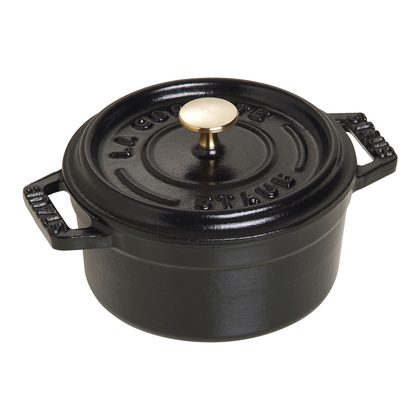
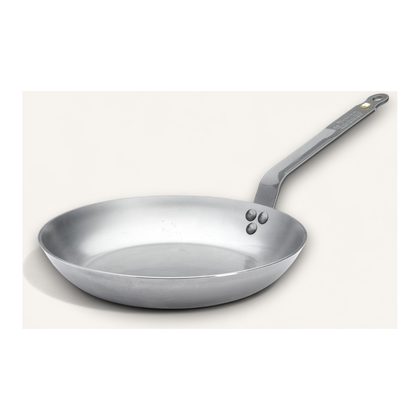
Dutch oven:Staub 5.5 qt (8.4): no lead detected inside or out in an independent XRF test of a Staub cocotte. Carbon steel:de Buyer Mineral B (8.4), 99% iron.
Skip: PTFE (“Teflon”) nonstick, even when it says “PFOA-free,” and HexClad (why). Want nonstick anyway? GreenPan Valencia Pro (6.5) won ATK's ceramic-skillet test, one of three to pass both 50-egg rounds.
Our #1 pick8.8/10
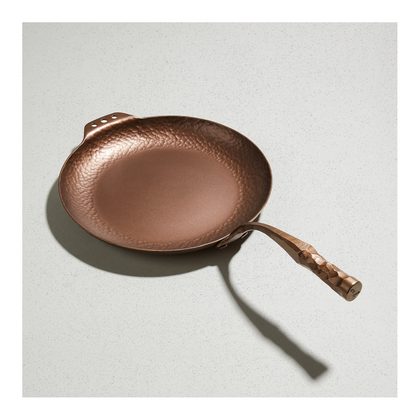
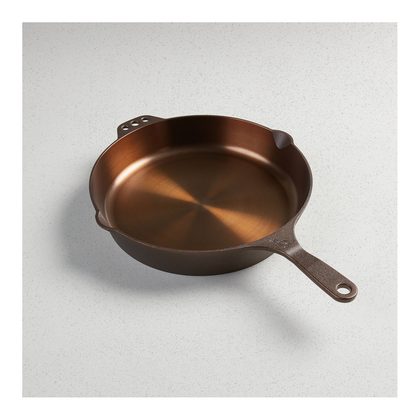
Smithey No. 12 Cast Iron Skillet
No lead, cadmium or mercury detected on the cooking surface[27], and America's Test Kitchen's best cast-iron skillet[1].
Bare iron seasoned with grapeseed oil, made in Charleston, S.C., and built for life. The trade-offs: about 8 pounds, seasoning upkeep, and keep acidic simmers short.
How we score:Surface safety 30%Lab tests (lead, leaching) 20%Durability 15%Cooking performance 15%Proof & transparency 10%Ease of use 10%Full methodology ↓
The Dr. Axe Clean Cookware Score (0–10) reflects our editorial priorities: nothing questionable touching your food, proof over promises, and a pan that lasts. A PTFE or other PFAS coating caps a score at 5.0, sol-gel ceramic nonstick at 7.0, and a safety claim contradicted by an independent test at 7.0. It isn't a universal safety grade.
Know your cookware
What can come off your pans?
Every pan gives a little of its surface to your food. Whether that matters depends on the surface: iron and steel, glass-like enamel, or a synthetic coating. Here's what researchers and regulators have found.
Nonstick particles9,100[143][142]plastic particles from one crack in a PTFE pan's surface, per the study's press release; the paper itself says “thousands to millions”Flinders University; STOTEN, 2022
Nickel483 µg[149]of nickel in one 126 g serving of tomato sauce held at 85°C for 20 hours in a new 316 stainless saucepan, nearly half the daily upper limit. In repeated lab tests on steel samples, leaching fell to about 88 µg per serving by the 10th batchJ Agric Food Chem, 2013
Lead21[123]imported aluminum and brass pots on FDA's list of cookware that may leach lead; FDA says throw them away, don't donate themFDA, 2025
State bans7 states[127][128][129][132][133][131][130]have banned sales of cookware with added PFAS: Minnesota since Jan. 1, 2025, Colorado and Maine 2026, Rhode Island and New Mexico 2027, Connecticut and Vermont 2028State laws
PFOAGroup 1[136][138]“carcinogenic to humans”: WHO's cancer agency classified PFOA, long used to make nonstick coatings, in 2023IARC, 2023; EPA
“PFOA-free” labels79%[23]of 14 nonstick cooking pans tested were PTFE-coated, and most labeled “PFOA-free” didn't disclose the PTFEEcology Center, 2020
Check your pans
Compare anything imported, especially aluminum, brass or “hindalium” pots, against FDA's list of cookware that may leach lead[123]. For nonstick, find the maker's California AB 1200 disclosure: “PTFE,” “FEP” or “PFA” means a PFAS coating[74].
Tomato sauce, wine braises and beans belong in enamel, which ATK calls nonreactive. Lodge says to keep acidic cooks in seasoned iron under 45 minutes.[6][82]
Nickel allergy: cook in cast iron or carbon steel. de Buyer's carbon steel showed no nickel and Smithey's cast iron about 0.1%, against roughly 10% in 316 stainless[31][27][32].
Eggs: a seasoned carbon-steel pan releases them with a little butter[2]. If you choose ceramic nonstick, plan to replace it.
Answer four questions. If nothing we recommend fits, we'll say so and show the closest option.
1What do you cook most?
2What's your stovetop?
3Budget for this piece?
4Any special concern?
Compare the top 10
What each pan is proven to contain, and how it cooks
For each line we show what's been tested and by whom. Lead and nickel figures are XRF readings of the cooking surface: they show what's in it, not how much reaches food. Names link to the reviews.
Score = the Dr. Axe Clean Cookware Score, 0–10: surface safety 30%, lab tests 20%, durability 15%, cooking performance 15%, proof & transparency 10%, ease of use 10%. Full methodology ↓
Accredited lab A published report from an accredited lab, usually paid for by the maker.Independent test ATK, Consumer Reports or Lead Safe Mama's XRF tested this model or line.Maker's claim or disclosure The brand's own claim, spec or legal disclosure.No data No published test either way.Concerning finding A test found lead, PTFE, or results that contradict a claim.
Swipe sideways to see every column. Names stay in place.
*de Buyer's XRF test didn't name the model[31]. †An unnamed GreenPan model[46]. Stainless is acid-safe, but long acidic cooks raise the nickel it adds[149]. All-Clad's 2022 preliminary trace-mercury reading isn't shown because no numbers were published[34]. ATK's only HexClad test was an earlier, PTFE-era pan[8]. Weights are the hero piece (skillet or Dutch oven), measured by ATK where available. Shaded rows are popular pans that missed our top 10.
Full reviews
The 10 best non-toxic cookware lines, ranked
We scored each line on its hero piece: a 10- to 12-inch skillet, or a 5.5- to 7-quart Dutch oven for enameled cast iron. Each review lists the proof behind the key numbers and how the pan fits your kitchen. One model per line; siblings are in the category guides below.
1
$22012-inch skillet. The No. 10 is $180. Prices from smithey.com, Sept. 25, 2026.
Best overall
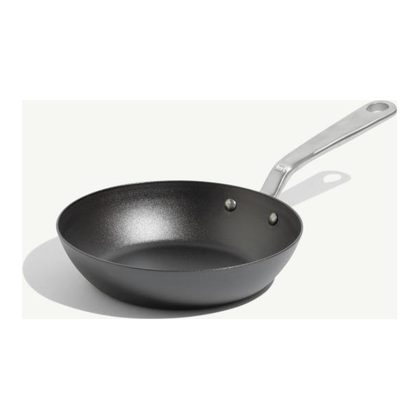
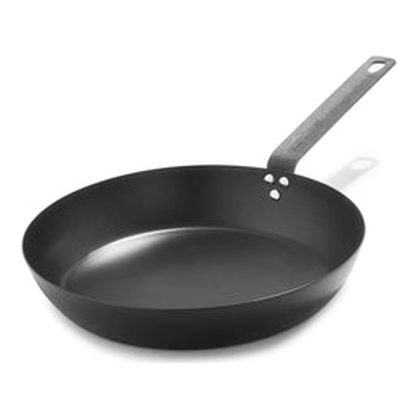
Smithey No. 12 Cast Iron Skillet
Pre-seasoned cast iron · grapeseed-oil seasoning · made in Charleston, S.C.
None[27]lead, cadmium or mercury detected on the cooking surface (XRF)
The cleanest pan we rated that also tops the cooking tests. It's bare cast iron with Smithey's polished interior, pre-seasoned with grapeseed oil and made in South Carolina[58]. Lead Safe Mama's XRF readings of a Smithey cooking surface found no lead, cadmium, mercury or antimony, and nickel at 841 to 1,231 ppm, about a hundredth of what's in the 316 steel she tested from 360 Cookware[27][32]. America's Test Kitchen named the No. 12 its best cast-iron skillet: “Silky-smooth from the get-go, this roomy pan didn't let food stick and stayed impressively slick throughout testing”[1]. The trade-offs are weight (just under 8 pounds), seasoning upkeep and acids: keep tomato sauces and wine braises short, or move them to enamel[82]. The tested pan was a smaller Smithey, and XRF shows what's in the surface, not what leaches.
Best forSearing, roasting, cornbread and everyday cooking, for anyone who wants bare metal with nothing on it
Skip ifYou need a light pan, simmer acidic sauces for hours, or are managing iron overload (hemochromatosis)
CareHand wash, dry, wipe with oil; keep acidic cooks short
WarrantyLifetime guarantee
Food surface: Bare cast iron, grapeseed oilMade in: Charleston, S.C.
Want it smaller? The No. 10 ($180) was ATK's best 10-inch skillet: “the 10-inch aced all the tasks we threw at it.”[1]
See score breakdown & sources
Surface safety9.0
Lab tests (lead, leaching)8.5
Durability10.0
Cooking performance10.0
Proof & transparency7.0
Ease of use7.0
Independent testLead Safe Mama. Full XRF results for a small Smithey cast-iron pan: lead, cadmium, mercury, antimony not detected; nickel 841 to 1,231 ppm (Apr. 30, 2023). Open source · [27]
Independent testAmerica's Test Kitchen. The best cast-iron skillets (Smithey No. 12 winner; Lodge Best Buy; Field, FINEX, Butter Pat) (updated June 24, 2025). Open source · [1]
Maker's dataSmithey Ironware. No. 12 cast-iron skillet ($220; grapeseed-oil seasoning; US made; lifetime guarantee). Open source · [58]
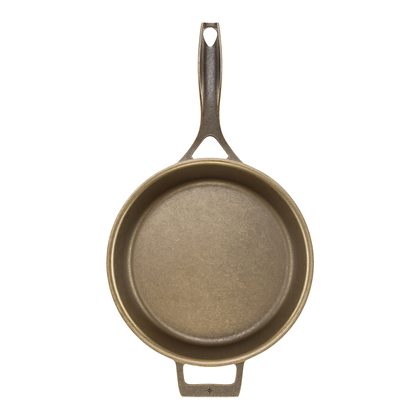
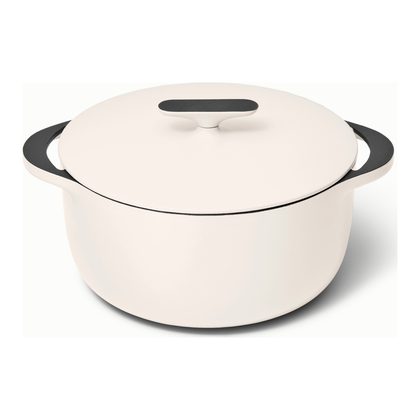
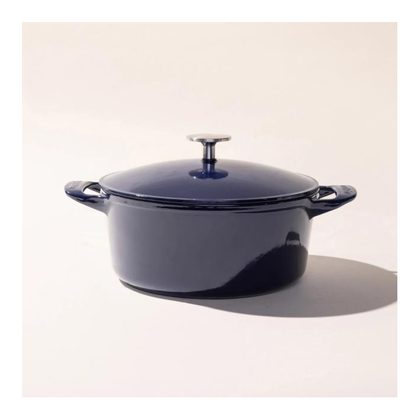
The Dutch oven with the cleanest independent record. Lead Safe Mama tested a gray Staub cocotte and found no lead, cadmium, arsenic or mercury on the interior or exterior[30], and Hong Kong's Consumer Council named Staub among the best performers in a 2021 acid leaching test of cast-iron pots (reported by the South China Morning Post; the model wasn't named)[24]. Staub says its cookware is lead- and cadmium-free and third-party tested, though it doesn't publish the reports[61]. The interior is black matte enamel, not bare iron, so tomato sauces, wine braises and beans are fair game[6]. ATK recommends it for its broad cooking surface but found the lid a bit of a pain to clean[5]. The independent test is from 2016, and at 12.5 pounds it's heavy.
Best forBraises, stews, beans, soups, tomato sauces and bread
Skip ifLifting 12-plus pounds is hard for you, or you want a light interior to watch browning
Independent testLead Safe Mama. Staub La Cocotte: negative for lead, arsenic, cadmium and mercury, interior and exterior (tested 2016, posted Dec. 19, 2017). Open source · [30]
Independent testSouth China Morning Post. Hong Kong Consumer Council finds over half of cast-iron pots release metals above limits; Le Creuset, Staub and Lagostina best, Lodge and Bruno worst (Nov. 15, 2021). Open source · [24]
Maker's dataStaub. Safety and testing of materials (“Cadmium Free, Lead-Free, PFOA Free, PTFE Free, and PFAS Free”; third-party testing, reports not published). Open source · [61]
Maker's dataStaub. Cast iron 5.5-qt round Dutch oven, matte black ($429.99; black matte enamel interior; 500°F; made in France). Open source · [60]
Independent testAmerica's Test Kitchen. The best Dutch ovens (Le Creuset winner, 5.5-qt listed at $455; Staub, Lodge, Made In, Field, Emile Henry) (updated June 25, 2025). Open source · [5]
Buy once: no replacement schedule for enamelCheck current priceWe may earn a commission.
8.4of 10
Clean Cookware Score
3
$11511-inch fry pan. 10.25-inch $105, 12.5-inch $135 (de Buyer USA).
Best carbon steel
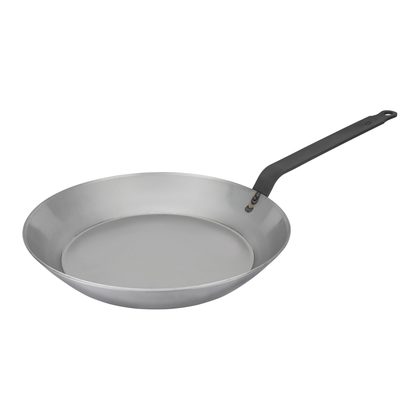
de Buyer Mineral B Classic Carbon Steel Fry Pan, 11-Inch
Carbon steel, 99% iron · beeswax shipping coat · made in France
None[31]lead, cadmium, mercury or arsenic on two de Buyer pans (XRF)
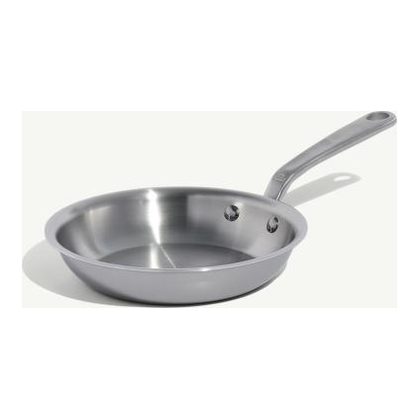
The simplest pan you can buy: 99% iron and 1% carbon, with nothing on it once you wash off the beeswax it ships in to prevent rust[62]. Lead Safe Mama's XRF test of two de Buyer pans found no lead, cadmium, mercury or arsenic on the cooking surfaces (the only cadmium was in a yellow silicone logo on the handle), though she didn't name the model; nickel wasn't detected on either pan's cooking surface[31]. ATK recommends the Mineral B: it “browned foods well and with great release after we seasoned it,” but its high-angled handle and heft make it harder to maneuver[2]. You season it yourself, acids strip the seasoning, and the epoxy-coated handle limits the oven to 400°F for under 10 minutes[62].
Best forSearing, eggs and crepes once seasoned; nickel-allergic cooks who want something lighter than cast iron
Skip ifYou want a pan that's ready out of the box, bake in your skillet, or cook acidic sauces
Oven-safe400°F for under 10 minutes (epoxy handle)
CareScrub off beeswax, season, hand wash, dry
WarrantyTerm not stated for Mineral B; rust excluded
Food surface: Bare carbon steelMade in: France
Want to bake in it? The Mineral B PRO has a stainless handle ($145 for 11-inch).
See score breakdown & sources
Surface safety9.0
Lab tests (lead, leaching)8.0
Durability10.0
Cooking performance8.5
Proof & transparency7.0
Ease of use6.0
Independent testLead Safe Mama. Two de Buyer pans, made in France: lead, cadmium, mercury, arsenic not detected on food surfaces; 90 ppm lead and 40 ppm cadmium thresholds (Dec. 18, 2023). Open source · [31]
Independent testAmerica's Test Kitchen. The best carbon-steel skillets (Smithey Farmhouse highly recommended; de Buyer, Made In, Lodge) (updated Aug. 9, 2025). Open source · [2]
Maker's datade Buyer. Mineral B fry pan (iron 99%, carbon 1%; beeswax coating; oven 400°F flash only; $105 to $135). Open source · [62]
Maker's datade Buyer USA. Limited warranty (excludes rust or corrosion). Open source · [63]
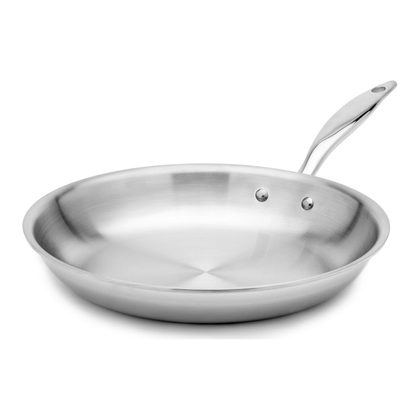
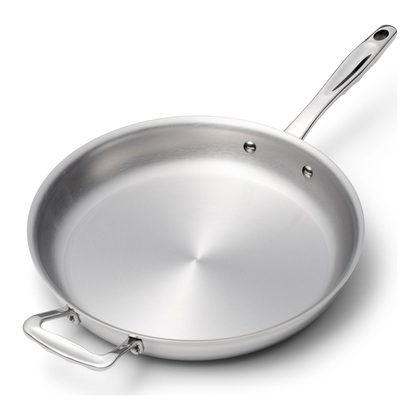
One of the best-built stainless lines we found, and it's made in America: Heritage Steel manufactures every pan and lid at its factory in Clarksville, Tennessee, from clad steel sourced from South Korea[64]. The Titanium Series cooks on 316Ti, a stainless alloy strengthened with titanium and molybdenum, over a three-layer aluminum core. ATK highly recommends the 12-inch: it browned evenly, took only minor dents in abuse tests and didn't warp[3]. Heritage is also candid that its cooking surface contains nickel, and its California disclosure lists the metals[65]. What's missing is any published lead or leaching test, independent or otherwise. ATK also found the 8-piece set's skillet handle could rotate in a pot holder[4].
Best forSearing, pan sauces and acidic dishes; anyone building a stainless kitchen to last
Skip ifYou have a nickel allergy, or want a published lead test behind your pan
The Eater x Heritage Steel series ($129.95 for 12-inch) is the same build with a 304 (18/10) surface.
See score breakdown & sources
Surface safety9.0
Lab tests (lead, leaching)5.0
Durability10.0
Cooking performance9.5
Proof & transparency7.0
Ease of use10.0
Independent testAmerica's Test Kitchen. The best stainless-steel skillets (All-Clad D3 winner; Heritage, Hestan, Demeyere, Made In, Tramontina, Cuisinart) (updated June 25, 2025). Open source · [3]
Independent testAmerica's Test Kitchen. The best cookware sets (All-Clad D3 and Made In 10-piece co-winners) (updated Oct. 15, 2025). Open source · [4]
Maker's dataHeritage Steel. Titanium Series 12-inch fry pan HSC-14914 ($159.95; 316Ti surface; 800°F; made in Clarksville, Tenn.). Open source · [64]
Maker's dataHeritage Steel. California AB 1200 disclosures (chromium, nickel, iron, manganese, molybdenum). Open source · [65]
Maker's dataHeritage Steel. Lifetime warranty (registration within 30 days). Open source · [66]
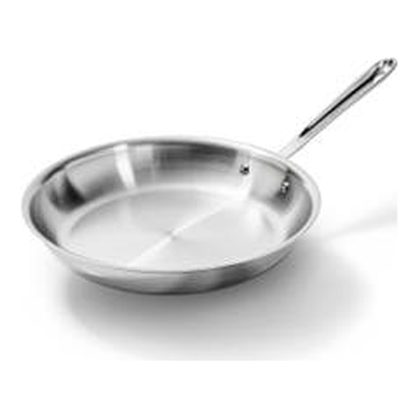
America's Test Kitchen's favorite stainless skillet “for several decades,” and its D3 10-piece set is a co-winner among cookware sets[3][4]. The cooking surface is 18/10 stainless over an aluminum core[68], bonded and assembled in Canonsburg, Pennsylvania, and All-Clad's California disclosure lists the metals in its steel, including nickel[69]. Two cautions. No published lead or leaching test exists for D3. And in 2022 Lead Safe Mama dropped All-Clad from her recommendations after preliminary XRF readings found “trace levels of Mercury in the food surface” of two post-2021 pieces; she published no numbers and we found no follow-up, so it's an open question, not a finding[34]. All-Clad also settled a class action over “dishwasher-safe” claims for D3, D5 and LTD pans bought from 2015 to mid-2022[11].
Best forEveryday sautéing, searing and pan sauces; the benchmark stainless skillet
Skip ifYou have a nickel allergy, or want the mercury question settled first
The 5-ply D5 ($199.99) is ATK-recommended, but ATK doesn't “see the point of choosing this model over the d3 pan.”[3]
See score breakdown & sources
Surface safety9.0
Lab tests (lead, leaching)4.5
Durability10.0
Cooking performance10.0
Proof & transparency6.5
Ease of use10.0
Independent testAmerica's Test Kitchen. The best stainless-steel skillets (All-Clad D3 winner; Heritage, Hestan, Demeyere, Made In, Tramontina, Cuisinart) (updated June 25, 2025). Open source · [3]
Independent testAmerica's Test Kitchen. The best cookware sets (All-Clad D3 and Made In 10-piece co-winners) (updated Oct. 15, 2025). Open source · [4]
Maker's dataAll-Clad. D3 Stainless 12-inch fry pan ($159.99; 600°F; bonded in Canonsburg, Pa.). Open source · [67]
Maker's dataAll-Clad. D3 construction: 18/10 stainless interior, aluminum core, magnetic stainless exterior. Open source · [68]
Maker's dataAll-Clad. AB 1200 disclosure for D3 and D5 (chromium, nickel, iron, manganese, phosphorus, copper, aluminum). Open source · [69]
Independent testLead Safe Mama. Why some stainless cookware carries a Prop 65 warning; preliminary trace-mercury readings in two post-2021 All-Clad pieces (Aug. 19, 2022, modified 2024). Open source · [34]
Independent testAmerica's Test Kitchen. What the All-Clad cookware settlement means for you (dishwasher-safe claims; D3, D5, LTD) (Nov. 4, 2022). Open source · [11]
The lowest-nickel cast iron with a clean independent test in our rankings. Lead Safe Mama's XRF test found no lead, cadmium, mercury or arsenic and 702 ppm nickel (about 0.07%); she called it “A winner for ‘Best Cast Iron Pan!’”[28], and in 2026 testimony to Washington State named Stargazer among USA-made lead-free brands[29]. The cooking surface is machined smooth, it's seasoned with a canola, grapeseed and sunflower blend (or sold bare), and it's finished in Pennsylvania[71]. At 6.5 pounds it's lighter than most 12-inch cast iron. What it lacks is a kitchen test: neither ATK nor Consumer Reports has rated it, and the 2019 test didn't say which size was read.
Best forNickel-allergic cooks; searing; anyone who wants a smooth cast-iron surface
Skip ifYou want a pan with a kitchen-test verdict, or cook long acidic sauces
Independent testLead Safe Mama. Testimony to Washington State: leach testing at manufacture is insufficient; 360 Cookware and Stargazer named among lead-free brands (Jan. 2026). Open source · [29]
About $455 list5.5-qt Dutch oven. List price per ATK. Le Creuset's site shows $285–$680 across sizes and hides the 5.5-qt price until you choose a size.
Iconic Dutch oven
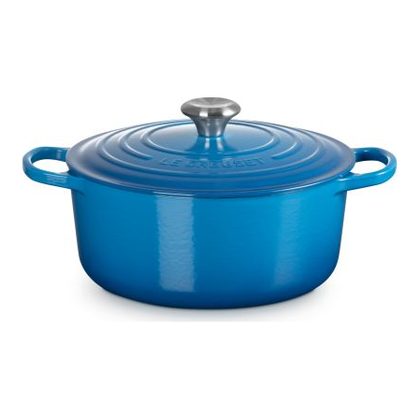
Le Creuset Signature 5.5-Qt Round Dutch Oven
Enameled cast iron · sand-colored interior · made in France
ATK's winning Dutch oven in both the 7¼- and 5.5-quart sizes; the smaller pot's “light-colored interior and low, straight sides allowed us to easily monitor browning”[5]. Le Creuset posts per-color California disclosures: the food-contact enamel lists silica, boron compounds, iron, copper, chromium, nickel and, on most sand and cream interiors, antimony, with no lead or cadmium; among the colors checked, cadmium pigments appear only on the exteriors of Flame, Cerise and Nectar[77]. The independent record is mixed and dated. Lead Safe Mama found trace lead (24 to 66 ppm, including a lid interior) and cadmium inside c. 2013 and vintage pieces[38][39], and says newer, lighter colors test lower[40]; Hong Kong's Consumer Council ranked Le Creuset among the best performers in a 2021 leach test[24]. No current piece has been independently tested, and the brand publishes no lab reports.
Best forBraises and soups where you want to watch browning
Skip ifYou want independent lead data on current production, or a lighter pot
Choose a color whose disclosure lists no cadmium, such as White, Sea Salt, Cotton, Flint or Matte Black; Flame, Cerise and Nectar list cadmium pigments on the exterior.[77]
See score breakdown & sources
Surface safety8.0
Lab tests (lead, leaching)6.5
Durability8.5
Cooking performance10.0
Proof & transparency7.0
Ease of use9.5
Independent testAmerica's Test Kitchen. The best Dutch ovens (Le Creuset winner, 5.5-qt listed at $455; Staub, Lodge, Made In, Field, Emile Henry) (updated June 25, 2025). Open source · [5]
Maker's dataLe Creuset. USA chemical disclosures for cookware (per-color AB 1200 records; e.g., 5.5-qt Flame lists cadmium pigments on the exterior). Open source · [77]
Independent testLead Safe Mama. c. 2013 Le Creuset saucepan: food surface lead 29 ppm, white lid interior 46 and 66 ppm; exterior cadmium 15,800 to 19,600 ppm (2019). Open source · [38]
Independent testLead Safe Mama. Vintage Le Creuset pot: white food surface lead 24 ppm, cadmium 38 ppm; green exterior bottom lead 35 ppm (Oct. 2021). Open source · [39]
Independent testLead Safe Mama. Le Creuset overview: heavy metals higher in colorful exteriors, lower in interiors and newer light colors (updated Nov. 3, 2023). Open source · [40]
Independent testSouth China Morning Post. Hong Kong Consumer Council finds over half of cast-iron pots release metals above limits; Le Creuset, Staub and Lagostina best, Lodge and Bruno worst (Nov. 15, 2021). Open source · [24]
Maker's dataLe Creuset. Signature round Dutch oven ($285 to $680 across sizes; the 5.5-qt price appears only after choosing a size; 500°F; made in France). Open source · [76]
Buy once: no replacement schedule for enamelCheck current priceWe may earn a commission.
8.1of 10
Clean Cookware Score
8
$169.9511.5-inch fry pan. 9-piece set $999.95; 10-inch pan $159.95.
Independently lead-tested stainless
360 Cookware Stainless Steel 11.5" Fry Pan
Tri-ply clad · 316 surface · handcrafted in West Bend, Wis. (imported handles)
None[32]lead, cadmium, mercury, arsenic or antimony in any part (XRF)
The only stainless line in our top 10 with a published independent test of its cooking surface. Lead Safe Mama's XRF readings of a 360 saucepan found no lead, cadmium, mercury, arsenic or antimony in any part, and confirmed a grade-316 surface with about 10% nickel[32]. 360 builds its tri-ply pans in West Bend, Wisconsin; the handles come from overseas, which is why it says “handcrafted” rather than “made in the USA”[78]. Two disclosures matter: 360 supplied the samples, and it joined Lead Safe Mama's newsletter as an advertising partner the same month; she also offers a discount code[32]. No kitchen test from ATK or Consumer Reports exists, and its own listings name both T-316 and T-304 steel.
Best forStainless buyers who want an independent lead test behind the pan
Skip ifYou have a nickel allergy, or want a kitchen-tested performer
Independent testLead Safe Mama. Testimony to Washington State: leach testing at manufacture is insufficient; 360 Cookware and Stargazer named among lead-free brands (Jan. 2026). Open source · [29]
Maker's data360 Cookware. Stainless steel 11.5-inch fry pan ($169.95; T-316 surface; 500°F; West Bend, Wis.). Open source · [78]
The pan to reach for when you want eggs to slide without a coating. ATK highly recommends it: “It was ready to use right out of the box—an egg fried in a teaspoon of butter slid around the pan the first time we cooked in it”[2]. It's hand-forged in Charleston, South Carolina, and comes pre-seasoned, though Smithey doesn't say with which oil[59]. The catch is proof: Lead Safe Mama has tested Smithey's cast iron but not its carbon steel, so there's no published lead test for this pan, and at $300 it's the most expensive skillet in our top 10. As with any carbon steel, acidic sauces strip the seasoning[2].
Best forEggs, fish and searing; the closest thing to nonstick with nothing on the surface
Skip ifYou're on a budget (Lodge's carbon steel is $49.95) or cook acidic sauces
Food surface: Bare carbon steel, pre-seasonedMade in: Charleston, S.C.
See score breakdown & sources
Surface safety9.0
Lab tests (lead, leaching)5.0
Durability10.0
Cooking performance9.5
Proof & transparency6.0
Ease of use7.5
Independent testAmerica's Test Kitchen. The best carbon-steel skillets (Smithey Farmhouse highly recommended; de Buyer, Made In, Lodge) (updated Aug. 9, 2025). Open source · [2]
Maker's dataSmithey Ironware. Carbon steel Farmhouse Skillet ($300; hand-forged in Charleston, S.C.; lifetime guarantee). Open source · [59]
A strong stainless line with more published testing than most, though less than its marketing implies. The 10-piece set is an ATK co-winner: “Pans performed well, browning and heating evenly”[4]. Made In publishes a Light Labs report showing none of 30 PFAS or three bisphenols detected[51]. Its blog also says Stainless Clad passed heavy-metal leach tests, but the public report shows no lead, cadmium or nickel results, and its test dates don't match the blog's[73]. And the 12-inch skillet on its own is only “recommended with reservations” by ATK: its bottom didn't sit flat and it warped more in testing[3]. Made In says the line is made in Italy; its testing blog says Italy and the United States.
Best forBuying a full stainless set; searing and sauces
Skip ifYou're buying one skillet (Heritage or All-Clad tested better), or have a nickel allergy
Food surface: 18/10 stainlessMade in: Italy (and the US, per its blog)
See score breakdown & sources
Surface safety9.0
Lab tests (lead, leaching)5.0
Durability10.0
Cooking performance8.5
Proof & transparency5.0
Ease of use10.0
Independent testAmerica's Test Kitchen. The best stainless-steel skillets (All-Clad D3 winner; Heritage, Hestan, Demeyere, Made In, Tramontina, Cuisinart) (updated June 25, 2025). Open source · [3]
Independent testAmerica's Test Kitchen. The best cookware sets (All-Clad D3 and Made In 10-piece co-winners) (updated Oct. 15, 2025). Open source · [4]
Accredited labLight Labs report for Made In Stainless Clad: 30 of 30 PFAS and 3 bisphenols not detected; no heavy-metal results shown. Open source · [51]
Maker's dataMade In. Is Made In cookware safe? 2026 testing and results (claims heavy-metal tests passed) (Apr. 28, 2026). Open source · [73]
Maker's dataMade In. Stainless Clad 12-inch frying pan ($149; 5-ply; 800°F; 3 lb). Open source · [72]
An uncoated pan is a one-time purchase. A coated one isn't: GreenPan told Consumer Reports its ceramic coatings are expected to last two to five years[15], so over 20 years you'd buy 4 to 10 of them. We took each skillet's price on its maker's site and multiplied by the pans you'd buy.
First panReplacements (every 5 years)More replacements (every 2 years)
Uncoated: buy once
Lodge Classic 12"12-inch skillet$29.9020 years$29.90 once, no coating to wear out:[81]
Lodge Carbon Steel12-inch skillet$49.9520 years$49.95 once, no coating to wear out:[84]
Tramontina Tri-Ply12-inch fry pan$54.9520 years$54.95 once, no coating to wear out:[90]
de Buyer Mineral B#3 · 11-inch fry pan$11520 years$115 once, no coating to wear out:[62]
Made In Stainless#10 · 12-inch frying pan$14920 years$149 once, no coating to wear out:[72]
Heritage Steel Titanium#4 · 12-inch fry pan$16020 years$159.95 once, no coating to wear out:[64]
All-Clad D3#5 · 12-inch fry pan$16020 years$159.99 once, no coating to wear out:[67]
360 Cookware#8 · 11.5-inch fry pan$17020 years$169.95 once, no coating to wear out:[78]
Stargazer 12"#6 · 12-inch skillet$17520 years$175 once, no coating to wear out:[70]
Titanium Always Pan Pro10.5-inch pan$17920 years$179 once, no coating to wear out:[114]Counted once on Our Place's lifetime-warranty claim (the warranty covers defects, not wear); the “no coating” surface hasn't been independently tested.
Smithey No. 12#1 · 12-inch skillet$22020 years$220 once, no coating to wear out:[58]
Smithey Carbon Steel#9 · 12-inch skillet$30020 years$300 once, no coating to wear out:[59]
Coated: replaced every 2 to 5 years (estimate)
GreenPan Valencia Pro12-inch frypan$400–$1,00020 years, estimate$99.99 each × 4 to 10 pans:[107]1 to start, then 3 to 9 replacements over 20 years
Great Jones Large Fry10.25-inch fry pan$420–$1,05020 years, estimate$105 each × 4 to 10 pans:[115]1 to start, then 3 to 9 replacements over 20 years
Caraway Fry Pan10.5-inch fry pan$500–$1,25020 years, estimate$125 each × 4 to 10 pans:[111]1 to start, then 3 to 9 replacements over 20 years
Always Pan 2.010.5-inch pan$540–$1,35020 years, estimate$135 each × 4 to 10 pans:[113]1 to start, then 3 to 9 replacements over 20 years
HexClad Hybrid12-inch fry pan$716–$1,79020 years, estimate$179 each × 4 to 10 pans:[116]1 to start, then 3 to 9 replacements over 20 yearsTerraBond ceramic; its life span isn't published, so we apply the same range.
Estimate. Uncoated pans count once. Every ceramic-coated pan uses GreenPan's 2-to-5-year figure, the only coating life a maker has put in numbers, and ATK's egg test (below) shows why it's realistic. We found no maker or test data on how long PTFE coatings last, so PTFE pans aren't charted. Prices checked Sept. 25, 2026, with no inflation or sales assumed.
Independent test data
How long ceramic nonstick stays nonstick
America's Test Kitchen fries up to 50 eggs, with no oil, in each new pan. Then it cooks with the pan, hand-washes it 10 times and fries up to 50 more[7]. Only three 12-inch pans made it through both rounds.
Eggs released cleanly: new pan vs. after use
New pan (round 1)After use (round 2): failedAfter use: passed
ATK reports that every pan but one released 50 eggs when new, so round 1 is shown at 50. Consumer Reports' durability test, 2,000 strokes with steel wool, rated Caraway, the Always Pan 2.0 and Great Jones “very good” and GreenPan's Valencia Pro “excellent”[17][19][20][18]: the two labs measure different kinds of wear. In a separate review, ATK's original Always Pan lost its release after 44 eggs[9].
What's in your pans
What's in, or can come off, each material
One row per material, one column per substance, drawn from the studies, regulators and tests we cite. Red marks a documented problem, gold a finding under some conditions, green little or none found, and gray no data. Cells marked “content, XRF” show what's in a surface, not what leaves it.
Documented problemSome, under some conditionsLittle or none foundNo data found
Swipe sideways to see every column. Materials stay in place.
DocumentedYes with acid: 638 mg/L vs. a 5 mg/L limit[154][153]
—No data
—No data
XRF readings show what's in a surface, not what moves into food; leach tests like Kamerud's, Fellows' and Stahl's measure what does[26][156]. The worst results come from specific products: new stainless in long acidic cooks, older or imported glazes, and cheap imported aluminum and brass.
How we score: the Dr. Axe Clean Cookware Score™
Most cookware reviews rank pans on cooking and price. Ours starts with the surface that touches your food, then asks what independent tests found on it, how long it lasts and how it cooks. It's an editorial assessment built from published tests, legal disclosures and test-kitchen verdicts, not our own lab testing and not a universal safety grade.
Surface safety30%
What touches your food. Glass 10; fully clad nickel-free stainless 9.5; clad 18/10 or 316 stainless, bare cast iron and carbon steel 9; clad stainless of unstated grade, or carbon steel shipped with an undisclosed coating, 8.5; enamel with a maker lead-free statement 8.5 (9 with a clean independent interior test), without one 8; pure ceramic 8 (6 when lead is in the current glaze); proprietary surfaces 7 to 7.5; sol-gel ceramic nonstick 5; PTFE or any PFAS 1.
Lab tests (lead, leaching)20%
What tests of the product found. An independent leach test that came back clean scores 10, an independent XRF test with no lead or cadmium on the cooking surface 8.5, a maker-published accredited-lab leach report 8 (7 without its method), mixed results 6.5, a claim with no test 5. Lead or nickel found where it shouldn't be, or a regulatory recall, drops it to 3 or 4. Lead in a non-food-contact part costs 2 more when the reading or disclosure is on current production and at or above 90 ppm.
Durability15%
How long the surface lasts. Uncoated metal 10 (for life), enamel 8.5 (it can chip), pure ceramic or an unverified proprietary surface 7, sol-gel ceramic nonstick 2.5 (3.5 if it passed America's Test Kitchen's second-round egg test), PTFE 4.
Cooking performance15%
Verdicts from America's Test Kitchen and Consumer Reports: winner or top pick (including ATK's Best Buy) 10, highly recommended 9.5, recommended 8.5, recommended with reservations 7, no data 6, not recommended 3. We average the skillet and set verdicts, and ATK and CR, when both exist. Verdicts on a discontinued or earlier version don't count.
Proof & transparency10%
Full material disclosure, published third-party reports and honest claims score 10. Full disclosure without reports 7, partial 5 to 6, thin or inconsistent 4. Claims contradicted by tests, or a settlement over 'non-toxic' claims, 2 to 3. A settled class action over another product claim costs 0.5.
Ease of use10%
Weight of the hero piece (up to 3 points), upkeep (3 for none, 2.5 for nonstick coatings or clay/ceramic cookware that needs gradual heating, 1.5 for seasoning), induction (2, or 0.5 with an adapter disk) and oven limit (2 for 500°F or all-metal with no stated limit, 1.5 for 400–499°F, 0.5 for flash-only or under 400°F, 1 when not stated).
Coatings cap the score. A PTFE or other PFAS coating caps a pan at 5.0 and puts it on our skip list. Sol-gel ceramic nonstick caps at 7.0, because the coating wears out.
A contradicted safety claim caps at 7.0. If an independent test contradicts a current headline safety claim, like Hestan's “made without nickel,” the line can't score above 7.0.
Tests beat promises. Lab-test scores run from 10 (independent leach test, clean) through 8.5 (independent XRF of the cooking surface, no lead or cadmium), 8 (maker-published accredited leach report; 7 if it hides its method; 6 if it covers only part of the relevant panel), 6.5 (mixed results) and 5 (claim only) to 4 for trace or older-piece lead and 3 for lead in the current surface, a contradicted claim or a recall. We subtract 1 when the tester had a business tie to the maker and 0.5 when a flag was never quantified. Lead found in a non-food-contact part costs 2 points only when both are true: (a) the reading or disclosure is on current production, meaning a maker disclosure or an XRF test of a current-design piece, not a vintage item; and (b) lead is at or above 90 ppm, the CPSC children's-product limit Lead Safe Mama uses as her threshold. Brand-level results where the model wasn't named count at −0.5, positive or negative. A PFAS-only report doesn't count for an uncoated surface.
Kitchen verdicts come from ATK and CR. Winner or top pick 10 (ATK's Best Buy counts as a top pick), highly recommended 9.5, recommended 8.5, with reservations 7, not recommended 3, no data 6. When a line has skillet and set verdicts, or ATK and CR verdicts, we average them. Verdicts on a discontinued or earlier version don't count.
No independent data, no score. A line with no independent test, no kitchen verdict and no maker-published lab report is Not rated. An unpublished weight gets the middle weight score. Findings on older pieces count under leaching, not surface safety.
One line, home kitchens only. One model per product line in the top 10; siblings go in the guides. Price isn't part of the score. Ties are broken by the unrounded score, then surface safety, lab tests and cooking performance. Guides are ordered by score, except the nickel guide, which is ordered by measured nickel.
About Lead Safe Mama's tests. Many independent lead and nickel numbers here come from Tamara Rubin (Lead Safe Mama), who tests consumer goods with an XRF analyzer. XRF measures total content in a surface, not what leaches into food, and she says so: “XRF testing is entirely distinct from leach testing”[26]. Her lead cutoff of 90 ppm borrows children's-product limits, not a cookware standard[31]; her results aren't peer reviewed; and a single unit may not match current production. She also argues that a leach test on a new pan can miss what a worn one releases[29]. One disclosure matters: 360 Cookware supplied its samples and became an advertiser in her newsletter the month its results were posted[32], so we subtract a point. We count her tests as independent evidence, with those limits.
Why we avoid PTFE and other PFAS coatings
PTFE, the “Teflon” in most nonstick pans, belongs to the PFAS family of “forever chemicals.” Nonstick without it exists, and bare metal needs no coating at all, so any PFAS coating is a line we don't cross, even though regulators still allow it.
It breaks down with high heat
Poison Control says PTFE coatings start to break down above about 500°F, and scratches can release fumes[139]. For pet birds the fumes can be fatal: “Often, the only clinical sign … is acute death”[140].
“PFOA-free” isn't PTFE-free
Most pans labeled “PFOA-free” in the Ecology Center's tests were PTFE-coated without saying so[23]. Consumer Reports found PFOA in a PTFE pan sold as PFOA-free (the distributor disputed it); California now bars “free of” claims for one PFAS when another is added[21].
Replacements raise the same questions
Eight major chemical companies committed to work toward eliminating PFOA by 2015 under an EPA stewardship program[138]. GenX, a replacement processing aid for fluoropolymers, has “similar persistence” in the environment, EPA says[137].
Scratches shed particles
One crack can release about 9,100 particles, per the Luo study's press release[143][142]. A 2024 study estimated plastic and PTFE cookware adds 2,409 to 4,964 microplastics a year to home-cooked food; stainless and glass added none[144].
The other side: FDA says studies show “negligible amounts” of PFAS in these coatings migrate to food[124], a 2024 study found none of its target PFAS in five frying pans heated to 250°C[145], and advertising reviewers told Caraway to stop implying traditional nonstick is harmful[161]. Seven states have banned PFAS cookware anyway; California's ban was vetoed in 2025[134], and a court threw out the industry's challenge to Minnesota's[135].
What to do: check the maker's California AB 1200 page for “PTFE,” “FEP” or “PFA.” If you keep a PTFE pan for now, keep it well under 500°F, retire it once it's scratched, and keep pet birds out of the kitchen[139][140].
What the health evidence shows
Some of these risks are well documented; others rest on a few lab studies. Here's how strong each one is.
PFOA is “carcinogenic to humans” (IARC). Older nonstick pans released 7 to 337 ng of it each at normal cooking temperatures (2007, before the phase-out); a 2024 study found none of its target PFAS in five modern frying pans.
Strong on PFOA; limited on today's pansIARC 2023; ES&T 2007; FAC-A 2024
Nickel added to one 126 g serving of tomato sauce after 20 hours at 85°C in a new 316 stainless saucepan. In repeated-use tests on steel samples, it fell to about 88 µg per serving by the 10th cycle. A 2017 study of 1-hour cooks in 18/10 pots found amounts below allergy thresholds for most nickel-allergic people.
Moderate: new pans, long acidic cooksJ Agric Food Chem 2013; Contact Dermatitis 2017
The childhood lead limit, leached by one imported “hindalium” pan in a Seattle–King County study; a brass pot hit 1,200×, and stainless leached far less. FDA lists 21 imported pots that may leach lead.
Strong for specific importsJ Expo Sci Environ Epidemiol 2025; FDA
Hemoglobin gain over 12 months in 407 Ethiopian children fed from iron pots, vs. +0.4 with aluminum pots. A 2019 review found gains in 4 of 8 pot studies. About 1 in 225 people of Northern European ancestry are at risk of iron overload.
Moderate: helps where iron is lowLancet 1999; PLoS One 2019; NIDDK
Suspected polymer fume fever (“Teflon flu”) cases reported to U.S. poison centers in 2023, the most since 2000, many at work. Symptoms like fever and chills usually pass in 1 to 2 days.
Established but uncommonABC News / America's Poison Centers; Poison Control
Titanium-containing particles released from a “quasi-ceramic” nonstick coating into an acidic food simulant. A NIST study found nanoparticles only under the harshest scratching. We found no study of health effects.
Early: lab studies onlyFAC-A 2017; Food Control 2018
About 11.4% of people are allergic to nickel, the most common contact allergy[151], which is why nickel content matters more to some cooks than others. Iron from cast iron can help people who are low in iron, since the added iron is absorbable[158][159], but people with hemochromatosis should rotate in stainless or enamel[160].
How to read cookware labels
The words that matter most on a cookware box describe the cooking surface. Here's what they mean and where to check them.
Label
What it tells you
Where to check
18/10, 316, 18/0
18/10 and 316 are about 18% chromium and 10% or more nickel; 316 adds molybdenum. 18/0 and 21/0 are low-nickel, but “nickel-free” pans can contain up to 2,500 ppm[35]. In Kamerud's study, leaching varied with grade, cooking time and pan age; even two 304 steels differed by about half[149].
Product page; AB 1200 disclosure
Fully clad vs. disc bottom
Clad pans run bonded layers of steel and aluminum up the sides; disc-bottom pans bond them only under the base. Either way, the aluminum core shouldn't touch food[68].
Product specs
PFOA-free, PTFE-free, PFAS-free
“PFOA-free” says nothing about PTFE. Pans labeled “PTFE-free” in the Ecology Center tests were free of PFAS[23]. “PFAS-free” is the claim to look for.
Label; AB 1200 disclosure
Ceramic nonstick, pure ceramic, enamel
Ceramic nonstick is a thin silica-based sol-gel coating sprayed on metal and cured[108]. Pure ceramic is fired clay all the way through. Enamel is glass fused to cast iron.
Product page
California AB 1200
Makers must post intentionally added chemicals of concern online, and can't claim “free of” one PFAS when another is added[21]. Search the brand name plus “AB 1200.”
Maker's disclosure page
“Lead-free” and Prop 65
There's no single U.S. lead limit for metal cookware. FDA's leach limits cover ceramicware[125]; one Prop 65 settlement set under 100 ppm lead content[126].
Maker's test reports
Pre-seasoned
Seasoning is baked-on oil: soybean for Lodge[82], grapeseed for Smithey and Field[58][86], flaxseed for FINEX[87], a canola, grapeseed and sunflower blend for Stargazer[71].
Product page or FAQ
More picks by category
Best stainless steel cookware
Clad stainless has no coating to wear out and handles acidic sauces. Standard 18/10 and 316 steels are about 10% nickel[149][32]. None of these has a published leach test. Two have independent XRF lead tests, 360 and Hestan NanoBond, and neither found lead[33].
One of the best-built stainless lines we found, and it's made in America: Heritage Steel manufactures every pan and lid at its factory in Clarksville, Tennessee, from clad steel sourced from South Korea[64].
Lead & cadmium Made withoutNickel Yes, 316TiKitchen tests ATK highly rec.
Belgian 5-ply 18/10 with rivet-free welded handles and a Silvinox finish[89]. ATK recommends it and liked the easy cleanup, but called the 12.5-inch “very heavy and awkward”[3]. No published lead test.
The best cheap clad pan: $54.95 for 12-inch[90]. ATK recommends it with reservations (a narrow cooking surface), though it “barely dented and didn't warp”[3]. Tramontina describes both steel layers as 18/10, which is normally non-magnetic, though the pan is sold as induction-ready; it doesn't state the country of origin.
7.7/10
7
Hestan NanoBond Titanium 11" Skillet$350
Titanium nano-layers over 18/10 steel. Hestan markets the cooking surface as made without nickel[92]; an XRF test read 55,600 to 61,200 ppm nickel on the interior[33], likely from the 18/10 steel under a nano-thin titanium layer, and Hestan's own disclosure lists nickel[93]. The same test found no lead or cadmium. ATK recommends it; subject to our 7.0 cap.
6.9/10
8
Cuisinart MultiClad Pro 12" Skillet with Cover$79.95
Comes with a lid[91]. ATK tested only the discontinued previous model, which “warped early in routine cooking”[3]. Not rated: that verdict doesn't carry over, and Cuisinart doesn't state the steel grade or where it's made.
Not rated
9
Misen 5-Ply Stainless Steel 12" Skillet$129
Five-ply with a posted metals disclosure and an 800°F rating (made in China)[94], but we found no independent test or kitchen verdict.
Not rated
Best cast iron
Bare cast iron adds a little iron to food and nothing synthetic[157]. Look for a named seasoning oil and, ideally, an independent lead test.
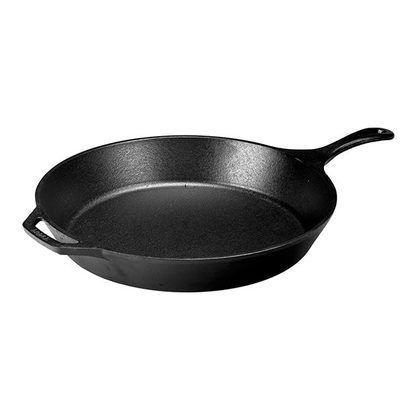
The $29.90 benchmark, made in the USA and seasoned with soybean oil[81][82]. ATK's Best Buy (“a pan that will last forever”)[1] and CR's pick for searing[12]. One flag: in Hong Kong's 2021 test of pots boiled in lemon juice for 2 hours, an unnamed non-enameled Lodge pot released chromium, iron, manganese and vanadium above European guidelines; Hong Kong's food-safety center said lab tests don't necessarily reflect normal cooking[25][24]. No lead test of a current Lodge skillet is published; Lead Safe Mama says only that new Lodge pans “may be okay strictly from a ‘Lead’ perspective”[79]. It weighs 8.1 lb and carries a limited lifetime warranty[80].
8.0/10
4
Field Company No. 10 Cast Iron Skillet$215
Lighter than most (about 5.7 lb) with a satiny surface, recycled US iron and three coats of organic grapeseed oil[86]. ATK recommends it but found it ran a little hot[1]. No published lead test.
7.9/10
5
FINEX 12-Inch Cast Iron Skillet$230
Praised by CR for searing[12], and its iron cooking surface read clean. But its brass cap and knob tested at 27,400 to 30,000 ppm lead[36], after FINEX told a customer in 2021, according to Lead Safe Mama, that none of its products had ever tested positive for a heavy metal[37]. Its disclosure now lists lead in the brass, “not intended as food contact surfaces”[87]. Disclosed lead in a non-food part costs it 2 points on lab tests.
7.7/10
6
YETI Cast Iron Skillet (formerly Butter Pat)$250
Butter Pat's Joan skillet, praised by ATK and CR, is now sold as the YETI Cast Iron Skillet (made in Wisconsin, 5-year warranty)[88]. Those reviews tested the pre-YETI pan, so we don't carry them over.
Not rated
Best carbon steel
Lighter than cast iron and slicker once seasoned, which makes it the best coating-free choice for eggs. Acids strip the seasoning[2].
US-made and seasoned with soybean oil[84][83]. ATK: “its slick seasoning actually deteriorated as we cooked, and food began to stick”[2]. Season it again and it's the cheapest carbon steel worth owning.
7.8/10
4
Matfer Bourgeat Black Carbon Steel Fry PanNo U.S. price published
CR's best carbon-steel frying pan[14]. But French authorities recalled some 2024 lots after an acid test “suggested that our product exceeded their limits for chromium, arsenic and iron” (Matfer's words); Matfer appealed, cites passing lab tests without publishing them, and says there's no US recall[97]. ATK stopped recommending it[10]. No US price published.
7.6/10
5
Made In Seasoned Carbon Steel Frying Pan, 12-Inch$129
Made in Sweden, pre-seasoned with shea and coconut oil, rated to 1,200°F[96]. ATK recommends it with reservations: its textured surface released food less easily[2]. Its Light Labs report covers PFAS only[52].
GreenPan's carbon steel[98]; Good Housekeeping's “Most Versatile” pick[22]. It ships with a protective silicone coating of undisclosed makeup, and there's no ATK, CR or lead test.
7.2/10
Best enameled cast iron and Dutch ovens
Enamel seals the iron, so it's the place for tomato sauce, wine braises and beans[6]. Pick a neutral color: Le Creuset, Lodge and Caraway disclose cadmium pigments in some red, orange or yellow exteriors[77][83][101]. Pure ceramic pieces are listed here too.
ATK's winning Dutch oven in both the 7¼- and 5.5-quart sizes; the smaller pot's “light-colored interior and low, straight sides allowed us to easily monitor browning”[5].
Lead & cadmium 24–66 ppm, olderNickel In enamelKitchen tests ATK winner
Caraway's Light Labs report for its cast-iron line shows lead and 14 other metals “Not detected,” though it doesn't show the method[54]. The Rust color's exterior enamel contains cadmium, per its disclosure[101]. No ATK or CR test we could confirm, and it weighs 13.4 lb[100].
7.7/10
4
Made In 5.5-Qt Enameled Cast Iron Dutch Oven$299
Made in France and ATK-recommended (“made great food and was a pleasure to use”)[5]. Made In says it's made without lead and cadmium[99], but its public Light Labs report covers PFAS only[53]. Oven-safe to 580°F.
7.5/10
5
Lodge Essential Enamel 6-Qt Dutch Oven$99.95
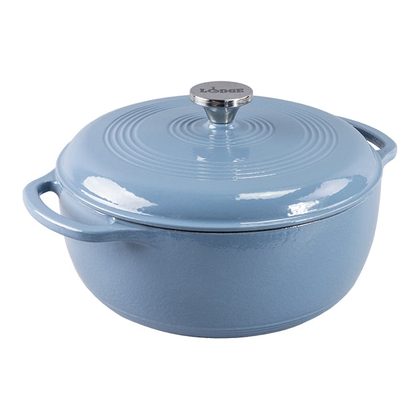
$99.95 for 6 quarts[85]; CR calls it “one of the best cast-iron Dutch ovens we've tested”[13] and ATK recommends it[5]. Lead Safe Mama found 1,693 ppm lead in the white interior of a c. 2006 Lodge enameled pot and 48 ppm in another older one[41][42]; current pieces haven't been tested. Skip red and orange, which contain cadmium[83].
7.4/10
6
Emile Henry Flame 5.5-Qt Round Dutch Oven$229.95
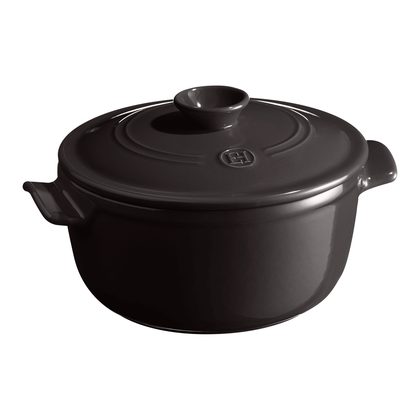
Fired clay made in France, and light at 8.8 lb; the maker says it contains no lead, cadmium or nickel[104]. But ATK found the lid cracked when set down from 2 inches and doesn't recommend it[5], and induction needs an adapter disk.
6.2/10
7
Xtrema Pure Ceramic 11" Skillet$157
Solid glazed ceramic with 31+ published lab reports[106]. Its 2023 leach test passed[57], but its own 2023–2026 reports find 20 to 31 mg/kg lead in the black ceramic[56][106], and Lead Safe Mama read 19 to 120 ppm lead on older pieces' food surfaces, including a lid, and up to 16,400 ppm in a bottom logo[43][44]. Needs a disk for induction.
5.3/10
8
Great Jones The Dutchess 6.75-Qt$205
A 6.75-qt oval[102]. Not rated: no independent test, and its enameled cast iron isn't in Great Jones's California disclosure[103].
Not rated
If you want nonstick
Every ceramic-coated pan here is capped at 7.0; the Titanium Always Pan Pro isn't, because Our Place says it has no coating, which no one has independently checked. Ceramic coatings were PFAS-free in the tests we found[21][23], but they lose their release fast (see ATK's egg test above), so budget for replacements. The best route to easy eggs with nothing on the surface is a seasoned carbon-steel pan like the Smithey Farmhouse (#9).
1
GreenPan Valencia Pro 12" Ceramic Nonstick Frypan$99.99
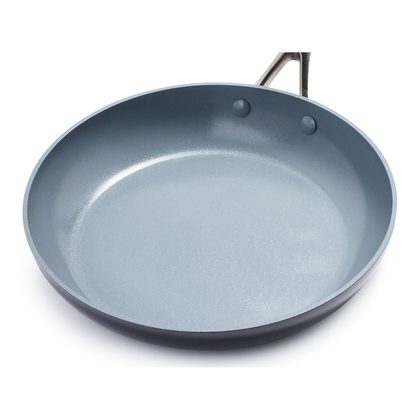
ATK's ceramic-skillet winner, one of three to pass both 50-egg rounds[7], with “excellent” durability from CR[18]. Coating is Thermolon sol-gel[108]; GreenPan covers it for 2 years[109]; oven-safe to 600°F[107].
6.5/10
2
Our Place Titanium Always Pan Pro$179
Sold as coating-free textured titanium[114]; Our Place told Prudent Reviews the recesses are darkened by oxidation in curing[167]. No independent test of the surface; a law firm said in Dec. 2025 it was investigating spray-on-coating allegations, and we found no lawsuit[166].
6.4/10
3
Our Place Always Pan 2.0 (Ceramic)$135
Ceramic-coated aluminum; CR lists it among its best nonstick pans[15][19]. ATK's test of the original version lost its release after 44 eggs[9], and Lead Safe Mama read 34 ppm lead on an original's surface[47]. 3-year warranty.
5.7/10
4
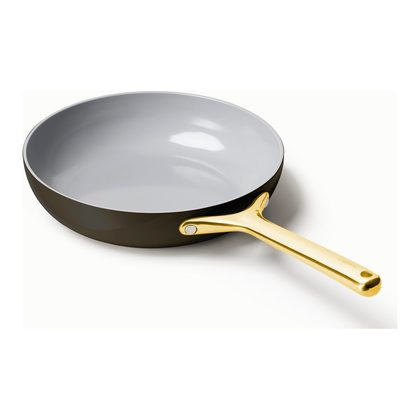
Caraway Ceramic Non-Stick Fry Pan$125
CR lists it among its best nonstick and PFAS-free pans[15][16]; ATK doesn't recommend it (36 eggs in round two)[7]. Its lab report is extensive but doesn't show methods[55].
5.6/10
5
Great Jones Large Fry (Ceramic Nonstick)$105
Ceramic on stainless, light at 2.75 lb[115]. CR rated its release “excellent”[20]; ATK got 50 clean eggs new but only 8 after use[7]. 1-year coating warranty.
5.2/10
Best budget non-toxic cookware
Under $100 for the hero piece, with no PTFE. Lodge's cast iron and carbon steel cost less than one ceramic pan and last for life.
1
Lodge Classic Cast Iron Skillet, 12-Inch$29.90
The $29.90 benchmark, made in the USA and seasoned with soybean oil[81][82]. ATK's Best Buy (“a pan that will last forever”)[1] and CR's pick for searing[12]. One flag: in Hong Kong's 2021 test of pots boiled in lemon juice for 2 hours, an unnamed non-enameled Lodge pot released chromium, iron, manganese and vanadium above European guidelines; Hong Kong's food-safety center said lab tests don't necessarily reflect normal cooking[25][24]. No lead test of a current Lodge skillet is published; Lead Safe Mama says only that new Lodge pans “may be okay strictly from a ‘Lead’ perspective”[79]. It weighs 8.1 lb and carries a limited lifetime warranty[80].
US-made and seasoned with soybean oil[84][83]. ATK: “its slick seasoning actually deteriorated as we cooked, and food began to stick”[2]. Season it again and it's the cheapest carbon steel worth owning.
The best cheap clad pan: $54.95 for 12-inch[90]. ATK recommends it with reservations (a narrow cooking surface), though it “barely dented and didn't warp”[3]. Tramontina describes both steel layers as 18/10, which is normally non-magnetic, though the pan is sold as induction-ready; it doesn't state the country of origin.
7.7/10
4
Lodge Essential Enamel 6-Qt Dutch Oven$99.95
$99.95 for 6 quarts[85]; CR calls it “one of the best cast-iron Dutch ovens we've tested”[13] and ATK recommends it[5]. Lead Safe Mama found 1,693 ppm lead in the white interior of a c. 2006 Lodge enameled pot and 48 ppm in another older one[41][42]; current pieces haven't been tested. Skip red and orange, which contain cadmium[83].
GreenPan's carbon steel[98]; Good Housekeeping's “Most Versatile” pick[22]. It ships with a protective silicone coating of undisclosed makeup, and there's no ATK, CR or lead test.
7.2/10
6
Cuisinart MultiClad Pro 12" Skillet with Cover$79.95
Comes with a lid[91]. ATK tested only the discontinued previous model, which “warped early in routine cooking”[3]. Not rated: that verdict doesn't carry over, and Cuisinart doesn't state the steel grade or where it's made.
Not rated
Best cookware for a nickel allergy
About 11.4% of people are allergic to nickel[151]. Stainless adds some to food, most when new and with long acidic cooks[149], though 1-hour cooks stayed below allergy thresholds for most nickel-allergic people in a 2017 study[150]. Bare iron and carbon steel carry far less. Avoid Hestan NanoBond: its own disclosure lists nickel, and XRF read 55,600 ppm or more on the interior[33][93]. This guide is ordered by measured nickel, lowest first.
The $29.90 benchmark, made in the USA and seasoned with soybean oil[81][82]. ATK's Best Buy (“a pan that will last forever”)[1] and CR's pick for searing[12]. One flag: in Hong Kong's 2021 test of pots boiled in lemon juice for 2 hours, an unnamed non-enameled Lodge pot released chromium, iron, manganese and vanadium above European guidelines; Hong Kong's food-safety center said lab tests don't necessarily reflect normal cooking[25][24]. No lead test of a current Lodge skillet is published; Lead Safe Mama says only that new Lodge pans “may be okay strictly from a ‘Lead’ perspective”[79]. It weighs 8.1 lb and carries a limited lifetime warranty[80].
US-made and seasoned with soybean oil[84][83]. ATK: “its slick seasoning actually deteriorated as we cooked, and food began to stick”[2]. Season it again and it's the cheapest carbon steel worth owning.
7.8/10
6
HOMI CHEF Nickel-Free Whole-Clad 14-Piece Set$197.34 (set)
A whole-clad set with a 21/0 (low-nickel) interior, $197.34 for 14 pieces[95]. Not rated: no independent test, its steel spec is inconsistent, and its largest skillet is 9.5 inches. “Nickel-free” pans can still contain up to 2,500 ppm nickel[35].
Not rated
What about Caraway, GreenPan, HexClad and Our Place?
They're among the most-marketed “non-toxic” pans online. Here's what the tests and court records show.
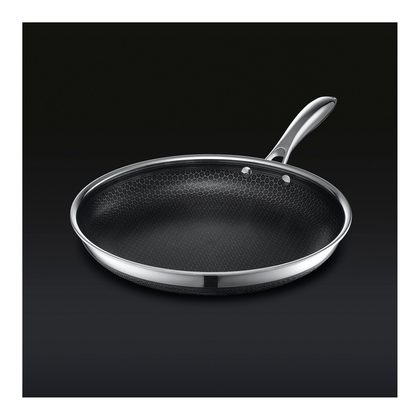
HexClad NRHexClad's original hybrid pans were PTFE-coated, and a California class action alleged it marketed them as “non-toxic” and “PFAS free.” It settled for $2.5 million, denying wrongdoing, for U.S. buyers from Feb. 1, 2022 to Mar. 31, 2024, and agreed to stop calling PTFE products “PFAS free,” “PFOA free” or “non-toxic”[164]. Current pans use a ceramic coating it calls TerraBond, whose makeup isn't disclosed[117]. ATK found an earlier (PTFE-era) HexClad “wasn't truly nonstick”[8]; it hasn't tested the current TerraBond version. Older stock may still be PTFE.
Caraway (5.6 fry pan; 7.7 Dutch oven)In 2025 the National Advertising Division found Caraway supported its own “non-toxic” and “free of PFAS” claims, but recommended it drop claims that traditional nonstick is harmful, including “Teflon flu cases are rising”; Caraway said it disagreed but would comply[161]. In February 2026, Groupe SEB USA and Meyer, whose complaint defends PTFE cookware, sued Caraway for false advertising; Caraway has moved to dismiss, its founder called the suit “meritless,” and there's no ruling yet[162][163]. On the pan: CR rates it among its best nonstick pans[15], ATK doesn't recommend it[7]. Caraway says the coating is made without PTFE, PFAS, lead and cadmium[112]; a 2021 XRF test of one reader-owned pan read 44 to 51 ppm lead on the gray cooking surface, which the tester attributed to the aluminum body under the coating[45]; Caraway's 2026 lab report shows lead below reporting limits without stating its method[55].
GreenPan (6.5)Its Thermolon coating is a silica-based sol-gel[108]. A 2019 class action over “toxin free” packaging ended in 2020 with the named plaintiff's claims dismissed and no class settlement[165]; GreenPan says there were no findings of liability and no admission of wrongdoing[110]. Performance is its strength: the Valencia Pro won ATK's ceramic test[7]. GreenPan told CR its coatings last two to five years[15], and its warranty covers the coating for two[109].
Our Place (5.7 Always Pan 2.0; 6.4 Titanium Pro)The Always Pan 2.0 is ceramic-coated aluminum, and CR lists it among its best nonstick pans[15]. The Titanium Always Pan Pro is sold as coating-free: textured titanium whose recesses, the company told Prudent Reviews, are darkened by oxidation during curing[114][167]. A law firm said in Dec. 2025 it was investigating allegations that it's a spray-on coating and that the pattern chips; we found no lawsuit and no independent analysis of the surface[166].
Our adviceFor eggs with no coating at all, a seasoned carbon-steel pan like the Smithey Farmhouse (#9) or de Buyer Mineral B (#3) does the job. If you want a coated pan anyway, GreenPan's Valencia Pro won ATK's ceramic-skillet test, one of three to pass both 50-egg rounds; replace it when food starts to stick.
PFAS nonstick and undisclosed coatings: what we'd skip
These pans have a PFAS coating, a coating their makers don't disclose, or a record we can't get past. Several cook well; under our score they can't be recommended.
1
Made In ProCoat Non Stick 12" Frying Pan$159
Made In's own disclosure lists PTFE, FEP and PFA[74]. ATK liked how it cooked[8], but its 2-year coating warranty is voided by cooking on medium heat or higher[75]. Oven-safe to 500°F[118].
4.6/10
2
HexClad Hybrid 12" Fry Pan$179
Current pans use a ceramic coating HexClad calls TerraBond[117]. A class action alleged earlier PTFE pans were sold as “PFAS free” and “non-toxic”; HexClad denied wrongdoing and settled for $2.5 million[164]. ATK found an earlier (PTFE-era) HexClad “wasn't truly nonstick”[8]; it hasn't tested the current TerraBond version. Not rated: no independent data on the current pan.
Not rated
3
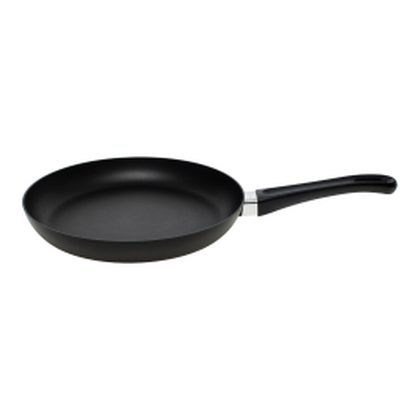
Scanpan Classic 10.25" Fry Pan$89.99
Scanpan says plainly that its nonstick contains PTFE, a PFAS[119]. The Classic line doesn't work on induction, and ATK's only Classic test was of a discontinued pan.
PTFE
4
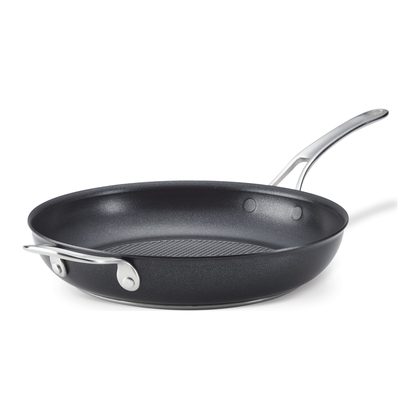
Anolon X 12" Hybrid Nonstick Frying Pan$154.99
Sold as “FDA approved nonstick” with a steel mesh; its disclosure lists PTFE, FEP and PFA[120]. No independent test found.
PTFE
·
Ninja NeverStickNo longer on SharkNinja.com
Its coating chemistry isn't disclosed, and advertising reviewers told SharkNinja to drop “never sticks” and lifetime claims[168].
Not rated
·
Carote nonstickSets from $99.99
Its nonstick set claims only “made without PFOA, PFOS” and doesn't say whether the coating contains PTFE[121]; we couldn't find a California disclosure. Until it discloses, we skip it.
Not rated
·
Imported aluminum, brass and “hindalium” potsVarious
FDA lists 21 imported products that may leach lead and says to throw them away[123].
Avoid
·
Vintage decorated CorningWare, and Visions glass-ceramicSecondhand
Lead Safe Mama found 26,500 ppm lead on a vintage decorated CorningWare casserole and 222 ppm on a Visions lid bought in 2018[50][49]. Plain clear glass, like new Pyrex, is oven-only[122].
Avoid
When the label promises more than the lab finds
These are the biggest gaps we found between what brands claim and what independent tests or their own public reports show[92][37][73].
FINEX[36]2021 statement: never tested positive for a heavy metal
ClaimedNone
XRF, brass knob27,400–30,000 ppm
Made In Stainless[51]Claim: passed heavy-metal leach tests
Blog: tests passed4 of 4
Public lab report0 shown
XRF measures total content in a surface, not leaching. On Hestan's NanoBond it may be reading the steel beneath a nano-thin titanium layer.
Three more. Xtrema's “no extractable lead” holds up in its 2023 leach test[57], but its own 2023–2026 reports find 20 to 31 mg/kg lead in the black ceramic[56][106], and Lead Safe Mama read up to 16,400 ppm in a bottom logo and 19 to 120 ppm on older pieces' food surfaces, including a lid[43][44]. A class action alleged HexClad marketed PTFE-coated pans as “PFAS free”; HexClad denied wrongdoing and settled for $2.5 million, covering purchases from Feb. 2022 to Mar. 2024[164]. And Consumer Reports found PFOA in a PTFE pan sold as PFOA-free (the distributor disputed it)[21].
DA
Dr. Axe's Take
Your pan touches nearly every meal you cook, so I want it to be boring: metal, glass or enamel, with nothing that can peel, flake or off-gas. My non-negotiables are simple. First, retire any PTFE nonstick pan, especially a scratched one. A “PFOA-free” label doesn't make it PTFE-free.
Second, build your kitchen around bare metal: a cast-iron or carbon-steel skillet for searing and eggs, and a clad stainless pan for sauces. They'll outlast you. Third, give acidic foods a nonreactive home. Tomato sauce and wine braises belong in enamel, not in a thin layer of seasoning.
And buy the proof, not the promise. A pan with an independent lead test or a published lab report beats one with a longer list of “free of” claims.
— Dr. Axe
Frequently asked questions
What is the safest non-toxic cookware?
Uncoated cookware with a tested surface: bare cast iron, carbon steel, clad stainless, enameled cast iron and glass. Our top pick is the Smithey No. 12 cast-iron skillet ($220, 8.8/10): Lead Safe Mama's XRF test found no lead, cadmium or mercury on a Smithey cooking surface, and America's Test Kitchen named it the best cast-iron skillet. For braises, a Staub cocotte showed no lead inside or out in a 2016 XRF test. Skip PTFE nonstick.
Is stainless steel cookware safe?
Yes for most people. Clad stainless has no coating, and ATK notes it doesn't react with acidic foods. It does add some nickel and chromium to food: one study measured 483 µg of nickel in a serving of tomato sauce cooked 20 hours in a new 316 saucepan; in the same study's repeated-use tests on steel samples, leaching fell to about 88 µg by the 10th batch, while a 2017 study of 1-hour cooks found amounts below allergy thresholds for most nickel-allergic people. If you have a nickel allergy, choose cast iron or carbon steel.
Is cast iron safe? Does it add iron to food?
Bare cast iron from the makers we checked tested free of lead and cadmium by XRF (Smithey, Stargazer). It does add iron: most foods cooked in iron pots contain more iron, and a trial in 407 children found higher hemoglobin with iron pots. That's a benefit if your iron is low and a reason for caution if you have hemochromatosis. Keep acidic dishes short; Lodge says under 45 minutes once seasoned.
Is ceramic nonstick cookware non-toxic?
Ceramic (sol-gel) coatings were PFAS-free in the tests we found: Consumer Reports found none of 96 PFAS in two ceramic pans, and the Ecology Center found that pans labeled PTFE-free were free of PFAS. The catch is life span. Only three 12-inch pans passed both of America's Test Kitchen's 50-egg tests, and GreenPan told CR its coatings last two to five years. Lab studies have found titanium and silica nanoparticles released under wear; we found no study of health effects.
Is Teflon (PTFE) safe now that PFOA is gone?
FDA says studies show negligible PFAS migrate from PTFE coatings, and a 2024 study found no target PFAS in five modern frying pans. But PTFE is itself a PFAS, it breaks down above about 500°F, scratched coatings shed particles, and more than 265 suspected fume-fever cases were reported in 2023. Seven states have banned PFAS cookware. We skip it because good alternatives exist.
Is HexClad non-toxic?
Current HexClad pans use a ceramic coating it calls TerraBond, which it says is PTFE- and PFAS-free; its makeup isn't disclosed. Earlier pans were PTFE-coated, and HexClad settled a class action over its “non-toxic” and “PFAS free” marketing for $2.5 million, denying wrongdoing. ATK found an earlier (PTFE-era) HexClad wasn't truly nonstick; it hasn't tested the current TerraBond version. With no independent data on the current pan, we don't score it.
Is Caraway cookware safe?
Caraway's ceramic coating tested PFAS-free in its maker-published lab report, and Consumer Reports rates the fry pan highly. But ATK doesn't recommend it after only 36 eggs released in its second egg test, a 2021 XRF test of one reader-owned pan read 44 to 51 ppm lead on the gray cooking surface (which the tester attributed to the aluminum body under the coating), and advertising reviewers told Caraway to drop claims that traditional nonstick is harmful. Its enameled cast-iron Dutch oven scores much higher (7.7) than its fry pan (5.6).
Is Le Creuset lead-free?
Le Creuset's California disclosures list no lead or cadmium in its food-contact enamel, and it placed among the best performers in Hong Kong's 2021 leach test. Lead Safe Mama found trace lead (24 to 66 ppm, including a lid interior) inside c. 2013 and vintage pieces and 35 ppm on a vintage pot's exterior, and cadmium pigments are disclosed on the exteriors of Flame, Cerise and Nectar. Current production hasn't been independently tested. Choose a color whose disclosure lists no cadmium, such as White, Sea Salt, Cotton, Flint or Matte Black. We score it 8.1.
What's the best cookware for a nickel allergy?
Bare carbon steel and cast iron. Lead Safe Mama detected no nickel on two de Buyer carbon-steel pans, 702 ppm (about 0.07%) in a Stargazer and about 0.1% in a Smithey, against roughly 10% in 316 stainless. Our picks: de Buyer Mineral B ($115), Stargazer 12-inch ($175), Smithey No. 12 ($220) and Lodge Classic ($29.90). “Nickel-free” stainless can still contain up to 2,500 ppm, and Hestan's “made without nickel” NanoBond read 55,600 ppm or more by XRF.
How can I tell if my pans contain lead?
Start with FDA's list of imported cookware that may leach lead, mostly aluminum, brass and “hindalium” pots, and throw those away. Be wary of vintage or decorated enamel and ceramic. XRF readings show what's in a surface, not what leaches; a lab leach test is the gold standard. For new cookware, look for a maker-published lab report or an independent test.
How much does cookware cost over time?
Over 20 years, an uncoated skillet is a one-time cost: $29.90 for the Lodge Classic, $160 for Heritage Steel's Titanium and $220 for the Smithey No. 12. A ceramic-coated pan has to be replaced: GreenPan told Consumer Reports its coatings last two to five years, so a $125 Caraway fry pan works out to about $500 to $1,250, and a $99.99 GreenPan to $400 to $1,000. That's an estimate, before inflation.
References
Update history
Sept. 25, 2026: First published. Scores built from America's Test Kitchen and Consumer Reports verdicts, Lead Safe Mama XRF results, maker-published lab reports and California AB 1200 disclosures, all checked Sept. 25, 2026.
Independent test America's Test Kitchen. The best cast-iron skillets (Smithey No. 12 winner; Lodge Best Buy; Field, FINEX, Butter Pat) (updated June 24, 2025). Open source
Independent test America's Test Kitchen. The best carbon-steel skillets (Smithey Farmhouse highly recommended; de Buyer, Made In, Lodge) (updated Aug. 9, 2025). Open source
Independent test America's Test Kitchen. The best stainless-steel skillets (All-Clad D3 winner; Heritage, Hestan, Demeyere, Made In, Tramontina, Cuisinart) (updated June 25, 2025). Open source
Independent test America's Test Kitchen. The best cookware sets (All-Clad D3 and Made In 10-piece co-winners) (updated Oct. 15, 2025). Open source
Independent test America's Test Kitchen. The best Dutch ovens (Le Creuset winner, 5.5-qt listed at $455; Staub, Lodge, Made In, Field, Emile Henry) (updated June 25, 2025). Open source
Independent test America's Test Kitchen. The best enameled cast-iron skillets (enamel is “rust-proof and nonreactive”) (updated July 11, 2024). Open source
Independent test America's Test Kitchen. The best ceramic nonstick skillets: two 50-egg tests (updated Aug. 25, 2026). Open source
Independent test America's Test Kitchen. The best 12-inch nonstick skillets (HexClad Hybrid; Made In Non Stick) (updated Jan. 29, 2026). Open source
Independent test America's Test Kitchen. Our Place Always Pan review (original version lost its nonstick after 44 eggs) (updated June 24, 2025). Open source
Independent test America's Test Kitchen. All about the Matfer Bourgeat recall (“Do you still recommend Matfer Bourgeat skillets? Not currently.”) (Aug. 27, 2024). Open source
Independent test America's Test Kitchen. What the All-Clad cookware settlement means for you (dishwasher-safe claims; D3, D5, LTD) (Nov. 4, 2022). Open source
Independent test Consumer Reports. Best cast-iron frying pans (Lodge, FINEX, Butter Pat) (updated Aug. 15, 2023). Open source
Independent test Consumer Reports. Best Dutch ovens (Lodge Essential Enamel “one of the best”) (updated June 16, 2026). Open source
Independent test Consumer Reports. 5 best frying pans of 2026 (Matfer Bourgeat best carbon steel) (modified Apr. 25, 2026). Open source
Independent test Consumer Reports. 6 best nonstick frying pans of 2026 (steel-wool durability test; GreenPan: coatings expected to last 2 to 5 years) (updated Sept. 15, 2026). Open source
Independent test Consumer Reports. 5 best frying pans if you want to avoid PFAS (updated Sept. 22, 2026). Open source
Independent test Consumer Reports. Caraway Ceramic-Coated Non-Stick ratings (release and evenness excellent; durability very good). Open source
Independent test Consumer Reports. GreenPan Valencia Pro ceramic nonstick ratings (release and durability excellent). Open source
Independent test Consumer Reports. Our Place Always Pan 2.0 ratings (durability very good). Open source
Independent test Consumer Reports. Great Jones Large Fry ratings (release excellent; durability very good). Open source
Independent test Consumer Reports. You can't always trust claims on “non-toxic” cookware: PFAS tests of 3 pans; California's “free of” rule (2022). Open source
Independent test Good Housekeeping. Best carbon steel pans (Merten & Storck “Most Versatile”) (modified Nov. 18, 2024). Open source
Independent test Ecology Center. What's cooking? Undisclosed PFAS coatings common: 79% of 14 nonstick cooking pans were PTFE (Dec. 8, 2020). Open source
Independent test South China Morning Post. Hong Kong Consumer Council finds over half of cast-iron pots release metals above limits; Le Creuset, Staub and Lagostina best, Lodge and Bruno worst (Nov. 15, 2021). Open source
Independent test DimSum Daily. Consumer Council: non-enameled Lodge pot released chromium, iron, manganese and vanadium 0.7 to 54 times above European guidelines in 0.5% lemon juice at 100°C for 2 hours (Nov. 15, 2021). Open source
Independent test Lead Safe Mama (Tamara Rubin). “XRF testing is entirely distinct from leach testing” (May 26, 2019). Open source
Independent test Lead Safe Mama. Full XRF results for a small Smithey cast-iron pan: lead, cadmium, mercury, antimony not detected; nickel 841 to 1,231 ppm (Apr. 30, 2023). Open source
Independent test Lead Safe Mama. Stargazer cast iron: lead-, cadmium-, mercury- and arsenic-free; nickel 702 ppm (2019, modified 2024). Open source
Independent test Lead Safe Mama. Testimony to Washington State: leach testing at manufacture is insufficient; 360 Cookware and Stargazer named among lead-free brands (Jan. 2026). Open source
Independent test Lead Safe Mama. Staub La Cocotte: negative for lead, arsenic, cadmium and mercury, interior and exterior (tested 2016, posted Dec. 19, 2017). Open source
Independent test Lead Safe Mama. Two de Buyer pans, made in France: lead, cadmium, mercury, arsenic not detected on food surfaces; 90 ppm lead and 40 ppm cadmium thresholds (Dec. 18, 2023). Open source
Independent test Lead Safe Mama. 360 Cookware saucepan XRF: lead, cadmium, mercury, arsenic, antimony not detected; nickel 101,100 ppm; advertising-partner disclosure (Nov. 16, 2025). Open source
Independent test Lead Safe Mama. Hestan NanoBond 3-qt saucepan: lead, cadmium, mercury, arsenic not detected; interior nickel 55,600 to 61,200 ppm (Apr. 8, 2022). Open source
Independent test Lead Safe Mama. Why some stainless cookware carries a Prop 65 warning; preliminary trace-mercury readings in two post-2021 All-Clad pieces (Aug. 19, 2022, modified 2024). Open source
Independent test Lead Safe Mama. How to clean new stainless pots; “nickel-free” pans can contain up to 2,500 ppm nickel (Apr. 2024). Open source
Independent test Lead Safe Mama. Brass components of FINEX pans test positive for 27,400 to 30,000 ppm lead; iron food surface (May 19, 2021). Open source
Independent test Lead Safe Mama. A 2021 FINEX statement to a customer that none of its products “have ever tested positive for any toxin or heavy metal” (May 18, 2021). Open source
Independent test Lead Safe Mama. c. 2013 Le Creuset saucepan: food surface lead 29 ppm, white lid interior 46 and 66 ppm; exterior cadmium 15,800 to 19,600 ppm (2019). Open source
Independent test Lead Safe Mama. Vintage Le Creuset pot: white food surface lead 24 ppm, cadmium 38 ppm; green exterior bottom lead 35 ppm (Oct. 2021). Open source
Independent test Lead Safe Mama. Le Creuset overview: heavy metals higher in colorful exteriors, lower in interiors and newer light colors (updated Nov. 3, 2023). Open source
Independent test Lead Safe Mama. c. 2006 Lodge enameled Dutch oven: white interior 1,693 ppm lead (tested 2016). Open source
Independent test Lead Safe Mama. Older Lodge enameled Dutch oven: white interior 48 ppm lead (tested 2015). Open source
Independent test Lead Safe Mama. c. 2020 Xtrema 1.25-qt pot: black food surface lead 19 ppm; red lid interior lead 38 ppm, cadmium 721 ppm; bottom logo up to 16,400 ppm lead (June 8, 2022). Open source
Independent test Lead Safe Mama. Xtrema saucepan (bought c. 2016): interior glaze lead 74 ppm, lid food surface 120 ppm, bottom label 7,258 ppm (Aug. 2018). Open source
Independent test Lead Safe Mama. Caraway ceramic pan XRF (one reader-owned pan): gray food surface lead 44 to 51 ppm, attributed by the tester to the aluminum body; handle-rivet exterior lead 14 ppm (Aug. 3, 2021). Open source
Independent test Lead Safe Mama. GreenPan (model not named): lead-free food surface by XRF (Jan. 25, 2021). Open source
Independent test Lead Safe Mama. Our Place Always Pan (original): gray food surface lead 34 ppm (Dec. 7, 2020). Open source
Independent test Lead Safe Mama. Modern Pyrex dish with blue dots: lead-free; one reading of 51 ppm cadmium (Aug. 2022). Open source
Independent test Lead Safe Mama. Corelle/Corning Visions amber lid bought March 2018: 222 ppm lead (Oct. 2018). Open source
Independent test Lead Safe Mama. Vintage (1972–1988) CorningWare Spice o' Life casserole: 26,500 ppm lead (Dec. 2019). Open source
Accredited lab Light Labs report for Made In Stainless Clad: 30 of 30 PFAS and 3 bisphenols not detected; no heavy-metal results shown. Open source
Accredited lab Light Labs report for Made In Carbon Steel: PFAS panel only (last tested Feb. 14, 2025). Open source
Accredited lab Light Labs report for Made In Enameled Cast Iron: 30 PFAS below 0.01 ppb; no heavy-metal results shown. Open source
Accredited lab Light Labs report for Caraway enameled cast iron: lead and 14 other metals, PFAS and BPA “Not detected”; method and detection limits not shown (2024). Open source
Accredited lab Light Labs report for Caraway ceramic nonstick coating: PTFE, PFOA, other PFAS and total organic fluorine not detected; metals below reporting limits; methods not shown (2026). Open source
Accredited lab SGS-CSTC report SZXEC26004153502 for Xtrema: total lead 25 to 28 mg/kg (limit 100), cadmium not detected (July 16, 2026). Open source
Accredited lab SGS Guangzhou LFGB leach report for Xtrema: leachable lead below 0.1 mg/L (limit 1.5), cadmium below 0.01 mg/L (Jan. 16, 2023). Open source
Maker's data Smithey Ironware. No. 12 cast-iron skillet ($220; grapeseed-oil seasoning; US made; lifetime guarantee). Open source
Maker's data Smithey Ironware. Carbon steel Farmhouse Skillet ($300; hand-forged in Charleston, S.C.; lifetime guarantee). Open source
Maker's data Staub. Cast iron 5.5-qt round Dutch oven, matte black ($429.99; black matte enamel interior; 500°F; made in France). Open source
Maker's data Staub. Safety and testing of materials (“Cadmium Free, Lead-Free, PFOA Free, PTFE Free, and PFAS Free”; third-party testing, reports not published). Open source
Maker's data de Buyer. Mineral B fry pan (iron 99%, carbon 1%; beeswax coating; oven 400°F flash only; $105 to $135). Open source
Maker's data de Buyer USA. Limited warranty (excludes rust or corrosion). Open source
Maker's data Heritage Steel. Titanium Series 12-inch fry pan HSC-14914 ($159.95; 316Ti surface; 800°F; made in Clarksville, Tenn.). Open source
Maker's data Heritage Steel. California AB 1200 disclosures (chromium, nickel, iron, manganese, molybdenum). Open source
Maker's data Heritage Steel. Lifetime warranty (registration within 30 days). Open source
Maker's data All-Clad. D3 Stainless 12-inch fry pan ($159.99; 600°F; bonded in Canonsburg, Pa.). Open source
Maker's data All-Clad. D3 construction: 18/10 stainless interior, aluminum core, magnetic stainless exterior. Open source
Maker's data All-Clad. AB 1200 disclosure for D3 and D5 (chromium, nickel, iron, manganese, phosphorus, copper, aluminum). Open source
Maker's data Stargazer Cast Iron. 12-inch skillet ($175; 6.5 lb; lifetime warranty). Open source
Maker's data Stargazer Cast Iron. FAQ (canola, grapeseed and sunflower seasoning; finished in Pennsylvania). Open source
Maker's data Made In. Stainless Clad 12-inch frying pan ($149; 5-ply; 800°F; 3 lb). Open source
Maker's data Made In. Is Made In cookware safe? 2026 testing and results (claims heavy-metal tests passed) (Apr. 28, 2026). Open source
Maker's data Made In. AB 1200 disclosure (non-stick: PTFE, FEP, PFA). Open source
Maker's data Made In. Warranty (non-stick: 2-year limited; medium heat or higher voids it). Open source
Maker's data Le Creuset. Signature round Dutch oven ($285 to $680 across sizes; the 5.5-qt price appears only after choosing a size; 500°F; made in France). Open source
Maker's data Le Creuset. USA chemical disclosures for cookware (per-color AB 1200 records; e.g., 5.5-qt Flame lists cadmium pigments on the exterior). Open source
Maker's data 360 Cookware. Stainless steel 11.5-inch fry pan ($169.95; T-316 surface; 500°F; West Bend, Wis.). Open source
Independent test Lead Safe Mama. Does cast iron have lead? (“new Lodge brand pans may be okay strictly from a ‘Lead’ perspective”) (modified Mar. 2024). Open source
Maker's data Lodge. The Lodge Promise: Made Right limited lifetime warranty. Open source
Maker's data Lodge. Classic cast-iron skillets ($29.90 for 12-inch; made in the USA). Open source
Maker's data Lodge. How to season: soy-based oil; acidic ingredients under 45 minutes once seasoned. Open source
Maker's data Lodge. California disclosure (seasoned cast iron and carbon steel; enameled cast iron: cadmium in red and orange items only). Open source
Maker's data Lodge. Seasoned carbon steel skillet ($49.95 for 12-inch). Open source
Maker's data Lodge. Essential Enamel 6-qt Dutch oven ($99.95; made in China or Vietnam; 500°F). Open source
Maker's data Field Company. No. 10 cast-iron skillet ($215; organic grapeseed oil; recycled US iron). Open source
Maker's data FINEX. California AB 1200 disclosure (brass caps and knobs contain lead; flaxseed-oil seasoning). Open source
Maker's data YETI. Cast iron skillet 12 (formerly Butter Pat; $250; made in Wisconsin; 5-year warranty). Open source
Maker's data Zwilling. Demeyere Industry 5 11-inch frying pan ($219.99; 18/10; made in Belgium). Open source
Maker's data Tramontina. Signature Tri-Ply Clad fry pan ($54.95 for 12-inch; 500°F). Open source
Maker's data Cuisinart. MultiClad Pro 12-inch skillet with cover ($79.95). Open source
Maker's data Hestan. NanoBond titanium skillets (“made without PFAS, Nickel, Lead or Cadmium”; $350 for 11-inch). Open source
Maker's data Hestan. Product disclosures (NanoBond lists nickel and nickel compounds). Open source
Maker's data Misen. 5-ply stainless skillet ($129 for 12-inch; made in China) and AB 1200 disclosures. Open source
Maker's data HOMI CHEF. Nickel-free whole-clad 3-ply 14-piece set ($197.34; 21/0 interior). Open source
Maker's data Made In. Seasoned carbon steel frying pan ($129 for 12-inch; made in Sweden; 1,200°F). Open source
Maker's data Matfer Bourgeat USA. Recall information (France; IANESCO test claims; no US recall). Open source
Maker's data GreenPan. Merten & Storck carbon steel 12-inch frypan ($41.99; protective silicone coating; 660°F). Open source
Maker's data Made In. Enameled cast iron Dutch oven ($299; made in France; 580°F). Open source
Maker's data Caraway. 6.5-qt enameled cast-iron Dutch oven ($265; 500°F; 13.4 lb). Open source
Maker's data Caraway. California AB 1200 disclosure (enameled cast iron: cadmium in Rust exterior only; ceramic nonstick: handles only). Open source
Maker's data Great Jones. The Dutchess 6.75-qt ($205). Open source
Maker's data Great Jones. Product disclosures (enameled cast iron not listed). Open source
Maker's data Emile Henry. Flame round Dutch oven 5.5 qt ($229.95; “no lead, cadmium or nickel”; induction disk required). Open source
Maker's data Xtrema. Pure ceramic 11-inch skillet ($157; “No extractable lead or cadmium”). Open source
Maker's data Xtrema. Product testing page (31+ lab reports). Open source
Maker's data GreenPan. Valencia Pro 12-inch ceramic nonstick frypan ($99.99; 600°F). Open source
Maker's data GreenPan. FAQs (Thermolon: silicon-dioxide-derived sprayable solution, cured at low temperature). Open source
Maker's data GreenPan. Warranty (Thermolon coating: 2 years). Open source
Maker's data GreenPan. Why is GreenPan being sued? (“no findings of liability and no admission of wrongdoing”). Open source
Maker's data Caraway. Ceramic non-stick fry pan ($125; aluminum body; 550°F). Open source
Maker's data Caraway. Our materials (“made without PTFE, PFOA, PFAS, lead, and cadmium”). Open source
Maker's data Our Place. Always Pan 2.0 ($135; Thermakind ceramic; cast aluminum body; 450°F). Open source
Maker's data Our Place. Titanium Always Pan Pro ($179; “developed entirely without coatings”; 1,000°F). Open source
Maker's data Great Jones. Large Fry ceramic nonstick ($105; 500°F; 1-year nonstick warranty). Open source
Maker's data HexClad. 12-inch Hybrid pan ($179; 900°F). Open source
Maker's data HexClad. FAQ (TerraBond ceramic nonstick, “PTFE-free and PFAS-free”). Open source
Maker's data Made In. ProCoat non stick frying pan ($159 for 12-inch). Open source
Maker's data Scanpan. Sustainability (“Scanpan's nonstick products contain PTFE”). Open source
Maker's data Anolon. Product disclosures (Anolon X: fluoropolymer, PTFE, FEP, PFA). Open source
Maker's data Carote official store product listings (nonstick: “made without PFOA, PFOS”). Open source
Maker's data Pyrex. Warranties, safety and usage (no stovetop or broiler use). Open source
Public record / study FDA. Imported cookware that may leach lead (table of 21 products; content current as of Dec. 3, 2025). Open source
Public record / study FDA. Authorized uses of PFAS in food contact applications (“negligible amounts” migrate from nonstick coatings) (current as of Jan. 3, 2025). Open source
Public record / study FDA. Compliance Policy Guide 545.450: lead in ceramicware (leachable-lead limits). Open source
Public record / study California Attorney General. Prop 65 settlement 2024-00338 (copper cookware: under 100 ppm lead). Open source
Public record / study Minnesota Pollution Control Agency. PFAS use prohibitions (cookware banned from Jan. 1, 2025). Open source
Public record / study Colorado SB24-081 (sales ban on cookware with intentionally added PFAS from Jan. 1, 2026). Open source
Public record / study Maine DEP. PFAS in products (sales ban on cookware with intentionally added PFAS in a food-contact surface, including electric versions, from Jan. 1, 2026). Open source
Public record / study Vermont Attorney General. Guidance on PFAS product bans (cookware from July 1, 2028) (2025). Open source
Public record / study Connecticut DEEP. PFAS in products (cookware sales ban from Jan. 1, 2028). Open source
Public record / study Keller & Heckman. Rhode Island bans PFAS cookware from Jan. 1, 2027 (secondary summary). Open source
Public record / study New Mexico Environment Department. PFAS Protection Act (cookware ban from Jan. 1, 2027). Open source
Public record / study California SB 682 bill status (PFAS cookware ban vetoed Oct. 13, 2025). Open source
Public record / study Cookware Sustainability Alliance v. Kessler, D. Minn. No. 0:25-cv-00041 (industry challenge to Minnesota's law dismissed Aug. 2025). Open source
Public record / study IARC. Monographs evaluate the carcinogenicity of PFOA (Group 1) and PFOS (Group 2B) (Nov. 2023). Open source
Public record / study EPA. Human health toxicity assessments for GenX chemicals (“similar persistence” to longer-chain PFAS). Open source
Public record / study EPA. Risk management for PFAS under TSCA: 2010/2015 PFOA Stewardship Program. Open source
Public record / study National Capital Poison Center. Teflon flu (coatings break down above about 500°F; symptoms usually resolve in 1 to 2 days). Open source
Public record / study Merck Veterinary Manual. Toxicoses of pet birds: PTFE gas at 280°C (536°F); “the only clinical sign … is acute death.” Open source
Public record / study ABC News. Over 265 suspected polymer fume fever cases reported to U.S. poison centers in 2023 (July 26, 2024). Open source
Public record / study Luo et al. Raman imaging for the identification of Teflon microplastics and nanoplastics released from non-stick cookware. Sci Total Environ, 2022. Open source
Public record / study Flinders University. Not so tough Teflon: one surface crack can release about 9,100 particles; 2.3 million from broken coating (press release, Oct. 31, 2022). Open source
Public record / study Cole et al. Microplastic and PTFE contamination of food from cookware (2,409 to 4,964 microplastics a year; none from stainless or glass). Sci Total Environ, 2024. Open source
Public record / study Wolf et al. PFAS and VOC from fluoropolymer-coated cookware by TD-GC-MS (no target PFAS in 5 frying pans). Food Addit Contam A, 2024. Open source
Public record / study Sinclair et al. Gas-phase PFOA released from nonstick cookware: 7 to 337 ng per pan at 179 to 233°C. Environ Sci Technol, 2007. Open source
Public record / study Golja et al. Characterisation of food contact non-stick coatings containing TiO2 nanoparticles and study of their possible release into food. Food Addit Contam A, 2017. Open source
Public record / study Addo Ntim et al. (NIST). Consumer use effects on nanoparticle release from commercially available ceramic cookware. Food Control, 2018. Open source
Public record / study Kamerud, Hobbie & Anderson. Stainless steel leaches nickel and chromium into foods during cooking. J Agric Food Chem, 2013. Open source
Public record / study Guarneri et al. Release of nickel and chromium in common foods during cooking in 18/10 (grade 316) stainless steel pots. Contact Dermatitis, 2017. Open source
Public record / study Alinaghi et al. Prevalence of contact allergy in the general population (nickel 11.4%, 28 studies, n = 20,107). Contact Dermatitis, 2019. Open source
Public record / study Fellows, Samy & Whittaker. Evaluating metal cookware as a source of lead exposure (Seattle–King County). J Expo Sci Environ Epidemiol, 2025. Open source
Public record / study Weidenhamer et al. Metal exposures from aluminum cookware (42 pots from 10 countries). Sci Total Environ, 2017. Open source
Public record / study Stahl et al. Migration of aluminum from food contact materials, part III (uncoated camping cookware: 638 mg/L vs. 5 mg/L limit). Environ Sci Eur, 2017. Open source
Public record / study Rebeniak et al. Lead and cadmium released from 1,273 ceramic and glass samples on the Polish market; exceedances mainly imports. Rocz Panstw Zakl Hig, 2014. Open source
Public record / study Abdulrasheed et al. Informal cookware averaging 136 mg/kg lead content showed no detectable leaching into boiled water. BMC Chem, 2026. Open source
Public record / study Brittin & Nossaman. Iron content of food cooked in iron utensils (90% of foods higher). J Am Diet Assoc, 1986. Open source
Public record / study Adish et al. Effect of consumption of food cooked in iron pots on iron status and growth of young children (n = 407). Lancet, 1999. Open source
Public record / study Alves et al. Cooking in iron pots and iron status: systematic review (gains in 4 of 8 pot studies). PLoS One, 2019. Open source
Public record / study NIDDK. Hemochromatosis definition and facts (about 1 in 225 people of Northern European ancestry carry two copies of C282Y). Open source
Public record / study BBB National Programs. NAD case #7444: Caraway supported “non-toxic” and “free of PFAS” claims; recommended dropping claims that traditional nonstick is harmful (Aug. 2025). Open source
Public record / study Groupe SEB USA, Inc. & Meyer Corp., U.S. v. Caraway Home, Inc., S.D.N.Y. No. 1:26-cv-01237 (filed Feb. 13, 2026; motion to dismiss pending). Open source
Public record / study Fortune. The PFAS cookware lawsuit: Groupe SEB and Meyer v. Caraway (May 19, 2026). Open source
Public record / study HexClad settlement (Cliburn v. One Source to Market, LLC d/b/a HexClad, L.A. Superior Court No. 23STCV28390): $2.5 million; class Feb. 1, 2022 to Mar. 31, 2024; HexClad denies wrongdoing. Open source
Public record / study Saldivar v. The Cookware Company (USA) LLC, N.D. Cal. No. 4:19-cv-06014 (dismissed Dec. 15, 2020; individual claims with prejudice). Open source
Public record / study Migliaccio & Rathod LLP. Our Place Titanium Always Pan Pro investigation (Dec. 22, 2025). Open source
Public record / study Prudent Reviews. Always Pan Pro review (Our Place: recesses “darkened due to oxidation during our proprietary curing process”). Open source
Public record / study BBB National Programs. NAD: SharkNinja to discontinue “never sticks” and lifetime claims for NeverStick (Aug. 17, 2021). Open source
DA
Dr. Josh Axe, DNM, DC, CNS
Founder, DrAxe.com
Dr. Axe is a doctor of natural medicine, chiropractor and certified nutrition specialist with more than 20 years in functional medicine, and the founder of DrAxe.com.
How we make money: We may earn a commission when you buy through links on this page. It never changes our rankings: products are scored before any affiliate terms are discussed, brands can't pay for placement, and we recommend products whether or not they have an affiliate program. Scores are editorial assessments based on published tests, disclosures and test-kitchen verdicts, not our own lab testing.