The Best Olive Oils of 2026, Ranked by Polyphenols, Freshness and Purity
We compared 42 olive oils sold in the U.S., from a $12.99 supermarket bottle to a $69 gift decanter, on lab-backed polyphenols first, then freshness, purity, packaging and proof, reading every lab certificate we could find.
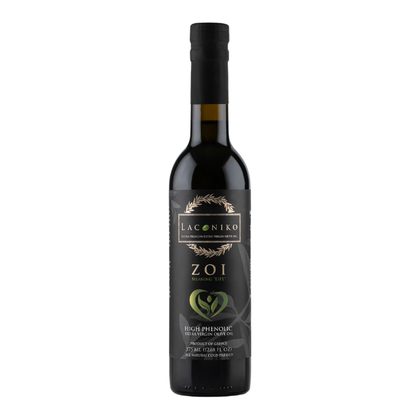
Best overall:Laconiko ZOI ($59.95 for 375 ml, 8.5/10, Excellent). 1,397 mg/kg on a named-lab certificate, published acidity and peroxide, dark glass and NYIOOC Gold 2026.
Tested Oct. 7, 2025, weeks after the September harvest, with 0.20% acidity and a peroxide value of 1.90, far inside premium limits[11].
Kalamon olives from Lakonia, Greece, in dark glass, with NYIOOC Gold in 2026[82]. The trade-offs: $15.99 per 100 ml, and the harvest date is on the certificate, not the label.
How we score:Polyphenols 30%Freshness & quality 20%Purity & contaminants 20%Packaging 10%Traceability 10%Independent proof 10%Full methodology ↓
The Dr. Axe Olive Oil Score (0–10) is editorial: lab-backed polyphenols first, then freshness, purity, packaging, traceability and proof. A missing test counts as neutral; a bad result still costs points. It isn't a safety grade.
Know your oil
What's really in your bottle?
There's no FDA standard of identity for olive oil in the U.S.[131], so “extra virgin” on a label is only as good as the company behind it.
Stale or flawed69%[101]of imported “extra virgin” samples failed the sensory standard in a 2010 shelf test (old, industry-funded, not proof of fraud)UC Davis, 2010
Polyphenols fade42–46%[146][147]average polyphenol loss after 12 months of ordinary storageFood Chem 2021; Molecules 2021
The EU claim line250 mg/kg[117]roughly the EU health-claim minimum: 5 mg of hydroxytyrosol and its derivatives per 20 g of oilEU Reg. 432/2012
Fraud260,000 L[125]of fake “extra virgin” oil seized in a 2023 Europol operation in Spain and ItalyEuropol, 2023
Mineral oil2.9 mg/kg[105]of MOAH in a European Filippo Berio bottle, above the EU's 2 mg/kg guidance (Bertolli: 2.1, at that level)Saldo, 2026
Plasticizers100%[104]of olive oils Mamavation tested had traces of phthalates (one bottle each, lab not named)Mamavation, 2025
Check your bottle
Look for a harvest date, not just a best-by date. Some brands link lab results to the lot, like California Olive Ranch's QR label[29] and Ellora Farms' lot tracer[36]. The NAOOA seal checks chemistry only[113]; the IOC standard sets extra virgin limits[121].
Three habits matter more than any brand. The optional fourth step is how much to use.
1Essential
Buy by harvest date, in dark glass or tin
Choose the newest harvest printed on the label. EU rules say light and heat harm olive oil[120], and dark glass protected polyphenols best in a storage test[151].
Cook with extra virgin; drizzle a high-phenolic oil raw
After 6 hours at 180°C, EVOO formed 10.5% polar compounds, far fewer than refined seed oils (15.7%–21.8%) and close to coconut oil (9.7%), in a lab test that cooked no food[158]. Repeated deep-frying cut phenolics 70–93%[159], so use the pricey bottle raw.
Big U.S. studies: more than ½ tablespoon (7 g) a day went with 19% lower death rates over 28 years[136]; across 30 cohort studies, risk kept falling up to about 22 g (1.6 tablespoons) a day[138].
PREDIMED used more: it gave the olive-oil group about 1 liter of extra virgin a week for the whole household[134]. Its diet score gave a point for 4 or more tablespoons a day, and even before the trial began, the third of participants who used the most olive oil averaged about 57 g (about 4 tablespoons) a day[135].
Answer four questions. If nothing fits, we'll say so and show the closest option.
1How will you use it?
2What do you like to taste?
3Budget per 100 ml?
4What matters most?
Compare the top 10
What's documented for each olive oil
For each claim we show how it's backed for that exact bottle. Names link to the full reviews.
Score = Dr. Axe Olive Oil Score, 0–10 (9+ Top Pick, 8+ Excellent). Caps: blends and plastic 6.5; no label harvest date 8.5. Full methodology ↓
Lab certificate A named lab's certificate (usually maker-paid) or a seal.Independent A competition, magazine or university tested or judged it.Maker's word The brand's statement, no lab document.Not published Nothing published; not the same as “bad.”Problem found A failed test, a result above guidance, or light-exposed packaging.
Swipe sideways to see every column. Names stay in place.
“FFA” is free acidity. *Bertolli and Filippo Berio results are for European bottles, which may differ from U.S. ones; they count at half weight. Shaded rows are popular oils that missed our top 10.
Full reviews
The 10 best olive oils, ranked
Each review lists the proof behind the key numbers and what the oil costs per tablespoon. No brand gets more than two spots; siblings and sold-out oils are in the guides below.
1
$59.95 375 ml · $15.99 per 100 ml. 6 for $359.70; 12 for $600 ($13.33 per 100 ml).
Best overall
Laconiko ZOI Ultra High Phenolic EVOO
Lakonia, Greece · Kalamon · 375 ml dark glass
1,397[11]mg/kg polyphenols by NMR, tested Oct. 7, 2025
A very high polyphenol count backed by published freshness chemistry and top blind-judged medals. Laconiko's certificate shows 1,397 mg/kg of total polyphenols by NMR, including 1,000 mg/kg of oleocanthal, the compound behind olive oil's peppery throat sting, from Kalamon olives harvested in September 2025. Even after our 20% NMR adjustment (about 1,118 mg/kg), it tops our polyphenol scale. It's also one of the few high-phenolic oils with published freshness chemistry: 0.20% free acidity and a peroxide value of 1.90, far inside premium limits. It won Gold at the 2026 NYIOOC, and Aristoleo placed it in its 1,200–2,000 mg/kg Double Gold band. Two things hold it back: we found no harvest date on the label (it's on the certificate), and it costs $15.99 per 100 ml.
Best forA daily spoonful or a finishing drizzle when you want the most oleocanthal per spoon
Skip ifYou want an oil to cook with in volume, or you dislike bitter, peppery oils
TasteExpect strong bitterness and a throat sting; oleocanthal causes the sting, and this oil has 1,000 mg/kg
Best useRaw: a daily spoonful, drizzling and dipping
Size & format375 ml; 6 for $359.70; 12 for $600
FreshnessUse within 30 days of opening; stored at 55–60°F and bottled on demand (maker)
BuyingDirect from laconiko.com
Polyphenols: 1,397 mg/kg NMR (≈1,118 scored)Packaging: Black glass
See score breakdown & sources
Polyphenols10.0
Freshness & quality8.5
Purity & contaminants6.0
Packaging9.5
Traceability8.0
Independent proof8.0
Maker's dataLaconiko ZOI certificates: World Olive Center for Health C2526-00085 (1,397 mg/kg total polyphenols and 1,000 mg/kg oleocanthal by NMR; analysis Oct. 7, 2025; harvest Sept. 2025) and quality certificate S.C-2-95-25 (acidity 0.20%, peroxide 1.90, K232 1.795, K268 0.157; lab name not printed). Open source · [11]
Maker's dataLaconiko. ZOI Ultra High Phenolic EVOO product page ($59.95 for 375 ml; consume within 30 days of opening; oils kept at 55–60°F and bottled on demand). Checked Sept. 25, 2026. Open source · [10]
IndependentNYIOOC. Laconiko ZOI: Gold 2026, Silver 2025, Gold 2024 and 2023. Open source · [82]
IndependentAristoleo High Phenolic Awards 2026 winners (tiers set by measured polyphenols: Double Gold 1,200–2,000 mg/kg, Gold 799–1,199, Silver 500–799): Laconiko ZOI Double Gold; Olio Nuovo Gold. Open source · [99]
Per tablespoon: $2.40; polyphenols 18.9 mg per tablespoon as published2 tbsp a day: about $1,751 a yearhow we figured itCheck current priceWe may earn a commission.
8.5of 10
Excellent Olive Oil Score
2
$79 500 ml · $15.80 per 100 ml. 3 for $214; 5 for $355 ($14.20 per 100 ml). Free U.S. shipping.
Best organic high-phenolic
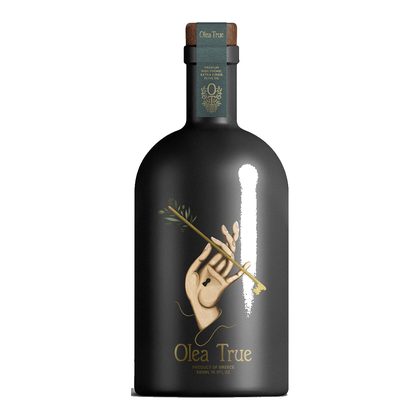
Olea True High Phenolic Olive Oil
Chania, Crete · Tsounati and Koroneiki · 500 ml black glass · organic
1,360[59]mg/kg polyphenols by NMR, tested Nov. 7, 2025
A very high certified polyphenol count in a light-proof bottle. Olea True's 2025/26 certificate from the University of Athens lab shows 1,360 mg/kg of total polyphenols by NMR, 419 of it oleocanthal, from Tsounati and Koroneiki olives harvested in Chania, Crete, in October 2025 and tested a month later; the lab's own copy matches the one the brand posts. That's about 1,088 mg/kg after our 20% NMR adjustment, the top of our polyphenol scale. It's organic (the label carries the EU organic mark) and comes in black glass. The harvest date we saw printed is on its 2024-harvest label; we haven't seen the 2025/26 label. Three things to know about its marketing: the bottle doesn't print the 1,360 figure (the brand says labels show a range, and its product page says 'Organic Strength >1350'); another of its pages claims '≥1,400 mg/kg' and says it tests every bottle, with no certificate for either; and it lists an 'Olympia Gold 2026' that isn't on the 2026 winners list. Because we can't verify those award and potency claims, it loses a point on proof. It also has no blind-judged award or independent test, and at $15.80 per 100 ml it costs more than most of our picks.
Best forA daily spoonful of a very high-phenolic oil from a dated, light-proof bottle
Skip ifYou want a blind-judged award or an independent test behind your oil
Buyingoleatrue.com, free U.S. shipping; all sales final
Polyphenols: 1,360 mg/kg NMR (≈1,088 scored)Packaging: Black glass with a cork stopper
All sales are final, but the brand's 'Lab-Verified or Your Money Back' page offers a refund if the oil doesn't match the posted certificate for its harvest, claimed within 7 days, with you paying return shipping.
See score breakdown & sources
Polyphenols10.0
Freshness & quality8.0
Purity & contaminants7.0
Packaging9.5
Traceability10.0
Independent proof5.0
Maker's dataWorld Olive Center for Health certificate C2526-00767 for Olea True (the same analysis was also issued as C2526-00592): total polyphenols 1,360 mg/kg by NMR, oleocanthal 419, oleacein 274; Tsounati-Koroneiki, Chania, Crete; harvest October 2025; analysis Nov. 7, 2025. Values match the lab's own copy reached through the certificate's QR code. Open source · [59]
Maker's dataOlea True. High Phenolic Olive Oil product page ($79 for 500 ml; 3 for $214; 5 for $355; 'Organic Strength >1350'; matte black opaque glass; free U.S. shipping). Checked Sept. 25, 2026. Open source · [58]
Maker's dataOlea True back-label image (2024-harvest version): 'Harvested OCT. 2024'; 'Product of Organic Farming GR-BIO-03' with the EU organic leaf; olive groves Selino, Chania, Crete; 'Consume raw and store in a dark cool place.' The current 2025/26 label was not seen. Open source · [60]
Maker's dataOlea True. High-polyphenol page: '≥1,400 mg/kg', 'over 1,400 mg/kg … per bottle' and 'We test every bottle independently'; no certificate for these figures is posted. Open source · [62]
Public record / studyWorld Olive Center for Health. Olympia Health & Nutrition Awards 2026 winners list (Olea True not listed). Open source · [97]
Maker's dataOlea True. 'Lab-Verified or Your Money Back': refund if the oil doesn't match the posted certificate for its harvest batch; claim within 7 days; customer pays return shipping. Customer-service page: all other sales final. Open source · [63]
Per tablespoon: $2.37; polyphenols 18.4 mg per tablespoon as published2 tbsp a day: about $1,730 a yearhow we figured itCheck current priceWe may earn a commission.
8.5of 10
Excellent Olive Oil Score
3
$45 500 ml · $9.00 per 100 ml. 3 bottles $120; 6 bottles $228; $42 on subscription. 500 ml glass bottle, per Olivea's product page.
Most complete lab file
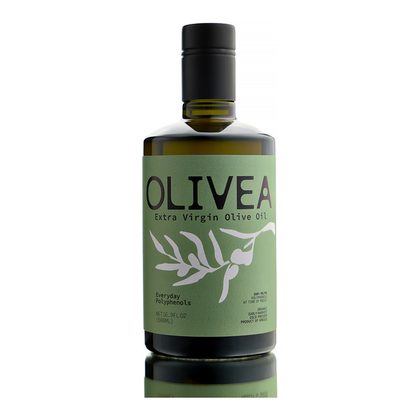
Olivea Ultra High Phenolic Extra Virgin Olive Oil
Messinia, Greece · Olympia · 500 ml dark glass · USDA Organic
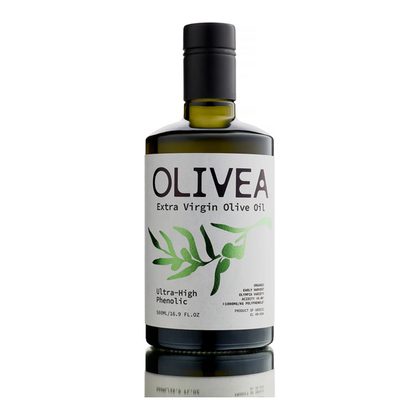
The most complete lab file of any oil we reviewed, and the only top-10 pick with a polyphenol number from the IOC's own method. On the same 2025/26 harvest, an IOC-recognized Athens lab (Multichrom) measured 874 mg/kg by HPLC and the University of Athens measured 1,046 mg/kg by NMR, a 20% gap that anchors our NMR adjustment. Multichrom also screened about 200 pesticides: all undetected except lambda-cyhalothrin and deltamethrin, found as traces below the 0.01 mg/kg quantification limit. Olivea discloses those traces on its lab page, though its product copy says 'Zero Pesticides.' The oil is USDA Organic, from Olympia olives in Messinia, in nitrogen-flushed dark glass. What's missing: a harvest date on the label (a QR code links to the lab page); published acidity and peroxide values; and any independent test or NYIOOC award. The certificate also marks the HPLC method as outside the lab's accreditation scope.
Best forOrganic buyers who want the best-documented high-phenolic oil, taken raw
Skip ifYou want a harvest date printed on the bottle
Best useRaw: 'One tablespoon a day. One bottle a month.' (maker)
Size & format500 ml; 3 for $120; 6 for $228
FreshnessOctober 2025 harvest; a QR code on the bottle links to that harvest's lab results
Buyingmyolivea.com or Olivea's Amazon store
Polyphenols: 874 mg/kg HPLC (1,046 NMR)Packaging: Dark glass, nitrogen-flushed
Olivea's own Amazon listing says the oil is Koroneiki; its site and certificate say Olympia.
See score breakdown & sources
Polyphenols9.7
Freshness & quality6.5
Purity & contaminants8.5
Packaging9.5
Traceability8.0
Independent proof6.0
Maker's dataMultichrom Lab (IOC-recognized, Athens), certificate Π-127805 for Konstantopoulos S.A., Nov. 4, 2025: biophenols 874 mg/kg by IOC method COI/T.20/Doc. 29 (HPLC; marked outside the lab's accreditation scope); about 200 pesticides by GC/MS-MS, all not detected except lambda-cyhalothrin and deltamethrin below the 0.01 mg/kg quantification limit. Client-sampled. Open source · [19]
Maker's dataWorld Olive Center for Health certificate C2526-00538 (Olivea Ultra High Phenolic): 1,046 mg/kg by NMR; analysis Dec. 16, 2025; harvest Oct. 2025. Open source · [20]
Maker's dataOlivea. Lab results, 2025–2026 harvest (Dec. 22, 2025), the page its bottle QR code links to; discloses the two pesticide traces. Open source · [18]
Maker's dataOlivea. Ultra High Phenolic product page ($45; 'Bottle: Glass, 500ml'; USDA Organic; Olympia olives, Messinia; nitrogen-flushed dark glass; 'Zero Pesticides'; 'One tablespoon a day'). Checked Sept. 25, 2026. Open source · [16]
Maker's dataOlivea's Amazon listing for the Ultra High Phenolic oil (500 ml, $45; says 'early-harvest Greek Koroneiki olives'). Open source · [17]
Per tablespoon: $1.35; polyphenols 11.8 mg per tablespoon as published2 tbsp a day: about $986 a yearhow we figured itCheck current priceWe may earn a commission.
8.3of 10
Excellent Olive Oil Score
4
$129 500 ml · $25.80 per 100 ml. Sold in the U.S. by an importer that ships from New Jersey. Its listing says 'Harvest 2026/2027', a harvest that hasn't happened yet; the certificate is for November 2025.
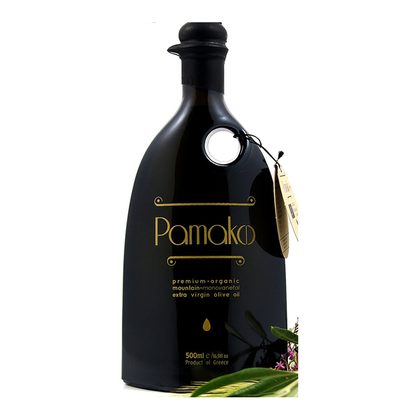
The highest lab-backed polyphenol count of any in-stock oil we reviewed. Pamako's 2025/26 certificate from the University of Athens lab shows 2,081 mg/kg of total polyphenols by NMR, including 1,318 mg/kg of oleocanthal, from organic Tsounati olives harvested in November 2025 and tested within weeks; the lab's own copy matches. That's about 1,665 after our adjustment, far past the top of our scale. It comes in dark, mirror-coated glass and won Gold at the 2025 NYIOOC (it had no 2026 entry). What holds it back: the harvest date is on the certificate, not the label; its published acidity, peroxide and pesticide results are for the 2024 harvest, so we didn't credit them; and at $25.80 per 100 ml it's expensive. The U.S. listing is titled 'Harvest 2026/2027', a harvest that hasn't happened yet; the certificate is for November 2025.
Best forA daily spoonful when you want the most polyphenols and oleocanthal per tablespoon
Skip ifYou want to cook with it, or you dislike strong, peppery oils
Maker's dataWorld Olive Center for Health certificate C2526-00362 for Androulakis Eftychios (Pamako organic monovarietal): total polyphenols 2,081 mg/kg by NMR, oleocanthal 1,318, oleacein 264; harvest November 2025; analysis Nov. 21, 2025. Values match the lab's own copy. Open source · [65]
Maker's dataU.S. importer listing (ships from New Jersey; free shipping over $150): Pamako Ultra-Premium Monovarietal Mountain Organic EVOO, $129 for 500 ml, titled 'Harvest 2026/2027'. Checked Sept. 25, 2026. Open source · [64]
Maker's dataPamako. Monovarietal product page: '100% Tsounati variety, available in 500ml and 250ml.' Open source · [66]
Maker's dataPamako. Health benefits page: 'dark bottles with a mirrorized outer layer so the light cannot affect the olive oil's quality … natural cork.' Open source · [67]
IndependentNYIOOC. Pamako Monovarietal Mountain Bio (Androulakis, Tsounati, organic): Gold 2025, 2024, 2023, 2021, 2020, 2019, 2018; no 2026 entry. Open source · [95]
Maker's dataMultichrom Lab certificate Η-8634 for Pamako Monovarietal, 2024 harvest (acidity 0.15%, peroxide 6.4, K232 1.618; about 214 pesticides screened, imidacloprid below the 0.01 mg/kg quantification limit). Not the current harvest, so not scored. Open source · [68]
Per tablespoon: $3.87; polyphenols 28.1 mg per tablespoon as published2 tbsp a day: about $2,825 a yearhow we figured itCheck current priceWe may earn a commission.
8.3of 10
Excellent Olive Oil Score
5
$49 500 ml · $9.80 per 100 ml. 3-pack $147; case of 12 $499.80 ($8.33 per 100 ml).
Best everyday high-phenolic
kyoord High-Phenolic Olive Oil
Corfu, Greece · Lianolia · 500 ml white opaque bottle
1,007[2]mg/kg polyphenols by NMR, tested Nov. 10, 2025
Maker says[1]harvest date on every bottle (confirm before launch)
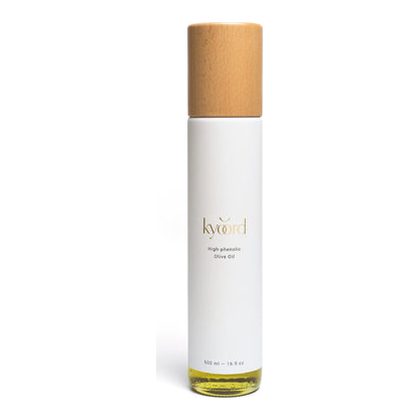
A lot of lab-backed polyphenols in an opaque bottle for $49. kyoord's 2025/26 certificate from the University of Athens lab shows 1,007 mg/kg of total polyphenols by NMR, tested within weeks of the November harvest. We score it as about 806 mg/kg after our 20% NMR adjustment, and the certificate shows about four times the EU claim's 5 mg of hydroxytyrosol and its derivatives per 20 g. The oil comes from Lianolia olives pressed at the Olive Fabrica mill on Corfu, the same mill behind The Governor, and ships in a white opaque bottle; kyoord says every bottle lists its harvest date. At $49 for 500 ml, it costs $20 less than The Governor Premium. The catches: we found no independent test or award for this exact oil, its page lists Lianolia plus Koroneiki olives while the certificate lists Lianolia only, and we found no organic certificate number to back its 'Certified Organic' badge, so we gave it no organic credit.
Best forA daily high-phenolic oil for drizzling and everyday cooking without paying $60 or more
Skip ifYou need verified organic certification, or you prefer a mild, buttery oil
TasteRobust, peppery, green and fresh (maker's tasting notes)
Best useEveryday cooking, baking, drizzling and dipping (maker)
Size & format500 ml; 3-pack $147; case of 12 $499.80
FreshnessFresh for 2 years from harvest; use within 2 months of opening (maker)
BuyingDirect from kyoord.com; free U.S. shipping on orders over $98
Polyphenols: 1,007 mg/kg NMR (≈806 scored)Packaging: White opaque bottle
kyoord sells the same oil as a Daily Shot: 30 sachets of 15 ml for $65 ($14.44 per 100 ml). Its sister oil, The Governor Premium (#6), tested higher at 1,174 mg/kg.
See score breakdown & sources
Polyphenols9.5
Freshness & quality8.0
Purity & contaminants6.0
Packaging9.0
Traceability10.0
Independent proof6.0
Maker's dataWorld Olive Center for Health (analysis at the National and Kapodistrian University of Athens), certificate C2526-00293 for kyoord LLC: total polyphenols 1,007 mg/kg by NMR; analysis Nov. 10, 2025; harvest Nov. 2025; mill Olive Fabrica. Open source · [2]
Maker's datakyoord. High-phenolic olive oil product page: Corfu; Lianolia + Koroneiki; harvest Nov./Dec. 2025; white opaque bottle; $49 for 500 ml; fresh 2 years from harvest, use within 2 months of opening; 'harvest date on every bottle'; Daily Shot sachets. Checked Sept. 25, 2026. Open source · [1]
IndependentNYIOOC World Olive Oil Competition. 'The Governor' (Olive Fabrica, Corfu): Silver 2026, 2025, 2023, 2022, 2021, 2020; listed as non-organic; edition not named. Open source · [81]
Maker's dataMultichrom Lab (IOC-recognized, Athens), certificate Π-127805 for Konstantopoulos S.A., Nov. 4, 2025: biophenols 874 mg/kg by IOC method COI/T.20/Doc. 29 (HPLC; marked outside the lab's accreditation scope); about 200 pesticides by GC/MS-MS, all not detected except lambda-cyhalothrin and deltamethrin below the 0.01 mg/kg quantification limit. Client-sampled. Open source · [19]
Per tablespoon: $1.47; polyphenols 13.6 mg per tablespoon as published2 tbsp a day: about $1,073 a yearhow we figured itCheck current priceWe may earn a commission.
8.2of 10
Excellent Olive Oil Score
6
$69 500 ml · $13.80 per 100 ml. Case of 6 $372.60; case of 12 $699 ($11.65 per 100 ml).
Best for gifting & finishing
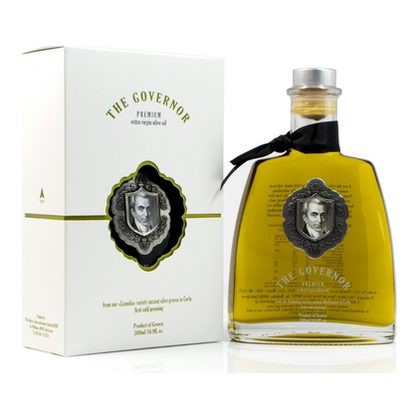
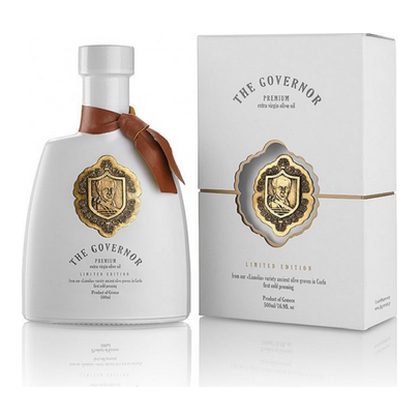
The Governor Premium Edition Extra Virgin Olive Oil
Corfu, Greece · Lianolia · 500 ml glass decanter in a gift box
1,174[4]mg/kg polyphenols by NMR, tested Nov. 10, 2025
More polyphenols than its sister oil, kyoord (#5), in a bottle made for gifting. The Premium Edition's 2025/26 certificate shows 1,174 mg/kg by NMR, with 476 mg/kg of oleocanthal, from Lianolia olives hand-picked on a small family farm on Corfu and pressed at the Olive Fabrica mill. The maker says every bottle lists its harvest date (November 2025 for this batch), and The Governor has won Silver at the NYIOOC in six of the last seven years, including 2026, though the listing doesn't name the edition. What holds it back: the oil comes in a clear glass decanter inside a box, so it's protected from light only while you keep it boxed, and at $69 it costs $20 more than kyoord for 17% more polyphenols, measured by the same lab.
Best forFinishing, dipping and gifting
Skip ifYou'll keep the bottle out of its box on the counter
The Governor Limited Edition bottle (1,316 mg/kg) is sold out; the seller offers a bulk pack of twelve 500 ml cans ($499) that it says contains the Limited Edition oil, though the can label pictured reads 'Premium.'
See score breakdown & sources
Polyphenols9.8
Freshness & quality8.0
Purity & contaminants6.0
Packaging5.0
Traceability10.0
Independent proof7.5
Maker's dataWorld Olive Center for Health certificate C2526-00292, The Governor Premium Edition: 1,174 mg/kg total polyphenols and 476 mg/kg oleocanthal by NMR; analysis Nov. 10, 2025. Open source · [4]
Maker's datakyoord. The Governor Premium Edition product page: Corfu; Lianolia; harvest Nov. 2025; $69 for 500 ml; store in its packaging; use within 2 months of opening. Checked Sept. 25, 2026. Open source · [3]
IndependentNYIOOC World Olive Oil Competition. 'The Governor' (Olive Fabrica, Corfu): Silver 2026, 2025, 2023, 2022, 2021, 2020; listed as non-organic; edition not named. Open source · [81]
Maker's datakyoord. The Governor Limited Edition product page: 500 ml opaque painted-glass bottle $69, cases of 6 and 12, all sold out Sept. 25, 2026; tasting notes arugula, chicory, artichokes, fresh-cut grass and violets; 'Take a shot a day every morning or drizzle on your favorite foods.' Open source · [5]
Maker's datakyoord. The Governor Limited Edition Bulk (6 Liters): '6 Liters of The Governor Limited Edition, conveniently packed in 12 cans of 500 mL each' for $499; 'October 2025 harvest - Best by October 2027'; in stock Sept. 25, 2026. The product photo shows a 500 ml can labeled 'The Governor Premium … from our «Lianolia» variety ancient olive groves in Corfu.' Open source · [6]
Per tablespoon: $2.07; polyphenols 15.8 mg per tablespoon as published2 tbsp a day: about $1,511 a yearhow we figured itCheck current priceWe may earn a commission.
8.0of 10
Excellent Olive Oil Score
7
$96 200 ml · $48.00 per 100 ml. Sold in the U.S. by an importer that ships from New Jersey. Its listing says 'Harvest 2026/2027', a harvest that hasn't happened yet; the certificate is for October 2025.
Best high-phenolic with less sting
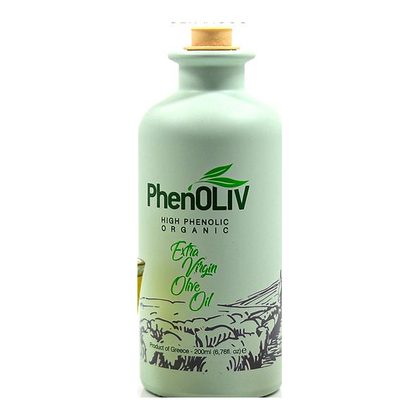
PhenOLIV Organic High Phenolic Extra Virgin Olive Oil
Arcadia, Greece · Olympia and Choraitiki · 200 ml painted glass · USDA Organic
2,011[70]mg/kg polyphenols by NMR, tested Oct. 16, 2025
180[70]mg/kg oleocanthal, the compound behind the throat sting
A very high polyphenol count with less of the throat sting. PhenOLIV's 2025/26 certificate from the University of Athens lab shows 2,011 mg/kg of total polyphenols by NMR from an October 2025 harvest in Arcadia, tested within weeks; the lab's own copy matches. Unusually, most of that total comes from oleuropein and ligstroside aglycons, and only 180 mg/kg is oleocanthal, the compound behind olive oil's peppery sting, so expect a gentler finish than oils like Pamako. It's USDA Organic, in an opaque painted bottle with a carton whose QR code links to the analysis. The drawbacks: at $48 per 100 ml it's the most expensive oil in our top 10, the harvest date isn't on the label, and it has no blind-judged award or independent test. The U.S. listing is titled 'Harvest 2026/2027', a harvest that hasn't happened yet.
Best forA daily spoonful of a very high-phenolic oil if you dislike a strong peppery sting
Skip ifYou're on a budget: it costs $48 per 100 ml
TasteLower in oleocanthal (180 mg/kg), so expect less throat sting
Best useRaw: a daily spoonful or drizzle
Size & format200 ml bottle in a carton
FreshnessOctober 2025 harvest (certificate); a QR code on the carton links to the analysis
BuyingA U.S. importer that ships from New Jersey
Polyphenols: 2,011 mg/kg NMR (≈1,609 scored)Packaging: Opaque painted glass in a carton
See score breakdown & sources
Polyphenols10.0
Freshness & quality6.5
Purity & contaminants7.0
Packaging9.0
Traceability8.0
Independent proof6.0
Maker's dataWorld Olive Center for Health certificate C2526-00142 for The Greek Olive Estate (PhenOLIV Organic): total polyphenols 2,011 mg/kg by NMR, oleocanthal 180, oleacein 177; Olympia-Choraitiki; harvest October 2025; analysis Oct. 16, 2025. Values match the lab's own copy. Open source · [70]
Maker's dataU.S. importer listing (ships from New Jersey): PhenOLIV Organic High Phenolic, $96 for 200 ml; USDA organic seal; opaque painted bottle and carton with a QR code to the analysis; titled 'Harvest 2026/2027'. Checked Sept. 25, 2026. Open source · [69]
Per tablespoon: $7.20; polyphenols 27.1 mg per tablespoon as published2 tbsp a day: about $5,256 a yearhow we figured itCheck current priceWe may earn a commission.
8.0of 10
Excellent Olive Oil Score
8
$59.95 375 ml · $15.99 per 100 ml. Amazon lists it at $56.20, but that listing still shows 2024-harvest data (1,143 mg/kg, harvested Oct. 8, 2024).
Best oleocanthal value
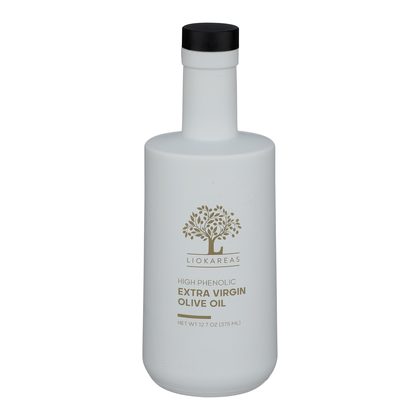
Liokareas Rx High Polyphenol Extra Virgin Olive Oil
Southern Kalamata, Greece · 375 ml white opaque glass · gift box
1,307[72]mg/kg polyphenols by NMR, tested Oct. 8, 2025
The most oleocanthal per dollar of any oil we reviewed. Liokareas' 2025/26 certificate from the University of Athens lab shows 1,307 mg/kg of total polyphenols by NMR, and 1,030 mg/kg of that is oleocanthal, the compound behind olive oil's peppery sting. The oil comes from the family's orchard in southern Kalamata, was harvested in October 2025 and was tested Oct. 8, 2025, in white opaque glass. At $15.99 per 100 ml, the same price as Laconiko ZOI, it has a little more oleocanthal. The catches: the harvest date is on the product page, not the label; there are no published acidity or peroxide values and no blind-judged award for this oil; and the Amazon listing still shows 2024-harvest data (1,143 mg/kg, harvested Oct. 8, 2024), so check which harvest you're buying.
Best forA daily spoonful when oleocanthal is what you're after
Skip ifYou want a harvest date on the bottle or a blind-judged award
TasteMostly oleocanthal (1,030 mg/kg), so expect a strong throat sting
Best useRaw; the maker recommends refrigerating it
Size & format375 ml with a gift box
FreshnessHarvested October 2025 (product page)
Buyingliokareas.com; on Amazon, check the harvest year
Polyphenols: 1,307 mg/kg NMR (≈1,046 scored)Packaging: White opaque glass in a gift box
See score breakdown & sources
Polyphenols10.0
Freshness & quality6.5
Purity & contaminants6.0
Packaging9.0
Traceability8.0
Independent proof6.0
Maker's dataWorld Olive Center for Health certificate C2526-00079 for Liokareas Olive Oil: total polyphenols 1,307 mg/kg by NMR, oleocanthal 1,030, oleacein 153; analysis Oct. 8, 2025. Values match the lab's own copy (whose brand field shows a sample code). Open source · [72]
Maker's dataLiokareas. 2026 Rx High Polyphenol EVOO page ($59.95 for 375 ml; 'Harvested October 2025'; white opaque bottle with gift box; recommends refrigerating). Checked Sept. 25, 2026. Open source · [71]
Maker's dataAmazon listing for Liokareas Rx ($56.20): still shows 2024-harvest data ('1,143 mg/kg polyphenols', 'HARVESTED ON 10/08/2024'). Checked Sept. 25, 2026. Open source · [73]
Per tablespoon: $2.40; polyphenols 17.6 mg per tablespoon as published2 tbsp a day: about $1,751 a yearhow we figured itCheck current priceWe may earn a commission.
7.8of 10
Very good Olive Oil Score
9
$49 15 × 15 ml (225 ml) · $21.78 per 100 ml. Single shot $3.50; 30-pack $95; 90-pack $255 ($18.89 per 100 ml).
1 a day[25]the maker's suggested dose, about 1 tablespoon
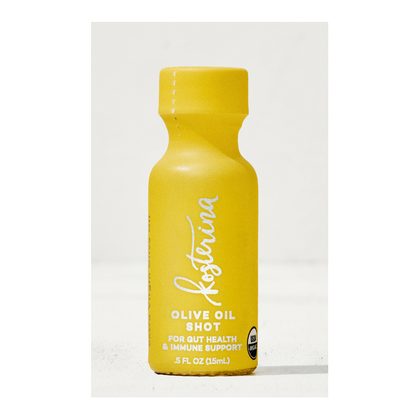
The easiest way to take a measured daily dose. Each 0.5-ounce bottle holds about a tablespoon of organic extra virgin olive oil that tested 1,072 mg/kg by NMR in December 2025 (about 858 after our adjustment), or roughly 14.5 mg of polyphenols per shot as published. Single-serve bottles also mean the rest of your oil never meets air after opening. But you pay for the format: $21.78 per 100 ml in a 15-pack, more than double kyoord's price, and Kosterina doesn't say where in Greece the oil comes from. The shots come in opaque, painted glass bottles. Its page says the olives were harvested in October 2025; the certificate says November.
Best forA daily shot at home or on the go, with portion control built in
Skip ifYou cook with olive oil; buy a bottle instead
Maker's dataWorld Olive Center for Health certificate C2526-00486 for Kosterina (lot O25BAR00D50126): 1,072 mg/kg by NMR; analysis Dec. 9, 2025; harvest Nov. 2025. Open source · [26]
Maker's dataKosterina. EVOO Shot 15-pack ($49; 'Our Olive Oil Shots are packaged in glass'; product images show opaque yellow painted-glass bottles labeled '.5 FL OZ (15mL)'; organic extra virgin olive oil; one shot, about 1 tbsp, a day; 'Harvested in October 2025'). Open source · [25]
Per tablespoon: $3.27; polyphenols 14.5 mg per tablespoon as published2 tbsp a day: about $2,385 a yearhow we figured itCheck current priceWe may earn a commission.
7.6of 10
Very good Olive Oil Score
10
$35 500 ml · $7.00 per 100 ml. 3 bottles $96; 6 bottles $180; $33 on subscription.
Best high-phenolic for cooking
Olivea High Phenolic Extra Virgin Olive Oil
Messinia, Greece · Koroneiki · 500 ml dark glass · USDA Organic
587[22]mg/kg polyphenols by NMR, tested Jan. 13, 2026
7.9 mg[22]polyphenols per tablespoon, as published
A high-phenolic oil priced and pitched for everyday cooking. Olivea's Koroneiki oil from Messinia tested 587 mg/kg by NMR in January 2026 (about 470 after our adjustment), and its certificate shows 11.74 mg of hydroxytyrosol and its derivatives per 20 g, more than twice the EU claim's 5 mg. It's USDA Organic, in dark glass. Olivea sells it for baking, sautéing and dressing, and says a 500 ml bottle lasts most kitchens about a month. It has less backing than its Ultra High Phenolic sibling: no pesticide screen for this oil, no published acidity or peroxide values, and no awards. The harvest (October 2025) is on the product page, not the label.
Best forAn organic everyday oil with real polyphenols, for cooking and dressings
Skip ifYou want published purity data or a harvest date on the bottle
TasteBright, grassy and smooth, with a gentle peppery finish (maker)
Best useBake, sauté, dress, dip and drizzle (maker)
Size & format500 ml; 3 for $96; 6 for $180
FreshnessOctober 2025 harvest (product page); about a month per bottle in most kitchens (maker)
Buyingmyolivea.com
Polyphenols: 587 mg/kg NMR (≈470 scored)Packaging: Dark glass
See score breakdown & sources
Polyphenols8.2
Freshness & quality6.5
Purity & contaminants7.0
Packaging9.5
Traceability8.0
Independent proof6.0
Maker's dataWorld Olive Center for Health certificate C2526-00669 (Olivea High Phenolic): 587 mg/kg by NMR; analysis Jan. 13, 2026. Open source · [22]
Maker's dataOlivea. High Phenolic product page ($35 for 500 ml; USDA Organic; Koroneiki; October 2025 harvest; dark glass; 'A 500 ml bottle lasts most kitchens about a month'). Checked Sept. 25, 2026. Open source · [21]
Maker's dataOlivea. Lab results, 2025–2026 harvest (Dec. 22, 2025), the page its bottle QR code links to; discloses the two pesticide traces. Open source · [18]
Per tablespoon: $1.05; polyphenols 7.9 mg per tablespoon as published2 tbsp a day: about $767 a yearhow we figured itCheck current priceWe may earn a commission.
7.5of 10
Very good Olive Oil Score
The centerpiece
Polyphenols, by the numbers
Every published polyphenol figure we found, with its method and test date. Polyphenols are olive oil's main protective compounds, and the numbers vary more than any other spec: 2,081 mg/kg at the top, nothing published for most supermarket brands.
250[117]mg/kg: the EU claim level, about 5 mg per 20 g
500[146]mg/kg: proposed “high phenolic.” No legal definition
−20%[19][20][34]our cut to NMR results before scoring
−42 to 46%[146][147]lost in a year of ordinary storage
Total polyphenols, mg/kg, as published
NMR (University of Athens)HPLC (IOC method)Value we scored (NMR −20%)Maker figure, no lab named250 EU claim level500 proposed “high phenolic”
Olivie Plus 30x[44]Hydroxytyrosol only, not total polyphenols233HTone compound only
For comparison: popular U.S. extra virgin oils
ConsumerLab, 11 popular EVOOs[100]2026 · method not stated200–473range
NAOOA study average[114]2024 · IOC method · industry-funded274average
No polyphenol number published
Graza Drizzle (glass)not publishedCorto TRULY Extra Virgin (3 L FlavorLock box)not publishedCobram Estate 100% California Classicnot publishedLucini Italia Premium Selectnot publishedEllora Farms Organic PDO Messara Single Estatenot publishedIliada Kalamata PDOnot publishedZoe Extra Virgin Olive Oil (1 L tin)not publishedWonder Valley California Extra Virginnot publishedColavita Premium Selection (34 fl oz tin)not publishedTerra Delyssa Organic Extra Virginnot publishedBertolli Extra Virgin Olive Oil (Rich Taste)not publishedFilippo Berio Extra Virgin Olive Oilnot publishedPompeian Robust Extra Virginnot published
Certificates test a producer-supplied sample near harvest, not the bottle on a shelf months later. NMR and HPLC give different totals: NMR read 20% higher on the same Olivea harvest (different samples), and one maker reports a 48% gap without naming its lab. The EU claim counts hydroxytyrosol and its derivatives, not every compound in a “total”[117]. See why these numbers aren't comparable.
Cost to use
What a daily serving costs
Two tablespoons a day for a year is about 11 liters of oil. Here's what that costs for each top pick, and how many lab-backed polyphenols each dollar buys. World olive oil prices peaked at $10,281 a ton in January 2024 and were $6,185 in July 2026[132].
Yearly cost of 2 tablespoons a dayPolyphenols a day and per dollar (method-adjusted)
Zoe Extra Virgin Olive Oil (1 L tin)Budget benchmark$186a year$1.70 per 100 ml · 25¢ a tablespoon · $0.51 a day[46]No lab-backed polyphenol number
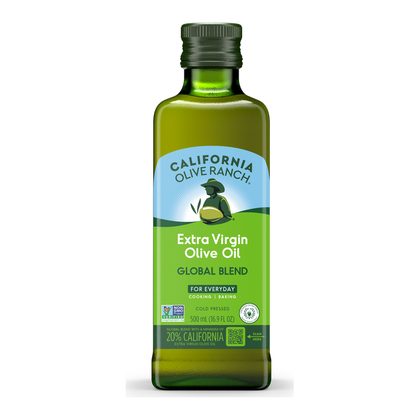
California Olive Ranch Global Blend MediumBudget benchmark$284a year$2.60 per 100 ml · 39¢ a tablespoon · $0.78 a day[30]No lab-backed polyphenol number
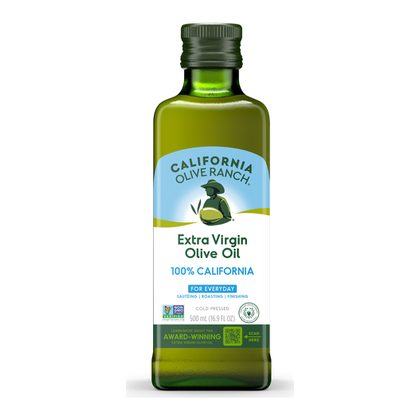
California Olive Ranch 100% CaliforniaEveryday & U.S.-grown$394a year$3.60 per 100 ml · 54¢ a tablespoon · $1.08 a day[27]No lab-backed polyphenol number
Olivea High Phenolic#10 · Cooking$767a year$7.00 per 100 ml · $1.05 a tablespoon · $2.10 a day[21]12.7 mg polyphenols a day6.0 mg per $1
Olivea Ultra High Phenolic#3 · Lab file$986a year$9.00 per 100 ml · $1.35 a tablespoon · $2.70 a day[16]23.6 mg polyphenols a day8.7 mg per $1
kyoord High-Phenolic#5 · Everyday high-phenolic$1,073a year$9.80 per 100 ml · $1.47 a tablespoon · $2.94 a day[1]21.8 mg polyphenols a day7.4 mg per $1
The Governor Premium#6 · Gifting$1,511a year$13.80 per 100 ml · $2.07 a tablespoon · $4.14 a day[3]25.4 mg polyphenols a day6.1 mg per $1
Olea True#2 · Organic$1,730a year$15.80 per 100 ml · $2.37 a tablespoon · $4.74 a day29.4 mg polyphenols a day6.2 mg per $1
Laconiko ZOI#1 · Best overall$1,751a year$15.99 per 100 ml · $2.40 a tablespoon · $4.80 a day[10]30.2 mg polyphenols a day6.3 mg per $1
Liokareas Rx#8 · Oleocanthal value$1,751a year$15.99 per 100 ml · $2.40 a tablespoon · $4.80 a day28.2 mg polyphenols a day5.9 mg per $1
Kosterina EVOO Shot#9 · Daily shot$2,385a year$21.78 per 100 ml · $3.27 a tablespoon · $6.53 a day[25]23.2 mg polyphenols a day3.5 mg per $1
Pamako Monovarietal#4 · Highest polyphenols$2,825a year$25.80 per 100 ml · $3.87 a tablespoon · $7.74 a day44.9 mg polyphenols a day5.8 mg per $1
PhenOLIV Organic#7 · Less sting$5,256a year$48.00 per 100 ml · $7.20 a tablespoon · $14.40 a day43.4 mg polyphenols a day3.0 mg per $1
Assumptions: 2 tablespoons = 30 ml, about 27 g, every day for 365 days (10.95 L). One-time official prices for the bottle size we review, checked Sept. 25, 2026 (Zoe at Walmart); multi-packs and subscriptions cost less. Polyphenols use the value we score (NMR cut 20%) at the time of testing; a year of storage can cut them 42–46%. Kosterina's shot is sized for one tablespoon a day, which halves its cost.
Freshness
How fast polyphenols fade
A certificate is a snapshot taken near harvest. Polyphenols start falling from the day the oil is pressed, faster with heat[148] and light[150]. That's why we score harvest dates and packaging.
Share of polyphenols left after storage
Peer-reviewed studies vs. one industry claim.
Stored in the darkExposed to lightIndustry claim
Castillo-Luna et al., 2021[147]160 extra virgin oils, 12 months in the dark at 20°C58%left
Diamantakos et al., 2021[146]Greek oils, 12 months of usual storage (NMR)54%left
Blasi et al., 2025: oleocanthal[149]24 months exposed to light40%left
Blasi et al., 2025: oleacein[149]24 months exposed to light25%left
Aristoleo buyer's guide (industry claim)[153]a year in sealed tanks below 16°C, not peer-reviewed80–95%left
The Aristoleo figure is a claim for oil kept in sealed tanks below 16°C, not a study, and it conflicts with the 42–46% losses measured under ordinary storage. kyoord says one batch was unchanged after 3 months of cold storage, but hasn't published that test[8].
What a year does to a bottle
Starting value at harvest (green) and the range after 12 months at the measured 42–46% loss (red).
05001,000250mg/kg
Starts at 1,200 mg/kgstill above 250 after a year648–696
Starts at 800 mg/kgstill above 250 after a year432–464
Starts at 500 mg/kgstill above 250 after a year270–290
Starts at 300 mg/kgfalls below the 250 claim level162–174
This is why researchers proposed calling oils “high phenolic” only above 500 mg/kg: they can still clear the 250 mg/kg claim level after a year[146]. Dark glass protected polyphenols best in one storage test, and a nitrogen-filled headspace didn't stop the loss[151]; bag-in-box beat stainless steel in another[152].
How we score: the Dr. Axe Olive Oil Score™
Most olive oil reviews rank on taste and price. Ours ranks on what DrAxe.com cares about most: how many polyphenols a lab has actually confirmed, whether the oil is fresh and clean, and how well its maker proves it. It's an editorial assessment built from lab certificates, independent tests and public records, not our own lab testing. Price and taste aren't scored; we show them in each review and the cost chart.
Polyphenols30%
A batch-specific number for the 2025/26 harvest from a named lab, banded from 2.5 (100 mg/kg or less) to 10 (1,000 mg/kg or more). NMR results are cut 20% first to line up with the IOC's HPLC method. No lab named, or a number that isn't total polyphenols: 3.5 at most. No number: 2.5.
Freshness & quality20%
Starts at 4. Harvest date printed on the label +3 (the same when the maker says it's on every label; we mark those “maker says”); date only online, on a certificate or by QR code +1.5. Published acidity, peroxide and UV values inside premium limits +2. A dated lab test within 3 months of harvest +1. A flavor defect found by an independent test −3.
Purity & contaminants20%
Starts at 6 when there's no data: a missing test is neutral. Certified organic +1. A published multi-residue pesticide screen with nothing quantifiable +2 (disclosed traces below the quantification limit cost at most 0.5). A clean published panel beyond pesticides (PAHs, plasticizers, mineral oil or heavy metals) +1. Bad results cost what they always did: phthalates by relative level, and mineral oil (MOAH) above 2.5 mg/kg sets it to 2, or −1.5 at the EU's 2 mg/kg guidance level.
Packaging10%
Tin 10, dark glass 9.5, opaque or painted glass or bag-in-box 9, clear glass sold in a box 5, material not stated 5, clear glass 4, plastic 2.
Traceability10%
Single estate or farm + harvest date on the label + batch results 10; estate + lot lookup 9; producer + batch results, estate + label date, or country + label date + lot results 8; single country + harvest date on the label 7; single country + online date or lot trace 6; single country, no date 5; multi-country blend 3.
Independent proof10%
Nothing: 3. A batch certificate from a named university or accredited lab, even if the maker paid for it: 6. A blind-judged 2025 or 2026 award for this product from an unrelated organizer +1.5, or +2 for NYIOOC Gold or Aristoleo Double or Triple Gold (Olympia Health & Nutrition Awards don't count); an industry seal (NAOOA, COOC) counts as +1.5; only one bonus counts. A retail-bought independent test passed since 2023: 9, plus the award bonus, up to 10. An award or potency claim in the brand's current marketing that we can't verify (beyond the number we score) costs 1 point, once. A failed independent test: 1.
Polyphenols need a lab, a method and a date. A number counts in full only if a named lab tested this harvest's batch within the last 12 months. NMR figures are cut 20% first so they sit on the IOC HPLC scale. On the same harvest, NMR read 20% above HPLC for Olivea (different samples; the HPLC result was above that method's 800 mg/kg range), and one maker reports a 48% gap without naming its lab[19][20][34]. The IOC says its own HPLC method may underestimate[123], so this is a conservative adjustment, not proof that NMR is wrong. When a maker publishes both, we use the IOC number.
A failed test means we won't recommend it. If an oil's most recent independent, retail-bought grade test from the past three years (by an IOC-recognized panel or an accredited lab) found it wasn't extra virgin, it gets a “Failed test” flag and can't make the top 10. Older or single-taster results are reported in the review but don't trigger the flag. No oil on this page has the flag today.
A missing test is neutral; a bad result still costs points. An oil with no contaminant data starts purity at 6, and one with no independent proof gets 3, so paperwork gaps don't sink a good oil. Bad results cost exactly what they always did: −3 on freshness for a flavor defect, mineral oil above EU guidance or high phthalates on purity, and a failed grade test drops proof to 1. An oil that does everything we ask (a very high certified polyphenol count, a printed harvest date, tin or dark glass, a single estate, clean chemistry, a pesticide screen and a top award or independent test) lands around 9.3 to 9.8.
Caps. Multi-country blends and plastic bottles can't score above 6.5. Oils without a harvest date on the label can't score above 8.5, even if the date is online.
Only blind-judged awards from unrelated organizers count. NYIOOC, Aristoleo and similar competitions earn the award bonus. Olympia Health & Nutrition Awards don't: they're run by the World Olive Center for Health, the same organization that issues most of the certificates on this page, and they're given for phenol levels against the EU health claim, not for blind tasting[98].
Claims we can't verify cost a point. An award or potency claim in the brand's current marketing that we can't verify (beyond the number we score) costs 1 point on proof, once: for example, an award that isn't on the organizer's winners list, or a polyphenol figure with no certificate behind it.
Guides list oils scoring 5.0 or higher. Oils under 5.0 are in What we'd skip if they have a specific problem, or in Other popular oils we scored if they simply publish too little.
Score bands. 9.0 and up: Dr. Axe Top Pick. 8.0–8.9: Excellent. 7.0–7.9: Very good. 5.0–6.9: Mixed. Below 5: Not recommended.
European tests count, and we label them. Results for the same brand's oil sold in Europe can raise a score (a recent pass) or lower it (mineral oil above EU guidance). They count at half weight in both directions, because they're often the only data for those brands. We don't use them to flag an oil as failed, because European bottles may differ from U.S. ones.
One oil per line, two per brand. The same oil in another size or format is a sibling, and no brand gets more than two top-10 spots; siblings and sold-out oils go to the guides. Ties are broken by the score before caps and rounding, then by the polyphenol score, then by independent proof. Oils with no published data at all aren't rated.
Why polyphenol numbers aren't comparable
Polyphenols are the reason to pay more for olive oil, and they're the hardest number on the label to trust. Three lab methods are in common use, they give different answers for the same oil, and the number falls every month after bottling. That's our dividing line: a polyphenol figure counts only with a named lab, a method and a test date.
IOC HPLC, the reference method
Measures total “biophenols” as tyrosol, over a working range of 30–800 mg/kg[122]. The IOC itself says this method “may underestimate the true value” and that its newer method is better for the EU claim[123].
NMR, from the University of Athens
Measures key compounds like oleocanthal and oleacein directly[154]. On the same Olivea harvest, NMR read 20% above HPLC (different samples), and PJ Kabos reports a 48% gap without naming its lab[19][20][34]. We cut NMR figures 20% before scoring as a conservative adjustment, not proof that NMR is wrong.
Folin–Ciocalteu color test
A cheap test that reacts with any reducing substance. In two olive oil comparisons it read lower, not higher, than compound-specific methods[155][156]. Its numbers can't be compared with HPLC or NMR.
Summed LC-MS results
Adding up individual compounds gave totals 1.9 to 3.0 times higher than the IOC or Folin methods on the same 50 oils[155]. Five labs using six protocols on the same oils got different absolute values[157].
Time
Oils lose 42–46% of their polyphenols in a year of ordinary storage[146][147], so a test from harvest says little about a bottle a year later.
No legal “high phenolic”
No law defines it. Researchers proposed more than 500 mg/kg, and more than 1,200 for “exceptionally high”[146]; the IOC standard sets no phenol minimum for any grade[121].
What to do: ask for the certificate. Check the method (NMR and HPLC give different numbers), the date (under 12 months) and the lab's name. The EU health claim counts hydroxytyrosol and its derivatives, such as the oleuropein complex and tyrosol[117], so a “total polyphenols” figure from another method isn't the same thing.
What the evidence says about olive oil and polyphenols
The strongest evidence is for using olive oil every day in place of other fats. The case that more polyphenols means more benefit is real but smaller: it rests on short trials of blood lipids and blood pressure. HR is a hazard ratio; 0.69 means 31% lower risk.
Heart attack, stroke or cardiovascular death in 7,447 high-risk Spanish adults on a Mediterranean diet with free EVOO vs. a lower-fat control diet, over 4.8 years (31% lower)
HDL cholesterol with a high-polyphenol oil (366 mg/kg) in 200 men, vs. +1.0 with a near-zero-polyphenol oil; oxidized LDL fell significantly only with the high-polyphenol oil
Systolic blood pressure after 2 months of polyphenol-rich oil in 24 young women with high-normal or stage 1 hypertension; polyphenol-free oil didn't significantly lower it
Oleocanthal blocks the same COX enzymes in lab tests that some anti-inflammatory pain relievers target. That's test-tube potency; no trial shows olive oil relieves pain
Nature, 2005
The evidence isn't all positive. A 2024 review of 33 trials found EVOO lowered insulin but had no significant effect on blood sugar, cholesterol, blood pressure or CRP[144]; a 2024 review of 17 trials of olive or flaxseed oil found no blood pressure effect[143]; and another found “no consistent benefits” from olive-oil-enriched Mediterranean diets on cardiometabolic markers[145]. In 2025, EFSA rejected a claim that olive oil polyphenols lower LDL cholesterol and systolic blood pressure, finding cause and effect “has not been established”[119]. The only olive-polyphenol claim the EU allows is narrower: olive oil polyphenols contribute to protecting blood lipids from oxidative stress, for oils with at least 5 mg of hydroxytyrosol and its derivatives per 20 g, eaten daily[117][118]. And oleocanthal's comparison with pain relievers has drawn criticism[141]; no trial shows olive oil relieves pain. The observational studies measured total olive oil, not extra virgin, and PREDIMED tested a whole diet, not the oil alone.
How to read an olive oil label
Limits come from the IOC trade standard[121], the premium thresholds from the Extra Virgin Alliance[116], the best-by rule from the COOC[115], and the “first cold pressed” definition from EU labeling rules[120].
On the label
What it tells you
What to look for
Harvest date
When the olives were picked. Polyphenols start falling from here.
The latest harvest, printed on the label
Best-by date
Set by the bottler, not by a test. The COOC caps it at 24 months after harvest for small producers; the Extra Virgin Alliance at 32.
No more than about 2 years out
Free acidity (FFA)
Fruit damage and processing. Extra virgin allows up to 0.80%.
0.3% or less for premium oil
Peroxide value
Early oxidation. Extra virgin allows up to 20.
10 or less for premium oil
K232 and K270
UV readings for oxidation and aging. Extra virgin allows up to 2.50 and 0.22.
Well under those limits
Polyphenols (mg/kg)
Protective compounds. No legal minimum exists.
A named lab, the method and a date within 12 months; 250+ for the EU claim level
“First cold pressed”
In the EU, only for oil made below 27°C with traditional hydraulic presses; “cold extraction” means below 27°C by centrifuge.
A harvest date tells you more
Seals
NAOOA checks chemistry on shelf samples; COOC certifies California oil yearly; PDO/PGI certify origin.
A seal plus a harvest date
Bottle material matters beyond light. Mamavation found traces of phthalates in every olive oil it tested[104], and researchers counted an average of 1,140 microplastic particles per liter in Italian and Spanish oils[163]. Oils in PET plastic had the highest phthalate levels in one study[162], so glass or tin is the safer container.
More picks by category
Highest-polyphenol olive oils
Ranked by lab-backed polyphenols after our NMR adjustment; maker figures with no lab named come last. Two of the highest certificates belong to oils that were sold out on Sept. 25, 2026. We also looked at Asopos Groves' 'Polyphenols' oil from Lakonia, which isn't sold in the U.S. as of Sept. 25, 2026[79].
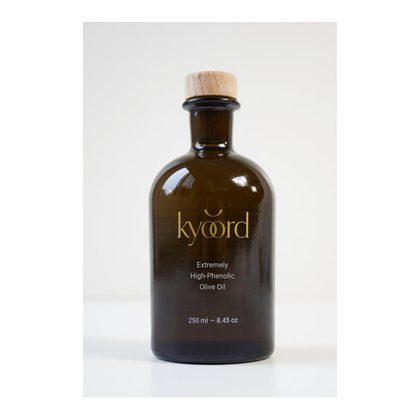
kyoord Extremely High-Phenolic Olive OilSold out$68 · 250 ml · $27.20/100 ml
The highest certificate we found: 2,012 mg/kg by NMR, with 1,260 mg/kg of oleocanthal, from Kalamon olives harvested in September 2025. Sold out, and $27.20 per 100 ml. kyoord cites a second analysis after 3 months of cold storage that it hasn't published, so it loses a point on proof.[9][8]
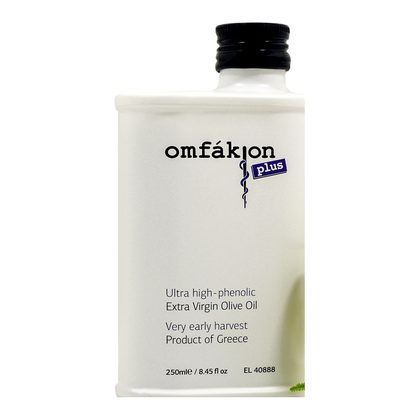
Omfakion Plus Ultra High-Phenolic EVOO$99.98 · 250 ml · $39.99/100 ml
Kalamon olives from the producer's own groves in Lakonia, harvested in September 2025. Its certificate shows 2,006 mg/kg by NMR, 1,249 of it oleocanthal, but the test (Sept. 16, 2025) is now just over 12 months old, so we take a point off polyphenols. Its listing's '1,326 mg/kg oleocanthal' is really oleocanthal plus oleacein (the certificate shows 1,249 oleocanthal), so it also loses a point on proof. White opaque bottle (material not stated); no harvest date on the label.[75][74]
The Governor Limited EditionSold out$69 · 500 ml · $13.80/100 ml
1,316 mg/kg by NMR from an October 2025 harvest, in opaque painted glass. The Limited Edition bottle is sold out; the seller offers a bulk pack of twelve 500 ml cans ($499) that it says contains the Limited Edition oil, though the can label pictured reads 'Premium.'[7][5][6]
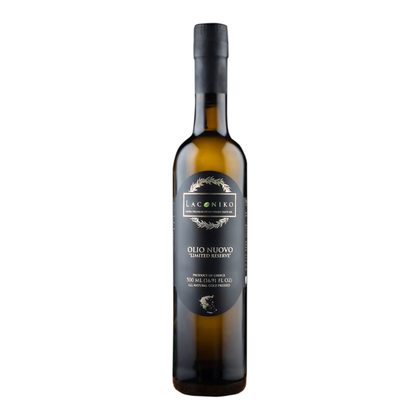
Laconiko Olio Nuovo Early Harvest High Phenolic EVOO$39.95 · $7.99/100 ml
774 mg/kg by NMR (tested Jan. 13, 2026) with clean acidity (0.28%) and peroxide (3.20) and NYIOOC Gold in 2026, for $7.99 per 100 ml. The drawback is clear glass, so store it in a dark cupboard.[13][12][83]
7.4/10
14
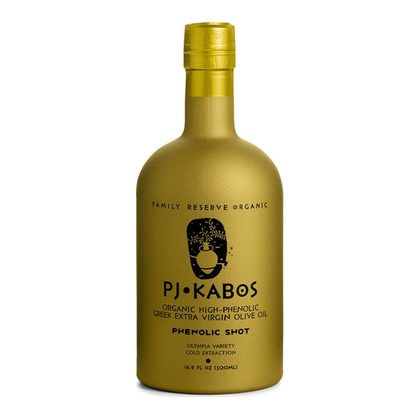
PJ Kabos Family Reserve Organic Phenolic Shot$59.83 · 500 ml · $11.97/100 ml
Publishes both 995 mg/kg by HPLC and 1,473 by NMR (a 48% gap), but names no lab and posts no certificate, so polyphenols are capped at 3.5. Organic; NYIOOC Gold 2025; best before December 2027. PJ Kabos also owns OliveOil.com, which reviews rival brands.[34][92]
5.6/10
15
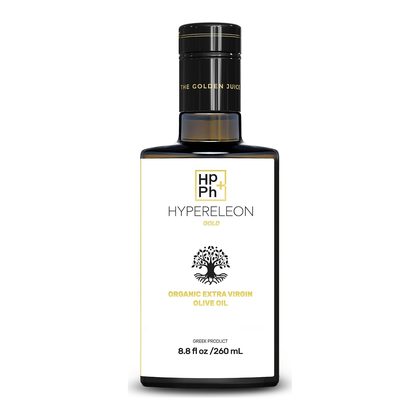
Hypereleon Gold Organic Extra Virgin Olive Oil$89 · 260 ml (Amazon) · $34.23/100 ml
Organic Olympia olives from the Arcadia highlands, in dark glass, with NYIOOC Gold in 2025 and 2026. Its '1,600+ mg/kg' is the maker's HPLC figure with no certificate published (it says certificates are 'available on demand'), so polyphenols are capped at 3.5, and the label has a best-by date but no harvest date.[76][77][96]
5.2/10
Best olive oils for everyday cooking
Extra virgin handles everyday heat well. After 6 hours at 180°C, EVOO formed 10.5% polar compounds, far fewer than refined seed oils (15.7%–21.8%) and close to coconut oil (9.7%), in a lab test that cooked no food[158], oleocanthal lost at most 16% when heated to 240°C[161], and sautéing vegetables in it raised their phenolic content[160]. Buy a fresh, fairly priced bottle for the pan and save the expensive oil for raw use.
California Olive Ranch 100% California Extra Virgin Olive Oil$17.99 · $3.60/100 ml
100% California oil in dark glass with harvest and use-by dates on the back label and lot results by QR code, NYIOOC Silver in 2026, and the cleanest record in older shelf tests, for $3.60 per 100 ml. It publishes only a brand-wide polyphenol range, and one bottle tested for Defend Our Health had 2,646 ppb of phthalates.[27][28][29][87][102][104]
5.7/10
3
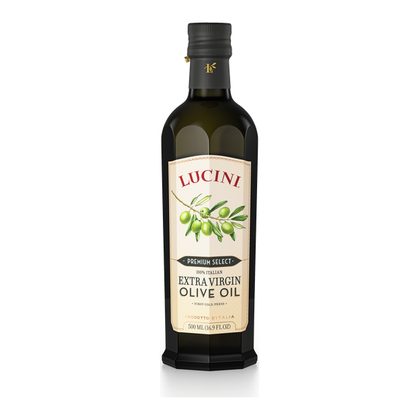
Lucini Italia Premium Select$23.99 · 500 ml · $4.80/100 ml
Italian oil in dark glass with the harvest date on the label (per its owner, California Olive Ranch), and NYIOOC Gold every year from 2020 to 2026. Only a brand-wide polyphenol range is published.[32][28][88]
5.5/10
4
California Olive Ranch Global Blend Medium$12.99 · 500 ml · $2.60/100 ml
Oil from California, Argentina, Chile and Portugal in dark glass, with harvest dates and lot results by QR. NYIOOC Silver 2025. As a multi-country blend, it's capped at 6.5.[30][31][89]
5.4/10
5
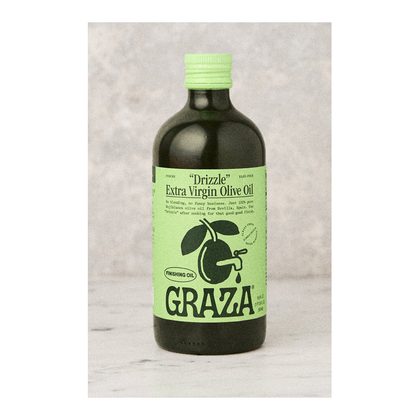
Graza Drizzle (glass)$22.99 · 500 ml · $4.60/100 ml
Early-harvest Picual in glass coated with UV-blocking paint, with the harvest date on the label. Mostly from Jaén, Spain, but some lots come from Portugal or Italy. No polyphenol number, and ConsumerLab's 2026 result is paywalled.[38][39][41][100]
5.3/10
Best organic olive oils
Certified organic oils, ranked by score. Organic doesn't guarantee zero residues: Olivea's own screen found two pesticide traces.
Damya Robust Organic Extra Virgin Olive Oil$32 · $6.40/100 ml
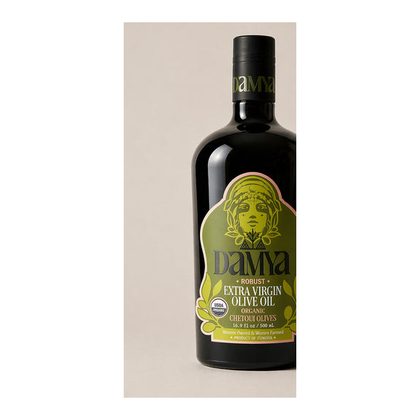
Organic Tunisian Chetoui oil with NYIOOC Gold in 2026, harvested December 2025, with 0.21% acidity. Its 662 mg/kg names no lab or method, so we cap polyphenols at 3.5; a July 2026 list in a wellness publication printed 831 mg/kg.[33][91][112]
5.6/10
8
Ellora Farms Organic PDO Messara Single Estate$32.95 · 500 ml · $6.59/100 ml
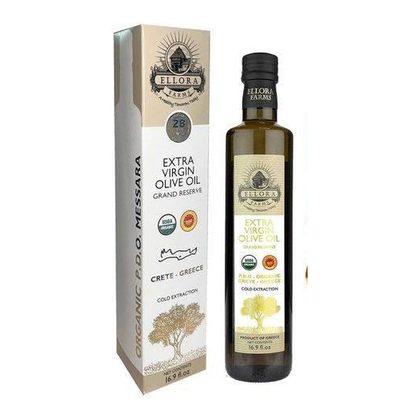
NYIOOC Gold in 2025 and 2026, organic and PDO, from one estate in Crete, in tinted glass (from the product image) and a box. Its harvest date and lab results are available only by entering the lot number from a bottle in hand; no polyphenol number is public.[35][36][93]
5.6/10
9
PJ Kabos Family Reserve Organic Phenolic Shot$59.83 · 500 ml · $11.97/100 ml
Publishes both 995 mg/kg by HPLC and 1,473 by NMR (a 48% gap), but names no lab and posts no certificate, so polyphenols are capped at 3.5. Organic; NYIOOC Gold 2025; best before December 2027. PJ Kabos also owns OliveOil.com, which reviews rival brands.[34][92]
5.6/10
10
Hypereleon Gold Organic Extra Virgin Olive Oil$89 · 260 ml (Amazon) · $34.23/100 ml
Organic Olympia olives from the Arcadia highlands, in dark glass, with NYIOOC Gold in 2025 and 2026. Its '1,600+ mg/kg' is the maker's HPLC figure with no certificate published (it says certificates are 'available on demand'), so polyphenols are capped at 3.5, and the label has a best-by date but no harvest date.[76][77][96]
5.2/10
11
Olivie Plus 30x$31 · 250 ml · $12.40/100 ml
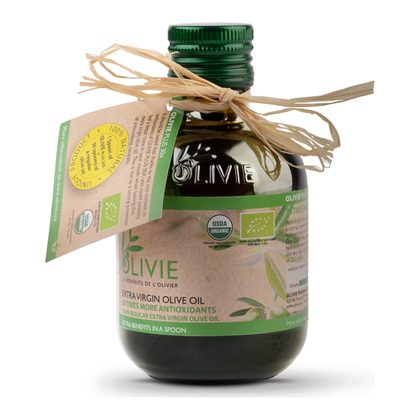
Organic Moroccan oil whose '30x' compares one compound, hydroxytyrosol (233 mg/kg), with an assumed 3–7 mg/kg in 'regular' oil. That isn't a total-polyphenol number, and no lab or harvest date is given.[44]
5.0/10
Best U.S.-grown olive oils
California makes nearly all U.S. olive oil. Neither of these publishes a lab-backed polyphenol number, which is why neither scores above 6. Corto and Wonder Valley scored under 5 (see Other popular oils we scored), and Cobram Estate is in What we'd skip.
1
California Olive Ranch 100% California Extra Virgin Olive Oil$17.99 · $3.60/100 ml
100% California oil in dark glass with harvest and use-by dates on the back label and lot results by QR code, NYIOOC Silver in 2026, and the cleanest record in older shelf tests, for $3.60 per 100 ml. It publishes only a brand-wide polyphenol range, and one bottle tested for Defend Our Health had 2,646 ppb of phthalates.[27][28][29][87][102][104]
5.7/10
2
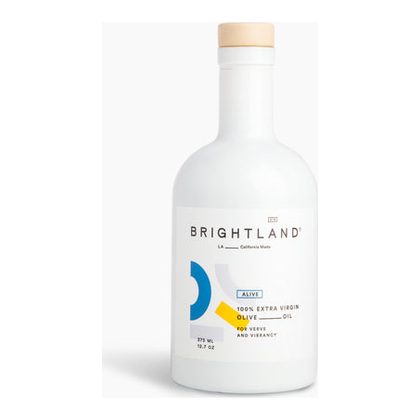
Brightland Alive$38 · 375 ml · $10.13/100 ml
California Arbosana and Koroneiki from an October 2025 harvest, in UV-coated glass. It lists 280–330 mg/kg with no lab named, and the only chemistry Brightland posts is a May 2024 test labeled for a different blend. No independent test or award found.[37]
5.6/10
Single-origin Greek, Italian and Mediterranean oils
Single-country oils, several with PDO status, which certifies where an oil comes from, not its polyphenols. Iliada Kalamata PDO and Partanna scored under 5; they're in Other popular oils we scored.
1
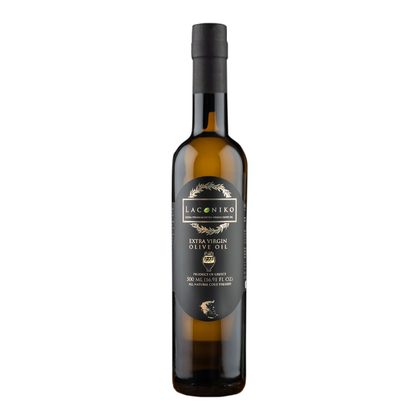
Laconiko Extra Virgin Olive Oil$28.95 · 500 ml · $5.79/100 ml
Its certificate shows 578 mg/kg by NMR, value for value the same as Kosterina Original's, plus published acidity (0.17%) and peroxide (2.90). NYIOOC Silver 2026. Clear glass. It's Laconiko's third oil, and we list no more than two per brand in the top 10.[15][84][14]
7.3/10
2
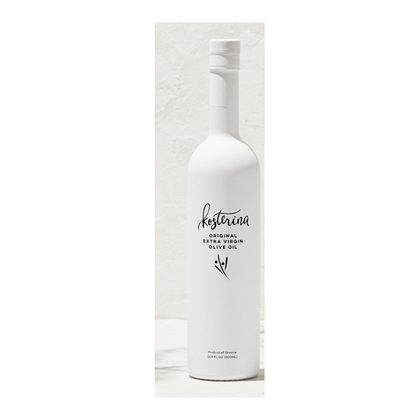
Kosterina Original Extra Virgin Olive Oil$32 · $6.40/100 ml
578 mg/kg by NMR in opaque white glass (or a tin), with NYIOOC Silver in 2025 and 2026. Its certificate reports the same values as one Laconiko published for its own everyday oil, and NYIOOC's 2024 results list a 'Kosterina' entry under producer Laconiko, so we treat them as one test. No acidity or peroxide values published.[24][15][23][85][86]
7.2/10
3
Ellora Farms Organic PDO Messara Single Estate$32.95 · 500 ml · $6.59/100 ml
NYIOOC Gold in 2025 and 2026, organic and PDO, from one estate in Crete, in tinted glass (from the product image) and a box. Its harvest date and lab results are available only by entering the lot number from a bottle in hand; no polyphenol number is public.[35][36][93]
5.6/10
4
Lucini Italia Premium Select$23.99 · 500 ml · $4.80/100 ml
Italian oil in dark glass with the harvest date on the label (per its owner, California Olive Ranch), and NYIOOC Gold every year from 2020 to 2026. Only a brand-wide polyphenol range is published.[32][28][88]
5.5/10
5
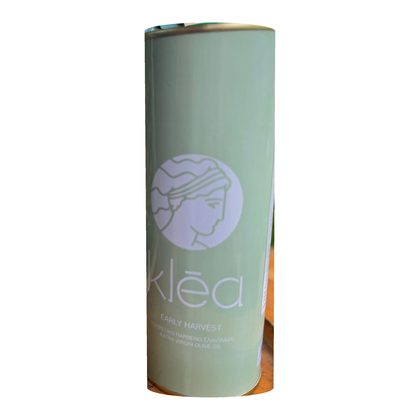
Klēa Early Harvest Extra Virgin (500 ml tin)$39 · 500 ml (U.S. retailer) · $7.80/100 ml
Early-harvest Chondrolia olives from the Psathas family's groves in Halkidiki, harvested October 2025, in a tin. A U.S. retailer lists 777 mg/kg and 0.27% acidity with no lab named, so polyphenols are capped at 3.5.[78]
5.3/10
What about “high-polyphenol” marketing and the big supermarket brands?
Polyphenol claims sell olive oil, and the big supermarket brands are the ones most people have on the shelf. Here's what the records show.
The “30x” mathMultiplier claims need a baseline. One Moroccan oil, Olivie Plus 30x, publishes its math: 233 mg/kg of hydroxytyrosol vs. an assumed 3–7 mg/kg in “regular” oil[44]. That compares one compound, not total polyphenols, and it compares against ordinary oil rather than a good extra virgin; popular U.S. extra virgin oils tested in 2026 had 200–473 mg/kg of total polyphenols[100]. When a label says “X times more,” ask what it's being compared with, and for the certificate.
Bertolli and Filippo BerioDeoleo, which owns Bertolli, settled Koller v. Deoleo for $7 million in 2018, without admitting wrongdoing, and agreed to use “imported from Italy” only for oil from olives grown and pressed in Italy, and to strengthen testing[126][127]. The complaint alleged the oil came from Greece, Chile, Spain, Australia, Turkey and Tunisia and was only mixed and bottled in Italy[128]. Salov, which owns Filippo Berio, settled Kumar v. Salov over “Imported from Italy” labels, denying any wrongdoing; buyers got 50 cents a bottle, up to $5 per household without receipts[129], about $5 million in all, per plaintiffs' counsel[130].
The UC Davis testsIn a 2011 report, UC Davis tested 134 bottles of eight top brands bought in fall 2010. The share failing both sensory panels ranged from 94% for Pompeian and 83% for Filippo Berio to 0% for California Olive Ranch and Cobram Estate[102]. California Olive Ranch and Corto helped fund the work, and UC Davis says its 2010 results shouldn't be used to judge oil sold today[101].
The NAOOA sealAbout half of branded olive oil sold in the U.S. carries the North American Olive Oil Association seal. It's an industry program: brands pay to take part, it tests shelf samples against IOC chemistry at least twice a year, and it “does not mean that we test every bottle or even every lot”[113]. As of September 2025, the association's board chair was Pompeian's CEO[114].
European testsA 2026 Swiss test found 2.9 mg/kg of MOAH in Filippo Berio, above the EU's 2 mg/kg guidance, and 2.1 in Bertolli, at that action level; both were within legal limits[105]. Germany's Stiftung Warentest called mineral oil the biggest problem in its test of 25 oils[109], and Öko-Test found at least traces in all 30 it tested[110]. EU member states have voted for a binding olive oil limit of 4.0 mg/kg from 2027, then 2.0, pending final adoption[124]. On quality, European-market Bertolli passed a 2025 Swiss consumer test[106], and Bertolli Originale was rated “gut” by Stiftung Warentest in January 2026, as reported by its maker, Deoleo[107]. European-market Filippo Berio Classico failed Stiftung Warentest in 2020 and was rated “ungenügend” by Öko-Test in 2022, then rated “gut” (2022) and “ausreichend” (2024) by Stiftung Warentest[111]. These were European bottles, which can differ from U.S. ones, so we count them at half weight.
Our adviceFor everyday cooking, California Olive Ranch 100% California costs a little more than the big imports, is dated and has the best shelf-test record of the brands we compared. For polyphenols, buy an oil that publishes a named-lab certificate for its current harvest, like kyoord or Olivea.
What we'd skip
These come in plastic, blend oil from several countries, had a bad test result, or publish conflicting numbers or none we can check. Plastic matters: in one study, oils sold in PET bottles had the highest phthalate levels[162].
1
Terra Delyssa Organic Extra Virgin$15.99 · 500 ml · $3.20/100 ml
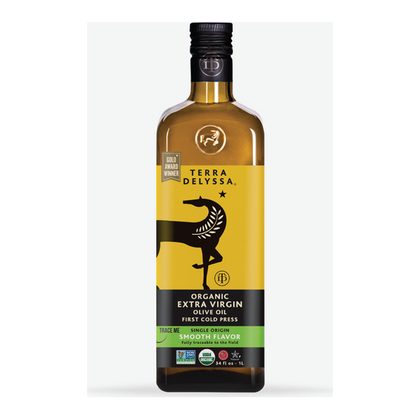
Tunisian oil in dark glass with an NAOOA seal and blockchain lot tracing. A French consumer magazine (60 Millions de consommateurs, reported by Il Salvagente in April 2025) noted a musty, earthy flavor defect in a Terra Delyssa oil sold in France; the report doesn't say which product was tested, and European bottles may differ from U.S. ones. No harvest date or polyphenol number.[57][108][113]
5.0/10
2
Morocco Gold New Harvest$35.19 · 500 ml (Amazon) · $7.04/100 ml
Picholine Marocaine oil in a dark bottle, sold with three different polyphenol figures (606 on Amazon; 626 and 278 on one page of its own site) and no lab, method or test date. It also claims polyphenols stay stable for up to four years with no test published, so it loses a point on proof.[51][52]
4.7/10
3
Graza Sizzle (squeeze bottle)$16 · 750 ml · $2.13/100 ml
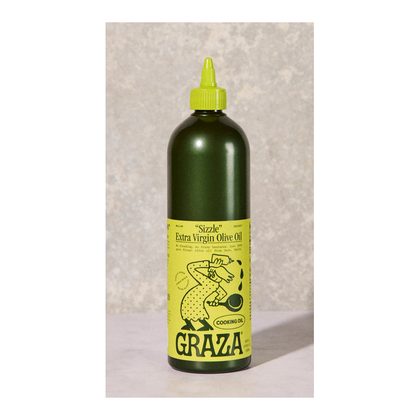
Graza's mid-harvest cooking oil, cheap at $2.13 per 100 ml and dated on the label, but the squeeze bottle is plastic, which caps it at 6.5. Skip the squeeze bottle and buy Sizzle in its painted glass bottle ($19.99) instead.[40][39][41]
4.6/10
4
Colavita Premium Selection (34 fl oz tin)$29.99 · 34 fl oz · $2.98/100 ml
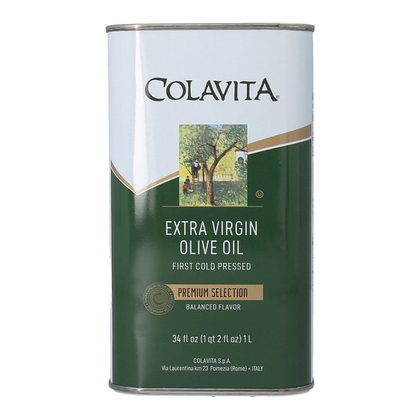
Olives from Italy, Greece, Spain and Portugal, in a tin, with the NAOOA seal. No harvest date or polyphenol number. In UC Davis's 2011 test, 56% of Colavita samples failed both sensory panels; Colavita's extra virgin oil passed the National Consumers League's 2015 test.[53][113][102][103]
4.5/10
5
Cobram Estate 100% California Classic$20.99 · 750 ml · $2.80/100 ml
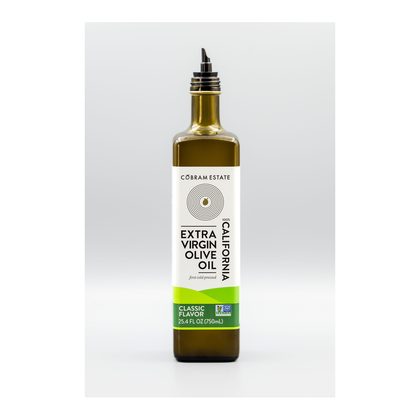
Northern California oil in dark glass, but no harvest date on the label and no polyphenol number. One bottle tested by Mamavation had 6,092 ppb of phthalates, the highest in that group's list. Cobram's NYIOOC Golds are for its Australian oils.[43][104][90]
4.2/10
6
Pompeian Robust Extra VirginSupermarket price varies
Its label uses a coded origin key listing 11 countries, so the source varies by lot; no harvest date or polyphenol number. NAOOA seal. In UC Davis's 2011 test, 94% of Pompeian samples failed both sensory panels, the worst of eight brands.[54][113][102]
4.0/10
7
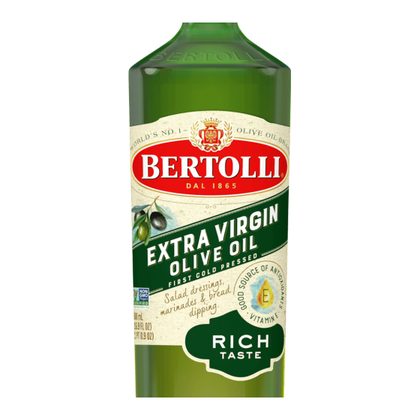
Bertolli Extra Virgin Olive Oil (Rich Taste)Supermarket price varies
Blended from several countries, per Deoleo, and we found no harvest date on its labels. A Swiss-market bottle had 2.1 mg/kg of MOAH, at the EU's 2 mg/kg action level and within legal limits. European-market Bertolli passed a 2025 Swiss consumer test (K-Tipp), and Bertolli Originale was rated 'gut' by Stiftung Warentest in January 2026, as reported by its maker, Deoleo. European results count at half weight.[55][105][106][107]
4.0/10
8
Filippo Berio Extra Virgin Olive OilSupermarket price varies
Green PET plastic bottles and oil sourced from five countries, both of which cap it at 6.5. A Swiss-market bottle had 2.9 mg/kg of MOAH, above the EU's 2 mg/kg guidance. European-market Filippo Berio Classico failed Stiftung Warentest in 2020 and was rated 'ungenügend' by Öko-Test in 2022, then rated 'gut' (2022) and 'ausreichend' (2024) by Stiftung Warentest. European results count at half weight. NAOOA seal.[56][105][111][113]
3.6/10
·
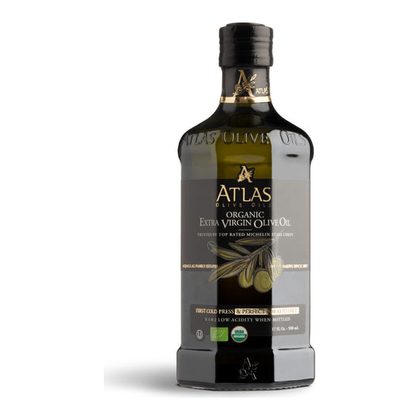
Atlas Organic Extra Virgin (500 ml)$20.10
Sold as 'Polyphenol Rich' with no number, lab or harvest date on its store; ConsumerLab tested it in 2026, but the result is paywalled.[45][100]
Not rated
·
Fresh Press Farms Pure Gold (485 ml)$12.99
Its own page doesn't call Pure Gold extra virgin or give a number. A wellness publication's list says polyphenols lost in milling are 'recovered and reincorporated,' so any figure isn't comparable with a straight EVOO.[80][112]
Not rated
Other popular oils we scored
These scored under 5.0, so they're not in our category guides, but you'll see them on shelves. None has a single disqualifying problem; they just publish too little for a higher score.
Olive oil
Score
Why it scored under 5
Iliada Kalamata PDO $19.99 · 500 ml (Amazon)
4.8/10
Kalamata PDO with NYIOOC Gold in 2025 and 2026 and numbered bottles, but no harvest date or polyphenol number.[49][50][94]
Partanna Sicilian Extra Virgin (red tin) $20.99 · 16.9 fl oz (Whole Foods)
4.8/10
Sicilian oil in a tin that 'guarantees' 400–600 mg/kg with no lab or date; its claimed NYIOOC medals aren't in NYIOOC's database, which costs a point on proof.[48]
Zoe Extra Virgin Olive Oil (1 L tin) $16.96 · 1 L (Walmart)
4.7/10
Spanish oil in a tin with the NAOOA seal, but no harvest date or polyphenol number.[46][113]
Wonder Valley California Extra Virgin $39.99 · 12.7 fl oz (Whole Foods)
4.7/10
Lake County estate oil; the retail listing still shows a November 2023 harvest, with no polyphenol number or bottle material stated.[47]
Corto TRULY Extra Virgin (3 L FlavorLock box) $74 · 3 L
4.6/10
COOC-certified California oil in a light-proof 3-liter box, but no harvest date or polyphenol number.[42]
When the label promises more than the lab finds
These are the biggest gaps we found between what brands say and what their own documents or independent tests show. Two are about the “supermarket oil” that high-phenolic brands compare themselves with: measured U.S. oils have more polyphenols than those brands suggest.
Morocco Gold[51]Polyphenols on its own analysis page
First figure626 mg/kg
Second figure278 mg/kg
Kosterina[23][100]What a “supermarket EVOO” contains
Kosterina says50–150
ConsumerLab found200–473
Olivea[21][114]Supermarket EVOO “by the time you buy it”
Olivea's model50–100
NAOOA average274
Olivea Ultra High Phenolic[16][19]Pesticides found (Olivea discloses both traces)
“Zero Pesticides”0
Detected below the 0.01 mg/kg quantification limit2
Three more: Olea True's high-polyphenol page claims “≥1,400 mg/kg” and says it tests every bottle[62], while its posted certificate shows 1,360[59]. Morocco Gold says its polyphenols stay stable for up to four years[52], while studies found 42–46% losses in one[146][147]. And Laconiko's Olio Nuovo certificate says 774 mg/kg while Aristoleo's 2026 award placed it in the 799–1,199 band[99]: different samples, different numbers.
DA
Dr. Axe's Take
Extra virgin olive oil is the fat I'd build any kitchen around, but only if it's the real thing and still fresh. My non-negotiables are simple. First, buy by the harvest date, not the brand: the newest harvest you can find, in dark glass or a tin, and a bottle you'll finish within a couple of months of opening.
Second, keep two oils. Use a good everyday extra virgin for cooking; it handles heat better than refined seed oils. Then keep a high-phenolic oil for raw use: a tablespoon or two a day over vegetables, salads or straight from the spoon. That peppery sting in your throat comes from oleocanthal, one of its polyphenols.
Third, make brands show their work. A polyphenol number means nothing without the lab, the method and the test date. If a company won't show you a certificate, or sells “premium” oil in clear plastic, keep walking.
— Dr. Axe
Frequently asked questions
What is the best olive oil overall?
Laconiko ZOI Ultra High Phenolic EVOO ($59.95 for 375 ml, 8.5/10, Excellent). Its 2025/26 certificate shows 1,397 mg/kg of polyphenols by NMR (about 1,118 after our adjustment), 1,000 of it oleocanthal; it publishes acidity and peroxide far inside premium limits, comes in dark glass and won Gold at the 2026 NYIOOC. Olea True ties it at 8.5 and is organic with a dated label, but it has no blind-judged award and some of its marketing claims can't be verified. For the most polyphenols, Pamako Monovarietal tested 2,081 mg/kg; for everyday cooking, California Olive Ranch 100% California is dated and costs $3.60 per 100 ml.
How does the Dr. Axe Olive Oil Score work?
It's an editorial 0–10 score built from lab certificates, independent tests and public records. Polyphenols count 30%, freshness and purity 20% each, and packaging, traceability and independent proof 10% each. A missing test counts as neutral, but a bad result still costs points: a flavor defect, mineral oil above EU guidance, high phthalates or a failed grade test lowers the score exactly as before. Blends and plastic bottles can't score above 6.5, and oils without a harvest date printed on the label can't score above 8.5. 9.0 and up is a Dr. Axe Top Pick, 8.0–8.9 Excellent, 7.0–7.9 Very good, 5.0–6.9 Mixed and below 5 Not recommended. No oil we reviewed reaches 9 yet, because none pairs a printed harvest date with published chemistry, a pesticide screen and a top award.
Which olive oil has the most polyphenols?
Of oils in stock on Sept. 25, 2026 with a named-lab certificate, Pamako Monovarietal (2,081 mg/kg by NMR), PhenOLIV Organic (2,011) and Omfakion Plus (2,006) lead, followed by Laconiko ZOI (1,397), Olea True (1,360) and Liokareas Rx (1,307). kyoord's Extremely High-Phenolic (2,012) and The Governor Limited Edition bottle (1,316) were sold out; the seller offers a bulk pack of twelve 500 ml cans ($499) that it says contains the Limited Edition oil, though the can label pictured reads “Premium.” Compare numbers only within the same method: NMR and HPLC give different numbers, and we cut NMR figures 20% before scoring.
How many polyphenols should olive oil have?
There's no legal standard. The EU health claim requires 5 mg of hydroxytyrosol and its derivatives per 20 g of oil, about 250 mg/kg. University of Athens researchers proposed calling oils above 500 mg/kg “high phenolic,” because they can stay above 250 after a year of storage. Popular U.S. extra virgin oils tested by ConsumerLab in 2026 ranged from 200 to 473 mg/kg.
What does “30x more polyphenols” on a label mean?
Usually less than it sounds, because a multiplier needs a baseline. Olivie Plus 30x, for example, compares 233 mg/kg of one compound, hydroxytyrosol, with an assumed 3–7 mg/kg in “regular” oil. That isn't a total-polyphenol figure, and popular U.S. extra virgin oils tested by ConsumerLab in 2026 had 200 to 473 mg/kg of total polyphenols. Ask for the certificate: the lab, the method, the test date and the total.
Can you cook with extra virgin olive oil?
Yes. After 6 hours at 180°C (356°F), EVOO formed 10.5% polar compounds, second-lowest of 10 oils, after coconut oil (9.7%), vs. 15.7% to 21.8% for refined seed oils, and smoke point didn't predict how oils held up; that test cooked no food. Sautéing vegetables in EVOO raised their phenolic content in another study. Repeated deep-frying does destroy most polyphenols, so cook with a good everyday oil and use high-phenolic oil raw.
How much olive oil should I have a day?
The big U.S. cohorts saw lower death rates with more than ½ tablespoon (7 g) a day, and a review of 30 cohort studies found risk kept falling up to about 22 g, or 1.6 tablespoons. PREDIMED, the major trial, gave the olive-oil group about 1 liter of extra virgin a week for the whole household, and its diet score gave a point for 4 or more tablespoons a day. One to two tablespoons a day, in place of butter, margarine or mayonnaise, fits the cohort data.
How can I tell if olive oil is fake or stale?
Look for a harvest date, dark glass or a tin, and a named lab behind any polyphenol claim. Taste matters too: rancid, musty or flat flavors are defects, while bitterness and a peppery sting come from polyphenols. Shelf tests keep finding problems: 3 of 11 popular U.S. oils failed sensory grading in ConsumerLab's 2026 test despite passing chemistry. Outright fraud is rarer in U.S. testing (2 of 216 samples in the industry's 2024 study), but Europol seized 260,000 liters of fake oil in one 2023 operation.
How long does olive oil last after opening?
Makers of high-phenolic oils say to finish an open bottle within 30 days (Laconiko) to 2 months (kyoord and The Governor); Kosterina says 6 months for peak flavor. Even sealed oil loses 42–46% of its polyphenols in a year of ordinary storage, faster with heat and light. Buy sizes you'll finish, and store the bottle dark, cool and away from the stove.
Is supermarket or Costco olive oil worth buying?
Some is. California Olive Ranch 100% California prints a harvest date, uses dark glass and has the best shelf-test record of the brands we compared. Many big brands are blends from several countries with no harvest date, and Filippo Berio comes in plastic. Costco's Kirkland Signature Organic passed UC Davis's 2010 sensory and chemistry tests and carries the NAOOA seal, but we couldn't verify its current price, bottle material or harvest date, so we didn't rate it.
Does olive oil contain plasticizers or microplastics?
Often, in small amounts. Mamavation found traces of phthalates in every olive oil it tested (one bottle each, lab not named), and there's no U.S. legal limit. In a peer-reviewed study, oils sold in PET plastic had the highest phthalate levels. Researchers also found an average of 1,140 microplastic particles per liter in Italian and Spanish oils. Choosing glass or tin is the simplest step.
How much does good olive oil cost per year?
At two tablespoons a day (about 11 liters a year), our top 10 range from about $767 a year (Olivea High Phenolic, $7.00 per 100 ml) to $5,256 (PhenOLIV Organic, $48.00). Our #1, Laconiko ZOI, works out to about $1,751 a year, or $4.80 a day. Per dollar, Olivea Ultra High Phenolic delivers the most lab-backed polyphenols of our top picks, about 8.7 mg per $1.
References
Update history
Sept. 25, 2026: First published. Scores built from maker lab certificates for the 2025/26 harvest, NYIOOC and Aristoleo records, and independent tests by UC Davis, ConsumerLab, Mamavation and European consumer magazines, all checked Sept. 25, 2026. Scores reflect 2025/26 certificates; we'll re-score when 2026/27 certificates are posted.
Maker's data kyoord. High-phenolic olive oil product page: Corfu; Lianolia + Koroneiki; harvest Nov./Dec. 2025; white opaque bottle; $49 for 500 ml; fresh 2 years from harvest, use within 2 months of opening; 'harvest date on every bottle'; Daily Shot sachets. Checked Sept. 25, 2026. Open source
Maker's data World Olive Center for Health (analysis at the National and Kapodistrian University of Athens), certificate C2526-00293 for kyoord LLC: total polyphenols 1,007 mg/kg by NMR; analysis Nov. 10, 2025; harvest Nov. 2025; mill Olive Fabrica. Open source
Maker's data kyoord. The Governor Premium Edition product page: Corfu; Lianolia; harvest Nov. 2025; $69 for 500 ml; store in its packaging; use within 2 months of opening. Checked Sept. 25, 2026. Open source
Maker's data World Olive Center for Health certificate C2526-00292, The Governor Premium Edition: 1,174 mg/kg total polyphenols and 476 mg/kg oleocanthal by NMR; analysis Nov. 10, 2025. Open source
Maker's data kyoord. The Governor Limited Edition product page: 500 ml opaque painted-glass bottle $69, cases of 6 and 12, all sold out Sept. 25, 2026; tasting notes arugula, chicory, artichokes, fresh-cut grass and violets; 'Take a shot a day every morning or drizzle on your favorite foods.' Open source
Maker's data kyoord. The Governor Limited Edition Bulk (6 Liters): '6 Liters of The Governor Limited Edition, conveniently packed in 12 cans of 500 mL each' for $499; 'October 2025 harvest - Best by October 2027'; in stock Sept. 25, 2026. The product photo shows a 500 ml can labeled 'The Governor Premium … from our «Lianolia» variety ancient olive groves in Corfu.' Open source
Maker's data World Olive Center for Health certificate C2526-00137, The Governor Limited Edition: 1,316 mg/kg by NMR; analysis Oct. 17, 2025; harvest Oct. 2025. Open source
Maker's data kyoord. Extremely High-Phenolic Olive Oil page ($68 for 250 ml; sold out; storage claim that a second, unpublished analysis after 3 months of cold storage was unchanged). Open source
Maker's data World Olive Center for Health certificate C2526-00042 (batch 1L2): 2,012 mg/kg by NMR, 1,260 mg/kg oleocanthal; analysis Oct. 3, 2025; harvest Sept. 2025. Open source
Maker's data Laconiko. ZOI Ultra High Phenolic EVOO product page ($59.95 for 375 ml; consume within 30 days of opening; oils kept at 55–60°F and bottled on demand). Checked Sept. 25, 2026. Open source
Maker's data Laconiko ZOI certificates: World Olive Center for Health C2526-00085 (1,397 mg/kg total polyphenols and 1,000 mg/kg oleocanthal by NMR; analysis Oct. 7, 2025; harvest Sept. 2025) and quality certificate S.C-2-95-25 (acidity 0.20%, peroxide 1.90, K232 1.795, K268 0.157; lab name not printed). Open source
Maker's data Laconiko. Olio Nuovo product page ($39.95; first week of harvest; unfiltered; 2025/26 harvest; kept at 53.6–59°F and bottled at order). Checked Sept. 25, 2026. Open source
Maker's data Laconiko Olio Nuovo certificates: World Olive Center for Health C2526-00640 (774 mg/kg by NMR; analysis Jan. 13, 2026) and quality certificate issued Nov. 26, 2025 (acidity 0.28%, peroxide 3.20, K232 1.365, K270 0.129). Open source
Maker's data Laconiko. Extra Virgin Olive Oil product page ($28.95 for 500 ml; 'NEW HARVEST: Nov 2025'). Open source
Maker's data Laconiko EVOO certificates: World Olive Center for Health C2526-00625 (578 mg/kg by NMR; every value identical to Kosterina's C2526-00929) and quality certificate (acidity 0.17%, peroxide 2.90, K232 1.336, K268 0.116). Open source
Maker's data Olivea. Ultra High Phenolic product page ($45; 'Bottle: Glass, 500ml'; USDA Organic; Olympia olives, Messinia; nitrogen-flushed dark glass; 'Zero Pesticides'; 'One tablespoon a day'). Checked Sept. 25, 2026. Open source
Maker's data Olivea's Amazon listing for the Ultra High Phenolic oil (500 ml, $45; says 'early-harvest Greek Koroneiki olives'). Open source
Maker's data Olivea. Lab results, 2025–2026 harvest (Dec. 22, 2025), the page its bottle QR code links to; discloses the two pesticide traces. Open source
Maker's data Multichrom Lab (IOC-recognized, Athens), certificate Π-127805 for Konstantopoulos S.A., Nov. 4, 2025: biophenols 874 mg/kg by IOC method COI/T.20/Doc. 29 (HPLC; marked outside the lab's accreditation scope); about 200 pesticides by GC/MS-MS, all not detected except lambda-cyhalothrin and deltamethrin below the 0.01 mg/kg quantification limit. Client-sampled. Open source
Maker's data World Olive Center for Health certificate C2526-00538 (Olivea Ultra High Phenolic): 1,046 mg/kg by NMR; analysis Dec. 16, 2025; harvest Oct. 2025. Open source
Maker's data Olivea. High Phenolic product page ($35 for 500 ml; USDA Organic; Koroneiki; October 2025 harvest; dark glass; 'A 500 ml bottle lasts most kitchens about a month'). Checked Sept. 25, 2026. Open source
Maker's data World Olive Center for Health certificate C2526-00669 (Olivea High Phenolic): 587 mg/kg by NMR; analysis Jan. 13, 2026. Open source
Maker's data Kosterina. Original EVOO product page ($32 for 500 ml; opaque glass and tin; 'Harvested in November 2025'; use within 6 months of opening; '3-10x the industry average'; 'Most supermarket EVOOs contain 50-150 mg/kg'). Checked Sept. 25, 2026. Open source
Maker's data World Olive Center for Health certificate C2526-00929 for Kosterina Corporation: 578 mg/kg by NMR; origin Lakonia; analysis Jan. 10, 2026; issued Mar. 20, 2026. Open source
Maker's data Kosterina. EVOO Shot 15-pack ($49; 'Our Olive Oil Shots are packaged in glass'; product images show opaque yellow painted-glass bottles labeled '.5 FL OZ (15mL)'; organic extra virgin olive oil; one shot, about 1 tbsp, a day; 'Harvested in October 2025'). Open source
Maker's data World Olive Center for Health certificate C2526-00486 for Kosterina (lot O25BAR00D50126): 1,072 mg/kg by NMR; analysis Dec. 9, 2025; harvest Nov. 2025. Open source
Maker's data California Olive Ranch. 100% California product and store data (500 ml $17.99 sale, $19.99 list; 750 ml $23.99; 1 L $29.99; brand-wide polyphenols '~200 mg/kg to 500+ mg/kg'). Checked Sept. 25, 2026. Open source
Maker's data California Olive Ranch. FAQ: California Olive Ranch and Lucini oils are in dark bottles, with harvest and 'Use By' dates on the back label. Open source
Maker's data California Olive Ranch. Smart labels: front QR code shows lot results including free fatty acid and phenol content. Open source
Maker's data California Olive Ranch. Global Blend product page ($12.99 for 500 ml). Open source
Maker's data Walmart listing for COR Global Blend Medium: 'from California, Argentina, Chile, and Portugal.' Open source
Maker's data Lucini (California Olive Ranch). Premium Select product page ($23.99 for 500 ml; central Italy). Open source
Maker's data Damya. Robust Organic EVOO page ($32 for 500 ml; 'Harvested December 2025'; 'Polyphenols 662 mg/kg'; acidity 0.21%). Checked Sept. 25, 2026. Open source
Maker's data PJ Kabos. Family Reserve Organic Phenolic Shot page ($59.83 for 500 ml; 995 mg/kg HPLC and 1,473 mg/kg NMR; no lab named; harvest Sept./Oct. 2025; best before Dec. 2027). Open source
Maker's data Ellora Farms. Organic PDO Messara single-estate product page ($32.95 for 500 ml; USDA and EU organic). Open source
Maker's data Ellora Farms. 'Fully traceable': enter the lot number from the bottle to see harvest date and lab analysis. Open source
Maker's data Brightland. Alive product page ($38 for 375 ml; Arbosana and Koroneiki; Oct. 2025 harvest; UV-coated glass; 280–330 mg/kg; posted chemistry dated May 2024). Open source
Maker's data Graza. Drizzle glass bottle page ($22.99 for 500 ml; early-harvest Picual; harvest date on the label). Open source
Maker's data Graza. FAQs: about 97% Picual from Jaén, Spain; some lots from Portugal or Italy; single origin per bottle. Open source
Maker's data Graza. Sizzle squeeze bottle page ($16 for 750 ml). Open source
Public record / study Food Network. Graza launches a glass bottle coated with '100% UV-blocking paint' (Aug. 2025); squeeze bottles are plastic. Open source
Maker's data Corto. TRULY Extra Virgin Olive Oil page ('Certified Extra Virgin by the California Olive Oil Council'; 3 L FlavorLock box $74). Open source
Maker's data Cobram Estate. 100% California Classic product page ($20.99 for 750 ml; dark glass). Open source
Maker's data Atlas Olive Oils. Olivie Plus 30x page ($31 for 250 ml; '30 times more hydroxytyrosol (233 mg/kg) than conventional EVOO'; 'regular' oil 3 to 7 mg/kg). Open source
Maker's data Atlas Olive Oils. Organic EVOO 500 ml page ($20.10; 'Polyphenol Rich'; no number). Open source
Maker's data Walmart listing, Zoe Extra Virgin Olive Oil 1 L tin ($16.96; Castilla-La Mancha, Spain; BPA-free tin lining). Open source
Maker's data Whole Foods listing, Wonder Valley California EVOO 12.7 fl oz ($39.99; pressed within 2 hours in Lake County; stamped with harvest month; 'plastic-free'). Open source
Maker's data Whole Foods listing, Partanna Sicilian EVOO 16.9 fl oz ($20.99; tin; 'We guarantee between 400-600 mg per kg of polyphenols'). Open source
Maker's data Agro.Vi.M. Iliada Kalamata PDO product page (Koroneiki; 'inherently high in polyphenols', no number). Open source
Maker's data Amazon listing, Iliada Kalamata PDO 500 ml ($19.99; numbered containers traceable to farmer and mill). Open source
Maker's data Morocco Gold. Olive oil analysis page (updated Jan. 22, 2025): two blocks list 626 and 278 mg/kg polyphenols; no lab or date. Open source
Maker's data Amazon listing, Morocco Gold New Harvest 500 ml ($35.19; '606mg/kg'; 'up to four years' of polyphenol stability). Open source
Maker's data Colavita. Premium Selection 34 fl oz ($29.99; olives from Italy, Greece, Spain and Portugal; NAOOA certified). Open source
Maker's data Giant Food listing of the Pompeian Robust label: coded origin key covering Argentina, Chile, Italy, Spain, Greece, Morocco, Portugal, Tunisia, Turkey, the U.S. and Uruguay; bottled in the U.S. Open source
Maker's data Bertolli (Deoleo). FAQ: oils blended 'from multiple origins' including Spain, Italy, Greece, Portugal and Argentina. Open source
Maker's data Filippo Berio. FAQ: 'green plastic PET bottles'; oils sourced in Italy, Spain, Greece, Portugal and Tunisia. Open source
Maker's data Terra Delyssa. Organic EVOO page ($15.99 for 500 ml; 100% Tunisian; dark glass; blockchain traceability). Open source
Maker's data Olea True. High Phenolic Olive Oil product page ($79 for 500 ml; 3 for $214; 5 for $355; 'Organic Strength >1350'; matte black opaque glass; free U.S. shipping). Checked Sept. 25, 2026. Open source
Maker's data World Olive Center for Health certificate C2526-00767 for Olea True (the same analysis was also issued as C2526-00592): total polyphenols 1,360 mg/kg by NMR, oleocanthal 419, oleacein 274; Tsounati-Koroneiki, Chania, Crete; harvest October 2025; analysis Nov. 7, 2025. Values match the lab's own copy reached through the certificate's QR code. Open source
Maker's data Olea True back-label image (2024-harvest version): 'Harvested OCT. 2024'; 'Product of Organic Farming GR-BIO-03' with the EU organic leaf; olive groves Selino, Chania, Crete; 'Consume raw and store in a dark cool place.' The current 2025/26 label was not seen. Open source
Maker's data Olea True. 2025/26 harvest page: 'Lab Verified 1360 mg/kg'; 'Single-Estate Crete'; claims 'Olympia Health & Nutrition Competition - Gold Medal: 2022, 2023, 2024, 2025, 2026.' Open source
Maker's data Olea True. High-polyphenol page: '≥1,400 mg/kg', 'over 1,400 mg/kg … per bottle' and 'We test every bottle independently'; no certificate for these figures is posted. Open source
Maker's data Olea True. 'Lab-Verified or Your Money Back': refund if the oil doesn't match the posted certificate for its harvest batch; claim within 7 days; customer pays return shipping. Customer-service page: all other sales final. Open source
Maker's data U.S. importer listing (ships from New Jersey; free shipping over $150): Pamako Ultra-Premium Monovarietal Mountain Organic EVOO, $129 for 500 ml, titled 'Harvest 2026/2027'. Checked Sept. 25, 2026. Open source
Maker's data World Olive Center for Health certificate C2526-00362 for Androulakis Eftychios (Pamako organic monovarietal): total polyphenols 2,081 mg/kg by NMR, oleocanthal 1,318, oleacein 264; harvest November 2025; analysis Nov. 21, 2025. Values match the lab's own copy. Open source
Maker's data Pamako. Monovarietal product page: '100% Tsounati variety, available in 500ml and 250ml.' Open source
Maker's data Pamako. Health benefits page: 'dark bottles with a mirrorized outer layer so the light cannot affect the olive oil's quality … natural cork.' Open source
Maker's data Multichrom Lab certificate Η-8634 for Pamako Monovarietal, 2024 harvest (acidity 0.15%, peroxide 6.4, K232 1.618; about 214 pesticides screened, imidacloprid below the 0.01 mg/kg quantification limit). Not the current harvest, so not scored. Open source
Maker's data U.S. importer listing (ships from New Jersey): PhenOLIV Organic High Phenolic, $96 for 200 ml; USDA organic seal; opaque painted bottle and carton with a QR code to the analysis; titled 'Harvest 2026/2027'. Checked Sept. 25, 2026. Open source
Maker's data World Olive Center for Health certificate C2526-00142 for The Greek Olive Estate (PhenOLIV Organic): total polyphenols 2,011 mg/kg by NMR, oleocanthal 180, oleacein 177; Olympia-Choraitiki; harvest October 2025; analysis Oct. 16, 2025. Values match the lab's own copy. Open source
Maker's data Liokareas. 2026 Rx High Polyphenol EVOO page ($59.95 for 375 ml; 'Harvested October 2025'; white opaque bottle with gift box; recommends refrigerating). Checked Sept. 25, 2026. Open source
Maker's data World Olive Center for Health certificate C2526-00079 for Liokareas Olive Oil: total polyphenols 1,307 mg/kg by NMR, oleocanthal 1,030, oleacein 153; analysis Oct. 8, 2025. Values match the lab's own copy (whose brand field shows a sample code). Open source
Maker's data Amazon listing for Liokareas Rx ($56.20): still shows 2024-harvest data ('1,143 mg/kg polyphenols', 'HARVESTED ON 10/08/2024'). Checked Sept. 25, 2026. Open source
Maker's data U.S. importer listing (ships from New Jersey): Omfakion Plus, $99.98 for 250 ml; '100% Kalamon variety, harvested from our own olive groves' (label); white opaque bottle; 'Best before: See on package.' Open source
Maker's data World Olive Center for Health certificate C2526-00004 (Panagiotakakos, Lakonia; Omfakion Plus): total polyphenols 2,006 mg/kg by NMR, oleocanthal 1,249, oleacein 78; Kalamon; harvest September 2025; analysis Sept. 16, 2025. Values match the lab's own copy. Open source
Maker's data Hypereleon. Buy-now page: Gold 260 ml, 'Certified Organic', Olympia variety, Arcadia highlands; '1600+ mg/kg of HT, T and their derivatives by HPLC'; certificates 'Available on Demand'; acidity 0.31%; best-by of current batch Oct. 31, 2027. Open source
Maker's data Amazon listing, Hypereleon Gold 260 ml ($89, in stock): dark glass; 'Certified organic by DIO GR-BIO-01' with the USDA seal; back label has a best-by date and no harvest date. Open source
Maker's data Beautiful Taiwan Tea Company (U.S. retailer), Klea Early Harvest 500 ml tin ($39): 100% Chondrolia Chalkidikis; 'Harvest: Oct. 2025'; acidity 0.27; 'Polyphenols: At 777 mg/Kg' (no lab named); producer the Psathas family, Halkidiki. Open source
Maker's data Asopos Groves. Products page ('Polyphenols' line, Lakonia; '750 mg/Kg' claimed, no lab). No U.S. seller found as of Sept. 25, 2026. Open source
Maker's data Fresh Press Farms. Pure Gold Olive Oil page ($12.99 for 485 ml; not labeled extra virgin; no polyphenol number). Open source
Independent NYIOOC World Olive Oil Competition. 'The Governor' (Olive Fabrica, Corfu): Silver 2026, 2025, 2023, 2022, 2021, 2020; listed as non-organic; edition not named. Open source
Independent NYIOOC. Laconiko ZOI: Gold 2026, Silver 2025, Gold 2024 and 2023. Open source
Independent NYIOOC. Laconiko Olio Nuovo Reserve: Gold 2026. Open source
Independent NYIOOC. Laconiko: Silver 2026; Gold 2018–2025. Open source
Independent NYIOOC. Kosterina Koroneiki: Silver 2026 and 2025. Open source
Independent NYIOOC. 2024 Silver for 'Kosterina' listed under producer Laconiko. Open source
Independent NYIOOC. California Olive Ranch 100% California: Silver 2026 and 2025. Checked Sept. 25, 2026. Open source
Independent NYIOOC. Lucini Italia Premium Select: Gold 2020–2026. Open source
Independent NYIOOC. California Olive Ranch Global Blend Medium: Silver 2025 (origin 'Various'). Open source
Independent NYIOOC. Cobram Estate producer history: the 2025 Gold for 'Cobram Estate Classic' is listed as an Australian oil. Open source
Independent NYIOOC. PJ Kabos Family Reserve Organic Phenolic Shot: Gold 2025. Open source
Independent NYIOOC. Ellora Farms Organic PDO Messara Valley: Gold 2026 and 2025. Open source
Independent NYIOOC. Iliada Kalamata PDO: Gold 2026 and 2025. Open source
Independent NYIOOC. Pamako Monovarietal Mountain Bio (Androulakis, Tsounati, organic): Gold 2025, 2024, 2023, 2021, 2020, 2019, 2018; no 2026 entry. Open source
Independent NYIOOC. Hypereleon Gold (G-Team, organic): Gold 2026 and 2025. Open source
Public record / study World Olive Center for Health. Olympia Health & Nutrition Awards 2026 winners list (Olea True not listed). Open source
Public record / study World Olive Center for Health. Olympia awards 2024: medals given to oils by phenol level against the EU health claim ('Silver and Gold Awards were presented to HPEVOOs that exceeded the requirements of the health claim'). Open source
Independent Aristoleo High Phenolic Awards 2026 winners (tiers set by measured polyphenols: Double Gold 1,200–2,000 mg/kg, Gold 799–1,199, Silver 500–799): Laconiko ZOI Double Gold; Olio Nuovo Gold. Open source
Independent ConsumerLab.com. Extra Virgin Olive Oil Review (updated Sept. 10, 2026): 3 of 11 popular oils failed accredited sensory grading despite passing chemistry; polyphenols 200.3–472.8 mg/kg; brand results paywalled. Open source
Independent UC Davis Olive Center. Tests indicate that imported 'extra virgin' olive oil often fails international and USDA standards (July 2010): 69% of imported samples failed sensory standards; funded in part by Corto Olive, California Olive Ranch and the COOC; not to be used to characterize oil sold today. Open source
Independent UC Davis Olive Center. Evaluation of extra-virgin olive oil sold in California (April 2011): 134 samples, 8 brands; share failing both sensory panels by brand. Open source
Independent National Consumers League. EVOO testing (May 19, 2015): 6 of 11 failed; passing oils named, including California Olive Ranch. Open source
Independent Mamavation. Olive oils tested for phthalates (updated July 8, 2025): '100% of olive oils analyzed ... had traces of phthalates'; one bottle each; lab not named; some results from Defend Our Health (2023). Open source
Independent Il Salvagente (Apr. 28, 2026), reporting the Swiss magazine Saldo's test of 16 oils: Bertolli MOAH 2.1 mg/kg; Filippo Berio MOAH 2.9 mg/kg; EU guidance 2 mg/kg; values within legal limits individually. Open source
Independent Il Salvagente (Sept. 3, 2025), reporting K-Tipp/Kassensturz's test of 13 oils: Bertolli among those that passed. Open source
Maker's data Deoleo press release via finanznachrichten.de (Jan. 2026): Bertolli Originale rated 'gut' and among the top 4 of 25 oils in Stiftung Warentest's olive oil test. Maker-reported; the test's own text was not reviewed. Open source
Independent Il Salvagente (Apr. 26, 2025), reporting 60 Millions de consommateurs' test of 22 oils: musty/humid/earthy defect in Terra Delyssa; every oil had plasticizers and MOSH or MOAH. Open source
Independent Stiftung Warentest. Olivenöl im Test (Jan. 29, 2026): 25 oils, 4 good, 8 deficient; mineral oil the biggest problem. Open source
Independent Öko-Test. Olivenöl-Test (May 4, 2026): 30 oils, 7 failed; at least traces of mineral-oil hydrocarbons in every oil; up to six pesticides in one oil. Open source
Independent Testberichte.de summary of Filippo Berio Classico tests: Stiftung Warentest 2/2020 'mangelhaft' (flavor defect; shouldn't be sold as extra virgin), Öko-Test 5/2022 'ungenügend', Stiftung Warentest 10/2022 'gut' and 4/2024 'ausreichend'. Open source
Public record / study mindbodygreen. Best high-polyphenol olive oils of 2026 (July 1, 2026): lists Damya at 831.24 mg/kg; says Fresh Press Farms polyphenols are 'recovered and reincorporated'. Open source
Certified North American Olive Oil Association. Certified olive oil list and seal program: 49% of branded U.S. olive oil carried the seal in 2025; shelf samples tested against IOC chemistry at least twice a year; 'does not mean that we test every bottle or even every lot.' Open source
Independent NAOOA. 2024 Olive Oil Testing Study (industry-funded; released Sept. 4, 2025): 2 of 216 retail samples adulterated; EVOO polyphenols averaged 273.6 mg/kg by the IOC method; quotes Pompeian's CEO as NAOOA board chair. Open source
Certified California Olive Oil Council. Seal Certification Kit 2024–2025 (annual testing of California extra virgin oil; chemistry and sensory limits; best-by no more than 24 months after harvest for small producers). Open source
Certified Extra Virgin Alliance (an NAOOA program). Criteria: at production FFA ≤0.3%, peroxide ≤10; dark packaging; best-by no more than 32 months from harvest. Open source
Public record / study Commission Regulation (EU) No 432/2012, annex: 'Olive oil polyphenols contribute to the protection of blood lipids from oxidative stress,' for oil with at least 5 mg of hydroxytyrosol and its derivatives per 20 g. Open source
Public record / study EFSA NDA Panel. Health claims related to polyphenols in olive (ID 1333 and others). EFSA Journal 2011;9(4):2033. Open source
Public record / study EFSA NDA Panel. Phenolic compounds naturally present in olive oil and lowering of LDL-cholesterol and systolic blood pressure: cause and effect 'has not been established.' EFSA Journal 2025;23(5):e9470. Open source
Public record / study Commission Delegated Regulation (EU) 2022/2104: light and heat adversely affect olive oil; labels must say to store away from light and heat; 'first cold pressing' only below 27°C with traditional hydraulic presses. Open source
Public record / study International Olive Council. Trade standard COI/T.15/NC No 3/Rev. 21 (July 2025): extra virgin limits (acidity ≤0.80%, peroxide ≤20, K232 ≤2.50, K270 ≤0.22); no phenol minimum for any grade. Open source
Public record / study IOC. COI/T.20/Doc. No 29/Rev. 1 (2017): HPLC biophenols as tyrosol; measuring range 30–800 mg/kg. Open source
Public record / study IOC. Doc. No 29/Rev. 2 (June 2022): the older method 'may underestimate the true value'; the newer method can determine the real concentration for an EFSA claim. Open source
Public record / study OFI Magazine (Aug. 14, 2026): EU maximum MOAH levels voted by member states, adoption targeted for October 2026; olive oil 4.0 mg/kg from 2027, then 2.0 mg/kg. Open source
Public record / study Europol. 11 olive oil counterfeiters arrested following Operation OPSON; over 260,000 liters seized in Spain and Italy (Dec. 2023). Open source
Public record / study Food Dive. Maker of Bertolli olive oil settles class action lawsuit for $7M (Koller v. Deoleo USA, N.D. Cal., 2018). Open source
Public record / study Top Class Actions. Koller v. Deoleo settlement terms: 'imported from Italy' only for olives grown and pressed in Italy; stronger testing. Open source
Public record / study Bertolli (Wikipedia summary of the Koller complaint): alleged the oil came from Greece, Chile, Spain, Australia, Turkey and Tunisia and was mixed and bottled in Italy. Open source
Public record / study Settlement notice, Kumar v. Salov North America Corp. (N.D. Cal.): $0.50 per unit, $5 household cap without receipts; Salov denies any wrongdoing; stops 'Imported from Italy' front labels. Open source
Public record / study Tycko & Zavareei (plaintiffs' counsel): olive oil false-advertising settlements, including $5 million with Salov. Open source
Public record / study H.R. 6747, Olive Oil Standards Act (introduced Dec. 16, 2025; referred to committee): would direct FDA to set a standard of identity. There is no FDA standard of identity for olive oil today. Open source
Public record / study IMF global price of olive oil via FRED (POLVOILUSDM): $10,281 per metric ton in Jan. 2024; $6,185 in July 2026. Open source
Public record / study Estruch et al. Primary prevention of cardiovascular disease with a Mediterranean diet supplemented with extra-virgin olive oil or nuts (7,447 adults). N Engl J Med, 2018. Open source
Public record / study Toledo et al. Effect of the Mediterranean diet on blood pressure in the PREDIMED trial: EVOO provided at 1 liter per week for the participant and family. BMC Med, 2013. Open source
Public record / study Guasch-Ferré et al. Olive oil intake and risk of cardiovascular disease and mortality in PREDIMED (diet score point for 4 or more tablespoons a day; top third averaged 56.9 g a day of total olive oil). BMC Med, 2014. Open source
Public record / study Guasch-Ferré et al. Consumption of olive oil and risk of total and cause-specific mortality among U.S. adults (92,383 people, 28 years). J Am Coll Cardiol, 2022. Open source
Public record / study Tessier et al. Consumption of olive oil and diet quality and risk of dementia-related death (92,383 people). JAMA Netw Open, 2024. Open source
Public record / study Ke et al. Olive oil intake and cardiovascular disease, cancer and all-cause mortality: dose-response meta-analysis of 30 cohort articles, 2.7 million people. Food Funct, 2024. Open source
Public record / study Covas et al. (EUROLIVE). The effect of polyphenols in olive oil on heart disease risk factors: a randomized trial in 200 men. Ann Intern Med, 2006. Open source
Public record / study Beauchamp et al. Ibuprofen-like activity in extra-virgin olive oil (oleocanthal; throat-irritation sensory study). Nature, 2005. Open source
Public record / study Fogliano & Sacchi. Oleocanthal in olive oil: between myth and reality. Mol Nutr Food Res, 2006. Open source
Public record / study Moreno-Luna et al. Olive oil polyphenols decrease blood pressure in young women with high-normal blood pressure or stage 1 hypertension (24 women). Am J Hypertens, 2012. Open source
Public record / study McNabb et al. Olive and flaxseed oil and blood pressure: meta-analysis of 17 RCTs, no significant effect. Curr Hypertens Rev, 2024. Open source
Public record / study Morvaridzadeh et al. EVOO and cardiometabolic markers: 33 RCTs, 2,020 people; lower insulin and HOMA-IR, no significant effect on glucose, lipids, blood pressure or CRP. J Nutr, 2024. Open source
Public record / study Keshani et al. Mediterranean diet enriched with olive oil shows no consistent benefits on cardiometabolic and anthropometric parameters (18 trials). Eur J Nutr, 2024. Open source
Public record / study Diamantakos et al. 5,764 Greek olive oils by qNMR: mean 483 mg/kg; average loss of 46% in 12 months; proposed 'high phenolic' >500 mg/kg and 'exceptionally high' >1,200. Molecules, 2021. Open source
Public record / study Castillo-Luna et al. 160 EVOOs stored 12 months in darkness at 20°C: phenolic concentration fell 42.0 ± 24.3%. Food Chem, 2021. Open source
Public record / study Krichene et al. Virgin olive oil stored 18 months at 5–50°C: degradation similar at 5 and 15°C, faster at 25°C and faster still at 50°C. J Agric Food Chem, 2015. Open source
Public record / study Blasi et al. Umbrian EVOO under light vs. dark for 24 months: with light, peroxide rose from 5.19 to 24.30 and oleacein and oleocanthal fell about 75% and 60%. Foods, 2025. Open source
Public record / study Esposito Salsano et al. EVOO over 15 months: degradation more marked with light at 25°C than in the dark at 4°C. Foods, 2022. Open source
Public record / study Abbattista et al. Packaging and headspace over 6 months: dark glass gave the best protection of secoiridoids; nitrogen headspace didn't stop degradation. J Agric Food Chem, 2020. Open source
Public record / study Abuhabib et al. Bag-in-box preserved phenolic content better than stainless steel; pungency correlated with oleocanthal (r = 0.81). Foods, 2025. Open source
Public record / study Aristoleo. Buyer's guide to high-phenolic EVOO (updated Jan. 3, 2023): industry claim of 5–20% phenolic loss a year in sealed tanks below 16°C; 500 mg/kg minimum for its awards. Open source
Public record / study Karkoula et al. qNMR of oleocanthal, oleacein and aglycons in 340 oils; chromatography can artificially create some aldehydic forms. J Agric Food Chem, 2014. Open source
Public record / study Olmo-García et al. 50 EVOOs: summed LC-MS values 1.9–3.0 times higher than Folin, IOC or hydrolysis methods; Folin ≈ 0.60 × IOC. J Chromatogr A, 2019. Open source
Public record / study Castillo-Luna & Priego-Capote. 100 EVOOs by LC-MS/MS vs. Folin: 'the Folin method underestimates the real phenolic content.' Antioxidants, 2026. Open source
Public record / study Tsimidou et al. The same oils analyzed by five LC protocols and 1H-NMR in five labs: 'differences in absolute values.' Molecules, 2019. Open source
Public record / study De Alzaa, Guillaume & Ravetti. Chemical and physical changes in 10 commercial oils during heating (6 h at 180°C: EVOO 10.5% and coconut oil 9.68% polar compounds vs. 15.7–21.8% for refined seed oils; no food cooked). Acta Sci Nutr Health, 2018. Open source
Public record / study Castillo-Luna & Priego-Capote. Consecutive deep-frying with Picual and Arbequina EVOO: phenolics fell about 93% with unbreaded foods and 70–78% with breaded foods. J Agric Food Chem, 2026. Open source
Public record / study Ramírez-Anaya et al. Sautéing and frying vegetables in EVOO increased their phenolic content. Food Chem, 2015. Open source
Public record / study Cicerale et al. Oleocanthal heated to 240°C for up to 90 minutes lost at most 16% by HPLC. J Agric Food Chem, 2009. Open source
Public record / study Sungur et al. Phthalates in six edible oils: highest levels in oils sold in PET plastic. Food Addit Contam B, 2015. Open source
Public record / study Battaglini et al. Microplastics in commercial Italian and Spanish oils, including EVOO: mean 1,140 per liter. Food Chem, 2024. Open source
DA
Dr. Josh Axe, DNM, DC, CNS
Founder, DrAxe.com
Dr. Axe is a doctor of natural medicine, chiropractor and certified nutrition specialist with more than 20 years in functional medicine, and the founder of DrAxe.com.
How we make money: We may earn a commission when you buy through links on this page. It never changes our rankings: products are scored before any affiliate terms are discussed, brands can't pay for placement, and we recommend products whether or not they have an affiliate program. Scores are editorial assessments based on lab certificates, independent tests and public records, not our own lab testing.