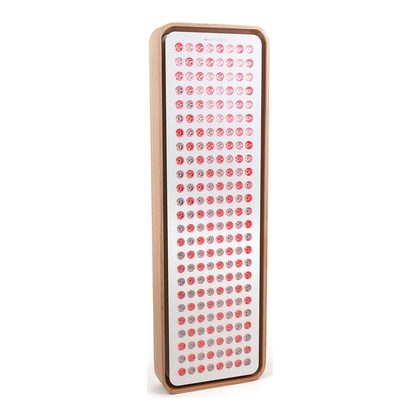
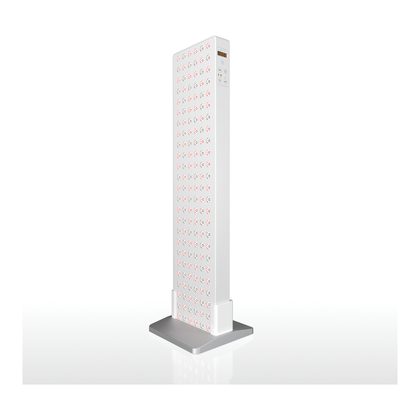
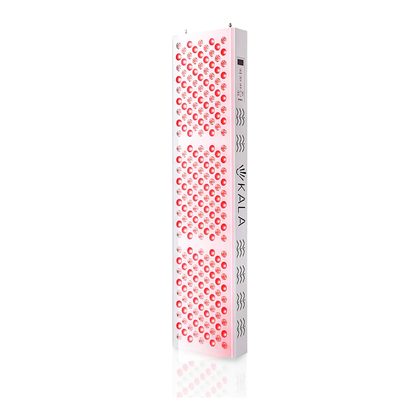
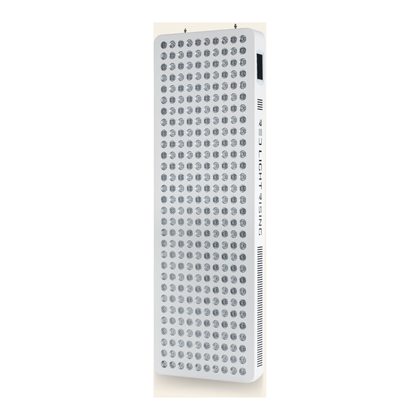
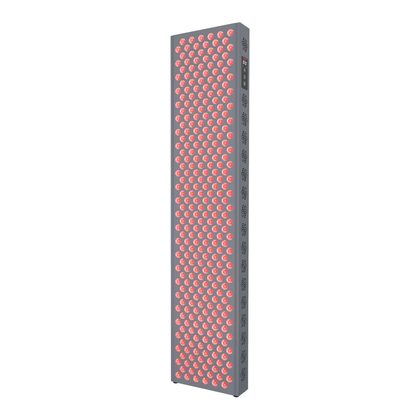
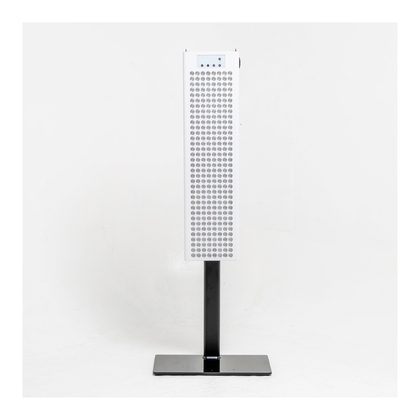
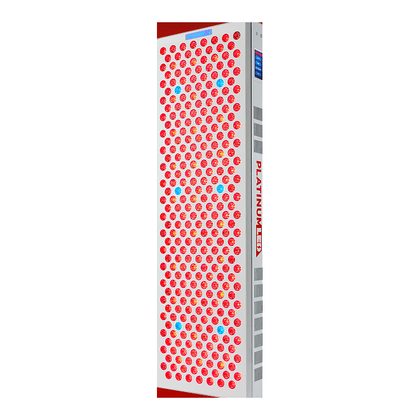
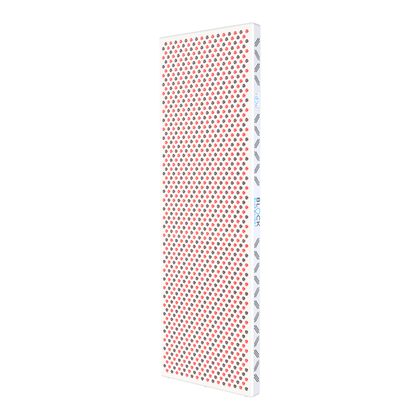
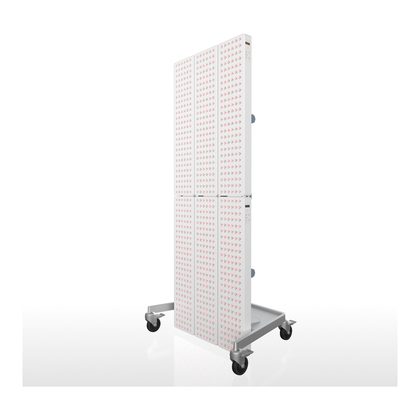
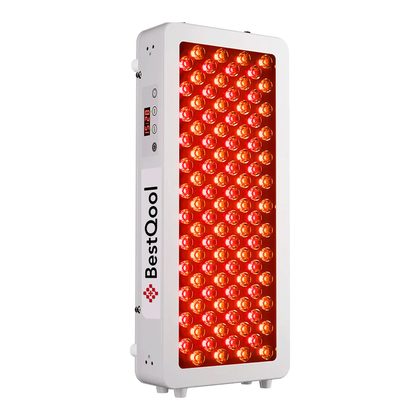
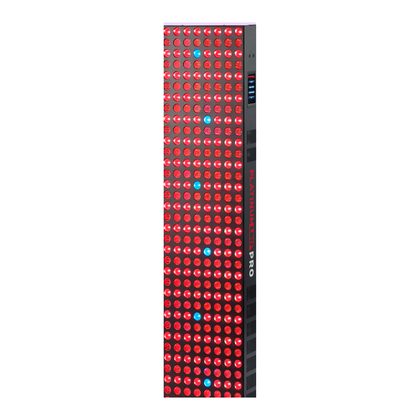
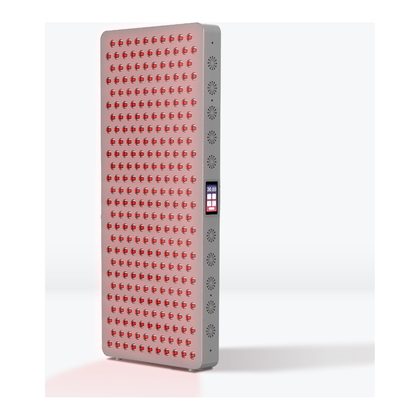
The Best Red Light Therapy Panels of 2026, Scored on Measured Output, Not Marketing
We compared 23 red light therapy panels, from $319 to $11,099, on how much light each delivers when someone other than the brand measures it, whether the wavelengths match the label, flicker and EMF, and how honest each brand is about its numbers.
Best overall:PlatinumLED BIOMAX 900 ($1,299, 9.1/10). A third-party tester measured 87 mW/cm² at 6 inches, in line with its own lab report (which covers only the center of the panel), and it has an ETL certificate and a Health Canada licence we verified.
Skip: panels whose only irradiance figure is a solar-meter reading or a number with no distance, and any “FDA Cleared” badge you can't find in FDA's database. 4 panels we scored measured under half of the figure we judge them against (the brand's spectrometer or lab figure where it publishes one) (see the gap).
One caveat: almost every independent measurement here comes from one tester, Light Therapy Insiders, who earns affiliate commissions from most of these brands; we flag that in every score.
Our #1 pick9.1/10
PlatinumLED BIOMAX 900
87 mW/cm² average at 6 inches, measured by a third-party tester[2], in line with the brand's own accredited-lab figure for the center of the panel (83.13)[33].
It's the only panel we found with an ETL safety certificate we could check[40], and it passed the tester's EMF check at 6 inches[6]. The catch: a 20% restocking fee on returns, and a “280 mW/cm²” solar-meter headline to ignore.
How we score:Measured Output 30%Wavelengths & Spectrum 15%Flicker & EMF 15%Proof & Honesty 15%Build & Safety 15%Coverage 10%Full methodology ↓
The Dr. Axe Red Light Score (0–10) is our editorial judgment, not a medical or safety grade. A panel that measures under half the figure we judge it against is capped at 6.0, flagged “Claim gap” and kept out of the top 10.
Know your light
What red and near-infrared light can (and can't) do
Red and near-infrared light work differently from sunlight or heat. The leading theory is simple: your cells' mitochondria, the tiny engines that make energy, absorb this light and make more energy (ATP)[108], though researchers still debate the details[109]. Here's what studies show so far, with the numbers, from the strongest evidence to the earliest.
Red light, 630–670 nmYou can see it. It's absorbed in the skin, so it's used for skin, collagen and hair[107].
Near-infrared, 810–850 nmInvisible. It travels deeper, into muscles and joints, which is why it's used for pain and recovery[107].
of severe mouth sores (oral mucositis) in people getting radiation for head-and-neck cancer, pooled from 30 trials with 1,748 patients. Severe mouth pain was 65% lower. Cancer-care guidelines (MASCC/ISOO) now recommend light therapy to prevent these sores during radiation and stem-cell transplants. It eases a hard side effect of treatment; it doesn't treat the cancer itself.
on a 0-to-100 pain scale than a placebo device for chronic neck pain, across 11 trials in a Lancet review (16 trials, 820 people). People were about 4 times as likely to report improvement, and relief lasted up to 22 weeks after treatment ended. Physicians' guidelines list low-level laser therapy as a first-line option for chronic low back pain; results for knee arthritis are mixed. Most trials used lasers.
more repetitions before muscles gave out when light was used on them before exercise, across 13 placebo-controlled trials, and about 4 seconds longer in exhaustion tests. A 2023 review of 16 trials (340 people) found faster recovery from muscle fatigue, though not more strength. The one trial of a whole-body light bed (12 trained men) found no change in muscle-damage markers.
of 30-minute whole-body red light sessions improved sleep-quality scores, raised blood melatonin (your sleep hormone) and improved a 12-minute run in 20 elite female basketball players, compared with teammates who got no light. It's one small study that wasn't blinded, so treat it as a promising early signal.
wrinkle volume around the eyes after 10 sessions of 660 nm red LED light over 4 weeks, in a trial of 137 women aged 40 to 65 (no untreated comparison side). In another trial of 136 people, red light twice a week for 30 sessions improved wrinkles, skin roughness and collagen density compared with people who got no treatment (maker-funded).
more hairs per square centimeter than a sham device, pooled from 37 studies of 3,298 people with pattern hair loss, and hair shafts grew thicker too. FDA has cleared laser caps and combs for hair loss since 2007. These are scalp devices used on a schedule, not wall panels.
better on an eye chart after about 2 years for people with dry macular degeneration using Valeda, an in-office device FDA authorized in 2024. FDA called the gain “of marginal clinical significance.” It's a clinic treatment, not a reason to shine a home panel into your eyes.
A 2024 military-funded research poster (not peer-reviewed) measured the Joovv Mini 3.0 at 33.95 mW/cm² vs 100 reported, and the BIOMAX 900 at 51.85 vs 153, at each maker's recommended distance. That's why we score the light a panel actually delivers, not what the box says.
MHSRS poster, 2024
Check before you buy
“FDA-registered” means the company filed paperwork, not that FDA reviewed the device[102]. A cleared device has a K-number you can look up, and it's cleared only for specific uses, such as wrinkles or temporary muscle-pain relief[50]. None of the panels we rated has one.
Three essentials, plus a fourth for EMF, flicker or travel.
1Essential
Set your distance, then your dose
Sit 6 to 12 inches away. On a full-size panel, output drops only about 15% between those distances, and about 25% on a small one[33][82]. Time the session from the dose: minutes = J/cm² × 1,000 ÷ mW/cm² ÷ 60. More isn't better: too much light blunts the effect[110].
Clothing blocks light, so treat clean, bare skin[67][84]. Skin and hair trials used 2 to 3 sessions a week[125][122], and a laser-therapy dosing group suggests every other day to daily for pain[112].
Wear the goggles in the box, especially with near-infrared on near your face. It's invisible, so your eyes won't squint or blink to protect themselves[142].
EMF and flicker: pick a panel that passed an independent EMF check at 6 inches[6], switch off Bluetooth, and skip low-frequency pulse modes if you have photosensitive epilepsy or flicker-triggered headaches: flashes at 3 Hz or more, especially saturated red, are a known seizure trigger[148], and flicker is linked to headaches[149].
Travel: a 7-lb tabletop panel like the MitoPRO 300X[45] or an FDA-cleared LED mask covers your face and small areas between full sessions.
Answer four questions. If nothing fits, we'll say so and show the closest option.
1What's your main goal?
2How much do you want to cover at once?
3Budget?
4Any special concern?
Compare the top 10
What each panel is proven to deliver
“Output” is the average at 6 inches in mW/cm²; “Vs. claim” is that measurement as a share of the brand's own figure.
Score = the Dr. Axe Red Light Score, 0–10. Measuring under half the figure we judge a brand against caps a score at 6.0. Full methodology ↓
Verified A certificate or licence we checked.Third-party tester (affiliate) Measured by someone the brand didn't hire (mostly Light Therapy Insiders, an affiliate).Maker's data The brand's own figure or commissioned lab.No data Nothing published.Fails or contradicts Measured high, under half the judged figure, or off label.
†Measured on an earlier generation of the same model. *Measured on the smaller BestQool Pro100. EMR-TEK's output comes from a lab it commissioned, at a single point under the center. Sunlighten's “vs. claim” uses the 6-inch figure the company gave us. “HC” = Health Canada licence. Area is one panel's face. Shaded rows are popular panels that missed our top 10.
Full reviews
The 10 best red light therapy panels, ranked
Each review lists the proof behind its key numbers and how it fits your sessions. One model per product line; siblings like the BIOMAX PRO Grande and MitoPRO 300X appear in the guides below.
1
$1,299Not a sale price. 60-day trial with a 20% restocking fee; stands aren't refundable.
The best-documented high-output panel we found. Light Therapy Insiders measured an average of 87 to 90.3 mW/cm² at 6 inches in three articles (we use the lowest), and PlatinumLED's own accredited-lab report found 83.13, so the independent number is in line with the brand's own lab report (which averaged only the central 6 × 6 inches). It's the only panel here with an ETL safety certificate we could actually see (to the IEC 60601 medical-electrical standards), it holds Health Canada licence 115549, it passed the tester's EMF check at 6 inches, and a 2024 military-funded research poster confirmed peaks at 634, 661, 810, 836 and 853 nm. The downsides: its headline “280 mW/cm²” is a solar-meter reading, more than three times what the lab measured; that same poster measured 51.85 mW/cm² at the maker's recommended distances against 153 reported; and PlatinumLED removed an FDA logo and “FDA approved” wording only after a 2025 TINA.org Ad Alert inquiry.
Best forHalf-body sessions for skin and recovery; buyers who want safety paperwork they can check
Skip ifYou want a no-cost return, or full-body coverage from one panel
Want more output? The BIOMAX PRO Ultra (#2) measured 101 mW/cm² for $300 more. Linking several BIOMAX panels? The tester found output drops 10–20% in multi-panel mode.
See score breakdown & sources
Measured Output9.5
Wavelengths & Spectrum9.5
Flicker & EMF7.0
Proof & Honesty10.0
Build & Safety10.0
Coverage7.7
Output scored at 6 inches from a third-party tester. Proof compares the measurement with the brand's own spectrometer or lab figure (83.13 mW/cm²): 105%.
Independent testerLight Therapy Insiders (Alex Fergus). The most powerful red light therapy panel (May 30, 2024); says solar meters read “two or three times higher.” Open source · [2]
Independent testerLight Therapy Insiders (Alex Fergus). PlatinumLED BIOMAX 900 review (July 8, 2024): 90.3 mW/cm² average at 6 in; about 186 W of light. Open source · [7]
Maker's dataLightLab International Allentown report LLIA002684-004 for PlatinumLED (June 2025): BIOMAX 900 average 83.13 mW/cm² at 6 in (red 42.68, near-infrared 38.77); 71.29 at 12 in. Open source · [33]
Certificate / licenceIntertek ETL Authorization to Mark, control no. 5008784: BIOMAX 900 and 600, to ANSI/AAMI ES60601-1, CSA C22.2 60601-1, IEC 60601-1-6 and IEC 60601-2-57. Open source · [40]
Certificate / licenceHealth Canada Class II Medical Device Licence 115549, “PlatinumLED Therapy Light” (amended June 25, 2026): BIOMAX 300–900 and PRO models. Open source · [41]
Independent testerLight Therapy Insiders (Alex Fergus). Top 12 lowest-EMF panels compared (Jan. 7, 2025): 12 of 17 passed at 6 in. Discloses: “I aim to be affiliated with all light therapy companies.” Open source · [6]
Public record / studyHollander ME, Hagen J, Givens M, et al. Spectroradiometric analyses of commercial photobiomodulation technologies. MHSRS 2024 poster (not peer-reviewed; hosted by ARRC LED, a bed maker in the study). Open source · [31]
Public record / studyTruth in Advertising (TINA.org). Ad Alert: PlatinumLED Red Light Therapy (May 27, 2025). Open source · [43]
Light for your money: $6.98 per watt of measured light how we figured itElectricity: about $11 a year at 20 min a dayCheck current priceWe may earn a commission.
9.1of 10
Red Light Score
2
$1,599Same 60-day trial and 20% restocking fee. The smaller PRO Grande ($1,299) has no independent test.
0–9,999 Hz[35]pulse control, or run it steady (maker)
The brightest home panel with an independent measurement. Light Therapy Insiders measured 101 mW/cm² on average at 6 inches (120 at its peak) and estimated 256 watts of light, and PlatinumLED's own LightLab report found 102.62 over the central 6 × 6 inches, a close match. It adds per-wavelength dimming, adjustable pulsing and a “zero-gap” edge for building a multi-panel wall. The tester found nearly 80% of the energy in the 660 and 850 nm channels; the blue and 1060 nm LEDs add little. It scores below the BIOMAX 900 because we found no ETL certificate for the PRO series and nobody has independently measured its flicker or EMF, and its headline “292 mW/cm²” is again a solar-meter figure. Health Canada licence 115549 covers the PRO models.
Best forRecovery and larger-area sessions where you want the shortest session time
Skip ifYou'd rather pay $300 less for about 85% of the output (BIOMAX 900)
Output scored at 6 inches from a third-party tester. Proof compares the measurement with the brand's own spectrometer or lab figure (102.62 mW/cm²): 98%.
Independent testerLight Therapy Insiders (Alex Fergus). BIOMAX PRO Ultra review (Aug. 21, 2025): 101 mW/cm² average at 6 in; 256 W; measured peaks. Open source · [8]
Independent testerLight Therapy Insiders (Alex Fergus). Best red light panel 2025 (BIOMAX PRO Ultra listed at 104; Rouge G4 at 59–60 and Block Blue Light Mega at 80 and 81 mW/cm²). Open source · [5]
Maker's dataLightLab International Allentown report LLIA002684-006 for PlatinumLED (tested June 9, 2025): BIOMAX PRO Ultra average 102.62 mW/cm² at 6 in, center 121.12; 772.6 W input on high. Open source · [36]
Maker's dataPlatinumLED. BIOMAX PRO series page (Ultra $1,599, Grande $1,299; “292” and “284 mW/cm²” solar power meter charts; 0–9,999 Hz pulse, “selectable flicker-free”; eye protection in the box). Open source · [35]
Maker's dataPlatinumLED. Certifications and testing page (ETL documents listed for BIOMAX 300–900 only). Open source · [39]
Certificate / licenceHealth Canada Class II Medical Device Licence 115549, “PlatinumLED Therapy Light” (amended June 25, 2026): BIOMAX 300–900 and PRO models. Open source · [41]
Public record / studyTruth in Advertising (TINA.org). Ad Alert: PlatinumLED Red Light Therapy (May 27, 2025). Open source · [43]
Light for your money: $6.25 per watt of measured light how we figured itElectricity: about $17 a year at 20 min a dayCheck current priceWe may earn a commission.
8.6of 10
Red Light Score
3
$1,299List price, not a sale. 60-day money-back with no restocking fee (tester).
Best for low EMF
Mito Red Light MitoPRO 1500X
6 wavelengths · 300 dual-chip lenses · Bluetooth you can switch off
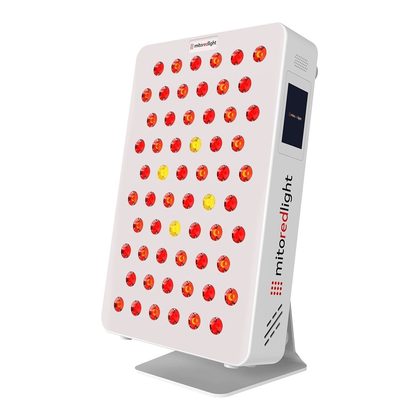
The clearest labels of any brand here, and one of the lowest-EMF panels the tester has checked. Mito prints two figures side by side and says which is which: “>160 mW/cm²” from a consumer solar meter and “>73” from a lab spectroradiometer. Light Therapy Insiders measured 68 on average at 6 inches (a later article says 75; we use the lower), which is 93% of the spectrometer figure. Mito's own ISO 17025 lab report is more conservative still, at 53.5 average and 72.5 peak, so even “>73” sits at the top of what its lab found. It passed the tester's EMF check, and he singled it out because the Bluetooth can be switched off entirely. It holds Health Canada licence 112946 and ships with goggles. Mito removed an FDA logo from its site after a 2023 TINA.org inquiry.
Best forBedrooms and home gyms where EMF matters; buyers who want a no-fee return window
Session timeAbout 2.5 to 5 minutes for 10–20 J/cm² at 6 in (68 mW/cm² measured)
Size & weight25 lb; door hook and steel hanging cables in the box
Power & noise445 W rated; 419 W at the wall (lab)
Warranty & returns3 years; 60-day money-back
Wavelengths: 590 · 630 · 660 · 810 · 830 · 850 nmFDA: Registered and listed (510(k)-exempt), not cleared
Mito's MitoPRO 300X ($449) measured 51.8 mW/cm² and is our pick for face and targeted use. FDA and Health Canada records list Shenzhen Sungrow as a maker of the MitoPRO X; the same company is FDA-listed for Block Blue Light and some Hooga panels.
See score breakdown & sources
Measured Output8.5
Wavelengths & Spectrum8.8
Flicker & EMF7.5
Proof & Honesty10.0
Build & Safety7.5
Coverage7.8
Output scored at 6 inches from a third-party tester. Proof compares the measurement with the brand's own spectrometer or lab figure (73 mW/cm²): 93%.
Independent testerLight Therapy Insiders (Alex Fergus). Best red light therapy panel 2024: 17 panels measured at 6 in (Feb. 12, 2024; updated July 11, 2026). Open source · [1]
Independent testerLight Therapy Insiders (Alex Fergus). Best red light therapy panels at home 2024–2025 (MitoPRO 1500X listed at 75 mW/cm²). Open source · [3]
Maker's dataMito Red Light. Independent test data (LightLab LLIA002765-006, Sept. 2025): 1500X average 53.5 mW/cm² at 6 in, 149.4 W of light; 300X 36.4 W. Open source · [46]
Maker's dataMito Red Light. MitoPRO X series page (prices, sizes, “>160” solar and “>73” spectroradiometer claims, goggles, warranty; “FDA Class II Registered”; site footer says “general wellness”). Open source · [45]
Independent testerLight Therapy Insiders (Alex Fergus). Top 12 lowest-EMF panels compared (Jan. 7, 2025): 12 of 17 passed at 6 in. Discloses: “I aim to be affiliated with all light therapy companies.” Open source · [6]
Certificate / licenceHealth Canada Medical Devices Active Licence Listing (checked Sept. 25, 2026): licences 112946 and 112653 (MitoPRO X series; 112653 held by Shenzhen Sungrow LED Technology) and 114898 (Kala Red Light Elite Panel). Open source · [42]
Public record / studyTruth in Advertising (TINA.org). Ad Alert: Mito Red Light removes FDA logo (Mar. 9, 2023). Open source · [44]
Light for your money: $8.60 per watt of measured light how we figured itElectricity: about $9 a year at 20 min a dayCheck current priceWe may earn a commission.
8.4of 10
Red Light Score
4
$1,499.9530-day returns; sale items are exchange or store credit only.
Strong measured output and a 5-year warranty, tied for the longest among our picks. Block Blue Light prints both a solar-meter figure (167 mW/cm²) and a “light spectrometer” figure (89), and says the solar number shouldn't be used for dosing. Light Therapy Insiders measured the Generation 5 Mega at 80 to 81 mW/cm² on average at 6 inches (we use 80), 90% of the spectrometer figure, and found no EMF. We take a point off because the Mega on sale today lists 590 and 1060 nm LEDs that the tested unit didn't have. One caution: the brand's own product data describes the red LEDs as both 650 and 660 nm. Like most panels here, it's FDA-registered and listed, not cleared.
Best forHalf-body sessions; buyers who value a long warranty
Skip ifYou want the exact model you buy to have been tested
Need full-body coverage from one panel? The Elite XL (62 × 16.5 in, $3,499.95) measured 77 mW/cm² in 2024; see the full-body guide below.
See score breakdown & sources
Measured Output8.3
Wavelengths & Spectrum8.8
Flicker & EMF7.5
Proof & Honesty9.0
Build & Safety6.5
Coverage7.8
Output scored at 6 inches from a third-party tester, with 1 point off because today's model differs optically from the tested unit (LED count, wavelengths or size). Proof compares the measurement with the brand's own spectrometer or lab figure (89 mW/cm²): 90%.
Independent testerLight Therapy Insiders (Alex Fergus). Block Blue Light Mega, Generation 5, review (July 16, 2025): 81 mW/cm² average at 6 in; 168.8 W; zero EMF. Open source · [10]
Independent testerLight Therapy Insiders (Alex Fergus). Best red light panel 2025 (BIOMAX PRO Ultra listed at 104; Rouge G4 at 59–60 and Block Blue Light Mega at 80 and 81 mW/cm²). Open source · [5]
Independent testerLight Therapy Insiders (Alex Fergus). Top 12 lowest-EMF panels compared (Jan. 7, 2025): 12 of 17 passed at 6 in. Discloses: “I aim to be affiliated with all light therapy companies.” Open source · [6]
Maker's dataBlock Blue Light. PowerPanel Mega page (167 solar / 89 spectrometer mW/cm²; 557 W draw; 5-year warranty). Open source · [55]
Maker's dataBlock Blue Light. Refund policy (30 days; sale items exchange or store credit only). Open source · [58]
Public record / studyFDA registration and listing, Shenzhen Sungrow LED Technology (reg. 3016171836): listed as manufacturer of BlockBlueLight panels, Hooga HG and ULTRA panels and MitoPRO X panels, under ILY (openFDA). Open source · [48]
Light for your money: $8.89 per watt of measured light how we figured itElectricity: about $12 a year at 20 min a dayCheck current priceWe may earn a commission.
One of the most powerful panels we scored. Light Therapy Insiders measured an average of about 97 mW/cm² at 6 inches across nine points (about 120 at its brightest spot), the second-highest independent reading we found after the BIOMAX PRO Ultra, with clean peaks at 660 and 850 nm and about 151 watts of light. Sunlighten told us its own figure is 97 mW/cm² at 6 inches, which matches the independent test, but its website still lists “200mW/cm²” with no distance, and that costs it a point on proof. The trade-offs: there's no timer or controls on the panel itself (just a switch on the back; you run sessions from the app or the included remote), its flicker and EMF haven't been independently measured, we found no safety certificate, and you get only 660 and 850 nm. Sunlighten's page lists goggles as optional (the tester's panel came with a pair), and every mount costs extra. The tester links to Sunlighten as an affiliate.
Best forHigh measured output at 6 inches in a wood-framed panel that fits a living space
Skip ifYou want controls and a timer on the panel, tested EMF, or more than two wavelengths
Treatment area35 × 11 in, about 385 sq in: roughly half the body per session
Session timeAbout 2 to 3.5 minutes for 10–20 J/cm² at 6 in (97 mW/cm² measured)
Size & weight35 × 11 × 2.76 in; 22 lb; wood frame; mounts extra (floor stand $149, door hanger $69, wall mounts $59–$79 on sale)
Power & noisePower input listed as “355” with no unit; about 151 W of light (tester); run from the app or remote
Warranty & returns3 years limited (residential); 30-day returns; goggles listed as optional
Wavelengths: 660 · 850 nm (peaks confirmed by the tester)FDA: No FDA claims on its page; we found no FDA listing under Sunlighten's name
Sunlighten's RED Light Therapy Mini-Panel costs $580 less; it hasn't been independently tested.
See score breakdown & sources
Measured Output9.9
Wavelengths & Spectrum9.5
Flicker & EMF4.0
Proof & Honesty9.0
Build & Safety6.0
Coverage7.5
Output scored at 6 inches from a third-party tester. Proof compares the measurement with the brand's own spectrometer or lab figure (97 mW/cm²): 100%.
Independent testerLight Therapy Insiders (Alex Fergus). Sunlighten red light therapy panel review (Sept. 24, 2026): about 97 mW/cm² average over 9 points and about 120 peak at 6 in; about 151 W of light; peaks near 660 and 850 nm; no controls or timer on the panel; no flicker or EMF figures; affiliate links to Sunlighten. Open source · [22]
Maker's dataSunlighten. Statement to DrAxe.com, Sept. 25, 2026 (97 mW/cm² average at 6 inches). (on file with DrAxe.com) · [76]
Maker's dataSunlighten. RED Light Therapy Panel page ($1,379 regular; $1,172.15 in a 15% sale through Sept. 27, 2026; “200mW/cm² of power” with no distance; 660 and 850 nm; 200 LEDs; 35 × 11 × 2.76 in; 22 lb; 3-year limited residential warranty; 30-day returns; goggles listed as optional; mounts sold separately). Open source · [75]
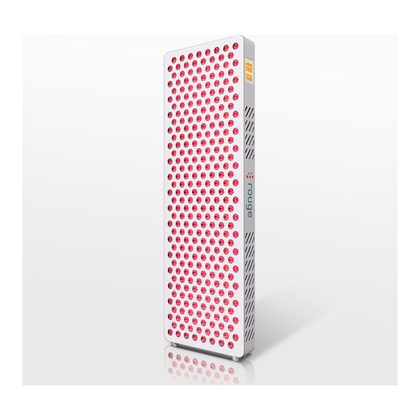
The most flexible panel here: eight wavelengths from 630 to 1060 nm, each with its own dimming and pulse control, at a sale price of $1,121. The tester confirmed peaks at 630, 650, 660, 670, 810, 830 and 850 nm, with rising output above 980 nm consistent with 1060. Output is moderate: 59.2 mW/cm² on average at 6 inches, 66% of Rouge's own “90 mW/cm² spectrometer” figure. Rouge's manual gives different numbers again (81 from a “laser meter”, 150.9 from a solar meter). The “third-party” report it links is an instrument printout that names no lab and lists “Shenzhen idea light” as the manufacturer; it claims 237.2 watts of light, against the tester's estimate of 134. Flicker and EMF haven't been measured on the G4.
Best forPeople who want to experiment with wavelengths and pulse settings
Skip ifYou want the most light per minute of session time
Session timeAbout 3 to 6 minutes for 10–20 J/cm² at 6 in (59.2 mW/cm² measured)
Size & weight24 lb (manual)
Power & noise480 W (maker); 47.5 dB (tester)
Warranty & returns3 years; 60 days, no restocking fee on panels (20% on stands); goggles in the box
Wavelengths: 630 · 650 · 660 · 670 · 810 · 830 · 850 · 1060 nmFDA: Listed through its contract makers (510(k)-exempt), not cleared
See score breakdown & sources
Measured Output7.9
Wavelengths & Spectrum9.5
Flicker & EMF5.0
Proof & Honesty7.0
Build & Safety6.5
Coverage7.8
Output scored at 6 inches from a third-party tester. Proof compares the measurement with the brand's own spectrometer or lab figure (90 mW/cm²): 66%.
Independent testerLight Therapy Insiders (Alex Fergus). Rouge Pro G4 review (July 23, 2025): 59.2 mW/cm² average at 6 in; 134 W; measured peaks. Open source · [13]
Maker's dataRouge. Pro G4 page ($1,121 sale, $1,495 list; “Solar Meter: 164” and “Spectrometer: 90 mW/cm²” at 6 in; 8 wavelengths; 288 × 5 W LEDs; 480 W; “No-flicker”). Open source · [59]
Maker's dataRouge. G4 series user manual (150.9 mW/cm² solar meter, 81 “laser meter” at 6 in; 11.1 kg). Open source · [60]
Maker's dataRouge. “Spectral Integrating Sphere Report”: EVERFINE HAAS-1200 printout dated Jan. 19, 2026, manufacturer “Shenzhen idea light,” no laboratory named; 237.2 W radiant flux at 479.4 W. Open source · [61]
Independent testerLight Therapy Insiders (Alex Fergus). Rouge red light therapy review (Feb. 2026): 3-year warranty; no restocking fee on panels, 20% on stands; criticism of solar-meter figures. Open source · [14]
Light for your money: $8.37 per watt of measured light how we figured itElectricity: about $11 a year at 20 min a dayCheck current priceWe may earn a commission.
7.4of 10
Red Light Score
7
$1,699Sale price (compare-at $1,799). 60-day returns; shipping costs are deducted.
High E-field[6]electric field flagged at 6 in; failed the tester's EMF roundup
$20/W[52][9]price per watt of light, the highest here (our calculation)
The best-known name in red light and a well-made panel, but you pay for the brand. The tester measured 59.2 mW/cm² on average at 6 inches, about 59% of Joovv's “>100 mW/cm²” claim (which gives no distance), and 84.9 watts of light, close to Joovv's own “up to 88 W” figure. Its peaks landed at 660.7 and 853.6 nm and it showed zero flicker. But it failed the tester's 2025 EMF roundup at 6 inches for a high electric field from an ungrounded plug; in his original review he measured 23 V/m (which his meter rated safe) and 1.5 µT (borderline) at 6 inches. Joovv suggests using it at 12 inches, where the field is within his limits. A 2024 military-funded research poster measured the smaller Joovv Mini 3.0 at 33.95 mW/cm² against 100 reported (its readings barely changed with distance, so treat them with caution). The tester's unit drew 390 W at the wall, more than today's 250 VA rating, so it may be an earlier revision; we flag that but don't deduct. Joovv says Intertek certified it, but we found no certificate, and the warranty is 2 years.
Best forJoovv's modular ecosystem; flicker-sensitive users who can sit 12 inches away
Skip ifValue, or EMF at close range, matters to you
Wavelengths: 660 · 850 nmFDA: Registered and listed (510(k)-exempt), not cleared
The Joovv Elite 3.0 ($11,099) is six Solo 3.0 modules in one frame, for full-body coverage; see the full-body guide below.
See score breakdown & sources
Measured Output7.9
Wavelengths & Spectrum9.5
Flicker & EMF6.5
Proof & Honesty6.0
Build & Safety5.5
Coverage7.1
Output scored at 6 inches from a third-party tester. Proof compares the measurement with its 100 mW/cm² claim: 59%.
Independent testerLight Therapy Insiders (Alex Fergus). Joovv Solo 3.0 review (republished Apr. 7, 2024): 59.2 mW/cm² average at 6 in; 84.9 W; 0 flicker; 23 V/m and 1.5 µT at 6 in; price per watt. Open source · [9]
Independent testerLight Therapy Insiders (Alex Fergus). Top 12 lowest-EMF panels compared (Jan. 7, 2025): 12 of 17 passed at 6 in. Discloses: “I aim to be affiliated with all light therapy companies.” Open source · [6]
Public record / studyHollander ME, Hagen J, Givens M, et al. Spectroradiometric analyses of commercial photobiomodulation technologies. MHSRS 2024 poster (not peer-reviewed; hosted by ARRC LED, a bed maker in the study). Open source · [31]
Maker's dataJoovv. Solo 3.0 product page ($1,699, compare-at $1,799; “> 100 mW/cm²” with no distance; 150 LEDs; 36 × 8.75 in; 250 VA; “up to 88 Watts” of light). Open source · [52]
Maker's dataJoovv. Warranty (2 years) and returns (60 days; shipping deducted). Open source · [53]
Light for your money: $20.01 per watt of measured light how we figured itElectricity: about $9 a year at 20 min a dayCheck current priceWe may earn a commission.
7.2of 10
Red Light Score
8
$1,349.99U.S. price without a stand ($1,449.99 to $1,749.99 with one).
High output, simple controls
Kala Red Light Elite Panel
660 + 850 nm · 231 LEDs · Canadian brand
82 mW/cm²[2]average at 6 in, 2024 unit (third-party tester)
High measured output in a simple two-wavelength panel. Light Therapy Insiders measured 82 to 84 mW/cm² at 6 inches in 2024 (we use 82), and it passed his EMF check. It holds Health Canada Class II licence 114898, which we verified, and goggles come in the box. But Kala shows an “FDA Cleared” badge on the Elite's page, and no FDA clearance covers the Elite: Kala's three clearances are for a face mask, a wand and the small handheld Kala Mini 2.0 (K251781, September 2025). That costs it 2 points on proof. The 161 mW/cm² claim is about twice what was measured. And the tester grouped his 2024 unit with panels of 200 to 230 LEDs about 7 to 7.5 inches across, while today's Elite has 231 LEDs and is 8.7 inches wide, so we take a point off output for the hardware change.
Best forStraightforward red and near-infrared sessions at high intensity
Skip ifMarketing honesty matters to you, or you want a 3-year warranty
Session timeAbout 2 to 4 minutes for 10–20 J/cm² at 6 in (82 mW/cm² measured)
Size & weight30 lb; hanging kit in the box
Power & noiseSold as “385W”; about 119 W of light (tester's estimate)
Warranty & returns2 years; 30-day money-back; goggles in the box
Wavelengths: 660 · 850 nmFDA: No clearance for this panel, despite the “FDA Cleared” badge; no FDA listing found
See score breakdown & sources
Measured Output8.4
Wavelengths & Spectrum8.0
Flicker & EMF7.0
Proof & Honesty4.0
Build & Safety6.5
Coverage7.0
Output scored at 6 inches from a third-party tester, with 1 point off because today's model differs optically from the tested unit (LED count, wavelengths or size). Proof compares the measurement with its 161 mW/cm² claim: 51%.
Independent testerLight Therapy Insiders (Alex Fergus). The most powerful red light therapy panel (May 30, 2024); says solar meters read “two or three times higher.” Open source · [2]
Independent testerLight Therapy Insiders (Alex Fergus). Best red light therapy panel 2024: 17 panels measured at 6 in (Feb. 12, 2024; updated July 11, 2026). Open source · [1]
Independent testerLight Therapy Insiders (Alex Fergus). Top 12 lowest-EMF panels compared (Jan. 7, 2025): 12 of 17 passed at 6 in. Discloses: “I aim to be affiliated with all light therapy companies.” Open source · [6]
Public record / studyopenFDA 510(k) search for Kala: K250581 (face mask, May 30, 2025), K250761 (wand, July 11, 2025), K251781 (Mini 2.0, Sept. 4, 2025). Open source · [51]
Public record / studyFDA 510(k) K251781: Kala Mini 2.0, Shenzhen Kaiyan (Sept. 4, 2025): heating and wrinkle indications; “Clinical testing was not needed.” Open source · [50]
Certificate / licenceHealth Canada Medical Devices Active Licence Listing (checked Sept. 25, 2026): licences 112946 and 112653 (MitoPRO X series; 112653 held by Shenzhen Sungrow LED Technology) and 114898 (Kala Red Light Elite Panel). Open source · [42]
No 830[64]peak in its own spectrum, though sold as 830 nm
Possibly the most intense panel here, but only a lab EMR-TEK commissioned has measured it. That LightLab report found 138.39 mW/cm² at 6 inches and 67.22 at 12 inches (single points under the center), and because EMR-TEK tells you not to use it closer than 12 inches, we score it at 12. No independent tester has measured it. Its labels don't match its own data: the product page lists 630/660/830 nm, the manual 630/670/830, and the lab spectrum shows peaks near 628, 654 and 861 nm with no distinct 830 peak. Its “>200 mW/cm² at 6 inches” and “1,400 mW/cm² at panel face” claims both exceed its own lab result. Returns are accepted only if the panel was never powered on.
Best forExperienced users who want intensity from 12 inches or farther
Skip ifYou want independent proof, published dimensions or an easy return
Session timeAbout 2.5 to 5 minutes for 10–20 J/cm² at 12 in (lab figure)
Size & weightNot published; metal-alloy housing
Power & noise584 W at the wall (lab); sold as “1,400W”
Warranty & returns2 years; 30 days, unused only; goggles in the box
Wavelengths: Sold as 630 · 660 (or 670) · 830 nm; lab peaks near 628 · 654 · 861 nmFDA: No FDA listing found; sold as a general wellness device
See score breakdown & sources
Measured Output7.0
Wavelengths & Spectrum6.0
Flicker & EMF5.0
Proof & Honesty8.0
Build & Safety5.5
Coverage5.0
Output scored at 12 inches from the maker-commissioned lab report (minus 1.5). Proof compares the measurement with its 200 mW/cm² claim, both at 6 in: 69%.
Maker's dataLightLab International Allentown report LLIA002148-001B for EMR-TEK (July 13, 2023): 138.39 mW/cm² at 6 in and 67.22 at 12 in, single point under center; 584.1 W. Open source · [63]
Maker's dataEMR-TEK. Distance spectral data from LightLab (peaks near 654 and 861 nm at 6 and 12 in; no distinct 830 nm peak) [our reading of its table]. Open source · [64]
Maker's dataEMR-TEK. LightLab integrating-sphere data LLIA002148-001A (July 17, 2023): about 180 W of light [our calculation; units not labeled in the file]. Open source · [65]
Maker's dataEMR-TEK. Inferno page, FAQ and manual (“>200 mW/cm²” at 6 in; “1,400 mW/cm² at panel face”; 12 in minimum; returns if unused). Open source · [62]
Light for your money: $9.42 per watt of measured light how we figured itElectricity: about $13 a year at 20 min a dayCheck current priceWe may earn a commission.
6.3of 10
Red Light Score
10
$589Refurbished $509. 30-day returns with a 20% restocking fee (tester).
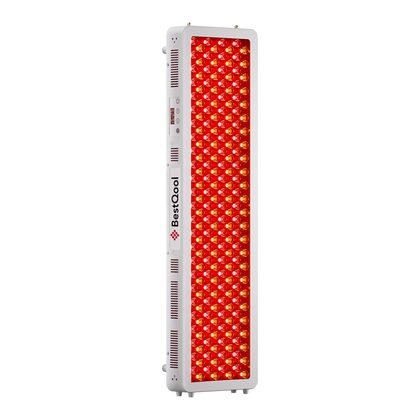
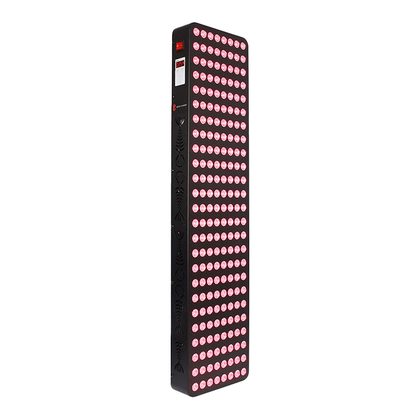
The least expensive half-body panel with independent data behind the product line. The tester measured the smaller Pro100 at 51.7 mW/cm² on average at 6 inches (57.4% of the 90 mW/cm² BestQool claimed for it), with peaks at 660 and 854 nm. We apply that to the Pro200 with a 1-point deduction, because the Pro200 is a larger sibling and today's panels add 630 and 940 nm chips. The tester also detected some flicker and a small EMF reading at 6 inches, and BestQool's page says its devices are made in “factories approved by FDA,” which isn't something FDA does; that costs it 1.5 points on proof. At about 50 mW/cm², a 10–20 J/cm² dose still takes only 3 to 6.5 minutes.
Session timeAbout 3 to 6.5 minutes for 10–20 J/cm² at 6 in (Pro100 data)
Size & weight13.2 lb
Power & noise340 W (maker); 43 dB (tester, Pro100)
Warranty & returns2 years, or 3 with the included card; 30 days with a 20% restocking fee
Wavelengths: 630 · 660 · 850 · 940 nmFDA: Listed through its maker (510(k)-exempt), not cleared
See score breakdown & sources
Measured Output6.2
Wavelengths & Spectrum8.8
Flicker & EMF4.0
Proof & Honesty4.5
Build & Safety6.5
Coverage7.1
Output scored at 6 inches from a third-party tester, with 1 point off because today's model differs optically from the tested unit (LED count, wavelengths or size). Proof compares the measurement with its 90 mW/cm² claim: 57%.
Independent testerLight Therapy Insiders (Alex Fergus). BestQool Pro100 review (Jan. 29, 2025): 51.7 mW/cm² average at 6 in vs 90 claimed; some flicker and EMF. Open source · [20]
Maker's dataBestQool. Pro200 page ($589; 4 wavelengths; 340 W; “factories approved by FDA”; 2-year warranty, 3 with card). Open source · [66]
Maker's dataBestQool. Pro100 page ($319; FAQ: “clothing could block light penetration”). Open source · [67]
Light for your money: no total-output measurementsee value chartElectricity: about $8 a year at 20 min a dayCheck current priceWe may earn a commission.
6.1of 10
Red Light Score
Value
What you pay for the light you actually get
Panels have no filters or bulbs to replace, so the price is nearly the whole cost. The fairest comparison is dollars per watt of red and near-infrared light the panel actually puts out, the same value measure the tester uses[9]. The “1,500W” on the box is an LED rating, not light.
Light output estimated by the third-party testerFrom a maker-commissioned lab's integrating sphereShorter bar = more light per dollar
BIOMAX PRO Ultra#2 · $1,599$6.25per watt of light$1,599 ÷ 256 W of light (tester's estimate)[8] · Box says: 389 W low / 793 W high power setting
PlatinumLED BIOMAX 900#1 · $1,299$6.98per watt of light$1,299 ÷ 186 W of light (tester's estimate)[7] · Box says: Sold on 380 W / 490 W power draw
BIOMAX PRO Grande$1,299$7.69per watt of light$1,299 ÷ 169 W of light (maker-commissioned lab sphere)[38] · Box says: 279 W low / 509 W high
Hooga PRO1500$1,199$7.99per watt of light$1,199 ÷ 150 W of light (tester's estimate)[15] · Box says: Sold as “rated 1500W”; 530 W consumption
Rouge Pro G4#6 · $1,121$8.37per watt of light$1,121 ÷ 134 W of light (tester's estimate)[13] · Box says: 288 × 5 W LEDs; 480 W draw (maker)
Block Blue Light Elite XL$3,499.95$8.43per watt of light$3,499.95 ÷ 415 W of light (tester's estimate)[11] · Box says: Sold as “3,600W” LED class; 1,317 W draw
MitoPRO 1500X#3 · $1,299$8.60per watt of light$1,299 ÷ 151 W of light (tester's estimate)[4] · Box says: Sold on 445 W power draw
Block Blue Light Mega#4 · $1,499.95$8.89per watt of light$1,499.95 ÷ 168.8 W of light (tester's estimate)[10] · Box says: Sold as “1500W” LED power class; 557 W draw
Sunlighten RED Panel#5 · $1,379$9.13per watt of light$1,379 ÷ 151 W of light (tester's estimate)[22] · Box says: Sold as “200mW/cm²” with no distance; power input listed as “355” (no unit)
EMR-TEK Inferno#9 · $1,699.99$9.42per watt of light$1,699.99 ÷ 180.4 W of light (maker-commissioned lab sphere)[65] · Box says: Sold as “1,400W”; 584 W at the wall (lab)
BestQool Pro100$319$9.82per watt of light$319 ÷ 32.5 W of light (tester's estimate)[20] · Box says: 170 W (maker)
Hooga ULTRA1500$1,399$10.06per watt of light$1,399 ÷ 139 W of light (tester's estimate)[16] · Box says: Sold as “rated 1500W”; 525 W or 478.5 W, depending on the page
Kala Elite#8 · $1,349.99$11.34per watt of light$1,349.99 ÷ 119 W of light (tester's estimate)[2] · Box says: Sold as “385W (231×5W)”
Red Light Rising Advantage 900$2,299.99 (sold out in the U.S.)$14.11per watt of light$2,299.99 ÷ 163 W of light (tester's estimate)[17] · Box says: Sold as “Rated 900W, Real power 430W”
MitoPRO 300X$449$14.72per watt of light$449 ÷ 30.5 W of light (tester's estimate)[18] · Box says: 125 W (maker)
Joovv Solo 3.0#7 · $1,699$20.01per watt of light$1,699 ÷ 84.9 W of light (tester's estimate)[9] · Box says: Sold as “up to 88 Watts” of light, which the tester's 84.9 W supports
Price per watt = today's price ÷ watts of light emitted. The tester estimates total light from his 9-point average and the panel's LED area; where the brand's accredited lab also measured it in an integrating sphere, the two agree within about 6% for the MitoPRO 1500X (151 vs 149.4 W) and BIOMAX 900 (186 vs about 176.5 W), but differ by about 16% for the MitoPRO 300X (30.5 vs 36.4 W)[4][46][7][34][18]. No total-output measurement for: BestQool Pro200, LightpathLED Diesel Gen3, Block Blue Light Ultimate XXL, Joovv Elite 3.0, RedRush 840 Pulse, Bon Charge Max. Electricity is small: at 20 minutes a day, our top 10 use about $8 (BestQool Pro200) to $17 (BIOMAX PRO Ultra) a year at 18.31¢/kWh[115].
Claims, measured
What brands claim vs. what testers measure
Each row shows a brand's headline irradiance (hollow ring), its own measured figure at a stated distance if it gives one (diamond) and what was actually measured (filled dot). The percentage is the measurement as a share of the figure we judge against; under half (left of the dashed line) is a claim gap.
Advertised vs. measured irradiance
Headline claimBrand's own measured figureThird-party tester (6 in unless noted)2024 research posterMaker-commissioned labHalf of the judged figure
050100150200250300mW/cm²
Panels in our top 10
#2BIOMAX PRO Ultra[8][36]Solar headline; own lab 102.62 (center 6 × 6 in)98%101 of 102.62
#1PlatinumLED BIOMAX 900[2][33]Solar headline; own lab 83.13 (center 6 × 6 in)105%87 of 83.13
#5Sunlighten RED Panel[22][75][76]“200” with no distance; own 6-in figure 97 (company statement)100%97 of 97
#3MitoPRO 1500X[1][45]Prints both, labeled93%68 of 73
#4Block Blue Light Mega[10][55]Prints both; Gen 5 tested90%80 of 89
#9EMR-TEK Inferno[63][62]Maker-commissioned lab, single center point69%138.39 of 200
#6Rouge Pro G4[13][59]Prints both; manual differs66%59.2 of 90
#7Joovv Solo 3.0[9][52]“>100”, no distance59.2%59.2 of 100
#10BestQool Pro200[20]Pro100 tested57.4%51.7 of 90
#8Kala Elite[2][49]Instrument not stated50.9%82 of 161
Other panels
LightpathLED Diesel Gen3[28]Earlier model; second tester, both at 12 in61%45.34 of 74
Red Light Rising Advantage 900[17][72]In-house spectrometer claim87%75 of 86.4
Block Blue Light Elite XL[11][56]Prints both86%77 of 90
Hooga PRO1500[15][68]Instrument not stated45.5%86 of 189
Hooga ULTRA1500[16][69]Instrument not stated49.5%81.7 of 165
RedRush 840 Pulse[1][71]Instrument not stated47.5%76 of 160
Bon Charge Max[1][79]Predecessor tested; no distance21.8%31 of 142
2024 research poster (maker-recommended distances)
PlatinumLED BIOMAX 900[31]Maker-recommended distance33.9%51.85 of 153
Joovv Mini 3.0[31]Smaller sibling of the Solo34.0%33.95 of 100
When a brand's headline is a solar-meter reading or gives no distance, we judge the cap against the brand's own measured figure at a stated distance where one exists. The figure we judge the claim gap against can come from the brand's product page, a linked lab report, or an on-the-record statement from the company giving a distance; we cite it and ask the brand to publish it. When we judge against that figure instead of the headline, an inflated or distance-free headline still costs 1 point on proof. Sunlighten's 97 comes from a statement the company gave us[76]. PlatinumLED is judged against its linked LightLab reports, which average only the central 6 × 6 inches of the panel[33][36]. Almost all panel measurements come from one tester, Light Therapy Insiders, who is paid as an affiliate by most of these brands[6]. The 2024 poster used a NIST-traceable spectroradiometer at each maker's recommended distance, not 6 inches, so its rows aren't directly comparable[31].
Dose, measured
How long a session really takes
Dose is irradiance times time: minutes = J/cm² × 1,000 ÷ mW/cm² ÷ 60. A brighter panel doesn't do more; it gets you to the same dose sooner. These times use each panel's measured output, not its advertised number.
Minutes to deliver a typical dose
Skin dose, 10–20 J/cm²50 J/cm², the high end suggested for deeper tissue
05101520253035minutes
#1PlatinumLED BIOMAX 90087 mW/cm² at 6 in1.9–3.8min, skin dose
#2BIOMAX PRO Ultra101 mW/cm² at 6 in1.7–3.3min, skin dose
#3MitoPRO 1500X68 mW/cm² at 6 in2.5–4.9min, skin dose
#4Block Blue Light Mega80 mW/cm² at 6 in2.1–4.2min, skin dose
#5Sunlighten RED Panel97 mW/cm² at 6 in1.7–3.4min, skin dose
#6Rouge Pro G459.2 mW/cm² at 6 in2.8–5.6min, skin dose
#7Joovv Solo 3.059.2 mW/cm² at 6 in2.8–5.6min, skin dose
#8Kala Elite82 mW/cm² at 6 in2.0–4.1min, skin dose
#9EMR-TEK Inferno67.22 mW/cm² at 12 in (maker's lab)2.5–5.0min, skin dose
#10BestQool Pro20051.7 mW/cm² at 6 in (Pro100)3.2–6.4min, skin dose
For comparison
MitoPRO 300X51.8 mW/cm² at 6 in · tabletop3.2–6.4min, skin dose
Omnilux Contour (mask)About 26.7 mW/cm² on the face · FDA-cleared6.2–12.5min, skin dose
Dose basis: a skin trial used about 9 J/cm² of red light per session[125], and FDA-cleared wrinkle masks deliver about 18 J/cm² per 10-minute session[96][97]. For deeper tissue, a review notes some groups recommend 4 to 10 J/cm² at the target and others up to 50 J/cm² at the skin surface[111]. Two cautions: double the power for half the time isn't always the same biologically, and too much light can blunt the effect[110]. EMR-TEK is shown at 12 inches because its maker says not to sit closer.
How we score: the Dr. Axe Red Light Score™
Most reviews rank red light panels on LED counts, “wattage” and the brand's own irradiance numbers. Ours starts with what someone other than the brand measured: how much light reaches you at 6 inches, at which wavelengths, with how much flicker and EMF, and how that compares with what the brand promised. It's an editorial assessment built from independent tests, lab reports and public records, not our own lab testing and not a medical or safety grade. Price isn't part of the score; we show it in each review and in the value chart.
Measured Output30%
Average irradiance at 6 inches from an independent spectroradiometer test. A maker-commissioned lab report alone scores 1.5 lower; a solar-meter claim counts as no data.
Wavelengths & Spectrum15%
Red and near-infrared with 660 and 850 nm present scores 8; a measured spectrum that confirms the label adds 1.5. Extra wavelengths are neutral.
Flicker & EMF15%
Flicker and EMF at treatment distance: both measured low scores 10, one measured low 7.5, maker claims only 5, both measured high 3.
Proof & Honesty15%
Measured output as a share of the brand's own claim (80% or more scores 10, under half 3), plus or minus for lab reports, inflated or distance-free headlines and FDA claims.
Build & Safety15%
Starts at 5, with points for a verified ETL or UL certificate, a Health Canada licence, a 3-year warranty, goggles in the box and eye-safety testing.
Coverage10%
One panel's treatment area: under 100 sq in scores 4, about 300 sq in 7, and 800 sq in or more 10.
Measured beats marketed. We score the average irradiance at 6 inches from an independent spectroradiometer test. If the same tester printed different numbers for the same model, we use the lowest; rounding differences under 1 mW/cm² are ignored. A maker-commissioned lab report alone scores 1.5 points lower, and a solar-meter figure counts as no data. If the current model's specs show an optical hardware change from the tested unit (LED count, wavelengths or size), we take 1 point off output; where we can't tell, we flag it without a deduction. If a maker says not to sit closer than 12 inches, we score it at 12.
The claim-gap cap. A panel that measures under half the brand's claim is capped at 6.0 and flagged “Claim gap,” and a panel with that flag can't be in the top 10. When a brand's headline is a solar-meter reading or gives no distance, we judge the cap against the brand's own measured figure at a stated distance where one exists. The figure we judge the claim gap against can come from the brand's product page, a linked lab report, or an on-the-record statement from the company giving a distance; we cite it and ask the brand to publish it. When we judge against that figure instead of the headline, an inflated or distance-free headline still costs 1 point on proof. PlatinumLED is judged against its linked LightLab reports, which average only the central 6 × 6 inches of the panel, while the tester averaged nine points across the whole face.
Proof and honesty. Measured-to-claimed ratio sets the base (80% or more 10; 65–80% 8; 50–65% 6; under 50% 3; capped at 8 when only a maker-commissioned lab measured it). Posting an accredited-lab spectrometer report and labeling each figure adds 1 (an in-house one, 0.5). An inflated or distance-free headline costs 1 when we judge against another figure. FDA wording on the current, visible product page that implies approval or clearance the device doesn't have (“FDA approved,” an FDA logo, “factories approved by FDA”) costs 1.5, and an “FDA Cleared” badge on an uncleared device costs 2 (the larger applies, not both). We don't penalize FDA wording a brand has already corrected, or “FDA registered” and “Class II registered,” which describe paperwork, not an FDA review.
Wavelengths and EMF. Covering red and near-infrared with 660 and 850 nm scores 8; both bands without them 7; one band 6. A measured spectrum that matches adds 1.5 (0.75 if only on a sibling or in part); one that contradicts the label costs 1. Flicker and EMF each score 5 if measured low, 2.5 for a maker claim, 2 if unstated or slightly over the tester's limit, and 1.5 if measured high.
Not rated, and who's eligible. A panel with no independent measurement and no maker spectrometer data isn't rated. Only home panels you can buy in the U.S. today, with no claim-gap flag, can make the top 10, and panels that tie at one decimal are ranked by their unrounded score; masks, wands and beds get their own section. Coverage scores one panel's face, since nearly every brand will sell you a second one.
One caveat applies to every score: nearly all independent panel measurements come from a single tester, Alex Fergus of Light Therapy Insiders, using a Hopoo spectroradiometer on a 9-point grid[23][2]. He says he aims to be an affiliate of every light therapy company[6], and another comparison site, LightTherapyIQ, simply reuses his numbers[27]. The only other independent source is a 2024 military research poster[31], which we use where it applies.
Why we ignore solar-meter and wattage numbers
Red light panels are sold on big numbers: irradiance, watts and FDA status. Most of those numbers can't tell you how much light reaches your skin. That's our dividing line: we score only what a spectroradiometer measured at a stated distance.
Solar-meter readings
Solar meters are made for sunlight: the popular TES-1333's accuracy is specified “in sunlight”[114], and photodiode meters misread narrow-band light depending on its wavelength[113]. The tester and Mito both put the over-read at roughly 2 to 3 times[2][46].
“1,500W” on the box
That's usually the LED count times each LED's nominal rating. Block Blue Light's “1500W” Mega draws 557 W from the wall[55], and the tester estimated about 169 W of actual light[10].
Numbers with no distance
Irradiance falls with distance, so a figure without one can't be compared. Joovv and Bon Charge give none[52][79]; Lumebox's 140 mW/cm² is at 1 cm[92]; EMR-TEK quotes 1,400 mW/cm² “at panel face”[62].
“FDA registered”
Registration “does not in any way denote approval” of a company or its products, and suggesting otherwise is misbranding[102]. The heating-lamp category most panels list under is exempt from FDA review altogether[103][47].
What to do: look for an average irradiance at a stated distance, measured with a spectroradiometer, ideally by someone the brand doesn't pay. If a page shows only a solar-meter figure, a wattage or a number with no distance, treat it as marketing.
Does red light therapy work? What the evidence shows
For a few uses, the evidence is solid. For most, it's early. And nearly every strong trial used lasers or clinic devices at set doses, not a consumer panel; a 2026 dermatology review found that marketing “frequently exaggerate[s] the speed, magnitude, and durability” of the benefits[141]. Here's how we'd grade it:
Risk of severe mouth sores in head-and-neck cancer patients across 30 trials (1,748 people), with severe mouth pain 65% lower; cancer-care guidelines recommend clinician-applied light to prevent these sores. The trials were small and often at high risk of bias.
Hair density vs sham after 20+ weeks across 38 studies (3,098 patients); dozens of caps and combs are FDA-cleared. Results vary widely between studies.
Pain on a 100-mm scale vs placebo in chronic neck pain, in a review of 16 laser trials (820 people). A physicians' guideline lists it for chronic low back pain, on low-quality evidence.
Periocular wrinkle volume after 10 red-LED sessions in 137 women; a 76-person sham-controlled split-face trial found up to 36% fewer wrinkles vs baseline. Small, often industry-funded trials, and the two largest had no sham.
More repetitions vs placebo when light is applied before exercise (13 trials). A 2023 review found faster fatigue recovery but no strength gain, and a whole-body light bed didn't speed recovery in 12 trained men.
Total inches off waist, hips and thighs after 2 weeks of a 635 nm laser (67 people), vs −0.7 with sham. It measures circumference, not fat or weight, and 2 weeks later the treated group had regained 0.31 in.
Lasers Surg Med, 2009
The mitochondria story is plausible and well studied in the lab: light absorbed by cytochrome c oxidase appears to free up nitric oxide and increase ATP production[108], but some researchers say that step hasn't been reliably shown[109]. A 2025 dermatology consensus called light therapy safe for adults and effective for pattern hair loss, wound ulcers and peripheral neuropathy[140]. Sleep rests on one 20-person study with no light for the comparison group[136], and FDA called the one authorized eye device's benefit marginal and noted a higher rate of progression to wet AMD in the treated group[137]; a 2025 meta-analysis found no significant vision benefit[139].
How to read a red light panel's specs
Irradiance only means something with a distance and an instrument[113]. Dose is irradiance times time[107]. Flicker guidance comes from the IEEE's LED standard[149], and magnetic fields drop off quickly with distance[151]; the general-public limit at mains frequency is 200 µT[150], far above the 0.16 to 1.5 µT testers report at 6 inches[15][9].
Spec
What it tells you
Where to check it
Irradiance (mW/cm²)
Light power landing on each square centimeter. Meaningless without a distance and an instrument.
An independent spectroradiometer test at a stated distance
Dose (J/cm²)
Irradiance × seconds ÷ 1,000. Sixty mW/cm² for 5 minutes is 18 J/cm².
Do the math with the measured number
Solar-meter figure
A broadband meter calibrated for sunlight. Reads roughly 2 to 3 times high on LEDs.
Ignore it for dosing
Watts (“1,500W”)
Usually LED count × nominal rating. Compare wall draw and light output instead.
Spec sheet vs. tester's total-output estimate
Wavelengths
630–670 nm red for skin; 810–850 nm near-infrared for deeper tissue. Peaks can be off by 10 nm or more.
A measured spectrum
Flicker (%)
How much the light pulses. At 120 Hz, under 10% is low risk and under 4% shows no observable effect.
IEEE 1789; a tester's flicker meter
EMF at 6 in (µT, V/m)
Magnetic and electric fields from the driver and power cord. They fall off quickly with distance.
A tester's meter at your treatment distance
FDA status
Registered and listed = paperwork only. 510(k) cleared = similar to an existing device, for specific uses. De Novo = a new type, authorized.
FDA's 510(k) database
Safety certificates
An ETL or UL mark with a control number; a Health Canada licence number; an IEC 62471 eye-safety risk group.
The certificate itself, or Health Canada's licence list
More picks by category
Best red light panels for full-body coverage
The full-body panels we scored cover 1,000 to 1,900 square inches from one frame; the alternative is two standard panels side by side. Either way, check the measured output, not the LED count.
1
Block Blue Light PowerPanel Elite XL$3,499.95
Full body from one 62 × 16.5 in panel. The tester measured 77 mW/cm² at 6 in in 2024 (86% of the 90 mW/cm² spectrometer figure) and about 415 watts of light; today's “Generation 6” version adds 590 and 1060 nm, so we deduct a point. 5-year warranty.[11][56]
7.8/10
2
Block Blue Light Ultimate XXL$4,499.95
The biggest panel we scored: 71 × 24 in, 1,200 LEDs, 89 lb. The tester measured 75 mW/cm² at 6 in in 2025, 83% of the spectrometer figure; the current page adds 590 and 1060 nm, so we deduct a point.[12][57]
7.8/10
3
Joovv Elite 3.0$11,099
Six Solo 3.0 modules in one 72 × 26.25 in frame (1,890 sq in). Scored on the tester's single-module data with a 1-point deduction; the assembled Elite hasn't been tested.[54][9]
Two BIOMAX 900s cost $2,598. PlatinumLED sells multi-panel mounts, but the tester found output drops 10–20% in multi-panel mode[7]. Mito sells two-panel arrays from $1,948[45].
Option
Best red light panels for low EMF and flicker
The first five passed an independent EMF check at 6 inches[6], and the MitoPRO X lets you switch Bluetooth off entirely. None of them has an independent flicker measurement; the only panels that do are the Joovv Solo 3.0 (0%, below) and the Hooga PRO1500 (no flicker, but a claim gap)[9][15].
A 9.5 × 14.5 in tabletop panel. The tester measured 51.8 mW/cm² at 6 in (93% of Mito's “>56” spectrometer figure), confirmed all six wavelengths and found minimal EMF; Mito's own lab measured 38.2. Goggles and a tabletop stand are in the box.[18][46]
Best red light panels for face, targeted use and budgets under $700
For your face, a joint or one area at a time, a small panel is enough. For a full face routine at lower cost, see the FDA-cleared masks below.
1
Mito Red Light MitoPRO 300X$449
A 9.5 × 14.5 in tabletop panel. The tester measured 51.8 mW/cm² at 6 in (93% of Mito's “>56” spectrometer figure), confirmed all six wavelengths and found minimal EMF; Mito's own lab measured 38.2. Goggles and a tabletop stand are in the box.[18][46]
The tested model, at 19.7 × 8.4 in. The tester's unit was the older 660/850 nm version; today's adds 630 and 940 nm chips, so we deduct a point. Some flicker detected.[20][67]
5.9/10
Other panels we scored
Good panels that missed the top 10: not sold in the U.S. right now, a sibling of a top-10 pick, or a score just below #10.
1
Red Light Rising Advantage 900$2,299.99 (sold out in the U.S.)
Would rank #4 on score, but it was sold out on the brand's U.S. store on Sept. 25 ($2,299.99; £1,725 in the U.K.). The tester measured 75 mW/cm² at 6 in, 87% of the brand's own in-house spectrometer figure, which has since risen from 77.6 to 86.4. 3-year warranty and a 365-day trial.[17][72]
8.1/10
2
PlatinumLED BIOMAX PRO Grande$1,299
Scored on PlatinumLED's own LightLab report only (84.15 mW/cm² average at 6 in); no independent test. The lab's sphere data show slightly less light than the BIOMAX 900, not the “50% more” the page claims for the PRO series.[37][38]
7.5/10
3
LightpathLED Diesel Gen3$1,624
Scored 6.0, just outside our top 10. Light Therapy Insiders measured the previous Diesel Shortie XL at 54 mW/cm² at 6 in, and a second tester measured 45.34 at 12 in, 61% of the 74 claimed at that distance. The Gen3 has more LEDs (322 vs 273) and different wavelengths (670, 810 and 940 nm), so we deduct a point. Its 34.1 × 14.6 in face is wider than any top-10 panel, with a 5-year warranty and 60-day returns with no restocking fee.[21][28][73][74]
6.0/10
Masks, wands and full-body beds
These are different tools, so we don't give them a panel score. Several masks and wands hold real FDA clearances, but only for specific uses such as full-face wrinkles or acne, and at a fraction of a panel's intensity. Beds cost as much as a car, and the one independent research poster that measured them found output from 6% to 77% of what was reported.
·
Omnilux Contour Face$395
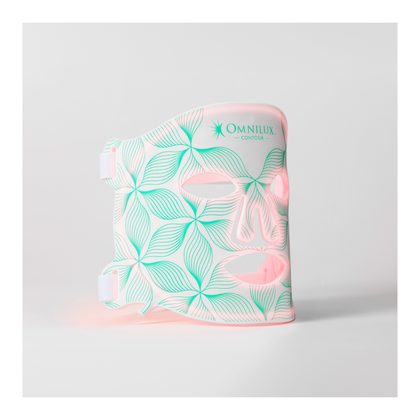
Listed under an FDA clearance for full-face wrinkles[95]. The tester measured about 16 J/cm² per 10-minute session, roughly 26.7 mW/cm², close to the ~30 Omnilux states[24][84].
Cleared
·
CurrentBody Skin LED Mask Series 2$469.99
Cleared for full-face wrinkles; its 510(k) summary gives 30 mW/cm² and 18 J/cm² per 10 minutes[96]. The tester measured 18.5 mW/cm², 62% of that[25][85].
Cleared
·
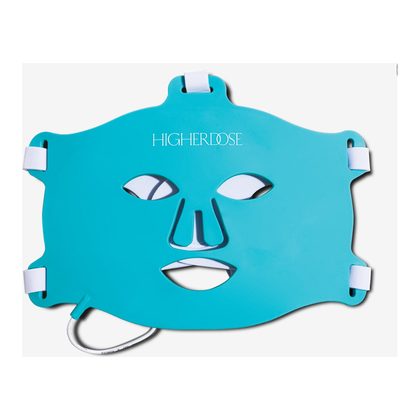
HigherDOSE Red Light Face Mask$349
Cleared for full-face wrinkles at 30 mW/cm² in its 510(k) summary[97], but the website says 50[86]. The tester measured about 26, half the website figure[26].
Cleared
·
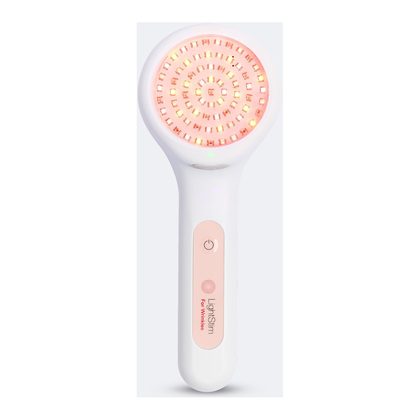
LightStim for Wrinkles (wand)$269
A handheld wand whose current model was cleared for wrinkles in July 2026, at 21.6 mW/cm² per its 510(k) summary[99][87]; earlier versions have been cleared since 2010[98]. No independent measurement yet.
Cleared
·
Bon Charge Mini (handheld)$299
Sold as “>100 mW/cm²” with no distance[80]. The tester measured its predecessor, the BLUblox Hive Mini, at 7.5 mW/cm² at 6 inches[23].
Listed
·
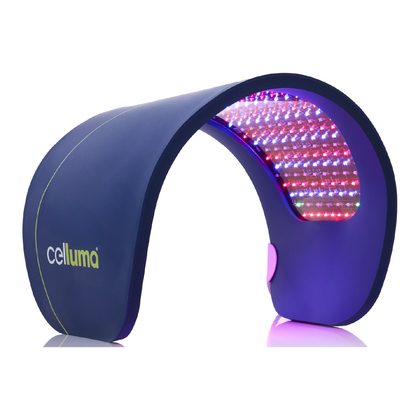
Celluma PRO (flexible pad)$1,795
A flexible pad used against the skin[83], listed with FDA under a Celluma clearance for pain, acne and wrinkles around the eyes[93]. It's low-intensity by design: 6.5 mW/cm² in one clearance summary[94], so our panel score doesn't fit it.
Cleared
·
NovoTHOR XL (whole-body pod)$120,000 (dealer)
The closest of the poster's three beds to its reported output: 23.24 mW/cm² measured vs 30 reported (77%)[31]. Listed with FDA, not cleared[47]; dealer price[88].
Listed
·
TheraLight 360 (bed)Price on request
The same poster measured 7.42 mW/cm² vs 120 reported, 6% of the claim[31]. Marketed as “FDA Registered”[90].
Claim gap
·
Prism Light Pod (bed)$95,995 (dealer)
“360° coverage at 100 mW/cm²” is the maker's claim; we found no independent measurement[89].
Not rated
·
LightStim LED Bed$40,000
One of the few beds with an actual 510(k) clearance, under the infrared heating-lamp code (ILY)[100].
Cleared
What about “FDA-cleared” claims?
FDA status is the most misused phrase in red light marketing. Here's what the records show.
Registered isn't clearedEvery panel we rated is at most “registered and listed”: the company told FDA it exists and what it sells[47]. Most list under a heating-lamp code that is exempt from premarket review[103]. FDA says registration “does not in any way denote approval” and that suggesting otherwise is misbranding[102], and it doesn't issue registration certificates at all[104]. A 510(k) clearance is different: FDA agrees a device is substantially equivalent to one already on the market, for specific uses, often without clinical data[50].
TINA.org Ad Alerts and the FDA logoAfter inquiries from the nonprofit Truth in Advertising, which it published as Ad Alerts, Mito Red Light removed the FDA logo from its site in 2023[44], and in 2025 PlatinumLED removed the logo and its claim that its devices are FDA “approved.” PlatinumLED told TINA.org it doesn't advertise that its products diagnose, treat or cure any disease; TINA.org noted that Instagram posts about conditions like eczema remained up[43]. Because both brands corrected their pages, our scores don't penalize this history.
Kala's “FDA Cleared” badgeThe Kala Elite panel's page shows an “FDA Cleared” badge[49]. FDA's database lists three Kala clearances: a face mask (K250581), a wand (K250761) and the handheld Kala Mini 2.0 (K251781, September 2025), which covers topical heating and full-face wrinkles[51][50]. None covers the Elite, and we found no FDA listing for it. The badge costs Kala 2 points on proof.
Other FDA wordingSeveral brands, including PlatinumLED, Mito and RedRush, call their panels “FDA Class II registered” medical devices on product pages while their footers or manuals call them general wellness products[32][45][71]. We don't penalize the phrase, but registration says nothing about whether a device works[102]. BestQool's page says its devices come from “factories approved by FDA”[66]; FDA doesn't approve factories, so that costs BestQool 1.5 points on proof. Bon Charge lists “FDA” among its Max panel's certifications[79]; FDA doesn't issue certifications for devices like this, so that costs it 1.5 points too.
Rouge's unnamed labRouge links a “Spectral Integrating Sphere Report” as third-party testing. It's an instrument printout that names no laboratory, lists “Shenzhen idea light” as the manufacturer and reports 237.2 W of light[61]; the independent tester estimated 134 W[13].
One tester, many brandsAlmost every independent panel number, ours included, traces to Light Therapy Insiders, which tests with a handheld spectroradiometer and earns affiliate commissions from most brands (he has said Joovv is an exception)[6][9]. His numbers also drift between articles: the BIOMAX 900 appears as 87, 90 and 90.3[2][1][7]. That's why we use his lowest figure and flag the one tester in every score.
Shared manufacturers in FDA recordsFDA listing records name Shenzhen Sungrow LED Technology as a manufacturer of Block Blue Light panels, Hooga HG and ULTRA panels and MitoPRO X panels[48]. Rouge's printout names Shenzhen Idea Light[61], and Kala's cleared Mini 2.0 was submitted by Shenzhen Kaiyan[50]. Shared manufacturers don't make panels identical (these measure quite differently), but it's worth knowing when prices differ by hundreds of dollars.
Our adviceSearch FDA's 510(k) database for any “cleared” claim[105], treat “registered” as neutral, and buy on independent measurements.
Is red light safe? Eyes, kids and pulse modes
At home doses on bare skin, red light has a good safety record: a 2025 dermatology consensus called it safe for adults and found red light doesn't damage DNA[140]. The risks worth managing are to the eyes and, for a few people, flashing light. FDA flags skin and eye burns as a risk of laser devices specifically[106].
Near-infrared and your eyes
For exposures of about 17 minutes or longer, ICNIRP's limit for infrared at the front of the eye is 10 mW/cm², and higher for shorter exposures. Because near-infrared is invisible, your eyes don't squint or blink to protect themselves[142]. Good panels deliver roughly 50 to 100 mW/cm² at 6 inches[1][8], and in one lab report nearly half of it was near-infrared[33]. We found no study that measured what reaches the eye from a consumer panel, so this is our inference, but it's why we'd wear the goggles.
Children's myopia devices
In China, low-power red lasers are prescribed to slow nearsightedness in children. A 12-year-old lost vision (20/20 to 20/30) after 5 months of use, with partial recovery after stopping[143]. Two such devices reached eye-safety limits in 1.4 and 2.8 seconds, far less than the 3-minute sessions[144], and China reclassified them as highest-risk devices[147].
The balance on myopia
A review of 20 studies (1,436 children) found side effects at 0.088 per 100 patient-years and no irreversible damage[145], and a meta-analysis found slower eye growth, 0.30 mm less at 12 months[146]. These are lasers viewed through the pupil, a very different exposure from a panel. The lesson: never stare into a bright red source.
Pulse modes and seizures
Flashes at 3 Hz or more are a seizure risk for people with photosensitive epilepsy, and transitions to or from saturated red are a specific concern[148]. Many panels offer 10 Hz or 40 Hz pulse settings; if that applies to you, use steady mode.
What we'd skip
These measured under half of the figure we judge them against, which keeps them out of our top 10, or have no data we'd trust. Some deliver plenty of light; the labels just don't match.
1
Hooga PRO1500$1,199Claim gap
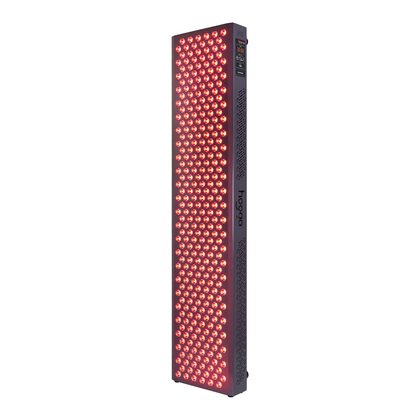
Measured 86 mW/cm² at 6 in with no flicker, among the highest readings we found, against 189 claimed (45.5%), so it's capped at 6.0 and can't make our top 10. Hooga says the finished panel has no UL or ETL listing, and its comparison table wrongly says PlatinumLED and Joovv hold 510(k) clearance. The tested unit (2023) had rocker switches and no timer; today's has a digital timer, so it may have been revised.[15][68][70]
6.0/10
2
RedRush 840 Pulse$1,195 (sale; regular $1,599)Claim gap
Measured 76 mW/cm² at 6 in against 160 claimed (47.5%), so it's capped. Passed the tester's EMF check. 2-year warranty and a 60-day trial.[1][71]
6.0/10
3
Hooga ULTRA1500$1,399Claim gap
Measured 81.7 mW/cm² at 6 in against 165 claimed (49.5%), so it's capped. Its magnetic field slightly exceeded the tester's EMF limit.[16][69][6]
6.0/10
4
Bon Charge Max$999Claim gap
Scored on its predecessor, the BLUblox Hive Max, which measured 31 mW/cm² at 6 in, the lowest of 17 panels in that test and 21.8% of today's “>142” claim. Today's Max lists the same LED count and wavelengths, so we flag that it may differ but don't deduct. Its spec list names FDA as a certification; FDA doesn't certify devices like this, so that costs it 1.5 points on proof. 1-year warranty.[1][79]
5.5/10
5
Vital Red Light Elite 2.0$1,499
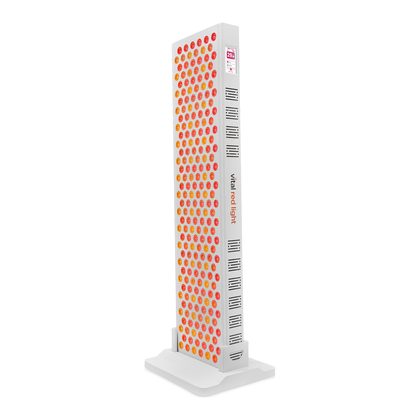
Not rated. Vital's only lab report covers its 2021 PRO panel, and the one independent figure we found for the older Elite is marked unverified by the site that published it. Its “150–210 mW/cm²” claim gives no distance.[81][82][30]
Not rated
·
Mitolux Solar X$1,299.99
A UVB and UVA sunlamp with some red and near-infrared, not a red light panel[91]. The one independent reading we found, of a sister model, was 16.5 mW/cm² at 12 inches[29]. If you want UV, that's a different decision.
Not rated
·
Hue Light Vital PBM PanelNo U.S. price
Made by Hue Light Co., Republic of Korea: no irradiance figure, independent test, certification or U.S. price published, and it isn't listed by the U.S. distributor, so we can't rate it[77][78].
Not rated
When the label promises more than the lab finds
Beyond the irradiance gaps in the chart above, these are the biggest mismatches we found between what brands print and what their own labs or independent testers found.
One brand deserves credit here: Joovv sells the Solo 3.0 as “up to 88 Watts” of light, and the tester estimated 84.9[52][9]. Its irradiance claim is another story.
DA
Dr. Axe's Take
I'm a fan of red and near-infrared light for supporting your mitochondria, your skin and your recovery. But this market runs on inflated numbers, so my first non-negotiable is proof. Buy a panel whose output has been measured with a spectroradiometer by someone other than the brand, and ignore solar-meter figures and the wattage printed on the box.
Second, dose it; don't marathon it. At 6 to 12 inches, a good panel delivers a skin dose in a few minutes, and longer sessions aren't better, because light has a sweet spot. Third, be consistent: regular sessions, three to five times a week on clean, bare skin, match how the trials were run far better than an occasional long session.
And protect your eyes. Near-infrared is invisible, so wear the goggles that come in the box. Red light works best as one part of a healthy routine, not a replacement for sleep, movement and real food.
— Dr. Axe
Frequently asked questions
What is the best red light therapy panel?
The PlatinumLED BIOMAX 900 ($1,299, 9.1/10). A third-party tester measured an average of 87 mW/cm² at 6 inches, and PlatinumLED's own accredited-lab report found 83.13, so the independent number is in line with the lab's (the lab averaged only the center of the panel). It's the only panel we found with an ETL safety certificate we could verify, it holds a Health Canada licence, it passed an independent EMF check at 6 inches, and it has a 3-year warranty. Ignore its “280 mW/cm²” solar-meter headline, and note the 20% restocking fee on returns. For more output, the BIOMAX PRO Ultra measured 101; for low EMF, the MitoPRO 1500X; on a budget, the BestQool Pro200 for half-body sessions or the MitoPRO 300X for face and targeted use.
How strong should a red light panel be?
Look for an independently measured average of about 50 to 100 mW/cm² at 6 inches; that's where the better panels we found land. At that range, a skin dose of 10 to 20 J/cm² takes about 2 to 7 minutes. More power doesn't mean better results; it just gets you to the same dose sooner, and too much light can blunt the effect. Ignore solar-meter numbers, which testers and at least one maker say read about 2 to 3 times high.
How long should a red light therapy session be?
Work it out from the dose: minutes = J/cm² × 1,000 ÷ mW/cm² ÷ 60. For skin, trials and FDA-cleared masks used roughly 9 to 18 J/cm² per session, which is 2 to 6 minutes at 6 inches from most panels in our top 10. For deeper tissue, some groups suggest up to 50 J/cm² at the surface, about 8 to 16 minutes. Trials ran from twice a week to daily.
Does red light therapy actually work?
For some uses, yes. Cancer-care guidelines recommend it to prevent mouth sores in some cancer patients, FDA-cleared caps and combs grow hair in pattern hair loss, and meta-analyses of lasers show less neck pain. Evidence for skin and muscle recovery is moderate and comes from small trials. Claims about thyroid, testosterone and fat loss rest on weak evidence. Most trials used lasers or clinic devices, not home panels.
What's the difference between FDA-registered and FDA-cleared?
Registration means a company told FDA it exists and listed what it sells; FDA says it doesn't denote approval of the company or its products. A 510(k) clearance means FDA agreed a device is substantially equivalent to one already on the market, for specific uses. None of the panels we rated is cleared. Several masks and wands are, for uses like wrinkles or acne. You can check any K-number in FDA's 510(k) database.
Is Joovv worth the money?
It's well made and measured flicker-free, but it's the most expensive panel per watt of light we found: about $20 per watt, vs about $6 to $9 for most of our top picks. The tester measured 59.2 mW/cm² at 6 inches, about 59% of Joovv's “>100” claim, and it failed his 2025 EMF roundup at 6 inches for a high electric field; Joovv suggests using it at 12 inches. We score the Solo 3.0 7.2/10.
Do I need to wear goggles with red light therapy?
We recommend them. ICNIRP's limit for infrared at the front of the eye is about 25 mW/cm² for a 5-minute exposure and 10 mW/cm² for 17 minutes or more, and the near-infrared part of a strong panel at 6 inches can reach 30 to 40 mW/cm². Near-infrared is invisible, so your eyes won't squint or blink to protect themselves. Most panels come with goggles; wear them, especially with near-infrared on near your face, and never stare into the LEDs.
Should I worry about EMF and flicker from a red light panel?
Most panels are fine. In one tester's check of 17 panels at 6 inches, 12 passed his EMF limits; the Joovv Solo 3.0 failed on electric field, which Joovv addresses by recommending 12 inches. Magnetic fields drop off quickly with distance. If you're sensitive, pick a panel that passed, like the MitoPRO 1500X or BIOMAX 900 (neither has an independent flicker measurement), and turn off Bluetooth. If you have photosensitive epilepsy, avoid low-frequency pulse modes.
Can a red light panel help with hair loss?
The strong hair evidence comes from caps and combs held against the scalp, dozens of which are FDA-cleared for pattern hair loss; a 2025 meta-analysis of 38 studies found meaningful gains in hair density. Panels haven't been tested the same way. If hair is your main goal, an FDA-cleared cap or comb is the better-studied choice.
Does red light therapy boost testosterone, thyroid or fat loss?
The evidence is weak. We found no human trial on testosterone. Thyroid trials come from one research group using a laser at a dose far beyond a panel. Fat-loss devices are FDA-cleared only for reducing inches around the waist, hips and thighs, and the one sham-controlled trial measured circumference after two weeks, not fat or weight.
Are red light masks worth it?
They're a reasonable, lower-cost option for the face. Several are FDA-cleared for full-face wrinkles, and independent tests put them at about 18 to 27 mW/cm², so a 10 to 20 J/cm² skin dose takes about 6 to 18 minutes. The Omnilux Contour measured close to its stated output; the HigherDOSE mask measured about half its website claim. They won't cover your body the way a panel does.
References
Update history
Sept. 25, 2026: First published. Scores built from independent spectroradiometer tests (Light Therapy Insiders; 2024 MHSRS poster), maker lab reports, ETL and Health Canada records, and FDA registration and 510(k) records checked Sept. 25, 2026.
Independent tester Light Therapy Insiders (Alex Fergus). Best red light therapy panel 2024: 17 panels measured at 6 in (Feb. 12, 2024; updated July 11, 2026). Open source
Independent tester Light Therapy Insiders (Alex Fergus). The most powerful red light therapy panel (May 30, 2024); says solar meters read “two or three times higher.” Open source
Independent tester Light Therapy Insiders (Alex Fergus). Best red light therapy panels at home 2024–2025 (MitoPRO 1500X listed at 75 mW/cm²). Open source
Independent tester Light Therapy Insiders (Alex Fergus). Best value red light therapy panel (MitoPRO 1500X total output about 151 W). Open source
Independent tester Light Therapy Insiders (Alex Fergus). Best red light panel 2025 (BIOMAX PRO Ultra listed at 104; Rouge G4 at 59–60 and Block Blue Light Mega at 80 and 81 mW/cm²). Open source
Independent tester Light Therapy Insiders (Alex Fergus). Top 12 lowest-EMF panels compared (Jan. 7, 2025): 12 of 17 passed at 6 in. Discloses: “I aim to be affiliated with all light therapy companies.” Open source
Independent tester Light Therapy Insiders (Alex Fergus). PlatinumLED BIOMAX 900 review (July 8, 2024): 90.3 mW/cm² average at 6 in; about 186 W of light. Open source
Independent tester Light Therapy Insiders (Alex Fergus). BIOMAX PRO Ultra review (Aug. 21, 2025): 101 mW/cm² average at 6 in; 256 W; measured peaks. Open source
Independent tester Light Therapy Insiders (Alex Fergus). Joovv Solo 3.0 review (republished Apr. 7, 2024): 59.2 mW/cm² average at 6 in; 84.9 W; 0 flicker; 23 V/m and 1.5 µT at 6 in; price per watt. Open source
Independent tester Light Therapy Insiders (Alex Fergus). Block Blue Light Mega, Generation 5, review (July 16, 2025): 81 mW/cm² average at 6 in; 168.8 W; zero EMF. Open source
Independent tester Light Therapy Insiders (Alex Fergus). Block Blue Light Elite XL review (Oct. 10, 2024): 99 peak, 77 average mW/cm² at 6 in; about 415 W. Open source
Independent tester Light Therapy Insiders (Alex Fergus). Block Blue Light Ultimate XXL review (Mar. 26, 2025): 75 average mW/cm² at 6 in; peaks 631, 664, 818 nm. Open source
Independent tester Light Therapy Insiders (Alex Fergus). Rouge Pro G4 review (July 23, 2025): 59.2 mW/cm² average at 6 in; 134 W; measured peaks. Open source
Independent tester Light Therapy Insiders (Alex Fergus). Rouge red light therapy review (Feb. 2026): 3-year warranty; no restocking fee on panels, 20% on stands; criticism of solar-meter figures. Open source
Independent tester Light Therapy Insiders (Alex Fergus). Hooga PRO1500 review (Nov. 21, 2023): 86 mW/cm² average at 6 in; about 150 W; no flicker; 0.16 µT. Open source
Independent tester Light Therapy Insiders (Alex Fergus). Hooga ULTRA1500 review (May 20, 2024): 104 peak, 81.7 average mW/cm² at 6 in; about 139 W; 0.2 µT at 6 in. Open source
Independent tester Light Therapy Insiders (Alex Fergus). Red Light Rising Advantage 900 2.0 review (June 26, 2025): 106 peak, 75 average mW/cm² at 6 in; 163 W. Open source
Independent tester Light Therapy Insiders (Alex Fergus). MitoPRO 300X review (Mar. 2025): 60 peak, 51.8 average mW/cm² at 6 in; 30.5 W; all six wavelengths present; minimal EMF; 41 dB. Open source
Independent tester Light Therapy Insiders (Alex Fergus). MitoPRO MegaX review (Oct. 2024): peaks at 596, 630, 660, 810, 830 and about 852 nm; 3-year warranty; no restocking fee. Open source
Independent tester Light Therapy Insiders (Alex Fergus). BestQool Pro100 review (Jan. 29, 2025): 51.7 mW/cm² average at 6 in vs 90 claimed; some flicker and EMF. Open source
Independent tester Light Therapy Insiders (Alex Fergus). LightpathLED Diesel Shortie XL review (Dec. 20, 2024): 54 mW/cm² at 6 in; peaks off the label; 0.28 µT. Open source
Independent tester Light Therapy Insiders (Alex Fergus). Sunlighten red light therapy panel review (Sept. 24, 2026): about 97 mW/cm² average over 9 points and about 120 peak at 6 in; about 151 W of light; peaks near 660 and 850 nm; no controls or timer on the panel; no flicker or EMF figures; affiliate links to Sunlighten. Open source
Independent tester Light Therapy Insiders (Alex Fergus). The best handheld red light therapy device (Mar. 23, 2024; Hopoo OHSP-350F, 380–1050 nm): BLUblox Hive Mini 7.5 mW/cm² at 6 in. Open source
Independent tester Light Therapy Insiders (Alex Fergus). Omnilux Contour Face review (Sept. 7, 2025): 16 J/cm² per 10-minute session (about 26.7 mW/cm²). Open source
Independent tester Light Therapy Insiders (Alex Fergus). CurrentBody Series 2 mask review (Aug. 5, 2025): 18.5 mW/cm² average; 11.2 J/cm² per 10 minutes. Open source
Independent tester Light Therapy Insiders (Alex Fergus). HigherDOSE mask review (Nov. 8, 2025): about 15.6 J/cm² per 10 minutes (about 26 mW/cm²). Open source
Independent tester LightTherapyIQ. Best red light therapy panels (July 7, 2026): “The measurement source for every panel here is spectrometer testing published by Light Therapy Insiders.” Open source
Independent tester Outliyr (Nick Urban). LightpathLED review: Diesel Shortie XL 45.34 mW/cm² at 12 in (Hopoo OHSP-350IR). Open source
Independent tester Outliyr. Mitolux review (updated Sept. 2, 2026): BTS2 sunlamp 16.5 mW/cm² at 12 in; Solar X not measured. Open source
Public record / study Hollander ME, Hagen J, Givens M, et al. Spectroradiometric analyses of commercial photobiomodulation technologies. MHSRS 2024 poster (not peer-reviewed; hosted by ARRC LED, a bed maker in the study). Open source
Maker's data PlatinumLED. BIOMAX series page (BIOMAX 900 $1,299; solar-meter chart; 3-year warranty; eye protection in the box; FAQ on use; “official FDA Class II Registered Medical Device”; site footer calls its products “general wellness” products). Open source
Maker's data LightLab International Allentown report LLIA002684-004 for PlatinumLED (June 2025): BIOMAX 900 average 83.13 mW/cm² at 6 in (red 42.68, near-infrared 38.77); 71.29 at 12 in. Open source
Maker's data LightLab International Allentown integrating-sphere report LLIA002639-004A for PlatinumLED (BIOMAX 900, tested Apr. 11, 2025): about 176.5 W of light [our calculation from its cumulative-energy table]; 490.9 W input. Open source
Maker's data PlatinumLED. BIOMAX PRO series page (Ultra $1,599, Grande $1,299; “292” and “284 mW/cm²” solar power meter charts; 0–9,999 Hz pulse, “selectable flicker-free”; eye protection in the box). Open source
Maker's data LightLab International Allentown report LLIA002684-006 for PlatinumLED (tested June 9, 2025): BIOMAX PRO Ultra average 102.62 mW/cm² at 6 in, center 121.12; 772.6 W input on high. Open source
Maker's data LightLab International Allentown report LLIA002684-005 for PlatinumLED: BIOMAX PRO Grande average 84.15 mW/cm² at 6 in. Open source
Maker's data LightLab integrating-sphere report LLIA002639-006A (BIOMAX PRO Grande, high): about 169 W of light [our calculation from its cumulative-energy table]. Open source
Maker's data PlatinumLED. Certifications and testing page (ETL documents listed for BIOMAX 300–900 only). Open source
Certificate / licence Intertek ETL Authorization to Mark, control no. 5008784: BIOMAX 900 and 600, to ANSI/AAMI ES60601-1, CSA C22.2 60601-1, IEC 60601-1-6 and IEC 60601-2-57. Open source
Certificate / licence Health Canada Class II Medical Device Licence 115549, “PlatinumLED Therapy Light” (amended June 25, 2026): BIOMAX 300–900 and PRO models. Open source
Certificate / licence Health Canada Medical Devices Active Licence Listing (checked Sept. 25, 2026): licences 112946 and 112653 (MitoPRO X series; 112653 held by Shenzhen Sungrow LED Technology) and 114898 (Kala Red Light Elite Panel). Open source
Public record / study Truth in Advertising (TINA.org). Ad Alert: PlatinumLED Red Light Therapy (May 27, 2025). Open source
Public record / study Truth in Advertising (TINA.org). Ad Alert: Mito Red Light removes FDA logo (Mar. 9, 2023). Open source
Maker's data Mito Red Light. MitoPRO X series page (prices, sizes, “>160” solar and “>73” spectroradiometer claims, goggles, warranty; “FDA Class II Registered”; site footer says “general wellness”). Open source
Maker's data Mito Red Light. Independent test data (LightLab LLIA002765-006, Sept. 2025): 1500X average 53.5 mW/cm² at 6 in, 149.4 W of light; 300X 36.4 W. Open source
Public record / study FDA registration and listing records via openFDA (checked Sept. 25, 2026): most panels and beds here are listed under code ILY, “Lamp, Infrared, Therapeutic Heating,” 510(k)-exempt. Open source
Public record / study FDA registration and listing, Shenzhen Sungrow LED Technology (reg. 3016171836): listed as manufacturer of BlockBlueLight panels, Hooga HG and ULTRA panels and MitoPRO X panels, under ILY (openFDA). Open source
Maker's data Kala Therapy. Elite Panel page (U.S. $1,349.99; “FDA Cleared” badge; 161 mW/cm² at 6 in; 2-year warranty; goggles). Open source
Public record / study FDA 510(k) K251781: Kala Mini 2.0, Shenzhen Kaiyan (Sept. 4, 2025): heating and wrinkle indications; “Clinical testing was not needed.” Open source
Public record / study openFDA 510(k) search for Kala: K250581 (face mask, May 30, 2025), K250761 (wand, July 11, 2025), K251781 (Mini 2.0, Sept. 4, 2025). Open source
Maker's data Joovv. Solo 3.0 product page ($1,699, compare-at $1,799; “> 100 mW/cm²” with no distance; 150 LEDs; 36 × 8.75 in; 250 VA; “up to 88 Watts” of light). Open source
Maker's data Joovv. Warranty (2 years) and returns (60 days; shipping deducted). Open source
Maker's data Joovv. Elite 3.0 product page ($11,099; six Solo 3.0 modules; 72 × 26.25 in). Open source
Maker's data Block Blue Light. PowerPanel Mega page (167 solar / 89 spectrometer mW/cm²; 557 W draw; 5-year warranty). Open source
Maker's data Block Blue Light. PowerPanel Elite XL page ($3,499.95; 62 × 16.5 in; 189 solar / 90 spectrometer mW/cm² at 6 in; “Generation 6”; 1,317 W consumption). Open source
Maker's data Block Blue Light. Ultimate XXL page ($4,499.95; 71 × 24 in; 1,200 LEDs; 189 solar / 90 spectrometer). Open source
Maker's data Block Blue Light. Refund policy (30 days; sale items exchange or store credit only). Open source
Maker's data Rouge. Pro G4 page ($1,121 sale, $1,495 list; “Solar Meter: 164” and “Spectrometer: 90 mW/cm²” at 6 in; 8 wavelengths; 288 × 5 W LEDs; 480 W; “No-flicker”). Open source
Maker's data Rouge. G4 series user manual (150.9 mW/cm² solar meter, 81 “laser meter” at 6 in; 11.1 kg). Open source
Maker's data Rouge. “Spectral Integrating Sphere Report”: EVERFINE HAAS-1200 printout dated Jan. 19, 2026, manufacturer “Shenzhen idea light,” no laboratory named; 237.2 W radiant flux at 479.4 W. Open source
Maker's data EMR-TEK. Inferno page, FAQ and manual (“>200 mW/cm²” at 6 in; “1,400 mW/cm² at panel face”; 12 in minimum; returns if unused). Open source
Maker's data LightLab International Allentown report LLIA002148-001B for EMR-TEK (July 13, 2023): 138.39 mW/cm² at 6 in and 67.22 at 12 in, single point under center; 584.1 W. Open source
Maker's data EMR-TEK. Distance spectral data from LightLab (peaks near 654 and 861 nm at 6 and 12 in; no distinct 830 nm peak) [our reading of its table]. Open source
Maker's data EMR-TEK. LightLab integrating-sphere data LLIA002148-001A (July 17, 2023): about 180 W of light [our calculation; units not labeled in the file]. Open source
Maker's data BestQool. Pro200 page ($589; 4 wavelengths; 340 W; “factories approved by FDA”; 2-year warranty, 3 with card). Open source
Maker's data BestQool. Pro100 page ($319; FAQ: “clothing could block light penetration”). Open source
Maker's data Hooga. PRO1500 page ($1,199; 189 mW/cm² at 6 in, instrument not stated; 530 W; 3-year warranty). Open source
Maker's data Hooga. ULTRA1500 page ($1,399; 165 mW/cm² at 6 in; 630/660/810/850 nm; 39.5 × 8.6 in). Open source
Maker's data Hooga. Quality and certifications page (May 2026): no finished-panel UL/ETL, no 510(k); general wellness. Open source
Maker's data Red Therapy Co. RedRush 840 Pulse page and manual (160 mW/cm² at 6 in; “FDA Class II Registered” vs “general wellness”). Open source
Maker's data Red Light Rising. Advantage 2.0 page (U.S. $2,299.99, sold out Sept. 25, 2026; 86.4 mW/cm² in-house; 3-year warranty). Open source
Maker's data LightpathLED. Diesel Gen3 page ($1,624; “76 mW/cm² at 12 inches”; 670/810/940 nm; 34.1 × 14.6 in; 5-year warranty; “Class II Registered”). Open source
Maker's data LightpathLED refund policy (Diesel line: 60-day returns, no restocking fee, buyer pays shipping). Open source
Maker's data Sunlighten. RED Light Therapy Panel page ($1,379 regular; $1,172.15 in a 15% sale through Sept. 27, 2026; “200mW/cm² of power” with no distance; 660 and 850 nm; 200 LEDs; 35 × 11 × 2.76 in; 22 lb; 3-year limited residential warranty; 30-day returns; goggles listed as optional; mounts sold separately). Open source
Maker's data Sunlighten. Statement to DrAxe.com, Sept. 25, 2026 (97 mW/cm² average at 6 inches). (on file with DrAxe.com)
Maker's data Hue Light Co. (Republic of Korea). Vital PBM Panel page (Core X-1500, 308 LEDs; Plus X-3000; Pro X-5000, 8 wavelengths including 528 and 980 nm; Max X-7000; “7 Nogier frequency levels”; 2-year warranty; “wellness device”; no irradiance figure or price). Open source
Maker's data Hue Light USA. Product catalog and PBM Full Body Panel w/ Stand page ($57,995; “70-90 mW/cm2” with no distance); clinic-scale equipment only. Open source
Maker's data Bon Charge. Max product page ($999; “>142 mW/cm²” with no distance; 91 × 21 cm; “FDA Class II registered device”; spec list: “Certification CE, FCC, SAA, FDA, ARTG”; 1-year warranty). Open source
Maker's data Bon Charge. Mini product page ($299; 12 × 3 W LEDs; “>100 mW/cm²” with no distance). Open source
Maker's data Vital Red Light. Elite 2.0 page ($1,499; “150–210 mW/cm²” with no distance; 216 × 5 W LEDs). Open source
Maker's data LightLab International Allentown report LLIA001582-002 for Vital (Nov. 23, 2021; original Vital PRO): 65.74 mW/cm² at 6 in, 49.23 at 12 in, 31.66 at 24 in. Open source
Maker's data Celluma. Celluma PRO page ($1,795; flexible contact panel; blue, red and near-infrared). Open source
Maker's data Omnilux. Contour Face page ($395; 633 and 830 nm; about 30 mW/cm²; FAQ: “We recommend completing treatments with bare skin”). Open source
Maker's data CurrentBody. Skin LED mask Series 2 ($469.99). Open source
Maker's data HigherDOSE. Red Light Face Mask ($349; “Total Irradiance 50 mW/cm²”). Open source
Maker's data LightStim. LightStim for Wrinkles ($269; 605, 640, 652 and 850 nm). Open source
Maker's data Elevated Longevity (authorized dealer). NovoTHOR whole-body light pod listing ($120,000). Open source
Maker's data RecovAthlete (authorized dealer). Prism Light Pod listing ($95,995). Open source
Maker's data Aspen/TheraLight. TheraLight 360 page (price on request; “FDA Registered”). Open source
Maker's data Mitolux. Solar X page ($1,299.99; UVB and UVA plus red and near-infrared; “Not evaluated by the FDA”). Open source
Maker's data Lumebox. Testing page (SGS: 140 mW/cm² near-infrared and 125 red at 1 cm). Open source
Public record / study FDA 510(k) K152280: BioPhotas Celluma3 (Mar. 2, 2016): pain, acne and wrinkles around the eyes; Celluma PRO, PRO PLUS and DELUX models are listed under it. Open source
Public record / study FDA 510(k) K171323: Celluma3, full-face wrinkles (Sept. 1, 2017); summary gives 6.5 mW/cm² and 11.7 J/cm². Open source
Public record / study FDA 510(k) K191629: faceLITE (I-Smart), full-face wrinkles (Sept. 12, 2019), under which Omnilux Contour is listed; summary gives 630/830 nm, 30 mW/cm². Open source
Public record / study FDA 510(k) K250966: CurrentBody Series 2 mask, full-face wrinkles (June 25, 2025); summary gives 30 mW/cm² and 18 J/cm² per 10 minutes. Open source
Public record / study FDA 510(k) K241933: HigherDOSE Red and Infrared Light Mask, full-face wrinkles (Sept. 27, 2024); summary gives 30 mW/cm² and 18 J/cm². Open source
Public record / study FDA 510(k) K101190: LightStim Anti-Wrinkle OTC (July 1, 2010); followed by K120775, Light for Wrinkles (June 4, 2012). Open source
Public record / study FDA 510(k) K261482: LightStim for Wrinkles and for Acne (July 31, 2026); summary gives 21.6 mW/cm² at treatment distance. Open source
Public record / study FDA 510(k) K153399: LightStim LED Bed (July 5, 2016), product code ILY. Open source
Public record / study FDA 510(k) K060305: HairMax LaserComb, the first clearance for hair growth (Jan. 18, 2007), product code OAP. Open source
Public record / study 21 CFR 807.39: registration “does not in any way denote approval of the establishment or its products”; implying otherwise “is misleading and constitutes misbranding.” Open source
Public record / study 21 CFR 890.5500: infrared lamps for topical heating are Class II and exempt from 510(k) premarket notification. Open source
Public record / study FDA. Are there “FDA registered” or “FDA certified” medical devices? (“The FDA does not issue any type of device registration certificates.”) Open source
Public record / study FDA. Premarket notification 510(k) database search. Open source
Public record / study FDA. General Wellness: Policy for Low Risk Devices (Jan. 6, 2026): “laser technology presents risks of skin and eye burns.” Open source
Public record / study Chung H, Dai T, Sharma SK, Huang YY, Carroll JD, Hamblin MR. The nuts and bolts of low-level laser (light) therapy. Ann Biomed Eng, 2012. Open source
Public record / study de Freitas LF, Hamblin MR. Proposed mechanisms of photobiomodulation or low-level light therapy. IEEE J Sel Top Quantum Electron, 2016. Open source
Public record / study Quirk BJ, Whelan HT. Photobiomodul Photomed Laser Surg, 2020: “No reliable demonstration of any PBM-related light-induced mechanistic effect on CCO has been reported.” Open source
Public record / study Huang YY, Chen AC, Carroll JD, Hamblin MR. Biphasic dose response in low level light therapy. Dose Response, 2009. Open source
Public record / study Zein R, Selting W, Hamblin MR. Review of light parameters and photobiomodulation efficacy: dive into complexity. J Biomed Opt, 2018. Open source
Public record / study WALT. Recommended doses for low level laser therapy, 780–860 nm (2010): “Daily treatment for 2 weeks or treatment every other day for 3-4 weeks.” Open source
Public record / study Hadis MA, et al. The dark art of light measurement: accurate radiometry for low-level light therapy. Lasers Med Sci, 2016. Open source
Public record / study TES Electrical Electronic Corp. TES-1333 solar power meter specifications (accuracy stated “in sunlight”; response 400–1100 nm). Open source
Public record / study U.S. Energy Information Administration. Electric Power Monthly, Table 5.6.A: average residential price 18.31¢/kWh (July 2026). Open source
Public record / study Zadik Y, et al. MASCC/ISOO systematic review and guidelines on photobiomodulation for oral mucositis. Support Care Cancer, 2019. Open source
Public record / study Pedroso MNM, et al. Effects of photobiomodulation on oral mucositis, oral pain, xerostomia, salivary flow rate, and quality of life in patients with head and neck cancer: a systematic review and meta-analysis (30 RCTs, 1,748 patients). Support Care Cancer, 2026. Open source
Public record / study Alahmadi M, et al. Low-level laser therapy for androgenetic alopecia: systematic review and meta-analysis (37 studies, 3,298 patients). Skin Appendage Disord, 2026 (epub). Open source
Public record / study Elad S, et al. MASCC/ISOO clinical practice guidelines for the management of mucositis secondary to cancer therapy. Cancer, 2020. Open source
Public record / study Chow RT, Johnson MI, Lopes-Martins RA, Bjordal JM. Efficacy of low-level laser therapy in the management of neck pain: a systematic review and meta-analysis. Lancet, 2009. Open source
Public record / study Qaseem A, et al. American College of Physicians guideline on low back pain. Ann Intern Med, 2017. Open source
Public record / study Jimenez JJ, et al. Am J Clin Dermatol, 2014: four sham-controlled, double-blind trials of an FDA-cleared laser comb (269 randomized). Open source
Public record / study Perez SM, et al. Dermatol Surg, 2025: meta-analysis of low-level light therapy for hair (38 studies, 3,098 patients). Open source
Public record / study Ahn JC, Kim YH, Rhee CK. The effects of low level laser therapy (LLLT) on the testis in elevating serum testosterone level in rats. Biomedical Research (Allied Academies), 2013 (30 rats; not indexed in PubMed). Open source
Public record / study Wunsch A, Matuschka K. Controlled trial of red and near-infrared light for fine lines, wrinkles and collagen density. Photomed Laser Surg, 2014. Open source
Public record / study Lee SY, et al. J Photochem Photobiol B, 2007: randomized, double-blinded, sham-controlled split-face trial of 633 and 830 nm LEDs (76 patients). Open source
Public record / study Mota LR, et al. Photobiomodulation reduces periocular wrinkle volume by 30%: a randomized controlled trial. Photobiomodul Photomed Laser Surg, 2023. Open source
Public record / study Leal-Junior EC, et al. Lasers Med Sci, 2015: meta-analysis of 13 randomized trials of phototherapy before exercise. Open source
Public record / study Bezerra LO, et al. Lasers Med Sci, 2023: meta-analysis of 16 randomized trials (340 people) of photobiomodulation for muscle fatigue, strength and function. Open source
Public record / study Ghigiarelli JJ, et al. Front Sports Act Living, 2020: randomized crossover trial of a whole-body light bed in 12 trained men. Open source
Public record / study Stausholm MB, et al. BMJ Open, 2019: meta-analysis of 22 placebo-controlled trials of laser therapy for knee osteoarthritis (1,063 people). Open source
Public record / study Huang Z, et al. Osteoarthritis Cartilage, 2015: meta-analysis of 9 trials (518 people) of laser therapy for knee osteoarthritis. Open source
Public record / study Oliveira S, et al. Phys Ther, 2024: meta-analysis of 10 trials (542 people); very low certainty of evidence. Open source
Public record / study Höfling DB, et al. Lasers Med Sci, 2013: placebo-controlled trial of an 830 nm laser (707 J/cm²) in 43 people with Hashimoto's-related hypothyroidism. Open source
Public record / study Jackson RF, et al. Low-level laser therapy as a non-invasive approach for body contouring: a randomized, controlled study. Lasers Surg Med, 2009. Open source
Public record / study Zhao J, Tian Y, Nie J, Xu J, Liu D. Red light and the sleep quality and endurance performance of Chinese female basketball players. J Athl Train, 2012. Open source
Public record / study FDA. De Novo decision summary DEN230083, Valeda Light Delivery System (dry AMD): improvement “of marginal clinical significance”; prescription only. Open source
Public record / study FDA Roundup, Nov. 5, 2024: Valeda authorized; about one line on an eye chart after about two years. Open source
Public record / study Chen KY, et al. Ophthalmol Ther, 2025: meta-analysis of photobiomodulation for AMD (6 studies, 477 eyes); no significant visual acuity benefit. Open source
Public record / study Maghfour J, et al. Evidence-based consensus on the clinical application of photobiomodulation. J Am Acad Dermatol, 2025. Open source
Public record / study Barton NE, et al. Red light therapy in cosmetic dermatology: marketing claims backed by evidence? J Drugs Dermatol, 2026. Open source
Public record / study ICNIRP. Guidelines on limits of exposure to incoherent visible and infrared radiation. Health Phys, 2013. Open source
Public record / study Liu H, Yang Y, Guo J, Peng J, Zhao P. Retinal damage after repeated low-level red-light laser exposure. JAMA Ophthalmol, 2023. Open source
Public record / study Ostrin LA, Schill AW. Safety evaluation of 4 red light therapy devices for myopia. JAMA Ophthalmol, 2026. Open source
Public record / study Chen Y, et al. Asia Pac J Ophthalmol, 2024: safety review of repeated low-level red light for myopia (20 studies, 1,436 children). Open source
Public record / study Fan H, et al. Front Med, 2025: meta-analysis of repeated low-level red light for myopia (20 studies, 2,638 children). Open source
Public record / study Wang YX, Wang N, Wong TY. Red light therapy for myopia: current regulatory changes in China. JAMA Ophthalmol, 2025. Open source
Public record / study Harding G, Wilkins AJ, Erba G, Barkley GL, Fisher RS. Epilepsy Foundation of America consensus on photosensitive seizures. Epilepsia, 2005. Open source
Public record / study IEEE Std 1789-2015. Recommended practices for modulating current in high-brightness LEDs for mitigating health risks to viewers. Open source
Public record / study ICNIRP. Guidelines for limiting exposure to time-varying electric and magnetic fields (1 Hz–100 kHz). Health Phys, 2010 (general public: 200 µT at 50/60 Hz). Open source
Public record / study National Cancer Institute. Electromagnetic fields and cancer (“The strength of a magnetic field decreases rapidly with increasing distance from its source”). Open source
DA
Dr. Josh Axe, DNM, DC, CNS
Founder, DrAxe.com
Dr. Axe is a doctor of natural medicine, chiropractor and certified nutrition specialist with more than 20 years in functional medicine, and the founder of DrAxe.com.
How we make money: We may earn a commission when you buy through links on this page. It never changes our rankings: products are scored before any affiliate terms are discussed, brands can't pay for placement, and we recommend products whether or not they have an affiliate program. Scores are editorial assessments based on independent tests, maker lab reports and public records, not our own lab testing.