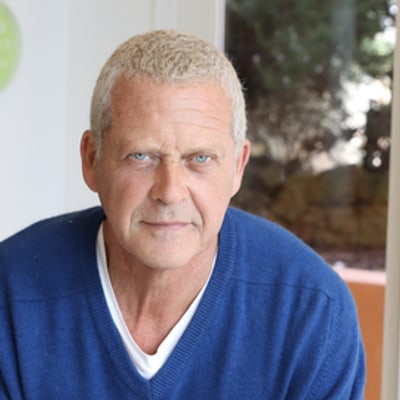
3 Things You Can Do TODAY to Become Mentally Stronger | with Amy Morin
Transcript
Click a timestamp to seek the player.
There is so much that we can do together, and when we work as a team, or when we feel like we're just not alone in something, and just being able to talk to somebody about what you're going through makes a huge difference. And sometimes that's in professional therapy, but that's also why I wrote the couples book, because who else can you grow stronger together with than your partner? But even if you don't have a partner, or even outside of your relationship, we still need to have friends and family and community who are working together to solve problems. Otherwise, we often view people as our adversary instead of we're all in this together working against a, against a common, common enemy or working on a common goal. It feels like it's everyone for themselves, and that's a really lonely place to be.
Everybody, Dr. Josh Axe here. Welcome to the Growth Lab, where each and every week we talk about, uh, the science behind how to grow yourself, your health, your wealth, and take your career, your relationships, your spiritual health to the next level. Today as a guest, I have Amy Morin. She started her career as a psychotherapist and she helps people build mental strength, which I think is so important today. And she's got really an incredible story of overcoming tragedy in her life. And while overcoming tragedy, she, she took time and wrote down 13 things that mentally strong people do. And after writing this and posting it online, 50 million readers globally, uh, read this. And so she wrote a book on it, and now she spent her time doing TED Talks and, uh, sailing actually around the country. So I was talking to, talking to Amy here. She's on a sailboat right now in the Florida Keys, which is pretty, uh, which is pretty awesome. And so, um, anyways, today we're going to talk about building mental strength. We're going to talk about mindset here as well, and we're going to talk about what an individual does to be mentally strong and what couples do to be mentally strong. So Amy, hey, welcome to— welcome to the show.
Hey, thank you so much for having me. It's a pleasure to be here.
Well, cool. I was, I was going through your books and I love the content. I mean, like, one of the things I saw in particular, which is, uh, for what things that mentally strong couples don't do— they don't try and fix each other, right? I mean, that's just a prime example. They don't keep secrets. They don't ignore the problems. I mean, these are all Really, really fantastic piece of advice. Before we jump into sort of your list of things that mentally strong people or mentally strong couples do and don't do, really tell us a little bit about your story of what sort of turned you on to the importance of being mentally strong.
So it really stems from my own journey, but also my profession. I am a psychotherapist, and I thought, oh, I'm going to teach everybody these things I learned in college, all of the things out of this textbook. But my 20s were a decade that I would never wanna relive. I lost my mother when I was 23. I became a widow at the age of 26. Talk about a club you never wanna join. Mm-hmm. So just as all my friends were getting married and having kids, I found myself a widow. My 26-year-old husband died of a heart attack. And then, uh, I lost my father-in-law, uh, former foster child, uh, passed away. It was like one loss after another. And as a therapist, I was told, well, build on people's strengths. When somebody comes into your office, tell them what they're doing well and help them keep doing those things. But pretty early on, it occurred to me, like, it's great to have wonderful habits, but like, it only takes one counterproductive bad habit to, to really outweigh the good. And the only way I could explain it was like, if I went to the gym to build physical strength and I had a trainer who said run on the treadmill, like, I'd do that. But what if they didn't tell me to stop eating jelly donuts, or they didn't tell me about how sitting 23 hours a day really did so much harm to me, and that 30 minutes on the treadmill only did so much? I really wanted to figure that out. Like, what's our bad habits that, uh, can keep us stuck? So I just started focusing on that in my own life, found it helpful, studied the people that came into my therapy office, and I thought, well, if this stuff helps me so much, maybe it could help somebody else. And that's what led to the article and that has now led to book number 6 being released soon. Um, but it really stemmed from sort of my own journey with grief, my knowledge of, of mental strength and mental health as a therapist, and also the things that I just, I wish that other people had taught me sooner. And I thought, how do I start talking about these things so that other people can learn them and that they don't have to learn them the hard way too?
Hmm, that's so good. You know, I know you, you obviously in a lot of your book titles and what you talk about, uh, you, you mentioned mental strength. For just for everyone listening, as we dive in deep into this topic, how would you define this idea around what mental strength is?
I'm glad you asked, because sometimes people think it's the same as mental health. People will come into my therapy office and say, you know, I wish I could be mentally strong, but I have depression, or I struggle with anxiety. But like, that's not true at all. So again, if we relate mental strength to physical strength, it makes more sense. So just like You could go to the gym and become physically strong because you lift weights. It doesn't mean that you're guaranteed to never get a physical health problem. You might still develop, say, diabetes or high blood pressure someday. And, and it's not a weakness. It just is what it is. Sometimes it's genetics or your past history. So some of us have complicating factors. A mental health issue makes it more difficult to build mental strength, but mental strength's all about the choices you make every day. And there are 3 parts to it: the way you think, the way you feel, and the way you behave. So our thoughts are our ability to reframe what we think. You can't always control those first thoughts that pop up into your head, but you can control how you respond to them, whether you believe them, cuz your brain lies to you sometimes and you don't have to believe everything that you think. And then the emotional part is knowing that you don't have to be happy all the time, but you certainly have some control over your feelings and you don't have to let your feelings control your life, and there are tons of skills that can help us regulate our emotions and manage them. And then the third part is about our behavior, and sometimes it's about choosing to take positive action no matter what kind of circumstances you find yourself in.
Hmm. You know, I was reading this, uh, well, I was reading a study, and right after that I was watching a lecture, uh, by Jonathan Hand. He's a researcher. Uh, he's a professor at NYU, and he wrote a book called The Coddling of the American Mind. And one of the things he talks about is, even generationally, he shows through his research is that sometimes even these younger generations, uh, you know, he, he said we have made oftentimes mentally weak because we've coddled them so much, and everything has become about, um, you know, everybody gets a trophy, everybody gets a reward for things. Have you found that in your books and research, anything related to, things generationally, or maybe, maybe habits that parents have towards kids that could make a child mentally strong versus mentally weak?
Definitely. So when it comes to parenting, especially, like, nobody wants to see their kids struggle. Nobody wants to see their kids in pain. And so our tendency is to take responsibility for that. Like, I'll shield you from pain. I don't want you to go through tough times. But kids need to make mistakes. They need to fail. They need to problem solve. They need to, to feel uncomfortable. And I think it's not just parenting strategies that have shifted, but also the world, right? We live in a world where you can pick up your phone when you're bored and entertain yourself immediately. But it's the uncomfortable feeling of boredom that often helps us grow and change. Or when we're anxious, we distract ourselves with technology. Or when people are sad, they try to watch something on TV. There's so many things that we do to try to avoid uncomfortable feelings, but it's really the discomfort that, that helps us grow and learn. And those things are only, you know, short-term Band-Aids. Nobody says, you know, gosh, my life is a lot better because I never feel anxious anymore because I'm staring at social media. We know the long-term results from staring at too much social media is that it creates anxiety, or that we often experience more loneliness because we're on social media as opposed to meeting people in, in face-to-face conversations. So I think it's part of the world, the way the world has changed, that our work has changed, the way we live our lives has shifted to And parents have so much pressure. It used to be if your kid forgot their homework, it wasn't a huge deal because everybody in the class forgot their homework sometimes. But now parents are feeling pressure because they're like, everybody else's parents rushes into school with that paper so that their kids don't get in trouble for it. And if I don't, then my kid will fall behind. And if they fall behind, then it might change the entire course of their lives. So parents are feeling this pressure to try to make their kids be ultra performers at school too. And because of that, I think the pressure parents are feeling, it trickles down to kids. Kids, and it's harder to let kids be uncomfortable in today's world.
Yeah, yeah, I can definitely see that. You know, I, I, um, I was thinking about— yeah, again, you cover so many points in your, in your book about what it means to be mentally strong. I want to hit on the weakness point, and then I want to get into the strength. What is the sort of number one thing that you see that, that would— that where somebody is sabotaging themselves or making themselves mentally weak? Like, what is that typically? Like, this is the most common thing you've seen as a therapist?
I'd say feeling sorry for yourself. And it's something that we all do sometimes, like, all right, something bad happens and it's okay to be sad, it's okay to be anxious or angry about it. But where we fall into the, uh, danger zone is when we start thinking that I'm helpless, I'm hopeless, there's nothing I can do about it, that we're doomed. Like, if something bad happens, then there's nothing that we could do to ever recover from this. And when we start thinking that way, we feel bad, and the worse we feel, the more likely we are to not take any action because we think it won't do us any good. And it gets us stuck in this perpetual cycle. And so whether somebody is going through a breakup or they just haven't had good luck in their lives, or they're looking around at other people who are doing better than they are, it's so easy to start thinking like, oh, I'm not good enough and I can't possibly succeed. But as soon as you start believing those thoughts, then it definitely affects the way you feel and it affects your behavior. And we know from the research that what we think often becomes a self-fulfilling prophecy. So if you think, I'm not good enough to, to have a better job than the one I have now, then you'll feel bad. And then when you feel bad, you won't apply for another job. And then guess what? You stay stuck in that job. That's just a really simple example. But on a bigger scale, we often do these things in our lives where we think that we're not capable of something. We believe it. And so then we don't try and then it becomes true and it just reinforces this belief that we're not capable and competent people.
Do you have any advice for people who know— and by the way, I'm glad you said everybody at some point, even the course of a day, you feel sorry for yourself at some degree.
Yes.
What is your best advice for people to shift out of that feeling sorry for yourself mindset?
I think one of the best things is just act contrary to how you feel. When we're feeling sorry for ourselves, then, uh, the last, last thing we wanna do is take any kind of productive action. But to do it anyway. I know, yeah, maybe you'll fail, but sometimes people think that they have to feel a certain way before they can change their lives. Like, somebody will come into my therapy office and say, I want you to help me feel more confident so I can go back to college, or I want you to help me feel more confident before I launch my own business. But you know, the best way to feel confident is to take steps toward doing those things. So sometimes it's about saying, all right, if I were a mentally strong person, what would I do right now? And then do that thing even if you don't feel it. Because we know that changing your behavior first often shifts the emotional state, and it changes the way that your brain sees you.
That's so good. You know, I, I had a— this was a past crisis a year or so ago, and I had a major back issue, couldn't walk for quite some time. And I remember reading this Persian proverb, and it was really good, powerful for me. It says, um, uh, I cried because I had no shoes until I met a man that had no feet. You know, and so I think like somebody always has it worse. I mean, almost no matter how bad life could be, you know, most times there's somebody who has it worse. So I think that, um, anyways, I've seen that in my own life, sort of going from focusing on myself, focusing on the needs of others has been a really helpful tool. And so anyways, I think, I mean, that, that, that this is just such a good one because this is something everybody every day deals with, you know. Um, switching gears a little bit, you know, I think generationally One of the things I think we've seen as well too is I think about like my dad growing up or my dad's dad. These are like, you know, really hardcore, like Army guys who just would never cry, you know? And I think about when we go through hard times, I think like my grandfather, one of them, not both, but one of my grandfathers, he was in the Navy and he would've like, I never saw him cry. And I think he would've thought that, mental weakness is something like crying or showing emotion. But then I think on the flip side today, it's— I feel like we've almost gone so far to this other side where it's like, wow, wallow, wallow in your feelings and let your feelings drive everything about you. So it's one is like completely ignore all emotions, act like they don't exist, and that's a sign of weakness. Or what, what are your thoughts on— is that something you've perceived? And then how do we find balance?
Oh yeah, I still hear a lot of people say stuff like that. Like, if you, if you're like pressing forward despite all sorts of pain, but you're pretending like it doesn't hurt, then somehow you're a really strong person. Or if you don't cry at a funeral, that's a sign of strength. Well, that's definitely not true. But on the other hand, we don't have to let our emotions control us. So there is that balance of knowing that yes, I can manage my emotions and I can figure out when they're comfortable and when they're uncomfortable, when they're worthwhile and they're serving me well, and when they aren't. So an exercise I often use in my therapy office, first is just identifying the emotion. We're really bad at identifying emotions, like putting a name to the feeling takes a lot of the sting out of it. But yet, how often do we ever talk about our emotions, right? Adults are much more likely to say something like, you know, I had a lump in my throat rather than I was really sad yesterday. We don't— in everyday conversation, it rarely comes up. But even to ourselves, when I ask people like, hey, If you were to put a name to your emotion right now, what would it be? Sometimes people in my therapy office will say, well, I think that person shouldn't have done that, or I think I made a mistake today. We'll have to say, no, that's what you think. It's not necessarily what you feel. An emotion is anxiety. It's, it's sadness. But it's difficult to, to put a name to those feelings. So sometimes that's the first step is to name your emotion. And we know that just naming it takes a lot of the sting out of it. Mm-hmm. And then another step is to say, well, is what I'm feeling right now a friend or an enemy? And when your emotions are a friend, embrace 'em. When they're an enemy, you can shift how you feel. And we talk so much about emotions as either being all positive or all negative, but like any emotion has the power to be helpful or hurtful. So like anxiety is helpful when it keeps you safe. If your friend tells you to jump off a bridge, your anxiety should kick in and say, that's a bad idea. So you want to embrace it. But when you're so anxious you can't function at work, that's when you want to say, well, what do I do to manage this emotion? How do I decrease the intensity of it and how do I take care of myself? So it's really about recognizing how do you feel, how do you manage those emotions, how do you figure out when it's okay to experience them versus when maybe you need to manage that feeling. And then it comes down to expressing it too. Why do we feel like we need to hide those feelings? It's important to be able to be vulnerable with some people to say, you know, I'm kind of sad about this. And you don't need to tell the whole world, maybe on Instagram, but maybe you say, you know, I have 2 or 3 friends I can confide in who maybe could help me deal with this uncomfortable emotion. And that can be really key to helping us heal too.
You know, it seems from me picking up something you said earlier to what you just shared now is that part of something that mentally strong people do is they, they confront the discomfort, right? Or, and they go and they actually search it out and say, okay, what am I what is this pain or this emotion I'm feeling right now, and trying to uncover the root of it. And then also realize, and then not letting it control, you know, not let it control and drive everything that, that someone's doing.
Right, because sometimes when we feel uncomfortable, our knee-jerk reaction is to get rid of that discomfort. So I'm going to reach for something that's going to help me right now, whether it's to pick up my phone, or I'm gonna go eat something, or I'm gonna ignore it or avoid it. And part of growing mentally stronger is really about figuring out when we are uncomfortable, do I need to fix the problem or do I need to fix how I feel about the problem? If I have a stack of bills that's sitting there and I ignore them, I might feel better for a moment cuz maybe it's anxiety provoking or I'm scared when I look at how, how much I owe. But then like binge watching Netflix makes me feel better for a minute, but it doesn't do anything to solve my financial issue. So I'm like, all right. It's gonna make, make me feel worse to sit over here and look at how much money I owe, but yet in the long run, that's what's better for me. So sometimes it's about balancing that. And then sometimes it's knowing too, we can't fix all problems. I'll hear people say things like, my, my mother-in-law won't go to the doctor. And I happen to have one of those mother-in-laws. I think she went to the doctor 44 years ago was the last time she went to, to, um, to see a doctor. And so now when she's sick, there's certain family members that are like trying to talk her into it or drag her to the hospital. And other family members that are like, you know, she's 80. If she wants to go, she'll go. If she doesn't, that's okay too. But knowing like, all right, where's your responsibility in trying to change other people's behavior? And sometimes accepting, okay, I can't fix somebody else. I can't make somebody else do anything. So maybe I just need to control how I feel about it. Somebody's behavior causes me a lot of anxiety or sadness. Maybe I need to figure out how to cope with that rather than force the other person to change their behavior so that I feel more comfortable.
Yeah, this goes back to— and a lot of people are like this, it's like, I'm trying to fix everyone else but myself sometimes too, versus, hey, I need to change the way that I feel, the way that I think. To a level, it's personal responsibility, right? It's that locus of control that we need to kind of take back over. It's so good. You know, I know you have a lot of, uh, not just 13, I mean, I know you've gone beyond that in some of your books. There's a number of things that people need to do to be mentally strong, but what would you say are your— the top 3 things people can do to build mental strength or to be mentally strong?
Oh, I like this. So I would say something simple that people could do every day is practice gratitude. We know gratitude is a superpower. It does everything from people who practice gratitude are healthier, they live longer, they have better relationships, they feel better, they're less likely to develop depression, anxiety. Like, the list goes on and on. And it could be as simple as, I'm going to write in a gratitude journal before sleep 3 things what I'm grateful for today. And we know that when people do that, they sleep better, they have better quality sleep, and who doesn't want that? So it might be as simple as just saying, I'm gonna write down 3 things that were good about today, whether it's I had clean air or clean water, or I had a wonderful conversation with somebody. But just recognizing the good in the world goes a long way toward undoing a lot of the thoughts that we have throughout the day that maybe magnify the bad stuff. So I'd say gratitude is one thing, and it definitely, is the antidote to feeling sorry for yourself. When you're grateful for the things you have rather than thinking you deserve more, it shifts your brain. So gratitude would be number one. Number two, when I work with people who worry a lot or overthinkers, sometimes we'll schedule time to worry, which sounds ridiculous, but there's research behind it. If you set aside 15 minutes a day to worry, you can contain it to just 15 minutes a day. So for people who say, normally I worry 24/7. Like, after a few weeks they'll say, like, gosh, I, I can concentrate now on what I'm doing and I'm not worried all the time. But the trick is you have to schedule it. You have to put it in your calendar. So you might say, I'm going to worry from 7 to 7:15 every night. But then whenever you catch yourself worrying outside of that about things that you can't control, you'd have to remind yourself it's not time to worry about that yet. And then for the first week, you're just gonna constantly be like, oh, it's not time to worry about that yet. It's not time to worry about that yet.
Wow.
But it will raise your awareness of how much you worry, but it will also then train your brain to put that off until later. And so for people who do this, usually by about the third week, they will look like the weight of the world has literally been lifted off their shoulders as they're then like, oh yeah, I now can worry for 15 minutes a day, get it over with, and then I can move on to, to something else. So that would be my number 2 idea is for anybody who worries a lot, schedule time to worry, put it in your calendar and see what happens. And the 3rd thing I would say is to schedule something fun. We know that so often we, life goes by and we're like, oh, I'm gonna meet with my friends and I'll do that later. And it just never happens. But there's something super powerful about having something in your calendar to look forward to. And that gives you something to boost your mood right now when you know, all right, next weekend or, on Tuesday I'm going to have coffee with my friends, or next Saturday I'm going to go meet with my family and do something really cool. That tells something to our brains. And then when you go actually do that fun thing, you get a second boost in your mood because you're doing something cool and it's fun. And then the third thing is like you created a positive memory. So then you have something to look back at and say, hey, that was cool, that was fun. You get a third boost in your mood. And we've always known this was important, but especially during COVID when so many people were like, felt like it was Groundhog Day where every day felt like the same. It was about putting something in your calendar to look forward to so that you can, uh, have some of those things that are giving your brain a natural boost. And it doesn't have to be huge things. If you live alone, you might even put in your calendar Friday night at 7:00 PM, I'm gonna watch a movie. And it's a movie you've been meaning to see for a while, or maybe you're gonna pick the movie when Friday rolls around, but just putting it in your calendar has a huge effect on your brain and your mood and your overall wellbeing. So I always encourage people, put one thing in your calendar every week that you're gonna have to look forward to. And it increases the likelihood that we'll do those things too, because life gets so busy and there's so much emphasis on being productive and all the things we have to do that sometimes we forget to have fun too.
Can I tell you, I think some of our listeners, and myself included, when I asked you this question, I think I thought you were going to say something like, um, for one of these, you know, you know, you have to run, you have to be David Goggins, right? You got to go and run 100 miles with a, you know, an axe on your back and jump through fires or something. But these things so doable. You know, get grateful was one of those first things, right? I think that's so important. Schedule 15 minutes to worry and then have things that you look forward to during the week that, that also help, help you rest, which, which really is so important for mental strength. I know I've seen some of the research as well. So this is really, I think, good stuff. But do you think that probably some people think that when they think about building mental strength, they think that maybe it's this sort of certain people are built a certain way and they don't feel pain or something. And that's maybe who— what culture might think of as somebody that's mentally strong.
Definitely. And so even when I use the word exercise, I try to be careful because that seems to be what people imagine is like a Navy SEAL. And that is a skill that some people need in life, to be able to submit yourself to pain and torture and to keep standing it. Most of us don't need that skill. Most of us are never going to be in a situation where we have to like prove how much pain we can tolerate. Yeah, life is painful, but it's a different kind of pain. Like, when we're in emotional pain, we have options. Or even physical pain, you have options. Obviously, people who train to become Navy SEALs, they want you to, to just be able to tell yourself to keep pushing at all costs because it is a life or death situation, potentially. For the rest of us, it's not just about saying like, no, I've never experienced pain, or that doesn't hurt. It's okay to acknowledge that something's painful or something hurts, but to then be proactive too. Because I think the other big thing people think of when they think of mental strength is that it's the same as resilience. Like, I want to be able to bounce back when horrible things happen to me. But like, wouldn't that be awful if we all went around thinking that the sole purpose of building mental strength was just so that we could be prepared for the next tragedy around the corner? Like, bad things happen, yes, but also like when life is good, we want to be able to enjoy that to the fullest. Or when you just have a slight challenge at work, how do you make sure that, yeah, you're living up to your full potential? So many opportunities in life that, that we can take when we're mentally stronger, but they are not— hopefully, thankfully— not all going to be like life or death and incredibly painful things that we want to submit ourselves to.
Yeah, that's so good. Who, who are maybe 3 people that you can think of who— maybe they're in the spotlight or maybe they're not— who have shown mental strength?
Ah, good question. Let's see. So this one, I'm always, um, I'm always struck by, I guess, so many people who have done incredible things or beat the odds. But if I had to pick 3 people, I guess in my books, I guess some historical examples. So maybe I'll give you— I'll give a couple of those. One might be— again, I get so, so frustrated because there's a bazillion people that I would love to mention.
So when I have to Hey, it could be 2 people or it could be 5, so however many, you know, it can be flexible here.
Let's see, I would say, um, I, I liked Mr. Macy, like the Macy's Day Parade. In my book I talk about how he beat the odds, all the things that he overcome and was able to overcome in life and say, you know, like, look, check this out. And when everybody said it was impossible, he kept going anyway. So I love people that do things like that. And I love people who aren't, I guess, who aren't gonna say, yeah, if somebody else says that's impossible, that I'm gonna give up. But Terry Fox is another one, well known in Canada, not quite as well known in the US, but diagnosed with cancer and takes off and he just starts running and raising money for cancer. Ends up really sick, but he keeps going. But it wasn't about proving he could, submit himself to pain, but instead it was about proving that he could still make a difference in the world despite what he was given. And a third person, when I was a kid, I loved baseball, and my hero, my childhood hero, one of them was Jim Abbott, a pitcher who was born with one arm. And as a little kid, he said, you know, I really want to play baseball, and his parents let him. So I think kudos to his parents because I think most of us would be like, eh, I don't want my kid to be made fun of, or that my kid will feel bad that they can't do it. His parents let him play baseball. He becomes a Major League Baseball pitcher with one arm. He pitches a no-hitter, goes on to do all these incredible things. And who would've even thought that that were possible, that you could become an amazing baseball player with one arm? So I loved his story too, because he's able to say, you know, I want to go out there and do things that maybe other people thought I couldn't, but because I, decided to test myself, he was— even as a young kid, uh, I figured out, yeah, I can do some things that maybe are more incredible than other people might, might give me credit for.
It's so powerful. You know, he probably had all these people outside of his parents telling him, you can't do this, right? And so this is where— I mean, it's, you know, I, I think another thing, and you may cover this somewhere, but you know, when I think about mentally strong people, you know, oftentimes they're probably not always And maybe sometimes they are, but I think it's like, who do they let speak into their lives and who do they not listen to, right? Because I think that especially when people start raising and becoming, uh, maybe, maybe growing in popularity, but really I think it could be anybody, right? I mean, you're gonna have doubters and you're gonna have people who say, I believe in you. And so it's like, who do you, who do you choose to listen to?
Yeah, that's super important because sometimes we need a reality check with our brains. When your brain says this is a bad idea or don't do that thing or you can't do it or you have no business trying. It's good to have people that we know have our best interest in mind that we can say, hey, what do you think about this? I'm gonna have somebody you can trust, whether it's a loved one, a friend, a family member, who will say, yeah, actually, here's what I think. And then you could say, all right. Or sometimes when people are struggling and somebody else can point out, you know, I think this is maybe something you want to change. When we know, okay, maybe I can't trust my own brain right now, but I can trust these other people, super important. But on the other hand, to know that, all right, maybe you don't need to take business advice from somebody who, uh, doesn't have a successful business, or maybe you don't wanna take health advice from somebody who's never experienced the, the health condition you have or something like that. Because so many people are quick to say there's a one-size-fits-all situation or solution to things. And we know a lot of people are really inclined to give out advice these days for things that they have no business giving advice for.
Yes.
So it's okay sometimes to tune it out or to think, Does this person really have knowledge and skills that, that I could learn from or that I could benefit from? And if so, then it might be worth listening to. But on the other hand, when Grandma offers you business advice, you might be able to say thank you for that advice, but you don't necessarily need to follow it.
Yeah, it's so interesting. This is a little bit of a side note, but I saw— I've seen some— well, I, you know, I have my own philosophy for this, but I see some posts recently like, who do you listen to for health advice, right? And so I've seen everything from like, you know, you have every influencer has an opinion. But then also you have some of the medical experts who maybe, maybe who have advice on health, but they're the most unhealthy people you've ever seen in your life. But they've got a degree, right? So anyways, it's really, you know, I've always been kind of led my life to be if this person has had experience with something and they've overcome it themselves, that to me gives them a really great degree of credibility. Like for you, you sharing at the very beginning, you know, what you went through with the tragedy with your mom and your husband and some of the other losses in your life, and then to be able to build mental strength. So anyways, to me, I think that that's, you know, when I think about who are some of the people I admire most and I really try and glean from their teachings, it's people that not only talk it, but people that have gone through it, people that have done it. So anyways, I just thought I'd share that as well. You know, one of the things I think that is incredibly important as we talk about mental health is talking about mental health in community, right? Because we, we, most of us aren't going through life alone. Many of us have, uh, partners or spouses. And so you've got a new book that really starts covering it. And by the way, there's something that really struck me about this. Again, you mentioned you've written 6 books, but the— I see it, the purple book there in the corner here for anyone watching on YouTube is, uh, 13 Things Mentally Strong Couples Don't Do, right? It was what they— yeah, don't do. Exactly. And so go— I want to, I want to do this exercise again. What are— pick your top 3. What are your top 3 things that mentally strong couples don't do?
I would say that they don't keep secrets. They don't try to fix each other. And that they don't ignore problems.
That's good. Can you walk us through each of those and sort of also if there's any ideas or solutions around those?
Definitely. So when it comes to secrets, a lot of couples think, well, little things don't really matter that much. I won't tell you how much I paid for this because you'd be mad, but it really doesn't do any good, so I'll keep that a secret. Or I'm not going to tell you that, uh, what I ate for lunch today, or that I ate out for lunch because you might be upset by that. Or An ex contacted me on Instagram, had some side conversations with him, but I don't wanna tell you cuz you might get upset by that. Well, we know that even those little secrets erode trust and take a big toll on any relationship. And what's funny is too, businesses and companies know this, so they prey on our guilt because what happens is when you tell a little white lie, or so you think, you're much more likely to then feel guilty. So then you're much more likely to buy something for your partner, whether it's flowers, chocolates, mm-hmm. Uh, you let them do something that, you know, you say like, oh, you deserve a trip with your friends, whatever it is. And companies prey on this sort of guilt because they know that that's one of the big reasons why we spend money on the other person. But sometimes it's big secrets too. And in my therapy office, I'll have a lot of secrets that come out, things that maybe happened years ago, uh, big things that maybe are recurring over time, from emotional affairs to somebody's secret addictions. It's amazing how many people have these big things in their life and they go to great lengths to hide it. So if you're going to tell anybody anything in your life, obviously it should be your partner that knows these things. And so for some people, it's about healing their own past or overcoming shame. Sometimes it's about having trust in each other or conflict resolution skills to know, all right, maybe you don't agree with this thing that I did, but I'm still going to tell you about it because I know we can work through it. So in the therapy office, we'll often figure out like, what is it that causes us to keep secrets and how do we, how do we manage those things so that Uh, so that we don't end up hiding so many things that then our relationship starts to fall apart.
That's good. That's really good. Um, what, what are some things, you know, I, um, I— one of the things that I know that, uh, I'm thinking about patients that I've worked with in the past and also even, even myself, is anytime I've had any sort of mental struggle, I think there's a lot of— negative self-talk, right? And some of these can turn into limiting beliefs, but I think a lot of people have a narrative about themselves. There's a lot of negative self-talk where I had a point in my life when I was in high school, and I really turned this around and overcame this, but I really felt like I'm just not very smart, you know? And so what are some things that you do with clients to help them overcome mental health, like negative self-talk?
So one thing is to recognize, like, what's the evidence against that? So when somebody says, you know, I'm, I'm not smart enough to, to go back to college, or I don't have all the skills I need to, to launch my own business. All right, great. What's the evidence for that? And then we look for the evidence that might be contrary to that too. So for somebody who says, you know, I, I'm just not a friendly person, I can't make any friends. Okay. What's the evidence we have for that? What's the evidence against it? Us. And then sometimes we do behavioral experiments because sometimes that works, just gathering the evidence. Because once we have a conclusion, if you say, 'I'm not a smart person,' you're only going to look for evidence that backs that up. So looking for evidence to the contrary sometimes helps balance out that emotion. But sometimes it's not just enough to think, 'Well, that's not true.' You have to actually prove to your brain that it's not true. So you go out there and you do something different. So, and hopefully all of us do small challenges on a regular basis where you can train your brain to see yourself differently. I love to run a mile every day as fast as I can, and I get to like the 3/4 mile mark and no doubt my brain will be like, you're too tired, stop, take a break, not today. And I, that's my opportunity to be like, actually I can keep going. I'm not gonna die of exhaustion. But that's one way to just regularly train my brain to say, all right, even though you think one thing, I'm gonna go do another. So when it comes to negative self-talk, sometimes it's just about behavioral experiments. All right, I don't think I can make friends, but I'm gonna talk to 5 people at this networking meeting just to see what happens. And so sometimes that helps people. And then also just figuring out how do you talk to yourself with a little more self-compassion. We know the evidence is there. If you talk to yourself the same way you talk to a friend, you'd probably change the course of your life. Most of us are really mean to ourselves. We'd never say those things to a loved one. So just asking yourself, what would I say to my friend who said this about themselves? If they're like, ugh, I failed and I'm never gonna succeed, you probably wouldn't say to your friend like, yeah, you're a loser and nothing's ever gonna go right. But so often we say that to ourselves like, well, well, what would I say to my friend? And how do I say those kind things to myself right now too, so that we give ourselves a little more grace than we might normally?
Hmm. That's good. You know, one of the things that— and I mentioned this earlier— I had this issue a couple years ago, didn't walk for a year, had a spinal infection, and ended up, um, you know, I really felt like during that time I started calling it mindset medicine, like, for myself. Like, my mindset and, and, and mental strength became really important. I realized, well, this is maybe the most important part of me healing, even over nutrition and other things. But as I went through that, you know, for myself, I just want to share that, like, my faith was a really, really big part of that, this sort my spiritual life, and I think about other people that I would consider to be really mentally strong people— again, people we've all heard of— but whether it be Nelson Mandela or Martin Luther King Jr. or Mother Teresa, these are people that are incredibly— having— have incredibly, you know, a strong mindset. Uh, what are your thoughts on that? I guess faith and spirituality and how to— and how that relates to mental strength.
Oh, that's a great question too. So sometimes people will say to me like, Amy, I don't need to work on mental strength because my strength comes from God. And that is absolutely wonderful. However, when you think about physical strength, nobody'd be like, I don't need to go to the gym because my strength comes from God, right? We still know that you're going to have to lift weights. Or we also know like, hey, I'm going to still put a seatbelt on in the car to prevent bad things from happening. So mental strength is the same. I personally draw a lot of my strength from, from faith too. That's gotten me through some of my toughest times in life. And so I think knowing that your faith can be a huge component of growing mentally stronger and spirituality, whatever that is for you. Some people are meditating, some people are, are praying, uh, different religions. But to know that, yeah, our faith can, can be a, definitely be a component of it. And it's not an either or thing. And that if you develop a mental health issue, it's definitely not a sign either just like if you develop diabetes, nobody says like, you just need to pray about it. We are like, hey, you need to treat that and take care of it. But yet I see so many people who say, you know, I feel guilty, I have depression, and I feel like I shouldn't because I also have a strong faith. But sometimes you need to treat those things with medication and therapy and traditional treatments too. And it doesn't mean that your faith isn't strong enough necessarily. Yeah.
You know, the way that I see this too, and I think this is something that You know, I think this is something that, you know, church fathers or a lot of people who I think I'd respect spiritually would say is, is that I think sometimes people just say, well, God is almost kind of used as a word or a Band-Aid for things rather than actually going and addressing some of the roots of the problem. And like, just to give you an example, like, I think that I've heard people sort of use God as a, as in, in a way. I mean, again, I think when you dig down, it is a solution, but that doesn't mean that you don't need to do work on yourself and dive deep and say, well, you know what, I'm, you know, like, like, I think, I think it's just like, I'm not going to address these feelings that I have. Right. And so, and I also think that, you know, I think that a lot of sort of whether it be Uh, you know, a lot of religions have rituals, right? And I think part of those rituals are, in a way, maybe to build mental strength. Like, when I think for myself, prayer— I feel mentally stronger after I pray, or after I meditate, or after I do a gratitude practice, you know, or after I spend time in praise and worship. Like, I actually feel mentally stronger with some of those things.
I think so too. And one of the things I think, say, prayer helps us realize is there are things out of our control. I can't control whether it's gonna rain tomorrow. But yeah, if I pray about it, it just reminds me like it's not up to me to, to control the weather tomorrow. And whether you believe that there is a, a higher power that controls the weather, like that can just make, you know, like, all right, it's not my, it's not up to me what's gonna happen. And sometimes that's freeing. And for some people, you know, who say, all right, there's so many things that I can do in life and I'm gonna, and I'm gonna take action, but I'm also gonna remember it's not 100% up to me all the time. That can actually be really good for our mental health. I see a lot of struggles come from people thinking everything is within my control all the time, and if I make a mistake, then it's 100% my fault, or if I fail at something, it's, it's definitely because I didn't do a good job. But sometimes there's so many other factors at play, and just, I think sometimes knowing that can be freeing.
Yeah, that's so good. It's so good. I think about, I mean, some, some of this is, is cultural, and I think it's identity related because I, I think about years ago, like, again, my grandparents, and it was— things were so community-driven. It was all about, like, right, like, like, you would sacrifice yourself for the community versus today it's the community needs to sacrifice for the individual. A lot of people think that in the modern world versus— I think somebody that has a really healthy balance and one that maybe is even divine in nature is, hey, God's responsible for certain things, but I'm responsible for certain things, but so is my community. And there's kind of like this healthy blend, and so all of the weight isn't on you, and it's crushing you, um, which, you know, I think is part of the reason why people feel lonely, feel sad, feel depressed. I mean, I think is because maybe they feel like it's all on them, right? And that, that's heavy, you know, that feels really heavy.
Definitely. And then, you know, there's like that story of like if somebody's starving to death and you say, hey, I'll pray for you, other than, hey, I'm gonna give you some food, right? Like, that's right, to take action. When we work together, amazing things can, can happen. And in my therapy office, so many people come in and they say, you know, I'm all alone in this. Nobody knows how I feel. If other people knew the things that ran through my head, they would judge me. And then the next person comes in and says almost the exact same thing. But because we never talk about these things, then we can't help each other. And it really gets in the way of being able to build mental strength. And there's so much that we can do together. And when we work as a team or when we feel like we're just not alone in something, And just being able to talk to somebody about what you're going through makes a huge difference. And sometimes that's in professional therapy, but that's also why I wrote the couples book, because who else can you grow stronger together with than your partner? But even if you don't have a partner, or even outside of your relationship, we still need to have friends and family and community who are working together to solve problems. Otherwise, we often view people as our adversary instead of we're all in this together working against a, against a common enemy or working on a common goal. It feels like it's everyone for themselves, and that's a really lonely place to be.
Yeah, when you're taking on something in your life and you feel like, I've got to beat this thing alone, versus, no, I've got a family with me, I've got a community with me, maybe I've got a therapist, I've got a pastor, I've got these people— like, it instills confidence knowing it's not just me. I've got a team of people. We're taking this thing on. Together. Um, you know, one of the things, Amy, I know that you've been able to do over the years is you've been able to speak on stages, you've been able to be around some really incredible people. What is one of the best pieces of advice you've ever received from anyone that you still, still practice today?
Oh, let's see. I would say act like you belong. And so even if you don't feel like you belong, you can still act like it. So I came from rural Maine, a very small town, and was a therapist in this little area. Never intended that I would be on big stages or that I'd write books or do cool things like being on your podcast. And so then when I started to get invitations to do those things, I can remember walking in the room thinking like, oh, I'm the only one who here who doesn't belong. And somebody said to me, just act like you belong.. And it shifted everything. And I'm the one who always says to people like, hey, act like the person you wanna become. But I, I guess just didn't occur to me in those situations to just act like you belong. And when you do that, it shifts everything. And I found for me, when I walk into a room, if I think, you know, somebody overestimated me when they invited me to do this, or all these other people are amazing and here I am, sometimes just being like, somebody invited me and that's okay. And, and I can act as though I belong here, then I feel like I belong. And then I, then it changes the way that I see myself. So for so many people out there, and I think a lot of people feel that way too, and I know I hear it in my therapy office when people will say, you know, I just, I feel like I don't fit in anywhere. Sometimes just act like you belong and see what happens.
That's good. It's a good piece of advice for overcoming— if anybody feels like they have imposter syndrome, it reminds me of this. It's like, that's, I mean, that's a really, really good piece of advice for, for numerous things. What is your— I actually have two questions left, and you can answer these back to back if you'd like. What is your, your best piece of advice for couples? So you tell them what they shouldn't do, what not to do, but what is your best piece of advice that couples should do to build a mentally— to build a strong relationship? And then what's your biggest piece of advice for an individual to build mental health?
So I think for couples, one of the, one of the best things that they can do is just to assume goodwill. So often when we're In a long-term relationship and somebody you feel annoyed, you just think, oh gosh, they're late cuz they don't care about me. Instead of maybe the truth is they're late cuz they were working really hard today and that's why they're 10 minutes late for, uh, meeting you for dinner. Or maybe they said something and it hurts your feelings and your response is like, oh, they're such a jerk. They, they never are compassionate enough. But maybe the truth is they had a long day or the words came out wrong, or maybe we're struggling with, uh, an insecurity that they don't know about. But if you just assume that they had the best of intentions, sometimes that changes the way that we see things and helps us to put a more positive spin on it. And then we're, we're more compassionate in turn, and then they assume the best in us. And it's one of the best ways to kind of break out of any negative cycle that you're in and to turn things around and start a more positive cycle is to just assume goodwill. And when it comes to ourselves, I think one of the best things we could do is is to always just look for whatever positive action we can take. No matter how bad life is, like there's something I could do to make my life or somebody else's life better. And you mentioned this before about being kind to other people or being generous and giving back. Sometimes we're like, oh, I don't have anything to give because I'm exhausted or I have gone through so much. It's my turn to see what the world gives me, not what I can give back. But we know that one of the best ways to rejuvenate yourself, to feel good, is to know that you can make a contribution to the world. And it doesn't have to be huge. Maybe it's just smiling and holding the door for somebody or striking up a conversation with somebody and complimenting them. But those little things we do to make a slight difference in the world changes the way that we see ourselves, because then we are like, ah, I have something I can give the world. I'm a competent person who's capable of making change. And then, uh, then we feel better, and then you start to think differently, and then you want to do more. So it's a great way to also break out of the own— our own cycles that we sometimes get stuck in.
So good. It's fantastic advice. I want to encourage everybody to check out Amy's newest book. It's about to come out. It's called 13 Things Mentally Strong Couples Don't Do. Uh, and by the way, anybody who pre-orders this book gets 1 month free of therapy at BetterHelp. Help.com. So it's called BetterHelp. And also she's got another fantastic book. It's 13 Things Mentally Strong People Do as well. You can find her books, uh, in bookstores nationwide. It's on amazon.com. You can easily get access to the book. And so I want to encourage you guys, if you've enjoyed any part of this interview, uh, I know I've loved the entire thing, um, get the book. And also, hey, if you're watching on YouTube, leave some comments. We'd love to hear what is your number one takeaway from some of the things that Amy shared, we would love to hear, uh, from you. And if you'd love us to cover more about mental health, mental strength here in the future, please let us know that on YouTube. And hey, if you've enjoyed this as well, hey, please let us know on iTunes and Spotify. And Amy, want to say, uh, this is an incredible interview. I, I learned a lot. And the thing I love about your work is, is that again, it's so well researched, but also it's really simple and practical things that we can do right now. And like I said earlier, like, we don't have to have a— you know, we don't have to be a Navy SEAL to be mentally strong. Like, doing some of those easy exercises that you shared with us can help us build mental strength.
Absolutely. Well, thank you so much for having me. It's been a pleasure.
And Amy, where are some other places that everybody can find you?
My best— the best place is my website, which is amymorinlcsw, as in licensed clinical social worker, .com. And on there you can find information about how to access the, the bonus for pre-ordering 13 Things Mentally Strong Couples Don't Do. And there's links to my other books and, uh, my podcast as well, which is called Mentally Stronger with Therapist Amy Morin.
I love it. Well, Amy, again, thank you so much. Hey, thanks everybody for listening. This has been another episode of the Growth Lab where we cover the science behind how to grow. Hey, don't forget to subscribe here, and praying everybody has a blessed week. Thanks again to Amy Morin.
The Dr. Axe Show is educational and not a substitute for care from your clinician. Disclaimer