For The People Who Feel Lost in Life, This Video Will Help You Break Mindset Barriers
Transcript
Click a timestamp to seek the player.
I've struggled with moments of anxiety. I've struggled feeling overwhelmed by stress. I think that's a part of the human experience. That doesn't make you a lesser human being. It makes you fully human. You experience a spectrum of things. We have a misconception we're not supposed to be happy all the time. We're not supposed to experience exhilarating joy every minute. And I think sometimes we live in this idyllic world where, oh, if I feel sad, there's something wrong with me. Or if life is stressful, I must be broken. That's just life. And then you have to learn how to manage that. And you have to decide what's the ocean and what's the island. If the island is the optimistic view of the world and the ocean is a pessimistic, negative view of the world, you're going to drown. But if the island is the pain and difficulties and disappointments and the ocean is an optimistic, positive, beautiful view of the world, you're always going to rise above.
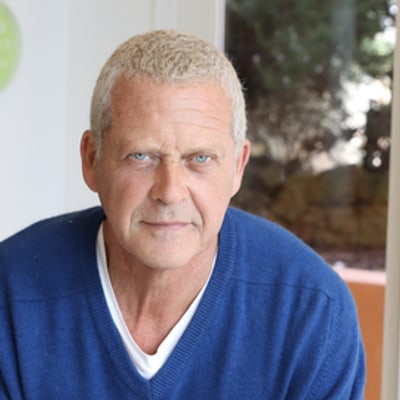
Hey everyone, Dr. Josh Axe here. Welcome to the Growth Lab. Where each and every week we cover the science behind how to grow yourself, your health, your wealth, and even grow your career, your relationships, and your spiritual health. Today we have somebody I'm a huge fan of. In fact, I followed his work for years. Irwin McManus, he's a renowned, uh, life architect. He is an award-winning author. In fact, he's sold over a million books, uh, and he's an artist as well. And he's somebody who I've heard him speak, uh, at a conference years ago. I'm going to share with that to kind of open us up here. But he's spoken to NFL teams, to CEOs, even the Pentagon. And so he's really, uh, a person who is somebody that I really respect in terms of their ability to lead. And so we're going to talk about mindset today, which— this is critical that you have the right mindset if you want to grow spiritually, if you want to grow in your career, if you want to live your best life possible. So excited to talk about all things mindset today with Erwin McManus. Erwin, welcome to the show, man.
It's so good to be with you, Josh. Thank you so much for having me.
Yeah, well, Ern, I have to tell you, so I had not— so this was back in 2005, and I had not, I had not heard of you. I was actually just about to go to grad school, and I was in Orlando, Florida, and I got invited to this event in Orlando, and I heard you speak for the first time. And, and you gave a talk, and I, I'm serious, and I've actually told people this for years, that it was the best talk I'd ever heard. It was one of the most moving. It actually changed my life in a way. And the talk was this. I remember the title still. It was— you asked a question and it was, "Will your life bring God to his feet?" And it was really an amazing talk because it made me really think about, okay, am I living the best life possible? Like, am I using my time here on this earth? Am I using my gifts and talents? Am I doing— am I living boldly, you know, counterculturally? Am I doing those things? And it really was a mind shift for me hearing you give that talk again. That was 2004. I mean, that was— it's crazy to even think about right now that that was probably 19, maybe 18 years ago. But it had a profound impact on my life. So anyways, one, thank you for shifting my life and being such a blessing. And by the way, do you remember— first off, you've given tens of thousands of talks prior, at least thousands. So you may not remember, was this event in Orlando, Florida, around Universal Studios? But anyways, just Thank you so much.
Uh, no, thank you. In fact, I think it's an event that was sponsored by a guy named Jay Strack, and it was mostly for student pastors. And, uh, yeah, and I remember, I remember, I, I remember being there that day.
Yeah, it was just, just absolutely amazing. You know, I, I, I, I wanted to kind of start off here and, and ask you a question even related to that talk. I think everybody And we see this a lot in culture today. There's a sense of people want to be recognized. They want to be seen. They want to, they want to live a life that matters, a life that I think people know maybe somewhere deep down, I was born for significance, but I'm not playing that out in my life. Talk to me a little bit about that. How people can, how often do you see people feel this thing like I was born for significance, but I'm not living it out? And how do we live a significant life?
Well, I think one of the challenges is that, you know, we're psychologically predisposed to comparison. And so the moment we become aware that someone else has achieved something or accomplished something or something is possible, that becomes our new measuring point. And, you know, so 200 years ago, if you were living on a farm, there were very few people that you knew, and everyone lived pretty much exactly the same life you lived. And then you had a pretty strong dichotomy of there are kings and lords and you're not one of them. And so you're the blacksmith or you're the carpenter or you're the farmer and that's your life. And so your sense of significance was defined by a very, very narrow space. And there are people in your lives. And so if your father was a blacksmith, you were a blacksmith. If your father was a carpenter, you were a carpenter. In fact, that might even be your last name. And so you're John Smith or you're, you know, you know, Karen Carpenter, and your name actually defines you. And so your identity was, in a sense, handed to you from the first breath of your life. And now we live in a space where we have an awareness of so much more. And so we're aware of the success of other people. But the problem is that there's a mythology of greatness that comes with it. We see, you know, Steph Curry and how great he is at his 3-point shooting. Or we, you know, we— and we become aware of Rafa Nadal and what a great tennis player he is. Or we see the success of, of, you know, of an actor or artist or, you know, Pharrell, whoever it may be. And so we think, oh, that could be me. And on top of that, we have the world of social media. And so people become famous by becoming famous. And so they don't actually accomplish a specific thing. That is defined by greatness, which used to be necessary for fame. Now you can actually become famous without accomplishing anything, so that becomes the definition of greatness. And so I think a huge part of our sense of insignificance is that we have so many different people and voices and stories that we end up comparing ourselves with. So then we wonder, am I significant at all? Does my life matter at all? And it becomes more about being known than being worth knowing.
Hmm. Wow. I think that's, that's, that's really powerful. You know, one, one of the things I know that, um, I think I've heard you in, in, well, I've, I've heard you speak on, I've, I've seen you write in your books, um, is this idea about also, you know, being bold and taking risks and not living the comfortable life. How, how important is that to, uh,, you know, having the best life possible.
Well, I remember when I went to my mom years later and I asked her, you know, why didn't you tell us when we were young that we had so many options and so many opportunities? And I grew up in a relatively irreligious home without faith as a context at all. And my mom told me that it was because her world was so small. Now, different things happen to different people. But when my mom was 40 years old, She had a life-changing encounter with Jesus Christ. For her, what that did is that it opened up the world to her, and it opened up the world to us. And all of a sudden, for the first time, we realized, oh, there are so many things that are possible. It's not an accident that a lot of great actors are the children of great actors. And it's not an accident that when your dad's a lawyer or your mom's a lawyer, that you become a lawyer. It's not an accident that George Bush became president when his dad, George Bush, was the president. When someone in your story accomplishes something, it becomes in your own mind possible. And that's why a lot of times we go, oh, is it nepotism? I go, no, it's actually a mindset that if everyone in your family is a— I have 4 cousins, they're all girls and they're all MDs. They're all medical doctors. And I mean, is it just that they have the— they won the genetic lottery, they're for the smartest human beings in the world? Or is it that they grew up in an environment where everyone becomes a doctor, you know, everyone becomes a lawyer, everyone gets a PhD, everyone becomes an actor, everyone's an athlete? Is it an accident that the Mannings are a legacy of quarterbacks? Do they just have the genetic code for being the best quarterbacks in the world? Or that Archie Manning set a new environment where everyone related to him thought, of course I can be a pro quarterback. It's so important in life to have people around you that actually help you realize that this is a possible reality for you as well. So living a life of adventure, you know, I'm from El Salvador, I'm an immigrant. So I started traveling when I was 3, 4 years old, uh, they would put us on an airplane, me and my brother, from the age of 4 or 5 by ourselves. And we would travel from San Salvador to Miami or to New York, and we got to know the stewardesses and the pilots. We were known because we would fly back and forth across countries. Isn't that insane? And so for me, international travel was a part of my story from the very beginning. And so now I've been to maybe 70 countries around the world. I've traveled the entire world, and I started taking my kids when they were little. And by the time Aaron was in first grade, he was already on his way to Japan with me. By the time he was 12 years old, he'd already been, I think, to 30 countries. Mariah took a little longer. She was afraid of getting on a plane with me. But the moment she realized she was missing out, she started asking to go. And now she's been to over 30 countries around the world. And this life of exploration and adventure, this life filled with curiosity and openness toward other people and other cultures and other expressions, it, it is so important to pass on. It's so important to make it a part— I wanted to make it a part of our family culture, that our family was about risk, our family was about adventure, our, our family was about courage, our family was about pioneering. And I wanted that to become a part of our family DNA.
I love that. You know, one of the things you said, and, and my big takeaway here is how much our environment impacts our mindset and then impacts our reality. You know, there's a great study, this was done at Harvard by a guy named Dr. Rosenthal, and he basically— and they actually later called it the Pygmalion effect, where it's basically they took this group, and you maybe, maybe have read this study, but they took this group of students, this, this Harvard psychologist researcher, and he said, okay, I'm giving you the students. Uh, he said he went and he tested all these students, and he said, okay, these are the best and the brightest students, okay, these 10. And, um, and basically they went through a whole school year, and at the end, these kids were the highest achievers. And, and after the study, he said, those actually weren't the best and the brightest. Those were, those were just random kids I chose. And what they found was those teachers, because they believed that these kids were capable of more, they held them to higher standards, and those kids achieved those standards. But it's just, you know, some of it, it's a self-fulfilling prophecy of what can happen when somebody says I believe in you. You know, one of the things I think that I see a lot of people missing today, and I was really blessed, Warren, to have a dad who would put his hand on my shoulder and say, I'm proud of you.
Mm.
And I think there's a lot of people that maybe don't have those people in their lives that have said, I believe in you. You know, you're capable of so much more. For those people who maybe don't have those encouragers or haven't had those people in their lives, what are some ways that they can make up for that now? And get the right, you know, and get around the right people in order to help grow their standards and improve their mindset?
That is such an important question. And the good news is you don't have to have many markers. I was a straight D student, 1st through 12th grade. I was an incredible underachiever. You know, I had reinforced into me that I had no intelligence, no talent, No unique gifting or ability. And I believed that about myself. And by the time I was 10 years old, I was so psychologically broken that I ended up in a psychiatric chair and ended up in and out of a hospital for months. And I'm not even in 6th grade yet. And in those psychological appointments, you know, I had a guy that looked like Freud. He had the beard, he had the mannerisms. You know, I met Freud before I even knew who Freud was. And an unusual thing happened. For whatever reason, this man gave me all these IQ tests and all these different assessments. And whether it was true or not, because it's the Pygmalion effect, he told me that I was a genius. And so I had one man tell me I was a genius while everybody else in my world told me that I was retarded. And I had to decide which story I would make my own. I can tell you that my name Erwin comes because I wanted a good American name. And so I go to my grandfather in El Salvador and said, I need a good American name. And he'd been studying World War II history. And so he names me after Erwin Rommel, Hitler's general over North Africa, which is sort of a terrible legacy, right?
Wow.
But the reason I couldn't change my name is because I'm 10 years old And in Spanish, my grandfather is telling me this, he's pacing up and down, you need a name. And I just wanted an average name. I just wanted a name so I could fit into school and not get in fights. And 'cause my birth name is Jewish and that just created all kinds of antagonism. And he said, a name, it can't be just any name. It has to be name of a leader. It has to be the name of someone who's brilliant. It has to be the name of someone who changes history. And my grandfather is telling me, You want a name that makes you average and ordinary so you can disappear. But you have to have a name that will, that will live up to what I see in you. So I had two moments in my life where someone— I don't know how my grand— I don't think my grandfather saw that in me. And there's certainly no evidence of it at all. But he defined me with a name that I never gave up because I didn't want to give up someone saying to me, "You want to be average and you cannot have that name. The name you have to bear is a name that expresses leadership and significance and greatness and genius." And so what I would say to people is pay attention to what story you listen to. You need to make sure you have people in your life who are calling you not to who you were, and not even to who you are, but who you can become. And by the way, Josh, that is why I wrote Mindshift. I wrote Mindshift because there's just too many people who do not have any voices that are not only calling them to more, but showing them how to step into that more. And early on, in fact, I was in an interview, someone asked me, who are your mentors? And this was a business event I just did for the YPO, Young Presidents Organization. And I said, you're making the assumption that I had any attributes someone would want in a mentee. And no one ever picked me to mentor me. But what I learned was I don't have to get picked. I can pick. They don't have to know they're my mentors. They are my mentors. So I start reading Isaac Asimov when I'm 9 years old. I start reading Robert Heinlein, Ray Bradbury, and Andre Norton. I start reading these physicists who write science fiction. Who begin to explore undiscovered universes and expand my imagination and begin to ask me deep questions. And I make these people my mentors. I discover Leonardo da Vinci and I make Leonardo my mentor. I discover Picasso and I make Picasso my mentor. I actually pick people through my life and said, they don't have to pick me, I pick them. Which by the way, in college, I chose Socrates. I made Socrates my mentor. And I became a Socratic, and I wrote papers on economic development and Socratic thought that got me admissions into multiple universities. But it was when I crashed into Jesus— because I wanted to save the world. I did. I wanted to end poverty. I wanted to end injustice. I wanted to make the world a beautiful place. I wanted to elevate the human spirit and rediscover what it meant to be human. The problem was I couldn't fix me. And if I couldn't fix me, how could I fix the world? And then I crash into this person named Jesus, and he tells me that my life has significance, that every human being is created in the image of God, and that we're broken because of our separation from God. And if I would allow him to, he would make me fully human again. And it was— It was like being mentored by da Vinci and Picasso and Einstein on steroids. Now I'm being mentored by the person not only who lives out humanity in the most beautiful way, but offers me a path where I can become truly human again.
Wow, it's so powerful. You know, one of the things— there's a brilliant psychologist I was hearing speak, and he talks about identity. Which is so much of what you're saying, right? And it's that oftentimes, you know, I think people think— and I probably thought this at one point in my life— where I sort of define myself completely outside of everyone else, when reality is we tend to tie our identities to other people, communities, God, you know, as another example of that. And so what you're saying is, you know, I think part of this is, is, you know, what do you, you You know, what, what do you, what are you hitching your wagon to? Like, like what makes your identity so unique and powerful? And being made in the image of God and having God as sort of the center of that, that's a really powerful identity. We see this a lot today, right? There's so much identity confusion. I think a lot of people might say, well, I'm, I'm, you know, my identity is connected to maybe my politics or my, uh, you know, gender preference or religion or something like that, right? So we see this a lot of times with identity. What is your advice on somebody? And a lot of this works as a hierarchy, right? It's like, well, what holds the trump card? Like, if I'm voting, like, am I voting for somebody who's going to give me whatever gives me the most, or what's for the most morally right? Like, so a lot of times it's like there's this, and I think our actions really can kind of speak loudly about that. And then, and then after this question, I want to get into asking you about these specific mindsets. But what role does identity and mindset— like, what's the relationship between identity and mindset?
It's interesting because this week I lead a community called The Arena that's basically a global mastermind online. And this week I talked about how to increase your capacity. And I said there are 3 dominant ingredients that will affect your capacity. And one of them is mastery. If you don't keep developing greater skills, you're not going to increase your capacity. Another one is your mindset. And what I talked about was really mind flow, not mindset. And if you don't control what flows into your mind and if you're focusing on negative narratives, you're going to always limit your capacity. But the third thing was identity. I said your identity will actually affect your capacity because if you grow up with a sense that you don't deserve more, you never will have more. If you have an identity that you do not believe you deserve love or are worthy of love, you'll never find love. And one of the tragedies in life is that you can believe these negative things about yourself that actually create a self-fulfilling prophecy, that you end up with the life that your identity finds compatible. And so it's so important. And again, you know, for me, it's different than, you know, maybe for other people, because I mean, I grew up with a You know, just a really shattered self-image. MacManus is an alias because my mom remarried a guy in creative underground economies. So I walk out of a police station that he convinced that we were MacManus. One day I'm Cardona, the next day I'm MacManus. You know, one day I'm Irving, next day I'm Irwin. I don't even know my name. I don't even— I never knew who my real father was. They tried to convince me my stepfather was my real father, but I remembered my real father. So I end up a psychotic mess as a kid, not knowing who I was. And here's what I discovered, because now I'm 65 and I still don't know who I am, but I do know who I'm becoming. It is so much more important to know who we're becoming than who we are, because who we are is static, but who we're becoming is dynamic. People will always see you as who you were. And you tend to see yourself in many ways as who you hope to be. And then who you are is somewhere in that negotiated in-between.
Mm-hmm.
And what I found is I find my identity in who I'm becoming, the person I have chosen to struggle to become in my life. And that has become to me the most powerful identity. Because I am imperfect. And I used to joke, say we're all hypocrites in process. We all have an idea of ourselves and we don't live up to it. And even without anyone else's measurement of us. But the truth is that if you can build your identity on what you value and who you are willing to struggle to become. And so I may not be the most humble person in the world, but I love humility. And I aspire to be a humble human being. I may struggle at times with being ungrateful, but I love gratitude and I aspire to be an intensely grateful person. I made a commitment years ago whether I would ever be known for being the most talented person or, or the smartest person or the most gifted person. I have no control over that, but I can become the kindest person. And, and so I just made the aspirations of the person I wanted to become my identity. And I think that's a powerful place to root your identity. And I'm able to do that because of unconditional acceptance. And I don't know how a person finds a healthy identity when our sources of identity are so volatile and so much in flux. Well, you know, what helps me is that my identity is really rooted in a relationship with a God who loves me without condition. And so I don't have to earn it. I know I don't deserve it. I just live in the wonder of unconditional acceptance. And because of that, I'm able to move to self-acceptance. Of course I know I'm a mess. Of course I know I'm imperfect. It doesn't matter. It doesn't change how good I feel about being alive and how grateful I am for being me. And then because of that, I have an overflow of generosity and kindness and grace that I can give other people.
You know, I love these points, Erwin, because I think they're so powerful. I think, as you mentioned, there's really three kind of time periods you could see yourself. You could see yourself as I'm this, you know, I'm the— and a lot of people live this way psychologically, right? Is I'm the kid that was bullied. I'm still the kid that gets bullied and picked on, and I'm the victim, right? Like I'm living in this past. I'm living in the present, which is maybe ever-changing, which is maybe somewhat of improvement. But also, as you're saying, who can I become? You know, when I think about the greatest version of myself, the greatest level of talent, the greatest level of character, the kindness, as you're saying, and I'm going to embrace and be that person right now, it, it actually is freeing in a way, saying I'm not, I'm not tied as much to that person I was in the past. I'm now focused on the future. So I just, I think that is such a powerful mentality for so many people. And also make sure— making sure you're tying your identity to something that is rock solid, not building your house, you know, house on the sand, building something that's on rock solid. And, and again, this is the thing too. I just see, you know, a lot of times it's just very easy to tie yourself to a friend group or politics, which actually even both sides can be constantly changing versus— and it's not to say maybe that's not a part of it. You know, I think of someone like Martin Luther King Jr. Right? And he knew, like, his number one identity factor was, I'm a child of God, I'm here to set people free, right? I mean, it was just a really, really— you could see in somebody really, really powerful identity. You know, one of the other questions I wanted to ask you was, and again, I'm, I'm super excited about your book Mindshift because I, I've been doing the research recently on this and looking at the fastest growing medical conditions as a group of conditions by far the fastest growing problem are mental health issues. It's not even close. I mean, cancer, heart disease, diabetes. I mean, mental health, depression, anxiety, loneliness, sadness, shame. They're outgrowing everything by far. Absolutely. How— how— what are your thoughts on— and one of the things I've always, you know, been— I've tried to do throughout my career is saying I want to get to the root cause. I don't want to just kind of put a Band-Aid on something. I want to get to the roots of the matter. When you think about something like mental health issues and you working and counseling so many people over the years, what are some of the roots of those issues and what are some ways that somebody can start to break free and build mental health?
All right, I'm going to give you, um, the answers because you asked me two basic questions backwards. And I, I think there's four different arenas inside of our minds that we need to really focus on: mental health, mental clarity, mental strength, and then one that people don't talk about very much, mental agility. And they're all nuanced in a— and that make them uniquely important. I think if I could just pare down mental health to a really simple basic, mental health is about your ability to stay in the positive narratives and to stay out of the negative narratives. It's about what's informing you. It's about mind flow. Are you, are you informed by hope, by forgiveness, by grace, by generosity, by love, by courage? Or are you informed by bitterness, by anger, by fear, by doubt and stress, anxiety, depression? All those can be rooted back to what narrative are you living inside of? What voices are you allowing to define who you are as a human being? And I want to go back to something ancient. And so you talk about ancient medicines and— but there in a minute. And so that's one part of it is mental health. And yeah, I've struggled with, with feeling depressed. I've struggled with moments of anxiety. I've struggled feeling overwhelmed by stress. I think that's a part of the human experience. That doesn't make you a lesser human being. It makes you fully human. You experience a spectrum of things. We have a misconception. We're not supposed to be happy all the time. We're not supposed to experience exhilarating joy every minute. And I think sometimes we live in this idyllic world where, oh, if I feel sad, there's something wrong with me. Or if life is stressful, I must be broken. That's just life. And then you have to learn how to manage that. And you have to decide what's the ocean and what's the island. If the island is the optimistic view of the world and the ocean is a pessimistic, negative view of the world, you're going to drown. But if the island is the pain and difficulties and disappointments and the ocean is an optimistic, positive, beautiful view of the world, you're always going to rise above. And so one of those is mental health. The other one's mental clarity. And I think this is about the ability to make decisions, to be able to filter through what is your perception of reality and what's reality actually demanding of you. And what makes us unclear, what gives us murky mental water, is confusing our emotions for facts. And one of the things I've discovered is that men are completely unaware that their decision-making is dominantly emotional. And, you know, we used to say women make emotional decisions and men make rational decisions, which isn't actually true at all. And women will oftentimes make decisions believing emotions are an important factor to decision-making. Men will make decisions not knowing their emotions are perceived as facts.
And let me give an example. This is really important. I think, like, I think about this as somebody, like, they may not realize that status is very important to them and they want to feel respected. And so all of this— so I can see just what you're saying.
Yeah. The Lamborghini is not a rational choice.
That's right.
It's an emotional choice. And so you have, you know, mental health, mental clarity, mental toughness is about resilience. And maybe I'm going longer than you wanted me to do on these answers.
No, no, please keep going.
Namen. And mental strength is really about resilience. It's about your ability to recover from outside factors that are outside of your control, like criticism, like failure. And I think the three dominant ingredients that resilience has to deal with is fear, pain, and failure. And we can come back some other day and talk about those. But those three are factors of the negative factors that you need to have mental toughness. Mental strength, mental toughness is your ability to overcome the dominant influence of fear, pain, and failure. And then the fourth one, and I wish I could spend all day on that one, is mental agility. And this one is, it's just so overlooked. And Josh, I am 65 years old now, and I can tell you that I am in the most dynamic phase of my life. I have never been more inventive. I've never been more courageous. I've never been more curious. I've never had a more insane, radical imagination. And what happens is that when your brain has mental agility, you can adapt to any environment, any circumstance. And my real concern is that I keep meeting 22-year-olds who are mentally rigid. 35-year-olds. Yes. Who are mentally rigid. Mental agility is not about age, but the great danger is if when you're mentally rigid at 26, it rigidifies to such an intense level by the time you're older that you become unchangeable and you become mentally fragile and incapable of creativity, innovation, or imagination. By the way, I've been a part of 3 neuro clinics over the years, and in one of them, the scientist in Dallas came out and said, we, we have discovered what we would call the lubricant of the brain. And I thought, oh, that's interesting. You know, there's great science. My wife does puzzles every night because she doesn't want her brain to stop being agile. And I like racket sports. And so I'm so excited that they discovered racket sports are maybe one of the best things for, you know, mental agility. But I actually agree with the scientists. They said the, the lubricant of the brain is gratitude. And what they found is that ungrateful people have rapid mental rigidity and the grateful people have unexpected mental agility. When you're ungrateful, your brain becomes rigid and unchanging. When you live a life of gratitude, your brain remains pliable and adaptable. And if I could just add a spiritual context to this, because I'm always like looking at spirituality and science, physics and psychology, I always see the integration of all of them. And one of the things that really struck me, even if I didn't believe in God, is how worship has become a fundamental pattern in the cultures of so many people in the world. And really, worship from a psychological perspective is gratitude. Worship is expressing gratitude when it's done sincerely. Isn't it interesting that worship or gratitude actually has a neurological effect of keeping you mentally agile and adaptive?
I love the research and science behind that, and I'd read some of that a few years ago, and it's really powerful. One of the other things I want to say with what you just shared at the end as well is And I think you're going to agree with this. This idea is that we were created to worship and we become more like that what we worship, right? And so we see this today, like even some people, you know, I see, you know, we've replaced religion with— it could be, again, it could be a, it could be a flag, it could be politics, it could be a number, a celebrity, it could be something. But people are worshiping something and becoming like some of those things. And so that's definitely something I think I, you know, I see happening in society today. And it's like, what do you want to become most like? That's what you know. That's— you got to be careful of what you're worshiping.
No. Yeah, absolutely. And I think one of the, like, fundamental psychological questions is whatever you're worshiping, does it make you more loving? Does it make you more caring? Does it make you more compassionate? Does it make you more generous? Does your worship limit who's an insider and who's an outsider? Does it— do you create an us and them kind of environment? And I think healthy worship expands love and it makes you— it destroys judgmentalism and condemnation and increases grace and compassion.
It's so good. It's so good. I, I want to, I want to talk about something that I, I actually didn't know until recently. Um, and you were diagnosed with cancer. And I know for myself, a big part of why I actually became and started focusing on natural medicine was my mom was diagnosed with cancer. I saw her struggles early on in my life and just saying to myself, I, I don't want to see anyone have to suffer with cancer again, or there's got to be a better way. Because since you went through chemo lost her hair. I mean, just, just, you know, the, the turmoil being in junior high at the time. And then eventually, uh, you know, learning all the things that I was able to learn and being able to treat people more naturally. But again, going back to this, like, you were diagnosed with cancer. How important was mindset? And did you have— was there anything that— if you share a little bit of that story, and also, were there any mind shifts or anything you had to say, okay, I gotta have a little bit of a mind shift here or think differently after getting that diagnosis?
Yeah, I think one of the things that, um, we should all be aware of is that once you're in the crisis, it's too late to prepare to be really good in that crisis. You have to prepare before you're ever in the crisis. And the way you prepare is by establishing healthy, strong internal structures, mindsets. The way you prepare is by establishing values and principles in your life that are consistent when things are good and things are not good. The way you prepare is by, um, building an infrastructure of character. And I, I can tell you, um, it was about 7 years ago, it was in December right before my wife's birthday. December 23rd is her birthday, 25th is Jesus's birthday. So two most important birthdays in my life pretty much are in December. And it was just a few days before, and a doctor told me I had cancer. Came out of the blue. We had no expectation of it at all. And found out I had stage 4 cancer and it had metastasized from prostate to bladder to lymph nodes. And so it was a pretty serious situation. And they sent me to a radiation specialist, one of the best in the world. And he was on vacation, but he saw my name and he realized that I was someone who had a positive impact on his daughters' lives when they were in their 20s. So he flew back in from vacation to meet with me, opened up his office. And then told me my cancer was too advanced for him to help me. But he knew 3 of the top surgeons in the world, and he would contact them because I'd had such a positive impact on his family. And, and this man was a complete stranger to me. And, and so I, I asked him to contact one of these 3 surgeons. And Dr. Colleli, who my understanding is he was the person who created the robot Da Vinci that actually performs the surgery. And so 3 weeks later, I'm going under, and it's supposed to be a 2-hour surgery, ends up being a 6.5-hour surgery. And when he said I had cancer, my wife, you could just see Kim, she was shaken up pretty bad. And I made a terrible mistake. I went from there, my daughter and son were supposed to meet us for dinner at a restaurant to celebrate that I could get insurance. And I told them I had cancer at dinner. And it was, I, I just did not factor in the incredible psychological, emotional weight it would have on them in that moment. And I think the reason is because— I know it sounds crazy— I wasn't shaken.
Yeah.
And because I didn't feel shaken, I actually didn't measure how devastating it would be for my kids, which of course it would be. And I told myself, I'm going to be able to— I'm going to give myself permission to feel whatever I need to feel. If I'm angry, I'm going to be angry. If I stop believing in God, I'm going to stop believing in God. If I'm bitter, I'm going to— I'm just going to let myself feel whatever I need to feel. This is not a practice run. I may be dead in 3 weeks when I go under. And what I can tell you, Josh, and I cannot explain it, is I never felt fear. And I felt, you know, a sadness going, I don't want to leave Kim and I don't want to leave Erin and Mariah. And I want to get to see, you know, my daughter have her daughter Juno. And, you know, there was a deep sense of potential loss, but I never felt regret. And I think a lot of people confuse fear and regret. What they think they are is afraid, but what they actually are is filled with regret. And I knew I'd lived a full life and I knew I'd lived my life to the highest capacity that I had at that time. And so I didn't feel a sense of, oh no, I didn't do this. And all the studies I've seen, it's at least 50% that your mental capacity, mental resilience, or mental strength has a determinative effect on your surviving cancer. And I had 6 and a half hours of surgery because it was more complex than they thought. Dr. Khalili got every, every piece of cancer out of my body and extraordinarily and, and saved all my functions. And so I wouldn't be living with bags all my life and things. And And then I had a catheter, which is, you know, just a medical tool for male humiliation. And they told me I had to have it for a month. I got it out in a week. I called Khalili and I said, what's the fastest anyone's recovered from this kind of surgery to be able to play basketball again? And he said, there is no record for this. And I think it was a matter of 3 months or a few weeks. I rented out a basketball court. I still— it had to be weeks because the holes in me were still bleeding. I went on a court, played basketball for 2 hours, and broke the world's record. And, and, and part of it is I determined that if I was breathing, I was going to be fully alive. And there's also something inside of me, and, and this is like maybe a part of the bigger picture for me, um, I'm a part of a community called Mosaic, and we had a survey on Easter one time and had over 1,000 people say they were atheists. At Mosaic. And but they said if God existed, they were open. And I've always had friends, just an immense number of friends that are atheists, they're agnostics, they're Buddhists, or, or of some other obscure faith. And, and I, and I knew that how I stepped into this moment would have an effect on their ability to trust and believe in what I said about God. And at every point along the way, I never felt like, why me? Why not me? Really good people have died of cancer. I never felt any bitterness. This is proof that God isn't good. God has always been good. I can't even believe I lived this long, that I've had the gift of living the life I've lived. And I think that had such a comprehensive effect on people because they watched me so closely. And, uh, and I'm grateful. And my son and I started our podcast Battle Ready, which is now MindShift, because he said, Dad, if you had died, there were so many questions I would have never gotten to ask you. And I finished what I thought might be my last book, The Last Arrow, before I had that surgery. And out of that experience, um, our daughter Mariah and her husband Jake had a little girl named Juno. And I started our our mastermind company together to mentor high-end, you know, geniuses and business people. My whole world has expanded so dynamically after having cancer that I feel like my life before cancer was almost like a lesser life than my life since cancer. And so I am— I— everyone's living on borrowed time, they just don't know it, and we should just live like we are.
Yeah, I love that story. Thanks so much for sharing that. I know when— a very similar thing with my mom, you know. I think when she had cancer, she realized— she started thinking about all the things she didn't get to do that she then wanted to do. And so after that it was over and she'd overcome cancer, because she did it twice, the second time she did all natural treatments, was able to— and, and so she, you know, she like— she, she wanted to bring her kids to Disney World, so they actually moved to Florida and got a full-time membership so they go all the time. But I think one of those things is sort of like, you know, you know, learning to number our days, you know, that's just— it's, uh, it's, it's really powerful. Um, thanks for sharing that.
Yeah, you know, people always ask me, they ask me too, you know, oh, you're a cancer survivor. I never think of myself— I never think of myself as a cancer survivor. Uh, I, I, I feel like cancer did not survive me.
That's good. I love that. That's such a— I love it. It's a powerful mindset. Uh, I got A lot more questions for you, but I just want to take a moment and just encourage everybody, if you've been enjoying this conversation, I want to encourage you to check out Irwin's new book. It's called Mindshift. It's in bookstores nationwide. It's coming out. You can go on amazon.com and check out the book. And as he shared, he really goes through how to build a strong mindset in many of these different areas. And so, Irwin, one of my next questions for you is, would you pick 3 maybe mindshifts that that you think might have the biggest impact on our listeners?
Oh, well, whenever I write a book, usually I have a chapter zero, and chapter zero is really the chapter that I'm trying to change your mental construct. And so chapter zero is really me trying to convince you that all the changes you want in your life begin in your mental structures. And that in the same way that you can have internal mental structures for failure, you can have mental structures for success. And I— if there's nothing else you gain from the book, you, you, you have to get this one: that all begins in your head. And that, um, you should spend your life using your energy to destroy internal limitations and to establish structures for success. And one of the things that— and I use an opening story that I will not tell you, I'll let you read it. But one of the things I discovered is that failure can crush a lot of people, but success can crush the unexpected people. That the weight of failure is not nearly as heavy as the weight of success, and that most of us actually hit our ceilings not because we failed and couldn't carry that weight, but because we succeeded and we couldn't carry that weight. And so people move into self-destructive patterns that actually limit their capacity because they don't know how to handle the weight of success. And that's one of the things I really focus on in the book is, is destroying internal limitations and realizing— and I'll pull into one of the other chapters, one of the later chapters is called You Are the Ceiling. And once you begin to realize that most of our ceilings are not external, our ceilings are not circumstantial, our ceilings are not environmental, and our ceilings are not the government or religion or other people or your parents in their imperfection. Your ceilings are your response to what you've experienced in your life. And this— here's the good news, because If you're a victim, you're in someone else's story. If you're bitter, you're in someone else's story. If you choose to not forgive, you remain in someone else's story. And what I want to do is I want to flip the script and help you understand that when you abdicate responsibility, you actually, um, surrender your power. When you take responsibility, you actually regain your power. And so the moment I can accept that I am my ceiling, it doesn't mean all those other factors aren't real. Believe me, I remember having my salary cut when they discovered I was a Latino that immigrated from El Salvador. My salary was cut probably by 60%. I remember my budget being reduced from 6 to 7 figures to $8,000 a year when they realized, oh, you know, he's not who we thought he was. It's an interesting thing being hired as Erwin McManus. They don't realize you're a Latin. And then when you come in, I experienced such cultural prejudice. I could spend my whole life whining or complaining or going, ah, that's just the rules of this game, but I can still win this game. You know, I could spend my life going, I never knew my real father. That's why I underachieve. Or my, my mom had to work and travel working for Pan Am, so she was gone all the time. That's why I can't achieve. I can spend a whole life pointing to things and saying, that's why you underachieve. Or I can take ownership of my life and saying, life cannot define you from the outside in unless you let it. And so one of the most important chapters is You Are Your Own Ceiling. It may be one of the hardest chapters to absorb, and especially if you spent your life blaming other people. It's so comforting to blame someone else because we're able to abdicate our responsibility for our lives. I think another chapter that is really significant and a really hard one for kind people is you can't take everyone with you. That's a really hard chapter, and that's a hard one for me. Deeply empathetic, highly relational. And I mean, that's one part of me that's still so Latin. You know, it's like everyone's my family. You just, you just move together. And, and one of the most painful things in my life was realizing every time I chose to elevate, there would be people who would no longer choose me as their friends. And I thought I could take everyone with me, and I would try. And my wife was an orphan and lived in a foster home from the age of 8 to 18, and she just tries to take everyone with her. And there's a sense where most people cannot psychologically manage the ark. I mean, imagine only taking two of every animal and having to say no to the third. Like, we never talk about the psychological pain of leadership and of growth. And the reality is that if you keep growing, you will not have the same friends all of your life. Mm-hmm. You will have to actually have a new friend group of people who celebrate who you're becoming, not who you were. And my best example of this is if you were an alcoholic and you had drinking buddies, if you keep the drinking buddies, you will not stay sober.
Mm-hmm.
And your drinking buddies don't even want you to be in their buddy group if you're going to be sober. And in the same way, if you're going to be sober, you're gonna have to choose new buddies and get rid of the drinking buddies. If you're going to If you're going to be a high achiever, you're gonna have to get rid of your underachieving buddies. Because when they're underachieving, they want you to be an underachiever. And if you're actually gonna pursue greatness in any field, you're gonna have to realize that most of the people in your life, they don't believe the sacrifices necessary for greatness are even ethical or healthy. You're gonna have to decide in your life who you must become., and then you have to realize you can't take everyone with you. Those are just two of the chapters that I think are so significant in the book.
I mean, it's such a powerful message, and I'm seeing how this plays out. Like, I think about myself in college, I had to make that decision of the drinking buddies, and I'm not going to drink and party like that anymore. And then moving on in grad school saying, you know what, I want to do even more, and having to move on. And so I think that's, that, that's something that I think, you know, you're choosing in a way, suffering over comfort. I mean, you know, one thing that I've heard from leaders, especially as people are growing, is, you know, it's— we've heard the saying, it's lonely at the top, right? I mean, it's the sort of thing, but it's— but growth can sometimes be lonely. And when you're in that inner— in that intermediate period going from sort of one, one phase to the next in your life.
Yes. Here's, here's the secret to not being lonely at the top. Bring new friends into your circle who are also at the top.
So good. That's good.
Because they're lonely at the top and they're looking for friends, but they can't find people who will celebrate them and their success. And so it's hard for them to have a friend circle because the people that they used to have as friends go, well, you know, you think you're too good for us now. But it's actually not that. It's that they do not like the measure of your choices against their own life. So I can tell you this, I have more friends now than I've ever had in my entire life. At 65, I have the most extraordinary friend circle. I have a, I got a voice message, video, video message this morning from someone who just won a $4.2 billion settlement. Biggest settlement in history. And When I met him 7 years ago or so, he had just lost $2 billion and personally lost $55 million, had had a heart attack and gone up to 270 pounds, had had an affair, and his marriage was coming to an end. And he sends me a video letting me know how much I've impacted his life and how his life has changed for the better. He's still married to the same woman. His kids are doing well now. His company has— he's paid off every $100 million debt he has in the world. His company is thriving. And we're friends and he takes time to send me a video saying, "Hey, I just want you to know how much I love you and appreciate you." And I'm going, when I was suffering and sacrificing and paying the price to live the life I felt called to live, I felt so misunderstood and I had so few people in my life. It was incredibly lonely. I think it's that in-between state where you feel an incredible sense of loneliness. When the gravitational pull of who you were and who loved that person is forcing you to break free to become who you are and you don't have people at the next level yet. That's where you experience loneliness. By the way, that's why Chapter 2 is called "You Don't Need the Applause." You actually have to decide that I'm not going to do this to be celebrated. That's so good. I'm going to do this because I must. And, and, and I'm going to give you all the chapters now. And there's an entire chapter called They Won't Get It Until You Do It. And, and so there's these psychological dynamics that you have to understand. And if you could just make these small granular shifts, it opens up your life. And so I can tell you, it's not lonely. I'm, I feel I'm at the top of my game. I, I'm having more fun than I've ever had in my whole life. I, I, I, I top— I, I coach the, the best professional football coach in all of the NFL. I coach the most influential fashion designer in the entire world. I coach someone in the music industry who's one of the most powerful people in the music industry. And I got to coach people who have almost zero margin of error, and I am having the best time of my life. And out of that, I've made some of the best friends I'll ever have because my friends have achieved so much that I'm not a threat to them. Yeah, yeah, I'm the poorest guy in the room, you know.
That's so great.
But they also follow me because they know they make more money than me, but they also know I can teach them how to not die alone. And so there's this incredible mutual respect And because in a sense, you know, what's that old saying? Greatness recognizes greatness. If you live a life that pursues your calling, if you live a life that is honorable and reflective of who God created you to be, people are going to want to be around you and you're going to have so much to offer. Yeah, I don't, I don't have to— in fact, this, this one business guy, you know, like 5 houses, fancy Ferraris, airplanes, yachts, the whole thing, right? And he's a Christian, you know, and he calls me and I go, hey, why are you always showing me like your new yacht and your new plane and your new house? And are you like trying to make me feel envious? Or, you know, he goes, no, I need to be aspirational so that people will want to have my life. And I told him, I said, I think I could have nothing and be aspirational, because that's really the key, is that your life is so aspirational, even if you lost everything, people would still want to be you because you've lived the most interesting, beautiful life.
That's so good. It's so good. You know, as you're sharing here, you, you've had the opportunity to be around— you mentioned billionaires, NFL coaches, uh, just incredible leaders. In being around all these people What is the best piece of advice that you've ever received?
Well, I get a lot of great advice and I hoard it, man. I bring it in and I apply it really, really, really quick. And, but ironically, a lot of my incredibly successful friends, when they come up to reprimand me, and 'cause they do, they feel very free, and to bring correction into my life, And I would say the number one correction they bring to my life is, um, you need to believe that you're worthy of success. And, and, uh, it always catches me off guard, but they can see it in me. They can see a discomfort with success. And, and I, I am like, I'm always uncomfortable every time something beautiful happens in my life. You know, if, if this book becomes a bestseller, I'll feel really awkward and uncomfortable. You know, it's And some of it is because growing up, never really being told that I had infinite value, that, like, my life was significant. And so I never— I was my worst own— my own worst enemy. I had a football coach come up to me after the senior year of high school and said, McManus, he had nothing to lose. Season was over. Said, McManus, we always waited for you. To step up to be the leader of this team. And I was always angry. I felt they never saw my potential. And he goes, we always, we always waited. Look, we waited for you, man. You always had what it took, but you just never believed in yourself. And I walked away from that going, I've blamed this coach for never seeing my potential or my talent. And underusing me, and it was always my fault. They kept waiting for me to believe in me. They already believed in me, and I kept waiting for someone else to believe in me. And no one's going to believe in you until you believe in you. And there's this just incredible thing when you enter into a relationship— I'm going back to Jesus, can't help it, man— and, uh, when you realize, oh my gosh, Like, if no one else chooses you, God just chose you. You know, if no one else sees you like God sees you, like if no one else ever identifies your value, God identifies your value. And that gets me up in the morning. And I'm probably— the best advice I've ever gotten is, Erwin, you need to become comfortable with who God made you to be and stop trying to limit what he can do. Because humility isn't becoming less. Humility is actually a posture of your heart where you value people more, but it's not that you devalue yourself less.
Yeah. Wow. You know, on the, on the heels of that, just as your last piece of advice for everybody here today, and I still have a couple more questions, but what is your biggest piece of advice for everybody?
Start right now. Don't waste 5 minutes on regret. What I find a lot of times when a person has like a breakthrough and they go, oh my gosh, I could live my life differently, they then they tank, they get depressed. They go, I've wasted so much of my life. You know, what was I thinking? What was I doing? Zero regret, 100% action. Right now, just do the very first thing that moves you toward the life you've always longed for. So don't hesitate, don't wait for permission. You already have permission.
It's so good. You know, Irwin, what, what, when you think about your next, you know, 20-some, however many years, you know, whether you live to be 100 or whatever it is, what, what, what are you really excited about right now? You're like, man, I'm waking up and this is something that I'm just feel really passionate about and I'm excited about for the future.
You know, the most exciting thing that I am developing right now is a space called the Arena. Um, what I, I work with an endless number of entrepreneurs, and one of the things I discovered is that most entrepreneurs are really bad with formal education, but they're really high learners. And, and our educational system is so out of touch with reality, and it's so antiquated that it is teaching our children how to be employees rather than how to be creators. And I wanted to revolutionize the way education is experienced. And so we created this online mastermind because, you know, I mean, I mean, frankly, Josh, like when I do one-on-one coaching, it's six figures and I lead a mastermind. And to be in this private mastermind, it's $30,000. It's a lot. And, and I kept thinking to myself, how do we translate the same level of learning to people and make it accessible to more people? And, and there's a really significant reason why it's not free. Because people who receive things for free do not create the mental structures that actually actualize that learning toward action and change. And so there has to be a price that people pay for learning. That's just a psychological reality. So I've created this space called The Arena. We focus on communication, Leadership, character, and then big ideas. And for me, it's my most exciting space because it's only like 150 people right now. We just launched it like a month ago, but I'm working with 150 people that are so committed to moving toward their optimal level of thinking and leading and living. It's just so much fun. It's like getting to work with Navy SEALs who want to think and live at the highest level. And that for me is like a dream come true because every week I speak at Mosaic and I speak around the world and And I, you know, my talks are everywhere, but I realized that maybe 1% of people who listen to those talks ever do anything I call them to do or teach them to do. They get inspired, but they never step into being transformed. And I wanted to find a way for people who were not just wanting to be inspired, but they actually wanted to be transformed. They weren't just committed to the idea of the outcome. They were committed to the pain of the process. And so I'm excited about the arena. I think we're going to revolutionize education. And when you provide what people need the moment they need it, it becomes explosive and dynamic. And, you know, it's, you know, you're a doctor. And so you have to learn so many things to prepare you for things that you're going to see one day. And, you know, which is a very different way of being educated, right? You know, but In most of life, life is like coming at you sideways, not forward. And probably the things that you do best, you actually learned intuitively, not in the classroom.
Yeah, that's absolutely true.
Yeah, that's absolutely true. And that's where learning is going. The future of learning is dynamic, it's tribal, and it's self-selective. It's, you know, it's just like, reading a book. One of the reasons they tell you not to give books away is that when you give it away, people tend to not read it. But if they buy it, they're going to read it because they've made an investment.
Yeah.
And these entrepreneurs always tell me, I'm telling you, if they— if they, um, unless they pay, they don't pay attention. And I've realized in my own life, like, I've paid for 20 years to be part of TED. And I mean, I, I— TED is very expensive to be a part of that community. And long before there were the TED Talks, I was paying to be a member of TED. And I actually was one of the donors of TED because I believe in dynamic higher education. The privilege to sit in that room to learn from physicists and botanists and biologists and scientists and psychologists, for me, was worth all the money in the world. And I would scramble that income and I'd pay $15,000 to $20,000 every year just to learn from the greatest minds in the world. And I actually think that we need to create an entirely new dynamic way of learning.
Yeah, I, I absolutely agree with you too. Yeah, we have— I have a mastermind. Well, I've been a part of a lot of masterminds, uh, over the years, and, and I've never done one, you know, done, um, been around these high-level influencers and not said, wow, that was, that was so worth, worth an investment. Um, one of the— my last question for you here, Erwin, it goes really back to my first comment, and that was the first time I heard heard you speak 18 years ago. Um, it had such an impact on my life, and it really made me think about who I could become. And your talk was, will your life— you asked this question, will your life bring God to his feet? And you told the story about Stephen, yep, you know, before he was stoned. And, and the story where, where we see, you know, uh, references in the Bible to the Son of Man sitting at the right hand of the throne of God. It's the only place that says he's standing at the right hand of, of the throne of God. When Stephen looks up. So I would love to hear, um, hear you share, how do we live lives, the sort of lives that are radical enough to make, you know, to— again, I'm not saying exactly this, but my point is to bring God to his feet.
Yeah, I think we have to make one significant mind shift to stop living a life of obligation and to live a life of intention. Your life is not supposed to be understood by everyone. In fact, if everyone understands your life, I don't know if you're living your unique life. And, you know, when you think about— when I think about, like, living a life that causes God to stand on his feet, I think it's when you live a life that is so dynamically reflective of the life God created you to live that God just wants to celebrate you. And, you know, for Stephen, it was that, you know, he was only going to have one message in his whole life. And his first talk was his best talk. And it, and it, and it cost him his life. And in a very real way, whatever life you choose, it's going to cost you your life. So you need to realize that whatever you're doing right now, whatever job you have, whatever occupation you've chosen, whatever you fill your days with, it's costing you your life. You know, when people ask me, you know, you know, oh wow, you know, is it right, like, to, um, you know, to charge for the arena or whatever it may be, um, you know, it, it's costing me my life. You know, when you decide to become a doctor, that decision, it costs you your life. And once we begin realizing that, um, whatever choice we make in the end costs us our life, that's when you want to realize, ah, I want to pay the price of my life to live the life God created me to live. I want God standing at the end of my life going, this is exactly the life I created you to live.
It's powerful. I think that part of the idea that keeps coming to my head is, you know, are the things you're doing worth it, right? Are they worthy? Are they adding value? Are they contributing in a significant way? And I I love it. It's such a powerful message. Well, I want to encourage everybody, again, check out Erwin's new book. It's called Mind Shift. You can go on amazon.com, barnesandnoble.com, it's bookstores nationwide. I want to encourage you, check out the new book. He really goes through these mind shifts. And as I've mentioned, I, I think this book is for more, and this message is for more than people that would be in the category of a mental health crisis. I think it would help those people, but I think for you, if you are saying to yourself, I want to experience a breakthrough. I feel stuck. I'm not growing as fast as I want. I know that I need to think differently at a higher level. I want to encourage you, check out the book. I want to say, Erwin, hey, it was such an honor for me to speak to you again. You've had such a big impact in my life, so I'm just incredibly grateful for you coming on today and sharing.
I'm just so honored to have been invited, Josh. Thank you so much. And thank you for helping me get the message out for MindShift. Yeah, I, I love what you're doing. I love the Growth Lab. By the way, you, you, you have the coolest last name in the world.
Well, you were talking about professions earlier. I, I, um, I, I'm, I'm, I'm, I was wondering if my, my, my, uh, ancestors were lumberjacks or something. So I'm not, I'm not, I'm not sure if that's true or not, but it could be. Um, maybe Irwin, where, where, where, where are the best places that people can find you?
The best place is just to go to my website, irwinmcmanus.com. And there you can learn about our conference called the Arena, the Arena live in Los Angeles that we're having here in LA. You can learn about the Arena Mastermind community we have. You can find the books that I've written. You can get all the free podcasts and messaging and, and you can pick up MindShift as well.
IrwinMcManus.com. I love it. Awesome. Well, thanks so much, Irwin. And hey, thanks so much, everybody, for listening today and being part of the Growth Lab, where each and every week we cover the science behind How to Grow. Hey, if you're not subscribed, remember to subscribe here to the page. Also, if you're watching on YouTube, I'd love to hear from you. What is your biggest takeaway from the wisdom that Irwin shared with us today? Hey, we'd love to hear, hear your comments as well in the comment section below. Thanks again, everybody. And thanks again to our special guest, Irwin McManus, for sharing his wisdom today.
The Dr. Axe Show is educational and not a substitute for care from your clinician. Disclaimer