Harvard Doctor reveals #1 Cause of Aging You've Never Heard Of | Dr. Andrew Salzman
What if aging isn’t simply your body “wearing out”… but your body losing the ability to repair itself? In this episode, Dr. Andrew Salzman joins Dr. Josh Axe to explain why chronic inflammation, leaky gut, and depleted NAD may quietly drain the very energy your cells need to heal, think, move, and survive.
Transcript
Click a timestamp to seek the player.
I've come to see aging as a defect in repair. People think about it as being wearing out. I don't think so. Conventional wisdom is that you age because you wear out. This is not what I believe. We are every second of the day sustaining massive damage, and we have massive repair. People don't appreciate it. They think when you look at— they look at themselves a week or 2 weeks later, it's the same person. It's not. It's ultimately about repair. It's not like a wearing down. Like, each day your body, you know, you're born pristine and then each day you wear out. It's not like a— it's not like an object, right? Because if you buy like a television set, it can wear out.
Yeah.
Or a stove or refrigerator. No television or stove or refrigerator in the world knows how to repair itself. So it's a completely wrong analogy to talk about wearing out. Basically, NAD is the goal. There's a lot going on. NAD does many things in addition to providing, uh, ATP. It has many other functions in the cell, and that's why called it the centerpiece of biology.
Step number 1 for everybody is reduce inflammation.
So how can you do that? And then when you're 80 or 90, if some small innocuous event occurs, you fall down, you get a little bit of a, I don't know, viral cold, can kill you. If there's one thing I can recommend to your audience, avoid Welcome to the Dr.
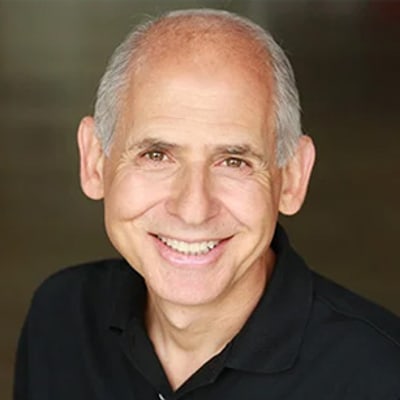
Josh Axe Show. I am here with someone I've wanted on the show for a long time. It's Dr. Andrew Salzman. He's a Harvard-trained ICU physician and one of the true pioneers in the science of aging. And before most people ever heard of NAD+, He built the first PRP-1 inhibitor, which is really important.
We'll get into that.
And what he found in that one molecule led him to call NAD+ the centerpiece of biology and longevity. And today we're going to do a deep dive on cellular energy and why you can do everything right and still feel like you're running at 70% or on fumes and be tired and exhausted all the time. And we're going to dive into how to naturally boost your NAD+ levels, how to promote longevity, how to also help conditions like hypothyroidism and chronic fatigue, and so much more on the show.
Dr. Salzman, welcome to the show.
Thank you.
Well, I'm excited to have you on. I have used NAD+ myself quite often, and I want to mention it's one of the only supplements I've ever taken where I actually physically noticed a difference. I would put it up there with the other one, uh, for, for me was, uh, N-acetylcysteine. But NAD+ is one I took as in the form of NMN. I've taken as NR as well., and I actually physically felt more energy. I noticed a difference.
I slept better.
And so I'm really excited to have you on.
And so give us a little bit of your background and how—
and about your discoveries of NAD+.
Sure. Well, first, thank you for the invitation to be here. Very happy to do that. It really starts for me, at least, back in 1991. So I was a physician in training in the intensive care unit at the Mass General with Dave Todres. David Todres was my boss. And I was thinking about a career in research. I wasn't sure. My father had been a famous professor and scientist, biochemist. So I was thinking about it, but most of my time was spent taking care of very sick kids, including neonatal, you know, premature infants. And David was very generous and gave me the chance to go to a meeting in Washington, D.C. And I walked in there, again, unsure what I'm gonna do with my life and all of that. And I'm sitting there, and there was a speaker there named Mitch Fink. Mitchell Fink, and what he said electrified me. I mean, I literally came out of my seat. He started talking about this idea of the leaky gut, and I didn't know what— he invented the idea. And I ran up there after the talk. I literally ran and I said, I'm yours. Just my— I will do whatever you want. Just tell me what to do and I will be there. And so we started talking and then I went out to his lab. The next week, literally. And I started working on this idea about, uh, what was this leaky gut. And we first started working in pigs, and I was an intensive care guy, so I'm thinking about septic shock and hemorrhagic shock and traumatic brain injury. So I'm starting to work on these pigs, and I developed a method to look at how leaky the gut might be. No one had any idea if the gut was leaky. This was a completely foreign concept at the time. People thought even that we were a little strange. So I'm out there doing this work, and I discovered that septic shock increases the leakiness of the gut quite dramatically. And, uh, that was pretty cool. And then Mitch gets appointed to be chairman of surgery at Harvard. So I move with him, and I decided we need to go into more details. And at the time, Mitch was thinking a lot about oxygen. You know, in sepsis, you really worry that the patients don't have enough oxygen to their tissues. So we started thinking about ATP. And in the gut, the structure of the— the microstructure of the gut is really unusual in the body, and there's very little oxygen at the tip of the cells. So I thought, well, maybe ATP could be a problem that's accounting for this leakiness. So to explore that, I built a system using cells, not pigs. I got tired of killing pigs. So I'm using the cell system, and I developed this whole concept of how to measure leakiness across the gut mucosa, the gut monolayer, which I built. And the first thing I saw was that I could increase permeability, I could increase leakiness by using stresses on the cell that inflicted damage to its energy supply. So I started looking at ATP, and as we did that, we saw huge changes in ATP that were associated with the loss of gut barrier integrity. So we saw leakiness in front of us. That was very cool. And then around that time, a guy from Japan joined our group, Naoki Uno. We were skiing a lot together at Banff out in Calgary, and we started saying, well, maybe inflammation could also be doing this, not just shock states, you know, like hypotension and so forth. So Naoki and I came back from the ski holiday and we gave cytokines to these cells, mimicking inflammation. And sure enough, we had a big, leak in the monolayer. Really surprised. So we said, well, maybe we should look at the ATP levels and they were down. So we said, well, here's a connection between the energy of the system and the ability to maintain integrity of the barrier. So that was the first thing at the time. We published all of that.
And when, when was this?
This was all in— and I went out to that meeting in Washington, D.C. in April of '91.
'91.
Well, can I tell you what's so crazy? So I remember I wrote an article on leaky gut, it was probably in 2010.
20 years later. Yeah.
And so, but it grew online to become probably the number one most visited article on leaky gut.
Right.
Now, what was funny is I had some medical doctors telling me there's no such thing as leaky gut, you're crazy. And then I'm like, well, there's all these articles by Harvard-trained physicians on intestinal permeability.
That's all my work from '91, '92. And then Naoki joined us, I think, in '92. And he was a cool guy. He was a Japanese surgeon. I liked him very much. And we then started looking at cytokines together. We saw that result. We measured ATP. That was low. So this was the first hint. I mean, Mitch had suspected that. He had bought this piece of equipment for the pigs to look at oxygen. But I then said, Mitch, let's go deeper. Let's look at ATP. We did that. And so I started doing all these publications around the idea that the gut could be leaky, that ATP might be involved, that energy was important. All new at the time. And then in '93, late '93, I got appointed to join the Children's Hospital in Cincinnati in July of the following year to be the director there of intensive care, to build a whole ICU there from scratch. And I was all excited about that. And before that, right around the end of the year, I read a paper coming out of Hopkins by Solomon Snyder's group. Solomon Snyder is one of the great neuroscientists of the 20th century. And he had a postdoc there named Ted Dolby at Boston, and they were interested in neuroinjury, which I wasn't particularly focused on. I was looking more at the gut. But in this, they elaborated this idea that a repair enzyme inside the nucleus called PARP could get activated if your DNA is damaged. And in fact, if it got activated, and when it got activated, it would eat up this thing called NAD. And then if there was no NAD, then there would be no ATP that you could make. So I thought, that's a crazy idea. It's interesting because I have these patients in the ICU in the ICU every day, that they come in in septic shock and nothing works. I mean, their kidney starts failing, their lungs fail, they lose their blood pressure, their heart is not working well. I thought maybe this is connected to what I'm doing to my patients. So I took that idea with me to Children's. I joined there in July of '94. And I had a student named Michelle Kennedy and who was a gastroenterology fellow. And I said, Michelle, why don't we look at this in the system that I built with Mitch in these cells, these monolayers? So what we did there is we added drugs basically to injure the cells, just like Solomon Snyder and Ted Dawson had done on neurons. We did this on the gut cells. And sure enough, the DNA was damaged and PARP was activated and NAD+ was just consumed. It just dropped to zero even. Dropped dramatically within minutes. And then ATP would fall after that, which you would expect because NAD+ is needed to make ATP. So the whole thing— then I did it in a heart attack model.
And just for everyone listening, you know, ATP— and I know we have a lot of really educated people on the show, but this is related to your cellular energy. I mean, energy that feeds every cell, every organ, every tissue of your body. And so these drugs damage this to the point to where there is no cellular energy for repair and for healing.
Right.
Which is where NAD+ comes in.
Well, what happens is, is that when PARP is activated, this enzyme in the nucleus, it gloms on to the damage and starts to fix it. But in so doing, it uses the NAD+ in the cell to have this process happen. And the NAD+ gets consumed like crazy. We saw in a heart attack model— did this in rats— within 2 minutes the DNA was damaged. Within 3 minutes PARP was activated. At 4 minutes, the NAD+ in the cell collapsed to zero. And then 60 seconds later, no ATP. Now, if you don't have ATP in your heart for 3, 4, 5, 10 minutes, that's it. You have an infarct. You have dead tissues. And that is what myocardial infarction is. That's what a heart attack is. It's dead muscle tissue. So we now understood this whole process began or appeared to begin with, with the injury that led to DNA damage, that led to PARP activation, NAD consumption, and then a failure to make ATP. Is NAD is obligatory to make ATP. You cannot make ATP without NAD. NAD is absolutely essential.
Well, NAD has obviously grown a lot. I know that I, I currently have a local clinic here called the Longevity Clinic. We have people come in all the time and we give them niagen, you know, NAD, you know, NAD+ IVs, and we see amazing results with people with chronic fatigue, hypothyroidism, a lot of people with chronic infections. To your point, uh, A lot of autoimmune disease, leaky gut.
This is all what you're talking about now is chronic. At the time, we were just— I was an ICU doctor. I didn't have patients like you see. I had patients who were in shock. I focused on that. Later, it evolved into this. But initially, we're just thinking about cat— catastrophes.
Right.
Right. That's where it all began. And so then what Michelle did is we looked at this and we said, well, if this is true, Oh, and by the way, in that system, the gut cells that we were looking at, they started to leak. And I said, Michelle, give a PARP inhibitor. So we got something off the shelf, which was terrible, but it was a PARP inhibitor. You could buy it for nothing. And she blocked the whole thing. So she could injure the cells. PARP would be there, but it couldn't be activated because we blocked it, and the NAD did not budge. Because that PARP was fine. It was blocked. ATP was sustained. It didn't go down and the cells didn't leak. So we stopped leaky gut for the first time by using a PARP inhibitor.
Wow.
And that was a huge shock for us. I mean, it was amazing to think that we could interrupt this whole system. But, you know, when you understand the basics of the science, the drugs are easy. You first have to understand the mechanism.
If you've been exposed to hidden toxins in your food, water, air, and even cookware, which almost 100% of us have, they could be wreaking havoc on your cells. Cellular toxicity is real, and most doctors aren't running the right tests to catch what's actually going on. This new test flips the script. The future of interpreting lab tests is here. I'm currently offering a simple at-home blood test that actually tests for the right things, targeted biomarkers including hormones, thyroid, and metabolism, plus a one-on-one review with one of my senior health advisors to help you understand your results. If you want to check it out and grab one before they're gone, just go to mybloodwork.com now.
Now, now, how did some of this extend to or connect to some of the work that Dr. Fasano did and looking at things like zonulin? And I guess that's maybe more on the testing side. In terms of, in terms of leaky gut specifically?
Well, later people started looking at the elements in the tight junction that preserve the function of the tight junction. And people looked at the microbiome and how that could influence the attachments of the tight junctions to hold the cells together like a gasket. But this was much later.
Yeah.
Okay. So they were really following up on what we did, but we were the first to really understand that energy in the gut cells is what holds the cells together.
Now, walk everybody through exactly what is NAD+ and how is that connected to our cells and mitochondria? Because obviously this even extends far beyond gut health, right? Oh, sure. Neurological health as well.
Yes, it actually is important in every cell. So the way our cells function is really like a machine. You have the apparatus there, but you need energy to drive it. It's like having a car. If you don't have any gas, the car could look beautiful, but it'll just sit in the parking lot, right? It won't move. What drives the car is the energy that the cell creates and then uses and then distributes to the places within the cell that are appropriate and that need the energy. Not all places need energy. Some yes, some no. So there's production. Even when we go back further, how do we get the energy? We're animals. We don't photosynthesize like a plant.
Right.
So every one of us, in fact, every animal has to extract it from the environment by eating. That's how all animals acquire energy. They're unlike plants. And that's one of the problems. Of course, when you take food from your environment, it's contaminated with bugs. So you're putting that into a sterile body, if you will. But you have to. It's the only way to acquire energy from your environment is to eat it. So we swallow it, and in so doing, we also have billions of bacteria that come with that. And so our gut is loaded with the bacteria. Anyway, the food comes in and then it's metabolized and it's absorbed carefully and selectively through this gut mucosa so that only the nutrients come through, not the bugs. It's very important. And then when the nutrients get in there, they get into the cell and they're converted into ATP. Now, where does that happen? That happens in the process of making ATP. There are 3 mechanisms, which I won't go into all the biochemistry, but there's a process.
Yeah.
For turning food, whether it's sugar or fat or protein, no matter what, it all gets converted down to energy. And that is happening in the mitochondria ultimately. So you get ATP there. But does that really help you? Not really. I mean, mitochondria are fine. It's great to have ATP in your mitochondria, but that's not where the energy is used. The energy is used in the part of the cell that's a machine that moves, that has pumps, all of these things. It's like a big operating factory. It needs the energy where it needs it, not in the mitochondria. So the mitochondria is stuffed with all this ATP but doesn't do any good. So it has to take the ATP out of the mitochondria and to somehow get it, get the power, get the energy to where it's being used within the cell. We can think of the cell as a factory with many rooms and even buildings, different parts, different machines, different different amounts of energy needed. It's complex, extremely complex. So the way that's done is that the first— it makes the ATP using NAD. That's how the mitochondria makes it. So you need NAD for that. The NAD has to be produced in the cell, and it helps to make the ATP in the mitochondria. That's step 1. Step 2 is that the mitochondria then says, okay, I'm stuffed full of ATP, that's great, It's good. Good start. What do I do now? Help.
Yeah.
And so what it does is it takes a molecule called creatine, and this creatine is either made inside the cell— we can do that, especially in the liver— or we swallow it when we eat certain foods. Anyway, we've got creatine around, hopefully enough, and the creatine wanders into the cell down a little shuttle. Little pathway, sneaks into the cell and it arrives at the mitochondria and it says, "Here I am. I'm here for you. What do you need?" And it says, "I've got all this ATP." And it says, "That's my job." It takes off its hat, says, "Thank you, I'm here." And the ATP reacts with the creatine inside the mitochondria to make creatine phosphate. So the creatine actually absorbs it. It grabs and holds on to this incredibly energy-rich phosphate. It's called creatine phosphate, which jumps out of the mitochondria immediately. Doesn't like to be there. Once it's got its package— like a FedEx driver, once you give it the package, it's off, goes. It leaps out of the mitochondria, races across the cell. It's very fast, can move a lot faster than ATP can. It's like a really a sports driver almost.
Wow.
And it races around the cell and says, where do I need to go? Where am I needed? I'm important. I have something to give you guys. Show me where you need it. Raise your hand. And around the cell, especially on the periphery of the cell, and in muscle cells, actually right over the muscle, in the brain, right where the connections are made to all the different neurons, they raise their hand and say, "We're here, help!" And there's actually a special enzyme waiting right there at the spot it's needed, and that's called creatine kinase B. And in the muscle, creatine kinase M. In the heart, it's a mixture, M and B. And they're waiting there. And they're saying, "Please get here fast. We need energy immediately. Not too much, 'cause we don't wanna waste it, but not too little, because if we don't have enough, then we can't do our job. We'll get in trouble with our boss." So the creatine phosphate finds that special enzyme, creatine kinase, and the creatine kinase has the phosphate stripped off it, ripped off, and placed onto a waiting ADP molecule, and you make ATP right there. And within seconds, even milliseconds, thousands of seconds, that ATP is used and the cell does its thing. Whether it's this or that, whatever it is, it's delivered right. For example, if you're thinking or talking, doing math, I don't know, memories, all of that uses ATP like crazy.
Yeah, wow.
But none of that comes from the mitochondria. Not one ATP. The ATP is put on creatine, it goes to creatine kinase and delivered right at the place on the neuron where it's used.
So this is really important. I mean, there's a lot of talk about NAD+ and NAD. Now there's also a lot of talk about creatine.
They're related. It's all part of one system.
Yeah, and obviously, and obviously for good reason, you know, when you're looking at longevity, I mean, these are two of the most important, uh, compounds that are consistently talked about. And again, that would be another one I would mention, is that creatine is one I know that when I'm strength training, uh, even if I'm tired and I need more brain energy, you know, I've noticed a difference as I know—
That's right.
It's all together.
It's one system. So here's the thing. What assures us that we can make ATP first and foremost is the production process that requires NAD+. So to answer your first question, NAD+ is absolutely essential for every ATP molecule you make in the mitochondria. It will not happen without NAD+.
Let me ask you this. From a dietary standpoint, what are the best food sources that help supply NAD+ maybe in the body? And what are the best food supplies that support getting more creatine?
Well, for the NAD+ story, there are specific parts of specific foodstuffs, I would guess you would call it, like nicotinic acid, vitamin B3. The vitamin B3 is the, is the principal source we have, but We can make it as well. So you don't need to take NAD or even NAD precursors like nicotinic acid. You can make it. Can you make enough of it? That's a different story.
Mm-hmm.
Okay. And that's where the whole supplement industry got excited. Maybe we don't have enough NAD and we need to boost the natural mechanisms we have in the body to provide for that. And that's probably true because we can find in certain conditions that our NAD levels are not what they're supposed to be. They fall. In fact, they fall with aging. Why do they fall with aging? But they, you know, there are a lot of reasons for that. We think we know, but, um, but, but if they're low, if the NAD levels are low for any reason, you cannot efficiently make ATP.
Well, now, how would this relate to, you know, one of the things that I've, I've, um, worked on with patients is having them eat certain food like pomegranates, for instance, high in ellagic acid. If we know raspberries, walnuts, there's some other foods there. But, you know, one of the things I noticed when I was looking at the research is probably only 40% of people, 40 to convert ellagic acid very well into some of the things that, you know, your mitochondria needs in order to, you know, make things like NAD, which, which again goes back to a lot of your research on gut health and how critical our gut microbiomes are for the conversion of the, you know, the, the things we eat into the things ourselves need.
Yes, I mean, all of that's happening at the level of the gut mucosa where it takes the nutrients, breaks them down, and distributes them. If you have an inadequate diet you're not going to generate enough NAD. That's for clear, that's for sure.
And is there a relationship there between something like— my point there with ellagic acid was being converted to urolethan A. Any connection there between urolethan A and NAD?
Not that I know of. Okay, we haven't looked at that. Okay, but there— but the gut health is obviously very important because if you don't get in the proper nutrients, you're not going to make NAD. And more than that, if you have poor gut health, you will have leakiness in the gut, and that will allow for microbial products, that is parts of bugs, not the bugs themselves, that only happens after like major burn injury, but products of the bug, when the wall of the bug, that will slip through. And once that slips through, it causes inflammation. We were the first to show this back in '90, '95, '96. And these elements of the bugs that get through cause so much inflammation at the level of the gut that the gut actually opens up and allows more bug stuff to get through, and you get a vicious cycle.
Mm.
Okay? And that— when that process happens, what you see is generalized inflammation if it gets bad enough. It may not just stay with the gut. The inflammation can actually spread into the body. And we think that in aging, the whole body has very low levels of chronic inflammation, and we think it's coming from this leakiness. Of the gut. Okay, so that's important because there are real negative problems with inflammation as regards NAD+. The first thing is that low levels of inflammation can activate PARP. We showed that in '96. So that means that someone who has chronic inflammation has chronic PARP activation. Why is that a problem? Because PARP eats NAD+. It's a major consumer. It is the major consumer overall of NAD in your cell. So if PARP is activated all the time, you're going to have lower levels of NAD. It's not like a heart attack. In a heart attack, you have massive PARP activation within 2 to 3 minutes and you go to zero. It's— I'm not talking like that. Yeah, chronic low levels of inflammation, you will get PARP activation and that will lower your NAD.
And how might this relate to somebody with autoimmune disease?
Well, exactly. Someone who has autoimmune disease has high levels of inflammation. You can tell that if you go to the doctor because your CRP levels are up or your sed rate. It's easy to see if you have chronic inflammation. Well, those people will have basal levels throughout their body of low PARP activation. Moreover, there's another enzyme. This is not a nuclear enzyme, but one on the outside of cells called CD38. And CD38 is a powerful enzyme, and it's triggered by inflammation, and it also consumes NAD+. So between PARP and CD38, that's like 95% of your consumption of NAD+. It's like a leaky hole in a bucket. So you can take— you can make NAD+. You can take supplements to boost your NAD+. You can have a good diet to have great entry of NAD+ and NAD+ precursors. But if you've got a hole in the bucket, you're going to lose it. Okay, it's falling out. So yeah, you can get NAD+ levels, but if you have a big hole in the bucket, it's just going to come out the other end.
Makes sense.
So The only way to really approach this is to avoid inflammation, stay in good health, good exercise, good diet, avoid inflammation. That will get rid of the CD38 PARP components and make that hole smaller. And at the same time, there might be a role for augmenting your entry of NAD type products by, by taking supplements as possible. I think that's probably sensible because by the time you're 60 or 70 or 80, Your NAD levels have really fallen.
Yeah. So walk me through some of the different NAD supplements and how they're different. So we have vitamin B3, niacin, right? That's, that's important. We've got NR, we have NMN, and then also we have things like— I mean, there's, there's other— let's stick to those. And then, and then even niagen and how that might relate in terms of what that is.
Well, really, they're all the same if you think about it. Basically, NAD is the goal. Right? You want to get your NAD levels up, not in your blood, but inside your cells. That's where it works to get ATP made in the mitochondria. It's got to be inside the cell. So how can you do that? If you give NAD, uh, if you swallow it, it doesn't— it gets broken up and it doesn't really get into the cells. If you give it IV, it can help in certain ways, but it also has trouble getting directly into the cell. So what people have done is they've tried with earlier precursors along the pathway of NAD synthesis. Try it, see if it works. For example, you could take nicotinic acid. You could take nicotinamide. Those are early building blocks of NAD. You can swallow them. They will be absorbed. Nicotinic acid is great, except it causes a side effect of flushing, so no one takes that.
Mm-hmm.
Causes all your skin to turn red. Yeah. No one takes that, of course. But people take nicotinamide. They take vitamin B3. Okay, it's a good start. Some people said, no, let's start further along. Why start with nicotinamide? Come on, let's try further down the pathway.
Yeah.
So they try nicotinamide riboside, NR. You mentioned that. That's a plausible way to do it. Then people said, why stop there? What about the next step? And that's NMN. So some people said that, hoping that either nicotinamide or NR or NMN will get into the cell and there inside the cell be converted to NAD+. That's the idea.
I'm curious if you have any thoughts on this. So when I took— when I've taken NMN, I've noticed a difference. I've noticed a difference in energy. I've noticed better health. Like, I've personally noticed a difference. I tried using NR, which I know can be really beneficial. And I was taking— I think it was 300 milligrams, and I felt that wired but tired feeling. I felt almost like I had too much caffeine, like on edge when I took it. I noticed that. Any, any, any idea why?
I don't. That's sort of a side effect.
I mean, NR, like a low-grade nausea too, was when I was taking it.
I'm not familiar with that. But, you know, there could be some— if you took 300 milligrams, though, is a very small dose. Most people recommend around 900 milligrams, 1,000 milligrams of these supplements.
Yeah, and NMN, I take that dose and I feel totally fine. And it might also have to do, I was reading online, sometimes to do with methylation pathways and other things, which is interesting.
There's a lot going on. NAD does many things. In addition to providing ATP, it has many other functions in the cell. And that's why I called it the centerpiece of biology. Energy production, very important, no doubt about it. But it does other things. For example, as I said, PARP uses this. And it uses it for a reason. When it's repairing your DNA, that's how it does it. So if you don't have NAD around, PARP won't work, or it won't work well. And if it won't work well, then mutations cannot be— and errors in, in the DNA cannot be repaired. They can't be fixed. And if that's the case, you'll go on to get cancer eventually. So people who have deficient DNA repair enzymes, like BRCA-deficient women, BRCA1 and It's not exactly with PARP, but it's very related to PARP. They will have a very high incidence of breast cancer and ovarian cancer. So PARP as a DNA repair mechanism is vital to our survival free of cancer. So if you don't have NAD, you won't have good PARP DNA repair. NAD is also important because it's converted to NADPH. Just a very simple change. But when it's converted, that NADPH, boy, that's important. That undergirds all of our antioxidant defense. Wow. It is also critical for the nitric oxide synthase enzyme. It's a cofactor. If you don't have any DPH, you don't make nitric oxide. So we're talking about—
Huge heart health, cardiovascular.
We're talking about cardiovascular, not good, right? We can have hypertension, no sexual ability.
Right.
Right? Viagra and all of these drugs are to preserve the effects of NO. If you're not even making, you know, there's no— there's not female or male sexual health at all.
Now, we talked about methylation for a minute. I know there's a lot, a lot of people here who I know because I've had comments on my YouTube channel and social channels that people— that many people have this MTHFR gene mutation. And I remember, you know, years ago, what most people do when they have this mutation is they go and take methylfolate and methylcobalamin. That's right. And they'll notice a difference. I have the gene, and I noticed that when I took those, I didn't really feel better. But when I took vitamin B2, riboflavin, for me that seemed to really make a difference. But I do know also that there is a connection potentially between NAD and even methylation pathways. What's the connection there?
So as you know, I focus a lot of time on gut health and getting to the root cause, and it's one of the most important systems in your body. And what you feed your gut matters. And that's why I want to tell you about Manuka Honey. They conducted a study where participants took 20 grams of honey daily— that was 10 grams twice daily— and the results were impressive. 79% reported reduced occasional bloating, 71% reported positive changes in gut health, and 60% reported less occasional reflux. Now that's the kind of data I look for before recommending anything to my community, and honestly, it lines up with what I've experienced myself since I started taking it. And that's the kind of data I look for before recommending anything to my community. And I can also say this lines up with what I've seen in my clinic. When I have patients start using Manuka honey, it changes their gut microbiome, their immunity, and it's the greatest health swap out there for sugar. And it's a great addition to your morning health regimen. You can add it into oatmeal or a smoothie or some herbal tea, or just do a spoonful. Your journey to better gut health starts right now. Head to manukora.com ax and grab the starter kit at 31% off plus $25 in free gifts today.
Well, the connection is that NAD is part of the energetic process required for some of these methylating enzymes.
Okay, right.
So I mean, the NAD, I think the last notice I took was something like 500 different reactions it's involved in.
I mean, so if everyone thinks about it like this, we talk about how important magnesium is with 300+ enzymatic reactions. NAD, 500. Right, so it is critical.
It's absolutely basic, and unfortunately, it seems to slip away as we get older. Through this inflammatory process, PARP and CD38, it just gets eaten up. But I mean, I saw a study in mice, for example, in the ovary of mice, and their NAD levels just start plummeting after the equivalent of about 50 years of age in a human. And the CD38 went through, shot through the roof. And if they got— if they took mice that didn't have CD38 genetically, you know, it's removed, they were having litters into the equivalent human age of 90. So clearly the whole ovarian health and so many parts of our body are in trouble as the CD38 rises over time, and it sure does. You can see CD38 levels that are very high in inflammatory states, and so that— it is critical to keep down inflammation. If there's one thing I can recommend to your audience, avoid chronic inflammation. Inflammation, whether it's from obesity or from autoimmune disease or whatever it is. Inflammation will lower your NAD levels, and if that happens, you're going to have the consequences. And how will you feel them? I mean, speaking as a physician, what, what would you see? Well, start at the top, the head. The highest demand for ATP in the body, it's the brain.
Wow.
Takes a quarter of our cardiac output. If you don't have sufficient if there isn't NAD there, or creatine, or creatine kinase enzyme, if that's not there, all those incredible interactions in that network start to fail. They don't fail completely, you're not comatose, but the ability to think quickly, to think sharply, to remember well, to retrieve ideas, to function at a top level neurologically, this requires that your energy is tip-top. So falls in NAD or creatine are really detrimental.
Wow.
When you go down to your muscle strength, well, that totally depends on ATP generation in the mitochondria from NAD, and then creatine kinase sitting right there at the muscle to put that creatine phosphate right into the muscle instantly so that when you want to do a rebound or do, you know, jump up, it's there. You don't have to wait 20 minutes. It all requires that creatine system to be operational. So, and we could go on and on about that.
And of course, your heart's a muscle, right? So, I mean, that's—
Well, yes.
And a lot of people connect this to, you know, your brain, your muscles, your heart, those tend to be the most mitochondrial-dense tissues, which to your point is your mitochondria need this NAD in order to create what they're going to create. It needs creatine, you know, post that.
That's right.
To create energy.
Let me put it to you this way. If you think about the mitochondria, mitochondria. Think of those as a giant power station. And every cell has these power stations because you need energy. And that's where the ATP is made. It's made in huge amounts, hopefully, ideally. I mean, if you don't have energy from your mitochondria, then everything downstream is kaput. So you need these power stations working, and NAD is absolutely obligatory there to make them work. But that is not enough. Just like having a large power station here in Nashville doesn't help people who live 45 minutes away. They need the energy in their home.
Yeah, right.
They couldn't care less whether there's a power station. I mean, they care. If there's no power station in Nashville, then forget it for them. But even if there were fantastic power station in Nashville, that doesn't help someone living 45 minutes away. You need a distribution system. You need to take the power from the power station to the periphery. Ultimately to their house. And that is what the creatine story is all about. It's the distribution system. So we can think of energy and any— you can understand that someone living 45 minutes away, whether the power station fails or the distribution system fails, from his perspective, he doesn't have enough energy.
Yeah. So, so what I've heard you say is step number one for everybody is reduce inflammation.
Yes.
And this is also really deeply connected to our gut microbiome, our gut health, right? Diminishing leaky gut. Again, anybody who's ever, you know, uh, done any yard work, or if you're pouring water in a bucket that has a hole in it, you're just going to keep doing that forever. I mean, you're just going to keep losing things. So that's the hole in the bucket— inflammation and leaky gut. So we have to reduce inflammation, and secondarily, increasing those NAD levels, increasing creatine might also be advantageous.
That's absolutely right. And I just want to say something about, uh, positive loops or Vicious cycles. Yeah, it's not just a one-off thing. When you get leaky gut, what that means— okay, you have microbial products that come in and they can cause havoc, they will cause inflammation. But the other thing they do is they damage the tight junction itself in the gut, which means that more leak happens and more leak happens. The more inflammation you have, the leakier your gut becomes. So it's a vicious cycle. It's not just damage, the damage progresses. So it's very important, first and foremost, to keep your gut healthy. The microbiome is essential, and there are actually certain foods you can eat that produce butyrate, for example, which close the tight junction and protect your gut integrity. There are lots of things you can do like that. Most of all, though, block inflammation. Yes.
Well, what are some of your favorite— there are any recommendations for foods that can support that butyrate production?
Well, the butyrate production is produced by by bacteria. It's a byproduct of bacteria and a specific group of bacteria, by the way, that happen to live on non-digestible fiber. So there are foods like natural rice, brown rice, that we don't really absorb very well. It's fiber.
Yeah.
We don't have the ability and they get just excreted out. But these bacteria that love them when they see that, it's a holiday for them. So they start growing like crazy and they basically snuff out the space for all the other bugs. So you can actually change the flora of your gut microbiome by changing your food intake.
Yeah.
What you eat determines what kind of bugs live there. And if you eat a lot of brown rice, and there's some other things as well, you will find that within a few months, you've radically altered the kind of bugs that live every day with you.
Yeah.
And those bugs produce butyrate. It's a short-chain fatty acid. And we've shown, and others have shown in these caco models that I invented, that this closes the holes.
Yeah. So what's interesting, you know, I did an episode on this for Gut Microbiome and talked a lot about butyrate and some of the other short-chain fatty acids that the gut can create. And your point is they're so critical You know, soluble fiber generally is one of the best things for supporting gut micro, you know, growth. But yeah, brown rice was one that was on there. Yeah, well, it was interesting. I think the top two were brown rice and then potatoes that were cooked and then cooled and then eating those, you know, the next day or later.
That's right.
Those are two of the top.
That's right.
Top for Butyrate.
People should pay attention to that. I think that's a very simple way to help with your gut health. Doesn't cost you any money over anything else. It's just a wise choice. And so this really is essential. That's the place to begin, is dropping your inflammation there, protecting your gut, and then preventing the inflammation from spreading throughout the body. We found from certain bugs that it's not just lipopolysaccharide, or LPS, which the bugs are, it's actually flagellin, as we think is the main driver. We found this out in 1996, that the bugs have flagellin, on— it's the whip-like tails that they all have.
Yeah.
And it can get loose and go through these holes in the leaky gut and actually circulate.
Wow.
And so we think that's actually the more potent stimulus. We're doing studies right now to, to look at that. You know, where I'm standing right now, it's been now almost 40 years, but there's a lot more work to do. We have a very active research program, got 15 scientists working every day on these problems of the creatine kinase and the NAD and the relationships. We're trying to understand to understand exactly how the creatine kinase distributes this energy and how that may relate to aging. Maybe we— our hypothesis is that the distribution network with creatine kinase is actually also faltering as we age. So I think that's another node in this network of problems as you get older.
Yeah, well, one of the things, you know, as I've studied longevity that is critically important cellular communication. I mean, just your body being able to, you know, communicate and say, hey, I need something here. You know, of course, this is huge with cancer, right? So cancer surveillance. I mean, as you age or your body becomes more inflamed, or if you have another pathogen, uh, that's, that's sort of blocking, uh, or taking up some of the focus of your immune system, right? So I mean, I think it makes sense. It makes sense, uh, that, that, that, that's an issue. Well, I have a question for you. So when you think about longevity and health and a lot of the research you've done. What would be maybe your top 5 in ranking order? Doesn't have to be that exactly, but in terms of just supplements or compounds or things that you think would be advantageous for people as we age for longevity or for general, you know, cellular health?
Well, the field has changed a lot, and today I can say that there are several. I'm sure in 10 years from now we'll be much more focused on the biology, on the mechanisms. Because as we're learning more about it, we're going to have much more targeted therapies.
Yeah.
But today, I think number one, preservation of NAD+.
Okay. Okay.
So whatever mechanism one uses, whatever product one buys, the goal should be of that product is to sustain NAD+. Very important. And then the next thing is the creatine story. I can't emphasize enough, somehow that got tied up up into weightlifters. And I, I, you know, my son's a weightlifter, God bless him. I mean, people use it and it's very effective. Yeah, in building bulk. Uh, but it is much, much more than about weightlifting. It's about our cognition, our immune system, uh, it's our cardiovascular system. Everything in the body, as I said, is using this distribution network. So I would recommend people look seriously at creatine as a supplement, not because they want to be weightlifter, but in order to maintain good health, and I think it will affect— I don't know if it'll make you live longer, that's a more complicated question, but I think it will make you live better.
Yeah.
So that's certainly something. I think inflammation, you know, that's hard to block, but if you can maintain a better microbiome through nutrition, I think that's— it's not a drug, but it's something you can do. It's an intervention.
Yeah.
So, and then I think exercise is probably critically important as well because it keeps the density of your mitochondria much higher.
—right?
And so even if there's slippage with aging and some of the things I've mentioned, you build a reserve. You know, aging— if I can just speak more philosophically here— yeah, I've come to see aging as a defect in repair. People think about it as being wearing out. I don't think so. The conventional wisdom is that you age because you wear out. This is not what I I believe that there is a balance. I believe that there's a constant degradation that starts even before we're born and is continuous. Even in 2-year-olds, they're constantly having damage everywhere. What differentiates a 70-year-old person from a 1-year-old is the repair. The 1-year-old has enormous repair capacity. It's incredible. You can see 4-year-olds in the ICU who are sick as stink, terribly sick. And a week later, they're running around.
So over Christmas this year, my 2-year-old fell off a monkey— well, first anyways, you know, she tried to get on the monkey bars, fell off, broke her collarbone. It was totally repaired 2 weeks later. Like she didn't even, you know, break a bone. Now, an 80-year-old person with that?
Yeah. Not so much. Right, exactly. Months. Months of rehab. You have, people break their hip and die. I mean, it's a completely different story. Now, why is that? In my opinion, because there is a balance between the damage, which is continuous, and repair. If your repair is fivefold what you need, which is the case for a 2-year-old, you have damage, you repair it, so what? Yeah. Once you get to the age of around 25 to 35, it's sort of a balance. You have repair and you have damage and you hold the fort. Once you get into your 40s, what starts to happen is that the repair mechanisms themselves are damaged. Mm-hmm. That's the key concept. Mm-hmm. That the repair process, the repair factory, the repair mechanisms themselves are damaged, so they don't repair as well. By the time you get to 50 and 60, The damage is still there, just like in a 2-year-old. You're really not able to repair it. And you start to see so many systems, whether it's your skin or your hair is changing, your eyesight is not as good, your cognition is not as sharp, you can't run as fast, your muscles are not as strong. So many problems. Then you get into your 70s and 80s, and now you've tipped the balance and you start to see decline. What is— and then if you take a 90-year-old, you can have lunch with them and they're fine. Apparently. You're sitting there, you're talking to them, they're bright and sharp, everything looks great. You're having a wonderful conversation and then you read, you find out 2 days later they died. What happened? What happened is that they looked okay to you, but in reality, they are, they have no reserve.
There's no repair. Yeah, I remember seeing this recent study where they went and looked at a woman. It was, I think, the longest living woman today. I wanna say she was, well over 100, maybe 112. And they went and measured the number of stem cells that she had circulating. You know, because we should have these. And it was like, it was either 0 or 2. Like, it was almost 0.
They're operating on fumes. And if you don't have repair, it's ultimately about repair. It's not like a wearing down, like each day your body, you know, you're born pristine and then each day you wear out. It's not like an object. Right. Because if you buy like a television set, set, it can wear out. Or a stove or refrigerator. No television or stove or refrigerator in the world knows how to repair itself. So it's a completely wrong analogy to talk about wearing out. We are every second of the day sustaining massive damage and we have massive repair. People don't appreciate it. They think when you look at— they look at themselves a week or two weeks later, it's the same person. It's not. Your gut. You're being rebuilt almost every second of the day. That's right. Your gut completely replaces itself every 3 days. So what— so we are not a static entity that accumulates damage over time. We are a living, incredibly complicated machine that's intrinsically built to repair itself every second.
You know, and some of these organs repair much better than others. I mean, to your point, gut lining our, you know, blood cells every 4 months and our skin. But then you have areas— well, in the liver too, right? I mean, it can really regenerate. Sure. But, you know, the heart, the brain, you know, nerve tissue, those don't necessarily—
very poor. Yeah, very, very little. Well, they repair themselves on the inside quite well. There are millions of repairs going on in the brain every second inside the cells. They can repair up to a point, but your point is taken. I mean, if you death of a cell, like in Parkinson's disease or Huntington's disease or in Alzheimer's disease or in stroke, you know, in a 60 or 70 or 80-year-old, those cells are dead. They're not getting repaired. That's not a small amount of injury. That's collapse, right? And once you get to that point, then you just, you know, you've lost tissue.
You know, I learned this one— this is a few years ago— I had a spinal infection and it spread into my disc, into my bone, my L5 vertebra. I didn't walk for a year, and the recovery was really really long, and I didn't know— I mean, I had the doctor tell me, hey, you may never walk normally again. And, um, what I did was, is I ended up going and just— I learned everything I could about how to heal. I already knew quite a bit, but I learned a lot more. And I ended up getting in a hyperbaric chamber pretty much every day for, for 90 days, and then continued on with it. I did, uh, NAD+ IVs. I did did everything you can imagine and got back to 100%, was able to heal the tissue. But one reason it took so long to heal was the oxygen supply in the disc— very poor— was so minuscule. Very poor.
Now, if you think about what I'm saying with the energy, with the, with the repair process, if you have the necessity to have constant repair and you have resilience where you have buffer, you have extra repair, all of that repair is driven by energy. Energy, right? So if you have inadequate energy stores, you can't pursue this. And so what will happen is you do an inadequate repair and you accumulate damage. Damage doesn't get fixed. And like I said, when you have damage, it feeds on itself because ultimately it damages the repair mechanisms themselves. Imagine you have a car, you bring it every day to the shop, shop and the guy has to fix it. Your car works beautifully. You drive it out of the shop every day. It's like a brand new car. But imagine if the guy who's fixing it gets old. Mm. And pretty soon he has arthritis. He can't pull the wrench very well, but you need to have those bolts tightened. Right. But he can't quite do that anymore. So he only tightens 2 of the 3 bolts. And then the wheel starts not being so symmetric and it starts moving around. You bring it back Now he can't even move his elbow. He says, "Look, I can do one bolt. It's the best I could do. Please don't leave me. I'm your repairman." And he fixes one bolt. Eventually, the repair process is so degraded and so inadequate that the machine cannot repair itself and it loses resilience. And then when you're 80 or 90, if some small innocuous event occurs, you fall down, you get a little bit of a, I don't know, a viral cold, can kill you, right?
Yeah. And, and, you know, and I think this goes back to— there's so much discussion, which I love this discussion around, uh, healthspan and longevity medicine and what can we can do to support that repair process as we age. And so I have a lot of great takeaways today. One is we got to reduce chronic inflammation, support the gut, reversing leaky gut. I mean, that is absolutely crucial to this. But then also there are things that are decreasing as we age, as you mentioned, NAD and creatine, absolutely essential as we age. And I'm glad that creatine is starting to get more— move out of the bodybuilding conversation. You know, I recommend it to almost everybody now. I mean, a lot of people, uh, as patients, I'm recommending they do creatine. You know, a lot of, you know, women in their 60s who are going through menopause, you know, or just, you know, made it through menopause, who are having their hormones depleted, I'm putting them on creatine and they're noticing a phenomenal difference in especially their brain, you know, especially clear memory recall. And so I think that these are— I'm so grateful for your—
let me say one more word about creatine just to help the— because I totally agree with what you're saying there. It's not just the bulk of ATP that's needed. When I say you need fuel, it's a little bit different. Okay, you need fuel in your car to drive, yes, but you don't just slosh the fuel around your engine. It actually goes into a specific place in your engine. And there is fuel in the carburetor and other things that are finely adjusted. So the creatine kinase system is not just delivering ATP. It's delivering the correct amount. Mm. If you've ever had a car which gives either too little or too much gas from the carburetor mixture, it doesn't run well. It's not enough just to have gas in the car. It has to be distributed thoughtfully and precisely depending on how fast you're driving So in the cells, same thing. The ATP has to be delivered where it's needed, when it's needed, and neither too much nor too little. And this is all based on this enzyme creatine kinase. So you can take creatine, but ultimately this enzyme has to be working pretty darn well as well. That's what my research is entirely on. I'm focused entirely on how do we take creatine and accurately, precisely, and second to second modulate dictate how much or how little it turns into ATP. It's a second-to-second business, especially in the brain. And we're looking at dosages.
It seems like most of the studies are anywhere, I mean, maybe mostly 5 grams, but you see 3 grams up to 10 grams. I mean, what is your advice on the dosage?
The total creatine in the body is about 380 grams. And that's right, that's the total. Wow, yeah. That's the total. But every day we lose creatine. Creatine is converted without an enzyme. It's just converted in by water to creatinine, which we pee out. Yeah. So we have a loss of about 5 grams a day of creatine, whether we like it or not. Now, if you don't have enough to begin with, uh, you're going to— and you're not replacing it— you will have a fall over time. Also, the mechanisms that make creatine tend to decline as we age. So yes, we would like to have 380 grams in a healthy 70-kilo adult, but we may not. And if you're on the borderline where your creatinine— where your creatinine levels are falling, then you need to do something about it. The best way is to supplement. Simple. You swallow it. It's not a guarantee that it will work. Creatine kinase, the enzyme that uses it, has to be in good shape. And that also, we believe, is affected by inflammation. I'm doing studies right now literally as we speak today, on looking at how creatine kinase is influenced adversely by inflammation. And if I can show, which I think I've already shown last month, that the concept is right. Now I'm working on the details of it, but I'm starting to show that inflammation itself can degrade the function and ability of the enzyme that works with creatine. Creatine. And that will lead to a whole range of new therapies, I hope. So it's not just taking creatine, but it has to be used properly.
Well, I'm so grateful for the work you've done. You know, I think that, uh, again, you know, I was reading about leaky gut so many years ago, and, um, it was something that when I really— the way that my mind works is always looking at what is the root cause of illness. And that's one thing I'm just really grateful that you've spent your entire career studying. Where does it start, right? Where does illness start? Where does aging start? Repair start? And so I'm really grateful for your research, because I do remember reading about years ago and some of your research as I was writing articles on leaky gut and intestinal permeability and autoimmune disease and even NAD. And so again, really grateful for your work. And where can people find out more about you and the great work you're doing?
Well, they can look at my publications if they're interested. You know, we've published about 200 papers over the years on this, and they can look at the websites, I suppose. Yeah.
What's the best website for—
I work in a company right now called Wonderfeel, and they have getwonderfeel.com, and we have a science section on the website. And you can also go on the web on PubMed, which is from the government. They have a list of all the publications. You can look at my name, A.L. Salzman, and you can go back a long time when I was younger and find these interesting articles. It really was exciting. I mean, today everybody talks about these things like they just exist, but at the time, like leaky gut. Yeah. But, you know, this was really from Mitch Fink's mind. I mean, the man created the idea. He was a brilliant guy. Unfortunately, he's died recently, but he was a genius. And he had this bold idea. And we did not have a lot of people nodding their head when we did this. People thought we were a little bit crazy.
And even at Harvard, you know, people, you know, with all the credibility there, you know, what's funny is I remember when I started practicing about 20 years ago, I would ask people, Actually, most people didn't know what an omega-3 fat was 20 years ago. I mean, Dr. Sears and a lot of his work and stuff, people started becoming aware. But 5 years ago, nobody knew what a— nobody heard of mitochondria hardly ever, you know. To your point, NAD, that's just now becoming popular. Creatine, older, but to your point, kind of rising in all— in a lot more uses now. And, uh, it's going to be exciting to see how this continues with your research you're doing now and so many others are doing, uh, over the years.
I think it's exciting interesting when people know more about how science evolves. Just to hear that there's some understanding or some fact, okay, that's nice to know, but really science doesn't just happen in a vacuum. There really, there are people who do the work. There are ideas. There are ideas that don't work. You don't hear much about that, but most of science is pursuing hypotheses that actually are wrong, but that's okay. I mean, it's the active process and it comes from curiosity. Curiosity and a passion to find out how things work.
I appreciate your curiosity and all the great work you've done, Dr. Salzman. So everybody, hey, thanks so much for tuning in here to the Dr. Axe Show. Dr. Salzman, again, brilliant mind here, worked at Harvard and has done so much amazing research. I want to encourage you to go check him out. His last name is spelled S-A-L-Z-M-A-N. And this has been a fascinating conversation for me. I've really enjoyed learning about—
more about NAD and creatine and how How to slow cellular aging, support cellular repair, and promote longevity.
And hey, if you're not subscribed here to the podcast, please do so. It's the number one way I can continue to bring on incredible high-profile guests here like Dr. Salzman.
Also, share this episode with somebody. Be on mission with us helping people heal and take their health to the next level.
Thanks so much for watching. We'll see you on the next episode.
The Dr. Axe Show is educational and not a substitute for care from your clinician. Disclaimer