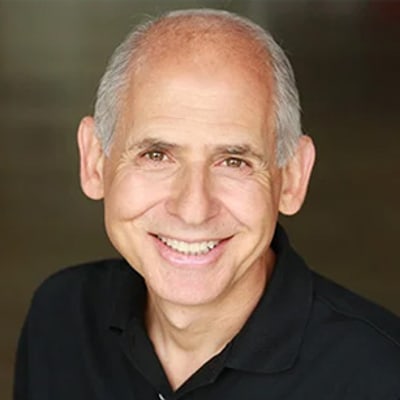
How to Build a Strong Identity and Stop Playing the Victim with Dr. John Delony
Transcript
Click a timestamp to seek the player.
Anxiety is just a smoke detector. It's not the problem. It's just letting you know there's fires in your house somewhere. And usually those fires are relational in nature. Your body's detected that you're alone, that your marriage is falling apart, that you don't have any friends, that your boss isn't safe. It may be detecting that you're not in control of your own life. The agency we talked about, it may be letting you know that, hey, uh, you have lost autonomy, right? It's letting you know you're not safe. There's danger somewhere, right? Underneath that is we have a culture that says If you feel bad, if you feel anxious, that's the problem to be solved. I disagree with that wholeheartedly. If you— that's like hearing your smoke detector in your kitchen and just racing in there and climbing up on the ladder and pulling the batteries out. You stop the alarm. Congratulations. And your house burns down around you, which is what's happening to us right now in this culture.
Hey everybody, Dr. Josh Axe here. Welcome to the Growth Lab Podcast, where each and every week we talk about the science behind how to grow yourself, your health, your wealth, and take your career and finances to the next level. Today we've got a guest I'm really excited about. It's Dr. John Delony, and he is a PhD in psychology. And we're going to talk about how to overcome limiting beliefs. We're going to talk about how to build a mindset that can overcome anything and a whole lot more. Also, John actually just wrote a book. We're going to talk about that a little bit today as well. But Dr. John, welcome to the show.
Thanks, man. And I think it's important to note my PhD's in counseling, which only matters if you're nerds, and it's below the hierarchy of psychologists. So There you go.
I think it's— well, listen, you know, I think generally you help people with their personal problems, and so it's very, uh, very good. You know, I've been watching you recently on YouTube and just so impressed. You know, you do— part of what you do is a call-in show, people calling in with, I mean, just a number of issues, everything from depression to anxiety and numerous mental health issues. Talk to me a little bit about what are some of the fastest growing health problems across the board that you see and deal with today.
I— so when I first started the show, people would call in and ask about, you know, my husband cheated on me, what do I do? Or I've just got diagnosed with these 3 things and I don't know what to do next. And I found myself, because I don't have a radio background, I would ask, why are you calling me? Like, you don't even call your friends. Every person had the exact same answer. They said, John, I got nobody. And so I think the underlying pathology under a lot of what's going on right now is that we've created the loneliest generation in human history., and our bodies are spinning off in a thousand different directions. And diagnostically, we're playing whack-a-mole with them. Oh, you got this, you got this, you got this, you got this. And those of us nerds are really impressed with our manuals and our diagnostic guides, but I think the underlying pathology is pretty similar, which is our bodies are not designed to do life by ourselves. They're not designed to sit 2 inches apart but be 2,000 miles away from our spouses. On— I'm on my device, she's on hers, or what?
Yeah, we've created a world we just can't do this.
And our kids walk in and head to the room, shut the door, and they get on their screens. And the only interactions we have is on Saturday mornings when some soccer coach is telling us we have to drive 9 hours to the travel soccer game for our 14-year-old. Like, we've just created this insane world. And, um, so I think underlying all of it is— I mean, depression, anxiety, OCD, ADHD— I'm really starting to lean towards thinking those are a lot more similar diagnostically underneath all the smoke than we like to separate them in our— by chapter, right?, right, or by, by diagnostic code, right? I think the underlying pathology is, is becoming clearer and clearer that this poison's coming out of the same well.
I want to get into that, but I also want to say you mentioned ADHD. I was watching this interview with Jordan Peterson recently, and he was quoted saying, I think ADHD, generally speaking, 90-some percent of the time, is a rubbish diagnosis.
So, um, I agree with them. Um, I think we have tortured a generation of little boys and told them, you will sit in this classroom and you will sit in that plastic chair and I will lecture you under an education system. My first PhD is in education, so I grew up in that world where, um, and I, I remember the studies in grad school when it was like, hey, teachers call on boys more than girls, teachers, y'all have to fix that. And they went, okay, and they smashed that pendulum to the other side. And there was truth to those studies. It was true, rambunctious, fun, wild little boys were the ones that the teachers called on. Um, and you and I both know anxiety— ADHD is expressed often in girls. They get quiet and they retract, right? And boys get bananas. But we've just beaten down a generation of, of little boy. Um, I asked— I was with a mentor of mine, a guy that was really one of my psychology professors and my crisis guy. He trained me on crisis response stuff. We were having dinner, this is about a year ago, and I said, hey, I'm getting a lot of questions about ODD, oppositional defiant disorder, with kids. And I said, is that real? And he looked at me and he said something very instructive. He said, yes, and you've never seen it. And I said, what do you mean? And he said, until you've been in a psych ward and there's 6 grown men holding down a 5-year-old, it's very real. But like, the DSM was designed for researcher to talk to researcher. So we're both going to study depression, we're all going to make sure we're using the same word for the same thing. Yeah, it's also used to help the mental health profession feel more medicalized so they could get insurance payments. And it does help with treatment plans, right?
Yeah.
It was never intended to be released to the wild.
Wow.
So that you can Google what's wrong with my kid and label your kid as a narcissistic hyperactive, like, make up the, you know, these overdiagnostics. And so it got out of the cage, and now we call each other, he's a narcissist, she's bipolar, she— and we're just lobbing grenades at each other. And it's not a helpful way to do life.
Yeah. Yeah, one of the interesting things is I started looking at ADD as well, is that oftentimes, or ADHD, is oftentimes there's personalities associated with it, right? In terms of like, hey, you're more extroverted, or you, you tend to, uh, you know, be more disagreeable, right? There's some of these qualities where, hey, maybe it's a personality, you know. And I think a lot of times you see, you know, it tends to be maybe more creatives. It could be actors, it could be musicians, it could be people that are actually maybe born to be leaders that maybe get some of those?
Well, that's like— so I, I— if you Google ADHD, my picture's in the Wikipedia page, right? I mean, that's, that's my whole life.
Wow.
And I used to beg my dad, I begged my father, who— he was a homicide detective and a SWAT hostage negotiator. He was a bad dude. I used to beg him for medication when I was a kid because I knew that I wasn't experiencing the world like my colleague, my classmate. He knew it, and he always said no. We're gonna figure it out. Wow. And so I, as a grown-up, it's my superpower. And I have somebody who makes sure I'm where I need to be, right? And I have had to do a lot of work way upstream so that I can show up, because my ADHD is a context, it's not an excuse. Yeah, it gives me a picture, but I still got to show up on time. I still got to be present with my wife and my kids. And so, um, it's not an excuse to not show up in the world. Yeah, but we take these kids and we say, here's actors, Here's musicians, here's politicians, here's CEOs, folks who are able to see the big picture and bounce from thing to thing to thing and laser in for a long period of time. Right. We make their idols ADHD folks, and then we punish them for that spirit that would lead you to some of these— that's right— these positions, right? And so it's tough. It's real, real tough. Um, and at the same time, I don't want to bag on the education system. They're trying to do what they're trying to do.
Yeah.
Um, we've just created a quagmire. It's a mess.
Yeah, a mess. Yeah. I mean, you know, I have a very— well, that's, you know, similar story in terms of when I was a kid, I got diagnosed with ADHD. They wanted to put me on Ritalin. I kind of wanted— my mom was like, no, I don't want you to get on drugs. And then later on, right before I went into college, you know, wrote me a prescription, gave me Adderall, took it a couple days and felt like this is really changing me, it's changing my personality. Stopped taking it. But I remember, it's the craziest thing, ADHD drugs I remember being in college and the number of college students that were taking ADHD drugs just that weren't diagnosed with ADHD was unbelievable.
The last number I heard was 75%, 3 out of 4. And I was a dean of students at a law school. It's just sitting with my colleagues across the country. It's, it's terrifying.
Wow.
And you're talking about the high performers are, are— and you know what amphetamines do?
Yeah.
I mean, they're just baking their brains, right? Yes. And it's a, it's a And you also know the hell that is getting off AFET. I mean, we've created just a disaster, right? But you have law students and you've got med students and you've got, you know, doctoral students. You got these folks who are our next generation's next leaders. You've got these tech guys who are running 24 hours, 365. There's going to be a— you can't just smash one side of the teeter-totter without the other side coming up. There's going to be a price to pay for it.
Yeah. Wow. Well, let's talk about one of the things I always try and focus on, and I know you're very similar, is that—
yeah, we got dark quick, man.
Yeah, yeah, yeah. Well, hey, you know, when I look at the medical profession, and whether it be counseling, psychology, uh, mainstream medicine, you know, everything has become so— I'm just treating the symptom, I'm going to treat the superficial thing and Band-Aid this thing. And one of the things I love about what you're all about is let's get to the deepest root cause that's going on right now. So when we talk about issues like— because you said there's a lot of similarities with depression, anxiety, even ADHD— what is that commonality that maybe the overlap between some of those issues? And then what's really the root cause of some of these things that we can start to uncover?
Um, a lot of my thinking on this was originally informed by Gabor Maté's work. He, he was the first one started having these conversations about trauma. But ultimately, um, here's the way I describe it. So, um, let's say you have a garage or a basement and you're making candles in your basement.
Yeah.
And which we all know to be true, right?
I'm just kidding.
But in my basement, I'm repairing motorcycles. And in my wife's basement, she is, um, I don't know, she's painted— she's a painter.
Yeah.
So that's genetics. My genetics have a bunch of flammable things in the basement. Yours are gonna smell— it's gonna be beautiful when it catches fire. And hers will be pretty flammable but, um, not explosive. And then all three of our houses catch on fire. We all get dropped in the same class with the same teacher saying, if you move, I'm kicking you out of here. And then if your kid gets kicked out of class, you're out of school. And both of our parents are working 24/7, 365 because rent is so expensive and inflation's crazy. And So all of our houses catch on fire. That's our life. Well, mine's going to explode like with a mushroom cloud. Yours is going to simmer and burn. My wife's is going to be really bright. It's going to be a fire, but it's going to burn itself out quickly. And instead of dealing with the fire, what we're doing is we're going around looking at the end result and saying, oh, this kid's got ADHD and this kid's got this and this kid's got this. Um, I'll always contend that, that anxiety and depression are on the same trend line.
They work recursively together, right?
And you toss in ADHD, you're talking OCD, I think you can distill it down to a body's response to chaos. And Matthieu would suggest that some of that is, um, uh, in utero, right? If a mom is worried about her next meal, she's got an abusive husband, if he left her because she wasn't fun during her pregnancy, or she's in a war zone, then that baby is gonna just be bathing in cortisol and adrenaline. Yeah, for X number of years. Yeah, I mean, X number of months. And so, um, that's not popular to say because then the first instinct is, oh, it's my fault. That's right. It's not— that's not— that's not the solution. But I get this, I get the feeling, right? Um, and so I think it's, it's less about— stop, stop treating people as a diagnostic, as a label. Yeah, stop treating people as a symptom. What if we asked a crazy question? What if we asked this question? What if our bodies are working exactly as they should and the depression rates and the anxiety rates and the ADHD rates are going through the roof? We didn't all get ADHD at the same time like COVID. We didn't all get ADHD like our, our genes didn't all switch overnight. What if we created an environment that our bodies were not designed to live in? We created a nutrition system, we created an education system, we, we created a two-parents always out of the household system. We've created a world and our bodies are just ringing off the hook. They're right— like, if, if you have one kid that has leukemia when they're 4, and then your other kid gets to be 4, your body will have put a GPS pin in that moment, and you will find yourself getting a little more anxious as this other kid gets to the 4th. That's your body working perfectly. There's nothing wrong with you. Yeah, it's supposed to be alert for, for danger about your kid. Yeah. What if our bodies are working perfectly, Josh, and the world we've created is insane?
Well, again, and this is— it's, it's a, it's a brilliant idea because it is getting more of that root cause. You know what's interesting is I've studied ancient Asian medicine, is that they never gave somebody, you have this diagnosis. They'd say, you have this out of balance. Your body's too hot internally or it's too cold. There's too much movement or there's too little movement going on. There's— body's too dry or it's too damp. I mean, they would really look at things and say Listen, you don't have fibromyalgia, you don't have depression. You have an imbalance right now of, uh, you're too active or you're not active enough, right? And so they would really look at those things. It's a very similar thing to what you're saying, is that, hey, we need to rebalance your lifestyle, we need to rebalance your environment. And that's really part of the idea.
And so, yeah, fibromyalgia is a good one. What if chronic pain is just your body trying to get your attention? And you can go down like a suburban— a row of suburban homes. They're all going to have different doorbells. Yeah, right. This one might be fibromyalgia. This one might be anxiety. This one might be headaches. This one might be whatever. It's just your body trying to get your attention. Yeah. And we have— we call it— that we call it the attention economy. I think that's a very elevated kind of way of saying it. I think we have the distraction, look over here economy.
Yeah.
An economy designed for one thing, and that is to distract you from what your body's trying to tell you. Um, I joke often that Netflix even took away this motion. They took it away. Netflix is scanning every website that I go to on my router. They know every website I go to. They know how long I stay there. They know every movie and TV show I watch, for how long, what I fast forward to, what I pause. They know everything.. And so they know me better than I do. And they say, hey, you just sit there. I'm going to start the next season for you of this show you're going to want to watch. You don't even have to push play.
We're starting it for you. It's wild.
And we just go, all right, I'm in. Right? And then I do this and food shows up at my front door and I do this and I FaceTime my kid in another town because I'm in a hotel. And that's our life, Josh. And we're like, why am I anxious? Because your body's going, hey, yeah, we're headed for a cliff. That's right.
Yeah. So walk me through— if, if, if, if, if coming down asking you, hey, if, if you had to go through your process of, hey, we need to find the root cause, we need to start to remedy this situation, what are some of those steps somebody needs to follow in order to get themselves out of depression, anxiety, uh, you know, uh, having trouble paying attention.
So my contention is, um, kind of like someone coming to a doctor and saying, my stomach hurts. Um, I remember back in the days when the— when the early days of the nutrition wars, that there was a kind of a, a sentiment that would come around that I loved, and it was, if you go to take your dog to the vet and you say, my dog's stomach hurts, they're gonna say, well, what's your dog been eating? If I go to the doctor and say, hey, my stomach's hurting, they're going to give me a couple of tests and they're going to give me some medicines, right? So they're not even going to ask, right? Yeah. And so I want to start from a premise of what if— what if your body's working right?
Yeah.
Let's look at a couple of things. Let's look at these 6 things. And this is just all the neuroscience trying to distill down into a way that, that somebody who's never read a science book in their life can understand it. Um, here's just a quick roadmap. You have to start with reality, because I can look at my life and say, I've got this car, I've got this size house, I've got this job with this salary. My body knows that my marriage is falling apart. My body knows that my kids don't want to sit at the kitchen table with me. My body knows my boss has been acting kind of dicey.
Yeah.
And so, um, what is reality? What's the state of things for me? I think it's a place for everybody.
You, you don't go—
be aware— get a blood test. Yes. Um, like, how overweight are you? Like, it's, it's about choosing reality. And you have to know how much our culture is— that's how swimming upstream that is. Our culture does not want you owning reality. It wants you comfortable. And those two things are opposing forces, right? So, um, and by the way, we do this in every other area. You don't just start running a marathon, right? You got to know how far the distance is. You got to know what kind of shape you're in, right? Yeah. And so This isn't weird. Um, so you're gonna do— you're gonna start— you're gonna choose reality. You have to choose connection. And we talked about that earlier. We've just created the loneliest generation in human history. And it's— I mean, we started putting, um, cooking oil in our cars and we're wondering why they're sputtering down the road. They're designed to run on gas. People are designed to run in tribes with people.
Yeah.
And I'll say this boldly, if your body has scanned the environment and you got nobody And by the way, you can be crowded in the— I mean, you can be lonely in a crowded room.
Yeah.
You and I have both been there. You're sitting at a table with people I know love me, that work for me, work with me. And I just want to get out of here because y'all don't know what I'm going through. Right. So loneliness isn't about number of people. And loneliness also doesn't account for— I got a million followers on Instagram. That's great data in the front part, in your frontal lobe. That is not soothing that amygdala that knows you got nobody to call in the middle of the night. Yeah, right. Um, if your body has scanned the environment and you're not— and you don't have people, it would be failing you if it let you sleep all night peacefully. It'd be failing you because you are responsible for your front, your back, the sides. You're responsible for the health of your wife, your kids, your home. It would be failing you if it didn't pop open at 2:30 in the morning.
Yeah.
And what do I do? I go to the doctor, say I keep waking up at 2:30 in the morning. Boom, they hand me a bottle of hypnotics and say, try this. And then I don't sleep for 6 months, and then I'm super anxious, and I go to my therapist and they want I talk, man. Yeah, right. See, I mean, we just have a solution, a whack-a-mole solution.
That's right.
And really, your body just says, hey, you're all alone, right? Um, the third one is choosing freedom. We've outsourced our lives. We outsourced our fantasy life to a bank. Most people in America, a bank tells you what you're going to do tomorrow.
Yeah.
And that— but my boss is abusive. I don't care, you owe me money, right? Um, but what about I don't care. You're going to go to work tomorrow because you have a car payment to make on a depreciating asset, right? You, um, your mortgage company is going to tell you what to do tomorrow, and we don't even think about it. Or we surround ourselves with clutter and nonsense and chaos, and we wonder why we're anxious, right? On a body designed for scarcity, now we have everything, and everybody doesn't know how to operate in that system. So, um, choose freedom really comes down to, um, the nerd word is agency. Or autonomy. When your body knows that you're in the backseat of your own life, it will sound your alarms. Whether that's depression, it shuts the whole system down. Whether that's anxiety and spins you up, it will try to get your attention because you're not in control of what happens next. Um, the next one is health and healing, and that's where you and I have spent a lot of our career, which is, man, most people take better care of their new truck than they do their body. Yeah, right. And then we get upset that it's not working right, but we never take care of it. We fill it up with garbage. We don't deal with our weight issue, whatever. And if you haven't dealt with that sexual abuse, your body's dealing with it every day. If you haven't dealt with the fact that your dad left and you're, you're a 9-year-old girl inside of you still asking, what was so bad about me that Daddy left? If you haven't dealt with that, it's gonna, that's gonna ripple through your life. And so you have to choose health and healing. You have to choose. My buddy Sal DeStefano, he's out in, uh, in Los Angeles with the Mind Pump guys. He told me something once in a private conversation. I struggled with, I've struggled with body dysmorphia my whole life. And he said something that just shook me. He said, dude, you can't hate yourself to better shape. You can't hate your body and think you're gross and go to the gym and try to work that off. He said, that's, that's a jet fuel. You'll, you'll lose your weight and you will gain it all back because it's not sustainable. He said, if you go to the gym because you think so highly of yourself that you're worth an hour and you're worth doing really hard stuff so that your body can adapt and get strong, he goes, you'll do that for the rest of your life. Wow. And that was just a shift, right? So choosing health and healing and then choosing mindfulness, which we can talk about all day long. And then the most controversial one, I think, was, um, choosing belief. Um, if you go back to the great psychological theories of our time, um, the whole idea was self-actualization. You get this, you do this, you accomplish this, you surround yourself with this, then you can be the shining beacon on a hill. And if you go back to some of those old ones like Freud and Jung and those guys, we're there, we're actualized, we have everything. And the self was never intended to hold up the universe. And so, um, I think if you look at evolutionary psychology, for all of human history until about 150 years ago, people walked outside of their tent and they fell down on their knees and said, dear God, please rain, my kids die. Yeah. And now we just turn a faucet and water comes out and we got real arrogant. And so when the body knows it's untethered. And there's, there's, there's atheists writing about this, and then there's faith theologians writing about this. We just clipped all the tethers on belief. We just cut all the, all the strings, and the balloons are out of the barn. And the only thing left to worship, for a being created to worship, is ourself and how I feel. And now we're chased, or we, we just are following a trail of how I feel about things. And I expect you to bend to my feelings, and you expect me to bend to your feelings. And that's a recipe for chaos. And so I'm not going to— my family and I are Christian. I'm not going to subscribe that to somebody. What I will subscribe is if you want to live a non-anxious life, if you want to begin to heal, you have to take a knee to something bigger than you and say with open hands, please help. Yeah. And if you can't get there, your body will always know we're holding up the universe. And that's a recipe for mental health challenges down the road.
Well, it's huge. Well, I mean, what you just said ties so into identity and purpose and a number of things. And you decide that too. Yeah. I want to walk through some of the things I took away from what you said and put it in my own kind of—
I know that's a lot there. Just throwing it all out there.
That was good. I think that it's getting to the root cause. And I think the first thing you mentioned, and this is so important, is where am I at now? It's like if you were going to— you mentioned losing weight or if you were going to run a marathon, where's my starting point? And being honest with yourself. I love Duszeski, and he says something to the extent of You know what, like you've, you've gotta know where you're at now. Uh, and, and most people have no idea where they are. And so I think that's the first thing is being really open and honest about this is where I'm at. The next thing you mentioned was connection. This is so big. We're meant to run in community. You know, you've seen this. I mean, there's so many studies on this in terms of psychology, in terms of like, if you, if you wanna be successful in your career, get around more disciplined people or in your health or anything. So running with a tribe is just incredibly important. Um, the other thing I had down here was taking personal responsibility and ownership, realizing you're not a victim. You know, it's, it's about this locus of control. Like, I've got control. I can control the things that— at least I can control most— I can at least control myself and my thoughts, right, and my actions. And then, you know, the healing part, I think, you know, getting in these good habits and rhythms, whether it be eating healthy, caring for yourself, getting to the root of— if you have childhood trauma, don't shove it under the rug, right? It's like, hey, we gotta We got to get it out. Let's deal with it. Let's do what we have to. And then I think the belief thing is so important because what people believe in today, I tend to, and I'm not the one that came up with this. I heard Tim Keller talk about this and another guy, Charles Taylor, who wrote a book on identity. Yeah. And so, he goes through really, there's 3 types of identity. There's modern, which is all about me and I. There's traditional, which is about the community, and then there's Divine, which is, which is about God, right? And it's a sort of idea of like, most people think like, I need to go and find my identity somewhere. Like, I'm gonna go and like, oh, go to the end of the rainbow and see where I can find my identity, my calling, as though like the cosmos hid it from you and you gotta find it, right? That's not—
that's insane.
Yeah, yeah. And I think one of the things that was, it was a big realization to me is, is that our identities are found in our roles and our responsibilities, but the meaning we attach to them. So for instance, if like, if your whole identity is based on you and your specialness versus, hey, I'm a child of God, like I am connected to God and that's part of my identity, obviously there's a big difference between having your feelings about yourself and that sort of thing anchor your identity versus, you know, an all-loving God, or even something at least in the middle of those two, or, or, or better than self is my community. It's not all the weight isn't on you. I think a lot of times people think, well, I want all of this freedom to like, I decide, I'm what. But, but then it's like, well, all the pressure is then on you, and then it's kind of like this crushing, crushing thing.
Even my buddies who are hardcore scientists, hardcore atheists, and I love them, our kids play together, they're great people, even they'll go as far to say, I believe in the birth in life and death and resurrection of nature, right? That I'm going to become part of the soil and a tree is going to grow up.
Yeah.
But even they are taking a knee to, I'm part of something way bigger than me. Yeah. If you find yourself out on an island and you are holding up your universe, it will crush you. And I'm just telling you because I've sat with people who had everything. You can't hold it up. You're never designed to hold that up. And in a weird way, when you anchor into something bigger than you, you can rappel off the edge and do wild, crazy, ambitious things. Yeah, because you're actually rooted in. If you're free climbing with no rope, you got to go real, real slow because if one wrong move and you're out. Yeah, but if you're tethered in, man, you can fly off the side of that mountain and be goofy and hit your friend.
You can do all kind of stuff.
Yeah, way crazier mountains if you're, if you're anchored in, right?
That's good. That's really good. Well, I think identity has become such a big issue today, and when you look at these confusion about what gender am I. And, and I mean, there, there are a number of, uh, sort of, uh, things around identity where I think people are really confused. You know, I've even seen this today when you look at a lot of the, um, you know, whether it's the LGTB movement or the environmentalism movement, which by the way, I'm as much of an environmentalist as anyone I know. Like, I own 4,000 acres of certified organic land. Like, we've built back carbon. Like, I mean, I am like all in on turning this planet into a paradise. Right. But, but, you know, I think a lot of people have taken— replaced worship of God with worship of something else. Right. Well, you know, it's David Foster Wallace in that classic, classic This Is Water.
It's a masterpiece. And if you haven't— it's a small essay. It's a small speech he gave. It's a graduation speech he gave to Kenyon College. And it's such a masterpiece that it's worth reading about 1,000 times in your lifetime. Atheist, English major, brilliant writer, probably the greatest, like, fiction writers of our time. But here's what he said. I don't care if you call yourself an atheist. I don't care if you call yourself a person of faith. I don't care who you're following. You were created to worship. And don't lie to yourself. Everybody worships.
Wow.
What he says is, if you worship beauty, you will never be beautiful enough. And if you worship money, you will never have enough. And if you worship shiny things, there will always be another object you got to go get. And so I took from that, belief is not about grabbing these things. I think the identity movement comes from this cultural notion that you're broken. There's something wrong with you, that you, like, you're the worst thing that ever happened to you. You are the, like, you, you feel bad because everybody's after you. And so you have to create this scratching and clawing. You have to create this self. And you're gonna have to follow it around because it's not anchored to anything. Yeah, that's good. And I, I think the people in power did that. I think the doctor said, you have this disorder, this is you now, and you're going to always have to do this, you're going to have to always take this, somebody's gonna have to come get you because you're broken forever.
Well, I'm sure you've seen this, and I saw this when I was in practice, and so many people, especially when they had more severe conditions I mean, that condition was their identity. If I were to say, hey, this is the time— yeah, yeah, it happens a lot, and it really keeps them from getting well.
And we have a culture that, um, I, I— the culture is problem-centric. Like, when you and I shook hands on the front porch, if you had greeted me with, hey, what's up, welcome to this amazing studio space we've got. By the way, My kids are doing amazing at school. I would have thought, and I do this for a living, I would have thought, all right, weirdo, like, hey, what's up? But if you had— well, and you didn't— but if you had greeted me with, hey, what's up? Sorry for all this mess, it's chaotic here, we're moving into this new studio, I'm just— I'm doing— I would have been like, that's my guy. You— we lead problems first and we have nowhere to say. And I had a friend who was an activist attorney, she's one of my closest buddies,. And she was in the courtroom for some really significant cases, right? Some advocacy cases. And then something came up in our culture and I called her and I was like, all right, I'm with you. Like, I'm all about supporting the people in the margins. I've dedicated my whole career to that. I don't understand this thing. And she said something so powerful. She said, John, we spent so long fighting for X, Y, and Z, that over time our identity shifted from, can we just have— be treated like everybody else? It shifted to, we're fighters. That's our identity. And I think that's instructive for politics. Ask somebody what you're for. No one can tell you. They can tell you what they're against. They can tell you who they all hate together. Yeah. They can't tell you. That's so true. Here's what I really want. Because if you do that, if you sit down and say, I really just want a safe place for my kids to go to school, I really just want there to be less mental health challenges in the country, I want there to be less obesity in the country, I really want us to know that my mother and father who are elderly now are going to have enough money to eat. We all want those things. We're all for those things. We just don't have a— we don't have a cultural psychology for what are we for. So we create identity out of what we're not. And I'm not you. And because I'm not you, I got to go to war. And you and I both know enough about psychology that when I declare war, my brain decides— quickly divides the world up into us and them. Yeah, that's it. And now it's wartime. And so there's something about taking away labels. I'm not— the great— is William Glasser, the great psychiatrist. He wouldn't let his clients say, I have anxiety. He was a physician, but he would say, You're anxiety eating. They would say, I'm depressing this week, I'm depressing the last 6 months. And if your wife just passed away, you should be. Your body's working perfectly. Yeah. If you got other— if your body's fine, you're lonely, if you've been about to get laid off, you've got all these things, let's talk about those because your body's trying to take care of you right now. But it was this very active, this is happening to me, my body's trying to protect me in its own weird way, let's get to the bottom of that. That's different than you have depression.
You know, your viewpoints are such an outlier. I know, I'm curious. And, and it's, it's very much the way I've gone through my health and medical career in terms of taking— it's been, it's been an outlier. But, but I, I'm really grateful for, you know, there have been so many friends of mine and people I know that have gone to counselors over the years.
And I know it's heartbreaking. I mean, that's my community, man. It's my gang.
It's so hard. Hard. Yeah, yeah.
Um, in the counseling profession. And by the way, I'm still tied to the professional, to the, I mean, to the groups, right?
To the state.
That's my gang. There is such a pressure when someone sits down. Just tell me what's wrong with me. It is way, way easier to say you have this many behaviors over this period of time. You've got this.
What's easier for somebody to hear? You've got this diagnosis, there's something wrong with you, or you've got to change your whole environment.
You're not safe in your marriage. Yeah. And it's like, what am I supposed to do with that, man? You know what I mean? That's really, really hard. Or your parents struggle with obesity, your— I mean, your grandparents struggle with obesity, your parents struggle with eating disorders, and now you've got a chaotic mess. No one wants that.
Yeah.
No, I don't want that, right? When I was crippled with anxiety. I did not want to hear about my workout program and my need to go make friends. I want to make this dollar amount and I need that promotion. I need you to give me something right now. Yeah, right. I was all about that. It makes sense and it's perfect. It's just a faulty, not true story.
You know, anytime we've, we've read any studies on success, it's the same thing every time— delay gratification, you know. And it's like, I think if people really understood that, listen, if you want to be successful at anything, if you want overcome any health issue, anything, one of the keys is overcoming, you know, this sort of immediate gratification, taking a pill for it, getting some sort of numbing, just numbing out. Could be Netflix, whatever. I mean, it's something, you know.
The— you've seen the, this, the Diseases of Despair literature that the United States— I think we're on year 4, maybe 5, of dying younger. And even, even you pull the COVID deaths out, like, dying younger, that is madness. In the culture with everything.
I read on Spotify recently that the number one search term on Spotify is the word sad. Wow.
Because people are looking at sad songs, they just want to kind of like bathe in it.
Just bathe.
That's right, that's our, that's our ethos. That's our ethos is let's sit in the dark, let's don't look for the light. And delayed gratification, man, it sounds all lofty. Nobody goes to the gym and takes all the weight off the bar. Nobody does that. Yeah, because you know the only way to get stronger is to put more weight on.
Yeah.
Now when me and my wife lift, I'm a way bigger guy than her, and I'm a bigger person than she is, so I'm gonna have different weight on the bar. But what— it works the same with your nutrition. And this is the pot talking to the kettle, man. I'm in day 4 of like a pretty radical transformation.
Let's go hard. I love it. It's miserable.
Yeah. And that's— I know what's on the other side of this. I'm gonna feel better, I'm gonna move better, I'm gonna look better, all these things. My brain's gonna work better. And so there's nothing Zero things good that come quick. People win the lottery, go bankrupt. People who lose 100 pounds overnight, their marriages fall apart because it messed up the equilibrium of their home, right? Nothing good comes from instant. Yeah, we just have to, we just have to bake that in. Yeah, it's true.
I want to hit on this healing point that you talked about, that, that fourth step, because, you know, it made me think of there, there's this, this quote by Aristotle, and he's, well, this isn't there's this idea by Aristotle, and he basically says vice feeds vice, virtue feeds virtue. And so when you start doing good things, at first it may not feel like it, but over time you start to crave them. Like, I've sounded— sound this with, with health food. It's like when people start eating healthier, it's like, oh, this doesn't taste as good as what I used to have. But then if I would go and have a Big Mac now, like, I, I know it would be— it would taste fake to me. Like, it would not taste good. How do you— what is some of that process of helping somebody heal do— helping somebody do what's good for them, even though— even their hormone dopamine and all kinds of things within their brain are telling them, no, I want you to go back to scrolling all day long.
Yeah. Um, for me, um, my natural bent is anxiousness, my natural bent is chaos, and my natural bent is slothness. Like, just, just— I dream of the day to do nothing, and about noon on my nothing day I have a headache. I've been slouched around. I feel terrible. I'm grumpy. I snap at my kids. I get— make it worse. My wife's like, what do you want to do? I'm like, I don't know. It is all miserable. So I have to get way upriver and I've got to put some hurdles in front of me and I have to unplug feelings. I have like— we have this weird thing in culture where you have this path, which is your feelings are the only thing that matter. They are data. They are your truth, which in and of itself, my truth is an insane statement. But like, um, you are your feelings. And then the counter to that is, if you have a feeling, you're a coward, you're weak, suck it up, just start grinding. I don't hear about your stupid feelings. Yeah, both of those narratives will kill you. Yeah, right, they will kill you. So I have to wake up in the morning and know I did not feel like exercising today. And I got to go do it anyway. I know if I stayed up late the night before doing media late into the night and I had been traveling 2 weeks before, I wake up and my 7-year-old daughter comes in the living room with her book on tape singing some song and got a recorder in this hand. Ah, I don't want to feel— I don't feel like being nice.
Yeah.
And I got to do the next right thing. So that doesn't matter. And Um, some mornings, like this morning, I was— we're talking off air— I hurt myself the other day doing squats like an idiot. I was trying to hurry and get through the workout, and I didn't have enough time, and I just did something stupid. Um, this morning I really felt like getting out of bed and going to lift, and the best, wisest thing for me this morning was to go through a series of mobility and stretching exercises which make me, the Texas high school football player, feel like I'm doing nothing and wasting my time. But it's right and it's good, right? So sometimes the greatest act of bravery is go to bed. Sometimes the greatest act of bravery is go work out even when you're tired. And your mission in life is to get in tune enough with your body that, you know, um, we all— I, I joke, we all made an agreement. We all know you can't brush your teeth so great on Sunday morning that you don't have to do it again till Wednesday. We all know that, right? So I'm gonna brush my teeth twice a day. It's gonna help with bad breath. It's going to help with make me a little more kissable to my wife. It's going to also fend off infection. And then 7 months from now, if my wife's like, dude, your breath's bad, then I probably need to go see somebody because that means I have an infection, probably. Yeah, I need to go deal with that.
Yeah.
So, um, I'm gonna do these things. I'm gonna put some hurdles in front of me. I'm going to not borrow money just so I don't— oh, I'm beholden to a bank. Yeah, I am not gonna have pornography on my computer. I am not gonna have trash foods in my house. I do. I shouldn't, right? But I'm not going to do these things. So when the moments arises, I'm even— I can't even give into the temptation because it's not here. And, um, so it's just about creating a life that I want to have, not this unintentional just bring it on all the time.
Yeah, yeah, that's so good. You know, one of the— I want to switch gears and talk a little about limiting beliefs. You know, this is something that a lot of people I wouldn't say a lot of people, I'd say everybody deals with limiting beliefs somewhere in their life. It could be I'm not smart enough, it could be I'm not worthy, it could be I'm not good at relationships. What are some of the— what is some of your advice and thoughts around what somebody should do to recognize and overcome limiting beliefs?
I think there's two strands. One is the stories you were told growing up, the meta stories you were a part of. And over time, those become the stories you tell yourself. You start telling yourself in your own voice. So, hey, shut up, be quiet. I'm trying to watch the game is a very clear message. You're worth less than this group of professional athletes to your dad, which is an important message that you begin to tell yourself over time. I'm not that good, right? I wasn't even good enough for my dad's attention, right? That's a limiting belief that is parked into your nervous system so that when someone says, hey, I need someone to take this, can somebody step in in this leadership role? I'm not raising my hand. I'm terrible at this. Yeah, my own dad didn't even talk to me, right? That's wired in there. Someone, um, sexually abusing your kid— here's what your worth is: your worth is utility to me, right? That will ricochet through your nervous system for the rest of your life, right? Unless you deal with it. Yeah. So there's limiting belief number one, which is True and honest. I think when we call it limiting belief, sometimes we take that on as a character issue, as a moral issue, is if you can't overcome it, you're weak. Again, I go back to your body's pretty, pretty good. A lot of that gets wired in your nervous system.
Yeah.
If it was your job to make sure mom didn't get mad growing up, hey, don't do that, your mom's going to get mad. Then at 9 years old, you know, you're responsible for the emotional regulation of the adults in your room. You're probably going to grow up and become a peacekeeper. You're probably gonna grow up and become somebody that a boss looks at and is like, she'll do whatever I say. He'll be the guy that works all day Saturday, all day Sunday, cuz that's been your job.
Oh yeah.
Yeah. It happens that way. That's number one. The second one is we live what, what's, I call it like the Instagrammy, um, uh, dream big world. Follow your passion world.
Yeah.
It's madness, Josh. Um, we become passionate about the things that we're good at, and we become good at the things that we do over and over again, that we practice. And for most of us, there's the occasional guru who's really intentional about like, I love this thing so much. For me, whether it's guitar playing, which I've done for 35 years, whether it's exercise, which I've done for 35 years, all these things, it started with somebody telling me, you're gonna do this. There's stuff I was made to do. Yeah, following my passion as a 9-year-old would have been a disaster, right? But I joined sports teams and we had to exercise. I joined, um, uh, a rock and roll band. We had to practice, right? And so though— and now music's my favorite thing in the world. Yeah, exercise is my favorite thing in the world. Being a good dad is my favorite thing in the world. But people— it was a part of me growing up. And so in this Instagram, you follow your passion, you just need to think confident— that's not how confidence works.
Yeah.
Confidence works when you have a bunch of little wins. If I went to the hospital tonight, if my wife called the hospital and they admitted me for major depressive disorder, an episode, I was going to hurt myself. Right. And they put me in. They'd give me medication, sleep. They would give me nutrition and food, and they would let me sleep and wake up the next day and see the sun came out. And then we would start a series of little wins. I want you just to get up and take a shower today and go back to bed. No, we can do that for a few days. Same as PT, right? You're just going to slowly— yes, shoulder surgery. You're just going to be able to do this.
That's right.
That's what we're going to do today. And so limiting beliefs, often you don't overcome them by just chanting in the mirror.
Yeah.
You come overcome limiting beliefs by— I'm going to get up every day at 6:00 for the sake of getting up at 6:00. I'm just going to do that. If you can't trust yourself, of course your body's going to not believe you when you say, I'm going to lose weight, I'm going to do these things. If you're not accountable to you. So overcoming limiting beliefs is dealing with these stories you bathed in. If you grew up in a Christian home and your parents told you God's watching you and he's perfect and you're not. And if you screw up one time, he's going to torture you for eternity. Good God. No wonder you can't sit still in church, right? And then you come to this like, you got to pull the thread on those stories because they're baked into your nervous system and you have to begin a series of little wins. Nobody's going to come out of the gate and get a PhD in psychology. That's just how that works. It takes years to do that. You can, though, start practicing listening and just saying, thank you for sharing that. You can start. You can start watching people as they interact. You can start these little bitty things over time. My boss is able to give away millions of dollars a year. He's an uber generous guy. I can't, but I can tip the waiter $100 when I hear him whispering to another waiter like, hey dude, I think I'm gonna be able to make rent this month. I can say, I got that.
I'm practicing. Yeah, right.
So good. That's how you overcome limiting beliefs, by getting in the game and doing a bunch of little things which you can do over time. You're going to see, oh, I walked a whole marathon inch by inch, and you're gonna get in better shape and be able to move faster and faster. And then the next marathon will be quicker, and the next marathon will be quicker. And pretty soon these limiting beliefs they, they, they're not what they once were. And I'll say this, you and I both know there is no finish line. Yeah, you can be like, I'm gonna start a business, I need to make $10 million in revenue. You go with you, so you'll make $10 million in revenue and you'll have both hands on the bathroom mirror— I mean, on the bathroom counter looking at yourself in the mirror, and it won't be enough. Yeah, and your body will, it'll readjust for that limitation and be like Oh, that guy's got $25 million. You're just gonna quit?
Yeah.
No, no, I'm gonna get that too, right? There's never enough, right? It just keeps moving. And so I think maybe a third one is having a good finish line.
That's good. I mean, I think this is really good because those little wins, they add up, they build confidence. You're saying they, they help with these limiting beliefs. And, you know, I want to also talk about— you and I first started talking about mindset. One of the things I know, I've heard you say, I've read in your biography, is You've had some challenges in life. You've dealt with things like ADHD. You've dealt with things like anxiety. I shared with you before we started, I had a spinal infection and wasn't able to walk for a year, lost 30 pounds, was not able to play and hold my baby girl. Like, he lost money. All those things happened, and it was a really hard time. But there were certain things that I was able to start doing, shifting my mindset, because I got to the point where I'd never felt the emotion of despair before. And I'd felt despair. Absolutely. I'd felt some hopelessness. And I thought, you know what, this is not good for me to live in this state. I know that I've got to make a mind shift here of believing and hoping for the best outcome. Because we've both read the studies about the placebo effect and the nocebo effect and how powerful the mind works in healing. Like, we've read about athletes who are told, you will never walk, or you will never play again, and 2 years later, all of a sudden, they're scoring the game-winning, you know, touchdown, or So would you walk me through a little bit, how does somebody build up a resilient mindset, a mindset around hope and grit and just build a more positive mindset in order to overcome trials and tribulations in their life?
It talks about what you were talking about early. I love the way you just mentioned my baby girl, my wife, my exercise, my business, my spiritual and mental health. Like, all those things got real dark when I was laid up in bed for a year. And the other side of that is you had done the work for your entire life to become a guy that some woman looked at and said, I'm going to hitch myself to that dude forever. Let's make a person together. We've got enough financial security that if I go down a year, we don't starve. Like, so So you created this resilient world, then you got hit by a bus, right? And your bus in your case was a spinal infection. You gave yourself permission to have a season of black wholeness. Your body did what it was supposed to do because you're a hard-charging guy, you're a smart guy, you love caring for people, you love helping, you're an entrepreneur, you want to save the planet, you want to do all these great things, and all that went away. Your body did the right thing because that's too much. That's too much to just, like, wade through, right? While you're laid up in bed and it's dark and your wife's asleep and your daughter's asleep and just the hounds are chasing you, right? Those thought hounds are just going. And so your body does what it's supposed to do. It draws the shades like, I'm going to bring the temperature down inside this body for a season and we're just going to breathe. We're going to feel through this. And then the sun comes out. Yeah. And because you had put the work in up here, you have that resilience to draw on. You know the roadmap for healing. You've sat with too many people. You know the roadmap for entrepreneurship. So it's already baked in. What most of us do is we wait till the bad thing happens and then we're like, I need to be resilient. Well, bro, that workout was done a long time ago, right? Many people wait until the bad thing happens. They realize they're not resilient, and that starts them on their journey to Oh, I need to exercise. I thought I wanted to exercise for abs. I'm exercising so I can roll around on the floor with my grandkids, right? I'm doing these things. Um, I'm going to not borrow money again because I was leveraged a lot in 2009 and all went away. I'm going to change how I do money so that when the next thing falls, I'm going to have a checkbook. I'm gonna start buying people's houses this next time, right? And so if you can decide, I'm going to build these things, I'm going to build connection, I'm going to build a steady dose of reality in my life, I'm going to have a group of men that I trust, and I live in the same neighborhood, we're not just all on a text thread from high school that's still going, but like we're gonna actually get together and be like, how's your marriage, dude?
Yeah.
And we're gonna do that. Then when you get hit in the mouth, you're gonna be unconscious for a while, and then you're gonna get up and go, I got a path out. Even if your path is I can't even move, right? I can't even move. The great Brené Brown says, what you go looking for in the world, you are sure to find. And so, um, if you ask me what the most significant finding of psychological finding— if you ask any any mental health nerd, they're going to give you a different one. Mine is this. It's the work of Martin Seligman. We believed for eons that some people are born Eeyore, some people are born like, all right, and some people are born like super positive. What he proved empirically is that's not true, that optimism and pessimism are learned behaviors. Wow. Which means optimism and pessimism are a choice. I choose one of those default settings. What does that look like in real life? That dude cuts me off in traffic when I'm driving, and it's in like some modded-up Honda Civic, and he's got one of those, like, I don't know what, where the house music is coming out. He cuts me off, my daughter's in the car, and I grab that steering wheel and I just start laying into him. By the way, he can't hear me. This affects him in no way, but I start launching him, that guy, stupid millennials, just trying to whatever, doing drugs. Or he cuts me off, I grab the steering wheel and I immediately let go and I nod my head and say, dear God, please help that guy get to the hospital before his wife dies. I get to pick that story. Wow. It doesn't affect him at all. It only affects me. I can give myself a stroke and a heart attack and feel powerful for a second and die sooner. I can model for my kid what— how adults should act. And I can lead my body towards a path of empathy and kindness and not bathe in cortisol for the rest of the day. I get to pick that path. Those are all choices you make upstream so that when somebody mouths off at your daughter at the mall, I've practiced and I've practiced and I've practiced and I can pick my daughter up and say, it's time for us to go. And I can walk out and be under control. Right? There's a great— I've had opportunity to do a couple of events with Jocko and he's behind closed doors, Jocko is every bit Jocko.
I like—
I kind of— my, my shtick is behind all of the everything these billionaires have, or these, these, these go-getters, these professional athletes, at the end of the day, just a dad like me. Yeah. And it was about 30 minutes in with Jocko, and I was like, oh, we're different. You're different than me. You've worked 30 years to, to sand that part of you off so that you can go do this, this mission, right? Um, I'll never forget an interview he gave He's a world-class jiu-jitsu guy. World-class. He's a multi-year combat Navy SEAL, plus he trains— like, he is a gangster of gangsters. Yeah. And somebody said, if you're walking down the street and, um, you're with your wife and your daughters and that some guy like got in your face, what would you do? He's like, well, I'd reach over and grab my wife's hand and we'd walk across the street and get on that sidewalk. And the guy looked at him kind of funny, and he's like, you wouldn't defend your wife's honor? And here's what was his answer: if it takes me beating up a scrub on the street to show my wife that I honor her, I have failed her in every way. And I was like, right? And he said, only a few people on planet Earth can defeat me in hand-to-hand combat, and they do that for a living. That, which would be an awesome sentence if I could say that. I'll never utter that sentence. It would be cool, but But there was this idea like, I got nothing to prove. I got nothing to prove to you. I'm not going to jail for you. I'm not going to risk your friend being in a bush over there with a bottle to hit me over the head when I'm trying to— I'm not going to risk any of that. Yeah, I'm not going to risk a stupid gamble on investing in something I don't know anything about with borrowed money and trying to leverage the gap. I'm not going to do any of those things. I'm going to practice resilience because the storm's coming. They're coming. It's coming. I'm going to practice it. So when it hits, then I'm going to have my season of darkness and then I'm going to be able to look and find the light because I've spent my whole life looking for the light. So Seligman says, practice optimism. Practice it. Like, your body does this when it sees the stock market. Ask yourself, what if it all works out? The presidential candidate that you hate gets elected? At least go, I hate that dude. What if he does a good job? Just maybe, maybe. What if he does a good job? You begin to practice it, and over time your body adjusts that default setting from it's all coming down to, hey, this may work out in my favor. And those are the guys that you and I run with. Yeah, they, you know, hey, we gotta, we gotta solve a million dollar problem. There's always that guy in the room, it's like, it's a— I gotta start looking for other jobs. And there's always one dude that's like, dude, we're all gonna get rich, right? And I'm like, I want that guy. Well, he's done that 50 million times in his life. Yeah, for that moment, right? That's resilience, man. You can't, um, mantra your way too confident. Confidence and reliance, self-reliance and resilience. That's something you practice over time.
Well, there's a lot of powerful ideas here, and one of those is it's like this, uh, an, uh, an ounce of prevention is worth a pound of cure.
You know that all day long.
Yeah, yeah. It's like, you know, starting before you get in the difficult situation, building up your mindset, building up a mindset of hope and positivity is so important. The other thing I think that's just so critical, as you're saying, it's a choice. The research shows, life shows, it's a choice.
It's a choice.
And so you can choose to live with hope, and you can— or you could choose to live with negativity. And as you said, with Brené Brown, it's, it's this idea of you become what you meditate on. If, you know, and I was in this situation where when I, I had this— I met with this infectious disease doctor and he said, hey, you may be essentially debilitated for the rest of your life. And so part of me went to— I could go online and read about, will I be debilitated the rest of my life? Or I could go online and no matter what, just read about all the people who had it, who overcame the the odds and really choose to focus on their no. You know what, no matter what, I'll be walking again, I'll be running again. In fact, I'll be better than I was before.
And what a story I'll tell. That's right. And, uh, you've— I know we've all— all the people in the leadership business space have heard this narrative, but baseball players when they're in a slump used to go watch the tape of them in the slump, like, what's wrong with my swing? And what they realized was it was highly self-reinforcing. They got worse. Wow. And now the, the, like, the wisdom now is when you're in a slump, we're going to go watch you when you were on a tear. What about your mechanics in this season are different than they are right now? We're going to reinforce it over and over and over. We are. I love that. We are what we meditate on. And I think it's important, dude, just, just to call it out. I don't think we're broken or weak. That's so countercultural.
It is. Yeah.
I've sat with women whose babies are dead in that next room. That was part of my job. I've sat, I've hugged husbands who are hugging me so tight because their wife passed away. Every one of those conversations I've sat with kids who are on the margins of whatever community they were a part of. They were the wrong color in the wrong community, whatever the thing is. I hear those stories. We weep together. I, I'm, I'm just overcome with emotion with them. We sit and we always land on the, on the same question.. And the question is, what are we going to do now? All of us end up in that spot. What are we going to do now? You open your eyes after 4 weeks of black hole. Is this really happening to me? I'm Josh freaking Axe and I can't get out of my bed. Is this happening? And then what am I going to do now? Am I going to go down every story that the media ecosystem is going to feed me, tell me that I will never be enough? Or am I going to find those 6 people that pulled it off? And here's the deal. Yeah, you may not pull it off. Uh, uh, one of my favorite psychology quotes of all time is the great Amos Tversky. Um, he was Daniel Kahneman's research partner.
Oh yeah.
Um, and Daniel Kahneman won the Nobel— like, he's Nobel Prize, he's a savant. But Tversky says, pessimism— I'm butchering it— but pessimism is stupid because if what you were thinking about comes true, you experience it twice. Why not focus on the best possible outcome, do what you can to make that thing come true, and if it doesn't, be sad when it happens. We just spend our whole lives hedging. How many people have you met with over the years just waiting for the other shoe to drop?
Oh yeah. Oh yeah.
What you end up doing is you cash out all the joy you had in this beautiful season because the shoe's always gonna drop. It's always— your mom's always going to call and say, I got cancer. Your kid's school is going to call and say your kid's going to jail. Like, that's gonna happen. That's our life. And, um, we miss out all the good stuff waiting for the bad thing. And here we are.
That's so good. You know, there's a quote I love by, uh, the psycho— uh, psychologist C.G. Jung, and he says a good life and a bad life is determined by how well you walk through the fire. You know, it's that idea of like, are you walking through with this hope and this grit and this gratitude? Are you walking through it with pessimism and negativity and just hopelessness? And, you know, part of how you just walk through your entire life, which way determines what type of life you're going to have.
And the common pushback culturally to that sentiment is, but you don't know what I've been through. And you're right, I don't. I don't. And I've sat with enough people over the years to know on the fortunate list, I'm really high at the top. And I've sat with a bunch of people who've lost everything enough to know having a comparison game, trying to, trying to— have the tragedy Olympics is a waste of time. You hurt, I hurt, we hurt, she hurts, he hurts. It's awful. And what are we going to do now, right? That's where we all end up. We all have that same question. Are you going to hate? You're going to find a group to rally around and you all hate the same people together. You can do that. You're going to end up with a pile of bodies, yours included. Can you just like have like toxic positivity and just pretend none of this is real?
It's all good.
Your body's keeping the score. Your body knows it's going to shut you down, right? And you think it starts with anxiety and it ends up with debilitating chronic pain. I can't get out of bed. And the pain is real because your body has said, you're not listening, I quit, or I'm out, right? It'll get your attention. Or you can choose reality. And in my case, um, I had to go see a counselor. I had to see somebody. And I went through a couple before I found an incredible one here in Nashville. I had to regularly have friends, men in my life that I trust. I have experts that I call when I don't know the answer, right? I run a mental health show. I don't know 90% of what I get called on, but I know somebody who does, right?
Yeah.
I'm not too proud to call. Um, I asked my wife, how can I love you today? I don't say, this is how I'm gonna— I ask her, how can I love you today? And, um, I tell my kids I'm sorry. I was wrong. I shouldn't have said that. I said that. I came out wrong. I was mad at my boss and I took it out on you and that was wrong. Um, it's just walking through life with your hands open, right?
Yeah.
So that when the moment comes, I can seize it, right?
Yeah. That's so good.
It's a different posture. Yeah.
Yeah. Well, we've talked about a lot today. Um, I mean, it's, it's been really good. I want to— last, last few things. I do have a couple questions I want to close with before we do that though.
We can talk about anything you want to. I love— yeah, I want to talk about your book because The Anxious Life.
And I think for so many people, they live in a state of anxiousness. We live in a state of, you know, uh, you know, um, I'm worried about this thing going on in my life. Or, uh, and as you mentioned, like, I think The Anxious Life, even your book, it's not, it's not just about being anxious. It's about any negative emotion you might be experiencing and how to overcome that. But walk me through a few— what is some— what are some of the core principles and takeaways from, from your new book?
Um, so the idea is, um, anxiety is just a smoke detector. That's like the chief metaphor in the book. It's just a smoke detector. It's not the problem. It's just letting you know there's fires in your house somewhere. And usually those fires are relational in nature. Your body's detected that you're alone, that your marriage falling apart, that you don't have any friends, that your boss isn't safe. It may be detecting that you're not in control of your own life, the agency we talked about. It may be letting you know that, hey, you have lost autonomy, right? It's letting you know you're not safe. There's danger somewhere, right? And underneath that is we have a culture that says if you feel bad, if you feel anxious, that's the problem to be solved. I disagree with that wholeheartedly. If you— that's like hearing your smoke detector in your kitchen and just racing in there and climbing up on the ladder and pulling the batteries out. You stop the alarm, congratulations, and your house burns down around you, which is what's happening to us right now in this culture. Instead, I want to hear the alarm in the other room, and I'm going to get up and I'm going to go to the alarm. I'm going to go at the alarm, into it. Um, you know as well as I'd like the, the neuroscience of anxiety. If your body identifies a threat and can amp you up to avoid that threat, it wins. It got exactly what it wanted. Yeah. So it reinforces it, makes it stronger. And so if you get anxious when your wife drives up and you grab another drink, your body goes, yes, we avoided the threat. And you're going to want to drink more and you're going to want another drink. And if you go to rage when your kid's loud because they're acting like a 7-year-old because they're 7 and you go to— it feels powerful and good. But you didn't have to deal with the fact that I don't know how to connect with my 7-year-old. Your body wallpapered over that shame with anger, and it felt good, and it puts a GPS pin in that, and it will go to it every time, right? So the only way to heal from anxiety is to head into it. And I don't want to live in a house without a smoke detector. That's stupid, right? I don't want to not be anxious. I want to create a life. I want to build a non-anxious life so that when the alarms go off, I hear them, I'm present. I'm— I've got a world that is resilient, an antifragile world, if you will. And I can go to the alarm and see what the deal is. Now, when my marriage gets sideways— I've been married 21 years to an amazing woman, and it still gets sideways. Now, instead of having 4 months of me pouting and frustrated she can't read my mind, she doesn't care, respect me— now, on day 1, I can say, I think we've got a gap. I think, um, We're going separate directions. This may not be the day to talk about it, but I want you to know that I see it and I feel it and I love you. I'm on the same team. And if I've done something, let's talk about it. If I haven't done something and it's just happening, let's talk about it. That's a totally different proposition. Yeah, going to the storms, man.
Yeah, it's so good. You know, you mentioned earlier you've, you've had great opportunities, as I have, to be around some really just incredible people. And, you know, for you, Dave Ramsey, Jocko Willink, what is the best piece of advice you've ever received?
The best piece of advice I've ever received. Oh, I got it. Let me tell you what it is.
Oh yeah.
Um, can I tell you a little story around it? Yeah. So, um, I worked in higher ed for 20 years, uh, 17, 18 years. I was Dean of Students and I was a professor, just an all-around nerd's nerd, right? And the currency at those jobs is first in, last out. And especially as I had huge teams, I had hundreds of people reporting to me, like, you got to be the first in so when everyone's coming in they see you, and you got to wait till everybody's gone to be last out. Out, right? It was butts in seats equaled competency, right? And then I went to work for Dave Ramsey, bajillionaire, runs this big company. Um, I'm sitting at my desk about 2 months in, and he has a late media hit at about 7 at night. And so I'm in there reading, I'm reading journal articles out of Nature, right? Just a total nerd. And he pops his head in. He goes, what are you doing here? Everybody's gone. But 7 o'clock was an early evening for me. My family did dinner by themselves a lot. And I was like, oh, I'm catching up on this latest Mumbo Jumbo research article. And he walked in and he looked at it and he said, go home. I, as a boss, used to tell my people that all the time. You need to go home. And they would know, that's cool, but you also gave me a report to do today, due today, that's due tomorrow. So Cool. I'll go home when I get done with what you told me to do today. And I said, I will, I will. And then he kind of turned. He kind of got in my line, my eyeline, and he said, go home. And here's the piece of advice. He said, if you're no good there, you will be no good here. Go home and be present with your wife and your kids. And I realized in that second, I don't know how to do that. Dude, I'm 40. I did not know how to do that. I did not know how to be a dad from 5 PM until 8 PM. I knew how to waltz in at 7:45, eat dinner standing up, and be the fun, cool dad, or the 'I heard you didn't turn in an assignment' dad. I did not know how to be the 6 o'clock grumpy kids, tired wife, kicking a soccer ball, bored out of my mind dad. I didn't know how to do that. And so the last several years has been an exercise in Hey, if you're going to have a parenting show, maybe you should learn how to be a parent in your own house.
So great.
I've had to learn a set of skills I didn't have. I wasn't a jerk. I wasn't a bad dad. I didn't know how to do it. So I had some skills I had to learn. But it started with, if you're no good there, you're no good here. For every entrepreneur, every business person, if your relationships aren't whole, you will crash and burn or you'll win and you'll look around and there'll be nobody. I remember getting the first time I hit number one bestseller list and the head of publishing handed me a cell phone. We're in a car on a book tour. He handed me the phone and it said, had the book title, said number one. I was like, ah, that's great. Dave calls me instantly, like right there, calls the phone. And that's just who he is. And he's like, congratulations. So he cheers. I call my wife and she's like, all right. And then I call my mom and dude, Josh, I've got some of the greatest friends on planet Earth, the best writer guy, guys. But in the course of writing the book and then getting the book out and then getting on book tour, it'd been 6 months since I talked to a lot of them. I went back to the hotel and I sat there and I had nobody to call. I had nobody. And I realized, oh, this is how— I just remember thinking, oh, this is how this happens. This is how this happens. I got a number one book and I got nobody to celebrate it with. Congratulations, John. Way to go. You win. And I didn't win anything. Right. And so you're either going to crash and burn or you're going to get there and you're going to be all by yourself. And then there's just going to be you and your little golf clap. And so if you're no good there, you'll be no good here. Invest there so that you can come solve some of the world's vexing problems that we all need right now. Yeah, yeah, that's good. That's the best advice.
That's great. Off top of my head, it's really good. What's your final piece of advice for anybody who's watching this who's saying, hey, I'm, I'm struggling with some things, but I want to break free?
The final piece of wisdom I would say, um, And I like people to imagine like we're sitting across the table eating nachos, like we're just, we're just hanging out. Um, is you're probably not broken. Your body's probably working exactly as it should. Maybe not. Maybe there's like an acute pathology that you need to go get, get taken care of. And thank God you live in the United States. It's some of the greatest acute pathology help in the world, but you're probably not broken. Probably your body's working exactly as it should. What if we were aware and curious and we started an adventure to figure out why is my body trying to protect me like that? And, um, that's the piece of advice. You're, you're worth being well and you're worth being loved and you're probably not broken. Let's start there.
That's good. Yeah, it's so good.
Thanks, man.
Well, thanks for sharing your wisdom today, dude.
Thanks for hanging out.
I love it. This is great. I love talking, you know, I love talking psychology. I love talking about how people can experience a breakthrough. I want to encourage everybody to check out Dr. John's podcast. You can just— if you go to YouTube, just search Dr. John Delony, you'll find him on there. And one of the things I love about his show is it's a lot of— it's a call-in show.
It's all calling.
Yeah, it's all calling. So you can call in, do his show, ask him your questions if you have questions for him there as well. And again, really grateful for him coming on today and want to say, hey, thanks everybody for watching another episode of the Growth Lab, where we cover the science behind how grow. Hey, if you're not subscribed, make sure to subscribe here to the channel. Thanks so much for your comments. Thanks so much for the shares. Thank you so much for being part of the community here, and praying you guys have a blessed week. Thanks for watching.
The Dr. Axe Show is educational and not a substitute for care from your clinician. Disclaimer