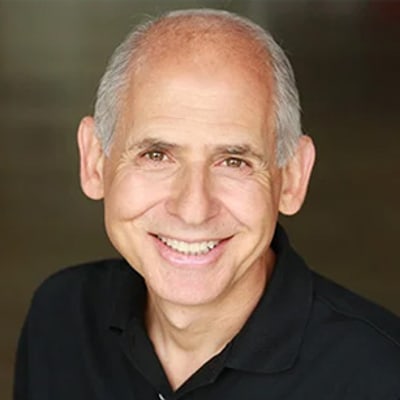
How to Remove FOREVER CHEMICALS & Toxins From Your Home | Darin Olien
Transcript
Click a timestamp to seek the player.
¡Vamos!
The 2026 Chevy Equinox is more than an SUV. It's your Sunday tailgate and your parking lot snack bar. Your lucky jersey, your chairs, and your big cooler fit perfectly in your even bigger cargo space. And when it's go time, your 11.3-inch diagonal touchscreen's got the playbook, the playlist, and the tech to stay a step ahead. It's more than an SUV. It's your Equinox. Chevrolet. Together, let's drive. Go further with the American Express Business Gold Card. Earn 3x Membership Rewards points on flights and prepaid hotels when you book through Amextravel.com. Whether your destination is a business conference or a client meeting, your purchases will help you earn more points for future trips. Experience more on your travels with Amex Business Gold. Terms apply. Learn more at AmericanExpress.com/business-gold. Amex Business Gold Card, built for business by American Express.
If you've been doing everything right, eating clean, exercising, but somehow you're still not feeling your best, your energy is dragging, your memory is slipping, and it's frustrating because you know there's more to your potential. Well, what if the issue isn't just in your routine, but it's deep down inside yourselves? You know, you're investing in the best supplements, working out regularly, and sticking to a clean diet, But if your cells are stuck in what's called cell danger response, all the hard work might not be paying off as it should. Think of your cells like a house under renovation. You can bring in the highest quality materials like the best supplements and clean foods. But if the workers inside the house or are on lockdown because of a storm, nothing gets done. The materials just pile up unused. That's what happens when your cells are in CDR. They can't fully use the good stuff you're giving them. Getting out of CDR, the cell danger response, is the key to unlocking your body's full potential. When your cells are no longer in protective mode, they can finally use the nutrients, hormones, and energy you're working so hard to provide. That's when everything starts to click. Your energy improves, your workouts become more efficient, and you start to feel feel like yourself again. Go to beyondbloodwork.com to learn how to break free from cell danger response and make the effort pay off.
Hey everyone, welcome to the Dr. Josh Axe Show. I am your host, Dr. Axe, and each and every week on the show, we take a deep dive into the science and principles and how to grow in body, mind, spirit, and take your health and your life to the next level On today's episode, I'll be interviewing Darren Olien, and he's been doing some amazing work that I'm excited to dive into. And we're gonna dive into all kinds of things today, especially how to reduce your toxic load. But a little bit more about Darren, he's a New York Times bestselling author. He's the co-host of the Emmy Award-winning, number one Netflix docuseries, Down to Earth. He co-hosts with Zac Efron, where they travel around the world finding non-toxic ways to live. He's also the host of the widely popular podcast, The Darren Olin Show. And today we're going to be talking about, again, reducing your toxic load, the Sober Curious movement. And also, I'm excited for him to share which companies are creating products that are killing people and what you need to do to keep yourself and your family safe and so much more. Darren, welcome to the show.
Yeah, thank you, Josh. It's good to be here, man.
Well, I know you're laughing because we have to have fun with it because, I mean, there are so many companies out there producing mass toxins, forever chemicals, and, you know, glyphosate, all kinds of issues that are creating major health issues. I'd love for you to share why you've been one of the biggest leaders in this movement, because I see you all over the place constantly exposing these companies for what they're doing. But really, really what drove you drew you to this?
Josh, it was a very personal one, man. Um, uh, it was about 1991. I got a phone call from my father, and on the other line he said, 'I can't think. I have brain fog. I may have to retire.' And he was a tenured professor at the University of Minnesota. He then started also counseling students. And I was like, what are you talking about? Like, what's going on? He goes, I've been talking to a bunch of doctors and it looks like I have a condition called multiple chemical sensitivity. And of course, when you hear that, especially coming from your dad, you're like, it's invisible. Like, what do you mean? Like, I've never even heard of this before. And as a professor, he started, you know, this is before the internet, right? And then he started making Xerox copies and VHS tapes and trying educate the family. And he said, if you're going to come home, and I was in the Twin Cities at the time, uh, in Minneapolis, and he sent me a care package of unscented products. Can you imagine that? I had to wash my clothes in an unscented, chemical-free, uh, laundry detergent. I had to wash my hair in unscented, unchemical shampoo and conditioner, deodorant, lotion, all of this stuff. In order just to hang out with my dad. So that was my first education. Now, it didn't go so well for him. He was forced to retire. He couldn't be around people. He couldn't educate the world fast enough so that he could be in it. So this severely debilitated him, and cognitively and emotionally and physically. And then he picked up alcohol after 30 years and that kind of led to his demise. So this book is very personal. I dedicate the book to him. And imagine then 30 years of my life, like, you know, superfood hunting, trying to find the best products in the world and botanicals and wanting people to thrive and survive. So that, that also is just a big through line for me. I, I want people to live their best life. And then I'm staring at this, Josh, and this, this massive elephant in the room of our society going, people can do all they want. You can actually eat the best foods ever, but if you're not aware of this massive global problem that is largely untested, unregulated, you're being affected. Your communication system, one of those communication systems of your body is being hijacked, your hormonal and endocrine system. And so you don't have sovereignty. As you can imagine, this is not an easy topic. This is not something that's light and fun. This is turning around and facing a society going, wait a minute, I thought these things were being regulated. I thought the USDA, the FDA, the FCC, the NIH, I thought the WHO, the CDC, I thought these, I thought they were supposed to regulate this stuff. So 15 researchers later, 2.5 years writing this book Fatal Conveniences, I just go, man, I, I, I have to write about this. I have to start talking about this because people are absolutely being affected. Hell, every child being born these days in the modern world has got 200+ chemicals already in the umbilical cord of their mother. So they're already being affected by largely 70% of those are already carcinogenic compounds. So what the hell are we doing? And you already know, you've talked this quite a bit of the hormonal system and, and, you know, fertility rates, uh, both men and women are falling off the cliff. Men's testosterone is, is, is falling away. Um, so this is the motivation, dude. It's like, it's, it's, it's staring at this stuff in the face and Um, and I, I also don't want to demonize every company because it's death by a thousand cuts, right? Yeah. And, and I've, I've also met good people in, in those companies that are like in the belly of the beast trying to do something. Um, so by us becoming aware, your audience becoming aware of this stuff, we can then have more agency because I think it all comes down to sovereignty. If you don't know that your daily habits are either providing health or undermining your health, you don't have, and you're not aware of it, you don't have full agency of choice. So it's really about waking up this aspect of our modern life that is kind of nipping us in the bud. And it's big, it's problematic, but it's absolutely necessary. And you know this, when you get to integrate better choices, that integration is exponential. Because if you've eliminated a toxin, the endocrine disruptor in your fragrance and your perfume and your laundry detergent, if you've eliminated that from your life and included an essential oil, I know you're a big fan of essential oil. Imagine then the elimination of toxicity and the advent of opportunity. Yeah, right. So, so these choices are not small, they are big. And when we can keep making better choices and we can unpack a bunch of these kind of categories of where they're getting us, um, we, we have a lot of power. So it's, it's, it feels overwhelming, and I just want to preface that This conversation may feel overwhelming for people, but there's a lot of power in it.
You know, I want to dive in and share with you, when I first opened my functional medicine practice, I would do a 40-day challenge. I would do it in churches, I'd do it in organizations, I'd do it all over the city of Nashville. And one week I would typically cover toxicity. The next week is when I had my lowest attendance because they would come in and it was so overwhelming. I'm telling you, I know. And I talk about— I mean, here's the reality for anyone listening: if you want to be healthy, you've got to address deficiencies like nutritional deficiencies, and you also have to address toxicities. I mean, deficiency and toxicity, too much and too little. I mean, that's— those are the two biggest core components of our health. And so what we're going to get into today, I'm going to ask Darren a lot about the majors, because there are toxins everywhere and everything, major exposures, and you want to reduce as many as you can. But we're going to focus on the majors. What are the biggest ones that are really crippling society today? You know, Darren, I, I, one of the things I used to do with my patients, I would do these shopping tours at places like Whole Foods Market and Sprouts and say, you know, you know, show them how to shop and what to buy. And, and I would say to them one thing, I said, okay, here's an organic apple, here's a non-organic apple. And I just want to ask you a question. You know, a lot of us have eaten non-organic apples. Um, but if I took this apple right now and I had a spray gun of pesticides and I sprayed all over right now and I handed you this fruit, would you eat it? They're like, no. Well, I'm like, but they just did that 2 weeks ago. So that's one of the things we have to remember. It's because we can't see it, right? That's the thing about toxins. You don't see it, so it's out of sight, out of mind. So anyways, one thing I'd love for you to share is what are some of the biggest toxins that we don't see that we expose? Like, like, so you go to some of these, the average person's home, you go in there and you, and you could say, here's the top 3 or the top 5 things in the house right now that are slowly creating a toxic buildup in your body. What, what are the, what are the biggest culprits?
Oh man. Well, you know, you can look at personal care, you can look at home, and they're different categories. So home, from a home perspective, it's, you know, what are you cleaning your house with? And that is typically a very dirty process. You know, we come under the guise of, we get used to smells. And the smelling is— the fragrance and the perfume space is so gnarly and so carcinogenic and endocrine disrupting that we really need to divorce everything that says fragrance that doesn't list everything on there because of the loopholes. And this is where we— when we think there's a regulatory body that's got our back. We just realized that they don't have to disclose their, their quote unquote trade secrets. So I would sprint from fragrances and that, that is laundry detergent. Laundry in that laundry you used to your what your mom used to do it with. So that's you make this dopamine association. So I would divorce all virtually all laundry detergent. Right now, because that's— not only are you probably washing synthetic fiber, and that's a whole nother category. Clothing is just really bad. But you're then intoxicating yourself with these fragrances, and then you're breathing in that every day, and you're transdermally taking in that every day. And again, the proximity and duration, I'm going to say that a few times, proximity and duration with most of this is where it really takes a turn. And some of these things, they have half-lives. Parabens, some of the fragrances, they have half-lives in the body. The body knows how to get rid of them, but the problem is it's the constant exposure. So by breathing in your clothes that you just quote unquote washed. That's a really big one. Easy fix, just to leave people with a fix, clean borax with essential oil, organic vinegar, bam, that's my laundry. That's it, man. And if I have whites that I need to quote unquote bleach, I do not use bleach, I use hydrogen peroxide. So, so these are ways that you could do. And then I hang my clothes out because it smells better than ever that way. So that's just laundry, right? But again, fragrance throughout cleaning products. Easy cleaning solution is organic vinegar, diluted, put in essential oil, and you've got a very cheap— put it in a glass bottle. A sprayer bottle. And then again, you have a multi-use purpose there. So you have things that you need to slowly start to unpack in the world because we still have derivatives of PFAS. And PFAS is a really big category, which I can get into in a lot of different ways. So that shows up in mattresses, it shows up in the couches and the pillows and other materials. You've got formaldehydes in woods and furniture and things like this. So we now know that the indoor air quality is infinitely more toxic than even city, typically, outdoor air quality. So then again, so we're retoxifying ourselves. So just in that shift of laundry and how we clean our house, how we spray our house full of essential oil, now we uplift, we downregulate with parasympathetic responses instead of stressing our body through all of these other chemical cocktails that they're—
it doesn't have to be that hard to go and buy again essential oils and vinegar. It's— I mean, I mean, I mean, hydrogen peroxide, generally if you make it yourself, it's actually sometimes it's cheaper and of course it's a lot healthier and better. And so these can be really, really simple swaps. Talking about the personal care products, what do you see? Which— give me your top 3 personal care products that are problematic and why.
Yeah, I would say, you know, again, proximity and duration without, you know, saying it all over again. Fragrances are in everything. So avoid the fragrances, the perfumes, because they're in the shampoos, the conditioners, the makeup, the deodorant, all of these things. So deodorant is a big one. The heavy metals, the aluminum in that, the proximity of the lymphatic system, breast tissue, that's a really big one. So we want to change that out. There's a lot of great brands coming online now and lotions. These are ritualistic things that we're doing every day. So the lotions that we're putting on, these are things that we want to shift. You know, we have women on average get exposed to about 120 to 126 chemicals every day. Wow. So that's where it really starts adding up. And so from a woman's perspective, start shifting away from don't wear makeup all the time, shift to better alternatives. And again, lotions, the things that you're ritualistically doing every day. I would think of these things as in to out. And also when you open your mouth. So toothpaste. Oh my gosh. Get rid of the normal toothpaste. And the idea that fluoride is good for you is absolutely insane. It's a neurotoxin. It's been linked to IQ scores going down in children. And that fluoride is coming from a derivative of the aluminum industry. And the pesticide herbicide industry. So this is a byproduct of those industries and they're putting it in our water and they're putting it in our toothpaste. So you can get rid of that. Plus I would also strive away from even tubes because as you're going to find in this conversation, it's also not just the formulation that we need to be aware of. It's also the bottling, the interaction that it has, the slippery surfaces. This is where BPA, BPH comes into play. This is where PFAS and PFOAs. And let me just unpack that because I'm going to say it a bunch. PFAS and PFOAs, thankfully, it's starting to get out there. It's the origin of that. A DuPont product was Teflon, that, that, you know, '70s, '80s pan of nonstick miracle. Well, it's really good at its job. It's heat resistant, it's strong. It doesn't— it doesn't— it performs very well. So nothing does stick. But, but now as we've moved away from the pan, And they started to regulate that. They've shifted into clothing, makeup. It's on the seat in your car. So red flags are when you hear something or hear someone in advertising say, this is water resistant, this is stain resistant pant or shirt. This is almost guaranteed to have PFAS in it. And PFAS is very dangerous. It's a fluorine gas that they use to bind to materials or formulations. And this is a forever chemical. And I want you to— everyone here, I want you to sit with what that means. This is not a flippant combination of two words. It's a forever chemical. It's a bioaccumulator both in you and the environment. We've done this before. DDT, that's a forever chemical. We banned that in 1972, '73. It's still in our blood. It's still in soil. It's still in our environment. We're playing with PFAS in multitude of ways and it's in our makeup. When that doesn't wipe off women, your makeup doesn't wipe off, it doesn't run. That's typically a PFAS. And then you're wearing it with your clothes. This is connected to multitude of cancers and kidney, liver. The weird thing, Josh, is that it's connected to diabetes. It's connected to high cholesterol. When it starts to undermine metabolic functioning and completely thwart our whole system, this is where really the wheels start coming off the rails. And there's, again, 15,000 derivatives of PFAS in our environment.
Wow.
And this is something we need to avoid at all costs. And so fast food. Hopefully many of your listeners are not eating a lot of ultra-processed food, which is a whole nother category of craziness. But wrapping it and takeaway cartons so your food doesn't stick, all these miracle surfaces, sorry to say that these are interactions of PFAS with your food. And when you look at food, if it's surrounded in plastic, if it's surrounded in a wrapper, these kinds of things, we are interacting with chemicals that are dangerous. So these are indicators for us. And again, I understand that this feels overwhelming for people, but I don't know about you, Josh, because I know you've been a warrior in this space for a long time, but some people will, some people won't. I want to support the people that want to choose their best life and want to live in their sovereignty, want to not suffer unnecessarily. My dad suffered unnecessarily from this invisible world of 60 80,000 chemicals created from man blasted in and around our environment every year. And are they tested? Very, very few. Are they testing as they interact in the real world? Nothing.
Nada.
No, in no way are they doing that. So in the real world, we are just living in a ridiculous state of, of, of this chemical romance, this chemical soup. And I just couldn't continue to pretend that this is okay. Um, so, so that, yeah, that's, that's the— again, going back to it's one step. So, so You filter your water, get the— 50% of our population now is getting PFAS from our groundwater because we're reinfecting. That's the thing. The thing that became so obvious, Josh, is that we are an environment, right? Our body is an environment. So as we disrupt our environment with whatever chemical, It's so tied to how that chemical or how that product was made. And every time it's dangerous, the manufacturing of it, the creation of it is extremely dangerous for the environment at large, right? So how they make blue jeans is horrific. How they dye blue jeans is horrific. And how we wash blue jeans, 50,000 micro bits of plastic every wash. Not only is it infecting us, it goes into our environment.
Yeah. Hey, so talk to, talk to me a little bit about our clothes. Use blue jeans, other clothes for example, how those are an issue.
Yeah, man. So I just was finishing up a documentary with a good buddy of mine, Jeff Garner, who's been fighting this fight and been a plant focused dye, plant dye focused fashion designer for 20 years. And the level of chemical exposure with clothing is so shocking. There's lawsuits against airline stewardesses and because they don't want stains and everything else. So what we're finding is PFAS. So not only the PFAS, but the phthalates and the elastane. So petroleum, the nylon, the elastane, all of these things were essentially, if you could hold up a water bottle and go, yes, most of your listeners probably don't want to be drinking out of a water bottle. But the thing is, most of our clothing now is all petroleum-based. So we're wearing it, right? The yoga pants full of phthalates and formaldehyde. And we did a test during the documentary. It showed that a woman wearing a sports bra took it off. Wasn't— that part wasn't on camera. They swabbed her nipple and, and because she was breastfeeding and there was PFAS, formaldehyde, phthalates on her nipple. So imagine then you just think you're giving your child breast milk and you're in fact now interrupting their endocrine system. So we're wearing that and we're working out in it, we're sweating in it. So we got to go back to the natural fibers, the wool, the linen, the organic fiber. I'm wearing Everything that I am wearing is from this one great company called Industry of All Nations. It's the cleanest clothing, organic fibers, clean processes. On average, Josh, a t-shirt, which is the most bought piece of garment in the world, we buy it in the West, we buy about 5 new t-shirts Every year it takes over 1,000 liters of water to make one. So the water usage, right? And then you've contaminated it all. But you know how many chemicals it takes from growing the second largest GMO crop on the planet is cotton. From growing that horrible crop, To making a t-shirt, 8,000 chemicals. 8,000.
Wow.
That is so, so then we're wearing it. So this is the, this is, this is like, you know, imagine I, I was, it was during the pandemic. I was, you know, headphones on working on this book, swearing out loud, reading articles, working with my research team. Just going, oh my God, this is, this is the, this is the Matrix. This is— how, how is this possible that we're here today and we're just kind of unaware of what's going—
you know, one of the things, Darren, I think that, um, people might have a question about— and first off, I just want to say that, you know, what I would do as you're listening to this episode right now I want you to think about a few things. One, what are some of the easy things you can do? Obviously, we're talking about a lot of things. The toxins are everywhere. But what are a few things that you're like, okay, this could be an easy swap for me, this could be an easy switch? So you may feel like, well, I can't change my makeup and my clothes and my washing detergent and my personal care products and everything else all at once. But think about what are the top 3 things right now you can go and change. So start thinking about that, because think about this baby steps, one step at a time. By the way, there's different personalities.
Some—
I can tell Darren's this way. If he learns something, he's going to go and get out a garbage can and burn everything he owns, you know. So, but there's also those people out there that need the Dave Ramsey-ish, you know, the baby steps in order to make the change. So for, for some of you, think about what are the top 3 things you could do. As Darren mentioned, one big thing is drinking water. Get a water filter that's reverse osmosis plus. There's several good brands out there. That is going to get your clean water. That is, that is a big one. What you're cooking with, what you're eating with, those are big ones as well. Think about all those. Darren, one of my questions I had for you is I think for some people they could almost feel— I'm trying to think how to say this—
just overwhelmed.
There's so many giants. Like, we're living in a land of giants. This giant pharmaceutical company, giant agriculture, giant government. I mean, all of these industries are so much bigger than 100 years ago. And I think some people feel kind of like, well, what's the use? We're walking among giants. How could we ever overthrow these people that are not doing their job? You know, some of the— some of these organizations are actually supposed to be protecting us, and we're doing a worse job, way worse job here than certain areas like Europe and other areas in the world. So that being said, what are some things we can practically do to start to take down these giants? Be us, be the David amongst the Goliaths out there.
Hey everyone, Dr. Josh Axe here. If you're looking to elevate your health, I want to introduce you to SilverBiotics. Their cutting-edge technology, SilverSol, is truly revolutionary. Unlike other colloidal silver products out there, SilverBiotics uses a patented SilverSol particle that's designed to be more effective at even lower doses. Now, this means you get all of the benefits without overwhelming your system. Now, whether it's their immune support or skincare or oral health products, each one is enhanced by this unique technology, providing powerful protection you can trust. I really love their Recover Muscle Cream. It's made with the same patented Silversol technology, plus it's packed with things like magnesium and arnica to really help reduce discomfort in the your body and speed up recovery. So if you're serious about your health, give SilverBiotics a try. It's my go-to silver product. Head over to their website, silverbiotics.com, and use the code Axe for a 30% off discount on your first purchase. Discover the difference that silver salt technology can make in your life. Trust me, your body will thank you for it.
Certainly having these conversations, I like to board, like I said, this clothing documentary that we're doing with a buddy of mine, we got to have these conversations. We really do. And I understand that many people don't want to make these big changes, but I do think that it happens in the home. I think it happens with small gatherings of people. I think it's the Tea Party approach, man. I think it's, you know, I believe in the human spirit. I believe in the power of us. I believe in the 8 billion of us. And also I believe in the moms. I believe in the wicked strength that the mama bears have for a healthy, safe home for their children. So when they become aware, like, wait a minute, that plastic diaper and perfumes and phthalates is affecting my child. I'm not going to do that anymore. So I do believe in that. And at the end of the day, there are some great organizations doing environmental working group campaign for safe cosmetics. Leah Segedy, who runs an organization privately called MamaVation, does all of these tests herself with some heavy labs. And of course, the Ecobed. Right? She's taken down Starbucks, like, with pumpkin spice that didn't have pumpkin spice and a bunch of chemicals. So we wield power. We do not wield passivity. If you want to do that, that's probably a bigger theme you need to deal with in your own life. But the thing is, like, we have so much power in our own choices. Because like I said, like creating a clean product, a clean, clean cleaning product, a laundry soap, a better toothpaste. When your toothpaste is done, get a better one. I have this great company that I use called Bite Toothpaste and you throw it in. It's all sustainable packaging. There's no interaction. And next thing you know, you're off that and it's good. You've integrated and and you just continue from there. And so, yeah, I believe that the more power we give each other and support and the people— I get sometimes these products are a little more expensive. Sometimes it's out of reach for some people. So the people that are listening that can afford it, let's make the better choice. Let's vote with our dollars so that then It helps the lower class of people that can't necessarily afford throwing money at a shirt, t-shirt that's 3 times the price because they've been duped by fast fashion and Chemical Romance of creating the shirt that's been subsidized horribly for the people that are making it and the environment. We've been duped. Right? The prices are not correct based on the ethics, the morality, the environmental pollution, the personal pollution. These are wrong prices. So it's a whole reeducation around all of this stuff. And for me, that's power. That's power we get back. It's a recapitulation of our life. Can you imagine the pandemic's going on? I'm in the throes of this book, just looking at the playbook of telecommunication, the damn cell phones up to your head. They knew about it. They already knew about it. You can quote me here. I think the telecommunication is bigger than big tobacco. I think they know so much about what's going on in electromagnetic fields. And they've been knowing that for a long time. And, and we're putting cell phones in our children, on our children, on our heads.
Like, there's so much stuff that's going on that there's no doubt there are so many companies today that know that they're harming adults, but even more importantly, children. And they just continue to do what they're doing. I mean, the reality is, you know, the greatest god in America is becoming and has been for a while not, not the God that I worship, but it's become mammon. It's become economic progress. And it's like we will sacrifice our kids, we will sacrifice our health, we will sacrifice everything for the God of economic progression, making more money for a small— for, you know, for a certain group of people. And it is so sad. And, you know, and if you're in a company right now you know, one of the greatest things you can do is be brave and step away and find a place to work that is supporting, that is in line with your values and your principles. And part of what Darren's saying here is be the change you want to see in the world. I mean, the famous words of Gandhi, be the change you want to see in the world. And be that educator of others, helping spread this message, like what Darren's sharing. Share this podcast, share his podcast, read his book, share that with a friend. Be a person that's passing on the truth here of both being the change and educating people on the changes they need to make in order to help them, Darren. So I love what you're sharing. You know, I wanted to come back to something because you started off sharing a little bit about your book, and I'm curious, and, and I, I know you did thousands and thousands upon hours of research with this. What was the most surprising thing you discovered over the past 5 years in all the research you did in writing your book? Uh, there's 20, but you know, give me one of your top 2, 2 or so.
You know, this one was— I don't know why, but it pissed me off so much. And that's dental floss. You know, when that dental floss that they created is so slippery that it slips full of PFAS and plastic and we put it in our mouth every day. I was like, oh my God, directly connected, by the way, because I saw I didn't put it in the book just because it named the company directly connected to kidney cancer. And I was like, oh my God. And they got around it because it was a medical device, so they didn't have to disclose any of that stuff. So these kinds of things really piss me off because there's no morals, there's no ethics. Like you said, power and profit over the health and safety of people. That's the god that they're choosing. No mas. So those kind of things. And listen, the deep, deep history of not only the electrification, this is so fun, not only the electrification of America, Right. So we know that even electromagnetic fields are created in wires in our home that have affected schools and schoolchildren. But when we started using cell phones, that deep research, you know, in about 1993, '94, the telecommunication companies really did some deep dives and they hired their own researcher, and their researcher went out and did some good work, and he came back going, okay, these are all the things that we need to tell people. Proximity, and it can cause stress responses. Now, this research is all over the place. There's a few main things that proximity and duration of electromagnetic fields do. That's WiFi routers, smart devices, gaming devices, cell phones. All these things, when they are close to us over time, it creates cellular stress, period. All over the research.
Yeah.
When they're close to us, our gonads, the ovaries, it lowers fertility, it lowers testosterone. All over the research, these kinds of things. So it's like the electromagnetic fields are the thing that It was alarming. It's literally as if it was a chemical. It's demonstrating similar things of a— the thing that really freaked me out was, you know, I don't know about you, but when I was studying physiology in school, they always were like placental border, blood-brain barrier. Yeah, there was always these kind of sacred borders that they didn't think things passed. Right. Well, we know now that the placental border is a total— it doesn't work, meaning that there's chemicals being exposed to the children that the mom are taking in. Now, the electromagnetic fields with proximity of a cell phone, you know what it does? It opens up the blood-brain barrier. So now proteins, specifically albumin, that's not supposed to be in the brain, gets put in the— like, it floats into the brain because of blood-brain barrier. And then that causes all kinds of inflammatory responses. So just by a cell phone— again, these things are crazy because it's not like you put the cell phone and you drop dead. These things are chronic. It takes time and they're invisible. So that's why it's kind of— we need to be aware of these things. And absolutely, because of the children, it's so susceptible. The research, because the brains and the skull is not as developed, those electromagnetic fields of that polarized radiation goes right on through the entire brain. So this is the, you know, the telecommunication side of this book. The chapter could have been such a huge book on its own, but this is something we need.
Yeah, I even see some people that are more what I would consider mainstream, like Andrew Huberman and others, starting to talk about EMFs. Yeah, people are— here's the thing, I think a lot of those people, MDs, that are true truth seekers, but they've just never been exposed to it in their entire career. When they finally decide to research it, if they really are somebody that's a virtuous person and they see it, they're like, whoa, whoa, look at what the research says. Well, it's just buried or no media outlet will cover it. But the reality is so many of these things that you're sharing are incredibly destructive. The research is there. We're just choosing not to read it. Or again, a lot of major news outlets are just not choosing to share it. Do you know, I wanna steer the conversation a little bit. We've talked a lot about toxicity. I'd also like to talk about one of my favorite parts of what I saw, of, of what I've seen you do. That's travel the world finding unique plants and superfoods and remedies. One, just tell us a little bit more about that, but specifically, what are some of the amazing foods you've found that can start to maybe support our body's detoxification channels that, that you love and recommend?
Yeah, well, just, you know, the, the superfood hunting, uh, world came about very innocently. Um, this was in, you know, maybe 2003, 2004. And, uh, I recently talked to Jordan Rubin about a bunch of this stuff too. So, uh, yeah. Um, but it started because I started to see kind of that fatal convenience of like people promoting a product and then by the time they're— someone's ingesting it as a customer, it's neutered, it's dead, it's not— doesn't even have the constituents of active compounds. So it was, again, it was a frustrating moment going, what the hell's going on? So, so I kind of— I come from Minnesota, I come from a farming background, I come from, from that innocent place. So I just go, well, if I'm start formulating this stuff and finding these things and maybe supplying certain people, I got to know what the hell's going on. And so that started the adventure of knowing the farmers, knowing where it's from, knowing how it's going. So it becomes a little anthropological, it becomes a little social because you have to meet so many people. It becomes business. Can we even make this viably? Can this even work? So you're in You know, you're at 14,000 feet in the fields of Machu Picchu and it's like, okay, not a lot of people know about this. Can we do this? Yukon, Sacha Inchi, Una de Gato, you name it, Camu Camu. It's like, is this stuff going to— can we do that? Can we make it all the way? So those are kinds of the things. So I spent a career kind of going, okay, well, if vitamin C is good for us, then let me get the best version of that plant. Yeah. So the acerola, the camu camu, these kinds of things. And then let's work directly with the people. Let's harvest it, let's understand it. So when it's, in this case, it was dried back in the day, how can we then give that to people? Because we know that it can be stressful when you create a single compound. Even if it's any compound, it can be stressful on the body. But if you give it its natural complex, if you give the body its whole food version, even though maybe you've needed to dry it in order for it to happen, the body knows what to do with it and it gets— and it has a pleomorphic effect. In some ways we can measure that. In some ways we're still trying to find out, like, hell, just in the last couple of years we realized that the anthocyanins of freaking blueberries were actually feeding the microbiome. And you're like, holy shit, these things are just this marvel. So I would always, like, I'd end up in the sovereign mountains of Tibet looking at schizandra, which is one of my favorites. So you're dealing with Amazing, right?
I'm in a, I'm in a schisandra, uh, can I tell you, we had a very dear friend of, of, of mine, uh, his wife, and she had mono and was so sick. I consulted with one of my closest friends, he's a Chinese medicine doctor, and we always do this together. We collaborate and create plans for people, protocols, and we put her on high-dose schisandra. Sham. I mean, it was amazing. I mean, what it can do for the immune system. Again, I've seen it in practice. It's just astounding.
It's astounding. And it's such a— I mean, this is 10,000 years of use. This is like when you realize the different aspects that it can support. Again, we think of compounds as caffeine or this one-way train. But the adaptogenic world is such a modulator. And think about all the things that we're talking about today. These chemicals are— think of it as all stress of all kinds. Yeah, chronically going. So imagine then in the early formulation days, I was like seeing the writing on the wall going, Oh my God, we got to get adaptogens in people's bodies like yesterday because of this modern world of chronic stress. And so, yeah, that world of ashwagandha, astragalus, tulsi, schisandra, chaga, reishi, cordyceps, I think we still don't know all of the benefits of that.
Well, you know what's so interesting is I've predominantly spent the last 10 years or so studying a lot of Chinese medicine and I think it's actually probably the most accurate system today for recommending different herbs and nutrients based on deficiencies and toxicities. But I, you know, if you go and look at the top 5 herbs prescribed in Chinese medicine, you probably have ginseng, astragalus, dong quai, and then you have maybe one like ginger that's also gonna be very high on the list. But, but 4 of the 5 most prescribed, people, most people haven't even heard of. I mean, think about this, even 10 years ago, almost nobody had heard of ashwagandha. All of a sudden, 8 years ago popped on the scene and people started using it. We were seeing great results with thyroid issues and a number of things, but there There are so many of these herbs that we just still aren't recommending in the West today that could help people with numerous, numerous health issues. So it's, yeah, to your point, I mean, I love what you're sharing here. Share with me, what are your top 5 favorites that you found over the years that maybe you even use yourself? What are 5 of those superfoods you just love and use regularly?
Oh man. I mean, I named like 12.
If you wanna go 6 or 7, feel free, but just gimme some of your top ones here.
I mean, schizandra for sure. Schizandra is way up there. I named my dog Chaga, so that's kind of a tell there. I've loved— I've done many trials on many continents on Moringa. I'm still a huge fan. I haven't seen great— still to this day, no one's doing it as good as it could be. So Moringa is like the vitamin tree, the vitamin, like the leaf, but it's done wrong because you can grow it really well in many areas. But if you don't have proximity after you harvest it, your 35, 36 antioxidants that are encased within that start to go down, the nutrient value goes down.. So again, it becomes, it's moringa, but it's not vital. So that one's, I'm still a massive fan of spirulina and chlorella and really trying to support the companies that are doing the raw frozen form, right? And again, like, yeah, camu camu. I have a freaking love for camu camu because I've seen it. There's a relationship always because I've gotten to see how how some of these things grow and go. And I really, they feel like they're akin in a certain sense, but there's just still so much underutilized botanicals and herbs. Like, you have Dragon's Blood and chuchuwasi and una de gato, and there's a lot of Amazonian herbs that are still way underutilized. And to your point, traditional Chinese medicine, even Ayurveda, now more than ever, we need to utilize full spectrum botanicals on a constant basis. And then when applied, like you were describing with high doses of schizandra, for certain conditions. But I think the modulation, the hijacking of our endocrine system and that communication network is really what we need to support. And there's nothing better than the adaptogens to help modulate that. And then again, I love the water interactions. I love unrefined salt. Very simple, very powerful. I love I love the shilajit. I love the Ormus and deep sea minerals. I love that. That is also now you're talking about the other communication network of the body, the electrolysis side of things. And of course, the microbiome. And that's a whole nother conversation. But almost the antidote of the stress is kind of how I look at this. We have to eliminate some of these modern conveniences, right, that are causing us stress and then increase that plant diversity and that botanical diversity of these nutrient densities and these adaptogenic herbs, I think, are, by definition, they do no harm.
Right.
So, yes. So these are the things. And again, we have to be careful about just grabbing any source. You know, I've been in that, that world for a long time, and I know I— back in the day, I knew where everyone was getting this, that, the other thing, and it's horrifying. Um, so now that the word gets out, it's unbelievable, and So we have to be very careful of supply and contamination because now everything— I have many stories of far-off places that had heavy metals because in every corner of our planet we are infecting it and aerosolizing things and groundwater contaminations and you would never expect some of these things to happen, but it's happening. So we need ethical people manning the fort of these companies and doing the tests that are moral, that are leading from morals and ethics. The companies that I worked with, we did 5,000 tests literally per batch.
Right?
Like when you have interactions and so countries of origin and when things are stateside and then as they interact with one another, like this is, we have a treasure chest, but we also don't want to recontaminate ourselves with poor quality product too.
Yeah.
You know, with so much of it, it really does come, a lot of it comes down to ethics. I mean, you know, when I think about my faith and belief system that we, God put us in a garden, the Garden of Eden, and we were supposed to take that Garden of Eden and make the entire planet, that paradise. So many people are doing the exact opposite. I mean, literally destroying and corrupting it and people. And so it's, it's, it's, you know, breaking two of the greatest commandments, you know, two of the greatest callings we have, which is love people and love, care for the planet, be good stewards. And so I, I'm, I'm so grateful for you, Darren, the mission you're on, what you're sharing, uncovering so many of these truths. Um, what last question I have for you if you could tell people to do just, you know, because it's you, I'm going to give you like 2 or 3, but just give me like, like, like people that listen to this, if they really want to have an impact on reducing their toxic load, what are between 1 and 3 of the biggest things they could go and do just right now? Some really simple, just something really simple.
But I mean, I have to go back to the water, the interactions with the water, the— so you're drinking water. Washing your vegetables, washing your body and your family's body. You've got to filter all of that stuff without a doubt. Ultra processed food. We cannot let big ag determine what we're eating. So anyone listening, if you still have a vice of eating ultra processed, hyper palatable food, you have to work your way to whole food and start. If you can grow it, grow it. If you can meet the farmer, meet the farmer. Do that without a doubt. And then I would say, you know, that your bedding and your clothing, you're walking, we're not naked anymore and we're walking around it. And so start to change out your garments, start to take that plastic water bottle of t-shirts. And here's the thing, I guess I will simplify it, change your underwear, throw away the petroleum-based underwear. Women, the intimates, both up top and bottom. Men, please get rid of that and move your damn cell phone. The fourth one is move your cell phone away from your body. Plug back in. You know, these are air tubes. Plug back in. Get rid of Bluetooth. Shut that stuff down. Turn your Wi-Fi router off at night, at the least. Yeah. Sleep. Sleep in peace and not in stress from from electromagnetic fields. So anyway, I could keep going, but those are the, those are the top ones that people can do right now.
So those are good. I think, you know, make yourself a list. Hey, here's the top things. I want to get a water filter. Uh, we're going to try and shop more local at the farmer's market, go organic, do some gardening ourselves. Those two will go so far, and then the other things that Darren shared will help on top of that so much as well. I want to encourage everybody check out Darren's Marketplace. This is a place where he recommends companies and products that offer discounts. So if you're wondering, hey, what's the toothpaste he mentioned earlier, or what's the clothing, you can check it out at Darren's Marketplace. What's the web address for that, Darren?
Yeah, it's just DarrenOlean.com.
Yeah. Okay. Okay. So yeah, go to DarrenOlean.com. And also he's got a great podcast. And just mention your new book again.
Yeah, Fatal Conveniences.
Yeah. And then that's in bookstores nationwide. It's on amazon.com. You can find it everywhere. And Darren, want to say, hey, thanks so much for being a pursuer of the truth, a teller of the truth, and for helping uncover, uh, all of these hidden toxins that we need to know about if we're going to take care of ourselves, our family, and the generations to come. I want to say thanks everybody for tuning in here to the Dr. Josh Axe Show. Remember, Remember, every week we're diving deep into how to heal, how to grow in body, mind, spirit, and take your health and life to the next level. Make sure to subscribe, like, and share. Listen, there are people out there that need to know the truth about toxins, so take this episode, share it with some friends, share it on social media. Thanks so much for being part of the movement that myself and, and wonderful people like Darren are leading., that movement. So thanks so much again to Darren. Thanks everybody. I'll see you on the next episode.
Putting off replacing your window treatments because you think it's complicated? At blinds.com, we spent 30 years proving it doesn't have to be. And right now, our spring Black Friday sale makes it easier than ever. Whether you want to DIY it or have a pro to handle everything from measure to install, we've gotcha. Free samples, real design experts, and zero pressure. Just help when you need it. Shop up to 45% off site-wide. Huge savings on doorbusters, plus a free professional measure now during the Blinds.com Spring Black Friday sale. Rules and restrictions apply.
You can't reason with the sun. Trust us, we've tried. This summer, it's time to put that angry ball of fire on mute. Columbia's OmniShade technology is engineered to protect you from the sun's harsh rays that can burn and damage your skin. The sun is relentless, but so is our gear. Level up your summer at Columbia.com to spend more time outside and less time slathering on aloe lotion. You're welcome. Columbia, engineered for whatever.
The Dr. Axe Show is educational and not a substitute for care from your clinician. Disclaimer