The Testosterone, Weight Loss & Hormone Lies Your Doctor Never Told You | Brigham Buhler
Transcript
Let's look at SSRIs. 25 years later, in retrospective analysis, SSRIs barely differentiate from placebo.
I remember seeing you on Joe Rogan, him holding up those bags of yellow stuff.
It's funny because it's being touted as like new technology.
Yes.
But it's old technology being repurposed and utilized for new approaches to medicine.
You know, so many people, they want the best care, but insurance doesn't cover the best care. They cover sort of like Really the worst care.
Your health insurance is like car insurance. It's great if you total the car, but if you're expecting it to rotate the tires, change the oil, and maintain the vehicle, you are going to be sorely disappointed. What happened in the '90s is those entities were captured by the Big 5 insurance companies. The reason that is a crucial puzzle piece to understand for your listeners, at that point in time, they went away From negotiating down the price of a prescription drug to negotiating up the price of a prescription drug.
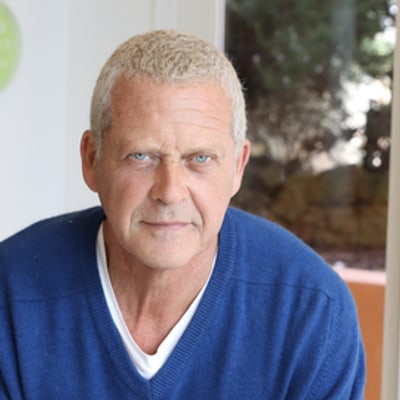
Your mitochondrial health is foundational for all-day energy, resilience, and long-term wellness. When your mitochondria are supported, everything works better, from metabolism and recovery to how you handle stress. One powerful tool that supports mitochondrial function and simply feels great is infrared sauna. Targeted infrared light and heat are absorbed at the cellular level, helping support circulation, detox pathways, and mitochondrial efficiency, which is why sauna use shows up so consistently in longevity research. That's why I use Sunlighten. They've been leading infrared technology for over 25 years, with patented systems designed to deliver high-quality infrared. Their MPulse sauna lets you customize wavelengths to match your health goals. If supporting mitochondrial health and sustainable energy is a priority for you, learn more at sunlighten.com/Axe. Use code AXE to save up to $2,100 off a sauna plus free shipping with additional savings throughout the year. If you're interested in peptides, ozone therapy, IV nutrients, and anything in the natural medicine world, today I've got an incredible guest, Brigham Buhler. I met him at the HHS headquarters in Washington, DC, and he's been seen on the Joe Rogan podcast. In fact, have you ever seen that clip where Joe Rogan's holding up a bag of yellow stuff? It is actually plasma. It's, it's the post- Plasma exchange, all of the gunk that's in your blood right now. That's Brigham's clinic. And so today we're going to talk about the power of natural medicine. We'll talk about the future of peptides. Uh, Brigham, welcome to the show.
Thank you for having me.
Well, man, hey, I'm so excited you're able to come up here. I know you're in Austin, and so we were talking about how everybody's moving to Austin or Miami or Nashville.
Um, they're the hotbeds.
Yeah, it's nuts. Yeah, great people. And, uh, and super excited you're on. You know, I remember seeing you on Joe Rogan I think you've been on there a couple times, and him holding up those bags of yellow stuff. Let's start there just for a minute. I'd love to ask you about plasmapheresis, also known as therapeutic plasma exchange. And, and this is a therapy that more— I mean, it's been around for quite a while, but more and more people are now doing it for, uh, you know, essentially blood filtration and detoxification.
Yeah, it's a great tool, and, and there's tons of tools in the tool belt. One of the things that I try to explain to the, the general public is often Oftentimes medications, treatments, uh, or even a treatment modality in a primary care practice or traditional medicine practice, they won't get offered that, not because it doesn't work or not because it's not efficacious, but just because it's not covered by the insurance model. So traditionally, those machines were used sometimes in hospital systems, um, to detoxify burn victims. Um, they've been used for over 25 years. Uh, so it's, it's funny because it's being touted as like new technology.
Yes.
But it's old technology being repurposed and utilized for approaches to medicine.
Uh, well, so funny. So when I started my— I started a clinic here about 6 months ago in Nashville called the Longevity Clinic, and we do a lot of these therapies there. And the nurse I hired came over from Duke. She was in the oncology department there. She's a nurse practitioner. And I brought a plasma exchange to her, and she's like, oh yeah, I've been doing that for 10 years. And I told her what we would do it for, and she's like, well, I've never done it for that. I've done it, but never for— for—
for— Have you seen good results at y'all's practice using it?
Yeah, well, actually, so we're about to bring in something called— as soon as we can, we're hoping in January, uh, In-use pheresis.
Oh yeah, yeah.
And so you're— I'm sure you're probably familiar there as well, very similar. So we're actually kind of waiting on that technology to probably most likely use that there too. Uh, but this is—
yeah, yeah, it's definitely— I definitely think that's the direction a lot of this stuff is headed. Um, we added that to our clinic not even maybe 7 months ago, um, and we just added it, uh, to give patients other options. Um, we saw immense results with EBOO Yeah. You know, which is kinda like, in my opinion, like plasmapheresis light. It has some of the same effects and benefits, but not as deep of a dive into that treatment modality. And so, the folks we have treated with it had immense results. We've used it on several individuals who had microplastics issues. One of them has actually spoken on Joe as well, a chef buddy of mine, Philip Franklin Lee. crazy story. He had, uh, a testosterone of in the hundreds, um, and was trying to conceive with his wife.
Yeah.
And they had been trying for over a year with no luck. And what we uncovered was essentially he had a— the highest level of microplastics that our clinicians had ever seen, um, in an individual. And through plasmapheresis, Hockett, and, uh, and then just giving him glutathione and IV therapies periodically, we were able to drop those levels down without ever prescribing testosterone, this, this man's testosterone went to above 800.
Wow.
And now he and his wife are pregnant with their second child.
Amazing.
And so, like, again, these are just amazing tools that have immense possibility. Um, it's just where do we use them and, you know, what benefits can they provide to patients?
Yeah, you know, you meant— you mentioned insurance a minute ago. Like, I think when I first opened my practice here, this is about 20 years ago in Nashville, One of the most common things I would hear, and by the way, anyone that's a practitioner will know they've heard this before as well, one of the top probably 2 questions I would hear from patients is when I first met them, does my insurance cover this?
Yeah.
And, the thing is that it typically doesn't, right? When you look at therapeutic plasma exchange, EBOO, advanced red light therapy, nutritional IVs, all of these advanced therapies that have really incredible healing, Properties. Insurance almost never covers them. And the reality is, is that, you know, so many people, they want the best care, but insurance doesn't cover the best care. They cover sort of like really the worst care.
Yeah, absolutely. And that, that, well, it's crazy you're saying that, cuz that was the genesis of why I went and started Ways to Well. I, I, I had invested in blood labs and genetic labs, and I was out educating clinicians in Texas. about the importance of proactive predictive screening, right? If chronic disease is killing 1.7 million Americans a year and we can prevent the chronic disease, if we can get proactive and predictive, right? The diabetes that develops in your 30s started in your 20s. The cancer that manifests in your 40s was probably discoverable in your 30s.
That's right.
And can we catch these things early, screen for these chronic diseases, and get proactive predictive and prevent these chronic diseases from ever manifesting? But to do that, You gotta be able to take a look under the hood.
Yeah.
And what I saw, and, and it varies by state, so I don't wanna say every single state, I mean, every insurance company's different, but Josh, in the state of Texas, literally the insurance company sent letters to the doctors threatening their contracts for pulling comprehensive blood work on patients that had the in-network benefits to have full blood work. And so the doctors would call me and go, hey, I, I don't know what I did wrong, but I'm getting threatened from Blue Cross Blue Shield or United. I'm not gonna pull comprehensive blood work anymore.
Wow.
And so, I would go out and to explain to patients, when your clinician in an insurance model is pulling blood work, oftentimes it's a minimal panel and it's not your clinician's fault. They're doing the best they can to navigate a system that's got both their hands tied behind their back.
Yeah, that's right.
And so, that's what I basically spun off and this was 10 years ago and said, we're going to build a cash pay blood lab. and we're gonna do full panels for patients. We're gonna do full genetic screenings on patients, uh, and allow patients to have a cash alternative, which now is kind of commonplace. It's, it's pretty wild.
Yeah.
Um, how readily adopted that's become. But 10 years ago, everyone thought, no way, patients will only work within an insurance model. And I think, I think a lot of it's post-COVID. Patients now don't necessarily trust the insurance companies and the traditional status as much as they used to, and they're asking a lot more questions.
Yeah, I mean, there's no doubt that COVID— I mean, there was a massive shift, and I kind of already saw it moving that direction slowly, but it absolutely put the, you know, foot on the gas pedal, accelerated everything forward. And yeah, same thing, we have people coming to the clinic and they want the most extensive blood work possible. And the great news is there is some incredible lab testing today. I mean, you can do, you know, on, on the cancer, uh, you know, side of things, you can do a GRAIL test, you can do an RGC GREEK test, and look at hey, what nutrient, like what herbs, what natural compounds, but also even the non-natural compounds, what are the most effective at killing this exact type of cancer?
Mm-hmm.
Early cancer screening, to your point, picking things up years before you would ever have it so you don't have to go and do chemo and radiation. That again, the preventative markers are great. And then the longevity markers, like I love, there's one, I, you know, I, I do a lot of oxidative stress testing, like the, the F2 Isoprostanes is like one of my favorites. Looking at a lot of the advanced heart markers. I mean, so just to your point, there are like being able to pick up things early today and then fine-tune what people should be doing in terms of the, like so many people are wasting money on supplements.
Oh yeah.
And if they got the right testing done, man, you can dial it into what's really gonna move the needle. And I notice people are like, wow, I'm actually noticing a big difference now with the supplements I'm taking, the foods I'm eating.
Are you using, it's not, it's old news now, but the MTFHR, like you see so many patients with it, and then the methylation detox issues, and they're not absorbing the supplements.
Loads. Yeah.
And they were taking massive amounts of these supplements that they're just kind of wasting. Yeah.
And most our panels, we're doing the MTHFR. Now, now, one thing I didn't realize until we started doing a lot of advanced screening is there's so much nuance to MTHFR. I mean, whether you have, uh, you know, which gene you have— there's a lot of other variants though there too. Like, for instance, I'm MTHFR But, if I take a methylated B complex, I feel awful. I feel wired but just absolutely tired and exhausted all the time. And so, it just—
I'm exactly the same. That's funny you say that. I'm exactly the same.
Yeah.
And, it's weird too. I know people love NAD. For NAD, for me, it makes me anxious, it impacts my sleep for days, not just the day of, for a week it will impact my sleep.
Uh, same. So there's a difference between being a fast metabolizer and slow metabolizer with an MTHFR gene. So if you're, if you're one or the other, one you'll tolerate it fine, another you'll feel terrible. What I found for myself is, is interestingly, if I took NR, I felt awful, like just absolutely terrible for days. If I took NMN, I feel fine. So a lot of it is the form you're taking.
Yeah.
And the same goes for the B12 and the methylfolate. So, but the great thing about these blood tests is you can really dial it in and tell And I love the more advanced genetic panels. I mean, you know, I did a genetic panel myself and my daughter. My daughter was having swollen tonsils and some allergy issues. We went and just looked at, oh, she doesn't convert vitamin D well, she doesn't convert omega-3 fats well. Like, there are so many now genetic panels where people can learn about their own body, what nutrients are best for them. So, and I know these are ones you're running too, but if they're—
No, no.
And there's—
you mentioned, uh, how you metabolize, slow, fast, and moderate metabolizers. Again, to walk back in time, 10 years ago, I— part of what I was educating clinicians on is the cytochrome P450 testing.
Yeah.
And it was readily available and it was not crazy cost prohibitive, uh, and insurance companies just quit covering it for all the patients. Sent letters to all the, uh, all of the doctors in Texas saying, hey, we're no longer covering any of these genetic tests. Genetic screening on expecting mothers got pushed back by 5 years at a lot of the hospital systems. in Houston, Texas. And lo and behold, it was all part of a negotiation with the insurance companies on, you know, what they get paid on C-sections and all these other things.
Oh wow.
And oftentimes the negotiations impact what accessibility patients have. And that's where I've become so passionate about— I'm not saying it's the only way, but a cash pay model does put the power back in the hands of clinicians and back in the hands of the patient, where clinicians and patients can decide side by side If insurance isn't going to cover these things, do they want to move forward? And is this something that adds value to them in their lives?
Yeah. Yeah. No, I totally agree. I agree. If you are living in that medical model and you are at the mercy of our conventional medical system, you're getting the worst care in the world for healthcare. Not the worst care in the world, but you're getting close to the— I mean, in industrialized nations, you're very, very near the bottom. Again, Just for everybody listening, if you break your arm, right, we've got a great system. It's fantastic. But if it's not a serious true emergency, you're at the bottom. It's somewhere— and I'm trying to remember, I think overall quality of life, America's like in the 70s. I want to say in terms of healthcare, we're like 42. It changes every year, but generally that's the ballpark we're in, and it's not good. And it's because we're relying on insurance. And so, you know, I want to go back to some of these therapies. So you talked about a little bit about plasmapheresis, or what we call plasma exchange, and what it does, it's pulling out microplastics, glyphosate toxins, pathogens out of your blood and body. You talked about someone being able to get pregnant because we know microplastics cause testosterone to drop dramatically. What conditions is plasmapheresis most beneficial for, generally speaking?
Um, well, we're using it more for preventative, but I will give a real-world example since we're here in Nashville, is, uh, it's been pretty public about Jelly Roll and us helping him with his weight loss. And when somebody loses that much weight, you know, you're— you have to detox all that weight, right?
That's right.
And his biomarkers were pretty catastrophic during that weight loss. And even though his weight was coming off and he was improving and his insulin levels were improving, he was chronically inflamed, chronically, uh, swollen and bloated. Uh, and he would— he came in and did the plasmapheresis treatment, and one of the things that he talked about was for 2 weeks he was able to sleep for the first time in years, like getting above 80% on his sleep tracking.
Wow.
And he was just wowed by it. Um, so we've used it in instances like that. A lot of the weight loss— I mean, so many patients are on GLP-1s now and jumping on GLP-1s, and then they come in because They didn't do 'em right or they're losing muscle and they weren't guided appropriately and they thought it was like this silver bullet and they're chronically inflamed even though the GLP-1's supposed to bring down inflammation too.
Yeah.
And that rapid weight loss does, all those toxins go somewhere, right? And you sweat 'em out and you burn 'em off, but they also end up in the bloodstream. And so we've used it a lot in those instances as well with really, really good results. Another one that talked about it was Russell Crowe. He's down 40 pounds. He just went viral for, like, he posted a picture of him saying the gladiator's back basically. I love it. And his biceps are big again, he's in shape again. But, so much of that is just chronic inflammation, the bloating, the swelling, the inflammation, and you're fighting an uphill battle as you get older and you've put your body through that for years and years, oftentimes decades.
Yeah, yeah. You know, one thing, something that This is quite a few years ago. I had a close friend of mine who was losing a lot of weight. I mean, probably lost, I don't know, 40, 50 pounds, and they did it while on a ketogenic diet. But they had a heart attack towards the end of it, and the reason, and you know the reason why, but just to share with everybody, when you lose that much body fat that quickly, and you have all of this fat in your body, and you have all these toxins, I mean, your liver has to deal with it.
Mm-hmm.
And if your liver is stressed, well, now you're, Yeah. Again, think about your liver's producing cholesterol. I mean, it's a big part of what happens in your bloodstream and keeping that balance there. And so anyways, so losing a lot of weight can increase your risk of heart, heart disease, uh, heart attacks, stroke, a number of other conditions. And people don't realize, and this is why it's really smart to, if you are gonna lose weight, do it in a really clean way. Keep inflammation very, very low and do it if you're gonna need to lose a lot of weight. Oftentimes partnering with a practitioner. to do it and doing it the right way. Because, again, it's surprisingly, but yeah, there's side effects of weight loss when it's done quickly.
And everyone, it's so funny on the GLP-1s, it's like either people love 'em or they hate 'em.
I know.
And they're very polarized. And it's like, it's for the last 2 years, that's been this mega hot button topic. I don't know why.
Well, I think my opinion's this. I think, you know, there's an ancient proverb and I really like it, and it's this, you know, the dose determines the medicine or the poison. And I, I, listen, I'm a big fan of peptides. I think generally, if they're used correctly, some of the benefits are really immense. You know, I, I think that the microdosing, and again, they're calling it micro, I think I'd call it probably the right dosing combined with higher protein resistance training. I think small amounts are fine.
Bingo.
Again, the problem, the problem is everybody's just going on these, these drugs not changing anything, having, you know, gastroparesis, and it's causing malnutrition.
And one of the— so one of the things that we already talked about, that this brings it back full circle. This is one of the things I've talked about on Joe. One of the challenges is a PBM, which is the insurance company, is incentivized to stair-step you up to the higher dosages. So we had patients coming into our practice in a cash pay model who said, I was doing great on the lower dosage of tirzepatide, or semaglutide.
Yeah.
And my doctor had to bump me up because the insurance company wouldn't cover it anymore. And so, I had to go to the higher dosage. But the reason being, you're restricted by what was approved in those clinical trials and what dosage rates were reimbursed in the PBM negotiations. And so, oftentimes, patients are stair-stepped up to a dosage that may be overkill for what that patient needs, and that clinician's just trying to get that patient coverage under their insurance plan.
Yeah.
And when you really peel back the layer, I don't know if you've ever covered the PBMs on your show, or I don't want to get too in the weeds, but, uh, if you want, I can break it down because it's fascinating.
Yeah, you could.
Yeah. You're out of the insurance model, correct?
Or— Yeah, yeah, yeah. We, we currently aren't focused now. Again, we, we do, of course, like everybody does, we do HSAs. We will give people— we always call them super bills. We give them, if they want to, uh, give it to their insurance company, then, then, then patients can do that.
So, to further elaborate on what you and I are talking about, this is what I uncovered. I owned retail pharmacies that billed insurance companies for over 6 years, and I broke out of that. So, my pharmacy now is a cash pay pharmacy mailed to your doorstep, ReviveRx in Houston, Texas. We work with cash pay clinicians, telemedicine companies, and the goal was to drive down the cost of prescription medications or any treatment modality, peptides, HCG, fertility drugs.
Yeah.
So many of these that are way overpriced. in these other models. Um, when I ran that, it was shocking to me. So a little walk down history lane. Pharmacy benefit managers were established to negotiate down the price of prescription drugs to make drugs affordable for me and you and our grandmas and grandpas and our family members. What happened in the '90s is those entities were captured by the Big 5 insurance companies. So this is all fact. United—
Wow.
Cigna, Aetna, Blue Cross Blue Shield own The pharmacy benefit managers. The reason that is a crucial puzzle piece to understand for your listeners is at that point in time, they went away from negotiating down the price of a prescription drug to negotiating up the price of a prescription drug.
Wow.
And you go, wait, why would the insurance company wanna make the drug more expensive? That doesn't make any sense because they get rebates from the pharmaceutical companies.
Oh, wow.
So products like insulin, this has all been uncovered by the Senate-House Committee Finance Committee that investigated the cost of insulin. Why did insulin triple when the cost of manufacturing insulin went down? When the patents got older, why is it going up in price and the average American spending more on insulin than ever before? It's because there were up to 30% of the money generated from an insulin prescription is given back to the insurance company in the form of a rebate.
Wow.
And in any other field, we would call that a kickback.
Yeah, of course it's a kickback.
If I was spiffing a clinician 30% of every prescription they wrote, that would be a kickback. But they have safe harbors in place that are legacy safe harbors. This is all stuff that I'm helping Ken Paxton at the state level in Texas fight. I know Secretary Kennedy's trying to expose this at the federal level, but this is important because what you see is a boom in the utilization of prescription drugs.
Wow.
The average American is now on 4 or more prescription drugs. Like you said earlier, we're one of the sickest countries in the world, but we spend more on healthcare than any other developed nation. And as you follow the money trail, you'll uncover why. So the insurance companies hold that rebate at a PBM, which is a shell corporation. They then tell Congress, senators, all these politicians, we only make a 6% profit margin as an insurance company. That's false. Most of the profits are being held at the PBM. 30% of the revenue—
Wow.
Of, of, of most of these companies is being held at those entities. And then at the end of the year, all those costs are passed on to an employer. So a company like me, Waze2Well, I employ over 500 people between Waze2Well and Revive. At the end of the year, United, Cigna, Aetna, whoever it is, comes back and passes on those costs. They go, gee, Brigham, they were on a GLP-1. Susie was on a GLP-1 for 12 months at $1,300 a month. but they didn't pay $1,300 a month because they got a huge rebate on the back end. So you get what I'm saying? They're cooking the books for profit margins, but the problem becomes you are now incentivizing the insurance companies to pressure doctors to prescribe first. And—
well, and so, and think about this, the more drugs you push and the higher dosage, the more money they get.
The bigger the reimbursements. I mean, the bigger the cost. And that's why GLP-1s were $1,300 a month. Everyone was getting pushed to the higher dosages.
And, and that's the problem. I mean, there's such a big difference in taking a double or a 10 times the dosage you should.
Yes.
And that's what we're happening. You know, one of the principles of natural medicine is don't force the body, nudge the body, change the environment. Let's start moving it in the right direction with, you know, your diet and herbs and lifestyle. Medications literally go the, the way that they are at the dosages they're at, it's forcing your body to do something, uh, in a really aggressive manner. And that's what's happening. You know, there, there is a study that came out about 3 months ago on the thyroid drug levothyroxine, right? So, this is found in Synthroid and most, you know, most, uh, thyroid medications today. And, this is out of the Journal of American Medical Association. It said around 21 million out of the 23 million women on levothyroxine likely don't need it. It's of no— they're getting zero benefits. This is— we're talking about a major—
Yeah.
major study. I mean, that's crazy. Think about how many women are on thyroid drugs and it's doing them no good.
One of my mentors, Larry Lipshultz, he's the head of urology over at Baylor in Houston, Texas. He's been practicing urology for over 50 years.
Wow.
I mean, he's a legend in men's health, writes for Men's Health magazine. I remember him telling me forever ago, this is 20 years ago, the optimal dosage is the minimal dosage required to elicit the desired response with the minimal side effect profile. And that was just hammered into my head.
Yeah, yeah.
Like everything we try to do is start small. Don't— you don't hit somebody with— even within the peptide world, so many people are putting people on 5 peptides out of the gates, and it's like, well, now you don't know what's causing the side effect, what's causing the benefit, where's the— where are— it's all risk-reward.
Yeah.
Even with peptides. And I think the smart approach is to take a calculated, strategic, methodical, slow-moving approach to dialing that patient in. And you start small and you start with one medication. You don't add 5 things to a patient's, you know, medication protocol overnight, but that's what traditional medicine is doing now. And again, I'm not blaming the clinicians. You know, my dad is on literally 9 medicines as—
Oh, wow.
A 70-year-old man. And one— and then it's the neurologist is blaming the cardiologist and the cardiologist is blaming the endocrinologist and they're all just pointing fingers and In medicine, it's gotten so siloed and so compartmentalized that we're not— I feel like we're not treating the body as a, as a unified system, as one closed circuit system.
Well, you know, the other, the other benefit of doing it the way you're talking about too, you're introducing one thing at a time, is, is one thing I've discovered is, you know, a lot of times when we think of— let's, let's even talk about natural medicine. Let's talk about type 2 diabetes and insulin resistance. You know, we— there's a lot of talk about berberine. And I think berberine's great. But what I've noticed is, is some patients respond way better to berberine than others do. You know, in Chinese medicine, when you look at berberine, I mean, this is found in, you know, some really common, uh, common herbals like, uh, you know, goldenrod and some others. And, um, and it's great for insulin, but it's also very, very cooling to the body. So if somebody already comes in and let's say they have type 2 diabetes as well, their body temperature is already really low. We, we don't want to kind of force it or push it to be, be even more cool. And so, you know, I think there's still some nuance there of, hey, we can try berberine, but there's a lot of other herbs. There's, you know, there's vanadium, there's bitter melon, there's, uh, gymnosa, there's cinnamon. I mean, there's all kinds of things. And this is where I'm a big fan of personalized medicine, of really looking at the whole body. And I like looking at things from the Western perspective, from the functional medicine perspective of the advanced blood panels, but also looking at tongue diagnosis and what's your history. And then, hey, let's see what works for you, really dialing in. But you know what? It takes an— it takes a lot more time with a patient to really perfect their protocol versus the average doctor visit today is 7 minutes. So the only thing doctors have time for is just, here's prescription, you know, see you later.
And that's what's— that is what is so important. Everything you're laying out is It's what I've been trying to scream from a mountaintop. It's, it's not that the— these clinicians are doing the best they can to navigate a difficult system, but at the end of the day, the insurance companies and the pharmaceutical companies are benefiting and patients are being left high and dry.
Yeah.
And I tell patients all the time, you have to view insurance like car insurance. Your health insurance is like car insurance. It's great if you total the car, but if you're expecting it to rotate the tires, change the oil, and maintain the vehicle, You are gonna be sorely disappointed.
Yeah, yeah.
Right? You're gonna wake up one day with a chronic disease and go, well, why didn't my doctor catch this? It's not that your clinician's not a phenomenal clinician with phenomenal training. It's that your clinician is limited with what they can test, what they can run, and like you said, they've got 6 minutes with you. They've gotta pay their staff. Most of their days now are spent arguing for billings and collections.
Yeah, that's right.
I mean, it's really, really tough, and I feel bad for so many of these doctors that are in that model, and I worked with all those guys and girls, and that's what I saw firsthand and how it led to me starting this was more of just trying to— I always say I was just trying to fix problems.
Yeah.
And then everywhere I looked, I'd lift a rock and there was another rattlesnake.
Oh yeah.
And I'm like, okay, well, here's another problem we can try to fix. And I've realized clinicians want to do what's best. They're the biggest advocates and passionate people on the planet about helping people, but we're limiting their ability to do that. And that's where I love models and practices like yours, like Waze to Well, that allow patients to decide alongside a clinician what pathway is best for them.
Here are the 4 words people say to us most often. This finally makes sense. Years of scattered symptoms, random supplements, diets that have worked for a little while, ultimately fell to the wayside. For many, it's the first time somebody has actually shown them the cellular pattern behind their symptoms. And that's what a cellular blood work analysis is for. It's an at-home kit followed by a full hour with one of our senior health advisors who will explain exactly what's going on in your cells and if one of our cellular healing protocols is right for you. And we have hundreds of 5 stars on Trustpilot that say the same. If you're ready for it to finally make sense, go to mybloodwork.com and order your kit today. That's mybloodwork.com. Well, you know, I remember through COVID there was a couple natural doctors I would see mentioning things online, and a couple— and I meant more conventional doctors— they came out and said they wanted to recommend things like ivermectin, they wanted to recommend more vitamins and nutrients, they wanted to recommend those things, but it would breach the standard of care. And they didn't wanna lose their license. I mean, so, so, so think about it. There's doctors out there saying, I know exactly what's best for the patient.
Yeah.
But I'm not gonna do it because I could literally lose my license if I do what's best for the patient.
You're spot on.
That's what—
Even owning a pharmacy, compounding pharmacy, we had clinicians prescribing ivermectin during COVID and we got a letter from the Texas State Board saying, if you dispense one prescription of ivermectin for, for COVID, we could revoke your pharmacy license.
Wow.
That's how out of control that got. And that's terrifying. An obstruction of care on modalities that could potentially help patients. And we were blocking that. And that's one of the things that I also have been like trying to ring the bell on time and time and time again. What I have seen from these regulatory bodies is very unfortunate. Even, even what happened with peptides, I don't know how intimately familiar you were, but I submitted 17 FOIA requests to the FDA after they banned peptides. 17.
Wow.
They never responded to one.
Yeah.
And I just had the privilege of testifying 3 weeks ago at the FDA on peptides in front of a committee of clinicians, of patient care advocates that were able to decide for themselves based off the data. And what happened there was very, very disheartening. Um, we provided the FDA with over 800 studies, over 5,000 pages of documents, including a retrospective analysis of BPC-157 where we looked at 14 million patients and there were 3 adverse events. 3. And I can tell you, the FDA deemed all 3 of those as extra— as, uh, What was the verbiage they used? Not extreme, it was a major adverse event. Okay, well, one of them was from my pharmacy and clinic, and so— and it wasn't major. The patient had a reaction and shortness of breath, but it was a panic attack. That patient continued therapy. In their report, the FDA was trying to say this patient had a major adverse event, and these were the 3 out of 14 million patients. We paid a polling company to call ERs, drug overdose centers. I mean, we pulled out every aspect to try to make sure we put our best foot forward. We submitted all of it to the FDA, uh, by the deadline they had requested, which was a month in advance. They did not publicly release any of that data.
Wow.
What they released was a statement saying, we are gonna— we basically don't know if we're gonna approve peptides even if this committee votes yes. We, the FDA, think peptides should not be on the marketplace. And here is our why. And what they provided was a certificate of analysis on one of these peptides from a black market source. 3-year-old certificate of analysis from a black market source. None of the updated data, none of the updated certificate of analysis from compounding pharmacies that are registered, compliant, FDA-inspected facilities. And it all goes back to like, I truly believe the lobbying power of Big Pharma. Eli Lilly is a trillion-dollar company.
Yes, yeah.
And it's not even I believe. I have had debates with folks very high up in the administration that Secretary Kennedy has set up for me, where I've had in-depth discussions with individuals who say, and again, I get it. If I'm a politician and I'm in a position where I'm hearing half the story and I'm giving those people 90% of the time, and you're talking to me hours upon hours about all the loopholes and reasons why compounders shouldn't exist, peptides shouldn't exist, GLP-1s shouldn't be allowed to be compounded. You've got a lot of great talk track that is going to skew your lens and your opinion, but you're getting a partial truth. And so I had to dissect this for several people in the administration, and the narrative was compounders are infringing upon our patents They are costing us millions, if not billions of dollars, and this is damaging our company.
Yeah, exactly.
And, and so my rebuttal to that was Eli Lilly doubled their market cap since launching a GLP-1. Eli Lilly doubled their market cap. They are a trillion-dollar valuation. You did not harm their bottom-line revenue. What you did was provide patients who couldn't afford the medication a life raft. Patients who needed customized medication, a life raft. Patients who needed the ability to titrate dosages down and prevent muscle wasting, a life raft. Those medications became so popular overnight because of, you know, like the Kardashians and all the women losing—
Yeah.
People, it was every housewife in Miami taking it to lose 10 pounds for spring break. The real people that needed that were the chronic diabetics and obese people.
Yeah, right.
And they couldn't get it.
Yeah, yeah, it's wild. You know, I saw that— so, so there was a— I'll just say this about him. There was a really, really well-known doctor who had his, you know, legacy and his name tarnished. He was in the Epstein Files recently. I saw him post something here on Instagram, and, and he was talking about peptides, and he said, you know, GLP-1s, these have been proven for so long, and saying all this stuff. And he said, you know, these other peptides out there you know, the, the ones that RFK's trying to get through, he was basically saying, you know, all of this is just, it's good marketing, you know? And, and, and here's something that a lot of people don't realize. So when I was in college, I worked at a gym and I was a personal trainer, and I started learning about bodybuilding and fitness. And I was around that, you know, that, that, that, that, that, those people for a long time. Bodybuilders, are the most obsessive people I've ever met in terms of dialing it in, testing things on their body, and knowing what works. They know what works.
Yep.
BPC-157 is an example. Some more— a lot of these peptides, those really kind of started being used a lot because the bodybuilders started saying, what really works? I got an injury, okay, what can help me heal the fastest? So there is a lot of I think there's a lot to say about this evidence of personal use and anecdotal evidence. And this is very similar with Chinese medicine and Ayurvedic medicine. These are 3,000-year-old forms of medicine that are still around today because they are so effective.
Yep.
And to have some of these—
You're getting me so pumped.
Do I?
Sorry, I disagree with you. I'm so pumped 'cause it's like you're spot on.
Yeah, you've got some of these, you know, doctors, and to be quite honest, the doctors I'm thinking of, they have a superiority complex. Yes.
They have a God complex.
They think they're better than everybody else. These are people that, again, remind me of someone like, you know, Dr. Fauci, who's going through all of the stuff he's going through now. But all that being said, it's— there is a ton of evidence. And I personally, I had a spinal infection, didn't walk for a year. This was 3 and a half years ago. In order to heal, I've tried— I tried all these different things. One of the only things I noticed a radical difference with was a combination of BPC-157 and TB500. I started doing it. And after 6 weeks of doing it, I thought, wow, I mean, I cannot believe how much it— the quickening that happened in the healing of my body. The other thing was stem cell, but outside of that, those are the things I noticed. Wow, what a radical difference in my body. So, there is plenty of evidence.
What you're saying, like, this is— that's literally one of the things I said in my testimony to the FDA. You were talking— this is not a traditional drug pathway. This is where people are missing the mark. And I know the individual you're talking about, I saw the video you're talking about. Actually, Rogan called me and said, do you want to come on and debunk this?
By the way, you should have seen the comments because the comments were, yeah, I had a torn rotator cuff, I don't have it anymore. Like, people— like, oh, most the comments were, no, I've tried BPC-157 and I couldn't believe the results.
Yes, and there are studies and there is a ton of data, but at the end of the day, an IND means that you've gone through a long clinical trial that costs you northward of $300 million, right, to get an indication. That indication means I have the right to bill Medicare, Medicaid, TRICARE, and insurance companies. I have a blank check. I have negotiated. And oftentimes, like my grandma would fill 5 or 6 prescription drugs but wouldn't even take them. She would forget and they were on autopilot.
Yeah.
And so, what happens in a double-blind placebo-controlled randomized trial is not always what's going to happen in a large patient population in reality.
That's right.
And we can show that time time, let's look at something that was indicated. Let's look at SSRIs. 25 years later.
Yeah.
25 years later, in retrospective analysis, SSRIs barely differentiate from placebo, barely differentiate from— not even statistically relevant differentiation. It doesn't mean that it didn't help some people. It doesn't mean that it doesn't work in, in some patient populations, but we have spent trillions of dollars, at minimal hundreds of billions of dollars on SSRIs over the last 25 years. And that was paid for by me and you and employers.
And that's not to mention the side effects of those drugs.
Suicidal ideation. Like, yeah, it's, it's— they're catastrophic. They, they wreck so many people. And I don't know if you're following all the girls affiliated with Maha that have sexual dysfunction, that this was all swept under the rug. Yeah, I mean, there's so many things that are hidden.
Yeah.
And Then you go to the opioid crisis. Okay, well, that was an IND. And then I told the FDA, and I've said this before, you can't eat your cake and have it too. In one breath you say we can't allow something to be on the market that hasn't gone through a double-blind placebo-controlled randomized trial, but yet 92% of the products in the operating room have never had a human safety study or a placebo-controlled trial.
Well, here's a good example. You know, there's this— again, there are some of these doctors online and they're just very haughty. And, and one of them, he likes to catch people Uh, I was watching, he was, he was doing this with, with a doctor I really like. And, and he, he was pretty much like, he was like, well, you have all of these brain scans, but are— but do you have 10,000 double-blind studies on it? And, and he's like, well, well, no. And he's like, basically, then the doctor's like, well, it's a sham then. And the thing was, I'm like, I wish— first off, I was invited on this guy's podcast and he canceled on me last second. And, and I knew because he likes to, he likes to pick on people.
Mm-hmm.
What I would've said is, hey, tell me about all these double-blind placebo-controlled studies on immunizations. Where are those?
Yeah.
They don't exist.
Yep.
So, should we just, you know, and you're the biggest proponent of that that I know of.
But wait, what you're saying, I mean, I'm— it's, it's— we could go deep on that other individual. There's so much there beyond the Epstein list. But it's when you're trying to sell multiple companies to Big Pharma, one, one day you're against GLP-1s and you say that it's causing chronic muscle wasting and that the DEXA scans in your practice are catastrophic, and then And lo and behold, 6 months later, you're on—
That's right.
Major media outlets saying, hey, these GLP-1s are powerful, amazing medication. Which is it?
Yeah.
Which is it? And, you know, it's a very big shift in your opinion. But one of the things that so many clinicians are missing about the process itself when it comes to peptides, my argument is this is a patient's right to choose.
Yeah.
As long as a clinician is involved in the chain of custody. By regulating these peptides and allowing clinicians to prescribe these peptides, you are providing the American public with a safe and accessible pathway that has proper checks and balances. We know sterility, we know safety. Every product I make, I have to independently third-party verify the API, meaning the pharmaceutical ingredients that go into the medication. Then after I make a batch, I have to independently third-party verify that the batch is within 99.97% of what it's supposed to be. It has to be the right dosage, the right efficacy, no contaminants. Everything is dated and documented, and any adverse events are reported to the FDA. This is the safest pathway to allow medical sovereignty and to allow clinicians to be the subject matter experts.
It absolutely is. But here's the problem. If they don't approve it, now people are going and getting their peptides from China, and who knows what they're getting.
4 out of 5 are being— 4 out of 5 peptides right now in America are being filled through gray and black market sources.
Wow.
And they just federally indicted a guy out of Florida who was selling peptides out of his clinic that he was buying directly from China and labeling himself with his clinic name. You can look it up. I can't remember the clinician's name, but the reason that's important is they were all contaminated with testosterone. Women were injecting BPC that had testosterone in it. I mean, this is— this is— the DOJ is indicting this individual. And what I've tried to explain to the gray and black market folks is I've been in enough meetings at, at the higher levels to know the Department of Justice is coming and they're going to shut down those pathways. And it's just going to force patients to even grayer and blacker market if we don't build a life raft. It's the same thing we saw with the opioid crisis. You create and perpetuate a market, and then you cut the market's legs out from under it, and all these patients are left going, I can't get my opioids anymore. And they turn to things that are cut with fentanyl, gray and black market. And that's what killed my little brother.
Oh, wow.
He tore an ACL, got addicted to opioids. Then when he couldn't get opioids anymore through a clinician, he turned to the gray or the black market and bought illegal I mean, at the time, people were taking powdered heroin and it was cut with fentanyl.
Oh, wow, man, that is terrible.
And it stopped his heart. And that's millions of Americans.
And, you know, one of the things that a good leader does is they, they're able to see the big picture and they're able to just sort of not look at the silo of, well, you know what, I don't think it's proven, and again, the only reason they're saying this is for purely financial gain. But also looking and saying, okay, what if we don't do this? This is one of the things One of the things I do really appreciate about RFK Jr., I think that he really understands and sees a really broad picture of, well, there's a lot of trade-offs, and if you move this, then this is gonna happen over here. And so being able to start moving towards what is best for the patient, both in their freedom and for their overall health. And listen, we know BPC-157, the side effects of that potentially are so much less than almost every other drug right now that's approved on the market today.
Yes, yes.
I mean, statin drugs, I mean, everybody's, taking those like candy antibiotics everywhere for ear infections for kids. Like, let's start—
And we saw it with the retrospective analysis. I mean, again, 14 million patients. It's one of the largest retrospective analysis of any drug ever presented to the FDA. 14 million patients, we could only come up with 3 adverse events. And again, I hate to say it, one of them came from us, but we also report any adverse event and we make sure that we document everything. And so there's so much misnomer and intentional misrepresentation of the data and the facts, even if we'd shelf efficacy, it comes down to if a patient is getting good results and the patient wants to spend their hard-earned cash and a clinician believes in the medication and a clinician wants to prescribe that and provide, uh, excellent medical care and guidance to that patient, why would we obstruct that patient from care?
Yeah.
And why would you force them into a gray or black market that doesn't have those checks and balances.
Yeah, yeah, there's so much wisdom there. You know, one of the— one thing that I always try and do, and I wish that, uh, other doctors and anyone in the health industry was trained more like this, is I really try and listen. I appreciate double-blind studies, okay? And so I like to look at those, but I also like to look at the anecdotal evidence. I like to look at, again, some of the more ancient perspectives of ancient practitioners that done a field for thousands of years. So, I like to look at all these things and say, okay, and also understand the way the body works and allow that to make my decisions for me. Whether it's an herb like turmeric or ginger or whatever, hey, I love a good double-blind study on turmeric.
Mm-hmm.
But also, it's been used for 3,000 years in Ayurvedic medicine. I remember this was like 10 years ago that a study came out that said, take turmeric with piperine, which is the compound in black pepper. Because it'll improve, uh, you know, circulation and greater absorption in the body. And, and it was like the medical community, or at least the nutritional community, was like, bravo, what a breakthrough, we found this out. You know, there's an ancient beverage called turmeric golden milk, which is turmeric, and then trikatu is the traditional blend, and it's warming peppers. It's black pepper, ginger, and long pepper. And, um, and because it allows it to get more through the body, and it's taken with fat because it's better absorption there. Like, they knew this 3,000 years ago.
Yeah.
So, my point is, is like, I love a good double-blind study, but also, I really love the historic evidence and looking at both of those two things together to kind of tell me what I should do.
Yeah. And, and so often too, it, it is— if we're talking about getting through an FDA regulatory process, it, it has become a pay-to-play system, right?
Yeah, right.
And it's a moat built around the business of the giant pharmaceutical cartels. Those, those companies have this huge moat built around healthcare, and you can't get a product through the FDA if you don't have $300 million plus. And the hard thing that people are forgetting is you can't patent something— the, like, the patent laws in the United States say you can't patent something that's readily available in nature. So even though peptides are synthesized versions of a short-chain amino acid, you can't put a patent on that, right? You can try, But it's— look at what happened with the GLP-1s, and these are the lawsuits and the litigations that are happening. This is why Eli Lilly is requesting the FDA to reclassify their next blockbuster drug, their next GLP-1, the triple agonist retatrutide, as a biologic. Because the dirty secret is a biologic has a 12-year patent, and a biologic cannot be compounded legally in the United States. That's the law of the land. And so if they're able to pull this off, it will fundamentally change patient accessibility for the long-term future.
Wow.
And that was the same thing with peptides. In one breath, the big pharmaceutical companies are telling the FDA, these are dangerous, these are dangerous. But in the next breath, Eli Lilly spent $7 billion to acquire a Chinese API peptide company, right? Merck is attempting to patent over 200 peptides. Insulin's a peptide. The GLP-1, the biggest blockbuster drug of all time, is a peptide. I mean, we can go down the list. Peptides have been a part of medicine for a very long period of time. It's not that all of a sudden they're dangerous or—
That's right.
Pseudoscience.
I mean, people don't realize most of the time creatine is technically a peptide. Glutathione is technically a peptide. I mean, to your point, I mean, they've been used for a long time, of course. And of course insulin, to your point, the most probably most common one. Yeah.
So I think the debate is more— is it's much more large-reaching, and there's, there's a lot of money behind the opposition, and then there's a lot of talk talking heads, like the gentleman you mentioned earlier, that have skewed incentives and that have— and they paint it as, oh, anyone wanting to sell peptides is wanting to just capitalize on, you know, the average American public and sell 'em snake oil. If they didn't work, why would patients refill the prescription?
That's right.
If patients are getting efficacy, they're using their cash. Again, this isn't my Meemaw getting 6 prescriptions that insurance covers and she doesn't remember what she's supposed to take and not supposed to. This is a hardworking individual using their paycheck.
I can tell you the argument for some of these people is, oh, it's placebo. And I will tell you this, the bodybuilders, it's not. These people that come out of the fitness industry that have looked at every last part of their body and started using things, it's definitely not. And so, you know, there's definitely— the reality is BPC-157 and a lot of these peptides, they work and they work tremendously well. You know, I think where some of these people get in trouble, and what I was going to say earlier, is people tend to get in a ditch. You know, a lot of people on the conventional side, They live and die by a double-blind study. I remember I was on a panel, this was at South by Southwest quite a few years ago, and there was a doctor next to me. They said, hey, how do you know what to believe is true? You know, because it seems like things are changing all the time. What do I take? What's the dosage? And his answer was, well, this is very easy. He's like, whatever the latest medical study says. If it says 2,000 milligrams, take 2,000 milligrams. If it says 3,000, take 3,000. And he's like, what if it changes tomorrow? Well, then just change that. And, and to me, to be honest, like, I, like, my mind was blown away. I'm like, that is a terrible answer, you know, because the reality is like, it's sort of like truth changes. And, and that's what I see with a lot of these people. There's somebody online, he's kind of like the, the, the, in the, uh, kind of, kind of like a bully towards a lot of people. And listen, in fairness—
I think I know the next guy you're talking about.
But listen, in fairness, and here's what I'll say about him. He's actually really smart. He's actually very well-spoken. He's really great at breaking down studies. And some people just make it too easy for him. Like, they're— so listen, and then there's people on the other side saying just ridiculous nonsense on TikTok that is probably completely false and true and over. So, so, so I do think like it's so easy to get to a ditch.
Mm-hmm.
But again, I do think if people were able to have more grace for one another and also not just live with double-blind studies, but also with anecdotal evidence in history, I think that that would solve a lot of, a lot of these problems.
I think that's a very wise assessment. I would agree that, and to the credit of the naysayers on peptides, there are bad actors. There are people making crazy claims and promising people the world.
Yeah.
And I tell people, this is medicine, it's not magic, and everything is risk-reward. And we want to take a strategic, thoughtful approach to this, not just put you on 10 peptides. Like, the answer is not at the bottom of a peptide bottle, right? Do you have diet, lifestyle, nutrition? Are you getting enough sleep? There are a dozen things that can move the needle for you, probably more than peptides or a medication. Like, you know, time with friends and loved ones, like being outdoor. All of these things are so incremental in helping us feel our best and live our best lives, and we overlook them.
I have a very exciting announcement. We just found out that Heal Yourselves is officially a New York Times bestseller, and that's entirely because of you. I just want to say thank you for showing up. Thank you for sharing this work, and thank you for believing in the power of cellular health. If you haven't grabbed your copy yet, you can find it on Amazon, Barnes& Noble, or your favorite book retailer. Also, if you've already ordered but haven't claimed your bonuses yet, make sure to go to healyourselves.com and enter your email and your order number, and we'll send you hundreds of dollars in free content. Again, that's healyourselves.com. Awesome. By the way, that free content includes a peptide guide, natural healing recipes, a masterclass, and loads of other free content. I'm so excited for you to read this content. I hope it's going to change your life. Yeah, yeah, no, I totally agree. You got to hit on the foundations, and this is one of the things I teach. I know you do this in your clinic, and it's looking at— you got to eat real food, high protein, high fiber, a lot of meat, fruits, and vegetables. There you go, you know. You got to get good sleep, you got to move some, and you have to have deep meaningful relationships. And so, I totally agree. I mean, you gotta, you gotta hit on the foundations. I want to hit on a couple more things. We start off talking— we talked about EBOO for a minute. Can you share with everybody what is EBOO and maybe what is ozone? What's the benefit? Maybe what does that do in the body?
Um, same thing. We, we were using that as just another way to provide accessible care to patients. there was a huge demand for it. So many patients would come in and ask for it. And again, I'm a believer in like a patient's right to choose what's best for them.
Yeah.
And the results we've seen with EBOO are the same. It's almost like an easier approachable than plasmapheresis, is a little less cumbersome, a little less invasive.
Yeah.
But we've also seen tremendous results at helping detoxify, and optimize that patient's health and wellness.
Yeah.
And the big results that we see that we can quantify and track, again, in the weeks following EBOO, it's the same as plasma. So many of these patients are wearing wearables now and tracking their sleep, and everybody calls and goes, oh my God, my REM sleep, my deep sleep, my heart rate variability improved. Like, we're quantifying all this, we're tracking all of this with the app and seeing, is the— are these modalities making meaningful difference? Uh, and if they weren't, patients wouldn't do it because again, it's their cash.
It's so true. I do the same thing. I wear an Oura Ring and, and, and track what I do. And there are certain things that just sort of surprisingly really move the needle. I mean, the first thing I did mention, I wanted to mention that we talked about earlier is blood work. Like when I finally did more of an advanced panel looking at like every vitamin and mineral, like all, you know, deficiencies, like I was like so low in B2, I was so low in mitochondrial function. And, I eat really healthy. I started taking those, whoa, I noticed a difference. You know, most— a lot of times when I take stuff, I don't notice the difference. I really did. And then, uh, yeah, you know, the EBOO, one of the things I, I love using with patients with infections, chronic infections, you know, you're filtering the blood somewhat even more. All of the ozone there has a powerful antimicrobial, antipathogen benefits. Um, so I noticed a difference with that with sleep. I noticed a difference with, um, PBM red light. Actually, really surprisingly, I, I respond really well to that. And then the other one is, uh, Hockett. Yeah, I mean, that is such a great therapy. Yeah, I mean, of all the things that sort of, I feel like, man, just energize my body, the Hockett's pretty powerful. It's like 8— it's like 8 different therapies in one.
I tell everyone, if you, if you like sauna, this is a sauna on steroids. I don't know how else to— it's, I mean, it's, it's intense.
Can I tell you, the first time I did it, it's amazing. I was at Gary Brecka's house. And he literally had it in his master bedroom. He's like, come in here. Now he moved it, but I mean, it is, it's phenomenal.
That's great. You said that Gary had a quote when we were talking about the, and I thought about this when we were talking about the trials, we don't have double-blind placebo-controlled trials on parachutes, but I don't see anyone jumping out of a plane without one.
That's right.
You know, and it's like, there is common logic and common sense. If something's been utilized in other cultures for 3,000 years, and these cultures swear by it, and there's great, uh, anecdotal data, maybe not a trial per se, why would we not follow that?
Yeah.
Uh, another example in real life is like the glyphosate discussion, right? There's so many studies trying to portray glyphosate as it's not— the industry is trying to portray it as it's not this huge disruptive, uh, chemical being doused on all of our food. foods, but yet in the regions of the United States where we are spraying more glyphosate, cancer rates are higher.
Yeah.
And if we can spray glyphosate onto a field and it is an endocrine disruptor to every single species of animal— frogs, lizards, any animal in that region— how would we not think that's going to impact humans and our biology?
Yeah, right. I, I think the other thing— I mean, the major problem of, you know, the people that are like rely 100% solely on double-blind studies is you've got to understand that not all of them, but a lot of these studies are biased. They're cherry-picking data. I mean, they're setting up and doing everything in their power for the study to make sure that it wins, especially when it's a study on pharmaceuticals or big agriculture, big chemical, because again, it's about— they want to make money.
The other big challenge with that statement too, like what you're saying is, and I've argued this with several clinicians, 30% of medications are prescribed off-label. I mean, almost 100% of the testosterone in America is being prescribed off-label.
Oh, yeah.
So, when you look at a class and a drug, it has a very specific niche patient population and indication. If we're truly gonna transition to personalized medicine unique to the patient, that requires some methodology and some experimentation at some level. In— again, under the supervision of a clinician, but it's the clinician's opportunity in a model where, like you were saying, where they have 45 minutes or an hour to spend with this patient to understand family history, to hopefully run a DEXA, understand lean muscle mass, visceral fat, subcutaneous fat, understand this patient's genetics and their genetic predispositions. You're going to have a much better northern star than some primary care in a practice that had 6 minutes and can't run a single test.
Yeah, right. Right.
And then they're reaching for an opioid or an antidepressant or things that have honestly barely differentiated from placebo in so many instances. Even opioids, there's a certain subset of the population, Polynesians and Hawaiians, that don't respond to opioids, that they get the addictive side of it, but they don't get the therapeutic benefit of the pain relief, right? And we're ignoring that. That didn't show up in the trials. But yet we billed Medicare, Medicaid, and TRICARE for millions and billions of dollars of these opioids in a patient population that got no benefit.
Yeah, it's crazy. It's crazy. The, the more we can really— honestly, a lot of it's just moving back to the past. If you go all the way back to the start of medicine, there were no pharmaceutical companies. It was doctors who really, really cared for patients, and over time, they just really dialed in and worked closely with the patient every day to see what worked.
You got it.
That's TCM, you know, that's Ayurveda. That's, that's what they were doing, and that was around for a really, really long period of time. So, but when pharmaceutical companies came in, I mean, that all changed. It all changed. And so getting back to true personalized medicine, spending a lot of time with the patient, dialing in for them exactly what's going to be best for them long-term and their unique biology, that's the future of medicine.
Before there was Pfizer, the founder of Pfizer was apothecary, and then he founded Pfizer. I can't remember the clinician's name, but he literally was basically a compounding pharmacist.
Wow.
The founding father of Pfizer was a compounding— apothecary preceded Big Pharma. And I gave this speech at the Senate Health Committee, um, 2 years ago when Secretary Kinney was the presidential candidate, and, uh, Senator Johnson held a roundtable. Uh, I think— were you at that?
I mean, I've been at a few things. I, I don't know. I, I don't, I don't think that—
I touched on Eisenhower's speech, and then everyone talks about Eisenhower's speech about the military-industrial complex, but so often they forget there was a whole second half to that speech. The second half to that speech, Eisenhower warned about the scientific-industrial complex. Eisenhower said, if we get rid of the garage tinkerer, the thought, the thinker, the doer, the person directly tied to like the end users basically, and we allow this to be corporately captured, what we're going to find is stifled innovation, things that will no longer be available. And that's where we're at. We're at a point where it's not what's best for the patient, it's what's best for Wall Street, it's what's best for quarterly earnings, it's what's best for profits. And this is just the system we live in. And so practices like yours, practices like WazeWell, are a threat to that establishment.
That's right. Yeah.
And so, we're met with a lot of disdain and frustration from the traditional orthodox system, but it's challenging everything they've been taught and what they've built their entire processes on.
Yeah. Well, Brigham, I'm so grateful for what you do. Just so everybody knows, Brigham is constantly traveling to Washington, D.C. He's one of the front figures fighting for the legalization of peptides. You've been able to use those for your greatest benefit. And so, and I want to encourage everybody, go and follow Brigham. Again, it's Brigham Bueller. Brigham, let everybody know where they can— where they can best find you.
Yeah, the company is Waze and then the number 2, Well. Um, Waze2Well is our, uh, clinic, and then it's brigham.bueller is, uh, my Instagram, I believe. Something like that. It's just my first and last name. Perfect.
Well, I encourage you guys, follow Brigham here as well. He's doing some incredible things at fighting for our health freedoms. I want to say, hey, thanks so much for tuning in here to the Dr. Axe Show. Remember, every week we're diving deep into the science and principles of how you can heal Physically, mentally, spiritually, and take your health and your life to the next level. Hey, do me a favor. The number one thing you can do to support the show is subscribe. That's the way it always shows up in your feed. It allows me to bring on these incredibly high-profile guests here like Brigham. And also, hey, think about who is one person who would really enjoy to hear about the things that Brigham and I dove into today. Share this podcast with them as well. Thanks for being on mission with us. Thanks again to Brigham Bueller, and we can't wait to see you on the next episode.
The Dr. Axe Show is educational and not a substitute for care from your clinician. Disclaimer