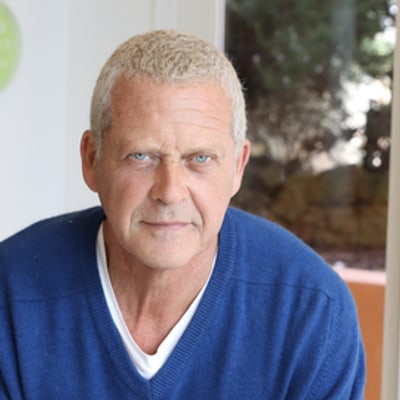
This Could SAVE Your (Future) Marriage | Lysa Terkeurst on Forgiveness, Boundaries, & Red Flags
Transcript
Click a timestamp to seek the player.
If you've been doing everything right, eating clean, exercising, but somehow you're still not feeling your best, your energy's dragging, your memory is slipping, and it's frustrating because you know there's more to your potential. Well, what if the issue isn't just in your routine, but it's deep down inside your cells? You know, you're investing in the best supplements, working out regularly, and sticking to a clean diet.. But if your cells are stuck in what's called cell danger response, all the hard work might not be paying off as it should. Think of your cells like a house under renovation. You can bring in the highest quality materials like the best supplements and clean foods. But if the workers inside the house are on lockdown because of a storm, nothing gets done. The materials just pile up unused. That's what happens when your cells are in CDR. They can't fully use the good stuff you're giving them. Getting out of CDR, the cell danger response, is the key to unlocking your body's full potential. When your cells are no longer in protective mode, they can finally use the nutrients, hormones, and energy you're working so hard to provide. That's when everything starts to click. Your energy improves, your workouts become more efficient, and you start to feel like yourself again. Go to beyondbloodwork.com to learn how to break free from cell danger response and make the effort pay off. Hey everyone, welcome to Dr. Josh Axe Show, where each and every week we dive deep into the science and principles behind how to grow in body, mind, spirit, and take your health and your life to the next level. On today's episode, I'll be having a conversation with Lisa TerKeurst, and she has written some massive, massive bestselling books. She's the president and CVO of Proverbs 31 Ministries. She is the host of the incredibly popular podcast Therapy in Theology, and she helps people navigate trust, boundaries, forgiveness in their personal and spiritual lives. So we're gonna dive deep in today into spiritual health as well as mental health, and also talk about relationship health. And this is something that's so important because one of the things I talk about, uh, uh, I've talked about on the show constantly is how our spiritual and mental health affects our physical bodies. There is a mind-body connection. That we want to focus on being healthy. And this is something that we really missed out on in the Western part of the world. The Eastern part of the world, they're focused a lot more on health in body, mind, spirit, this holistic nature versus Western medicine tends to separate those things. So, so excited to talk to, uh, Lisa today. Lisa, hey, welcome to the show.
Thank you so much. It's an honor to be with you.
Well, hey, I, I know we've got a lot of mutual friends and so, um, you know, I, uh, I've been really looking forward to this interview and I started talking about a little bit about this sort of idea that, uh, Western medicine tends to separate our physical health, our mental health, our spiritual health. What are your thoughts on that, and what is something that you see as you help counsel people on, on relational health and spiritual health?
Yeah, I, I don't think that I ever made the connection before I myself went through betrayal trauma, and I, I think I underestimated the impact that emotional pain can have on your physical body. You know, I think sometimes we say we've been through emotional trauma, but in reality, emotional trauma can so easily present itself as physical, having physical ramifications in the body. And I certainly experienced this, you know, when I found out that my previous husband was, um, unfaithful. And it was an ongoing battle with, um, you know, sometimes me feeling like things were going to get better and then things would fall apart again, and things would get better and then they would fall apart again. And that ongoing, um, hurt and pain, and also never really understanding anything beyond what I could discover. And so that feeling of constantly getting caught off guard, um, it definitely wound up taking its toll on my body. So I discovered that he was being unfaithful in February of 2016. And that summer, my— unexplainably, my colon twisted around itself. It cut off the blood flow inside of my body. And, and I wound up having to have emergency surgery. I was in intensive care for several weeks and they had to remove most of my colon. And I remember when the doctor came in and he said, um, Lisa, have you experienced some kind of physical trauma? Like, have you been in a car accident? Have you— you know, he had this whole list of questions. And I just said, no, I have not been in a car accident. And he said, well, your insides look as though they look like someone who's experienced a significant physical trauma. And he showed me a picture of my distended colon. It was the size of a baby. It was like this big. And, um, it was massive trauma that I experienced in my body. And so I remember looking at that picture and thinking— most of the time people will say when they've experienced an emotional trauma, like, my insides feel all twisted up. Well, I got to see a picture of what emotional trauma can actually do physically to a body. Then one year later, with no history of breast cancer in my family, I was diagnosed with breast cancer in September of 2017. And so you'll never be able to convince me that it's not all connected because I've seen it play out in my own body.
Wow. I mean, it's, it's such a powerful example. You know, I've cared for a lot of patients in the past who struggle with things like autoimmune disease, inflammatory bowel disease, and what will cause them to have a reaction just as much as eating conventional pizza or ice cream is relational stress or some sort of stress in life. And so, and in Chinese medicine, this is an area that I've spent a lot of time studying, uh, they believe that different emotions affect different organ systems. So for instance, to your point, the emotion of grief, where something has happened traumatic in the past, um, that affects the colon. Uh, or for instance, if trust— if somebody has broken your trust and there's that relationship divide, uh, that's actually associated with breast cancer and, and things like— so anyways, it makes a lot of sense. And I know that's one of the things that you've been able to focus on. This is one of the reasons I wanted to have you on the show is your writing is so wonderful. I've read a little bit of your books. I mentioned my— I have family members who have read, you know, almost every book you've read. My mom, to be, be specific. And, um, and you've done such a good job of helping people heal from relationship trauma, from spiritual and emotional trauma. Talk to me a little bit about how you helped yourself heal from, for instance, broken trust. I mean, there's nobody who's watching or listening to this who has not been hurt by somebody and they haven't been betrayed or their trust broken. How did you start to heal from that?
Well, first of all, I had to learn that every rip that happens in a relationship where trust is broken, it requires a repair. And if we, if we have all these rips in a relationship, and we don't intentionally do the work of repairing those, then that broken trust is not just something that happens to us, it starts to happen in us. And that's where trust issues are formed, you know, where it's like, there's been a lot of broken trust. And there's this repeated pattern, not of people making mistakes. Look, in all relationships, there's going to be difficulties, we all make mistakes. But there's a big difference between a mistake and a repeated pattern, where the person who's hurting you, where they won't own what they did, and where they're either unwilling or incapable of making the necessary changes for that connection in the relationship to return to the safety that's required for a relationship to be growing and thriving. So trust can only be built time plus believable behavior. Time plus believable behavior. In other words, there has to be a proven track record where over, over time, people have behavior that assures you over and over and over again that they are safe. And this is especially true if you've been in a relationship where trust has been broken before. Time plus believable behavior. It's a good thing to think about.
That's so good. You know, one of the things that I often counsel patients with is, is that we want to help build up more oxytocin release in the body. And this is the hormone that's related to, um, when a mother is nursing a newborn, when somebody is, you know, in marriage, has a great relationship and intercourse, or just somebody giving a hug or a high five. And so it's a, it's a hormone that's related to connection. And one of the things that we've seen, there's a study out of Harvard that shows the number one factor in longevity is great relationships. And this is tied to this hormone oxytocin. And so it's important for health as much as anything. I think a lot of people who have been hurt by one other person, they develop trust issues. The problem is not only with that one person, with other people. So is that something you've noticed? And how are some— and how do you counsel those people not to punish everyone else? And actually, it punishes themselves because now they're not getting oxytocin, they're not getting connection. But how do you you, uh, help people deal with that?
Yeah, what I've seen happen— and again, I, I've had it happen in me, so I don't want to just talk about like the people who've experienced this because I've experienced this. So a lot of this will be confessional for me. Um, but, but also I just think sometimes when a reader is reading a book, more than being taught at first, they want to be understood. So I, I want everyone to understand, like, I've walked through this personally, and so I understand the complexities and the deep pain on such a level. So what can happen when our trust is broken? If, if the fabric of trust is connection and safety, which I believe it is— so the connection's what you're talking about, like we want that good feeling that this, this is a person that we've connected with. And yes, like you were saying, like our connection with them, whether it's just a simple hug or whether it's, you know, making love and the oxytocin that's released afterwards. So we are desperate for that connection, right? And we want that connection. But at the same time, that connection has to be safe. This person is who they say they are. They're going to do what they say they're going to do. We can count on them and that they're going to tell us the truth and that we know that they are going to seek our highest good because that's what a relationship is, right? Seeking each other's highest good. What can happen then when trust gets broken is that some people will take one of these two things to an extreme. Either we're so desperate to keep the connection that we diminish our own need for safety. We ignore red flags, we overlook things we shouldn't overlook, and we put up with things we shouldn't put up with. Or the other extreme is we can start to prioritize safety so much so that we don't want the risk of any connection. And it's true of the person who hurt us, but it can be true that we start to develop a skepticism of all people. So we just don't want any risk in, in our life. So relationships require risk. So we diminish the connection and we prioritize safety. Our goal though in healing is to bring those things back into equilibrium. We want connections that are safe, and that's the goal. That's what we're shooting for.
Wow, that's so, so powerful. So powerful. I, I can imagine one of the things when you have when you've been hurt, when people have been betrayed, is needing to forgive others. I think, you know, I think about this in my own life, and I think that we've all had people that have betrayed us that we've needed to forgive. And one of the things I mentioned earlier, we talked about, you know, how grief in Chinese medicine is known to— and I think just generally, I think science proves this today— it affects the immune system and the gut. Uh, we talked about how issues related to lack of connection and trust being broken affects the upper digestive system, in the breast. And then the emotion of unforgiveness is very hard on the liver and lymphatic system, and it essentially freezes your body's ability to cleanse and detoxify itself. And so, you know, unforgiveness is something that I see, um, you know, I even think about, you know, just politics today. I think that there's so much unforgiveness, uh, just, just in humanity right now. What are, what are some things that you've seen and even noticed maybe in your own life in terms of how did you start to forgive and move on when somebody, you know, betrayed you and hurt you to that, to that level?
Well, I think when we utter the word forgiveness, a lot of times people conjure up in their mind, or they bring to the forefront of their mind, um, some of the most hurtful things that have ever happened to them. And so forgiveness is hard. It's really hard because forgiveness can feel like a very unfair gift that we're giving to the person who's hurt us the most. And sometimes our struggle to forgive is that we feel like like if we forgive that person, then suddenly we're saying what happened was no big deal when it absolutely was a big deal. Or we feel like, okay, once I forgive, then I have to forget what happened, but I can't forget what happened, so how can I possibly forgive, right? I think the hardest part for me personally with forgiveness was I kept waiting for the other person to say they were sorry. I felt like that had to happen before I could forgive. The problem with that is then I'm attaching my ability to heal and move forward to choices that that other person may never make. They've already hurt me once. Why would I then allow them to also hijack my healing if they are unwilling to ever say that they're sorry and own what they did? They may never do that, but I, I still want to heal, right? So I have to detach my ability to heal from their choices, which means I can't wait for them to say they're sorry. I have to put a stake in the ground and say forgiveness is my choice. And forgiveness is choice too. And here's what I always encourage people: you deserve to stop suffering because of what another person did to you. So your ability to choose to forgive isn't— it's, it's not letting that other person off the hook. Your ability to choose to forgive is you saying forgiveness is my choice because I deserve to heal from this. And the only way to heal is to forgive and put myself in a position to stop suffering because of that other person's choices.
Wow. You know, Lisa, reminds me, I had something incredibly traumatic happen to me a couple years ago. I had a doctor make what was possibly a mistake, and during a stem cell injection— it was a natural procedure— and I ended up getting a spinal infection from it. I didn't walk for an entire year. And, uh, anyways, it was just a very, very trying time. And I'll tell you, one of the things that I had to recognize and do myself is, one, I had to forgive the doctor I also had to forgive God and myself because I had a really hard time. Because I thought to myself— I realized later on that I kept saying, well, I shouldn't have got that done in the first place, and I should have recognized signs sooner and it wouldn't have got as bad. Just a number of things. And also feeling like I have this relationship with God, and I full-heartedly believe, believe God is for me, not against me. He's my protector. And why did he allow me to go through that? But I think that that's something that I personally had to go through. And, um, again, forgiving myself, forgiving— and not to say God needs forgiveness. I know that might be a complex and theological matter. My point is, I had to, um, you know, I realized that I was blaming, you know, a lot myself even, you know. We got— I was blaming a lot of people, and that I had to say, you know what, this is, um, you know, um, these things happen in life, and for me to hold on to or dwell on anything that's happened in the past, it's not, it's not healing, it's not what's best for my progress. And so I was able to let those things go and, and and, and, and heal. But I mean, is that something you've also noticed as you've helped counsel a lot of people, is this sort of, you know, blaming God, people blaming themselves? And I think I saw this a lot in practice, a lot of people blaming themselves sometimes for, you know, their own condition. I think that them holding on to that kept them from, from, from progressing.
Yeah, I think I had to get to the point that I recognized when you know better, you can do better. And I blamed myself for a long time, like, why didn't I recognize the signs? I mean, this was a 10-year battle in my previous marriage, and we were married almost 30 years. So it was a significant portion of my life. It was a huge relationship, and we were very close family. And so I just, I remember beating myself up, just thinking like, why didn't you see this sooner? Why didn't you call out things that, you know, should have been called out? Why did you gloss over things? Why did you make excuses? Why did you enable, you know, all of those things? But my counselor just said, Lisa, you can't go back and change any of that, but you can change how you handle relationships now. When you know better, you do better. So that really helped to free me. But the whole issue with God You know, there's a whole chapter in my book, I Want to Trust You But I Don't, called How Can I Trust God, um, when the people who hurt me seem to get away with it? And how can I trust God when I don't understand what he allows? So both of those dynamics become things that you have to work through because it's really, really hard when you get stuck in that loop of asking the question. So when I don't understand what God allows what I have to remind myself is God is good. The more I believe that, the, the more secure my life will be. What happens to me is I believe God is good, but then I like to, when I'm in a hard situation, run ahead and paint a picture for myself to ease the ache of whatever pain I'm feeling by, by going ahead and painting a picture of the good that a good God should surely do in this situation. Then I want to hold God accountable to the script that I've written. And oftentimes God is good, but his definition of good is going to be different than my definition of good. But different doesn't mean bad, it just means different. And so that's why I said we have to settle this issue, like, do we really believe that God is good? And I remember a couple of months ago I asked an audience this question. What would change about your life if you became absolutely convinced in the goodness of God? And if I answer that question honestly, I think a lot would change about my life if I stayed absolutely convinced of the goodness of God. What happens to me is, oh yeah, I believe in the goodness of God. I believe in the goodness of God. But then something happens that I don't understand. And what we don't understand, we'll try to control. And what we don't trust, we'll try to control. And so once again, I get back in that cycle of saying like, a good God should surely do this, and then I want to hold God accountable to this when God sees such a bigger picture. And, you know, honestly speaking, looking back on the 10 years of trauma that I experienced in my previous marriage, I am so grateful now that God did not follow my script. I thought the only pathway to redemption in my story was restoration. But God, in his great mercy and his divine wisdom, chose that this was not going to be a restoration. And honestly, I'm so grateful for that now because it was a rescue, because the person that I was married to was unwilling to make changes that were absolutely crucial for me to not just thrive in that marriage, but for me to survive. The amount of emotional trauma that I was experiencing. So my redemption story is still a redemption story. It was just a rescue rather than a reconciliation. But I'm so grateful for it now. I'm so grateful God did not follow my script.
Wow, it's so powerful. It's so powerful. I, you know, I, I, I resonate so much with what you're sharing because I saw, uh, you know, a similar thing as I was going through this, you know, debilitating health issue that I Yeah, I always wanted to run ahead of God. I expected God to do certain things, and it didn't happen the way that I expected and really had hoped. But yet now I'm sitting on the other side of it, I'm looking at, okay, well, God really allowed me to be refined spiritually. He allowed me to become more resilient. He allowed me to become more mentally strong, a better dad and husband, I think, through this process, because I was able to kind of pause and reflect and focus on what matters most in life. And so, you know, I think God is so good, and I You know, there's a, um, you know, as you're talking about this, one thing you mentioned is essentially you, that you blamed yourself. This is going back a little bit, but I picked up on this. You mentioned you, you blamed yourself because there were these red flags that you should have been— you felt like you should have picked up on earlier in, you know, in, in a marriage. And I think that I, um, or just in relationships in general, and I think that You know, it's— that takes wisdom to be able to recognize this red flag. Sometimes it takes a level of maturity. There are so many people out there today in toxic or bad relationships. What are some of those warning signs that, that you're aware of, that, that you know now in terms of what to look for in a toxic relationship? And then on the other end, I'd love to hear you share, what are those things that you want to look for in, in a life partner and the sort of people that, you know, you want to be spending more time with, friends and in a marriage?
Well, first of all, we have to start by recognizing we're going to attract someone at the same level of health as we are. So if we've been in a string of relationships that have ended poorly or where we got hurt, you know, sometimes the dysfunctional dance we had to do in a previous relationship can start to feel normal to us, even when it's not normal at all. And so we're going to gravitate toward what feels normal to us. So it's really good for us to pay attention to our healing. And when a relationship goes through a really hard time, or maybe that relationship doesn't survive, sometimes we can— just because we don't want to be alone, and loneliness can feel painful— we just jump really quickly into the next relationship. But chances are we're going to attract the same level of health we are. And if we're unhealthy and we've got things to work on and we don't work on them, then we could find ourselves just repeating the same pattern returns over and over and over. So I think that's the first thing we have to pay attention to. When I went through my divorce, um, people, you know, it had been such a long drawn-out process that by the time the divorce actually happened, I'd been alone for quite a while. And so people naturally started asking me when did I want to date. And at first I was like, oh, I will never date. I will never attach my, uh, like, my well-being to choices that I don't have any say-so over. And, uh, so I had extreme resistance to it. And over time, though, I found myself saying that to better manage something that I feared wouldn't really happen. So I would say I don't ever want to date, but internally I was— I was not feeling that internally. I wanted a life partner again, you know, I wanted another shot at love. So I think that's the second thing we have to watch is our words frame our reality. So if we truly mean that we don't want to be in relationship, you know, in future relationships, then fine, mean it. But if we say it to better manage the hope so that hope can sometimes be painful if hope doesn't come about, if we're saying it to manage that, then I think we have to pay attention to that and be honest with ourselves. Like, what is it that we really want? Then the next thing we have to pay attention to are when we start to step into a relationship We've got to be honest about what we're really experiencing, what we're really seeing. And so in I Want to Trust You, But I Don't, I identify 11 red flags that are really important to pay attention to. I always caution people like, don't go into this like so focused on finding what's wrong with the other person, because if we're hyperfocused on that, we're going to— chances are we're going to hyperfocus on all the negative things. And that's not really a fair way to start a new relationship either.. But I do think it's important that we pay attention to what we see. And different people have different tolerance levels for different, sometimes inadequacies in another person or things that we're comfortable with that, you know, maybe we're— we have a high tolerance for this and other people have a low tolerance. So it's a very personal experience and not all red flags are created equal. So I'll list off a couple of the red flags. And, and then I also want us to think about not only are these red flags that we need to watch for, But if we leave those unattended, these will become the roots of distrust in that relationship. And when I say left unattended, I mean we choose not to have conversations that address them. We can't fix another person, but we can have healthy conversations. I'm convinced more relationships die not because we attempt to have hard conversations, but rather because we refuse to have the conversations that are needed but never never had. Yeah. Okay, so here's some of the red flags.
Hey everyone, Dr. Josh Axe here. You all know that I only talk about products that I truly believe in and use myself. And let me tell you, since I first got my hands on this product back in 2022, it's become an absolute staple in my weekly routine. I'm talking about Kulture, Canada's number one cold plunge, trusted by over 20,000 people people across North America. I've been incorporating Kulture into my wellness routine for over 2 years now, and the results have been nothing short of incredible. From a medical standpoint, the mental and physical benefits of cold therapy are profound. On the mental health side, Kulture has been a game changer for managing stress and anxiety. Physically, I've noticed a decrease in my back pain and an increase in energy levels since incorporating into my routine. Plus, I'm sleeping better than ever before. With Kulture, I never have to worry about reliability. They're the only brand that manufactures their water chiller in-house, so they have full control over the design and engineering. Plus, their customer care team is top-notch. So if you're ready to take your wellness routine to the next level, challenge yourself to to just 11 minutes a week in a Kulture tub. This could be one of the best investments you've ever made in your health. Right now, for all of my listeners, Kulture is offering an exclusive discount. Just visit kulture.com and use the code Axe at checkout to save $200 on your first purchase. That's kulture.com, C-O-L-D-T-U-R-E.com, and don't forget to use the code AXE to save $200 today.
One of them is incongruity. So incongruity, the way I wrote about it in the book is this, is that you may be picking up on incongruity when this other person, who they say they are, is not in line with what they actually do. Their words don't match the way they live their life on a day-to-day basis. So they may be portraying themselves as this, but behind the scenes, their words of what they— how they describe themselves, they don't really match what you experience when you're with them. Another one is insincerity. Have you ever been with someone and they just give you like these awesome compliments, but you walk away going, did they really mean that? Or were they just putting on a show to like impress me or to draw me in? But there was something about how they said it that it just didn't seem sincere. So insincerity, that's a big red flag. Yeah. Another one is self-centeredness. So when you're with someone and they do not think ahead about how their words and actions will impact others, or they just simply don't care how their words and actions impact others. Yeah. Okay. Big red flag. And I think the secret here is to acknowledge what we're experiencing. And then you could literally go to this list of 11 red flags. And, and sometimes when we feel like we can't trust someone, it's just this general feeling, like, I just get an ick feeling, or I just get this weird feeling. Well, the reason it was so important to me in the book was to write out these red flags and give scenarios, is so that we can take what is this general feeling of uneasiness when we're this person and give words to the struggle that's happening inside of us. Um, another one is insecurity. This is when someone has anxiety that they expect you to fix. In other words, you're in a relationship with them and they have this incessant need for you to encourage them about how awesome they are, or they feel— they start to feel doubtful, or they start to feel jealous that you know, that you're going to leave them and they have this fear inside of them. But the problem is that the struggle is inside of them. So you're never going to be able to fix this, right? It's something that they've got to work on for themselves. So insecurity. Another one is immaturity. I don't have to describe what that is. Everybody knows. It's like childish behavior, right? And it's okay for us to every now and then, you know, have childish behavior. Sometimes that can be fun, you know, in the right context, then then great, you know, let your inner child out, you know, do all of those things, whatever. Yeah, um, be playful, be fun, you know. But it's when they have actions and they refuse to take responsibility and they act like a child when you confront them. And, uh, you know, that I think sometimes this is a, a big one that we see sometimes is when you're— you've got someone in their 20s and, uh, they, they are wanting to live a very adult life, but then they don't want adult responsibilities. And it can be in your 20s, it can be in your 30s, your 40s, your 50s, whatever. But that's a good way to kind of gauge that one. Um, and then certainly immorality. We're not going to go through all 11, so I'll stop here. But immorality is when someone has is an absolute disregard for the principles of right and wrong, and they willfully engage in activities that are sinful, sometimes illegal, but certainly hurtful for those that are in closest relationship with them. And it's very common for those struggling with immorality to also be living a secret double life.
This is so good. You know, I'm thinking that there, there is somebody that my wife and I had to, you know, relationally kind of move away from in the past couple years person, uh, it was a friend. And it— and, you know, I'm going through the list there and it's sort of the check mark of everything that you just mentioned there. And, you know, one of the things that I noticed in this person that I want to bring up that I also believe is very much tied into— as you mentioned, you're going to attract somebody at a similar level that you're at. And that is something that is so— it should be so convicting to people that most people probably try and completely ignore it. But what I was going to mention about this person is they had such a massive lack of self-awareness, you know. And I think most, you know, we're living in a world today where everybody's talking about goal setting, right? I mean, that's more popular. What's your goal? What's your vision? What's your— but goals are where you want to go, but self-awareness is where you're at now. And that's the thing, I don't think a lot of people really know where they're at now. When I think about the people that I probably trust the most, respect the most, you know, they have a level of awareness in their life. And I think that's a form of maturity. Like, when I think about people in the health space that are the healthiest, or at least know the most. They have a level of awareness about, oh, I shouldn't eat that, I should eat that, that's going to affect my body in that way, or if I do this exercise, this will be like— but a lot of people I respect the most generally in life are very spiritually aware people, right? They, they know, they know what you're feeling, they know what they should be feeling, they can keep those things in check. You could say something mean and they're able to just sort of deflect it and say, oh, that hurt people say hurt, you say hurtful things. And so what has your experience been with that in terms of— in your advice for people on cultivating self-awareness? Is that something you, you know, generally see or agree with the importance there?
Well, going through the chapters that I wrote on red flags and roots of distrust was very convicting for me because it was an exercise of self-awareness as I read through these red flags that we should be looking for in other people. I suddenly became aware of, I need to pay more attention to this aspect. I need to pay more attention to this, you know, tendency in my own self. And so I think these red flags really serve a great purpose because it's what we need to look for in relationships where we have that uneasy feeling and we need to define what it is. So we're not on a hunt to and like, let me just tear you apart and see all that's wrong with you. But rather, we get a feeling, we don't understand it, we tilt our head and go, ah, this is, this is weird, this is making me feel very uncomfortable, or this is making me feel super annoyed, or this is making me feel like I don't know that I'm safe in this relationship. Whatever that, whatever that ick feeling is, we go through the red flags and it can help put words to that. But also We read through the red flags and we realize, wow, I might be doing some of these things to other people. And so once we become aware of it, then we can work on it and increase our self-awareness to be careful about that. Because look, we're all sinners. We all have tendencies to do selfish things. We all have a propensity to make mistakes. The difference that we're looking for is there's a big difference between a mistake, which we all make, and a repeated pattern of behavior that we refuse to own, that we refuse to work on, that we're either incapable or unwilling to change.
You know, I feel like this is so tied to the, you know, biblical idea of repentance, right? I mean, it's— at first it's this idea of, you know, I, I, I've fallen short, I messed up, I need to do better here. And then it's also part of that word is, yeah, I'm— now I'm going to move in the other direction, I'm going to start self-correcting there. And I think that, you know, to really— when we're talking about awareness if it's with the right intention. I mean, that's, you know, that's something that it should embody as well. You know, one thing that I know that's so important in relationships and something I know you've talked about in your books before, it's boundaries. You know, I— it's so funny, Chelsea and I right now, we're sort of planning out— see, what are we at? Yeah. So, you know, September, October or October period here, and we're now making plans for Christmas and Thanksgiving and holidays. And we've got I've got some people in my family that are— my sister-in-law recently married. So, um, we've got a lot of discussions on who's spending time with who. And we're going through a challenging season. I know you understand this with all the people you've written about and counseled. We lost my father-in-law this year, who was our— he was like my best friend. They were living with us. I mean, we were kind of— did every part of life together. It was really tragic and early and unexpected. So we're also thinking about that. Um, but with all of that that, you know, we're, we're thinking about, you know, it's like Chelsea and I are just laughing because like when you first get married you have to start figuring out, okay, whose house you going to, when you leaving, what times a year. And I just— anyways, we're just talking about this this week. I was thinking about all this, but it made me think of boundaries because that's something that you sort of have to, especially as couples, start to lay down, figure— I mean, you need to do it for yourself, but also in a marriage it's something you have to do together. What is your advice for people in terms of, you know, what are boundaries, why are they important, and, uh, and how do we go about knowing what to set and how to do that from a biblical perspective?
Yes. So when I first started researching boundaries, my big question as a Christian is, is it okay for a Christian to have boundaries? You know, didn't Jesus model that we're to lay down our life for our friends? You know, so of, um, is God okay if we have boundaries? And here's an important basis that we need to think about. Jesus did lay down his life, but he did it to accomplish a high and holy purpose. He did not lay down his life to enable bad behavior to continue. And as I went through and looked at boundaries from a theological perspective, right from the very beginning, Genesis 1, I see God using boundaries to creates separations between light and dark, land and sea. Those separations are boundaries, right? Then you get into Genesis 2, the first recorded conversation between God and man. And of all the topics God could have chosen for that conversation, he chose the topic of a boundary, and he did it in the context of freedom. It's important to look at how God established that, this very first boundary. Sometimes when we're studying in a theological science, there's this thing called the law of first mention or the law of first picture. And so, if we wanna understand how the rest of the Bible is dealing with something, we go to the very first time that we see it pictured or mentioned in the Bible. So that's why this first conversation is so important. And how God establishes this boundary conversation is crucial. He says to Adam, "You are free." So boundaries are for the sake of freedom. Boundaries are not so we can create unrealistic restrictions. We have to define where the boundary lines are in order to understand the true freedom in the dynamic we're experiencing. So God says, you're free, you're free to eat from any tree in all of the garden. Here comes the boundary: but not this one tree, the tree of the knowledge of good and evil. For if you eat from it— here's a consequence, because boundaries without a consequence are nothing but a poor suggestion— so if you eat from it, you will surely die. So God models perfectly like boundaries are for the sake of freedom. They're also for protection. God wasn't being a killjoy God telling Adam not to eat from the tree of the knowledge of good and evil. He was trying to protect him from carrying the weight of knowledge of evil inside of him. And so as I continued to study this and I went all the way through, what I started to recognize is that first there was one boundary. But as sin increased more and more, because of course sin happens in Genesis 3 with the violation of the boundary, And by the time we get to the Law and the Prophets, God establishes 600— over 600 boundaries. Because where there is sin, where sin increases, chaos increases. In order to bring order back to chaos, you need boundaries. I continued to study and I got all the way to where God established the temple. When God established the temple, he gave some people certain access, but not all people all access. And it wasn't because this group of people was more important than this group of people. It's because The higher access God granted someone, the closer and closer to the Holy of Holies, the more responsibility they needed to demonstrate, all the way to the High Priest. The High Priest was allowed the greatest access, but he also had to demonstrate the greatest responsibility. Before going into the Holy of Holies once a year to make atonement for the people, he had to be perfectly purified and cleansed. If he wasn't, he suffered the highest consequence. And that That's death. So this taught me why it's so important for a Christian to have boundaries and why you and I need to establish boundaries. And it's this: I was giving way too much access to certain people who had not demonstrated they could be responsible with that kind of access. And when we give level 10 access to someone and they only demonstrate level 3 responsibility, the distance between those two is where you'll find relational chaos and where dysfunction grows. So our natural tendency is like, oh, I'm going to put a boundary on this person to make them be like safer, to make them be more responsible. But that never works. You can't force another person if they're unwilling or incapable of changing. You can't force a change. So our choice then is to put a boundary on ourselves. And how do we do that? We reduce the amount of access we grant that person down to their demonstrated level of responsibility. So yes, to answer the question, is God okay with boundaries? 100%. Boundaries are not just a good idea, they're actually God's idea.
I love it. This is so, so good. I love you go all the way back to the beginning in Genesis for that. And it's amazing how God, you know, you can take this principle and apply it to our lives. You know, I think about, um, you know, as we were, uh, you know, as you were talking about boundaries, I think boundaries are really related to the virtue of discipline. And, you know, discipline, it takes a lot of creating a lot of boundaries and things. I'm going to do this and this and this and not do this in terms of our lives. And I had a mentor tell me this once. He said, you know what, the more that you, uh, are disciplined and spend time practicing, whether it be an instrument or a sport or whatever it is, and you get better, only then are you free to play. Like, if you've never played a flute before, you're almost not free to play. You can't play anything, you know. If you get really good at a sport, you have all this freedom to do all of these tricks and, and do things that most other people can't do. And so it just reminded me of that, of that sort of, you know, this in terms of some of those virtues there of, of boundaries and the importance of those. And, and, um, it's so, so good. You know, I had a— there's a psychologist, uh, I know you're familiar him, Jordan Peterson. And I was watching one of his lectures recently, and he said, um, uh, he, he said something to the degree of, you know, who should you spend time with? And this is something I'm interested to hear you, hear, hear you share about, because I think that I remember growing up, so I went to a Christian school through 8th grade. I remember my mom once telling me I shouldn't hang out with this person. And I remember, again, I'm a, you know, I'm a, I'm a, uh, unwise child, and I was probably in 8th, I think it was 8th grade. And, and I said, well, I really wanna hang out with this person for this, this, and reason. I'm like, well, mom, he's not gonna influence me. I'm gonna influence him sort of thing. And so going back to this, I mean, Jordan Peterson said, you know, you really shouldn't have, you know, you really shouldn't be spending time with somebody from the sense of this iron sharpens iron because it's not gonna happen. If, if you wouldn't recommend that your own kids hang out with that person and spend a lot of time with them, them, you shouldn't do that yourself. And that really made me think. What are your— you know, how do you feel about that?
Well, I do think that we become like those we associate with and those we spend a lot of time with. And I remember one time my counselor did this activity and it really stuck with me. He took a glass of water and he put it on a table, a level surface, and he said, do you see how water seeks its own level? The water on the side of the glass here is level with the water on the glass here. He said, never will you see a glass of water sitting down and one side is over here and one side is here. Water always seeks its own level. And the reason that that exercise was so profound for me is because healthy bonds with healthy Unhealthy cannot bond with healthy, and healthy cannot bond with unhealthy, right? And so we're going to have a lot of struggles if we hang out with people, if we allow people to speak into our lives that aren't disciplined or that don't have healthy perspectives, or they're caught in an active addiction, or, you know, whatever. So I recognize some of us are already in relationship with these people. So I'm talking about new relationships that we're seeking out. We need to recognize that we will have a much healthier, happier relationship if we find someone who is on our same level, has the same desire for growth, has the same desire to own what they do and to take responsibility for their actions. Um, and yes, iron sharpens iron, so you and I getting together, like there would be things you're stronger at than me and you can influence me in a positive way and I can influence you in a positive way. But because we're both seeking each other's highest good, then our water is even. It's when that gets out of balance that you're going to have extreme struggles because the unhealthy person is going to want to create equilibrium by pulling your health down. And the healthy person is trying to create equilibrium to pull the unhealthy person up. And in the end, it's a futile process. Us to change another person if they're unwilling or incapable of making those changes.
There's something you keep saying, it's a term, and I love it. And I've studied a lot of the, uh, Greek philosophers, Aristotle, uh, as well. And so you keep saying, um, to seek the highest good of the individual. And so that's something— actually, I wrote a book called Think This, Not That, and that's a big principle I talk about in the book, is, you know, willing the good of the other, seeking the good of the other, but the highest good. And so I love that you keep bringing that up. And I think that is the— it's, it's the— it's rephrasing the Golden Rule. But I think for people to think about it in those terms, I think to a degree the way you're saying it maybe even embodies more of the original meaning in terms of when you look at that person in front of you, I want to do everything I can to do the greatest good for you. And sometimes that means giving you more access and trust, and sometimes it doesn't. You know, because sometimes some things need to be earned and you need to earn that. That's going to help you grow in that way. So I just— I love that you keep sharing with that. That's sort of the last thing I want to— I want to ask you here is, is that— tell me what that, that phrase means to you. Can you hash that out a little bit?
Yeah. Well, the reason that this became so important for me is because when I was in this relationship, I thought I was doing good to this other person to help them navigate not suffering the consequences of some of their choices. So instead of allowing them to hit bottom, and understandably so, I, I was trying to like prop them up because I was terrified if they hit bottom, the consequences of them hitting bottom were going to deeply impact me and my children. And so So I was, I was in essence constantly enabling, but I didn't realize that that was a bad thing. I thought that I was helping them to like not destroy their future and not destroy our future, right? But in essence, that was not me seeking that person's highest good. Me seeking that person's highest good would be the opposite, not to enable. The addiction to continue because the addiction was really destroying. And until they suffered the consequences of their choices, they had no motivation to change.
Yeah.
And so seeking the other person's highest good is where I want the best for you. I want the best, best for you. And if you're participating in destructive habits, it's me being brave enough to let the consequences naturally unfold in your life. Because you've got to have some kind of motivation to change. Because I can't want that change for you. You have to want it yourself. It has to be an internal motivation. It's kind of like if somebody was having a cardiac event, we would run to that person and we would— using external pressure, we would be able to sustain their life for a little while doing CPR. But at some point, if their heart doesn't quicken and beat on its own, it's not realistic to sustain their life forever using external force. And the same is true with needed and healthy changes that, that need to occur in another person if they're participating in destructive behaviors. Like, at some point they've got to want it. And my issue is that I was working harder on another person than they were willing to work on themselves. So that's kind of the harder part of seeking each other's highest good. The more obvious part is I want the best for you, you want the best for me, I've got your back, you've got my back. I know at the end of the day that you would be willing to give me the last piece of pie, and I'm equally willing to give you the last piece of pie. So in the end, we split it and we're both happy.
Yeah, that's so good. So good. Well, at least I want to say thanks so much for coming on. I want to encourage everybody to check out Lisa's new book. It just released this week, I think yesterday. The book is called I Want to Trust You, But I Don't. The book is in, uh, bookstores nationwide. It's on amazon.com. Again, you can go and check it out. It's called I Want to Trust You, But I Don't, here from Lisa TerKeurst. And I also want to mention Lisa has written so many bestselling and New York Times bestselling books, so I want to encourage you to check out all of her books, but specifically this one on trust is phenomenal. So I want to encourage everybody to check it out. And Lisa, again, thanks so much for coming coming on and sharing your wisdom with us today.
Absolutely. It was such a delightful conversation. I, I— you asked great questions, and, um, I've just thoroughly enjoyed our conversation today.
Well, same here. Well, remember everybody, health is body, mind, and spirit. If you are suffering spiritually, if you're suffering mentally, it's going to affect your physical body. And that's a big part of what this show is about, is healing your mind and your spirit as well, so you can have a long life, a big impact, and as Lisa shares, towards the highest good. I wanna say, hey, thanks so much for tuning in here to the Dr. Josh Axe Show, where every week we dive deep into the science behind how to heal in body, mind, and spirit. Hey, make sure to subscribe, like, and share this podcast. There are so many people out there suffering spiritually and mentally that this is going to be a good form of medicine for them and helping them heal. Uh, thanks so much, and I'll see you on the next episode.
The Dr. Axe Show is educational and not a substitute for care from your clinician. Disclaimer