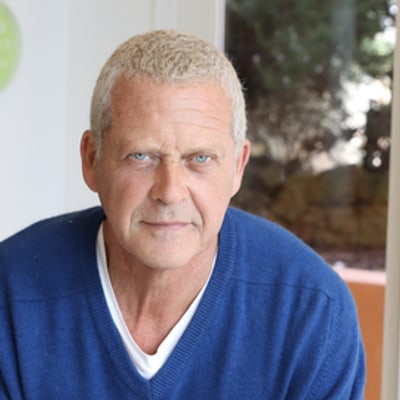
Top Exercises for Longevity with Isometric Exercise Expert Mark Young
Transcript
Click a timestamp to seek the player.
Hey everyone, welcome to Dr. Josh Axe Show, where each and every week we dive deep into the science and principles behind how to grow in body, mind, and spirit, and take your health and your life to the next level. On today's episode, I'll be going through the top exercises for longevity. Also, I'll be going through what the— let me say this, you're gonna be surprised when you look at what the top exercises for longevity are, because everybody probably thinks it's either weightlifting or running. Spoiler alert, it's not. These are forms of exercise that we can all easily do, some that are actually very fun but are more effective than cardio, that are more effective than when you're looking at traditional weight training, uh, at actually increasing your lifespan. And so I'm excited to get into this today and how you can optimize your workout routine in order to live longer and fight things like blood pressure. In fact, I'll go into something today, it's really, really, uh, incredible how there's a device you can start using to naturally support your blood pressure balance. I'll also get into how you can support your mitochondrial health, boost, boost your cellular health, and a whole lot more on today's episode. And I'm going to be doing more of a solo episode today, but in addition to bringing on a guest expert that's going to talk about a specific type of exercise that can also be very effective at helping your body heal, live longer, drop blood pressure, and a whole lot more. Before I dive in though, make sure to subscribe to this podcast and sign up for my weekly newsletter at the link in the show notes. Okay, well, first thing to note is that there are plenty of medical studies now that show that engaging in specific exercises can significantly enhance longevity by improving your cardiovascular health, your muscle strength, your balance, and your overall physical resilience. And I want to go through right now, based on a recent study, the activities that increase your lifespan the most, okay? Now, I would put beekeeping on this list, but it's not really a sport. That's actually gonna be number 1 on the list, or it would be if it was a sport, but it's not. So the number 1 exercise that you can do that would increase your lifespan is play tennis. It's incredible. Tennis increases your lifespan by about 9.7 years. Years. Right after tennis, you also have badminton and pickleball, which are about 6.2 years. So think about that— racket sports. Of all the sports studies, of all the forms of physical activity studied, tennis, badminton, pickleball— racket sports increases your lifespan the most. Now I want to go through several reasons for that, one being it's a good form of cardiovascular activity. So we know if you've ever played tennis, you're moving a lot and you tend to be sort of in a position where your butt is back, your— so your butt is engaged, your quads are engaged, your hamstring, your back. And so you're actually using a lot of muscles when you play sports like tennis and pickleball. So one, it's a full-body activity. That's number one, we're using larger muscle groups. Number two, and so it's both working on your musculature, it's working on cardiovascular health, it's also working on your hand-eye coordination, which is incredibly important for longevity as you age. In addition, it helps with your grip strength, which I'll be talking about. Think about you're holding on to a tennis racket or a pickleball paddle for maybe an hour. That whole time— and actually, grip strength, I'll get into that— is a really powerful predictor of overall health. And it can even— if you're holding on to something at a steady state for a long period of time, it could also support your blood pressure dropping. So we're seeing here tennis and pickleball at the top. And here's another big thing about tennis and pickleball. They're community-driven activities. When you're playing pickleball, almost always it's you and a partner with a couple of others, right? A lot of true— this is true with tennis as well. So it tends to be very connected to other people. You're at least doing it with one other person, frequently 4 other people. And so it's more of a social activity along with all of the other benefits. Which is what makes tennis, badminton, pickleball incredible sports for longevity. I had somebody recently say to me, they said, well, isn't tennis just up there because it is— because a lot of affluent people that are wealthy go to clubs and play tennis? And the thing I asked them back was, well, on this list I'm about to go through, why isn't golfing on the list? So golfing is not on the list. Okay. That is a sport that actually tends to have— and there are actually several other sports I could have listed here as well, but that's probably the prime example. And it's not on the list. But tennis is, and pickleball and badminton. And so there's something about all those things in combination that allow it to increase your lifespan. And so it's amazing. Soccer is next on the list after racquet sports. 4.7 years, it increases your lifespan by. Now, here's why soccer does this, is it is doing HIIT training. You're sprinting, you're jogging, you're sprinting, you're jogging, you're sprinting, you're jogging or walking. And so it's a, it's a way of increasing something called your VO2 max. So it's HIIT training, it's VO2 max training. You're increasing your oxygen capacity. You're also doing things that takes a certain level of agility. It's 4.7 years. Next up are cycling and then swimming. We know cycling, very similar. You're working very large muscle groups, your quads, a little bit your butt, your calves. And so you are working large muscle groups. By the way, when you're working larger muscle groups, you're increasing more blood through— blood flow through your body. You're also increasing something called HGH. It's human growth hormone. Which is tied to longevity. It's also for men, it's very important for testosterone. So cycling is good for that. And then swimming. Swimming is a full body activity. It's easy on your joints. And if you've ever seen swimmers, you— they've got this up, you know, their lats are very big, their shoulders are very strong. And so you are working some large muscle groups there, including your legs, your back, your shoulders. And so that's a great one there as well. And then after that, it is jogging. Now, I want to mention this. There's a form of jogging in Asia. And they call it Japanese slow, slow jogging, or they call it chi running. And it's a type of running where you're taking shorter distance steps. And you're, you're also, you're not striding out, you're not pounding the pavement. If you've ever, again, it's almost like if you've ever seen a, an 80-year-old running, who has good form. And first off, it's amazing. If you have an 80-year-old running, you should be paying attention because 99% of people in their 80s can't run. So if you see somebody running in their really 60s, 70s, and 80s, you just say, what's their form that they're able to still be running this late in life? And it tends to be they have very short strides, they're landing more on their forefoot, they're leaning forward more. It's actually a very specific technique of running called slow, slow jogging. And I don't know why I have to say slow twice, but slow, slow jogging, or qi running, qi running, or qi running. And that can increase your lifespan by about 3.2 years. So if you are gonna go and jog, going to a track or going on a trail or going something where you have a little more cushioning or wearing shoes like Altras or some of the other brands out there are better options. By the way, if you are gonna go and run, probably the best brand of running shoes is Altra. Now there's other good brands, but it's called A-L-T-R-A. The reason is it has something called zero drop. When you're running, a lot of these shoes have drop, which kind of force you onto your toes and when you're jogging, that's fine, but if you're walking, it's really not ideal because it sort of deactivates your posterior chain and doesn't allow your hamstrings and your areas of your butt and back to work as much. And that's why it's a really great brand, still some good cushioning, but also it, it, it's a more natural way of walking and running. So that's a, that's a good exercise for longevity. Then weight training added 3.1 years to most people's lives, and walking between 1.5 and 3 years. So if you're going to add years to your life, play racket sports like tennis and pickleball. Get out there and kick the soccer ball. Get on a spin bike like a Peloton or go outside and actually jump on your bicycle. Swim. If you're gonna jog, do this Japanese slow, slow jogging. You know, do a little bit of weight training, a little bit of walking. These are the things that are most effective. But it's interesting, sports like pickleball and tennis are number 1. Now, I want to go through this study on pickleball, tennis, racquetball, badminton, squash. Okay, there's a lot of racquet sports, but it was a meta-analysis found in the British Journal of Sports Medicine. They analyzed over 80,000 British adults and found that racquet sports were associated with a 47% reduced risk of all-cause mortality and a 56% reduced risk of cardiovascular disease. So heart disease, 56%. Reduced risk. Another study published in the Journal of Sports Medicine on 2.6 million, uh, individuals found very similar thing, increasing life expectancy. And again, we see about, about 6 to 10 years of increased life by playing those sports. Now, when it comes to aerobic activity, whether it be what we talked about— jogging, cycling, swimming, brisk walking— there's a study done in JAMA And what they found was, this is on people who wanted to increase their lifespan via walking, they found 10,000 steps daily lowered mortality risk. And they also found one of the greatest things you could do is boost this VO2 max, which I'll talk about more in just a minute. Now swimming, very similar thing, decreased all-cause mortality by about 30%. And for swimming, there was a study published in the International Journal of Aquatic Research. This was done in France. 40,000 people, they found that those who swam versus those who didn't had a— those, I'm sorry, those who swam versus those who were more inactive, uh, had a 50% lower risk of death. And swimming regularly extended lifespans by 3.4 to 5 years. And next up is strength training. I think some people might have thought, hey, this could be number 1 on the list. Now listen, I'm a huge fan of strength training. I think everybody should be doing some form of it, whether that be doing actual weights or body weight such as push-ups and planks and squats. Uh, these are all great, or banded workouts. You know, all of these things are important. They help us maintain our muscle. And here's the reality, this is important, do not forget this: once you hit the age of 30, on average you lose 1% of your muscle per year. Okay, and so, you know, if you're 30 and then you eventually get to 60, you've lost 30% of your muscle mass, that's quite a bit. And for some people it's even more. Um, and so you do want to do everything you can to maintain your muscle. Your muscle is— acts as a longevity organ. A lot of people pass away early because they can fall and fracture a hip, and they become more feeble over time. You want to maintain your strength as long as you can, and weight training can increase your lifespan from anywhere from 1.5 years up to a little bit over 3 years on average. But you do want to continue to do some form of strength training. But surprisingly, it's not even in the top 5 on the list. You know, there's a lot of gym buffs, and I want to say this, I've known a lot of people that were in the gym lifting weights every day. And for a lot of time, for many of those people, it was the only form of exercise they did. A lot of it was by themselves. And many of them died of a heart attack at, I've seen a lot of them die of a heart attack at 60 years old, that sort of— I mean, I've seen a lot of people who were very into weight training, and it didn't really serve them in the long run. And I think part of it is a lot of weight training, if you're just going in there and hitting dumbbells and hitting machines, or jumping on cardio equipment, it's not very functional. And so I think the more that you can make your exercises functional by doing things like lunges and actually bodyweight squats, doing more of the bodyweight stuff, I actually think is probably better for most people. Because you want to be doing more of those activities as you age. There's this commercial I saw on TV recently. This was a— this is a Christmas commercial. And there was this grandfather and they and his family, like, looked in. They were watching him do his workouts and he had this kettlebell and he would bend down like he was squatting. He would pick up the kettlebell and then extend it above his head and then squat down and put it back down and do it over and over again. And then later they show this scene, and I think it's, it's so good. And then later he's picking up his grandson off the ground and holding him up while he puts a star on the top of the Christmas tree. Okay, that's functional movement. That grandfather was going to be doing that at some point in time. This is like going out and chopping wood. It's doing a pull-up. It's doing a pushing yourself up off the ground, um, you know, doing these sort of exercises is going to be more functional to wear a squat to wear when you have to get up and down off the toilet when you're, you know, in your 90s, right? So being able to do those things and do exercises that are truly functional part of everyday movements is better for longevity than just doing, you know, the machines or training or bench press or any of those sorts of exercises. Now, listen, bench press is great if you have a tree, you know, maybe roll over on you because if it falls on you, it'll probably kill you, and then you need to push it off of you, which isn't very likely, versus probably picking a kettlebell off the ground. All right, next up here, VO2 max training. This is high-intensity interval training in a way. However, I do want to say HIIT training or Tabata tends to be shorter bursts than a VO2 max. So when you— when we look at longevity, HIIT training is more you know, you're going to go and sprint for 20 seconds or 30 seconds and rest for 20 to 40 seconds, something like that. So tends to be fairly short. VO2 max training tends to be a little bit longer, maybe around a— at least a 1 minute, but in most cases closer to a 2 to 3 and a half minute of, you know, exertion of going at probably close to 90% for that period of time. So going out and for most people, running about 800 meters, something like that, and doing intervals of 800s. So let's say you go out and you run 800 meters, a semi-sprint, okay? And then you would walk 400 meters. Something like that would really help with VO2 max training. Or soccer. Again, you're sprinting, you're walking, and you're jogging, and you're sort of mixing those things up. So these are really good for longevity. And there was a study published in the prestigious JAMA Network, and they found there was a very, very high relationship between VO2 max and reducing all-cause mortality. So there's no doubt that VO2 max training is very good for this. And one of the best ways to do this is to, you know, do a Peloton bike or a Carol bike or one of these types of programs where you're going hard, you know, you're doing HIIT and hills or or a Tabata or something like that to where you are doing intervals, but sometimes a little bit longer intervals. This is very, very good for VO2 max training. It was something I would suggest. Swimming is also incredible for VO2 max training. So you could do it at a track, you could do it on a spin bike or out on your normal bike doing those intervals, or do it in the pool where maybe you're doing repeat 100 to 200 meters while taking a break in between. Now, there's a few other things that you need to consider when it comes to exercise and longevity, and that has to do with flexibility and balance and breathing. Exercises like yoga, Pilates, tai chi, and qigong enhance flexibility, balance, coordination, reducing the risk of falls and improving overall physical function. I want to point out the studies that I've quoted here when it comes to the forms of exercise that that increase our lifespan the most. This was a Western study done in the United States of America. There are probably studies out of Asia, or they'll probably be doing studies in the future to do— look at something similar. And I guarantee if you look at some studies done in other countries where other types of activity are more prominent, we might see some different things on the list. Let me give you an example. Japan has the longest lifespan of any country in the world. They don't do much weight training over there, okay? You know what they do? They do a lot of tai chi. They do a lot of qigong. These are, these are things where you're doing and focusing on your breath, deep breathing, strengthening your diaphragm, and working on flexibility, balance, coordination. Uh, you know, similar thing with yoga. And so knowing that a lot of these forms of exercises where you're also working on flexibility and balance and breathing have tremendous benefits for longevity. And I think if we would also include those in a study like this, some of these, like a tai chi, would probably be fairly high on the list as well. Now, I want to hit on something else that really has tremendous benefits for longevity, and this might surprise you. One of the greatest single predictors of lifespan Okay. And so this is a test, right? If so, if we're going to go and test people, because it's hard to test people on, you know, if they're a good pickleball player, right? Or just, I mean, I guess we can rank people, but there's no study on that. However, there is a study showing that your grip strength, okay, grip strength, how long can you hold on to a pull-up bar? Okay, how, you know, how strong can you grip a tennis racket? But grip strength, and this, even think about this, opening a can when you get older, right? You know, twisting off the top, opening a can, something like that. Grip strength is one of the most reliable, if not the most reliable indicator of overall muscle health and functional fitness of any test to date. Research shows that higher grip strength is associated with increased longevity, reduced risk of chronic diseases, and better cardiovascular health. A decline in grip strength is often linked to frailty, reduced mobility, and higher mortality rates in an aging population. And there are normals. And I'm going to show you a chart here. If you're watching on YouTube, you can see here male versus female, what's normal in terms of the strength you should have. It's pounds per square inch of pressure. And there's actually a device I've been using recently and I've loved it because I've shared this with all of you. I'm very focused on longevity right now. I want to increase my lifespan. I want to be around with my grandkids. I want to do everything I can to support my body being healthy as long as possible. And grip strength is one of the greatest tests you can do on a regular basis to be able to see where you're at. And so I got this device here. It's called Zona. Okay. And this one thing it does is it has me working on my grip strength, but in an isometric fashion. There are additional benefits for longevity, especially for cardiovascular health, for things like blood pressure when it comes to working on your grip strength, but in an isometric fashion. And so I have this— you can see this here, this Zona device here. And I basically, I press this green button and it says go, okay? And it has me do this for a minute, 2 minutes, has me work on it at a steady state for a period of time, working my way up. So it does a few things. One, it does increase your grip strength. But also something else happens. It's pretty profound and incredible for your cardiovascular system. When you're holding on to this at a steady state, it does something to your circulation. It does something to your, your cellular health, but specifically the health of your blood vessels, of your arteries, to where it's bringing oxygen to the blood. It naturally starts lowering, lowering blood pressure and over time have some benefits between your sympathetic and parasympathetic nerve system and that response of your, of your vagal tone, it's called. And so anyways, this is a great thing I've been doing, kind of holding on and gripping this. And I do it daily to continue to increase my grip strength over time. So you can see here, and this is a great thing you should do. I want to encourage everybody to, you know, check out this device. I actually have a guest expert coming on here in just a minute. And I'm going to ask him about this because I wanted to bring on an expert on this device in grip strength. Because again, I think it's— I get questions all the time of people asking me, Hey, what's a good, you know, piece of fitness equipment for my family? Or what's a good test, an indicator for longevity? And there are blood tests, by the way, that look at your biological versus chronological age. The thing I love about this, though, is I get to see on a daily basis how I'm doing, and I get to improve day after day after day at working on this isometric contraction. Here's the great thing about it, too. It tells me if I'm getting too— if I'm— if I'm gripping too weak or too much because it wants to be in isometric, a steady state. And, and so it changes how hard I'm gripping it on a regular basis. And by the way, this is a fun thing to do at family parties too, to see, you know, how everybody's grip strength is. So, okay, so this is an amazing device. I want to encourage everybody to check out. It's called Zona, Z-O-N-A, working on your isometric strength, your grip strength, and what that also does for your heart health is amazing. I'm gonna bring on an expert here after this next point, though. I do want to talk about isometric exercises. Okay, here's what a— most of us are used to doing eccentric and concentric exercises. Okay, so if you are doing a bicep curl, right, you're doing this, you know, that you're doing this eccentric contraction versus a concentric, like slow in the other direction. Most people don't even do concentric, by the way. It's just like, it's sort of like, I'm going to just eccentric everything. Versus if you can do some more concentric, and even better, isometric exercises. That's a static movement. A great example of this is doing a plank or a wall sit, right? Everybody thinks a plank is easy until, you know, you get to the 40-second mark and that last 20 seconds is absolutely so difficult. And then, if a minute's easy, well then, you know, for some of you, once you get to 2 minutes, it's incredibly hard. That's only if you're very physically fit. And so, but static exercises like these planks and wall sits involve muscle contractions without joint movement. This actually enhances muscle strength, muscle length in certain exercises, and your endurance. And unlike dynamic exercises like running or weight training where muscles change length, isometric exercises require holding a position, engaging muscles without visible movement. And isometric exercises have been shown to lower blood pressure, improve muscle strength, and contribute to longevity. Hey, Dr. Josh Axe here. I want to share something that's been a game changer for my cardiovascular health. It's the Zona+. The Zona+ uses the science of isometric exercise to help improve circulation, lower blood pressure, and even boost nitric oxide production, which is key for keeping your blood vessels flexible and your heart strong. It's super simple. You just do custom hand grip exercises and the Vise takes care of the rest with its smart algorithms. What's really cool is it's not just treating symptoms, it's actually helping your body work smarter to stay healthy. Whether you're tackling hypertension, muscle fatigue, or just want to level up your overall fitness, this device is a powerhouse. If you're ready to unlock unlock your full cardiovascular potential, visit zonadotcom/axe and use the code AXE100 for $100 off for a limited time only. Trust me, your heart will thank you for it. Take control of your health today with the Zona+. It's a total biohack for better living. Now let me walk you through the scientific evidence supporting isometric exercise for longevity, for blood pressure, and a number of other health benefits. There's a study published in the British Journal of Sports Medicine, and they found that isometric exercise training led to significant reductions in resting blood pressure. And this resulted in an average of decrease of 7.3 mmHg in systolic blood pressure and 3.3 mmHg in diastolic blood pressure. And let me say this, lowering your blood pressure and keeping it low is one of the single most important factors for longevity ever. Okay, it's incredibly important. And there are so many people today who their blood pressure starts creeping up and then later on it causes a heart attack or stroke. Okay, I had this happen to a family member of mine, uh, last year. He was 60 years old. It was my father-in-law, one of my best friends. He was living with us at the time and incredibly physically fit. He had high blood pressure for a period of time and, um, and, and we think that's, that's what we know, that's why you had the heart attack. And, and it's, it's a, it's something that I'm so conscious of now, and I am so focused on helping people prevent that health crisis, prevent that early death, that, that this is a— again, being able to do everything you can to lower blood pressure, improve longevity, is so crucial. Uh, the second thing I want to talk about with isometric exercise is muscle strength preservation. Isometric exercises have been shown to maintain and improve muscle strength, which of course is crucial for aging populations without— and it actually can decrease your risk of joint injury. You know, most of us when we're doing exercises, we're kind of plowing through things again where we're doing these exercises at a fairly rapid rate versus if you either do them very, very slow, very, very slow contractions or isometric, you can actually reduce the risk of injury. Number 3 here I want to mention is autonomic function improvement. Research indicates that isometric hand grip exercises can lead to reductions in resting blood pressure, which also suggests improved autonomic, autonomic function. Of course, we're talking about your autonomic nervous system. We want to be able to support your nervous system, your brain, your spinal cord, these peripheral nerves, and especially your vagus nerve when it comes to longevity. And then cognitive benefits. A study published in Frontiers in Physiology explored the effects of isometric hand grip exercises on cognitive performance, and the findings suggested that these forms of exercise enhance neurological function. What happens when you're just doing something consistently, like working on grip strength there for, you know, 5 minutes total, okay? You are increasing blood flow throughout your body, including up to your brain. So it's great for brain and neurological health. And here are the groups of people that can most benefit from isometric exercise, including strengthening their grip. Older adults— this helps them maintain muscle mass and strength, reducing the risk of falls and improving mobility. One of the things I love— I'm gonna get one of these for my dad. My dad, you know, if he's watching TV— by the way, my dad's into health and fitness. He, he lifts weights. He a lot of walking, he'll ride his bike. But watching TV at night and just sitting here doing this first thing in the morning or in the evening, just working on this for 5 minutes, you're increasing blood flow, you're bringing blood to the brain, you're promoting longevity while you're sitting there watching a TV show. Okay, so, so many benefits with things like that. Also, people with joint issues, since these exercises don't involve joint movement, they are gentle on the joints. Making them ideal for those with arthritis and chronic pain. And anyone looking to enhance muscle strength, improve posture, incorporate low-impact exercises into the routine can benefit from isometric grip strength exercises. And here are some isometric exercises in addition to this you can incorporate in your exercise routine. Number 1 are planks. Planks are incredible. Now, when you do planks, I just want to mention this. Your form is important. You don't want your back caving in. You want your back absolutely flat. So it's best to do in a mirror, look at the side, and you really want to make sure what's called your TA, your transverse abdominis, is well engaged when you're doing a plank. And so doing things like going shh, shh, shh, or coughing to where you feel the very low part of your abs, or kind of doing the motion or activity like you're holding your pee, is actually how you know you're engaging those lower pelvic floor muscles. And so doing that right before a plank and making sure those are engaged and then, and then sort of expanding out through your entire breath in 360 degrees around your core, then do your plank. Okay? And it actually, you'll probably fail earlier, but it's a better overall activity, an isometric activity if you're doing a plank that way. The next one here is wall sits. Doing this where you're really working your quadriceps, your hamstrings and glutes. A glute bridge, going up and holding at the top and really squeezing your glutes together, is a great form of isometric activity. Isometric push-up hold, or doing them at different points, doing them at the bottom, you know, maybe 3— halfway through, 3/4 way through, and all the way up. You can do it that way. And then isometric bicep hold, you could do this on a pull-up bar. Just go and hold, and then after you hold for, let's call it, 30 seconds, and you let yourself down. Slowly. And maybe you can only hold for 10 seconds and let yourself down slowly. But these are great forms of isometric exercise. Here's the truth: incorporating isometric exercise into your routine can significantly positively impact your healthspan and your lifespan. And the big thing here it really supports more than anything is your cardiovascular health. And it also helps you maintain muscle, improve autonomic nervous system function and promote cognitive and physical resilience. Simple additions like wall sits, planks, and hand grip exercise can make meaningful differences in your overall health. I also want to encourage you, go out there and jump on the pickleball bandwagon. Go out there and play tennis, get in the pool, do some cycling, do some of these longevity exercises if you're not— get them incorporated into your daily activities to increase your lifespan. Now, Before we close, I want to bring on an expert in this topic of isometric exercise. I'm going to be joined by Mark Young. He's the CEO of Zona Health. Again, I wanted to bring them on because I've loved this device so much. It's been so great for increasing my grip strength. And if you're a person that likes to do pull-ups or certain other activities, you'll notice the difference after you do this for a while. And Mark has a really interesting product, as we talked about here, that again, the one thing I love about it too is it's biofeedback. It's telling you how you're doing in real time. It's telling you how to adjust your grip strength there. It's helping you get better. I'm a huge fan of this. And so I want to welcome Mark to the show. Hey Mark, thanks for joining today.
I appreciate the invite, Josh.
Well, as I was saying, I love this device. Uh, this, you know, working on grip strength is so important and not just grip strength, isometrics. Would you walk me through a little bit of the research behind how isometric exercise is more effective than other forms of exercise for longevity, for blood pressure, for overall health.
You know what I love? That you, you had originally talked about eccentric versus concentric exercise as juxtaposed to isometrics, and I'm so glad somebody's talking about that because I think it's a misunderstanding. Like, we always have the conversation about a sit-up versus, uh, doing a plank, and it's like Two totally different things. Um, the other thing that I want to point out is that when people talk about, uh, hand grip strength, they often think about, I just need to squeeze as hard, as hard, as hard as I can, right? Like, people take a look at the Zona device and they're like, oh, it's like an exercise ball, you're just squeezing. I'm like, exactly the opposite. In fact, it's kind of like comparing a plank to a sit-up. Again, like, well, it's the same thing. No, it's completely different. It's working a different a different set of, of muscles entirely. But aside from that, as much as the word drives me crazy, I'll use the word biohacking. And it's like, but in this whole hacking your physiology world, doing a concentric or eccentric exercise is a different physiological, uh, response from the body than isometrics. And I think it's not just about the muscle, it's not just about building the muscle or toning the muscle. There's an entire— I call it the, the the combo shot to the corner pocket going on, right? It's not just about the ball in front of you, it's, it's the 3 steps down the road that that ends up taking. And that's what I love about isometrics even more than, than, you know, what I'll call more of a traditional exercise, the, the concentric-eccentric type exercise. When we're working with Zona, you specifically asked about what is the research behind this, um, and I— we call it the accidental discovery, to be honest with you, because The device itself, the science behind it, was actually started, um, back in the 1980s by a researcher who was contracted with the United States Air Force. Um, he was actually studying, uh, Air Force pilots and how they go into G-force blackout. Um, and they were trying to figure out how do we stop that? Like, it's happening because their blood pressure went down. And this is really funny because I'm sure you saw the new Top Gun movie.
Oh yeah.
And, and he was trying to talk to them about going into G-force blackout. When you, when you pull up and you go up, you're gonna pass out. And you just, you saw the pilot pass out and Tom Cruise is trying to wake him up by hitting the alarm. And, and I was like, he needs a zona, right? But, but during that research, what they found was these are healthy guys who are Air Force pilots. And from the beginning when they were doing a health history, physical measurements on these guys, to the end of their study that they were doing, all of their blood pressures have been, and been reduced during this research. And they're Well, that wasn't anything we were even studying, but what just happened? And Dr. Wiley ended up taking all this data after their study was over and continuing that research for decades. And what he found was that isometric exercise is linked to a lowering of blood pressure. Okay, and it almost sounds, you know, to the average person, you're like, no, you can actually use this device and your blood pressure goes down. And people are like, but that makes no sense to me, right? That doesn't compute. How does this lead to that? And often it's a complicated pathway that gets there research-wise. We've had research by the Harvard Health Letter, by the Mayo Clinic, by Johns Hopkins University, McMaster's— like, you name it, I've got, I've got volumes and volumes of research that link isometric exercise to a reduction in, uh, in high blood pressure. But it's not the conversation people are having, man. Like, it's It's just not. And I think part of that is just we're in an overly prescribed world. Um, and my passion is to get alternatives out there. Like, there's an opportunity for us, especially right now, to be talking about topics about how can people take control of these symptoms. Um, and I'll say we over-diagnose, uh, things like hypertension, and we call hypertension a disease. And I'm like, or it's a symptom of a deeper problem and we're not getting to the deeper problem.
Yeah, yeah. You know, one of the things that I think when you look at, uh, conventional medicine today versus the functional medicine world, if somebody comes into a conventional medical doctor and they've got high blood pressure, for the example, um, you know, they're going to be prescribed a drug. Maybe it's lisinopril, but it's some sort of medication. Legally, legally they have to. You know, you know what a lot of people don't realize is that if doctors don't follow the standard of care they can lose their license. And so some of these doctors, they don't even want to be prescribing all these medications.
Correct.
But if not, they can lose their license. I mean, this is what happened part of coming out of COVID I mean, a lot of these doctors didn't want to have to, you know, say you can't do hydroxychloroquine or you can't do, you know, you know, some medication or some herb or— but, but, but yet it wasn't part of the standard of care. And a lot of doctors did either get banned or censored or a few lost their license because they said, well, no, we need to focus on diet, or no, this actual thing that's been around a long time is good, but it wasn't in line with what the pharmaceutical companies wanted. And so the reality is, is that there's a lot of things out there that people can do that are much better for their blood pressure. You know, I've never had somebody who's coming with blood pressure where we weren't able to see a significant reduction over time, or it didn't work better than a medication, in— for the most part. Now, I'm not saying that there's not a time and place for, hey, if somebody's blood pressure gets way up for a period of time, hey, you get them on a drug. Absolutely. Until you get it down to a certain point, and then do you try and get them off of it? You don't say you're going to be on this the rest of your life. And what I love about, uh, you know, this grip, this, this isometric grip research is, is that, you know, somebody can come in, instead of getting prescribed a drug first thing, they can say, hey, you know what, let's change your diet, okay? Let's get you on some more omegas. Let's go ahead and get you on some more leafy greens. Let's get you some berries and pomegranates. Hey, and in addition, here's one thing you can do at home. Let's go ahead and have you just squeeze this for about 5 minutes a day, you know, 2 and a half minutes or so on each hand, and just do this exercise while you're watching TV at night, while you're doing whatever. And the research shows that your blood pressure is going to start to drop. It's going to increase longevity. You're going to get much healthier for it. You know, this is a better way.
100%. There's so many things I want to comment on through there. The, the one thing that drives me nuts is we, we do live in an overprescribed world, you know, we can agree to that. And, and standard of care being what it is, however it got there, not either of our concerns, but we do need to address it now. That is, people are there, people are in a space where high blood pressure is a comorbidity to darn near any other disease that's killing a lot. Yeah, you know, and we're not talking about is it a comorbidity or is it a precursor to any of these other things. Um, so there, there's that whole conversation that we could open up. But I'll say beyond that, my personal belief is that hypertension in most cases is a symptom to something else going on and simply masking the symptom. To me, it's like you've got it, you got your brakes are squeaking, so you're just turning up the radio that didn't stop the brakes from squeaking, right? You still have a stopping problem. Yeah, but you turn the radio up so it went away. And in many cases, that's what these antihypertensives are doing. Sure, they're bringing the blood pressure down, but they're not solving the problem. The blood pressure itself is an alarm. It's an alarm that's going off telling you something else is wrong, and it's leading to somewhere else. And we're turning the radio up. And I understand it. I understand the reason behind it. I understand physicians who are prescribing an antihypertensive to bring the symptom down. I get it. But it's, you know, my leg is falling off and attached by, you know, 3 tendons, and I'm gonna give you enough, you know, opium so that you're not going to feel it anymore. Well, that didn't fix my leg.
That's right.
In that case, by the way, please prescribe, but nevertheless, fix the leg as well, right? Like, we need to get past the symptom and get into the real problem.
You know, a lot of people today are talking about insulin resistance and prediabetes. And I would say high blood pressure, in a way, is that equivalent to— before you have a heart attack, before you have a stroke, before you have a major cardiovascular event that could end your life or, or radically change your future, this is a similar thing. When you start seeing blood pressure creep up, I mean, it's a similar thing. I would even say that, you know, when somebody gets prediabetes— or is insulin resistant, you know, their glucose is getting too high. I mean, that's dangerous. But if your blood pressure is too high in an acute phase, in a shorter period of time, it's even more dangerous.
120 million people just in the United States with high blood pressure. That's a third of the adult population that's been diagnosed. Wow. That doesn't count the people who haven't been diagnosed. And here's my biggest problem with it, Josh, is we're calling it normal.
Well, what's too high? What— walk that through me for age, you know, that age, men and women.
So yeah, so blood pressure standard has always been for a very long time 120 over 80. That's 120 millimeters of mercury for systolic, top number, 80 millimeters of mercury for diastolic, which is the bottom number. Um, it has been that way for decades. The American Heart Association just made a change to that, and I want to say it was was now— it's got to be 3 years ago, 2 and a half years ago now— where the American Heart Association suddenly said, you know what, that's not normal anymore. Normal now is 110 over 72. Well, all of a sudden, with the 110 over 72, what did you just do? Well, you classified anybody between 110 and 120 or 72 to 80, you just reclassified them into prehypertensive. You know, if all of a sudden I said, you know, 5'9" is the average height, and then I said, well, 5'7" is the average height now, all of a sudden, well, did the population just get taller? Well, no, I just changed the numbers. Like, so you mathematically just diagnosed a bunch of people. I don't know exactly— I'm not getting into the theories as to why we would do that. Um, but the reality is my biggest, um, the, the just the part that I can't get past in so many of these cases is I hate the words that— literally hate the words. I don't use that word often, but I hate these words. That's normal for your age. I can't stand those words. And the reason is, is because we are not allowing people to think that healthy is normal.
Well, and I think, I think, you know, we should allow— let people know this is ideal for your age, or this is not ideal. I mean, there are better words and terms for what's normal, because you don't want to be average. You don't be normal. I mean, you want to be better than average. You want to be better than normal. And so I'm gonna click in complete alignment there. I think that, that, you know, the, the, you know, the other thing too is, yeah, a lot of times they just put this number down rather than a general range. And, and I'll just say this from working with patients, I think that, you know, I start to get concerned when the number gets over anything 129. Now sometimes even upper 120s, I'm like, okay, well, there's— you know, there's an issue there. But if I see a 130 or higher consistently, I, I'm, I'm concerned, and I'm encouraging people to take action.
I agree with you. And, and again, I don't think that that is, is bad. Like, anybody with elevated blood pressure should be addressing it immediately. The, the bigger question is that when some— I'll give you my example. I had a nurse come to my office recently, and she came in because I had made changes to my life insurance policy, right? So of course they're going to assume I'm dying. So, you know, nurse comes to the office and she runs through all of her whatevers, and she takes my blood pressure and she takes, you know, she— whatever. And then she goes ahead and she, uh She looks at my birth date and she went, "You're 49 years old." And I went, "Correct." And she looked and she went, "Well, your blood pressure is 110 over 72." And I went, "Oh." And she went, "What meds are you on?" And she literally prepped her pen like she was about ready to write it without me saying anything. And I went, "None." And she went, "Well, no, you're 49 years old." And I went, "And I'll be 50 next year." And she just looked at me funny and she went, "Well, sure, but what meds are you on?" And I said, "None." Like, "Well, that's not normal for your age." And I went, "No, that's very normal for any age." Okay, the idea that you must be prescribed something at some stage of life, like, why do we accept that? Like, I don't wanna be prescribed anything. Like, if the need arises, I'm not saying no to it. I'm very grateful. I'm grateful to the pharmaceutical industry for the work they do, but it's not normal. It should be the exception. It shouldn't be the rule. And we're starting to treat it as if it is normal. Yeah, exactly. And I'll say my own grandfather died earlier this year and he was on 5 blood pressure medications. And it was so ingrained in his mind. And you know what he died of? Kidney failure. Figure that out, right?
Well, yeah, yeah, yeah. There you go. Right. Medicine.
He lived on dialysis for the last years of his life because he was on so much medication, his kidneys failed.
One of the issues with the overprescribing of medications for these conditions is people think, now I've done the thing I need to do, I've done the work, I've done what I need to do, versus if you've got high blood pressure, you've got high stress. Yes. You're probably— there's probably an issue with physical activity because we are doing— I mean, if you think about it too, the type of activity I know that you promote. And just for everybody here, Mark has, you know, done so much research on blood pressure, isometric exercises, grip strength, longevity, and that's why I wanted to talk to him today. And it's like, when you look at what we would have typically been doing 100 years ago— I, I read this, uh, study that said, um, about 100 years ago, close to 50% of jobs were agricultural related. So people were out there baling hay, you know, with the— with a strong grip. They had a hammer. They were blacksmiths. They were working on electric. They were milking cows. They were doing things, physically active all day. And today we're, you know, in a cubicle typing somewhere or doing stuff around the house. We, we're rarely doing things physically active that are active. So you— and that are isometric. And so you want to be able to do everything you can to counteract that. By the way, when you look at most biohacks today, which I actually don't like the word biohacks because you're trying to hack the body, it just doesn't First off, I don't like it. I'm— part of it I think is due to my faith and just how I feel like it's like living in tune with, or, or, or making up for a deficiency of what the way God designed us. For instance, if people are getting in infrared light today, um, they only need that if they're not getting plenty of sunshine. If not, you're getting those UV rays, you know. So, so, so people that are doing cold plunging, it's because, well, we're not outdoors in the winter anymore, is getting our actual body cold and doing something there. If somebody's doing, you know, PEMF or some of these things, you know, these electrical grounding mats, they're not spending enough time outside. And I'm not saying, but I'm still grateful for those things. I have an infrared sauna, I do have a cold plunge.
And I also have an incredible amount of gratitude to God that created me with the ability to respond to these things.
Yeah, and so I have all those things and I have a, you know, one of these Zona, you know, things here for my isometric exercises. Strength because I'm not out there living on a farm right now, even though Chelsea and I are building a homestead and a farm right now. We're excited, but, um, but I'm still not doing that like every single day, you know, chopping wood out there, doing those sort of things. And so it's great to be able to have this to be able to work on those and my other things I have for biohacking in my house to help me do these things.
Same. I did the same thing. I've got my sauna, my Carol bike, my Power Plates. Like, my house looks like a lab the same way. And And again, it's a way to supplement what we don't get that perhaps we used to get. Um, it's the same, right? Same reason I take handfuls of supplements on a daily basis. Why? Because my food isn't doing what my food used to do.
That's right.
And I understand the necessity of doing that. And, and I think when I, when I think of the word biohack, like, I understand the origins of it, and I also understand the why we don't want to necessarily, you know, I say, engrandize its it's, uh, you know, mystery. The reality is, is the body's designed in such a way— and yes, I say designed— um, in such a way that it responds to certain types of stimulants. And this isometric exercise, or, or cold plunges, or red lights, whatever, is a stimulus that the body responds to in some way. And, and the hacking component that we talk about is we're just rediscovering, I think, as a people, the way the body was always designed.
Can you talk to me specifically about isometrics of the grip? Yeah, of grip, because there are obviously other forms of isometric exercise that have benefits. But I think this is really unique in terms of grip isometric and how it's unique, especially to our heart. And by the way, in Chinese medicine, there is a really strong connection between your hand and your arm and your shoulder all the way to the heart. In fact, it's known in Chinese medicine, if you want to strengthen and help your heart health, you work on your grip, you work on these muscles here. And we even know if somebody's having a heart attack where they get pain, left shoulder into their left arm. And so there's— that's actually deep-seated connection between heart health and our hands.
Okay, so yes, and I love this. And this is— I, I use the, the metaphor earlier of it's the combo shot to the corner pocket in a game of billiards, right? And that is we figure out this one trigger that triggers this other thing that triggers this other thing that eventually goes there. You know, when I was young, there was a game called Mousetrap. I don't know if you remember Mousetrap, right? Like the, the ball falls, rolls down the slide, hits the diver who jumps in the whatever. And it's like, to me, that's biohacking in so much of a way, right? It's like I do one thing and then it triggers all these other events. Um, and isometric hand grip therapy, through our years, decades now of research on the topic, is that exact same combo shot. Um, physiologically, you mentioned a few things earlier during your introduction that I want to unpack a little bit more, and that is the, the one thing about, uh, vagal response, you know, the idea that when your body goes into this isometric hold, like, there's nothing normal about a plank even, right? Like, the body does not look for discomfort. The body looks for comfort, right? It— you fidget in a chair to find a more comfortable space. It's, it's normal. It's reflexive. When you put your body in a state of stress, like you do when you're actually holding this device for its 2-minute, uh, intervals, that 2-minute interval puts your body under stress. It does. It intentionally does that, which actually triggers a sympathetic nervous system response. Now, that nervous system response has multiple different things, and I say it's kind of like your brain going, what is going on? My arm is in danger. And before your body even has the time to send the information back to the brain to tell the brain what's going on, the brain has already responded to the physiological stimulus. I mean, for all it knows, you're trapped under the refrigerator, right? Like, it just knows my arm is constrained, and because of that, something must be wrong. I need to increase blood flow in this area because there's danger. Now, the body's natural response to that from a sympathetic nervous system is the production of nitric oxide. Nitric oxide, of course, being the, you know, Nobel Prize-winning molecule when discovered that is a natural vasodilator. So what happens is, in order to increase blood, uh, blood flow, the brain triggers the increase of nitric oxide, blood vessels expand, blood flows more freely. Well, that in a short term doesn't increase blood or decrease blood pressure. It increases blood flow simply because if the hose is wider, the pressure's not the same, right? That's just natural. Well, but that's only short term because nitric oxide ends up metabolizing in the system depending on what the reason before it is usually in less than 6 hours, sometimes as little as 1 hour. So you get a short-term response from that, but there's a long-term response that I don't think a lot of people understand about this type of isometric exercise. You used the word earlier, biofeedback, that as people say, well, can't you just do— well, sure, if you can do it perfectly. You mentioned the, the, the perfect form on a plank. Okay, like, I, I go to a HIIT gym on a daily basis, and I'll tell you what, I've never seen anybody do perfect perform on a plank. Yeah, um, because it's the moving side to side, it's the back and forth, it's the back up, it's the sticking their butt in the air. And it's like, well, just because your hands and your feet are still on the ground doesn't mean you're doing a plank. Let's be real. But the reality is, is the biofeedback that a device like Zona gives is it actually gives audio and visual cues to tell the person that you're not holding it at the exact same amount. And, and that, that pressure that you're holding, or what we call a percentage of maximum voluntary contraction What the device does is you calibrate it at the start of each usage, squeeze it as hard as you can. We call that maximum voluntary contraction. How much can you, if you tried, squeeze that? Yeah. Um, and then we've got an algorithm that does a percentage of that. If you go outside of the algorithm, the device is telling you, no, no, no, no, do more, do more. Oh, do less, do less, squeezing too hard. And you have to hold it in that optimal range for a period of time. And if you're not in the optimal range, it actually gives you feedback.
Yeah, that's what I love about it. You lose, I love it. You lose it, do it again. Yeah.
Um, and it'll tell you to start over if you didn't do it right. Now the beauty behind that, and I'm going to give you that, that, that combo shot to the corner pocket, physiologically— I know you and I actually chatted about this for a quick minute— but when you put a muscle into that type of isometric resistance, the muscle has a tendency to want to cramp, right? That's, that's —normal. What ends up happening is in order to stop that muscle from cramping and seizing, the cells in that affected area begin to release sodium. Sodium releasing from the cell is going to help the muscle like a flood of electrolytes. Think of it that way. You're gonna stop the muscle from cramping. Well, the interesting response to that is that in order for every cell in the body to be healthy, it must have an equal amount of sodium and potassium. If sodium is being released from a cell, So is potassium. Yeah, well, why is potassium important? Well, blood pressure increasing over time, we'll call it, uh, you know, arteriosclerosis, that hardening of the, of the, the cardiovascular system is actually a, a hardening. Imagine the, the endothelium, which is the lining of that cardiovascular system, is like a sponge. Well, over time, that sponge just begins to harden, and that is a natural part of aging. You know, you— when you age, these things start to happen, and that, that, or that endothelium begins to dry up kind of like a sponge. Well, the endothelium in the cardiovascular system actually functions, um, what I'll call like a thermostat in a furnace, right? The furnace only turns on if thermostat knows that the temperature went down. But if the thermostat doesn't function, the furnace doesn't turn on. The same way, your body knows how to correct its blood pressure It just doesn't know the blood pressure is high. The triggering system is broken. So as that endothelium hardens, the body loses its ability to even recognize the problem. So blood flow's gone down, body doesn't notice it, body doesn't notice it. And it's an eventual climb because the, the, the more stiff that endothelial lining becomes, the harder it is for the body to recognize that there's even a problem. How does potassium play into that? Well, as sodium is passing through to get into the muscle, potassium passes through the endothelium, and potassium is the only thing that actually softens the endothelium. Yeah. So potassium is passing through this hardened sponge. Suddenly the sponge starts to get a little bit softer. It's as if that thermostat turns back on and the body's like, oh my gosh, my blood pressure's high. I had no idea. Well, how long has this been going on? Right. So in essence, It's, it's why you don't typically see people in their 20s with high blood pressure, because their endothelium is still soft, it's still young, it's still flexible. As we age, we assume it's normal for your age for this cardiovascular system to just begin to harden and begin not to function the way that it once did. Yeah. And we're so busy calling it normal that we're not figuring out, sure, but how can I just reverse that? Can— is there a way to get it to go backwards?, and that flow of potassium through the endothelium ends up what happening. Who knew that squeezing a device for 2 minutes a couple times on your arms actually leads to potassium release, and it leads to literally a reshaping of your cardiovascular system? I mean, I say in a very literal sense, we're turning back time on your cardiovascular system. Your cardiovascular system systemically is younger than it was. And there are markers in the blood and stuff that we can actually track for that type of stuff, but we've, we've noticed so many different things, everything from creatine kinase levels to, to whatever. Like, we've noticed multiple different things through studies. I won't get into all the details of that, but the reality is, is something that simple is able to turn back time on a cardiovascular system and stop making hypertension normal for your age. And this is particularly effective, uh, you mentioned people who are aging, people who are more sedentary, people who, who aren't going and doing planks, right? My grandma's not going to go do planks to try to lower her blood pressure, but this is something she can do. Yeah. And it doesn't matter how strong her arm is because it calibrates to that user's strength and then adjusts the algorithm accordingly.
Yeah, I love that everyone can do it. Like I said, I got my parents and my 7— my parents are in their 70s, this is something they can do. My mother-in-law in her 60s. And so this is a great, great thing for blood pressure. And if people are struggling with blood pressure in particular, as one example, you know, there are other things you can do. Do more omega-3s, get the wild salmon, get some things like, uh, walnuts on a regular basis, you know, get the dark-colored fruits, the blueberries, the raspberries, the blackberries, the pomegranates. These are all going to help. And those fruits are also high in potassium. Watermelon is a good one there too, with citrulline and potassium. That's good for blood pressure. But in addition, we need to do some physical activity. And we know that walking is good. We know that exercising is good generally, but also there's something about isometric exercise in your grip and doing this in your hands and what that does in leading all the way to the heart. We've been known— we've known this for thousands of years in Ayurvedic medicine and Chinese medicine and Western medicine today. We know this connection between this shoulder and arm all the way down to— and the heart. And so I want to encourage everybody to check out here this incredible device that Mark was sharing about. It's called Zona Plus. So Zona— and by the way, he was kind enough to give us a discount code for anyone who wants to use the same thing that I'm using right now along with my family to help keep our blood pressure. By the way, tested my blood pressure, was 110 over 72. Oh, identical. I definitely did recently here. Too. Apparently we're normal now. Apparently we are, we are normal now. If you want to get this incredible piece of fitness equipment that my wife and I and our whole family uses, you can go to zona.com. That's z-o-n-a.com. And if you type in the code AX100, you're gonna get $100 off, okay, right now. So zona.com, AX100 as the discount code. And this is such a great thing for family members to give them to do on a regular basis. If you got a mom a dad, a grandparent, and you really wanna support their health long-term. Maybe you know they've got high blood pressure. Maybe you know that maybe there's a risk of heart disease in your family and you wanna support them and their health. What, what an amazing gift to get them. And again, just every day, have, have it right there by the remote, right there by the remote control on the TV. If you sit down when you're putting on your BlueBlocker sunglasses, I know what you all do if to, you know, block out the blue light, you know, do this every day and have the whole family do it. It's a fun exercise. Even kids, you know, doing it, and, um, and it's great. It is so good for your heart health, so good for, uh, your— we talk about grip strength. It's, it's, it, it does— it's multifunctional, multi-beneficial when we talk about the benefits you're going to experience when you're working on your grip strength and doing some of the other longevity exercises we talked about in today's, today's episode. I want to say thanks so much, Mark, for coming on. I appreciate it. Really, really appreciate it. And I want to say Hey, thank you everyone for coming on here to the Dr. Josh Axe Show. Remember, each and every week we're diving deep into the science and principles behind how to grow in body, mind, spirit, and take your health and your life to the next level. By the way, I am so grateful for all of you who are sharing this, who are subscribing. We are making a big difference in changing the health of this world. I can't wait to see you on the next episode.
The Dr. Axe Show is educational and not a substitute for care from your clinician. Disclaimer