





Advertisement
Lab Markers · Heart Health
ApoB may be the single most useful number on your bloodwork for predicting heart disease, and almost no one is testing it. A physician explains what ApoB is, why it outperforms LDL cholesterol, your optimal range, and how to lower it naturally first.
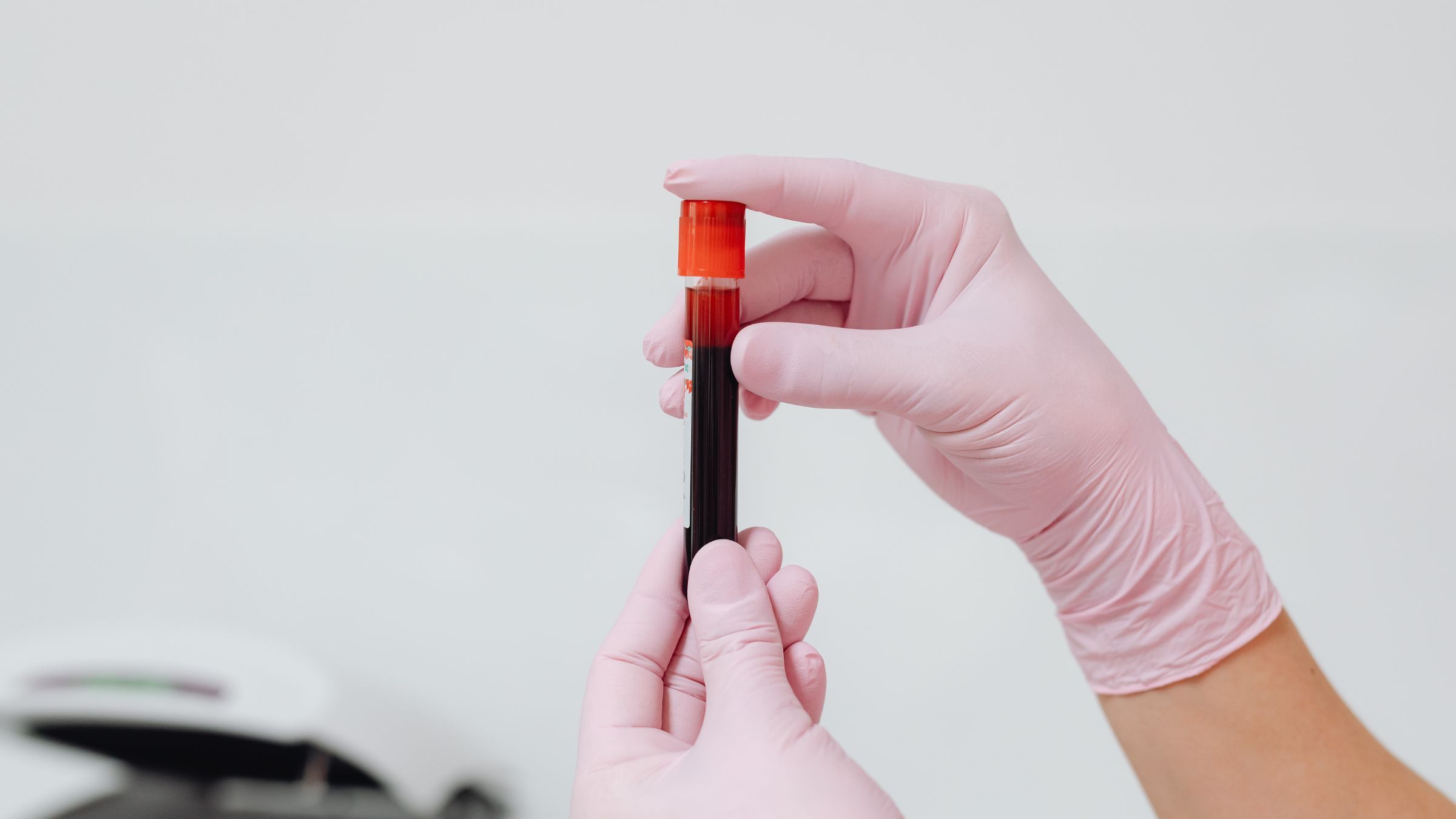
ApoB (apolipoprotein B) is a blood test that counts the number of artery-clogging particles in your blood, the LDL, VLDL, IDL, and Lp(a) particles that cause heart disease. Because each particle carries exactly one ApoB, it is a more accurate predictor of cardiovascular risk than standard LDL cholesterol, and it is cheap, widely available, and highly modifiable with diet and lifestyle.
ApoB counts the atherogenic particles themselves, and across the studied range lower really is better. Your lab's normal band runs far wider than the target I hold to in clinic. Both are below, and the full breakdown is in the reference-range table further down this page.

ApoB is the structural protein riding on the surface of every cholesterol-carrying particle that drives heart disease, including LDL, VLDL, IDL, and Lp(a). Each of those particles carries exactly one ApoB molecule, so a blood ApoB level is essentially a direct count of how many atherogenic particles are circulating in your blood. 1
Here is the idea that makes ApoB so powerful, and it took me years of practice to fully appreciate it. Atherosclerosis, the disease behind most heart attacks and strokes, is driven by particles that burrow into the artery wall. The more particles you have, the more chances for one to lodge there and start a plaque. ApoB counts those particles directly. Cholesterol, by contrast, is just the cargo riding inside them.
The analogy I use with patients is traffic. Imagine the cholesterol in your blood as people, and the lipoprotein particles as cars carrying them. A standard LDL cholesterol test counts the total number of people on the road. ApoB counts the cars. And it turns out that what damages the artery wall is the number of cars, the particles themselves, rather than how many passengers are packed into each one. That single shift, from measuring cargo to counting vehicles, is why ApoB has become the marker so many lipid specialists and longevity physicians now lead with.
Here is probably the most important, along with CRP: ApoB. This tells you how many cholesterol-carrying particles are moving through your bloodstream, not just how much cholesterol they contain.Dr. Josh Axe, DC, DNM, CNSFrom The Truth About LDL & Heart Disease, The Dr. Josh Axe Show (2026), at 31:58
For most of modern medicine, LDL cholesterol has been the number everyone watches. It is useful, and most of the time it tracks reasonably well with risk. The problem is the times it doesn't, and those are exactly the people who get blindsided.
LDL cholesterol measures the amount of cholesterol your LDL particles are carrying. ApoB measures the number of particles. Usually those move together, but in a large share of people they diverge, a situation called discordance. Someone can have many small, cholesterol-poor particles (a normal LDL cholesterol but a high ApoB) and carry far more risk than their cholesterol suggests. This pattern is especially common in people with insulin resistance, metabolic syndrome, or high triglycerides. When the two markers disagree, study after study shows that ApoB is the more accurate predictor of who has a heart attack. 2 3 A formal review of the science concluded that ApoB is the most accurate single measure of atherogenic risk we have. 1
ApoB vs. LDL cholesterol at a glance
| ApoB | LDL cholesterol | |
|---|---|---|
| What it measures | Number of atherogenic particles | Amount of cholesterol in LDL |
| What drives plaque | Particle number, measured directly | Estimated indirectly |
| Catches hidden risk | Yes, including when LDL looks normal | Can miss it |
| Fasting needed | Usually no | Often requested |
| Guideline status | Recognized superior risk marker | Long-standing default |
Major cardiology guidelines have caught up to this. Both the American and European cholesterol guidelines now recognize ApoB as a more reliable risk marker, especially in people with high triglycerides, diabetes, obesity, or very low LDL. 6 7
There is a deeper reason to care about ApoB than prediction alone. Heart disease is the leading cause of death in the United States, behind about 1 in 5 deaths. 26 ApoB-containing particles do more than correlate with heart disease; they cause it. Genetic studies that follow people with naturally higher or lower lifelong particle counts show a clear, dose-dependent, causal relationship between ApoB and cardiovascular disease. 4 A landmark scientific consensus concluded that these particles are a root cause of atherosclerosis, with the effect driven by how many particles, and for how long, they circulate. 5
That is good news, because causes can be removed. Lower the particle count and you lower the cause, not just the number on a page. It also reframes the goal: the aim isn't a normal-looking lab, it is the lowest particle burden you can comfortably maintain over a lifetime.
This is where conventional and functional medicine quietly part ways, and the difference matters more than almost anything else on this page. The number your doctor calls "normal" and the number that is truly optimal are often not the same.
The conventional range. Most standard labs report ApoB as normal anywhere from roughly 50 to 130 mg/dL and flag it as high only above about 120 to 130 mg/dL. Many conventional clinicians, if they order ApoB at all, are reassured by a result under about 90 to 100 mg/dL. The trouble is that a lab reference range is built from the general population, and the average person today is not metabolically healthy. In that world, "normal" simply means average, not optimal.
ApoB levels and what they mean (Updated June 2026)
| ApoB (mg/dL) | Zone | What it means |
|---|---|---|
| Under 80 | Optimal | Low particle count and low risk for most people |
| 80–100 | Average | Typical for adults, but higher than ideal |
| 100–120 | High | Elevated particle count worth acting on |
| Above 120 | Very high | High risk, a strong signal to make changes |
The optimal range I use. Functional medicine focuses on optimal rather than average, and that is the standard I hold to in my clinic. I want my patients' ApoB under about 80 mg/dL, and under 65 mg/dL for anyone at higher cardiovascular risk. Those targets aren't arbitrary. They track with where large studies show risk continuing to fall, and they line up with the treatment goals the European guidelines set for higher-risk patients, namely under 100 mg/dL for moderate risk, under 80 for high, and under 65 for very high. 7 Across the studied range, lower ApoB means lower risk, so for most people the goal is to reach the optimal zone rather than just clear the lab's "normal" bar.
High ApoB comes from a mix of genetics and, more often, lifestyle. Some people inherit a tendency toward high particle counts, including the largely genetic particle Lp(a), which is elevated in about 1 in 5 people. 27 But for most people the everyday drivers are the ones we can change.
Refined carbs and added sugar, the biggest hidden driver, because they raise triglyceride-rich, ApoB-heavy particles.
Insulin resistance and metabolic syndrome, the classic high-ApoB, normal-LDL pattern. 15
Excess saturated fat in susceptible people, which raises LDL particle number.
Excess weight and inactivity, which worsen the whole particle picture.
Low thyroid function and certain genetics, which can quietly raise particle counts.
The reassuring part is that the same roots that raise ApoB are the ones a root-cause approach is built to address, which is why a high reading is so often fixable.
The cellular medicine guide to optimal ranges, root causes, and the exact actions to take.
Free with your Dr. Axe account
View the protocol →Here is the part I love most about ApoB. It is one of the most responsive numbers on your bloodwork, and the first and best tools are food and lifestyle. These are ranked roughly by how much leverage they give most people, with the evidence grade for each.
For the very common high-ApoB, insulin-resistant pattern, this is the highest-leverage move. Reducing refined starch and sugar lowers the triglyceride-rich, ApoB-heavy particles that crowd the bloodstream, and addressing insulin resistance through diet has powerful metabolic effects. 15
Study takeaway: It shuts off the metabolic factory that overproduces atherogenic particles.
A whole-food pattern rich in vegetables, legumes, olive oil, nuts, and fatty fish lowers cardiovascular risk in major randomized trials, both for prevention and after a heart attack. 9 20 Replacing refined carbs and excess saturated fat this way improves the particle picture. 8
Study takeaway: It is the most proven dietary pattern for the arteries, full stop.
Soluble fiber binds cholesterol in the gut and pulls it out of circulation. Psyllium has been shown in pooled trials to lower LDL cholesterol by about 13 mg/dL (0.33 mmol/L) at around 10 grams a day, 11 and higher overall fiber intake tracks with lower cardiovascular risk and mortality. 10 Think oats, legumes, chia, and a psyllium supplement.
Study takeaway: A simple, cheap, food-first lever that lowers particle count.
Plant sterols and stanols block cholesterol absorption in the gut, and pooled trials show a clear dose-dependent drop in LDL cholesterol, about 9% at roughly 2 grams a day. 12 They are found in nuts, seeds, and fortified foods, or taken as a supplement.
Study takeaway: A well-studied, natural way to reduce the cholesterol your particles carry.
Omega-3 fats lower triglycerides, which helps the triglyceride-rich, ApoB-bearing particles that fuel risk in metabolic patients. 13 Fatty fish and a quality fish-oil supplement are the main sources.
Study takeaway: It targets the triglyceride side of the particle problem.
Losing excess weight and moving regularly improve insulin sensitivity and the whole particle profile. Lifestyle change is powerful enough to prevent and reverse the metabolic dysfunction behind high ApoB, 15 and regular activity is tied to substantially lower mortality. 14
Study takeaway: It fixes the metabolic terrain that overproduces particles.
A few well-studied natural compounds can help where diet needs reinforcement. The plant alkaloid berberine improved cholesterol and blood sugar comparably to a drug in a clinical trial, 16 and it pairs naturally with the fiber and sterol strategies above.
Study takeaway: A natural option to add leverage before reaching for a prescription.
When genetics or risk demand more, the lipid-lowering medications are highly effective and, for the right person, lifesaving. Statins, ezetimibe, and PCSK9 inhibitors all lower ApoB-containing particles and reduce heart attacks and strokes in large randomized trials. 17 18 19 The functional approach is to earn the lowest effective dose with lifestyle first, then use medication as the powerful backstop it is.
Study takeaway: When the cause is largely genetic, medication removes the particle burden directly.
Supplements support a good diet, they don't replace it, and food and lifestyle remain the foundation. That said, a handful of well-studied supplements can add real leverage on ApoB by lowering the cholesterol your particles carry or the number of particles themselves. Here they are in rough order of evidence and impact.
Supplements that help lower ApoB, ranked by evidence (Updated June 2026)
| # | Supplement | How it helps ApoB | Evidence |
|---|---|---|---|
1 | Soluble fiber (psyllium, oat β-glucan) | Binds cholesterol in the gut so it is excreted, lowering LDL particles (~13 mg/dL at ~10 g/day) 11 21 | Strong |
2 | Plant sterols / stanols | Block cholesterol absorption in the gut, dose-dependently lowering LDL (~9% at ~2 g/day) 12 | Strong |
3 | Red yeast rice (monacolin K) | Contains a natural statin-like compound that lowers LDL and particle number 22 | Strong |
4 | Berberine | Upregulates LDL receptors and lowers LDL and triglycerides, comparable to a drug 16 | Moderate |
5 | Bergamot (citrus polyphenols) | Lowers LDL and triglycerides in human studies 23 | Moderate |
6 | Omega-3 (EPA/DHA) | Lowers triglyceride-rich, ApoB-bearing particles 13 | Moderate |
7 | Garlic | Modestly lowers total and LDL cholesterol in pooled trials 24 | Moderate |
8 | Green tea catechins | Modestly lower LDL cholesterol 25 | Emerging |
One caution worth repeating: red yeast rice contains monacolin K, which is biochemically the same molecule as the statin lovastatin. It can work well, but potency varies by product and it carries statin-like considerations, so use it under a clinician's guidance, especially if you already take a statin or have liver concerns.
It's one of the first tests I add for any patient serious about protecting their heart, and the good news is it couldn't be simpler to get. The test itself is easy. It is a standard blood draw, available through ordinary labs, and usually does not require fasting because ApoB is relatively stable after meals. It is inexpensive, often in the range of a routine cholesterol panel, and the result comes back in the familiar mg/dL units.
The catch is that it is still under-ordered, so it often isn't on the default panel. Ask your clinician to add apolipoprotein B to your next set of labs, particularly if you have a family history of heart disease, metabolic issues, high triglycerides, or a normal LDL alongside other risk factors. It is also worth checking Lp(a) at least once, since that largely genetic particle adds risk that ApoB alone won't fully separate out. Retest a few months after making changes to see your progress.
ApoB is powerful on its own, but it tells an even fuller story alongside a few companion tests. These are the ones I like to run with it to see the whole picture, the particles, the inflammation, the metabolism behind them, and any plaque that has already formed.
Companion tests to run alongside ApoB
| Test | What it adds | Why pair it with ApoB |
|---|---|---|
| Lp(a) | A largely genetic, especially atherogenic particle | ApoB counts it, but Lp(a) flags an inherited risk that deserves its own attention; check it at least once in a lifetime |
| hs-CRP | High-sensitivity marker of arterial inflammation | Risk comes from particles plus inflammation; a high ApoB alongside a high hs-CRP is a much louder warning |
| Fasting insulin & HbA1c | Insulin resistance and average blood sugar | Reveals the metabolic state that drives the common high-ApoB, normal-LDL pattern |
| Triglycerides & full lipid panel | HDL, triglycerides, and the triglyceride-to-HDL ratio | Rounds out the lipid picture and helps flag the metabolic dysfunction behind high particle counts |
| Coronary artery calcium (CAC) | Imaging of plaque already in your arteries | ApoB predicts future risk; a CAC scan shows what has already built up, so together they tell you both the cause and the current damage |
You don't need all of these at once. For most people I start with ApoB, a full lipid panel, a marker of blood sugar, and Lp(a) once, then add hs-CRP or a calcium scan when the picture calls for it.
ApoB measures what causes heart disease, the number of atherogenic particles in your blood, which makes it a more accurate predictor of risk than the LDL cholesterol most people rely on. It is inexpensive, usually needs no fasting, and is one of the most responsive numbers on your bloodwork. If you are serious about protecting your heart and your healthspan, it belongs on your labs.
And when it comes back high, treat that as a roadmap rather than a verdict. The same root-cause levers that lower ApoB, starting with food and lifestyle and adding medication only when needed, are the ones that protect the arteries for a lifetime. Knowing your number is the first step. You weren't built to be surprised by your own biology. You were built to understand it and act.
ApoB is a protein that sits on the surface of the cholesterol-carrying particles that cause heart disease, including LDL, VLDL, IDL, and Lp(a). Because each of those particles carries exactly one ApoB, a blood ApoB level is essentially a count of how many artery-clogging particles are circulating in your blood.
Typical lab reference ranges run roughly 50 to 130 mg/dL, but reference is not the same as optimal. For low cardiovascular risk, most lipid specialists want ApoB under about 80 mg/dL, and lower still, under 65 mg/dL, for people at high risk. The average American adult sits around 100 to 110 mg/dL, which is higher than ideal.
For predicting heart disease, yes. The evidence is strong. LDL cholesterol measures the amount of cholesterol your particles carry; ApoB measures the number of particles, which is what drives atherosclerosis. When the two disagree, ApoB is the more accurate predictor of risk.
Roughly, ApoB above about 100 mg/dL is considered elevated and above about 120 to 130 mg/dL is high, signaling a large number of atherogenic particles. The higher the number, the greater the long-term risk, but ApoB is highly modifiable, so a high reading is an opportunity, not a sentence.
Usually no. One practical advantage of ApoB is that it is relatively stable whether or not you've eaten, so it does not require fasting in most cases. Follow your clinician's instructions, but a non-fasting sample is generally fine.
It is inexpensive, often roughly the price of a standard cholesterol panel, and frequently only a few tens of dollars out of pocket. It is widely available through standard labs; it is simply under-ordered, so you may need to request it.
Mostly habit and history. Standard cholesterol panels have measured LDL cholesterol for decades, and that became the default. Guidelines increasingly recognize ApoB as a superior risk marker, but routine practice has been slow to catch up, which is why it often pays to ask for it specifically.
A mix of genetics and lifestyle. Familial patterns can raise it, but common drivers include a diet high in refined carbohydrates and sugar, insulin resistance and metabolic syndrome, excess saturated fat in susceptible people, excess weight, low thyroid function, and inactivity.
Often substantially. The biggest levers are cutting refined carbs and sugar, shifting toward a Mediterranean-style whole-food diet, adding soluble fiber and plant sterols, losing excess weight, exercising, and using targeted nutrients. Medication is available when lifestyle isn't enough, but a natural, root-cause approach comes first.
For practical purposes, no. Lower ApoB tracks with lower cardiovascular risk across the studied range, and people with genetically low lifelong ApoB are generally very healthy. Extremely low levels are uncommon and worth discussing with your doctor, but for most people the goal is lower.
Lp(a) is one specific, largely genetic type of ApoB-containing particle that carries extra risk, and it is elevated in about 1 in 5 people. ApoB counts all of your atherogenic particles together, including Lp(a). They answer different questions, and many people benefit from checking both at least once.
For most adults thinking seriously about heart health and longevity, it is one of the most useful single blood tests available, especially if you have a family history, metabolic issues, or a normal LDL with other risk factors. Ask your clinician to add it.

Medically reviewed by the DrAxe.com Medical Advisory Board on Jun 6, 2026.
This content is not intended to diagnose, treat, cure, or prevent any disease and is not a substitute for professional medical advice. Do not start, stop, or change any medication based on this article. Talk with a qualified, licensed physician about testing and treatment, especially if you have a medical condition, take medication, or are pregnant.