
Advertisement
Advertisement
Dr. Axe Wire · Study decoded · health
A lab comparison of remineralizing treatments on extracted baby teeth found nano-hydroxyapatite built the strongest bond for dental sealants, a detail parents may want to ask about before their child's next sealant appointment.
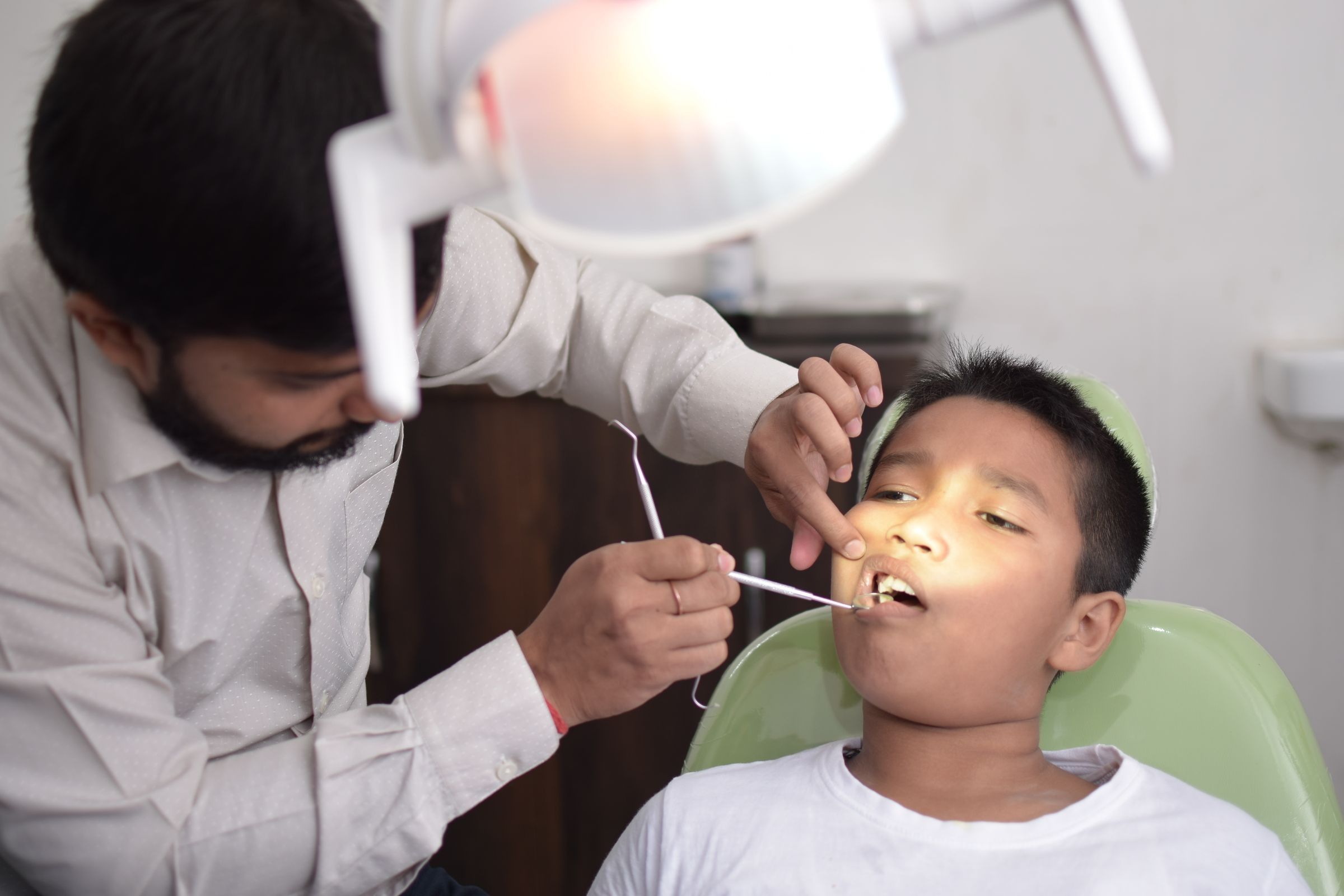
A laboratory comparison of four remineralizing treatments on 130 extracted primary molars found that 0.15% nano-hydroxyapatite produced the strongest bond between tooth enamel and dental sealant material, reaching a shear bond strength of 10.12 MPa, according to a study published in Photobiomodulation, Photomedicine, and Laser Surgery.
Researchers demineralized enamel on 130 caries-free primary molars, then split them into five groups of 26: an untreated control, CPP-ACP paste, CPP-ACP activated with a CO2 laser, 0.15% nano-hydroxyapatite, and Curodont Repair, a self-assembling peptide gel called P11-4. Eight teeth per group were tested for calcium-to-phosphate ratio, a marker of rebuilt mineral. After sealants were placed, researchers measured resin tag length -- how deeply the sealant penetrated the enamel -- in 8 teeth per group by electron microscope, and shear bond strength, the force needed to break the seal, in 10 teeth per group. The nano-hydroxyapatite group reached the highest calcium-to-phosphate ratio, 2.27, the longest resin tags, 54.22 micrometers, and the strongest bond, 10.12 MPa. Curodont Repair raised the mineral ratio but produced the shortest resin tags, 23.21 micrometers, and the weakest bond, 7.89 MPa.
Nano-hydroxyapatite is a synthetic form of the mineral that makes up tooth enamel. The authors suggest its small particle size fills microscopic gaps left by acid damage, rebuilding a denser mineral surface that gives sealant resin more structure to grip. Curodont's peptide instead forms a scaffold that pulls calcium and phosphate from saliva, which raised the mineral ratio but left a surface less suited to sealant bonding.
This is a lab study on extracted teeth, not a test inside children's mouths, so it cannot show how these materials hold up under real chewing and saliva exposure over time. The control group's exact numbers were not given in the available record, and funding and conflicts of interest were not reported in the abstract.
This lab study shows nano-hydroxyapatite's fine particle size fills demineralized enamel more completely than CPP-ACP or the peptide gel, giving sealant resin a denser, mineral-rich surface to bond to. That is a material-science finding on extracted teeth, not proof of how these treatments perform in a child's mouth over years of chewing and saliva exposure. Before a sealant appointment, I would ask the dentist which remineralizing step, if any, they use first, since bond strength depends heavily on the enamel surface underneath. Cutting back sugar and refined carbs in the weeks beforehand also protects that same enamel surface these treatments are trying to rebuild.
 — Dr. Axe