
Advertisement
Advertisement
Dr. Axe Wire · Advanced therapies · health
A new gait-analysis method suggests the speed you walk without thinking about it may be your body's built-in balance tuning point, with implications for spotting fall risk early.
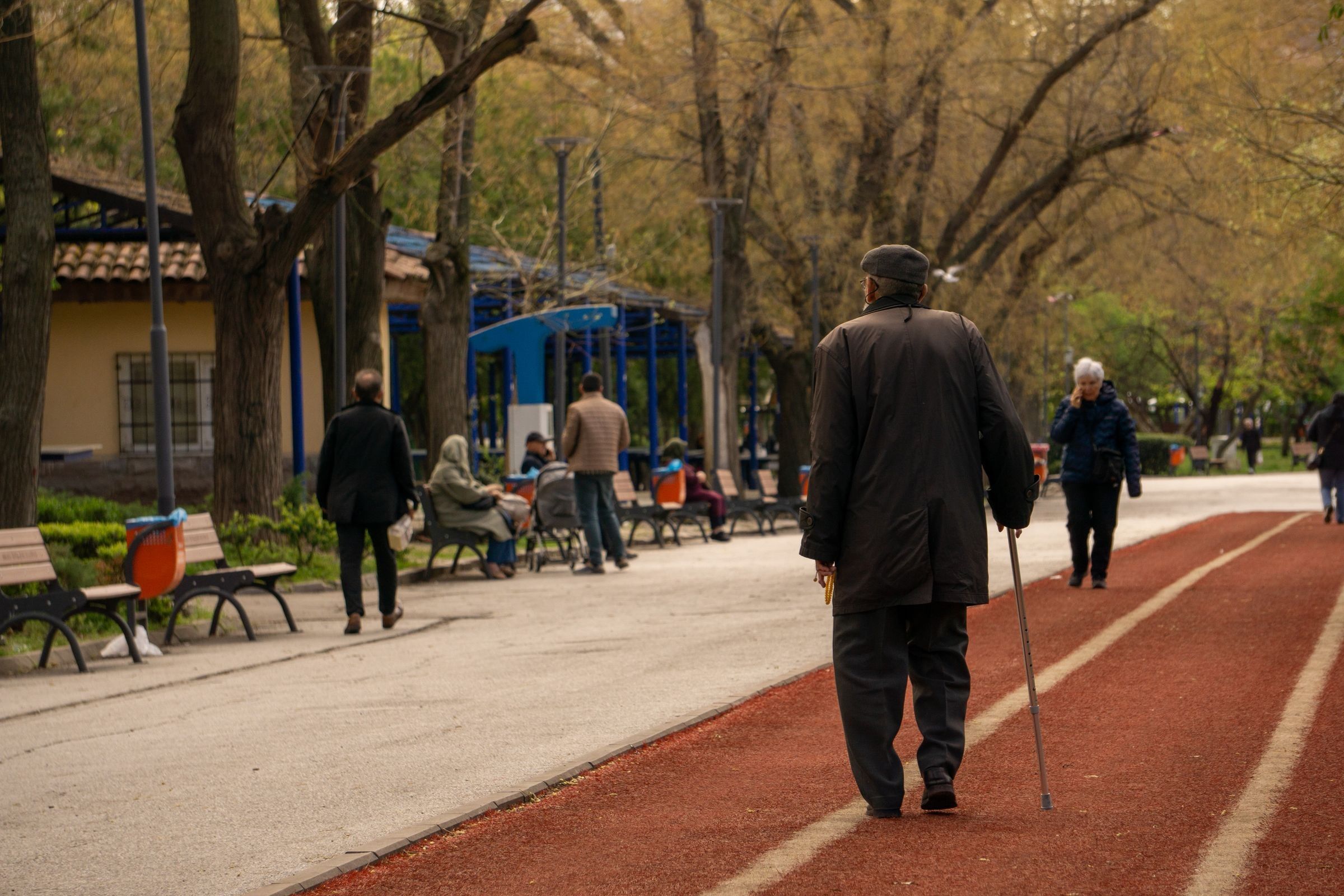
A study published in the Journal of Applied Physiology on September 11, 2026 found that healthy young adults showed the steadiest coordination between front-to-back and side-to-side balance control when walking at their own preferred speed, not slower or faster.
Researchers at National Taiwan University recruited 15 young adults and had each person walk at three speeds: their preferred walking speed, a slower pace and a faster pace. Using a new measurement method called continuous relative phase analysis, they tracked two angles, the sagittal plane (front-to-back lean) and frontal plane (side-to-side lean), by measuring the relationship between each person's center of mass and center of pressure. They calculated deviation phase values, a measure of how much the coordination between these two planes varied step to step. Deviation phase values were lowest, meaning coordination was most consistent, during the double limb support phase of walking at preferred speed compared with the slower and faster speeds tested.
The authors state that walking at one's preferred speed represents the best compromise for minimizing control variability between front-to-back and side-to-side balance systems. In plain terms, the body seems to settle on a walking pace that keeps its two balance-control systems working together most smoothly, with the least moment-to-moment wobble in coordination. Double limb support, when both feet share ground contact, is the point in a stride where the body has the most stability options available, which may explain why coordination variability was lowest there. The authors note this interplane variability tracking could serve as a marker worth monitoring for fall risk assessment, since reduced preferred walking speed is already a known signal of higher fall risk, particularly sideways falls tied to weaker side-to-side stability.

Walking at one's PWS represents the best compromise for minimizing control variability between the sagittal and frontal planes.
This was a small study of 15 healthy young adults, so the findings describe how balance coordination works in that specific group under lab conditions, not in older adults, people recovering from injury or anyone with existing balance impairment. The abstract does not report participant age range or sex split.
This shows the body runs its own quiet calculation with every step, picking a pace that keeps front-to-back and side-to-side balance working together with the least wobble. The practical lesson is to pay attention when a natural walking pace slows down, in yourself or in an aging parent, instead of writing it off as ordinary aging. I would treat a slowing gait as an early signal worth investigating and start basic balance work right away: single-leg stands while brushing teeth, barefoot walking on safe uneven ground, and resistance training for the hips and ankles, since those muscles control side-to-side sway.
 — Dr. Axe
Take the Cellular Health Quiz →