
Advertisement
Conditions · Digestive Health
An acid reflux diet keeps stomach acid where it belongs. Here are the foods that calm reflux, the ones to set aside for 30 days, how to eat at night, a sample day and the remedies that soothe the lining.
What is acid reflux?
Acid reflux means stomach contents, acid included, flow back up into your esophagus, the tube that carries food to your stomach. When it happens often enough to cause troublesome symptoms or damage, it's called gastroesophageal reflux disease, or GERD.4 If any red flag applies to you, go straight to Precautions: when to see a doctor.
Make dinner your lightest meal and finish it three hours before bed, raise the head of the bed, sleep on your left side and set the trigger foods aside for 30 days. Start alginate after meals and at bedtime and melatonin 3 mg at bedtime.1
Bring in decolorized aloe vera juice, DGL before meals and slippery elm or marshmallow root between them, and chew every bite 20 to 30 times. By week two to three, burning eases and comes less often.1
After 30 days, bring foods back one at a time, three days apart, starting with one cup of coffee after breakfast if you drink it, and keep the early dinner and raised bed for good.1
An acid reflux diet changes when, how much and what you eat so stomach acid stays where it belongs: smaller meals, a light dinner finished three hours before bed, gentle foods such as oatmeal, lean protein, wild salmon, vegetables and bananas, and a 30-day break from the usual triggers.1
An acid reflux diet is a way of eating built to keep stomach acid in your stomach: smaller meals, a light dinner finished at least three hours before bed, and a 30-day pause on the foods that most often send acid upward.1 Most heartburn isn't too much acid; it's acid in the wrong place, so I start with when and how much you eat and with gravity at night, then add the remedies that soothe the lining.1
Reflux is common: across North American population studies, between 18.1% and 27.8% of adults deal with heartburn or regurgitation every week.6 That burn behind your breastbone means the valve at the top of your stomach is opening when it should stay closed, and the usual reasons are things you can change: a big meal late in the evening, pressure on your belly, and a handful of foods and drinks that relax that valve.17
30-day protocol
The complete root-cause framework for calming heartburn, protecting your esophagus and finding out why the acid keeps coming up — and ending the burning, regurgitation, throat clearing and 2am wake-ups most antacids never fix.
Free with your Dr. Axe account
View the protocol →This guide gives you the foods that calm reflux, the ones to pause for 30 days and how to reintroduce them, what to eat at night, a sample day, the remedies and supplements that help the lining heal, and the symptoms that need a doctor first. If you're still working out whether what you feel is reflux, our guide to heartburn symptoms walks through how it shows up day to day.
Acid reflux happens when stomach contents, acid included, rise past the valve at the top of your stomach into your esophagus, which brings heartburn, a sour taste in your mouth and sometimes a cough.48 It usually comes from timing and pressure, such as a big late meal, belly pressure or lying down too soon, rather than from making too much acid.1
Most heartburn isn't too much acid. It's acid in the wrong place.Dr. Josh Axe, DC, DNM, CNSWritten in The Acid Reflux & GERD Protocol (2026), p. 3
Your stomach is meant to be acidic. Acid starts the digestion of protein and frees vitamin B12 from food, which is one reason long-term acid suppression is linked to lower B12 levels.9 The trouble in reflux is where that acid goes.1
Where your esophagus meets your stomach sits a ring of muscle called the lower esophageal sphincter, and together with your diaphragm it keeps stomach contents down.8 After a meal, a thin pocket of acid floats on top of the food, right beneath that valve. In an Amsterdam imaging study of 22 people with reflux, all with a hiatal hernia, and 10 healthy volunteers, that pocket had risen into the opening in the diaphragm or above it just before 54% to 77% of the valve's brief relaxations in the people with reflux, against 22% in the volunteers, and acid escaped more often whenever it sat above the diaphragm.10
The valve usually opens because of what you ask of it: a stomach stretched by a big meal, pressure from the belly, a few foods and drinks that relax the valve, and lying down before the stomach has emptied all let acid slip upward.17 Left alone, reflux tends to feed itself.1
This is how the loop plays out in your body, one step at a time:
A large meal stretches the stomach and keeps it full longer.1 Calories count too: when 15 people with reflux each ate a higher-calorie and a lower-calorie diet on separate days, with the meals kept the same size, acid sat in the esophagus for 8.6% of the day on the richer diet, against 5.2% on the lighter one.11
Lying flat, and especially on your right side, lets acid reach the esophagus more easily.1 Researchers in Osaka matched 147 people with GERD to 294 people of the same age and sex without it. Those who lay down less than 3 hours after finishing dinner had 7.45 times the odds of GERD, a link that held after accounting for smoking, drinking and body weight.2
Alcohol, smoking, chocolate, peppermint and high-fat foods all weakened the valve's squeeze when they were tested in the lab,7 and the acid pocket that floats on a meal sits right at its opening.10
Acid in the esophagus brings the burn behind your breastbone and the sour taste of regurgitation. When it reaches higher, it can show up as a chronic cough, hoarseness or worn tooth enamel.8412
A raw lining and broken sleep make the esophagus more sensitive, and stress turns that sensitivity up, so each round of reflux makes the next one easier.1
Once it takes hold, reflux runs in a circle, each step feeding the next. Because it's a loop, breaking it at any one point weakens the whole thing.Dr. Josh Axe, DC, DNM, CNSWritten in The Acid Reflux & GERD Protocol (2026), p. 8
That's why I begin with timing and gravity. Every remedy on this page works better once dinner is early and the bed is raised, because timing and gravity multiply the effect of everything else you do.1
My protocol sets the Western view beside traditional Chinese medicine, because two very different systems describe reflux the same way: as energy going the wrong way, up instead of down.1 In TCM the healthy pattern is Stomach Qi that descends and carries food down and out, so the burping, regurgitation, nausea and burning of reflux read as Stomach Qi rebelling upward.1 The TCM answer matches what the studies on this page point to: eat less and eat earlier, which takes the pressure off and lets the Qi descend.1 In daily life that means eating slowly, stopping at 80% full and staying upright after a meal, with rest and slow breathing to calm the Liver, as TCM puts it.1
My free 30-day plan eases the pressure on the valve before it works on healing the lining. Inside you'll find:
Free with your Dr. Axe account (email or Google). You'll also get the protocol's short email series and the Dr. Axe newsletter; unsubscribe anytime.
Open the free protocol →The classic symptoms are heartburn, a burning feeling behind your breastbone, and regurgitation, the sour or bitter taste of stomach contents coming back up.8 Big or late meals, weight at the middle, pregnancy, smoking, alcohol, a hiatal hernia and some medicines all make reflux more likely.81
Heartburn usually rises from the lower tip of your breastbone toward your throat, and regurgitation can leave the taste of food or acid in your mouth. Not everyone with reflux feels either one. Reflux can also bring chest pain, nausea, trouble or pain when you swallow, and symptoms in the throat and lungs such as a chronic cough or hoarseness.8 An international consensus of 44 reflux experts from 18 countries counts chronic cough, laryngitis, asthma and tooth erosion among the problems reflux can cause outside the esophagus.4 In a review of 16 population surveys, dental erosion was linked to reflux in 7 of them, and bad breath came up as a reflux symptom in 3.12
Reflux almost never has one cause. In clinic it's usually three of these stacked: a big late dinner, a glass of wine and a few extra pounds at the middle is the classic story.1 Most of them come back to the same two things, timing and pressure, and they're within your reach.
How and when you eat. In a Polish study of 513 adults that compared people recently diagnosed with reflux with healthy adults, eating only one or two meals a day went with 3.5 times the odds of reflux, and eating one big evening meal instead of two smaller ones went with 1.8 times the odds. Symptoms came on more often after fatty, fried, sour or spicy food and sweets.13 Spreading the same food over smaller meals keeps your stomach from stretching, and finishing early gives it time to empty before you lie down.1
Pressure from the belly. Weight at the middle, bending after a meal and tight waistbands all push stomach contents toward the valve.1 A Norwegian study that tracked 29,610 adults over about 11 years found that losing more than 3.5 points of body mass index (BMI) gave 1.98 times the odds that reflux symptoms went away among people who took reflux medicine less than once a week or never, and 3.95 times the odds among people who took it weekly or more.14 If you carry extra weight around your middle, our guide on how to lose belly fat walks through the steps.
Pregnancy and a hiatal hernia. Pregnancy can relax the valve, and a hiatal hernia, where the top of the stomach slides up through the opening in the diaphragm, makes reflux more likely or worse.8 In the acid-pocket study above, having a hernia largely decided where the pocket sat, and a larger one put it in or above the diaphragm's opening more often.10
Smoking and secondhand smoke. Both can weaken the valve.8 In a Norwegian study that compared 3,153 people with severe heartburn or regurgitation with 40,210 people without, those who had smoked daily for more than 20 years had 1.7 times the odds of severe reflux of people who had never smoked.15
Stress and short sleep. They make the esophagus more sensitive, so the same amount of acid feels worse, and night reflux in turn breaks up your sleep.1
Some medicines. Benzodiazepines (sedatives), calcium channel blockers for high blood pressure, certain asthma medicines, nonsteroidal anti-inflammatory drugs (NSAIDs) and tricyclic antidepressants can cause reflux or make it worse.8 The safety section explains what to do if you take one.
The best foods for acid reflux are gentle, lower-fat foods that empty easily from the stomach: oatmeal, lean protein that's baked, grilled or poached, wild salmon, green and root vegetables, low-acid fruit such as bananas and melon, rice and quinoa, and bone broth.116 Eaten in smaller portions, they keep the valve closed and the acid down.1
What, how much and when you eat are the main levers in this protocol. The right meals empty easily and keep the valve closed; the wrong ones push it open.Dr. Josh Axe, DC, DNM, CNSWritten in The Acid Reflux & GERD Protocol (2026), p. 22
Food is your first medicine for reflux, and these are the foods to build your meals around. My protocol builds the first 30 days around these ten foods, and the amounts below are its own. Each one is low in acid, modest in fat and easy to digest.1
Acid reflux diet food list
| Food | How to eat it | Why it helps |
|---|---|---|
Oatmeal | 1 cup, cooked | Filling, high in fiber and gentle on the stomach1 |
Lean protein: chicken, turkey and fish | 4 to 5 ounces, baked, grilled or poached | Protein without the fat that slows emptying1 |
Wild salmon | 4 to 5 ounces, twice a week | A fish with fins and scales that brings omega-3 fats1 |
Green vegetables: green beans, zucchini, broccoli and leafy greens | 2 cups, steamed, roasted or raw | Low in acid and rich in fiber, which is linked to fewer reflux symptoms117 |
Root vegetables: sweet potatoes, carrots and beets | ½ to 1 cup, baked or roasted | |
Melon and bananas | 1 cup of melon or 1 banana | Low-acid fruit that's gentle on an irritated esophagus in a way citrus isn't17 |
Ginger, in small amounts | ½ teaspoon fresh | Supports digestion, though large amounts can backfire1 |
Rice and quinoa | ½ to 1 cup, cooked | Easy to digest and low in fat1 |
Healthy fats: avocado and olive oil | ½ avocado or 1 tablespoon of oil | Fat in moderation, because a high-fat diet brought on more reflux symptoms in a meal study111 |
Bone broth | 1 cup |
Any fish you choose should have fins and scales; wild salmon, cod and sardines all fit. Chicken bone broth is my first choice, and beef bone broth works too.
Fiber keeps digestion moving, and it appears to firm up the valve. In a Moscow study of 36 adults with reflux whose esophagus looked normal on a scope and who were eating less than 20 grams of fiber a day, researchers added 5 grams of psyllium husk three times a day to their usual diet for 10 days, with no comparison group. Among the 30 who finished, the share with heartburn during the week fell from 93.3% to 40%, and reflux episodes dropped from 67.9 to 42.4 a day. The lowest resting pressure of the valve climbed from 5.41 to 11.3 mmHg, though the overall time acid spent in the esophagus didn't change significantly.3
Heartburn fell from 93.3% to 40% of people after 10 days of added fiber
Everyday fiber points the same way. In a study of 371 Houston adults who filled in detailed food questionnaires, those who ate more fiber had fewer reflux symptoms, even after the researchers accounted for body weight and other factors.17 Our list of high-fiber foods gives you plenty to choose from. My protocol builds fiber up to 25 to 30 grams a day, and oats, vegetables and beans are the easiest places to start.1
Low-acid meals put less acid in your esophagus, while your stomach keeps making the acid it needs to digest protein. A 2026 New York study looked back at 208 adults who wore a wireless acid monitor for 96 hours and spent one of those days eating mostly high-acid foods and another eating mostly low-acid foods. Among the 78 whose reflux was clearly abnormal, acid exposure dropped 41% on the low-acid day, from 12.51% to 7.33% of the day; 55% had their lowest exposure that day, and 24.7% reached the normal range through food choice alone.16 Low-acid meals add to what timing and gravity do.
The overall pattern of your plate matters too. In a New York study of 184 adults with throat reflux, whose two groups were treated in different years rather than assigned at random, the 99 who followed a 90% plant-based, Mediterranean diet and drank alkaline water saw their average symptom score fall 39.8% over 6 weeks, against 27.2% for the 85 treated with an acid-blocking PPI, a significantly bigger drop. Both groups also followed standard reflux precautions, and more of the diet group reached a clinically meaningful improvement (62.6% against 54.1%), though that gap could have been chance.19
Once your symptoms have settled, small amounts of fermented foods help restore the gut. Start with sauerkraut, coconut kefir or coconut yogurt, or goat or sheep kefir; cultured A2 cow's dairy is an option if you tolerate it. Kombucha waits until after the 30 days, because it's fizzy and acidic. A 2020 review of 13 prospective studies, written by employees of a probiotic manufacturer, found that 11 of 14 comparisons reported a benefit of probiotics for reflux-related symptoms, 5 of them on reflux itself, such as regurgitation and heartburn.5
Sip water between meals rather than drinking a lot with them, and keep a cup of bone broth in your day. In the evening, a warm cup of chamomile tea is a gentle choice, and my protocol uses 1 to 2 cups of it in place of evening peppermint tea;1 chamomile has a long traditional use for digestive complaints and for sleep,20 and a teaspoon of raw honey is a fine way to sweeten it.
For 30 days, set aside alcohol, coffee, chocolate, mint, fried and fatty food, spicy food, citrus and tomato, along with carbonated drinks, very salty processed food and big meals.12115 Then bring them back one at a time, three days apart, so your own body tells you which ones to keep out.
These are the foods and habits most likely to push acid up, and why each one is on the list:
The 30-day set-aside list
| Food or habit | What it does |
|---|---|
Alcohol, including wine and beer | |
Coffee | Bothers some people more than others, so it gets a break and comes back as a test123 |
Chocolate and mint, including peppermint tea | Lower the valve's pressure in laboratory studies7, and daily peppermint tea went with twice the odds of reflux13 |
Fried and fatty food | |
Spicy food, citrus and tomato | Can sting a lining that's already irritated7 |
Carbonated drinks, including soda and kombucha | Soft drinks were more common among people with GERD21 |
Very salty processed food | Adding extra salt at the table was linked to more reflux15 |
Big meals and late eating | Stretch the stomach, add calories that raise acid exposure, and leave it full at bedtime1112 |
The American College of Gastroenterology's guideline also advises avoiding the foods that trigger your symptoms,7 and testing each food on yourself after the break is how you learn which ones those are.
Alcohol. Alcohol relaxes the valve,7 and drinkers have higher odds of GERD. In a review of 29 studies (26 cross-sectional and 3 case-control), people who drank had 48% higher odds of GERD than those who rarely or never did, and people who drank more than three to five times a week had 2.12 times the odds.22 My protocol takes it out completely for the first 30 days.1
Fried food and soft drinks. Both turn up more often in people with reflux. A Northern California study compared 308 people who had GERD with 182 who didn't. Eating fried food at least weekly went with 2.10 times the odds of frequent symptoms, and drinking soft drinks with 2.01 times the odds of GERD.21 Fried food is usually cooked in seed oils, so leaving it out does your whole body a favor.
Mint. Peppermint soothes the lower gut but relaxes the valve at the top of the stomach, so it often makes reflux worse.17 In the Polish study above, drinking peppermint tea every day went with twice the odds of reflux.13
Salt. Salty food goes with more reflux. In the same Norwegian study behind the smoking figure above, people who always added extra salt to their food at the table had 1.7 times the odds of reflux of those who never did.15 Cooking from whole foods and seasoning with herbs keeps salt in a healthy range without any counting.
Coffee. Coffee bothers some people more than others. A 2026 review of 40 studies covering 122,074 people put GERD at 34.9% among coffee drinkers and 30.7% among people who skipped it (odds ratio 1.18), and found no link between coffee and Barrett's esophagus.23 That's why coffee takes a 30-day break and then comes back as one cup after breakfast.1
Everyone's list ends up a little different. When the 30 days are up, reintroduce one food, give it three days, and notice how you feel before moving on to the next. If a food sits well, it's back on your plate; if the burn returns, leave it out a while longer.
Many people reach for apple cider vinegar as a home remedy for heartburn, and it helps some of them and worsens others. It can also irritate an esophagus that's already inflamed, so my protocol leaves it out during the first two phases, Calm and Soothe.1 If you want to try it after that, stir a teaspoon into a glass of water before a meal and see how you feel.
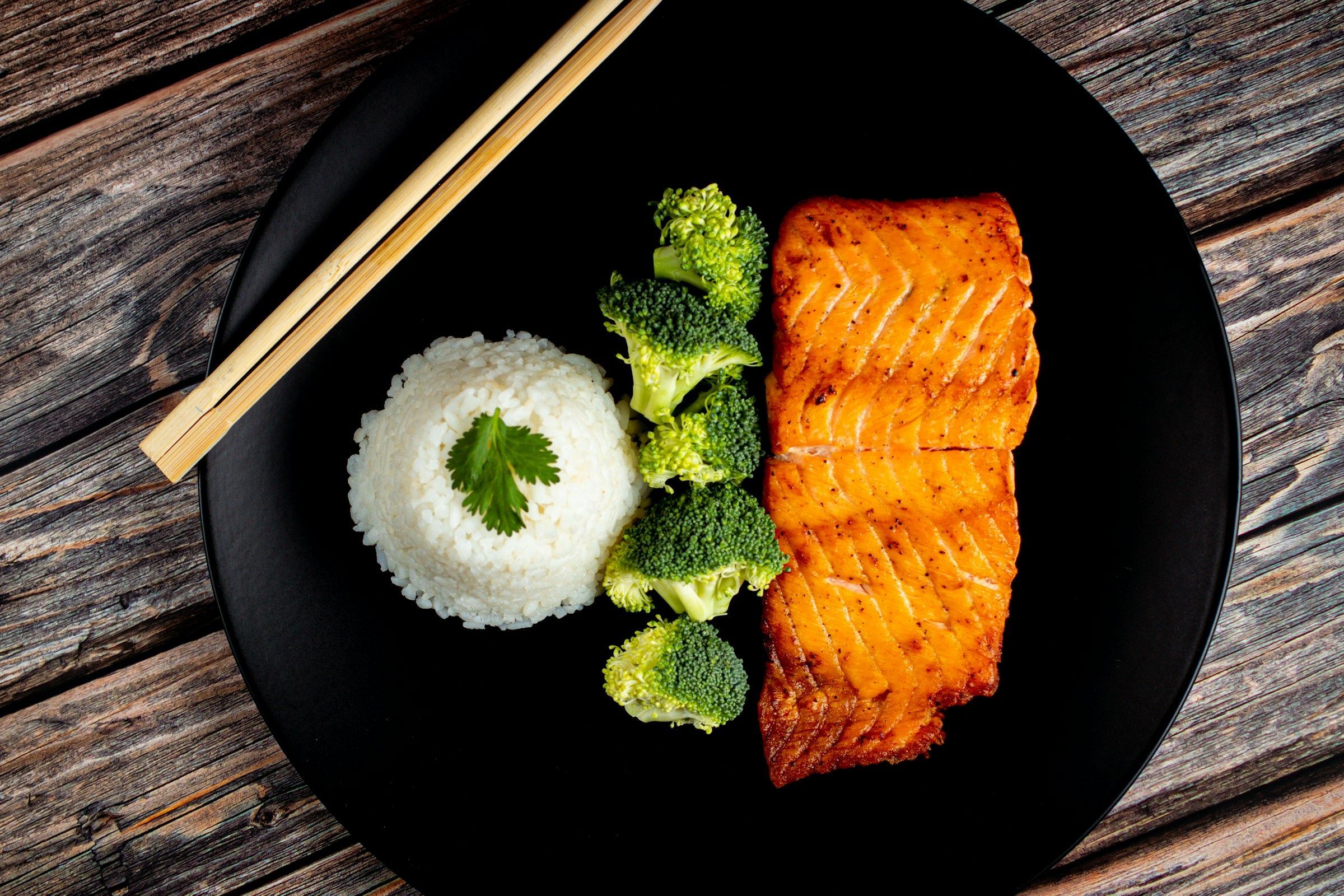
The best thing to eat at night for acid reflux is an early, light dinner, such as baked fish or chicken with a steamed vegetable and a small serving of rice, quinoa or sweet potato, finished at least three hours before you lie down.12 After that, raise the head of your bed and sleep on your left side.1
Night reflux is the kind that costs you sleep, because lying flat takes away gravity's help just when a late meal has filled your stomach.1 Make dinner the lightest meal of your day and finish it three hours before bed.1 In the Osaka study, the late-bedtime link held for both the erosive and the milder, non-erosive kinds of reflux,2 and the American College of Gastroenterology's guideline also advises avoiding meals in the 2 to 3 hours before bed and raising the head of the bed for night symptoms.7 As I put it on my show, you want to give yourself at least 3 hours before you go to sleep at night, so if you eat dinner at 6, you go to bed around 9:30.24
The holidays put this to the test, because the biggest meal of the year often comes late in the day with a glass of wine, stacking two triggers at once.1 When you can, have the big meal at midday, keep the evening plate small and take a walk afterward.
A light reflux-friendly dinner looks like this:
After dinner, skip the late snack. If you want something warm, a cup of chamomile tea fits, and if you use alginate, take your evening dose at bedtime.1
Raising the head of your bed lets gravity help keep acid in your stomach through the night, and it's one of the few reflux habits tested directly.1 Fifteen adults with moderate to severe reflux tried three set-ups on consecutive nights, in random order: sleeping flat, sleeping with 8-inch blocks under the head of the bed, and sleeping on a foam wedge, with a probe recording acid in the esophagus through the night. Compared with sleeping flat, the wedge significantly reduced how long acid sat in the lower esophagus and shortened the longest episode, and the blocks produced a similar improvement that fell short of statistical significance.25
A Colombian trial looked at symptoms rather than acid readings. Thirty-nine adults who were already on reflux medication slept through two 6-week stretches in random order, one with the head of the bed 20 cm (about 8 inches) higher and one flat. With the bed raised, 27 of them (69.2%) improved their symptom score by 10% or more, against 13 (33.3%) while sleeping flat. Quality-of-life scores held steady and 54.0% noticed at least one side effect, yet 77.1% said they preferred sleeping raised.26 My protocol raises the head of the bed six to eight inches with blocks or a wedge, not stacked pillows,1 the same two set-ups tested on those 15 adults, because both lift your whole upper body.
Your left side is the better side for reflux.1 When 10 people with night-time reflux ate a standard high-fat dinner and then slept wearing an acid probe and a position sensor, the time they spent on their right side brought more acid into the esophagus, and slower clearing, than time spent on the left, the back or the stomach.27 A Dutch trial then put the habit to work in 100 adults with night-time reflux. Half wore a small device that vibrated each time they rolled onto their right side, and half wore one that vibrated only during the first 20 minutes of the night, and neither the people nor the researchers knew who got what. The working device kept people off their right side for all but 2.2% of the night, against 23.5% with the other one, and 44% of its wearers halved their night reflux score or better, compared with 24%.28
A quiet, early evening and a raised bed set you up for the kind of rest the psalmist wrote about: "I will both lay me down in peace, and sleep: for thou, LORD, only makest me dwell in safety" (Psalm 4:8, KJV).
This is how the timing and the food list come together in one day. The 7-day meal plan in my protocol keeps to a few rules: meals stay small, dinner is the lightest one and comes three hours before bed, proteins are lean and baked or grilled, and everything on the 30-day list stays off the menu.1 Breakfast, lunch and the baked cod at dinner come straight from the first day of that plan.1
Chew each bite well and stop eating before you feel stuffed, and you'll notice how much lighter you feel at bedtime. For six more days of meals with a shopping list, see the 7-day plan in our GERD diet guide.
My top natural remedies for acid reflux, in order, are alginate after meals and at bedtime, melatonin at bedtime, decolorized aloe vera juice, DGL licorice, and then slippery elm or marshmallow root to coat and soothe.1 Alginate has been tested the most, with 14 randomized trials pooled in one review.29
Remedies do their best work after the timing and sleep habits have eased the pressure on the valve. I start alginate and melatonin first, then add the soothing remedies as the burn begins to calm.1 The cards below follow my ranking, and each one shows how much human research stands behind it.
Alginate, which comes from brown seaweed, turns into a floating gel after a meal. That raft settles over the stomach contents and blocks reflux,1 at the very spot where the acid pocket gathers.10
A 2017 review brought together 14 randomized trials with 2,095 adults. Against placebo or antacids, alginate raised the odds of symptom relief more than fourfold (odds ratio 4.42). Against PPIs and H2 blockers, the acid-reducing drugs, it came out behind (odds ratio 0.58), but the difference could have been chance.29 The American College of Gastroenterology's guideline also says alginates may help.7
How to use it: After meals and at bedtime, as the label directs.1
Study takeaway: alginate raised the odds of reflux relief more than fourfold over placebo or antacids in a pooled review of randomized trials.
Melatonin is best known as your sleep hormone, and my protocol uses it at bedtime for reflux, both for the burn and for the sleep that night reflux interrupts.1
In a controlled study from Egypt, 36 adults were split into four groups of 9: healthy volunteers, and people with GERD taking melatonin 3 mg at bedtime, the acid-blocking drug omeprazole 20 mg twice a day, or both, for 8 weeks. The study wasn't described as randomized or blinded. In the melatonin group, 7 of 9 had heartburn at the start, 3 at week 4 and none at week 8, against 7, 2 and 0 on omeprazole and 8, 1 and 0 on both. Melatonin also raised the valve's pressure from 10 to 14.5 mmHg at week 4 and 20.2 mmHg at week 8, while omeprazole left it about where it started (10.5, 10.4 and 10.5). Omeprazole, alone or with melatonin, made the esophagus less acidic and cut the stomach's acid output more than melatonin alone did, and the authors judged omeprazole the better of the two used alone.30
How to use it: 3 mg at bedtime during the 30 days of the plan.1
Study takeaway: in a small controlled study, no one taking melatonin 3 mg at bedtime still had heartburn by week 8, and their valve pressure roughly doubled.
Heartburn cleared by week 8 with melatonin, omeprazole or both
Aloe vera juice eases reflux symptoms, and it's one of the soothing remedies I add once the pressure is off, as decolorized juice, the form that avoids aloe's laxative effect.1
In a pilot randomized trial in Iran, 79 adults with GERD took aloe vera syrup (10 mL a day), omeprazole 20 mg or ranitidine 150 mg twice a day for 4 weeks, with no placebo group. Aloe reduced the frequency of all eight reflux symptoms the researchers tracked, and no one stopped because of side effects.31 The trial used a standardized syrup, so the juice amount below is my protocol's, not the trial's.
How to use it: 1 to 2 ounces of decolorized aloe vera juice a day.1
Study takeaway: aloe vera syrup lowered how often all eight tracked reflux symptoms showed up in a 4-week pilot trial of 79 adults.
Licorice root coats and heals. The deglycyrrhizinated form, DGL, has most of the compound glycyrrhizin removed, so you get the soothing, lining-protective benefit without most of the blood-pressure risk of whole licorice. In traditional Chinese medicine, licorice is the great harmonizer, added to more classic formulas than any other herb.32 In my protocol, DGL is the traditional lining soother I use before meals.1
A 2025 trial in Mumbai, sponsored by the extract's maker, added a placebo-controlled test to that tradition. It gave 200 adults with reflux symptoms either a flavonoid-rich DGL extract (150 mg a day) or a placebo for 28 days, and neither the people nor the researchers knew who got what. Use of rescue acid-reducing medicine was about the same in both groups, and by day 28 the DGL group reported faster relief of heartburn and regurgitation and better reflux-related quality of life.33
How to use it: 1 to 2 DGL chewables before meals.1
Study takeaway: in a placebo-controlled trial of 200 adults, a DGL extract brought faster heartburn relief and better reflux-related quality of life over 28 days.
Slippery elm and marshmallow root are mucilage herbs. Mixed with warm water, they turn into a soft, slippery gel that coats the throat and esophagus on the way down.1 I use them, along with DGL, to soothe the lining of the gut.
How to use it: 1 to 2 teaspoons of slippery elm powder stirred into warm water between meals, or marshmallow root in its place.1
Study takeaway: both herbs turn into a soothing gel that coats a raw throat and esophagus, a use with a long tradition.
Digestive enzymes. For a heavy meal that leaves you bloated and gassy, I use one or two digestive enzymes with meals.34 Betaine HCl, a supplement that supplies stomach acid, belongs to my work on SIBO, where it's an option to use with guidance, and it hasn't been tested for reflux or heartburn in any published trial.34 Enzymes help break food down, which makes them a digestion aid to pair with the reflux steps on this page.
Zinc carnosine and L-glutamine. In the Restore phase of my reflux protocol, I use zinc carnosine and L-glutamine, nutrients used to support the gut and esophageal lining.1 Zinc carnosine goes in at 75 mg twice a day,1 and L-glutamine at 5 grams twice a day, the amount I use in the repair step when I work on leaky gut.18 L-glutamine hasn't been tested for reflux in people, and both are there to support the lining while the other steps take the pressure off.
Magnesium glycinate. For sleep, I use 300 to 400 mg of magnesium glycinate about an hour before bed,35 which pairs naturally with an early dinner and a calm evening.
Ginger. Ginger has long been used to ease gas.36 In a study of 14 healthy young men, a gram of ginger powder in water left the valve's resting pressure unchanged and let it open more fully with each swallow for up to 3 hours, which the researchers linked to letting gas escape.36 A light ginger tea made with a few slices of fresh root is a gentle way to use it.
What you do around your meals matters as much as what's on the plate, and these habits work on the same two levers, timing and pressure.
Chew slowly. Chew every bite 20 to 30 times, because digestion starts in your mouth,1 and stop eating before you feel stuffed. Smaller meals stretch the stomach less.1
Stay upright and keep waistbands loose. Bending over and tight clothing press on your belly and push stomach contents toward the valve,1 so stay upright after you eat and leave bending chores and snug belts for later.
Walk, or chew gum, after a meal. Both can lower the acid that reaches your esophagus after you eat. In a study of 12 people with reflux and 24 healthy volunteers, each person spent an hour after the same breakfast sitting, walking or chewing gum, on three separate days, while a probe measured acid. Chewing gum cut the time acid touched the esophagus in both groups, more in the people with reflux, and the effect lasted up to 3 hours. Walking helped only the people with reflux, mildly and briefly.37 Choose a gum that isn't mint, since mint is on the 30-day list, and one made without artificial sweeteners.
Move most days. Regular movement goes with less reflux, and a 2024 review of 33 observational studies with 242,850 people linked regular physical activity to lower rates of GERD (relative risk 0.80) and of reflux symptoms (0.74).38 A daily walk, a bike ride or a swim all count.
Breathe from your belly. Your diaphragm wraps around the lower end of your esophagus and helps the valve stay closed,8 so training it helps. An Austrian trial randomly assigned 19 adults with non-erosive reflux or healed esophagitis to 4 weeks of abdominal breathing practice or none. In the breathing group, the share of the day with acid in the esophagus dropped from 9.1% to 4.7% and quality of life rose, while the other group didn't change. At 9 months, the 11 people still practicing were using much less of their as-needed acid blocker, 25 mg a week on average instead of 98 mg.39 Practicing diaphragmatic breathing also calms the stress that makes the esophagus more sensitive.1
Quit smoking. Reflux improves for many people who quit. In a Japanese study that followed smokers for a year after a quit-smoking program, reflux improved in 43.9% of the 141 people who quit, against 18.2% of the 50 who kept smoking.40 Our guide to quitting smoking has practical steps.
Consider acupuncture. Acupuncture comes from traditional Chinese medicine, and it has been tested against a stronger dose of acid-blocking medication. In a randomized trial of 30 adults who still had heartburn on a standard daily PPI, adding acupuncture twice a week for 4 weeks significantly lowered their daytime heartburn, night heartburn and regurgitation scores, while doubling the PPI dose didn't change them significantly.41 In a 2026 trial in Tehran, 72 adults with symptoms despite daily omeprazole were randomly assigned to acupuncture plus their usual dose or a doubled dose for 4 weeks. The total symptom scores didn't differ between the groups, and the doubled dose did better on regurgitation and sleep disturbance, while acupuncture eased heartburn more and improved quality of life more without the extra medicine.42
Antacids, H2 blockers and proton pump inhibitors (PPIs) lower acid, and a short course is reasonable for relief; the diet and habits on this page work on why the acid escapes.71
Conventional care uses three kinds of medicine. Antacids neutralize the acid that's already there, and H2 blockers such as famotidine and PPIs such as omeprazole cut how much acid the stomach produces.7 When heartburn is classic and there are no warning signs, the American College of Gastroenterology's guideline calls for 8 weeks of a once-daily PPI, followed by a try at stopping once symptoms settle. On a PPI, about 70% to 80% of people with a visibly inflamed esophagus get complete symptom relief, and about 50% to 60% of those whose lining looks normal.7
Most people with reflux are simply handed an acid blocker. That's reasonable for short-term relief, but long-standing reflux deserves a closer look.1 The American Gastroenterological Association advises people with uncomplicated reflux whose symptoms respond to a PPI to try stepping down to the lowest dose that works or stopping it, while people with complications such as erosive esophagitis generally take one long-term.43 If your doctor prescribes one, the timing, food and sleep steps on this page still belong alongside it, because they address why the acid is escaping in the first place.
Long-term use has trade-offs to know about. A review of the evidence in older adults found long-term PPI use linked, in observational studies, to fractures, C. difficile infection and low vitamin B12, and it advised reviewing the need for the drug from time to time.44 A large U.S. health-system study set 25,956 people diagnosed with B12 deficiency against 184,199 people without it, and taking a PPI for two years or more was tied to 65% higher odds of deficiency, and an H2 blocker to 25% higher odds.9 That's one reason my approach to long-standing reflux includes nutrient repletion alongside the diet and the timing steps.1
Several natural options on this page have been measured directly against these drugs. Adding acupuncture to a standard PPI dose eased heartburn and regurgitation in one trial, where doubling the dose didn't, and eased heartburn more than a doubled dose in another, though the doubled dose did better on regurgitation there.4142 In the melatonin study, heartburn had cleared in both the melatonin and the omeprazole groups by week 8, and only the two melatonin groups raised the valve's pressure, while omeprazole did more to lower the acid itself.30
Get checked by a doctor before you start any reflux plan if swallowing is hard or painful, you're losing weight without trying, you vomit blood or pass black stools, or upper-belly symptoms keep returning.81 Chest pain that could be your heart is an emergency, so call 911.
For trouble swallowing, weight loss you can't explain or bleeding, a doctor will usually start with an endoscopy, a camera exam of the esophagus and stomach.7 When upper-belly symptoms keep coming back, ask for an H. pylori breath or stool test; if the bacteria turn up, your doctor may prescribe treatment for them.1
If you take an acid blocker, stay on it as prescribed rather than quitting abruptly, because stopping can bring a rebound of acid. In a trial of 120 healthy volunteers, where neither the volunteers nor the researchers knew who got what, 44% of those coming off 8 weeks of esomeprazole developed acid symptoms in the following 4 weeks, compared with 15% of those who took a placebo the whole time.45 Plan any taper with your prescriber.1 If you take one of the medicines that can worsen reflux, ask your prescriber whether it might be adding to your symptoms rather than stopping it yourself.8
If you're pregnant, heartburn is common.8 Start with the timing, sleep and food steps, and skip slippery elm during pregnancy. If you want to add alginate, melatonin, aloe or DGL, confirm the dose with your OB first.
For the remedies, choose DGL rather than whole licorice, whose glycyrrhizin affects blood pressure,32 and choose decolorized aloe vera juice to avoid a laxative effect.1 Melatonin is a hormone, so take it only at bedtime. If you have kidney disease, ask your kidney doctor before you take magnesium.
Reflux eases when you stop asking your stomach to hold a big meal while you lie flat. Eat your lightest meal of the day at dinner, three hours before bed, sleep with the head of the bed raised and on your left side, and fill your plate with oatmeal, lean protein, wild salmon, vegetables, bananas, rice, quinoa, bone broth and plenty of fiber.
Give alcohol, coffee, chocolate, mint, fried and spicy food, citrus and tomato a 30-day rest, and when you reintroduce them one by one, your own body will show you which ones to keep. Among the remedies, alginate and melatonin come first, and aloe, DGL, slippery elm and marshmallow root soothe the lining as it heals.
On my protocol, burning eases and comes less often by the second or third week, and you reach for antacids less.1 Your body was built to heal, and once the pressure is off, the lining of your esophagus can get on with that work.
My 30-day plan in one place: the reflux cycle and where to break it, my ranked remedies with doses, the 10 foods that keep acid down and a week of early-dinner meals. Have recent bloodwork? Analyze it free.
Free with your Dr. Axe account (email or Google). You'll also get the protocol's short email series and the Dr. Axe newsletter; unsubscribe anytime.
Open the free protocol →The best diet for acid reflux pairs gentle, lower-fat foods, such as oatmeal, baked or grilled lean protein, wild salmon, vegetables, bananas, rice and bone broth, with smaller portions and an early, light dinner finished three hours before bed.1 For the first 30 days, alcohol, coffee, chocolate, mint, fried and spicy food, citrus and tomato come off the menu, and then they return one at a time.1
There's no one-time cure for acid reflux, but it responds well to treatment, and you can start the first steps tonight: an earlier, lighter dinner, the head of your bed raised and a 30-day break from trigger foods.1
To get rid of acid reflux naturally, start with timing and gravity: make dinner your lightest meal and finish it three hours before bed, raise the head of your bed and sleep on your left side, and set the trigger foods aside for 30 days.1 Alginate after meals and melatonin at bedtime are the first two remedies in my protocol.1
When your stomach feels acidic, eat something small and gentle, such as a bowl of oatmeal, a banana or a cup of bone broth, and stay upright for a few hours afterward.1 Alginate after a meal also helps: it floats on the stomach contents like a raft, and in a pooled review of randomized trials it raised the odds of relief more than fourfold (odds ratio 4.42) over placebo or antacids.29
The foods that help most are low-acid, lower-fat choices that keep stomach acid where it belongs, such as oatmeal, bananas, melon, green vegetables and lean protein.1 In a 2026 study that looked back at 208 adults who each spent one day eating mostly high-acid foods and another eating mostly low-acid foods while wearing a 96-hour acid monitor, the 78 with clearly abnormal reflux had 41% less time with acid in the esophagus on the low-acid day.16
At night, eat an early, light dinner, such as baked fish or chicken with a steamed vegetable and a small serving of rice or sweet potato, and finish it at least three hours before you lie down.1 In a Japanese study of 147 people with GERD and 294 without, lying down within 3 hours of dinner went with 7.45 times the odds of GERD.2
Yes. Bananas are a gentle, low-acid fruit, and oatmeal with banana and almond butter is the first breakfast in my protocol's 7-day meal plan.1
You can try it after a break: leave coffee out for 30 days, then bring back one cup after breakfast and see how you feel.1 In a 2026 review of 40 studies, GERD was a little more common in coffee drinkers (34.9%) than in people who didn't drink it (30.7%), so it bothers some people more than others.23
Apple cider vinegar helps some people and worsens others, and it can irritate an esophagus that's already inflamed, so my protocol leaves it out during the first two phases.1 If you try it later, dilute a teaspoon in a glass of water and see how you feel.
Yes. Reflux that reaches the throat can cause a chronic cough, hoarseness or laryngitis, and an international consensus of 44 reflux experts from 18 countries counts chronic cough, laryngitis, asthma and tooth erosion among reflux's effects outside the esophagus.4
November 16, 2026 — Rewrote the 2023 article "Acid Reflux Diet: Best Foods, Foods to Avoid & Supplements that Help" in Dr. Axe's voice, around his Acid Reflux & GERD Protocol: dinner timing and sleep position first, a 30-day break from trigger foods with a one-at-a-time reintroduction, a food list with amounts, a sample day, his ranked remedies with doses and graded evidence, two charts, a step-by-step diagram of how reflux takes hold and a single precautions section. Kept the earlier sections on symptoms and causes, conventional treatment, foods to eat and avoid, other natural remedies and precautions. Corrected the salt study (it was a Norwegian study of 43,363 people about adding table salt, not a Swedish study of 1,000 people), changed "sleep on your side" to the left side and the bed height to six to eight inches, in line with the trials, replaced the claim that running and hard exercise cause reflux with a review linking regular activity to less reflux, and replaced acupressure with acupuncture, which has the trials. Removed the advice to take hydrochloric acid with pepsin before meals, the claims that low stomach acid causes reflux and that apple cider vinegar balances stomach acid, lemon water and lemon oil, coconut water at bedtime, kombucha and raw cow's milk cheese as reflux foods, the claim that acid-reducing drugs cause IBS, depression and fatigue, and the advice to take them at bedtime. The medication guidance now says to keep taking any acid blocker as prescribed and plan any taper with the prescriber.

This article is for educational purposes. See our medical disclaimer.