
Advertisement
Advertisement
Supplements · Vitamins, Minerals & Herbs
The best supplements, according to Dr. Axe: his top 10 picks for adults, from omega-3s and vitamin D3 with K2 to magnesium and probiotics, with what each one does in your body, the research behind it, his dose and when to take it.

The best supplements are the ones that fill the gaps your food leaves, and my top 10 are omega-3s, vitamin D3 with K2, creatine, collagen and bone broth protein, magnesium, probiotics, turmeric, adaptogens such as ashwagandha, a food-based multivitamin and a superfood powder.12
The best supplements for most adults are the ones that fill the gaps food leaves, led by omega-3s, vitamin D3 with K2 and magnesium, with creatine, collagen, probiotics, turmeric, adaptogens, a food-based multivitamin and a superfood powder rounding out my top 10.12 My rule is food first and supplements second, and because the most important supplement for you is the one you're truly low in, I'd rather test than guess.28
I've had so many people over the years tell me, especially once they reach their 40s and sometimes their early 50s, that they suddenly feel so much older.2 What usually sits underneath that feeling is a mix of nutrient gaps, a gut that absorbs less of what you eat, muscle and collagen that decline, and inflammation that builds year by year.1 Your body was designed to repair and rebuild itself, and the right supplements hand it the raw materials for that work.
What's your biggest goal right now?
The free guide Dr. Axe's Top 10 Supplements lays out the same ten picks with a simple daily rhythm, and below I go deeper into each one: what it does for you, the research behind it, my dose and the foods that supply it first.1
Supplements are not magic, but they are the raw materials the body needs to repair, rebuild, and stay young.Dr. Josh Axe, DC, DNM, CNSFrom 11 Supplements Every 40+ Adult Should Consider, The Dr. Josh Axe Show (2026)
The best supplements for you are the ones your bloodwork says you need. This free guide lays out:
Free with your Dr. Axe account (email or Google). You'll also get the protocol's short email series and the Dr. Axe newsletter; unsubscribe anytime.
Open the free guide →Did you know?
In U.S. national survey data from 2005 to 2006, about 48% of Americans got less magnesium from food than they need.9
In a 2005 to 2006 national survey of 4,495 U.S. adults, 41.6% were deficient in vitamin D, using a cutoff of 20 ng/mL.10
Based on national food-supply data from countries worldwide, about 17% of the world's people are at risk of not getting enough zinc.11
Supplements work by supplying the raw materials your cells run on: they refill the nutrients your diet and your gut leave short, rebuild tissues such as cell membranes and collagen, and help calm the chronic inflammation that builds with age. That's why I put food first, test for gaps and look after the gut that absorbs everything you take.28
Most gaps start with the food supply. Depleted soil, ultraprocessed food, caffeine, alcohol and stress all drain magnesium, and most of us don't eat enough of the leafy greens, nuts, seeds and legumes that would put it back.2 Vitamin D is a different story, because your skin makes it from sunlight, so the season and your time outdoors shape your level as much as your plate does.1
After 40, those gaps tend to widen, because absorption drops, muscle and collagen decline and inflammation rises.1 I had a patient many years ago who came in taking loads of supplements, and even after doing blood work on her, she was still deficient in numerous nutrients, with B12 a big one. She had so much bloating and so many digestive issues that she wasn't absorbing her supplements, so I put her on a high-dose probiotic for 90 days, and when we redid her blood work, she had zero nutritional deficiencies while taking fewer supplements than before.2 Your gut health decides how much of every pill, powder and meal reaches your cells.
Inflammation ties much of this list together. It's how you heal a cut or fight off a virus, and the problem is chronic inflammation, which I describe as a low fire that never goes out.12 On my show, I've called inflammation the root cause of almost every chronic illness today,12 and several of the supplements on my list help turn that fire down, which you can see in the blood as lower CRP, the main blood test for inflammation.2345
Depleted soil, ultraprocessed food, caffeine, alcohol and stress drain nutrients such as magnesium, and many adults run low on vitamin D, especially in winter.21
Bloating and digestive trouble lower how much of each nutrient you absorb, which is how a patient taking loads of supplements can still test deficient.2
Magnesium supports over 300 reactions in your body, omega-3s keep your cell membranes flexible so nutrients get in and waste gets out, and CoQ10 helps spark energy inside your mitochondria.21
My top 10 supplements are omega-3s, vitamin D3 with K2, creatine, collagen and bone broth protein, magnesium, probiotics, turmeric and curcumin, adaptogens led by ashwagandha, a food-based multivitamin and a superfood powder. CoQ10 sits just outside the ten as a pick for one group in particular: people taking a statin.12
Based on the research, these are the supplements people are most likely to be low in and the ones with the most long-term benefits, but you don't have to take every one of them, so think about the ones that are going to make the biggest difference for you.2 I walk through every pick in my episode 11 Supplements Every 40+ Adult Should Consider, and omega-3s and vitamin D3 with K2 are my top two for keeping your body younger.2
Omega-3 fatty acids are essential fats your body can't make on its own, so you have to get them from food or supplements, and the two that matter most, DHA and EPA, come mainly from fish and algae.2 Every cell in your body is wrapped in a fatty membrane that lets nutrients in and waste out, and omega-3s keep that membrane flexible, while trans fats, hydrogenated oils and too much sugar stiffen it.2 I describe omega-3s as the lubrication for your heart, your brain, your joints and your immune system.2
Their best-measured effect is calmer inflammation. An umbrella review of 32 meta-analyses found that omega-3 supplements lowered CRP along with two other inflammatory messengers, TNF-α and IL-6, in adults with a range of health conditions.3 A 2026 review of 96 clinical trials, one of whose authors works for a supplement maker, found the most consistent drops at 1 to 3 g of EPA plus DHA a day, with the larger effects in people who already had a health condition.17
How to use it: Fish comes first, so if you eat salmon, sardines or another fatty fish that day, you typically don't need a supplement, but on the days you don't, I still see benefits in taking one, ideally in a triglyceride form such as cod liver oil, or algae oil for DHA.12 Take 1 to 3 g of EPA plus DHA a day with your vitamin D, since the fat helps vitamin D absorb, and count the EPA and DHA on the label rather than the total weight of the oil.12 Wild salmon, sardines, anchovies and mackerel are the richest foods, and walnuts, flaxseeds and chia add the plant omega-3, ALA.2
Study takeaway: omega-3 supplements lowered CRP, TNF-α and IL-6 across an umbrella review of 32 meta-analyses.
Vitamin D acts more like a hormone than a vitamin, and your immune system, your mood, your bones and your hormone production all depend on it.1 Most adults run low, especially through the winter months, when there's less sun to make it from, which makes late fall a good time to check your level.1
In a meta-analysis of 50 randomized trials with 74,655 people, deaths from cancer were 15% lower with vitamin D supplements (a risk ratio of 0.85), in trials that all used vitamin D3, the form I recommend, while deaths from all causes didn't change (a risk ratio of 0.98).1819 As I explain on my show, magnesium helps activate vitamin D, and K2 works with it to send calcium into your bones rather than your arteries,20 which is why I pair D3 with K2 and keep magnesium on the list beside it.
How to use it: Most people need to be taking about 5,000 IU of D3 a day, and a 25-hydroxy vitamin D test tells you whether that's right for you.21 The optimal range is 50 to 80 ng/mL.8 Take it with 100 to 200 mcg of K2 in the MK-7 form,721 and with a healthy fat such as olive oil or your omega-3.2 Time outdoors in the sun comes first, along with wild salmon and pasture-raised egg yolks,1 and our guide to the best vitamin D supplement compares the forms.
Study takeaway: across 50 randomized trials, vitamin D supplements meant 15% fewer cancer deaths.
You might be under the impression that creatine is just for bodybuilders or for putting on muscle, but it's also a great brain fuel, especially for those over 40.2 Your brain and your muscles both run on fast energy, and creatine helps fill those cellular energy stores back up when demand is high.22
That brain benefit shows up most clearly in older adults. In a meta-analysis of 8 randomized, placebo-controlled trials in healthy people aged 11 to 76, which its authors corrected in 2023 so that each trial counted only once, creatine monohydrate improved memory in adults aged 66 to 76 (a standardized effect of 0.80), a result that comes from two small trials, while people aged 11 to 31 showed essentially no change (0.02) and the effect across all ages together (0.19) was too small to rule out chance.1415
How to use it: Take 3 to 5 g of creatine monohydrate a day.722 I typically take 5 g myself, and you're best off with plain, unflavored creatine monohydrate rather than a flavored product made with artificial sweeteners.22 In food, your best sources of creatine are fresh, unprocessed, grass-fed red meat and heart.1 The World Health Organization's cancer agency classifies processed meat of every kind, processed beef included, as a Group 1 carcinogen, largely on colorectal cancer data, and rates red meat itself Group 2A, probably carcinogenic.23 As I've said on my show, the studies that link red meat to poor health mostly reflect grain-fed and processed meat, not the fresh, grass-fed red meat I recommend.24 Our guide to creatine for brain health goes deeper into the brain research.
Study takeaway: in pooled placebo-controlled trials, creatine improved memory in adults aged 66 to 76.
Creatine and memory: the boost came in older adults
Collagen is like a scaffolding for your body, the glue that holds it together and keeps it from sagging, and it's a key part of your skin, your joints and the lining of your gut.2 I'd start with bone broth, which has been used for thousands of years for health, immunity and longevity, and as I put it on my show, "Chicken broth in particular might be the most beneficial because not only does it have collagen, it also has glucosamine, chondroitin, and hyaluronic acid."2 Bone broth and collagen also carry glycine, an amino acid with benefits for sleep and for liver detoxification.2
Collagen shows its clearest results in your skin, and in a 2021 review of 19 randomized trials with 1,125 people aged 20 to 70, most of them women, about 90 days of hydrolyzed collagen improved skin hydration, elasticity and wrinkles.25 A 2025 review of 23 randomized trials with 1,474 people found the same improvements overall, although the benefit came from the trials that supplement makers paid for.26 For the vitamins that work alongside collagen in your skin, see our guide to vitamins for skin.
How to use it: Every morning I take a protein powder made from bone broth and from organs and glands, usually in a smoothie, and it's one pretty much everybody should consider.2 For collagen peptides, 10 to 20 g a day is the amount I use in my Perimenopause & Menopause protocol.7 Choose bovine, chicken or fish collagen, and our comparison of collagen vs. bone broth explains how the two differ.
Study takeaway: across 19 randomized trials, about 90 days of hydrolyzed collagen improved skin hydration, elasticity and wrinkles.
Magnesium supports over 300 reactions in the body, from sleep, mood and muscle relaxation to the energy your mitochondria make, and low levels make you more reactive to stress.2 It's one of my big three, which you'll find below, and it's a mineral worth looking at whenever stress, poor sleep or tight muscles are part of your picture.2
In a meta-analysis of placebo-controlled trials, magnesium supplements lowered CRP across 15 trials with 737 people, and while IL-6 didn't change in the 3 trials that measured it, nitric oxide, which helps blood vessels relax, rose in the 3 trials that measured it.4
How to use it: For stress and sleep, my pick is magnesium glycinate, 300 to 400 mg in the evening, about an hour before bed.127 That's elemental magnesium,21 and since glycinate is only about 14% magnesium by weight, read the elemental magnesium line on the label to see how much magnesium you're getting. Leafy greens come first in food, then pumpkin seeds, almonds and legumes,1 and our list of foods high in magnesium has more.
Study takeaway: magnesium supplements lowered CRP across 15 placebo-controlled trials with 737 people.
Much of your immune system lives in your gut, and your gut is where every nutrient you eat or take is absorbed.1 I've told my listeners, "For some people, a probiotic is the single most important supplement because now you're absorbing everything better."2 That's what happened with the patient I described above, whose deficiencies cleared after 90 days on a high-dose probiotic.2 If you have bloating, gas, constipation or diarrhea, probiotics belong at the very top of your list.21
They also help through cold season. In a 2022 Cochrane review that pooled 23 trials with 6,950 children, adults and older adults, people taking probiotics were 24% less likely to catch at least one upper respiratory infection (16 trials), 41% less likely to catch three or more (4 trials), and 42% less likely to take antibiotics for one (6 trials), and their episodes ran about 1.22 days shorter, with the evidence rated low to moderate certainty.6
How to use it: The trials mostly used Lactobacillus strains, which, along with Bifidobacterium, you can get mostly from fermented foods. In a supplement, I look for soil-based organisms such as Bacillus subtilis, coagulans and clausii, along with Saccharomyces boulardii, because soil-based organisms are the most resilient to heat.628 An everyday dose is 25 to 50 billion CFU.27 For food, eat sauerkraut, kimchi and goat's or sheep's milk kefir and yogurt.1
Study takeaway: probiotics made people 24% less likely to catch an upper respiratory infection in a Cochrane review of 23 trials.
Probiotics lowered the risk of respiratory infections and the antibiotics that follow
I consider curcumin, the main active compound in turmeric, one of the most powerful natural anti-inflammatory compounds ever discovered.2 As I explain on my show, it works in part by calming NF-κB, a master switch for inflammation in your body, while it boosts your antioxidant defenses.2
You can see that calming effect in the blood. In a GRADE-assessed meta-analysis of 66 randomized trials in adults, turmeric and curcumin supplements turned down three of the body's main inflammation signals, lowering CRP by 0.58 mg/L, TNF-α by 3.48 pg/mL and IL-6 by 1.31 pg/mL (a fourth, IL-1β, didn't change significantly), and raised its total antioxidant capacity.5
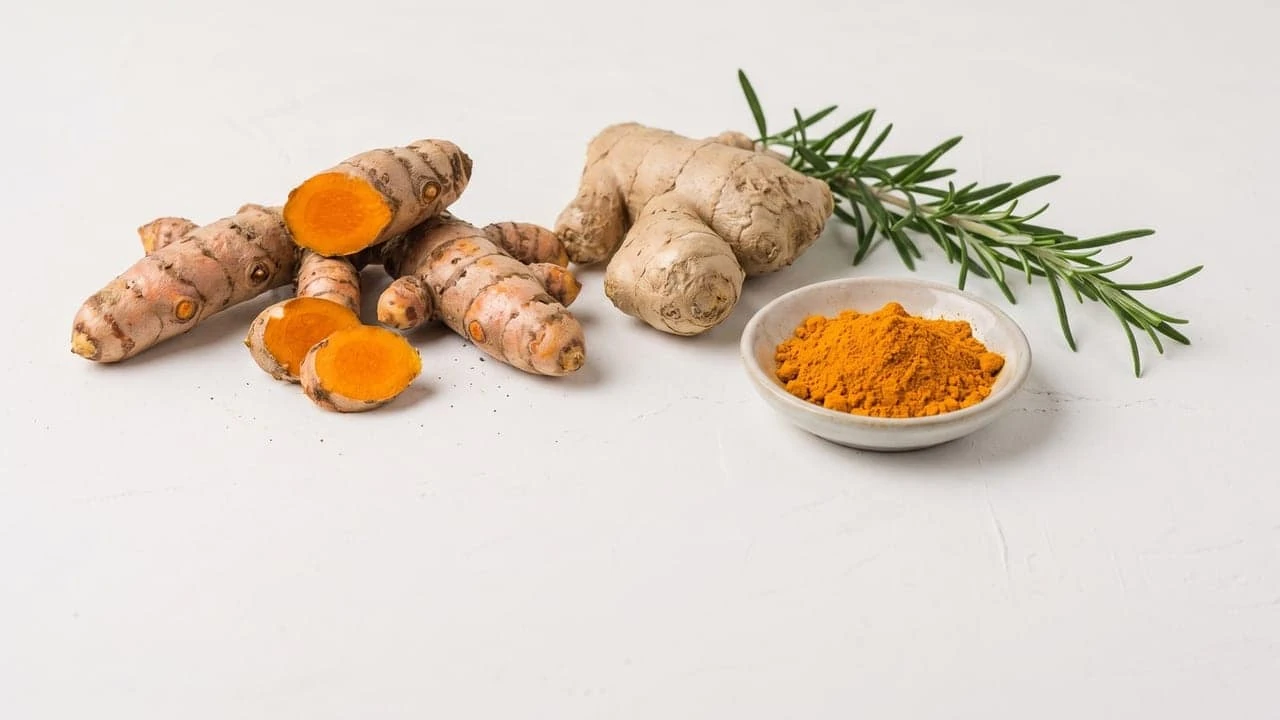
How to use it: Cook with turmeric every day, and pair it with black pepper and a meal that has some fat, which help your body absorb curcumin.1 When I use a supplement, as in my Anti-Inflammatory Reset, it's 500 to 1,000 mg a day of a bioavailable curcumin,29 and a good product states its curcuminoid content on the label. Our guide to turmeric dosage goes further.
Study takeaway: across 66 randomized trials, turmeric and curcumin lowered CRP by 0.58 mg/L.
Adaptogens are your natural armor for stress, and they make your body more resilient at a time when blue light, devices and busy days keep many of us in a fight-or-flight state with cortisol running high.2 Ashwagandha, an herb with a long history in Ayurvedic medicine, has been shown to lower cortisol and stress, and it's very good for hypothyroidism.230 An adaptogenic herb or an adaptogenic blend can be really beneficial for supporting your adrenals,2 and for many everyday health concerns, I consider herbal therapies like these before conventional drugs.21
In a meta-analysis of 9 placebo-controlled trials with 558 people, ashwagandha lowered scores on the Perceived Stress Scale by 4.72 points, eased anxiety scores and lowered cortisol.13 A second analysis of 12 trials with 1,002 adults aged 25 to 48 found the stress benefit at 300 to 600 mg a day.31
How to use it: My dose of ashwagandha is 600 mg a day, taken as 300 mg twice a day,27 and in my Perimenopause & Menopause protocol the full 600 mg is taken in the evening.7 The other adaptogens each have their own job, and rhodiola is incredible for endurance and energy, reishi mushroom is calming and one you can take every day of your life, and astragalus is like an adaptogen for your digestive and immune system.2 Cordyceps is really good for the lungs, and in Chinese medicine it's recommended all the time for fatigue and cellular energy.2
Study takeaway: ashwagandha lowered perceived stress scores by 4.72 points across 9 placebo-controlled trials.
As I've said on my show, "A multivitamin might not be a flashy supplement, but it's a safety net and the one that prevents the most deficiencies."2 I recommend a food-based multivitamin or a food-based methylated B complex, with good, healthy digestion behind it, because the healthier your digestive tract is, the better you absorb what's in it.2 Our guide to methylated vitamins explains the forms.
The large trials so far tested a standard multivitamin, and even that helped the aging brain. In COSMOS-Web, a randomized, placebo-controlled trial of 3,562 older adults, a daily multivitamin improved immediate word recall at one year and across three years, by the equivalent of about 3.1 years of age-related memory change, though secondary measures such as executive function didn't change.16 When researchers pooled three COSMOS studies, the multivitamin improved overall cognition by the equivalent of about 2 years of cognitive aging, and the multivitamin's maker supplied some of the study pills but had no role in the analysis.3233
How to use it: Take it once a day with breakfast.1
Study takeaway: a daily multivitamin improved memory by the equivalent of 3.1 years of age-related change in 3,562 older adults.
A superfood powder, with greens, reds or both, is another insurance policy supplement. Many of us are not getting enough berries and vegetables, and this can help.2 I do a superfood powder every single day, with beet juice powder, spirulina and chlorella, ashwagandha, black currant, goji berries, pomegranate extract, reishi and cordyceps in it, and I take it every single morning as part of my superfood smoothie.2
A spoonful of concentrated whole foods each morning adds plant compounds your diet may be short on, and it works best on top of the berries, leafy greens and colorful vegetables on your plate.
How to use it: Stir one scoop into your morning smoothie, alongside your bone broth protein.1
Study takeaway: a daily superfood powder is insurance for the berries and vegetables you don't eat enough of.
CoQ10 sits just outside my top 10 because it's for a specific group of people rather than for everybody.2 CoQ10 is like your mitochondria spark plug, helping ignite energy production inside your cells, and it's found naturally in red meat and in heart.2 If you take a statin drug, you need CoQ10 even more, since statins deplete it.2 In a meta-analysis that pooled 8 placebo-controlled statin trial arms, all four statins tested lowered blood levels of CoQ10,34 and in a separate meta-analysis of 13 randomized trials with 1,126 people, CoQ10 lowered fatigue compared with placebo, with bigger effects at higher doses and with longer use.35 The typical dose is around 200 mg a day, and especially with any heart health or mitochondrial issue, that's where you want to be taking CoQ10.2
For overall health, the best supplements for most adults are magnesium, vitamin D and omega-3s, my big three, and from there, the right additions depend on your goal. A food-based multivitamin is the safety net beneath them.2
Three supplements stand above the rest for most adults, and magnesium is right up there with vitamin D and omega-3s as the most essential things you should be taking on a regular basis.2 After those three, match the rest of the list to what you want to improve.1
| Your goal | Start with |
|---|---|
| Lower inflammation | Omega-3s, turmeric and magnesium |
| Brain and memory | Creatine, omega-3s and a food-based multivitamin |
| Stress and sleep | Magnesium glycinate and ashwagandha |
| Gut and immunity | Probiotics, bone broth protein and vitamin D3 |
| Skin and joints | Collagen, omega-3s and turmeric |
| Energy | Adaptogens, a superfood powder and a methylated B complex |
These pairings come from the free Top 10 Supplements guide.1 For your eyes, the best-known evidence is for a specific antioxidant formula. In AREDS, a placebo-controlled trial of 3,640 adults aged 55 to 80 who already showed signs of macular degeneration in at least one eye, followed for about 6.3 years, a daily formula of vitamins C and E, beta-carotene, and zinc with copper lowered the odds of it progressing to the advanced form (an odds ratio of 0.72), and our guide to eye vitamins explains who it's for.36 For immune support through cold season, see our guide to vitamins for your immune system.
For most people over 40, supplements are not optional but foundational for good health.Dr. Josh Axe, DC, DNM, CNSFrom 11 Supplements Every 40+ Adult Should Consider, The Dr. Josh Axe Show (2026)
Most adults benefit from a few well-chosen supplements, and some people need them more than others:
Fatigue, brain fog, stiff joints, poor sleep and slow recovery can each point to a gap worth testing, which is the next step.21
A couple of years back, I worked with a woman in her late 40s who told me she felt older than her age. She was dealing with stiff joints, brain fog and declining muscle mass, so we did some more advanced blood work and found she was deficient in several things. I put together a very targeted supplement plan for her, and in 90 days, she said she literally felt 15 to 20 years younger.2
Everybody has unique biology, so two people can eat the same diet, take the same ten supplements and still end up with very different numbers.1 Good testing starts with a person's history, a look at the tongue, as Chinese medicine does, and the right advanced blood work, so each person gets the nutrients they need.2 You could take everything on this list and still be low in zinc, selenium or folate, and that one gap can affect your energy, your thyroid, your immunity and how well you age.1 These are the markers worth knowing:
Once you know your numbers, you can take the supplements they call for and skip the ones you don't need, then retest the markers that started low.18
The best supplements for women follow the same top 10, with a few that matter more at certain ages. In my Perimenopause & Menopause protocol, magnesium glycinate, 300 to 400 mg in the evening, is the first thing to start, followed by black cohosh, 40 to 80 mg of a standardized extract a day, ashwagandha at 600 mg in the evening, 3 to 5 g of creatine and omega-3s, with vitamin D3 and K2 and 10 to 20 g of collagen peptides alongside them.7 The full plan is in that free protocol.
In my episode on creatine, I said, "Women who are in menopause or post-menopause see the biggest benefits from creatine."22 Our guide to creatine for women covers bones, mood and muscle. For menopause, black cohosh is at the very top of my herb list, and if you're in your 30s or 40s with hormone imbalance, vitex is a great choice.2
Iron belongs on your list only after a ferritin test,8 and calcium belongs on your plate more than in a pill. In a meta-analysis of placebo-controlled trials, people taking calcium supplements without vitamin D had about 31% more heart attacks in the 5 trials with individual data on 8,151 people,39 which is why I recommend getting calcium from food, such as leafy greens, sardines with their bones and goat's and sheep's milk yogurt and kefir, with K2 to steer it into your bones.2120 Our guide to the best vitamins for women goes through each life stage.
For men, the same foundations come first, and a few picks matter more for muscle and hormones. I really like the combination of Panax ginseng with cordyceps for testosterone, and fenugreek is great there as well.2
If you just pick two supplements for building muscle and burning fat, creatine and protein powder will give you the biggest impact, and for protein powder, organic, A2, grass-fed whey is the best, with plant, beef or egg protein if you're sensitive to whey or dairy.40 For zinc, take 15 to 30 mg a day as picolinate, citrate or glycinate with food,21 and if you take it long term, pair it with 1 to 2 mg of copper, because a zinc supplement that only has zinc almost always throws your copper out of balance.841 Our guide to the best vitamins for men covers the rest.
As Dr. Will Cole and I explain in Heal Your Cells, the best way to get your vitamins and minerals is from real, nutrient-dense foods rather than synthetic supplements, because nutrients work best alongside the cofactors food packages them with.21 When I do supplement, I look for food-based formulas with vegetables, fruits and especially herbs, organ meats, and vitamins labeled enzyme-activated or methylated.42 If you're going to take a multi, take one that's made from food and has other food in it.43
Quality shows up in how well you absorb what you take, so make sure your multivitamin is a high-absorption, food-based formula.2 A few more rules make the choice easier:
First, you want to focus on getting your nutrients from the right foods, and in addition, there's great value in taking the right supplements.2 Supplements never replace a healthy diet; they're for supplementing the holes in it.243
When you compare the way ancient cultures and people in the Bible ate with modern diets, it's obvious why supplements are so widely needed today. Ancient people regularly ate organ meats, bone broth, fermented foods and fresh plants and herbs from their gardens, foods loaded with minerals, collagen, healthy fats, enzymes and probiotics, and Jordan Rubin and I wrote about that way of eating in The Biblio Diet.244 Scripture starts with whole plant foods, and Genesis 1:29 reads, "And God said, Behold, I have given you every herb bearing seed, which is upon the face of all the earth, and every tree, in the which is the fruit of a tree yielding seed; to you it shall be for meat."45 Our guide to the biblical diet shows what that looks like on a plate.
A few simple habits help each pick do its job:
Take the best supplements at the time of day that suits each one: a morning smoothie with bone broth protein, a superfood powder and creatine, your multivitamin, D3 with K2, omega-3s and probiotic with breakfast, turmeric with a meal that has fat and black pepper, magnesium glycinate in the evening, and ashwagandha split between morning and evening.127
These are my doses for each pick, from my protocols and episodes and the free guide, with the time that suits each one best.172729222
| Supplement | Dr. Axe's dose | When |
|---|---|---|
| Omega-3s | 1 to 3 g of EPA plus DHA a day | With breakfast |
| Vitamin D3 with K2 | About 5,000 IU of D3, dosed to a blood test, with 100 to 200 mcg of K2 (MK-7) | With breakfast and a healthy fat |
| Creatine | 3 to 5 g of creatine monohydrate | Morning smoothie |
| Collagen and bone broth protein | One scoop of bone broth protein, or 10 to 20 g of collagen peptides | Morning smoothie |
| Magnesium | 300 to 400 mg of elemental magnesium as magnesium glycinate | Evening, about an hour before bed |
| Probiotics | 25 to 50 billion CFU | With breakfast |
| Turmeric and curcumin | Turmeric in your cooking daily, or 500 to 1,000 mg of a bioavailable curcumin | With a meal that has fat and black pepper |
| Ashwagandha | 600 mg a day, as 300 mg twice a day | Morning and evening, or all 600 mg in the evening |
| Multivitamin | Once a day | With breakfast |
| Superfood powder | One scoop | Morning smoothie |
Start with your biggest gaps, add one or two supplements at a time, and build toward this rhythm.12
For more on timing, see our guide to the best time to take vitamins.
Most of the supplements on my list are well tolerated at the amounts given, and the points below cover who should use them differently.
Interaction check: Moderate. A few of these supplements can strengthen or weaken blood thinners, thyroid medicine and some other prescriptions, so check the drug classes below before you add one.
Blood thinners, such as warfarin: vitamin K, including the K2 in a D3 and K2 formula, can change warfarin's effect, and omega-3s and curcumin can add to it, so check with your prescriber before you start or stop any of them and keep up your INR checks.4629
Thyroid medicine, such as levothyroxine: ashwagandha may interact with thyroid hormone medicine, so use it only with your prescriber's agreement.30
Sedatives, immune-suppressing medicines, and diabetes and blood pressure medicines: ashwagandha may add to sedatives such as benzodiazepines, may work against immune-suppressing drugs such as cyclosporine, and may add to the lowering effect of diabetes and blood pressure medicines, so ask your prescriber first and keep monitoring.30
Quinolone and tetracycline antibiotics and bisphosphonates, such as ciprofloxacin: take the antibiotic at least 2 hours before or 4 to 6 hours after magnesium, and keep bisphosphonates and magnesium at least 2 hours apart.47
Kidney disease. Skip magnesium supplements and creatine unless your practitioner agrees, since your kidneys clear excess magnesium. Creatine causes no kidney harm in healthy people, although it can nudge your creatinine up a little on a lab test.4722
Pregnancy and breastfeeding. Skip ashwagandha and concentrated herbal supplements,30 keep preformed vitamin A (retinol) at or under 3,000 mcg a day, and confirm that dose with your OB, since high doses early in pregnancy were linked to more birth defects.4849
Megadoses of fat-soluble vitamins. Vitamins A, D, E and K build up in your body. The conventional adult upper limit for vitamin D is 4,000 IU a day, so let a blood test guide any dose above it.508
Omega-3s at high doses. In a meta-analysis of 7 large heart trials with 81,210 people, omega-3 supplements went with more new atrial fibrillation, most of all above 1 g a day, so if you have atrial fibrillation or a history of it, check doses above 1 g a day with your practitioner.51
Turmeric concentrates. Skip them with gallstones, kidney stones or liver disease.29
Your prescriptions. Never use a supplement in place of a prescribed medicine or change a dose on your own.
When to see a doctor. Stop any supplement and get care promptly for yellow skin or eyes, dark urine or unusual bleeding or bruising, which can signal a reaction such as the rare liver injury reported with ashwagandha and with black cohosh.5253
The best supplements are the ones that fill the gaps your food leaves, and my top 10 start with my big three, magnesium, vitamin D3 with K2 and omega-3s, then add creatine, collagen and bone broth protein, probiotics, turmeric, adaptogens led by ashwagandha, a food-based multivitamin and a superfood powder. In pooled trials, omega-3s, magnesium and turmeric lowered CRP, vitamin D3 meant fewer cancer deaths, creatine and a daily multivitamin helped memory in older adults, and probiotics meant fewer respiratory infections.
Start with food, test vitamin D, magnesium, zinc, B12 and ferritin, choose food-based forms and look after your gut, then add the picks your numbers call for, one or two at a time, in the simple morning-to-evening rhythm above. Your body was designed to repair and rebuild itself, and given the raw materials it runs on, it does that work well at any age.
Vitamin D, red blood cell magnesium and zinc, selenium, B12 and ferritin, with optimal ranges, root causes and the actions to take for the 25 markers that matter most. Free with your Dr. Axe account (email or Google). You'll also get the protocol's short email series and the Dr. Axe newsletter; unsubscribe anytime.
Open the free guide →Magnesium, vitamin D and omega-3s are the top 3 supplements I recommend for most adults, the most essential ones to take on a regular basis.2 In a meta-analysis of 50 randomized trials with 74,655 people, vitamin D supplements meant 15% fewer cancer deaths, and an umbrella review of 32 meta-analyses found omega-3 supplements lowered CRP, a key marker of inflammation.18193
I recommend ten supplements for most adults over 40: omega-3s, vitamin D3 with K2, creatine, collagen and bone broth protein, magnesium, probiotics, turmeric, adaptogens such as ashwagandha, a food-based multivitamin and a superfood powder, with CoQ10 for people taking a statin.12 Every morning I take a protein powder made from bone broth and organs along with a superfood powder in my smoothie, and I recommend food-based formulas over isolated synthetic ones.221
Magnesium, vitamin D and omega-3s come closest for most adults, although no single supplement fits everyone, because the most important one for you is the one you're truly low in.12 A food-based multivitamin is the safety net beneath them, and even a standard daily multivitamin improved memory by the equivalent of about 3.1 years of age-related change in COSMOS-Web, a randomized, placebo-controlled trial of 3,562 older adults.216
The best daily supplements for most adults are vitamin D3 with K2, omega-3s, magnesium glycinate and a food-based multivitamin, with a probiotic, creatine and bone broth protein added to suit your goals.1 I take bone broth protein and a superfood powder in a smoothie every morning, and in the evening, magnesium glycinate, 300 to 400 mg of elemental magnesium about an hour before bed, is the pick for stress and sleep.227
I prefer food-based vitamins, because nutrients work best alongside the cofactors food packages them with, and I recommend getting your vitamins and minerals from real, nutrient-dense foods first.21 The large multivitamin trials so far tested a standard formula, and in COSMOS-Web, a randomized, placebo-controlled trial of 3,562 older adults, even that improved memory, while a food-based formula adds the vegetables, fruits and herbs that come with it.1642
Yes, the supplements on this list work well together, and several work better as a pair, such as vitamin D3 with K2 and your omega-3 with your vitamin D.2 Read your labels so you don't double up, since a superfood powder can carry ashwagandha, reishi or cordyceps you may also take on their own,2 and if you take a prescription, the safety section lists the drug classes to check. From there, start with your biggest gaps and spread the rest through the day, as in the daily rhythm above.1
Give a new supplement about 90 days, which is how long it took two of my patients to turn around, one on a high-dose probiotic and one on a targeted plan built from her blood work.2 In a review of 19 randomized trials with 1,125 people, collagen's skin benefits showed up at about 90 days, and after that stretch, recheck the markers that started low and adjust from there.258
For women over 40, I start with magnesium glycinate, 300 to 400 mg in the evening, and in my Perimenopause & Menopause protocol I add black cohosh, ashwagandha, creatine, omega-3s, vitamin D3 with K2 and collagen peptides.7 Women in menopause or after it see the biggest benefits from creatine, which supports their brain, bone density, muscle mass and mood.22
November 23, 2026 — Rewrote the 2019 article "Best Supplements: Top 6 Supplements for Overall Health + Their Benefits" under Dr. Josh Axe's byline as his own list of the best supplements. The page now answers which supplements are best in its first two sentences and gives his top 10 picks from his free guide and his 2026 episode, each with what it does in your body, the research, his dose and the foods that supply it, plus his big three, a step-by-step diagram of how supplements work in your body, two charts (creatine and probiotics), a dose and timing table, a single safety section and the free 25 Root-Cause Bloodwork Markers guide. Kept from the old page, in his frame: vitamins for skin (now with collagen), B vitamins (now the food-based multivitamin and methylated B complex), vitamin D (now D3 with K2, dosed to a blood test), omega-3s, eye antioxidants (now the AREDS result) and probiotics, plus who needs supplements, the men's and women's sections, what to look for, how to eat to support supplementation, dosage and timing. Corrected: the old dosage table's "Vitamin A: 700 to 900 IU," which mixed up units (the adult need is 700 to 900 mcg); vitamin D and omega-3 amounts now follow Dr. Axe's doses; calcium is now food-first with K2, since calcium supplements taken alone were linked to more heart attacks in a meta-analysis of trials; the vitamin D and probiotic results cite the corrected 2020 BMJ figures and the 2022 Cochrane update; and the creatine memory figures follow the authors' 2023 corrected analysis.

This article is for educational purposes. See our medical disclaimer.