Advertisement
Supplements & Herbs
A physician's evidence-based guide to creatine — the most-researched supplement in sports nutrition, what it does in the body, and how to use it for muscle, healthy aging, and the brain.
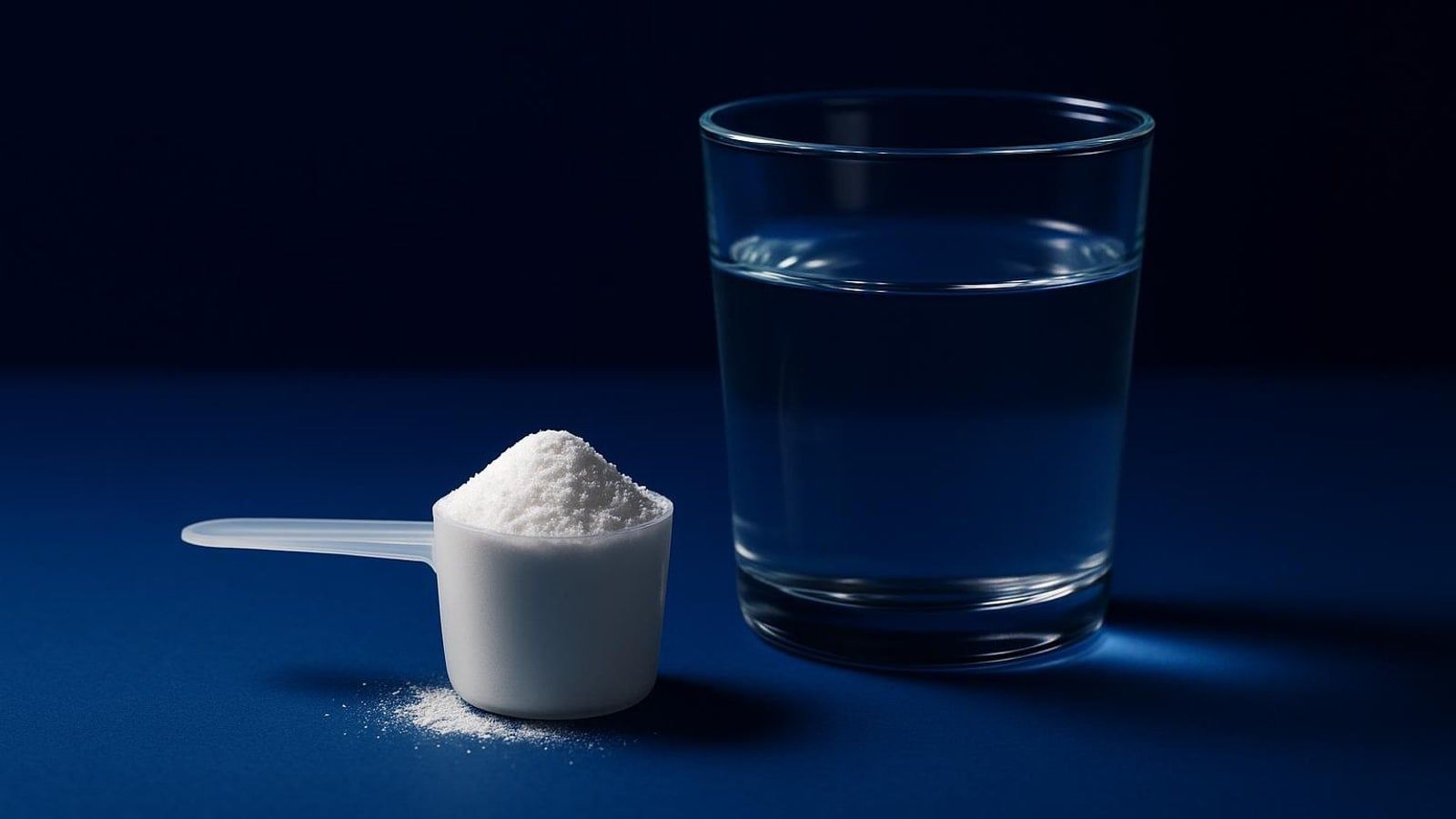
It pairs an enormous, decades-long evidence base with near-perfect absorption and one of the cleanest safety records of any supplement on the market. (For supplements we score bioavailability in place of the traditional-medicine factor used for herbs, and we don't score nutrient density — that's reserved for foods.)
What's your biggest goal right now?
Creatine is a compound your body makes and stores in muscle, where it rapidly regenerates ATP — cellular energy — for short, intense effort. Supplementing with it (3–5 g a day of creatine monohydrate) reliably increases strength, power, and lean muscle, and shows growing promise for healthy aging, brain function, and mood. It is the most-studied and one of the safest supplements available.
When a patient asks me which supplement gives the most return for the least money and risk, creatine is at the top of a very short list.
Creatine has a marketing problem: for thirty years it was filed under "stuff bodybuilders take," which kept a remarkably useful compound boxed into one corner of the gym. The reality is broader. Creatine is a natural substance your body builds from three amino acids and stores mostly in muscle, where it acts as a rechargeable battery for fast, forceful movement. [1] It is also the single most-researched supplement in all of sports nutrition, and the International Society of Sports Nutrition calls creatine monohydrate the most effective nutritional supplement available for increasing high-intensity exercise capacity and lean body mass. [1]
What has changed recently is the conversation around the rest of the body. The same energy system creatine supports in muscle also runs in the brain, the heart, and aging tissue — and a wave of research is now testing creatine for memory, mood, sleep-deprived thinking, and the loss of muscle and bone that comes with age. [7] [10] So this is no longer just a gym supplement. It is one I think of as foundational for strength and longevity.
Think of creatine as a backup battery for your cells. During short, hard efforts — a heavy lift, a sprint, a flight of stairs taken two at a time — your muscles burn through their immediate fuel (ATP) in seconds. Phosphocreatine steps in to recharge that ATP almost instantly, letting you keep producing force. [3] The more creatine stored in a muscle, the bigger that battery, which is why supplementing improves repeated bursts of intensity.
A typical 155-pound person carries about 120–140 grams of creatine, and the body makes roughly 1 gram a day while diet supplies another gram or two from animal foods. [1] Most people are not fully saturated, so there is headroom. The supplement you want is creatine monohydrate — the original, most-studied, best-absorbed form. It is absorbed almost completely, and despite a wall of flashier products, nothing has been shown to beat it. [2]
As with any supplement, the honest way to answer "what's it good for" is to grade it by how strong the evidence is. Here's the picture at a glance:
| Use | Evidence | Best dose studied | What the research shows | Main caution |
|---|---|---|---|---|
| Strength, power & muscle | Strong | 3–5 g/day | Larger gains with training; the classic, best-proven use | Needs resistance training |
| Muscle loss with aging | Strong | 3–5 g/day + training | ~1.4 kg more lean mass and more strength vs training alone | Pair with resistance training |
| High-intensity performance | Strong | 3–5 g/day | Better sprints, repeated bursts, and recovery between sets | Little help for steady endurance |
| Brain & cognition | Moderate | 5–20 g/day | Modest memory gains; clearest under stress and in older adults | Brain stores are slow to rise |
| Mood / depression | Emerging | 5 g/day (adjunct) | Faster, fuller response when added to an antidepressant | Adjunct only, not a substitute |
| Bone health | Emerging | ~0.1 g/kg + training | Preserved hip bone density in postmenopausal women over a year | Requires resistance training |
| Vegetarian / female response | Strong | 3–5 g/day | Larger gains where natural stores start lower | Population-specific |
Creatine is less a single-purpose remedy and more a piece of cellular plumbing — it shows up wherever cells burn energy in fast, demanding bursts. Three roles explain almost every benefit below.
Notice the theme: creatine is a compound of energy and capacity. It does not force anything to happen — it gives your cells more headroom to do hard work and recover from it. That is why I treat it as a foundational tool rather than a niche gym aid.
Step back and the through-line is your mitochondria — the tiny power plants that generate most of your cells' ATP. Creatine is the carrier in the phosphocreatine shuttle, the system that moves energy out of the mitochondria to the parts of the cell that spend it, then carries the signal back to make more. [17] Beyond shuttling energy, research suggests creatine supports the mitochondria themselves — helping stabilize their membranes, buffer calcium, and blunt oxidative stress — which is why it is increasingly studied in aging, heart, and brain conditions where mitochondrial function falters. [17] This is the longevity angle I find most compelling: supporting the cell's energy machinery is foundational to how well the whole body holds up over time.
This is the bedrock benefit and the most thoroughly proven. When combined with resistance training, creatine consistently produces greater gains in strength, power, and lean mass than training alone — in one classic review, roughly 8% greater strength and 14% greater weightlifting performance versus placebo. [4] It works by topping up the phosphocreatine that fuels each rep, letting you train a little harder, set after set, which compounds over time. [1] Here I want to be straight with you, because one widely shared 2025 trial muddied the water: in 54 adults doing 12 weeks of resistance training, 5 g/day of creatine produced no extra lean mass over training alone (both gained about 2 kg), and the early bump was likely water. [6] That study used a low dose, no loading phase, and an untreated control group — and it sits against a much larger body of work showing creatine does add muscle and strength. I read it as a useful caution against hype, not a reversal of the evidence.
Study takeaway: with training, creatine reliably builds strength and muscle (~8% / ~14% in classic data); a single 2025 trial found no extra lean-mass benefit, a reminder that creatine amplifies training rather than replacing it.
This is the use I am most eager to see move into the mainstream. Sarcopenia — the slow loss of muscle and strength with age — drives frailty and falls, and creatine plus resistance training is one of the best non-drug tools against it. A meta-analysis of older adults (n = 721, ages 57–70) found those who added creatine to a strength program gained about 1.4 kg more lean tissue and more upper- and lower-body strength than training with placebo. [5] Lower-body strength is exactly what protects independence later in life, so this is meaningful for anyone over 50.
Study takeaway: creatine + resistance training added ~1.4 kg lean mass and greater strength in older adults vs training alone — a practical defense against age-related decline.
Beyond raw strength, creatine shines in efforts that depend on quick, repeated bursts — sprints, jumps, intervals, and the work between sets. By keeping ATP recharging fast, it improves repeated-sprint ability and helps you recover within and between sessions, and it may reduce muscle damage and support rehabilitation after injury. [1] It does little for steady-state endurance like a long, easy jog, where the energy system is different — so I set expectations accordingly.
Study takeaway: creatine improves repeated high-intensity bursts and between-set recovery; it offers little for low-intensity endurance.
This is the fastest-moving area of creatine research. A meta-analysis of memory trials found an overall benefit, with a notably stronger effect in older adults aged 66–76 than in younger people. [7] A broader 2024 review likewise reported positive effects on cognition, though the field is still maturing. [8] The most striking result: in a controlled study, a single high dose of creatine improved thinking and restored brain energy markers during 21 hours of sleep deprivation. [9] One honest caveat — the brain takes up creatine more slowly than muscle, so researchers suspect higher doses may be needed for brain effects, and optimal dosing isn't settled. [10]
Study takeaway: modest memory benefits overall, strongest in older adults; a single high dose sharpened sleep-deprived thinking. Brain dosing is still being worked out.
Because depression involves disrupted brain energy metabolism, creatine is a logical add-on, and the early data are encouraging. In a randomized trial of 52 women with major depression, adding 5 g/day of creatine to the antidepressant escitalopram produced faster improvement — visible by week 2 — and roughly doubled the remission rate (52% vs 26%) compared with the medication plus placebo. [11] I frame this carefully: creatine is a supportive adjunct to proper mental-health care, never a replacement for it, and these findings need replication in broader groups.
Study takeaway: creatine added to an antidepressant worked faster and doubled remission in women with depression; promising but adjunctive.
Muscle and bone are linked, and there are early signs creatine helps both. In a 12-month controlled trial, postmenopausal women who took creatine during a supervised resistance-training program preserved femoral neck (hip) bone density and improved a measure of bone bending strength, compared with training plus placebo. [12] Bone is slow to change, so this is a long game — but for women navigating menopause, when bone loss accelerates, the combination of lifting and creatine is a sensible, well-tolerated strategy.
Study takeaway: a year of creatine plus resistance training preserved hip bone density in postmenopausal women; an encouraging signal that needs longer study.
Where you start matters. Because creatine comes mainly from meat and fish, vegetarians and vegans carry lower muscle stores and tend to show the biggest jumps in muscle creatine and lean mass when they supplement. [13] Women also tend to have somewhat lower natural stores, and creatine is safe and beneficial for them across the lifespan — including for strength, bone, and possibly mood — without causing bulkiness. [16] If you eat little or no animal protein, creatine is one of the most logical supplements to add.
Study takeaway: people with lower baseline stores — especially vegetarians, vegans, and many women — often see the largest gains.
| Form | Monohydrate | HCl | Buffered (Kre-Alkalyn) | Ethyl ester |
|---|---|---|---|---|
| Evidence base | Vast | Limited | Limited | Limited |
| Absorption | Near-complete | High (more soluble) | Good | Poor / unstable |
| Proven better than mono? | Benchmark | No | No | No |
| Cost | Lowest | Higher | Higher | Higher |
| Best for | Everyone | Mixing ease, sensitive stomachs | Acid-stability claim; fewer capsules | Not recommended |
| Dr. Axe pick | Top choice | Optional | Optional | Avoid |
The verdict: for value and proven results, buy plain creatine monohydrate, ideally a third-party-tested product (look for NSF Certified for Sport or Informed Sport, or the Creapure mark). HCl and buffered (Kre-Alkalyn) are fine optional choices if you prefer easier mixing, fewer capsules, or have had stomach upset with monohydrate — they simply cost more without a proven advantage. Creatine ethyl ester is the one form I'd skip. [2]
Dietary creatine lives almost entirely in animal muscle, so red meat and fish lead the list while plant foods supply essentially none. Cooking also degrades some of it. Here is how the main sources compare per 3.5-ounce (100 g) serving:
| Food | Serving | Creatine (approx.) | Notes |
|---|---|---|---|
| Herring | 3.5 oz | ~0.65–1.0 g | Highest of common foods |
| Pork | 3.5 oz | ~0.5 g | Red meat |
| Beef heart (organ meat) | 3.5 oz | ~0.5 g | Cardiac muscle — stores creatine for constant energy demand; also rich in B12, iron & CoQ10 |
| Beef | 3.5 oz | ~0.45 g | Red meat |
| Salmon | 3.5 oz | ~0.45 g | Fatty fish |
| Tuna | 3.5 oz | ~0.4 g | Lean fish |
| Cod | 3.5 oz | ~0.3 g | Lean fish |
| Milk | 1 cup | ~0.05 g | Minor source |
| Plant foods | — | Negligible | Why plant-based eaters benefit most |
The math makes the case for supplementing: to get a daily 5 grams from food you'd eat well over a pound of meat or fish, every day, and lose some to cooking. A small daily scoop of monohydrate covers the same ground for pennies. This also explains why vegetarians and vegans start with lower stores and tend to respond most. [13]
Creatine fills a tank, so the emptier your tank, the more you feel the fill. People eating little animal protein, women (who tend to have slightly lower stores), and aging adults (whose muscle is declining) often see the clearest gains. [13] [16] Heavily meat-eating, already-saturated individuals are the classic non-responders — the supplement still keeps them topped up, but the visible jump is smaller. Either way, the strong safety record and low cost mean it is rarely a bad bet.
| If you are… | Recommendation |
|---|---|
| A strength-training adult | Strong yes |
| An adult over 50 | Strong yes — especially with resistance training |
| Vegetarian or vegan | Strong yes — you likely start with lower stores |
| A woman in perimenopause/menopause | Strong consideration |
| On a GLP-1 or losing weight fast | Yes, to help protect muscle |
| An endurance-only athlete | Optional — limited performance benefit |
| Mostly sedentary | Possible brain/aging benefit; best returns come with training |
| Living with kidney disease | Avoid unless medically supervised |
| Pregnant or nursing | Ask your clinician first |
90-day protocol
The Mitochondrial Longevity Protocol — the complete root-cause framework for recharging your mitochondria, clearing damaged cells and slowing the nine hallmarks of aging, from the new book by Dr.
Free with your Dr. Axe account
View the protocol →Loading is a choice, not a requirement. Splitting roughly 20 g/day across the day for a week fills the muscle quickly, so you feel effects within days — useful before a season or event. [1] Skipping it and simply taking 3–5 g daily reaches the exact same saturation point in about three to four weeks, with less chance of the mild bloating or stomach upset that big single doses can cause. I usually suggest the simple daily approach unless someone wants results fast.
One practical note: take it with a meal or after training if your stomach is sensitive, and pair it with carbohydrate or protein if you want to nudge uptake a little higher. But do not overthink timing — creatine works by gradually filling muscle stores, not by an acute hit, so the daily habit beats any clever schedule. [2]
One of the most common questions I get is "how much should I take?" The honest answer is that the right dose depends on what you are after — and on what the research behind each benefit used. Here is that mapping, straight from the studies cited in this article:
| Your goal | Daily dose studied | Loading? | Backed by |
|---|---|---|---|
| General health & maintenance | 3–5 g | Optional | ISSN position stand1 |
| Muscle, strength & power | 3–5 g + resistance training | Optional | Rawson & Volek4 |
| Healthy aging / muscle loss | 3–5 g + resistance training | Optional | Chilibeck meta-analysis5 |
| Brain & cognition | 5–10 g (some trials higher) | — | Prokopidis7; Forbes10 |
| Acute mental fatigue / sleep loss | One-off high dose (~0.35 g/kg) | — | Gordji-Nejad9 |
| Mood / depression (adjunct) | 5 g + antidepressant | — | Lyoo11 |
| Bone health (postmenopausal) | ~0.1 g/kg (≈8–10 g) + training | — | Chilibeck bone RCT12 |
| Vegetarian / vegan | 3–5 g | Optional | Burke13 |
A few honest caveats so you don't over-engineer this. The brain takes up creatine more slowly than muscle, so researchers suspect higher or longer dosing may be needed for cognitive effects, and the ideal brain dose is not settled. [10] The single high dose used in the sleep-deprivation study was a one-time research protocol, not a daily plan. [9] And the depression and bone findings are adjuncts to proper care and training, not standalone fixes. For the vast majority of people, the move is simple: 3–5 g of monohydrate every day, and let your goal decide whether you ever nudge higher.
| Timeframe | What to expect |
|---|---|
| Days 1–7 | A small water-weight gain is possible (more if loading) as muscles begin to fill. |
| Weeks 2–4 | Muscle stores reach full saturation on a daily 3–5 g dose.1 |
| Weeks 4–8 | Better training output — more reps, faster recovery between sets — becomes noticeable. |
| Months 2–6 | Meaningful strength and body-composition gains, when paired with resistance training. |
| Long term | Ongoing muscle maintenance and healthy-aging support. |
| Supplement | Main role | Best for | Replaces creatine? |
|---|---|---|---|
| Creatine | Cellular energy / ATP | Strength, power, aging muscle | — |
| Whey / protein | Amino acids | Muscle repair, fullness | No |
| Collagen | Connective-tissue amino acids | Joints, skin, gut lining | No |
| BCAAs | Leucine, isoleucine, valine | Limited use if protein is low | No |
Creatine damages your kidneys.
In healthy people, controlled trials show no kidney harm. It can raise serum creatinine on a lab test — a harmless byproduct, not damage. Existing kidney disease is the real exception.
Creatine causes hair loss.
This rests on one 2009 study that measured a DHT rise but never measured hair — and was never replicated. [15] Reviews and a 2025 trial that did assess hair found no changes. [2]
Creatine makes you fat or bloated.
Early weight gain is water drawn into muscle cells, not fat or under-the-skin bloat. It often makes muscles look fuller, not softer.
Creatine is a steroid.
It is a natural compound your body makes from amino acids and that you eat in meat and fish. It is not a hormone and works by supplying energy, not altering hormones.
Women shouldn't take creatine.
Women often start with lower stores and benefit for strength, bone, and possibly mood. It is safe and does not cause bulkiness.
You must cycle creatine on and off.
Cycling is unnecessary. The goal is to keep muscle stores full, so steady daily use is ideal — your body does not stop responding.
Creatine dehydrates you or causes cramps.
The opposite, if anything. Creatine draws water into muscle cells; studies don't support more dehydration or cramping. Drink normally.
Creatine causes acne.
There's no good evidence creatine causes acne. It is not a hormone and does not work through the pathways that drive breakouts.
Across decades of trials and adverse-event monitoring, creatine has shown a remarkably clean safety profile, with no consistent evidence of harm in healthy users. [14] The most common complaints are mild and dose-related — some water-weight gain in the first weeks, and stomach upset or cramping when too much is taken at once, which loading more gradually or splitting doses solves. [2] Studies in women, including pregnancy-focused research, likewise support its tolerability. [16]
If you supplement creatine and your bloodwork shows elevated creatinine, do not panic. Creatine naturally breaks down into creatinine, so more creatine in the body means a slightly higher reading — this is a measurement artifact, not kidney damage. [14] Tell your doctor you take creatine so the result is interpreted correctly; if there's any question, a cystatin C test assesses kidney function without that interference.
For most active and aging adults, creatine is one of the easiest supplements to recommend. It is the most-researched product in sports nutrition, it builds strength and lean muscle when paired with training, and it is now showing real promise for healthy aging, brain function under stress, mood, and bone. The cost is small and the safety record is exceptional.
I'd reach for plain creatine monohydrate at 3–5 g a day, taken consistently, with resistance training to get the most out of it. The one group that must check first is anyone with kidney disease, and those who are pregnant, nursing, or on medication should confirm with their doctor. Used this way, creatine is a quiet, foundational tool — one that supports your body's own energy systems rather than overriding them.
Last medically reviewed: June 10, 2026 by the DrAxe.com Medical Review Board.
Published June 2026. Includes exact study statistics (creatine + resistance training added ~1.4 kg lean mass and greater strength in older adults; ~8% greater strength and ~14% greater weightlifting performance in classic data; memory benefit strongest in adults aged 66–76; a single high dose improved cognition during 21 hours of sleep deprivation; 5 g/day doubled depression remission, 52% vs 26%; 12 months of creatine + training preserved hip bone density; safe up to 30 g/day for 5 years), a dietary-creatine food table, a forms comparison (monohydrate vs HCl, buffered, ethyl ester), and a myth-vs-fact section addressing kidneys, hair loss, bloat, and the "steroid" claim. Adds context on the 2025 trial that found no extra lean-mass benefit over training alone, and on emerging uses (brain injury, GLP-1-era muscle preservation). Uses the supplement-specific Dr. Axe Score — four weighted factors with bioavailability in place of traditional medicine; nutrient density is reserved for foods.
Dr. Axe is a certified doctor of natural medicine, clinical nutritionist, and multiple New York Times bestselling author. He has spent 20+ years in clinical practice helping people heal at the root cause and founded one of the most-visited natural-health platforms in the world.
Medically reviewed by the DrAxe.com Medical Review Board on June 10, 2026. Each article is reviewed by a licensed clinician for accuracy and safety.
This content is for educational purposes only and is not medical advice. It is not intended to diagnose, treat, cure, or prevent any disease. Always consult a qualified healthcare provider before starting any new supplement, especially if you are pregnant, nursing, taking medication, or managing a health condition such as kidney disease.
Creatine is best known for increasing strength, power, and lean muscle when paired with resistance training. It also helps preserve muscle and strength with aging, boosts high-intensity exercise and recovery, and shows promise for brain energy, cognition under stress, mood, and bone health.
Creatine is stored mostly in muscle as phosphocreatine, which rapidly regenerates ATP, the cell's energy currency, during short bursts of intense effort. It also draws water into muscle cells and supports cell signaling tied to muscle growth, and it serves as an energy reserve in the brain.
Yes. Creatine monohydrate is the most-researched and best-value form, with near-complete absorption. Pricier forms such as creatine HCl, buffered creatine, and creatine ethyl ester have not been shown to outperform it. Monohydrate is the form experts recommend.
A daily maintenance dose of 3–5 g of creatine monohydrate works well for most people. Larger or heavily muscled individuals may benefit from the upper end. Consistency matters more than timing.
No. Loading (about 20 g/day for 5–7 days) saturates the muscles faster, within about a week. But simply taking 3–5 g/day reaches the same saturation in about 3–4 weeks with less chance of stomach upset. Loading is optional.
Timing is flexible because creatine works by saturating muscle stores over time, not acutely. Many people take it after training with a meal containing carbs or protein, which may modestly improve uptake, but any consistent daily time is fine.
Yes. The goal is to keep muscle stores saturated, so take your daily dose every day, including rest days. On non-training days the timing does not matter at all.
Creatine is one of the most studied and safest supplements available. Research shows that supplementation up to 30 g/day for as long as 5 years is well tolerated in healthy people. The main side effects are minor: a little water weight and occasional stomach upset at high single doses.
In healthy people, controlled trials show creatine does not harm kidney function. It can raise serum creatinine on a lab test, but that is a harmless byproduct of more creatine in the body, not a sign of kidney damage. People with existing kidney disease should check with their doctor first.
There is no good evidence that it does. The concern traces to a single 2009 study that found a rise in DHT but never measured hair loss, and it has not been replicated. A 2025 trial that directly assessed hair found no changes. If you are prone to pattern baldness, the theoretical risk is unproven.
Creatine pulls a small amount of water into muscle cells, so many people gain 1–2 kg of scale weight in the first weeks. This is intracellular water inside the muscle, not the puffy, under-the-skin bloat people fear, and it often makes muscles look fuller, not softer.
No. Creatine is a naturally occurring compound your body makes from amino acids and that you also get from meat and fish. It is not a hormone or an anabolic steroid and works by supplying cellular energy, not by altering hormones.
Yes. Women tend to have lower natural creatine stores, and creatine supports strength, lean muscle, bone, and possibly mood and cognition. It is safe for women, including across the menstrual cycle and menopause, and it does not cause bulkiness.
It may, especially under stress. Meta-analyses show modest memory benefits overall, with the strongest effect in older adults. A single high dose improved thinking and brain energy during sleep deprivation. Brain stores are harder to raise than muscle, so some researchers suspect higher doses are needed.
Emerging evidence is promising. In a trial of women with major depression, adding 5 g/day of creatine to an antidepressant doubled the remission rate (52% vs 26%) and worked faster. It is an adjunct to standard care, never a replacement for it.
Yes, especially paired with resistance training. A meta-analysis found older adults who combined creatine with strength training gained about 1.4 kg more lean tissue and more strength than training alone. It is one of the better tools against age-related muscle loss.
Often, yes. Because creatine comes mainly from meat and fish, vegetarians and vegans start with lower muscle stores and tend to show larger increases in muscle creatine and lean mass when they supplement.
No, it is not required. Taking creatine with carbohydrate or protein can modestly boost how much your muscles take up, but plain creatine in water works well over time. Consistency is what matters most.
No. Cycling is unnecessary. Creatine works by keeping muscle stores topped up, so daily use is the goal. There is no evidence that your body stops responding or needs a break from it.
It still raises muscle and brain creatine stores, which may help energy, recovery, healthy aging, and cognition. But its biggest muscle and strength gains come when it is paired with resistance training, which provides the growth signal.
Sports-nutrition experts consider creatine acceptable for healthy adolescent athletes who train seriously, eat well, and are supervised by a parent and coach. As with any supplement for a minor, the decision should involve a pediatrician.
People with kidney disease or reduced kidney function should not take creatine without medical supervision. Anyone who is pregnant or nursing, or who has a chronic condition or takes medication, should check with their doctor first.
Creatine has few known drug interactions, but caution is warranted with medications that affect the kidneys. Reports of caffeine blunting creatine's effects are inconsistent, and you do not need to avoid coffee. If you take prescription drugs, check with your doctor or pharmacist.
Last medically reviewed — June 10, 2026 by the DrAxe.com Medical Review Board.
Published June 2026 — Includes exact study statistics (creatine + resistance training added ~1.4 kg lean mass and greater strength in older adults; ~8% greater strength and ~14% greater weightlifting performance in classic data; memory benefit strongest in adults aged 66–76; a single high dose improved cognition during 21 hours of sleep deprivation; 5 g/day doubled depression remission, 52% vs 26%; 12 months of creatine + training preserved hip bone density; safe up to 30 g/day for 5 years), a dietary-creatine food table, a forms comparison (monohydrate vs HCl, buffered, ethyl ester), and a myth-vs-fact section addressing kidneys, hair loss, bloat, and the "steroid" claim. Adds context on the 2025 trial that found no extra lean-mass benefit over training alone, and on emerging uses (brain injury, GLP-1-era muscle preservation). Uses the supplement-specific Dr. Axe Score — four weighted factors with bioavailability in place of traditional medicine; nutrient density is reserved for foods.