





Advertisement
Advertisement
Conditions · Blood Sugar
Why metformin upsets your gut, how it lowers vitamin B12 and folate, what to test, what can show up over the long term, and the diet and lifestyle path that can lower your need for it.
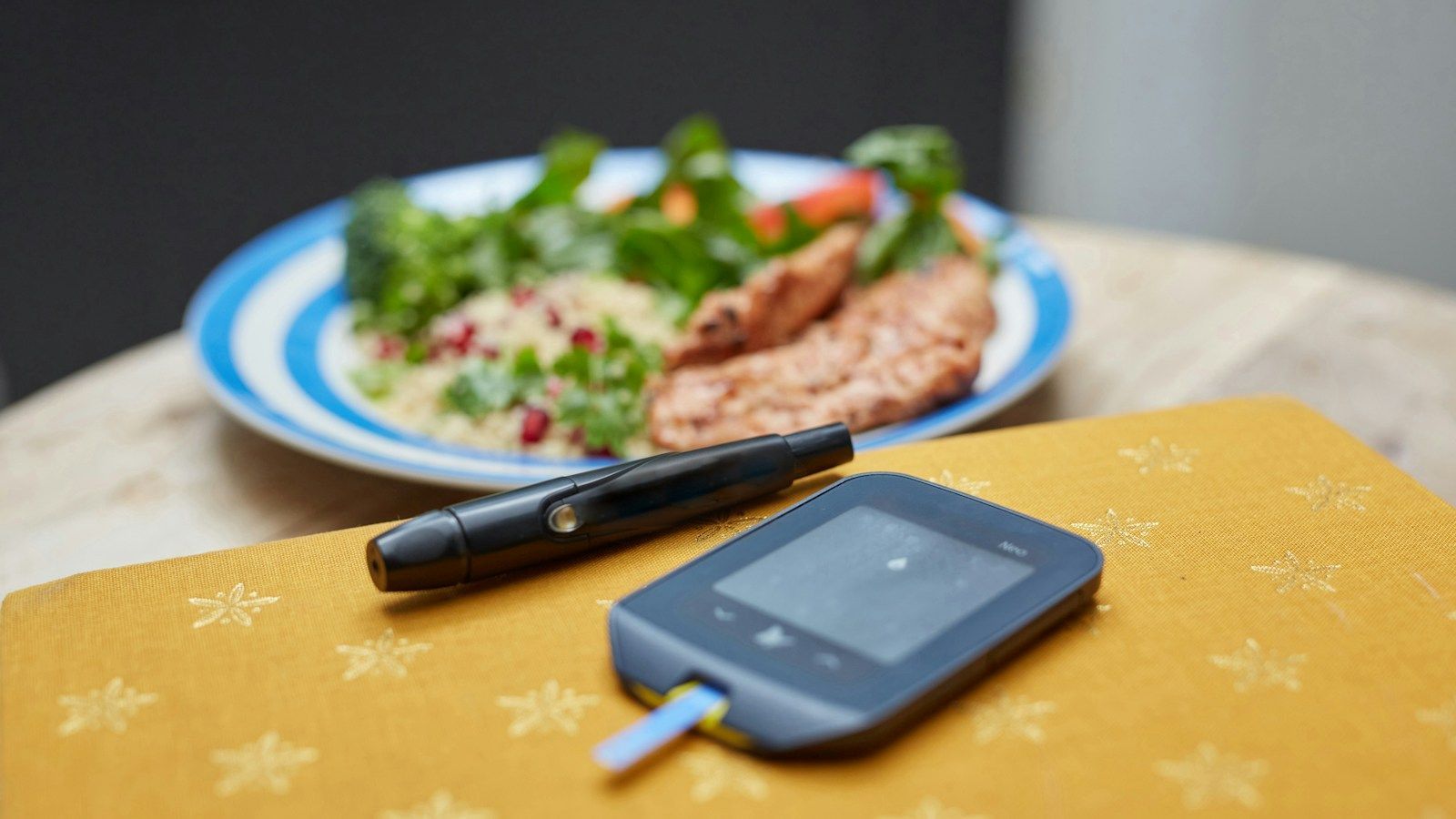
Metformin is a first-line prescription for type 2 diabetes, and its most common side effects are digestive: diarrhea, nausea, gas and indigestion. The cost that builds over the years is lower vitamin B12 and, to a smaller degree, lower folate, so your best response is to protect those nutrients and work on what's driving your blood sugar.123
The most common side effects of metformin are digestive: diarrhea, nausea, gas and indigestion.12 Every medication has a cost, and the big thing metformin does over the years is deplete your body of vitamin B12 and, to a smaller degree, folate, so while your prescriber manages the dose, I want you to test those nutrients, put back what's missing and work on what's driving your blood sugar in the first place.1011
If you've just started this drug, you may be spending more of your morning near a bathroom than you'd planned, and you may be wondering whether this is how it's going to be from now on. You haven't done anything wrong. Over the years I have sat with thousands of people handed the same sentence: your numbers are creeping up, here is a prescription, and you will likely be on it for life.9 Type 2 diabetes is not a life sentence, and for many people it is not permanent at all.9
90-day protocol
Meal structure, food order, post-meal walking and the markers that show it working.
Free with your Dr. Axe account
View the protocol →The last part of this guide, the diet and lifestyle path that can lower your need for the drug, is where your effort pays off most.
Metformin does not come without major side effects. One of the side effects of metformin is that it depletes your body of vitamin B12 and other nutrients.Dr. Josh Axe, DC, DNM, CNSFrom How to Reverse Insulin Resistance Naturally in 30 Days, The Dr. Josh Axe Show (2025), at 16:49
Metformin is a prescription drug that lowers blood sugar, and it's a first-line medication for type 2 diabetes. It works by reducing the glucose your liver releases, cutting how much sugar your gut absorbs and helping your cells take up and use the sugar in your blood.12
Metformin is usually the first prescription people receive after diabetes symptoms or bloodwork lead to a diagnosis of type 2 diabetes. Its story starts with a plant: the drug traces back to Galega officinalis, the herb known as French lilac or goat's rue, and the molecule in your pill was made synthetically and developed as a medicine in the 1950s.211 Most adults start at 500 mg twice a day or 850 mg once a day with meals, and the dose can climb to 2,550 mg a day. Those amounts are for metformin hydrochloride, the salt form printed on the label.1 Extended-release tablets usually start at 500 mg once a day with the evening meal and go up to 2,000 mg a day.12
Once you swallow it, metformin goes to work in two main places. In your liver, it holds back the glucose your body would otherwise release into your blood, and in your gut, it changes how sugar is absorbed and handled, which helps explain why digestion is where so many people notice it.12
Part of what happens in your liver takes place inside your mitochondria, the tiny engines of your cells. In isolated rat liver cells and mitochondria, metformin slowed complex I, the first stop on the path those engines use to turn food into energy, and that slowdown held back glucose production.13 In Heal Your Cells, Dr. Will Cole and I describe how this prescription has been shown to impair complex I, leading to reduced ATP, the energy currency your cells run on, and suppressed cellular energy metabolism.10 Much of that lab work uses isolated mitochondria at concentrations far higher than what reaches your blood on a normal dose, so the human exercise trials later on this page tell you more about what that slowdown looks like in a living body.14
Type 2 diabetes was never a sugar problem. It's a signaling problem, most often driven by insulin, and the sugar is the smoke, not the fire.9 Insulin resistance can drive this cascade silently for ten years before your fasting glucose moves, which is why I check fasting insulin first.9 Medication can help, especially when numbers keep rising, but it doesn't replace the muscle, sleep and eating habits that address why insulin is high.15 Metformin can bring your number down while the root cause, the insulin, the fat packed into your liver and pancreas and the muscle you've lost, stays right where it was, and that root cause is what the last part of this page goes after.
If you want to work on why your blood sugar climbed in the first place, this free protocol lays out the same 5-step path I use with patients, over about 90 days:
Free with your Dr. Axe account (email or Google). You'll also get the protocol's short email series and the Dr. Axe newsletter; unsubscribe anytime.
Open the free protocol →The most common side effects of metformin are digestive: diarrhea, nausea or vomiting, gas, indigestion and abdominal discomfort. Weakness and headache also run higher than with placebo. In a U.S. trial of immediate-release metformin in 141 people, 53% had diarrhea, against 12% of the 145 people on placebo.1
Your digestion usually takes the first hit. About 25% of people who take metformin develop digestive side effects, and about 5% end up stopping it because of them.4 The prescribing labels show how much of that comes from the drug itself, because they compare each form against placebo:
| Side effect | Immediate-release vs. placebo | Extended-release vs. placebo |
|---|---|---|
| Diarrhea | 53% vs. 12% | 10% vs. 3% |
| Nausea or vomiting | 26% vs. 8% | 7% vs. 2% |
| Gas | 12% vs. 6% | 1% to 5% |
| Weakness or low energy | 9% vs. 6% | Not listed |
| Indigestion | 7% vs. 4% | 1% to 5% |
| Abdominal discomfort | 6% vs. 5% | 1% to 5% (listed as abdominal pain) |
| Headache | 6% vs. 5% | 1% to 5% |
The immediate-release column comes from a single U.S. trial of 141 people on the drug, at up to 2,550 mg a day, and 145 on placebo, and its rates run well above that 25% figure. The extended-release column comes from placebo-controlled trials of 781 people on the drug and 195 on placebo, and that label gives its smaller rows only as a range, without a placebo figure. The label itself warns that rates from separate trials can't be compared directly, so read each column on its own.112 Diarrhea led 6% of people to stop the immediate-release tablets and 0.6% to stop the extended-release form in those trials, and smaller numbers of people reported a change in taste, a rash, sweating or flushing, along with constipation, bloating and dizziness on the extended-release form.112
Women and older adults tend to struggle more. In an observational study in Scotland that compared 251 people with type 2 diabetes who couldn't tolerate metformin with 1,915 who could, the intolerant group was on average 10 years older and more often female.4
Metformin upsets your gut mostly because so much of it stays there. Only 50% to 60% of a dose is absorbed, about 30% passes out unchanged in the stool, and the concentration in your upper small intestine peaks at 30 to 300 times the level in your blood.2 Picture a crowd packed into a hallway while the room next door sits half empty, and you have a fair idea of what your gut lining is dealing with. Researchers think several things happen at once:2
That shift in your microbes is part of how the drug lowers blood sugar, too. In a placebo-controlled trial of 40 adults newly diagnosed with type 2 diabetes, 4 months of metformin strongly changed the gut microbiome, and when researchers moved those altered microbes into germ-free mice, the mice handled glucose better.16 The same gut changes that make some people miserable may be doing part of the drug's work, which is one more reason your gut health matters while you're on it.
Some people get hit harder because of a transporter called OCT1, which helps move metformin across cell walls, and researchers suspect that when it works poorly, more of the drug stays in your intestine.4 In that Scottish study, people with two reduced-function copies of the OCT1 gene had 2.41 times the odds of being intolerant, people taking another drug known to block OCT1 had 1.63 times the odds, and people with both had 4.13 times the odds.4 Those drugs include acid-blocking proton pump inhibitors and the blood pressure drug verapamil, so if your gut reaction seems out of proportion, your full medication list is a good place to look.4 If your gut reacts harder than your neighbor's, that can come down to how your body handles the drug, and none of it is your fault.
Extended-release metformin releases the drug more slowly, spreading absorption along your gut so that less of it concentrates in one place, and it was developed to be easier to tolerate.2 Whether it's gentler depends on which kind of study you look at.
When people who are already having trouble switch, many of them feel better. In a chart review of 205 people who moved from immediate-release to extended-release at four clinics, reports of any digestive side effect fell from 26.34% to 11.71%, and diarrhea fell from 18.05% to 8.29%; that review looked back at records and had no comparison group for the switch.17 Randomized trials found the two forms much closer. A 2021 review that pooled 4 trials and 1,573 people found digestive side effects in 29.3% of people on extended-release and 26.6% on immediate-release, and diarrhea in 10.4% and 12.0%, differences small enough to be chance.18
If immediate-release is hard on you, the people who switched in that chart review are the encouraging part, because their reports of gut trouble fell by more than half after the change. Whichever form you take, food and a slow climb in dose are the first things to try, and you'll find those steps below.
Metformin lowers vitamin B12 by interfering with how your small intestine absorbs it, and the drop grows with dose and time. In a 52-month placebo-controlled trial of 390 people already on insulin, B12 ran 19% lower on metformin, and folate ran 5% lower.5 Ask for serum B12, folate, methylmalonic acid and homocysteine so you catch it early.1195
Your body absorbs vitamin B12 at the far end of your small intestine, in a step that depends on intrinsic factor and calcium, and metformin gets in the way of that step.120 In a small comparative study of 21 people with type 2 diabetes on a sulfonylurea, 14 of whom switched to metformin, B12 fell after the switch and oral calcium reversed the drop in the active form of B12.20 In 2022 the U.K. medicines agency reclassified B12 deficiency as a common side effect of metformin, affecting up to 1 in 10 people on it, and the U.S. label reports that about 7% of people in 29-week trials saw previously normal B12 fall below normal.211
The longer you take it and the higher the dose, the bigger the drop. In the HOME trial, 390 people with type 2 diabetes who were already on insulin took 850 mg of metformin hydrochloride or placebo three times a day for 52 months, and neither the people nor the researchers knew who got what. B12 ran 19% lower on metformin, and for roughly every 14 people treated, one extra person developed true deficiency over 4.3 years.5
The drop shows up even in people who only have prediabetes. In the follow-up to the Diabetes Prevention Program, a randomized trial, 1,715 adults with prediabetes had their B12 tested at 5 years, and low or borderline levels showed up in 19.1% of those on 850 mg of metformin twice a day against 9.5% on placebo. At 13 years, after the metformin group had stayed on the drug for 9 more years and everyone had been offered group lifestyle sessions, it was 20.3% against 15.6%.3 Dose showed up clearly in a Hong Kong case-control study of 155 people with low B12 and 310 without: each extra gram a day brought 2.88 times the odds of deficiency, and 3 or more years on the drug brought 2.39 times the odds.22
B12 and folate are essential methyl donors, the raw material your cells use for a chemical step called methylation, so when metformin lowers them it disrupts those pathways as well.10 Metformin's effect on B12 is why I connect this drug with fatigue, neuropathy and depression.1011 In an observational study of 550 people with type 2 diabetes on metformin, those with deficient B12 had 2.4 times the chance of depression.23 In the Diabetes Prevention Program follow-up, neuropathy was more common among metformin users with low B12, in a small number of cases.3 In a later analysis of the HOME trial, metformin raised methylmalonic acid, the marker that shows your tissues are short of B12, and that pushed nerve scores the wrong way while metformin's lower HbA1c, your average blood sugar over about three months, pushed them the right way, so the net effect on neuropathy wasn't significant.19
Metformin lowers folate too, by a smaller margin.1011 In the first 16 weeks of the HOME trial, folate ran 7% lower on metformin than on placebo, and over 52 months it ran 5% lower, a difference that stopped being significant once researchers adjusted for body mass and smoking.245 Homocysteine is the amino acid that builds up when B12 and folate run short, and a review of randomized trials in 12 publications found it rose by 2.02 µmol/L on metformin when people weren't taking B vitamins or folic acid and fell by 0.74 µmol/L when they were.25 That second number is the encouraging one, because it shows that what you put alongside this drug changes what it does to you. If you've been on metformin for years and nobody has ever checked your B12, this is the section to take with you to your next appointment.
My rule is test, don't guess.9 Ask for these four together, especially if you've been on metformin for years, take a higher dose or have noticed numbness, tingling or unusual tiredness:2122
This is the part of the drug's cost you can do something about, and the label notes that the drop appears to reverse quickly with B12 supplementation.1 In a 12-month placebo-controlled trial of 90 people who had been on metformin for at least 4 years and had neuropathy with B12 under 400 pmol/L, a daily 1,000 mcg methylcobalamin tablet raised B12 from 232.0 to 776.7 pmol/L, nerve conduction improved, and pain scores fell from 18.4 to 17.1 on a 38-point scale, while pain on placebo rose from 19.3 to 20.9.26 Reflex tests of the automatic nervous system and one physical exam score didn't improve significantly, and nobody reported an adverse event from the B12.26
Daily methylcobalamin eased nerve pain; on placebo it worsened
A common vitamin B12 dosage is about 1,000 mcg of methyl-B12 a day, guided by your level, and it's worth testing before high doses.7 When folate runs low, I recommend methylfolate along with folate-rich foods such as leafy greens, liver and beans.27
Food still counts, even though absorption is the thing metformin gets in the way of. Beef liver is one of the richest foods in B vitamins and iron,28 and I recommend about 3 ounces once a week unless your bloodwork shows vitamin A running high.29 Add sardines, wild salmon and pasture-raised eggs, and you'll find more choices in our list of B12 foods. Keep your red meat fresh, unprocessed and grass-fed, because the WHO's cancer agency, IARC, classifies processed meat of every kind, processed beef included, as a Group 1 carcinogen, largely on colorectal cancer data, and rates red meat itself Group 2A, probably carcinogenic.30 As I've said on my show, the studies that link red meat to poor health mostly reflect grain-fed and processed meat, not the fresh, grass-fed red meat I recommend.31
The long-term side effects of metformin center on lower vitamin B12 and the nerve trouble that can follow it, a higher risk of anemia and, in exercise trials, smaller gains from training. In two randomized trials reanalyzed together, people on metformin had higher odds of moderate anemia than those on a sulfonylurea or diet.32
Lower B12 is the best-known long-term effect, which you've seen above, and anemia is the second one to watch. When researchers went back through two large randomized trials, people on metformin had 1.93 times the odds of moderate anemia (hemoglobin under 11 g/dL) compared with a sulfonylurea in one trial of 3,967 people, and 3.40 times the odds compared with diet in another of 1,473.32 In a Scottish database of 3,485 people, each gram of metformin a day went with a 2% higher risk of anemia per year.32 In the first of those trials, hemoglobin fell within 6 months with no further drop after 3 years, and the researchers judged that timing unlikely to come from B12 shortage alone, which is why that yearly blood count is worth keeping even when your B12 looks fine.32
Your muscles are the third, and this is where the cost to your cells shows up in people. Muscle is your largest glucose sink: every pound pulls sugar out of the blood, and every contraction clears glucose without insulin.9 That makes exercise one of the best things you can do for your blood sugar, and it's why three trials on metformin and exercise matter so much.
Metformin can take some of the reward out of your workouts. In a 12-week randomized trial of 53 older adults at risk for type 2 diabetes, aerobic training raised whole-body insulin sensitivity and mitochondrial respiration on placebo, while on 2,000 mg of metformin a day neither one rose.6 In a 14-week randomized trial of 94 healthy adults 65 and older doing strength training, those on placebo gained 1.95% in lean mass and 3.90% in thigh muscle, against 0.41% and 0.45% on 1,700 mg of metformin a day, and strength gains ran lower by an amount small enough to be chance.33 A 2026 randomized trial of 91 adults at risk for metabolic syndrome found the same pattern with 16 weeks of high-intensity training, where insulin sensitivity improved on placebo and not on metformin.34
None of those people had diabetes, so these trials can't tell you exactly what happens when you take metformin to treat it. They do help explain why it makes so little sense to me when healthy people are told to take metformin as a longevity drug.11 If you take it because you need it, keep training. In that aerobic trial, HbA1c, fasting insulin and fat mass fell in both groups, the response varied widely from person to person, and the exercise paid off either way.6
Take metformin with food, let the dose climb slowly with your prescriber, drink extra water if you have diarrhea, feed your gut with fiber and probiotics, and test your B12.1835
Most of what helps is simple, and you can start today:
If what you're feeling goes beyond stomach trouble, go straight to the safety section.
If you're going to be on metformin, at the very least also get the nutrients along with the probiotics for absorption so your body doesn't become deficient while taking this medication.Dr. Josh Axe, DC, DNM, CNSFrom How to Reverse Insulin Resistance Naturally in 30 Days, The Dr. Josh Axe Show (2025), at 18:26
Yes, in many cases. Type 2 diabetes can be reversed with diet, exercise and lifestyle, with your prescriber adjusting any glucose-lowering medication as your blood sugar improves,9 and supported with natural remedies like berberine, chromium, cinnamon and magnesium. In a randomized trial of 149 people on a structured weight-loss program, 46% were in remission at 12 months, against 4% of 149 on usual care.36
Most modern drugs manage disease; they don't rebuild the body.10 You don't manage type 2 diabetes, you remove what's driving it, and when you steady the insulin and rebuild the muscle, the body remembers how to handle sugar.9 More than two thousand years ago, Chinese medicine was already describing diabetes as Xiao Ke, or wasting and thirsting, linked to rich food, alcohol and emotional strain, and its answer maps almost perfectly onto the plan below: fewer refined carbs, more fiber and protein, daily movement and better sleep.15
Lifestyle change beat metformin when the two went head to head in the Diabetes Prevention Program, which followed 3,234 adults with high blood sugar for an average of 2.8 years. An intensive lifestyle program built on losing at least 7% of body weight and moving at least 150 minutes a week cut new cases of diabetes by 58% against placebo, while 850 mg of metformin twice a day cut them by 31%.37 Diet and exercise achieved nearly twice the risk reduction of the drug, and they don't come with its side effects.35 Over 15 years the gap narrowed, to 27% and 18%, as weight crept back in the lifestyle group.38
Lifestyle change cut new diabetes by 58%. Metformin, by 31%.
The DiRECT trial in U.K. primary care went further and asked whether adults diagnosed within the past 6 years and not on insulin could put type 2 diabetes into remission. People knew which treatment they got, and 149 assigned to a structured program were compared with 149 on usual care. Their diabetes drugs were withdrawn at the start under the trial team's supervision, and they followed an 825 to 853 calorie formula diet for 3 to 5 months, then reintroduced food and worked on keeping the weight off.36 At 12 months, 46% were in remission against 4% on usual care, and at 24 months 36% against 3%, and by then 40% of the program group were on diabetes drugs against 84% of those on usual care.3639
The more weight people lost, the better their odds: among the 285 people with weight data, remission reached 0% of the 76 who gained weight, 7% of those who lost up to 5 kilograms, 34% at 5 to 10 kilograms, 57% at 10 to 15 and 86% at 15 kilograms or more, about 33 pounds.36
More weight lost, more people in remission
Weight loss can do what a pill can't because it clears the fat out of the organs that handle your sugar.9 In a metabolic study of DiRECT, 64 people in the program saw liver fat fall from 16.0% to 3.1% and pancreas fat fall too, and the ones whose blood sugar returned to normal were the ones whose first-phase insulin response, the quick burst of insulin your pancreas releases when you eat, came back.40
Refined starch and too little movement keep insulin high, and your muscles stop taking up sugar.9
That fat is what tips insulin resistance into diabetes.9
In that metabolic study, liver fat fell from 16.0% to 3.1%.40
First-phase insulin response recovered in the people whose blood sugar returned to normal.40
Blood sugar falls and energy returns.9
The fat wedged in your liver and pancreas is what tips insulin resistance into diabetes, and it is removable.Dr. Josh Axe, DC, DNM, CNSWritten in The Type 2 Diabetes Protocol (2026), p. 14
The first thing I'd do is put you on a very specific diet high in protein and fiber and give you the nutrients you need.35 From there, my Type 2 Diabetes Protocol moves through 5 steps in order, over about 90 days:9
Our diabetic diet plan lays out what that looks like on a plate, and our guide to normal blood sugar shows you what to aim for.
These are the natural tools I reach for alongside that work, and none of them replace food and movement or a prescription; decide medications only with your doctor.9
They support the changes above, and diet and lifestyle do the reversing.
Berberine gave similar blood sugar results to metformin at the same dose, 500 mg three times a day, in a 3-month randomized trial of 36 adults newly diagnosed with type 2 diabetes.45 It's the flagship natural tool I use alongside food and movement.9
Berberine has gone head to head with metformin, and it held its own. In my Insulin Resistance & Prediabetes protocol, I describe it this way: it lowered blood sugar and HbA1c comparably to a common diabetes medication in a small 3-month trial.15 The table lays that trial out:
| Comparison | Who and how long | Doses | Result | Side effects |
|---|---|---|---|---|
| Berberine vs. metformin | 36 adults newly diagnosed with type 2 diabetes, randomized, 3 months; 31 finished (3 on berberine and 2 on metformin withdrew because treatment failed) | Berberine 500 mg three times a day; metformin 500 mg three times a day | Similar blood sugar lowering. HbA1c fell from 9.47% to 7.48% on berberine and from 9.15% to 7.72% on metformin; fasting glucose fell from 10.63 to 6.85 mmol/L on berberine and from 9.96 to 7.16 on metformin. Triglycerides fell from 1.13 to 0.89 mmol/L on berberine and barely moved on metformin (1.19 to 1.17) | Across the published paper, which also studied a second group of people on berberine, 20 people (34.5%) had short-lived digestive effects, with no liver or kidney damage seen. The paper gives no side-effect count for the metformin group |
The researchers called berberine's blood sugar lowering similar to metformin's in that pilot, and by the end of the trial triglycerides and total cholesterol were significantly lower on berberine than on metformin.45
I'm sure a research study can show that metformin supports the body in some area, and maybe even with a group of people who are severely diabetic it will increase their longevity; I've seen those research studies myself.35 Where metformin clearly does better is in the size and length of the evidence behind it: in the UKPDS trial of 753 overweight people with newly diagnosed type 2 diabetes, followed for a median of 10.7 years, those assigned to metformin had 36% fewer deaths from any cause than those on conventional, mainly diet-based care.46
Berberine has been used for centuries in Chinese and Ayurvedic medicine to support digestion, immunity and overall vitality.10 It works by activating AMPK, a pathway that enhances insulin sensitivity and regulates glucose,35 and metformin activates it too.2 It earns its place right beside the food and movement that do the reversing.
If you take metformin, keep taking it exactly as prescribed; changes come only with your prescriber, as your labs improve.9 Lactic acidosis is the rare emergency to know about, and your kidney function decides most of that risk.1
Never stop or change a diabetes medication on your own; it can be dangerous. As your numbers improve, bring your labs and home readings to your prescriber and let them adjust your doses.9
Lactic acidosis. Metformin carries a boxed warning for this dangerous buildup of acid in the blood, and fatal cases have been reported.1 It is rare: a Cochrane review of 347 trials and cohort studies found no cases in 70,490 patient-years on metformin and none in 55,451 on other treatments.47 The onset can be subtle. Unusual tiredness or weakness, muscle pain, trouble breathing, unusual sleepiness or stomach pain, sometimes with feeling cold, lightheaded or a slow, irregular heartbeat, are the signs to act on.1 If you have them, don't take another dose, and get to an emergency room right away.1
Who's at higher risk. The label names kidney disease, age 65 or older, heart failure and other low-oxygen states, liver disease, heavy drinking, dehydration from vomiting, diarrhea or fever, surgery and contrast imaging.1 If any of these fit you, make sure your prescriber knows.
Kidneys. Your kidneys clear this drug, and your eGFR, the blood-test estimate of how well they filter, sets the rules. The label says not to use metformin below an eGFR of 30, not to start it between 30 and 45, and to reassess if you fall below 45.1 In a cohort of 75,413 people, the risk of hospitalization with acidosis rose significantly only below an eGFR of 30, to 2.07 times the risk.48 Get your eGFR checked at least yearly.1
Alcohol. Alcohol strengthens metformin's effect on lactate, so avoid heavy drinking.1
Contrast imaging and surgery. Tell the imaging team you take metformin. The label calls for stopping it at or before an iodinated contrast scan if your eGFR is 30 to 60, you have a history of liver disease, alcoholism or heart failure, or the contrast goes into an artery, then rechecking eGFR 48 hours later and restarting if it's stable. It's also paused while food and fluids are restricted around surgery.1
Low blood sugar. Metformin alone seldom drops blood sugar too low, with hypoglycemia reported in 1% to 5% of people in the U.S. trial. The risk climbs with insulin or a sulfonylurea such as glipizide, whose dose may need to come down.1 The same goes when diet, time-restricted eating or supplements start lowering your blood sugar, so check your readings and let your prescriber make the adjustment.9
Other drugs. Carbonic anhydrase inhibitors such as topiramate can raise the risk of lactic acidosis, so ask about closer monitoring. Drugs that slow metformin's clearance, such as cimetidine, can raise your exposure to it, so ask whether the combination still makes sense.1 Berberine can compound prescription drugs, so clear it with your doctor first.9
Pregnancy and liver. If you're pregnant or planning to be, keep your diabetes care with your OB and confirm every dose there, including the berberine and beef liver on this page. Cases of liver injury have been reported since approval, so keep your routine labs current.1
Metformin lowers blood sugar, and it has a cost. For many people that cost starts in the gut, and over the years it shows up as lower vitamin B12, somewhat lower folate and smaller gains from exercise.456 You can do something about all of it: take it with food, let the dose climb slowly, test your B12 and homocysteine, put back what runs low, and keep training.
Then go after the reason your blood sugar climbed. Food, movement and weight loss beat the drug at preventing diabetes and put many people into remission.3736 Blood sugar falls, energy returns, and for many people the medications come down, always with your doctor. I have watched it happen more times than I can count.9
The same 5-step path I use with patients: stabilize your blood sugar, rebuild muscle, nourish your cells and gut, fix sleep and stress, and unload the fat in your liver and pancreas. Have recent bloodwork? Analyze it free.
Free with your Dr. Axe account (email or Google). You'll also get the protocol's short email series and the Dr. Axe newsletter; unsubscribe anytime.
Open the free protocol →Lactic acidosis is the most serious side effect of metformin, and it's rare. It's a dangerous buildup of acid in the blood that carries a boxed warning on the label, and a Cochrane review of 347 trials and cohort studies found no cases in 70,490 patient-years on the drug.147 Its warning signs are in the safety section.
Metformin causes diarrhea mostly because so much of the drug stays in your gut, where researchers think it raises lactate, increases the bile in your bowel and shifts your microbes.2 In a U.S. placebo-controlled trial of immediate-release metformin in 141 people, 53% had diarrhea, against 12% of the 145 people on placebo.1
Test first, and correct your B12 if it's low or borderline. In a 12-month placebo-controlled trial of 90 people on long-term metformin with neuropathy, 1,000 mcg of methylcobalamin a day raised B12 from 232.0 to 776.7 pmol/L and lowered pain scores from 18.4 to 17.1 on a 38-point scale.26
Metformin can contribute to neuropathy through low B12, though the net effect in trials is mixed. In the follow-up to the Diabetes Prevention Program, a randomized trial that tested B12 in 1,715 adults with prediabetes, neuropathy was more common in metformin users with low B12, in a small number of cases.3 In a 52-month placebo-controlled trial of 390 people on insulin, metformin raised a marker of B12 shortage while its blood sugar benefit offset that harm, so the net effect on nerve scores wasn't significant.19
Metformin can help some people lose weight and keep it off. In the 15-year follow-up of 2,776 adults from the Diabetes Prevention Program, a randomized trial in people with high blood sugar, people on metformin kept their weight off while the lifestyle group regained some, and the two ended up with almost identical long-term weight loss.38
You should avoid heavy drinking on metformin, because alcohol strengthens metformin's effect on lactate and excessive alcohol is a named risk factor for lactic acidosis.1 The label warns against excessive intake without setting a specific number.
Women appear more likely to struggle with metformin's digestive side effects. In an observational study of 251 people who couldn't tolerate metformin and 1,915 who could, the intolerant group was more often female.4 Metformin can also bring back ovulation in some women who aren't ovulating, so pregnancy is possible, and if that's you, confirm your doses with your OB.1
Metformin alone seldom causes low blood sugar, with hypoglycemia reported in 1% to 5% of people in a U.S. placebo-controlled trial of 141 people. The risk climbs when it's combined with insulin or a sulfonylurea, and a lower dose of those drugs may be needed.1
Only with your prescriber. Never stop or change a diabetes medication on your own, because it can be dangerous; as your numbers improve, bring your labs and home readings to your prescriber and let them adjust your doses. In trials, medication was reduced only under medical supervision.9
Diet, movement and weight loss do the most, and berberine is the flagship supplement I use alongside them, with any medication changes left to your prescriber.9 In a 2.8-year randomized trial of 3,234 adults with high blood sugar, a lifestyle program cut new cases of diabetes by 58% against 31% for metformin.37
November 9, 2026 — New page, checked against the current U.S. prescribing labels and the studies listed below.

This article is for educational purposes. See our medical disclaimer.