
Advertisement
Advertisement
Dr. Axe Wire · Study decoded · health
A fruit-peel byproduct combined with caffeine and Amazonian lipids protected skin cells from UV and oxidative stress in early lab testing, pointing toward a new direction for natural sunscreen ingredients.
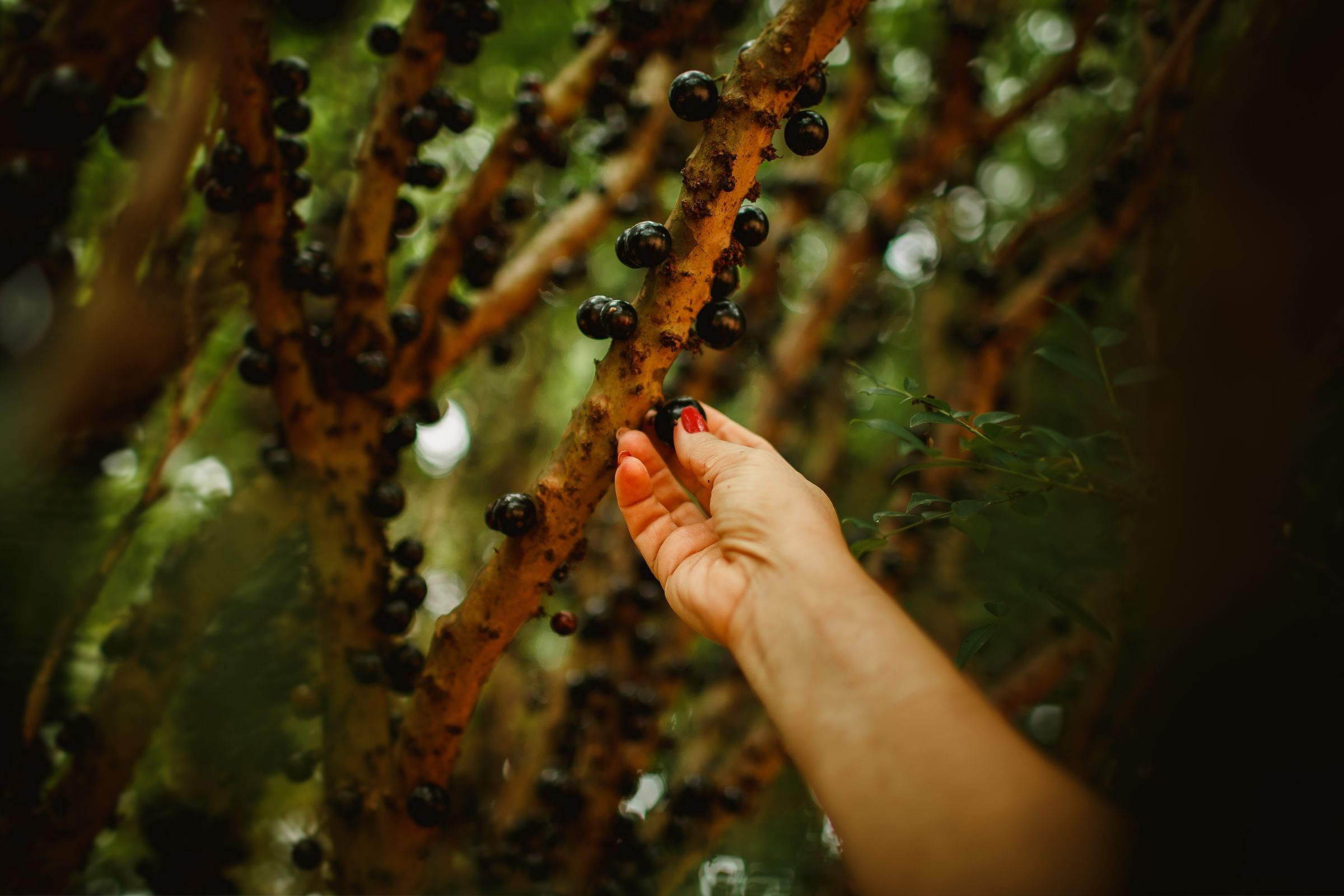
Researchers built a nanoparticle carrier from jabuticaba peel extract and caffeine that blocked UV- and oxidative-stress damage in skin cells, according to a study published in Pharmaceuticals in September 2026.
A nanocarrier built from jabuticaba (Plinia cauliflora) peel extract, caffeine, and two Amazonian plant lipids (murumuru butter and babassu oil) was tested in melanocyte skin cells and zebrafish embryos, according to the study. The particles measured 56.1 nanometers across with a narrow size distribution (PDI 0.131), held a negative surface charge, and remained stable for 30 days. The peel extract's dominant compounds were ellagic acid (476.8 micrograms per gram), quercetin-3-rhamnoside (90.9 micrograms per gram), quercetin (83.7 micrograms per gram), cyanidin-3-glucoside (73.0 micrograms per gram) and protocatechuic acid (68.2 micrograms per gram). In melanocyte cells, the nanoparticles preserved at least 70% viability across the concentration range relevant to cosmetic use, with a toxicity threshold (IC50) of 2,304 micrograms per milliliter. In zebrafish embryos, the 96-hour lethal dose (LC50) was 2,013 micrograms per milliliter, three orders of magnitude above the safety hazard threshold used for chemical classification. The particles neutralized about 50% of free radicals in a standard antioxidant test (DPPH assay) at doses comparable to vitamin C, reduced superoxide generation triggered by UVC light and hydrogen peroxide, and kept cell and nuclear structure intact under that combined stress.
The authors link the extract's polyphenols to suppression of enzymes that break down skin's collagen scaffolding (MMPs) and calming an inflammatory signaling pathway (NF-κB), alongside direct free-radical scavenging. UV exposure and pollution generate reactive oxygen species that damage skin cell membranes and DNA over time, a process tied to visible photoaging; antioxidants neutralize those reactive molecules before they cause damage. Packaging the extract in a fat-based nanoparticle is meant to help it cross the skin's outer barrier, which normally blocks larger plant compounds.
This work stops at skin cells grown in dishes and zebrafish embryos; no human skin application, sunscreen formulation testing or clinical trial has been reported. Five of the authors are employees of a cosmetics company; the work was funded by Brazilian public research agencies and the European Union.
This is clever use of agricultural waste. Jabuticaba is a Brazilian fruit, and pulling ellagic acid and quercetin from peel that normally gets thrown out is the kind of upstream thinking I want to see more of in skincare. But this is lab-dish and fish-embryo data, not a tested sunscreen or serum, so I would not substitute it for proven sun protection right now. What I would do this week is lean on foods and topicals with established polyphenol density, dark berries, pomegranate, green tea extract, and pair that with mineral sunscreen while nanocarrier delivery systems like this one move toward actual human trials.
 — Dr. Axe
Take the Cellular Health Quiz →