The Best Dark Chocolate of 2026, Ranked by Lead and Cadmium Test Results
We pulled every free, public lab result we could find for 35 dark chocolate bars, converted each to the lead and cadmium in a 1-ounce serving, and ranked the bars on those numbers, their ingredients, their flavanol potential and what each brand tells you.
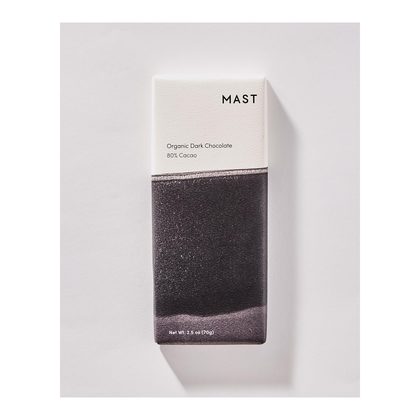
Best overall:Mast Organic 80% ($8.00, 8.6/10). An ounce carried 14% of California's daily lead limit, the lowest of 28 bars Consumer Reports tested, and 40% of the cadmium limit.
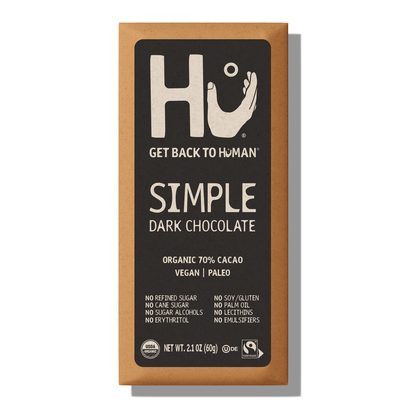
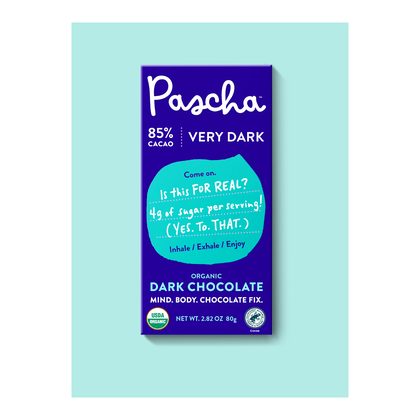
Skip: bars with a most recent result over 150% of either limit, including Pascha 85%, Hu 70%, Lindt 85% and Hershey's Special Dark (see the table).
Keep it in proportion: the limit is California's strict warning level, not a poisoning threshold. One ounce a few days a week of a tested bar is a sensible habit.
Our #1 pick8.6/10
Mast Organic Dark Chocolate 80%
14% of the daily lead limit and 40% of the cadmium limit in an ounce[1], the lowest lead of 28 bars in Consumer Reports' test.
Three organic ingredients: cacao, cane sugar and vanilla[29]. The catch: it's one test from 2022, and Mast publishes no lab results of its own.
How we score:Lead 30%Cadmium 25%Ingredients 15%Flavanol potential 15%Transparency 15%Full methodology ↓
The Dr. Axe Clean Chocolate Score (0–10) is our editorial judgment, not a safety grade. A bar whose most recent independent result tops 150% of either limit can't make our top 10.
Know your chocolate
Where the lead and cadmium come from
The two metals get into chocolate in different ways, which is why a bar can be low in one and high in the other. The benchmark throughout is California's Prop 65 limit, the MADL: 0.5 µg of lead and 4.1 µg of cadmium a day[2].
Cadmium: in the beanCacao trees take it up from soil, so it rises with cacao % and runs higher in many Latin American soils[8][11].
Lead: on the beanIt's picked up after harvest, so better handling can cut it; the settlement's expert committee expected lead reductions within a year of new practices[9].
Lab testsLab test
23 of 28bars
in Consumer Reports' 2022 test would put an adult over California's daily limit for lead, cadmium or both in just 1 ounce; 5 were low in both[1]. Every bar had some of each.
Consumer Reports, 2022
LeadExpert review
<3 vs >1,000ppb
Beans on the tree carry under 3 ppb of lead; commercial beans have tested above 1,000. Nearly all of it lands after harvest, as beans ferment and dry outdoors[8].
Expert Committee, 2022
Cadmium and originLab data
10.4–10.8 vs 1.8µg
of cadmium per label serving in Ritter Sport's 74% Peru bar vs its 81% Ghana bar[4]. Latin American chocolate had the highest mean cadmium in a 155-sample Tulane study; West African, the lowest[11].
As You Sow, 2022; Tulane, 2024
OrganicLab study
43%over for lead
of 72 cocoa products bought from 2014 to 2022 (and 35% of 37 for cadmium). Organic products were more likely to carry higher cadmium[10]; CR found organic bars “just as likely” to run high[1].
Front Nutr, 2024
Perspective
0.1–9.4%of dietary cadmium
comes from cocoa products, per WHO data cited by FDA[12]. FDA told CR chocolate is “a minor source of exposure” internationally[3]. For lead, WHO says no level is known to be without harm[13].
FDA; WHO
Flavanols and the heartMixed
27%fewer CVD deaths
with a cocoa extract supplement (500 mg flavanols a day) in COSMOS, 21,442 older adults, but that was a secondary outcome: the main result, total heart events, wasn't significant[15]. It tested a capsule, not chocolate.
Am J Clin Nutr, 2022
Blood pressureModerate
−1.76mmHg
systolic blood pressure with flavanol-rich cocoa vs control across 35 trials in 1,804 mainly healthy adults over 2 to 18 weeks[17].
Cochrane, 2017
Dutch processingLab study
60–89%fewer flavanols
in lightly to heavily alkalized (“Dutched”) cocoa vs natural cocoa: 34.6 mg/g natural vs 13.8, 7.8 and 3.9[18]. Look for “processed with alkali” on the label.
J Agric Food Chem, 2008
Check your chocolate
As You Sow posts every bar it has tested, in micrograms per label serving[4]; Consumer Reports' free articles list 35 bars as a share of the limit[1][3]. No lab result? A 70% bar from West African beans is the safer untested bet.
Three essentials, plus a fourth for kids, pregnancy and the rest of your plate.
1Essential
One ounce, a few days a week
That's about 30 g, usually a third of a bar. CR's lead tester says a serving a few days a week of a lower-level bar lets you enjoy it “without worrying unduly”[1].
Cadmium tends to rise with cacao %, so for an untested bar CR suggests 70% over 80%[1]. Taza's 95% Wicked Dark with toasted coconut had over twice the cadmium limit per label serving[4].
Results swing lot to lot: Chocolove 88% hit 240% of the lead limit for CR and 80% for As You Sow[1][4]. Rotating spreads that risk (our advice, not a tested strategy).
Answer four questions. If nothing fits, we'll say so and show the closest option.
1How dark do you like it?
2Sweetened how?
3Must it be organic?
4Budget per ounce?
Compare the top 10
What each bar is proven to contain
Lead and cadmium are shares of California's daily limit in a 1-oz serving, averaged across every independent test since 2022.
Score = the Dr. Axe Clean Chocolate Score, 0–10. 100% means one ounce reaches the daily limit. Full methodology ↓
Independent lab Independent lab result under the limit.Maker's data From the brand's label, page or own tests.No data Nothing published.Flag Over the limit, or an ingredient we deduct for.
“Label” flags the biggest ingredient deduction. Shaded rows are popular bars that missed our top 10; red score pills mean a most recent result over 150% of a limit. Raaka publishes its own results (not independent), so it isn't eligible for the top 10.
Full reviews
The 10 best dark chocolate bars, ranked
One bar per brand. Every review shows each lab result behind the score, converted to a 1-oz serving. Siblings and other percentages are in each bar's Pantry fit box and in the guides below.
1
$8.002.5-oz bar; $75 for a case of 10 ($3.00/oz).
Lowest lead we found
Mast Organic Dark Chocolate 80%
80% cacao · 3 organic ingredients
14%[1]of the lead limit in an ounce, the lowest of 28 bars
The lowest-lead bar Consumer Reports has tested. In CR's 2022 test of 28 dark chocolate bars, an ounce of Mast's 80% delivered 14% of California's daily lead limit (about 0.07 µg) and 40% of its cadmium limit, one of five bars CR called lower in both. It has three organic ingredients, no emulsifier and 80% cacao for real flavanol potential. The limits: it's one test, of bars bought in spring 2022; As You Sow hasn't tested it; and Mast publishes no metal results or bean origin, so transparency scores only 4.
Best forRegular dark chocolate eaters who want the lowest measured lead
Skip ifYou want a brand that publishes its own lab results
Other bars testedOnly the 80% has an independent test; Mast's 70% has none
CertificationsOrganic, vegan, kosher, gluten-free (maker's claims; not checked in certifier databases)
Size & price2.5 oz for $8.00; case of 10 for $75
Bean origin: Not stated per barProcessing: natural cocoa (not Dutched)
See score breakdown & sources
Lead10.0
Cadmium9.0
Ingredients10.0
Flavanol potential8.0
Transparency4.0
Lead: CR 2022 14%. Average 14.0% → 10 · Cadmium: CR 2022 40%. Average 40.0% → 9 · Ingredients: no deductions · Flavanol: 80% cacao · Transparency: none. Weighted: 8.550.
Independent labConsumer Reports. Lead and cadmium could be in your dark chocolate (Dec. 15, 2022; updated Oct. 25, 2023). 28 bars; per-bar % of California's MADL per 1-oz serving from the free article's chart data; Tunde Akinleye quotes; “organic ... just as likely”; kids and pregnancy advice. Open source · [1]
Independent labConsumer Reports. Test methodology: heavy metals in chocolate bars (Jan. 2023). 2–3 samples from at least two lots per bar, bought April–May 2022; ISO 17025 lab; 1 oz / 30 g serving; benchmarks: OEHHA MADL 0.5 µg/day lead, 4.1 µg/day cadmium. Open source · [2]
Maker's dataMast. Organic Dark Chocolate 80% Cacao ($8.00 per 2.5-oz bar; case of 10 $75; ingredients; “certified organic, vegan, kosher, and gluten free”). Open source · [29]
The most consistent low-metal bar across two independent testers, and one you can find at most supermarkets. CR's 2022 test put an ounce at 36% of the lead limit and 39% of the cadmium limit, and As You Sow's two 2022 samples came in at about 19% to 38% for lead and 32% to 46% for cadmium once converted to an ounce. That's rare for an 86% bar. Two catches: the label lists milk fat and soy lecithin (1.5 points off ingredients), and Ghirardelli now sells the bar as “Premium Dark 86%”; we found no public statement on whether the recipe or bean sourcing changed after the 2022 tests. Ghirardelli publishes no metal results.
Best forA low-metal 85%-plus bar you can buy almost anywhere
Skip ifYou avoid dairy, or want a brand that publishes its tests
Other bars testedTwilight Delight 72%: 61% lead and 96% cadmium (CR); 38% lead and 85% to 101% cadmium across three As You Sow samples
CertificationsNone claimed on the label record we checked
Size & price3.17 oz; price varies (retail)
Bean origin: Not statedProcessing: natural cocoa (not Dutched)
Ghirardelli's site blocked our price check, so we show “price varies.” Its 92% bar had 0.2 µg of lead and 2.4 µg of cadmium per label serving in As You Sow's 2022 sample; we couldn't verify that bar's serving size, so it isn't scored.
See score breakdown & sources
Lead9.0
Cadmium9.0
Ingredients8.5
Flavanol potential9.0
Transparency4.0
Lead: CR 2022 36%; As You Sow 2022 0.2 and 0.1 µg per 32 g → 28%. Average 32.1% → 9 · Cadmium: CR 2022 39%; As You Sow 2022 2 and 1.4 µg per 32 g → 39%. Average 38.9% → 9 · Ingredients: milk fat −1, lecithin −0.5 · Flavanol: 86% cacao · Transparency: none. Weighted: 8.175.
Independent labConsumer Reports. Lead and cadmium could be in your dark chocolate (Dec. 15, 2022; updated Oct. 25, 2023). 28 bars; per-bar % of California's MADL per 1-oz serving from the free article's chart data; Tunde Akinleye quotes; “organic ... just as likely”; kids and pregnancy advice. Open source · [1]
Independent labAs You Sow. Chocolate test tracker: 469 products tested since 2014 at independent, state-certified labs; results in µg per label serving (data checked Sept. 29, 2026). As You Sow enforces California's Prop 65 and has sued chocolate makers. Open source · [4]
Maker's dataGhirardelli Intense Dark Midnight Reverie 86% label via Open Food Facts (UPC 747599308949, the bar As You Sow bought: 3 squares, 32 g; today's 3.17-oz bar, UPC 747599607257, lists 3 pieces, 34 g): unsweetened chocolate, cocoa butter, sugar, milk fat, natural flavor, vanilla extract, soy lecithin. Open source · [31]
Maker's dataGhirardelli. Product listing “Premium Dark Chocolate Bar 86% Cacao” in the brand's sitemap (the page itself blocked automated access, Sept. 29, 2026). Open source · [30]
Maker's dataGhirardelli Intense Dark Twilight Delight 72% label via Open Food Facts (3 squares, 32 g). Open source · [32]
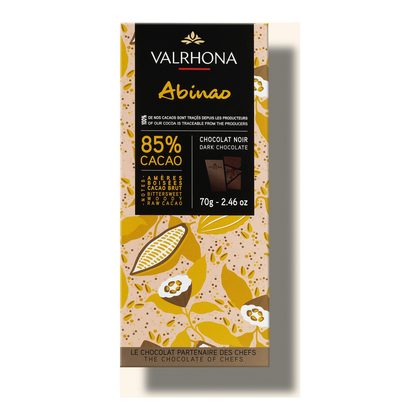
A chef's chocolate that also tested under both limits. CR's 2022 test put an ounce at 63% of the lead limit and 73% of the cadmium limit, one of five bars CR called lower in both. Valrhona names its bean origins, a blend from Togo, Ivory Coast and Ghana, which fits research showing West African cacao tends to carry less cadmium; that's how an 85% bar lands under the cadmium limit. Valrhona's ingredient list is cocoa beans, sugar, cocoa butter, a small amount of lecithin (emulsifier) and natural vanilla extract. It's the priciest bar in our top 10, and there's only one independent test.
Best forSerious dark chocolate eaters who want 85% without the usual cadmium jump
IngredientsCocoa beans, sugar, cocoa butter, lecithin (emulsifier), natural vanilla extract (Valrhona U.S. professional listing: sunflower lecithin; we haven't seen the U.S. bar label)
Other bars testedLe Noir Extra Amer 85%: 0.7 µg lead and 3.3 µg cadmium per label serving (As You Sow, 2014; before our 2022 cutoff, not scored)
CertificationsNone claimed on the bar page
Size & price70 g (2.46 oz) for $10.49 on Valrhona's U.S. store
Independent labConsumer Reports. Lead and cadmium could be in your dark chocolate (Dec. 15, 2022; updated Oct. 25, 2023). 28 bars; per-bar % of California's MADL per 1-oz serving from the free article's chart data; Tunde Akinleye quotes; “organic ... just as likely”; kids and pregnancy advice. Open source · [1]
Maker's dataValrhona Collection U.S. Abinao 85% ($10.49, 70 g): cocoa blend from Togo, Ivory Coast and Ghana; cocoa, cocoa butter, natural vanilla extract. Open source · [35]
Maker's dataValrhona U.S. professional range, Abinao 85%: cocoa beans 82.195%, sugar 13.5%, cocoa butter 4.1%, emulsifier: sunflower lecithin 0.1%, natural vanilla extract. Open source · [34]
Public record / studyFood Safety Magazine (June 18, 2024), reporting Tulane University's study of 155 chocolates: Central and South American dark chocolates had the highest mean cadmium; West African the lowest; lead weakly tied to cacao %, pointing to post-harvest contamination; 1 oz a day no concern for adults. Open source · [11]
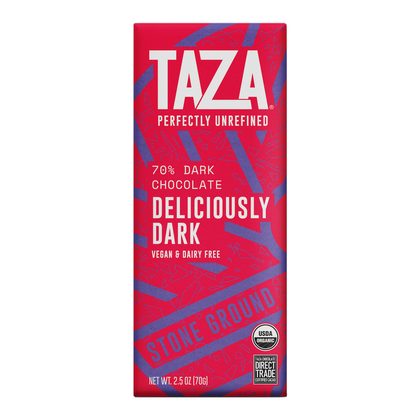
Low lead, moderate cadmium and a three-ingredient bar. CR's 2022 test put an ounce at 33% of the lead limit and 74% of the cadmium limit, and Taza's CEO told CR the company blends beans from different origins to keep levels down. Ingredients are organic cacao beans, cane sugar and cocoa butter. The trade-off shows in Taza's darkest bar: As You Sow's 2022 samples of the 95% Wicked Dark with toasted coconut carried 9.6 to 9.9 µg of cadmium per label serving, more than twice the daily limit even per label serving, so stick with the 70%.
Best forAn organic, minimal-ingredient 70% at a fair price
Other bars testedWicked Dark 95% with toasted coconut: 0.1 to 0.2 µg lead and 9.6 to 9.9 µg cadmium per label serving (As You Sow 2022)
CertificationsOrganic (maker's claim; not checked in a certifier database)
Size & price2.5 oz for $6.99; 10 for $62.99
Bean origin: Blend; not stated per barProcessing: natural cocoa (not Dutched)
See score breakdown & sources
Lead9.0
Cadmium8.0
Ingredients10.0
Flavanol potential7.0
Transparency4.0
Lead: CR 2022 33%. Average 33.0% → 9 · Cadmium: CR 2022 74%. Average 74.0% → 8 · Ingredients: no deductions · Flavanol: 70% cacao · Transparency: none. Weighted: 7.850.
Independent labConsumer Reports. Lead and cadmium could be in your dark chocolate (Dec. 15, 2022; updated Oct. 25, 2023). 28 bars; per-bar % of California's MADL per 1-oz serving from the free article's chart data; Tunde Akinleye quotes; “organic ... just as likely”; kids and pregnancy advice. Open source · [1]
Independent labAs You Sow. Chocolate test tracker: 469 products tested since 2014 at independent, state-certified labs; results in µg per label serving (data checked Sept. 29, 2026). As You Sow enforces California's Prop 65 and has sued chocolate makers. Open source · [4]
Maker's dataTaza. 70% Deliciously Dark ($6.99 per 2.5-oz bar; 10 for $62.99; organic cacao beans, organic cane sugar, organic cocoa butter). Open source · [33]
The newest independent result in our top 10. In CR's 2023 retest, an ounce delivered 80% of the lead limit and 41% of the cadmium limit, one of just two new bars under both. The U.S. label lists cocoa mass, sugar, cocoa butter, sunflower lecithin and vanilla. Divine's 85% is a different story: CR measured it at 120% of the lead limit, and As You Sow's two 2022 samples had 0.5 to 0.6 µg of lead per label serving, so this is a brand where the lower percentage wins. Divine's own online store sells only in the U.K., so we couldn't verify a U.S. price.
Independent labConsumer Reports. A third of chocolate products are high in heavy metals (Oct. 25, 2023). 48 products, 3 samples each; per-product chart data (dark bars per ~1 oz; chips and cocoa per 1 tbsp); FDA: chocolate “a minor source of exposure”; company responses. Open source · [3]
Maker's dataDivine 70% U.S. label via Open Food Facts (1/3 bar, 28 g): cocoa mass, sugar, cocoa butter, sunflower lecithin, vanilla. Open source · [37]
Maker's dataDivine Chocolate online store (prices in GBP; U.K. store): 70% bar, 90 g. Open source · [36]
Independent labAs You Sow. Chocolate test tracker: 469 products tested since 2014 at independent, state-certified labs; results in µg per label serving (data checked Sept. 29, 2026). As You Sow enforces California's Prop 65 and has sued chocolate makers. Open source · [4]
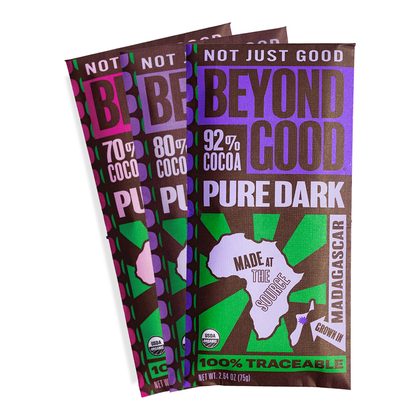
Single-origin Madagascar chocolate with low lead. CR's 2022 test put an ounce of the 70% at 42% of the lead limit and 112% of the cadmium limit; the 80% matched it on lead and came in at 138% for cadmium, the cacao-percentage pattern inside one brand. Beyond Good says its cocoa is sourced from Madagascar and 100% traceable, which earns an origin credit, but it doesn't publish metal results. The label adds sunflower lecithin. Its online store sells only a $15.50 set with one 70%, 80% and 92% bar.
Best forTraceable single-origin chocolate with low lead
Independent labConsumer Reports. Lead and cadmium could be in your dark chocolate (Dec. 15, 2022; updated Oct. 25, 2023). 28 bars; per-bar % of California's MADL per 1-oz serving from the free article's chart data; Tunde Akinleye quotes; “organic ... just as likely”; kids and pregnancy advice. Open source · [1]
Maker's dataBeyond Good. Pure Dark Chocolate Bar Collection ($15.50; 70%, 80% and 92%); says its cocoa comes from Madagascar and is “100% traceable” and “Made at the Source.” Open source · [40]
Maker's dataBeyond Good Pure Dark 70% label via Open Food Facts (75-g bar): organic cocoa beans, organic cane sugar, organic cocoa butter, organic sunflower lecithin. Open source · [41]
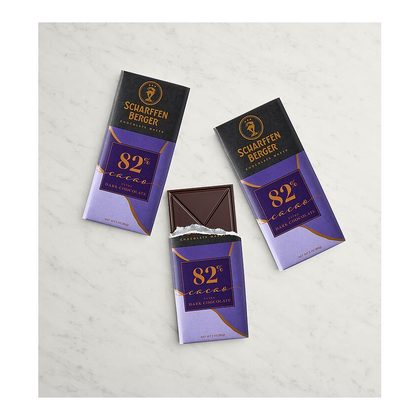
Low lead with the cadmium you'd expect from an 82% bar. CR's 2022 test put an ounce at 49% of the lead limit but 136% of the cadmium limit. That's the trade-off our scoring is built to show: the Lead pillar rewards it and the Cadmium pillar takes points away. Scharffen Berger's website now forwards to Harry & David, which sells the 82% as a three-bar pack without an ingredient list; the bar's label record lists chocolate, sugar, whole vanilla beans and soy lecithin. It ties Beyond Good at 7.175 and ranks just behind it on lead. As You Sow's 2014 to 2016 samples of its Extra Dark carried 8.2 to 21.1 µg of cadmium per label serving; those predate our cutoff and aren't scored.
Best forLead is your main concern and you like 80%-plus
Skip ifYou eat dark chocolate most days (cadmium adds up)
IngredientsChocolate, sugar, whole vanilla beans, non-GMO soy lecithin (label record, 2021); the store page lists none
Other bars testedExtra Dark (2014–2016): 0.3 to 1.0 µg lead and 8.2 to 21.1 µg cadmium per label serving (As You Sow; bought before 2022, so shown for context and not scored)
CertificationsNone claimed
Size & priceThree 3-oz bars for $29.99 (Harry & David)
Bean origin: Not statedProcessing: natural cocoa (not Dutched)
Independent labConsumer Reports. Lead and cadmium could be in your dark chocolate (Dec. 15, 2022; updated Oct. 25, 2023). 28 bars; per-bar % of California's MADL per 1-oz serving from the free article's chart data; Tunde Akinleye quotes; “organic ... just as likely”; kids and pregnancy advice. Open source · [1]
Maker's dataHarry & David. Scharffen Berger 82% Cacao Extra Dark bars, 3-pack ($29.99; three 3-oz bars; scharffenberger.com redirects here). No ingredient list on the page. Open source · [42]
Maker's dataScharffen Berger 82% Extra Dark label via Open Food Facts (UPC 064339250026, the UPC retailers list for the 82% bar; record last edited 2021): chocolate, sugar, whole vanilla beans, non-GMO soy lecithin. Open source · [43]
Independent labAs You Sow. Chocolate test tracker: 469 products tested since 2014 at independent, state-certified labs; results in µg per label serving (data checked Sept. 29, 2026). As You Sow enforces California's Prop 65 and has sued chocolate makers. Open source · [4]
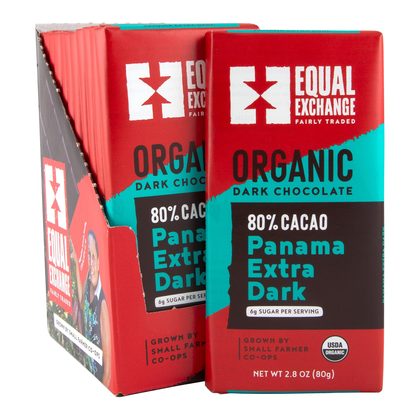
Two independent labs, the same story: low lead, cadmium right around the limit. CR measured 45% of the lead limit and 120% of the cadmium limit per ounce, and As You Sow's two 2022 samples came in at 60% for lead and 100% to 105% for cadmium. It's made from Panamanian cacao with four organic ingredients and no emulsifier, and at $39.60 for twelve 2.8-oz bars, it's the cheapest bar per ounce in our top 10. Equal Exchange's other dark bars ran higher: As You Sow found 6.1 to 8.0 µg of cadmium per label serving in its Very Dark 71% and Extreme Dark 88%.
Best forStocking up on an organic, origin-labeled bar
Skip ifYou want single bars (the store sells 12-packs)
CR lists this bar as “Organic Extra Dark 80%”; Equal Exchange's only 80% bar is the Panama Extra Dark, and we treat them as the same bar.
See score breakdown & sources
Lead8.0
Cadmium5.0
Ingredients10.0
Flavanol potential8.0
Transparency5.0
Lead: CR 2022 45%; As You Sow 2022 0.3 and 0.3 µg per 30 g → 60%. Average 52.5% → 8 · Cadmium: CR 2022 120%; As You Sow 2022 4.3 and 4.1 µg per 30 g → 102%. Average 111.2% → 5 · Ingredients: no deductions · Flavanol: 80% cacao · Transparency: origin. Weighted: 7.100.
Independent labConsumer Reports. Lead and cadmium could be in your dark chocolate (Dec. 15, 2022; updated Oct. 25, 2023). 28 bars; per-bar % of California's MADL per 1-oz serving from the free article's chart data; Tunde Akinleye quotes; “organic ... just as likely”; kids and pregnancy advice. Open source · [1]
Independent labAs You Sow. Chocolate test tracker: 469 products tested since 2014 at independent, state-certified labs; results in µg per label serving (data checked Sept. 29, 2026). As You Sow enforces California's Prop 65 and has sued chocolate makers. Open source · [4]
Maker's dataEqual Exchange Panama Extra Dark 80% label via Open Food Facts (9 pieces, 30 g). Open source · [39]
Maker's dataEqual Exchange. Organic Panama Extra Dark 80% ($39.60 for twelve 80-g bars). Open source · [38]
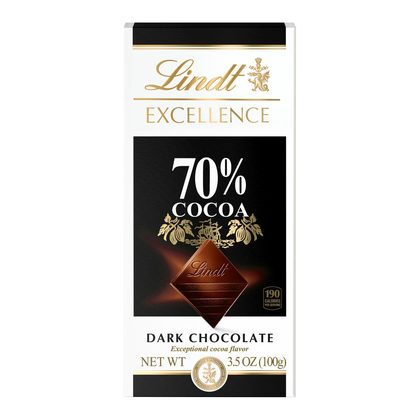
The easiest bar here to find, with low lead but cadmium over the limit in both tests. CR measured an ounce at 48% of the lead limit and 116% of the cadmium limit; As You Sow's two 2022 samples showed 60% for lead and 107% to 159% for cadmium. The 70% is the Lindt to buy: its 85% measured 166% of the lead limit in CR's test. A consolidated class action over both bars, filed in 2023, ended in December 2024 with a stipulated dismissal with prejudice, after a judge denied Lindt's motion to dismiss; the claims were allegations, and no court ruled on the merits.
Best forConvenience: nearly every grocery store carries it
Other bars tested85%: 166% lead and 80% cadmium (CR); 160% to 220% lead in As You Sow's samples. 95%: 0.4 µg lead, 6.9 µg cadmium per label serving (As You Sow)
CertificationsNone claimed
Size & price3.5 oz for $6.99 on Lindt's U.S. store
Bean origin: Not statedProcessing: natural cocoa (not Dutched)
See score breakdown & sources
Lead8.0
Cadmium5.0
Ingredients9.5
Flavanol potential7.0
Transparency4.0
Lead: CR 2022 48%; As You Sow 2022 0.3 and 0.3 µg per 30 g → 60%. Average 54.0% → 8 · Cadmium: CR 2022 116%; As You Sow 2022 6.5 and 4.4 µg per 30 g → 133%. Average 124.5% → 5 · Ingredients: lecithin −0.5 · Flavanol: 70% cacao · Transparency: none. Weighted: 6.725.
Independent labConsumer Reports. Lead and cadmium could be in your dark chocolate (Dec. 15, 2022; updated Oct. 25, 2023). 28 bars; per-bar % of California's MADL per 1-oz serving from the free article's chart data; Tunde Akinleye quotes; “organic ... just as likely”; kids and pregnancy advice. Open source · [1]
Independent labAs You Sow. Chocolate test tracker: 469 products tested since 2014 at independent, state-certified labs; results in µg per label serving (data checked Sept. 29, 2026). As You Sow enforces California's Prop 65 and has sued chocolate makers. Open source · [4]
Maker's dataLindt Excellence 70% U.S. label via Open Food Facts (3 pieces, 30 g). Open source · [45]
Public record / studyDocket, In re Lindt & Sprüngli Dark Chocolate Litigation, No. 1:23-cv-01186 (E.D.N.Y.): motion to dismiss denied Sept. 6, 2024; stipulation of dismissal with prejudice so-ordered Dec. 17, 2024. Open source · [20]
Public record / studyTop Class Actions (July 10, 2023): Harkavy v. Lindt (N.D. Cal.), filed Jan. 10, 2023 over Excellence 70% and 85%; plaintiff moved for voluntary dismissal without prejudice Feb. 27. Open source · [19]
Individually wrapped squares that make a 1-oz serving easy to keep to. CR's 2022 test put an ounce at 74% of the lead limit and 112% of the cadmium limit. The label lists milkfat and natural flavor (1 point off ingredients), and Dove publishes neither bean origin nor metal results. A different Dove product, the Silky Smooth Dark bar, carried 5.2 to 5.8 µg of cadmium per label serving in As You Sow's 2022 samples.
Best forPortion control from the supermarket candy aisle
Skip ifYou avoid dairy, or cadmium is your main concern
Independent labConsumer Reports. Lead and cadmium could be in your dark chocolate (Dec. 15, 2022; updated Oct. 25, 2023). 28 bars; per-bar % of California's MADL per 1-oz serving from the free article's chart data; Tunde Akinleye quotes; “organic ... just as likely”; kids and pregnancy advice. Open source · [1]
Maker's dataDove Promises Deeper Dark 70% label as listed by H-E-B (7.23 oz; chocolate, sugar, cocoa butter, milkfat, natural flavor). Open source · [47]
Independent labAs You Sow. Chocolate test tracker: 469 products tested since 2014 at independent, state-certified labs; results in µg per label serving (data checked Sept. 29, 2026). As You Sow enforces California's Prop 65 and has sued chocolate makers. Open source · [4]
A 1-oz serving is the unit every lab result here uses, so price per ounce is the fair comparison. These are the brand's own prices on Sept. 29, 2026; multi-packs are divided by total weight.
Our top 10Other bars we scoredHigher-metal resultShorter bar = cheaper
Tony's 70%6.4/10$1.10per ounce$6.99 · Big 6.35-oz (180 g) bar; small bars $2.85.[48]
Equal Exchange 80%#8 · 7.1/10$1.18per ounce$39.60 for 12 · Twelve 2.8-oz bars ($3.30 a bar), the only size on its store.[38]
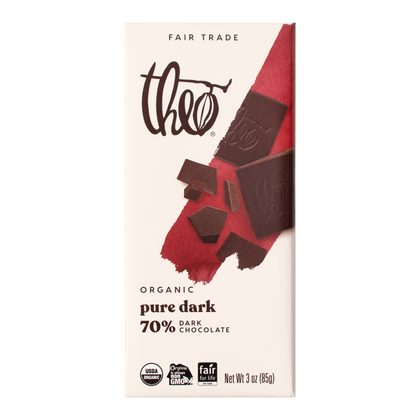
Theo 70%6.1/10$1.49per ounce$53.46 for 12 · Twelve 3-oz bars; a second listing at $79.95 was out of stock.[49]
Endangered Species 72%6.4/10 · higher-metal result$1.66per ounce$4.99 · One 3-oz bar.[63]
Beyond Good 70%#6 · 7.2/10$1.96per ounce$15.50 for a 3-bar set · One 2.64-oz bar each of 70%, 80% and 92%; single bars sell in stores.[40]
Pascha 85%6.7/10 · higher-metal result$1.96per ounce$54.95 for 10 · Ten 2.8-oz bars ($5.50 a bar).[57]
Lindt 70%#9 · 6.7/10$2.00per ounce$6.99 · 3.5-oz bar on Lindt's U.S. store (buy 3, get 1 free offer).[44]
Alter Eco 85%6.8/10 · higher-metal result$2.22per ounce$6.25 · One 80-g (2.82-oz) bar.[60]
The cheapest bar in our top 10 is Equal Exchange at $1.18 an ounce, bought by the dozen; the priciest is Valrhona at $4.25. Among bars with an official price, cost didn't track metal levels: Tony's ($1.10) and Hu ($2.86) both ran over the lead limit, while Mast ($3.20) and Equal Exchange ($1.18) were under it.
The signature chart
Lead vs. cadmium: every bar we could score
Each dot is one bar at its average lead (across) and cadmium (up) in a 1-oz serving, as a share of California's daily limits. The dashed lines are 100%. Our top 10 are numbered; red dots had a most recent result over 150% of a limit.
Lead and cadmium per ounce, % of the daily limit
Consumer Reports 2022–23, As You Sow 2022 (converted) and Lead Safe Mama 2024. Hover or tap a dot for the source.
Cadmium →
0%50%100%150%200%250%300%0%50%100%150%200%250%Under both limitsOver for leadOver for cadmiumOver for bothPascha 85%Alter Eco 85%Trader Joe's 85%Evolved 72%Perugina 85% (539%)Perugina 70% (314%)Hershey's Sp. Dark12435867910
Lead →
Our top 10 (number = rank)Other bars scoredHigher-metal result100% of the daily limit
Sources: CR's per-bar chart data[1][3], As You Sow's µg per label serving converted to 30 g[4] and Lead Safe Mama's ppb results[6]. Perugina 70% (314% lead) and 85% (539%) run off the right edge. Hershey's Special Dark is shown for comparison; it isn't scored because its cacao % isn't on the tested bar.
Every lab result
Each test behind our top 10, sample by sample
The top lane of each row is lead, the bottom lane cadmium, per 1-oz serving. Each As You Sow sample is its own diamond; the dark tick is the average we score. Right of the dashed line is over the daily limit.
Lead and cadmium per ounce, % of the daily limit
Consumer Reports 2022Consumer Reports 2023As You Sow 2022 sampleAverage we score100% of the daily limit
#10Dove Deeper Dark 70%CR 2022PbCd74% · 112%lead · cadmium
How we convert: CR reports each bar as a share of the limit for a 1-oz serving and uses the 30 g reference amount[2]. As You Sow reports micrograms per label serving (concentration × the label's serving grams)[5], so we multiply by 30 and divide by the label serving we could verify, then divide by 0.5 µg (lead) or 4.1 µg (cadmium). Example: Equal Exchange, 4.3 µg cadmium per 30 g serving = 4.3 ÷ 4.1 = 105%[4][39]. Where we couldn't verify a label serving, we show As You Sow's number as published and don't score it. As You Sow's lead concentration column is rounded to 0.1 ppm and reads “ND” for most of these bars; we use its published micrograms-per-serving figure. CR averages 2 to 3 samples from at least two lots; As You Sow tested 1 to 3 samples per bar.
More cacao, more cadmium
Cadmium climbs with cacao percentage
Consumer Reports' 28 bars grouped by cacao. Each dot is one bar's cadmium per ounce; the dark tick is the group's median. Lead showed no such pattern, which fits lead being picked up after harvest.
Cadmium per ounce, % of the daily limit, by cacao %
One bar (red = over the limit)Group median100% of the limit
0%50%100%150%200%250%median
70–74% cacao14 bars · 5 over the cadmium limit67%median cadmium
80–84% cacao4 bars · 3 over the cadmium limit128%median cadmium
85–88% cacao9 bars · 5 over the cadmium limit101%median cadmium
CR found cadmium “tend[s] to increase with the percentage of cacao,” while lead “levels don't seem to be as closely tied”[1]. Tulane's 155-sample study found the same: a strong link between cacao % and cadmium and a weak one for lead[11]. Hershey's Special Dark is left out because the tested bar states no cacao %. Origin can break the pattern: Valrhona's 85%, made from West African beans, came in at 73%[35]. The 80–84% group has only four bars, and its median ran higher than the 85–88% group's; with so few bars, read the trend across all three rows, not any one median.
How we score: the Dr. Axe Clean Chocolate Score™
Most “best dark chocolate” lists rank taste. Ours starts with lab numbers someone other than the brand measured. It's an editorial assessment built from independent tests, brand disclosures and labels, not our own lab testing, and not a safety grade. Price isn't part of the score; see the cost chart.
Lead30%
Lead in a 1-oz (30 g) serving as a share of California's Prop 65 MADL (0.5 µg a day), averaged across every independent test of the bar since 2022.
Cadmium25%
Cadmium in a 30 g serving as a share of the MADL (4.1 µg a day), averaged the same way. Higher-cacao bars usually carry more cadmium, and this pillar captures that trade-off.
Ingredients15%
Starts at 10: lecithin −0.5, milk fat or other added fats −1, palm or palm-kernel oil −4, sugar alcohols −1, artificial flavor −1.
Flavanol potential15%
Set by cacao %: 70–79% scores 7, 80–84% 8, 85–99% 9, 100% 10. Dutch (alkali) processing −2; unroasted +0.5.
Transparency15%
Publishes its own lead and cadmium numbers per product (8–10), states bean origin per bar (5), or neither (4). Framing results against settlement levels as if they meant “under the Prop 65 limit” costs 1.5.
One yardstick for every lab. Every result becomes micrograms in a 30 g serving (FDA's reference amount for chocolate), as a share of California's MADL: 0.5 µg of lead and 4.1 µg of cadmium a day[2]. Consumer Reports already reports that share[1][3]. As You Sow's µg per label serving is multiplied by 30 and divided by the label serving we verified[5]; if we couldn't verify the serving, we show its number but don't score it. Lead Safe Mama's ppb (µg/kg) × 0.03 kg gives µg per 30 g[6]. Bands: 25% of the limit or less scores 10; 26–50% 9; 51–75% 8; 76–100% 7; 101–150% 5; 151–200% 3.5; 201–300% 2; over 300% 1.
Averaging. Each lab's samples of the same bar are averaged, then the labs are averaged with equal weight. Results from bars bought before 2022 aren't scored at all; we show them only in the Pantry fit box or for context. A brand's own published results count only when no independent result exists, and then score no higher than 8 (Raaka). With no data at all, a bar gets the class-typical band from CR's 2022 medians: lead 123.5% (5) and cadmium 89.5% (7); no ranked bar needed them. As You Sow's tracker shows lead concentration rounded to 0.1 ppm, so many 2022 bars read “ND” in that column; we use the micrograms-per-serving figure As You Sow publishes and color-codes against the limit[4].
Top-10 eligibility. A bar needs an independent result since 2022, and its most recent result can't exceed 150% of either limit. Only one bar per brand, and it must be on sale. Exact ties are broken by the unrounded score, then by lower average lead: Beyond Good and Scharffen Berger both score 7.175, and Beyond Good ranks ahead on lead (42% vs 49%). Sam's Choice 85% would rank #5 (7.8, just behind Taza), but we couldn't find it for sale[28].
Ingredients, flavanols, transparency. Ingredient deductions come from the current label; if no full list is published, the bar gets the class-typical score, the median of the bars we could read (9.5). Flavanol potential starts from cacao %; Dutch (alkali) processing costs 2 because it cuts flavanols 60–89%[18]. Organic and fair trade earn no points: organic products were more likely to carry higher cadmium in a 72-product study[10]. Publishing product-level numbers earns 8 to 10; stating bean origin per bar, 5; neither, 4. A “we test” statement to the press with no numbers costs 0.5 (Hu, Evolved)[3].
What the benchmark is, and isn't. The MADL is California's Prop 65 warning trigger, set with a large safety margin, not a line where harm begins. CR itself says its results show “which products had comparatively higher levels and are not assessments of whether a product exceeds a legal standard”[1]. And results vary lot to lot, so one test is a snapshot.
Two testers here have a stake: As You Sow enforces Prop 65 and has sued chocolate makers[4], and Lead Safe Mama is crowd-funded and earns Amazon affiliate income[6]. Their lab numbers are the same kind of evidence as CR's, and we treat them that way.
Why we score lead and cadmium separately
A single “heavy metals” grade would hide the choice you're actually making. The two metals come from different places, respond to different fixes and pull in opposite directions as cacao % rises.
Lead: a handling problem
Beans on the tree carry almost none; dust lands on them as they ferment and dry[8]. Lead didn't track cacao % in CR's or Tulane's data[1][11], so a 70% bar can be the worst in a lineup. It gets 30% of the score because WHO says no level of lead is known to be safe[13].
Cadmium: a soil problem
It's in the bean itself, from the soil[8], so it rises with cacao % and with Latin American origins[11]. The settlement's expert committee expects it to take longer to fix than lead[9]. It gets 25% of the score.
What it means for you: if you like 85% and up, pick a bar tested low in cadmium or made from West African beans. If you like 70%, lead is the number to check.
Is dark chocolate good for you? What the evidence shows
Cocoa flavanols have real, modest effects on blood pressure in short trials. The biggest long-term trial used a capsule, and its main result missed significance. Here's how we'd grade it:
Total cardiovascular events with a cocoa extract supplement (500 mg flavanols) vs placebo in 21,442 older adults over 3.6 years: not significant (P = 0.11). Cardiovascular deaths fell 27%, a secondary outcome. A capsule, not chocolate.
No overall effect of the same supplement on developing high blood pressure in 8,905 COSMOS participants; a subgroup with normal starting pressure did better.
Systolic pressure with flavanol-rich cocoa vs control across 35 trials (1,804 adults), 30 to 1,218 mg flavanols a day. The effect shrank when trials with industry-employed authors were removed.
Total flavanols in lightly, medium and heavily alkalized cocoa vs natural cocoa (34.6 mg/g). Natural and minimally processed is the better flavanol bet.
Tulane's 155-sample study found no health concern for adults eating an ounce a day; the combined-metals hazard index was exceeded in 33 dark chocolates for a 33-lb child.
Tulane, 2024
Put together: dark chocolate is a food to enjoy, not a treatment. An ounce of a tested bar gives you flavanols, fiber and minerals; the lead and cadmium are why the ounce, and the bar, matter.
How to read a dark chocolate label
The wrapper can't tell you the metals, but it tells you what raises or lowers them, and what cuts flavanols[18][1][64].
On the label
What it tells you
Where to check it
Cacao %
Cocoa solids plus cocoa butter by weight. Higher means less sugar, more flavanols and, usually, more cadmium.
Where to check: Front of the wrapper
“Processed with alkali”
Dutch-processed cocoa: smoother taste, far fewer flavanols. U.S. labels must say so.
Where to check: Ingredient list
Lecithin (soy or sunflower)
An emulsifier. Harmless in small amounts; a clean bar doesn't need it.
Where to check: Ingredient list
Milk fat / butter oil
Added dairy fat in a “dark” bar. Not vegan; it dilutes the cocoa.
Where to check: Ingredient list
“Chocolate style”
Not standard chocolate: Lily's uses it for its erythritol- and stevia-sweetened bars; the 70% also adds palm oils.
Where to check: Product name
Bean origin
West African beans tend to run lower in cadmium than many Latin American ones.
Where to check: Wrapper or brand site
Organic, fair trade
Farming and trade standards. Neither lowers lead or cadmium.
Where to check: Certifier seal; not a metals test
Prop 65 warning
California's warning. No warning can mean the bar is under a settlement level, which allows more per serving than the MADL.
Where to check: Back label (California)
What “meets the As You Sow settlement” means
Several brands answer lab results by saying their bars are under the levels in a 2018 Prop 65 settlement[3]. Those settlement levels are concentrations that decide when a California warning is required. As You Sow lists the 2018 interim levels[5]; Pascha says lower “drop-down” levels took effect in 2025[58]. Multiply either set by a 30 g serving and it allows several times the daily MADL (0.5 µg lead, 4.1 µg cadmium):
Cacao
Lead, 2018 interim level
Lead, 2025 drop-down
Cadmium, 2018 interim
Cadmium, 2025 drop-down
Up to 65% cacao
0.100 ppm → 3.00 µg (6.0×)
0.065 ppm → 1.95 µg (3.9×)
0.400 ppm → 12.0 µg (2.9×)
0.320 ppm → 9.6 µg (2.3×)
Over 65% to 95%
0.150 ppm → 4.50 µg (9.0×)
0.100 ppm → 3.00 µg (6.0×)
0.450 ppm → 13.5 µg (3.3×)
0.400 ppm → 12.0 µg (2.9×)
Over 95%
0.225 ppm → 6.75 µg (13.5×)
0.200 ppm → 6.00 µg (12.0×)
0.960 ppm → 28.8 µg (7.0×)
0.800 ppm → 24.0 µg (5.9×)
Pascha, as an example. Pascha publishes batch averages and says every batch has been tested since 2018; it sets them against the settlement's 2025 levels (for 85% bars, 0.100 ppm lead and 0.400 ppm cadmium) and says the absence of a warning label is “a good indicator” a product can be regarded as “safe”[58]. Its 85% average of 0.338 ppm cadmium works out to 10.1 µg in 30 g, 247% of the MADL, close to the 253% CR measured[1]. Its lead result reads “not detectable” below 0.059 ppm, a limit that would still allow 1.77 µg per 30 g, 3.5 times the lead MADL; CR measured 68%. That framing costs Pascha 1.5 points on transparency, even though it is one of only two brands we found that publish numbers at all. The EU's cadmium limit for dark chocolate, 0.8 mg/kg, allows 24 µg per 30 g, and the EU sets no lead limit for chocolate[14].
More picks by category
Lowest-lead dark chocolate
Ranked by average lead per ounce. All five are under half of California's daily limit[1].
Cadmium climbs with cacao, so the darkest bars need the best test results. Raaka's numbers are its own[55]; Taza's 95% Wicked Dark with toasted coconut had over twice the cadmium limit per label serving[4].
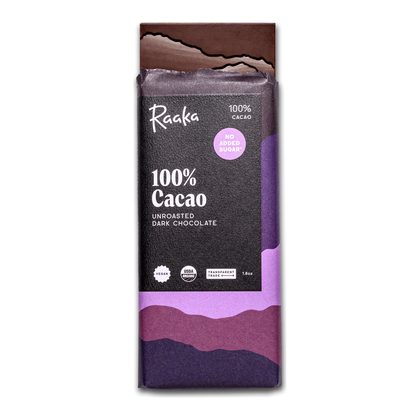
Unroasted, unsweetened Tanzanian cacao. Raaka's own January 2023 test (lab not named) found 2.29 µg of cadmium and under 0.25 µg of lead per 25 g, about 67% and under 60% of the limits per 30 g. No independent test, so it isn't eligible for the top 10.[55][56]
Lead under 60%Cadmium 67%Cacao 100%
8.6/10
Best organic dark chocolate
Organic doesn't lower metals[10], but if you want it, these organic bars (maker claims; we didn't check certifier databases) also tested well.
Siblings of top-10 bars, bars that missed the cut, and two that aren't eligible: one isn't for sale and one has only the maker's own test.
1
Sam's Choice Dark Chocolate 85%Not sold online
CR's 2023 retest found 43% of the lead limit and 99% of the cadmium limit per ounce. It would rank #5 (7.8, just behind Taza), but we couldn't find it for sale: Walmart.com didn't list it, and the 72% showed “Not Available.”[3][28]
Lead 43%Cadmium 99%Cacao 85%
7.8/10
2
Raaka 100% Cacao (unroasted)$4.54/oz
Scored 8.6 on its own published results (Jan. 2023), but a brand's own test can't make our top 10.[55]
Lead under 60%Cadmium 67%Cacao 100%
8.6/10
3
Ghirardelli Intense Dark Twilight Delight 72%Price varies (retail)
Ghirardelli's Twilight Delight: 61% lead and 96% cadmium (CR), 38% lead and 85–101% cadmium in As You Sow's three samples.[1][4]
Lead 49%Cadmium 96%Cacao 72%
7.5/10
4
Beyond Good Organic Pure Dark 80%In the $15.50 set
Same lead as the 70% (42%) but 138% of the cadmium limit per ounce.[1]
Lead 42%Cadmium 138%Cacao 80%
7.3/10
5
Divine 85% Dark ChocolatePrice varies (retail)
120% of the lead limit per ounce in CR's 2023 test; stick with Divine's 70%.[3]
Lead 120%Cadmium 56%Cacao 85%
6.9/10
6
Tony's Chocolonely Dark Chocolate 70%$1.10/oz
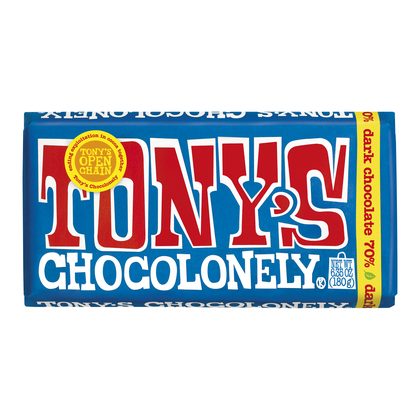
Low cadmium (28–41%) but 134% of the lead limit per ounce for CR and 180% by As You Sow's published per-serving figure, so it misses our top 10 on lead.[1][4][48]
Lead 157%Cadmium 35%Cacao 70%
6.4/10
7
Godiva 72% Cacao Dark ChocolatePrice varies (retail)
Low cadmium but 146% of the lead limit for CR and about 247% by As You Sow's published per-serving figures for two samples; the label adds butter oil and soy lecithin.[1][4][51]
Lead 197%Cadmium 28%Cacao 72%
6.2/10
8
Lily's Extra Dark Chocolate Style Bar 70%Price varies (retail)
Sugar-free, but now a “chocolate style” bar with palm kernel and palm oils and erythritol; 144% of the lead limit in CR's test.[1][64]
Lead 144%Cadmium 42%Cacao 70%
6.1/10
9
Theo Organic Pure Dark 70%$1.49/oz
Over both limits in CR's test (120% lead, 142% cadmium), though clean ingredients; bean origin: Democratic Republic of Congo.[1][50][49]
Lead 120%Cadmium 142%Cacao 70%
6.1/10
10
Taza 95% Wicked Dark with Toasted Coconut$2.80/oz
The bar As You Sow tested is the toasted-coconut 95%: 0.1–0.2 µg lead and 9.6–9.9 µg cadmium per label serving in its 2022 samples; we couldn't verify the serving size, so it isn't rated.[4]
Not rated
Cocoa powder and chips
We don't rank these, but Consumer Reports' 2023 test covers them, per 1-tablespoon label serving[3]. Note the serving: a tablespoon of chips is about half an ounce, so a handful doubles these numbers.
Chips (1 tbsp)
Lead, % of limit
Cadmium
Kirkland Signature (Costco) Semi-Sweet Chips
48%
11%
Nestlé Toll House Semi-Sweet Morsels
36%
37%
365 Whole Foods Market Semi-Sweet Chips
46%
24%
Ghirardelli 60% Bittersweet Chips
29%
57%
Lily's Semi-Sweet Style Baking Chips
46%
45%
Hershey's Special Dark Chips
65%
21%
Guittard Extra Dark Chips
71%
50%
Enjoy Life Semi-Sweet Mini Chips
49%
36%
Great Value (Walmart) Mini Semi-Sweet Chips
58%
14%
Trader Joe's Semi-Sweet Chips
84%
19%
Good & Gather (Target) Semi-Sweet Mini Chips
102%
9%
Hu Dark Chocolate Gems
121%
20%
Cocoa powder (1 tbsp)
Lead, % of limit
Cadmium
Navitas Organics Organic Cacao Powder
77%
17%
Nestlé Toll House 100% Pure Cocoa
77%
66%
BetterBody Foods Organic Cacao Powder
95%
95%
365 Whole Foods Market Organic Cocoa Powder
97%
93%
Hershey's Cocoa Naturally Unsweetened
125%
18%
Droste Cacao Powder (Dutch-process)
324%
41%
The only Dutch-process cocoa tested, Droste, had the most lead of any cocoa powder or chip product, 324% per tablespoon[3]. Lead Safe Mama measured Hu's Gems at 35.7 ppb lead and 58.2 ppb cadmium, about 214% and 43% of the limits per 30 g[7].
What about Hershey's, Lily's, Trader Joe's and Lindt?
CR's 2022 results set off a wave of class actions. The claims were allegations; here's how the cases ended, from the dockets and court orders.
Hershey's Special DarkHershey's Special Dark had the most lead of CR's 28 bars, 265% of the limit per ounce[1], and its label lists cocoa processed with alkali[66]. A New York suit over Hershey's and Lily's dark chocolate was voluntarily dismissed without prejudice in February 2023[23]. In California, Grausz v. Hershey survived in part: in August 2024 the court granted in part and denied in part Hershey's motion to dismiss[21], and the docket shows a dismissal filing and order on March 17, 2025, when the case closed; the public docket doesn't show the terms[22].
Lily's “chocolate style” barsIn March 2024 a federal judge in New York dismissed Kell v. Lily's Sweets without prejudice for lack of standing, calling it “impermissible conjecture to extrapolate” CR's results from a few samples to every Lily's Extra Dark 70% bar ever sold[25][24]. That bar measured 144% of the lead limit in CR's test[1]. Today Lily's sells it as an “Extra Dark Chocolate Style Bar” made with erythritol and a “Blend of Palm Kernel and Palm Oils”[64]; the 85% lists no palm oil[65] but measured 143% of the lead limit and 101% of the cadmium limit in CR's test[1]. Palm oils cost the 70% 4 points on ingredients. Score: 6.1.
Trader Joe'sCR measured Trader Joe's 72% at 192% of the lead limit and its 85% Dark Chocolate Lover's at 229% of the cadmium limit[1]. In March 2024 a federal judge in San Diego granted in part and denied in part Trader Joe's motion to dismiss the consolidated suit, with leave to amend[26]; in March 2025 the court granted Trader Joe's summary judgment on the remaining New York, Washington and Illinois claims, finding the omission claims failed the exclusive-knowledge requirement[27]. In that ruling, the court noted Trader Joe's position that its levels complied with Prop 65 and the 2018 consent judgment.
LindtA California suit over Excellence 70% and 85% was voluntarily dismissed without prejudice[19]. The consolidated federal case in Brooklyn went further: the judge denied Lindt's motion to dismiss in September 2024, and the parties filed a stipulation of dismissal with prejudice, so-ordered on December 17, 2024[20]. Lindt's 70% made our top 10; its 85% measured 166% of the lead limit[1].
Our adviceLawsuits don't change our scores; lab results do. Check the chart above for any bar you buy often, and prefer brands with a test on record.
What we'd skip: the higher-metal results
These bars' most recent independent result topped 150% of the daily limit for lead or cadmium in an ounce, which keeps them out of our top 10. Scores are shown so you can compare; the percentages are per 1-oz serving.
Results vary by lot. Chocolove's 88% hit 240% of the lead limit in CR's samples but about 80% in As You Sow's[1][4], and makers expected lead to fall once bean handling improved[9]. A newer test could move any of these bars, and we'll update when one is published.
When the brand's words meet the lab
The biggest gaps we found between what brands say about metals and what the numbers show. Where brands answered CR, they compared themselves with settlement levels, not the daily limit[3].
Dark chocolate is worth keeping in your life. Cocoa is one of the richest sources of flavanols in the food supply, and the blood pressure trials are real, if modest. But the lab data should change how you shop for it.
My non-negotiables: buy a bar that has an independent lead and cadmium result on record, and keep it to about an ounce a few days a week. If you love 85% and up, pick one tested low in cadmium or made from West African beans, because cadmium comes up from the soil into the bean. If you prefer 70%, lead is the number to check, since it lands on the beans after harvest.
Skip anything “processed with alkali,” because it strips most of the flavanols you're eating dark chocolate for. Don't pay extra for organic expecting fewer metals. Rotate between two or three tested brands. And for kids and during pregnancy, keep portions small and choose from the lowest-lead bars on this page.
— Dr. Axe
Frequently asked questions
What is the best dark chocolate low in lead and cadmium?
Mast Organic Dark Chocolate 80% ($8.00, 8.6/10). An ounce carried 14% of California's daily lead limit and 40% of its cadmium limit in Consumer Reports' 2022 test, the lowest lead of 28 bars. At the supermarket, Ghirardelli's 86% (8.2) tested low in both metals in two labs. For 85%, Valrhona Abinao; for organic 70%, Taza; for value, Equal Exchange Panama 80% at $1.18 an ounce.
Is dark chocolate safe to eat?
For most adults, yes, in modest amounts. The benchmark in these tests is California's Prop 65 limit, a strict warning level, not a line where harm begins. Tulane researchers found no health concern for adults eating an ounce a day. Lead has no known safe level, though, so it makes sense to choose bars that tested low and not to eat dark chocolate in large amounts every day.
How much dark chocolate can I eat a day?
CR's lead tester suggests a 1-ounce serving a few days a week, especially of a bar with lower levels. An ounce is about 30 g, roughly a third of a typical bar. With one of our top five picks (Mast, Ghirardelli 86%, Valrhona, Taza or Divine 70%), an ounce stayed under both daily limits in testing. Picks #6 to #10 are low in lead but ran 111% to 136% of the cadmium limit per ounce, so keep those to an ounce a few days a week.
Which dark chocolate has the least lead?
Mast Organic 80% had the least lead of the 28 bars in Consumer Reports' 2022 test, 14% of California's daily limit per ounce. Ghirardelli 86%, Taza 70%, Beyond Good 70%, Equal Exchange 80%, Lindt 70%, Scharffen Berger 82% and Alter Eco 85% were also under half the limit.
Is organic dark chocolate lower in heavy metals?
No. CR found organic bars just as likely to run high, and a 72-product study found organic products were more likely to carry higher cadmium. Organic is a farming standard, not a metals test.
Does higher cacao mean more heavy metals?
For cadmium, usually yes: it comes from the soil into the bean, so more cocoa solids means more cadmium. In CR's data, the median cadmium rose from 67% of the limit in 70–74% bars to 101% in 85–88% bars. Lead doesn't follow cacao %, because it lands on beans after harvest.
Is milk chocolate lower in lead and cadmium?
Generally, yes: it has less cocoa. In CR's 2023 test none of five milk chocolate bars was over either limit, and Lindt Classic Recipe Milk was the lowest at 11% for lead and 13% for cadmium. Milk chocolate has far more sugar, so it's a trade, not an upgrade.
Should kids and pregnant women eat dark chocolate?
Consumer Reports advises they eat it sparingly, if at all, because lead and cadmium pose the most risk to young children and developing babies. WHO notes lead stored in bone is released during pregnancy. If you do, choose a bar tested low in both metals and keep the portion small.
Does dark chocolate lower blood pressure?
A little, in short trials: a Cochrane review of 35 trials found systolic pressure about 1.76 mmHg lower with flavanol-rich cocoa. The large COSMOS trial of a cocoa extract capsule found no overall effect on developing high blood pressure.
Does a Prop 65 warning mean a chocolate is dangerous?
No. It means a product may expose you to more than California's daily limit. Most chocolate sold under the 2018 As You Sow settlement uses higher, concentration-based trigger levels, so a bar with no warning can still exceed the MADL per serving.
Is Hershey's Special Dark high in lead?
It had the most lead of CR's 28 bars, 265% of California's daily limit per ounce; As You Sow's two 2022 samples had 1.9 and 2.4 µg of lead per label serving, against a 0.5 µg limit. A California class action over it was closed in March 2025; the claims were allegations.
References
Update history
Sept. 29, 2026: First published. Scores built from Consumer Reports' free 2022 and 2023 results, As You Sow's 2022 samples (converted to 30 g where we could verify the label serving), Lead Safe Mama's 2024 report, brand disclosures and labels, and court dockets, all checked Sept. 29, 2026.
Independent lab Consumer Reports. Lead and cadmium could be in your dark chocolate (Dec. 15, 2022; updated Oct. 25, 2023). 28 bars; per-bar % of California's MADL per 1-oz serving from the free article's chart data; Tunde Akinleye quotes; “organic ... just as likely”; kids and pregnancy advice. Open source
Independent lab Consumer Reports. Test methodology: heavy metals in chocolate bars (Jan. 2023). 2–3 samples from at least two lots per bar, bought April–May 2022; ISO 17025 lab; 1 oz / 30 g serving; benchmarks: OEHHA MADL 0.5 µg/day lead, 4.1 µg/day cadmium. Open source
Independent lab Consumer Reports. A third of chocolate products are high in heavy metals (Oct. 25, 2023). 48 products, 3 samples each; per-product chart data (dark bars per ~1 oz; chips and cocoa per 1 tbsp); FDA: chocolate “a minor source of exposure”; company responses. Open source
Independent lab As You Sow. Chocolate test tracker: 469 products tested since 2014 at independent, state-certified labs; results in µg per label serving (data checked Sept. 29, 2026). As You Sow enforces California's Prop 65 and has sued chocolate makers. Open source
Independent lab As You Sow. Lead and cadmium in food FAQs: µg per serving = ppm × label serving (g); interim settlement warning levels by cacao content. Open source
Independent lab Lead Safe Mama (Tamara Rubin). Santa Barbara Chocolate Cacao Fruit 72% (Sept. 2024 lab report): lead 37 ppb, cadmium 165 ppb, arsenic 16 ppb. Crowd-funded testing; the site earns Amazon affiliate income. Open source
Independent lab Lead Safe Mama. Hu Organic Dark Chocolate Gems (Aug. 2024 lab report): lead 35.7 ppb, cadmium 58.2 ppb. Open source
Public record / study Ahn T, Chaney R, DiBartolomeis M, Ramtahal G. Expert Committee report on lead and cadmium in cocoa (Mar. 28, 2022; released Aug. 2022), funded under the 2018 As You Sow settlement: beans on the tree under 3 ppb lead; commercial beans above 1,000 ppb; “nearly all Pb in commercial cocoa beans is from post-harvest contamination”; cadmium tracks soil cadmium. Open source
Public record / study As You Sow press release (Aug. 17, 2022): “Significant lead reductions can be expected within the first year of implementing new handling practices.” Open source
Public record / study Hands JM, et al. A multi-year heavy metal analysis of 72 dark chocolate and cocoa products in the USA. Front Nutr, 2024: 31 of 72 over the Prop 65 lead level per serving, 13 of 37 over for cadmium; organic products more likely to carry higher cadmium. Three authors work for ConsumerLab.com; brands not named. Open source
Public record / study Food Safety Magazine (June 18, 2024), reporting Tulane University's study of 155 chocolates: Central and South American dark chocolates had the highest mean cadmium; West African the lowest; lead weakly tied to cacao %, pointing to post-harvest contamination; 1 oz a day no concern for adults. Open source
Public record / study FDA. Cadmium in food and foodwares (content current as of Mar. 5, 2024): cocoa products contribute 0.1–9.4% of dietary cadmium in national studies (WHO). Open source
Public record / study World Health Organization. Lead poisoning fact sheet: “There is no level of exposure to lead that is known to be without harmful effects.” Open source
Public record / study Commission Regulation (EU) 2023/915, Annex I, 3.2.15: cadmium limit 0.80 mg/kg for chocolate with ≥50% dry cocoa solids; no lead limit for chocolate. Open source
Public record / study Sesso HD, et al. COSMOS: cocoa flavanol supplementation for the prevention of cardiovascular disease events. Am J Clin Nutr, 2022: 21,442 older adults; cocoa extract (500 mg flavanols/day) vs placebo; total CVD events HR 0.90 (P = 0.11); CVD death HR 0.73 (secondary). Open source
Public record / study COSMOS. Long-term effect of cocoa extract supplementation on incident hypertension. Hypertension, 2025: no overall effect (HR 0.96). Open source
Public record / study Ried K, Fakler P, Stocks NP. Effect of cocoa on blood pressure. Cochrane Database Syst Rev, 2017: 35 trials, 1,804 mainly healthy adults; systolic −1.76 mmHg; moderate-quality evidence; smaller effect without industry-employed authors. Open source
Public record / study Miller KB, et al. Impact of alkalization on the antioxidant and flavanol content of commercial cocoa powders. J Agric Food Chem, 2008: total flavanols 34.6 mg/g natural; 13.8 lightly, 7.8 medium and 3.9 heavily alkalized. Open source
Public record / study Top Class Actions (July 10, 2023): Harkavy v. Lindt (N.D. Cal.), filed Jan. 10, 2023 over Excellence 70% and 85%; plaintiff moved for voluntary dismissal without prejudice Feb. 27. Open source
Public record / study Docket, In re Lindt & Sprüngli Dark Chocolate Litigation, No. 1:23-cv-01186 (E.D.N.Y.): motion to dismiss denied Sept. 6, 2024; stipulation of dismissal with prejudice so-ordered Dec. 17, 2024. Open source
Public record / study Grausz v. The Hershey Co., No. 3:23-cv-00028 (S.D. Cal.), order of Aug. 15, 2024 granting in part and denying in part Hershey's motion to dismiss the third amended complaint. Open source
Public record / study Docket, Grausz v. The Hershey Co.: dismissal filing and order on Mar. 17, 2025; case terminated Mar. 17, 2025. Open source
Public record / study Top Class Actions (July 7, 2023): Lazazzaro v. Hershey (N.Y. federal court), over Hershey's and Lily's dark chocolate, dismissed in February without prejudice. Open source
Public record / study Holland & Knight. Dark chocolate and heavy metals (Apr. 2024): Kell v. Lily's Sweets, 23 Civ. 0147 (S.D.N.Y. Mar. 13, 2024), dismissed without prejudice for lack of standing, “impermissible conjecture to extrapolate” CR's results to every Lily's Extra Dark 70% bar. Open source
Public record / study Kell v. Lily's Sweets, LLC, opinion of Mar. 13, 2024 (S.D.N.Y.): “Kell lacks standing, and her Complaint must be dismissed”; dismissed without prejudice. Open source
Public record / study In re Trader Joe's Company Dark Chocolate Litigation, No. 3:23-cv-0061 (S.D. Cal.), order of Mar. 27, 2024 granting in part and denying in part the motion to dismiss, with leave to amend. Open source
Public record / study In re Trader Joe's Company Dark Chocolate Litigation, order of Mar. 27, 2025 granting Trader Joe's motion for summary judgment on the New York, Washington and Illinois claims (exclusive-knowledge requirement). Open source
Public record / study Walmart.com, Sam's Choice 72% Cocoa Dark Chocolate page (“Not Available,” Sept. 29, 2026); the Sam's Choice 85% bar was not listed. Open source
Maker's data Mast. Organic Dark Chocolate 80% Cacao ($8.00 per 2.5-oz bar; case of 10 $75; ingredients; “certified organic, vegan, kosher, and gluten free”). Open source
Maker's data Ghirardelli. Product listing “Premium Dark Chocolate Bar 86% Cacao” in the brand's sitemap (the page itself blocked automated access, Sept. 29, 2026). Open source
Maker's data Ghirardelli Intense Dark Midnight Reverie 86% label via Open Food Facts (UPC 747599308949, the bar As You Sow bought: 3 squares, 32 g; today's 3.17-oz bar, UPC 747599607257, lists 3 pieces, 34 g): unsweetened chocolate, cocoa butter, sugar, milk fat, natural flavor, vanilla extract, soy lecithin. Open source
Maker's data Ghirardelli Intense Dark Twilight Delight 72% label via Open Food Facts (3 squares, 32 g). Open source
Maker's data Taza. 70% Deliciously Dark ($6.99 per 2.5-oz bar; 10 for $62.99; organic cacao beans, organic cane sugar, organic cocoa butter). Open source
Maker's data Valrhona U.S. professional range, Abinao 85%: cocoa beans 82.195%, sugar 13.5%, cocoa butter 4.1%, emulsifier: sunflower lecithin 0.1%, natural vanilla extract. Open source
Maker's data Valrhona Collection U.S. Abinao 85% ($10.49, 70 g): cocoa blend from Togo, Ivory Coast and Ghana; cocoa, cocoa butter, natural vanilla extract. Open source
Maker's data Divine Chocolate online store (prices in GBP; U.K. store): 70% bar, 90 g. Open source
Maker's data Divine 70% U.S. label via Open Food Facts (1/3 bar, 28 g): cocoa mass, sugar, cocoa butter, sunflower lecithin, vanilla. Open source
Maker's data Equal Exchange. Organic Panama Extra Dark 80% ($39.60 for twelve 80-g bars). Open source
Maker's data Equal Exchange Panama Extra Dark 80% label via Open Food Facts (9 pieces, 30 g). Open source
Maker's data Beyond Good. Pure Dark Chocolate Bar Collection ($15.50; 70%, 80% and 92%); says its cocoa comes from Madagascar and is “100% traceable” and “Made at the Source.” Open source
Maker's data Beyond Good Pure Dark 70% label via Open Food Facts (75-g bar): organic cocoa beans, organic cane sugar, organic cocoa butter, organic sunflower lecithin. Open source
Maker's data Harry & David. Scharffen Berger 82% Cacao Extra Dark bars, 3-pack ($29.99; three 3-oz bars; scharffenberger.com redirects here). No ingredient list on the page. Open source
Maker's data Scharffen Berger 82% Extra Dark label via Open Food Facts (UPC 064339250026, the UPC retailers list for the 82% bar; record last edited 2021): chocolate, sugar, whole vanilla beans, non-GMO soy lecithin. Open source
Maker's data Lindt USA. Excellence 70% ($6.99, 3.5 oz; chocolate, sugar, cocoa butter, soy lecithin, bourbon vanilla beans). Open source
Maker's data Lindt Excellence 70% U.S. label via Open Food Facts (3 pieces, 30 g). Open source
Maker's data Lindt USA. Excellence 85% ($6.99, 3.5 oz; chocolate, cocoa powder, cocoa butter, demerara sugar; serving 3 pieces, about 3.5 per bar). Open source
Maker's data Dove Promises Deeper Dark 70% label as listed by H-E-B (7.23 oz; chocolate, sugar, cocoa butter, milkfat, natural flavor). Open source
Maker's data Tony's Chocolonely U.S. Dark Chocolate 70% ($6.99, 180 g; serving 1/6 bar, 30 g; chocolate liquor, sugar, cocoa butter, cocoa, soy lecithin). Open source
Maker's data Theo Chocolate store: Pure 70% and Pure 85%, 12-packs of 3-oz bars ($53.46); 70% “made with organic, fair trade Congolese beans”; 85% beans “sourced from Democratic Republic of Congo.” Open source
Maker's data Theo Pure Dark 85% label via Open Food Facts (0.5 bar, 42 g); 70% and 85%: cocoa beans, cane sugar, cocoa butter, ground vanilla bean. Open source
Maker's data Godiva 72% Cacao Dark Chocolate label via Open Food Facts (34 g serving; 3.1 oz). Open source
Maker's data Chocolove Extreme Dark 88% label via Open Food Facts (1/3 bar, 30 g; cocoa liquor, sugar, cocoa butter, soy lecithin, vanilla). Open source
Maker's data Chocolove. Extreme Dark 88% ($56.99 per case of 12): “High cocoa content of 88% means high polyphenol content and low sugar.” Open source
Maker's data Raaka. 100% Cacao ($8.00 a bar; 3 for $21); unroasted; Tanzanian beans. Open source
Maker's data Raaka. Heavy metal test results (updated Jan. 26, 2023; third-party lab not named): 100% Cacao cadmium 2.29 µg and lead <0.250 µg per 25 g. Open source
Maker's data Raaka 100% Cacao label via Open Food Facts (0.5 bar, 25 g; organic cacao beans, organic cacao butter). Open source
Maker's data Pascha. 85% Cacao Dark Chocolate ($54.95 for ten 2.8-oz bars). Open source
Maker's data Pascha. Pascha and heavy metals (July 13, 2026): every batch tested since 2018 by an unnamed accredited lab; averages: 85% lead “Not Detectable (< 0.059)” ppm, cadmium 0.338 ppm; compares results with settlement maximums and says no warning label is “a good indicator” a product can be regarded as “safe.” Open source
Maker's data Pascha Organic Dark Chocolate 85% label via Open Food Facts. Open source
Maker's data Alter Eco. Classic Blackout 85% ($6.25): Ecuadorian and Dominican cacao. Open source
Maker's data Alter Eco Classic Blackout 85% label via Open Food Facts (80 g). Open source
Maker's data Hu Kitchen. Simple 70% ($36 for 6; out of stock Sept. 29, 2026; organic cacao, coconut sugar, cocoa butter). Open source
Maker's data Endangered Species. smooth + 72% dark chocolate ($4.99, 3 oz). Open source
Maker's data Lily's. Extra Dark Chocolate Style Bar 70% (2.8 oz): ingredients include erythritol and a “Blend of Palm Kernel and Palm Oils.” Open source
Maker's data Lily's. Extremely Dark Chocolate Style Bar 85% (2.8 oz; no palm oil listed). Open source
Maker's data Hershey's Special Dark label via Open Food Facts: sugar, chocolate, cocoa butter, milk fat, cocoa processed with alkali, soy lecithin, PGPR, natural flavor. Open source
DA
Dr. Josh Axe, DNM, DC, CNS
Founder, DrAxe.com
Dr. Axe is a doctor of natural medicine, chiropractor and certified nutrition specialist with more than 20 years in functional medicine, and the founder of DrAxe.com.
How we make money: We may earn a commission when you buy through links on this page. It never changes our rankings: products are scored before any affiliate terms are discussed, brands can't pay for placement, and we recommend products whether or not they have an affiliate program. Scores are editorial assessments based on independent lab tests, brand disclosures and labels, not our own lab testing.