The Best Grass-Fed Meat Delivery Services of 2026, Ranked by How the Animals Were Finished and What the Certifiers Confirm
We compared 23 meat delivery services on how the animals were finished, where they were raised, which certifications actually show up in the certifier’s own database, published land data and FSIS records. Ground beef or bison ran from $7.50 to $22.50 a pound.
Best overall:Alderspring Ranch (9.4/10): certified organic, which we confirmed in USDA’s database, 100% grass-finished and traceable to one Idaho ranch. $16.20/lb ground.
Skip: partial grass-fed claims and seals you can’t look up (why).
Know this: ButcherBox (6.8) is cheapest, but its grass-fed beef is raised in Australia[49]; Crowd Cow’s default ground beef is grain-supplemented[54].
Best overall9.4/10
Alderspring Ranch
Certified organic, 100% grass-fed and grass-finished beef[3], each package traceable to a single animal[14].
One family ranch in Idaho, a seal that checks out in USDA’s own database, and its own per-ranch land figures. The catch: price, and UPS shipping at cost.
How we score:Finish & feed 30%Origin & traceability 20%Verified certification 20%Welfare & land proof 15%Track record & honesty 15%Full methodology ↓
The Clean Pasture Score is our editorial judgment of sourcing and proof, not a nutrition or safety grade. Brands can’t pay for placement.
Know your beef label
What “grass-fed” does (and doesn’t) promise
A “grass fed” claim is supposed to mean grass and forage only after weaning, but FSIS approves it on paperwork, and USDA dropped its grass-fed marketing standard in 2016. “Product of USA” only started meaning born-here this year, and a 2017 estimate found most grass-fed beef sold here was imported. Four things on the label tell you what you’re buying.
Finish is the claim that mattersGrass-finished beef has a lower omega-6 to omega-3 ratio, 1.44–3.72 vs 3.00–13.6 across 7 studies[78].
A seal is only as good as the databaseWe looked up every seal in the certifier’s own directory; several couldn’t be confirmed[4].
is what FSIS says a “grass fed” label claim means; partial claims must say so. But FSIS approves it on the producer’s records, and USDA dropped its separate marketing standard in 2016.
in pasture-finished vs feedlot beef (18 vs 18 cattle). Real, but small per serving: about 111 vs 72 mg per 4 oz in another study.
Sci Rep, 2024; Nutr J, 2010
Check your beef
Before you pay for a seal, look it up in the certifier’s own directory, and check FSIS for recalls and alerts. Our database checks for every brand are in the “Where the beef comes from” chart.
Three habits that get you the meat you’re paying for, plus a fourth that stretches it.
1Essential
Read two lines: finish and country
Look for “grass-fed,” “100% grass-fed” or “grass-finished” with no percentage qualifier[70], plus a country on every product. Since Jan. 1, 2026, “Product of USA” means born, raised and harvested here[72].
Ground beef is the value cut: $7.50 to $16.20 a pound across our top 10 beef brands. Add liver, or an organ blend ground into the beef, which Thousand Hills sells for $11.49 a pound[25].
Allow a day per 5 lb in the fridge, or cold water changed every 30 minutes; never the counter[77]. Cook ground meat to 160°F, steaks to 145°F plus a 3-minute rest, poultry to 165°F[76].
Bone broth: roast beef, bison or chicken bones, cover with water and a splash of vinegar, and simmer low; chill and skim. Wild Idea, White Oak and Primal Pastures sell bones[11][18][37].
Verified Found in the certifier’s own directory or a public record we checked.Independent Measured or reviewed by someone the brand didn’t hire.Maker’s claim The brand’s own statement on its product or policy pages.Not published Nothing published either way.Flag Missing where it matters, contradicted by a record, or an FSIS action.
“Clean” = no FSIS recall or public health alert found for the brand’s products since Sept. 2023; FSIS’s own site blocked our requests, so we searched notices and news coverage[9]. Shaded rows aren’t in the top 10.
Full reviews
The 10 best grass-fed meat delivery services, ranked
One entry per service, scored on its grass-fed beef (or bison) line; chicken and lamb are in each review’s buying-fit box.
1
$16.20/lb groundOrganic ground beef 20-lb bundle $324 ($16.20/lb); 1-lb packs $16.00 were sold out. Organic ribeye 16 oz $60. Separate non-certified line: 20 lb ground $230. UPS shipping at cost.
Top score: organic verified, one traceable ranch
Alderspring Ranch Organic Grass-Fed Beef
Certified organic, 100% grass-fed and grass-finished beef · one family ranch, May, Idaho
USDA Organic[3]in USDA’s Organic Integrity Database (beef and lamb)
1 ranch[14]each package traceable to a single animal (maker)
2,400 tons[16]carbon captured, its own per-ranch estimate
Our top score, and the most traceable meat we found. Alderspring raises its own cattle on one family ranch and summer rangeland in Idaho, 100% grass-fed and grass-finished, and says each package of ground beef traces to a single animal. Its organic certification checks out: USDA’s Organic Integrity Database lists Alderspring Ranch, certified by the Idaho State Department of Agriculture for beef and lamb. Read the labels, because it also sells a separate “Non-Certified” grass-fed line; we priced the organic one. It publishes a per-ranch land figure, an estimated 2,400 tons of carbon captured on its 70-square-mile organic range, which is its own estimate rather than third-party monitoring. It’s expensive: $16.20 a pound for organic ground beef in a 20-lb bundle (the 1-lb packs were sold out) and $60 for a 16-oz organic ribeye, plus UPS shipping at cost, every other Monday, with no delivery to Alaska or Hawaii. No FSIS recall or alert turned up.
Best forBuyers who want organic, single-ranch beef they can trace
Skip ifYou want free shipping, delivery any week, or ground beef under $15 a pound
SpeciesBeef and lamb; some certified organic pastured chicken cuts
Organ meats & bonesOrganic sliced beef liver 1 lb $24
How you buyOne-time orders; bundles with per-customer limits
ShippingUPS rates at cost; ships every other Monday; no AK or HI
OriginAlderspring’s own ranch, May, Idaho
Finish: 100% grass-fed and grass-finished; one ranch; traceable per packageProof: USDA Organic (verified); non-certified line sold separately
Its non-certified grass-fed ground beef costs $11.50 a pound in a 20-lb box, the same ranch without the organic seal.
See score breakdown & sources
Finish & feed10.0
Origin & traceability10.0
Verified certification8.5
Welfare & land proof8.0
Track record & honesty10.0
Finish: 100% grass-finished, stated for the line (10). Origin: U.S., farm named per product (10). Certification: USDA Organic verified (8.5). Land: per-farm data the brand publishes, or a product-level ROC listing (8). Track record: no FSIS action found (10).
Certifier databaseUSDA Organic Integrity Database, searched Sept. 30, 2026: “Alderspring Ranch — [ISDA] Idaho State Department of Agriculture — Certified — May, Idaho — CROPS: Grass Hay and Pasture; LIVESTOCK: Beef and Lamb.” (The same database lists White Oak Pastures for 15 acres of vegetables only.) Open source · [3]
Maker’s dataAlderspring Ranch. Organic Grass Fed Regenerative Ground Beef listing, Sept. 30, 2026: Regular (85% lean) $16.00, sold out; 20-lb bundle (fattier) $324; “Each package is traceable to a single animal for which we know the entire history.” Non-certified grass-fed ground beef, 20 lb, $230. Open source · [14]
Maker’s dataAlderspring Ranch. Homepage: “certified organic 100% grass fed beef from Idaho’s wild mountain pastures”; “100% grass fed & finished”; “Produced regeneratively to improve land health, sequester carbon, and restore wildlife habitat.” Open source · [16]
Maker’s dataAlderspring Ranch. Shipping page: UPS rates shown “with no profit added”; ships every other Monday; no Alaska, Hawaii or international. Open source · [17]
Public record / studyDrAxe.com recall check, Sept. 30, 2026: FSIS’s recall site and API returned “Access Denied” to our requests, so we searched FSIS notices and news coverage for each ranked brand. We found one public health alert (White Oak Pastures, March 2026) and one recall naming a ButcherBox product (August 2024), and none for the other brands. Open source · [9]
The best-documented land story in grass-fed beef, with seals we couldn’t check. White Oak raises grass-fed, grass-finished cattle and harvests every animal in its own on-farm plant in Bluffton, Georgia. It’s the only brand here with published land data: a Quantis life-cycle assessment put its beef at a net −3.5 kg of CO2e per kg, against 33 for conventional U.S. beef, thanks to soil carbon, and a peer-reviewed study of the farm’s multi-species system found a footprint 66% lower than commodity production but 2.5 times the land. Its certifications page says the cattle are AGA Certified Grassfed, GAP Step 4 and Certified Humane. We couldn’t load AGA’s producer directory, GAP’s brand list doesn’t include White Oak, and Certified Humane’s current “Who’s Certified” list doesn’t include it either (Certified Humane does host a 2014 profile of the farm, and its list says it may not be current), so we score all three as claimed but not verifiable. In March 2026 FSIS issued a public health alert for one lot of its grassfed ground beef over possible metal pieces; no injuries were reported.
Best forBuyers who care most about land and on-farm harvest
Shipping$15 on ground orders over $149; free over $249
OriginIts own farm in Bluffton, Ga.; some calves from its local producer group
Finish: Grass-fed and grass-finished; harvested on the farmProof: AGA, GAP Step 4 and Certified Humane claimed; none could be checked
Its pastured chicken, 3–4 lb, is $29.99 on sale (regular $35.99).
See score breakdown & sources
Finish & feed10.0
Origin & traceability10.0
Verified certification6.0
Welfare & land proof10.0
Track record & honesty9.0
Finish: 100% grass-finished, stated for the line (10). Origin: U.S., farm named per product (10). Certification: claimed, not verifiable (6). Land: published life-cycle assessment (10). Track record: FSIS public health alert within 3 years (−1).
Maker’s dataWhite Oak Pastures. Values & Certifications page: “Our cattle are Certified Grassfed by the American Grassfed Association, Certified Humane, Rated a Step 4 in the Global Animal Partnership and Certified EOV by the Savory Institute. Some of our cattle are born on the pastures of our local producer group. All are harvested at White Oak Pastures on-farm abattoir.” Site banner: $15 perishable shipping on ground orders over $149; free over $249. Open source · [20]
Public record / studyAmerican Grassfed Association. “Find a Certified AGA Producer” page. On Sept. 30, 2026 our scripted and browser requests got a captcha, and the page we could load contained no producer list, so no AGA claim could be checked. Open source · [8]
Certifier databaseGlobal Animal Partnership. “Look for These Retailers and Brands When You Shop” (read Sept. 30, 2026; our scripted request hit a captcha, so we read it through a web fetch): Force of Nature “Beef, Step 4”; ButcherBox “Step 3/Step 4/Better Chicken Project”; Joyce Farms “Chicken Step 4, Poussin Step 2, Beef Step 4.” White Oak Pastures is not on the list. It is a brand list, not a full product database. Open source · [7]
Certifier databaseCertified Humane. “Who’s Certified” list, checked Sept. 30, 2026: lists ButcherBox grass-fed beef and bison (and ButcherBox products under several processors); “Force of Nature: 100% Grass-Fed Bison Ancestral Blend” under Rocky Mountain Natural Meats; Niman Ranch beef, including grass-fed cuts. No entry for White Oak Pastures, Crowd Cow, Thousand Hills, US Wellness, Seven Sons, Grass Roots, Primal Pastures, Alderspring or Wild Idea. The page says: “These lists are updated periodically and may not always reflect precise real-time information.” Open source · [4]
Certifier databaseCertified Humane. “White Oak Pastures” profile, posted Feb. 4, 2014, on certifiedhumane.org (a farm profile, not a current certificate listing). Open source · [5]
Maker’s dataQuantis. Carbon Footprint Evaluation of Regenerative Grazing at White Oak Pastures (2019), posted by White Oak Pastures: net total −3.5 kg CO2e per kg of fresh meat (soil carbon −35), against 33 for conventional U.S. beef; prepared with input from a General Mills soil scientist, Michigan State University and White Oak employees. Open source · [21]
Public record / studyRowntree JE, et al. Ecosystem impacts and productive capacity of a multi-species pastured livestock system. Front Sustain Food Syst, Dec. 4, 2020 (the Clay County, Ga., farm): including soil carbon “reduced net GHG emissions … by 80%, resulting in a footprint 66% lower than” commodity production; the system “required 2.5 times more land.” Authors include Quantis and General Mills staff. Open source · [22]
Public record / studyUSDA FSIS. Public health alert, March 2026: about 16-oz vacuum packs of “White Oak Pastures … Grassfed Ground Beef,” produced Feb. 26, 2026, sell-by 03/19/26, establishment 34729, may contain metal pieces; shipped to Massachusetts, Maryland, New Jersey, Pennsylvania, Virginia and Washington, D.C.; a recall was not requested because the product was no longer available; no confirmed injuries. Open source · [23]
Public record / studyFood Poisoning Bulletin. “Alert Issued For White Oak Pastures Ground Beef For Metal,” March 24, 2026: shipped to a distributor and Mom’s Organic Markets locations in Massachusetts, Maryland, New Jersey, Pennsylvania and Virginia. Open source · [24]
Maker’s dataWhite Oak Pastures. Store listings, Sept. 30, 2026: Grassfed Ground Beef 90/10 and 80/20, 1 lb, $13.99 (“grass fed and grass finished”); 25-lb 90/10 bundle $349.75; Pastured Whole Chicken 3–4 lb $29.99 (sale; regular $35.99); Grassfed Beef Liver 1 lb $13.99 (sale; regular $16.99). Open source · [18]
Maker’s dataWhite Oak Pastures. Grassfed Beef Ribeye Steak (Boneless): 8 oz $23.59; 14 oz $39.99 (Sept. 30, 2026). Open source · [19]
The only brand we scored whose grass-fed certification we could confirm in the certifier’s own database for the exact meat it sells. A Greener World lists Wild Idea as an online seller of its Certified Grassfed and Animal Welfare Approved bison, and the Regenerative Organic Certified directory lists the Wild Idea brand, though no individual products, so it earns no extra land credit; Wild Idea publishes no per-ranch data either. Wild Idea sells only bison, 100% grass-fed and grass-finished, and says 100% of its buffalo are field-harvested on the prairie. The herd comes from the founder’s South Dakota ranch plus partner ranches and tribal herds, so origin is regional rather than ranch-by-ranch. The trade-off is price: $22.50 a pound for ground buffalo and $67.20 a pound for ribeye, the most we found for ground meat among the services we ranked. No FSIS recall or alert turned up.
Best forAnyone who wants the most verifiable grass-fed label, and people who prefer bison
Skip ifYou want beef, chicken or lamb, or ground meat under $15 a pound
US Wellness Meats sells Wild Idea bison too; its bison pages name Wild Idea as the farm.
See score breakdown & sources
Finish & feed10.0
Origin & traceability8.0
Verified certification10.0
Welfare & land proof5.0
Track record & honesty10.0
Finish: 100% grass-finished, stated for the line (10). Origin: U.S., region or cooperative named (8). Certification: grass-fed certification verified in the database (10). Land: a claim without data, class-typical (5). Track record: no FSIS action found (10).
Certifier databaseA Greener World (AGW) directory, queried through AGW’s public listings API on Sept. 30, 2026: “Certified Animal Welfare Approved by AGW, Certified Grassfed by AGW bison from Wild Idea Buffalo Co. is available to order direct from their website” (listing created May 19, 2023). Searches for US Wellness, Force of Nature, White Oak Pastures, Thousand Hills, Alderspring, Seven Sons, Primal Pastures, Grass Roots, ButcherBox, Niman Ranch, Verde and Carman Ranch returned no brand listing. Open source · [1]
Certifier databaseRegenerative Organic Certified product directory, checked Sept. 30, 2026: lists the Wild Idea brand; ButcherBox with 2 products (“100% Grassfed Ground Beef, 93% Lean, 7% Fat” and “Primal Blend - Ground Beef, Liver and Heart”); Niman Ranch beef cuts and ground beef 80/20, 85/15 and 90/10. No listing for White Oak Pastures, Thousand Hills, Force of Nature, Alderspring, Grass Roots, Primal Pastures, Seven Sons, Verde or Crowd Cow. Open source · [6]
Maker’s dataWild Idea Buffalo Co. Store listings, Sept. 30, 2026: Ground Buffalo 1 lb $22.50; 5 lb $110; Ribeye 10 oz $42; Liver 8 oz $15. Open source · [10]
Maker’s dataWild Idea Buffalo Co. Homepage: “100% Grass Fed & Finished Buffalo”; “Free shipping on orders over $300”; Subscribe & Save. Open source · [11]
Maker’s dataWild Idea Buffalo Co. About page: founder’s 1,000-acre ranch restored with bison from 1997; “100% grass-fed and finished buffalo meat”; “Our growing affiliation with other like-minded ranchers, tribal herds”; “100% of our buffalo are field harvested on the prairie.” Open source · [12]
Maker’s dataWild Idea Buffalo Co. Certifications page: Cheyenne River Buffalo Ranch “the first buffalo operation in the United States to obtain Regenerative Organic Certification (ROC) status” (Silver); USDA organic; AGW; National Audubon Society. Open source · [13]
Public record / studyDrAxe.com recall check, Sept. 30, 2026: FSIS’s recall site and API returned “Access Denied” to our requests, so we searched FSIS notices and news coverage for each ranked brand. We found one public health alert (White Oak Pastures, March 2026) and one recall naming a ButcherBox product (August 2024), and none for the other brands. Open source · [9]
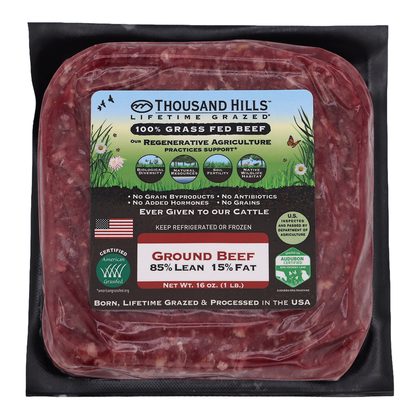
The best value in U.S. grass-finished beef we found: $11.49 for a pound of 85/15 ground beef, $10.54 a pound by the 12-pack case, and $36.98 a pound for ribeye. Thousand Hills sources from about 50 U.S. family farms across the Midwest, Northeast and West, and says its cattle are 100% grass-fed and grass-finished, “born, raised, and finished on open pastures.” It says its farms have been American Grassfed Association certified since 2017, but AGA’s producer directory didn’t load for us, so it scores as claimed, not verifiable. It doesn’t name the farm on each product, and its “600,000 acres” claim comes without monitoring data. One thing to watch: the store also carries Organic Prairie–brand organic grass-fed ground beef, which doesn’t state where the cattle were raised; we priced Thousand Hills’ own line. No FSIS recall or alert turned up; in March 2025 Minnesota’s agriculture department recalled Thousand Hills Local Farms beef cut and sold fresh at one Richfield co-op after metal shot was found, a state action that our FSIS-based rule doesn’t score.
Best forFamilies who cook a lot of ground beef and want U.S. grass-finished for less
Skip ifYou want chicken or lamb in the same box, or a seal you can look up
SpeciesBeef only (plus Organic Prairie–brand beef on the same store)
Organ meats & bonesBeef liver 8 oz $11.49; Renegade organ blend $11.49/lb
How you buyOne-time orders or subscription bundles
ShippingFree on orders over $299 (2-day ground areas)
OriginAbout 50 U.S. family farms, 3 regions; farm not named per product
Finish: 100% grass-fed and grass-finished; U.S. farms in 3 regionsProof: AGA claimed, not verifiable
Its Renegade Blend (ground beef with organs) is $11.49 a pound.
See score breakdown & sources
Finish & feed10.0
Origin & traceability8.0
Verified certification6.0
Welfare & land proof5.0
Track record & honesty10.0
Finish: 100% grass-finished, stated for the line (10). Origin: U.S., region or cooperative named (8). Certification: claimed, not verifiable (6). Land: a claim without data, class-typical (5). Track record: no FSIS action found (10).
Maker’s dataThousand Hills Lifetime Grazed. Store listings, Sept. 30, 2026: Grass Fed Ground Beef 85/15, 1 lb $11.49, case of 12 $126.49 (“Sourced from cattle that are 100% grass fed and grass finished”); Grass Fed Beef Ribeye 8 oz $18.49; Grass Fed Beef Liver 8 oz $11.49; Renegade Blend (ground beef with organs) 1 lb $11.49. Open source · [25]
Maker’s dataThousand Hills Lifetime Grazed. Homepage: “Now sourcing cattle from 50 hand-selected, like-minded U.S. family farms across 3 regions: Midwest, Northeast, and West”; “600,000 Acres of Farmland Positively Impacted”; “Free Shipping on Orders over $299.” Open source · [26]
Maker’s dataThousand Hills Lifetime Grazed. American GrassFed Association page: “Proud to be American Grassfed Certified. Certification Achieved: 2017”; “cattle born, raised, and finished on open pastures.” Open source · [27]
Public record / studyAmerican Grassfed Association. “Find a Certified AGA Producer” page. On Sept. 30, 2026 our scripted and browser requests got a captcha, and the page we could load contained no producer list, so no AGA claim could be checked. Open source · [8]
Maker’s dataThousand Hills store listing for Organic Prairie–brand “100% Grassfed Organic Ground Beef 85/15” ($9.99): “Made from USDA Organic, 100% grassfed beef”; no origin stated. Open source · [29]
Public record / studyMinnesota Department of Agriculture. “State Issues Consumer Notification for Thousand Hills Beef Products from Lakewinds Food Co-op in Richfield,” March 5, 2025: recall of Thousand Hills Local Farms beef products cut and sold fresh at the Richfield co-op after staff and a customer found metal shot or BBs; a state action, not FSIS. Open source · [28]
Public record / studyDrAxe.com recall check, Sept. 30, 2026: FSIS’s recall site and API returned “Access Denied” to our requests, so we searched FSIS notices and news coverage for each ranked brand. We found one public health alert (White Oak Pastures, March 2026) and one recall naming a ButcherBox product (August 2024), and none for the other brands. Open source · [9]
The most transparent listing format we saw: every beef product names the farm it came from, and for beef that’s Seven Sons’ own family farm in Roanoke, Indiana. The beef is 100% grass-fed and grass-finished, ground beef is $12.60 a pound, and a 12-oz Delmonico ribeye is $40.40. It doesn’t claim any third-party certification for its beef, so it gets the lowest certification score, and its regenerative claims come without data. Seven Sons also sells bison, lamb and pastured chicken, some from partner farms. Free shipping starts at $159 “in many states.” No FSIS recall or alert turned up.
Best forBuyers who want to know the exact farm, plus chicken and lamb in one order
SpeciesBeef, bison, lamb, pastured chicken and turkey
Organ meats & bonesOrgans, bones and a primal-blend ground beef ($15/lb)
How you buyOne-time orders or Subscribe & Save (5% off)
ShippingFree on $159+ “in many states”
OriginSeven Sons Family Farm, Roanoke, Ind., named per listing
Finish: 100% grass-fed and grass-finished; farm named per listingProof: No certification claimed for beef
See score breakdown & sources
Finish & feed10.0
Origin & traceability10.0
Verified certification4.0
Welfare & land proof5.0
Track record & honesty10.0
Finish: 100% grass-finished, stated for the line (10). Origin: U.S., farm named per product (10). Certification: none (4). Land: a claim without data, class-typical (5). Track record: no FSIS action found (10).
Maker’s dataSeven Sons Farms. Ground beef listings, Sept. 30, 2026: “Ground Beef, 1lb / pkg, Seven Sons Family Farm, $12.60”; Primal Blend $15.00; “our 100% grass-fed and grass-finished ground beef.” Open source · [30]
Maker’s dataSeven Sons Farms. Steak listings: “Beef Delmonico Ribeye Steak, 12 oz avg. / pkg, Seven Sons Family Farm, $40.40” (Sept. 30, 2026). Open source · [31]
Maker’s dataSeven Sons Farms. Homepage: Subscribe & Save (5% off every order, one free item); “After a decade of shipping 400,000+ boxes”; free shipping on orders of $159+ in many states. Open source · [32]
Public record / studyDrAxe.com recall check, Sept. 30, 2026: FSIS’s recall site and API returned “Access Denied” to our requests, so we searched FSIS notices and news coverage for each ranked brand. We found one public health alert (White Oak Pastures, March 2026) and one recall naming a ButcherBox product (August 2024), and none for the other brands. Open source · [9]
A farmer-owned cooperative that says every animal is born, raised and harvested in the U.S., and that its cattle are grass-fed and grass-finished and “never eat grain or grain by-products.” It prints the farm of origin on every package, though not on the web listing, which is why it scores as cooperative-named rather than farm-named. It claims no grass-fed or organic certification, and its FAQ calls it a Land to Market “Verified Member,” a program with no public directory and no data we could find. Ground beef is $13.95 a pound, ribeye $43.94 a pound, and pastured whole chickens run $29.45 for about 3 lb. No FSIS recall or alert turned up.
Best forBuyers who want U.S. beef plus pastured chicken from small farms
How you buyOne-time orders or Subscribe and Save (5% off)
ShippingFree over $149; $35 below
OriginCo-op farms in the U.S.; farm printed on each package
Finish: Grass-fed and grass-finished; U.S.-born, raised and harvestedProof: No certification; Land to Market membership claimed
See score breakdown & sources
Finish & feed10.0
Origin & traceability8.0
Verified certification4.0
Welfare & land proof5.0
Track record & honesty10.0
Finish: 100% grass-finished, stated for the line (10). Origin: U.S., region or cooperative named (8). Certification: none (4). Land: a claim without data, class-typical (5). Track record: no FSIS action found (10).
Maker’s dataGrass Roots Farmers’ Cooperative. Grass-Fed Ground Beef: 1 lb (80/20) $13.95; 5 lb $62.75 (sale; regular $69.75); “Every Grass Roots animal is born, raised and harvested in the USA”; “Our cattle are grass-fed and finished and never eat grain or grain by-products”; “farm of origin printed on every package.” Ribeye 14 oz $38.45; whole chicken 3 lb $29.45; beef liver 1 lb $25.45 (Sept. 30, 2026). Open source · [33]
Maker’s dataGrass Roots Farmers’ Cooperative. FAQ: ruminants are “100% fully grass-fed, grass-finished”; “Land to Market: Verified Member”; shipping free when you spend $149, otherwise $35 per shipment. Open source · [34]
Public record / studyDrAxe.com recall check, Sept. 30, 2026: FSIS’s recall site and API returned “Access Denied” to our requests, so we searched FSIS notices and news coverage for each ranked brand. We found one public health alert (White Oak Pastures, March 2026) and one recall naming a ButcherBox product (August 2024), and none for the other brands. Open source · [9]
By choice[37]not certified; it says certification costs too much
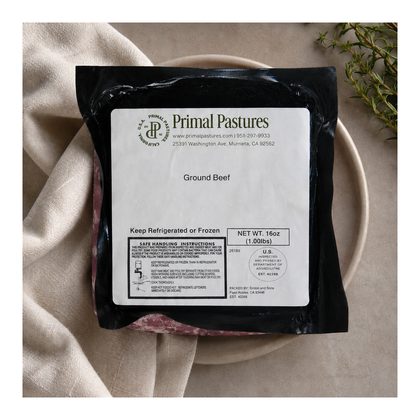
A California ranch brand that says its cattle are grass-fed, grass-finished and pasture-raised in California, and that its chickens move to fresh pasture daily on a certified-organic, corn- and soy-free feed. It openly chooses not to certify, calling certification “prohibitively expensive and paperwork-heavy,” so it gets the lowest certification score, and its regenerative claims come without data. Ground beef is $13.99 a pound and a 10-oz ribeye $29.89 ($47.82 a pound); a whole chicken, 3–4 lb, is $37.99, the priciest here. Shipping is calculated by carrier at checkout. No FSIS recall or alert turned up.
Best forWest Coast buyers who want beef and corn- and soy-free pastured chicken
SpeciesBeef, lamb and pastured chicken; some wild fish in boxes
Organ meats & bonesBeef liver about 1 lb $17.25; organ blend $18
How you buyOne-time orders and sampler boxes
ShippingUPS/FedEx rates at checkout
OriginCalifornia; ranch not named per product
Finish: Grass-fed and grass-finished; CaliforniaProof: No certification, by choice
See score breakdown & sources
Finish & feed10.0
Origin & traceability8.0
Verified certification4.0
Welfare & land proof5.0
Track record & honesty10.0
Finish: 100% grass-finished, stated for the line (10). Origin: U.S., region or cooperative named (8). Certification: none (4). Land: a claim without data, class-typical (5). Track record: no FSIS action found (10).
Maker’s dataPrimal Pastures. Homepage and FAQ: “Grass Fed, Grass Finished, Pasture Raised on grass in California”; chickens on “a certified organic, corn-free, soy-free, non-GMO feed”; explains it isn’t certified because “Certification is also prohibitively expensive and paperwork-heavy”; shipping rates set by UPS and FedEx at checkout. Open source · [37]
Public record / studyDrAxe.com recall check, Sept. 30, 2026: FSIS’s recall site and API returned “Access Denied” to our requests, so we searched FSIS notices and news coverage for each ranked brand. We found one public health alert (White Oak Pastures, March 2026) and one recall naming a ButcherBox product (August 2024), and none for the other brands. Open source · [9]
Strong on finishing and welfare, silent on where your package came from. Force of Nature says its beef and bison are 100% grass-fed and grass-finished, “No grains — ever,” and Global Animal Partnership lists its beef at Step 4; Certified Humane also lists one of its bison products through the processor. But the product pages we checked don’t say where the animals were raised, and its FAQ says its partner network spans the U.S., Canada, New Zealand and Australia, so origin scores as not stated. Its 2025 impact page counts 917 partner ranches and 3.76 million acres “positively impacted,” which is a reach figure, not monitoring data. Ground beef is $14.99 a pound, a 10-oz ribeye $23.99, and it tags products as eligible for HSA/FSA reimbursement through a third party. No FSIS recall or alert turned up.
Best forBuyers who want grass-finished beef and bison in one order
Skip ifYou need to know the country on each package
SpeciesBeef, bison, heritage chicken, elk and venison
Organ meats & bonesAncestral Blends (ground with organs) $14.99–$18.99
How you buyOne-time orders or subscription
ShippingFree on orders over $189
OriginNot on the product; partners in the U.S., Canada, New Zealand, Australia
Finish: 100% grass-fed and grass-finished beef and bisonProof: GAP Step 4 beef (listed); origin not stated per product
Its bison is $18.99 for 16 oz ground and $28.99 for a ribeye.
See score breakdown & sources
Finish & feed10.0
Origin & traceability5.0
Verified certification7.0
Welfare & land proof5.0
Track record & honesty10.0
Finish: 100% grass-finished, stated for the line (10). Origin: origin not stated, class-typical (5). Certification: welfare certification verified (7). Land: a claim without data, class-typical (5). Track record: no FSIS action found (10).
Maker’s dataForce of Nature. Store listings, Sept. 30, 2026: Grass Fed Ground Beef 85/15, 16 oz, $14.99 (“100% grass-fed and grass-finished”); Ground Beef Box, 20 lb, $251 (sale; regular $279.80); Grass Fed Ground Bison $18.99; Bison Ribeye $28.99; Heritage whole chicken 3.5–4 lb $29.99. No country of origin on the listings. Open source · [38]
Maker’s dataForce of Nature. Grass Fed Beef Ribeye Steak, one 10-oz steak, $23.99 (Sept. 30, 2026). Open source · [39]
Maker’s dataForce of Nature. FAQ: “Our bison and beef products are 100% grass-fed and grass-finished animals. No grains — ever.” “While the vast majority of our partners are in the U.S., our network of partners spans across the U.S., Canada, New Zealand, and Australia.” Open source · [40]
Maker’s dataForce of Nature. Homepage: “FREE SHIPPING ON ORDERS $189+”; HSA/FSA reimbursement offered through Truemed. Open source · [42]
Certifier databaseGlobal Animal Partnership. “Look for These Retailers and Brands When You Shop” (read Sept. 30, 2026; our scripted request hit a captcha, so we read it through a web fetch): Force of Nature “Beef, Step 4”; ButcherBox “Step 3/Step 4/Better Chicken Project”; Joyce Farms “Chicken Step 4, Poussin Step 2, Beef Step 4.” White Oak Pastures is not on the list. It is a brand list, not a full product database. Open source · [7]
Certifier databaseCertified Humane. “Who’s Certified” list, checked Sept. 30, 2026: lists ButcherBox grass-fed beef and bison (and ButcherBox products under several processors); “Force of Nature: 100% Grass-Fed Bison Ancestral Blend” under Rocky Mountain Natural Meats; Niman Ranch beef, including grass-fed cuts. No entry for White Oak Pastures, Crowd Cow, Thousand Hills, US Wellness, Seven Sons, Grass Roots, Primal Pastures, Alderspring or Wild Idea. The page says: “These lists are updated periodically and may not always reflect precise real-time information.” Open source · [4]
Public record / studyDrAxe.com recall check, Sept. 30, 2026: FSIS’s recall site and API returned “Access Denied” to our requests, so we searched FSIS notices and news coverage for each ranked brand. We found one public health alert (White Oak Pastures, March 2026) and one recall naming a ButcherBox product (August 2024), and none for the other brands. Open source · [9]
The biggest grass-fed catalog we scored, and honest about its imports. US Wellness says all of its beef is 100% grass-fed and grass-finished, and many of its steak and roast listings say the cut is “currently” sourced from farm partners in Tasmania, or from both domestic cattle and Tasmania, so origin scores as imports disclosed. Ground beef is $13.98 a pound, or $11.88 a pound in a 25-lb bundle on sale, and a 12-oz ribeye is $27.50. It claims no certification for its beef. Its bison pages name Wild Idea Buffalo as the farm, whose AGW certification and ROC brand listing we verified; we didn’t confirm the USDA Organic claim it also makes for Wild Idea. No FSIS recall or alert turned up.
Best forStocking a freezer with organ meats, bones and unusual cuts
How you buyOne-time orders; fresh-chilled monthly bundles
ShippingFree over 15 lb (site banner); small orders may thaw, it warns
OriginFamily farms plus Tasmanian partners, named per cut
Finish: 100% grass-fed and grass-finished beefProof: Many cuts from Tasmania, disclosed per listing; no beef certification
Its bison comes from Wild Idea Buffalo, our top pick.
See score breakdown & sources
Finish & feed10.0
Origin & traceability6.0
Verified certification4.0
Welfare & land proof5.0
Track record & honesty10.0
Finish: 100% grass-finished, stated for the line (10). Origin: imports, country named on the product (6). Certification: none (4). Land: a claim without data, class-typical (5). Track record: no FSIS action found (10).
Maker’s dataUS Wellness Meats. Store listings, Sept. 30, 2026: 85% Lean Ground Beef 1 lb $13.98; 85% Ground Beef Bundle 25 lb $297 (sale; regular $349.50); Beef Ribeye Steak 12 oz $27.50; Beef Liver 1 lb $13.81; ground beef with heart, kidney, liver 1 lb $13.42. “All of US Wellness Meats’ beef products are 100% grass-fed and grass-finished.” Open source · [43]
Maker’s dataUS Wellness Meats. Cut listings (25 of about 142 beef listings on Sept. 30, 2026): e.g., Large Top Sirloin “US Wellness Meats is currently sourcing this cut from Tasmania”; French Ribeye “currently sourcing this cut exclusively from Tasmania”; T-Bone “currently sourced from both our domestic cattle and our farm partners in Tasmania.” Open source · [44]
Maker’s dataUS Wellness Meats. Ground Bison listing: “Wild Idea Buffalo farm is Regenerative Organic Certified, USDA Organic Certified, Audubon Certified Bird Friendly Land, Certified Grass-fed by AGW, and Animal Welfare Approved by AGW.” Open source · [45]
Maker’s dataUS Wellness Meats. Homepage: “Free U.S. shipping with orders over 15lbs”; “Orders under 7lbs may thaw in transit.” Open source · [46]
Certifier databaseA Greener World (AGW) directory, queried through AGW’s public listings API on Sept. 30, 2026: “Certified Animal Welfare Approved by AGW, Certified Grassfed by AGW bison from Wild Idea Buffalo Co. is available to order direct from their website” (listing created May 19, 2023). Searches for US Wellness, Force of Nature, White Oak Pastures, Thousand Hills, Alderspring, Seven Sons, Primal Pastures, Grass Roots, ButcherBox, Niman Ranch, Verde and Carman Ranch returned no brand listing. Open source · [1]
Public record / studyDrAxe.com recall check, Sept. 30, 2026: FSIS’s recall site and API returned “Access Denied” to our requests, so we searched FSIS notices and news coverage for each ranked brand. We found one public health alert (White Oak Pastures, March 2026) and one recall naming a ButcherBox product (August 2024), and none for the other brands. Open source · [9]
$7.50/lb groundGround beef 85/15 2 lb $15 as a member add-on; grass-fed ribeyes 2 × 10 oz $35. Boxes $8.52–$15.23 a pound by its own math. Free shipping.
Cheapest per pound; beef raised in Australia
ButcherBox 100% Grass-Fed Beef
Subscription box · 100% grass-fed, grass-finished beef from Australia · plus a U.S. grain-finished line
$28.00[51]per lb, grass-fed ribeye, the lowest here
Certified Humane[4]beef and bison, in the certifier’s list
Aug. 2024[52]FSIS recall of ButcherBox-branded chicken nuggets
The cheapest grass-finished beef per pound we found, and the only big box in our top 10, but not American-raised. ButcherBox says its 100% grass-fed, grass-finished beef is born, raised and harvested in Australia, then cut and packed in the U.S.; that’s on its homepage and FAQ, not on the product listings we priced, so origin scores as not stated on the product. It also sells a U.S. grain-finished line, which it labels as grain-finished. Certified Humane lists its beef and bison, and the Regenerative Organic directory lists 2 of its products, a 93/7 ground beef and a “Primal Blend,” not the 85/15 we priced. It loses 2 points because an August 2024 FSIS recall of Perdue-made chicken nuggets, for possible metal wire, included “BUTCHERBOX Organic Chicken Breast Nuggets.” Ground beef is $7.50 a pound as a member add-on and grass-fed ribeyes $28 a pound, with free shipping.
Best forBudget-minded households who want grass-finished beef and don’t mind Australian sourcing
Skip ifYou want U.S.-raised beef, or to buy without a subscription
Organ meats & bonesOrganic Primal Blend (ground beef with liver and heart) $19
How you buySubscription boxes with add-ons
ShippingFree; arrives in 1–3 days, it says
OriginAustralia, per its homepage; not stated on each product
Finish: 100% grass-fed and grass-finished (Australia); a labeled U.S. grain-finished line tooProof: Certified Humane (verified); 2 ROC products
Its own comparison table puts its boxes at $8.52–$15.23 a pound, including free shipping.
See score breakdown & sources
Finish & feed8.0
Origin & traceability5.0
Verified certification7.0
Welfare & land proof5.0
Track record & honesty8.0
Finish: grass-finished line alongside clearly labeled grain-finished or grain-supplemented products (8). Origin: origin not stated, class-typical (5). Certification: welfare certification verified (7). Land: a claim without data, class-typical (5). Track record: FSIS recall of a brand product within 3 years (−2).
Maker’s dataButcherBox. Homepage, Sept. 30, 2026: “We source our 100% grass-fed and grass-finished beef products from Australia”; “Animals are born, raised, and harvested in Australia. Meat is cut and packaged in the US”; “We also offer USDA Choice pasture-raised, grain-finished beef that is born, raised, and harvested in the U.S.”; “third-party animal welfare certifications for 100% of our products”; free shipping. Its own comparison table (“effective as of 1/8/2026”): ButcherBox $8.52–$15.23/lb; Good Chop $10.64–$18.43/lb plus $9.99 shipping; Good Ranchers $14.53–$16.98/lb; Omaha Steaks $20.52/lb plus $19.99 shipping. Open source · [49]
Maker’s dataButcherBox. Store feed, Sept. 30, 2026: “Ground Beef 85/15,” “2 lbs (2 x 16 oz packs),” $15.00 as a member add-on; “100% Grass-Fed, Pasture-Raised Ribeyes” $35.00 for 2 × 10 oz; “Grain-Finished Ribeye … (14 oz)” $27.00; “Regenerative Organic Certified, 100% Grass-Fed Ground Beef 93/7” labeled on that product. Open source · [50]
Maker’s dataButcherBox. “100% Grass-Fed, Pasture-Raised Ribeyes” listing: “Contains: 2 x 10 oz steaks,” $35.00 (Sept. 30, 2026); no country of origin on the listing. Open source · [51]
Certifier databaseCertified Humane. “Who’s Certified” list, checked Sept. 30, 2026: lists ButcherBox grass-fed beef and bison (and ButcherBox products under several processors); “Force of Nature: 100% Grass-Fed Bison Ancestral Blend” under Rocky Mountain Natural Meats; Niman Ranch beef, including grass-fed cuts. No entry for White Oak Pastures, Crowd Cow, Thousand Hills, US Wellness, Seven Sons, Grass Roots, Primal Pastures, Alderspring or Wild Idea. The page says: “These lists are updated periodically and may not always reflect precise real-time information.” Open source · [4]
Certifier databaseRegenerative Organic Certified product directory, checked Sept. 30, 2026: lists the Wild Idea brand; ButcherBox with 2 products (“100% Grassfed Ground Beef, 93% Lean, 7% Fat” and “Primal Blend - Ground Beef, Liver and Heart”); Niman Ranch beef cuts and ground beef 80/20, 85/15 and 90/10. No listing for White Oak Pastures, Thousand Hills, Force of Nature, Alderspring, Grass Roots, Primal Pastures, Seven Sons, Verde or Crowd Cow. Open source · [6]
Public record / studyUSDA FSIS. “Perdue Foods LLC, Recalls Frozen, Ready-To-Eat Chicken Breast Nugget and Tender Products,” Aug. 16, 2024: about 167,171 lb, including “BUTCHERBOX Organic Chicken Breast Nuggets,” for possible metal wire. Open source · [52]
Public record / studyFox Business, Aug. 17, 2024: FSIS announced the Perdue recall on Aug. 16, 2024, after consumer complaints of metal wire in nuggets and tenders; the recalled products include “BUTCHERBOX Organic Chicken Breast Nuggets.” Open source · [53]
Official-site prices on Sept. 30, 2026, divided by the weight on the listing. Green is ground beef (or bison); tan is a boneless ribeye. Striped bars are imported or origin-unstated beef.
Ground, $0–25/lb scaleRibeye, $0–100/lb scaleImported or origin not statedNot in our top 10
Good Ranchers5.9/10$15.00 ground— ribeyeGrass-Fed, Grass-Finished Ground Beef, 2 × 1 lb, $29.99 · No grass-fed ribeye listed (Angus only)[47]
Grain-finished premium brands (not ranked)
Snake River Farmsnot ranked$12.00 ground$92.00 ribeyeWagyu; no grass-finished claim; ground on sale[56]
Porter Roadnot ranked$13.00 ground$56.00 ribeyeGrain-supplemented on pasture[57][58]
Holy Grail Steak Co.not ranked$15.00 ground— ribeyeWagyu; A5 ribeye $139 for 13–15 oz (sold out)[59]
ButcherBox’s $7.50 is its member add-on price for 2 lb of Australian ground beef; by its own math its boxes work out to $8.52–$15.23 a pound, and its grass-fed ribeyes are 2 × 10 oz for $35[49][50][51]. Alderspring’s 1-lb organic packs ($16.00) were sold out, so we show its 20-lb bundle. Shipping isn’t included: free thresholds run from $149 to $300, and Alderspring and Primal Pastures charge carrier rates[34][11][17][37]. Omaha Steaks blocked our requests, so we don’t show a price.
Signature chart
Where the beef comes from
How each service says its animals were finished, the country on the product, how specifically it names the farm, and every seal it claims, looked up in the certifier’s own directory. Of the 13 seals we checked, 6 checked out, 3 covered only some products and 4 couldn’t be checked; 5 rows claim no seal for the meat we priced.
Finish, origin and seals, brand by brand
Product pages and certifier databases checked Sept. 30, 2026: AGW, AGA, Certified Humane, GAP, Regenerative Organic and USDA Organic Integrity.
VerifiedSome products onlyClaimed, can’t checkClaimed, not in databaseNo seal claimed
Swipe sideways to see every column.
Service
Score
How it’s finished
Country
Farm or region named
Seals, checked in the certifier’s database
#1 Alderspring Ranchbeef
9.4
100% grass-fed and finished
USA
Alderspring’s own ranch, Idaho
USDA OrganicVerified · Organic Integrity Database
#2 White Oak Pasturesbeef
9.1
Grass-fed and grass-finished
USA
Own farm, Bluffton, Ga.
AGA GrassfedClaimed, can’t check · directory didn’t loadGAP Step 4Claimed, can’t check · not on GAP’s brand listCertified HumaneClaimed, can’t check · not in its current list
AGWSome products only · one farm, listing from 2021
Good Ranchersbeef
5.9
Grass-finished (2 products); rest unstated
USA
Not named
NoneNo seal claimed
AGW directory[1][2]; USDA Organic Integrity Database[3]; Certified Humane’s list[4]; Regenerative Organic directory[6]; GAP’s brand list, which isn’t a full database[7]; AGA’s producer directory didn’t load[8]. White Oak’s page claims AGA, GAP Step 4 and Certified Humane for its cattle[20]; Certified Humane hosts a 2014 profile of the farm[5]. US Wellness names Wild Idea as its bison farm[45]. Crowd Cow’s AGW listing names a farm we didn’t find among its current grass-fed listings[2][55]. Shaded rows aren’t in the top 10.
Grass-fed vs. grain-fed
What changes in the meat
Finishing on grass shifts the fat profile and adds antioxidants; grain finishing adds marbling and some B vitamins. Here’s the size of each difference, study by study.
Omega-6 to omega-3 ratio, grass-fed vs. grain-fed beef
Grass-fedGrain-fedLower = more omega-3 relative to omega-6
02468101214ratio
Realini 20042.1× lower on grass [our calculation]1.44 · 3
Ponnampalam 20061.8× lower on grass [our calculation]1.96 · 3.57
Descalzo 20051.5× lower on grass [our calculation]3.72 · 5.73
Nuernberg 20054.1× lower on grass [our calculation]2.04 · 8.34
Alfaia 20095.1× lower on grass [our calculation]1.77 · 8.99
Garcia 20086.0× lower on grass [our calculation]1.72 · 10.38
Leheska 20084.9× lower on grass [our calculation]2.78 · 13.6
From Daley 2010, Table 2, which pulls together 7 studies with different breeds, cuts and units; total omega-6 didn’t change much, omega-3 did[78].
Pasture vs. feedlot, 1,575 compounds
Evans 2024 compared 18 pasture-finished and 18 feedlot Black Angus; 907 compounds differed. Fold differences[79]:
Higher in pasture-finished beef
Nicotinate (B3)9.4×
Omega-3 fats4.1×
α-tocopherol (vitamin E)3.1×
Phenolic antioxidants2.6×
Myo-inositol1.8×
Choline1.2×
Higher in grain-finished beef
γ-tocopherol14.6×
Nicotinamide (B3)1.5×
Pantothenate (B5)1.3×
Vitamin B61.3×
The authors note that human trials are still needed to show whether these differences affect health.
Omega-3s in a 4-oz serving
Grass-fed beef has more, but beef isn’t a major omega-3 food either way.
Grass-fed111 mgper 4 oz
Grain-fed72 mgper 4 oz
~7×[78]β-carotene, 0.45 vs 0.06 µg/g, in one pasture vs grain study
~3×[78]α-tocopherol (vitamin E) with grass finishing
Total omega-3s in lean muscle, from Ponnampalam 2006 as tabled by Daley: 97.6 vs 63.3 mg per 100 g, × 1.134 for a 4-oz portion [our calculation][78]. That’s a real difference, but a small amount; the same review notes that people eating fattier grain-fed cuts may take in similar totals.
How we score: the Dr. Axe Clean Pasture Score™
Most meat-delivery reviews rank on taste, unboxing and discounts. Ours starts with what you can check: how the animals were finished, where they were raised, whether the seals show up in the certifier’s own database, whether any land or welfare data is published, and the brand’s FSIS record. It’s an editorial assessment built from product pages, store feeds, certifier directories, public records and studies, not our own lab testing. Price isn’t scored; see the cost chart.
Finish & feed30%
How the animals were finished, stated on the products we priced. 100% grass-fed and grass-finished, stated per product, for the whole beef (or bison) line 10; a grass-finished line alongside grain-finished or grain-supplemented products that are clearly labeled 8; “grass-fed” with no finishing statement 5; a grass-fed line mixed with unlabeled grain-finished products 4; grain-finished 2 (not eligible for the top 10).
Origin & traceability20%
Where the animals were born, raised and harvested. U.S., with the farm or ranch named on each product 10; U.S., with the region or cooperative named (or U.S.-born, raised and harvested stated for the line) 8; imports disclosed clearly, country named on the product 6; origin not stated 5 (class-typical); “U.S. family farm” marketing contradicted by an imported product 4.
Verified certification20%
Checked in each certifier’s own database on Sept. 30, 2026. Grass-fed certification (AGW or AGA) verified for the line we priced 10; USDA Organic or Regenerative Organic Certified verified for most of the line 8.5; welfare certification only (Certified Humane, GAP or AWA) verified 7; claimed, but the database couldn’t be checked 6 (“claimed, not verifiable”); none 4. Minus 1.5 for each claim the database contradicts.
Welfare & land proof15%
Published data beats slogans. A published third-party life-cycle assessment or Land to Market EOV result 10; a verified regenerative certification that covers the products we ranked (a product-level Regenerative Organic listing), or per-farm data the brand publishes, 8; a claim without data, or nothing, 5 (class-typical).
Track record & honesty15%
Starts at 10. An FSIS recall of the brand’s product within 3 years costs 2; an FSIS public health alert within 3 years costs 1; a misleading origin or finishing claim costs 1.5. Lawsuits are allegations and cost nothing unless resolved with findings. Floor 3.
Finish and feed. We read the finishing statement on the exact products we priced. Under FSIS guidance, an unqualified “grass-fed” claim should mean grass and forage only after weaning, and partial claims must be qualified[70]; we still reward a statement on the product, because FSIS approves it on paperwork. Nine of our top 10 state 100% grass-fed and grass-finished for the whole beef (or bison) line. ButcherBox and Crowd Cow get 8 because they sell clearly labeled grain-finished or grain-supplemented beef alongside it[49][54]. Good Ranchers gets 4: two grass-finished products, while the rest of its beef carries no finishing statement[47]. Grain-finished brands aren’t eligible for the top 10.
Origin and traceability. Farm named on each product: Alderspring, White Oak and Seven Sons[14][20][30]. U.S. with a region or cooperative named: Wild Idea, Thousand Hills, Grass Roots, Primal Pastures and Good Ranchers. Imports disclosed on the product: US Wellness (Tasmania on 25 listings)[44] and Crowd Cow (Uruguay)[55]. Origin not stated on the product scores the class-typical 5: Force of Nature, whose network spans four countries[40], and ButcherBox, which says “Australia” on its homepage but not on the listings we priced[49][51].
Verified certification. On Sept. 30, 2026 we queried AGW’s directory through its public API[1], searched USDA’s Organic Integrity Database in a browser[3], and read Certified Humane’s full list[4], the Regenerative Organic directory[6] and GAP’s brand list[7]. AGA’s producer directory wouldn’t load[8]. Certified Humane’s and GAP’s pages are lists that may not be current, so absence from them isn’t counted against anyone: a seal we can’t confirm scores “claimed, not verifiable” (6), as for White Oak’s AGA, GAP and Certified Humane claims[20][5]. The 1.5-point deduction is only for a claim a searchable database actually contradicts; none did. A seal that covers only some products (Crowd Cow’s AGW outlet listing, ButcherBox’s two ROC products) earns credit only for what it covers.
Welfare and land proof. One rule for everyone. 10: a published third-party life-cycle assessment or Land to Market EOV result; only White Oak has one, plus a peer-reviewed study of the farm[21][22]. 8: a verified regenerative certification that covers the products we ranked, meaning a product-level Regenerative Organic listing, or per-farm data the brand publishes; Alderspring publishes a per-ranch carbon estimate for its 70-square-mile range[16]. 5: a claim without data, or nothing. Wild Idea’s ROC listing names the brand but no products[6], and ButcherBox’s two ROC products aren’t the line we priced, so both get 5, as do acreage totals and Land to Market membership without results[41][34].
Track record. FSIS’s recall site and API blocked our requests, so we searched FSIS notices and news coverage for each brand[9]. White Oak loses 1 for a March 2026 public health alert[23]; ButcherBox loses 2 because an August 2024 recall covered ButcherBox-branded chicken nuggets made by Perdue[52]. A March 2025 Minnesota state recall of store-cut Thousand Hills beef at one co-op isn’t an FSIS action, so it isn’t scored; we note it in the review[28]. We found no misleading origin or finishing claim that met our bar for a deduction.
Who’s eligible, and ties. One entry per service, scored on its grass-fed beef line, or bison for a bison-only brand. Services with no findable prices, or that don’t ship by mail, aren’t rated. Ties at one decimal go to the higher unrounded score, then the lower ground-meat price per pound: that’s how Thousand Hills edges Seven Sons, and how Grass Roots, Primal Pastures and Force of Nature line up at 7.7.
One caveat applies to every score: no independent lab has published brand-by-brand tests of grass-fed meat that we could find, so finishing and origin are the brands’ own statements. The databases tell you whether a seal is real; they don’t test the meat.
Why grass-finished, and why we check the database
Grass-finished beef is a different product, not a marketing upgrade: the animal eats grass and forage its whole life, so it’s leaner and its fat carries more omega-3s and antioxidants. But the claim is approved on paperwork, not farm audits, so the label alone can’t tell you everything. That’s our dividing line: we reward a clear finishing statement, a country on the product and seals that show up in the certifier’s own records.
“Grass-fed” is defined; enforcement is the gap
Under FSIS guidance, a “grass fed” claim should mean grass and forage only after weaning, feedlot beef can’t claim “100% grass-fed,” and partial claims must be qualified[70]. But FSIS approves the claim on the producer’s records, USDA dropped its separate marketing standard in 2016[69], and FSIS now “strongly encourages” third-party certification[73].
The import question
A 2017 market study estimated imports at 75–80% of U.S. grass-fed beef sales by value, and they could be labeled “Product of the USA” after passing through a U.S. plant[74]. From Jan. 1, 2026, that label requires an animal born, raised, slaughtered and processed here[72].
What finishing changes in the meat
The omega-6 to omega-3 ratio drops from 3.00–13.6 to 1.44–3.72[78], and omega-3s ran 4.1 times higher in one 36-animal comparison[79]. In a 4-oz serving, that’s roughly 111 vs 72 mg [our calculation][78].
Land and carbon, both directions
White Oak’s Quantis study put its beef at a net −3.5 kg of CO2e per kg vs 33 for conventional beef[21]; a peer-reviewed study of the farm’s multi-species system found a 66% lower footprint, but 2.5 times the land[22].
What to do: buy “grass-fed,” “100% grass-fed” or “grass-finished” beef with no percentage qualifier and a country on the package, look up any seal before you pay extra for it, and treat “regenerative” as a claim unless the brand publishes results.
Red meat and health: what the evidence shows
The evidence against processed meat is much stronger than the evidence against unprocessed red meat. IARC puts processed meat in its highest group and unprocessed red meat a step below, on limited evidence[81]; the largest recent analysis found only weak associations for unprocessed red meat[82]. Grass-finishing improves the fat profile, though not by enough to turn beef into an omega-3 food. Here’s how we’d grade it:
Unprocessed red meat was weakly associated with colorectal cancer, breast cancer, heart disease and type 2 diabetes; 2 of 5 stars. The uncertainty range for the lowest-risk intake ran 0–200 g a day.
Lean grass-fed vs grain-fed muscle in one study [our calculation]; the review notes fattier grain-fed cuts can match the total.
Nutr J, 2010
Two practical takeaways: choose unprocessed cuts over cured and smoked meats, and cook ground meat through, whatever the label says.
How to read a beef label
Most confusion comes from three words: grass-fed, pasture-raised and regenerative. FSIS guidance defines “grass fed” for labels[70], but approves it on paperwork, and USDA dropped its marketing standard in 2016[69], which is why FSIS now nudges brands toward third-party certification[73]. Here’s what each term tells you:
Label term
What it tells you
Where to check it
“Grass-fed”
Under FSIS label guidance, an unqualified “grass fed” claim should mean grass and forage only after weaning; partial claims must say so (e.g., “85% grass”). But FSIS approves it on the producer’s paperwork, not on-farm audits, and USDA dropped its separate marketing standard in 2016.
Look for “100% grass-fed” or “grass-finished” plus a seal you can look up
“100% grass-fed” / “grass-finished”
Grass and forage for life after weaning, including the last months before harvest; FSIS treats “100% grass-fed” and “grass-fed” as the same claim.
Product page; AGA or AGW seal
“Pasture-raised”
Had pasture access. Can still be grain-finished or grain-supplemented.
Ask how it was finished
“Grain-finished” / “grain-supplemented”
Grain added for marbling. Crowd Cow and ButcherBox label theirs; Porter Road offers grain on pasture.
Product page
“Product of USA”
Since Jan. 1, 2026: born, raised, slaughtered and processed in the U.S.
Package label
“Product of Australia / Uruguay”
Raised abroad; may be cut and packed in the U.S.
Product page or package
AGW Certified Grassfed
Third-party grass-fed and welfare standard with a public directory.
agreenerworld.org directory
AGA Certified Grassfed
Third-party grass-fed standard; its producer directory didn’t load for us.
Ask the brand for proof
USDA Organic
Organic feed and pasture rules; not the same as grass-finished.
USDA Organic Integrity Database
Certified Humane / GAP Step
Animal-welfare standards; not grass-fed standards.
Certified Humane list; GAP
Regenerative Organic Certified
Organic plus soil, welfare and worker standards; lists products.
ROC product directory
“Regenerative” / Land to Market
A practice claim; ask for published monitoring results.
The brand’s impact report
More picks by category
Best grass-fed bison delivery
Bison is naturally lean and usually raised on grass for life. Wild Idea’s AGW seal is the only one here we could verify[1].
100% grass-fed and grass-finished bison: $18.99 for 16 oz ground and $28.99 for a ribeye; one bison product is Certified Humane through its processor[38][4].
Two services that fell outside our top 10: Crowd Cow’s 100% grass-fed beef is imported, and Good Ranchers sells only two grass-finished products.
1
Crowd Cow$13.99/lb groundImported
A marketplace that names the farm and country on each listing. Its default ground beef is Montana beef “supplemented with grain feed”; the 100% grass-fed ground beef and ribeye we found come from Uruguay. AGW’s directory lists Crowd Cow as an outlet for one U.S. farm’s certified beef, in a listing last updated in 2021.[54][55][2]
Finish Default is grain-supp.Origin UruguaySeal Old outlet listing
Good Ranchers Grass-Fed, Grass-Finished Ground Beef$15.00/lb ground
A subscription box with two U.S. grass-finished products (ground beef at $15 a pound, and steak tips); the rest of its beef is Angus or Wagyu with no finishing statement, so it scores 4 on finish.[47][48]
These brands sell mostly grain-finished or grain-supplemented beef, so they aren’t eligible for our ranking; Porter Road also carries some 100% grass-fed beef from Hickory Nut Gap, which was mostly sold out on Sept. 30[57]. They’re here so you can compare prices.
The best-known names in meat delivery, and the one that collapsed. Here’s what the records show.
ButcherBoxIts 100% grass-fed, grass-finished beef is “born, raised, and harvested in Australia” and cut and packed in the U.S.; it also sells a USDA Choice grain-finished line raised in the U.S., which it labels as grain-finished[49]. Certified Humane lists its beef and bison[4], and the Regenerative Organic directory lists 2 of its products, a 93/7 ground beef and a “Primal Blend,” which is where ButcherBox uses that label[6][50]. In August 2024, a Perdue recall of about 167,171 lb of chicken nuggets and tenders, for possible metal wire, included “BUTCHERBOX Organic Chicken Breast Nuggets”[52][53]. At $7.50 a pound for member add-on ground beef, it’s the cheapest per pound we found[50]. It scored 6.8, #10 in our ranking.
Crowd CowA marketplace that names the farm and country on each listing. Its “Premium Ground Beef” defaults to a Montana option that is “supplemented with grain feed,” with a Uruguayan grass-fed option on the same page[54]. The 100% grass-fed ground beef and ribeye we found on Sept. 30 came from Uruguay[55]. AGW’s directory lists Crowd Cow as an outlet for one U.S. farm’s certified beef, in a listing last updated in 2021[2]. It scored 6.7.
BelcampoIn May 2021 a former employee alleged Belcampo sold other producers’ meat as its own. Founder Anya Fernald wrote that “protocols both for sourcing and communicating product origin to customers were not being followed in our Santa Monica location,” calling the errors “a small percentage of total product”[67]. The company was shut down by its board in October 2021[68].
Our adviceBig boxes are convenient and often cheaper, but read the country on each product and look up the seal. If you want U.S. grass-finished beef, buy from a service that says so on every listing.
What we’d skip, and who we couldn’t rate
Two label habits to avoid, and services we left unranked because we couldn’t compare prices, they don’t ship by mail, or they don’t sell grass-fed ground meat.
·
Partial grass-fed claimsA label, not a brand
FSIS requires a claim for cattle that also ate grain to say so, e.g., “fed 85% grass and 15% corn”[70]. If you want grass-finished beef, pass on those.
Skip
·
A seal you can’t look upA practice, not a brand
Ask the brand for a certificate number, then check it in the certifier’s own directory; AGW’s and USDA’s organic databases are public[1][3].
Skip
·
Wild PasturesNo prices shown
Says 100% of its meat is raised on pasture by U.S. family farmers, but prices sit behind a box builder, so we couldn’t compare them.[60]
Not rated
·
Niman RanchSold in stores
Its Regenerative Organic Certified beef checks out in the ROC directory, but Niman sells through stores, not by mail, so it’s outside a delivery ranking.[61][6]
Not rated
·
Verde FarmsSold in stores; origin not stated
Says its beef is organic and 100% grass-fed and grass-finished, but its homepage doesn’t say where the cattle are raised, and it doesn’t ship direct.[62]
Not rated
·
Good ChopNo prices we could read
A HelloFresh brand that says all its meat is U.S.-born and raised, with some 100% grass-fed options; its prices load only inside its app.[63]
Not rated
·
Carman RanchRegional delivery only
An Oregon family ranch raising 100% grass-fed and grass-finished beef, but it delivers only around Portland and Seattle.[64]
Not rated
·
Northstar BisonCouldn’t confirm the details
A Wisconsin bison seller; its store mixes retail and case listings and we couldn’t confirm a finishing statement or a ground bison price on Sept. 30.[65]
Not rated
·
Joyce FarmsNo grass-fed ground beef
GAP lists its beef at Step 4, but its grass-fed line is a few steaks sold by the case; its main Signature Angus line doesn’t say how cattle are finished.[66][7]
Not rated
When the label says more than the record
Nobody publishes lab tests of grass-fed beef by brand, so the useful gaps are between what a brand says and what a certifier’s database or its own product pages show.
White Oak’s seals[20][4][7][8]Claimed vs. checkable by us
Seals (AGA, GAP Step 4, Certified Humane); the lists may not be current
Claimed on its page3 seals
We could confirm in a database0
Force of Nature’s origin[40][38]Network vs. the label
Countries
Countries in its partner network4
Country named on the product0
Thousand Hills’ land claim[26]Acres claimed vs. data published
Acres
Acres “positively impacted”600,000
Acres with published monitoring0
US Wellness beef listings[43][44]All grass-finished; some imported
Listings on Sept. 30, 2026 [our count]
Beef listings~142
Naming Tasmania25
Crowd Cow’s ground beef page[54]Options vs. grass-finished options
Farm options
Options on the page2
Grass-fed (from Uruguay)1
US Wellness is the good example here: it tells you on each listing when a cut comes from Tasmania[44].
DA
Dr. Axe’s Take
I’m a big believer in grass-finished beef, bison and lamb, and in pastured chicken. Meat from animals raised on grass their whole lives has a better fat profile and more antioxidants, and buying it supports the farmers doing it right. But the labels are looser than most people realize, so here’s how I’d shop.
First, read two things on every package: how the animal was finished and where it was raised. “Grass-fed,” “100% grass-fed” or “grass-finished” with no percentage attached is what you want, and a seal you can look up is better still, because the claim itself is approved on paperwork. And if you care about buying American, the country matters, because a lot of grass-fed beef comes from Australia and South America.
Second, spend your money where it counts. Ground beef is the best value in grass-finished meat, and adding liver or an organ blend once or twice a week gives you iron, B12 and vitamin A in a form your body uses well. Save the bones for broth and the fat for cooking.
Third, keep it simple and unprocessed. Choose whole cuts and ground meat over cured and smoked products, cook ground meat all the way through, and build the plate around vegetables. A few pounds of good grass-finished meat a week, done that way, does more for you than any premium box of steaks.
— Dr. Axe
Frequently asked questions
What is the best grass-fed meat delivery service?
Our top-scoring service is Alderspring Ranch (9.4/10): certified organic, which we confirmed in USDA’s database, 100% grass-fed and grass-finished beef from one Idaho ranch, traceable to a single animal. White Oak Pastures (9.1) publishes the best land data; Wild Idea Buffalo (8.9) is the only grass-fed seal we verified, for bison; and Thousand Hills (8.1) is the best value at $11.49 a pound for U.S. grass-finished ground beef.
What’s the difference between grass-fed and grass-finished beef?
Under FSIS label guidance, “grass-fed” on its own is supposed to mean grass and forage only after weaning, and “100% grass-fed” means the same thing; cattle that also ate grain need a qualified claim, like “85% grass.” The catch is enforcement: USDA withdrew its voluntary grass-fed marketing standard in 2016, and FSIS approves the claim on paperwork. “100% grass-fed” or “grass-finished,” plus a certifier seal you can look up, is the clearest signal.
Is ButcherBox beef from the USA?
Its 100% grass-fed, grass-finished beef is born, raised and harvested in Australia and cut and packaged in the U.S. ButcherBox also sells a U.S. grain-finished line, which it labels as grain-finished.
What does “Product of USA” mean on meat now?
Since Jan. 1, 2026, a voluntary “Product of USA” or “Made in the USA” claim requires meat from an animal born, raised, slaughtered and processed in the U.S. Before that, imported beef processed in a U.S. plant could carry it.
Is grass-fed beef healthier than grain-fed?
Its fat is different: the omega-6 to omega-3 ratio ran 1.44–3.72 in grass-fed beef vs 3.00–13.6 in grain-fed across 7 studies, and a 2024 study found 4.1 times the omega-3s and 3.1 times the vitamin E. The absolute omega-3 amount is still small, about 111 vs 72 mg per 4 oz in one study, so the bigger win is choosing unprocessed meat.
Is red meat bad for you?
The evidence is strongest against processed meat: IARC estimates each daily 50 g portion raises colorectal cancer risk by about 18%. For unprocessed red meat, the associations are weak and the evidence limited; a 2019 guideline panel suggested adults continue current intake, though that recommendation was contested.
How long does grass-fed meat keep in the freezer?
At 0°F it’s safe indefinitely. For best quality, use ground meat within 3–4 months, steaks within 6–12 months, organ meats within 3–4 months and whole chickens within a year. After thawing in the fridge, cook ground meat within 1–2 days and steaks within 3–5.
How should I thaw and cook grass-fed beef?
Thaw in the refrigerator, allowing about a day per 5 lb, or in cold water changed every 30 minutes, never on the counter. Cook ground beef, bison and lamb to 160°F, steaks and roasts to 145°F with a 3-minute rest, and all poultry to 165°F. Grass-fed beef is leaner, so it can cook faster; use a thermometer.
Which seals mean the beef is really grass-finished?
AGW Certified Grassfed and AGA Certified Grassfed are grass-fed standards; USDA Organic, Certified Humane, GAP and Regenerative Organic cover other things. Look any seal up in the certifier’s own directory: AGW’s is public, and USDA’s Organic Integrity Database covers organic.
Is grass-fed beef worth the price?
If you eat beef often, grass-finished ground beef is the best value: $11.49 to $16.20 a pound among our top beef brands, and less by the case. Steaks cost far more. Buying ground beef plus liver, and using the bones for broth, gets you most of the benefit for the least money.
Is grass-fed beef better for the environment?
It depends what you measure. White Oak Pastures’ commissioned life-cycle study found its beef carbon-negative once soil carbon was counted, and a peer-reviewed study of the farm’s multi-species system found a 66% lower footprint than commodity production, but it needed 2.5 times the land.
Sept. 30, 2026: First published. Scores built from brand product pages and store feeds, six certifier directories (AGW, AGA, Certified Humane, GAP, Regenerative Organic, USDA Organic Integrity), FSIS notices and news coverage, federal rules and peer-reviewed studies, all checked Sept. 30, 2026. Prices from official sites on Sept. 30, 2026.
Certifier database A Greener World (AGW) directory, queried through AGW’s public listings API on Sept. 30, 2026: “Certified Animal Welfare Approved by AGW, Certified Grassfed by AGW bison from Wild Idea Buffalo Co. is available to order direct from their website” (listing created May 19, 2023). Searches for US Wellness, Force of Nature, White Oak Pastures, Thousand Hills, Alderspring, Seven Sons, Primal Pastures, Grass Roots, ButcherBox, Niman Ranch, Verde and Carman Ranch returned no brand listing. Open source
Certifier database AGW directory listing for Crowd Cow (online outlet): “Certified Animal Welfare Approved by AGW, Certified Grassfed by AGW beef from Autumn’s Harvest Farm … is available here.” Created Sept. 12, 2019; last modified June 10, 2021 (AGW API, checked Sept. 30, 2026). Open source
Certifier database USDA Organic Integrity Database, searched Sept. 30, 2026: “Alderspring Ranch — [ISDA] Idaho State Department of Agriculture — Certified — May, Idaho — CROPS: Grass Hay and Pasture; LIVESTOCK: Beef and Lamb.” (The same database lists White Oak Pastures for 15 acres of vegetables only.) Open source
Certifier database Certified Humane. “Who’s Certified” list, checked Sept. 30, 2026: lists ButcherBox grass-fed beef and bison (and ButcherBox products under several processors); “Force of Nature: 100% Grass-Fed Bison Ancestral Blend” under Rocky Mountain Natural Meats; Niman Ranch beef, including grass-fed cuts. No entry for White Oak Pastures, Crowd Cow, Thousand Hills, US Wellness, Seven Sons, Grass Roots, Primal Pastures, Alderspring or Wild Idea. The page says: “These lists are updated periodically and may not always reflect precise real-time information.” Open source
Certifier database Certified Humane. “White Oak Pastures” profile, posted Feb. 4, 2014, on certifiedhumane.org (a farm profile, not a current certificate listing). Open source
Certifier database Regenerative Organic Certified product directory, checked Sept. 30, 2026: lists the Wild Idea brand; ButcherBox with 2 products (“100% Grassfed Ground Beef, 93% Lean, 7% Fat” and “Primal Blend - Ground Beef, Liver and Heart”); Niman Ranch beef cuts and ground beef 80/20, 85/15 and 90/10. No listing for White Oak Pastures, Thousand Hills, Force of Nature, Alderspring, Grass Roots, Primal Pastures, Seven Sons, Verde or Crowd Cow. Open source
Certifier database Global Animal Partnership. “Look for These Retailers and Brands When You Shop” (read Sept. 30, 2026; our scripted request hit a captcha, so we read it through a web fetch): Force of Nature “Beef, Step 4”; ButcherBox “Step 3/Step 4/Better Chicken Project”; Joyce Farms “Chicken Step 4, Poussin Step 2, Beef Step 4.” White Oak Pastures is not on the list. It is a brand list, not a full product database. Open source
Public record / study American Grassfed Association. “Find a Certified AGA Producer” page. On Sept. 30, 2026 our scripted and browser requests got a captcha, and the page we could load contained no producer list, so no AGA claim could be checked. Open source
Public record / study DrAxe.com recall check, Sept. 30, 2026: FSIS’s recall site and API returned “Access Denied” to our requests, so we searched FSIS notices and news coverage for each ranked brand. We found one public health alert (White Oak Pastures, March 2026) and one recall naming a ButcherBox product (August 2024), and none for the other brands. Open source
Maker’s data Wild Idea Buffalo Co. Store listings, Sept. 30, 2026: Ground Buffalo 1 lb $22.50; 5 lb $110; Ribeye 10 oz $42; Liver 8 oz $15. Open source
Maker’s data Wild Idea Buffalo Co. Homepage: “100% Grass Fed & Finished Buffalo”; “Free shipping on orders over $300”; Subscribe & Save. Open source
Maker’s data Wild Idea Buffalo Co. About page: founder’s 1,000-acre ranch restored with bison from 1997; “100% grass-fed and finished buffalo meat”; “Our growing affiliation with other like-minded ranchers, tribal herds”; “100% of our buffalo are field harvested on the prairie.” Open source
Maker’s data Wild Idea Buffalo Co. Certifications page: Cheyenne River Buffalo Ranch “the first buffalo operation in the United States to obtain Regenerative Organic Certification (ROC) status” (Silver); USDA organic; AGW; National Audubon Society. Open source
Maker’s data Alderspring Ranch. Organic Grass Fed Regenerative Ground Beef listing, Sept. 30, 2026: Regular (85% lean) $16.00, sold out; 20-lb bundle (fattier) $324; “Each package is traceable to a single animal for which we know the entire history.” Non-certified grass-fed ground beef, 20 lb, $230. Open source
Maker’s data Alderspring Ranch. Organic Grass Fed Regenerative Ribeye Steak (leaner), 1 steak 16 oz $60; Organic sliced beef liver 1 lb $24 (Sept. 30, 2026). Open source
Maker’s data Alderspring Ranch. Homepage: “certified organic 100% grass fed beef from Idaho’s wild mountain pastures”; “100% grass fed & finished”; “Produced regeneratively to improve land health, sequester carbon, and restore wildlife habitat.” Open source
Maker’s data Alderspring Ranch. Shipping page: UPS rates shown “with no profit added”; ships every other Monday; no Alaska, Hawaii or international. Open source
Maker’s data White Oak Pastures. Store listings, Sept. 30, 2026: Grassfed Ground Beef 90/10 and 80/20, 1 lb, $13.99 (“grass fed and grass finished”); 25-lb 90/10 bundle $349.75; Pastured Whole Chicken 3–4 lb $29.99 (sale; regular $35.99); Grassfed Beef Liver 1 lb $13.99 (sale; regular $16.99). Open source
Maker’s data White Oak Pastures. Grassfed Beef Ribeye Steak (Boneless): 8 oz $23.59; 14 oz $39.99 (Sept. 30, 2026). Open source
Maker’s data White Oak Pastures. Values & Certifications page: “Our cattle are Certified Grassfed by the American Grassfed Association, Certified Humane, Rated a Step 4 in the Global Animal Partnership and Certified EOV by the Savory Institute. Some of our cattle are born on the pastures of our local producer group. All are harvested at White Oak Pastures on-farm abattoir.” Site banner: $15 perishable shipping on ground orders over $149; free over $249. Open source
Maker’s data Quantis. Carbon Footprint Evaluation of Regenerative Grazing at White Oak Pastures (2019), posted by White Oak Pastures: net total −3.5 kg CO2e per kg of fresh meat (soil carbon −35), against 33 for conventional U.S. beef; prepared with input from a General Mills soil scientist, Michigan State University and White Oak employees. Open source
Public record / study Rowntree JE, et al. Ecosystem impacts and productive capacity of a multi-species pastured livestock system. Front Sustain Food Syst, Dec. 4, 2020 (the Clay County, Ga., farm): including soil carbon “reduced net GHG emissions … by 80%, resulting in a footprint 66% lower than” commodity production; the system “required 2.5 times more land.” Authors include Quantis and General Mills staff. Open source
Public record / study USDA FSIS. Public health alert, March 2026: about 16-oz vacuum packs of “White Oak Pastures … Grassfed Ground Beef,” produced Feb. 26, 2026, sell-by 03/19/26, establishment 34729, may contain metal pieces; shipped to Massachusetts, Maryland, New Jersey, Pennsylvania, Virginia and Washington, D.C.; a recall was not requested because the product was no longer available; no confirmed injuries. Open source
Public record / study Food Poisoning Bulletin. “Alert Issued For White Oak Pastures Ground Beef For Metal,” March 24, 2026: shipped to a distributor and Mom’s Organic Markets locations in Massachusetts, Maryland, New Jersey, Pennsylvania and Virginia. Open source
Maker’s data Thousand Hills Lifetime Grazed. Store listings, Sept. 30, 2026: Grass Fed Ground Beef 85/15, 1 lb $11.49, case of 12 $126.49 (“Sourced from cattle that are 100% grass fed and grass finished”); Grass Fed Beef Ribeye 8 oz $18.49; Grass Fed Beef Liver 8 oz $11.49; Renegade Blend (ground beef with organs) 1 lb $11.49. Open source
Maker’s data Thousand Hills Lifetime Grazed. Homepage: “Now sourcing cattle from 50 hand-selected, like-minded U.S. family farms across 3 regions: Midwest, Northeast, and West”; “600,000 Acres of Farmland Positively Impacted”; “Free Shipping on Orders over $299.” Open source
Maker’s data Thousand Hills Lifetime Grazed. American GrassFed Association page: “Proud to be American Grassfed Certified. Certification Achieved: 2017”; “cattle born, raised, and finished on open pastures.” Open source
Public record / study Minnesota Department of Agriculture. “State Issues Consumer Notification for Thousand Hills Beef Products from Lakewinds Food Co-op in Richfield,” March 5, 2025: recall of Thousand Hills Local Farms beef products cut and sold fresh at the Richfield co-op after staff and a customer found metal shot or BBs; a state action, not FSIS. Open source
Maker’s data Thousand Hills store listing for Organic Prairie–brand “100% Grassfed Organic Ground Beef 85/15” ($9.99): “Made from USDA Organic, 100% grassfed beef”; no origin stated. Open source
Maker’s data Seven Sons Farms. Ground beef listings, Sept. 30, 2026: “Ground Beef, 1lb / pkg, Seven Sons Family Farm, $12.60”; Primal Blend $15.00; “our 100% grass-fed and grass-finished ground beef.” Open source
Maker’s data Seven Sons Farms. Steak listings: “Beef Delmonico Ribeye Steak, 12 oz avg. / pkg, Seven Sons Family Farm, $40.40” (Sept. 30, 2026). Open source
Maker’s data Seven Sons Farms. Homepage: Subscribe & Save (5% off every order, one free item); “After a decade of shipping 400,000+ boxes”; free shipping on orders of $159+ in many states. Open source
Maker’s data Grass Roots Farmers’ Cooperative. Grass-Fed Ground Beef: 1 lb (80/20) $13.95; 5 lb $62.75 (sale; regular $69.75); “Every Grass Roots animal is born, raised and harvested in the USA”; “Our cattle are grass-fed and finished and never eat grain or grain by-products”; “farm of origin printed on every package.” Ribeye 14 oz $38.45; whole chicken 3 lb $29.45; beef liver 1 lb $25.45 (Sept. 30, 2026). Open source
Maker’s data Grass Roots Farmers’ Cooperative. FAQ: ruminants are “100% fully grass-fed, grass-finished”; “Land to Market: Verified Member”; shipping free when you spend $149, otherwise $35 per shipment. Open source
Maker’s data Primal Pastures. Ground Beef 85/15, 1 lb pack, $13.99: “grass-fed, grass-finished pasture raised”; whole chicken 3–4 lb $37.99; beef liver about 16 oz $17.25 (Sept. 30, 2026). Open source
Maker’s data Primal Pastures. Ribeye Steak, 10 oz, $29.89 (Sept. 30, 2026). Open source
Maker’s data Primal Pastures. Homepage and FAQ: “Grass Fed, Grass Finished, Pasture Raised on grass in California”; chickens on “a certified organic, corn-free, soy-free, non-GMO feed”; explains it isn’t certified because “Certification is also prohibitively expensive and paperwork-heavy”; shipping rates set by UPS and FedEx at checkout. Open source
Maker’s data Force of Nature. Store listings, Sept. 30, 2026: Grass Fed Ground Beef 85/15, 16 oz, $14.99 (“100% grass-fed and grass-finished”); Ground Beef Box, 20 lb, $251 (sale; regular $279.80); Grass Fed Ground Bison $18.99; Bison Ribeye $28.99; Heritage whole chicken 3.5–4 lb $29.99. No country of origin on the listings. Open source
Maker’s data Force of Nature. Grass Fed Beef Ribeye Steak, one 10-oz steak, $23.99 (Sept. 30, 2026). Open source
Maker’s data Force of Nature. FAQ: “Our bison and beef products are 100% grass-fed and grass-finished animals. No grains — ever.” “While the vast majority of our partners are in the U.S., our network of partners spans across the U.S., Canada, New Zealand, and Australia.” Open source
Maker’s data Force of Nature. 2025 Impact page: 917 partner ranches, 22 processing partners, “3,758,831 acres” positively impacted. Open source
Maker’s data Force of Nature. Homepage: “FREE SHIPPING ON ORDERS $189+”; HSA/FSA reimbursement offered through Truemed. Open source
Maker’s data US Wellness Meats. Store listings, Sept. 30, 2026: 85% Lean Ground Beef 1 lb $13.98; 85% Ground Beef Bundle 25 lb $297 (sale; regular $349.50); Beef Ribeye Steak 12 oz $27.50; Beef Liver 1 lb $13.81; ground beef with heart, kidney, liver 1 lb $13.42. “All of US Wellness Meats’ beef products are 100% grass-fed and grass-finished.” Open source
Maker’s data US Wellness Meats. Cut listings (25 of about 142 beef listings on Sept. 30, 2026): e.g., Large Top Sirloin “US Wellness Meats is currently sourcing this cut from Tasmania”; French Ribeye “currently sourcing this cut exclusively from Tasmania”; T-Bone “currently sourced from both our domestic cattle and our farm partners in Tasmania.” Open source
Maker’s data US Wellness Meats. Ground Bison listing: “Wild Idea Buffalo farm is Regenerative Organic Certified, USDA Organic Certified, Audubon Certified Bird Friendly Land, Certified Grass-fed by AGW, and Animal Welfare Approved by AGW.” Open source
Maker’s data US Wellness Meats. Homepage: “Free U.S. shipping with orders over 15lbs”; “Orders under 7lbs may thaw in transit.” Open source
Maker’s data Good Ranchers. Grass-Fed, Grass-Finished Ground Beef: “2 × 1 lb packs,” “100% Grass-Fed, Grass-Finished,” “80% Lean / 20% Fat,” “Born, Raised, and Harvested in” the USA; $29.99, available in Build Your Own Box (Sept. 30, 2026). Open source
Maker’s data Good Ranchers. Homepage: “100% American sourcing”; boxes by plan; “Every box ships free.” Open source
Maker’s data ButcherBox. Homepage, Sept. 30, 2026: “We source our 100% grass-fed and grass-finished beef products from Australia”; “Animals are born, raised, and harvested in Australia. Meat is cut and packaged in the US”; “We also offer USDA Choice pasture-raised, grain-finished beef that is born, raised, and harvested in the U.S.”; “third-party animal welfare certifications for 100% of our products”; free shipping. Its own comparison table (“effective as of 1/8/2026”): ButcherBox $8.52–$15.23/lb; Good Chop $10.64–$18.43/lb plus $9.99 shipping; Good Ranchers $14.53–$16.98/lb; Omaha Steaks $20.52/lb plus $19.99 shipping. Open source
Maker’s data ButcherBox. Store feed, Sept. 30, 2026: “Ground Beef 85/15,” “2 lbs (2 x 16 oz packs),” $15.00 as a member add-on; “100% Grass-Fed, Pasture-Raised Ribeyes” $35.00 for 2 × 10 oz; “Grain-Finished Ribeye … (14 oz)” $27.00; “Regenerative Organic Certified, 100% Grass-Fed Ground Beef 93/7” labeled on that product. Open source
Maker’s data ButcherBox. “100% Grass-Fed, Pasture-Raised Ribeyes” listing: “Contains: 2 x 10 oz steaks,” $35.00 (Sept. 30, 2026); no country of origin on the listing. Open source
Public record / study USDA FSIS. “Perdue Foods LLC, Recalls Frozen, Ready-To-Eat Chicken Breast Nugget and Tender Products,” Aug. 16, 2024: about 167,171 lb, including “BUTCHERBOX Organic Chicken Breast Nuggets,” for possible metal wire. Open source
Public record / study Fox Business, Aug. 17, 2024: FSIS announced the Perdue recall on Aug. 16, 2024, after consumer complaints of metal wire in nuggets and tenders; the recalled products include “BUTCHERBOX Organic Chicken Breast Nuggets.” Open source
Maker’s data Crowd Cow. Premium Ground Beef page, Sept. 30, 2026: default option Little Belt Cattle Co., Martinsdale, Mont., 2 × 1 lb $25.98, “Raised on pasture but supplemented with grain feed, this beef is more tender and marbled than grass-finished beef”; alternative “Frigorifico Pando Grass Fed Beef, Uruguay,” $27.98. Open source
Maker’s data Snake River Farms. Store listings, Sept. 30, 2026: Wagyu Ground Beef Brick 1 lb $12.00 (sale; regular $14); Wagyu Ribeye SRF Black, 1-inch, $69, average 12 oz; USDA Choice ribeye, 1-inch, $33. Open source
Maker’s data Porter Road. Store listings, Sept. 30, 2026: Ground Beef (dry-aged) 1 lb $13.00; Boneless Ribeye 16 oz $56.00; Hickory Nut Gap 100% grass-fed items mostly sold out. Open source
Maker’s data Porter Road. FAQ: “Our beef is allowed to freely graze on grasses year round but are offered a grain supplement on pasture.” Open source
Maker’s data Holy Grail Steak Co. Store listings, Sept. 30, 2026: Tajima American Wagyu Ground Beef 2 lb $30; Kagoshima Japanese A5 Wagyu Ribeye 13–15 oz $139 (sold out). Open source
Maker’s data Wild Pastures. Homepage: “100% of our meat is raised on pasture by family farmers in the USA using regenerative farming practices”; prices shown only in the box builder. Open source
Maker’s data Niman Ranch. Homepage: “Regenerative Organic Certified® Beef,” grass-fed beef, “more than 600 families across 22 states”; sold through retailers (“Where to Buy”). Open source
Maker’s data Verde Farms. Homepage: “organic, 100% grass-fed and finished beef sourced from only verified regenerative farms”; “Certified USDA Organic, Always”; no country of origin stated. Open source
Maker’s data Good Chop. Homepage: “All our meats are domestic, born, bred and raised right here in the USA”; options “including USDA Prime, 100% Grass-Fed, and Wagyu”; site assets served from HelloFresh’s media domain. Open source
Maker’s data Carman Ranch. Homepage: “100% grassfed & finished beef for our communities in Portland and Seattle”; Portland home delivery and Portland/Seattle pickup. Open source
Maker’s data Northstar Bison. Store feed, Sept. 30, 2026: bison ribeye 9 oz $36.35 alongside multi-steak case listings; later feed pages were rate-limited. Open source
Maker’s data Joyce Farms. Beef listings, Sept. 30, 2026: Signature Angus Heritage ground beef 8 × 1 lb $79.99, “Pasture-raised on a single farm in the Blue Ridge region” (no finishing statement); USDA Prime ribeyes; a separate Grass Fed Aberdeen Angus line of steaks sold by the case. Open source
Public record / study Cadloff EB. “Eco-Conscious Meat Producers Admit to Mislabelling Products.” Modern Farmer, May 25, 2021: a former employee alleged Belcampo sold other producers’ meat as its own; founder Anya Fernald wrote that “protocols both for sourcing and communicating product origin to customers were not being followed in our Santa Monica location. These errors made up a small percentage of total product.” Open source
Public record / study Belcampo Meat Co. (Wikipedia): defunct Oct. 18, 2021; “In late 2021, the company was shut down by the board.” Open source
Public record / study USDA Agricultural Marketing Service. Withdrawal of United States Standards for Livestock and Meat Marketing Claims. Federal Register, Jan. 12, 2016: withdraws “The Grass (Forage) Fed Claim for Ruminant Livestock and the Meat Products Derived from Such Livestock.” Open source
Public record / study USDA FSIS. Labeling Guideline on Documentation Needed To Substantiate Animal Raising Claims for Label Submission, notice of availability and response to comments, Federal Register, Dec. 27, 2019: FSIS considers “grassfed,” “Grass Fed” and “grass-fed” synonymous; for FSIS to approve “grass-fed” and “100% grass-fed” claims, “animals must be fed only grass or forage, with the exception of milk consumed before weaning,” cannot be fed grain or grain byproducts, and must have continuous access to pasture during the growing season; “100% grass-fed” claims are not permitted for animals raised on feedlots; with less than 100% grass or forage, the claim must say so (e.g., “Made from cows that are fed 85% grass and 15% corn”); FSIS verifies these claims “by reviewing records.” FSIS kept this guidance in its Aug. 2024 update (Federal Register notice 2024-19696). Open source
Public record / study USDA FSIS. Voluntary Labeling of FSIS-Regulated Products With U.S.-Origin Claims. Final rule, Federal Register, March 18, 2024 (effective May 17, 2024). Open source
Public record / study National Agricultural Law Center. “USDA Finalizes Voluntary ‘Product of USA’ Rule”: a product must be “derived from an animal born, raised, slaughtered, and processed in the U.S.” to bear “Product of USA”; previously, products from animals raised abroad could carry it if processed in the U.S.; compliance by Jan. 1, 2026; FSIS’s survey found 47% of consumers misunderstood the old label. Open source
Public record / study USDA. Press release, Aug. 28, 2024: “In the updated guideline, FSIS strongly encourages the use of third-party certification to substantiate animal-raising or environment-related claims.” (Read via web fetch; our scripted request was blocked.) Open source
Public record / study Stone Barns Center for Food & Agriculture (with Armonia and the Pasture Project). Back to Grass: The Market Potential for U.S. Grassfed Beef, 2017: imports “account for an estimated 75-80% of total U.S. grassfed beef sales by value”; the U.S. grass-fed market “estimated to be $4.0 billion … representing 4%” of beef sales. Open source
Public record / study U.S. FDA. Refrigerator & Freezer Storage Chart: freezing at 0°F “keeps food safe indefinitely”; freezer times are for quality: hamburger and ground meats 3–4 months; steaks 6–12 months; roasts 4–12 months; variety meats (liver, heart) 3–4 months; whole chicken 1 year; refrigerator: ground meats 1–2 days, steaks 3–5 days. Open source
Public record / study FoodSafety.gov. Safe Minimum Internal Temperature Chart: ground meats 160°F; beef, bison and lamb steaks, roasts and chops 145°F with a 3-minute rest; all poultry 165°F. Open source
Public record / study Montana State University Extension. Safe Thawing Practices (after USDA’s “The Big Thaw”): thaw in the refrigerator, cold water or microwave, not on the counter; allow “at least one day (24 hours) to thaw for every 5 pounds”; in cold water, change it “every 30 minutes,” about 1 hour per pound; after fridge thawing, ground meat keeps 1–2 days and red meat cuts 3–5 days. Open source
Public record / study Daley CA, et al. A review of fatty acid profiles and antioxidant content in grass-fed and grain-fed beef. Nutr J, 2010;9:10 (review; Table 2: n-6:n-3 ratios of 1.44–3.72 grass-fed vs 3.00–13.6 grain-fed across 7 studies; Ponnampalam 2006 total n-3 97.6 vs 63.3 mg/100 g muscle; “no significant change to the overall concentration of n-6 FAs”; about 7-fold β-carotene and 3-fold α-tocopherol; “grain-fed beef consumers may achieve similar intakes of both n-3 and CLA through the consumption of higher fat grain-fed portions”). Open source
Public record / study Evans N, et al. Pasture-finishing of cattle in Western U.S. rangelands improves markers of animal metabolic health and nutritional compounds in beef. Sci Rep, 2024 (Black Angus, pasture-finished n = 18 vs feedlot n = 18; 907 of 1,575 compounds differed; pasture-finished higher in phenolic antioxidants 2.6×, α-tocopherol 3.1×, nicotinate 9.4×, choline 1.2×, myo-inositol 1.8×, omega-3s 4.1×; grain-finished higher in γ-tocopherol 14.6×, nicotinamide 1.5×, pantothenate 1.3×, B6 1.3×; “should not be interpreted as that grain-finished beef is unhealthy to consume”). Open source
Independent test Consumer Reports. How Safe Is Your Ground Beef? (2015, updated Dec. 21, 2015; free article; funded by The Pew Charitable Trusts): 300 packages (458 lb) from 103 stores in 26 cities; all contained bacteria signifying fecal contamination; superbugs in 18% of conventional vs 9% of sustainably produced samples and “just 6 percent” of grass-fed samples; MRSA in 3 conventional samples, none sustainable. Open source
Public record / study IARC. Q&A on the carcinogenicity of the consumption of red meat and processed meat (Monographs Vol. 114, 2015): processed meat Group 1; red meat Group 2A, “based on limited evidence”; “every 50 gram portion of processed meat eaten daily increases the risk of colorectal cancer by about 18%.” Open source
Public record / study Lescinsky H, et al. Health effects associated with consumption of unprocessed red meat: a Burden of Proof study. Nat Med, 2022 (unprocessed red meat “weakly associated with an increased risk of colorectal cancer, breast cancer, IHD and type 2 diabetes, by at least 6%, 3%, 1% and 1%”; 2 stars on a 5-star scale for those; colorectal analysis of 2,413,032 people; risk minimized at 0 g/day but the uncertainty interval ran “0–200 g d−1”). Open source
Public record / study Johnston BC, et al. Unprocessed red meat and processed meat consumption: dietary guideline recommendations from the NutriRECS Consortium. Ann Intern Med, 2019 (14-member panel, GRADE; “The panel suggests that adults continue current unprocessed red meat consumption (weak recommendation, low-certainty evidence)”; funding: none). Open source
DA
Dr. Josh Axe, DNM, DC, CNS
Founder, DrAxe.com
Dr. Axe is a doctor of natural medicine, chiropractor and certified nutrition specialist with more than 20 years in functional medicine, and the founder of DrAxe.com.
How we make money: We may earn a commission when you buy through links on this page. It never changes our rankings: services are scored before any affiliate terms are discussed, brands can’t pay for placement, and we recommend services whether or not they have an affiliate program. Scores are editorial assessments based on brand documents, certifier databases, public records and studies, not our own lab testing.