





Advertisement
Supplements & Herbs
BPC-157 is one of the most remarkable regenerative peptides we have — a cellular messenger, modeled on a compound your own gut makes, that helps the body repair tendons, ligaments, muscle, and the intestinal lining. Here's how it works, what the research and clinical experience show, how it compares to TB-500, and how to use it responsibly.
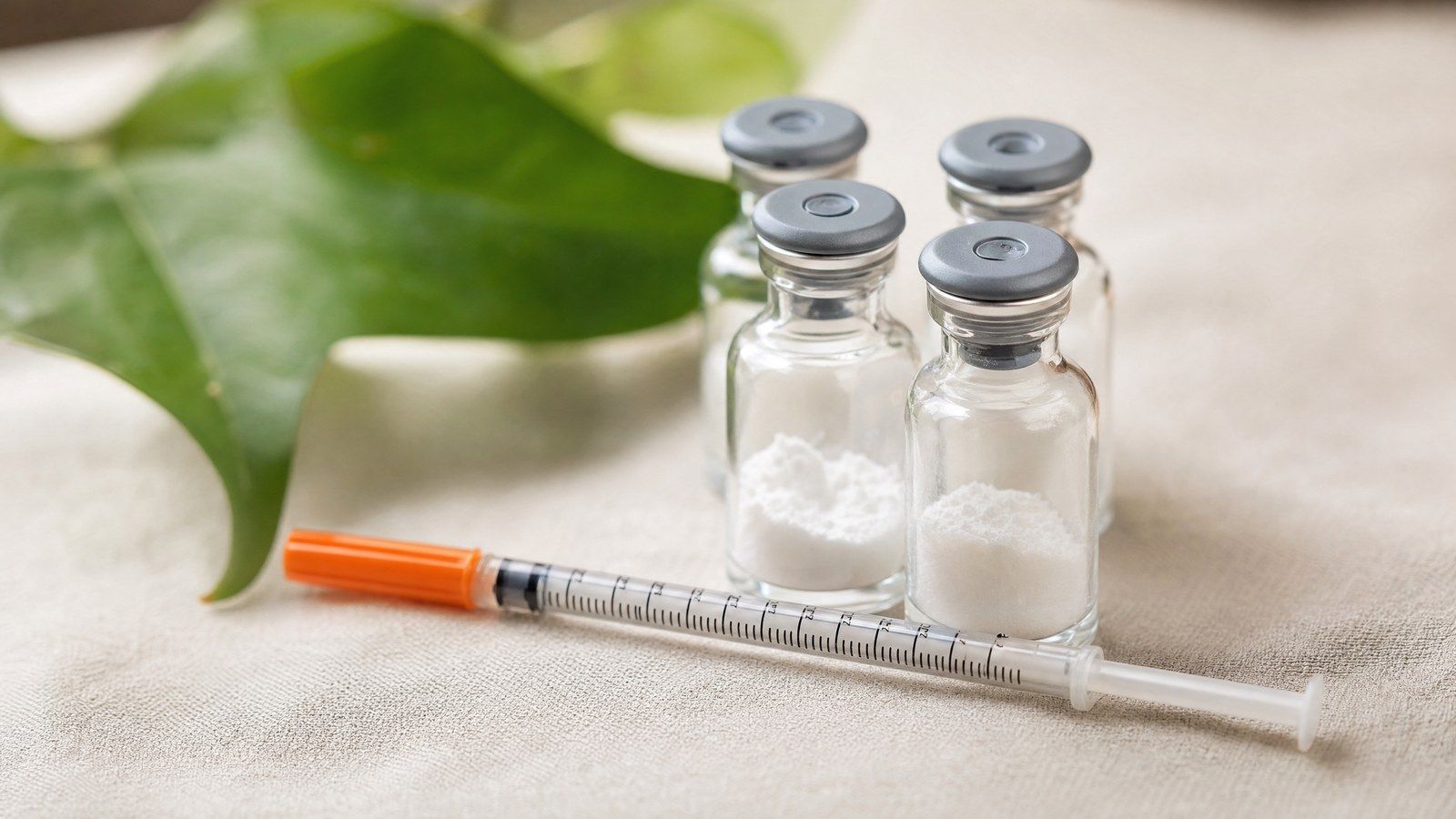
It pairs an exceptionally well-characterized repair mechanism with a strong, consistent body of preclinical research and a favorable safety profile. Its only real limitation is that large human trials are still catching up — peptides are hard to patent, so they haven't been pushed through that pipeline. But the mechanism is sound and the results practitioners see in real patients are excellent, which is why it scores high on clinical usefulness.

BPC-157 is a regenerative peptide — a cellular messenger modeled on a protective compound found naturally in your gut — that accelerates healing of tendons, ligaments, muscle, and the intestinal lining, improves blood flow, and calms inflammation. The preclinical science is extensive and the clinical results practitioners see are strong; used responsibly under a practitioner, it's one of the most useful repair tools we have.
Few tools in regenerative medicine have impressed me as much as peptides — and BPC-157 sits near the top of the list. I had a major spinal injury that left me with chronic daily pain. Within a week of starting subcutaneous BPC-157 and TB-500, the pain began to fade, my mobility returned, and the chronic stiffness that had defined my days started to ease. I had tried countless approaches over those ten months. Nothing produced a shift that dramatic that fast.
That experience sent me deep into the science, and into using peptides with patients. Peptides aren't silver bullets — they're cellular messengers that tap into the body's own communication network to trigger regeneration, reduce inflammation, and repair tissue. BPC-157 has become one of the most dependable of them all, and in this guide I'll walk you through exactly what it is, how it works, what it's best for, how it compares to TB-500, and how to use it wisely.
"Within a week of starting BPC-157, the pain began to fade and my mobility returned. Nothing in ten months of recovery had created a shift that dramatic. Peptides aren't silver bullets — they're the body's own repair signals."
Peptides are short chains of amino acids that act as the body's biological messengers — if proteins are instruction manuals, peptides are the Post-it notes that tell your cells exactly what to do: repair this tissue, build this collagen, calm that inflammation. They're not steroids and they don't override your biology. They reinforce the rhythms already written into it. Many compounds you know — insulin, collagen, glutathione — are peptides, and the richest natural sources are the organs and glands that traditional healers used for centuries on the principle that "like supports like." [1]
BPC-157 is the synthesized, concentrated form of that gut-protective compound. Think of it like vitamin C — an orange gives you a little, while a focused dose delivers a therapeutic amount. The large majority of the research has been led by Predrag Sikiric's group over three decades, reporting healing effects across many tissues — and that body of work is what first put BPC-157 on the map. [11]
Let me unpack each one, because the mechanism is the reason this peptide is so versatile.
| Pathway | What BPC-157 does & why it matters |
|---|---|
| Angiogenesis (VEGFR2) | Upregulates and activates VEGFR2, the main receptor for vascular endothelial growth factor, prompting new blood vessels to grow into injured tissue. More vessels mean more oxygen, nutrients, and repair cells reach the area — the rate-limiting step in most healing.310 |
| Nitric oxide system | Interacts with the nitric oxide pathway that governs blood-vessel tone and flow, helping maintain perfusion to healing tissue. This vascular support runs through nearly all of its effects.12 |
| Growth factors & tissue rebuilding | Boosts fibroblast migration and the expression of growth-factor receptors — including the growth-hormone receptor — accelerating collagen production and tissue remodeling in tendon and ligament.45 |
| Gut-barrier protection | Strengthens the intestinal lining, helps heal ulcers, and stabilizes intestinal permeability — even protecting against the gut damage caused by NSAIDs. This is the talent its gut origin predicts.89 |
| Cytoprotection & lower inflammation | True to its "body protection compound" name, it shields cells from injury and dampens inflammatory signaling across many tissues — part of why people often feel pain relief alongside structural healing.1 |
| Benefit | Evidence | What it does |
|---|---|---|
| Tendon & ligament healing | Strong preclinical | Faster, stronger tendon and ligament repair, better fibroblast migration456 |
| Gut healing (leaky gut, ulcers, IBD) | Preclinical + early human | Strengthens the gut lining, heals ulcers, stabilizes permeability; reached early IBD trials289 |
| Muscle & athletic recovery | Strong preclinical | Improved healing of injured muscle and faster recovery in models710 |
| Inflammation & pain relief | Preclinical + clinical experience | Calms inflammatory signaling; patients often report pain relief alongside healing1 |
| Wound healing & circulation | Strong preclinical | Accelerates wound closure and new blood-vessel growth311 |
This is BPC-157's signature use. In rats and in cultured tendon cells it speeds tendon and ligament healing, improves cell outgrowth and migration, and raises growth-hormone-receptor expression in tendon fibroblasts — the cellular machinery of repair. [4] [5] [6] It's the reason athletes and active people reach for it after a strain or tear.
Why it helps: more blood supply, more growth factors, and faster collagen remodeling at the site of injury.
BPC-157 comes from the gut, so it's no surprise this is one of its most compelling uses. It strengthens the intestinal barrier, heals ulcers, and stabilizes the kind of increased permeability behind leaky gut, and it decades ago advanced into early human development for inflammatory bowel disease. [2] [8] [9] In my clinic, gut cases are where I've seen some of its most consistent wins.
Why it helps: it rebuilds the barrier and calms the inflammation that keeps the gut from sealing.
BPC-157 improves the healing of injured muscle and supports the angiogenesis that drives recovery, which is why it's popular for getting back to training faster after an injury or hard block of work. [7] [10]
Why it helps: better blood supply and tissue repair shorten the gap between injury and return.
As a cytoprotective compound, BPC-157 dampens inflammatory signaling across tissues. [1] Clinically, this often shows up as pain relief that accompanies the structural healing — one of the first things I noticed in my own recovery.
Why it helps: calming inflammation lets healing proceed and eases the pain that comes with it.
By driving angiogenesis and improving blood flow, BPC-157 accelerates wound closure and tissue repair, and may support circulation more broadly. [3] [11]
Why it helps: new blood vessels are the foundation every other kind of repair is built on.
This is one of the peptides I have personally experienced a benefit with. After my spinal infection, BPC-157 (paired with TB-500) was part of what finally moved the needle on pain and mobility. Since then, my team and I have used it as a foundational repair peptide, and the pattern is consistent. Patients recovering from injuries often heal faster, those in pain often feel relief, and patients with stubborn gut problems — leaky gut, ulcers, IBD — frequently see their markers and symptoms improve. It's not magic, and it works best alongside good nutrition, sleep, and movement, but it has earned a permanent place in our toolkit.
| BPC-157 | TB-500 | KPV | GHK-Cu | |
|---|---|---|---|---|
| Natural origin | Gastric juice; stomach & duodenum lining | Thymus; nearly every human cell (thymosin β-4) | Fragment of α-MSH | Copper peptide in plasma, saliva & skin |
| Best known for | Localized tissue repair, gut healing, angiogenesis1 | Directing cells to injury; systemic, whole-body repair13 | Calming inflammation (blocks NF-κB); gut & immune support | Collagen, skin & hair, wound healing |
| Typical form | Injection or oral | Injection | Oral or injection | Topical or injection |
| Pairs best with | TB-500 | BPC-157 | BPC-157 | Collagen + vitamin C |
The reason BPC-157 and TB-500 are such a classic pairing — the combination I used myself — is that they cover different parts of the repair process. BPC-157 builds the blood supply and rebuilds tissue locally; TB-500 helps the right repair cells get to where they're needed throughout the body. Together they tend to outperform either one alone. [13]
Injection bypasses digestion and delivers the peptide intact, which is why most of the systemic-healing research uses it. For gut targets, the oral route plays to BPC-157's natural stability in the stomach. Your practitioner will help you choose the route, form, and plan that fits your goal.
30-day protocol
Rebuild the gut lining and microbiome: the remove–replace–repair sequence, foods, supplements and the labs that confirm progress.
Free with your Dr. Axe account
View the protocol →| Element | What I usually recommend |
|---|---|
| Dose | 500 mcg per day (research range ~250–500 mcg, 1–2× daily) |
| Schedule | 5 days per week for 6 weeks, then 6 weeks off — then reassess with your practitioner |
| Route | Subcutaneous for systemic or orthopedic goals; oral or liposomal for gut-focused goals |
| Stacks with | TB-500 for deeper musculoskeletal recovery; a gut-healing protocol (L-glutamine, zinc carnosine, bone broth) for the gut |
| Oversight | Individualized and monitored by a qualified practitioner; quality-tested product with a certificate of analysis |
For orthopedic and systemic goals, the injectable route has the most behind it because it delivers the peptide intact. For gut-focused work, BPC-157's natural stability in stomach acid means oral and liposomal forms can shine, and I'll usually pair it with a foundational gut-healing protocol rather than running it alone. Cycling six weeks on and six weeks off gives the body time to integrate the gains, and the exact plan should always be set and monitored with your practitioner rather than guessed at from an unvetted vendor.
Most reported side effects are mild — things like temporary redness at an injection site or transient digestive upset. The bigger practical issue is product quality, since peptides should be sourced through a practitioner rather than from unverified "research chemical" vendors. And because BPC-157 is on the World Anti-Doping Agency's prohibited list and banned for U.S. service members, anyone subject to testing should steer clear. [14] There are also still no long-term human trials, so its multi-year safety profile in people remains unknown. And one specific caution is worth understanding. Because BPC-157 promotes angiogenesis — the growth of new blood vessels — and tumors rely on building their own blood supply to grow, anyone with active cancer or a personal history of cancer should avoid it until human data settles the question.
Here is the fuller picture. Peptides themselves aren't new or untested — insulin, collagen, and glutathione are all peptides with long safety records — but many newer therapeutic peptides have never been pushed through FDA approval, partly because they're difficult to patent. In late 2023 the FDA placed BPC-157 in its Category 2 list of bulk substances, which effectively limited pharmacy compounding. [15] In 2026 that classification came under formal review. Federal health leadership signaled a more open posture toward peptides, several earlier nominations were revisited, and a Pharmacy Compounding Advisory Committee review was scheduled. [16]
The important nuance is that moving off a restricted list is not the same as FDA approval — it changes access, not the evidence bar. For now, BPC-157 is most appropriately used with a knowledgeable practitioner and a quality-tested source. And because it sits on the World Anti-Doping Agency's prohibited list and is banned for U.S. service members, anyone subject to testing should steer clear. [14]
A good practitioner will look at your whole picture, match the peptide and dose to your goals, and monitor your progress. If you're drawn to peptides for an injury or a gut issue, that partnership is the safest and most effective way in — and it's how the people I've seen do best with BPC-157 got their results.
BPC-157 may be worth discussing with your practitioner if you have:
BPC-157 is one of the most useful peptides in regenerative medicine — a cellular messenger, modeled on a compound your own gut makes, that helps the body do what it's designed to do — repair, rebuild, and rebalance. Its mechanism is well understood, its preclinical record is deep, and its safety profile is favorable. The honest caveat is that large human trials are still catching up — but the clinical and anecdotal results practitioners see, including in my own recovery and my patients', are strong and very promising.
If you're dealing with a stubborn injury, chronic pain, or a gut that won't heal, BPC-157 is worth a real conversation with a qualified practitioner. Used responsibly, alongside good nutrition, sleep, and movement, it can be a remarkable catalyst for healing. This article is educational and isn't a substitute for personalized care.
Dr. Josh Axe, DC, DNM, CNS is a doctor of natural medicine, clinical nutritionist, and bestselling author with more than two decades of experience helping patients heal at the root. He has used and recommended peptides in his own recovery and in clinical practice. This article was medically reviewed by the DrAxe.com Medical Review Board.
Medical disclaimer: This content is for educational purposes only and is not a substitute for personalized medical advice. BPC-157 is not yet FDA-approved and should be used only under the guidance of a qualified, licensed practitioner. It is not appropriate during pregnancy or breastfeeding, in active cancer, or for athletes and service members subject to testing. Always consult your practitioner before starting any peptide therapy.
BPC-157 is one of the most useful peptides in regenerative medicine — a cellular messenger, modeled on a compound your own gut makes, that helps the body do what it's designed to do — repair, rebuild, and rebalance. Its mechanism is well understood, its preclinical record is deep, and its safety profile is favorable. The honest caveat is that large human trials are still catching up — but the clinical and anecdotal results practitioners see, including in my own recovery and my patients', are strong and very promising.
If you're dealing with a stubborn injury, chronic pain, or a gut that won't heal, BPC-157 is worth a real conversation with a qualified practitioner. Used responsibly, alongside good nutrition, sleep, and movement, it can be a remarkable catalyst for healing. This article is educational and isn't a substitute for personalized care.
BPC-157 (Body Protection Compound 157) is a peptide — a short chain of 15 amino acids — modeled on a protective sequence your body already makes. The parent compound is found naturally in human gastric juice and the lining of the stomach and duodenum, where it helps protect and repair tissue. As a therapy, it's prized for accelerating healing of tendons, ligaments, muscle, and the gut.
It acts as a regenerative signal. In study after study it promotes the growth of new blood vessels (angiogenesis), boosts repair growth factors, supports the nitric oxide system that governs blood flow, and strengthens the gut lining. In practice, that translates to faster healing, less inflammation, and better tissue repair.
Most commonly for soft-tissue injuries (tendons, ligaments, muscle), gut healing (leaky gut, ulcers, IBD), athletic recovery, pain and inflammation, and wound healing. Functional medicine practitioners also use it as a foundational repair peptide alongside nutrition and lifestyle work.
Most published studies are preclinical (cell and animal), and large human randomized trials are still limited — partly because peptides are hard to patent and haven't been pushed through that pipeline. That said, the preclinical science is extensive and consistent, and the clinical and anecdotal results practitioners see in real patients are strong and very promising. I count myself among them.
It works through several repair pathways at once: it upregulates the VEGFR2 receptor to drive new blood-vessel growth, supports the nitric oxide system to improve blood flow, raises growth factors that rebuild collagen and tissue, and stabilizes the gut barrier. Think of it as a cellular messenger telling damaged tissue to rebuild.
In preclinical studies and in years of clinical use, BPC-157 has been notably well tolerated, with a favorable safety profile and few reported side effects. As with any therapy, quality of sourcing matters and it should be used under a qualified practitioner. People who are pregnant or breastfeeding, have active cancer, or compete in tested sport should not use it.
Two main ways: subcutaneous injection (the most established route, which delivers the peptide intact) and oral capsules. Because BPC-157 is unusually stable in gastric juice, oral and liposomal forms can work well for gut-related goals. The right route and plan should be set with your practitioner.
A common, effective dose I've used and recommended is around 500 mcg per day, often run in cycles and tailored to the person and the goal. Doses are measured in micrograms, not milligrams. Your practitioner should individualize and monitor it.
Many people notice changes within the first one to two weeks, especially for pain and mobility, with deeper tissue and gut repair building over a typical four-to-eight-week cycle. My own turnaround after a chronic back injury began within about a week.
They're complementary. BPC-157 excels at localized repair, angiogenesis, and gut healing; TB-500 (a thymosin beta-4 fragment) is better at directing cells to sites of injury and supporting whole-body, systemic recovery. Many practitioners pair them, which is exactly what I did during my own recovery.
Peptides like BPC-157 can be legally prescribed and used under a licensed practitioner, but BPC-157 is not yet FDA-approved — much like several other therapies that are legal and useful but not universally endorsed. It is, however, prohibited for athletes under WADA and for U.S. service members, so tested competitors should avoid it.
This is one of its most compelling uses. BPC-157 originates from the gut, strengthens the intestinal barrier, and in studies protects against and heals ulcers and the kind of damage seen with NSAIDs. I've seen it help patients with leaky gut, ulcers, and inflammatory bowel disease.
Anyone who is pregnant or breastfeeding, has active cancer or a recent cancer history, competes in drug-tested sport, or serves in the military. And it should always be used under the guidance of a qualified practitioner, never self-sourced from an unvetted vendor.
Start with a qualified functional or integrative practitioner trained in peptide therapy, and with well-tolerated repair peptides like BPC-157. Pair them with anti-inflammatory nutrition, restorative sleep, movement, and smart supplementation — peptides are the spark, your daily habits are the fuel.
June 6, 2026 — First publication. Mechanism and benefit statements cite peer-reviewed preclinical and early human research; legal and safety notes reflect current FDA, WADA, and U.S. Department of Defense positions as of mid-2026, including the in-progress 2026 peptide compounding review.
Next review — scheduled within 6 months, with attention to new human data and the evolving regulatory picture.