
Advertisement
Advertisement
Dr. Axe Wire · Study decoded · nutrition
A small crossover trial found eating whole egg with vegetables sharply raised blood carotenoid levels versus the same egg-free meal.
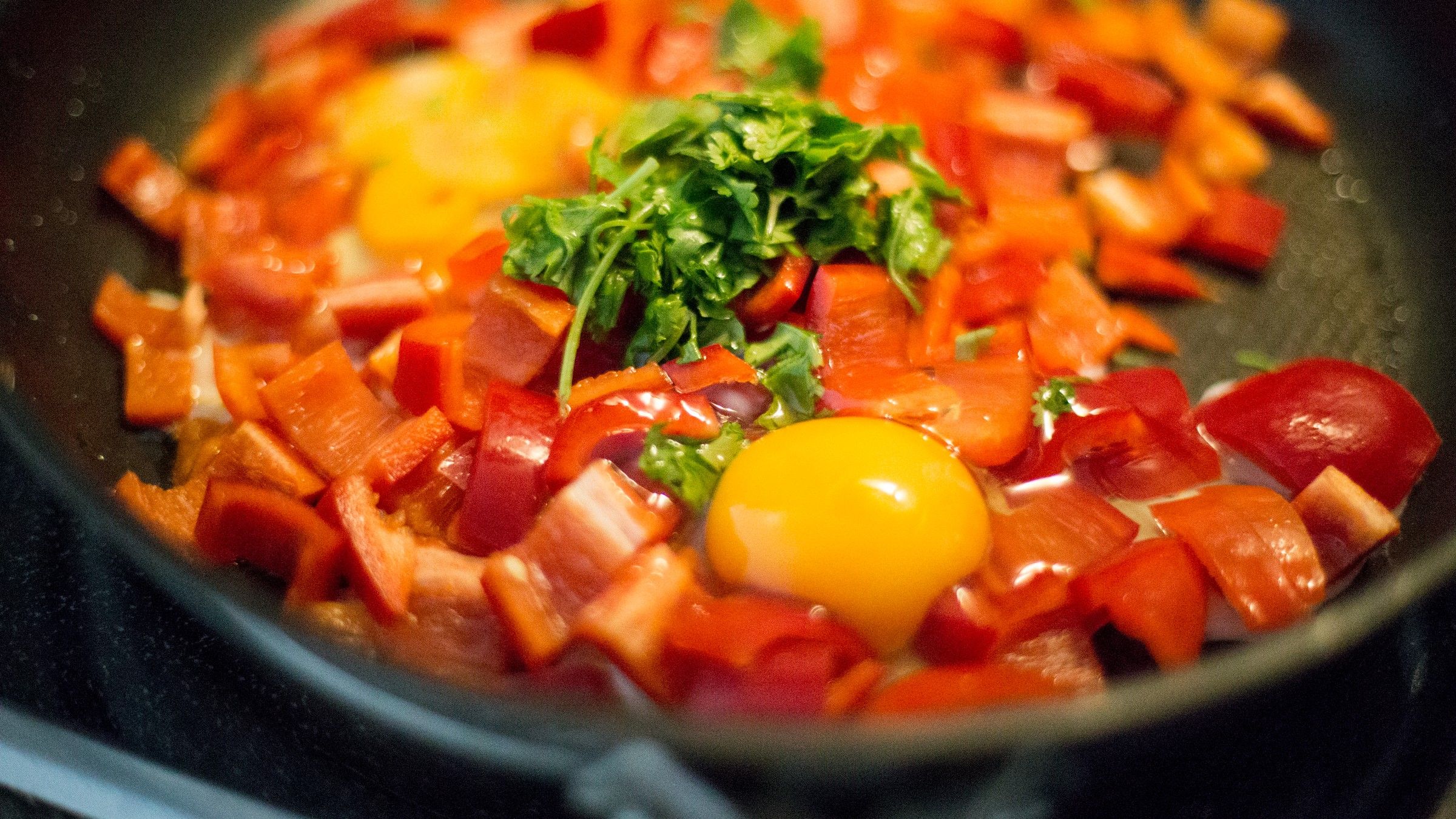
Whole eggs eaten alongside a vegetable meal sharply increased absorption of carotenoids, the protective plant pigments in produce, in a randomized crossover trial published October 19, 2026 in Food & Function.
Researchers tracked 9 pre-menopausal and 8 post-menopausal women through 8-day controlled feeding periods, separated by a 3-week washout, in a randomized crossover design. On test days, participants ate a cooked vegetable meal supplying 27 mg of carotenoids and 600 IU of vitamin D, mostly vitamin D2 from fortified mushrooms, either alone or with 100 grams of cooked whole egg adding about 0.5 mg of carotenoids and 80 IU of vitamin D3. Blood was drawn hourly for 10 hours to measure levels in triacylglycerol-rich lipoprotein, the particles that carry freshly absorbed fat and fat-soluble nutrients. Carotenoid absorption over 10 hours was 104.2 ng/mL×10h with egg versus 29.2 ng/mL×10h without it in pre-menopausal women, and 62.7 versus 10.1 ng/mL×10h in post-menopausal women. A related measure, 25-hydroxyvitamin D3, was higher with egg in both groups, reaching statistical significance only in post-menopausal women (2.70 vs. 1.03 ng/mL×10h). Vitamin D2 and its metabolite were not detected in either meal condition, and menopausal status did not change these patterns.
The authors concluded that co-consuming whole egg with a cooked vegetable meal effectively increased carotenoid absorption across both life stages, though it did not help absorb vitamin D2 from the fortified vegetables. Carotenoids and vitamin D are fat-soluble nutrients, meaning they need dietary fat to be packaged and carried from the gut into the bloodstream; whole egg supplied that fat alongside its own small amounts of carotenoids and vitamin D3. The egg added only about 0.5 mg of carotenoids to the meal's 27 mg, so the rise points to better uptake of the vegetables' carotenoids rather than the egg's own content.

This was a short absorption study in 17 women tracked for a single 10-hour test day after a controlled diet, not a study of long-term vitamin D or carotenoid status, and the sample is too small to generalize by age or menopausal status with confidence.
A vegetable meal alone left most of its carotenoids unabsorbed; adding whole egg multiplied uptake several times over in both pre- and post-menopausal women, because carotenoids are fat-soluble and need dietary fat riding alongside them to cross into the bloodstream. My take: stop fearing egg yolks and pair them with your vegetables. Scramble whole eggs with spinach and tomatoes, or add a soft-boiled egg to a salad with avocado or olive oil. This trial does not prove better long-term vitamin D status, but the carotenoid absorption signal is strong enough to build into breakfast or lunch this week.
 — Dr. Axe
Take the Cellular Health Quiz →