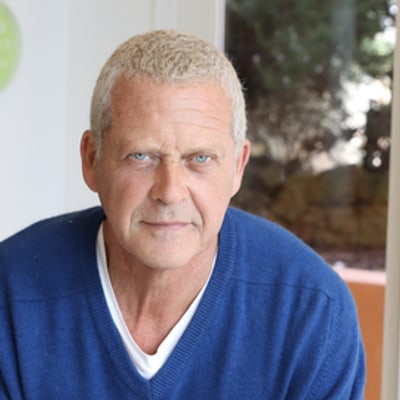
Harvard Surgeon Changes Her Mind About Modern Medicine After Autoimmune Disease
Transcript
Click a timestamp to seek the player.
So it's pretty interesting how many people have Lyme, have autoimmune disease, don't know it. You were one of those people. You're a Harvard-trained doctor, and you had this happen to you, and it really awoken you to the truth about what's going on in mainstream medicine.
I talk about that period of my life as like the time when I stopped drinking the Kool-Aid. It's because I was taught like Big Pharma was everything. I was a product of the '80s. I had asthma, I had allergies. I had to take all the puffers and pills. I was really medicated, and so my health fell apart. Do you believe the body can actually heal? Or does it have to depend on drugs in order to stay symptomless?
The majority of our practitioners today don't actually believe the patients can heal.
That's crazy.
The doctor that helped me, the first thing that he said to me was, "You need to look in the mirror every day and say, 'I love you. I love myself.' If you can do that, then I can help you." If we don't think we're worth recovering, we won't get better. The body's so smart. Like, it's always doing what it thinks it needs to do to protect us.
And usually what it's doing is What if I told you that everything you'd heard about autoimmune disease, infections, and inflammation was all wrong, and the way you were treating it was all wrong? Well, today I've brought in an expert, Dr.
Christine Profeta, and she's going to share with us exactly how she overcame a number of autoimmune diseases including Hashimoto's, MS, and other microbiome-related issues. And we're going to talk about some amazing cutting-edge treatments like Ozone therapy and ibu. We're going to talk about plasma exchange.
We're going to talk about herbs and how to get to the root of the issues. Also, how to heal the body and overcome issues related to parasites and mold and so much more on today's show.
And Dr. Christine Profeta is a Harvard-trained physician.
She also was a surgeon at Cornell.
She trained with Dr. Oz. She has an amazing background, and now she's helped thousands and thousands of people reverse Autoimmune disease, chronic infections, and so much more. Dr. Christine, welcome to the show.
Thank you for having me.
Well, I'm really excited to have you on. I know that we were, we were chatting about your incredible story of overcoming Lyme disease and a number of autoimmune diseases. And these conditions today have just continued to explode. And I think there's actually— I saw a study recently saying there are millions of people that have autoimmune disease and they don't know it, especially Hashimoto's thyroiditis is one in particular. And a lot of people with Lyme disease, like, I remember Many years ago, I went and had my, my, my entire family did a test for Lyme. And of the 5 of us, my immediate family, not Chelsea and my— but I'm talking about my, my parents and my siblings— I'm the only one of the 5 who didn't have Lyme. And, and, and 3 of my 4, um, family members didn't have any symptoms of Lyme at the time. So it's pretty interesting how many people have Lyme, have autoimmune disease, don't know, and then they hit something, whether they get a virus or have a life, uh, trauma or stress, and then all of a sudden these symptoms start to, um, open up and they start to realize, oh, I have, you know, I have Lyme or mold or one of these issues. And you were one of those people who— what's so amazing about your story is you're a medical doctor, you're a Harvard-trained doctor, and you had this happen to you, and it really awoken you to the truth about, you know, what's going on in mainstream medicine versus, you know, more holistic medicine, and which is better for helping somebody get to the root of the issues.
Yeah, completely. I mean, I talk about that period of my life as like the time when I stopped drinking the Kool-Aid because I was taught like Big Pharma was everything. I was a product of the '80s. I had asthma, I had allergies. I had to take all the puffers and pills and my heartbeat fast. I was on theophylline. I mean, it was like I was really medicated, but I thought I was like, well, right? I was fine. I didn't see myself as— those things didn't equate to illness in my head. At the time. They just empowered me to go on and do what I wanted to do. And then when I got into surgery, I was under such an insane amount of pressure and stress. I mean, I was working 100-hour weeks. We were short surgeons at Cornell at the time, and so I was covering 5 services at one time. I remember I had— I was— I used to call myself Batgirl. I had an entire waist of beepers. I think it took me years to let go of the PTSD from the beepers going off because they were just beep beep beep beep beep. You don't realize what that does to your nervous system, to be beeped all the time. You can't even go to catheter, my agony beat. So anyway, um, you know, nutrition at the time for me was Diet Coke and bagels because bagels went in my pockets and Diet Coke was like, you know, anything with caffeine. Forget water. What was the purpose of water? Coffee, Diet Coke. That's only, only things with purpose. And so my health fell apart. I completely fell apart. I mean, it's like just like a 747 on the tarmac. And one thing led to another. Hashimoto's was one of them. I've never been a big person. I would never be thought to be hypothyroid. I ran around like a nut. I was running miles for marathons. So it's the last thing you test for. And I'm actually one, at the time, I was one of these very low T3 converters, which is a really sort of unusual subset. And that was not identified. And so I got mislabeled with so many things and treated for so many things that ultimately, When I finally recovered by going to, at the time, a holistic physician who was incredibly ahead of his time, he, I'm just gonna put a little sidebar in here, his story. The reason why he was so renowned was because he was a gentleman surgeon in, I come from New Jersey, and he took care of the governor and all these very high diplomatic people. But he had 5 children and one of them became schizophrenic and he pivoted his career to figure out which vitamins would keep him out of a mental hospital, 'cause he didn't wanna institutionalize his own son. And he saved him. He saved his life. And so he was one of the founding fathers of orthomolecular medicine. So his name was Oscar Kruse and Bill Walsh, and he did the Princeton BioBrain Institute and all this stuff. So anyway, getting back, he's the one who saved, basically saved my life at the time, and showed me the body could actually heal. So that's the introduction of thinking around, And when I teach today, 'cause we're branding and gonna start to grow, it's a very fundamental principle. Do you believe the body can actually heal or does it have to depend on drugs in order to stay symptomless once a patient has a label, right? That's like the—
I mean, I wanna point out that that's such a big shift because when you look at mainstream medicine today, they don't believe the body can heal. I mean, I remember when I first opened up my functional medicine practice in Nashville, I had so many, patients coming in who had been, you know, and you have the same thing in your clinic now. It's like, okay, it's the 5th or the 10th, I'm the 10th doctor that they've seen, and they will tell me— and this, this one really actually shocked me because I had some— I'd already seen people reverse certain conditions, but I had people coming with type 2 diabetes saying, oh no, my doctor told me that's irreversible. Or again, any type of autoimmune disease, oh, that's irreversible. Or IBD, that's irreversible. And so there, there's a whole Think about this. I mean, the majority of our practitioners today treating people don't actually believe the patients can heal. That's crazy.
Yeah, 100%. And that's the fundamental, like, that's ground zero. You either believe that we're put on this earth to be well and that if we're born well, there's genetic conditions, those are separate and aside. But if we're born well, we should be able to stay well. And doctors are not trained to think that.
That's— yeah, we're not. Yeah, I'm a big fan of the Bible. In fact, I'm writing a book right now on biblical eating and biblical medicine. And, you know, there's something that Jesus says to, to, to somebody when he was, uh, wanting to heal them, and he says, do you want to get well? Like, do you believe you can get well? And that's pretty interesting. I mean, it's one of those questions that— yeah. And there are some people— this is sort of crazy— but there are some people who I've heard you say before, become so attached to their condition becomes their identity.
Yeah.
That they actually don't necessarily want to get well.
Oh, I've been on the receiving end of a lot of anger, actually. In fact, when patients come in and I can see that in the setup, we actually have to talk about that like right up front, because otherwise I'm going to be really not— if their entire network of relationships is set up to support their disease, their whole life is— that's, that's, that's their paradigm. Yeah. So some of them can't move through that. They don't want their labels taken away. And so it's— it can be very tricky. And, and the thing that I like, I, I believe with open, transparent communication, you can conquer a lot of these tricky, more difficult situations. It's a matter of just talking your way through it. Yeah. When you speak right to the point of what it is and you don't judge the situation, when you tell the patient, "It's okay, that's what's been, it would be natural to be," it starts to diffuse some of the tension and like not pointing the finger at them and just sort of saying, for a lot of patients, I will say, "Listen, as your cellular health starts to improve and you start to wake up, you were gonna be angry at the time you lost. You were so tired and so out of it." you weren't thinking about all the time and the relationships and the quality of life and such, but then they're gonna wake up and all of a sudden, they're filled with emotion. And so it's, you know, it's beautiful to watch, but there's trickiness to get through it sometimes.
Yeah, you know, something that's really interesting is when you look at Greek medicine, Ayurveda, Chinese medicine, biblical medicine, really all forms of ancient medicine, they never diagnosed anybody with a disease. They would say, Hey, your body's too hot or too cold, or it's too damp or too dry, or there's a, there's a pattern that's imbalanced. And so, and part of me, I started thinking about, okay, is, was there a reason why they didn't diagnose somebody with a condition? Maybe because it would become part of their identity and they knew maybe the harm in that. And I don't know that, that for sure, but it is interesting to think about that. I know when my mom has had cancer twice, the first time we went conventional, the second time she went all natural and healed cancer. And, um, and one of the things my mom said, to, to your point, is, is there was a Bible verse that really stuck with her. It's, and God says I will, uh, I will renew and give back what the locusts have eaten. Essentially, it's, hey, you've lost these years. Like, I remember my mom growing up was in bed all the time. She had chronic fatigue syndrome and hypothyroidism and just, you know, was on antidepressants and just sick all the time after going through chemo. And my mom, you know, has prayed for years like, give me back those years. And she really feel like God has. So I mean, to your point, there are a lot of people who are in that position and they've had years just taken away, stolen, robbed from them because of their condition.
I'd love for you to share a little bit about—
so what you went through. Again, you mentioned Hashimoto's. What were some of the other things you were diagnosed with? And, and then also, how did you, how did you overcome those issues?
So again, I was in sort of a combined fellowship surgical program. I got one, the one spot in New York that was open the year I tried. So it was, that was a big deal to get. It was a big deal. And I loved operating. I did some really fun things.
What type of surgeon were you?
So I was— you have to start in general.
Yeah. Okay.
But I went and did open heart with Dr. Oz. I mean, I like, as a resident— well, actually, I wasn't even a resident at the time. I was still in medical school, but I jumped on the jet. And I, I remember looking at Netter with the senior resident and like, I mean, it was just really fun. I loved it. And I loved getting into everywhere I could. Then when I started as a general surgeon at Cornell, I on trauma and burns. And I mean, I was just doing lots and lots and lots of fun stuff, eventually getting to plastic. So every time I had an elective, I did plastics. And my goal was really to do the craniofacial reconstruction in the children. So that really was my goal. But then, of course, my health just completely fell apart. And so the Hashimoto's was one. I had chronic daily headaches. Ultimately, Lyme was in the mix. At one point I had some mold illness. I mean, I had like a million, a lot of different things. You know, my mood was off. It was, it was really You could just say a train wreck. And so once this gentleman figured out, you know, Dr. Kruse, that my thyroid was really the key to the problem, it took time. I worked with a naturopath who did acupuncture on me and healed my gut. Oh, the little purple pill that I was never supposed to get off of because I had an ulcer too. So that was another one. And I was like 27 years old. I remember going to GI and going, Do I have to take this for the rest of my life? Huh? I'm like, no, no, no, there's something wrong with that equation. I can't be normal and healthy and have to take a pill, like a purple pill for the rest. So that was like the first tip, right? But I didn't even know how to get off that. So he put me on DGL, he changed my diet. I think he pulled gluten out. I mean, just like simple strategies, right? He gave me probiotics and amazing, I got healed and I got off the purple pill. So like that's, you know, anyhow, that was a lot of what happened with me. What's interesting as I look back, two things to dovetail into what you were talking about. The doctor that helped me, the first thing that he said to me was, I need you to look in the, he goes, I'm gonna tell you what to do and what to take. He said, that's my job. He goes, but you need to look in the mirror every day and say, I love you, I love myself. He goes, and if you can do that, then I can help you. And if you can't, So he was saying in a different way, we have to believe in ourselves. If we don't think we're worth recovering, we won't get better, 'cause we're always looking for somebody else. We're depending on somebody else. It could be dependence on a drug, it could be whatever dependence it is. We have to dig in deep when we're not well to believe that we are worth the recovery process. And that's a big thing for some people. Yeah. So anyway, those are some of, my thoughts around the matter. And going to the other points around how did I, you know, I recovered from all of these things, but in some ways I was given small examples of what I would go on to help others with, but they never defined me. Like, I did have Lyme, but I got over it. And it, you know, I had mold illness. It was horrible. I couldn't, I couldn't even calculate a check. But I got over it. I had to live it, and I went through the misery of the experience, but I got over it. I don't really know how. I mean, looking back, I did things, I cleansed, but it was— I think it was part of my journey to experience these things at a deeper level so that when I work with patients, I can really feel it in my body, how— what they're experiencing, and it makes it more of a genuinely empathic relationship.
Yeah, yeah. You know, how long were you sick for? Like, how many years would you say, okay, this is when symptoms started and this is when I finally felt, felt like I could say I'm, I'm well?
It was probably only 2 years. It was probably a year of things coming on and a year of getting better.
Yeah, yeah. So, so you, yeah, you were very proactive in doing all the right things. I mean, this is why it matters so much too that you find the right doc, because there are people that could have been in your situation and they wouldn't have found the right guide or practitioner to help them. And then they just, you know, it could be 10, 20 years. I mean, we see this all the time. You know, I constantly hear from people, there's so much information out there. It's like, I don't know if, you know, people saying, I don't know if I should do vegan or keto or carnivore or, you know, whatever. And so there's obviously a lot of diets, there's obviously a lot of supplements. And this is why, like, I'm a big believer. I've had people ask me, hey, what sort of diet do you recommend? And my typical answer is, it's very personalized. Listen, there's no one like you in the entire world. We need to customize something just for you. And this is how the best practitioners practice. It's how the ancient practitioners practiced is really, you know, creating something specific for the person. Um, when you look at people with Lyme disease, I wanna touch on that. And then I wanna jump into autoimmune and some others. What, what are some of the patterns you tend to see in them in terms of that maybe we don't hear about as often in mainstream media in terms of how do you heal Lyme? Like what are some of those things that you do when you're treating Lyme patients?
Well, let me start by responding to something that you were saying earlier, which is how silent the disease is. So it's part of our annual screening panel and we're picking it up. I mean, I've helped over 5,000 people with Lyme, so it's not a small number of people and every version of it. And that said, we've developed sort of a method where we genuinely are able to help people recover fully from it. I can't ever say 100% because medicine is the field of never saying 100%. Yeah. And there's always gonna be that tricky case, but there's a bona fide method resolving biofilms, improving cellular health, correcting the epigenetics of the microbiome, all the things that are the fundamental pillars of our immune system. When you can get the immune system strong enough to combat the spirochetes, the game is over basically.
You see, I want to point that out because that is such a big thing, because what happens in mainstream medicine most of the time is somebody will go into their doctor and they'll say, here's an antibiotic, this is the treatment for this, right? Why doesn't that work?
It just drives it deeper into the cells. What I tell patients is Lyme doesn't like to live in the blood. It's, it's an unusual character, right? It wants to go for a ride, it wants to bury into some deep space of the body, and it wants you to be a healthy organism for 30 years, right? 40 years, it can hang out forever. That's its favorite place. So, you know, these bugs are smart and they live in biofilm communities and they talk to each other through quorum sensing. I mean, there's a whole metabolic interplay that's happening between the fungi. That's a big one we can talk about for a second 'cause it ties into autoimmune disease. So the fungi control the autoimmune responses.
And talk about bio— I just want people to understand what biofilms are to you and you.
So easiest explanation is one of two. The one I like is when you go to a rock on a river edge, and you see that slime that's on the rock, we never really stop to think about where and how did that, you know, there are new rocks to the river that don't have slime and then there's older rocks that have lots of slime. So that's a biofilm in nature. The same thing happens very simply in a water glass in our house that we leave out for too long. That slime that you now have to use Brillo if you forgot to empty it out after 4 or 5 days is a biofilm that's formed from just the microbes in the air that have, landed in the water. So the same thing happens in our human structure body. We've kind of known about these— Costerton's like one of the early, like, the forefathers of publishing the concept of biofilm formation. Um, but we've come a long way in understanding. I mean, the orthos are probably— the orthopedic surgeons are probably the ones that are the most familiar with them because it's the scourge of the implant, right? If it gets a biofilm, it has to come out. But it's slowly moving into mainstream medicine because everything from periodontal disease to chronic vaginal infections to all sorts of things are related to biofilms. It's just we don't have any pharmaceuticals to address them, so it's sort of like on the fringe, right? They can't— they can know about them, but they can't really do anything about them. So we work with them with different kinds of IVs and enzymes primarily. I mean, those are the main things. We, we also have some colonics, open colonics by the way, in our facility, which are very different from closed. And these are our strategies for addressing biofilms. But that's the idea, is that Lyme likes to get into these things and stay there and live there quietly.
And so just for everybody listening, what, what, uh, Dr. Christine here is going through is, is that these biofilms, they, they, you know, you can take an antibiotic, even natural antibiotics, and you think you're going to kill the Lyme, but these biofilms protect—
yeah—
the Lyme bacteria and even other microorganisms from being destroyed. So you can be taking these things, you have to break down and get rid of the biofilm first. So there's a very specific system in place that Dr. Christine utilizes and some of the other best doctors in the world, you gotta follow the right steps. And so would you walk us through, what would that look like from a step standpoint in terms of we do this first, then this second, then this third, in terms of getting rid of the healing Lyme?
Yeah, so again, it's a combination of IVs and oral supplement program. And we don't treat everybody with IVs, by the way. We've worked orally very well. I mean, it's possible to do that. It really depends on the health of the host. And I always say this, I treat people, not paper. I mean, I could have, 10 positive Lyme tests, 2 people that are in bed, 6 people that are, you know, dealing with a myriad of symptoms but getting about their day, and 2 people that have no idea that they have it, right? The problem with having no idea you have it is that dollars to donuts, something is gonna upset the apple cart at some point and it's gonna come out. And you need to treat it when you feel well because you feel well and that's the time to do it instead of after surgery when now it's come out and you have 50 symptoms in like 48 hours and you have no idea why. Yeah, yeah. So that's the argument for early intervention, even if somebody says, "Ah, who cares about the piece of paper?" I would agree to some extent. You don't wanna go crazy with a treatment program, but you do need to do something to kind of kick it back a bit. But so basically it's eradication of the biofilms with the IV and the oral that we do. The other piece of the equation that gets unnoticed is parasites. And I actually talked a little bit about this to Neil Nathan and Jill Krista's group of doctors just Saturday, to a whole group of doctors, is that's like the unknown internal reservoir, right? So the biofilms and the parasites, particularly nematodes and liver flukes, they love Lyme, or that's what we believe. I mean, it was discovered in the belly of a nematode, so—
wow, really?
Yeah. So the nematodes, the, the higher order organisms, reflect the internal milieu and can be co-infected So there's multiple ways to think of co-infection. So there's Lyme and then the other bacteria that patients might be, Bartonella or Lichia and things like that. That's one reference to co-infection. Then there's another reference to co-infection, which is helminth infection or parasite infection at the time when they get the Lyme, 'cause they're gonna have an impaired immune response to it. So that's different co-infection. And then there's this other thing that I don't even know what to call, secondary co-infection. Where the actual parasites that a patient has embed the Lyme. And the reason we know that that's in fact a truth is because you can take a patient, test a Western blot, then give them albendazole or one of the drugs for parasites, and their Western blot will go like 7 bands positive. So it means that it was in there somewhere.
Yeah, it's so fascinating. You know, one of the things that I've noticed about the way that you treat patients is very similar the way that I do. And it has— it comes down to just a, a perspective. And I think that's a big thing, that the difference between the way that you and I practice and the way that maybe somebody conventionally does is we're, we're— we just view things very differently just from the start, you know. Um, and I think this goes back to someone like Louis Pasteur and Antoine Béchamp, because it's like, okay, do you believe in the germ theory where it's the germs that are making you sick, or do you believe it's your environment that attracted those germs to make you sick. Now, I do think there's elements of both, but I do think predominantly in healing people, it's this Béchamp idea of we have to change your environment. If people view their body as like a, a stream or a lake, if you have fresh water running through constantly— and in Chinese medicine, this would be very related to just qi movement throughout the body— your, your body is healing, it's regenerating, it's getting well, and you're going to tend to be able to heal from those things. Imagine a pristine lake versus if it's a swamp, it's just sitting there stagnant. And what happens in all of the critters that start to go into a swamp, that's what's happening in some people's bodies, you know, essentially. And so it's a very— again, we need to clean up this swamp, we need to change the environment, and then some of those— and it becomes inhospitable to, you know, parasites and certain types of infections like Lyme and others. And that's one of the things I, I, you know, I think about when you think about the Lyme and when you think, I'm sorry, when you think about doing some of the IVs and you think about doing some of the supplements and the diet and even the mindset that you work on with people is we're making the body inhospitable to these pathogens.
Yeah, exactly. I mean, I first, it's funny because in my early years, I didn't have all these thinking points. You know, you have, you're just trying to do what you can do. And I started the practice and all I knew was that I wanted to bring forth a natural form of medicine in addition to what I've been taught. I believed, natural medicine had its place at the table. And then I went on and got boarded in acupuncture also. I never really practiced it, but I believe genuinely, and I see an acupuncturist regularly, and I— it's just such a powerful art. Um, needs— it needs to give— be given more, I think, attention. So yeah. Um, but what was very curious to me, because my mind thinks in statistics, it sort of naturally buckets that translates things into probabilities was the idea that you have these 10 patients with Lyme, the paper looks the same, but you have 10 different responses to what at that time might've been a doxycycline regimen or a standard Ceftazidime and azithromycin or pulsing and all that stuff that I was taught. And you have one that recovers or two that recover, six that maybe arguably feel worse, and then two that are like, put into bed with that, right? And so you're just constantly, for me, I'm thinking to myself, well, first of all, I don't ever want to give anything that puts people in, like, that's a problem for me. I don't like to put, you know, people back in that way. But you need to have a working hypothesis that explains the differences. Otherwise, your working hypothesis is not accurate. These people cannot all have just Lyme, or they should have 10 different responses. And it was working on understanding who's responding where, why, how, what, like all that that drove the model that we now practice. And then in 2006 is when the Human Microbiome Project opened up basically in the world. And from then until 2012, you had that whole like incredible shift in infectious disease because we realized we had trillions of microbes in us. I mean, we were considered to be— it's, it's actually crazy when you think about it now that like all inflammation was considered sterile before that. It was all like your diet and how much you exercised. And now we realize— and what's sort of strange is that there's so much literature, it's preposterous. Like, how— I love it because I love to read and I love to do all this research and learning about the molds and the fungi and all that. But there are doctors that are highly regarded, some of my dearest colleagues, that that still don't believe in probiotics and that the gut has anything to do with what they're seeing in their patients. And I'm like, have you read an article in the last 20 years? Like, you can't— you can't get away with saying that anymore and call yourself educated. It just doesn't work. Sorry.
Yeah, it's—
it, it is crazy, you know. Um, I, you know, it, it is crazy just the difference between, you know, some of the mainstream doctors and the holistic doctors. It's just— it's a very different view. And I Yeah, again, I think, I think we both realize this in different ways in practice. I mean, I was trained— you were trained more medically and then sort of, you know, through personal experience. I was trained more holistically in chiropractic school and then doctor of natural medicine in terms of learning these things. And I, um, yeah, it's just, it's, it's just a difference in viewing things. And one of the ways that I try and explain things to, to patients as well is, is that, like, I get this question— I, I've literally had this question a lot lately. I don't know if people have been— there's been a lot of information on parasites recently, but I had somebody say, hey, I want to do a parasite and I said, like, some— a friend just sent me a text and I said, oh, did you test, like, do you have a parasite? Well, no, I just want to do the parasite cleanse. And one thing I explained to them, I said, listen, like, you're talking about doing wormwood and black walnut tincture and all these things. I said, those actually can be kind of hard on your system if you don't actually have a parasite. I'm like, we shouldn't do a parasite cleanse, right, unless we're— we have a fairly certain you have a parasite.
Share why you—
I, I, at least I think you believe that, like, why that is. That you don't want to just go and do a treatment for Lyme or mold or, or, you know, parasites unless you have an inkling that that's probably what you have.
Yeah. So it's so important. I always, you know, balance is everything in the body. It's, it's, it's really if the body is in balance, we don't care as much what's there. It's, it's, is, is the body in balance with it? And so when you're dealing with somebody that perceives themselves to be well, you're running up against a, it's a bit of a gamble that you're gonna throw the balance off. So if you go in and just start plucking things out, there's another critter waiting to jump into its place potentially. And that's where I've seen some of the biggest trouble with patients plowing into these bigger regimens, cleansing and different things without any kind of medical guidance. I mean, it doesn't mean it's gonna be wrong for everybody. But the way, similar to what you were saying before with the swamp water, I talk about our body and our enterohepatic axis circulation and all the gut itself as like a fish tank. Like, that's how we get people better, right? The liver and the gallbladder are the pump, and the water is kind of all the things you're taking in, and we need to clean the water out, then we need to clear the pump out. Um, and then part of the way our IVs work is to go in and sort of clean out the sediment. But you're going to have this stirring up process, which for a patient that doesn't feel well is worth it. Because you're trying to get to the other side. Yeah. But when you have a patient that does feel well, it's a different risk-benefit ratio because you can't always guarantee that you're not going to upset the balance. And how easy is it going to be? Sure, you can get it back in balance after some time, but it might come at some cost in terms of how long it takes and what the patient has to go through in order to get back to balance.
Yeah.
If you've been doing everything right, eating clean, exercising, but somehow you're still not feeling your best. Your energy's dragging, your memory is slipping, and it's frustrating because you know there's more to your potential. Well, what if the issue isn't just in your routine, but it's deep down inside your cells? You know, you're investing in the best supplements, working out regularly, and sticking to a clean diet. But if your cells are stuck in what's called cell danger response, all all the hard work might not be paying off as it should. Think of your cells like a house under renovation. You can bring in the highest quality materials like the best supplements and clean foods, but if the workers inside the house are on lockdown because of a storm, nothing gets done. The materials just pile up unused. That's what happens when your cells are in CDR. They can't fully use the good stuff you're giving Getting out of CDR, the cell danger response, is the key to unlocking your body's full potential. When your cells are no longer in protective mode, they can finally use the nutrients, hormones, and energy you're working so hard to provide. That's when everything starts to click. Your energy improves, your workouts become more efficient, and you start to feel like yourself again. Go to beyondbloodwork.com to learn how to break free from cell danger response and make the effort pay off.
Yeah. One other thing that I think that the way that you treat people is, is that we don't treat the disease, we strengthen the body. The body will heal itself. The body can help kill off these pathogens. And so if your body isn't strong, you can take all these antibiotics, you can do even a lot of natural things. But your body has to be strong enough as well to deal with even the detoxification program and those sort of things you're doing. You know, in Chinese medicine, this is why a lot of those herbs in Ayurveda, a lot of them are these more of these adaptogens of, hey, let's go ahead and strengthen up the body. Let's do more nourishing foods like soups. Let's do some herbs that are going to reduce inflammation. Let's do some, you know, reishi. Let's do some astragalus, ashwagandha. Let's do some things that are going to build the body up. Yeah. So now it can do what it was designed to do and support mitochondrial function and the liver and some of these other, these organ systems. You know, one, one thing you said earlier, and I'd love to come back to this, there are so many people today with hypothyroidism. I think I saw a study that said, I mean, I, I think this is correct, it was like 60% of people that have hypothyroidism or Hashimoto's don't realize they have it. It's incredibly high. Incredibly high. And one of the things you said for yourself is you weren't converting well, that T4 to T3, which I know can, you know, the liver— I mean, there's a lot of organs that people don't realize are responsible for that. Would you walk us through a little bit of that process in terms of why maybe some physicians today miss what's going on by just giving somebody Synthroid or levothyroxine versus, like, you know, what's going on with the HPA access, what's going on with the conversion? I'd love for you to share just any insights there for people.
Yeah, and I'll keep it really simple 'cause I haven't—
Yeah, yeah, that's great.
I haven't brushed up on this in a while. That's fine. But effectively, most people are diagnosed with hypothyroidism by just having a reflexive TSH. So their TSH is checked, and then if it falls out of the bounds, so it would have to be quite high 'cause the reflex point, I think, through LabCorp is like 4.5, which for women, for some women, that's a really high TSH if they're in their menstruating years. They're not allowed to even apply to have fertility treatment unless they're between 1 and 2. So that's an issue in and of itself. So those high numbers, and for the audience that's listening, this number goes inverse to the thyroid function. So as this number, this TSH goes up, it means your thyroid is going down, not the opposite way. So if that panel has been ordered, it will, that's the first miss because you would never reflex to the free T3 and then what's called the free T4— excuse me, free T4, which is usually in the panel, but the free T3 is what's often not. There's an index, and it's the, it's the uptake that's looked at, but the actual active metabolite coming out of the thyroid is what is important for people because it's what governs all the pathways that are under control of the thyroid. And so basically, the HPA axis, you have coming out of the hypothalamus the pituitary, and the TSH is the signal from the pituitary to the thyroid gland to release the thyroid hormones. So checking to be sure that the free T4 and the free T3, which are the hormones coming out of the thyroid gland, are in the normal range is imperative because heavy metals, toxins, and all sorts of things can downregulate the conversion of the free T4 to the free T3. So that's what's missed by a lot, and that free T3 is very biologically, um, active and critical for maintaining metabolism, mood, all sorts of things. So if that's not being specifically checked, and it rarely is, it can be missed, and it can be a big source of people's trouble, where— with chronic fatigue syndrome and all that. So we always check the TSH, the free T4, the free T3, and then the thyroid antibodies. Um, and that's what would define Hashimoto's, if there are antibodies to the thyroid present. Those are often and not checked at all, so people don't know why they have hypothyroidism. And it's important because gluten has like a 30% overlap with the thyroid protein structures. So pulling gluten out of the diet is like the first thing to do for Hashimoto's, right? So there's like some really simple interventions. Again, this is another one that I just had and then don't. It just popped out or away. I don't know what happened, but it's gone. So anyway, those are some, just some basics that, you know, people can be sure to ask their doctors to get the right test done.
And I wanna point this out, this is so important for anybody who has really any condition, but especially hormonal issues. And I wanna kind of stick here for just one minute on this hypothyroidism, Hashimoto's. I mean, I've had patients to where we gave them iodine and it got better, but most that doesn't fix. But again, I've had patients where that fixes. I've had patients to your point, we just focused on the autoimmune portion. It's like, okay, we're gonna get you off of gluten, off of casein. We're going to get you on a diet that's very, uh, anti-inflammatory, and that fixes it. I've had patients to where we need to do a lot of qi yang boosting in Chinese medicine, a lot of higher doses of ashwagandha, rhodiola, those sort of herbs. That helped. I've had other patients where it's like, no, it's a liver and a microbiome issue. We have to go and fix that, especially for those T4 to T3 people. So to your point, like, if you're a person listening and watching and you have Hashimoto's or hypothyroid, you've got to make sure you're treating it in the right way because there are 4, 5, 6, 10 different sort of things that could be your root cause. And if you go into even somebody naturally and they're just sort of living in that cookie-cutter mode where it's like, well, I just give everybody just ashwagandha and gluten-free, they'll probably help 25% of the people, but you might be part of that 75% where you're not fully getting to the root cause. So it's just so important that you're able to discover that first thing of what's the root cause. And then in addition, if you don't know that to start, like we talked about changing your environment, your internal environment, reducing stress, getting good sleep, doing your best to really do a lot of more, you know, whole foods that are easy to digest, nutrient-dense. Those are, those are so key as well. Um, Christina, I want to ask you about, um, some of the other things I know that you have, have treated in your practice. So we've talked about Hashimoto's and hormonal issues. We've talked about Lyme. What are some of the other most common conditions that you see in your practice, and what are the ways that you go about getting to the root cause of those issues?
So autoimmune is probably the big bucket, um, or biggest bucket, I would say. We, we do— we're seeing a lot more neurodegenerative stuff since the pandemic, but that's a different conversation, or maybe we can have a minute.
But yeah, I'd love to talk Long COVID after this.
Yeah, but autoimmune, let I'll just say one quick thing that I forgot on the subject of the Hashimoto's. So if you're a, if you're a poor converter, the, the critical thing is that most doctors are prescribing Synthroid, um, or levothyroxine, which is not the active form. And so for patients that have that, you have to ask your doctor to give you the active form, which is Cytomel in the pharmaceutical world. Armor is still in the pharmaceutical world, and it's a more natural porcine derivative of thyroid hormone. And so those might more effective strategies by giving back that active metabolite. So anyway, so we see a ton of autoimmune and we see autoimmune with Lyme, we see autoimmune on its own. Autoimmune is just like, how I look at it is it's just a stamp in time, a date, like a date, almost call it like a moment in time when your body had what's called a Th17 type inflammatory reaction. So this gets really into the actual relationship of the innate immune system with the microbiome. And so 70% of the immune system, 80%, is sitting in the lamina propria of the microbiome, and it's taking its signals, are basically, we have these little octopus-like cells that are taking signals out of the gut and translating that into signals that then arm our immune system. The innate system functions first, and then that translates into the adaptive system, which is what most of us associate with our immune system. So the adaptive system being the T cells and the B cells, and they then have the memory cells that would allow us to be vaccinated and then hold memory to an infection, either natural or through other mechanisms. So even as a trained physician, I wrote actually a second book that is all about this relationship that'll get published at some point, but I really had to, refresh myself on this intricate interplay. And it's amazing how the innate system, which I liken to like the outer moat of a castle, it's sort of where it's shared with reptiles, basically. I mean, it's not as sophisticated, but it's so important. And so autoimmune diseases tell us that that innate system fired off basically a Th17-type immunological response. And Th17 is a very particular type of immunity that is very, very strong. It's governed by the molds. And the purpose of it is basically to degrade tissue to get white blood cells into an area of inflammation really fast. But if it doesn't shut off, our own tissue gets chewed up by our immune cells. And we have antinuclear antibodies, which in a basic, very simple sense, most people with autoimmune disease do know what their ANA is, that's the first thing that goes off in the blood. And that means that the nucleus of the cell, the nuclear proteins got outside the cell and our antibodies formed to that. And that's not a normal occurrence. So it means that it happened, but it doesn't mean it has to continue to happen. So that's what I always tell patients. It's that like, this happened and maybe you have a Sjögren's antibody or maybe you have an anti, you know, there's a whole list of different things. But that doesn't mean you have to continue to have them. Let's try to address where did the inflammation come from? What do we think tripped it up? And then get all of those roots out of the equation. And lo and behold, the ANAs will go down or away. I mean, it's, and it's not 100% guaranteed. I never guarantee, you can't guarantee anything, but it's gotta be well over 50% of the patients that we see with ANAs positive that we can get them to go back into remission.
Yeah, yeah, it's so powerful. It's so powerful. Again, I think for years people thought, I have autoimmune disease, this is irreversible. And yet there are so many people reversing. My own brother had Hashimoto's. He reversed it completely. Now he's a doctor of functional medicine in Tampa, Florida. I know, yeah, thousands of patients I've worked— that you, that you've worked with have reversed everything from Hashimoto's to RA to, to lupus, even issues like MS. I know, I mean, that was one thing I know you've seen a lot of patients with MS as well.
Yeah, yeah, exactly. Same thing, very tightly linked to— I think what's going to start to come out, the microbiome, which is the mold layer, and that the term was only coined in 2010, so right at the inception of the literature that's being written about it. But that layer is so cool. It's, it's this little fungal layer that's connected to our autonomic nervous system. Like, every cell in our body is controlled, and fungi are warring organisms. Systems, and they're our primary defense. So they're in there trying to help us. It's just that, you know, there are lots of situations where they go out of balance, and COVID was a big part of that. And, you know, but when they're out of balance, they can cause a lot of trouble too.
Yeah, you know, I spent a lot of time studying mushrooms and fungi because we own— myself and Jordan Rubin own a manufacturing company where we grow mushrooms. And so we do, and it's pretty— I mean, they're pretty amazing, I'll tell you. We, uh, One of the things we started doing was we started growing the mushrooms on different compounds. We started with blue corn and growing them on non-GMO organic blue corn. And one of the things we started doing is we actually started growing them on herbs. And what was so cool is some of the mushrooms that were growing on, let's say, turmeric and ginger, their shape would take form of turmeric and ginger. I mean, they're incredibly intelligent. Another thing we, you know, when you look at the studies in terms of what can actually help heal the earth. You probably know Paul Stamets. I mean, he did a great, you know, documentary, and they reference this just minimally. But it's, you know, when you look into it more in terms of— you want to clean up an oil spill, put mushrooms there. You know, you want to clean up the soil and regenerate and break down these compounds into harmless, you know, the glyphosate and others, use mushrooms. And so to your point, I don't think people realize how powerful fungi is for helping us heal. And when we have something growing in the body, a lot of times it's actually to protect us, even though it's giving us a symptom. It's part of a protective mechanism, right?
The body's so smart. It doesn't do anything. It doesn't wake up one day and say, "You know what? I'm just gonna be a bad body today and do a bunch of silly rogue things." Yeah. Like, it's always doing what it thinks it needs to do to protect us. And usually what it's doing is protecting, it's letting go of something else because the thing that it's responding to is going to threaten our life faster than the other thing.
Something.
Yeah, that's behind there. And that's where it can sometimes be confusing, because you can look at it and think the body's really not helping us out here, but it really is. It's just that it, it's, it's actually putting things in sort of rank order.
Yeah.
And I, I actually tell people this a lot, particularly when we're talking about toxic load and toxins in general, is that, you know, we only have a certain amount of detoxification pathways. It's a rate-limiting step if we're exposed to a lot of toxins, but infected, the body is going to triage the infection because it's more going to be more life threat. It puts it in rank order. And so, you know, mercury isn't going to kill us this minute. It's going to take some time. So it actually— that's part of the cell danger response is that it puts it away because it can get to it later. Can't get to the infection. You know, the infection is the thing that it has to deal with front and center. Yeah. So that's one of the ways that patients that are sick or inflamed have a very high toxic load despite making really good choices, it's because their body just can't handle all the things that it's being asked to do.
Yeah, I love it. What are some of the treatments you utilize in your clinic along with— I know you talked about supplementation, I'd love to hear about some of those. Do you ever use ozone or hyperbaric or certain types of lights or anything for, for treating patients?
Yes, so we do. We have, um, certain kinds of IVs. We, we do use ozone. We have a bunch of different kinds. We have the regular, like, autologous hemotherapy where we pull it, mix it Then for a long time we had the 10-pass. So that was our hyperbaric, but there's two different hyperbarics, not the chamber, it's the 10-pass. But recently we just brought in EBOO, which was like super powerful, way cool. And then the most recent trick just coming in the last couple of weeks is that apheresis or the plasma exchange.
Plasma exchange.
And that is amazing. I mean, we're actually sending it out for testing now to see like what what's actually in there, because the claim is that one plasma exchange is 60 to 65% of the circulating toxic load.
Wow, it's incredible.
Which is cool.
Walk us through sort of the difference between, you know, the regular ozone, an eboo, and then also, uh, what— how's plasma exchange different than some of these ozone treatments?
Oh yeah, plasma exchange is an entity into of itself. So I'll go through the ozone So major autologous chemotherapy has been around basically since, I think, even before, like the '50s when it was used. It's still in Europe quite prevalent, but it was the preferred antimicrobial until the second generation of antibiotics became very popular. So when erythromycin, clarithromycin, biaxin, and those, the derivatives, non-penicillin drugs hit the pharmaceutical world, ozone kind of went to the shelf. But before that, it was being used, you know, worldwide for different things, and it's incredibly safe. I mean, that's the most important thing, is that we don't do anything in our clinic that's going to put anybody at risk. So I'm very— we do lots of different things, but I'm extremely cautious in what I do, and I study it, probably everything, for years before I bring it in, because I just want to know all different angles and One of the things too is we also don't let patients just do anything they want. There's a way that they have to get that. You know, you can't bring somebody in that has complete cellular disruption and give them a 10-pass. They're going to be in bed for days with a Herx. So that's also important is that we require patients to have a certain amount of cellular health, making sure the inflammation is down before we offer them some of the bigger therapies. So 10-pass is like a major autologous. This, except for the fact that the ozone is being introduced into the blood under pressure, so it has a higher diffusion gradient. And the nurses are pulling the blood out 10 times from the patient, mixing it in a glass bottle because we don't have plastics around with that, and then it's going back in.
And so what does ozone do itself to— and, you know, why, why is somebody getting ozotherapy?
Like, what is the ozone doing to the blood in the Well, it's really actually making— I keep it in very simple terms. Sure. Because otherwise you can get lost in the science. And I've read Shallenbergers' books and all of this stuff. So internal to our body, we have phagosomes, we have lysosomes, and we have these oxidative bursts as part of our killing process. So basically we're enhancing that process. We're just giving our body like a supercharged way of killing the microbes in the way that it wants to. That's how I look at it.
Yeah.
Maybe I'm wrong.
Yeah, no, no, it makes sense. So, so basically, I mean, ozone is, is a very strong antimicrobial. Yes. With very minimal side effects. You have these organisms within your own body, or these, these structures that are creating— they create ozone. I mean, your body does create it in very, very small doses, but now you're able to get this ozone put into your bloodstream, and it really— I've seen a lot of people with mold infection, other types of infections, who've seen really, really good results with it.
Yeah. Yeah, it's great. The thing that ozone doesn't do is it doesn't penetrate deep into the biofilms. That's the only issue. So the ozone merry-go-round is because a patient will feel better from it for some time, and then they'll need to get more, and so on and so forth, if the biofilms are not being addressed in some manner. That's my impression. Yeah, it makes sense. Why people do well with ozone but then continue to need it.
And then when you do the, things to break down the biofilms. I know that I've used enzymes in the past with patients and other, and other herbals, but what are some of the— what do you do anything via IV as well for, for the biofilms, or is it all oral?
Uh, we believe that some of our IVs are having an impact. We're in the process of sort of— there's intellectual property that governs it, so I don't— I can't be specific about— but we believe that the IVs are breaking down the biofilms. Um, colonics are also making a big dent in them too. And so let me maybe take one second to explain the difference between the open and the closed, because I tell patients, do not Google colonic because you will never come for one. Um, because almost everything that's written about a colonic is on the closed system, which, if done properly— I'm just going to leave it aside whether it's a successful therapy or not. When I went to Germany and was trained, I had to have I would not do them for patients. I don't do— this is my governing law. I have done everything I tell a patient to do. Yeah, it's that simple. If I'm not willing to sit down in the chair and get it myself, I have no business telling a patient to do it. So that's my rule. I've done everything. So I've had the closed— I will not do that for a patient. That doesn't mean there aren't some patients that still prefer that, and that's fine with me if they prefer it, and that's their choice. But the open system looks like a bathtub on an angle. And it's a self-inserting device. It's a Yankauer, which has a tiny little nozzle. And once a patient slides down on that, and they can have assistance from a trained professional if they need it, but most don't, um, there's a button on the wall that they push, so they control the flow. So if they're uncomfortable for any reason, they just turn it off. But it's self-evacuation, meaning there's no pressure system that builds up, so there's no risk of rupture. I mean, I've even had GI, like, bless this for me. So I've— we've done this on so many different patients. There's very few real contraindications. The only absolute contraindication would be surgery, having, you know, in the last period of time. Obviously bleeding hemorrhoids, we're not going to be so eager to do that, but we can't cause any harm by that system at all. The only thing that can happen is if a patient is really tight and has problems with their vagus 'cause of all the sympathetic overdrive, you can see some vomiting or nausea, et cetera. You could have, that would be an untoward effect. But basically these colonics go for some time and the first—
And is it just water or what's in part of the colonics?
It's just water. It's just filtered water. And the first thing to evacuate is what would become a bowel movement. But then, After some time, this slimy stuff that starts coming out is just incredible amounts of sediment. So it's not clear how much of that is true biofilm versus the wicking action that it's causing by the fact that you're having such a strong evacuation is not pulling toxins and things through the enterohepatic circulation faster and pulling down. I believe because of the character of what we see come out that that is in fact, there is biofilm element in that. Are you familiar with Jensen's work from way back? He wrote the guide to better bowel care. So he was a chiropractor that had this clinic out in Nevada, I think it was, but way back.
He's one of the early pioneers, like 1900, yeah.
Yes, and he cleansed. By cleansing, he resolved the most awful looking of skin conditions you can imagine. And he swore by, he had a colon aboard, and he swore by this special cleanse cleanse. And if you do, you follow things. And I did that cleanse actually in my early years, um, and that stuff that he talks about, mucoid plaque, will come out if you follow his instructions. So there is biofilm in our gut. Yeah, that absolutely can be eradicated and improve our health.
Wow, wow, it's amazing. Yeah, it is amazing. And then, and then talk to us about the plasma exchange. Yeah, that's newer, I mean, but it's, it's powerful as well.
Yeah, so I've been studying this for a while as well. Um, it's a medical therapy that's important for patients to know. It's a medical therapy that's been around for decades. Every hospital in this country has a wing that does apheresis with these machines. And the question is, what part of the blood is being filtered out? So if you have genetically high cholesterol and 500s, 600s, that's, that's a therapy that the doctor may recommend is to have. So it's a centrifuge, so the blood comes out gets spun and the different densities of where the fraction that's causing trouble. So even people that have things like leukemia and whatnot with high, high, high white blood cells might be recommended to have that fraction extracted. What happened was that the plasma started being looked at as a source of toxins. And again, medicine isn't geared towards wellness. It's geared towards disease management. So, in the standard pharmaceutical arena, you wouldn't have the recommendation to remove toxins for your overall health. But what happened was patients with neurodegenerative diseases, neuropathy, a lot of the things that we've seen since the pandemic have sort of wandered into this as a therapeutic strategy, and it's incredibly successful. So basically, you know, everyone is effectively a candidate for it. We check, you have to make sure that the blood count is high enough because you don't want to go in anemic. It takes about an hour, an hour and a half, and the plasma is being replaced with albumin. So that is pharmaceutical-grade albumin. That's the only thing— that's the only thing being introduced. And all these toxins are being removed.
All right, Christine, so we're talking about plasma exchange, and I know we have a mutual friend, Mark Hyman, who I know is getting this recently. Gary Breck. I've seen all kinds of people starting to do this, this sort of treatment. And what are some of What are the benefits of plasma exchange and how does it work on the body?
Yeah, so basically you're pulling out the plasma fraction, which has most of the proteins. So albumin is one of the major proteins produced by the liver that holds a lot of, and this is a little tip in blood work that even I hadn't connected until recently, when albumin fractions are up, it's one of the tells, it can be a tell that a patient's toxic because they're upregulating their albumin as the chaperone. So the plasma is being pulled out of the blood And it is pharmaceutical-grade plasma that's being, albumin, excuse me, that's being put back in in exchange for that. So you will, in one sitting, drop anywhere between 60 to 65% of the total toxic load that's circulating in the system. Wow. So, you know, in our practice—
So it acts kind of like a binder to toxins in the blood.
Wow. It's unbelievable. Yeah, it's unbelievable what it can accomplish. So our model, my model, is all about detox. Toxification and improving mitochondrial health in order to restore patients to wellness. So the faster we can get them detoxed, the better, the more connect. So I'm, you know, I love my patients, but I'd like them to graduate. The whole point is that we want them to get better and get about, you know, their lives and living healthy, full lives. So anything I can do to condense my program, if you will, and this is one of the new things that we've added we've— you know, I'm, I'm actually really excited about it. But in terms of longevity and wellness, it's toxins that are aging us, right? It's that— that's the cornerstone of what the aging process is, and then all the inflammatory response that, that results from that. But the more that we can stay detoxed, the more we're going to be able to stay healthy.
Yeah, that's powerful. Yeah, there are so many new— again, I think people use the term— I mean, cellular medicine, regenerative medicine, some of these things in a way are uh, you know, that people can do at home or biohacks. But I do think that this is really, you know, there, there are so many things today that are available for people that have issues like Lyme, for people that have autoimmune disease, for people that have toxic illness, as you mentioned, neurodegenerative illness. There are so many therapies like, you know, the powerful ozone like EBOO, hyperbaric chambers, getting plasma exchange, doing these IVs that can really help people see great results. And again, I think so much of it is just encouraging people see a great practitioner. I had somebody recently who said, well, I just love my doctor. I'm like, yeah, but they don't want to get you off the medication. You're actually getting worse.
They're destroying your health.
I'm glad they're a nice person, but let's actually get you under the care of somebody who's really going to be able to help you get to the root cause and see you healed. Because, because God wants you healthy. God wants you healed. We want to see you at 100%. And so I know we want that both for everybody. I want to, I want to talk about, you got a new book out. Called "A Nation of Unwell." Yes. Walk us through, what's the core idea behind that book and some of the things that you get into to help people?
So the tagline is what's gone wrong, right? So if we're this superpower in the world, why are we so sick? What's making us so sick? Diseases are in epidemic proportions today. I mean, and then if you look at the post-pandemic era, it's only exponential to what it was before. But I think it's probably hard for any adult now, even as low as their 30s, but certainly 40s and 50s, and most certainly 60s, to say that they don't know somebody that's not chronically with a condition. I mean, it's just an automatic, right? It's an automatic that you're gonna have high blood pressure and high cholesterol and maybe migraines and maybe irritable bowel. These are all things we don't have to have. These are all indications that the body is starting to struggle and bend and tip. So I rewrote the book 5 times. So it took me a while to get it out. And the reason I rewrote it was because it was like a call to arms on both sides of the fence. I don't care what your alliance is, natural, pharmaceutical, whatever. It's basically a call to say, we all have to do better. Even if you're in the pharmaceutical paradigm dogma, you have to take a step back and look at the disease states rising today and realize we need to do better for our patients. So it was really, I wasn't looking to polarize any particular group. It was basically a way of saying, hey, there's another way of looking at health and wellness. And it's a lot of what we talked about today. It's looking at the fact that we have the microbiome and biofilm communities. And, you know, the aging process is the accumulation of toxins and different things that are weighing us down. And, you know, health is kind of like a seesaw, right? When we're trying to get somebody well and get their seesaw balanced, we have to look at the stressors on one side and then the balancers, all the things for the yin states to boost people up, right? And so when we get that seesaw balance, we have people in, in optimal health. But that's not really how it's being looked at. And so it was— so the general message in it in the what's gone wrong is, hey, if we're doing so well, if we perceive ourselves to be so well as a country, what are we doing wrong by our people that are becoming so ill?
Yeah, yeah, it's powerful. I wanna encourage everybody to check out Christine's new book, "A Nation of Unwell." It's on amazon.com, bookstores nationwide. I wanna encourage you to check it out. I do, I remember there is one thing I wanted to address before we jump to chronic infections. Long COVID, I mean, what, you know, we started to see, you know, around COVID a lot of, you know, I started to see a lot more of these co-infections. I feel like there was a, there was a sort of a jump or a leap in that. Why do you think that is, and what are some things you do to treat some of those conditions like Long COVID?
Yeah, so I think that Long COVID, a large part of it, um, there's a whole separate conversation we could have about the role the spike protein's playing with Long COVID, but a big part of the long COVID population are people that were previously infected with Lyme, with infections, with EBV, with maybe Bartonella organisms, maybe Ehrlichia, maybe any of the vector-borne diseases. And COVID, COVID was rough. It rocked the microbiome, like it rocked it. And that, that's like a whole cool thinking way of thinking about the phases, phase 1 and 2, and the impact it had on the mold layer and all of that. But the bottom line is How I describe it to patients, it's like it went into your microbiome and it just like, it was like napalm, right? And it just set off everything that was lurking there, ready to go back into your circulation. So we have to basically test for all things that could be out of circulation, in circulation. They haven't gotten back into, you know, remember the biofilms accumulate, but if the accumulation is over a slow period of time, you may not know that those things are in your system because you're balanced with those things. Things. So you have to kind of go back to square one and test for vector-borne diseases, test for molds, test for viruses, you know, all the things that could be out causing people to be struggling and not getting back into balance.
Yeah, you know, the way that I think about it too is a lot of people's bodies, they can handle one infection, but what about two and three and four and five? And sometimes it's much more than that. I mean, in terms of what people are dealing with, it's like, hey, if you're fighting one person, maybe it's an even fight, But you try and fight 2 or 3, it's, it's a very different story. So again, think about it that way. There's a lot of people, as Dr. Christine's talking about here, is they have co-infections. That's something you want to be conscious of as well. You know something else interesting? I was, I was talking with this, um, uh, Oriental medical doctor, and he said one of the reasons why he believed that COVID impacted people so strongly was it was a new type of virus that people didn't really have a their immune system had adapted to. They said— he said most viruses that we're used to affect the lungs, and he said this affected the blood. And he said people weren't really used to that. He said that's why it's causing myocarditis. There's a stickiness in the blood. He said it's an infection that's mostly affecting the blood for people. And, um, and this is why I think nattokinase, quercetin, turmeric, some of these things that people are doing in higher doses, seeing some results with, they're really more in Chinese medicine what would be to cause health blood stagnation, really help, help heal the blood. I thought that was interesting as well. But to your point, I think going and figuring out what your infections are— what do you recommend to do that? A GI map, a stool test? What are some of the things that you do in order to find out what some of the pathogens are or, or that are causing the infections?
Yeah, so, so actually LabCorp, when well utilized, offers quite a bit. I mean, there's a cytokine panel that we do that bona fide levels of inflammation, you can track out which ones are causing trouble. Interestingly, Coxsackie is a virus we all get when we're little. I saw after the pandemic an incredibly high concordance with Coxsackie reactivation, and it causes myocarditis. So I don't know how much Coxsackie infection, you know, in the IgM state, that's a legitimate reinfec— you know, it's, it's the child or adult had it at some point in their life. A lot like how Epstein-Barr reactivates, you know, all the viruses can reactivate. So just standard labs alone, I mean, obviously for vector-borne diseases, there's plenty of specialty labs. It would depend. We used to use, there's been some strange things going on with labs in general too. So we were using Stony Brook a lot for the Lyme testing. Then we used Medical Diagnostics. They've changed a bit. We're using a bit of IGeneX now. They do the better panels like for Bartonella and Babesia and things like that. But there are others, Galaxy. I mean, we all know that there's this whole stool test. Interestingly, I've been working very hard and we will be releasing one soon that's commercial that is looking at some really unique elements of the microbiome. So I've been using that for a while now. But, you know, stool is important too. You got to— and I would say Genova's, their stool test, I forget what the big comprehensive one is, the one I've always used the most.
Yeah, that's what I've used the most too. Yeah, I like it. It's great.
Great. And it definitely— the one thing that's underappreciated is like the functional state of the gut, making sure that people are on enough digestive support. We use a lot of Ox bile, actually. Oh yeah, yeah, to support. And Tutka, we love that.
Yeah, yeah, so good. That's so good. Well, I just want to, uh, say, Christine, thanks so much for coming on the show. This has been brilliant. Again, I love— I get, you know, just the wisdom you bring as a Harvard-trained physician working with— at Cornell as a surgeon and now moving in the holistic medicine space and treating, as you mentioned, thousands and thousands of patients with Lyme, with co-infections, with autoimmune disease. So really excited about all the incredible things you're doing at your clinic in New Jersey and really excited about your book, A Nation of Unwell. And again, this is a great book if you really wanna understand why we're sick as a nation and what we need to do to heal. I wanna encourage you to check out Christine's new book, again, A Nation of Unwell, in bookstores nationwide.
Wanna say, hey, thanks so much for watching the Dr.
Josh Axe Show. Remember, each and every week we're diving deep into the science and principles behind how you can experience a breakthrough in your health physically, mentally, and spiritually. Also, make sure to subscribe and like and share. There are so many people today struggling with co-infections, with autoimmune disease, with Lyme and some of these other issues, and they don't know there's a natural way. So thank you, all of you, for sharing. If you're watching on YouTube, hey, let us know what is the biggest piece of wisdom that Christine shared. That you walked away with, maybe something you learned, or feel free to add some thoughts here. Would love to hear from you as well. Maybe you've known somebody who's reversed an autoimmune disease, or you've went from being in the medical model to the more holistic model. Again, we'd love to hear from you. And thank you, all of you that are subscribed here as well. I'll see you on the next episode.
The Dr. Axe Show is educational and not a substitute for care from your clinician. Disclaimer