The Real Cause of Hypothyroidism (It’s Not Just Your Thyroid)
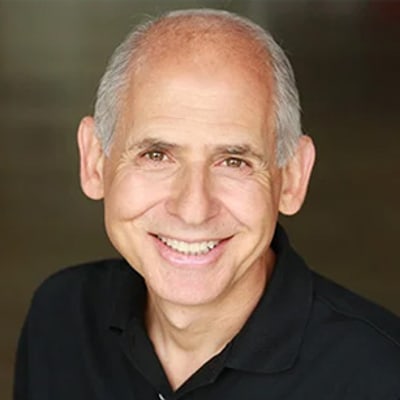
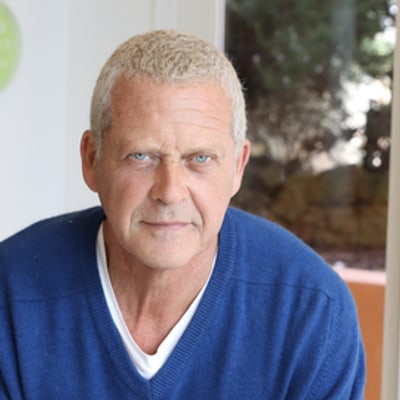
What if your thyroid isn’t actually the root of your hypothyroidism? In this mini episode, Dr. Josh Axe breaks down the thyroid hormone cascade—the step-by-step process your body uses to produce, convert, and activate thyroid hormones. Discover why focusing on your thyroid alone may be missing the real problem—and what actually needs to heal for your metabolism, energy, and hormones to come back into balance.
Transcript
Click a timestamp to seek the player.
The 2026 Chevy Equinox is more than an SUV. It's your Sunday tailgate and your parking lot snack bar. Your lucky jersey, your chairs, and your big cooler fit perfectly in your even bigger cargo space. And when it's go time, your 11.3-inch diagonal touchscreen's got the playbook, the playlist, and the tech to stay a step ahead. It's more than an SUV. It's your Equinox. Chevrolet.
Together, let's drive.
Pepsi Prebiotic Cola in original and cherry vanilla. That Pepsi taste you love with just 30 calories and no artificial sweeteners. Pepsi Prebiotic Cola. Unbelievably Pepsi.
If you've tried thyroid medications, birth control, antidepressants, metformin, TRT, or HRT, and you're still dealing with fatigue, weight gain, or brain fog, you don't have one hormone problem. You actually have what I call a hormone cascade problem. Today, I'll show you how hormones work like dominoes. When the upstream signal breaks, everything downstream fails.
And I'll cover the biggest cascades behind issues like hypothyroidism, stress and insulin resistance, PCOS, infertility, low testosterone, and menopause. And I'll walk you through exactly how to restore the signal at the source and heal your hormones at the root cause. Welcome to the Dr. Josh Axe Show.
You tell yourself no one wants your college-era band tees, but on Depop, people are searching for exactly what you've got. You once paid a small fortune for them at merch stands. Now, a teenager who calls them vintage will offer that same small fortune back. Sell them easily on Depop. Just snap a few photos and we'll take care of the rest.
Who knew your questionable music taste would be a money-making machine? Your style can make you cash. Start selling on Depop, where taste recognizes taste.
In a food system this big, Feeding America races to make sure good food reaches neighbors facing hunger. That's why we work in real time, using technology to connect food to people Together with supporters like you, we partner with local organizations to rescue food quickly, safely, and at scale so it reaches a home while it still can. Hunger doesn't wait. Food rescue can't either.
Give now to help rescue good food for neighbors at feedingamerica.org/rescuefood.
So I can't tell you how many patients I've seen over the years, and they've told me, Dr. Axe, I've tried thyroid medications, I've tried hormone creams, birth control, even insulin. I've tried insulin, but nothing is working for me. But when I zoomed out, I was able to realize something crucial. They were treating the symptoms, not the root problem, which is a hormone cascade issue.
And once we fixed the upstream signal, the downstream hormones corrected themselves automatically. Now, most doctors today treat hormones like isolated light switches. One hormone is on or one is off, and they try to fix it in isolation. Independently. They work in sequences. They work synergistically together. Think of hormones like a domino chain or a waterfall.
One signal triggers the next and the next and the next. And this happens over time. Now, I want to give you an example of how this happens, and I'm going to walk you through exactly how you can heal the root causes of, as I mentioned, PCOS, low testosterone, insulin resistance, hypothyroidism, and menopause. With this strategy. But an example of this would be with the endocrine cascade.
You know, one of the things that happens so often when people eat foods that can imbalance blood sugar, and it could be not just sugar, processed carbohydrates, it could be even certain types of dairy. And what this will do is all of a sudden your blood sugar is off. Okay, so we see blood sugar is off. And then what happens is insulin's impacted, right? So we see insulin.
Well, when insulin increases, that increases stress on the adrenal glands. So then the adrenal glands start impacting your pituitary gland, and this is where you're releasing cortisol and stress hormones. And then your thyroid is impacted, and then your sex hormones like estrogen and testosterone, then those are impacted.
And we see that there are different initial dominoes that will kick off hormone imbalance. And if the first domino falls the wrong way or the water source is disrupted upstream, everything downstream is then impacted. Even those glands themselves that are perfectly healthy, those are impacted.
And that's why fixing one hormone number often doesn't fix how you feel, because the original signal never got restored. I can tell you from taking care of thousands and thousands of patients with hypothyroidism, even when they get on a T4 medication like levothyroxine, they still don't feel 100%.
There's still metabolism issues, there's still thinning hair problems, there's still low body temperature, there's still, you know, Weight gain, there's low energy. All of those things are still there.
Now, some of them change a little bit to where you get a little bit of relief, but those problems are still underlying there because you never got to the root of that first domino causing the hormone imbalance in the first place. Listen, I believe 80% of hormone issues actually start in the brain. So it's not a gland like your thyroid gland. It is in the brain.
And treating a final hormone like T4 or estrogen or insulin often misses But it never addresses the root problem and doesn't put an end to the symptoms for good. And this is why you continue to have— you feel a level of chronic stress. There's a level of inflammation, right? And with that inflammation, you don't look as young or feel as young as you want to.
And that's the key, is if we can start to fix things at the root, you will feel younger, you will look younger, your hormones will balance out, right? And these are examples of hormone cascade issues because it's not just one hormone, it's many hormones that are impacting each other. Thyroid cascade. Now, here's a common scenario.
Someone is exhausted, gaining weight, and just generally struggling, feeling overwhelmed, and they finally go to their doctor and get told, your thyroid is low. Okay, so they're prescribed a thyroid medication, their labs improve, but they still don't feel like themselves. 1 In 4 people on thyroid medication still report symptoms despite absolutely and completely normal lab values.
And that's because what looks like a thyroid problem is actually a bigger issue. So here's what's typically causing causing this cascade in hypothyroidism. It never starts with the thyroid, okay? In fact, hypothyroidism almost always starts in the brain or the gut or the adrenals or the liver, okay? So everywhere, pretty much anywhere but the thyroid is where thyroid problems start, okay?
And for a lot of people, it starts with this hormone cortisol, and you have something called your HPA axis, your hypothalamus-pituitary-adrenal axis. Adrenal axis. And so your pituitary is impacted, and this is really where TSH, right, is released. That then impacts the thyroid. Your thyroid then releases T4.
But then in order for your body to function properly, okay, for your cells and your organs to be fueled like they should, they need a hormone called T3. So your T4 that your thyroid produces needs to be converted to T3, and 80% of that conversion happens in the liver and another 20% happens in your gut microbiome. And the pattern works something like this.
The hypothalamus senses chronic stress, inflammation, or blood sugar swings. Okay. And it sends a danger signal to the pituitary and the pituitary lowers or dysregulates TSH. That's thyroid stimulating hormone. And then the thyroid produces less T4.
Okay.
And then the liver and the gut struggle to convert T4 to T3. And so your cells slow their metabolic activity to conserve energy. This is what hypothyroidism is. And by the time symptoms show up, the thyroid is just the messenger, not the original problem. And medications fall short again because of this.
Thyroid meds can replace hormones, but they don't automatically restore proper brain-to-thyroid signaling, which is Converting T4 to T3. Again, that conversion happens in the liver and in the gut. So here's the solution. We want to reduce chronic stress and cortisol overload. I really believe that's the number one thing.
If you want to know what is the main upstream problem causing hypothyroidism today, it's not TSH, it's not T4, it's cortisol. And it's really your brain. It's chronic stress causing cortisol overload. And studies show stress and inflammation reduce that T4 to T3 conversion by up to 50%, even when TSH is normal. And I've done episodes on how to reduce stress in the past.
We'll link them in the show notes. And here are some things you need to do to stop the stress on the thyroid. Now, let me say this. The thyroid is, of course, involved, and you do want to support thyroid health, and you do want to support the body in some very specific ways that then impact the thyroid. And let me walk you through how this works.
So one of the first things you want to do to kind of lower cortisol, but also balance out insulin and support liver and gut health, is you want to consume a diet that's higher in protein and fiber and healthy fats, but you do want to get some carbs. The carbs that tend to be the best for the thyroid, according to Chinese medicine specifically, are berries and pomegranates, so really dark fruit.
Black whole grain rice is good, and sweet potato. Those carbohydrates tend to be the best for, you know, keeping stabilized blood sugar, but still having, you know, some carbohydrates in your diet because you'd You do want some when you have hypothyroidism. There are also some really key nutrients both the thyroid needs and the adrenals need, iodine being one.
Now, if you have Hashimoto's thyroiditis, you need to be careful of— or autoimmune disease— you need to be careful of how much iodine you take. You typically want to start with a lower dose and start taking some other things to lower the autoimmune reaction first, like selenium.
Selenium is one of the most critical nutrients for thyroid function and overall organ function when it comes to stabilizing and supporting thyroid hormones, typically around 200 micrograms a day is the ideal dosage. And you also need to make sure you have proper levels of zinc and iron and B vitamins. You want to be methylating properly as well.
So iodine, selenium, zinc, and iron are key nutrients if you have hypothyroidism. And you do want to make sure you're eating enough calories. You also want to warm your body up. This really helps. It helps with relaxation. It helps with mitochondrial health, which is also deeply connected to hypothyroidism.
And I would say getting in an infrared sauna, getting red light therapy, doing an infrared heating pad, warming up your feet and your midsection, and even doing some of that light right on your thyroid is good as well.
But again, when we're looking at these hormone cascades, the single biggest hormone that is negatively impacting hypothyroidism or thyroid issues today is when cortisol gets too high. And when cortisol gets too high, insulin gets high, estrogen can get too high, and then what happens is that downregulates the thyroid hormones.
So listen, if you have a hypothyroidism issue and you're just trying to treat it with a medication or even outside thyroid supplements, it typically is not a total fix because we really need to impact cortisol in a positive manner. Now, let me say this. The number one herb prescribed today by functional medicine practitioners for hypothyroidism is ashwagandha.
Now, ashwagandha doesn't magically impact thyroid hormone. You know what it does impact, though, is stress And cortisol. So ashwagandha is known as an adaptogenic herb, and it helps your body better adapt and deal with stressors. So what it does is it lowers cortisol, and then it improves thyroid hormone because of how it's impacting cortisol.
So that's why ashwagandha is such a well-known herb for hypothyroidism, and typically the number one herb I recommend for hypothyroidism. But again, if you want to cure and fix the thyroid cascade, Yeah. You first and foremost need to fix cortisol. And typically to fix these issues, again, it's not one medication or one supplement, and that's what's happening so often today.
It's, no, we need a protocol, we need a lifestyle change, we need to say no more often, right? We need to get better sleep, we need to take a few supplements, but we need to change and improve our diet and eat the foods that are exactly right for you. Listen, the diet doesn't taste better or worse. One, it's what your body is craving and needs. But I'll give you an example.
I've had so many women come in with hypothyroidism, And they've said, well, I'm eating really healthy. I'm eating a lot of salads and smoothies. That's not healthy in most cases for hypothyroidism. Your body's cold, so you're eating, drinking cold ice water, and you're doing cold salads, and you're doing raw foods, and that's terrible for hypothyroidism. But we got to warm the body up.
We need to also lower cortisol, so we need to lower insulin. What do we do? It's a lot of soups. It's a lot of herbal teas. It's a lot of warm home-cooked meals. It's a lot of things like sweet potato and grass-fed beef and wild-caught salmon. That fixes it. That'll fix it. Okay? So there's different types of eating healthy.
You need to eat the type of healthy that's right for you and your body and your hormones. Okay? And, and, and here's my challenge. Instead of asking which hormone is low, ask which signal is broke first. Okay? And what is the most likely reason that it broke? Okay? So if cortisol's high, ask what, why, what's causing me to live in a fight or flight state? Okay, is it stress at work?
Is it I've said yes to everything? Is it I have no free time in my day? And then figure out how to solve that problem. That's how you'll start to see real results, okay, in that way. And listen, sometimes it's coming from multiple angles. Sometimes if your diet's poor, that's an insulin issue, and then you have high cortisol, that's another issue. So you have both those issues.
So sometimes there's a couple pathways that are impacting you. You need to say, well, I need to fix this issue. And this one, and then your hormones will come back into balance. But if you want to heal your hormones, you have to start with that first domino. Okay? So it's lowering cortisol, it's improving insulin, and it's getting to bed earlier. It's having some more time to yourself.
It's more protein and fiber at every meal. It's, it's, you know, taking 1 or 2 supplements that are the ones that are the needle movers for you. Walking in nature, spending more time, you know, reading and personal growth and spiritual growth. Prayer, those things will start to get to the root of your hormonal issues, and you can finally address your hormones at the root cause.
By the way, I want to mention I'm offering a simple at-home blood test that actually tests for the right things— targeted biomarkers including hormones, thyroid, and metabolism— plus a one-on-one review with one of my senior health advisors to help you understand your results.
So if you are interested in learning more about the If you're interested in getting blood work and getting testing done, that's very cost-effective to understand the root of your issues. You can go to mybloodwork.com. That's mybloodwork.com and get testing. I want to say thanks so much for tuning in here to the Dr. Josh Axe Show.
Remember, each and every week we're diving deep into the science and principles of how you can heal physically, mentally, spiritually, and take your health and your life to the next level. Hey, I've done a lot of podcasts on a lot of these topics as well.
Yeah.
And if you want to learn more about a certain element, maybe it's getting better sleep, maybe it's about hypothyroidism or low testosterone, just search on YouTube, Dr. Josh Axe testosterone or hypothyroidism, or look in the show notes, and I'm going to have more of those episodes in there that you can look back at and listen to, to further your wisdom and knowledge on these areas to help you take your health to the next level.
Also, remember, the number one thing you can do to support the show is subscribe. Sometimes because we talk about controversial topics on the show, such as cancer and certain natural remedies like ivermectin and hydroxychloroquine. And I have some, you know, controversial experts on the show. It gets shadowbanned. And so if you're not subscribed, you may not see it.
So thanks so much for your support on that. Thank you for sharing. And I can't wait to see you on the next episode.
The Dr. Axe Show is educational and not a substitute for care from your clinician. Disclaimer