
Advertisement
Advertisement
Dr. Axe Wire · Study decoded · gut
A lab study on human intestinal cells shows how a key olive oil compound changes gut barrier proteins and fat-packaging machinery at the cellular level.
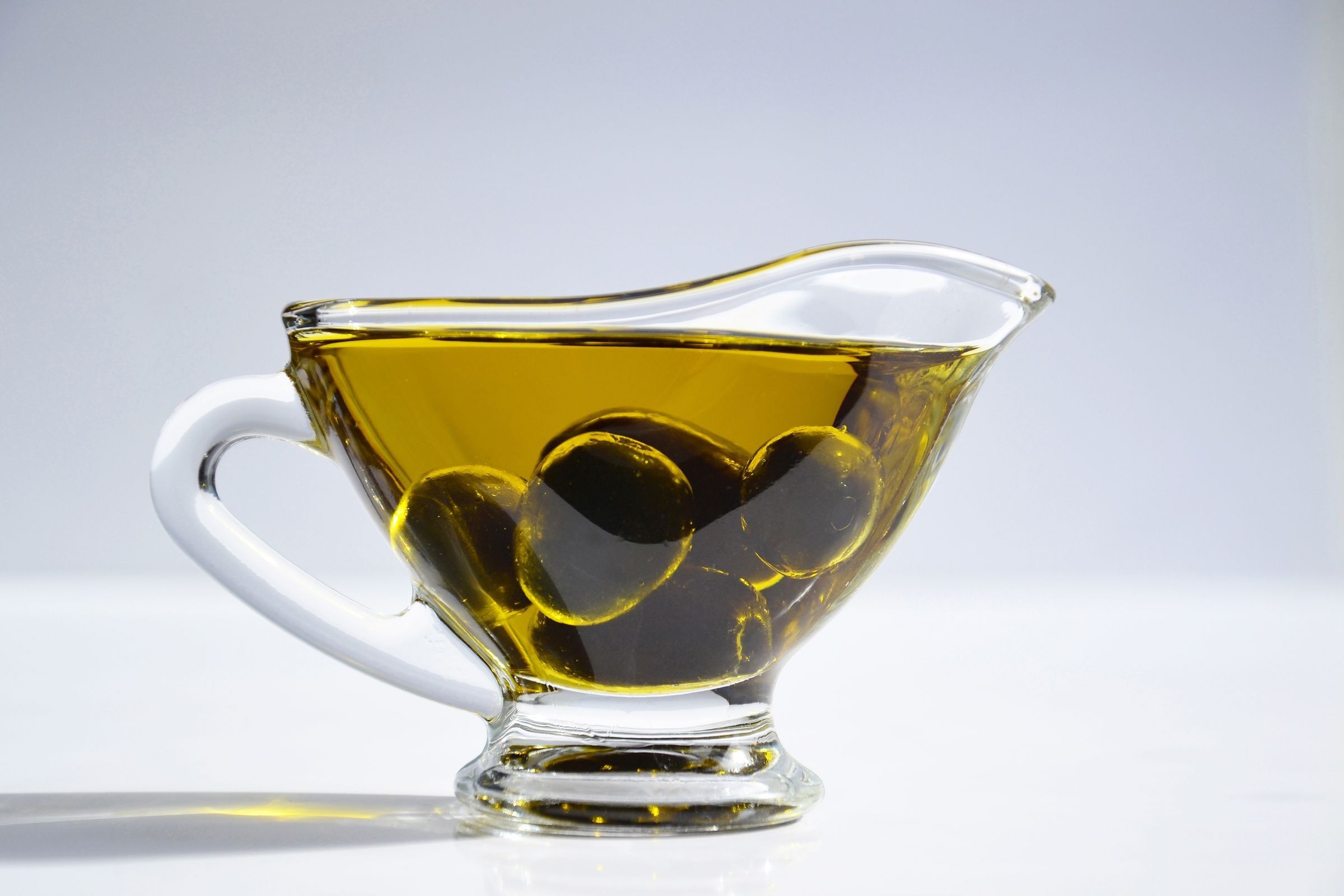
A laboratory study published October 12, 2026 in Food & Function found that hydroxytyrosol, a compound in extra virgin olive oil, altered gut barrier proteins and fat-packaging machinery in human intestinal cells grown in a dish.
Researchers exposed differentiated Caco-2 cells, a standard lab model of the human intestinal lining, to either full extra virgin olive oil digesta (processed via the standardized INFOGEST protocol) or to hydroxytyrosol alone, a phenol concentrated in olive oil. They measured trans-epithelial electrical resistance (TEER), a marker of barrier tightness, ran gene activity scans, and measured apolipoprotein B (apoB), a fat-carrier protein. A high dose of hydroxytyrosol, 1 millimolar, reduced TEER without killing or damaging cells. Gene scans showed higher output of tight-junction proteins claudin-19 and ZO-3, plus more myosin light chain kinase (MYLK), a combination the authors say suggests activation of a paracellular leak pathway. Both EVOO digesta and hydroxytyrosol increased MTTP expression, which helps assemble chylomicrons for transport into the bloodstream. Hydroxytyrosol also raised intracellular apoB protein, with a secondary test confirming extra apoB was actively secreted outward.
Tight junctions are molecular seals holding gut cells together, controlling what passes between rather than through them. The authors describe hydroxytyrosol as reorganizing these junction proteins while activating fat-packaging pathways, suggesting a possible shift toward a specific route for moving dietary fat across the barrier. That dual action is a plausible mechanism, though the authors call for live-animal or human follow-up.

This was a cell-culture experiment, not a study in animals or people, so it offers no evidence on whether eating olive oil changes gut permeability or fat absorption in a living body. The 1 millimolar dose that produced the barrier effect is far higher than what circulates in blood after eating olive oil.
This is useful mechanistic groundwork on olive oil, but I would not change how I eat based on it. Caco-2 cells in a dish exposed to a concentrated dose of hydroxytyrosol are not the same as a gut lining exposed to the amount you get from food. What I take from it is more reason to keep extra virgin olive oil a daily staple, a couple tablespoons on vegetables or in low-heat cooking, for its polyphenol content. I would not supplement with isolated hydroxytyrosol based on one lab-dish study.
 — Dr. Axe