The Best Bottled Water Brands of 2026, Ranked by Lab Results, Minerals and the Bottle Itself
We reviewed 31 bottled waters, still and sparkling, and scored 28 of them on named-brand lab results for PFAS, microplastics, arsenic and bromate; the minerals in the water; the bottle it comes in; and how much each brand actually tells you.
Skip: brands with no report, “alkaline” or “structured water” claims, and bottles left in a hot car. Topo Chico had the highest PFAS in two tests; two brands are excluded for arsenic recalls.
Better still: filter tap water at home and carry it in glass or steel.
Our #1 pick9.6/10
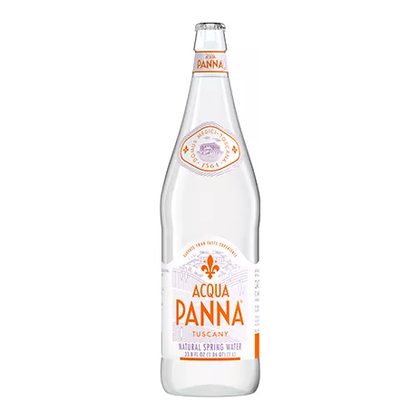
Acqua Panna (glass) Natural Spring Water
No PFAS in 6 of 6 FDA retail samples[6][7], at reporting limits of 0.23 to 0.32 parts per trillion, with a full 2025 report that lists 18 PFAS[62].
Tuscan spring water with 140 mg/L of minerals and almost no fluoride, in glass[63]. The catch: no microplastics test, it's sold in stores, where prices vary, and in plastic it would score about 8.3.
How we score:Lab results 30%Minerals & source 20%Bottle 20%Transparency 20%Track record & honesty 10%Full methodology ↓
The Dr. Axe Clean Water Score (0–10) is our editorial judgment, not a safety grade. A product-quality recall in the last 3 years caps a brand at 7.0, and an arsenic recall over the legal limit in the last 10 years excludes it.
Know your bottled water
What's really in a bottle of water
Bottled water is two products: the water, which brings minerals (and sometimes contaminants) from its source, and the container, which adds plastic and, with heat, chemicals. Here's what the rules and research show.
From the sourceCalcium, magnesium and sodium, and sometimes PFAS or arsenic. Purified water strips most minerals out[9].
From the bottle and capPlastic particles and antimony. In one study, 54% of identified particles were polypropylene, the plastic used for caps[27].
FDA regulates bottled water as a food. Bottlers must test the finished water at least yearly, but no federal rule makes them publish results[10]. California is the only state we found that requires a yearly report, available on request[13].
for PFAS “forever chemicals” in bottled water. EPA limits PFOA and PFOS to 4 parts per trillion in tap water[15]; FDA is “working on a regulation”[8]. FDA's own tests found PFAS in 10 of 197 bottled waters, none above EPA's limits[5].
of plastic, about 90% of them nanoplastics, in three brands tested with a new imaging method; only about 10% of all particles imaged matched the seven plastics in its library[28]. An earlier study found microplastics in 93% of 259 bottles[27].
(149 °F, a hot car): based on its lab data, a 2008 study estimated antimony, a catalyst in PET plastic, would pass the 6 µg/L limit after about that long; at purchase, levels were 0.1 to 0.5[30]. PET held up to 30 times more antimony than glass[31].
“comes from the same municipal sources that supply tap water,” Consumer Reports found[57]. Purified water made from city water needn't say “municipal source” on the label[9].
were recycled in the U.S. in 2024, per the PET industry's own group[58]. Americans drank 47.7 gallons of bottled water each in 2025[59].
NAPCOR, 2025; IBWA, 2026
Check your bottled water
Find your brand's water report (in California, the label must say how to get it[14]) and check FDA's recalls. FDA posts its 2023–24 PFAS results by brand[7].
Three essentials, plus a fourth for getting minerals from your water.
1Essential
Filter your tap water first
Under-sink reverse osmosis removed PFAS almost completely in North Carolina homes[39], and tap water costs about $0.003 a gallon[61] vs about 2.4¢ an ounce for bottled[59].
Aim for real minerals: WHO's experts suggest 20–30 mg/L of magnesium and 40–80 of calcium[40], and about half the magnesium in mineral water is absorbed[42].
Watch the sodium: in one trial, a salty mineral water canceled the blood-pressure benefit of a low-salt diet[46].
Answer four questions. If nothing fits, we'll say so and show the closest option.
1Still or sparkling?
2Must it come in glass?
3How much mineral content?
4Budget?
Compare the top 10
What each bottled water's record shows
FDA column: samples with any PFAS out of samples tested. CR / Mamavation: total PFAS in ppt. Minerals: total dissolved solids, mg/L.
Score = the Dr. Axe Clean Water Score, 0–10: lab results 30%, minerals and source 20%, bottle 20%, transparency 20%, track record 10%. Full methodology ↓
Government record FDA's own testing or recall database.Independent lab Consumer Reports or Mamavation lab tests.Maker's report The brand's own water report.No data Nothing published.Flag Over 1 ppt, a recall, a weak report or minerals only added for taste.
*A flavored sparkling sibling was tested (for Liquid Death's Consumer Reports result, its earlier spring water). †Recalls over 5 years ago (Essentia 2014, Dasani 2014–15) don't count. “Retail” = no official online price. Shaded rows missed our top 10. Sources are in each review and the PFAS chart.
Full reviews
The 10 best bottled waters, ranked
One entry per brand line; sizes, formats and sparkling versions are in each review.
1
Price varies (retail)Not sold on an official U.S. online store; prices vary by retailer.
Best overall
Acqua Panna Natural Spring Water (glass)
Still spring water · Tuscany, Italy · glass (PET also sold)
6 of 6[6][7]FDA retail samples with no PFAS detected (2023–24)
140[62]mg/L of minerals; calcium 32, magnesium 6.7
The cleanest record of any still water we scored. FDA bought six samples of Acqua Panna at U.S. retailers in 2023–24 and found no PFAS in any of them, at reporting limits of 0.23 to 0.32 parts per trillion, and the brand's 2025 report lists 18 PFAS, arsenic, uranium and bromate as not detected. It's a Tuscan spring water (Panna Spring, Scarperia) with a moderate 140 mg/L of minerals, mostly calcium (32 mg/L), 7 mg/L of sodium and almost no fluoride (0.05 mg/L). The report lists no disinfection step: filtered source water goes from a storage silo to the bottle. Its U.S. site lists four glass sizes and three plastic ones, and we score the glass. The limits: nobody independent has tested it for microplastics, it isn't sold on an official U.S. online store, and the report doesn't state its PFAS detection limit.
Best forEveryday still water at the table, in glass
Skip ifYou want a high-magnesium water (6.7 mg/L is modest) or a brand you can order direct
FormatsGlass: 8 oz, 16 oz, 25 oz, 1 L · plastic: 11 oz, 16 oz, 1 L
PriceSold at retail; prices vary. No official U.S. online store
Report2025 report dated April 6, 2026, with 18 PFAS; lab not named
Format scoredGlass, the format it leads with (10 of 10 for the bottle). In plastic, it would score about 8.3 overall
See score breakdown & sources
Lab results8.5
Minerals & source10.0
Bottle10.0
Transparency10.0
Track record & honesty10.0
Lab results start at 6.5: FDA 2023–24 +1.5; brand report lists PFAS, none detected +0.5 = 8.5. Minerals: natural water with 100–500 mg/L of minerals and meaningful calcium or magnesium. Bottle: Glass. Transparency: Current report with numbers and PFAS. Weighted total 9.550, shown as 9.6.
Public record / studyFDA. Analytical results for FY2023–2024 PFAS in bottled water (parts per trillion): 18 PFAS, reporting limits 0.23–0.32 ppt; imported samples listed by country of origin (brands in FDA's separate brand list); “Br” columns are branched plus linear totals. Open source · [6]
Public record / studyFDA. FY23–FY24 PFAS in bottled water assignment: sample brand information (domestic samples by brand and type, e.g. Aquafina “Purified,” Dasani “Purified, minerals added,” Glaceau Smart Water “Distilled, minerals added”). Open source · [7]
Maker's dataAcqua Panna U.S. site: glass 8 oz, 16 oz, 25 oz and 1 L; plastic 11 oz, 16 oz and 1 L. Open source · [63]
Cost: price varies at retail; no official online price compareType: Still spring water · Owner: NestléSee it on the brand siteWe may earn a commission.
9.6of 10
Clean Water Score
2
Price varies (retail)Sold at retail; prices vary by retailer.
Best sparklingSparkling
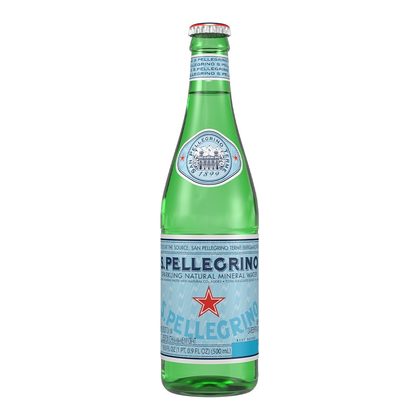
S.Pellegrino Sparkling Natural Mineral Water (glass)
Sparkling mineral water · Bergamo, Italy · glass (PET and cans also sold)
9 of 9[6][7]FDA retail samples with no PFAS detected
0.31[1][3]ppt of PFAS, Consumer Reports 2020 (Mamavation 2025: 0.81)
30/L[27]microplastic particles, the fewest of 11 brands (2018)
The best sparkling water we scored, and the most tested. FDA found no PFAS in nine retail samples in 2023–24; Consumer Reports measured 0.31 ppt of total PFAS in 2020 and Mamavation 0.81 ppt in 2025, both under 1 ppt; and a 2018 study found the fewest microplastic particles of 11 brands (30 per liter). The brand's 2025 report lists 18 PFAS, arsenic and bromate as not detected. It's genuinely mineral-rich: 880 mg/L of dissolved minerals, 160 mg/L of calcium and 47 of magnesium, above WHO's suggested 20–30 mg/L for magnesium, with 30 mg/L of sodium and 0.47 mg/L of natural fluoride. Two things to know: 400 mg/L of sulfate gives it a slightly bitter edge, and the report shows 7.1 µg/L of natural uranium, under the 30 µg/L limit. We score the glass bottle it leads with; it's also sold in plastic and cans.
Best forSparkling water with real calcium and magnesium
Skip ifYou avoid carbonation, or want sodium under 20 mg/L
Report2025 report (PDF created April 16, 2026) with 18 PFAS; lab not named
Format scoredGlass, the format it leads with (10 of 10 for the bottle). In plastic, it would score about 8.2 overall
See score breakdown & sources
Lab results9.0
Minerals & source9.0
Bottle10.0
Transparency10.0
Track record & honesty10.0
Lab results start at 6.5: FDA 2023–24 +1.5; Consumer Reports +0.5; Mamavation +0; brand report lists PFAS, none detected +0.5 = 9. Minerals: natural mineral water over 500 mg/L with meaningful calcium and magnesium. Bottle: Glass. Transparency: Current report with numbers and PFAS. Weighted total 9.500, shown as 9.5.
Public record / studyFDA. Analytical results for FY2023–2024 PFAS in bottled water (parts per trillion): 18 PFAS, reporting limits 0.23–0.32 ppt; imported samples listed by country of origin (brands in FDA's separate brand list); “Br” columns are branched plus linear totals. Open source · [6]
Public record / studyFDA. FY23–FY24 PFAS in bottled water assignment: sample brand information (domestic samples by brand and type, e.g. Aquafina “Purified,” Dasani “Purified, minerals added,” Glaceau Smart Water “Distilled, minerals added”). Open source · [7]
Independent labConsumer Reports. What's really in your bottled water? (Sept. 24, 2020; free article): 47 bottled waters (35 still, 12 carbonated), 2 to 4 samples each, tested for 4 heavy metals and 30 PFAS at an accredited lab; most still waters had detectable PFAS, only Deer Park (1.21 ppt) and Tourmaline Spring over 1 ppt; Topo Chico 9.76 ppt; funded by the Forsythia Foundation. Open source · [1]
Independent labMamavation. Safest sparkling waters: PFAS test results (Sept. 2, 2025): 40 PFAS by EPA Method 1633 at an EPA-certified lab; S.Pellegrino 0.813 ppt, Perrier 1.8, Topo Chico 2.8; Gerolsteiner (glass), Mountain Valley flavored sparkling (glass) and Liquid Death flavored sparkling (can) non-detect. Affiliate links disclosed. Open source · [3]
Public record / studyMason SA, Welch VG, Neratko J. Synthetic polymer contamination in bottled water. Front Chem, 2018: 259 bottles of 11 brands from 9 countries; 93% contained microplastics, 325 particles per liter on average; 54% of identified particles were polypropylene; particles under 100 µm dye-tagged, not spectroscopically confirmed. Open source · [27]
Maker's dataS.Pellegrino U.S. site: glass bottles listed first; also plastic bottles and cans. Open source · [65]
Cost: price varies at retail; no official online price compareType: Sparkling mineral water · Owner: NestléSee it on the brand siteWe may earn a commission.
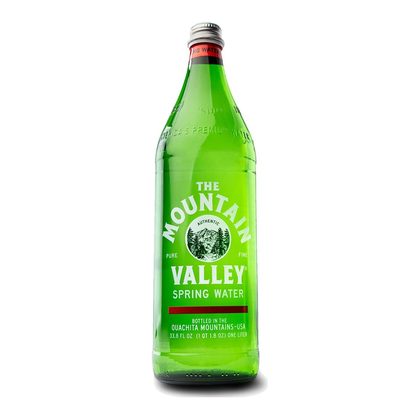
The best still water you can order straight to your door in glass. Mountain Valley comes from a spring in Garland County, Arkansas, and after Evian it's the most calcium-rich single-spring still water in our top 10: 65 to 70 mg/L of calcium, 210 mg/L of total minerals, only 1.7 to 2.5 mg/L of sodium and 0.12 to 0.15 mg/L of natural fluoride. Its 2025 report lists 18 PFAS as not detected and bromate at up to 3.3 µg/L, a third of the legal limit; bromate can form when water is disinfected with ozone, and this water gets microfiltration plus UV and/or ozone. The one independent test is of its flavored sparkling sibling, which Mamavation found free of 40 PFAS in 2025. The still water itself hasn't been independently tested, which is why it sits below Acqua Panna. It's owned by Primo Brands and sold on its own store for $2.83 a liter in 1-liter glass bottles.
Best forGlass-bottled still water delivered to your door
Skip ifYou want independent PFAS testing of the exact product
FormatsGlass 333 mL, 500 mL and 1 L; also 750 mL aluminum and 500 mL plastic
Price$33.99 for 12 × 1 L glass ($2.83/L); $31.99 for 24 × 333 mL ($4.00/L); shipping extra
Report2025 report (PDF created Feb. 14, 2026) with 18 PFAS; lab not named
Format scoredGlass, the format it leads with (10 of 10 for the bottle). In plastic, it would score about 8.0 overall
See score breakdown & sources
Lab results7.5
Minerals & source10.0
Bottle10.0
Transparency10.0
Track record & honesty10.0
Lab results start at 6.5: Mamavation +0.5; brand report lists PFAS, none detected +0.5 = 7.5. Minerals: natural water with 100–500 mg/L of minerals and meaningful calcium or magnesium. Bottle: Glass. Transparency: Current report with numbers and PFAS. Weighted total 9.250, shown as 9.3.
Independent labMamavation. Safest sparkling waters: PFAS test results (Sept. 2, 2025): 40 PFAS by EPA Method 1633 at an EPA-certified lab; S.Pellegrino 0.813 ppt, Perrier 1.8, Topo Chico 2.8; Gerolsteiner (glass), Mountain Valley flavored sparkling (glass) and Liquid Death flavored sparkling (can) non-detect. Affiliate links disclosed. Open source · [3]
Maker's dataMountain Valley Spring Water. 2025 Water Analysis Report (PDF created Feb. 14, 2026): Garland County, Arkansas; TDS 210, calcium 65–70, magnesium 6.1–7.2, sodium 1.7–2.5, fluoride 0.12–0.15 mg/L; bromate up to 0.0033 mg/L; 18 PFAS not detected; microfiltration, then UV and/or ozone. Sparkling: calcium 56, TDS 210 mg/L. Open source · [66]
Maker's dataMountain Valley store (Sept. 28, 2026): 12 × 1 L spring water in glass $33.99; 24 × 333 mL glass $31.99 (spring or sparkling); 750 mL aluminum and 500 mL plastic also listed. Open source · [67]
Maker's dataPrimo Brands. Brand portfolio (Mountain Valley, Saratoga, Poland Spring, Arrowhead, Deer Park, Pure Life and others). Open source · [68]
Cost: $2.83 per liter at the brand's store compareType: Still spring water · Owner: Primo BrandsCheck current priceWe may earn a commission.
9.3of 10
Clean Water Score
4
Price varies (retail)Sold at retail and on its own shop; bottled-water prices weren't listed online.
Best light-tasting glass
Saratoga Spring Water (glass)
Still spring water · Maine, Pennsylvania and New York · blue glass
Glass[70]its signature blue bottle; recycled plastic also sold
ND[69]fluoride, arsenic and 18 PFAS in its 2025 report
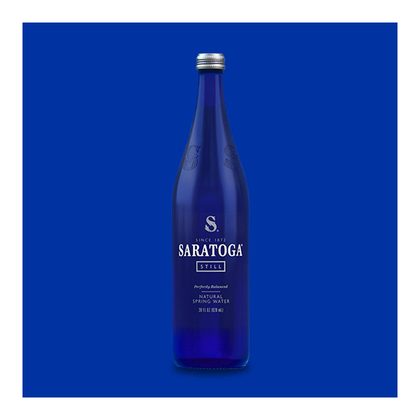
A clean, light-tasting water in glass. Consumer Reports' 2020 tests put Saratoga under 1 ppt of total PFAS, and its 2025 report lists 18 PFAS, fluoride and arsenic as not detected, with bromate no higher than 1.4 µg/L. The trade-off is minerals: 53 to 94 mg/L in total, with 8 to 17 mg/L of calcium, below the 20 mg/L minimum WHO's experts suggest. Despite the name, the report names four sources, only one of them in Saratoga Springs: springs in Dallas Plantation, Maine; Bangor and Foster Township, Pennsylvania; and Saratoga Springs, New York. It's slightly acidic, too (pH 5.8 to 6.0). Saratoga is owned by Primo Brands; its signature 28-ounce and 12-ounce blue glass bottles are sold at retail, and a recycled-plastic 28-ounce bottle is now available.
Best forA light, neutral water in glass for meals
Skip ifYou want your water to supply meaningful calcium and magnesium
SourceSprings in Dallas Plt., Maine; Bangor and Foster Twp., Pennsylvania; Saratoga Springs, New York
What's in itMinerals 53–94 · calcium 8–17 · magnesium 1.3–5.8 · sodium 2.2–10 · fluoride not detected · pH 5.8–6.0
FormatsBlue glass 12 oz and 28 oz; 28 oz recycled plastic
PriceSold at retail; prices vary
Report2025 report (PDF created Feb. 13, 2026) with 18 PFAS; lab not named
Format scoredGlass, the format it leads with (10 of 10 for the bottle). In recycled plastic, it would score about 7.5 overall
See score breakdown & sources
Lab results7.5
Minerals & source7.0
Bottle10.0
Transparency10.0
Track record & honesty10.0
Lab results start at 6.5: Consumer Reports +0.5; brand report lists PFAS, none detected +0.5 = 7.5. Minerals: natural water under 100 mg/L of minerals, or a range that varies by spring. Bottle: Glass. Transparency: Current report with numbers and PFAS. Weighted total 8.650, shown as 8.7.
Independent labConsumer Reports. What's really in your bottled water? (Sept. 24, 2020; free article): 47 bottled waters (35 still, 12 carbonated), 2 to 4 samples each, tested for 4 heavy metals and 30 PFAS at an accredited lab; most still waters had detectable PFAS, only Deer Park (1.21 ppt) and Tourmaline Spring over 1 ppt; Topo Chico 9.76 ppt; funded by the Forsythia Foundation. Open source · [1]
Maker's dataSaratoga Spring Water. 2025 Water Analysis Report (PDF created Feb. 13, 2026): springs in Dallas Plt., ME; Bangor and Foster Twp., PA; Saratoga Springs, NY; TDS 53–94, calcium 8–17, magnesium 1.3–5.8 mg/L, pH 5.8–6.0; 18 PFAS and fluoride not detected; bromate up to 0.0014 mg/L. Open source · [69]
Maker's dataSaratoga. Still Spring Water 28 fl oz “signature blue bottle” page; 12 and 28 fl oz sizes; 28 oz also “available in recycled plastic.” Open source · [70]
Public record / studyKožíšek F. Health risks from drinking demineralised water. In: Nutrients in Drinking Water, WHO, 2005: magnesium minimum 10 mg/L, optimum 20–30; calcium minimum 20 mg/L, optimum about 50 (40–80); evidence mostly from older studies. Open source · [40]
Cost: price varies at retail; no official online price compareType: Still spring water · Owner: Primo BrandsSee it on the brand siteWe may earn a commission.
8.7of 10
Clean Water Score
5
Price varies (retail)No official U.S. online store; prices vary by retailer.
Most minerals, most FDA-tested
Evian Natural Spring Water
Still spring water · French Alps · 100% recycled PET (glass also sold)
14 of 14[6][7]FDA retail samples with no PFAS detected
81[78]mg/L of calcium plus 26 of magnesium, the most of any still water we scored
rPET[79]100% recycled PET for new U.S. bottles since May 2024 (maker)
NSF[78]the lab named on its report (a lab test, not certification)
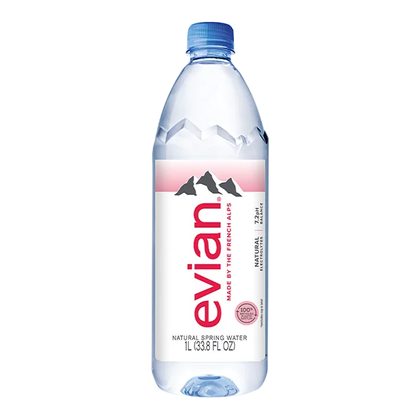
The most mineral-rich still water we scored, and the most FDA-tested water in our top 10. FDA bought 14 samples in 2023–24 and found no PFAS in any, and Consumer Reports put it under 1 ppt in 2020. Evian's report names its lab: NSF International tested the finished water in early 2025 and found 18 PFAS below a 2 ng/L reporting limit (NSF notes the report isn't a certification). The water itself is excellent: 340 mg/L of minerals, 81 mg/L of calcium, 26 of magnesium (right in WHO's suggested 20–30), 7.1 of sodium, no detectable fluoride and 2 µg/L of natural uranium (limit 30). It loses points on the bottle. Evian says every new U.S. plastic bottle has been made from 100% recycled PET since May 2024, but that's still plastic, and a 2018 study counted 58 and 197 microplastic particles per liter in two lots. Evian's 330 mL and 750 mL glass bottles avoid that.
Best forThe most calcium and magnesium in a still water
Skip ifYou want glass every day (buy Evian's glass sizes instead)
SourceCachat Spring, Évian-les-Bains, France; greensand filter on under 20% of the source to remove iron and manganese
What's in itMinerals 340 · calcium 81 · magnesium 26 · sodium 7.1 · fluoride not detected · pH 7.95
Formats100% recycled PET; glass 330 mL and 750 mL
PriceSold at retail; prices vary
ReportNSF lab report (final Feb. 20, 2025) and California report dated March 16, 2026, with 18 PFAS
Format scoredRecycled PET, the format it leads with (4 of 10 for the bottle; glass scores 10)
See score breakdown & sources
Lab results9.0
Minerals & source10.0
Bottle4.0
Transparency10.0
Track record & honesty10.0
Lab results start at 6.5: FDA 2023–24 +1.5; Consumer Reports +0.5; brand report lists PFAS, none detected +0.5 = 9. Minerals: natural water with 100–500 mg/L of minerals and meaningful calcium or magnesium. Bottle: Recycled PET. Transparency: Current report with numbers and PFAS. Weighted total 8.500, shown as 8.5.
Public record / studyFDA. Analytical results for FY2023–2024 PFAS in bottled water (parts per trillion): 18 PFAS, reporting limits 0.23–0.32 ppt; imported samples listed by country of origin (brands in FDA's separate brand list); “Br” columns are branched plus linear totals. Open source · [6]
Public record / studyFDA. FY23–FY24 PFAS in bottled water assignment: sample brand information (domestic samples by brand and type, e.g. Aquafina “Purified,” Dasani “Purified, minerals added,” Glaceau Smart Water “Distilled, minerals added”). Open source · [7]
Independent labConsumer Reports. What's really in your bottled water? (Sept. 24, 2020; free article): 47 bottled waters (35 still, 12 carbonated), 2 to 4 samples each, tested for 4 heavy metals and 30 PFAS at an accredited lab; most still waters had detectable PFAS, only Deer Park (1.21 ppt) and Tourmaline Spring over 1 ppt; Topo Chico 9.76 ppt; funded by the Forsythia Foundation. Open source · [1]
Maker's dataEvian. Water quality reports: NSF International lab report on the finished water (final Feb. 20, 2025; “does not represent NSF Certification”) and California annual report (Mar. 16, 2026): TDS 340, calcium 81, magnesium 26, sodium 7.1 mg/L, fluoride not detected, uranium 0.002 mg/L; 18 PFAS (EPA 537.1) below 2 ng/L; greensand filtration on under 20% of the source. Open source · [78]
Maker's dataEvian. Packaging and recycling: “As of May 2024, 100% of new evian bottles* manufactured for sale in the US are made from 100% recycled PET.” Open source · [79]
Maker's dataEvian. Natural spring water range, including 330 mL and 750 mL glass bottles. Open source · [80]
Public record / studyMason SA, Welch VG, Neratko J. Synthetic polymer contamination in bottled water. Front Chem, 2018: 259 bottles of 11 brands from 9 countries; 93% contained microplastics, 325 particles per liter on average; 54% of identified particles were polypropylene; particles under 100 µm dye-tagged, not spectroscopically confirmed. Open source · [27]
Cost: price varies at retail; no official online price compareType: Still spring water · Owner: DanoneSee it on the brand siteWe may earn a commission.
8.5of 10
Clean Water Score
6
$12.49 / 12 × 12 ozBrand store; shown as unavailable online on Sept. 28, 2026. $2.93 a liter.
Best in a can
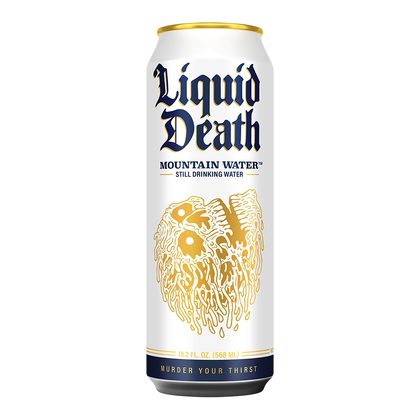
Liquid Death Mountain Water (still)
Still artesian well water · Virginia · aluminum can
The best water in a can. Liquid Death's still Mountain Water comes from an artesian well in Bland, Virginia, according to its first-quarter 2026 report, with 120 mg/L of minerals, 30 of calcium and 28 of sodium. Consumer Reports put Liquid Death under 1 ppt of total PFAS in 2020, but that test was of its earlier spring water; the current Virginia well water hasn't been independently tested for PFAS, so we count that result at half. Mamavation found no PFAS in its flavored sparkling can in 2025. Two cautions: the report shows bromate at 5 µg/L, half the legal limit, and it doesn't list PFAS. And every can has a plastic lining: Liquid Death says “No BPAs are used in the lining” but doesn't name what's used instead, and bisphenol substitutes can migrate too. Its own store listed the cans as unavailable online on Sept. 28, at $2.93 a liter.
Best forOn-the-go water without a plastic bottle
Skip ifYou want a report that lists PFAS, or no bromate at all
Price$12.49 for 12 × 12 oz ($2.93/L); unavailable online on Sept. 28
ReportQ1 2026 finished-water report (SSS Compliance Designs); no PFAS listed
Format scoredAluminum can with a BPA-free liner, its only format (7 of 10 for the bottle)
See score breakdown & sources
Lab results7.2
Minerals & source10.0
Bottle7.0
Transparency8.0
Track record & honesty10.0
Lab results start at 6.5: Consumer Reports +0.25; Mamavation +0.5 = 7.25. Minerals: natural water with 100–500 mg/L of minerals and meaningful calcium or magnesium. Bottle: Aluminum, BPA-free liner disclosed. Transparency: Current report, no PFAS. Weighted total 8.175, shown as 8.2.
Independent labConsumer Reports. What's really in your bottled water? (Sept. 24, 2020; free article): 47 bottled waters (35 still, 12 carbonated), 2 to 4 samples each, tested for 4 heavy metals and 30 PFAS at an accredited lab; most still waters had detectable PFAS, only Deer Park (1.21 ppt) and Tourmaline Spring over 1 ppt; Topo Chico 9.76 ppt; funded by the Forsythia Foundation. Open source · [1]
Independent labMamavation. Safest sparkling waters: PFAS test results (Sept. 2, 2025): 40 PFAS by EPA Method 1633 at an EPA-certified lab; S.Pellegrino 0.813 ppt, Perrier 1.8, Topo Chico 2.8; Gerolsteiner (glass), Mountain Valley flavored sparkling (glass) and Liquid Death flavored sparkling (can) non-detect. Affiliate links disclosed. Open source · [3]
Maker's dataLiquid Death. Still water finished-product report, first quarter 2026 (SSS Compliance Designs; artesian well, Bland, Virginia): TDS 120, calcium 30, magnesium 5.7, sodium 28, fluoride 0.083 mg/L; bromate 0.005 mg/L; no PFAS listed. Open source · [81]
Maker's dataLiquid Death FAQ: cans use a thin food-grade polymer liner; “No BPAs are used in the lining.” Open source · [83]
Maker's dataLiquid Death store (Sept. 28, 2026): Mountain Water (Still), 12 × 12 oz $12.49; shown as unavailable online. Open source · [82]
Public record / studyZhang N, et al. Polymers, 2020: BPA-replacement can coatings released TMBPF, BPF and other compounds. Open source · [36]
Cost: $2.93 per liter at the brand's store compareType: Still artesian water · Owner: Liquid DeathCheck current priceWe may earn a commission.
8.2of 10
Clean Water Score
7
Price varies (retail)Sold at retail; no official online price.
Best supermarket spring water
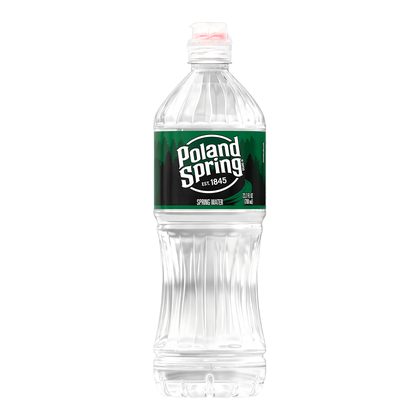
Poland Spring Natural Spring Water
Still spring water · 10 Maine springs · PET
3 of 3[6][7]FDA retail samples with no PFAS detected
<1 ppt[1]total PFAS in the still water, Consumer Reports 2020
The best of the big supermarket spring waters. FDA found no PFAS in three samples in 2023–24, Consumer Reports put the still water under 1 ppt in 2020, and the 2025 report lists 18 PFAS, arsenic and uranium as not detected, with bromate no higher than 2.2 µg/L. It's a light water from 10 Maine springs: 27 to 84 mg/L of minerals and 4.2 to 11 mg/L of calcium, with pH as low as 6.2. The flavored Zesty Lime sparkling version measured 1.66 ppt in the same 2020 tests, which costs it half a point. It comes in plastic, the lowest-scoring bottle, so buy it for convenience and keep it out of the heat.
Best forA widely sold spring water with a clean PFAS record
Source10 Maine springs, including Poland Spring, Clear Spring and Evergreen
What's in itMinerals 27–84 · calcium 4.2–11 · magnesium 0.92–2.3 · sodium 1.5–9.7 · fluoride up to 0.21 mg/L · pH 6.2–7.5
FormatsPET; the 20 oz to 1.5 L bottles are 100% recycled plastic (excluding label and cap), per the brand; the 500 mL isn't described that way
PriceSold at retail; prices vary
Report2025 report (Feb. 2026) with 18 PFAS; lab not named
Format scoredPET, its popular 500 mL bottle (3.5 of 10 for the bottle)
See score breakdown & sources
Lab results8.5
Minerals & source7.0
Bottle3.5
Transparency10.0
Track record & honesty10.0
Lab results start at 6.5: FDA 2023–24 +1.5; Consumer Reports +0.5; Consumer Reports -0.5; brand report lists PFAS, none detected +0.5 = 8.5. Minerals: natural water under 100 mg/L of minerals, or a range that varies by spring. Bottle: PET plastic. Transparency: Current report with numbers and PFAS. Weighted total 7.650, shown as 7.7.
Public record / studyFDA. Analytical results for FY2023–2024 PFAS in bottled water (parts per trillion): 18 PFAS, reporting limits 0.23–0.32 ppt; imported samples listed by country of origin (brands in FDA's separate brand list); “Br” columns are branched plus linear totals. Open source · [6]
Public record / studyFDA. FY23–FY24 PFAS in bottled water assignment: sample brand information (domestic samples by brand and type, e.g. Aquafina “Purified,” Dasani “Purified, minerals added,” Glaceau Smart Water “Distilled, minerals added”). Open source · [7]
Independent labConsumer Reports. What's really in your bottled water? (Sept. 24, 2020; free article): 47 bottled waters (35 still, 12 carbonated), 2 to 4 samples each, tested for 4 heavy metals and 30 PFAS at an accredited lab; most still waters had detectable PFAS, only Deer Park (1.21 ppt) and Tourmaline Spring over 1 ppt; Topo Chico 9.76 ppt; funded by the Forsythia Foundation. Open source · [1]
Maker's dataPoland Spring. 2025 Water Analysis Report: 10 Maine springs; TDS 27–84, calcium 4.2–11, magnesium 0.92–2.3, fluoride up to 0.21 mg/L, pH 6.2–7.5; bromate up to 0.0022 mg/L; 18 PFAS not detected. Open source · [71]
Maker's dataPoland Spring. Spring water products page (Sept. 28, 2026): PET bottles; the 20 fl oz, 700 mL, 1 L and 1.5 L bottles “Made from 100% recycled plastic (excluding label and cap)”; the “popular 500 mL bottle” is not described that way. Open source · [72]
Cost: price varies at retail; no official online price compareType: Still spring water · Owner: Primo BrandsSee it on the brand siteWe may earn a commission.
7.7of 10
Clean Water Score
8
Price varies (retail)Sold at retail; no official online price.
No PFAS detected in two tests
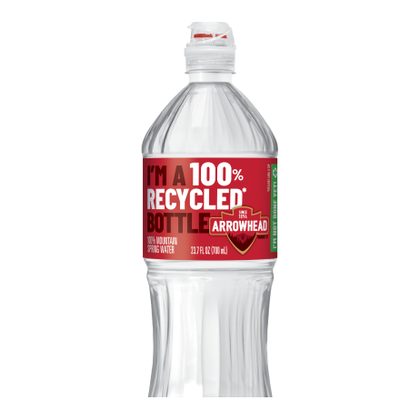
Arrowhead Mountain Spring Water
Still spring water · Western U.S. and B.C. · recycled PET
No PFAS[1][6]detected by Consumer Reports (2020) or in 3 FDA samples
The cleanest independent PFAS record of any plastic-bottled water here: Consumer Reports found no detectable PFAS in 2020, and FDA found none in three samples in 2023–24. But what's in your bottle depends on which spring it came from, and the 2025 report lists 18 of them in California, Oregon, Arizona, Colorado and British Columbia. Minerals run from 31 to 240 mg/L, calcium from 3.4 to 52, natural fluoride up to 1.1 mg/L, uranium up to 8.3 µg/L (limit 30) and bromate up to 9 µg/L, close to the 10 µg/L limit. The fluoride and bromate cost it points. Its bottles are labeled “I'm a 100% recycled bottle.” Arrowhead also sells a separate drinking water with 0.55 mg/L of added fluoride; that isn't the one we scored.
Best forWestern shoppers who want the best-tested plastic-bottled spring water
Source18 springs in California, Oregon, Arizona, Colorado and British Columbia
What's in itMinerals 31–240 · calcium 3.4–52 · magnesium 1.2–20 · sodium 2.3–15 · fluoride up to 1.1 mg/L · pH 6.9–8.1
FormatsRecycled PET bottles (per its label)
PriceSold at retail; prices vary
Report2025 report with 18 PFAS; lab not named
Format scoredRecycled PET, per its label (4 of 10 for the bottle)
See score breakdown & sources
Lab results8.5
Minerals & source6.0
Bottle4.0
Transparency10.0
Track record & honesty10.0
Lab results start at 6.5: FDA 2023–24 +1.5; Consumer Reports +1.5; brand report lists PFAS, none detected +0.5; bromate 7 µg/L or more -1.5 = 8.5. Minerals: natural water under 100 mg/L of minerals, or a range that varies by spring. Bottle: Recycled PET. Transparency: Current report with numbers and PFAS. Weighted total 7.550, shown as 7.6.
Independent labConsumer Reports. What's really in your bottled water? (Sept. 24, 2020; free article): 47 bottled waters (35 still, 12 carbonated), 2 to 4 samples each, tested for 4 heavy metals and 30 PFAS at an accredited lab; most still waters had detectable PFAS, only Deer Park (1.21 ppt) and Tourmaline Spring over 1 ppt; Topo Chico 9.76 ppt; funded by the Forsythia Foundation. Open source · [1]
Public record / studyFDA. Analytical results for FY2023–2024 PFAS in bottled water (parts per trillion): 18 PFAS, reporting limits 0.23–0.32 ppt; imported samples listed by country of origin (brands in FDA's separate brand list); “Br” columns are branched plus linear totals. Open source · [6]
Public record / studyFDA. FY23–FY24 PFAS in bottled water assignment: sample brand information (domestic samples by brand and type, e.g. Aquafina “Purified,” Dasani “Purified, minerals added,” Glaceau Smart Water “Distilled, minerals added”). Open source · [7]
Maker's dataArrowhead. 2025 Water Analysis Report: 18 listed springs in CA, OR, AZ, CO and British Columbia; TDS 31–240, calcium 3.4–52, magnesium 1.2–20, fluoride up to 1.1 mg/L; uranium up to 0.0083 and bromate up to 0.009 mg/L; 18 PFAS not detected; separate fluoridated drinking water at 0.55 mg/L. Open source · [73]
Maker's dataArrowhead. Spring water product page; its bottles are labeled “I'm a 100% recycled bottle” (label shown on the 700 mL sport-cap bottle image). Open source · [74]
Cost: price varies at retail; no official online price compareType: Still spring water · Owner: Primo BrandsSee it on the brand siteWe may earn a commission.
7.6of 10
Clean Water Score
9
Price varies (retail)Sold at retail; no official online price.
Eastern supermarket pick
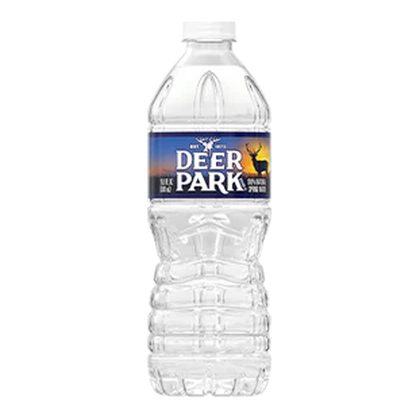
Deer Park Natural Spring Water
Still spring water · Eastern U.S. springs · PET
1.21[1]ppt of PFAS, Consumer Reports 2020: one of two still waters over 1 ppt
2 of 2[6][7]FDA retail samples with no PFAS detected (2023–24)
A mixed record. Consumer Reports measured 1.21 ppt of total PFAS in 2020, one of only two still waters over its 1 ppt benchmark; Nestlé, which owned the brand then, said its own testing found none. FDA found no PFAS in two samples in 2023–24, and the 2025 report lists 18 PFAS as not detected, so the 2020 result may not reflect today's water, but we score the evidence we have. Deer Park comes from springs in Pennsylvania, Maryland, Florida, Maine, South Carolina, Tennessee and North Carolina, so minerals range from not detected to 240 mg/L and pH from 4.8 to 8.3. Plastic bottle.
Best forEastern shoppers who need a supermarket spring water
SourceSprings in Pennsylvania, Maryland, Florida, Maine, South Carolina, Tennessee and North Carolina
What's in itMinerals ND–240 · calcium ND–68 · magnesium 0.19–9.8 · sodium 0.86–8.8 · fluoride up to 0.16 mg/L · pH 4.8–8.3
FormatsPET bottles in many sizes
PriceSold at retail; prices vary
Report2025 report with 18 PFAS; lab not named
Format scoredPET (3.5 of 10 for the bottle)
See score breakdown & sources
Lab results7.0
Minerals & source7.0
Bottle3.5
Transparency10.0
Track record & honesty10.0
Lab results start at 6.5: FDA 2023–24 +1; Consumer Reports -1; brand report lists PFAS, none detected +0.5 = 7. Minerals: natural water under 100 mg/L of minerals, or a range that varies by spring. Bottle: PET plastic. Transparency: Current report with numbers and PFAS. Weighted total 7.200, shown as 7.2.
Independent labConsumer Reports. What's really in your bottled water? (Sept. 24, 2020; free article): 47 bottled waters (35 still, 12 carbonated), 2 to 4 samples each, tested for 4 heavy metals and 30 PFAS at an accredited lab; most still waters had detectable PFAS, only Deer Park (1.21 ppt) and Tourmaline Spring over 1 ppt; Topo Chico 9.76 ppt; funded by the Forsythia Foundation. Open source · [1]
Public record / studyFDA. Analytical results for FY2023–2024 PFAS in bottled water (parts per trillion): 18 PFAS, reporting limits 0.23–0.32 ppt; imported samples listed by country of origin (brands in FDA's separate brand list); “Br” columns are branched plus linear totals. Open source · [6]
Public record / studyFDA. FY23–FY24 PFAS in bottled water assignment: sample brand information (domestic samples by brand and type, e.g. Aquafina “Purified,” Dasani “Purified, minerals added,” Glaceau Smart Water “Distilled, minerals added”). Open source · [7]
Maker's dataDeer Park. 2025 Water Analysis Report: springs in PA, MD, FL, ME, SC, TN and NC; TDS not detected to 240, calcium not detected to 68 mg/L, pH 4.8–8.3; 18 PFAS not detected. Open source · [75]
Maker's dataDeer Park. Spring water products (plastic bottles). Open source · [76]
Cost: price varies at retail; no official online price compareType: Still spring water · Owner: Primo BrandsSee it on the brand siteWe may earn a commission.
7.2of 10
Clean Water Score
10
Price varies (retail)Sold at retail; prices vary by retailer.
Glass with the least disclosure
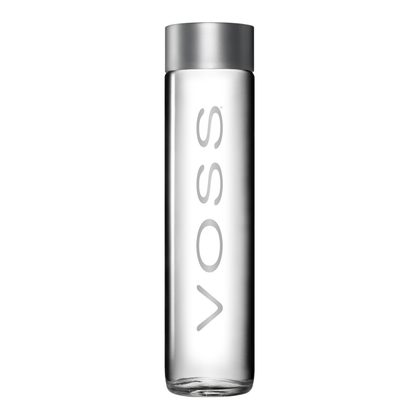
Voss Still Water (glass)
Still aquifer water · Norway · glass (recycled PET also sold)
1 of 1[6][7]FDA still-water sample with no PFAS detected (a sparkling sample too)
Glass[102]its original bottle; recycled PET also sold
No data[102]on minerals or contaminants from the brand
No report[13]found online; California requires one on request
Glass and a clean PFAS result, but not much else to go on. FDA tested one still and one sparkling Voss sample in 2023–24 and found no PFAS in either, and Voss leads with its original glass bottle (a 500 mL recycled-plastic bottle is also sold). But we couldn't find a water quality report: no minerals, no contaminant results and no source details beyond “fresh aquifer water” from a “natural mineral source,” which is why it scores 2 of 10 on transparency. California law requires bottlers to give customers their yearly water report on request, so ask for it before you make Voss a daily water.
Best forGlass-bottled still water when Acqua Panna or Saratoga isn't on the shelf
SourceNorway; the brand describes “fresh aquifer water” from a “natural mineral source”
What's in itNot published
FormatsGlass 375 mL and 800 mL; recycled PET 500 mL
PriceSold at retail; prices vary
ReportNone found online; ask the company
Format scoredGlass, the format it leads with (10 of 10 for the bottle). In recycled plastic, it would score about 5.9 overall
See score breakdown & sources
Lab results7.5
Minerals & source7.0
Bottle10.0
Transparency2.0
Track record & honesty10.0
Lab results start at 6.5: FDA 2023–24 +1 = 7.5. Minerals: natural water whose mineral content isn't published (class-typical). Bottle: Glass. Transparency: No report found. Weighted total 7.050, shown as 7.1.
Public record / studyFDA. Analytical results for FY2023–2024 PFAS in bottled water (parts per trillion): 18 PFAS, reporting limits 0.23–0.32 ppt; imported samples listed by country of origin (brands in FDA's separate brand list); “Br” columns are branched plus linear totals. Open source · [6]
Public record / studyFDA. FY23–FY24 PFAS in bottled water assignment: sample brand information (domestic samples by brand and type, e.g. Aquafina “Purified,” Dasani “Purified, minerals added,” Glaceau Smart Water “Distilled, minerals added”). Open source · [7]
Maker's dataVoss Water Global: “Original Glass bottle” (375 and 800 mL) and recycled PET (500 mL); “fresh aquifer water” from its “natural mineral source.” Open source · [102]
Public record / studyCalifornia Health and Safety Code §111071: each bottled water plant must prepare an annual bottled water report and, “upon request,” make it available to each customer. Open source · [13]
Cost: price varies at retail; no official online price compareType: Still aquifer water · Owner: Not confirmedSee it on the brand siteWe may earn a commission.
7.1of 10
Clean Water Score
Cost
What bottled water costs per liter
Bottled water has no filters to replace, so the price per liter is the whole cost. These are the only brands we scored that post a price on their own store; most big brands sell only through retailers, and we don't use prices we can't verify.
Price per liter, brand's own store, Sept. 28, 2026Shorter bar = cheaper
For context, the bottled-water trade group puts the average at “roughly 2.4 cents per ounce,”[59] about $0.81 a liter [our calculation], and EPA's sample tap-water rate is $0.00295 a gallon[61], about 0.08¢ a liter. Shipping isn't included. Prices can change; we'll re-check them before each update.
PFAS, by brand
Named-brand PFAS results from three sets of tests
Every named-brand PFAS result we could find from a free, public source. FDA's 2023–24 tests had the lowest detection limits (0.23 to 0.32 ppt) and the most samples. Consumer Reports' 2020 article published exact numbers only for waters over 1 ppt, plus a few sparkling waters; the rest it grouped as under 1 ppt.
Total PFAS, parts per trillion
FDA 2023–24 (hollow = none detected)Consumer Reports 2020Mamavation 2025Grouped as “under 1 ppt”1 ppt, CR's benchmark4 ppt, EPA's tap limit for PFOA or PFOS, each
0246810ppt
In our top 10
#1Acqua Panna[6][7]FDA: none detected in 6 samplesNDhighest, ppt
Icelandic Glacial[6][7]FDA: none detected in 12 samplesNDhighest, ppt
Members of the bottled-water trade group test for PFAS every year under a voluntary standard, but membership is voluntary[60]. The tests differ: FDA measured 18 PFAS[6], Consumer Reports 30[1] and Mamavation 40[3], in different years and lots, so they aren't strictly comparable. Totals are compared with EPA's per-compound tap-water limit only for scale[15]. FDA's highest Fiji sample was 0.83 ppt of PFHxA plus 0.44 ppt of PFHxS (branched and linear), about 1.27 ppt [our calculation]. Across studies, PFAS track the source water more than the bottle: purified water tends to test lower than spring water[37], and a 112-water study found no significant difference between glass and plastic or still and sparkling[38].
What's in the bottle
Calcium, magnesium and total minerals, brand by brand
From each brand's own water report (maker data). The shaded bands are WHO's suggested optimums for drinking water: 40–80 mg/L of calcium and 20–30 of magnesium[40]. Ranges mean the brand bottles from several springs.
“›” means the bar runs off the scale. ND = not detected. Missing brands (Voss, Perrier, Topo Chico and others) don't publish a full breakdown; Topo Chico's label works out to about 113 mg/L of calcium and 42 of sodium [our calculation][99]. Mineral water must have at least 250 mg/L of dissolved solids with nothing added[9]. Food is still your main source of calcium and magnesium.
How we score: the Dr. Axe Clean Water Score™ (bottled)
Most bottled-water rankings are taste tests. Ours starts with what someone other than the brand found in the water, then weighs the minerals, the bottle and how much the brand discloses. It's an editorial assessment built from FDA data, free independent lab results, brand reports and public records, not our own lab testing and not a safety grade. Price isn't part of the score; it's in each review and the cost chart.
Lab results30%
Named-brand results for PFAS, microplastics, arsenic and bromate. Starts at a class-typical 6.5 and moves up for non-detects and results under 1 ppt, and down for results over 1 ppt and other flags (lookup table below).
Minerals & source20%
Spring or mineral water with meaningful calcium and magnesium (about 100–500 mg/L of minerals) scores 10; purified water with minerals added for taste 5; purified with none 2. Sodium over 50 mg/L, natural fluoride over 1 mg/L or added fluoride cost 1 each.
Bottle20%
Glass 10; aluminum with a disclosed BPA-free liner 7; aluminum with an undisclosed liner or a plastic-lined carton 6; recycled PET 4; PET 3.5.
Transparency20%
A current (2025–26) report with numbers for the bottled water, including PFAS, scores 10; without PFAS 8; outdated or source-only 6; mostly “PASS” 4; no report found 2.
Track record & honesty10%
Starts at 10. Admitted illegal treatment or criminal fines −3; a recall in the last 5 years −2 (−1 for a flavored sibling); a settled lawsuit with named terms −1; a self-contradicting report −1; unsupported “ionized” or “structured water” claims −1.
Caps and exclusionsRule
A product-quality recall in the last 3 years caps a brand at 7.0. An arsenic recall over the legal limit in the last 10 years excludes it. No independent lab result means no top-10 spot.
Lab evidence (starts at 6.5)
Result → points
FDA 2023–24 retail sampling (18 PFAS, reporting limits 0.23–0.32 ppt)
No PFAS in any sample, 3 or more samples: +1.5 No PFAS, 1–2 samples: +1.0 Some detections, every sample 1 ppt or less: +0.5 Any sample over 1 ppt total: −1.0
Consumer Reports 2020 (30 PFAS, free article)
No detectable PFAS: +1.5 Under 1 ppt total: +0.5 1–2 ppt: −1.0 2–5 ppt: −2.0 Over 5 ppt: −3.0
PFAS or microplastics listed, all not detected: +0.5 (maker data)
Microplastics, Mason 2018
Brand average at least 2× the 11-brand median (213 per liter): −1.5
Arsenic and bromate
Arsenic over 5 µg/L (independent / maker): −2.0 / −1.0 Bromate 7 µg/L or more (within 30% of the 10 µg/L limit): −1.5
Independent proof beats paperwork. Only named-brand results count: FDA's 2023–24 samples (FDA posts a brand for every sample)[7], Consumer Reports' free 2020 article[1], Mamavation's free 2025 results[3] and the 2018 microplastics study[27]. A result on a flavored or sparkling sibling of the same line counts half. The brand's own report counts only as maker data. We don't use Consumer Reports' or Mamavation's member-only results.
Caps and exclusions. A product-quality recall in the last 3 years (bacteria, particles or similar) caps a brand at 7.0 (Fiji, Topo Chico, Waiakea). A recall for arsenic over the 10 µg/L limit in the last 10 years excludes it (Starkey, Peñafiel). To make the top 10, a brand needs at least one independent lab result for its water; Castle Rock scores 7.5 on paper but has none. A brand with no report and no independent data isn't rated.
Minerals and source. Natural water with 100–500 mg/L of minerals and meaningful calcium (20 mg/L or more) or magnesium (10 or more) scores 10; over 500, 9; under 100, or a range that varies by spring, 7. When a brand doesn't publish its minerals, we use a class-typical 7 (8 for labeled mineral water, which must have at least 250 mg/L). Purified water with minerals added for taste scores 5; with none, 2[40]. Sodium over 50 mg/L, natural fluoride over 1 mg/L and added fluoride each cost 1.
The bottle. We score the format the brand leads with on its own U.S. site (we don't have sales data) and put that format in the product name. The same water in plastic scores about 1.2 to 1.3 points lower overall (PET 3.5 or recycled PET 4, vs 10 for glass, at 20% weight); each review's “Bottle and source” box gives the figure. Where we couldn't confirm a brand's main format (Gerolsteiner, Perrier), we average glass and PET. We don't lower glass for the cap-paint particles French researchers found, but we explain them below[33].
Transparency and track record. Report scoring is by what the report contains, not how it looks. For track record, lawsuits are shown as allegations and cost nothing unless settled with named terms (Topo Chico's Prop 65 settlement, −1)[26]. We treat a guilty plea with criminal fines like an admitted violation (Crystal Geyser, −3). Scores that tie at one decimal are ranked by their unrounded totals.
One caveat applies to every score: independent testing of bottled water is thin. FDA sampled some brands 25 times and others once; Consumer Reports' numbers are from 2020; and no one has independently tested most brands for microplastics. We say which evidence each score rests on.
Why we avoid plastic bottles
That's our dividing line: the container is part of what you drink. Glass scores 10; lined aluminum and cartons 6 to 7; plastic 3.5 to 4.
Heat pulls chemicals out of PET
Heat speeds antimony leaching from PET: based on its lab data, a 2008 study estimated antimony would pass the 6 µg/L limit after about 38 days at 65 °C (149 °F) or 1.3 days at 85 °C[30]; heat plus shaking raised particles 9.29-fold[29].
The cap is a particle source
Polypropylene, the cap plastic, was 54% of identified particles in the 2018 study[27], and opening and closing a bottle 100 times left caps visibly worn[32].
Cans and cartons are lined
Canned drinks raised urinary BPA more than 1,600% vs glass in a 60-person trial[35]. “BPA-free” liners use substitutes that also migrate[36]. Cartons have a plastic lining too.
Recycling doesn't close the loop
Only 30.2% of U.S. PET bottles were recycled in 2024[58]. Recycled PET (rPET) keeps plastic out of landfills; it's still plastic touching your water.
Microplastic particles per liter, by brand
Averages of lot means from the 2018 study, including dye-tagged particles 6.5–100 µm that weren't chemically confirmed[27]. Red bars are at least twice the 11-brand median of 213 per liter [our calculation].
Nestlé Pure Life3 lots: U.S. (Amazon), Lebanon, Thailand930
A 2025 study from France's food safety agency, ANSES, found more microplastics in glass-bottled drinks than in plastic, and traced them to the paint on metal caps. For water, the levels were low either way: 4.5 particles per liter in glass vs 1.6 in plastic bottles and cartons. Blowing and rinsing the caps before bottling cut particles from 287 to 87 per liter in an experiment[33]; the paper put all waters at 2.9 per liter[34]. ANSES says it can't tell whether these levels pose a health risk. We still score glass highest: it carries no antimony and no PET particles, and cap paint is a fixable manufacturing problem.
What to do: refill glass or stainless steel from a filter at home; buy glass when you buy; and never leave any bottle in a hot car.
Does the water matter for your health? What the evidence shows
The strongest case for mineral water is simple: its calcium and magnesium are absorbed like the minerals in food. The rest is earlier, and several studies were funded by water companies. Here's how we'd grade it:
WHO's review of demineralized water relies mostly on older studies; a 2025 review found very-low-mineral water isn't linked to risk in the general population. You give up a mineral source, not your health.
Plastic in artery plaque was linked to more heart attacks, strokes and deaths in 257 patients (observational). WHO has said drinking-water microplastics don't appear to pose a risk at current levels.
PFAS in 101 U.S. bottled waters: purified water, mostly made by reverse osmosis, had significantly less than spring water. A 112-water international study agreed.
erosive than soft drinks for plain sparkling mineral water in a lab study, but flavored sparkling waters were as erosive as orange juice.
J Oral Rehabil, 2001; Int J Paediatr Dent, 2007
How much to drink? The National Academies found women average about 2.7 liters and men 3.7 liters of total water a day, about 80% of it from drinks, and set no rule of thumb for glasses[54]. At those amounts, a water with 20–30 mg/L of magnesium supplies a real share of what you need[40].
Is alkaline water worth it? The honest evidence
High-pH water is one of the fastest-growing claims in the aisle. Essentia calls itself “ionized alkaline water” with “supercharged hydration”[87]; its 2025 report shows pH 9.92, no calcium and 1.42 mg/L of magnesium[86]. Here's what the research says:
RefluxIn a test tube, pH 8.8 water permanently inactivated pepsin, the stomach enzyme involved in reflux damage[47]. That's a plausible lead, not a clinical result, and it was a naturally alkaline artesian water.
HydrationThe best-known trial, in 100 adults after exercise, found blood viscosity fell 6.30% with high-pH water vs 3.36% with standard water and no difference in other hydration markers. Essentia funded it, one author held Essentia stock options, and the data are held confidential under an agreement with the sponsor[49]. An earlier trial of 38 people, funded by a water company, reported blood pH values as low as 6.23[48], far outside the normal 7.35–7.45 [our note], which raises questions about its method.
Cancer and “alkalizing”A systematic review screened 8,278 citations, found no randomized trials, and concluded that promoting alkaline water for cancer “is not justified”[50]. A 2026 review found claims of systemic alkalinization and disease prevention “not supported by robust clinical evidence”[51].
Our takeWe score “ionized” and “structured water” claims as unsupported (−1 on track record). If you like the taste of high-pH water, a naturally alkaline mineral water gives you minerals too.
How to read a bottled-water label and report
FDA's definitions govern the words on the label[9]; added fluoride is capped at 0.7 mg/L[12]. Beyond that, the brand's water report is where the numbers live, if it publishes one.
Term or number
What it tells you
Where to check it
Spring, artesian, mineral
Natural sources. Spring water must flow naturally to the surface; mineral water needs at least 250 mg/L of dissolved solids with none added.
Where to check: The label; 21 CFR 165.110
Purified (RO, distilled)
Treated to remove nearly everything, often from city water. It doesn't have to say “municipal source.”
Where to check: The label and the report's “source” line
“Minerals added for taste”
Small amounts of salts added back to purified water. Usually a few mg/L of magnesium, not a meaningful source.
Where to check: The report's calcium and magnesium rows
TDS (mg/L)
Total dissolved solids: all the minerals together. Under 50 is very light; 100–500 is a mineral-rich still water.
Where to check: The report
Calcium and magnesium
WHO suggests 40–80 mg/L of calcium and 20–30 of magnesium.
Where to check: The report
Sodium and fluoride
Over 50 mg/L of sodium is a lot for a water. Natural fluoride varies; added fluoride is capped at 0.7 mg/L.
Where to check: The report; 87 FR 23434
Bromate (µg/L)
Can form when water with bromide is disinfected with ozone. Limit 10; we flag 7 or more.
Where to check: The report
PFAS “ND”
Not detected, but at what limit? FDA's was 0.23–0.32 ppt; some brand reports don't say.
Where to check: The report's reporting limit column
pH and “alkaline”
No FDA definition for “alkaline” or “ionized.” High pH isn't a health benefit on its own.
Where to check: The label; see alkaline water above
Report date and scope
A current report for the finished, bottled water beats a source-water test or an old year.
Where to check: The report's title and dates
More picks by category
Best glass-bottled waters
Glass removes PET's antimony and plastic particles from the equation[31]. These score 10 for the bottle; Evian also sells 330 mL and 750 mL glass bottles[80].
Gerolsteiner Sparkling Mineral WaterPrice varies (retail)
The most magnesium of any water here (108 mg/L, plus 348 of calcium, per its German site), and 118 mg/L of sodium, a lot for a water. No PFAS in Mamavation's glass bottle or four FDA samples. But a 2018 study found 1,410 microplastic particles per liter in a plastic bottle vs 204 in glass, and we found no U.S. water report. Buy it in glass.[100][3][6][27]
6.6/10
·
Evian in glass330 mL and 750 mL
The same water as our #5 pick, in glass: 81 mg/L of calcium and 26 of magnesium[78]. The score shown is Evian as ranked, in recycled plastic; glass scores higher on the bottle.
Sparkling waters are scored on the same rubric. In 2020, 7 of the 12 carbonated waters Consumer Reports tested were over 1 ppt of PFAS[1], but FDA's 2023–24 tests found no PFAS in any of its 22 carbonated mineral water samples[6], so don't assume bubbles mean PFAS.
Gerolsteiner Sparkling Mineral WaterPrice varies (retail)
The most magnesium of any water here (108 mg/L, plus 348 of calcium, per its German site), and 118 mg/L of sodium, a lot for a water. No PFAS in Mamavation's glass bottle or four FDA samples. But a 2018 study found 1,410 microplastic particles per liter in a plastic bottle vs 204 in glass, and we found no U.S. water report. Buy it in glass.[100][3][6][27]
6.6/10
3
Perrier Carbonated Mineral WaterPrice varies (retail)
1.1 ppt of PFAS in Consumer Reports' 2020 tests and 1.8 in Mamavation's 2025 test, and Nestlé admitted in 2024 to using banned treatments on its French mineral waters. No U.S. report found.[1][3][24]
5.7/10
4
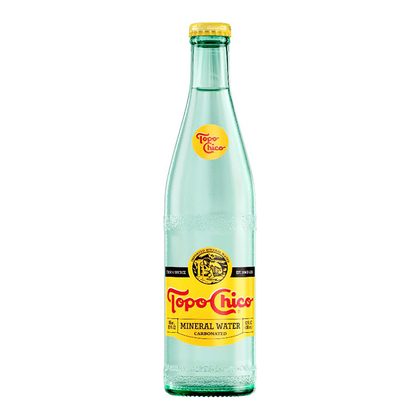
Topo Chico Mineral WaterPrice varies (retail)
The highest PFAS in Consumer Reports' 2020 tests (9.76 ppt) and 2.8 ppt in Mamavation's 2025 test, a May 2025 recall for Pseudomonas, and no water report found. See “What about Topo Chico, Perrier and Fiji?”[1][3][18]
5.5/10
·
Mountain Valley Sparkling (glass)$31.99 / 24 × 333 mL
The sparkling version of our #3 pick: 56 mg/L of calcium, 210 of total minerals[66]; a flavored version tested free of PFAS[3]. Its own store sells it at $4.00 a liter[67]. The score shown is for the still line as ranked.
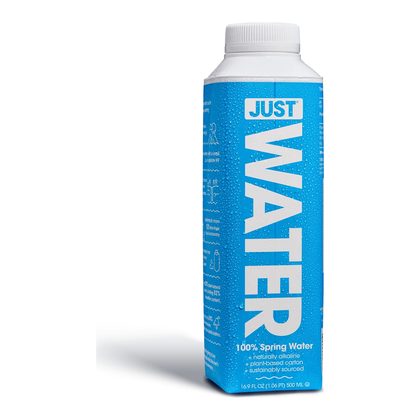
Spring water from Glens Falls, New York, in a paper-based carton that's mostly plant-derived by the brand's account, but lined. Under 1 ppt of PFAS in Consumer Reports' 2020 tests; its newest posted report is from 2024. Every size showed as unavailable on its store on Sept. 28.[1][88][89]
6.9/10
3
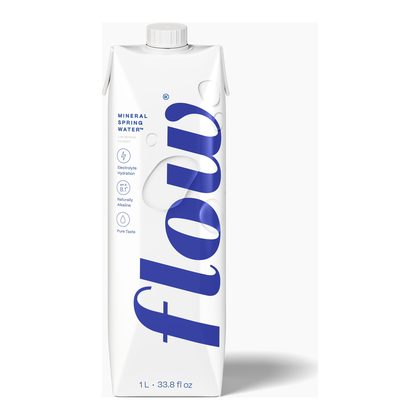
Flow Alkaline Spring Water$23.99 / 6 × 1 L
Ontario spring water in a Tetra Pak carton, with clean PFAS results (FDA 1 sample, CR under 1 ppt). No water report found, and a 2022 recall of a lemon-and-ginger flavored version. $4.00 a liter on its store.[104][20][105][6]
6.3/10
4
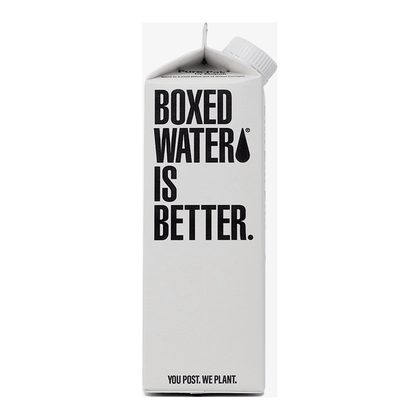
Boxed Water Is Better$49.95 / 24 × 500 mL
No detectable PFAS in Consumer Reports' 2020 tests or two FDA samples. But it's purified water with no minerals added (per FDA's sample list), in a lined carton, with no report found. $4.16 a liter.[1][7][103]
5.7/10
5
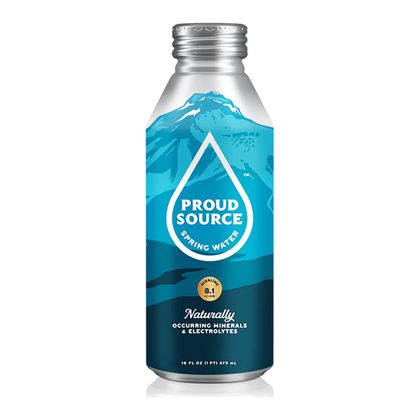
Proud Source Alkaline Spring WaterNot sold online
Spring water in aluminum bottles and cans, with no PFAS in two FDA samples. Its water-quality page has no report on it, and the liner isn't disclosed.[106][6]
6.3/10
Most minerals: the best waters for calcium and magnesium
Ranked by score, not by minerals alone; each publishes calcium and magnesium. About half the magnesium in mineral water is absorbed[42], and its calcium is absorbed as well as milk's[43].
Gerolsteiner Sparkling Mineral WaterPrice varies (retail)
The most magnesium of any water here (108 mg/L, plus 348 of calcium, per its German site), and 118 mg/L of sodium, a lot for a water. No PFAS in Mamavation's glass bottle or four FDA samples. But a 2018 study found 1,410 microplastic particles per liter in a plastic bottle vs 204 in glass, and we found no U.S. water report. Buy it in glass.[100][3][6][27]
6.6/10
5
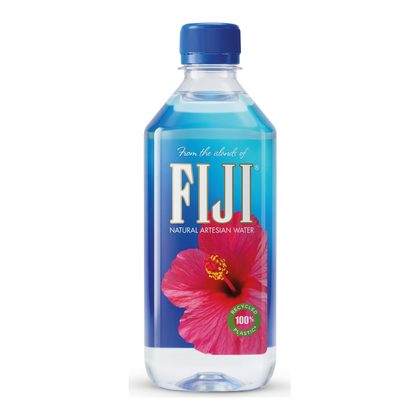
Fiji Natural Artesian Water$40 / 24 × 500 mL
A March 2024 recall (78,533 cases, Class III: “Firm testing revealed Manganese in addition to three bacterial genera”) limits it to 7.0 or less until 2027. FDA detected low PFAS in 2 of 25 samples, one at about 1.27 ppt total. Good minerals (210 mg/L, magnesium 14) and 86 mg/L of silica, but its March 2026 report doesn't list PFAS or bromate. In 100% recycled plastic, per its label; $3.33 a liter on its store.[17][6][84][85]
Good and not-so-good waters that missed the top 10, with the reason for each.
1
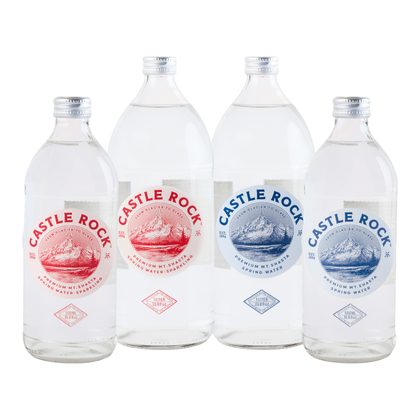
Castle Rock Spring WaterPrice varies (retail)No independent test
Scores well on paper (glass, a Mount Shasta spring), but no independent lab has tested it, so it can't make our top 10. Its only posted report is a 2022 source-water test, and its FAQ says the mountain “produces living structured water,” a claim we found no evidence for.[95][96][97]
7.5/10
2
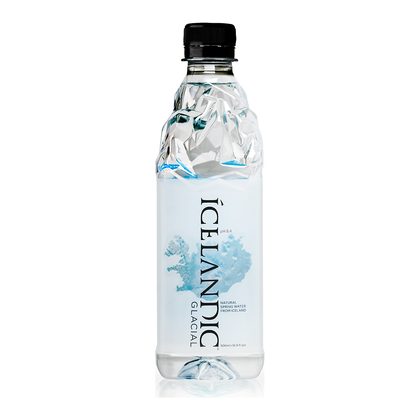
Icelandic Glacial Natural Spring Water$31.50 / 24 × 500 mL
FDA found no PFAS in 12 samples, and a brand-commissioned lab found no microplastics above its limits. But its NSF report covers the source spring, not the bottled water, and it's a light water (72 mg/L) in recycled-PET bottles, per the brand. $2.63 a liter, the lowest official price we found.[6][93][92][94]
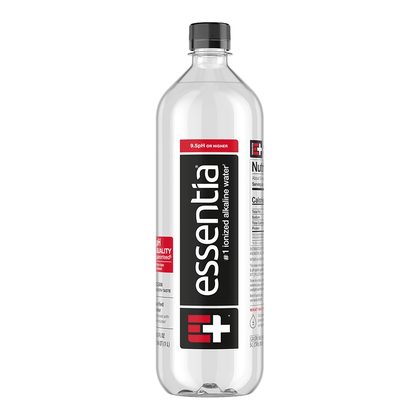
Purified water with electrolytes at pH 9.92. Clean PFAS results (6 FDA samples, CR under 1 ppt), but no calcium, 1.42 mg/L of magnesium, a report without PFAS, and “ionized” and “supercharged hydration” claims the evidence doesn't support (see alkaline water, above).[86][87][6]
6.8/10
4
Waiakea Hawaiian Volcanic Water$38 / 12 × 1 L
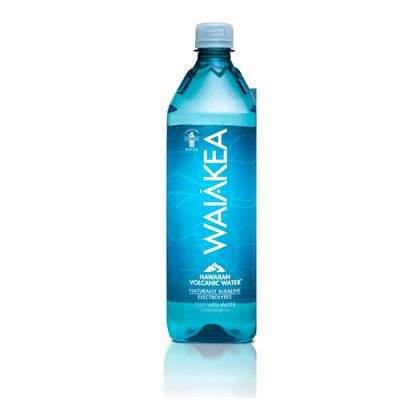
Deep-well water from Hawaii in 100% recycled plastic, per the brand. Its May 2026 report contradicts itself on fluoride and magnesium from one table to the next, and a November 2023 recall (3,850 cases) followed complaints of floating particles.[90][19][91][1]
6.6/10
5
smartwaterPrice varies (retail)
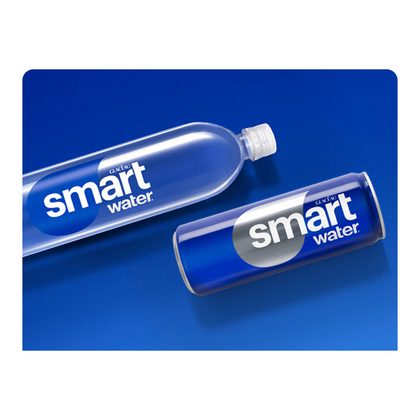
Distilled water with minerals added, per FDA's sample list. No PFAS in 13 FDA samples, but we found no water report online.[7]
5.7/10
6
Core HydrationPrice varies (retail)
Sold as “Natural Enhanced Water” (CR's listing); under 1 ppt of PFAS in 2020. Its website address no longer leads to a brand site, and we found no report.[1]
5.2/10
Tap water in a bottle: Aquafina and Dasani
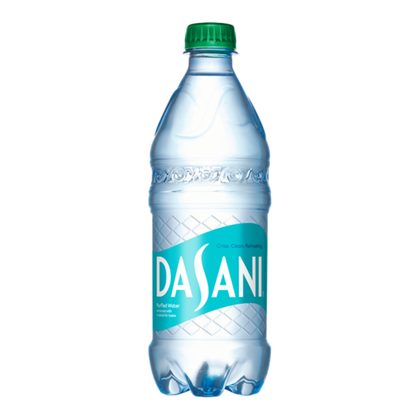
The two best-selling purified waters are largely treated municipal water. Consumer Reports found that “most bottled water sold in the U.S. comes from the same municipal sources that supply tap water,” and that Dasani and Aquafina each passed $1 billion in U.S. sales in 2019[57]. Their PFAS results are clean: FDA found none in nine Aquafina samples and six Dasani samples[6][7]. What you give up is minerals and disclosure.
·
Pure Life Purified WaterPrice varies (retail)
Purified public-supply or well water with minerals added for taste (13–44 mg/L). A full 2025 report and clean PFAS results, but the highest brand average in a 2018 microplastics study: 930 particles per liter across three lots.[77][27][6]
6.8/10
·
Dasani Purified WaterPrice varies (retail)
Purified municipal or groundwater with minerals added for taste. Clean PFAS results, but its 2025 report lists total dissolved solids as just “PASS,” with no mineral numbers.[98][6]
6.1/10
·
Aquafina Purified WaterPrice varies (retail)
Purified water with no minerals added, per FDA's sample list. No PFAS in nine FDA samples, but no report we could open.[7][27]
5.1/10
Dasani's report says its water is carbon-filtered, run through reverse osmosis, then remineralized with magnesium sulfate and potassium chloride and ozonated, but it lists total dissolved solids only as “PASS”[98]. FDA's sample list classifies Aquafina as plain purified water, with no minerals added[7], and we couldn't open an Aquafina report. A 2022 test found 0.19 µg/L of antimony in Aquafina and 0.17 in Dasani, far under the 6 µg/L limit[4]. If you're paying for filtered city water, a filter at home does the same job for far less.
What about Topo Chico, Perrier and Fiji?
Three famous names, three different problems. Here's what the records show.
Topo Chico's PFASTopo Chico had the highest PFAS of the 47 waters Consumer Reports tested in 2020: 9.76 ppt total. Coca-Cola said it would “continue to make improvements”[1]. Mamavation measured 2.8 ppt in 2025[3], and FDA found none in its single sample[6], so levels appear to have come down. A 2022 California Prop 65 lawsuit alleged Topo Chico exposed consumers to PFOA without a warning. It was settled in 2023 without Coca-Cola admitting wrongdoing (the company denied the allegation): Coca-Cola agreed that Topo Chico sold in California would meet EPA's proposed limits of 4.0 ppt each for PFOA and PFOS, and agreed to a $10,000 civil penalty[26]. In May 2025, a batch was recalled for Pseudomonas after product on hold was shipped[18]. We found no Topo Chico water report. Score: 5.5.
Perrier's banned treatmentsIn 2024, Nestlé Waters admitted using banned filters and ultraviolet treatment on French mineral waters, which by law must be processed naturally, and paid a €2 million fine to avoid prosecution; in 2025 French authorities ordered Perrier's microfiltration removed, while saying the product was not a risk to consumers[24]. A French Senate report said the government covered up the use of prohibited treatments at the Perrier, Hépar and Contrex sites[25]. Perrier also measured 1.1 ppt of PFAS in 2020 and 1.8 in 2025[1][3], and a 2022 test found 1.58 µg/L of antimony in a plastic bottle of it[4]. Score: 5.7.
Fiji's recallIn March 2024, Fiji recalled 78,533 cases of 500 mL bottles (Class III, FDA's lowest-risk category) after “Firm testing revealed Manganese in addition to three bacterial genera”[17]. Under our rules, that recall keeps it at 7.0 or less until March 2027. FDA detected low PFAS in 2 of 25 samples[6], and its March 2026 report doesn't list PFAS or bromate[84]. The water itself is good: 210 mg/L of minerals, 14 of magnesium and 86 of silica. Score: 7.0.
Nestlé's Italian watersOur top two, Acqua Panna and S.Pellegrino, are Nestlé brands from Italian springs[62][64]. The French findings named Nestlé's Perrier, Hépar and Contrex sites[25], not these springs, so they don't change these two scores.
Our adviceCheck FDA's recall search for any brand you buy regularly[16], and favor brands that publish a current report with PFAS.
What we'd skip
Two brands are excluded for arsenic recalls; the others have no data we'd trust or a record we can't overlook.
·
Starkey Spring Water
Excluded. Recalled in December 2016 and January 2017 for arsenic at 11.7 and 12 µg/L (limit 10), and Consumer Reports measured 9.53 µg/L in 2020.[21][1]
Excluded
·
Peñafiel Mineral Spring Water
Excluded. Consumer Reports measured 18.1 µg/L of arsenic in 2019; a June 2019 recall followed (62,349 cases), and the maker withdrew it from U.S. sale.[2][22]
Excluded
·
Open Water (aluminum bottle)$51.48 / 12 × 750 mL
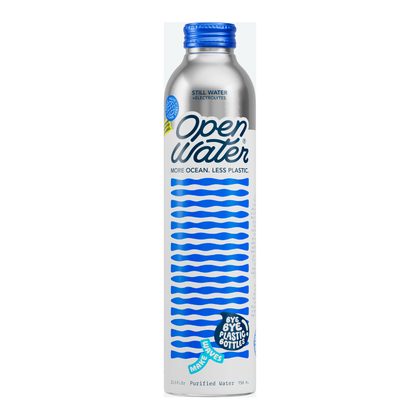
Not rated. Aluminum bottles with a “BPA-free lining” (type not disclosed), water from multiple co-packers, no water report and no independent test we could find. $5.72 a liter.[107][108]
Not rated
·
Crystal Geyser Natural Alpine Spring WaterPrice varies (retail)
Clean PFAS results (5 FDA samples; CR under 1 ppt), but no water report found, and its maker, CG Roxane, pleaded guilty in 2020 to illegally storing and transporting arsenic-laced wastewater from the filters that remove natural arsenic from its spring water, and was sentenced to three years' probation and $5 million in criminal fines. The case concerned waste handling, not the bottled water.[23][6]
5.8/10
When the label story meets the lab
The biggest gaps we found between what a brand says, or implies, and what testers and records show. Waiakea's report contradicts itself on fluoride and magnesium between two tables, so we don't publish either number until the company explains it[90].
Water is the one thing you drink every day, so it's worth getting right. My first non-negotiable: filter your tap water at home and carry it in glass or stainless steel. That one habit cuts out most of the plastic, costs a fraction of bottled water and gives you control over what's in your glass.
Second, when you do buy bottled water, buy glass, and buy a brand that shows you its numbers. A current report with PFAS results, plus calcium and magnesium you can see, tells you far more than the picture on the label. Mineral-rich spring and mineral waters give you something back; purified water with minerals “added for taste” gives you almost nothing.
Third, respect heat. Never drink from a plastic bottle that's been baking in a car or a garage, and don't reuse single-use bottles over and over. And skip the “alkaline,” “ionized” and “structured water” claims; the evidence isn't there.
— Dr. Axe
Frequently asked questions
What is the healthiest bottled water?
By our scoring, Acqua Panna in glass (9.6/10): FDA found no PFAS in six retail samples, its 2025 report lists 18 PFAS as not detected, it has a moderate 140 mg/L of minerals with almost no fluoride, and it comes in glass. For sparkling, S.Pellegrino in glass (9.5) has the most independent testing and 160 mg/L of calcium. For the most minerals in a still water, Evian (8.5); to order glass online, Mountain Valley (9.3). The healthiest option overall is filtered tap water carried in glass.
Which bottled waters have PFAS?
In FDA's 2023–24 testing, 10 of 197 bottled waters had detectable PFAS, none above EPA's tap-water limits; FDA's brand list shows Fiji had low detections in 2 of 25 samples, while Evian (14 samples), smartwater (13), Icelandic Glacial (12), Aquafina and S.Pellegrino (9 each) had none. In Consumer Reports' 2020 tests, Topo Chico was highest at 9.76 ppt, and Deer Park was one of two still waters over 1 ppt. Mamavation's 2025 tests found 2.8 ppt in Topo Chico, 1.8 in Perrier and none in Gerolsteiner. See our PFAS chart for every named result.
Is bottled water safer than tap water?
Not automatically. FDA regulates bottled water as a food and requires yearly testing, and its lead limit (5 µg/L) is stricter than the tap-water action level, but there's no federal PFAS limit for bottled water yet, and outside California we found no state that requires bottlers to share results. Most bottled water is purified municipal water, and bottled water adds plastic from the bottle and cap. For most homes, a good filter on tap water is cleaner and far cheaper.
Is glass-bottled water better than plastic?
For the container, yes. PET bottles leach antimony with heat and time, up to 30 times more than glass in one study, and shed plastic particles, especially from caps and with heat. A 2025 French study did find slightly more microplastics in glass-bottled water (4.5 vs 1.6 per liter) because of painted metal caps, and the levels were low either way. PFAS come from the source water, and one large study found no difference between glass and plastic.
Is spring water better than purified water?
It depends on what you want. Spring and mineral waters keep their natural calcium and magnesium; purified water has almost none, even with minerals “added for taste.” But purified water, usually made by reverse osmosis, tends to test lower for PFAS than spring water. Our top picks are spring and mineral waters with clean PFAS results.
Is alkaline water good for you?
The evidence is thin. A test-tube study found pH 8.8 water inactivated pepsin, which may matter for reflux. The main hydration trial was funded by Essentia and found a small change in one blood marker. A systematic review found no trials supporting alkaline water for cancer, and a 2026 review found claims of “alkalizing” your body unsupported. If you like it, choose a naturally alkaline mineral water.
Is sparkling mineral water bad for your teeth?
Plain sparkling mineral water was about 100 times less erosive than soft drinks in a lab study, and calcium in the water helps. Flavored sparkling waters are different: with added citric acid, they were as erosive as orange juice. Drink flavored ones with meals, or stick to plain.
Does bottled water go bad in a hot car?
The water doesn't spoil, but the bottle matters. Heat speeds antimony leaching from PET: based on its lab data, a 2008 study estimated antimony would pass the legal limit after about 38 days at 65 °C (149 °F) or 1.3 days at 85 °C, and heat plus shaking raised nanoparticle counts more than ninefold. Keep bottles cool and out of the sun, and don't reuse single-use bottles over and over.
Which bottled water has the most minerals?
Of the waters we scored, Gerolsteiner (348 mg/L of calcium and 108 of magnesium, per the brand) and S.Pellegrino (160 and 47) lead among sparkling waters. Evian leads among still waters, at 81 mg/L of calcium and 26 of magnesium, followed by Mountain Valley at 65–70 mg/L of calcium. Very light waters like Poland Spring and Icelandic Glacial have under 12 mg/L of calcium.
Is Fiji water safe to drink?
Fiji's water has good minerals, and FDA detected only low PFAS in 2 of 25 samples. But in March 2024 Fiji recalled 78,533 cases (Class III, FDA's lowest-risk category) after its own testing found manganese and three types of bacteria, and its 2026 report doesn't list PFAS. That recall caps its score at 7.0 until March 2027; it scores 7.0. It comes only in plastic (100% recycled, per its label).
How much water should I drink a day?
The National Academies found women average about 2.7 liters and men about 3.7 liters of total water a day, with about 80% from drinks and the rest from food, and they don't set a number of glasses. More is needed in heat or with exercise. Let thirst and the color of your urine guide you.
References
Update history
Sept. 28, 2026: First published. Scores built from FDA's FY2023–24 bottled-water PFAS data and brand list, Consumer Reports' free 2020 article, Mamavation's free 2025 results, a 2018 microplastics study, brand water reports and openFDA recall records, all checked Sept. 28, 2026.
Independent lab Consumer Reports. What's really in your bottled water? (Sept. 24, 2020; free article): 47 bottled waters (35 still, 12 carbonated), 2 to 4 samples each, tested for 4 heavy metals and 30 PFAS at an accredited lab; most still waters had detectable PFAS, only Deer Park (1.21 ppt) and Tourmaline Spring over 1 ppt; Topo Chico 9.76 ppt; funded by the Forsythia Foundation. Open source
Independent lab Consumer Reports. Arsenic in some bottled water brands at unsafe levels (Apr. 18, 2019; updated June 28, 2019): Peñafiel averaged 18.1 µg/L in 3 samples; Starkey 9.48 to 10.1 µg/L. Open source
Independent lab Mamavation. Safest sparkling waters: PFAS test results (Sept. 2, 2025): 40 PFAS by EPA Method 1633 at an EPA-certified lab; S.Pellegrino 0.813 ppt, Perrier 1.8, Topo Chico 2.8; Gerolsteiner (glass), Mountain Valley flavored sparkling (glass) and Liquid Death flavored sparkling (can) non-detect. Affiliate links disclosed. Open source
Independent lab Mamavation, reporting Defend Our Health's 2022 tests at an EPA-certified lab: antimony 0.17 µg/L in Dasani, 0.19 in Aquafina, 1.58 in Perrier from a plastic bottle (federal limit 6). Open source
Public record / study FDA. FDA shares testing results for PFAS in bottled water (Apr. 14, 2025): 10 of 197 samples had detectable PFAS; none exceeded EPA's drinking-water limits. Open source
Public record / study FDA. Analytical results for FY2023–2024 PFAS in bottled water (parts per trillion): 18 PFAS, reporting limits 0.23–0.32 ppt; imported samples listed by country of origin (brands in FDA's separate brand list); “Br” columns are branched plus linear totals. Open source
Public record / study FDA. FY23–FY24 PFAS in bottled water assignment: sample brand information (domestic samples by brand and type, e.g. Aquafina “Purified,” Dasani “Purified, minerals added,” Glaceau Smart Water “Distilled, minerals added”). Open source
Public record / study FDA. Per- and polyfluoroalkyl substances (PFAS) (content current as of July 9, 2026): “The FDA is working on a regulation to establish levels for certain PFAS in bottled water.” Open source
Public record / study 21 CFR 165.110, Bottled water: definitions of artesian, mineral (at least 250 ppm dissolved solids, no minerals added), purified and spring water; quality limits including arsenic and bromate 0.010 mg/L and antimony 0.006 mg/L; purified water need not be labeled “from a municipal source.” Open source
Public record / study 21 CFR Part 129, bottled drinking water good manufacturing practice: source water tested at least yearly for chemical contaminants; finished product at least yearly; records kept at least 2 years. Open source
Public record / study 21 U.S.C. §349 (FFDCA §410): bottled-water standards must be “no less stringent” than EPA's; if FDA misses its deadline, EPA's limit applies to bottled water. Open source
Public record / study FDA final rule, Beverages: Bottled Water, 87 FR 23434 (Apr. 20, 2022): added fluoride limited to 0.7 mg/L. Open source
Public record / study California Health and Safety Code §111071: each bottled water plant must prepare an annual bottled water report and, “upon request,” make it available to each customer. Open source
Public record / study California Health and Safety Code §111170(f): each container must say how to get the bottled water report. Open source
Public record / study EPA. PFAS National Primary Drinking Water Regulation, 89 FR 32532 (Apr. 26, 2024): PFOA and PFOS limited to 4.0 ppt each in tap water. Open source
Public record / study FDA. Recalls, market withdrawals and safety alerts (search). Open source
Public record / study FDA enforcement report F-1264-2024 (Class III, initiated Mar. 4, 2024): Fiji Natural Artesian Water 500 mL, 78,533 cases; “Firm testing revealed Manganese in addition to three bacterial genera.” openFDA record (JSON)
Public record / study FDA enforcement report H-0048-2025 (Class II, initiated May 28, 2025): Topo Chico Mineral Water 500 mL, 241 cases; “Pseudomonas in Mineral Water.” openFDA record (JSON)
Public record / study FDA enforcement report F-1117-2024 (Class II, initiated Nov. 28, 2023): Waiakea 1.0 L, 3,850 cases; “Consumer complaints involving floating particles.” openFDA record (JSON)
Public record / study FDA enforcement report F-0896-2022 (Class II, initiated Feb. 17, 2022): Flow Alkaline Spring Water, organic lemon and ginger flavored, 854 cases. openFDA record (JSON)
Public record / study FDA enforcement reports F-1179-2017 (Dec. 15, 2016; “11.7 ppb of arsenic”) and F-1333-2017 (Jan. 4, 2017; “12 ppb of arsenic”): Starkey Spring Water 500 mL glass. openFDA record (JSON)
Public record / study FDA enforcement report F-1971-2019 (Class III, June 18, 2019): Peñafiel Mineral Spring Water, 62,349 cases; “Elevated levels of inorganic arsenic.” openFDA record (JSON)
Public record / study U.S. Attorney's Office, C.D. Cal., mirrored by Oversight.gov (Aug. 5, 2020): CG Roxane, maker of Crystal Geyser, pleaded guilty on Jan. 9, 2020 to unlawful storage of hazardous waste and unlawful transportation of hazardous material created from filtering arsenic out of spring water at its Olancha, California facility; sentenced to 3 years' probation and ordered to pay $5 million in criminal fines. Open source
Public record / study France 24/AFP (May 7, 2025): Perrier ordered to remove water filters; “In 2024, Nestle Waters admitted using banned filters and ultra-violet treatment on mineral waters”; paid a €2 million fine; the prefect said the product “was not a risk to consumers.” Open source
Public record / study France 24/AFP (May 19, 2025): a French Senate report says the government covered up Nestlé's use of prohibited treatments (UV, activated carbon) at Perrier, Hépar and Contrex sites. Open source
Public record / study California Attorney General, Prop 65 settlement, Blue Water Cosaint LLC v. Topo Chico/The Coca-Cola Company (filed Mar. 2, 2022; consent judgment signed July 7, 2023): “No Admission,” defendants deny all allegations; products for sale in California to meet EPA's proposed limits (4.0 ppt PFOA, 4.0 ppt PFOS); $10,000 civil penalty. Open source
Public record / study Mason SA, Welch VG, Neratko J. Synthetic polymer contamination in bottled water. Front Chem, 2018: 259 bottles of 11 brands from 9 countries; 93% contained microplastics, 325 particles per liter on average; 54% of identified particles were polypropylene; particles under 100 µm dye-tagged, not spectroscopically confirmed. Open source
Public record / study Qian N, et al. Rapid single-particle chemical imaging of nanoplastics by SRS microscopy. PNAS, 2024: about 240,000 plastic particles per liter in 3 unnamed bottled-water brands, about 90% nanoplastics. Open source
Public record / study Hussain KA, et al. Everyday storage and handling of PET bottled water increase human exposure to nano- and microplastics. Water Res, 2026: 8 U.S. brands; particles up 9.29-fold at 60 °C with shaking (tracking counts all particles). Open source
Public record / study Westerhoff P, et al. Antimony leaching from PET plastic used for bottled drinking water. Water Res, 2008: 9 brands; 0.095–0.521 µg/L at purchase; a fitted model estimated 38 days at 65 °C (1.3 days at 85 °C) to exceed 6 µg/L. Open source
Public record / study Shotyk W, Krachler M, Chen B. Contamination of Canadian and European bottled waters with antimony from PET containers. J Environ Monit, 2006: up to 30 times more antimony in PET than in glass for the same brands. Open source
Public record / study Winkler A, et al. Does mechanical stress cause microplastic release from plastic water bottles? Water Res, 2019: particles rose on caps and necks after opening and closing, especially after 100 times. Open source
Public record / study ANSES (French food safety agency). The caps of glass bottles contaminate beverages with microplastics (2025): water averaged 4.5 particles per liter in glass vs 1.6 in plastic bottles and cartons; blowing and rinsing caps cut 287 to 87 per liter. Open source
Public record / study Chaïb I, et al. Microplastic contaminations in a set of beverages sold in France. J Food Compos Anal, 2025: 2.9 ± 0.7 particles per liter in waters overall; glass bottles most contaminated, from painted caps. Open source
Public record / study Bae S, Hong YC. Exposure to bisphenol A from drinking canned beverages increases blood pressure: randomized crossover trial. Hypertension, 2015 (60 adults 60+): urinary BPA up more than 1,600% vs glass. Open source
Public record / study Zhang N, et al. Polymers, 2020: BPA-replacement can coatings released TMBPF, BPF and other compounds. Open source
Public record / study Chow SJ, et al. Detection of ultrashort-chain and other PFAS in U.S. bottled water. Water Res, 2021: 101 products; purified water had significantly less PFAS than spring water, credited to reverse osmosis. Open source
Public record / study Gao C, et al. Factors influencing concentrations of PFAS in drinking water. ACS ES&T Water, 2024: 112 bottled waters from 15 countries; no significant difference between glass and plastic or still and sparkling. Open source
Public record / study Herkert NJ, et al. Environ Sci Technol Lett, 2020: under-sink reverse osmosis and two-stage filters showed near-complete PFAS removal in North Carolina homes. Open source
Public record / study Kožíšek F. Health risks from drinking demineralised water. In: Nutrients in Drinking Water, WHO, 2005: magnesium minimum 10 mg/L, optimum 20–30; calcium minimum 20 mg/L, optimum about 50 (40–80); evidence mostly from older studies. Open source
Public record / study Pereira CD, Martins MJ. Should children drink water with very low mineral content? Nutrients, 2025: very-low-mineral water “has not been associated with health risks for the general population.” Open source
Public record / study Sabatier M, et al. Meal effect on magnesium bioavailability from mineral water in healthy women. Am J Clin Nutr, 2002: 45.7% absorbed alone, 52.3% with a meal (10 women; Nestlé-affiliated authors). Open source
Public record / study Heaney RP. Absorbability and utility of calcium in mineral waters. Am J Clin Nutr, 2006: high-calcium mineral waters absorbed as well as milk calcium or slightly better. Open source
Public record / study Rylander R, Arnaud MJ. Mineral water intake reduces blood pressure among subjects with low urinary magnesium and calcium levels. BMC Public Health, 2004 (70 people, 4 weeks; Nestlé Water Institute grant). Open source
Public record / study Catling LA, et al. J Water Health, 2008: systematic review of 14 observational studies; magnesium in drinking water and cardiovascular death, odds ratio 0.75. Open source
Public record / study Schorr U, Distler A, Sharma AM. J Hypertens, 1996: sodium chloride-rich mineral water abolished the blood pressure drop from a low-salt diet (randomized crossover, 16 analyzed). Open source
Public record / study Koufman JA, Johnston N. Ann Otol Rhinol Laryngol, 2012: pH 8.8 alkaline water irreversibly inactivated human pepsin in a test tube. Open source
Public record / study Heil DP. J Int Soc Sports Nutr, 2010: 38 adults; funded by The Glacier Water Company; reports fingertip blood pH values of 6.23 to 7.07. Open source
Public record / study Weidman J, et al. J Int Soc Sports Nutr, 2016: 100 adults after exercise dehydration; blood viscosity fell 6.30% with high-pH water vs 3.36% with standard water; no difference in other markers; funded by Essentia, data held confidential. Open source
Public record / study Fenton TR, Huang T. BMJ Open, 2016: of 8,278 citations, 1 study met criteria and no randomized trials; promoting alkaline water for cancer “is not justified.” Open source
Public record / study Alebrahim H, et al. The health benefits of alkaline water: is it a fact or marketing myth? Front Med, 2026: claims of systemic alkalinization and disease prevention “are not supported by robust clinical evidence.” Open source
Public record / study Parry J, et al. J Oral Rehabil, 2001: sparkling mineral waters dissolved tooth mineral about 100 times less than soft drinks (lab study; Nestlé co-author). Open source
Public record / study Brown CJ, et al. Int J Paediatr Dent, 2007: flavored sparkling waters had pH 2.74–3.34 and erosive potential similar to or greater than orange juice (lab study). Open source
Public record / study National Academies (Institute of Medicine), 2004: women average about 2.7 L and men 3.7 L of total water a day; about 80% from drinks. Open source
Public record / study Marfella R, et al. Microplastics and nanoplastics in atheromas and cardiovascular events. N Engl J Med, 2024: plastic in carotid plaque in 58.4% of 257 patients; heart attack, stroke or death hazard ratio 4.53 (observational). Open source
Public record / study WHO (Aug. 22, 2019): microplastics in drinking water “don't appear to pose a health risk at current levels,” but more research is needed. Open source
Public record / study Consumer Reports. How Coke and Pepsi make millions from bottling tap water (Apr. 23, 2020): “most bottled water sold in the U.S. comes from the same municipal sources that supply tap water”; spring water was 67% of the market in 2000, and by 2018 purified water dominated (industry data). Open source
Public record / study NAPCOR (PET industry group). 2024 PET recycling report (Dec. 10, 2025): U.S. PET bottle recycling rate 30.2% in 2024. Open source
Public record / study International Bottled Water Association (trade group), May 2026: Americans drank 47.7 gallons of bottled water per person in 2025; “roughly 2.4 cents per ounce.” Open source
Public record / study International Bottled Water Association (trade group), Apr. 18, 2025: members test for PFAS every year; its voluntary standard added EPA's six regulated PFAS on Jan. 1, 2025. Membership is voluntary. Open source
Public record / study EPA WaterSense. Understanding your water bill: sample rate $0.00295 per gallon. Open source
Maker's data S.Pellegrino U.S. site: glass bottles listed first; also plastic bottles and cans. Open source
Maker's data Mountain Valley Spring Water. 2025 Water Analysis Report (PDF created Feb. 14, 2026): Garland County, Arkansas; TDS 210, calcium 65–70, magnesium 6.1–7.2, sodium 1.7–2.5, fluoride 0.12–0.15 mg/L; bromate up to 0.0033 mg/L; 18 PFAS not detected; microfiltration, then UV and/or ozone. Sparkling: calcium 56, TDS 210 mg/L. Open source
Maker's data Mountain Valley store (Sept. 28, 2026): 12 × 1 L spring water in glass $33.99; 24 × 333 mL glass $31.99 (spring or sparkling); 750 mL aluminum and 500 mL plastic also listed. Open source
Maker's data Primo Brands. Brand portfolio (Mountain Valley, Saratoga, Poland Spring, Arrowhead, Deer Park, Pure Life and others). Open source
Maker's data Saratoga Spring Water. 2025 Water Analysis Report (PDF created Feb. 13, 2026): springs in Dallas Plt., ME; Bangor and Foster Twp., PA; Saratoga Springs, NY; TDS 53–94, calcium 8–17, magnesium 1.3–5.8 mg/L, pH 5.8–6.0; 18 PFAS and fluoride not detected; bromate up to 0.0014 mg/L. Open source
Maker's data Saratoga. Still Spring Water 28 fl oz “signature blue bottle” page; 12 and 28 fl oz sizes; 28 oz also “available in recycled plastic.” Open source
Maker's data Poland Spring. 2025 Water Analysis Report: 10 Maine springs; TDS 27–84, calcium 4.2–11, magnesium 0.92–2.3, fluoride up to 0.21 mg/L, pH 6.2–7.5; bromate up to 0.0022 mg/L; 18 PFAS not detected. Open source
Maker's data Poland Spring. Spring water products page (Sept. 28, 2026): PET bottles; the 20 fl oz, 700 mL, 1 L and 1.5 L bottles “Made from 100% recycled plastic (excluding label and cap)”; the “popular 500 mL bottle” is not described that way. Open source
Maker's data Arrowhead. 2025 Water Analysis Report: 18 listed springs in CA, OR, AZ, CO and British Columbia; TDS 31–240, calcium 3.4–52, magnesium 1.2–20, fluoride up to 1.1 mg/L; uranium up to 0.0083 and bromate up to 0.009 mg/L; 18 PFAS not detected; separate fluoridated drinking water at 0.55 mg/L. Open source
Maker's data Arrowhead. Spring water product page; its bottles are labeled “I'm a 100% recycled bottle” (label shown on the 700 mL sport-cap bottle image). Open source
Maker's data Deer Park. 2025 Water Analysis Report: springs in PA, MD, FL, ME, SC, TN and NC; TDS not detected to 240, calcium not detected to 68 mg/L, pH 4.8–8.3; 18 PFAS not detected. Open source
Maker's data Deer Park. Spring water products (plastic bottles). Open source
Maker's data Pure Life. 2025 Water Analysis Report: public water supply or on-site well; reverse osmosis or distillation, minerals added for taste; TDS 13–44 mg/L; 18 PFAS not detected. Open source
Maker's data Evian. Water quality reports: NSF International lab report on the finished water (final Feb. 20, 2025; “does not represent NSF Certification”) and California annual report (Mar. 16, 2026): TDS 340, calcium 81, magnesium 26, sodium 7.1 mg/L, fluoride not detected, uranium 0.002 mg/L; 18 PFAS (EPA 537.1) below 2 ng/L; greensand filtration on under 20% of the source. Open source
Maker's data Evian. Packaging and recycling: “As of May 2024, 100% of new evian bottles* manufactured for sale in the US are made from 100% recycled PET.” Open source
Maker's data Evian. Natural spring water range, including 330 mL and 750 mL glass bottles. Open source
Maker's data Liquid Death. Still water finished-product report, first quarter 2026 (SSS Compliance Designs; artesian well, Bland, Virginia): TDS 120, calcium 30, magnesium 5.7, sodium 28, fluoride 0.083 mg/L; bromate 0.005 mg/L; no PFAS listed. Open source
Maker's data Liquid Death store (Sept. 28, 2026): Mountain Water (Still), 12 × 12 oz $12.49; shown as unavailable online. Open source
Maker's data Liquid Death FAQ: cans use a thin food-grade polymer liner; “No BPAs are used in the lining.” Open source
Maker's data Fiji Water. 2026 California Water Quality Report (March 2026): TDS 210, calcium 18, magnesium 14, silica 86, fluoride 0.2 mg/L, arsenic 0.001 mg/L; PFAS and bromate not listed. Open source
Maker's data Fiji Water shop (Sept. 28, 2026): 24 × 500 mL $40.00; the 500 mL label carries a “100% recycled plastic” seal, and the store's images are named “500mL_rPET.” Open source
Maker's data Essentia. Water Analysis Report 2025 (updated Apr. 28, 2026): pH 9.92, TDS 61.33, calcium not detected, magnesium 1.42, sodium 15.0 mg/L; no PFAS listed. Open source
Maker's data Essentia home page: “IONIZED ALKALINE WATER”; “9.5pH or higher”; “supercharged hydration.” Open source
Maker's data JUST Water. 2024 Spring Water Analysis Report (Oct. 2024), the newest posted: Glens Falls watershed, NY; TDS 81, calcium 17.4, magnesium 4.0, fluoride 0.19 mg/L; no PFAS listed. Open source
Maker's data JUST Water store (Sept. 28, 2026): 24 × 500 mL carton $44.99, shown as unavailable; the brand says 88% of the carton originates as plants. Open source
Maker's data Waiakea. Water Quality Report 2026 (May 2026): deep well water near Hilo, Hawaii; TDS 84, calcium 5.6 mg/L; its mineral table and product-analysis table list different fluoride and magnesium values; no PFAS listed. Open source
Maker's data Waiakea store (Sept. 28, 2026): Nui 12 × 1 L $38.00; bottles “made from 100% recycled material.” Open source
Maker's data Icelandic Glacial. NSF certificate of analysis, source spring water (sampled Jan. 26, 2026): TDS 72, calcium 5.5, magnesium 2.2 mg/L. Tests the source, not the bottled water. Open source
Maker's data Icelandic Glacial. Microplastics reports (brand-commissioned; Eurofins, Apr. 29, 2026): one glass and one plastic sample, all 10 polymers below quantification limits. Open source
Maker's data Icelandic Glacial store (Sept. 28, 2026): 24 × 500 mL $31.50; “In High Grade BPA-Free rPET Bottles.” Open source
Maker's data Castle Rock Water. 2022 National Testing Laboratories source-water analysis (the only report posted). Open source
Maker's data Castle Rock Water FAQ: the mountain “produces living structured water.” Open source
Maker's data Castle Rock Water home page: “From Glacier to Glass.” Open source
Maker's data Dasani. Purified Water Annual Analysis 2025: carbon, reverse osmosis, UV, remineralized with magnesium sulfate and potassium chloride, ozonated; TDS reported as “PASS.” Open source
Maker's data Coca-Cola. Topo Chico Mineral Water page: bottled at the source in Monterrey, Mexico, since 1895; per 355 mL bottle, 40 mg calcium and 15 mg sodium. Open source
Maker's data Gerolsteiner Sprudel product page (German site, checked Sept. 28, 2026), “Analyseauszug” in mg/L: sodium (Natrium) 118, calcium 348, magnesium 108, bicarbonate 1,816. Open source
Maker's data Gerolsteiner (German site): Sparkling contains 348 mg of calcium and 108 mg of magnesium per liter; dissolved minerals 800 (Naturell) to 2,500 mg/L (Sparkling). Open source
Maker's data Voss Water Global: “Original Glass bottle” (375 and 800 mL) and recycled PET (500 mL); “fresh aquifer water” from its “natural mineral source.” Open source
Maker's data Boxed Water Is Better store (Sept. 28, 2026): 24 × 500 mL $49.95; 12 × 1 L $41.95. Open source
Maker's data Flow FAQ: “100% artesian spring water from Bruce County, Ontario”; Tetra Pak carton. Open source
Maker's data Flow store (Sept. 28, 2026): 6 × 1 L Original $23.99. Open source
Maker's data Proud Source. Water quality report page (no report or PDF posted, Sept. 28, 2026). Open source
Maker's data Open Water FAQ: aluminum bottles and cans; “all use a BPA-free lining”; water “crafted as close to where it's consumed as possible.” Open source
Maker's data Open Water store (Sept. 28, 2026): 12 × 750 mL still $51.48. Open source
DA
Dr. Josh Axe, DNM, DC, CNS
Founder, DrAxe.com
Dr. Axe is a doctor of natural medicine, chiropractor and certified nutrition specialist with more than 20 years in functional medicine, and the founder of DrAxe.com.
How we make money: We may earn a commission when you buy through links on this page. It never changes our rankings: products are scored before any affiliate terms are discussed, brands can't pay for placement, and we recommend products whether or not they have an affiliate program. Scores are editorial assessments based on public testing, brand reports and public records, not our own lab testing.