





Advertisement
Conditions · Immune & Inflammation
A physician's evidence-based guide to autoimmune disease: what the immune attack is, the root drivers behind it, how it is tested, and the diet, supplements and four-step Calm, Seal, Modulate, Rebuild plan that quiet it down.
What is autoimmune disease? Autoimmune disease is a single immune error with many addresses. The immune system loses tolerance for a piece of your own tissue and attacks it, and the organ it picks decides whether the diagnosis reads Hashimoto's, lupus, rheumatoid arthritis or Crohn's. More than eighty named conditions share that mistake.
Days 1 to 30. Take out what is provoking the attack: gluten, refined sugar, alcohol and industrial seed oils, completely, for at least 30 days. Stop unnecessary NSAIDs and over-the-counter acid blockers if your doctor clears it, and write down your three biggest stressors, because step four comes back to them. Gluten removal is the dietary change with the most direct evidence in autoimmune thyroid disease, where six months without it lowered antibody titres in celiac-adjacent patients. 30
Days 8 to 60. Rebuild the barrier with warm, cooked, easily digested food, daily bone broth, and a polyphenol-rich plate, which lowered a permeability marker over eight weeks in adults with elevated baseline values. 31 Add probiotics chosen by strain rather than by count. 41 Glutamine is a reasonable part of a repair plan, though a meta-analysis of 10 trials found it did not significantly change intestinal permeability 42, and judge this step on symptoms rather than on a commercial permeability test. 11
Ongoing. Sleep, resistance training, sunlight, relationships and the trauma work you flagged in step one. Stress-related disorders carry a measurably higher rate of later autoimmune disease, and the sibling comparison in that cohort makes confounding a weaker explanation. 20 This is the step most people skip and the one that decides whether the first three hold.
Autoimmune disease is a failure of immune tolerance: self-reactive lymphocytes that should have been eliminated or held in check instead attack healthy tissue, running through an initiation phase and then a propagation phase of flares and remissions. 1 Researchers have catalogued 81 distinct autoimmune conditions, with an overall prevalence near 4.5 percent and a strong female skew. 2 The autoantibodies behind the attack often appear years before a single symptom does. 3
Few things frighten a patient more than being told their own body has turned on them, and the news usually arrives with a prescription and very little explanation of why the immune system got confused. If you are holding a fresh Hashimoto's or lupus diagnosis, you are probably not looking for another drug name. You want to know what started this and whether anything you do from here matters.
In my 20 years of clinical practice, the biggest change I have watched is how early the attack can be seen coming. Autoantibodies show up years ahead of symptoms, which leaves a long window where the terrain can still be changed. 3 Working upstream in that window, on the gut, the stress load and the exposures, is where I have seen patients get their lives back.
Heal the gut early and you can break the chain before it ever reaches your thyroid, joints, or skin.Dr. Josh Axe, DC, DNM, CNSWritten in The Healing Leaky Gut Protocol (2025), p. 6
It is real and measurable. Autoantibodies, imaging and biopsy give it objective footprints, and 45 of the named conditions have a well-defined target. 2
It is one process with many names. The immune error is shared; the tissue it lands on changes your diagnosis and your specialist.
It is almost always multifactorial. Genes set susceptibility and something environmental sets it off, which is why identical twins so often fail to share it. 4
Drug-free remission is sometimes possible. Sustained remission is the best proxy medicine has for cure in rheumatoid arthritis, real in a subgroup of patients. 5
Lifestyle leads on the terrain. Food, stress, sleep and exposures shape the environment the attack runs in, alongside and never instead of medical care.
An immune system that mistakes your own tissue for a threat and attacks it.
Real and measurable, with autoantibodies often detectable years before symptoms.
Fatigue, joint pain and swelling, rashes, gut trouble, brain fog, low-grade fever, hair loss.
Genetic susceptibility plus gut barrier loss, infection, chronic stress, chemical exposure.
Gluten in susceptible people, infections such as Epstein-Barr, smoking, stress-related disorders.
Calm the provocation, seal the gut barrier, modulate immunity, rebuild the terrain that keeps it quiet.

An autoimmune disease is a condition in which B cells and T cells react against your own tissue instead of against a pathogen. Autoantibodies are the diagnostic fingerprint, genetics and environment together set the stage, and infection appears to be a common trigger of the whole sequence. 3
Your immune system runs on one distinction: self versus not-self. Learning it involves deleting or restraining the lymphocytes that recognize your own tissue, and autoimmunity is what happens when that editing job fails, so self-reactive cells survive and escape control. 1 From there the process moves in two phases, an initiation phase that starts the attack and a propagation phase that keeps it running through the flares and quiet stretches you learn to live around. 1
What makes this class of disease so confusing is that the immune error is shared while the address changes. The same failure of tolerance produces thyroid disease in one person, joint destruction in another and gut ulceration in a third, across 81 catalogued conditions. 2
Autoimmune disease looks like an attack from outside the body, and biologically it behaves far more like a case of mistaken identity inside it.
Get medical care promptly if symptoms come on suddenly or severely, including chest pain or shortness of breath, one-sided weakness or numbness, vision loss, a spreading rash with fever, severe abdominal pain, blood in the stool, unexplained bruising, seizures, confusion, or fever with a newly swollen joint. Autoimmune disease can involve the kidneys, lungs, heart, blood and nervous system, and organ involvement is urgent rather than wait-and-see.
Estimates differ by how many diseases get counted. A case-definition review put overall prevalence at 4.5 percent, splitting 2.7 percent of men and 6.4 percent of women, with onset most often between 40 and 50. 2 A UK cohort of 22 million people covering 19 common conditions found roughly one in ten affected. 6
Those two numbers are not interchangeable, and neither is wrong. The 4.5 percent figure spans the full catalogue of 81 diseases under a strict case definition. 2 The one-in-ten figure comes from UK health records for the 19 most common autoimmune disorders, a floor for those conditions in that population rather than a global total. 6
The direction of travel is clearer than the level. In that UK cohort, incidence rose across 2000 to 2019, with socioeconomic, seasonal and regional variation pointing at environmental contribution, and childhood-onset type 1 diabetes carried sharply elevated incidence rate ratios for Addison's disease, coeliac disease and Hashimoto's thyroiditis. 6 In the United States, antinuclear antibody positivity in NHANES climbed from 11.0 percent in 1988 to 1991 up to 15.9 percent in 2011 to 2012, which corresponds to roughly 41 million people carrying the marker. 7 Read that carefully: 41 million people have a positive ANA, and most will never develop an autoimmune disease. 8
The sex gap is the other headline, and the mortality picture behind it is worse than most people realize. In 1995 US data, deaths from autoimmune diseases as a group exceeded the tenth-ranked official cause of death in every age group of women under 65, and the eighth-ranked cause in the 15 to 24, 25 to 44 and 45 to 64 brackets. 9 That comparison sets an aggregate of many diseases against individual ranked causes, which is the paper's own point about how ranking methods hide this class of illness.
There is no single symptom list for autoimmune disease, because presentation follows the tissue under attack. What the conditions share is a background pattern of fatigue, inflammation and flare-remission cycling, layered under organ-specific complaints that send patients to five different specialists before anyone connects them.
That vagueness is why autoimmune disease goes missed for years, since the systemic layer looks like a hundred other things.
The two layers of autoimmune symptoms: the shared background pattern, and the organ-specific complaints stacked on top.
| Area | Commonly reported |
|---|---|
| Whole body | Fatigue that sleep does not fix, low-grade fever, unexplained weight change, flares that come and go |
| Joints and muscles | Aching, morning stiffness, swelling, weakness, tendon pain |
| Skin and hair | Rashes, photosensitivity, scaling plaques, hair loss, mouth ulcers |
| Digestive | Bloating, diarrhea or constipation, blood in the stool, food reactions, reflux |
| Neurologic | Brain fog, numbness or tingling, headaches, vision changes, poor balance |
| Endocrine | Cold or heat intolerance, hair thinning, menstrual changes, blood sugar swings |
| Circulatory | Cold or color-changing fingers, easy bruising, palpitations, anemia |
Every one of those overlaps with something benign, which is why a symptom list is a prompt to look closer, not a diagnosis on its own. The useful question is what is driving them.
Timing is the best free diagnostic tool you have, so track the pattern for two weeks before your next appointment.
The routing exists so the right test gets ordered, not so you can skip one.
Autoimmunity develops when genetic susceptibility meets an environmental trigger and immune tolerance breaks. In the model I teach, the sequence runs through five stages: the gut junctions open, foreign material leaks through, the immune system activates, molecular mimicry sets in, and the attack turns onto your own tissue.
Stage one, the junctions open. The gut lining is one cell thick, sealed cell to cell by tight junctions. Zonulin is the only physiological modulator of those junctions yet described, and deregulation of that pathway in genetically susceptible people has been tied to intestinal and extraintestinal autoimmune and inflammatory disease. 10 One caveat belongs right here: the assays sold to measure zonulin may not be measuring zonulin at all. 11
Stage two, foreign material crosses. Barrier loss, microbiome composition, genes and environmental triggers are treated together as elements of chronic inflammatory disease. 12 In celiac disease, alpha-gliadin binds the chemokine receptor CXCR3 and triggers zonulin release, increasing permeability. 13 That work is ex vivo, in vitro and in mice in a celiac context, so it does not establish that gluten opens the barrier in people without celiac.
Stage three, the immune system activates. The microbiome contributes to predisposition, initiation and perpetuation of immune-mediated disease in a genetically prone host. 14 The striking demonstration is a gut organism, Enterococcus gallinarum, translocating to the liver and driving autoimmune responses in autoimmune-prone mice, with the same bacterial DNA later found in patient liver biopsies. 15 That chain is mouse-dominant, so no gut bacterium has been shown to cause autoimmune disease in people.
Stage four, molecular mimicry. When a foreign peptide resembles a self peptide closely enough, autoreactive cells can be activated in a susceptible host, and that review says plainly mimicry is unlikely to be the only mechanism. 16 The best human proof of concept is in multiple sclerosis, where an antibody cloned from patient spinal fluid binds both the Epstein-Barr protein EBNA1 and the nervous-system protein GlialCAM. 17
Stage five, the attack turns inward. The loop closes on itself: inflammation degrades the barrier, more antigen crosses, more autoreactive clones expand, and damaged tissue releases still more self-antigen.
Does the permeability come first, or the disease? The strongest directional evidence followed 1,420 asymptomatic first-degree relatives of Crohn's patients for a median 7.8 years, where an abnormal lactulose-to-mannitol ratio predicted later diagnosis at a hazard ratio of 3.03. 18 Read the scope tightly: one disease, an enriched-risk family cohort, 50 incident cases, and permeability measured by sugar ratio rather than a zonulin test. It supports permeability preceding one autoimmune-spectrum disease in high-risk people, and stops short of making leaky gut the cause of autoimmune disease in general.
The loop runs both ways, which is the encouraging half. Every link is a place to intervene, and the earlier you intervene the less tissue is on the line.
Autoimmune disease has no single cause. It takes genetic susceptibility plus an environmental trigger, and infection appears to be a common trigger. 3 Twin data sets the ceiling on genetics: concordance for rheumatoid arthritis was 15.4 percent in identical twins against 3.6 percent in fraternal pairs. 4
The most-missed driver here is chronic stress, because it never appears on a lab slip.
The root drivers of autoimmune disease and how each one does its damage.
| Root driver | How it does the damage |
|---|---|
| Genetic susceptibility | Sets the risk ceiling and picks the likely target tissue, without determining the outcome |
| Loss of gut barrier integrity | Lets food proteins, microbial fragments and toxins reach immune tissue that should never see them |
| Microbiome disruption | Shifts immune training and lets organisms translocate past mucosal barriers |
| Infection | Supplies peptides that resemble self tissue closely enough to start a cross-reactive response |
| Chronic stress and unresolved trauma | Associated with markedly higher rates of later autoimmune diagnosis in cohort data |
| Environmental and chemical exposure | Smoking and specific xenobiotics track with autoimmunity markers and with disease risk |
| Nutrient status, especially vitamin D | Modest and inconsistent trial evidence for reducing new autoimmune disease |
Four driver groups account for most of what sets an autoimmune attack in motion: gut barrier loss, infection, chronic stress, and environmental exposure, on top of the genetic susceptibility you were born with. Each has its own feel, its own test and its own first move.
What it feels like. Bloating, urgent stools, reflux, a growing list of foods that cause trouble, and flares within hours of a meal.
Why it happens. Barrier loss, microbiome composition, genes and environmental triggers act together in chronic inflammatory disease 12, and the microbiome shapes predisposition, initiation and perpetuation of immune-mediated disease. 14
What to test. Celiac serology first, then inflammatory markers and stool testing; the available gut permeability tests differ sharply in validation, and only sugar-based testing has real research support. 11 18
First steps. Rule out celiac disease before you remove gluten, then run a strict 30-day removal of gluten, refined sugar, alcohol and seed oils, watching how gluten reactivity presents and the signs of a compromised gut lining.
What it feels like. Symptoms dating from a specific illness, often mononucleosis, with relapse whenever the immune system is stressed.
Why it happens. Infection appears to be a common trigger of autoimmunity 3, and in multiple sclerosis the case is unusually strong: across more than 10 million US military personnel with 955 incident cases, risk rose 32-fold after Epstein-Barr infection with no comparable rise after other viruses. 19
What to test. Viral serology, read alongside symptoms rather than alone. Epstein-Barr infection is close to universal in adults while multiple sclerosis stays rare, so no antibody test predicts who develops disease.
First steps. Protect sleep, treat active infections properly, and do not let an antibody titre become a diagnosis.
What it feels like. Flares that track with grief, conflict or overwork, wired-and-tired evenings, and the pattern of cortisol dysregulation behind them; persistent brain fog is one of the most common complaints I hear in this group.
Why it happens. In a Swedish cohort of 106,464 people with stress-related disorders against 1,064,640 matched individuals and 126,652 siblings, a stress-related disorder was associated with later autoimmune disease at a hazard ratio of 1.36, rising to 1.46 for post-traumatic stress disorder and 2.29 for three or more autoimmune diseases, with the sibling comparison holding. 20 Read the exposure precisely: these were diagnosed disorders, not everyday pressure and not a cortisol level.
What to test. Screening for a stress-related or trauma disorder.
First steps. Treat the trauma directly, protect sleep, and put one daily practice in place that brings your nervous system down.
What it feels like. Onset that follows a move, a renovation or a water-damaged home, often with headaches and skin reactivity.
Why it happens. Smoking is the best-established chemical trigger, with a meta-analysis of 16 studies giving an odds ratio for rheumatoid arthritis of 1.89 in men and 1.27 in women, and 3.02 in men for rheumatoid-factor-positive disease. 21 Broader exposures are less settled: an exploratory NHANES analysis of 12,058 people linked antinuclear antibodies to certain PCBs and to metabolites of 1,3-butadiene and benzene, with associations running in both directions and most findings confined to subgroups. 22 High sodium concentrations push immune cells toward a pathogenic inflammatory profile and worsen an autoimmune model in mice 23, though that work is mouse and cell culture with no human disease outcome, so it is no reason to restrict salt.
What to test. An exposure history, with targeted testing only where it points somewhere specific.
First steps. Stop smoking, filter your water, choose cleaner personal care products, and skip the chemical detox protocols.
Women carry roughly 6.4 percent prevalence against 2.7 percent in men, and the gap holds across most autoimmune conditions. 2 The leading biological explanation is X-chromosome related, and my own clinical position adds a stress and emotional-processing layer that the current evidence has not tested directly.
Here is my stated position, and then the evidence beside it. As I have put it: "women are much, much more prone to autoimmune disease than men, and I think there's quite a few reasons for that." The reasons I point to are cortisol driven. Living in a fight-or-flight state, worrying and replaying events, keeps cortisol elevated and makes the inflammatory response underneath autoimmunity easier to provoke. Unresolved trauma and long-held resentment matter too, and the women I treat tend to hold onto both longer than the men do.
The strongest published mechanism runs through the X chromosome rather than hormones or stress. The Xist ribonucleoprotein complex, expressed only in females, carries numerous autoantigenic components; transgenic Xist expression in male mice produced autoantibodies and worse lupus, and patients with autoimmune disease carried autoantibodies against multiple components of the complex. 24 The causal work is in mice and the human data are associations, so this is a strong lead rather than a solved question, and it says nothing about cortisol either way.
Where my position does have support is on stress broadly. Diagnosed stress-related disorders were associated with substantially higher rates of later autoimmune disease, and the effect held in a sibling comparison. 20 That study measured a psychiatric diagnosis rather than a cortisol level, and nothing in the current literature measures HPA axis function against autoimmune outcomes. The honest synthesis: the sex gap is real and large, an X-linked mechanism is the best-supported explanation, and my stress and trauma layer is a clinical position I stand behind while the direct evidence for it does not yet exist.
Diagnosis rests on symptoms plus autoantibodies plus tissue or imaging findings, interpreted together. Autoantibodies are the key biomarker and they often appear years before clinical disease, which creates a preclinical window and also a trap, since a positive antibody is not a diagnosis. 3
The antinuclear antibody test is where most autoimmune workups start and where most confusion begins. A positive ANA is a classification criterion for lupus, and it is also common in people who are perfectly well: depending on the assay, somewhere between 20 and 30 percent of healthy people test positive. 8 Titre separates signal from noise. Among more than 10,000 healthy Lebanese subjects, 26.4 percent were positive at a 1 to 100 dilution while only 6.4 percent exceeded that titre, and positivity rose with age and was higher in women. 25
The inconvenient half is worth stating too: antinuclear antibodies may be expressed in lupus less often than commonly assumed, so a negative result does not cleanly rule autoimmune disease out either. 8 That makes the test a starting point needing a specialist's reading.
Three criteria, applied in order: the test is validated for the use described, a specialty body or peer-reviewed source defines its threshold, and a positive result changes what happens next. Ask your own clinician which of these fits your presentation.
The tests that carry most autoimmune workups, and what each one can and cannot settle.
| Test | What it can tell you | What it cannot |
|---|---|---|
| ANA with titre and pattern | Whether systemic autoimmunity is plausible enough to pursue | Which disease you have, or whether you will develop one |
| Disease-specific antibodies | Strong support for a named diagnosis such as celiac or Hashimoto's | Severity, prognosis, or how you will respond to treatment |
| Full thyroid panel with TPO and TgAb | Whether thyroid disease is autoimmune rather than simply low output | Anything about non-thyroid autoimmunity |
| Inflammatory markers | Whether inflammation is present and how it trends on treatment | The location or the cause of that inflammation |
| Sugar-based permeability testing | A research-grade measure of intestinal permeability | Which disease will follow, since prediction was shown only in high-risk families |
| Commercial zonulin panels | n/a | Reliable results, since the assays may not measure zonulin at all |
| Endoscopy, biopsy, imaging | Tissue-level confirmation and the extent of damage | Why the attack started |
One request I make of every patient with a thyroid complaint: ask for the full panel rather than TSH alone, since elevated antibodies often show up years before TSH moves. The same logic covers the wider set of thyroid problems that get dismissed as normal.
Standard care aims to suppress the immune attack and protect the target organ, using corticosteroids, conventional and biologic disease-modifying drugs, and hormone replacement where a gland has failed. An authoritative review describes present therapies as broadly acting and non-disease-specific, which is why they carry so many side effects. 26
That is a fair criticism and an opening for root-cause work rather than an argument against treatment. Broad immunosuppression cannot distinguish the autoreactive clones from the rest of your immune system, so infection risk and metabolic effects come with the benefit. 26
Timing has changed, though. In a phase 2 trial of 76 relatives at high risk for type 1 diabetes, a single 14-day course of the anti-CD3 antibody teplizumab extended median time to clinical diagnosis from 24.4 months to 48.4 months. 27 Type 1 diabetes was still diagnosed in 43 percent of the teplizumab group against 72 percent on placebo, so that is delay rather than prevention, and it matters anyway, because it shows the course of an autoimmune disease can be altered before diagnosis.
Two rules I hold to. Review medication changes with the doctor who prescribed them, in the same conversation where you raise diet and lifestyle. And treat everything in this guide as an adjunct alongside, never instead of, medical care.
No autoimmune disease has a proven cure. What exists is remission, and in some diseases drug-free remission, which is the closest proxy medicine currently has. In rheumatoid arthritis, sustained drug-free remission means lasting absence of arthritis with resolved symptoms and restored function. 5
My position on this is on the record and it is stronger than the literature. As I have said: "I've helped thousands of patients completely reverse autoimmune disease by addressing leaky gut because that is the root of all autoimmune disease." That is what two decades of clinical work has shown me, and the patients behind that sentence are real.
Here is the published evidence laid next to it. Sustained drug-free remission in rheumatoid arthritis is described as the best available proxy for cure, its mechanisms are unidentified, and it may only be reachable in a subgroup. 5 Autoimmunity runs in initiation and propagation phases with remissions and flares written into its natural history. 1 The trial literature behind the popular autoimmune elimination protocols consists of small, mostly uncontrolled pilots. 28 The field's strongest disease-modification result bought high-risk patients about two extra years. 27 Nothing published shows diet or lifestyle reversing an autoimmune disease, and nothing establishes gut permeability as the root of all of them; the best directional evidence covers one condition in high-risk families. 18
So how do the two reconcile? Remission is real, achievable and worth pursuing hard, gut repair and trigger removal are the most defensible lever you control, and calling it a cure oversells what anyone can currently prove. Expect meaningful improvement rather than a guarantee, keep your medical treatment in place while you work upstream, and judge progress on symptoms, function and labs over 3 to 6 months.
The most defensible autoimmune eating pattern removes the provocations, leans on cooked and nutrient-dense whole foods, and follows a Mediterranean-style base. Highest versus lowest adherence to a Mediterranean pattern tracked with a 29 percent lower rate of developing rheumatoid arthritis in 117,341 adults. 29
Remove gluten for a strict 30 days, after celiac testing. In a pilot study of 34 drug-naive women with Hashimoto's and incidentally positive transglutaminase antibodies, the 16 who went gluten free for six months had lower thyroid antibody titres. 30 Those patients were celiac-adjacent and grouped by compliance rather than randomized.
Cut refined sugar, alcohol and industrial seed oils. These come out first in every autoimmune plan I write, on general nutritional grounds rather than on a specific autoimmune trial.
Eat a Mediterranean-style base. A Mediterranean pattern carried a pooled odds ratio of 0.838 for rheumatoid arthritis across six studies 29, observational, so it describes lower risk of developing disease rather than a treatment effect.
Favor warm, cooked, easily digested food over raw and cold, and add bone broth daily for its amino acid profile, though human trials of broth itself do not exist yet.
Load polyphenols. An 8-week polyphenol-rich pattern lowered serum zonulin in 66 adults over 60 with elevated baseline levels 31, a screened population and a surrogate marker with its own assay problems. 11
Foods by category, for an autoimmune-supportive plate.
| Category | Choose |
|---|---|
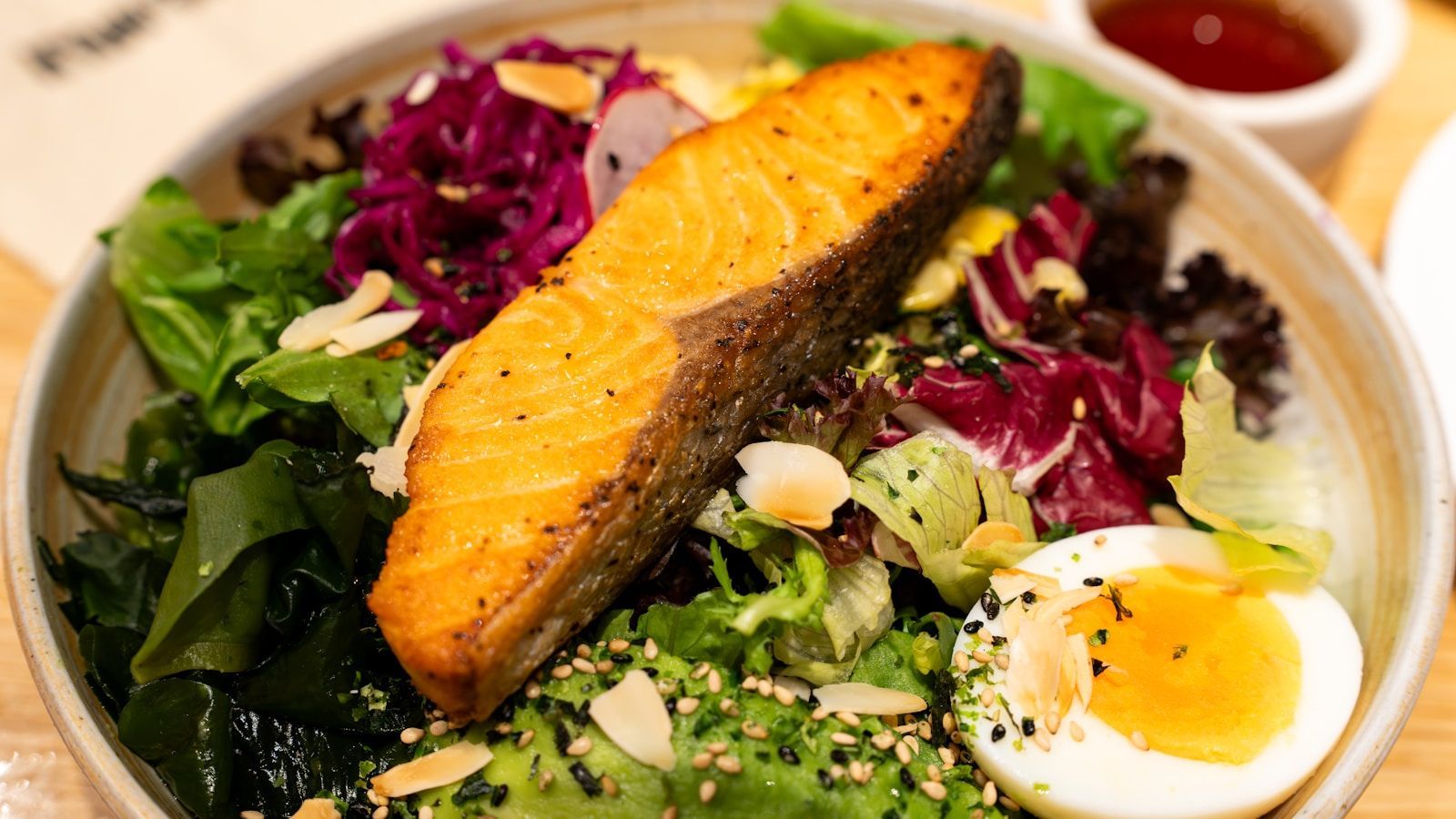
| Protein | Wild salmon, sardines, grass-fed beef, pasture-raised eggs and poultry, bone broth |
| Vegetables | Steamed leafy greens, zucchini, squash, carrots, cooked cruciferous vegetables |
| Fats | Extra virgin olive oil, avocado, coconut oil, olives |
| Fruit | Berries and other colorful fruit, in moderation |
| Starch | Sweet potato, winter squash, well-cooked white rice if tolerated |
| Drinks | Filtered water, herbal tea, green tea, one cup of coffee or less |
Foods to limit, and the reason attached to each.
| Limit | Why |
|---|---|
| Gluten grains | Documented permeability mechanism in celiac disease, and the strongest single removal in autoimmune thyroid work |
| Refined sugar and ultra-processed food | Drives inflammation and blood sugar swings that make flares harder to control |
| Industrial seed oils | High omega-6 load in a diet already short on omega-3 |
| Conventional dairy | Common reactive protein, and one of the two removals most patients notice |
| Alcohol | Barrier irritant and a reliable flare trigger in practice |
| Nightshades and raw vegetables | Worth a personal trial in flaring patients, with no trial evidence behind a blanket rule |
Now the autoimmune protocol diet, which deserves a straight answer because it is the most searched autoimmune plan and the most oversold. Its best-known study enrolled 15 patients with inflammatory bowel disease in an 11-week open-label trial with no control group, where clinical indices improved sharply while C-reactive protein did not change significantly and the faecal calprotectin improvement missed significance. 32 A second study put 17 women with Hashimoto's through a 10-week coached program, where quality of life and symptom burden improved with a 29 percent drop in hs-CRP while thyroid function and thyroid antibodies did not change. 33 A review puts the trial base plainly: small, mostly uncontrolled pilots. 28
So the protocol is a legitimate structured way to find your own trigger foods, and its reputation as an anti-inflammatory intervention runs ahead of the data. The older classic trial is more instructive: 27 rheumatoid arthritis patients fasted 7 to 10 days, then ate gluten-free vegan for 3.5 months and lactovegetarian afterwards, improving on joints, pain, morning stiffness, grip strength, ESR and CRP against 26 controls. 34 It bundled three changes in 53 single-blind participants, with the diet group housed at a health farm, so no single component earns the credit.
Two entries here carry randomized human evidence for an autoimmune endpoint and the rest are narrower. Supplements support the plan rather than replace fixing the cause, and if you take prescription immune or thyroid medication you clear every addition with your prescriber first.
Four criteria: randomized human evidence for an autoimmune endpoint outranks marker studies, effect sizes have to survive the confidence interval around them, the population studied should resemble you, and long-term safety is a requirement rather than a bonus. Nulls sit beside positives.
In VITAL, 25,871 adults took 2,000 IU of vitamin D3 or placebo for a median 5.3 years, and confirmed incident autoimmune disease fell 22 percent, at a hazard ratio of 0.78 with the interval reaching 0.99 and a P value of exactly 0.05. 35 Two years after supplementation stopped that effect was gone, at a hazard ratio of 0.98, and adding newly confirmed cases pushed the original result to non-significance too. 36 Any benefit appears to need ongoing intake, so correcting a documented deficiency is the goal.
Dose. 2,000 IU daily, guided by a blood level. Best for. A documented low level. Caution. Fat-soluble, so retest rather than escalate. Evidence. Moderate and time-limited.
Study takeaway: Why it works. Immune signalling and tolerance.
The omega-3 arm of VITAL, 1,000 mg daily, gave a non-significant 15 percent reduction in incident autoimmune disease 35, and it was the arm that held up: two years after supplementation stopped, omega-3 carried a hazard ratio of 0.83 with the interval ending at 0.99, while adding newly confirmed cases pushed the original randomized-period result to non-significance. 36 In rheumatoid arthritis, a meta-analysis of 18 trials in 1,018 patients found reduced tender joint counts and improved fatty acid and triglyceride measures, while ESR, CRP and disease activity scores changed only slightly and not significantly. 37 Read it as a joint-symptom and lipid result, with food sources first.
Dose. 1,000 mg combined daily. Best for. Joint-dominant presentations. Caution. Ask your clinician about anticoagulants. Evidence. Moderate, endpoint dependent.
Study takeaway: Why it works. EPA and DHA change the substrate for inflammatory signalling.
Across 35 randomized studies, selenium lowered thyroid peroxidase antibodies and lowered TSH in patients not on hormone replacement, while free T4, T3, thyroglobulin antibodies and thyroid volume did not change and heterogeneity was high. 38 An overview of six reviews covering 75 trials adds the temper: the antibody effect was not maintained at 12 months, one of the six reviews was high quality, and certainty was low to very low. 39 Antibody titres are not symptoms, so selenium earns a place without earning a promise about how you will feel.
Dose. 200 mcg daily. Best for. Autoimmune thyroid disease only. Caution. A narrow window, so do not stack products. Evidence. Moderate on antibodies, weak on outcomes.
Study takeaway: Why it works. It supports the antioxidant enzymes protecting thyroid tissue.
Split the two diseases, because the pooled version misleads. An overview of 22 reviews plus a meta-analysis of 45 randomized trials found odds of clinical remission of 2.00 in ulcerative colitis and 1.61 in Crohn's, where the Crohn's interval ran from 0.21 to 12.50 and spans no effect. 40 On barrier markers, probiotics and synbiotics lowered zonulin across 13 trials at moderate certainty, mostly in metabolic rather than autoimmune populations. 41
Dose. Follow the trialled product. Best for. Ulcerative colitis. Caution. Strain matters more than the count on the label. Evidence. Moderate in one disease, unclear in the other.
Study takeaway: Why it works. Strain-specific effects on mucosal immunity.
Traditional systems had no word for autoimmunity, so they treated the terrain it grows in. Traditional Chinese medicine frames weak digestion as Spleen Qi deficiency with dampness and chronic worry as Liver Qi disrupting digestion, while Ayurveda works through the three doshas and constitutional fit.
Chinese medicine also has a defence-energy concept, wei qi, and the herbs traditionally used to strengthen it include astragalus, ginseng, reishi and goji berries, delivered alongside acupuncture and qigong. Ayurveda approaches the same problem through constitution, matching food, herbs and daily rhythm to the person rather than the diagnosis.
The part I use constantly is the warm-food principle: an inflamed gut prefers warm, cooked, soft food over raw and cold, which is why every plan above leans on soups and broths. The traditional read of chronic rumination as something that drains the organs is a fair description of what stress does to digestion and immunity, and the cohort evidence on stress-related disorders is the modern measurement of it. 20
30-day protocol
The complete root-cause framework for cooling chronic inflammation — and easing the aches, stiffness, puffiness, fatigue and brain fog that sit upstream of nearly every chronic disease.
Free with your Dr. Axe account
View the protocol →Four steps, in this order, because each one makes the next possible. Calm the provocation, Seal the gut barrier, Modulate immune signalling, then Rebuild the terrain that keeps the attack quiet. Run it alongside your medical treatment and give it 90 days before you judge it.
A positive ANA means you have an autoimmune disease
Most ANA-positive people never develop one, and titre and pattern matter more than a bare positive
41 million Americans have an autoimmune disease
That number counts positive antibody tests, not diagnoses
Autoimmune disease is purely genetic
Identical twin concordance for rheumatoid arthritis was 15.4 percent, which puts a ceiling on genetics
A leaky gut test can predict which disease you will get
Prediction has been shown once, in high-risk families, using a sugar ratio rather than a zonulin panel
Diet alone can cure autoimmune disease
Diet trials show symptom and quality-of-life gains; no published trial shows a cure
See a physician for any symptom pattern that persists beyond a few weeks, and seek urgent care for anything suggesting organ involvement. Autoimmune disease can affect the kidneys, lungs, heart, blood and nervous system, and these diseases as a group ranked among the leading causes of death in women under 65 in 1995 US data. 9
Get emergency care for chest pain, shortness of breath, one-sided weakness, facial droop, sudden vision loss, seizures, confusion, severe abdominal pain, blood in the stool, unexplained bleeding, a spreading rash with fever, or a high fever with a newly swollen joint.
Book an appointment promptly for fatigue that sleep does not fix, joint swelling with morning stiffness over 30 minutes, a rash that worsens in sunlight, recurring mouth ulcers, unexplained weight change, or new food reactions with diarrhea.
What to do next, by situation.
| If you | Recommendation |
|---|---|
| Have symptoms but no diagnosis | See your primary care physician and ask for basic autoimmune screening before starting any elimination diet |
| Have a positive ANA and no symptoms | Ask for titre and pattern and a specialist opinion rather than assuming a diagnosis |
| Are pregnant or planning pregnancy | Coordinate care with your specialist first, since some medications and some diets need adjusting |
| Are the parent of a symptomatic child | Go to a pediatrician rather than trialling an elimination diet, since growth and nutrition are at stake |
| Have a confirmed diagnosis and a new organ symptom | Contact your specialist the same day, since organ involvement changes the treatment plan |
It is one immune mistake with more than eighty addresses, its autoantibodies show up years before symptoms do, and that lead time is the most useful thing modern medicine has learned about it. 3
Here is what to do with it. Get properly diagnosed, keep the treatment your specialist prescribes, and work the four steps of Calm, Seal, Modulate, Rebuild alongside it. Flares and remissions are written into the natural history of these diseases, so relapse prevention is part of the plan rather than a sign the plan failed 1: stay off your trigger foods, keep vitamin D in range since the trial benefit vanished once supplementation stopped 36, and retest antibodies every 3 to 6 months. The honest limit is that no published trial shows diet or lifestyle curing an autoimmune disease, and the strongest claims in this space, including some of mine, run ahead of what has been proven. If your symptoms are persistent or worsening, get evaluated rather than guessing.
A disease in which the immune system fails to control self-reactive lymphocytes, which then attack your own tissue through an initiation phase and a propagation phase of flares and remissions. 1
Hashimoto's thyroiditis, rheumatoid arthritis, type 1 diabetes, celiac disease, psoriasis, multiple sclerosis, lupus and inflammatory bowel disease sit among the 19 most common, together affecting roughly one in ten people in UK records. 6
September 2026 — New guide, with the VITAL follow-up analysis, the 2023 UK cohort of 22 million people and the Xist mechanism paper carrying the current evidence on prevention, prevalence and the sex gap.
Next review — September 2027, or sooner if a randomized trial of an autoimmune elimination diet publishes.

Medically reviewed by the DrAxe.com Medical Advisory Board on Sep 30, 2026.
This content is for informational and educational purposes only. It is not intended to provide medical advice or to take the place of medical advice or treatment from a personal physician. Autoimmune disease requires diagnosis and management by a qualified clinician, and celiac disease, inflammatory bowel disease, thyroid disease and inflammatory arthritis all need to be ruled in or out by testing rather than by symptom matching. Never start, stop or change a prescription based on this article. Neither Dr. Axe nor the publisher takes responsibility for possible health consequences of any person reading or following this educational content.