Advertisement
Fresh ginger root simmered in water and finished with lemon, turmeric and raw honey: what ginger tea does for your stomach and for inflammation, how to make it in about 25 minutes, and the golden, gut-soothing and cold-season versions I recommend.
By Dr. Josh Axe, DC, DNM, CNS ·
Jump to recipe ↓
Why it works: Fresh ginger simmered in water makes a warming, spicy tea, and lemon, a little turmeric and raw honey round it out. It's Dr. Axe's everyday ginger tea for a settled stomach, steady digestion and calmer inflammation, and it takes about 25 minutes on the stovetop.
Sweetener: For honey, maple syrup is an alternative. Adjust to taste.
For a milder tea, simmer the same knob of ginger in 4 cups of water.
Fresh turmeric root works too: slice it and simmer it with the ginger in place of the ground turmeric, and add a pinch of black pepper to help your body absorb it.
Use maple syrup to keep it vegan.
Drink 1 to 3 cups a day.
Make a big batch Slice fresh ginger and turmeric root into a big pot with about a liter to half a gallon of water, bring it to a boil, simmer it 30 minutes, and keep the tea in the refrigerator for 3 to 4 days.
Ginger tea is fresh ginger root simmered in water and finished with lemon, a little turmeric and raw honey, and it's a warming tea that settles your stomach, keeps your digestion moving and calms inflammation.123 Turmeric ginger tea is one I drink regularly.4
Ginger tea is fresh ginger root simmered in water, a warm, spicy drink that settles a queasy stomach, helps food move through your digestive system and calms inflammation.123 Turmeric ginger tea is one I drink regularly, and when calming inflammation is the goal, I recommend two cups of fresh ginger and turmeric tea a day.47
The recipe takes about 25 minutes. You simmer a sliced 2-inch knob of fresh ginger in 3 cups of water, strain it into two mugs, and stir in the juice of half a lemon, a little turmeric and, if you like, a spoonful of raw honey. You can make it one pot at a time, or make a big batch and drink from it for 3 to 4 days.
The 30 healing herbs and 20 essential oils I trust most, each with its five best uses ranked by research, exactly how to take it, how it works, its Traditional Chinese Medicine profile, and when to be careful.
Free with your Dr. Axe account
View the protocol →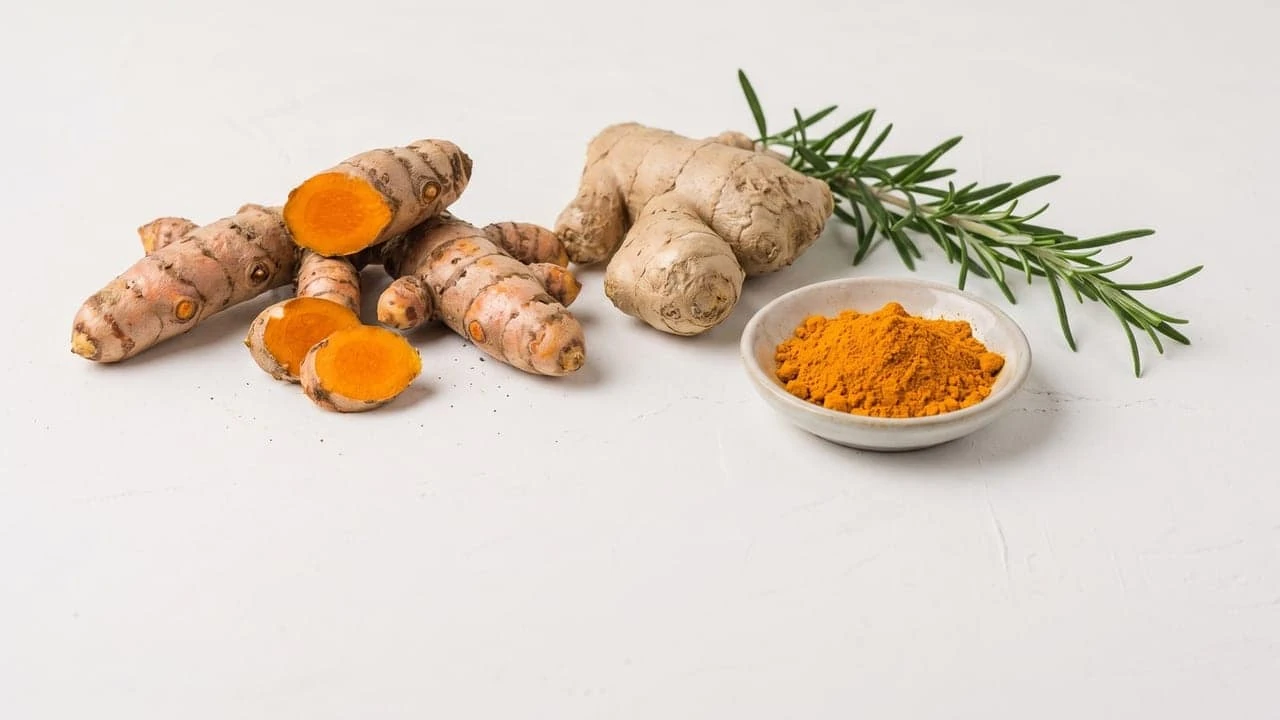
What's your biggest goal right now?
A lot of everyday discomfort comes back to two things going on in your body: digestion that has slowed down, and inflammation that never quite switches off. You feel the first as nausea or that heavy, too-full feeling after a meal, and the second as achy joints, sore muscles or painful periods, and ginger works on both. Traditional Chinese medicine has used ginger for the gut for thousands of years, usually drunk as an herbal tea, one to two cups a day,13 and modern trials have measured what those healers relied on: a stomach that empties faster, less nausea and lower markers of inflammation.213
It's a natural fit for the colder months, too, because ginger is a warming herb in Chinese medicine,9 and after a big holiday meal, a cup of ginger tea is a habit with two thousand years behind it.6
Most of these studies use capsules, but I like the tea version just as much or even more.Dr. Josh Axe, DC, DNM, CNSFrom Why You’re Still Inflamed — The 5-Step Plan for the Next 12 Weeks, The Dr. Josh Axe Show (2026)
Ginger has its own entry in my free field guide, with the tea method, how it works in your body and its Chinese medicine profile. Inside:
Free with your Dr. Axe account (email or Google). You'll also get the protocol's short email series and the Dr. Axe newsletter; unsubscribe anytime.
Open the free guide →Ginger tea is an herbal tea made by simmering slices of fresh ginger root in water, then straining it and adding lemon, honey or other spices to taste. In traditional Chinese medicine, it's a warming drink for the stomach and for a cold that's just starting, and ginger has been drunk as a tea for the gut for thousands of years.913
Ginger (Zingiber officinale) is the knobby underground stem of a tropical plant in the same family as turmeric and cardamom, and the spicy bite you taste in the tea comes from compounds called gingerols.614 People call the drink ginger tea, ginger root tea or simply a ginger drink, and in the Philippines it goes by salabat. Whatever you call it, hot water draws ginger's spicy compounds out of the root and into your cup.
My own version is on my list of remedies for colds and flu in Ancient Remedies: cut up a 2-inch knob of ginger, steep it in 4 cups of hot water, and add a tablespoon of honey and lemon.8 In my guide to the top 50 healing herbs, the method is shorter still, 1 to 2 inches of fresh root, sliced and simmered about 10 minutes.9 The recipe on this page sits right in that range. It uses the same 2-inch knob in 3 cups of water for a slightly stronger cup, simmers it 10 to 20 minutes, and adds a little turmeric along with the lemon and honey, a combination I recommend to a lot of my patients.15
Traditional Chinese medicine treats fresh and dried ginger as two different remedies. Fresh ginger is the one for the stomach and the first chill of a cold, while dried ginger, which is even more warming, is saved for deeper, internal cold.69 That's why this recipe starts with the fresh root.
Ginger tea is good for you because its gingerols and shogaols speed stomach emptying, settle nausea and cool the inflammatory pathways behind everyday aches, which is why ginger shows up in nearly every protocol I write.9
Fresh ginger's main active compounds are gingerols, the pungent compounds behind its bite. When ginger is dried or heated, some of those gingerols turn into shogaols, a closely related group, so a simmered cup carries a mix of both.14
Those compounds work on two things in your body, inflammation and your stomach. Inflammation is how your body heals a cut and fights off a virus, and the problem is chronic inflammation, which I describe as a low fire that never goes out.4 Ginger helps cool that fire, and it also helps your stomach empty, which researchers have measured directly.
In a study in Taiwan, 24 healthy adults took 1.2 grams of ginger in capsules on one day and a placebo on another, an hour before a bowl of soup (500 mL, about 2 cups), and neither the people nor the researchers knew who got what. With ginger, their stomachs emptied half the soup in 13.1 minutes, against 26.7 minutes on placebo, and the lower part of the stomach contracted more often.2 That's the science behind the old habit of drinking ginger tea after a heavy meal: it helps your stomach process the meal and move it along.6
With ginger, the stomach emptied half a meal in 13.1 minutes instead of 26.7
Researchers think ginger also quiets nausea more directly. A review of how ginger eases chemotherapy nausea found that gingerols and shogaols act on the gut's serotonin (5-HT3) receptors and on other nausea pathways, along with their effect on how the stomach moves.16 For inflammation, gingerols act on the COX and lipoxygenase pathways your body uses to make inflammatory compounds, shown mostly in lab and animal research,17 and in people, ginger supplements have lowered an inflammation marker in the blood.3
Traditional Chinese medicine describes the same root in its own terms. Ginger is warming and pungent, it's matched to the lungs and the digestion, and it's best for people who run cold: chilled hands and feet, loose stools, nausea or the first signs of a cold.9 That warmth is also why I suggest ginger alongside a cooling remedy. Aloe vera is very cooling to the digestive tract, so if you have IBS with diarrhea, cold hands and feet or hypothyroidism, drinking ginger herbal tea alongside it brings your body back into balance.18
Gingerols give fresh ginger its bite, and heat turns some of them into shogaols, a closely related group of compounds.14
In 24 healthy adults, 1.2 grams of ginger emptied half a soup meal in 13.1 minutes, against 26.7 minutes on placebo, with more contractions in the lower stomach.2
Gingerols and shogaols act on the gut's serotonin (5-HT3) receptors and other nausea pathways, according to a review of the research.16
Ginger tea brings you the same root that settled nausea, sped up stomach emptying and calmed inflammation in the trials below. Most of those trials used dried ginger in capsules, usually 1 to 3 grams a day, plus a handful of studies of ginger drinks and extracts, so each benefit below names the form and amount that was tested. Your mug starts from half a 2-inch knob of fresh root, about 2 tablespoons sliced or roughly 12 grams.21 Nobody has yet measured how much of ginger's active compounds a home-brewed cup carries once the slices are strained, so read the trials as a picture of what ginger can do, and your daily mug as the steady, everyday way to bring it in.
Nausea is ginger's best-studied use, and morning sickness leads the way. In a placebo-controlled trial of 70 pregnant women in Thailand, 1 gram of ginger a day in capsules for 4 days eased nausea for 28 of 32 women (88%), against 10 of 35 (29%) on placebo, and cut vomiting more too.1 A second trial came closer to a cup of tea: 26 women in early pregnancy were enrolled and stirred a tablespoon of ginger syrup into 4 to 8 ounces of hot or cold water four times a day, 1 gram of ginger in all, or took a placebo syrup the same way, for 2 weeks. After 9 days, nausea had improved by 4 points or more for 10 of the 13 women on ginger who were followed (77%), against 2 of 10 on placebo (20%), and 8 of the 12 who had been vomiting every day had stopped by day 6, against 2 of 10.22
Ginger helps with chemotherapy nausea as well. In 576 adults having chemotherapy, capsules of a ginger extract equal to 0.5, 1 or 1.5 grams of ginger root a day, taken for 6 days around each treatment and added to standard antinausea medicine, all eased first-day nausea compared with placebo, with the biggest drops at 0.5 and 1 gram.5 In a study that tested ginger tea itself, 100 women with gynecological cancers who drank it alongside their usual antinausea medicine during cisplatin chemotherapy had lower nausea and vomiting scores than women on usual care alone, though the study wasn't randomized.23 For nausea, I recommend taking ginger 30 to 60 minutes before travel or meals, and a strong cup of fresh ginger tea is the simplest way to do it.6
After 9 days, 77% of women on a ginger drink had much less nausea, against 20% on placebo
Helping a meal move through is ginger's oldest job, and the stomach-emptying study above shows it at work: half the meal was gone in about half the time.2 The same research team then gave 1.2 grams of ginger to 11 adults with functional dyspepsia, ongoing indigestion with no clear cause, and again each person tried both ginger and a placebo. The symptoms they reported during that short test didn't differ, but their stomachs emptied faster on ginger, half the meal in a median 12.3 minutes against 16.1 on placebo.24
Ginger calms chronic inflammation, and you can see it in a blood test. In a review that pooled 9 trials of ginger supplements, C-reactive protein (CRP), the main blood marker of inflammation, fell by an average of 0.84 mg/L.3 In my Anti-Inflammatory Reset, turmeric and ginger go into your food every day, and into a supplement if your joints ache, with ginger at 1 to 2 grams a day.25 Food comes first in that protocol, and as I put it there, adding turmeric to a body still eating sugar and fried food and sleeping five hours is throwing a cup of water on a fire someone keeps feeding, so take away the fuel first, and then the cooling works.25 Your daily ginger tea works the same way, doing the most in a body that's already eating whole foods and sleeping well.
If you live with knee pain, ginger can ease it, and it has been tested for exactly that. In a 6-week placebo-controlled trial of 261 adults with knee osteoarthritis (247 were evaluated), a concentrated extract of ginger and galangal, a related root, taken twice a day, eased knee pain on standing for 63% of people, against 50% on placebo.19 A review that pooled 5 trials in 593 people with osteoarthritis found ginger lowered pain and disability compared with placebo.26 Your muscles respond too, and in two placebo-controlled trials of 34 and 40 adults, 2 grams of raw or heat-treated ginger a day for 11 days eased muscle pain the day after a hard arm workout by 25% and 23%.20
Period cramps are one of the top uses for ginger in my healing herbs guide,9 and the trials back it up. In a placebo-controlled trial of 120 female students in Iran, 500 mg of ginger root powder three times a day, started 2 days before the period and continued through its third day, eased both how strong and how long the pain was.27 In a review, the 3 placebo-controlled trials together showed ginger lowering period pain by 1.55 cm on a 10 cm pain scale, and in 2 small head-to-head trials, researchers found no difference in pain relief between ginger and mefenamic acid, a prescription pain reliever for cramps.28 Sipping ginger tea in the days just before and during your period follows the same timing as that first trial.
Ginger tea is one of the remedies I list for colds and flu,8 and you'll find others in our guide to natural cold remedies. When I was sick as a kid, my mom used to give me ginger ale, but the ancient Chinese remedy, when you or your child is sick, is ginger tea and chicken bone broth soup.29 In Chinese medicine, fresh ginger is the warming herb for a cold that's just starting.9 Lab research points the same way: hot-water extracts of fresh ginger kept a common respiratory virus, RSV, from attaching to and entering human airway cells, while dried ginger, tested in the same study, didn't hold the virus back.30
Ginger helps with weight in two practical ways: it takes the edge off your appetite, which makes it a gentle natural appetite suppressant, and a cup without much honey is an easy swap for a sweetened drink. In a study at Columbia University, 10 overweight men drank 2 grams of ginger powder dissolved in 6 ounces of hot water with breakfast on one day and plain hot water on another. On the ginger day, they reported less hunger and a smaller urge to eat afterward, and the energy they spent digesting breakfast ran slightly higher at the hourly checks, though the total calories they burned over those 6 hours and their blood measures didn't differ.31 Over longer stretches, a review of 14 trials in 473 overweight or obese adults found ginger supplements lowered body weight and the waist-to-hip ratio compared with placebo and improved fasting blood sugar and insulin resistance, though BMI didn't change significantly.32
Ginger supports healthy blood sugar levels, and in people with type 2 diabetes, the trials have been encouraging. In a 12-week placebo-controlled trial of 41 adults with type 2 diabetes in Iran, 2 grams of ginger powder a day in capsules lowered fasting blood sugar and HbA1c, your average blood sugar over about three months, compared with placebo.33 In an 8-week placebo-controlled trial of 88 adults with type 2 diabetes, 3 grams of ginger powder a day lowered fasting blood sugar by 10.5%, while it rose 21% in the placebo group, and improved insulin resistance.34 Your daily tea is one part of a way of eating that keeps your blood sugar steady.
Ginger supports your heart through your blood fats and your blood pressure. In a 45-day placebo-controlled trial of 85 adults with high blood fats in Iran, 3 grams of ginger powder a day in capsules lowered triglycerides and total cholesterol more than placebo, while its effects on LDL and HDL weren't significantly different from placebo.35 For blood pressure, a review of 6 trials in 345 people found ginger supplements lowered systolic pressure by 6.36 mmHg and diastolic by 2.12 mmHg on average, with the clearest effect at 3 grams or more a day, in people 50 or younger and in trials of 8 weeks or less.36 In a survey of 4,628 adults in China, the more ginger people ate each day, the lower their odds of high blood pressure and coronary heart disease, an association rather than proof.37 A daily cup fits right into the food-first steps in our guide to natural ways to lower blood pressure.
Ginger's benefits may reach your brain, too. In a 2-month placebo-controlled trial of 60 healthy middle-aged women in Thailand, a standardized ginger extract (400 or 800 mg once a day) improved working memory and measures of attention.38 In lab and animal research, ginger extracts act on several of the pathways cancer cells use to grow and spread, which fits ginger's place in a food-first way of protecting your cells.39
Scrub and thinly slice a 2-inch knob of fresh ginger, simmer it in 3 cups of water for 10 to 20 minutes, strain it into two mugs, and stir in the juice of half a lemon, ¼ teaspoon of turmeric and, if you like, a tablespoon of raw honey or maple syrup. It takes about 25 minutes and makes two mugs.89
Start with good ginger. Look for a firm piece of root with thin, shiny skin that scrapes off easily with a fingernail. Rinse and scrub it well, and don't bother peeling it, since the skin is thin and the tea gets strained anyway. Then cut a 2-inch knob into thin coins across the grain, which lets the flavor out faster, and if you want an even stronger, cloudier tea, grate the ginger instead.
Put the ginger in a small pot with 3 cups of water, bring it to a boil, then turn the heat down and let it simmer for 10 to 20 minutes. Ten minutes gives you a gentle, warming cup, and 20 gives you a stronger, spicier one. Simmering doesn't cost you ginger's benefits, because heat turns some of its gingerols into shogaols,14 and in the muscle pain trials above, heat-treated ginger eased next-day soreness by 23%, close to the 25% for raw ginger.20
When the time is up, take the pot off the heat and strain the tea through a fine sieve into two mugs. Stir the lemon juice, turmeric and honey into the hot tea, where the honey dissolves easily, and add a pinch of cayenne pepper for heat or a cinnamon stick for a sweeter, spicier cup.
Drink it hot, or let it cool and pour it over ice. Leftover tea keeps in a covered jar in the refrigerator for 3 to 4 days,7 so you can make it once and reheat a mug at a time. On busy days, you can buy turmeric and ginger tea bags, steep one in hot water for 10 minutes and drink one to two cups a day, the shortcut I give on my show.7 For a quick single mug, grate a teaspoon of fresh ginger into hot water and let it steep.6
No fresh ginger in the house? Stir ¼ to ½ teaspoon of ground ginger, the everyday amount of the dried powder, into a mug of hot water instead.6 It makes a more warming, less bright cup than the fresh root, so it's best for the days the fresh root has run out.
Once you've made the base tea a few times, it's easy to change it to fit what your body needs. These are the versions I recommend, along with the add-ins that work best and a few other ways to use the rest of the root.
Turmeric and ginger belong together, and the anti-inflammatory golden tea in my Cancer Support Protocol, one of its daily drinks, simmers fresh turmeric and ginger for 10 minutes, then adds holy basil (tulsi) to steep for 5 more, taken as 1 to 2 cups a day between meals.40 To make it with this recipe, slice some fresh turmeric root and simmer it with the ginger, then take the pot off the heat, add holy basil leaves or a tulsi tea bag, and let it steep 5 minutes before you strain it. A pinch of black pepper and a little fat help your body absorb turmeric.25 For a version built around turmeric, try this turmeric tea or a creamy turmeric latte.
My batch method is simple: buy fresh ginger and turmeric root, slice them into quarter-size coins, and put them in a big pot with about a liter to half a gallon of water. Bring it to a boil, simmer it for 30 minutes, and you'll have tea for at least 3 to 4 days.7 Keep it in covered jars in the refrigerator and pour a mug whenever you want one, warm or cold.
For a cold, the base recipe is already the remedy: ginger, lemon and honey. Add an extra squeeze of lemon if you like it tart, and use Manuka honey if you have it. Manuka is one I recommend both as a remedy and as an everyday sweetener. Sip it warm through the day.
In terms of a beverage, I like ginger tea with a little bit of lemon and honey. It's real simple.Dr. Josh Axe, DC, DNM, CNSFrom How to Boost Your Immune System Naturally | Q&A with Dr. Josh Axe, The Dr. Josh Axe Show (2023)
When your gut lining needs support, I recommend a daily tea of turmeric and ginger with licorice root or slippery elm, made with tea bags and drunk twice a day.18 I learned the value of a tea like this firsthand. In my first year of practice, I was working about 80 hours a week, I was very stressed, and I had leaky gut for about a year, with loose stools and other digestive trouble. A Chinese medicine practitioner told me to cut back my hours and drink a tea of astragalus, licorice root, ginger and slippery elm three times a day, and within a short time, somewhere between one and three months, my digestion was completely back to normal and I felt amazing.13
Ginger pairs well with green tea, which brings its own antioxidants. Our list of healthy ways to spice up your green tea starts with a green tea with orange, ginger and honey, along with other ways to add spices to your cup.
Once you've bought a knob of ginger, there's plenty to do with the rest of it. Blend it into ginger shots for a concentrated morning dose, stir it into a homemade cough syrup, or steep a lighter ginger water to sip cold. It's also at home in stir-fries, soups, smoothies and fresh juices like this anti-inflammatory juice, and you can even add a few tablespoons of ginger to a warm bath, along with the lavender oil in this relaxing bath recipe.
If you like this tea, try these drinks next:
For more ideas, see our list of anti-inflammatory teas.
One to three cups a day is a good everyday amount, and two cups daily is what I recommend when you want to calm inflammation.67 For nausea, sip a strong cup 30 to 60 minutes before a trip or a meal.6
My general guideline for ginger is 1 to 1.5 grams a day from fresh root, tea or capsules, used in the moment for nausea and every day for inflammation and recovery.6 That figure is for dried ginger, and because fresh ginger is gentler, fresh amounts run higher,6 so one to three cups a day of this fresh-root tea is a comfortable everyday amount. For inflammation and recovery, consistency matters more than timing, so the best habit is the one you'll keep.6 Two cups taken between meals is an easy rhythm, and it matches the 1 to 2 cups a day of my golden tea.40
A mug of ginger tea made with honey has about 39 calories, 10.4 grams of carbohydrates (8.9 grams of them sugars) and 4.7 milligrams of vitamin C, and without honey it's about 7 calories.10114212
These numbers are for one mug, half the recipe, and they come from USDA FoodData Central. USDA doesn't have a record for ginger tea, so we counted the strained ginger water as a brewed herbal tea, which is the closest match once the slices come out.1011421241
| Per mug (half the recipe) | With honey | Without honey | With maple syrup |
|---|---|---|---|
| Calories | 39 | 7 | 33 |
| Carbohydrates | 10.4 g | 1.8 g | 8.5 g |
| Total sugars | 8.9 g | 0.3 g | 6.4 g |
| Vitamin C | 4.7 mg (5% DV) | 4.6 mg (5% DV) | 4.6 mg (5% DV) |
| Fat and protein | Less than 0.5 g | Less than 0.5 g | Less than 0.5 g |
The numbers stay low because the ginger slices are strained out. If you ate all of them too, a mug with honey would come to about 45 calories.21 What the cup carries is ginger's spicy compounds, the gingerols and shogaols described above, along with vitamin C from the lemon and, if you add it, the natural sugars in the honey.14
For most people, 1 to 3 cups of ginger tea a day is simply food. Take extra care if you take a blood thinner or have surgery coming up, have gallstones or reflux, or are pregnant, and never give honey to a baby under 1.
Blood thinners and surgery. At higher supplement doses, ginger has a mild blood-thinning effect, but the amount in cooking and tea isn't a concern for most people.6 In a study of 12 healthy men, each of whom took warfarin both with and without ginger, ginger at recommended doses for a week before and after a single dose of warfarin didn't change how fast their blood clotted or how their platelets clumped,43 and a review of 10 studies found mixed results on platelets.44 If you take a blood thinner, or medication for blood sugar or blood pressure, check with your prescriber before adding ginger capsules, since the 2- to 3-gram doses in trials lowered blood sugar and blood pressure.3436 Stop high-dose ginger about 2 weeks before surgery, and if you take capsules on top of your tea, keep your total under about 4 grams of ginger a day.96
Gallstones. Ginger increases bile flow, so if you have gallstones, ask your practitioner before making it a daily habit.69
Reflux and an upset stomach. Ginger can cause stomach discomfort, heartburn, diarrhea or mouth and throat irritation in some people,45 and in the knee trial, mostly mild stomach complaints were more common on the concentrated extract, 59 people against 21 on placebo.19 With reflux, ginger can go either way: modest amounts calm many stomachs, while large amounts can trigger heartburn.6 Start with a weaker cup, the same knob in 4 cups of water, and drink it with food.
Pregnancy. A review that pooled 12 trials of 1,278 pregnant women found no significant increase in miscarriage, heartburn or drowsiness with ginger,46 and the morning sickness trials used about 1 gram a day.1 A cup or two of ginger tea is a normal food amount; confirm anything beyond that, including capsules, with your OB.
Honey and babies. Never give honey to a baby younger than 1 year old, because of the risk of infant botulism.47
Licorice root. If you have high blood pressure or a heart or kidney condition, make the gut-soothing tea with slippery elm or DGL licorice instead, because even small amounts of glycyrrhizin, the compound in whole licorice root, have been linked to serious side effects in those groups.48
Allergy. If you notice hives, itching or swelling after a cup, stop drinking it.
Yes. Ginger tea is fresh ginger root simmered in water, a warming cup that settles a queasy stomach, helps your stomach empty and calms inflammation. Traditional Chinese medicine has used ginger as a tea for the gut for thousands of years, and the modern trials point the same way: a stomach that emptied half a meal in half the time, less nausea in pregnancy and during chemotherapy, and a lower CRP. Ginger is one of the few remedies where tradition and modern science fully agree, and nausea is where that agreement is strongest.
Make it with a 2-inch knob of fresh ginger in 3 cups of water, simmer it 10 to 20 minutes, finish it with lemon, turmeric and a little raw honey, and drink one to three cups a day, or two when calming inflammation is your goal. Pair it with meals that stop feeding the fire, and let this simple cup do its part every day.
Ginger, licorice and astragalus all have entries in my free field guide to 30 herbs and 20 essential oils, with each one's top uses, how to take it and its Chinese medicine profile.
Free with your Dr. Axe account (email or Google). You'll also get the protocol's short email series and the Dr. Axe newsletter; unsubscribe anytime.
Open the free guide →Ginger tea is best known for settling nausea, and it also helps your stomach empty, calms inflammation and eases sore muscles and period pain. In a placebo-controlled trial of 70 pregnant women, 1 gram of ginger a day in capsules eased nausea for 88%, against 29% on placebo,1 and in a review of 9 trials, ginger supplements lowered the inflammation marker CRP by an average of 0.84 mg/L.3 In traditional Chinese medicine, it's a warming tea for the stomach and for a cold that's just starting.9
It can help, mostly by taking the edge off your appetite. In a study of 10 overweight men who each tried both, 2 grams of ginger powder in hot water with breakfast, against plain hot water, left them less hungry afterward, though the total calories they burned that morning didn't differ,31 and a review of 14 trials in 473 overweight or obese adults found ginger supplements lowered body weight and the waist-to-hip ratio.32 To make ginger tea for weight loss, use the same recipe, skip or halve the honey (without it, a mug has about 7 calories), and drink a cup with breakfast.1011
Ginger water is a lighter cousin of this tea: you steep sliced fresh ginger in just-boiled water for several minutes instead of simmering it, then drink it warm or chilled. Our guide to ginger water has its full recipe.
It can be, in small amounts: ginger is one of the honorable mentions in my Acid Reflux & GERD Protocol, next to chamomile tea, though larger amounts can trigger heartburn in some people.496 To make ginger tea for acid reflux, simmer the same knob in 4 cups of water for about 10 minutes for a weaker cup, and drink it with food.
Yes, and two of its best-studied uses are morning sickness and period pain. In a placebo-controlled trial of 70 pregnant women, 1 gram of ginger a day eased nausea for 88%, against 29% on placebo,1 and in a placebo-controlled trial of 120 female students, 500 mg of ginger root powder three times a day around the period eased both the strength and the length of the pain.27 For men, a study of 10 overweight men who each tried both found that a ginger drink with breakfast left them less hungry.31
Yes, in normal amounts. Ginger is one of the herbs I consider fine in pregnancy at normal doses, like a cup of tea, and ginger tea first thing in the morning is one I suggest for expecting moms.29 It's also well studied for morning sickness: a review of 12 trials in 1,278 pregnant women found ginger eased nausea compared with placebo, with no significant rise in miscarriage.46 Confirm anything beyond a cup or two a day, including capsules, with your OB.
No. Heat turns some of ginger's gingerols into shogaols, a closely related group of active compounds,14 and in two placebo-controlled trials, 2 grams of ginger a day eased next-day muscle pain by 25% when it was raw (34 adults) and by 23% when it was heat-treated (40 adults).20 Simmering 10 to 20 minutes, as this recipe does, gives you a strong, spicy cup.
Yes, it's a traditional cold remedy, and it's on my list of remedies for colds and flu, made with a 2-inch knob of ginger, honey and lemon.8 In Chinese medicine, fresh ginger is the warming herb for a cold that's just starting,9 and in a lab study on human airway cells, hot-water extracts of fresh ginger kept a common respiratory virus, RSV, from attaching to and entering the cells.30
Yes. Salabat is the Filipino name for ginger tea, fresh ginger root boiled in water and usually sweetened, so it's the same warming drink as the recipe on this page.
Ginger tea is best known for settling nausea, and it also helps your stomach empty, calms inflammation and eases sore muscles and period pain. In a placebo-controlled trial of 70 pregnant women, 1 gram of ginger a day in capsules eased nausea for 88%, against 29% on placebo,1 and in a review of 9 trials, ginger supplements lowered the inflammation marker CRP by an average of 0.84 mg/L.3 In traditional Chinese medicine, it's a warming tea for the stomach and for a cold that's just starting.9
It can help, mostly by taking the edge off your appetite. In a study of 10 overweight men who each tried both, 2 grams of ginger powder in hot water with breakfast, against plain hot water, left them less hungry afterward, though the total calories they burned that morning didn't differ,31 and a review of 14 trials in 473 overweight or obese adults found ginger supplements lowered body weight and the waist-to-hip ratio.32 To make ginger tea for weight loss, use the same recipe, skip or halve the honey (without it, a mug has about 7 calories), and drink a cup with breakfast.1011
Ginger water is a lighter cousin of this tea: you steep sliced fresh ginger in just-boiled water for several minutes instead of simmering it, then drink it warm or chilled. Our guide to ginger water has its full recipe.
It can be, in small amounts: ginger is one of the honorable mentions in my Acid Reflux & GERD Protocol, next to chamomile tea, though larger amounts can trigger heartburn in some people.496 To make ginger tea for acid reflux, simmer the same knob in 4 cups of water for about 10 minutes for a weaker cup, and drink it with food.
Yes, and two of its best-studied uses are morning sickness and period pain. In a placebo-controlled trial of 70 pregnant women, 1 gram of ginger a day eased nausea for 88%, against 29% on placebo,1 and in a placebo-controlled trial of 120 female students, 500 mg of ginger root powder three times a day around the period eased both the strength and the length of the pain.27 For men, a study of 10 overweight men who each tried both found that a ginger drink with breakfast left them less hungry.31
Yes, in normal amounts. Ginger is one of the herbs I consider fine in pregnancy at normal doses, like a cup of tea, and ginger tea first thing in the morning is one I suggest for expecting moms.29 It's also well studied for morning sickness: a review of 12 trials in 1,278 pregnant women found ginger eased nausea compared with placebo, with no significant rise in miscarriage.46 Confirm anything beyond a cup or two a day, including capsules, with your OB.
No. Heat turns some of ginger's gingerols into shogaols, a closely related group of active compounds,14 and in two placebo-controlled trials, 2 grams of ginger a day eased next-day muscle pain by 25% when it was raw (34 adults) and by 23% when it was heat-treated (40 adults).20 Simmering 10 to 20 minutes, as this recipe does, gives you a strong, spicy cup.
Yes, it's a traditional cold remedy, and it's on my list of remedies for colds and flu, made with a 2-inch knob of ginger, honey and lemon.8 In Chinese medicine, fresh ginger is the warming herb for a cold that's just starting,9 and in a lab study on human airway cells, hot-water extracts of fresh ginger kept a common respiratory virus, RSV, from attaching to and entering the cells.30
Yes. Salabat is the Filipino name for ginger tea, fresh ginger root boiled in water and usually sweetened, so it's the same warming drink as the recipe on this page.

This article is for educational purposes. See our medical disclaimer.