
Advertisement
Supplements · Flavonoids
What quercetin is, how it calms the mast cells behind allergy flares, what the human trials show for allergies, blood pressure, stiff joints and pelvic pain, which foods carry the most, and how much to take.
Weighting: Evidence 30% · Bioavailability & Absorption 25% · Clinical Effectiveness 25% · Safety & Tolerability 20% (6.0×0.30 + 4.8×0.25 + 6.8×0.25 + 8.4×0.20 = 1.80 + 1.20 + 1.70 + 1.68 = 6.38, shown as 6.4). Interactions with medicines are rated separately and don't change the score. How we score
Interaction check: Moderate. Quercetin can change how some medicines work, so here's what to do with each one. Interactions with medicines are rated separately and don't change the score.
Blood thinners, such as warfarin: a published case report describes warfarin's blood-thinning effect growing stronger after quercetin was added.43 If you take warfarin, have your INR checked when you start or stop quercetin.
Medicines cleared by the liver enzyme CYP1A2, such as theophylline: in 12 healthy volunteers, 500 mg of quercetin a day for 13 days slowed that enzyme by about 10%.44 Ask your pharmacist whether any medicine you take has a narrow dose window.
Quinolone antibiotics, such as ciprofloxacin: in lab tests, quercetin competed with these antibiotics for the bacterial enzyme they target.45 Pause quercetin supplements until the course is finished.
30-day protocol
The complete root-cause framework for cooling chronic inflammation — and easing the aches, stiffness, puffiness, fatigue and brain fog that sit upstream of nearly every chronic disease.
Free with your Dr. Axe account
View the protocol →
What's your biggest goal right now?
Quercetin is a flavonoid, a natural plant compound concentrated in onions, capers, kale and apple skins, and it's one of the top anti-inflammatory nutrients in my Anti-Inflammatory Reset because it calms mast cells, the immune cells that release histamine, along with other inflammatory pathways.12
Quercetin is a flavonoid, a natural plant compound concentrated in capers, red onions, kale and the skins of apples, and you can get it from your meals or take it as a supplement.1 In my Anti-Inflammatory Reset, it's one of the top eight anti-inflammatory herbs and nutrients, at 500 mg a day, because it calms mast cells and inflammatory pathways.2
Inflammation is how your body heals a cut and fights off a virus, and the trouble starts when it turns chronic, a low fire that never goes out. The root cause of almost every chronic illness today is inflammation, and the food you eat every single day will reduce it far more than any supplement ever could.8 That's why quercetin is such a good fit for a food-first plan: the Reset names onions, capers and apples as foods that supply it, and like every supplement in that plan, a quercetin capsule does its best work once the fuel feeding the fire is gone.2
You'll most often hear about quercetin in spring, when sneezing and itchy eyes send people looking for natural allergy relief, and that's where it does its best-known work. It also helps your blood vessels hold a lower pressure, eases the stiff mornings of rheumatoid arthritis and the ache of chronic pelvic pain, and brings down uric acid, with placebo-controlled trials behind each.3491011 It's also part of a growing body of work on clearing worn-out cells.12
Quercetin is probably the top natural compound for seasonal allergies, and it has numerous anti-inflammatory benefits.Dr. Josh Axe, DC, DNM, CNSFrom Zombie Cells: The Hidden Threat Aging Your Body Fast, The Dr. Josh Axe Show (2024)
Quercetin is one of the top 8 anti-inflammatory herbs and nutrients in this free 30-day protocol, which starts where lasting relief starts, with the food on your plate. It lays out:
Free with your Dr. Axe account (email or Google). You'll also get the protocol's short email series and the Dr. Axe newsletter; unsubscribe anytime.
Open the free protocol →Did you know?
Rutin, sold as a supplement of its own, is quercetin with a sugar attached, and it's the main form of quercetin in tea.13
Cooked onions are still a rich source of quercetin: USDA's flavonoid database lists boiled onions at 24.36 mg per 100 grams, against 20.30 for raw onions.1
In a survey of 570 adults in Japan, people took in about 16 mg of quercetin a day from food, so a single medium red onion, with about 43 mg, gives you more than twice what they averaged in a day.1415
Quercetin is a flavonol, one of the flavonoids plants make, found in foods such as capers, onions, kale and apple skins and sold as a supplement for allergies and inflammation.1 In food it usually comes bound to a sugar, which changes how well you absorb it, while supplements mostly carry plain quercetin without the sugar.1315
Quercetin belongs to the flavonols, the group of flavonoids that also includes kaempferol and myricetin, and USDA's flavonoid database tracks it in hundreds of foods, from capers and onions to tea and cocoa.1 In plants, quercetin is usually bound to a sugar: onions carry it bound to glucose, apples carry a mix of sugar-bound forms, and tea carries mostly rutin, which is quercetin bound to a sugar called rutinose. Those sugars decide how quickly and how well quercetin gets into your blood.13
Supplements usually skip the sugar, and most of them sell quercetin in its plain form, which labels often call quercetin dihydrate, at doses up to 1,000 mg a day, far above what a normal diet supplies.15 Newer forms bind quercetin to lecithin or attach a sugar back on with enzymes, both to help your body absorb more of it, and the supplements section below explains how to choose between them.1617
Quercetin is one of the clinical tools I reach for most, along with resveratrol and green tea catechins, and polyphenol-rich foods like berries, olives and herbs are staples in every healing plan.18 Get your quercetin from the plate first, and use a supplement as a concentrated helper on top of the foods it comes from.
Quercetin is best known for easing seasonal allergies and calming inflammation: in a placebo-controlled trial of 66 adults during pollen season, it eased sneezing, allergy-disturbed sleep and fatigue, and across 7 randomized trials it lowered systolic blood pressure by about 3 points, more at doses of 500 mg a day or more.34 In placebo-controlled trials it also eased morning stiffness in women with rheumatoid arthritis and pelvic pain in men, and it lowered uric acid in men with high-normal levels.91011
Quercetin has been tested in people for seasonal allergies, blood pressure, rheumatoid arthritis, pelvic pain, uric acid, exercise and colds, mostly in trials of 20 to 70 people, with pooled analyses for blood pressure and exercise.34910111920 Its work on worn-out cells comes from pilot studies that paired it with a drug.2112
| Use | Evidence | Form and dose studied | What the research shows |
|---|---|---|---|
Seasonal allergies | Emerging | Lecithin-bound quercetin, 200 mg a day; enzyme-modified quercetin | Sneezing, allergy-disturbed sleep and fatigue eased; itchy eyes eased317 |
Blood pressure | Moderate | Quercetin, 100 to 1,000 mg a day | Systolic down 3.04 points across 7 trials, 4.45 at 500 mg a day or more4 |
Rheumatoid arthritis | Emerging | 500 mg a day for 8 weeks | Less morning stiffness and pain; disease activity scores improved9 |
Pelvic pain | Emerging | 500 mg twice a day for a month | 67% of men improved by a quarter or more, against 20% on placebo1022 |
Uric acid | Emerging | 500 mg a day for 4 weeks | Uric acid down 26.5 µmol/L, about 0.45 mg/dL11 |
Colds after hard training | Mixed | 1,000 mg a day | Fewer colds after 3 days of hard cycling; no overall difference in a community trial2320 |
Endurance | Mixed | Median 1,000 mg a day for 11 days | About 2% better endurance overall, more in untrained people1924 |
Clearing worn-out cells | Emerging | 1,000 to 1,250 mg on a few days at a time | Fewer worn-out cells in fat tissue; walking speed and distance improved1221 |
Quercetin's main job in your body is calming an immune system that's quick to overreact, and that work starts with how much of it reaches your blood. Eaten in onions, quercetin is bound to glucose, which your small intestine absorbs readily, so blood levels peak in less than 45 minutes. When researchers fed 9 people a large serving of onions, apples or pure rutin and tracked their blood for 36 hours, they set onions at 100, and apples and rutin both came in at 30.13
Onions deliver more quercetin to your blood than apples or tea's rutin
Quercetin also stays in your blood for a long time, and in that same study the body took 28 hours to clear half of the quercetin from onions and 23 hours for apples, so eating these foods every day keeps topping up your levels.13 That's one more reason food comes first with quercetin: a daily habit of onions and apples keeps it in your blood around the clock.
From there, quercetin goes to work on mast cells. These are immune cells that sit in your tissues and release histamine and other inflammatory messengers when they sense a threat, and in an allergy they behave like an oversensitive smoke alarm that goes off at burnt toast. In lab tests on cultured human mast cells, quercetin blocked the release of histamine and prostaglandin D2, and it held back IL-8 and TNF, two messengers that keep inflammation going, better than cromolyn, the mast cell drug it was compared with.25 It also switched off NF-kB, a master switch for inflammation inside the cell, and it worked when it was in place before the trigger arrived, while cromolyn had to be added at the same moment or it lost its effect.25 I describe quercetin and stinging nettle as natural mast cell stabilizers because they help reduce histamine release.26
Here's how quercetin, from a bowl of onions or a capsule, works its way to a calmer allergy season:
Onion quercetin is bound to glucose, which your small intestine absorbs best, and blood levels peak in less than 45 minutes.13
Your body takes about a day to clear half of it, so eating quercetin-rich foods every day steadily raises your blood levels.13
In lab tests on human mast cells, quercetin blocked histamine and the inflammatory messengers IL-8 and TNF, switched off NF-kB, and worked best when it was in place before the trigger.25
In the pollen-season trial, a lecithin-bound quercetin supplement eased sneezing, broken sleep and fatigue more than placebo.3
We rank quercetin's benefits by the strength of the research in people: seasonal allergies and blood pressure lead, followed by rheumatoid arthritis, pelvic pain, uric acid, recovery from hard training and clearing worn-out cells.
Quercetin eases the sneezing, broken sleep and fatigue of allergy season, and its lab work points to the reason: it calms the mast cells that set those symptoms off.25 In a placebo-controlled trial of 66 adults in Japan with allergy symptoms in the eyes and nose, 200 mg a day of a lecithin-bound quercetin made easier to absorb, taken for 4 weeks during the spring pollen season, eased sneezing, sleep problems, malaise, fatigue and trouble focusing more than placebo among the 60 who were analyzed. The questionnaire's physical score fell from 3.6 to 1.5 on quercetin, against 3.8 to 2.8 on placebo, and side effects were minor. The ingredient's maker paid for the study.3 In a second placebo-controlled trial, 20 adults with cedar pollen allergy took two 100 mg capsules a day of an enzyme-modified quercetin for 8 weeks, and their eye symptoms, itching most of all, eased more than on placebo.17
The skin responds too, and in two pilots in which people knew what they were taking, 2 grams a day of a water-soluble quercetin for 3 days before a nickel patch test cut the skin reaction by more than half in 8 of 10 volunteers and cleared it completely in the other 2, and quercetin raised the dose of UV light needed to redden the skin.25 A 2025 analysis of 13 randomized trials, with evidence its authors rated low to very low in certainty, found that in the 7 trials in seasonal allergies, plant polyphenols such as quercetin eased nasal symptoms, sneezing and nasal itching.27
For allergies, I pair raw local honey with propolis, and I add quercetin, nettle, bromelain and vitamin C to support the immune system over time.7 Our guide to seasonal allergy symptoms covers the rest of that plan, and if histamine reactions follow you all year, read about histamine intolerance. Going into allergy season, I recommend stepping up to higher doses of quercetin and stinging nettle.6
Study takeaway: quercetin calmed the classic complaints of pollen season, from sneezing to broken sleep, better than placebo.
Quercetin helps your blood vessels hold a lower pressure, by a few points on average and more when your pressure starts high. A 2016 analysis of 7 randomized trials with 587 people found that quercetin lowered systolic blood pressure by 3.04 points and diastolic by 2.63, and in the trials using 500 mg a day or more, systolic fell 4.45 points and diastolic 2.98; below 500 mg, the drop was smaller and could have been chance, though the analysis couldn't show that the two dose groups truly differed.4 Later analyses of 10 and 17 trials, and an umbrella review that weighed them together, landed in the same range, a systolic drop of 1.9 to 3.09 points.282930
People who start with higher blood pressure see a bigger drop, and in a placebo-controlled trial of 41 adults in which each person tried both quercetin and a placebo for 28 days, 730 mg a day lowered blood pressure by 7 points systolic and 5 diastolic in the 22 people with stage 1 high blood pressure (about 148/96 at the start), while it didn't change in the 19 with prehypertension.31 Quercetin extracted from onion skins has been tested too: in a placebo-controlled trial of 70 overweight or obese adults with prehypertension or stage 1 high blood pressure, in which each person tried both, 162 mg a day of quercetin from onion skin extract for 6 weeks didn't significantly lower blood pressure in the group as a whole, but in those with high blood pressure, 24-hour systolic pressure fell 3.9 points more than on placebo.32
Quercetin's effect on cholesterol is mixed across pooled analyses, so blood pressure is where its heart research is clearest.2933 Pair it with the foods that lower blood pressure, and give it at least 4 weeks, the length of the stage 1 trial.
Study takeaway: across 7 randomized trials, quercetin lowered systolic blood pressure by 3.04 points, and by 4.45 points at 500 mg a day or more.
Quercetin calms the inflammation behind stiff, painful mornings in rheumatoid arthritis. In a placebo-controlled trial of 50 women with rheumatoid arthritis, 500 mg a day for 8 weeks eased early-morning stiffness, morning pain and pain after activity, improved disease activity and daily-function scores compared with placebo, cut the number of women with active disease, and lowered TNF-alpha, one of the main messengers that drives joint inflammation. Tender joints also fell within the quercetin group, though the tender and swollen joint counts didn't differ from placebo over those 8 weeks.9 That fits quercetin's lab work on TNF, and it's a reason to give it a full two months alongside an anti-inflammatory diet.25
Study takeaway: 500 mg a day eased morning stiffness and pain within 8 weeks.
Quercetin eases the deep, nagging pain of chronic pelvic pain syndrome in men and of interstitial cystitis, two conditions with few effective treatments. In a placebo-controlled trial, 30 men with chronic pelvic pain, the kind long labeled chronic prostatitis, took 500 mg of quercetin twice a day or a placebo for a month. Of the 28 men who finished (two on placebo dropped out as their symptoms worsened), the quercetin group's symptom score fell from 21.0 to 13.1, while the placebo group's went from 20.2 to 18.8, and 67% of men on quercetin improved by at least a quarter, against 20% on placebo.10 In a follow-up in which 17 more men knew they were taking a supplement of quercetin with bromelain and papain, 82% improved by at least a quarter.10
Women and men with interstitial cystitis, a painful bladder condition, saw a similar change. In a study of 22 adults with no placebo group, a quercetin supplement equal to 500 mg twice a day for 4 weeks brought the problem index from 11.3 to 5.1, the symptom index from 11.9 to 4.5 and pain from 8.2 to 3.5 on a 10-point scale among the 20 who finished, with no side effects.22
Study takeaway: two in three men on quercetin felt at least a quarter better, against one in five on placebo.
Pelvic pain symptom scores fell on quercetin over one month
Quercetin helps bring down uric acid, the compound that crystallizes in the joints in gout. In lab work, quercetin blocks xanthine oxidoreductase, the last step in making uric acid.11 In a placebo-controlled trial of 22 healthy men whose uric acid ran in the high but still normal range (about 339 µmol/L, or 5.7 mg/dL), each man took 500 mg of quercetin a day for 4 weeks and a placebo for 4 weeks, and on quercetin uric acid fell by 26.5 µmol/L, about 0.45 mg/dL, without changing blood sugar or blood pressure.11 The researchers worked out that 500 mg of quercetin supplies about as much absorbable quercetin as roughly 100 grams of red onion, so the plate and the capsule point the same way here.11
Study takeaway: 500 mg a day lowered uric acid by 26.5 µmol/L, about 0.45 mg/dL, in 4 weeks.
Quercetin helps your body bounce back from hard training, with fewer colds afterward and a small lift in endurance. In a placebo-controlled trial, 40 trained male cyclists took 1,000 mg of quercetin a day or a placebo for 3 weeks before, during and for 2 weeks after 3 days of 3-hour rides, and in the 2 weeks afterward only 1 of 20 on quercetin came down with a cold or other upper respiratory infection, against 9 of 20 on placebo, though the immune measures the researchers tracked didn't differ.23 In a larger 12-week trial of 1,002 adults, chews providing 500 or 1,000 mg of quercetin a day with vitamin C and niacin didn't significantly change cold rates for the group as a whole; among 325 people aged 40 and older who rated themselves fit, the 1,000 mg dose cut sick days by 31% and severity by 36%.20
For endurance, a pooled analysis of 11 studies with 254 people, at a median of 1,000 mg a day for 11 days, found about a 2% improvement, and a second analysis found the gain larger in untrained people than in trained athletes.1924 If you're just getting started, the lift can be bigger: in 12 untrained adults who each tried quercetin and a placebo, 500 mg twice a day for 7 days raised VO2 max by 3.9% and lengthened ride time to exhaustion by 13.2%.34 Our guide to VO2 max and our list of supplements for athletes show where quercetin fits in a training plan.
Study takeaway: after hard training, 1 of 20 cyclists on quercetin came down with a cold, against 9 of 20 on placebo.
Quercetin is one of the compounds researchers use to help the body clear senescent cells, worn-out cells that stop dividing but linger and send out inflammatory signals as you age. Every human study described here paired quercetin with dasatinib, a cancer drug. In 9 people with diabetic kidney disease, 3 days of dasatinib plus 1,000 mg of quercetin a day left fewer senescent cells in fat tissue 11 days later, along with fewer macrophages, a type of immune cell, in that tissue.12 In 14 people with idiopathic pulmonary fibrosis, a scarring lung disease, the pair taken 3 days a week for 3 weeks improved walking distance, walking speed and how quickly people could rise from a chair, while lung function didn't change.21 In 5 people with early Alzheimer's disease, the pair was safe and well tolerated over 12 weeks, and memory and brain scans didn't change significantly.35
When it comes to clearing worn-out cells, I'd rather lean on quercetin, proteolytic enzymes and fasting than on that drug.36 In my Mitochondrial Longevity Protocol, quercetin or fisetin is a short monthly pulse for senescent-cell clearing, kept to a few days a month, with onions and capers on the plate every day.37 That's a different schedule from the daily dose for inflammation, and the supplements section below lays out both.
Study takeaway: paired with dasatinib, 3 days of quercetin left fewer worn-out cells in fat tissue 11 days later.
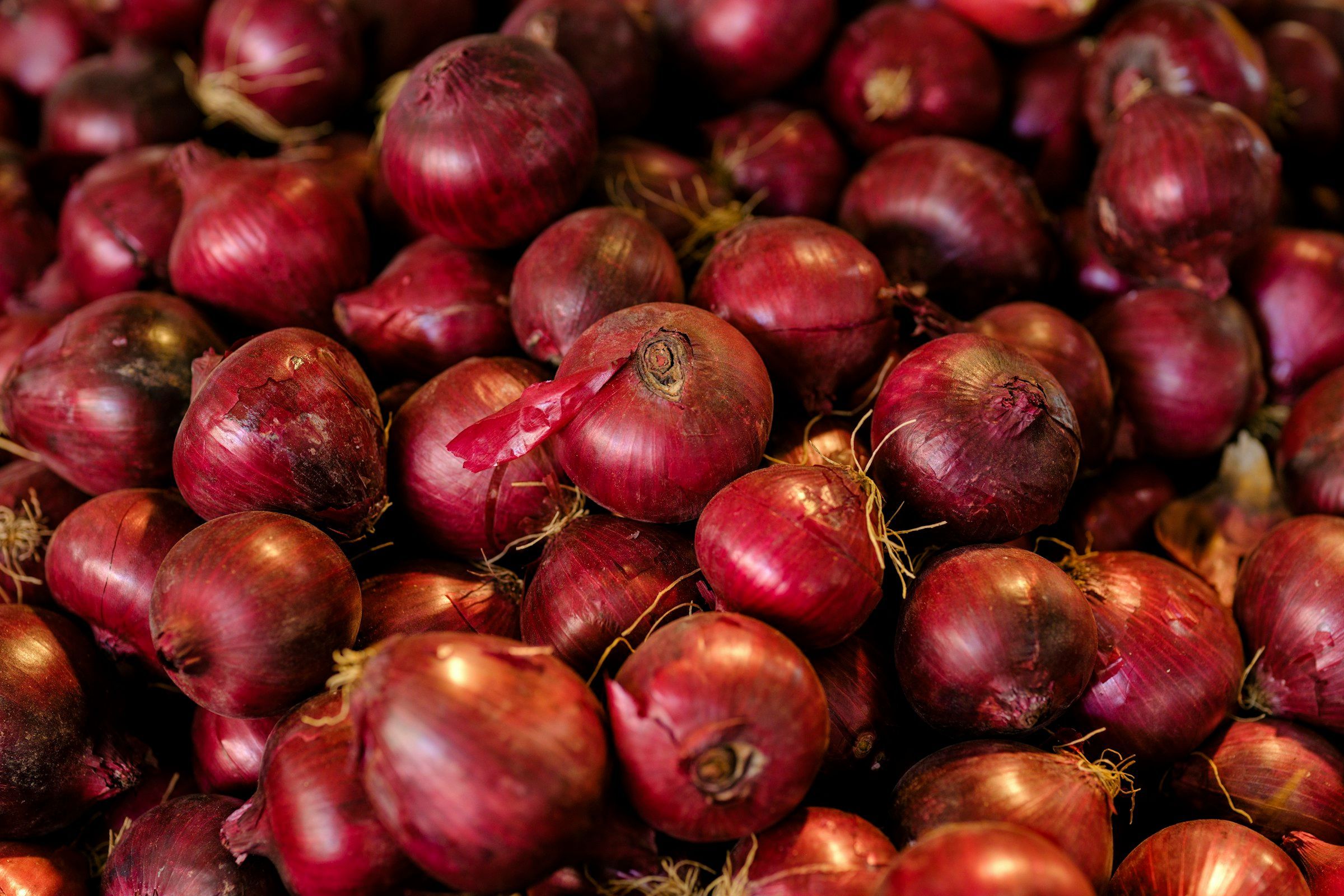
Capers carry more quercetin than any other food in USDA's flavonoid database, 233.84 mg per 100 grams raw and 172.55 canned, and among the everyday vegetables in our table, red onions lead at 39.21 mg per 100 grams.1 A drained tablespoon of capers gives you about 15 mg, and a medium red onion about 43 mg.15
The most natural way to get quercetin is from colorful plants eaten every day. Capers top USDA's list, though you eat them by the spoonful, so onions do most of the everyday work: raw red onions carry 39.21 mg per 100 grams and raw onions of all types 20.30, and boiled onions still carry 24.36.1 Leafy greens such as watercress and kale follow, along with okra, cranberries, buckwheat and asparagus.1
Quercetin in everyday foods
Onions are your richest common source of quercetin.Dr. Josh Axe, DC, DNM, CNSFrom 10 Biblical Superfoods That Can Add Years to Your Life, The Dr. Josh Axe Show (2026)
Onions have a place in Scripture, too. When the Israelites in the wilderness longed for the food they had eaten in Egypt, they said, "We remember the fish, which we did eat in Egypt freely; the cucumbers, and the melons, and the leeks, and the onions, and the garlick" (Numbers 11:5).38 I've read that verse on my show while talking about onions and garlic, and of the leeks, onions and garlic it names, onions carry by far the most quercetin.391
Apples matter too, as long as you keep the skin. As I've explained on my show, quercetin is found in the skin of apples and in onions, and USDA's numbers show it: apples with their skin carry 4.01 mg per 100 grams, while the peeled flesh carries 1.05, about a quarter as much.401 A medium apple with its skin gives you about 7 mg.15 Apples are on the food list in my Cancer Support Protocol too, for their fiber and polyphenols like quercetin.41
USDA's flavonoid database ranks a wider range of foods this way:1
| Food | Quercetin, mg per 100 g |
|---|---|
Capers, raw | 233.84 |
Capers, canned | 172.55 |
Lovage leaves, raw | 170.00 |
Dill, fresh | 55.15 |
Cilantro leaves, raw | 52.90 |
Red onion, raw | 39.21 |
Watercress, raw | 29.99 |
Onions, boiled | 24.36 |
Kale, raw | 22.58 |
Okra, raw | 20.97 |
Onions, raw, all types | 20.30 |
Chia seeds, raw | 18.42 |
Cranberries, raw | 16.64 |
Buckwheat | 15.38 |
Hot green chili peppers, raw | 14.70 |
Asparagus, raw | 13.98 |
Black plums, with peel | 12.45 |
Cocoa powder, unsweetened | 10.00 |
Arugula, raw | 7.92 |
Blueberries, raw | 7.67 |
Kidney beans, cooked | 6.82 |
Apples, with skin | 4.01 |
Spinach, raw | 3.97 |
Broccoli, raw | 3.26 |
Green tea, brewed, decaf | 2.77 |
Black tea, brewed | 2.19 |
For the bigger family these foods belong to, see our guide to anti-inflammatory foods. Fresh herbs like lovage, dill and cilantro score high per 100 grams, and a generous handful stirred into a salad or a pot of soup adds up. Tomatoes, oranges and other citrus, sweet peppers and tea carry smaller amounts, under 3 mg per 100 grams, so they're helpful extras rather than main sources.1
Building quercetin into your day is simple, because the richest foods are ones you can add to meals you already make:
A simple day might look like an apple with its skin at breakfast, a salad of watercress, half a red onion and a tablespoon of capers at lunch, and a dinner built on sautéed onions, okra or kale. Lunch alone carries more than 35 mg, about 22 from the onion and 15 from the capers, and every one of those meals brings the fiber and other polyphenols that come with the whole food.15
I recommend 500 mg of quercetin a day, the foundation dose in my Anti-Inflammatory Reset, and most of the human trials described here used 100 to 1,000 mg a day.244223 For clearing worn-out cells, quercetin is used differently, as a short pulse of a few days each month.37
That dose sits in the Reset's foundation tier, the tier most people keep for good.2 It also matches the dose behind the rheumatoid arthritis and uric acid trials, and it's the level at which blood pressure drops grew larger in pooled trials.9114
| Goal | Form | Daily amount | How long |
|---|---|---|---|
Inflammation, everyday use | Quercetin | 500 mg (Dr. Axe's foundation dose) | Ongoing2 |
Seasonal allergies | Lecithin-bound quercetin | 200 mg | 4 weeks in pollen season3 |
Blood pressure | Quercetin | 500 mg or more (730 mg in the stage 1 trial) | |
Rheumatoid arthritis | Quercetin | 500 mg | 8 weeks9 |
Pelvic pain | Quercetin | 500 mg twice a day | 1 month10 |
Uric acid | Quercetin | 500 mg | 4 weeks11 |
Colds after hard training | Quercetin | 1,000 mg | 3 weeks before and 2 weeks after23 |
Clearing worn-out cells | Quercetin with a fisetin pulse | 500 mg | A few days a month37 |
For inflammation and allergies, quercetin is a steady daily supplement, while for senescent cells it's taken at 500 to 1,500 mg a day, often in intermittent dosing, and my Mitochondrial Longevity Protocol keeps that pulse to a few days a month rather than every day.1837
Your body absorbs plain quercetin dihydrate less readily than the sugar-bound quercetin in onions,1513 so two newer forms were built to close that gap:
The plain form most supplements carry, and the one behind many of the trials on this page.
Quercetin bound to food-grade lecithin, made to raise the amount that reaches your blood.
Isoquercitrin, a sugar-bound quercetin, modified with enzymes to absorb better; it eased itchy eyes in a pollen-season trial.
In a study of 12 healthy volunteers who each took a single dose of both, the lecithin-bound form raised blood quercetin up to 20 times higher than plain quercetin, and all five authors worked for the company that makes it.16 That form was the one used in the 66-person allergy trial, at 200 mg a day, and the enzyme-modified form eased eye symptoms in the 20-person cedar pollen trial.317 With either one, a lower dose may do the work of a larger plain one, so check the label for the amount of quercetin itself: in the lecithin-bound form tested here, quercetin makes up about 40% of the complex.16
Since your body takes about a day to clear half the quercetin from food, taking your supplement at the same time each day keeps your levels steady.13 For allergies, start a few weeks before your season begins, the way I step up quercetin going into allergy season.6 In the trials, symptoms eased over 4 to 8 weeks of daily use, and in the lab quercetin worked best when it was already in place before the trigger.31725 For pelvic pain, the trial split the dose into 500 mg twice a day.10
Ask Dr. Axe AI. Answers are grounded in this library, with sources shown.
Quercetin and bromelain are paired because both belong in a natural allergy plan, alongside stinging nettle and vitamin C.7 In a study of 17 men with chronic pelvic pain who knew what they were taking, quercetin with bromelain and papain helped 82% improve by at least a quarter.10
Bromelain is a protein-digesting enzyme from pineapple, and you'll often find it in the same capsule as quercetin. It sits beside quercetin, nettle and vitamin C in my allergy approach.7 The researchers who ran the pelvic pain trial described bromelain and papain as enzymes that help the body absorb bioflavonoids like quercetin, an effect that hasn't yet been measured in people.10 What has been measured is the combination itself, in the pelvic pain follow-up described in the benefits above, where most of the men on quercetin with bromelain and papain improved.10
If you buy a combination product, check that it still gives you about 500 mg of quercetin a day, the foundation dose.2
The quercetin in food is part of an ordinary healthy diet, and supplements are well tolerated. A German safety review of the human trials found that side effects from supplemental quercetin were rarely reported and mild when they occurred, at doses up to 1,000 mg a day; what's missing is data on taking 1,000 mg or more for longer than 12 weeks, so the 500 mg daily dose is the one to stay with for everyday use.152 If anything new shows up after you start, stop and see whether it settles.
A few people should stick to food sources:
For most adults, yes, especially if allergy season, stiff joints or creeping blood pressure are part of your life. Quercetin is the flavonoid that onions, capers and apple skins have always carried, and it calms the mast cells and inflammatory messengers behind allergy flares. In people, it eased sneezing and allergy-disturbed sleep, lowered blood pressure by a few points, eased morning stiffness and pelvic pain, lowered uric acid, and shows early promise for clearing worn-out cells.
Eat red onions, capers, greens and apples with their skins every day, take 500 mg of quercetin a day when you want more support, and start a few weeks before your allergy season. Put out the fire by removing what feeds it, and let quercetin help calm what's left.
The four-phase, 30-day plan to cool chronic inflammation, the top anti-inflammatory herbs and nutrients ranked with quercetin among them, the foods to eat and to cut, and a 7-day meal plan. Have recent bloodwork? Analyze it free. Free with your Dr. Axe account (email or Google). You'll also get the protocol's short email series and the Dr. Axe newsletter; unsubscribe anytime.
Open the free protocol →Quercetin is best known for seasonal allergies and inflammation: in a placebo-controlled trial of 66 adults during pollen season, 200 mg a day eased sneezing, allergy-disturbed sleep and fatigue, and across 7 randomized trials it lowered systolic blood pressure by 3.04 points.34 It's one of the top anti-inflammatory nutrients in my Anti-Inflammatory Reset, at 500 mg a day.2
People use quercetin mainly for seasonal allergies, inflammation and blood pressure, and it has also been tested for rheumatoid arthritis, pelvic pain, uric acid and recovery from hard exercise.349101123 In my protocols it has two jobs: a daily 500 mg dose for inflammation, and a short monthly pulse for clearing worn-out cells.237
Quercetin calms mast cells, the immune cells that release histamine, and holds back inflammatory messengers such as IL-8 and TNF, as lab tests on human mast cells show.25 In people, that calmer inflammation shows up as fewer allergy symptoms in a placebo-controlled trial of 66 adults during pollen season, a few points off blood pressure across 7 randomized trials, and less morning stiffness in a placebo-controlled trial of 50 women with rheumatoid arthritis.349
Yes. In a placebo-controlled trial of 66 adults during pollen season, 200 mg a day of a well-absorbed quercetin eased sneezing, sleep problems and fatigue more than placebo, and in a placebo-controlled trial of 20 adults, an enzyme-modified quercetin eased itchy eyes.317 Going into allergy season, I recommend stepping up to higher doses of quercetin and stinging nettle.6
It depends on the goal: in placebo-controlled trials, sneezing, sleep problems and fatigue eased by 4 weeks in 66 adults with pollen allergy, itchy eyes over an 8-week pollen season in 20 adults, blood pressure fell within 4 weeks in 41 adults and uric acid within 4 weeks in 22 men (each person tried both), and rheumatoid arthritis symptoms eased over 8 weeks in 50 women.31731119 Because your body takes about a day to clear half the quercetin from food, steady daily use builds your levels.13
Quercetin and bromelain are paired because both belong in a natural allergy plan, and the pelvic pain researchers chose a version with bromelain and papain, enzymes they describe as helping the body absorb bioflavonoids like quercetin.710 In a study of 17 men with chronic pelvic pain who knew what they were taking, quercetin with bromelain and papain helped 82% improve by at least a quarter.10
Yes, by a few points. Across 7 randomized trials it lowered systolic pressure by 3.04 points and diastolic by 2.63, and by 4.45 and 2.98 at doses of 500 mg a day or more.4 In a 28-day placebo-controlled trial of 41 adults, people with stage 1 high blood pressure saw a 7-point systolic drop on 730 mg a day.31
Side effects are rare and mild: a German safety review of the human trials found few reports at doses up to 1,000 mg a day.15 It can interact with warfarin, some medicines cleared by the liver and quinolone antibiotics, and people with kidney disease, pregnant or breastfeeding women and people with hormone-sensitive cancer should stick to food sources; the safety section has the details.43444546
November 13, 2026 — Rewrote the page in full. Explains what quercetin is and how it calms mast cells and inflammation; adds the Dr. Axe Score under supplement weighting (6.4) with an interaction check (Moderate); adds Dr. Axe's 500 mg daily dose from his Anti-Inflammatory Reset and his monthly pulse for cell cleanup; reports the human trials for allergies, blood pressure, rheumatoid arthritis, pelvic pain, uric acid, exercise and colds with their designs and numbers; rebuilds the food list from USDA's flavonoid database with a chart and ways to eat more; adds three charts and a step diagram; and gathers the safety guidance in one section. Kept from the old page: its food list, its dosage section, and its allergy, heart, pain, endurance and skin benefits at their evidence level; its liver and cancer claims rest on rodent and lab studies, so they don't get cards.
October 23, 2024 — Previous version published.

This article is for educational purposes. See our medical disclaimer.