
Advertisement
Advertisement
Nutrition
How much quinine tonic water really holds, what quinine's bitter taste does in your body, whether tonic water is good for you, and healthier ways to drink it, including two holiday spritzers.
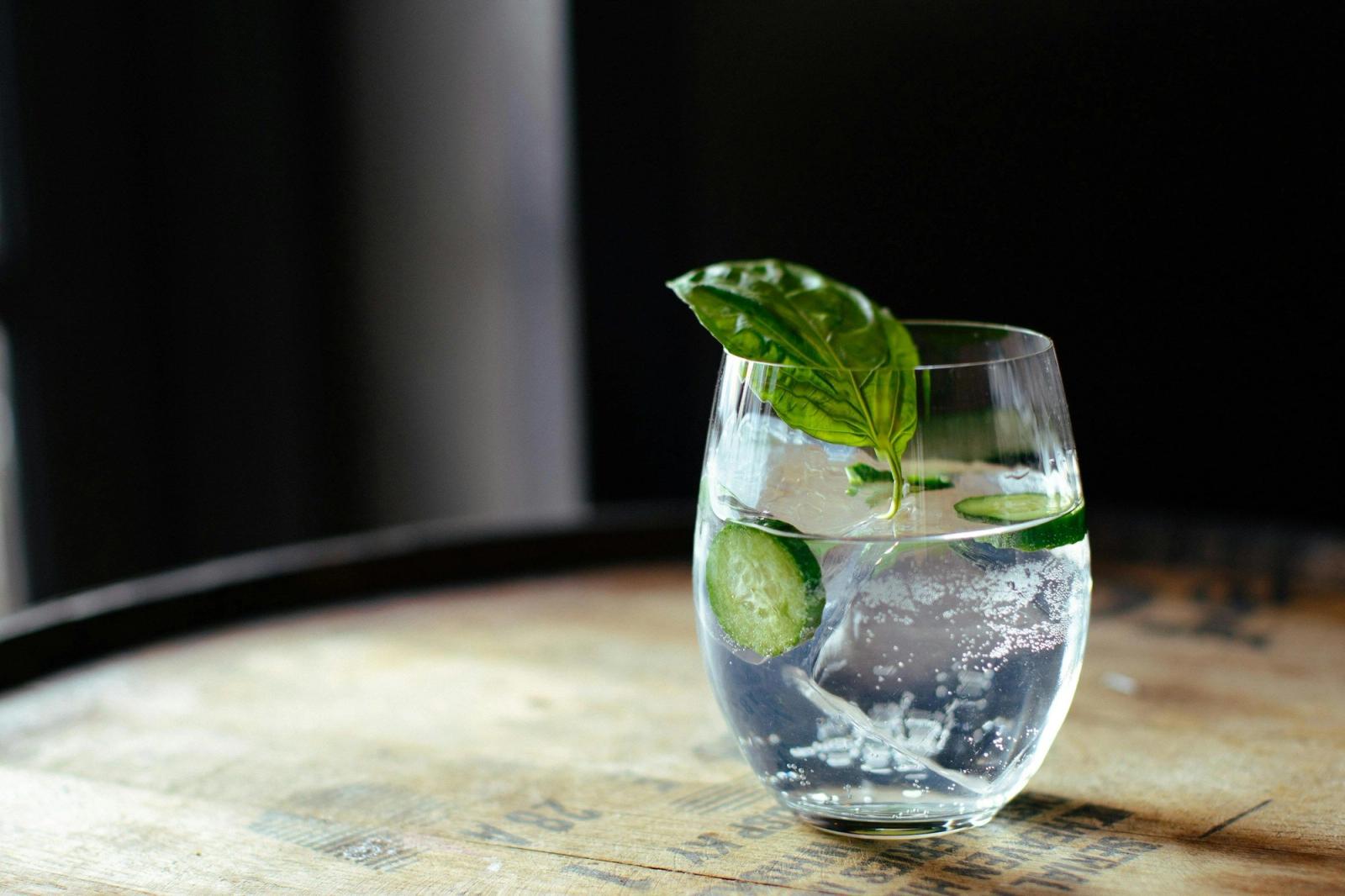
Tonic water is sweetened sparkling water that gets its bitter bite from quinine, a compound from the bark of the cinchona tree, and a 12-ounce can holds about 30 milligrams of quinine at most, far below the 538 milligrams of quinine in a single malaria dose.12
Tonic water gets its bitter bite from quinine, a compound from the bark of the cinchona tree, and that bitter taste is the most useful thing quinine brings to your glass, because your body answers it by releasing bile, stomach acid and digestive enzymes.3 A 12-ounce can holds about 30 milligrams of quinine at most under U.S. rules, far below a drug dose, and because most tonic water is sweetened, it sits on my list of sugary drinks to clear out of your kitchen.127
Your body was designed to respond to bitter flavors, with sensors on your tongue and all along your gut.3 In the U.S. and across the Western world, we tend to eat sweet and salty and miss out on bitter, while the cooking in Japan, across Asia and in the Middle East brings in more of it.8 That's part of why so many people struggle with sugar cravings and blood sugar.

Tonic water comes out for holiday parties every winter, and you can keep its bitter sparkle while leaving most of the sugar behind, which is what the two spritzers further down are for.
Tonic water usually holds less quinine than the legal ceiling allows: two U.S. brands tested in a lab study averaged about 65 parts per million, roughly 23 milligrams in a 12-ounce can.10
The FDA allows quinine in carbonated drinks only as a flavor, at no more than 83 parts per million, and any drink that contains it has to say so on its label.1 A part per million works out to about a milligram per liter, so a 12-ounce can filled to the ceiling holds about 30 milligrams. Most cans hold less than that, and when researchers measured two U.S. brands, both averaged about 65 parts per million, well under the limit and roughly 23 milligrams a can, and their paper puts typical commercial tonic water at about 25 to 60 parts per million.10
A medicinal dose is far larger. For uncomplicated malaria, the prescription label calls for 648 milligrams of quinine sulfate, which carries 538 milligrams of quinine itself, every 8 hours for 7 days, so a single dose equals the quinine in about 18 cans of tonic water at the legal limit, and a full day of dosing equals more than 50.2
A can of tonic water next to one malaria dose
What a glass does deliver is a strong bitter taste, and your body has a whole system for answering it, which is where quinine's benefits begin.
In more than 20 years of clinical practice, I have watched herbs and essential oils do remarkable things when they are matched to the right person and used the right way.9 This free field guide covers the 30 healing herbs and 20 essential oils I trust most. It lays out:
Free with your Dr. Axe account (email or Google). You'll also get the protocol's short email series and the Dr. Axe newsletter; unsubscribe anytime.
Open the free guide →Quinine is a bitter compound from the bark of the cinchona tree, which grows in the Andes of South America, and people have used that bark against malaria since at least the 1600s.11
For nearly two centuries before anyone could isolate it, quinine reached people as bark. The cinchona tree grows in the Andes, and its bark came to be called "Jesuits' bark" after Jesuit missionaries in South America used it against malaria in 1630. The bark was dried, ground into a fine powder and mixed into a liquid, most often wine, until 1820, when Pierre Joseph Pelletier and Joseph Caventou isolated the pure compound and named it quinine, and the purified drug then replaced the bark as the standard malaria treatment. Treating malaria with quinine marked the first successful use of a chemical compound against an infectious disease.11
As I wrote in my guide to healing herbs, many modern medicines still trace back to plants, and the plants themselves remain some of the most powerful, affordable tools you have for your health.9 Quinine is one of the clearest examples, a medicine that started as a bitter bark, and Psalm 104:14 puts the idea simply: "He causeth the grass to grow for the cattle, and herb for the service of man: that he may bring forth food out of the earth."12
Tonic water is carbonated water flavored with a little quinine and sweetened to balance its bitterness, which makes a regular can, nutritionally speaking, a soda.15
Tonic water is three things in a can: carbonated water, a little quinine for bitterness and enough sweetener to balance it. That last part is where tonic water runs into trouble, because by USDA figures a regular 12-ounce can carries 124 calories and 32.2 grams of sugar, while plain club soda has 0 calories and 0 grams of sugar.513
Sugar in a 12-ounce can
Some conventional tonics are sweetened with high-fructose corn syrup, and the ones sweetened with cane sugar are less processed but still deliver sugar with very few nutrients. "Diet" tonic swaps the sugar for artificial sweeteners such as aspartame or sucralose, and I put "diet" drinks on the same clear-out list as sugary sodas.7 Our guide to diet soda explains why, and it's worth reading the ingredient list before a bottle goes in your cart.
Quinine's benefits come from its bitterness: bitter sensors along your gut answer it by releasing digestive juices and fullness hormones, and in trials quinine curbed hunger, cut calories at the next meal and, at much higher doses, lowered blood sugar after a meal.341415
As I've explained on my show, you have bitter receptors on your tongue and lining your gut, and when your body tastes bitter, it starts to release more bile, stomach acid and enzymes, which supports your gallbladder, your pancreas, your stomach and your entire digestive system.3 That bile matters well beyond digestion, because it's how you absorb fat-soluble vitamins like vitamin D. When I'm working with a patient who has been supplementing with vitamin D and still has low levels, one of the first things I look at is the gallbladder and liver, because their body may not have enough bile or bile flow, so I might have them add bitter foods like artichokes and more bitter greens, and that alone will start to improve their vitamin D levels on bloodwork.3 Chinese medicine gives each flavor its own work in the body, and in that tradition bitter is known for supporting heart health, cardiovascular health and detoxification.8
Researchers have tested that bitter signal by giving people quinine itself, in capsules or through thin tubes into the stomach or small intestine, without the sugar a can of tonic water carries, and the steps below follow what it set off.
Quinine is intensely bitter, and two of the trials confirmed that every volunteer could taste it.1617
Bitter receptors on your tongue and along your gut pick it up, and your body releases more bile, stomach acid and enzymes.3
Quinine raised CCK, a fullness hormone, and at higher doses raised insulin and GLP-1, a hormone that helps manage blood sugar.415
Delivered into the stomach, quinine lowered ghrelin and motilin, two hormones that drive hunger, in healthy women.1819
After an 18 mg quinine capsule, healthy adults ate 82 fewer calories at their next meal.4
A bitter signal in your gut can take the edge off your appetite. In a placebo-controlled trial of 20 healthy adults, where each person tried both, an 18 mg quinine capsule that opened in the small intestine led people to eat 514 calories at a meal 60 minutes later, against 596 calories after a placebo capsule, which is 82 fewer calories, or about 14% less.4 That's roughly the quinine in 6 to 7 ounces of tonic water at the legal limit. The effect came from the 11 people who can taste PTC, a standard bitter test compound, while the 9 who can't taste it ate about the same either way.4
Tasting quinine on its own helped too, in a placebo-controlled trial of 32 healthy adults who each tried four combinations of quinine and placebo: tasting a quinine mixture without swallowing it lowered hunger and the desire to eat compared with placebo, although the amount people ate at their next meal stayed about the same.14
Study takeaway: An 18 mg quinine capsule cut calories at the next meal by about 14% in 20 healthy adults.
An 18 mg quinine capsule: fewer calories at the next meal
Bitter receptors line your digestive tract, and they appear to help control the release of the hormones that set your appetite, which is how a taste can change how hungry you feel.4 In the 20-adult capsule trial, quinine raised CCK, a hormone that signals fullness, more than placebo after the meal.4 When researchers delivered quinine through a thin tube into the stomachs of 15 healthy women in a placebo-controlled study, it lowered ghrelin and motilin, two hormones that drive hunger, and the women expected to eat less and ate less of a drink they took purely for pleasure, while brain scans showed changes in areas tied to hunger and reward.18 A placebo-controlled study of 10 fasting women found the same dampening of ghrelin and motilin.19 In a trial of 14 lean men who each tried every dose and a control, a slow, hour-long infusion of 37.5 to 225 mg into the small intestine changed neither CCK nor appetite, so how and where the bitterness arrives seems to matter.17
Study takeaway: Quinine delivered to the stomach lowered the hunger hormones ghrelin and motilin in healthy women.
On the same show, I pointed out that the bitter receptors in your gut also cause the release of GLP-1, a hormone that helps your body handle blood sugar.3 The trials that tested this used far larger doses than any drink holds, 275 to 600 mg of quinine delivered by tube. In a trial of 15 lean men, each of whom tried every option, 275 or 600 mg given into the stomach 30 minutes before a nutrient drink lowered blood sugar afterward and raised insulin, and the 275 mg dose raised GLP-1.15 A trial of 13 women and 13 men who each tried quinine and a control found the same glucose lowering at 600 mg delivered into the small intestine, with a larger effect in the women, and 300 mg also lowered blood sugar after the drink in the women.16 In a trial of 12 men with type 2 diabetes who each tried every option, 300 and 600 mg given the same way lowered the peak in blood sugar after a sugary drink,20 and in separate sessions where quinine came before a buffet meal, people ate about the same amount.1520
Study takeaway: At 275 to 600 mg delivered by tube, quinine lowered blood sugar after a sugary drink in healthy adults and in men with type 2 diabetes.
Long before anyone measured CCK, the Eclectic physicians of the early 1900s used small doses of cinchona bark as a stomach tonic. Harvey Felter's 1922 materia medica lists loss of appetite and feeble digestion among its uses and calls it, in small doses, "a good stomachic," a remedy that tones the stomach and improves digestion.21
You can get the same bitter push from food, with no sugar attached. Bitter foods help heal your liver and your gallbladder and support your entire body, especially your metabolism.3 A big salad with arugula, endive and radicchio is one easy way in, and one we love at our house is broccoli rabe, also called rapini, sautéed in olive oil and garlic with a little sea salt.3
Study takeaway: Eclectic physicians used small doses of cinchona bark as a stomach tonic for poor appetite and weak digestion.
Tonic water's bitterness is good for you, but regular tonic water is sweetened like soda, so it's best as an occasional splash over sparkling water rather than a daily drink.5
Tonic water's bitterness is the part worth keeping, because bitter flavors push back against the pull of sweets.
I've often found, working with patients, that when you add more bitter and sour flavors to the diet, cravings for sweets start to decrease.Dr. Josh Axe, DC, DNM, CNSFrom The Bible's Grocery List: 10 Foods That Slow How Fast You Age, The Dr. Josh Axe Show (2026)
The sweetener is what holds tonic water back. On my show I've said soda isn't food: "It's an inflammatory beverage that should have a warning label on it like cigarettes do."22 Sweetened tonic water belongs to that same group, so treat it as a mixer you use by the splash.
Sugary drinks take a toll over the years, and in a pooled analysis of 8 long-term studies that followed 310,819 people, those who drank the most sugar-sweetened drinks, most often 1 to 2 servings a day, had a 26% higher risk of type 2 diabetes than those who drank the fewest.23 Tonic water wasn't singled out in those studies, but it's sweetened the same way, and our guide to how much sugar per day puts that can in context.
In my Type 2 Diabetes Protocol, the drink I list is sparkling water with lemon, with no juice, soda or sweetened drinks.24 Our guide to healthy drinks has more ideas, but sparkling water with lemon is the easiest everyday swap for tonic water, because it gives you the same fizz and a bright, sharp edge with no sugar at all.
Quinine pills do ease night leg cramps, but a glass of tonic water holds a small fraction of the dose the cramp trials used, and malaria needs a full prescription course, so tonic water can't do either job.252
Quinine at drug doses does ease night cramps. In a Cochrane review of 23 trials, 20 of which compared quinine with placebo in a total of 1,140 people, quinine at 200 to 500 mg a day, most often 300 mg, cut the number of cramps by 28%, their intensity by 10% and the number of days with cramps by 20% over 2 weeks.25 Those doses equal the quinine in about 7 to 17 cans of tonic water at the legal limit, every day, far more than a glass at bedtime delivers. The FDA ended over-the-counter sales of quinine for leg cramps in 1995, because it hadn't been shown safe and effective.26 In the same review, four trials of 543 people that compared quinine head to head with vitamin E found no clear difference between the two on any outcome, side effects included.25
For malaria, quinine is a prescription drug that kills the parasite at full doses, taken as a 7-day course, and it's approved for treating malaria rather than preventing it.211
When cramps keep waking you at night, look for the root cause. In my 25 Root Cause Bloodwork Markers protocol, muscle cramps are one of the ways low magnesium shows up, along with anxiety, insomnia and constipation, and the marker that protocol uses is RBC magnesium, which measures the magnesium inside your red blood cells.27 If night cramps are a regular thing for you, read through the signs of magnesium deficiency, keep up with water through the day using our tips on how to stay hydrated, and ask for an RBC magnesium test so you know where you stand.
Use tonic water by the splash: 2 ounces over sparkling water with fresh lime gives you its bitter taste with about a sixth of a can's sugar.5
The simplest way to keep the bitter and lose most of the sugar is to stop drinking tonic water straight from the can. Pour about 2 ounces of tonic over ice, top it with sparkling water and squeeze in plenty of fresh lime, and you get the same bitter sparkle with about a sixth of the sugar of a full can.5
When you shop, read the ingredient list and pass on bottles sweetened with high-fructose corn syrup or artificial sweeteners. If you sweeten a homemade spritzer yourself, raw honey is my first choice, then monk fruit, stevia or allulose, and even raw honey goes in sparingly.28 For the bitter benefits with no sweetener at all, bitter greens and artichokes do the job at meals, and a little digestive bitters stirred into sparkling water before you eat, used as the label directs, brings the bitter taste to your glass.
If you drink alcohol, a gin and tonic is still a cocktail, and my recommendation is no alcohol, or one to two drinks a week at most.29 Our mocktails guide has more party ideas, and a bitter spritzer in a nice glass is one of the easiest swaps you can make.
Lime-mint tonic spritzer: Fill a tall glass with ice, add 2 ounces of tonic water, the juice of half a lime and a few torn mint leaves, then top with 6 ounces of sparkling water and stir once.
Rosemary-orange holiday spritzer: Add 2 ounces of tonic water, two thin orange slices and a lightly bruised rosemary sprig to a glass of ice, top with 6 ounces of sparkling water, and float a few fresh cranberries on top for color.
Herbs are real medicine, which is exactly why they can interact with medications, and quinine, a drug taken straight from a bark, shows that clearly.9
You've reacted to quinine before: In a review of 142 people with immune reactions to quinine, 28 got them from quinine-containing drinks, and one documented case involved a 64-year-old man who drank tonic water for night cramps and developed dangerously low platelets.630 Taken as a drug for cramps, quinine can set off these serious blood and allergic reactions without warning, which is why the prescription label says that for cramps, the risk outweighs any benefit.262 If you've ever reacted to quinine, quinidine or mefloquine, avoid tonic water and anything else that contains quinine.
Warning signs: Easy bruising, bleeding gums, blood in your urine or stool, or unusual purple or red spots on your skin after drinking tonic water mean you should stop and see a doctor the same day.2
Large amounts: Too much quinine causes headache, nausea, ringing in the ears and diarrhea, so keep tonic water to an occasional glass.211
Heart rhythm or G6PD deficiency: Skip it if you have a long QT interval, another heart-rhythm condition or G6PD deficiency. In one documented case, a 75-year-old man developed atrial flutter after drinking a liter.231
Pregnancy and breastfeeding: Skip it in pregnancy, since the quinine label limits use in pregnancy to cases where the benefit justifies the risk, and if you're breastfeeding a baby with G6PD deficiency, avoid quinine in any form.232
Medications (interaction rating: Moderate): Quinine adds to the heart-rhythm effect of drugs that prolong the QT interval, such as amiodarone, raises blood levels of digoxin and may boost the effect of blood thinners such as warfarin. If you take any of these, check with your doctor or pharmacist before making tonic water a habit.2
Quinine was the first chemical compound used successfully against an infectious disease, and in tonic water it's there for its bitter taste.11 That bitterness is worth having, because your gut answers it with bile, digestive juices and the hormones that help you feel full, and in trials quinine curbed hunger at the next meal.3414 Most tonic water pairs that bitterness with plenty of sugar, so pour it by the splash over sparkling water with fresh lime, and get the rest of your bitter from greens, artichokes and digestive bitters.
The free Top 50 Healing Herbs & Essential Oils guide shows how to put dozens of other plant medicines to work for you. Your body is designed to heal, and a bitter taste at the start of a meal is one of the simplest everyday ways to help it.
Thirty healing herbs and 20 essential oils, each with its best uses ranked by the research, how to take it and when to be careful.
Free with your Dr. Axe account (email or Google). You'll also get the protocol's short email series and the Dr. Axe newsletter; unsubscribe anytime.
Open the free guide →Quinine in tonic water is the bitter compound from cinchona bark, added as a flavor at no more than 83 parts per million under U.S. rules, which works out to about 30 milligrams in a 12-ounce can at most.1 It's the same compound used as a malaria drug, where a single dose is 648 milligrams of quinine sulfate, or 538 milligrams of quinine itself.2
Quinine eases night cramps at drug doses, but tonic water holds far too little to do the same. A Cochrane review that compared quinine with placebo in 20 trials of 1,140 people found that quinine at 200 to 500 mg a day cut the number of cramps by 28% over 2 weeks, which is about 7 to 17 cans' worth of quinine every day.25 For cramps that keep waking you, testing your RBC magnesium is a better first step.27
In the amounts found in drinks, quinine is good for you mainly as a bitter taste that wakes up your digestion and your fullness signals.3 In a placebo-controlled trial of 20 healthy adults who each tried both, an 18 mg quinine capsule, about the quinine in 6 to 7 ounces of tonic water, cut calories at the next meal by about 14%.4 At much higher doses, quinine is a prescription malaria drug.2
Regular tonic water isn't a good choice with gout, because it's sweetened like soda, and sugary soft drinks are tied to a higher risk of gout.533 In a 12-year study that followed 46,393 men, those who drank two or more sugar-sweetened soft drinks a day had an 85% higher risk of gout than men who drank less than one a month, though tonic water wasn't studied by name.33 Sparkling water with lemon is the better everyday drink.24
Indian tonic water is a style name for the same drink, carbonated water with quinine and a sweetener, held to the same U.S. limit of 83 parts per million as any other tonic.1 The sweetener is the part that changes from bottle to bottle, so check the ingredient list.
Quinine lowered blood sugar more in women than in men in one trial, at doses far above anything in tonic water. In a trial of 13 women and 13 men who each tried quinine and a control, 600 mg of quinine delivered by tube into the small intestine lowered blood sugar after a sugary drink in both, more so in the women, and 300 mg also worked in the women.16 A 12-ounce can of tonic water holds about 30 mg at most, along with its sugar.15
Most people who have never reacted to quinine can enjoy an occasional glass, since U.S. rules hold it to about 30 milligrams a can at most, a small fraction of a drug dose.12 Because a regular can also carries about 32 grams of sugar, a 2-ounce splash over sparkling water is the better habit.5 The safety section above lists who should skip it.
November 7, 2026 — Rewrote the page in Dr. Axe's voice and around how quinine's bitterness works in the body, replacing the 2020 staff-written article, with 33 numbered references in place of the earlier inline links. Kept and corrected the earlier page's core facts: the FDA's 83 parts per million limit (now cited to the regulation itself), the malaria dose (now cited to the prescription label: 648 mg of quinine sulfate, about 540 mg of quinine itself, every 8 hours for 7 days), the reason over-the-counter quinine for leg cramps ended in 1995 (lack of proven safety and effectiveness plus serious allergic reactions, replacing "potential to be misused"), quinine's side effects and interactions (now the label's list, without the unsupported antacid and seizure-drug entries), the pregnancy and breastfeeding guidance (now scoped), the sugary-drink health effects (now with their primary studies) and the history of cinchona bark. Kept the uses section as a how-to with two spritzer ideas. Added what quinine's bitterness does in the body, with eight human trials, a step-by-step diagram and Dr. Axe's own lines on bitter foods and on the bitter flavor in Chinese medicine, the Eclectic physicians' use of cinchona as a stomach tonic, measured quinine levels in tonic water, USDA sugar figures, the Cochrane review of quinine for cramps (including its head-to-head trials against vitamin E), a root-cause section on night cramps with an RBC magnesium bloodwork card, one safety section, three charts and an FAQ. Removed the chloroquine and hydroxychloroquine section, the 1850s and British-soldier history (no primary source found) and the quote from a commodity-board blog, whose point is now cited to a peer-reviewed history.

This article is for educational purposes. See our medical disclaimer.