
Advertisement
Conditions · Bones & Joints
Why plantar fasciitis makes your first steps of the day hurt, what causes it, the four stretches and the strength move that help most, the shoes, massage and home treatments with trial support, and when heel pain needs a closer look.

What your heel pain is telling you
The tissue where your arch meets your heel is wearing down faster than it can rebuild. Easing the strain, then loading your foot the right way, gives it room to remodel and get stronger.
Build back to running or long walks gradually, and keep the heel raises going for 4 weeks after your heel feels better, as the trial did.15
Plantar fasciitis is wear and irritation where the thick band under your arch anchors to your heel bone, and most people heal it at home by stretching that band, strengthening the foot and calf, wearing shoes that let the foot work, and easing the load on the heel.1
Plantar fasciitis is wear and irritation where the plantar fascia, the thick band of tissue under your arch, anchors to your heel bone, and it's the most common cause of heel pain in adults, usually sharpest with your first steps in the morning.1 Most people get better at home by stretching the fascia, strengthening the foot and calf, wearing shoes that let the foot do its work and easing the load on the heel, and with steady care about 80% improve within a year.1
If you've ever swung your feet out of bed, stood up and felt a stab under your heel that faded after a few minutes of walking, you know the pattern. It points straight to the root cause, which is that tight calves, weak foot muscles, extra weight, long hours standing or a sudden jump in mileage have put more strain on the heel than the tissue can repair. Your foot is designed to repair itself, so the fix is to ease that overload, then restore its strength and spring with the right kind of load, while the rest of your body supports the repair through what you eat, how you sleep and how much you move.17
What's your biggest goal right now?
Plantar fasciitis is pain where the plantar fascia, a thick band of connective tissue that runs from your heel bone to the base of your toes, attaches to the heel.1 About 1 in 10 people get it at some point, and it accounts for about 1 million medical visits a year in the U.S.18
The plantar fascia starts at the underside of your heel bone, the calcaneus, and fans out to the base of each toe, forming the long arch of your foot.1 It works a lot like a bowstring. Each time you push off, your toes bend back and wind the fascia tight around the ball of your foot, which lifts your arch and turns your foot into a firm lever for the next step, and as your weight comes down it lengthens again.1 That stretch-and-recoil cycle repeats thousands of times a day, and the place that takes the most strain is the anchor point on the heel.
Although the name points to inflammation, when researchers examined the fascia removed in 50 surgeries for long-standing heel pain, they found worn, frayed collagen and none of the classic signs of inflammation, which is why many specialists now call it plantar fasciosis or plantar fasciopathy.91 That difference shapes the whole plan, because tissue that's wearing down needs the right kind of load to rebuild, along with relief from the strain that wore it down.
It shows up most often in midlife and more often in women. In a national survey of about 75,000 U.S. adults, plantar fasciitis with pain in the past month was more common in women than men (1.19% against 0.47%), in people aged 45 to 64 than in younger adults (1.33% against 0.53%), and in people with obesity than in those at a normal weight (1.48% against 0.29%).10 Runners get it often, and it ranked third among 2,002 running injuries seen at one sports medicine clinic, but it affects plenty of people who never run.111 Our guide to common running injuries covers the others.
30-day protocol
The complete root-cause framework for cooling chronic inflammation — and easing the aches, stiffness, puffiness, fatigue and brain fog that sit upstream of nearly every chronic disease.
Free with your Dr. Axe account
View the protocol →The food, sleep and daily movement steps on this page are at the heart of this free 30-day protocol, which supports repair throughout your body. It lays out:
Free with your Dr. Axe account (email or Google). You'll also get the protocol's short email series and the Dr. Axe newsletter; unsubscribe anytime.
Open the free protocol →The classic symptom is a sharp, stabbing pain under the inner front of your heel with your first steps in the morning or after you've been sitting, which eases as you walk and comes back at the end of the day.1
Here's how plantar fasciitis usually feels:1
A stabbing pain under your heel with your first steps out of bed
The same pain when you stand up after sitting for a while
Pain that eases as you keep walking, then returns at the end of a long day
A tender spot on the bottom of your heel, toward the inside, when you press on it
Pain that stays in the heel rather than shooting along the foot
The morning pattern comes from the way your foot rests overnight, with the toes pointed, so the calf and the fascia settle into a shortened position and your first steps stretch that sore anchor all at once. As you keep walking the tissue warms and lengthens, so the pain backs off, until hours of standing load it up again by evening.1 That's also why the stretches below start before you stand up.
Plantar fasciitis can affect one heel or both.12 Tingling and numbness aren't part of the usual picture, and the section below on when to see a doctor about heel pain lists the signs that point to a different cause.1
Plantar fasciitis comes from more strain on the heel than the tissue can repair, most often from a tight calf or stiff ankle, extra body weight, long hours on your feet or a sudden jump in activity.71 Often more than one is at work, which is why the plan below works on all of them.
Each of these adds strain at the heel anchor, and most of them are things you can change.
Your calf, Achilles tendon and plantar fascia work as one chain, so a short calf pulls the heel up and leaves the fascia to take more of every step. In a study that compared 50 people with plantar fasciitis with 100 people of the same age and sex without it, those whose ankle couldn't bend up past a right angle had 23.3 times the odds of plantar fasciitis compared with people who had plenty of ankle bend, and the researchers called reduced ankle bend the most important risk factor they found.7 A second study, which matched 80 people with chronic heel pain to 80 people without it, found the opposite pattern for ankle bend, so it isn't the whole story for everyone.13 Our calf exercises and our guide to Achilles tendon pain work on the same chain.
More weight means more load on the heel with every step. In that same study, a body mass index over 30 went with 5.6 times the odds compared with a BMI of 25 or under, and in the second study obesity went with 2.9 times the odds.713
People who spent most of their workday standing had 3.6 times the odds of plantar fasciitis in that first study.7 If your job keeps you standing, that's one more reason to keep your calves loose and your shoes in good shape.
A recent jump in walking, running or time on your feet often comes right before the heel starts to hurt.1 Small strains that repeat faster than the tissue can repair them add up, and the way you move matters too, so if you run or train, a coach or physical therapist who can watch your stride can spot the habits that load your heel.
When the arch flattens and the foot rolls inward, a pattern called pronation, the fascia gets stretched harder with each step.1 In that second study, a pronated foot posture went with 3.7 times the odds of chronic heel pain.13
A raised heel holds your calf in a shortened position for hours, and a stiff, narrow, heavily supportive shoe may do some of the work your small foot muscles would otherwise do, so over time they get weaker.5 Worn-out shoes and high heels belong on this list too.
Your plantar fascia is living tissue that answers the load you give it. When strain comes too fast, the anchor at your heel wears faster than it rebuilds, and when the right amount comes steadily, the same tissue remodels and grows stronger. That's why the most useful steps for plantar fasciitis look more like training than rest. The steps below follow the strain from your first step to the repair:
With every step the plantar fascia stretches and recoils, and as you push off your toes bend back and wind it tight to lift your arch.1
A tight calf (23.3 times the odds), a BMI over 30 (5.6 times) or a workday spent standing (3.6 times) puts strain on the heel anchor faster than the tissue can rebuild.7
The fascia frays and thickens where it meets the heel bone, without the classic signs of inflammation.91
Overnight your foot rests pointed and the tissue shortens, so the first steps of the day stretch the sore spot. The pain eases as you walk and returns after long hours on your feet.1
Stretching, heavy heel raises and a lighter load give the tissue what it needs to remodel,1 and it does remodel over time: in a Danish study that followed 174 people for about 10 years, the thickened fascia slimmed from about 7 mm to 4.3 mm in the 137 who had a follow-up ultrasound.12
Each part of the plan on this page works on one of those links. Inserts, a heel cup and a lighter body ease the strain in step 2, stretching and rolling ease the morning pain in step 4, and heavy heel raises drive the rebuilding in step 5.
Traditional Chinese Medicine also sees the heel as part of a bigger system. It reads the heel through the kidney meridians, the energy channels that run through the soles and heels of your feet, and slow foot stomping for a few minutes a day is a traditional way to stimulate them.14 Acupuncture works on those same channels, and in the trials described below it eased heel pain.
The five moves that matter most are a seated plantar fascia stretch, a towel stretch, a straight-knee calf stretch, a bent-knee calf stretch and a heavy heel raise with a towel under your toes.273 Do the first one before you take a step in the morning.
These five moves stretch the fascia and the calf chain that pulls on it, then load the whole system so it rebuilds. Move slowly, breathe through each hold, and aim for a strong, steady stretch rather than sharp pain.
Five moves for plantar fasciitis
| Move | How to do it | Common mistake | Easier and harder | How much |
|---|---|---|---|---|
1. Seated plantar fascia stretch | Sit and cross the sore foot over your other knee. Hold the base of your toes and pull them back toward your shin until you feel a stretch along your arch. Run the thumb of your other hand along the arch: you should feel the band stand out, taut.1 | Pulling on the ankle instead of the toes, which stretches the calf and misses the fascia | Easier: a gentler pull. Harder: massage along the taut band with your thumb while you hold | Hold about 10 seconds and repeat about 10 times, before your first steps in the morning and again before you stand after sitting |
2. Towel stretch | Sit on the floor or the edge of your bed with your leg straight. Loop a towel around the ball of your foot and draw your toes and foot back toward you. | Bending the knee, which takes the stretch off the calf | Easier: bend the knee slightly. Harder: draw the toes back further with the towel looped under them | Hold about 30 seconds, 3 times; a good stretch before you get out of bed |
3. Straight-knee calf stretch | Face a wall with your hands on it. Step the sore foot back, keep that knee straight and the heel down, and lean forward until you feel the stretch in the upper calf. | Letting the back heel lift or the foot turn out | Easier: a shorter step back. Harder: a longer step, or stand with the ball of your foot on a step and let the heel sink | Hold about 30 seconds, 3 times on each side |
4. Bent-knee calf stretch | From the same wall position, bring the back foot in a little and bend both knees, keeping the back heel on the floor, until you feel the stretch lower down, near the Achilles tendon. | Rising onto the toes, which lets the stretch go | Easier: a smaller knee bend. Harder: a deeper bend, or a deep squat with your heels down | Hold about 30 seconds, 3 times on each side |
5. Heavy heel raise with a towel under your toes | Stand with the front of your foot on a step or a thick book and a rolled towel under your toes. Rise slowly onto your toes, pause at the top, then lower slowly.315 | Bouncing quickly, or stopping at a weight that feels easy | Easier: both feet at once. Harder: one foot at a time, then add a backpack filled with books or water bottles15 | As heavy as you can manage for 8 full reps, but no heavier, with as many sets as you can and 2-minute rests, every other day15 |
The towel under your toes matters, because it bends your toes back as you rise and winds the fascia tight the way push-off does, so the move loads the fascia and the calf together.31 Choose a load that makes the last rep or two of each set hard, and when 8 reps start to feel easy, add weight to the backpack.15 Some heel pain during the exercise is fine as long as it's tolerable, and a 2023 Danish trial of 180 adults allowed it.15
The calf stretches stay in the routine because a stiff ankle carried the highest odds in the risk-factor study above.7 In a 2-week trial of 92 adults, first-step pain eased a little more with calf stretching than without it (19.8 against 13.2 points on a 100-point scale), a gap small enough to be chance, so pair them with moves 1 and 5.16 For a sixth move, roll your arch slowly over a firm ball or a frozen water bottle for a few minutes, which the massage and rolling step below explains, and add foam roller exercises for your calves.
Start with the plantar fascia stretch and heavy heel raises, add massage or rolling for your arch and calf, use a heel cup or an off-the-shelf insert while your heel is sore, and ease the load with weight, food and sleep.2346 A 2021 best-practice guide built on a review of 51 trials, expert interviews and patients' views puts stretching, taping, footwear advice and education at the center of self-care.17
These five home steps are ranked by the strength of the human research behind them, and the hands-on treatments for heel pain that hangs on follow in the next section.
Stretching the fascia itself, rather than only the calf, is the step that eased morning pain best when the two were tested head to head. In a randomized trial of 101 adults whose heel pain had lasted at least 10 months, everyone got soft insoles, a 3-week course of an anti-inflammatory drug and an education video, and then learned either the plantar fascia stretch or an Achilles tendon stretch. After 8 weeks, the plantar fascia group had less pain with their first steps in the morning and less worst pain, along with fewer limits on activity and more satisfaction.2
After 8 weeks everyone switched to the plantar fascia stretch, and of the 66 people followed for 2 years, 94% had less pain, 92% were satisfied and 77% had no limits on their recreation, though by then the study had no comparison group.18 A 2021 review of the trials rated the same stretch as a core home step for first-step pain.17
How to use it: Do move 1 above before your first steps each morning and again before you stand after sitting.
Best for: Sharp first-step pain.
Study takeaway: in the head-to-head trial, the plantar fascia stretch eased first-step pain more than an Achilles tendon stretch over 8 weeks.
Heavy, slow loading is the kind of strain that tendons and fascia are thought to rebuild from, and a heel raise with a towel under your toes loads the plantar fascia, the Achilles tendon and the calf in one move.1 In a Danish trial of 48 adults with plantar fasciitis confirmed by ultrasound, all of whom wore shoe inserts, one group did daily plantar fascia stretching and the other did the heavy heel raise every other day. At 3 months, the heel-raise group's foot function score was 29 points better. By 6 and 12 months both groups had improved and no longer differed.3
Heel raises also hold up next to a steroid shot. In a separate Danish trial of 90 adults, steroid shots plus 3 months of strength training and stretching did better than training alone, 40 points better on a 230-point foot function scale at 6 months.19 In the larger 2023 trial, though, adding a shot to heel raises gave no extra relief that patients would notice, as the healing-time chart below shows.15
How to use it: Do move 5 above every other day, as heavy as you can manage for 8 full reps, but no heavier, and keep going for 4 weeks after your heel feels better.15
Best for: Rebuilding strength once the worst of the pain has calmed, and for runners heading back to the road.
Study takeaway: in a trial of 48 adults, heavy heel raises every other day left foot function 29 points better than daily stretching at 3 months.
Hands-on work loosens tight, tender tissue in your arch and calf. In a trial in India, 66 adults with heel pain, 49 of them women, had 12 sessions of myofascial release, a slow, sustained massage of the fascia and the muscles around it, over 4 weeks, or a sham ultrasound treatment. Pain and disability fell 72.4% in the massage group, against 7.4% with the sham, and the massage group was still 60.6% better at week 12. Their calves and heels also became less tender to pressure.4
How to use it: A physical therapist, chiropractor or massage therapist can do myofascial release. At home, roll your arch slowly over a firm ball or a frozen water bottle for a few minutes, and work through your calf with a foam roller, so you keep working the same tissues between sessions.
Best for: A stiff, tender arch and tight calves.
Study takeaway: in that trial, 4 weeks of myofascial release cut heel pain and disability 72.4%, against 7.4% with a sham treatment.
Myofascial release cut heel pain and disability 72.4% in 4 weeks, against 7.4% with a sham
An essential oil blend makes a heel and calf massage more soothing, and our Top 50 Healing Herbs & Essential Oils guide has one built for sore muscles. Its Sore Muscle Rub mixes 8 drops of copaiba oil, 4 drops of peppermint, 3 drops of lemongrass oil and 3 drops of helichrysum oil into 1 ounce of carrier oil, about a 3% blend, to massage into sore areas after exercise.20 Copaiba is the guide's first pick for inflammation and aching joints and muscles, lemongrass for sore muscles and helichrysum for swelling, while peppermint brings a cooling feel.20
For the carrier, use jojoba oil or fractionated coconut oil. The guide keeps a short-term blend for one sore area at 3% to 5%, and 2% for oils you use every day, so if you massage your heel daily, a single oil at about 12 drops per ounce is plenty.20 The massage itself is the part with trial support,4 so warm a few drops between your palms and work it into your arch and calf with your thumbs before bed or after your heel raises.
A cushioned heel cup or an arch-supporting insert takes some of the stretch off the fascia while it heals. In a trial of 135 adults who didn't know which insert they had, firm foam inserts bought off the shelf improved foot function 8.4 points more than a sham insert at 3 months, and custom-made plastic inserts 7.5 points more, with no significant difference by 12 months. The off-the-shelf insert worked as well as the custom one,6 which is the pattern across the insert research.1 In a Dutch trial of 185 adults, custom insoles did no better than sham insoles, while the group cared for by their family physician, with the same exercise booklet everyone got, did better than the custom-insole group on first-step pain, function and recovery.21
Taping gives quick relief for the first week. In a trial of 92 adults, low-Dye taping, a rigid tape wrapped under the arch and around the heel, eased first-step pain 12.3 points more on a 100-point scale than a sham treatment after 1 week.22
How to use it: An off-the-shelf insert or a cushioned heel cup is all most people need, worn in your everyday shoes while your heel is sore. A physical therapist can show you low-Dye taping for a bad week.
Best for: The first weeks, and long days on your feet.
Study takeaway: in a trial of 135 adults, off-the-shelf inserts improved foot function 8.4 points more than a sham insert at 3 months, as well as custom inserts did.
A night splint holds your ankle at a right angle while you sleep, so the calf and fascia stay long overnight and your first steps don't have to stretch them all at once.1 In a trial of 40 adults who'd had heel pain for about 2 years on average, everyone did a home exercise program, and half also wore a tension night splint. Average pain in the splint group fell from 6.8 out of 10 to 5.6 at 6 weeks and 5.3 at 3 months, against 7.1 to 6.2 and 5.6 with exercise alone, and the two groups differed little.23 Earlier trials split: one of 116 adults found no added benefit, and one of 28 found a splint plus insoles beat insoles alone at 2 and 8 weeks.1
How to use it: If your first steps are your worst moment of the day, try a splint that holds your foot at a right angle overnight, and ease in by wearing it for part of the night at first.
Best for: People whose mornings are the hardest part.
Study takeaway: in the night-splint trial, pain with a splint plus home exercise fell from 6.8 to 5.3 out of 10 over 3 months.
For a fresh flare, cold calms the pain. Roll your arch over a frozen water bottle for 10 to 15 minutes, a simple form of the ice massage that a review of plantar fasciitis care lists among the first steps.1 Once your heel feels stiff and achy rather than hot and fresh, switch to warmth. A warm foot soak with Epsom salt, or alternating warm and cool water, relaxes tight tissue and gets blood moving through it, and our guide's tip is to mix 5 drops of an essential oil into a spoonful of carrier oil before you add it to the water, since oils don't dissolve on their own.20
Losing extra weight takes load off your heel, and eating to calm inflammation, sleeping 7 to 9 hours and moving every day support the repair.724 Every pound you carry lands on your heels with every step, so weight is one of the biggest levers you have. In a look back at the records of 163 people with plantar fasciitis who had weight-loss surgery at the Cleveland Clinic, average BMI fell from 45 to 34.8, 146 of them (90%) had their plantar fasciitis symptoms resolve, and the number of treatments each person used for their heel fell from 1.9 to 0.3. That study had no comparison group, and surgery is a big step, but it shows how much a lighter load can do for a sore heel.25 Lose weight slowly, with a modest calorie deficit and plenty of protein at each meal so you keep the muscle you're building, and our guide to walking to lose weight shows how to add steps without overloading a sore heel.
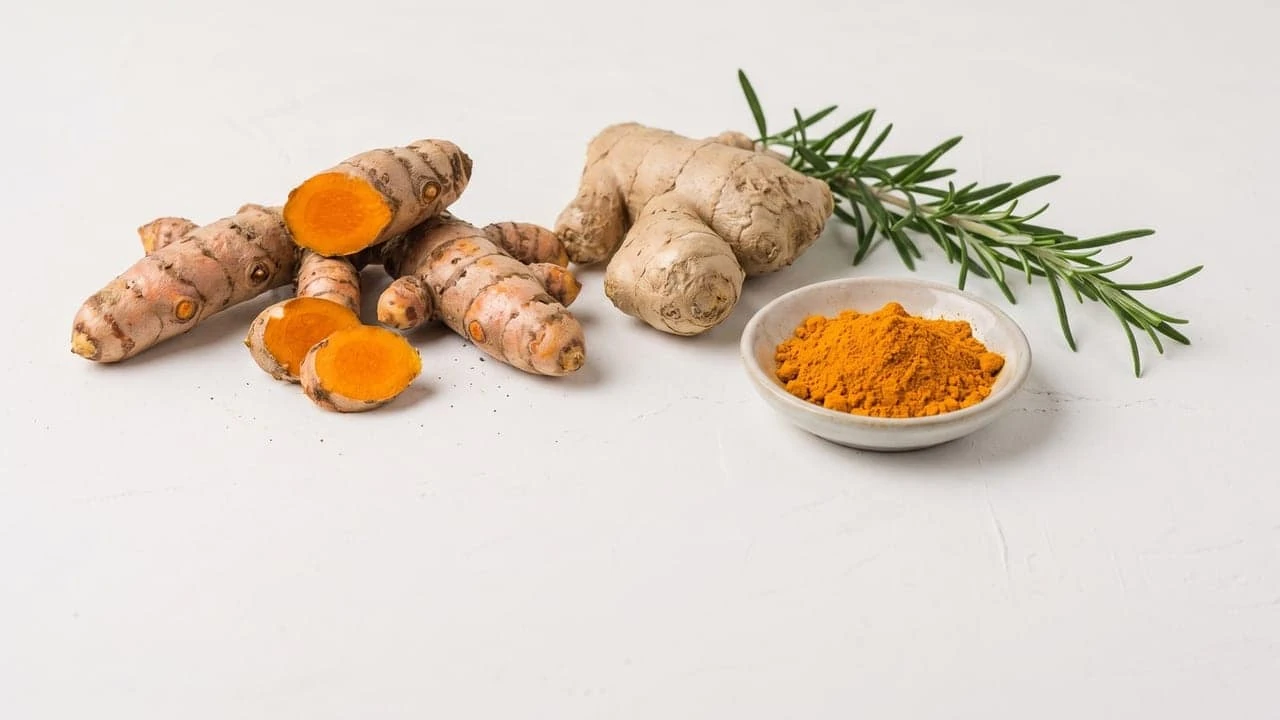
What you eat sets the conditions for repair across your whole body. Our free Anti-Inflammatory Reset builds its "cool" phase around fatty fish such as wild salmon, sardines and mackerel; berries, cherries and pomegranate; leafy greens, broccoli and beets; extra virgin olive oil on your food rather than cooked hot; and turmeric, ginger, cinnamon and rosemary every day.24 It cuts sugar and sweet drinks, fried and charred food and seed-oil dressings, and the guide expects joint aches and stiffness to ease by the second or third week. No trial has tested an anti-inflammatory diet for plantar fasciitis itself, but these foods support repair throughout your body, your heel included. Our list of anti-inflammatory foods has more.24
The same guide also calls for 7 to 9 hours of sleep, since deep sleep is when your body repairs, and 30 minutes of movement a day.24 While your heel is sore, choose movement that's easy on it, such as cycling or swimming, so you keep your fitness while the fascia calms down.
If steady home care hasn't settled your heel after a few months, acupuncture, red light (low-level laser) therapy and shockwave therapy can each help ease heel pain that hangs on, and each has human trials behind it.262728 These treatments add to the home steps, so keep up the stretches and heel raises while you try them.
Acupuncture, a core practice of Traditional Chinese Medicine, has helped people whose heel pain hadn't budged with other care. In a 2026 trial in China, 120 adults with chronic plantar fasciitis that hadn't responded to other treatment got high-intensity acupuncture, low-intensity acupuncture or no treatment while they waited, and 109 finished. By week 16, 76.7% of the high-intensity group had their worst pain cut by half or more, against 36.7% of the waiting group. The low-intensity group's smaller gain could have been chance.26
In a Hong Kong trial of 80 adults with heel pain, average age 59.7 and 85% of them women, six 30-minute sessions of electroacupuncture plus warm needling over 4 weeks eased first-step pain and improved foot function more than waiting did at weeks 2 and 4, the gains held through week 8, and no one had a side effect from treatment.29
How to use it: Look for a licensed acupuncturist who treats musculoskeletal pain, and expect a series of weekly sessions.
Best for: Long-standing heel pain that hasn't eased with home care.
Study takeaway: in a trial of 120 adults with stubborn plantar fasciitis, 76.7% of those given high-intensity acupuncture had their worst pain cut by half by week 16, against 36.7% who waited.
Acupuncture: 76.7% of people with stubborn heel pain had their worst pain cut by half or more at week 16, against 36.7% who waited
Red light therapy is a gentle way to calm heel pain without needles or shots, and given as a low-level laser over the heel, it eased pain in a placebo-controlled trial. In that multicenter U.S. trial of 69 adults with chronic plantar fasciitis in one heel, neither the people nor the researchers knew who got what, and the treated group had 6 sessions of 635-nanometer laser light over 3 weeks. At week 8, heel pain had improved 29.6 points on a 100-point scale with the laser, against 5.4 with the placebo.27
A 2022 review of randomized trials in plantar fasciitis and leg tendon pain, most of them using infrared rather than red lasers, found that low-level laser, compared with a placebo or other care, lowered pain by 13.15 points on a 100-point scale by the end of treatment (16 trials) and by 12.56 points 4 to 12 weeks later (12 trials), and no side effects were reported.30
How to use it: A physical therapist, chiropractor or sports medicine practitioner can offer laser sessions; the trial used two a week for 3 weeks.27
Best for: Heel pain that lingers after a few months of home care.
Study takeaway: in a placebo-controlled trial of 69 adults, heel pain improved 29.6 points on a 100-point scale with low-level laser, against 5.4 with the placebo.
Shockwave therapy sends pulses of sound energy into the heel, which is thought to boost blood flow and prompt the tissue to repair.1 Across 9 trials with 935 patients that compared it with a placebo treatment, people given shockwave had 2.58 times the odds of improving.28 In a 2024 Norwegian trial of 200 adults who all got advice and custom insoles, adding 3 radial shockwave sessions made no measurable difference at 6 months.31 The 2021 best-practice guide found that focused shockwave eased first-step pain over the short, medium and long term, and it places shockwave as the next step when the basics haven't been enough.17
How to use it: A physical therapist, chiropractor or sports medicine practitioner can offer it, usually as a short series of sessions alongside your stretches and heel raises.
Best for: Heel pain that has lasted several months despite steady home care.
Study takeaway: across 9 placebo-controlled trials with 935 patients, shockwave therapy gave 2.58 times the odds of improving.
The best shoes for plantar fasciitis have a roomy toe box, a low heel-to-toe drop, a flexible sole and a thin layer of firm cushioning, and you switch to them gradually; while your heel is sore, add a cushioned heel cup or an off-the-shelf insert.56
Shoes that let your feet work build the small muscles that hold up your arch. In a trial of 57 runners, walking in minimalist shoes, with more steps in them each week, built the size and strength of the foot muscles as well as a set of foot-strengthening exercises done at least 5 days a week, over 8 weeks, while the comparison group didn't change. Those runners didn't have plantar fasciitis, but stronger foot muscles help carry the load the fascia would otherwise take.5
Running barefoot on soft ground may help as well, and in a group of 28 recreational runners with plantar fasciitis who set out to run barefoot on grass for 6 weeks, 20 finished, average pain among them fell from 3.9 to 2.5 out of 10 at 6 weeks, the typical score was 1.5 at 12 weeks, and 19 of the 20 had improved by week 6. That study had no comparison group, and one of its authors receives funding from a minimalist footwear company.32 Time barefoot on grass or sand, sometimes called grounding, is an easy way to give your feet that kind of work.
Make the change slowly, because feet used to stiff, cushioned shoes need time to adapt. Start with walks in your new shoes and add steps each week, as the runners in that trial did,5 and keep a cushioned heel cup or an off-the-shelf insert in your everyday shoes while your heel is sore.6 Look for a thin layer of firm cushioning rather than none at all, since zero-cushion soles can be hard on the joints at first, while most regular shoes are cushioned too softly. Retire worn-out shoes, and save high heels for short occasions.
With steady care, about 80% of people improve within 12 months, and in a trial of 180 adults, foot pain eased steadily over the first 3 months and kept improving through the year.115
Simple home care does a lot on its own. In that trial, everyone had plantar fasciitis confirmed by ultrasound and got advice and a silicone heel cup; one group also did heavy heel raises, and a third did the heel raises and got a steroid shot. On a foot pain score from 0 to 100, where higher means less pain, the advice and heel cup group went from 44.4 at the start to 64.6 at 12 weeks, 76.0 at 26 weeks and 81.8 at 52 weeks. The heel-raise group went from 46.0 to 66.7, 75.1 and 81.8, and the group that also got the shot went from 44.2 to 72.7, 72.6 and 79.4.15 The shot group's lead at 12 weeks was smaller than the 14.1 points that patients notice, and it was gone by 26 weeks.15
Foot pain eased over a year: scores improved from 44.4 to 81.8 out of 100 with advice and a heel cup
Some cases take longer, and pain in both heels tends to be one of them. In the Danish clinic study that followed people for about 10 years from the day their pain began, 54% had become symptom-free, after an average of 725 days of symptoms, and women and people with pain in both heels took longer. Even among those with lingering symptoms, the thickened fascia had slimmed back down, and a heel spur at the start made no difference to how people did.12 So if your heel is slow to settle, keep loading the tissue and add hands-on care, because the fascia keeps remodeling for years.
Calm the heel for the first couple of weeks, load it for the next few months, support the repair every day, and add hands-on care if it stalls.
A heel spur is a bony growth on the underside of the heel bone, where the plantar fascia anchors, while plantar fasciitis is wear in the fascia itself.1 People with chronic heel pain are more likely to have a spur, but many people have one with no pain at all, and the spur stays after the heel pain clears.1 A spur on its own doesn't decide how your heel does, as the 10-year Danish study above showed.12 The care is the same for both, and our heel spur guide covers the spur in more detail.
See a doctor if your heel pain comes with numbness, tingling or burning, pain at night or at rest, or if it hasn't improved after about 3 months of steady home care, and get seen right away for a pop, a foot you can't put weight on after a fall, or a hot, red, swollen foot with a fever.1 Each of these can point to a different cause of heel pain, such as a pinched nerve, a tear or a stress fracture.1
Numbness, tingling or burning in your heel or sole, which can point to a pinched nerve such as tarsal tunnel syndrome
Deep heel pain at night or when you're resting
A pop followed by sudden pain, swelling or bruising, which can mean the fascia has torn
Heel pain after a fall or a jump, or trouble putting weight on your foot
Heel pain that keeps building with repeated impact rather than easing as you walk, which can be a stress fracture
Heel pain in a child or young teen, which is often Sever disease, a growth-plate problem of girls about 8 to 13 and boys about 10 to 15
Redness, heat, swelling or fever, or any sore on your foot if you have diabetes or numb feet
Heel pain that hasn't improved after about 3 months of steady home care
Bring a few notes to the visit: when the pain started, what you'd changed in your routine, and whether it's in one heel or both. If home care has stalled, an ultrasound is a reasonable next step to confirm what's going on, and alongside the hands-on options above, a doctor may offer a steroid shot or, rarely, surgery for pain that still limits you after everything else.1
Before you start the remedies on this page:
Ice. Keep the frozen bottle moving and stop at 15 minutes. Skip cold therapy if you have poor circulation, Raynaud's, numb or very cold feet, or hypothyroidism, and don't put heat on a fresh, hot, swollen flare.
Essential oils. Always dilute them, and patch test a blend on your inner forearm for 24 hours first. Keep lemongrass to 1% and skip it in pregnancy, ask first about helichrysum if you take a blood thinner, never use peppermint near the face of a child under 6, and keep oils off broken skin.20
Taping. Take tape off if it itches, stings or blisters; in the taping trial, 13 people in the taped group had a side effect, most of them mild to moderate and short-lived.22
New shoes. Back off if your feet or calves ache for more than a day after time in flexible, low-heeled shoes.
Supplements. Skip curcumin supplements if you have gallstones, kidney stones or liver disease, or are pregnant. Curcumin and fish oil can add to the effect of a blood thinner, so check with your prescriber before you add them if you take one, and review curcumin with your prescriber if you take a diabetes medication.
Plantar fasciitis means the load on your foot has outrun the tissue's ability to repair, and it responds to the right kind of load, given steadily. Stretch the plantar fascia before your first steps, add heavy heel raises every other day, loosen your arch and calves with massage or rolling, and wear shoes with room for your toes and a little firm cushion, with a heel cup while it's sore. Take strain off the whole system by losing extra weight slowly, eating to calm inflammation and sleeping well.
Most people improve within a year, and if your heel is still sore after a few months of steady care, acupuncture, red light and shockwave therapy give you more to work with. Your foot is built to adapt to what you ask of it, so give it patient, steady work and it has every reason to grow stronger.
A 30-day plan in four phases, what to eat freely and what to cut, daily movement and strength training, and a stiffness, puffiness and energy check to repeat at day 30. Free with your Dr. Axe account (email or Google). You'll also get the protocol's short email series and the Dr. Axe newsletter; unsubscribe anytime.
Open the free protocol →The fastest start is the plantar fascia stretch before your first steps each morning, heavy heel raises every other day, a heel cup or off-the-shelf insert, and less running while the heel calms: in a trial of 48 adults, heavy heel raises left foot function 29 points better than stretching alone at 3 months.236 Add massage or rolling for your arch and calves, and lose extra weight slowly if you carry it.425
Yes. Easy walking keeps your foot and calf muscles working, and in a trial of 57 runners who didn't have plantar fasciitis, walking in flexible minimalist shoes built foot muscle strength over 8 weeks.5 Keep your walks to a level that doesn't leave your heel worse the next morning, and during a bad flare, swap long walks for cycling or swimming.
Often, at a lower volume: cut your mileage back until runs don't leave your heel worse the next morning, add heavy heel raises every other day, and build back gradually.31 Of 28 runners with plantar fasciitis who took up running barefoot on grass for 6 weeks, 20 finished and 19 of those improved, though that study had no comparison group.32
Collagen pairs well with your heel raises: in a study of 8 healthy men who each tried a placebo and two doses of vitamin C-enriched gelatin, taking 15 grams an hour before 6 minutes of rope skipping doubled a blood marker of collagen building.33 For daily support, aim for about 20 to 30 grams of collagen a day from bone broth, bovine or fish gelatin and bovine or fish collagen powder, and treat curcumin (500 to 1,000 mg a day) and omega-3s, from wild fatty fish first and from fish oil on days without it (2 to 3 grams of EPA and DHA a day), as part of an anti-inflammatory plan.24
They can make a heel massage more soothing, and the massage itself has trial support: in a trial of 66 adults, 4 weeks of myofascial release cut heel pain and disability 72.4%, against 7.4% with a sham.4 We found no trial of the oils on their own for plantar fasciitis, so use them in that massage, as a diluted blend such as copaiba, lemongrass, peppermint and helichrysum at about 3% in jojoba oil.20
A warm Epsom salt foot soak can relax a stiff, achy foot, which is how it's traditionally used for sore muscles. Stir the salt into a basin of warm water, mixing 5 drops of an essential oil into a spoonful of carrier oil first if you like, and soak while you roll your arch.20
Castor oil's thick texture makes it a slow, smooth massage oil for your arch, and a warm castor oil pack is a traditional way to soothe a stiff, achy area. Our guide to castor oil covers how to use it.
A night splint, the brace that holds your ankle at a right angle while you sleep, can ease morning pain for some people: in a trial of 40 adults, pain with a splint plus home exercise fell from 6.8 to 5.3 out of 10 over 3 months, though exercise alone did almost as well.23 We found no good trial of compression socks for plantar fasciitis, so if a pair feels supportive, it's fine to wear them.
Rarely: surgery is kept for heel pain that still limits you after steady non-surgical care, and about 80% of people improve within 12 months without it.1
Yes, for most people: about 80% improve within 12 months with steady care, and in a Danish clinic study that followed 174 people for about 10 years, 54% had become symptom-free and repeat ultrasounds in 137 of them showed the thickened fascia had slimmed back down.112 Keep the heel raises and calf stretches in your week after the pain is gone, so the tissue stays strong.
Ice is better for a fresh, painful flare, and warmth is better once the heel feels stiff rather than hot: roll your arch on a frozen water bottle for 10 to 15 minutes during a flare, and use a warm foot soak for chronic stiffness.1
November 11, 2026 — Rewrote the 2023 article "Natural Treatment for Plantar Fasciitis, Including 5 Key Stretches." The page now explains plantar fasciitis as wear at the heel anchor when strain outpaces repair, with a step-by-step diagram, and replaces the description of it as inflammation of the fascia and the error that called the heel bones metatarsals. It keeps the old page's five stretches, folded into four (toe stretching and the thumb massage are now the seated plantar fascia stretch, and the squat stretch is part of the bent-knee calf stretch), rebuilds them as a table with setup, common mistakes, easier and harder versions and doses, and adds a heavy heel raise with the protocol from two Danish trials. It keeps the rest, ice and heat advice (now ice for a flare and warmth for stiffness), the massage and essential-oil how-to (now the Sore Muscle Rub from our Top 50 Healing Herbs & Essential Oils guide, in jojoba or fractionated coconut oil), inserts, heel cups and night splints with their trial results, healthy weight and anti-inflammatory eating, hands-on therapy and the heel spur comparison. It ranks eight treatments by their human research, each with the study's design and size, adds acupuncture, red light and shockwave therapy, a shoe section built around roomy, flexible shoes with a gradual switch, a healing timeline, three charts, a five-step plan, one safety section, an FAQ and 33 references. It removes the unsourced figures (11% to 15% of adults, 2 million visits, 83% of patients, 4% to 22% of runners, one-third in both feet, and 90% better in two months or in 10 months), a stretching study that couldn't be traced, the 500-mile shoe rule, the BMI range, thyme and rose oil and the olive oil carrier, raw foods and green juices, a trademarked therapy name, the advice to avoid going barefoot, and the description of a heel spur as soft tissue.

This article is for educational purposes. See our medical disclaimer.