
Advertisement
Vegetables · Squash
What delicata squash is, what a cooked cup gives you, how it feeds your gut, steadies your blood sugar and supports your eyes, why a bitter squash is the one to toss, and how to cook it, with five recipes.
Weighting: Evidence 30% · Antioxidant & Anti-Inflammatory 25% · Clinical Effectiveness 25% · Nutrient Density 20% (5.5×0.30 + 6.4×0.25 + 6.8×0.25 + 6.6×0.20 = 1.65 + 1.60 + 1.70 + 1.32 = 6.27, shown as 6.3). How we score

Delicata squash is a sweet, thin-skinned winter squash you eat skin and all, and a cooked cup of winter squash gives you 76 calories, 5.7 grams of fiber and 59% of your daily vitamin A, most of it from beta-carotene.12
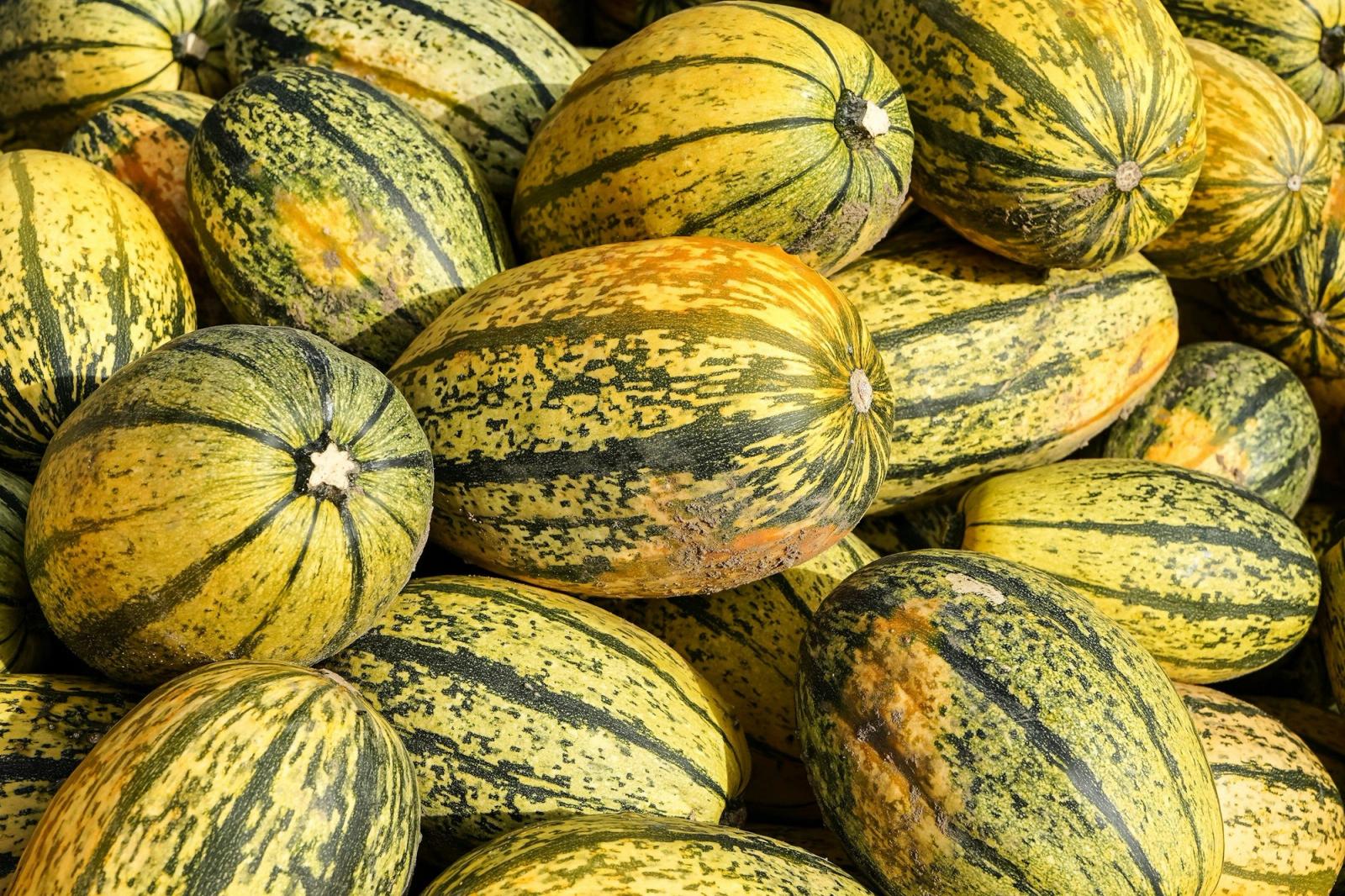
Delicata squash is a small winter squash with cream-colored skin, dark green stripes and sweet, nutty flesh, and its skin is thin and tender enough to eat, so you can slice it and cook it without peeling a thing.56 I put winter squash with the starchy vegetables that, unlike refined starches, release their glucose slowly while delivering carotenoids like beta-carotene, lutein and zeaxanthin, and as long as you're not loading up on other carbs, squash is probably the ideal carb for anyone wanting to support blood sugar balance.78
Fiber, slow-release starch and carotenoids matter because so many everyday complaints have their root cause in the gut and in blood sugar. A sluggish gut often traces back to gut bacteria and a gut lining that aren't getting the fiber they need, and sugar cravings and the afternoon slump often follow blood sugar that swings through the day. A whole squash eaten skin and all, cooked with a little fat and served after your protein, feeds the bacteria in your gut, keeps your fuel steady and hands your cells the carotenoids they use to renew themselves.
Delicata ripens early in the squash season, and Cornell's variety stays good to eat well into the winter months, so it's an easy vegetable to have on hand for your Thanksgiving table.56 Chinese medicine ties the orange and yellow foods of fall to digestion, and it's a principle I've taught on my show:
There's a principle in Chinese medicine that in the fall season you want to consume more foods that are orange and yellow in color, like spaghetti squash, acorn squash and butternut squash. These foods are very nourishing to your pancreas, and they're naturally sweet but don't have to tax your pancreas and blood sugar levels.Dr. Josh Axe, DC, DNM, CNSFrom Top 5 Holiday Superfoods You Didn't Know You Needed, The Dr. Josh Axe Show (2024)
Delicata belongs with those orange-fleshed fall squashes, and it's one of the quickest of them to get from the cutting board to your plate.
Squash is one of the healing foods in this free 30-day protocol. Inside:
Free with your Dr. Axe account (email or Google). You'll also get the protocol's short email series and the Dr. Axe newsletter; unsubscribe anytime.
Open the free protocol →Did you know?
Delicata, acorn squash and zucchini all belong to one species, Cucurbita pepo, and the first two are stored and sold as winter squash.910
Delicata gets its name from its thin, delicate skin, and that skin has a nutty flavor of its own.5
Delicata squash is a winter squash, a variety of Cucurbita pepo, with cylindrical fruits about 8 inches long and sweet, dry, orange flesh. Its skin is thin, tender and edible, which is rare among winter squashes, so you can slice it and cook it without peeling.59
You'll know delicata by its oblong shape and its cream to pale yellow skin striped in dark green. Its flesh is famous for a "sweet as honey" taste, and the 8-inch cylinder is just the right size to halve and stuff with grains, meat, nuts or vegetables.5 Cornell's description of its bush variety calls the flavor sweet and nutty, with thick, deep yellow flesh that's fine textured, without the coarse strings some squashes have.6
Delicata was popular in the early part of the 20th century and then went out of style because it yielded poorly and was prone to disease. Cornell plant breeders brought it back by breeding in resistance to powdery mildew, the most damaging fungal disease of squash in many parts of the world, on a compact plant suited to home gardens and farms alike, and Cornell's Bush Delicata was named a 2002 All-America Selection, the first Cornell-developed variety to win the award in 39 years.6
Even with its soft skin, delicata is a true winter squash. It's harvested fully mature, like the rest of the winter squash family, and it stores for weeks.119 Acorn squash is the same species, Cucurbita pepo,9 while butternut squash belongs to a different one, Cucurbita moschata.12 Kabocha squash and hubbard squash are other winter squashes with guides of their own.
Turn your daily calorie, protein and fiber estimates into practical meals and recipe ideas.
Calculate my plan →A cup of cooked winter squash, the closest USDA match for delicata, has 76 calories, 18.1 grams of carbohydrate, 5.7 grams of fiber, 494 milligrams of potassium and 59% of your daily vitamin A.12 USDA hasn't analyzed delicata on its own, so these figures come from its record for baked winter squash, all varieties.
Winter squash, all varieties, cooked, baked, per 1 cup (205 g) and per 100 g, from USDA FoodData Central FDC 170490; % Daily Value uses FDA reference values.12
| Nutrient | 1 cup cooked (205 g) | % Daily Value | Per 100 g cooked |
|---|---|---|---|
Calories | 76 | n/a | 37 |
Carbohydrate | 18.1 g | 7% | 8.85 g |
Fiber | 5.7 g | 20% | 2.8 g |
Net carbs (carbohydrate minus fiber) | 12.4 g | n/a | 6.05 g |
Sugars | 6.8 g | n/a | 3.3 g |
Protein | 1.8 g | 4% | 0.89 g |
Fat | 0.7 g | n/a | 0.35 g |
535 mcg RAE | 59% | 261 mcg RAE | |
5,720 mcg | n/a | 2,790 mcg | |
Alpha-carotene | 1,398 mcg | n/a | 682 mcg |
Lutein + zeaxanthin | 2,911 mcg | n/a | 1,420 mcg |
19.7 mg | 22% | 9.6 mg | |
0.33 mg | 19% | 0.161 mg | |
0.17 mg | 19% | 0.082 mg | |
0.38 mg | 17% | 0.187 mg | |
Potassium | 494 mg | 11% | 241 mg |
Riboflavin | 0.14 mg | 11% | 0.067 mg |
41 mcg DFE | 10% | 20 mcg DFE | |
Pantothenic acid | 0.48 mg | 10% | 0.234 mg |
Vitamin K | 9.0 mcg | 8% | 4.4 mcg |
26.7 mg | 6% | 13 mg | |
0.9 mg | 5% | 0.44 mg | |
Calcium | 45 mg | 3% | 22 mg |
Sodium | 2 mg | 0% | 1 mg |
When I talk about squash, these are the nutrients I point to: vitamin A, vitamin C, beta-carotene and fiber.8 The vitamin A comes as carotenoids, which your body converts as it needs them, and a cup also gives you useful amounts of vitamin B6, copper and manganese, with smaller amounts of folate, magnesium and iron.113
If you weigh your squash raw, use USDA's raw winter squash record, which lists 34 calories, 8.59 grams of carbohydrate and 1.5 grams of fiber per 100 grams, or 39 calories and 1.7 grams of fiber in a cup of raw cubes (116 grams).14 A delicata product label in FoodData Central lists 36 calories, 8.57 grams of carbohydrate, 1.4 grams of fiber and 350 milligrams of potassium per 100 grams of raw squash, in line with USDA's raw figures.15 Use the cooked numbers for squash on your plate and the raw ones for squash you weigh before cooking; USDA measured the two from different samples, so don't compare them line by line.
Yes. Delicata is a fiber-rich, carotenoid-rich vegetable: a cooked cup of winter squash gives you a fifth of your daily fiber and 59% of your vitamin A for 76 calories.12 Human studies tie the fiber, carotenoids and potassium it carries to better gut, eye and heart health, and eating it after your protein softens the blood sugar rise.1617184
Delicata's benefits rest on what it carries: human studies of its fiber, carotenoids and potassium, a meal-order trial, lab work on squash fiber and skin, my gut and blood-sugar protocols, and Chinese medicine's long pairing of orange and yellow foods with the fall. Its nutrition comes from USDA's winter squash records, the closest match.116191842021
Delicata does its work in three places: the lining of your gut, the fuel in your bloodstream and the cells that renew your eyes and skin. Each one starts with eating the whole squash, skin and all, cooked with a little fat.
In your gut, the work starts with the fiber, and a cooked cup of winter squash carries 5.7 grams of it,1 the gentle kind. Steamed orange foods like pumpkin and butternut squash are on my short list for healing leaky gut, because they have a type of fiber that's much easier to digest than many other foods, a gentle prebiotic that feeds the bacteria living in your gut.22 My Healing Leaky Gut Protocol ranks squash third among its ten foods that heal, tied with pumpkin and sweet potato, for that same gentle prebiotic fiber and the beta-carotene that supports cell renewal.21
Sweet potatoes and squash are fairly high in fiber, and when you get this fiber, it's great for gut health. It's good for feeding the good bacteria in your gut.Dr. Josh Axe, DC, DNM, CNSFrom Top 5 Holiday Superfoods You Didn't Know You Needed, The Dr. Josh Axe Show (2024)
Your gut bacteria turn squash fiber into fuel for your colon, and a lab study shows that work in action. In a model of the human colon seeded with gut bacteria from people with obesity, fiber from butternut squash raised Lactobacillus and Akkermansia muciniphila and lifted production of propionate and butyrate, two of the short-chain fatty acids your gut bacteria make from fiber.20 Butyrate is the main fuel for the cells lining your colon, and these fatty acids help keep your gut barrier strong.23
The same fiber shapes how squash's starch reaches your blood. Delicata's carbohydrate comes packaged with fiber and water, so a serving carries less than half the carbohydrate of the same cup of baked sweet potato, and in a trial of 11 adults with type 2 diabetes who each tried both meal orders, eating the carbohydrate after the protein and vegetables made it reach the bloodstream more gently.1244 The blood sugar section below puts numbers on both.
Then come the carotenoids. Beta-carotene, alpha-carotene, lutein and zeaxanthin dissolve in fat, so they need some fat on the plate to be absorbed. When 7 adults ate the same salad of spinach, romaine, cherry tomatoes and carrots with fat-free, reduced-fat and full-fat dressings, each person trying all three, almost no carotenoids reached their blood with the fat-free dressing and the most did with full-fat.25 Once absorbed, beta-carotene becomes vitamin A as your body needs it, so the amount you make follows how much your body already has.13
Traditional Chinese medicine looks at these same foods through digestion. In its terms, the spleen covers what we'd call your whole digestive system, pancreas included, and squash is one of the foods I call very nourishing to the spleen and digestive system.26 For a body that runs cold, which Chinese medicine often sees with an underactive thyroid, I want people warming the body with soups, cooked vegetables and foods like sweet potatoes, squash and rice.26
Delicata's thin skin is edible, so the whole squash goes on your plate, and a cooked cup of winter squash brings 5.7 grams of fiber, the soft, gentle prebiotic kind.5121
In a lab model of the human colon, butternut squash fiber raised Lactobacillus and lifted propionate and butyrate.20
Butyrate is the main fuel for the cells lining your colon and helps keep the gut barrier strong.23
Carotenoids from a salad barely reached the blood with a fat-free dressing and reached it best with a full-fat one.25
Ranked by the strength of the research, delicata squash is best for feeding your gut, steadying your blood sugar, protecting your eyes, supporting healthy blood pressure, giving your cells antioxidant support and helping you feel full on fewer calories.
A cooked cup of winter squash gives you 5.7 grams of fiber, 20% of your daily value, and with delicata you eat the skin as well.12 Fiber does a lot for you over the years: in a review of 185 long-term studies and 58 clinical trials, people who ate the most fiber had 15% to 30% lower rates of death from any cause and from heart disease, and less coronary heart disease, stroke, type 2 diabetes and colorectal cancer, with the greatest benefit at 25 to 29 grams a day.16 When people I work with struggle with constipation, which tends to happen around the holidays, sweet potatoes, pumpkin and squash in a smoothie can help.8 For more ways to reach that daily target, see these high-fiber foods.
Study takeaway: a cup of cooked winter squash covers a fifth of your daily fiber.
Squash carries less than half the carbohydrate of baked sweet potato, cup for cup, and its fiber comes along with the starch.124 Where the carbohydrate sits in your meal matters too: in the meal-order trial, blood sugar rose far less when the bread and juice came after the protein and vegetables, and squash can take that same last place on your plate; the blood sugar section below has the numbers and the plate I recommend.4
Study takeaway: eat your carbohydrate, squash included, after your protein and vegetables for a much smaller blood sugar rise.
A cooked cup of winter squash carries 2,911 micrograms of lutein and zeaxanthin, the carotenoids most closely tied to eye health.1 Across six cohort studies, people who ate the most of them had a 26% lower risk of late age-related macular degeneration, the stage that threatens sight.17 In two large U.S. cohorts of 63,443 women and 38,603 men followed for about two decades, those whose diets supplied the most absorbable lutein and zeaxanthin, the top fifth, had about 40% less advanced macular degeneration; in both analyses the lower risk showed up at the late, advanced stage rather than the early or intermediate ones.1719 In a 4-week trial of 29 healthy adults, eating lutein-rich fruits or vegetables, one group's including pumpkin, raised lutein in the blood by 37%, though the pigment in the macula didn't change in that short a time.27 These orange foods are ones I point to for eye health, macular degeneration included.8
Your skin draws on the same nutrients. The same cup gives you 59% of your daily vitamin A and 22% of your vitamin C, and I group the carotenoids in winter squash with eye health and skin repair.127 For more on how they work, see our guide to carotenoids.
Study takeaway: people who ate the most lutein and zeaxanthin had about 40% less advanced macular degeneration.
We tend to eat too much sodium over the holidays and not enough potassium, and potassium helps lower blood pressure, which lowers your risk of a heart attack or stroke; that's one reason I say squash is tremendous this time of year.8 A cooked cup gives you 494 milligrams of potassium, 11% of your daily value.12 In a review of 22 trials, eating more potassium lowered systolic blood pressure by 3.49 points, with the drop seen in people who had high blood pressure, and across 11 cohort studies, higher potassium intake went with a 24% lower risk of stroke.18 Pair squash with other potassium-rich foods to reach your day's total.
Study takeaway: more potassium lowered systolic blood pressure by 3.49 points across 22 trials.
A cooked cup carries 5,720 micrograms of beta-carotene and 1,398 of alpha-carotene.1 In a review of 69 prospective studies, people with the highest blood levels of beta-carotene had a 24% lower risk of cancer overall, and those with the highest alpha-carotene a 38% lower risk; for beta-carotene from the diet, the link was smaller and borderline, and the authors concluded the findings support eating more fruits and vegetables rather than taking antioxidant supplements.28 In the lab, an extract of butternut squash skin showed more antioxidant activity and more phenolic compounds than the seeds.12
Study takeaway: people with the most beta-carotene in their blood had about a quarter lower cancer risk.
At 76 calories a cup, cooked squash fills a plate for very little.1 In a controlled feeding study of 41 adults who each ate all three versions of a menu, hiding puréed vegetables, yellow squash among them, in everyday dishes cut 202 to 357 calories a day without leaving people any hungrier.29
Study takeaway: vegetable-rich dishes cut up to 357 calories a day without more hunger.
Delicata raises blood sugar more gently than refined starches, because its carbohydrate comes with fiber, and eating it after your protein and vegetables softens the rise further. A cooked cup of winter squash has 18.1 grams of carbohydrate and 5.7 grams of fiber, less than half the 41.4 grams in a cup of baked sweet potato.1244
People sometimes worry about the carbs in starchy vegetables, but squash tends to run lower in carbs than sweet potatoes do.8 USDA's numbers bear that out. A cooked cup of winter squash has 18.1 grams of carbohydrate, against 21.5 in butternut, 29.9 in acorn squash and 41.4 in a cup of baked sweet potato, while spaghetti squash has 10.0.130312432
Carbohydrate in a cooked cup: winter squash 18.1 g, sweet potato 41.4 g
Boiled butternut squash, another winter squash, has a low glycemic index of 51 in testing by the University of Sydney's glycemic index lab, on a scale where pure glucose is 100, and the 2008 international tables, in their summary of 62 common foods, give boiled pumpkin, a close relative, a medium value of 64.4533 Delicata itself has no entry in that lab's database. The glycemic index measures a carbohydrate eaten on its own, though, and the order you eat your food changes the picture a great deal.
My Insulin Resistance & Prediabetes Protocol has you eat vegetables and protein first and carbohydrates last, and never carbs on their own.34 For my patients working on insulin resistance, I recommend high protein and moderate carbohydrate in the morning, with carbohydrates that are high in fiber and nutrients, and sweet potato and butternut squash are among the better carbohydrates to choose.35
In a small trial of this eating order, 11 adults with type 2 diabetes who took metformin ate the same 628-calorie meal twice, a week apart: once with the carbohydrate first, and once with it 15 minutes after the chicken, salad and steamed broccoli, so each person tried both orders. With the carbohydrate last, blood sugar was 112.0 instead of 156.8 mg/dL at 30 minutes, 125.6 instead of 199.4 at 60 minutes, a 37.0% drop, and 140.8 instead of 169.2 at 120 minutes, and insulin at 60 minutes was about half as high.4 The carbohydrate in that meal was bread and orange juice, and a serving of squash takes the same last place on your plate.
Blood sugar after the same meal: 199.4 mg/dL at 60 minutes with the carbohydrate first, 125.6 with it last
For daily targets, see normal blood sugar levels, and the insulin resistance diet lays out a full week of meals built this way.
If you're working on blood sugar, these markers show how your overall way of eating is working over the months:
See the cellular bloodwork panel
Have results? Analyze them free →About ½ cup cooked, eaten with protein, is the squash serving in my perimenopause protocol, where it's a steady carbohydrate after training.3 A full cup is 76 calories and 18.1 grams of carbohydrate, so build the rest of the plate around protein and non-starchy vegetables.1
Let your own body and goals set the amount from there. If you're working on blood sugar, the ½ cup with protein is a good place to start, and if you're active and your blood sugar is steady, a full cup at a meal fits easily. Rotate delicata with other orange and yellow vegetables through the fall, and treat it as the carbohydrate on your plate rather than as one more side on top of bread or pasta. For more ideas, see our list of good carbs.
Delicata sits toward the lighter end of the squash family for carbohydrate and calories, and it's the easiest of them to cook, because you don't peel it. Its tender, edible skin is rare among winter squashes, so with most of the others you'll scoop the flesh or cut away the rind.5
Per 1 cup cooked, from USDA FoodData Central SR Legacy records, with winter squash, all varieties, standing in for delicata.131303224
| Food (USDA record) | Cup weight | Calories | Carbs | Fiber | Potassium | Vitamin A |
|---|---|---|---|---|---|---|
Winter squash, all varieties, baked (for delicata) | 205 g | 76 | 18.1 g | 5.7 g | 494 mg | 535 mcg RAE |
Acorn squash, baked | 205 g | 115 | 29.9 g | 9.0 g | 896 mg | 43 mcg RAE |
Butternut squash, baked | 205 g | 82 | 21.5 g | 6.6 g | 582 mg | 1,144 mcg RAE |
Spaghetti squash, cooked | 155 g | 42 | 10.0 g | 2.2 g | 181 mg | 9 mcg RAE |
Sweet potato, baked, flesh | 200 g | 180 | 41.4 g | 6.6 g | 950 mg | 1,922 mcg RAE |
Acorn squash carries the most fiber and potassium of the squashes here, butternut the most vitamin A, spaghetti squash the fewest carbohydrates and calories, and sweet potato more vitamin A and potassium than any of them. If you like acorn or butternut, our acorn squash recipes and butternut squash recipes work with delicata too, with a shorter cooking time and no peeling. For the full sweet potato profile, see sweet potato nutrition.
The easiest way to cook delicata squash is to roast it with the skin on. Cut ¼-inch rings crosswise, or halve it lengthwise for half-moons, and scoop the seeds. Toss with a little coconut or avocado oil and roast at 400°F for about 20 minutes, then turn and roast 15 to 20 more. The fat helps you absorb its carotenoids.25
Because delicata's walls are thin, it cooks quickly. Wash the outside well and trim the ends.
How to cook delicata squash, method by method.
| Method | How to cut it | Heat and time | Best for |
|---|---|---|---|
| Roast | ¼-inch rings or half-moons, seeds scooped out | 400°F, about 20 minutes, then turn and roast 15 to 20 minutes more | Side dishes, salads, snacking |
| Bake | Halved lengthwise, seeds out, cut side down | 400°F, about 30 minutes, until tender | Stuffing |
| Sauté | ¼-inch rings | In a skillet with a little oil, until soft and a little caramelized | A quick weeknight side |
| Broil | Slices brushed with olive or coconut oil | Under the broiler, watched closely, until caramelized | Browned, crisp edges |
| Shave raw | Thin ribbons | No heat | Salads, if raw vegetables agree with you |
| Seeds | Rinsed and dried | Roasted as you would pumpkin seeds | A crunchy topping |
A healing gut does best with warm, cooked, soft foods rather than raw, cold or fibrous ones, a principle from Chinese medicine that I build into my gut protocol, so roasting, baking, sautéing or simmering delicata into soup are the gentlest ways to enjoy it.21 If your digestion is strong, thin raw ribbons make a crisp salad, and they can stand in for pasta under a warm sauce.
Cook it with a little healthy fat, too, since that's how the carotenoids get absorbed.25 Extra virgin olive oil, avocado oil, coconut oil and ghee all work. I like to season squash with pumpkin pie spice, cinnamon or ginger, which bring a little flavor and add health benefits of their own.8
Don't throw away the seeds. Scoop them out, rinse and dry them, then roast them the same way you would pumpkin seeds for a crunchy topping on soups and salads.
Because you eat the skin, buy organic delicata when you can. If something has a peel you take off, organic matters less to me, and when you eat the skin, as you do here, it matters more.37 For more on what to buy organic, see organic foods.
Ask Dr. Axe AI; it answers from this library and cites its sources.
These five recipes cover the ways delicata is most loved: roasted, stuffed, tossed into a warm salad, blended into a smoothie and simmered into soup. Each keeps the skin on and pairs the squash with a protein or a healthy fat. Start with the roasted rings, the recipe this page has carried for years.
For Thanksgiving, stuffed delicata makes a side that looks like it took far longer than it did. The halves bake while you mix the filling, and wild rice, roast turkey or chicken, tart cranberries and a little sheep's milk feta give you a complete small plate.
A warm salad turns a tray of roasted half-moons into a full meal, with lentils for protein and fiber and a bed of peppery arugula.
This smoothie follows the warm smoothie I have patients make in place of a frozen fruit smoothie in the morning, with pumpkin, butternut squash or sweet potato, because that fiber is very healing and very good for the gut; leftover delicata works the same way.38
A bowl of squash soup is one of the simplest ways to eat it warm, and my gut protocol's meal plan pairs a butternut soup with roast chicken.21 Delicata blends just as smoothly.
For more ideas, browse our soup recipes and Thanksgiving side dishes. And when you're short on time:
Pick a delicata that's firm and heavy for its size, with cream to yellow skin, green stripes and no soft spots, and store it whole in a cool, dry place around 50 to 55°F, where it keeps for up to about 8 weeks.119 Refrigerate it covered once it's cut or cooked, and use it within a few days.
Picking. A ripe delicata is firm and feels heavy for its size, with cream to yellow skin and green stripes, and growers harvest it once it has a dark-orange ground spot, the patch where it rested on the soil.39 Skip any with soft spots, cuts or deep scratches, which spoil faster.
Storing. Keep whole squash somewhere cool, dry and dark. The storage range for winter squash is 50 to 55°F,11 and temperatures below 50°F can cause chilling injury, so a whole squash is better off in a cool pantry than in the refrigerator.9 Stored that way, delicata and acorn types keep for up to about 8 weeks, and Cornell's Bush Delicata was bred with a long shelf life of about 100 days, so it stays good to eat well into winter.96
Freezing. To keep cooked squash for later, cook it until soft, mash the flesh and cool the pan in cold water, then pack it with ½ inch of headspace, seal and freeze.47
In season. Buying squash at a farmers market in the fall is one of the simplest ways of eating seasonally, and our guide to fall vegetables covers what else is at its best right now.
Yes. Delicata squash isn't dangerous. Like any squash, a fruit from a stressed plant, or one crossed with a wild gourd, can build up bitter cucurbitacins, the cause of toxic squash syndrome, and cooking doesn't destroy them. If a bite tastes bitter, spit it out and throw the squash away. In a French series of 353 cases, there were no deaths or severe cases.3640
Interaction check: Low. No medication interactions are documented for delicata squash at food amounts.
Bitter squash. A squash can turn bitter when its plant is stressed by high heat, drought, poor soil or insect damage, or when a wild gourd cross-pollinates with a garden one, leaving the fruit with high levels of cucurbitacins.36 France's poison centers recorded 353 people exposed to bitter, non-edible squash over five years; 204 of them had symptoms, mostly diarrhea, vomiting and stomach pain, there were no deaths or severe cases, and most of the squash had been bought in stores.40 Symptoms start within minutes to hours, and rarely the syndrome causes temporary hair loss.36 Take a very small taste of raw squash before you cook it, spit it out and throw it away if it's bitter, and don't eat a wild squash you didn't plant.36 If vomiting or diarrhea is severe or won't stop, get medical care.
More fiber than you're used to. If your diet has been low in fiber, a big serving of skin-on squash can bring gas or bloating, so start with a smaller portion, chew well and drink water while your gut adjusts.
Squash hands and allergy. In one documented case, handling butternut squash caused hand dermatitis, the irritation home cooks call squash hands, so wear gloves while you prep if your hands itch or feel tight.41 Food allergy to Cucurbita pepo is rare: in the first four confirmed cases of zucchini allergy, each confirmed with a food challenge, symptoms included mouth itching, nausea and diarrhea.10 If your mouth itches, or hives or swelling follow a meal with squash, avoid it, and get emergency care for any trouble breathing.
Orange-tinged skin. Eating a lot of carotenoid-rich foods can tint your skin yellow-orange, most often on the palms and soles. It's called carotenemia, it's harmless, and it fades when you eat less of them.42
Kidney disease and potassium. A cooked cup carries 494 milligrams of potassium.1 Chronic kidney disease can make it harder for your kidneys to clear potassium from the blood, so if your doctor has set a potassium limit, count squash toward it.43
Yes. Delicata is one of the easiest ways to bring a whole-food carbohydrate to your fall table: you don't peel it, it's ready in well under an hour, and a cooked cup gives you a fifth of your daily fiber and more than half your vitamin A for 76 calories. Chinese medicine has long paired orange and yellow foods with the fall, and the research on fiber, carotenoids and meal order points the same way.
Roast it skin-on with a little healthy fat, eat it after your protein and vegetables, and let it be the squash on your Thanksgiving table. My philosophy has always been to use food as medicine first,44 and your body was designed to heal; a simple squash, cooked well, gives it more of what it needs to do that work.
This free 30-day protocol favors warm, cooked, soft foods like squash, ranks its ten healing foods and gives you a 7-day meal plan. Have recent bloodwork? Analyze it free.
Free with your Dr. Axe account (email or Google). You'll also get the protocol's short email series and the Dr. Axe newsletter; unsubscribe anytime.
Open the free protocol →Yes. A cooked cup of winter squash, USDA's closest match for delicata, gives you 5.7 grams of fiber, 59% of your daily vitamin A and 494 milligrams of potassium for 76 calories.12 Its fiber feeds the good bacteria in your gut, and in two large U.S. cohorts followed for about two decades, people who ate the most lutein and zeaxanthin, carotenoids squash is rich in, had about 40% less advanced macular degeneration.2119
No. Delicata is an everyday food, but any squash that tastes strongly bitter can carry cucurbitacins, the cause of toxic squash syndrome, and cooking doesn't destroy them, so spit out a bitter bite and throw the squash away.36 In a French poison-center series of 353 people exposed to bitter squash, 204 had symptoms, mostly diarrhea, vomiting and stomach pain, and there were no deaths or severe cases.40
A cooked cup of winter squash has 18.1 grams of carbohydrate, including 5.7 grams of fiber, which leaves 12.4 grams of net carbs.1
It raises blood sugar more gently than refined starches, especially when you eat it after your protein and vegetables. A cooked cup has 18.1 grams of carbohydrate, less than half of baked sweet potato's 41.4, and in a small trial of 11 adults with type 2 diabetes in which each person ate the same meal both ways, blood sugar 60 minutes after eating was 37.0% lower when the meal's carbohydrate, bread and orange juice, came last.1244
No squash is off the table if you have diabetes, as long as you eat it after your protein and vegetables, the order my insulin resistance protocol recommends.34 Of the winter squashes on this page, acorn carries the most carbohydrate, 29.9 grams in a cooked cup, so give it a smaller spot on your plate than spaghetti or summer squash.31
Both. It's a starchy vegetable, and I put winter squash with the starchy vegetables that, unlike refined starches, release their glucose slowly while delivering carotenoids like beta-carotene, lutein and zeaxanthin.7
Both are excellent, and they do different jobs. A cup of baked sweet potato has more vitamin A and potassium, while a cup of cooked winter squash has 76 calories and 18.1 grams of carbohydrate against sweet potato's 180 calories and 41.4 grams.241 Squash tends to run lower in carbs than sweet potatoes, which makes it the easier fit if you're watching your blood sugar.8
No. Delicata is a whole vegetable whose fiber your gut bacteria ferment into butyrate, the main fuel for the cells lining your colon, and it's rich in carotenoids such as beta-carotene.231 For a full food-first plan, see the Anti-Inflammatory Reset.
Roast chicken or turkey, wild-caught salmon and lentils all pair well. Eat the protein first and the squash after it, the order my insulin resistance protocol recommends.34
A ripe delicata is firm and heavy with cream to yellow skin and green stripes, and growers pick it once it has a dark-orange ground spot where it rested on the soil.39
November 17, 2026 — Rebuilt to the current DrAxe.com standard. The nutrition facts now come from USDA FoodData Central's winter squash record, named on the page, with a comparison of acorn, butternut and spaghetti squash and sweet potato. Kept and strengthened the old page's benefits for fiber, blood sugar, eyes, skin, blood pressure, antioxidants and weight, with each study described by type; kept the roasted rings recipe and added four more, plus a cooking guide and picking and storage tips. Moved iron and folate to the nutrition table, since a cup supplies 5% of daily iron and 10% of folate; removed the bone-health benefit, since a cup supplies 3% of daily calcium; removed the claim that delicata is low-carb, which no study supports; and replaced the old "low glycemic index" line with the tested values for butternut squash and pumpkin, since no tested value for delicata was found. Corrected Cornell's award history to 39 years. Added the lowest-carb squashes, a diabetes answer and how to freeze cooked squash. Added a plain answer to whether delicata is dangerous, Dr. Axe's own guidance on squash, and two charts. Scored under the current food weighting (editorial score 6.3). The free guide is now the Healing Leaky Gut Protocol.

This article is for educational purposes. See our medical disclaimer.