





Advertisement
Herbs & Spices · Foods That Heal
A physician's evidence-based guide to what ginger (Zingiber officinale) does in the body, how to use it, and who should be careful, grounded in clinical research and 2,000 years of traditional medicine.

Ginger is scored against other culinary herbs and spices, never against unlike foods or compounds. Ginger is the spice I have recommended more than almost any other, and the reason is simple. The dose that worked in the research is the dose that fits in your tea. About a gram of dried ginger, or a thumb of fresh root, is what moved nausea, joint pain and stomach emptying in the trials, and that is a normal day of cooking rather than a supplement regimen. What keeps it out of cornerstone territory is composition: per calorie ginger is a modest source of vitamins and minerals, and gram for gram its antioxidant load is well behind clove, cinnamon and oregano.
Weighting: Composition & Nutrients 30% · Potency at Culinary Dose 25% · Processing & Sourcing 25% · Evidence & Track Record 20%.
What's your biggest goal right now?
Ginger is a warming, anti-inflammatory root used medicinally for over 2,000 years and backed by modern clinical trials, most strongly for relieving nausea, easing joint and muscle pain, and improving digestion. Its active compounds are gingerols and shogaols, and most benefits appear at 1–1.5 grams of dried ginger per day.
Few remedies have earned a place in my practice the way ginger has.
Over more than two decades of clinical work, I've recommended ginger to patients for morning sickness, for the daily ache of osteoarthritis, for sluggish digestion, and for the low-grade inflammation that quietly drives so much of modern disease. What makes ginger unusual is the agreement. The healing traditions that have relied on it for two thousand years and the randomized controlled trials of the last two decades point in the same direction, again and again.
That alignment is the foundation of how I teach medicine. Ancient wisdom and modern science aren't opponents; the best traditional remedies tend to be the ones that hold up when we finally study them rigorously. Ginger is the clearest example I know. In the sections below, I'll walk through exactly what the research shows, with the numbers, explain how ginger works inside the body, and tell you how I recommend using it.
I recommend ginger more than almost any other herb, because the modern clinical evidence keeps proving the old tradition right.
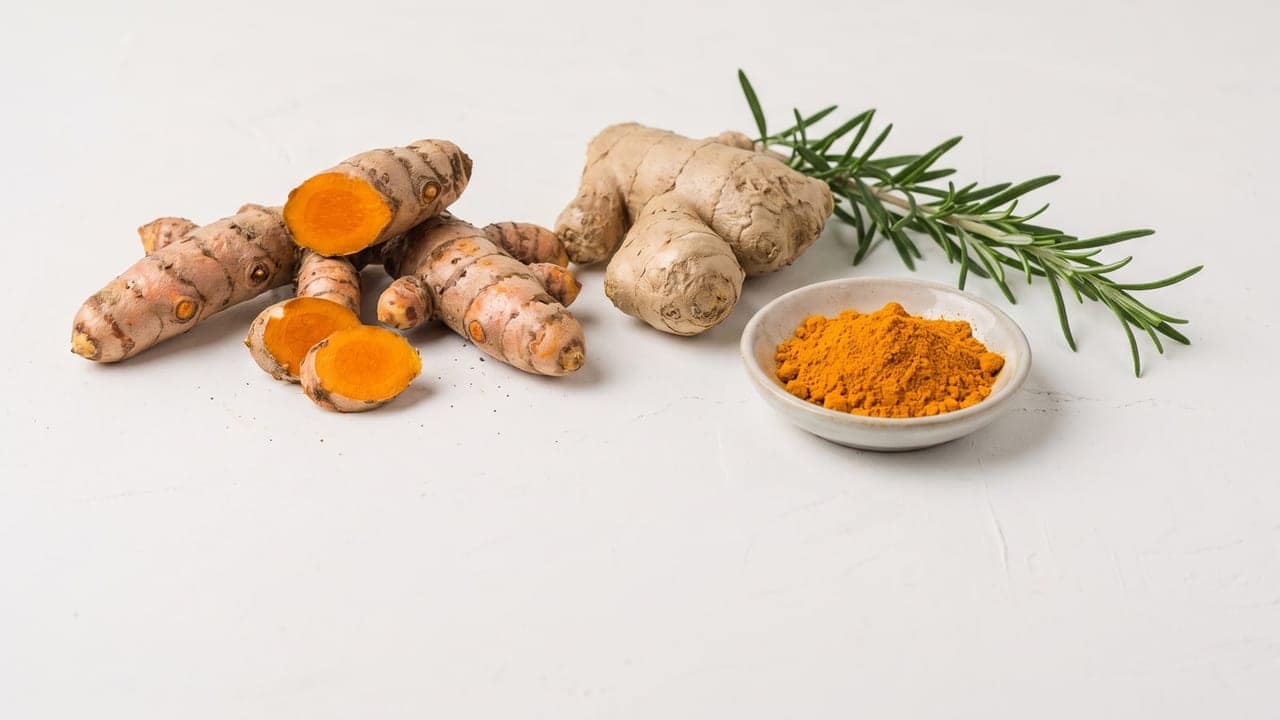
Ginger is the underground stem (rhizome) of Zingiber officinale, a tropical plant in the same family as turmeric and cardamom. It has been used as both a culinary spice and a medicinal herb for thousands of years, primarily to warm the body and settle the stomach.
That knobby "root" you buy at the store is not really a root. It's a rhizome, an underground stem the plant uses to store energy and spread. Native to Southeast Asia, ginger became one of the first truly global commodities. It traveled the ancient spice routes to reach the Mediterranean by the 1st century, and by medieval Europe it was so prized that a single pound could cost about as much as a live sheep. People were paying those prices for medicine, not just flavor.
For more than two millennia, ginger has anchored both Traditional Chinese Medicine and Ayurveda. Here's the part that I find remarkable as a clinician: the traditional texts didn't simply call ginger "good for you." They were precise. Fresh ginger for the stomach and the first chill of a cold; dried ginger for deep, internal cold. As you'll see, that ancient distinction turns out to be chemistry, something no physician of that era could have measured, yet they encoded it into practice anyway.1
Ginger is best supported for relieving nausea, easing osteoarthritis and muscle pain, improving digestion, and reducing menstrual cramps. Emerging evidence also points to lower inflammation markers, modest blood-pressure and blood-sugar improvements, and migraine relief. It is not a cancer treatment, and anticancer findings remain preclinical only.
When patients ask me what ginger is good for, I answer by how strong the evidence is, because "good for" should mean the research backs it. Here's the full picture at a glance, which we update as new trials publish:
| Benefit | Evidence | Best dose studied | What the research shows | Main caution |
|---|---|---|---|---|
Nausea & vomiting | Strong | 1–1.5 g/day | Works across pregnancy, motion, post-op, chemo | Confirm dosing in pregnancy |
Osteoarthritis pain | Moderate | 0.5–1 g/day | Modest but significant pain relief vs placebo | Blood thinners |
Digestion | Moderate | 1–1.2 g/day | Speeds gastric emptying, eases fullness | Reflux at high doses |
Menstrual pain | Moderate | 0.75–2 g/day | As effective as ibuprofen in trials | First 3–4 days of cycle |
Muscle soreness | Moderate | 2 g/day | ~25% less next-day pain after exercise | None notable |
Inflammation (CRP) | Emerging | 1–3 g/day | CRP down ~0.84 mg/L across 9 trials | Larger trials needed |
Blood pressure | Emerging | 2–3 g/day | Systolic down ~6 mmHg in 6-trial meta | BP medication |
Migraine | Emerging | 250 mg–1.5 g | Matched sumatriptan in one RCT | Early evidence |
Weight / blood sugar | Emerging | 1.6–2 g/day | Small reductions; supportive, not dramatic | Diabetes medication |
Cancer | Preclinical only | Not established | Lab & animal models only | Not a treatment, don't delay care |
Ginger works through three main pathways: it calms inflammation by quieting the COX-2 and 5-LOX enzymes and the NF-κB "master switch," it improves digestion by speeding gastric emptying and acting on gut serotonin receptors, and it supports immunity as an antioxidant that lowers oxidative stress.
This is the part most articles skip, and in my experience it's the part that makes everything else make sense. Almost every benefit below, the joint relief, the calmer stomach, the lower inflammation markers, traces back to these three mechanisms. Understand them once, and the entire benefits list clicks into place.
Notice the through-line: inflammation. Chronic, low-grade inflammation sits underneath most of the conditions patients bring to me, from aching joints to metabolic problems. A root that gently dials it down, and that you can steep in your tea tonight, is exactly the kind of simple, foundational tool I want people reaching for first.
Ranked by the strength and volume of human research, ginger's seven best-supported benefits are for nausea, joint pain, digestion, menstrual cramps, muscle soreness, inflammation, and migraine, in that order.
This is the use I reach for most, and the evidence is strongest here by a wide margin. Systematic reviews of randomized trials show that about 1–1.5 g of ginger per day significantly reduces nausea from four very different causes: pregnancy, motion sickness, surgery, and chemotherapy.2 In several pregnancy studies, ginger performed about as well as vitamin B6, the standard first-line option, without sedation, and a Cochrane review found ginger may help with early-pregnancy nausea, though it called the evidence limited and not consistent.3
Study takeaway: across four distinct populations, ~1 g/day of ginger reliably reduces nausea, rivaling standard first-line options in pregnancy.
A meta-analysis of randomized, placebo-controlled trials found that ginger produced a modest but statistically significant reduction in osteoarthritis pain and disability.4 That fits the mechanism precisely, since gingerol dampens the COX-2 and prostaglandin pathways that anti-inflammatory drugs target. I don't position it as a replacement for arthritis treatment, but as a daily, food-based addition with a clean safety profile, it earns its place.
Study takeaway: pooled trials showed ginger beat placebo for OA pain, with side effects that were mild and mostly digestive.
In clinical trials, ginger measurably accelerated gastric emptying, speeding it by as much as 50%, and stimulated the contractions that move food through the stomach.5 This is the science behind two thousand years of "drink ginger tea after a heavy meal." It literally helps the stomach process and move food along, easing bloating, gas, and that uncomfortable fullness.
Study takeaway: ginger sped stomach emptying and motility, validating its traditional use for functional indigestion.
This one surprises patients. In several randomized trials, ginger taken during the first few days of the cycle relieved period pain about as effectively as ibuprofen and mefenamic acid, common over-the-counter pain relievers.6 It's the same anti-prostaglandin mechanism, since prostaglandins are exactly the molecules that drive menstrual cramps.
Study takeaway: a systematic review found ginger more effective than placebo for primary dysmenorrhea, with effect sizes comparable to NSAIDs.
I often recommend ginger to athletes and active patients for recovery, and it's a tool I've leaned on personally as a lifelong athlete, though it's the data that earns it a spot here. In a pair of University of Georgia studies, 2 grams of ginger a day for 11 days reduced next-day muscle pain by about 25% after intense exercise versus placebo.7 Notably, heating the ginger didn't change the effect, and raw and cooked worked about the same.
Study takeaway: 2 g/day cut exercise-induced muscle pain by roughly a quarter (25% raw, 23% heat-treated) 24 hours after a hard workout.
Ginger cut next-day muscle pain by about a quarter, raw or heated
Here is where the mechanism shows up in your bloodwork. A meta-analysis of nine trials found that ginger supplementation lowered C-reactive protein (CRP) by about 0.84 mg/L,8 one of the key markers I track for whole-body inflammation, and a larger pooled analysis also found reductions in the inflammatory signals IL-6 and TNF-α.15 These are modest numbers, but they are real, measurable, and consistent with everything else ginger does.
Study takeaway: pooled trials showed a small but significant drop in circulating CRP, consistent with ginger's anti-inflammatory mechanism.
This is early, but striking. In a double-blind trial of 100 migraine patients, a single 250 mg dose of ginger powder worked as well as 50 mg of sumatriptan, a standard prescription migraine drug, at relieving attacks, and ginger caused fewer side effects.9 One small study isn't the final word, but an inexpensive root matching a prescription drug is exactly the kind of result worth watching.
Study takeaway: ginger and sumatriptan produced statistically comparable migraine relief at 2 hours, with ginger better tolerated.
Beyond its top uses, ginger shows modest, supportive effects on weight, blood pressure, blood sugar, and cholesterol, and a long traditional role in colds and immunity. These are promising but should be viewed as helpful additions to core treatment, not replacements for it.
Because ginger is eaten in small amounts, it contributes more in active compounds than in calories or macronutrients. Per 100 grams, raw ginger has about 80 calories, 18 g of carbohydrate, 2 g of fiber, and useful amounts of magnesium, potassium, copper, and manganese.12
Ginger is a good example of why I treat herbs differently from foods. You use a teaspoon or two of it for its compounds rather than a 100-gram serving to hit a fiber target. So while the panel below is accurate, the real action is in the gingerols, not the grams.
| Nutrient | Amount | % Daily Value |
|---|---|---|
Calories | 80 | 4% |
Carbohydrates | 17.8 g | 6% |
Fiber | 2 g | 7% |
Protein | 1.8 g | 4% |
Magnesium | 43 mg | 10% |
Potassium | 415 mg | 9% |
Copper | 0.23 mg | 25% |
Vitamin B6 | 0.16 mg | 9% |
Manganese | 0.23 mg | 10% |
Ginger's effects come from a family of related compounds, not a single molecule, and which one dominates depends on whether the ginger is fresh, dried, or cooked. Fresh ginger is rich in 6-gingerol; drying converts it to the more potent 6-shogaol; cooking produces zingerone.
This is the elegant part, and it explains that ancient fresh-versus-dried distinction. The "heat" you feel biting raw ginger is gingerol. Dry the root and it changes. Gingerol loses a water molecule and becomes shogaol, roughly twice as pungent and, in lab studies, a stronger anti-inflammatory. Cook it, and you get the mellower, sweeter zingerone. Three forms of one root, three slightly different medicines.
How ginger's signature compounds change with drying and heat, the reason fresh and dried ginger behave differently.
The primary bioactive, with anti-inflammatory, antioxidant, and anti-nausea effects.
Formed as ginger dries; more potent for inflammation and gut motility.
Gives cooked ginger its sweeter aroma; antioxidant and gut-soothing.
In Traditional Chinese Medicine, ginger is a pungent, warming herb that "warms the middle" and stops nausea, a description that lines up almost perfectly with what modern trials confirm. TCM treats fresh and dried ginger as two different medicines.
I keep returning to this because it's such a clean example of ancient observation anticipating modern chemistry. TCM calls fresh ginger sheng jiang and uses it to calm the stomach and "release the exterior" at the first chill of a cold. Dried ginger, gan jiang, is considered far hotter and reserved for deep internal cold and weak digestion. We now know the difference between them is largely gingerol converting to shogaol as the root dries, a fact no ancient physician could measure, yet somehow built into practice centuries ago.
Most research-backed benefits appear at 1–1.5 grams of dried ginger per day, split into two or three doses. Fresh ginger is gentler, so amounts run higher. Take it with food if it bothers your stomach, and don't exceed about 4 grams a day without medical guidance.
For nausea, I recommend taking ginger 30–60 minutes before travel or meals. A strong cup of fresh ginger tea or a 250 mg capsule two to four times a day is the simplest effective approach. For joint pain, muscle recovery, or inflammation, consistency beats timing: a standardized capsule taken daily with food. Think of nausea as an "in the moment" use and the anti-inflammatory benefits as "every day."
2–4 g daily, grated into food, or steeped as tea.
1 tsp grated in hot water, 1–3× daily, great for nausea.
250–500 mg, 2–4× daily, standardized to gingerols.
¼–½ tsp in cooking, smoothies, or golden milk.
The simplest way to get ginger's benefits is to cook with it daily. Steep it as tea, blend it into smoothies, grate it into stir-fries, whisk it into golden milk, or take a morning lemon-ginger shot.
Ginger, turmeric, and galangal are botanical cousins, but they aren't interchangeable: choose ginger for nausea and digestion, turmeric for inflammation and joints, and galangal for cooking and circulation.
| Ginger | Turmeric | Galangal | |
|---|---|---|---|
Botanical name | Zingiber officinale | Curcuma longa | Alpinia galanga |
Key compound | Gingerol | Curcumin | Galangin |
Taste | Pungent, fresh, citrusy | Earthy, bitter | Sharp, piney, peppery |
Energetics (TCM) | Warming | Warming | Hot |
Best known for | Nausea & digestion | Inflammation & joints | Circulation & cooking |
Dr. Axe Score™ | 7.1 / 10 | Not yet rescored | Not yet rescored |
Best form | Tea, fresh, capsule | With black pepper + fat | Fresh in cooking |
The takeaway: reach for ginger when the stomach is unsettled, turmeric when joints or systemic inflammation are the issue, and galangal mainly for flavor. In practice, I often pair ginger with turmeric, since they hit overlapping but complementary inflammation pathways, which is why you see them together in golden milk and countless traditional formulas.
Ginger ale settles your stomach.
Most commercial ginger ale contains little or no real ginger, so brew fresh ginger tea instead.
Cooking destroys ginger's benefits.
Cooking converts gingerol to shogaol, which keeps the effect and for inflammation may even increase it.
More ginger is always better.
Most benefits appear at 1–1.5 g/day; high doses can cause heartburn and thin the blood.
Ginger is very safe in food and typical supplemental amounts. At high doses some people notice mild heartburn, gas, or stomach upset, usually resolved by taking it with food or lowering the dose. A few groups should check with a doctor before using concentrated ginger supplements.
Yes, mildly. At higher supplemental doses, ginger has a blood-thinning (antiplatelet) effect. The amount in cooking and tea isn't a concern for most people, but if you take anticoagulant or antiplatelet medication, or you have surgery coming up, talk with your doctor first.
It can go either way. For many people, modest amounts of ginger calm the stomach and may ease reflux by speeding gastric emptying. But large doses can backfire and trigger heartburn. If you have GERD, start low and watch how your body responds.
Take anticoagulants or antiplatelet drugs (warfarin, clopidogrel, aspirin), since ginger has a mild blood-thinning effect
Take diabetes medication, since ginger may lower blood sugar and add to that effect
Take blood-pressure medication, since ginger may modestly lower blood pressure
Have a surgery scheduled, so stop high-dose ginger about 2 weeks before
Have gallstones, since ginger increases bile flow
Have GERD or frequent heartburn, since high doses can aggravate reflux
Are pregnant and considering doses above culinary amounts, so confirm dosing with your provider
Choose supplements that are third-party tested for purity and standardized to gingerols
For most people, yes, and that's a rare thing for me to say so plainly. Ginger is one of the few remedies where ancient tradition and modern science fully agree. It's safe, inexpensive, and effective, especially for nausea, digestion, and the inflammatory aches of joints and muscles.
I recommend aiming for 1–1.5 grams a day from fresh root, tea, or capsules, used in the moment for nausea, and daily for inflammation and recovery. Check with your doctor first if you take blood thinners, diabetes or blood-pressure medication, or you're heading into surgery. This is the kind of small, daily, foundational habit the body responds to. It is simple food as medicine, used exactly as it has been for two thousand years.
The four-phase, 30-day plan to cool chronic inflammation, the foods that help most, and a 7-day meal plan, free to open now.
Free with your Dr. Axe account (email or Google). You'll also get the protocol's short email series and the Dr. Axe newsletter; unsubscribe anytime.
Open the free protocol →Ginger is best supported for relieving nausea, easing osteoarthritis and muscle pain, improving digestion, and reducing menstrual cramps. Emerging evidence also points to lower inflammation markers, modest blood-pressure and blood-sugar improvements, and migraine relief.
Ginger's compounds (gingerols and shogaols) calm inflammation by quieting the COX-2 and 5-LOX enzymes and the NF-κB pathway, speed how fast the stomach empties, act on gut serotonin receptors to reduce nausea, and act as antioxidants.
Most studies use 1–1.5 grams of dried ginger daily, split into 2–3 doses. Fresh amounts can be higher. Stay under 4 g/day unless guided by a clinician.
Yes. It's ginger's best-supported use. Multiple trials show 1–1.5 g daily reduces morning sickness, motion sickness, and post-operative nausea.
Yes, modestly. A meta-analysis of nine trials found ginger lowered C-reactive protein, a key blood marker of inflammation, by about 0.84 mg/L, and a larger pooled analysis also found reductions in IL-6 and TNF-α.
Modestly. A meta-analysis of 14 trials found ginger produced small but significant reductions in body weight and waist-to-hip ratio. It's a supportive tool alongside diet and exercise, not a stand-alone solution.
It may help modestly. A meta-analysis of six trials found ginger lowered systolic blood pressure by about 6.4 mmHg and diastolic by about 2.1 mmHg, with bigger effects at 3 g/day or more.
Ginger has a long traditional use at the first sign of a cold, and acts as an antioxidant with mild antimicrobial activity. Direct trials on preventing colds are limited, so this use rests more on tradition and mechanism than on strong human data.
For most healthy adults, daily ginger in food or moderate supplement doses is considered safe. Check first if you take blood thinners, diabetes medication, or blood-pressure medication.
At higher supplemental doses, ginger may add to the effect of blood thinners (anticoagulants and antiplatelets), diabetes medications, and blood-pressure medications. Talk with your doctor before combining them.
Turmeric (curcumin) has stronger evidence specifically for inflammation and joints; ginger is better for nausea and digestion. Many people use both.
No. Cooking converts gingerol to shogaol and zingerone, which keep (and in some cases increase) the anti-inflammatory effect.
Ginger has a mild blood-thinning effect at higher supplemental doses. Culinary amounts are fine for most people, but check with your doctor if you take anticoagulant or antiplatelet medication or have surgery scheduled.
Ginger in culinary amounts and short-term doses up to about 1 g/day is widely used for morning sickness and generally considered safe, but pregnant women should confirm dosing with their obstetric provider.
For nausea, take it 30–60 minutes before travel or meals. For inflammation and recovery, consistency matters more than timing, so take it daily with food.
October 19, 2026 — Rebuilt the page as Dr. Axe's updated guide, with sources checked and links to related DrAxe.com pages added.
Last medically reviewed — June 1, 2026 by the DrAxe.com Medical Advisory Board.
What changed in this update (June 2026) — Reorganized for clarity and added a physician's introduction; added a "How ginger works" mechanisms section and a "What is ginger good for" evidence overview; expanded to 7 ranked benefits plus weight, blood-pressure, blood-sugar, and immunity coverage; added exact study statistics (CRP −0.84 mg/L, ~25% less muscle soreness, ginger 250 mg vs sumatriptan 50 mg, systolic BP −6.4 mmHg); added four studies; verified nutrition against USDA FoodData Central (FDC #169231).

Medically reviewed by the DrAxe.com Medical Advisory Board on Jun 1, 2026.
This article is for educational purposes. See our medical disclaimer.