





Advertisement
nutrition
While bentonite clay has been used for centuries around the world to promote better health and ward off diseases, those living in the U.S. and Europe have, for the most part, only recently become familiar with this product.
What is bentonite clay used for? Bentonite clay, also called calcium bentonite clay or Montmorillonite clay, is now a wellness trend among people who are looking to help naturally improve their skin's health, detoxify their bodies and improve digestion.

Individuals in various cultures refer to bentonite clay as “healing clay,” since it cleanses various parts of the body. It's possible to enjoy bentonite clay benefits by taking it internally (in other words, drinking and eating it — after checking with your healthcare professional), on top of using it externally on your skin and hair.
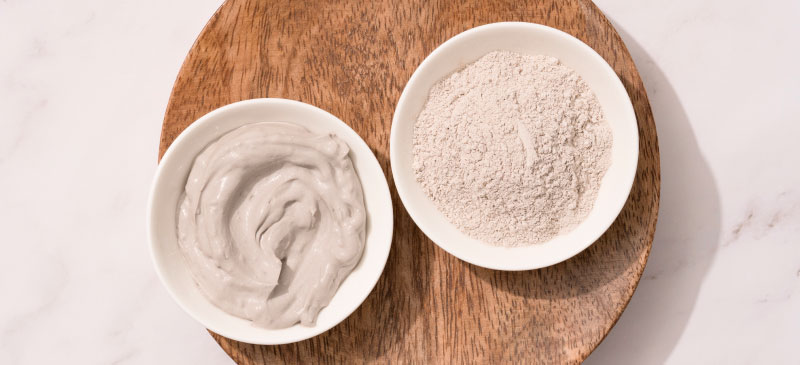
Bentonite clay is a product composed of ash taken from volcanoes. The clay is dried in the sun, filtered and then sold commercially in several forms, including as a supplement, facial clay masks, ointments/pastes and hair treatments. When mixed with water it forms a thick paste.
It contains a range of nutrients. Bentonite clay is known to have an abundance of minerals, including calcium, magnesium, silica, sodium, copper, iron and potassium.
Studies indicate that bentonite clay is an absorbent aluminium phyllosilicate clay. The largest known source of bentonite clay is found in Fort Benton, Mont., where numerous volcanoes are present. The name of the clay stems from the town where today much of the supply is still harvested.
Today the clay is harvested mostly in the U.S., France and Italy. The other name that bentonite clay is typically given, Montmorillonite clay, stems from the region of France called Montmorillon, where the clay was first discovered.
Bentonite clay stems back far in history as a traditional healing method for protecting the body from disease. It has been reported that several traditional cultures living in regions of the Andes, Central Africa and Australia have applied and consumed volcanic clays in numerous ways for centuries.
There are two types of bentonite clays. While calcium bentonite is used on the body, both internally and topically, sodium bentonite has more industrial uses.
Sodium bentonite clay is used as a natural sealant, such as to seal roads, lagoons, landfills and ponds. It has natural swelling abilities, swelling 15–18 times its dry size when combined with water, making it an effective "hole plug."
Bentonite clay can help reduce the negative effects of toxins that we encounter every day, such as those given off from paint, cleaning supplies, markers, substances used in building homes, low-quality unpurified water and even pesticides.
Bentonite clay essentially “seeks” toxins in the body to bind with due to its chemical composition. Then it acts like a magnet and sponge, absorbing harmful substances so they can be removed from the body.
While in its natural state, bentonite clay has negatively charged molecules. Most toxins and heavy metals have positively charged molecules. This allows the two to bind together easily and stay united while the toxin removal process happens.
“Heavy metal toxins” usually refer to substances like mercury, cadmium, lead and benzene. Upon binding, bentonite clay is able to help remove metals, toxins, chemicals and impurities from the gut, skin and mouth. Additionally, it's used to reduce the presence of toxins in the food supply and animal feed.
Some people also choose to use bentonite clay as a supplement, since the clay is a natural source of important dietary nutrients. When ingested into the body, either in a drink form or by eating the clay, its vitamins and minerals are absorbed similarly to supplements.
When combined with water and left to dry on the skin as a clay mask, bentonite clay is able to bind to bacteria and toxins. It can help remove these substances from the surface of the skin and within pores, helping reduce breakouts. Bentonite clay nourishes the skin by balancing oil production, removing dead skin cells, clearing clogged pores and fighting bacteria.
A 2023 study published in the medical journal Skin Research & Technology discusses how kaolin clay and bentonite clay are promising options for oily skin, which means an excess sebum production that leads to acne. The study showed how a mask using these clays helped manage acne and oily skin, and both skin hydration and texture improved.
Another study demonstrated how bentonite clay can help treat skin ulcers. Some studies have found it can even help treat poison ivy. While not yet approved as a sunscreen ingredient by the Food and Drug Administration (FDA), another study showed how it may help sunscreens work more effectively.
Thanks to the clay’s special ability to act as an antibiotic treatment when applied topically, bentonite clay can also help calm skin infections, like diaper rash and contact dermatitis.
With its antibacterial properties, bentonite clay can be a great way to detox the body. It may fight off various pathogens responsible for disease, such as E. coli and the virus that causes staph infection, in addition to helping to expel toxins and heavy metals.
Research has also shown that, in animals, bentonite clay can bind to particular toxins — like “aflatoxins” — that are common in the standard diet, found usually on improperly stored food products.
Bentonite clay has been found to be effective at killing harmful bacteria. In a study published by the Journal of Antimicrobial Chemotherapy, “results indicate that specific mineral products have intrinsic, heat-stable antibacterial properties, which could provide an inexpensive treatment against numerous human bacterial infections.”
More research is still needed on the topic, but results of studies so far appear to be promising in terms of how the clay can be used as a treatment for these gut-related illnesses (see more below).
By removing toxins, chemicals and heavy metals from the gut, bentonite clay helps promote digestion. When left unattended, an influx of aflatoxins can contribute to liver damage and potentially even the onset of certain cancers.
In one study using cows, scientists found that bentonite clay molecules bound to bovine rotavirus and bovine coronavirus — two major viruses that contribute to gastroenteritis (referred to as stomach flu in people). Variations of both of these viruses can also be present in human beings.
Thanks to its ability to neutralize bacteria in the gut and fight viruses, bentonite clay helps alleviate many digestive problems. Some people use bentonite clay as relief for nausea and vomiting, constipation and to help with IBS.
It’s possible that the reason people find relief in these situations has to do with the way bentonite protects the lining of your intestines from letting toxins through, which would otherwise contribute to leaky gut. So far, this effect has only been observed in animals but may also apply in human subjects.
As part of a healthy diet containing plenty of alkaline foods, natural detox drinks and probiotics, bentonite clay has been found in a study to contribute to weight loss in healthy men over a 21-day period. The participants, overall, also saw improvement in total cholesterol.
Because of the uncontrolled nature of this study, it is not possible to determine how influential bentonite clay, as a single element, was on the observed weight loss, so these results should be approached with caution. To date, no controlled, human studies exist to reflect this benefit.
However, a 2016 trial in rats tested the impact of bentonite clay on weight loss and found that the supplement was correlated with weight loss, as well as decreased cholesterol.
In mice studies, bentonite clay has been found to absorb certain thyroid hormones (T3 and T4), resulting in the alleviation of hyperthyroidism. This result suggests bentonite might potentially help people keep thyroid levels down, although the test has not been duplicated in humans as of yet.
A lab study conducted in 2016 discovered that bentonite clay stopped the growth of cancer cell line U251, a human cancer cell found in a central nervous cancer called glioblastoma. However, another cell line was grown larger when exposed to the substance.
The researchers explained that the cell formations and swelling of bentonite clay are the reasons for this, and it could potentially be effective against specific types of cancers (like glioblastomas) but not others.
Another lab experiment observed bentonite clay caused cell death of Caco-2 cells, a colorectal cancer line. In this study, the clay exhibited a large amount of oxidative stress upon just the cancer cells without damaging the DNA.
The mouth is one of the most susceptible areas of the body when it comes to harmful outside “invaders” taking over, like bacteria and toxins.
Bentonite clay binds to unhealthy substances in the mouth, such as around the teeth and on the tongue and gums, and helps remove them before you swallow them and become sick. Because of bentonite clay's antibacterial properties, it has been used in natural toothpastes and even mixed with water and used as a daily rinse.
Bentonite clay has been researched as an effective way to remove some of the fluoride often found in drinking water.
When combined with magnesium, bentonite clay has been shown to improve the purity of tap water, which leads to some promising possibilities for using it in the future as a widespread, cost-effective water purification method.
Bentonite clay can be applied to any area on the skin of babies that is irritated, red or needs soothing in the same way that traditional powders are used. Plus, it is very gentle and naturally cleansing.
One study found that compared to calendula, bentonite had faster healing effects and is more effective at improving infantile diaper dermatitis. It's also capable of speeding up healing time of wounds, in some cases even when prescription antibiotics are not able to help solve the problem.
Because it acts as a natural cleanser and bacteria-killer, bentonite clay can help remove odors from various surfaces (and your body). It's especially effective when combined with cleansing products like coconut oil, apple cider vinegar, baking soda, arrowroot flour and essential oils, such as lemon, orange or tea tree.
30-day protocol
Rebuild the gut lining and microbiome: the remove–replace–repair sequence, foods, supplements and the labs that confirm progress.
Free with your Dr. Axe account
View the protocol →You can use bentonite clay at home, such as to make DIY skin masks, by purchasing bentonite clay powder.
What color is real bentonite clay? Bentonite clay normally comes in a gray or cream color, not a bright white color, which can indicate that it may have gone bad.
The clay should also be odorless and not have much of any taste at all.
When preparing bentonite clay mixtures, always use a "nonreactive bowl," in other words one that is wood, plastic or glass. This keeps the charge of bentonite clay from reacting with the metal of the bowl/spoon, which will change its effects.
Internally, you can take half a teaspoon to one teaspoon once per day, as many days of the week as you’d like. Most experts recommend that you don’t consume bentonite clay internally for more than four weeks in a row. (Check with your healthcare professional before using.)
After testing your skin's reaction, you can use bentonite clay on your skin (or hair) several times per week for best results.
For the best results, do not not take bentonite within an hour of food. Also avoid taking it within two hours of medications or supplements, since it can interact with other substances.
What bentonite clay dangers should you be aware of? While generally safe when used correctly, some caution needs to be exercised if using bentonite clay in terms of both quantity as well as the chosen type.